
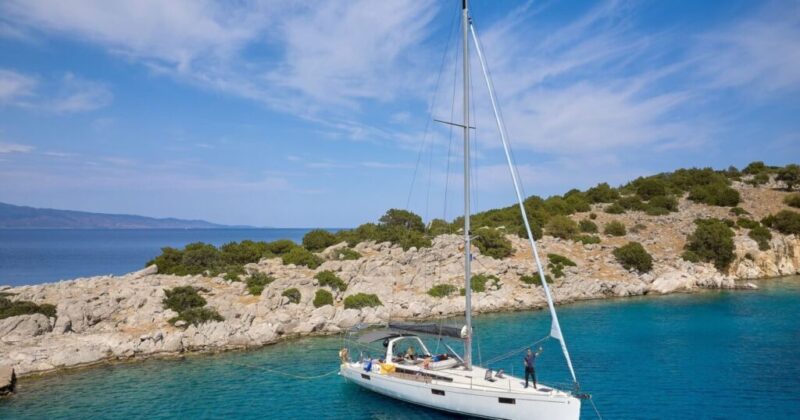
Mainland Greece — Meteora, Peloponnese & Athens
Mainland Greece — Why you need to have the Greek mainland on your radar
When people think of Greece, they picture Santorini and Mykonos. Blue domes, expensive cocktails, crowded streets. Don't get me wrong—the islands are great. But the Greek mainland? That's a whole different ballgame. Here you'll find monasteries perched atop 300-meter-high sandstone cliffs, mountain villages where time seems to have stood still, and a capital city that's so much more than just the Acropolis.
I spent a total of three weeks traveling around mainland Greece—with a rental car, a drone in my backpack, and no fixed plan. What resulted was one of the most diverse trips I've ever taken. From the floating monasteries of Meteora to the wild gorges of the Peloponnese and the hidden rooftop bars of Athens. In this post, I'll share everything: routes, costs, drone spots, and the mistakes you should avoid.
Meteora — Monasteries between Heaven and Earth
The first impression that changes everything
I arrived in the evening, as the sun bathed the sandstone cliffs in orange. And I swear to you: no photo or video can do that moment justice. The Meteora rocks rise like fingers from the Thessalian plain—300 to 600 meters high, with centuries-old monasteries perched on their peaks. It looks like another planet.
Six monasteries are still active today and open to visitors. My favorite is Varlaam Monastery—not just for the frescoes, but for the view from the terrace. You stand up there and see nothing but rocks, green valleys, and in the distance, the snow-capped peaks of the Pindus Mountains. Entry costs €3 per monastery, and I recommend visiting at least three.
Drone footage in Meteora — what you need to know
Now, this is important for all drone pilots: Meteora is a UNESCO World Heritage Site, and officially, flying near the monasteries is prohibited. The Greek Civil Aviation Authority (HCAA) requires a special permit, which you must apply for at least 30 days in advance. In practice, I flew at 5:30 a.m. when no one else was around, keeping the monasteries themselves out of my flight path. I focused on the rock formations and the landscape—the result was spectacular, without breaking any rules.
My setup: DJI Mini 5 Pro in normal mode, maximum altitude 120 meters above the starting point, no overflights of the monastery buildings. The best spots are the viewpoint near Psaropetra and the road between Kastraki and the Roussanou Monastery. Golden hour is essential here—during the day the light is too harsh and the shadows obscure the details.
Kalambaka and Kastraki — the base camps
There are two villages at the foot of the cliffs: Kalambaka (larger, more infrastructure) and Kastraki (smaller, quieter, closer to the cliffs). I stayed in Kastraki, at the Tsikeli Guesthouse—55 euros per night, breakfast included—and the view of the cliffs from the balcony was better than any hotel lobby on Santorini. Two nights minimum, three are better. You absolutely need to experience at least one sunrise and one sunset here.
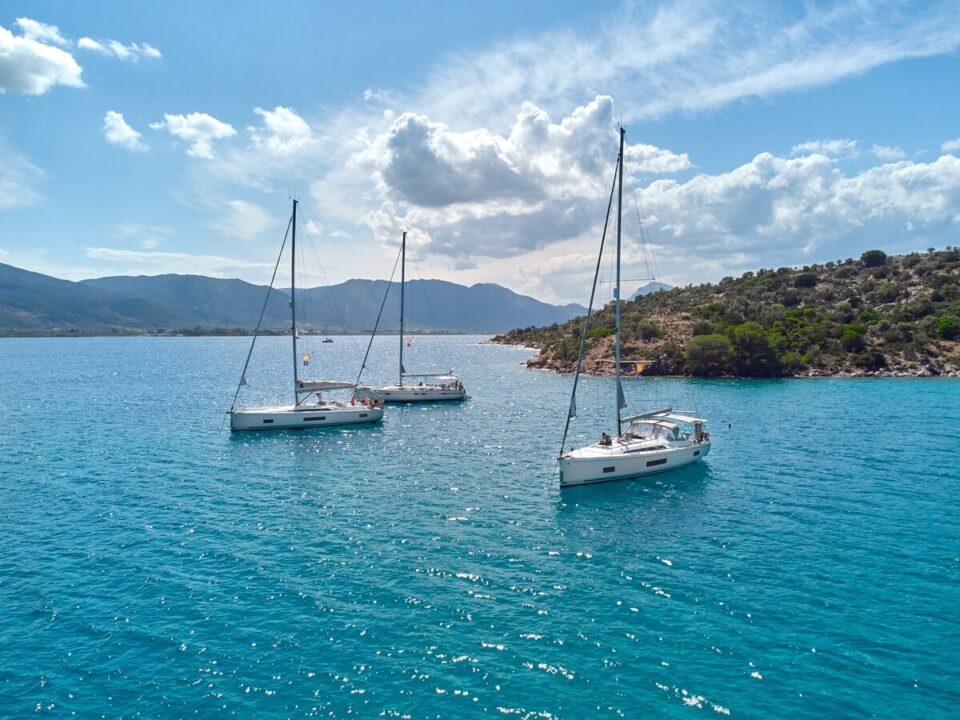
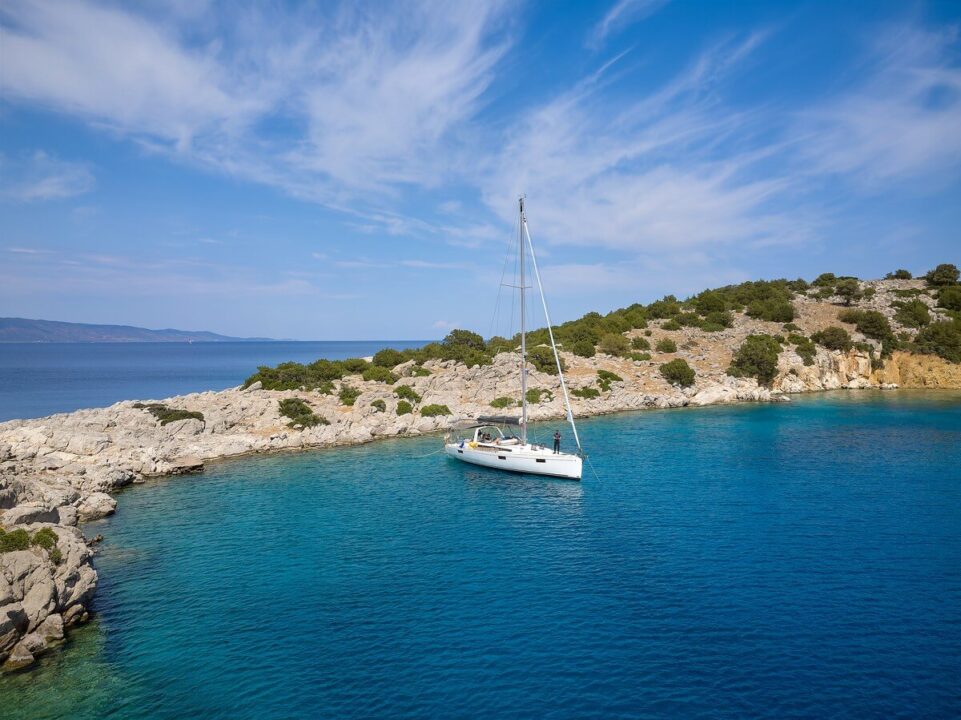
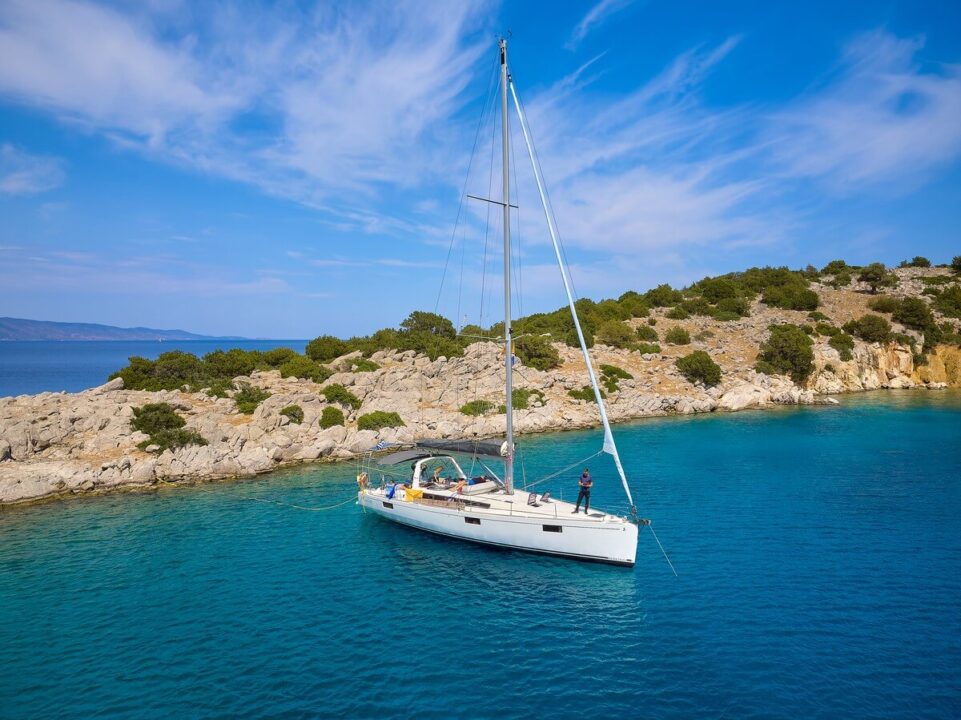
Peloponnese — Greece's wild south
The Mani Peninsula: Stone towers and turquoise sea
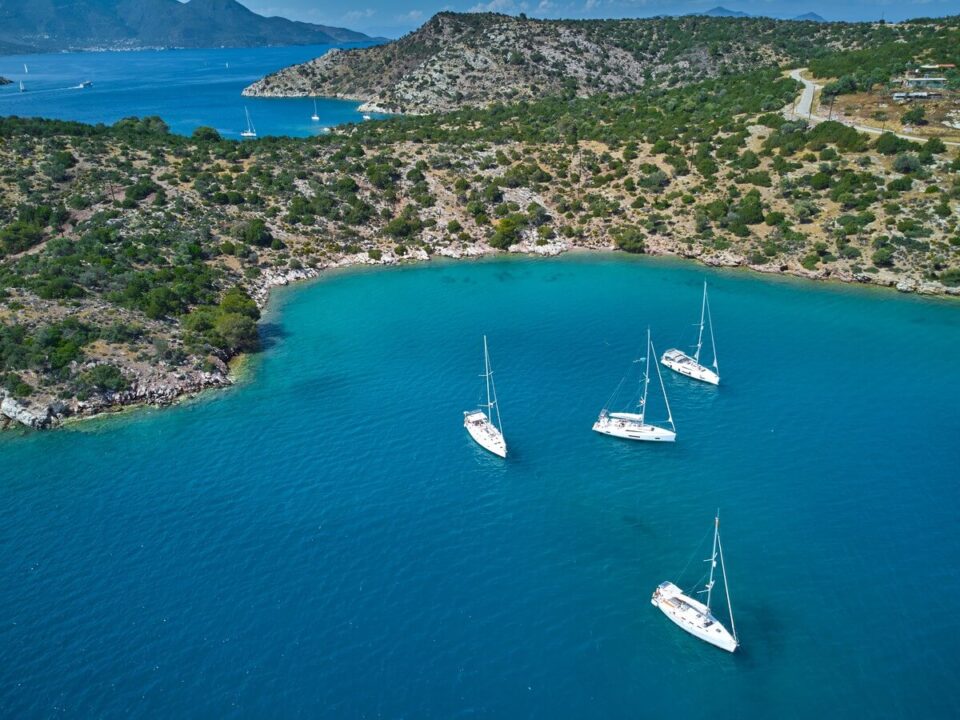
To be honest, I didn't have high expectations for the Peloponnese. I was wrong. The Mani Peninsula in the south is breathtakingly beautiful—barren landscapes, crumbling stone towers from the Byzantine era, and bays with water so clear you can see the bottom at a depth of five meters.
The drive from Kalamata to Gerolimenas is a road trip in itself. Approximately 80 kilometers along winding roads, past abandoned villages and small chapels. Stonitio Beach was my absolute highlight—a hidden cove accessible only via a dirt track. In June, we were completely alone there. The contrast between the dark rocks and the turquoise water looks incredible from above with a drone.
Monemvasia — the hidden fortress city
Monemvasia is one of those places you see and think: How can this be real? A medieval town hidden behind a massive cliff that juts out into the sea. From the land side, you see nothing—only when you pass through the old city gate does a world of narrow streets, Byzantine churches, and restaurants with sea views open up. It feels like a movie set, except that people actually live here.
Tip: Hike the 30 minutes up to the upper fortress. The path is steep and there's no railing, but the view over the open sea and the coastline is worth every drop of sweat. I booked accommodation in the lower part of the old town — Malvasia Traditional Hotel, 85 euros per night, including breakfast on the terrace overlooking the sea.
Nafplio — the most beautiful small town in Greece
Nafplio was Greece's first capital, and it shows. Venetian fortresses, neoclassical houses, a car-free old town right on the water. The Palamidi Fortress towers 216 meters above the city—999 steps lead up, and if you're there at seven in the morning, you'll have it all to yourself. The view over the Argolic Gulf and the surrounding mountains is one of the best in the entire Peloponnese.
From Nafplio, you can reach Epidaurus (the ancient theater with its legendary acoustics—toss a coin in the middle, and you'll hear it in the last row) and Mycenae (Lion Gate, Treasury of Atreus) in an hour. Two days in Nafplio are perfect as a Peloponnese hub.
Athens — more than just a must-see
The Acropolis — but properly
Yes, you absolutely must go to the Acropolis. But please, not at 11 a.m. with 3,000 other tourists. Book the morning ticket for 8 a.m. (timed tickets have been available since 2024, €20) and be the first one at the Propylaea gate. The Parthenon in the morning light, almost deserted—it's a completely different experience than the midday madness.
What most people don't know: The Acropolis ticket also grants access to six other archaeological sites in Athens, including the Agora and the Temple of Olympian Zeus. The combination ticket for €30 is definitely worth it if you want to see more than just the Parthenon.
Athens beyond the classics
Exarchia is the neighborhood that doesn't really feature in any guidebook, but is actually the most exciting in all of Athens. Street art on every corner, independent bookstores, bars where ouzo costs €2 and you can strike up a conversation with locals. The rooftop bar A for Athens on Monastiraki Square has the most iconic view of the illuminated Acropolis—cocktails cost €12, but the view is priceless.
For foodies: The Varvakeios Agora market hall is a must-see. This is where Athenians shop, not tourists. Fresh fish, olives, spices—and upstairs there are small tavernas where you can get souvlaki for €3.50 that tastes better than any restaurant in Plaka.
Athens as a drone spot
In short: You can't fly in central Athens. The entire city center is a no-fly zone due to the airport and military installations. My solution: Cape Sounion, 70 kilometers southeast of Athens. The Temple of Poseidon on the cliff overlooking the sea is one of the most photogenic drone spots in all of Greece. The sunset here is legendary—the sun dips directly into the sea behind the temple. You can get there by KTEL bus (€6.90, 90 minutes) or rental car.
Recommended itinerary: 14 days on the Greek mainland
Days 1-3: Athens (Acropolis, Exarchia, Cape Sounion day trip)
Day 4: Drive to Nafplio (approx. 2 hours), Palamidi Fortress
Day 5: Epidaurus and Mycenae Day Trip
Days 6-7: Trip to Monemvasia, two nights in the old town
Days 8-9: Mani Peninsula (Gerolemenas, Stonitio Beach)
Day 10: Drive to Delphi (approx. 4 hours via Corinth)
Day 11: Visit Delphi, then continue to Kalambaka
Days 12-13: Meteora (monasteries, drone flights, hiking)
Day 14: Return journey to Athens (approx. 3.5 hours) or onward journey to Thessaloniki
Costs — What you need to budget for 14 days in mainland Greece
| category | Budget (per person) | middle class | comfort |
|---|---|---|---|
| Flight (D to Athens, return) | 80-150 EUR | 150-250 EUR | 250-400 EUR |
| Rental car (14 days) | 280-400 EUR | 400-600 EUR | 600-900 EUR |
| Accommodation (13 nights) | 450-650 EUR | 650-1,000 EUR | 1,000-1,800 EUR |
| Food and Drink | 250-350 EUR | 350-500 EUR | 500-800 EUR |
| Entrance fees and activities | 50-80 EUR | 80-120 EUR | 120-200 EUR |
| petrol | 100-150 EUR | 120-180 EUR | 150-220 EUR |
| IN TOTAL | 1,210-1,780 EUR | 1,750-2,650 EUR | 2,620-4,320 EUR |
Practical tips for your trip to mainland Greece
Rental cars: Book through Check24 or billiger-mietwagen.de, not directly at the airport. In summer, book at least 4 weeks in advance. Fully comprehensive insurance without excess is mandatory — Greek roads, especially in the Peloponnese, are narrow and winding.
Best time to travel: May and June are perfect — warm enough for swimming, but not the 40-degree heat of high summer. September and October are also excellent, with fewer tourists and pleasant temperatures. I can only conditionally recommend July and August — Meteora at 38 degrees is brutal.
Language: You can get by almost anywhere with English, but a few words of Greek open doors. Efcharisto (thank you) and Kalimera (good morning) are enough to bring a smile to your face.
Eat: Forget the tourist tavernas with laminated menus and photos of the food. The best restaurants have no photos, no English menu, and are packed with locals. Moussaka, gemista (stuffed tomatoes), and fresh grilled octopus—rarely more than €12 per main course.
Drone: Greece requires UAS registration with the HCAA. As an EU citizen with a DJI Mini (under 250g), you don't need a pilot's license, but registration is required. Flying is generally prohibited in archaeological sites and nature reserves. Good alternatives include beaches, coastal areas, and remote mountain regions.
FAQ — Frequently Asked Questions about mainland Greece
Is the Greek mainland worth visiting compared to the islands?
Absolutely. The mainland offers a diversity that no single island can match: mountains, gorges, historical sites, coastlines—all at significantly lower prices. On Mykonos, you'll pay €200 for a mid-range hotel, while in Meteora, you'll get the same quality for €55. The mainland is ideal for road trips, hikers, and anyone looking for more than just beaches and parties.
How many days do I need at a minimum for Meteora?
A minimum of two full days. On the first day, you'll visit three monasteries and watch the sunset from a viewpoint. On the second day, you'll fly your drone early in the morning (if permitted), hike the trails among the rocks, and visit the remaining monasteries. Those with three days can include a day trip to the Vikos Gorge in the Zagori region—one of the deepest gorges in the world, just two hours north.
Is the Peloponnese safe for solo travelers?
Yes, very safe. Greece in general has a low crime rate, and there are practically no problems in the Peloponnese. In the small villages, people leave their doors open. The only thing you need to watch out for is the road conditions—some coastal roads on the Mani Peninsula are narrow, unpaved, and without guardrails. Drive during the day, take your time, and everything will be relaxed.
Do I need a rental car on the mainland?
Highly recommended. Public transport exists (KTEL buses), but it's slow and infrequent. Highlights are often 100 to 200 kilometers apart, with little in between. A rental car gives you the freedom to spontaneously stop at hidden coves or viewpoints—and that's precisely what makes a mainland road trip so special. From €20 per day for a small car, from €30 for a compact car with automatic transmission.
Can I combine mainland Greece and the islands?
Perfect, in fact. Ferries depart from Athens (Piraeus) to Hydra, Spetses, and the Cyclades. From the Peloponnese (Neapoli), a ferry goes to Kythira—one of the least visited Greek islands and a true hidden gem. My suggestion: 10 to 14 days on the mainland, then 5 to 7 days on one or two islands to round off your trip. That way, you'll get the full Greek experience.
About the author: Max Haase is Germany's most influential travel influencer with over 4.2 million followers. He specializes in drone footage and luxury travel. Cooperation requests here.
 German
  English