

Saudi Arabia Travel Report 2025: Red Sea, Visa & Overwater Villas
Saudi Arabia and the Red Sea—two things that don't automatically spring to mind for most people. That's precisely what makes this destination so exciting. While Bali, the Maldives, and Thailand are already overrun with tourists, one of the world's most ambitious luxury travel projects is currently taking shape on Saudi Arabia's west coast. I was there, slept in an overwater villa that looks like a spaceship, took a boat trip to pristine coral reefs, and experienced firsthand why Saudi Arabia will be the most exciting new travel destination of 2025.
In this travel report, I share everything you need to know for your trip to Saudi Arabia: from visa application and the best time to travel to specific costs and hotel recommendations on the Red Sea. Whether you want to discover the country as a luxury destination or as an adventure trip—you'll find all the information here.
Why Saudi Arabia? The country in transition
Since its Vision 2030, Saudi Arabia has invested billions in tourism. What was once one of the most closed-off countries in the world has opened up dramatically in just a few years. Since September 2019, there has been the Saudi Arabia Visa An eVisa valid for 49 countries — including Germany. You apply online in five minutes and pay around 120 euros. Done.
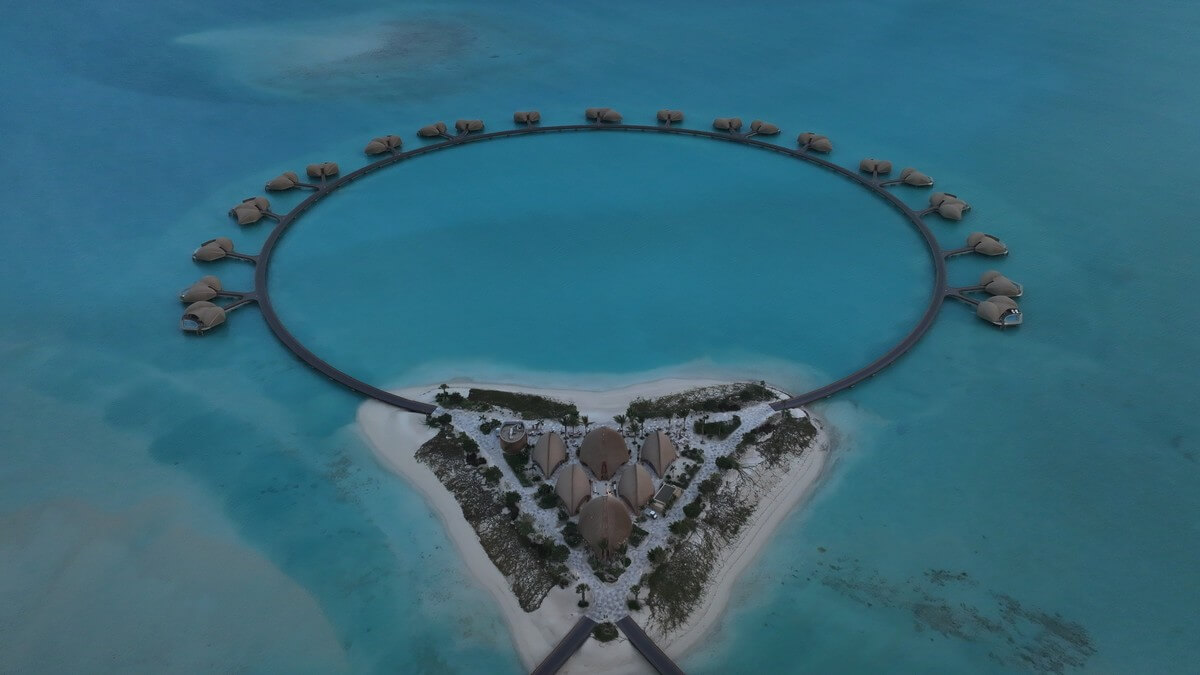
But the real game-changers are the mega-projects: NEOM, The Red Sea Destination, AlUla, Diriyah Gate. Saudi Arabia isn't just building hotels—it's creating entirely new travel destinations from the ground up. What will already be standing on the Red Sea by mid-2025 honestly blew me away.
What surprised me most was the openness of the people. Saudis are incredibly hospitable, curious, and proud to show off their country. While alcohol is only available in licensed resorts (and even there, not everywhere), you get an authenticity that has long been lost in many over-commercialized destinations. My first impression? Saudi Arabia feels like Dubai 15 years ago—only with more substance.
Saudi Arabia Visa: How to apply correctly
The Saudi Arabia Visa It's surprisingly easy to get. Here are the key facts:
- Type: eVisa (electronic visa) — no embassy visit required
- Application: Online via visa.visitsaudi.com
- Cost: Approx. €120 (SAR 480 incl. insurance)
- Validity: 1 year, multiple entry, max. 90 days per stay
- Processing time: 5-30 minutes (often immediately)
- Requirements: Passport valid for at least 6 months, passport photo
My tip: Apply for your visa at least one week before departure, even though it's usually approved immediately. This gives you some leeway in case of technical problems. Payment is by credit card, and you'll receive the visa as a PDF via email.
For GCC citizens and holders of US, UK, or Schengen visas, there are sometimes even simpler entry requirements. If you are from Austria or Switzerland: The eVisa also applies to you.
The Red Sea: Saudi Arabia's best-kept secret
When you think of the Red Sea, Egypt or Jordan probably come to mind. But the Saudi side—and specifically the "The Red Sea" project—is in a completely different league. Imagine: 90+ pristine islands, coral reefs that are among the healthiest in the world, and water clarity I've only ever experienced in the Maldives. Only without the crowds.
The water here has a color that looks almost unreal in photos—an intense turquoise reminiscent of the Caribbean, combined with an underwater world that leaves even experienced divers speechless. Saudi Arabia is consistently committed to sustainability: a maximum of 11,000 of the islands are developed, and projects like Galaxea are actively working on the restoration of coral reefs.
I was on a Galaxea excursion myself and saw how teams replant corals on special underwater structures. This isn't just marketing—the results are measurable. Red Sea Diving This was one of the best experiences I've ever had. Turtles, rays, sharks — and all this with visibility sometimes exceeding 40 meters.
My hotel on the Red Sea: Next-generation overwater villas
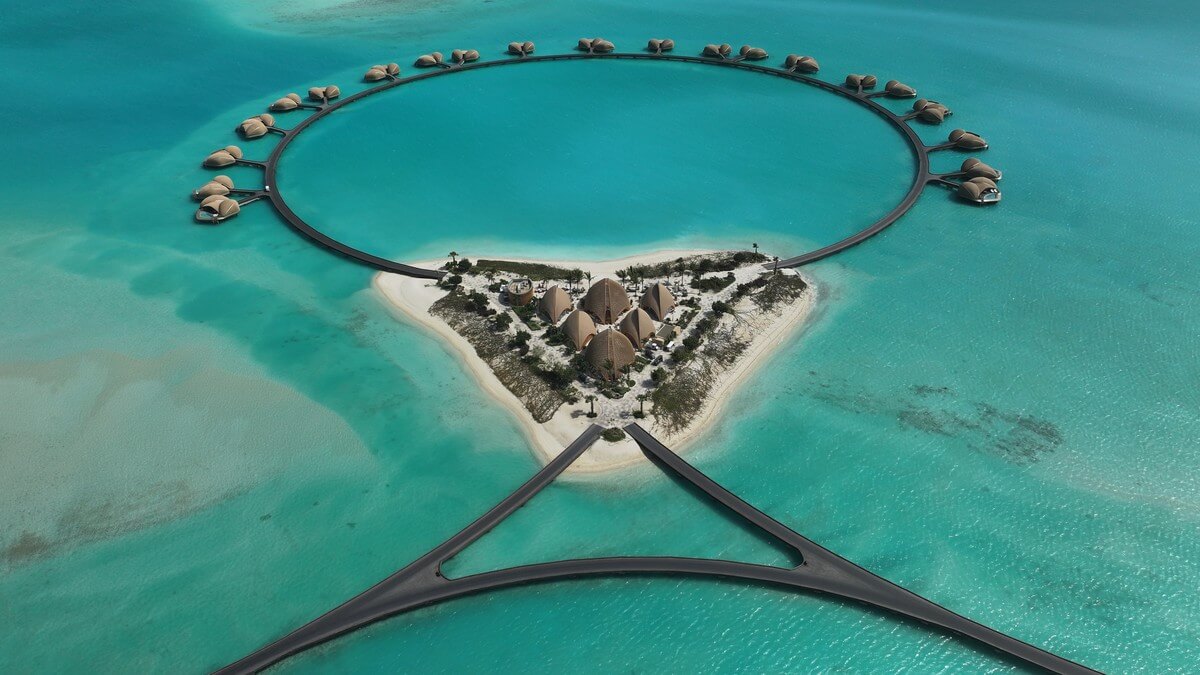
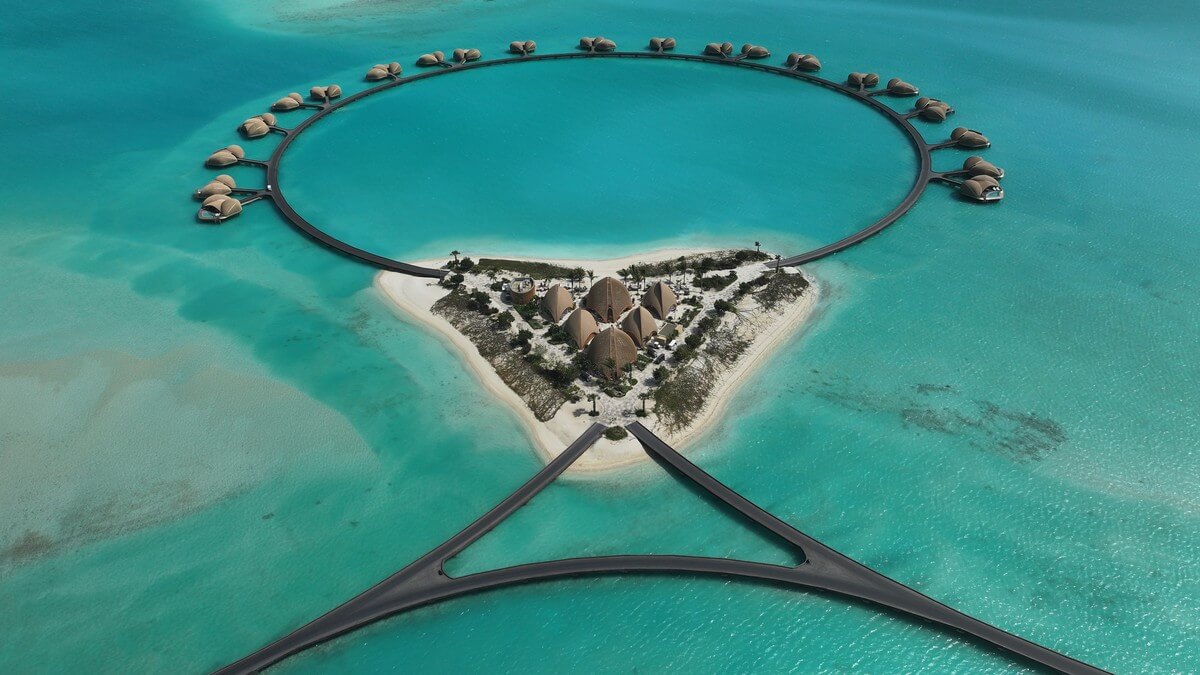
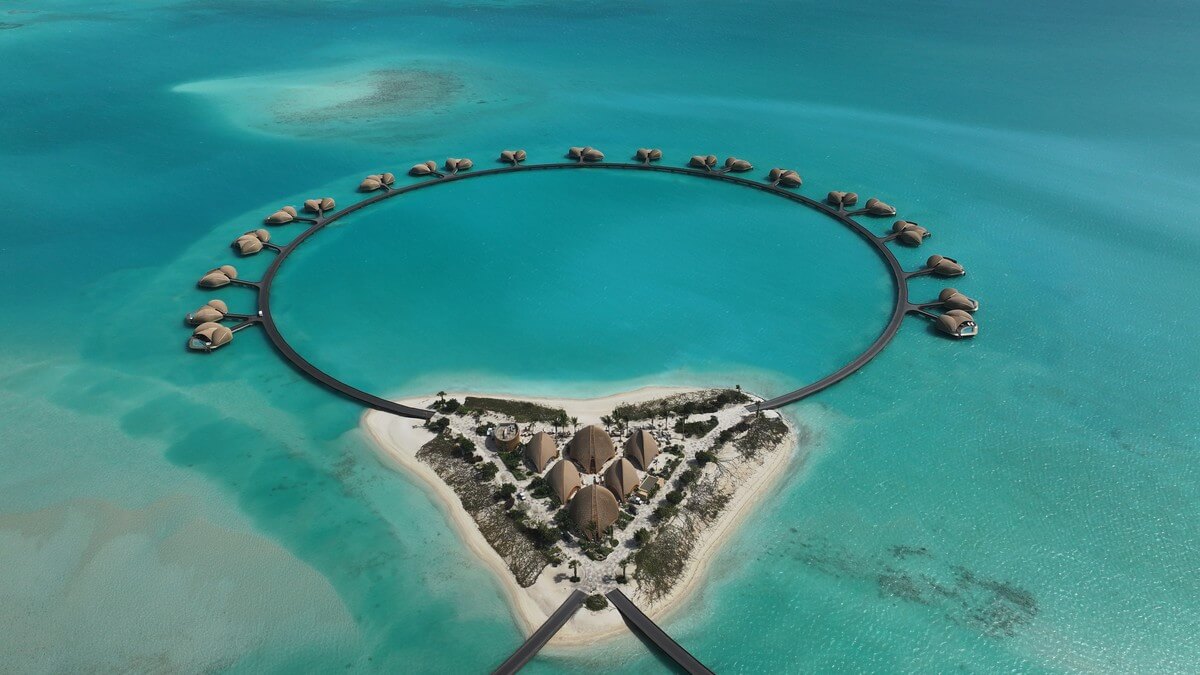
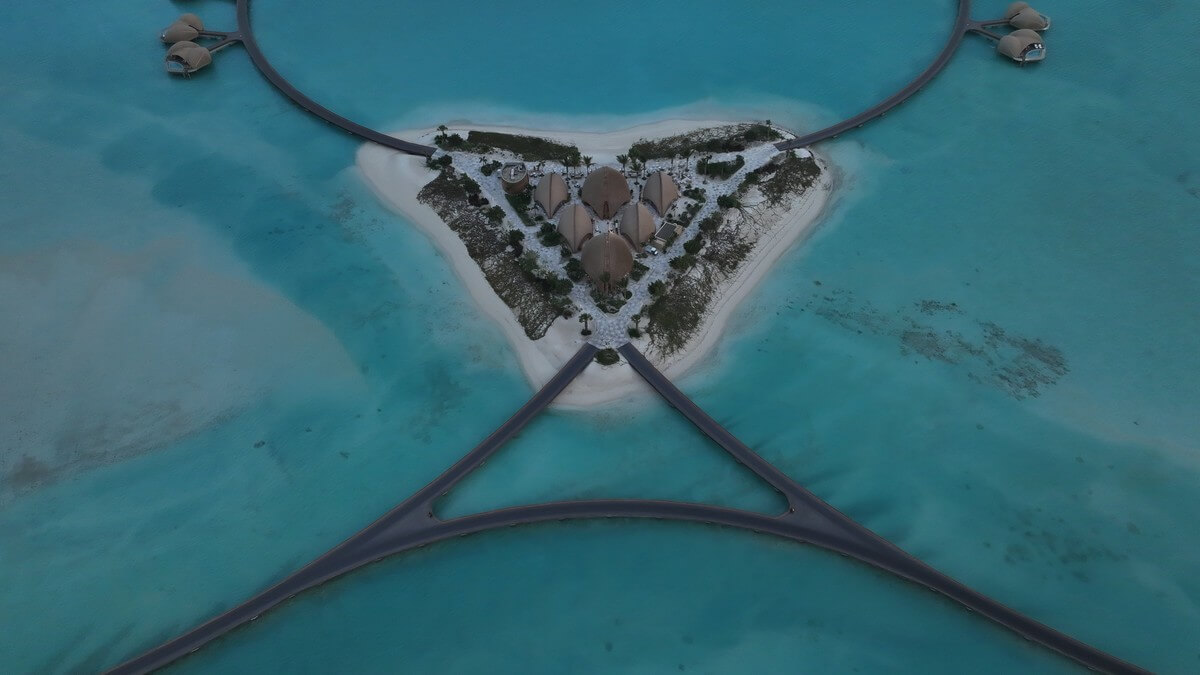
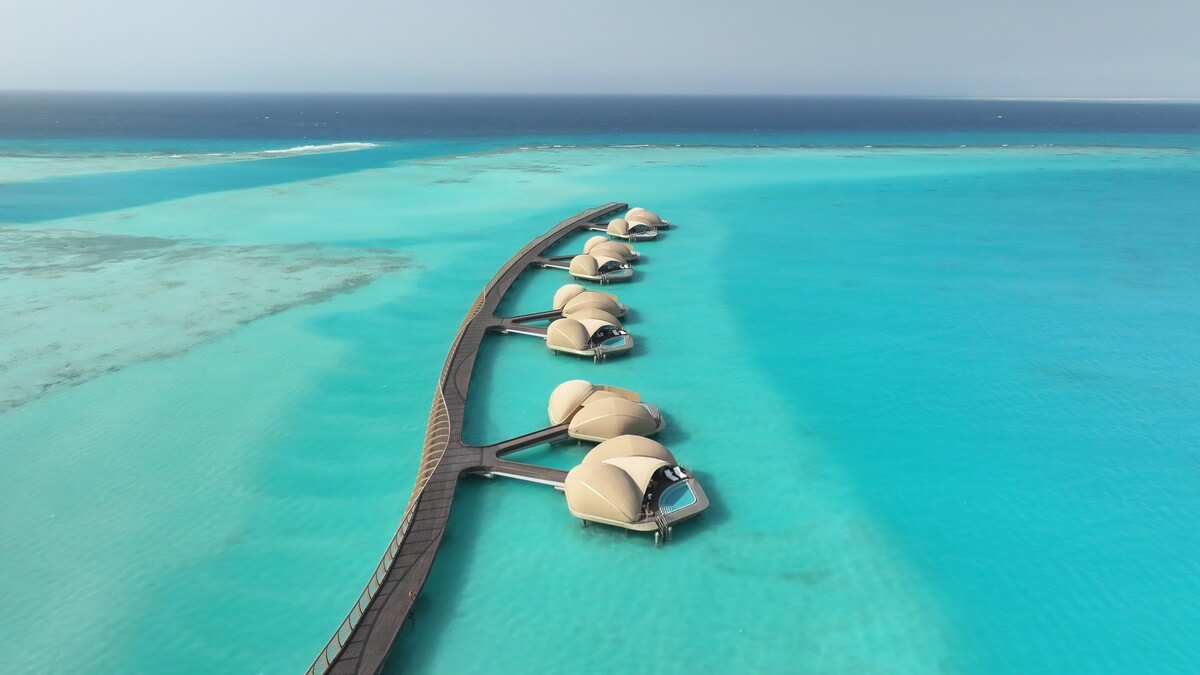
I stayed in an overwater villa that puts every other Maldivian accommodation to shame. The architecture is incredible: from the outside, the villas look like futuristic pods floating on the water. The curved metal roofs reflect the sea, and at night, the underwater lighting glows turquoise-green beneath the villas—with a starry sky above. A sight straight out of a science fiction film.
Inside you'll find: a huge bedroom with sea views through floor-to-ceiling windows, a living area with a telescope (yes, really), a bathroom bigger than some Berlin apartments, and a private terrace with an infinity plunge pool directly above the Red Sea. Wake up in the morning, open the curtains, and gaze at turquoise water stretching to the horizon.
Breakfast was an experience in itself: Eggs Benedict with salmon, fresh açaí bowls, homemade sourdough bread, all served in a restaurant whose ceiling is decorated with hundreds of wooden cylinders arranged like an inverted wave. In the evening, a multi-course dinner al fresco with a sea view—the culinary standard here is absolutely Michelin-starred.
Best time to travel to Saudi Arabia and the Red Sea
The best time to travel to the Red Sea is from October to April. In the summer months, it gets brutally hot, reaching 40-48°C. I was there at the end of May, and even then it was very warm—38°C air temperature, 30°C water temperature. Perfect for swimming, but sightseeing in the midday sun is not a good idea.
My specific tip: November to March is ideal. You'll have pleasant temperatures of 25-32°C, the water is still warm enough for snorkeling, and underwater visibility is at its best. This period is particularly good for divers. May to September It's interesting when whale sharks and manta rays are in the region — but then you have to put up with the heat.
| Month | Air temperature. | Water temperature. | Evaluation |
|---|---|---|---|
| Nov – Feb | 24-28°C | 25-27°C | Perfect |
| Mar – Apr | 28-34°C | 26-28°C | Very good |
| May – June | 34-40°C | 28-30°C | Hot, good for diving |
| July – September | 38-48°C | 30-32°C | Very hot, only for divers |
| Oct | 30-35°C | 28-29°C | Good (end of the heat) |
How much does a trip to Saudi Arabia cost? Realistic costs in 2025
Saudi Arabia isn't a backpacker's destination — but it doesn't have to be unaffordable either. Here's my honest breakdown of costs based on my trip:
| Position | budget | middle class | luxury |
|---|---|---|---|
| Flight (Frankfurt-Jeddah) | 350-500 € | 500-800 € | €1,500-€3,000 (Business) |
| Hotel/Night | 60-100 € | 150-350 € | 500-3.000 €+ |
| Food/day | 20-35 € | 50-100 € | 150-300 € |
| Transport/day | 10-20 € (Bus/Metro) | €30-60 (rental car) | 80-200 € (driver/transfer) |
| visa | approx. €120 (eVisa, one-time fee) | ||
| Diving/snorkeling trip | 50-80 € | 100-180 € | €250-500 (Private) |
| 1 week total (pP) | ~1.200 € | ~2.800 € | ~8.000 €+ |
Important: Prices at the new luxury resorts on the Red Sea start at around €500 per night and go well over €3,000. But for that price, you get an experience that's worth every penny. For budget travelers, Jeddah and Riad are significantly cheaper—good hotels are available from €60-80 per night.
Red Sea Diving: The best spots in Saudi Arabia
The Red Sea Diving The Saudi side is an absolute hidden gem for divers. While Egypt's reefs have suffered in some areas due to mass tourism, the Saudi reefs are in sensational condition. Here are the best spots:
- The Red Sea Islands: Over 90 islands with pristine house reefs. Here I saw turtles, Napoleon wrasse and rays — right from the villa while snorkeling.
- Yanbu: Known for its coral gardens and wreck dives. The SS Ioanna wreck is spectacular.
- Jeddah Coast: Surprisingly good dive sites right outside the city. Perfect for a day trip.
- Farasan Islands: In the far south — here you can find dolphins, dugongs and huge schools of fish. Still relatively untouched.
- NEOM (from 2026+): With "The Line" and the mega underwater hotel, the diving experience of the future will be here.
What impressed me most was the health of the corals. While reefs worldwide are bleaching and dying, Saudi Arabia is actively investing in coral restoration. During my excursion with Galaxea, I saw firsthand how scientists attach coral fragments to special structures, which then grow into new reefs. Within two to three years, a complete reef ecosystem is created.
Practical tips for your Saudi Arabia trip
Here are the most important things I wish I had known beforehand:
Clothing: At the resorts on the Red Sea, you can dress fairly normally—a bikini by the pool, shorts and a t-shirt. In cities like Jeddah or Riyadh, I recommend that women cover their shoulders and knees. Men can get by everywhere in long trousers and a t-shirt. Swimwear is only appropriate at the pool or beach.
Alcohol: Saudi Arabia is officially a dry country. BUT: Some of the new luxury resorts on the Red Sea have licenses to serve alcohol. My resort had a bar with cocktails and wine. Outside the resorts, there is no alcohol—this is something to be aware of and respect.
Currency & Payment: Saudi Riyal (SAR), approximately 1 EUR = 4 SAR. Credit cards are accepted almost everywhere, and Apple Pay also works. You hardly need cash.
Internet & SIM card: 5G is available in all major cities, and Wi-Fi is standard in hotels. Local SIM cards (STC, Zain, Mobily) are available at the airport from around €10 for 10 GB.
Security: Saudi Arabia is extremely safe. The crime rate is one of the lowest in the world. I never felt unsafe at any time—not even when walking alone at night.
Ramadan: During Ramadan, special rules apply: no eating, drinking, or smoking in public during the day. However, hotel restaurants continue to serve meals. If you don't want to travel during Ramadan, check the calendar—it shifts by about 11 days each year.
Arrival: Saudia, Lufthansa, and Turkish Airlines offer direct flights from Germany to Jeddah (approximately 5-6 hours). From Jeddah, you can take a domestic flight or transfer to the resorts on the Red Sea. Some resorts also offer private seaplane transfers.
My conclusion: Is Saudi Arabia a worthwhile travel destination?
Absolutely. Saudi Arabia isn't for everyone—but that's precisely what makes it so special. There's no overtourism, no over-commercialized tourist traps, no overcrowded beaches. Instead: breathtaking architecture, pristine underwater worlds, hospitality that leaves you speechless, and a country that is currently reinventing itself completely.
If you want to be among the first to experience the new Saudi Arabia — now is the time. In 5-10 years, the Red Sea will be one of the world's top destinations. But today, you'll practically have it to yourself.
The combination of futuristic architecture, untouched nature, and genuine Arabian hospitality is unique. I'm already planning my next trip to Saudi Arabia—this time to Al Ula to see the 7,000-year-old rock tombs. This country has so much more to offer than most people realize.
FAQ: Frequently Asked Questions about Saudi Arabia
Do I need a visa for Saudi Arabia?
Yes, but it's straightforward. Germans, Austrians, and Swiss citizens can apply for an eVisa online — the cost is approximately €120, and processing often takes only minutes. The visa is valid for one year with multiple entries and allows stays of up to 90 days per entry.
Is Saudi Arabia safe for tourists?
Yes, very much so. Saudi Arabia has one of the lowest crime rates in the world. As a tourist, you are consistently treated positively. The police presence is high, and the country invests heavily in tourist infrastructure and security. I felt safe at all times.
How much does a week in Saudi Arabia cost?
It depends heavily on your travel style. Budget travelers can get by with around €1,200 (including flights), mid-range is around €2,800, and luxury on the Red Sea starts at around €8,000 per week. The new overwater villas cost from €500 per night upwards.
Can I dive and snorkel in the Red Sea?
Absolutely — and it's one of the best diving experiences in the world. The Saudi side of the Red Sea has healthier coral reefs than Egypt, visibility of up to 40 meters, and incredible biodiversity. Snorkeling is possible directly from the beach or your villa, and organized diving excursions are available.
Are women in Saudi Arabia required to wear a headscarf?
No, there has been no headscarf requirement for female tourists since 2019. In the Red Sea resorts, you can dress as you would in the Mediterranean. In conservative cities, it is recommended to cover shoulders and knees—but this is a recommendation, not a law for tourists.
Is alcohol available in Saudi Arabia?
Saudi Arabia is officially alcohol-free. However, some of the new luxury resorts on the Red Sea now have alcohol licenses. My resort offered cocktails, wine, and beer. Outside the resorts, alcohol is not available.
When is the best time to travel?
November to March offer pleasant temperatures (25-32°C). May to September are ideal for diving (whale sharks and manta rays, but temperatures reach 38-48°C). July and August are extremely hot and only recommended for experienced divers.
Are you planning a trip to Saudi Arabia or the Red Sea? Write to me on Instagram @maxhaase — I'm happy to answer your questions! And if you're a tourism board or hotel brand looking for an experienced content creator, you can find all the information on my website. Collaboration page.
More travel reports: E5 Alpine Crossing | Philippines
 German
  English