
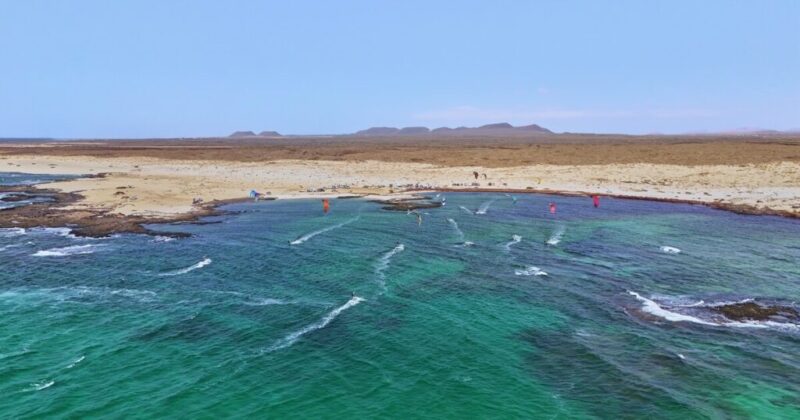
Fuerteventura Travel Report 2026: Kitesurfing & Beaches
Do you want to learn kitesurfing? My Beginner's Guide It explains equipment, course costs, and the best spots for beginners.
My firsthand Fuerteventura travelogue: Two weeks in a campervan on the windiest of the Canary Islands, with kite equipment on the roof and a drone in my backpack. Fuerteventura isn't the island that greets you with lush tropical greenery – it captivates you with rugged volcanic landscapes, endless sandy beaches, and a wind that, for kitesurfers like me, is paradise. In this Fuerteventura travelogue, I'll show you why this island is far more than just a package holiday destination, which Fuerteventura beaches you absolutely shouldn't miss, and why kitesurfing in Fuerteventura is one of the best experiences you can have in Europe.
- Trade winds blow almost daily from April to October at 20-30 knots, water temperature 18-23 °C all year round — one of the most reliable kitesurfing spots worldwide.
- Playa de Sotavento with lagoon, Cofete (12 km wild), El Cotillo Los Lagos, Corralejo dunes and Popcorn Beach — 150 km of coastline, much of it unspoiled.
- Sotavento for flat water freestyle (GKA World Cup), El Cotillo for waves, Flag Beach as an all-rounder — courses €250-400, equipment rental €60-80/day.
- Volcano highlights: Calderón Hondo crater, Ajuy caves with 70 million year old rocks, Mirador de Morro Velosa (669 m) and the UNESCO Biosphere Corralejo dunes.
- Budget 1 week: Backpacker €450-700, Mid-range €800-1,300, Comfort €1,500-2,500 — Flight from €80 off-season, car rental from €15/day at Cicar.
Whether you're coming as a kitesurfer, a vanlife explorer, or simply looking for the most spectacular landscapes in the Canary Islands – this guide will have you perfectly prepared. It also includes my honest Fuerteventura tips on costs, the best kitesurfing spots, car rentals, and the places most tourists miss.
Fuerteventura travel report: Why the island of eternal winds is so compelling
Fuerteventura is the second largest of the Canary Islands and also the oldest – over 20 million years of geological history have shaped a landscape that reminds you of Mars, were it not for the absurdly turquoise sea. What makes the island so special for me is that the trade winds blow here from April to October with a reliability that is unparalleled worldwide. For kitesurfers, this means you can count on 20-30 knots almost every day.
But even if you don't kitesurf, Fuerteventura has plenty to offer: over 150 kilometers of coastline, much of it unspoiled beaches. The dune landscape in the north is a UNESCO Biosphere Reserve. And the volcanic craters inland are so dramatic that film crews regularly shoot here. Compared to Tenerife or Gran Canaria, Fuerteventura is significantly quieter – here you often have entire bays to yourself.
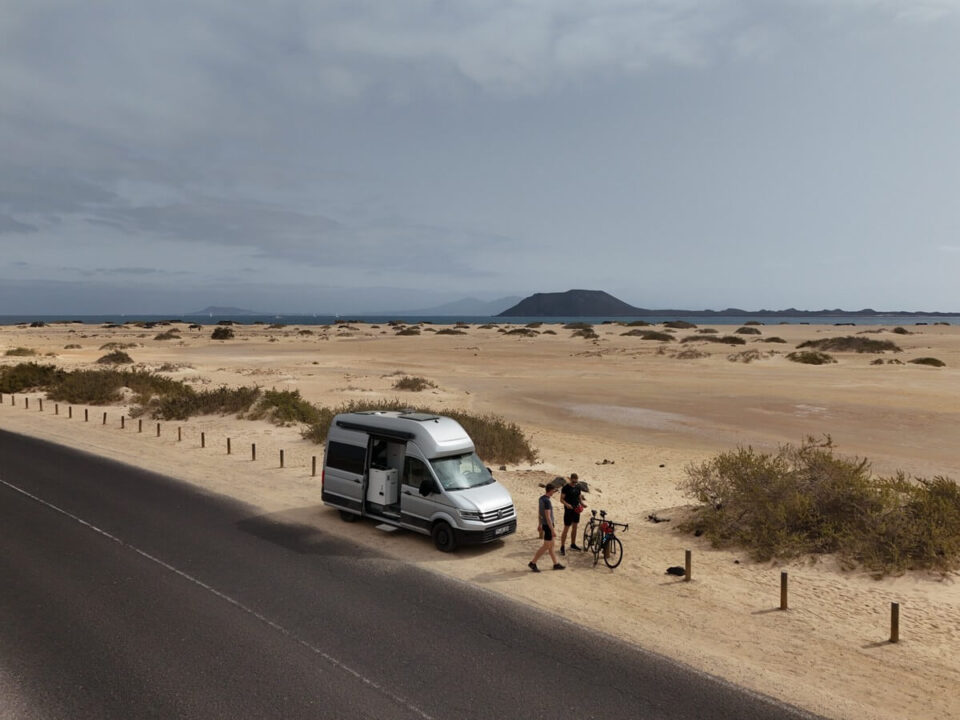
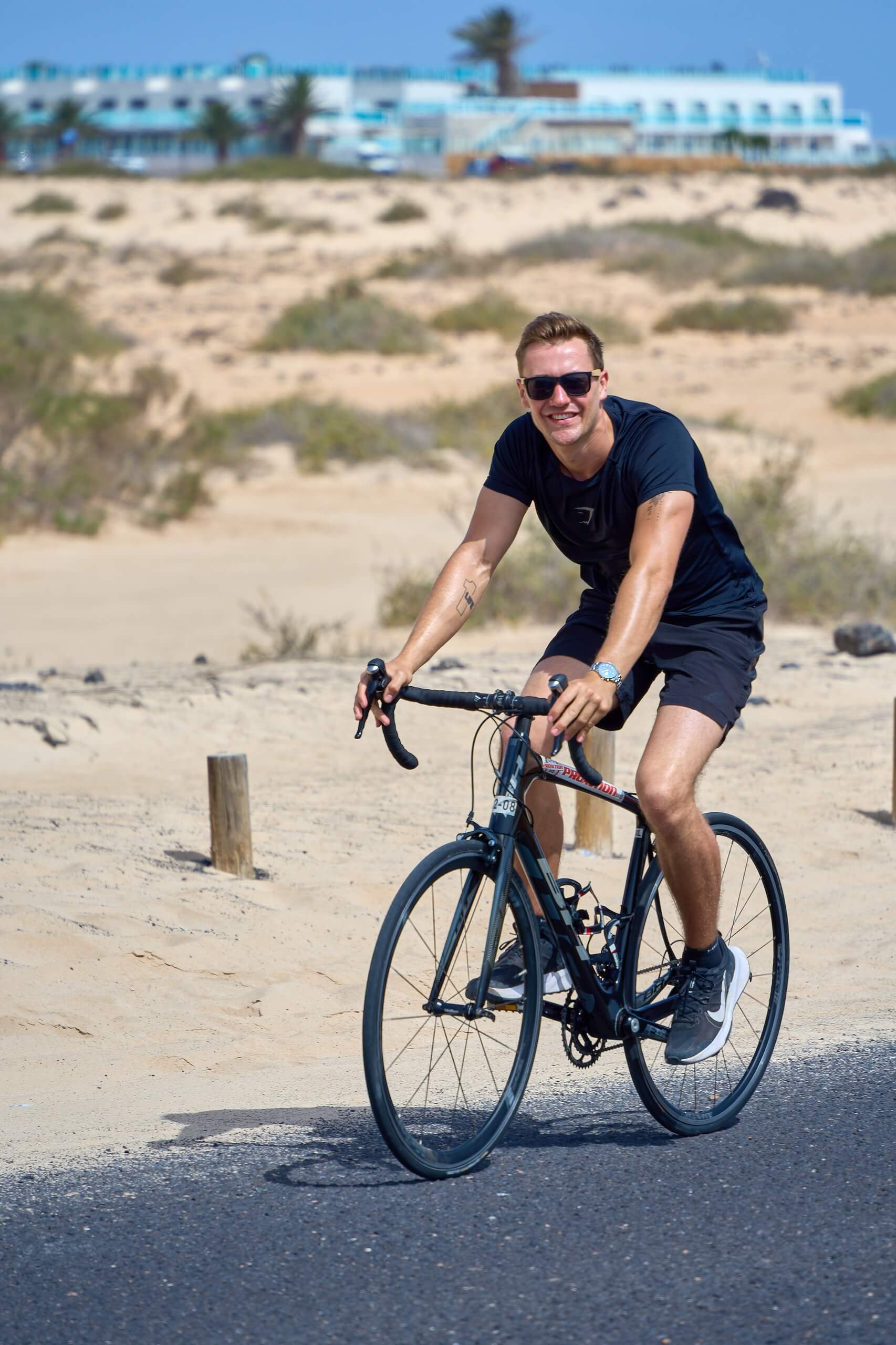
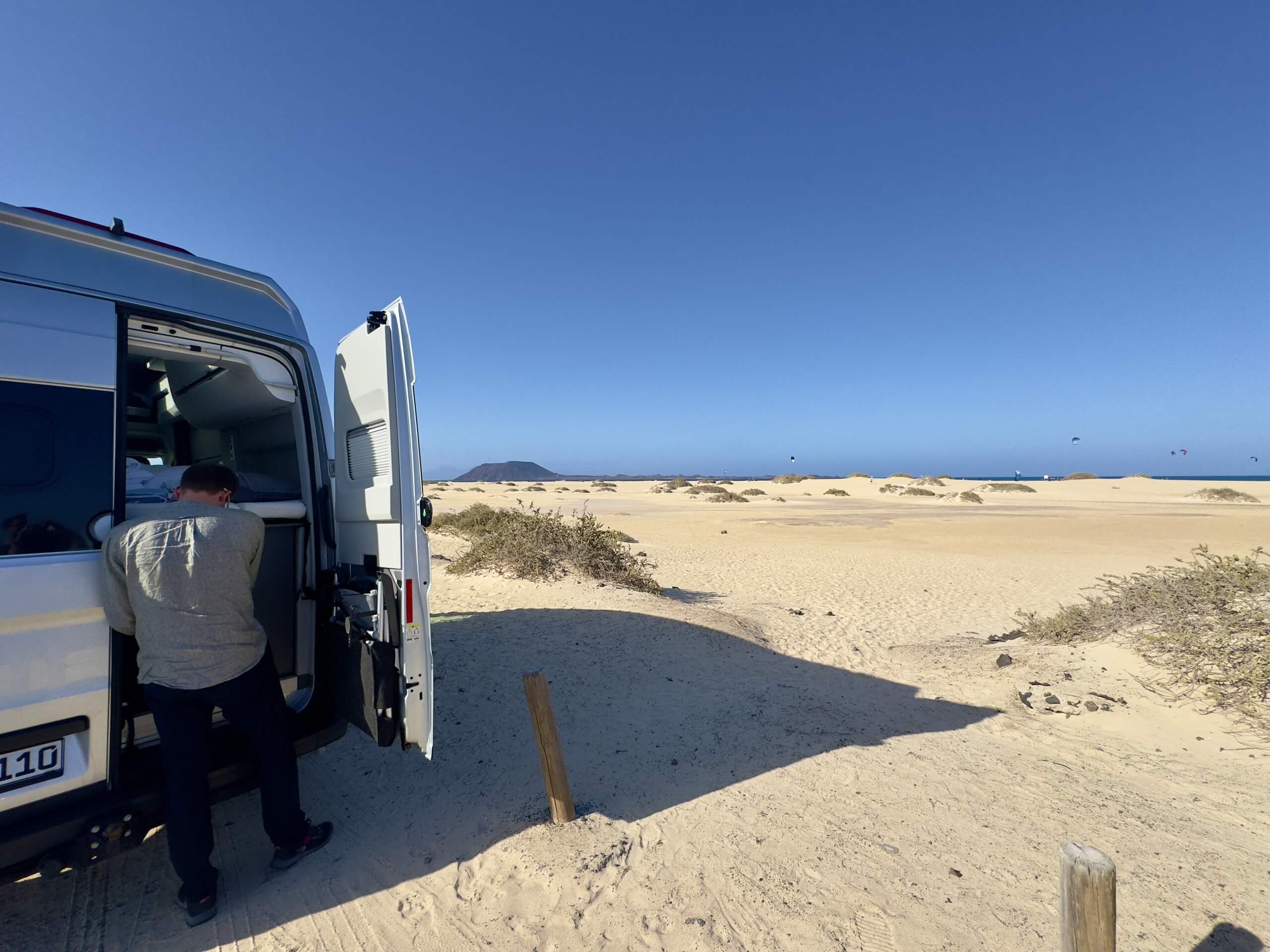
I visited the island in May/June 2025 and explored it by campervan – a decision I highly recommend. The freedom of waking up on the beach in the morning and finding yourself in a volcanic landscape in the afternoon is priceless. If you love similar island adventures, check out my Lanzarote travelogue and my Gran Canaria Guide to.

Kitesurfing in Fuerteventura – The best spots & insider tips
If you come to Fuerteventura as a kitesurfer, you'll quickly understand why the island is considered one of the best spots in Europe. The combination of consistent trade winds, shallow lagoons, and warm water (18-23°C depending on the season) is simply perfect. Here are the spots you need to know:
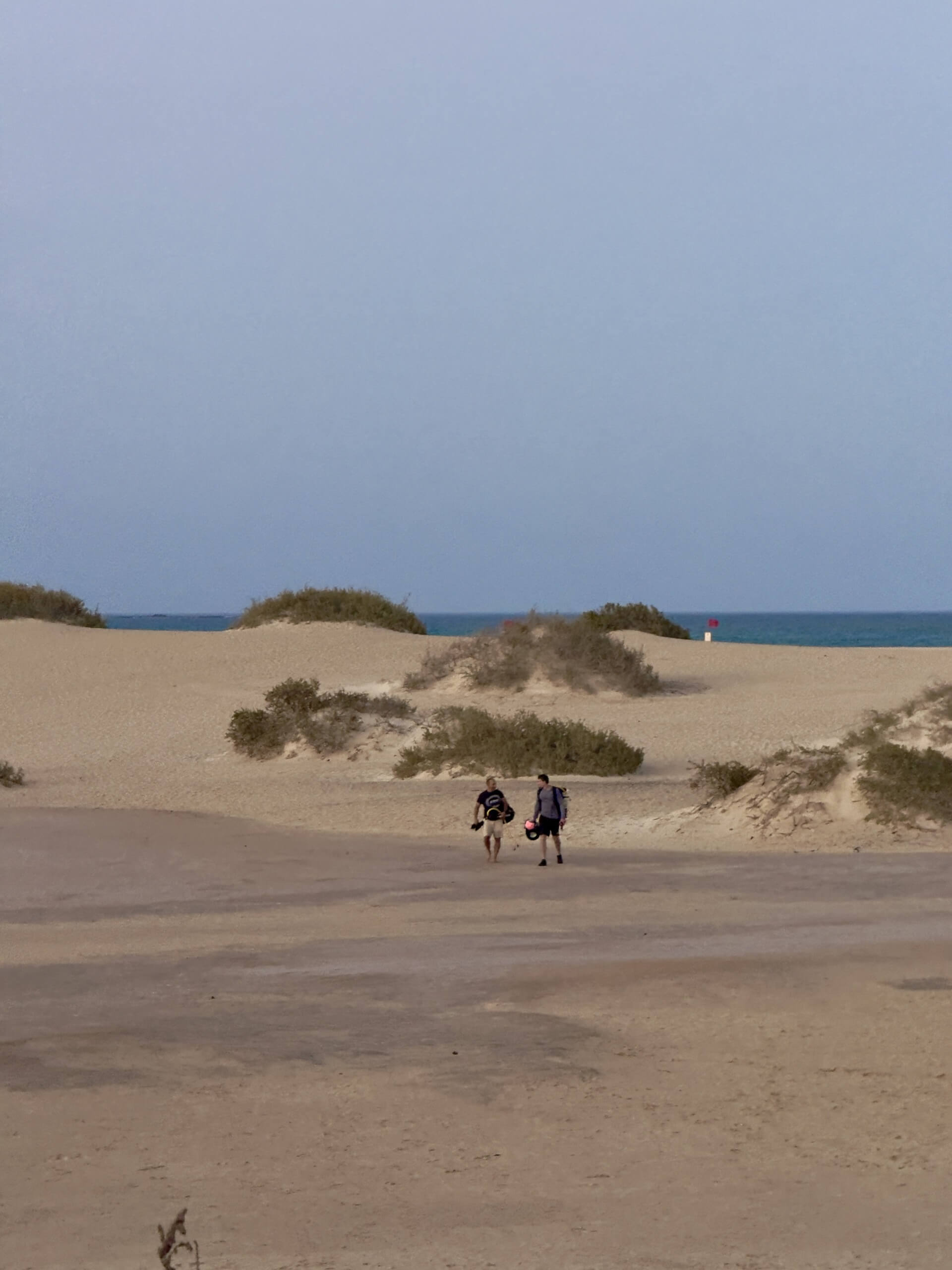
Sotavento / Playa de la Barca – The ultimate kitesurfing spot on Fuerteventura. At low tide, a huge shallow lagoon forms, offering perfect conditions for freeriding and freestyle with side-onshore (northeast) winds. The lagoon's water is waist-deep, and the bottom is sandy – ideal for beginners and practicing new tricks. At high tide, the lagoon deepens, allowing you to cruise in the waves off the sandbar. The GKA Kite World Cup is held here annually – a testament to the spot's quality.
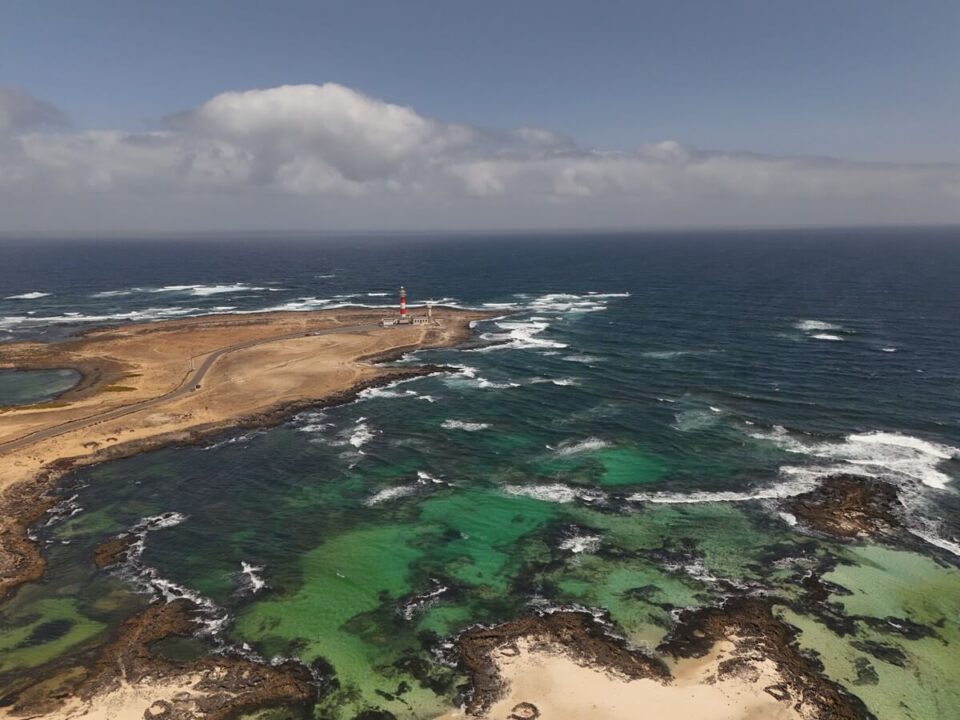
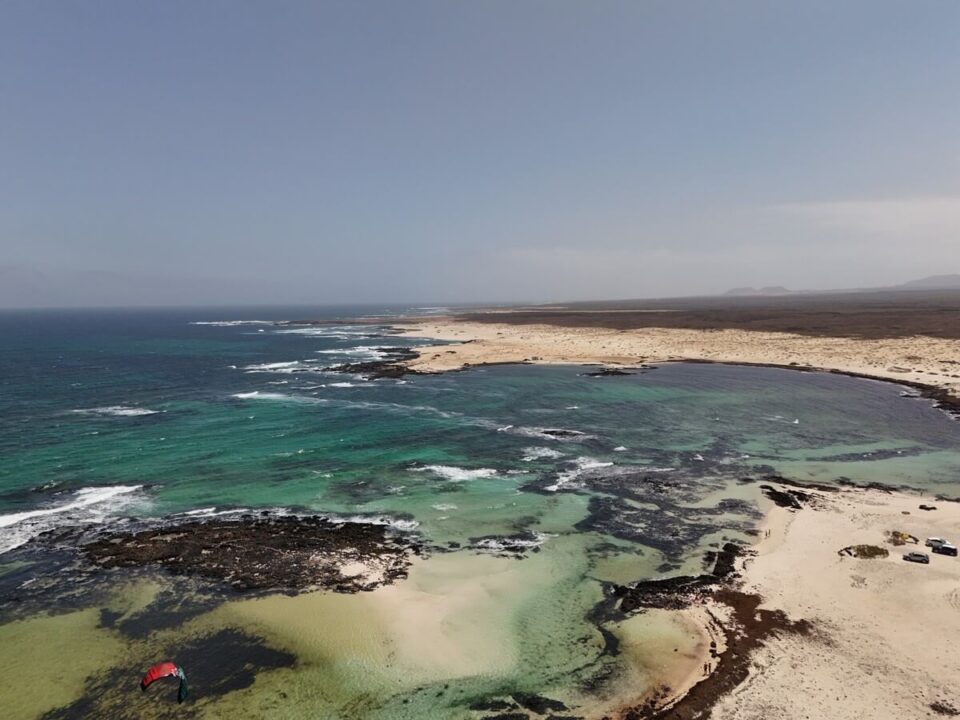
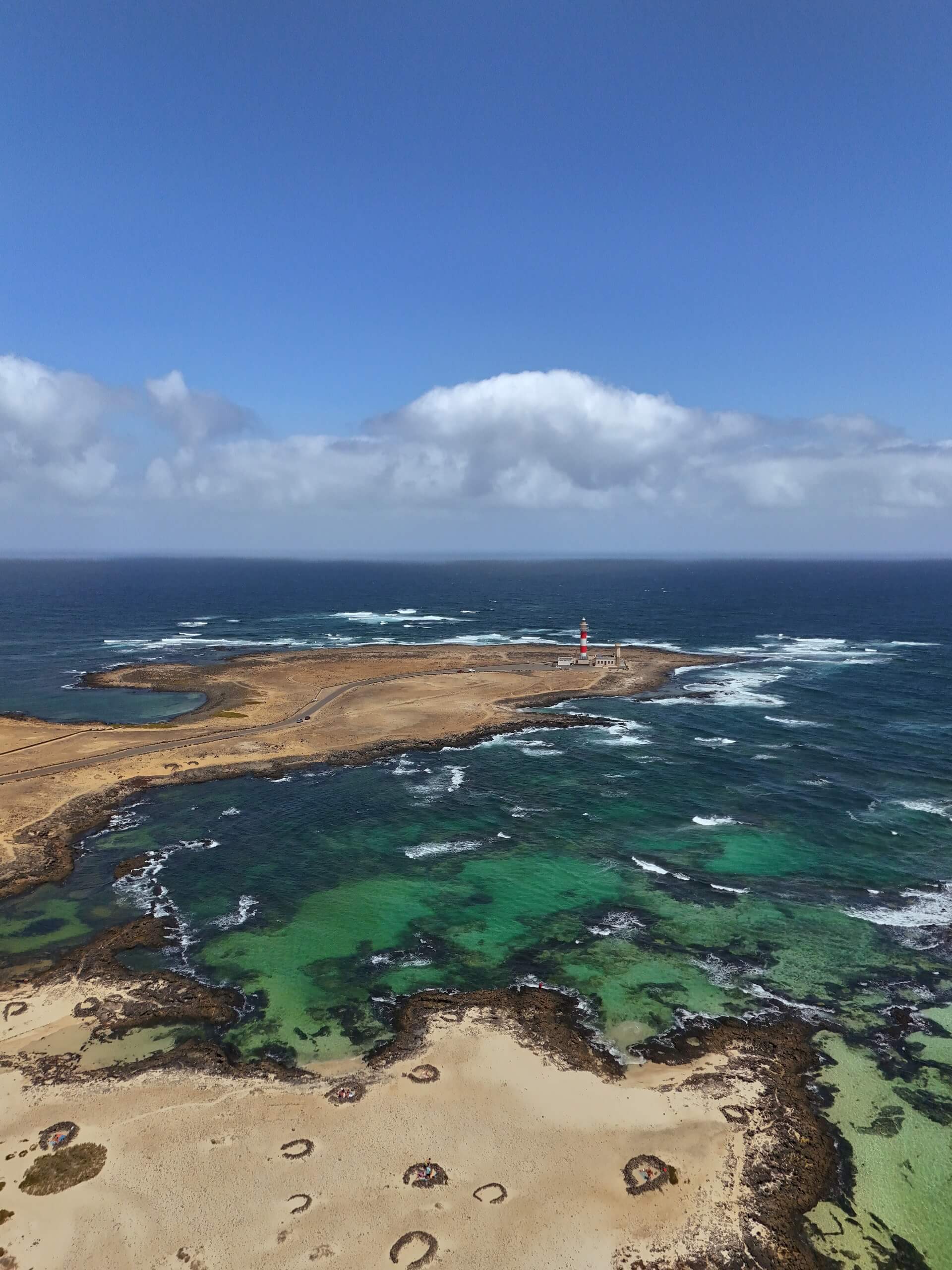
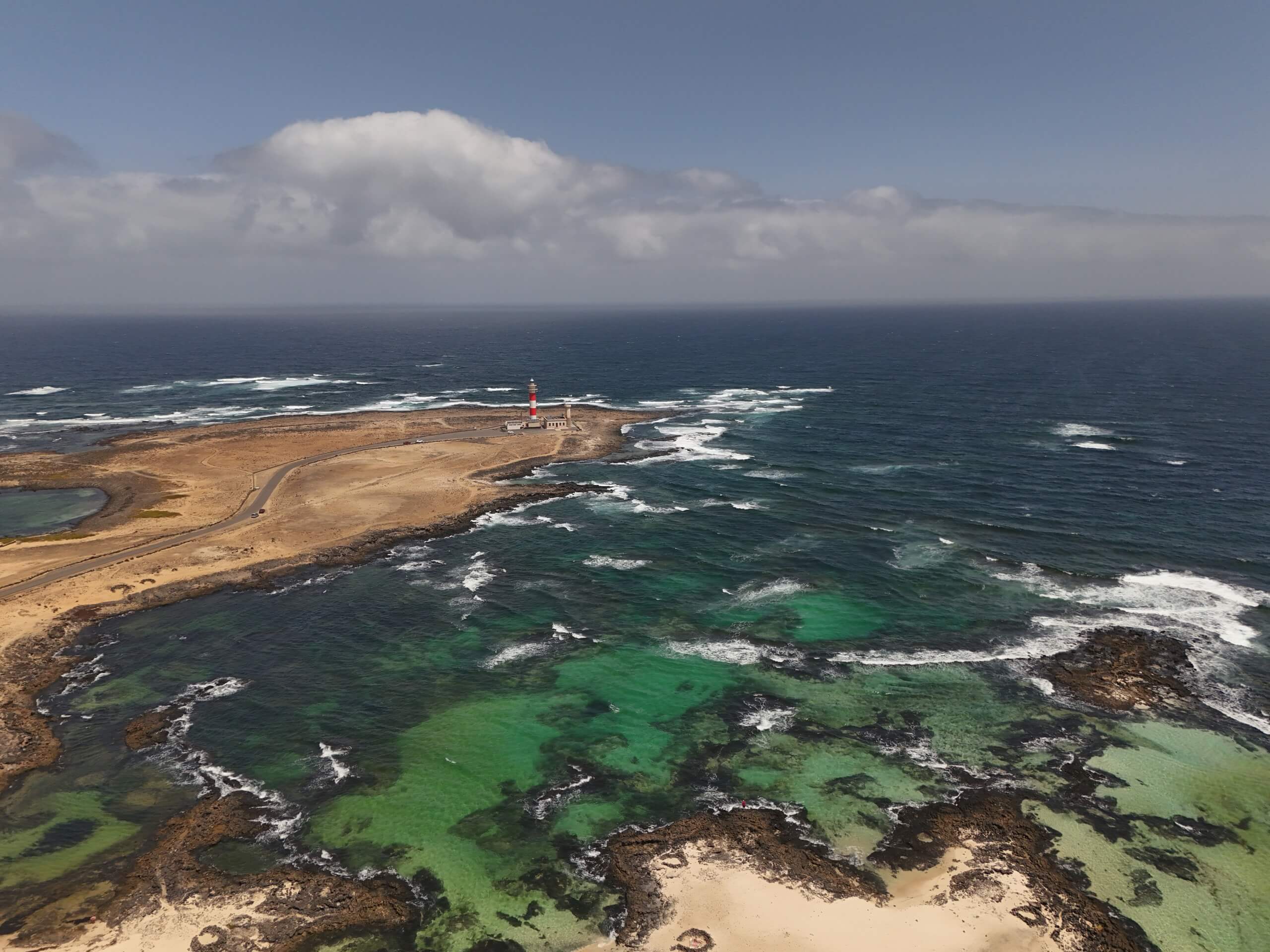
El Cotillo – Lagoon & Waves – El Cotillo in the northwest has two faces: The sheltered lagoon (Playa de los Lagos) is perfect for beginners with its turquoise, calm waters. On the other side of the lighthouse, you'll find a wave spot area that delivers really good waves with a northwest swell. For experienced wave riders, it's one of the best spots on the island.
Located north of Corralejo, Flag Beach offers consistent sideshore winds and a mix of flat water and small waves. The spot is spacious, so you'll have plenty of room even on windy days. Perfect for intermediate kiters looking to improve their skills.
The sessions on the northwest coast near El Cotillo, when the wind picked up in the afternoon and the setting sun bathed the Faro del Tostón lighthouse in golden light – those are the moments I live for. The wind was almost constantly between 18 and 25 knots during my trip; I had my 9m and 12m kites with me and used both regularly.
If you're bringing your own equipment, keep in mind that most airlines accept kite equipment as sports baggage (30-32 kg, approx. €50-80 each way). There are numerous kite schools in Corralejo and Sotavento if you'd like to rent equipment – expect to pay around €60-80 per day for a complete set.

The most beautiful beaches in Fuerteventura – My top 7
Fuerteventura has the best beaches in the Canary Islands – that's no exaggeration, it's a consensus among everyone who knows several of the Canary Islands. Here are my personal highlights:
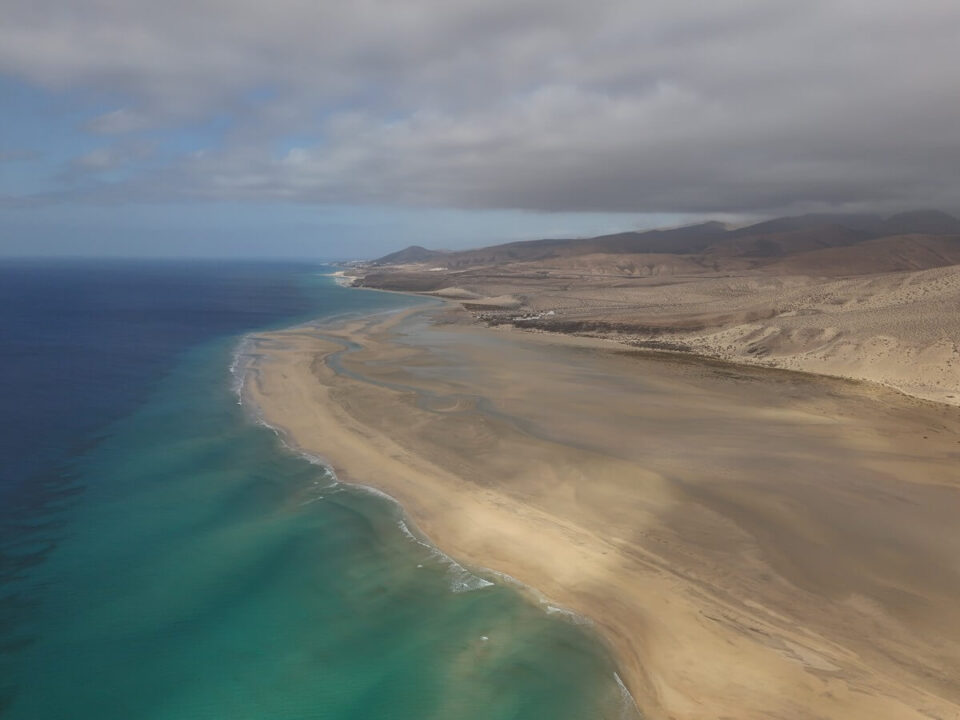
The endless sandy beach in the south stretches for several kilometers and is particularly spectacular at low tide when the lagoon forms between the sandbank and the shore. The interplay of turquoise, emerald green, and gold is surreal. Perfect for kitesurfing, walking, and drone photography.
– The wildest beach on the island. Accessible only via a bumpy dirt track on the Jandía peninsula, Cofete rewards you with a 12 km long, deserted sandy beach against a dramatic mountain backdrop. Warning: The current is strong, swimming is at your own risk. But the scenery? Breathtaking.
3. Playas de El Cotillo (Los Lagos) – Several small coves with natural rock pools where the water shimmers in a Caribbean turquoise. Perfect for snorkeling and for families, as the rocks break the waves.
4. Playa de la Concha – A small, horseshoe-shaped bay near El Cotillo. Calm water, fine sand, few tourists. One of the most photogenic beaches on the island.
5. Corralejo Dune Beaches – The 11 km stretch of beach along the Parque Natural de las Dunas de Corralejo is a dream: golden sand, clear water, and the sand dunes as a backdrop. It becomes noticeably less crowded at the southern end (towards the Great Dunes).
6. Playa de Garcey (Shipwreck) – A hidden beach on the west coast with the rusty wreck of the "American Star". Access is adventurous (unpaved track), but the sight of the wreck against the volcanic backdrop is unique.
7. Popcorn Beach (Playa del Bajo de la Burra) – Near Corralejo you'll find this curious beach where, instead of sand, there are small white calcareous algae formations that actually look like popcorn. Not a beach for swimming, but a cool photo opportunity.

Fuerteventura sights: volcanoes, waterfalls & insider tips
Away from the beaches, Fuerteventura reveals a side that many tourists never get to see: a primeval, volcanic landscape so barren and dramatic that you sometimes wonder if you are still on Earth.
The viewpoint, designed by César Manrique and situated at an altitude of 669 meters, offers a panoramic view across the entire central plain to the sea. On clear days, you can see Lanzarote on the horizon. The architectural style is reminiscent of Manrique's works on Lanzarote – the boundary between nature and architecture blurs.
Betancuria – The former island capital lies hidden in a valley surrounded by rugged mountains. The village is beautifully restored and offers a glimpse into the island's history. The 15th-century Church of Santa María and the archaeological museum are well worth a visit. Afterwards, be sure to continue your journey over the Degollada de los Granadillos – this mountain pass is one of the most spectacular roads in the Canary Islands.
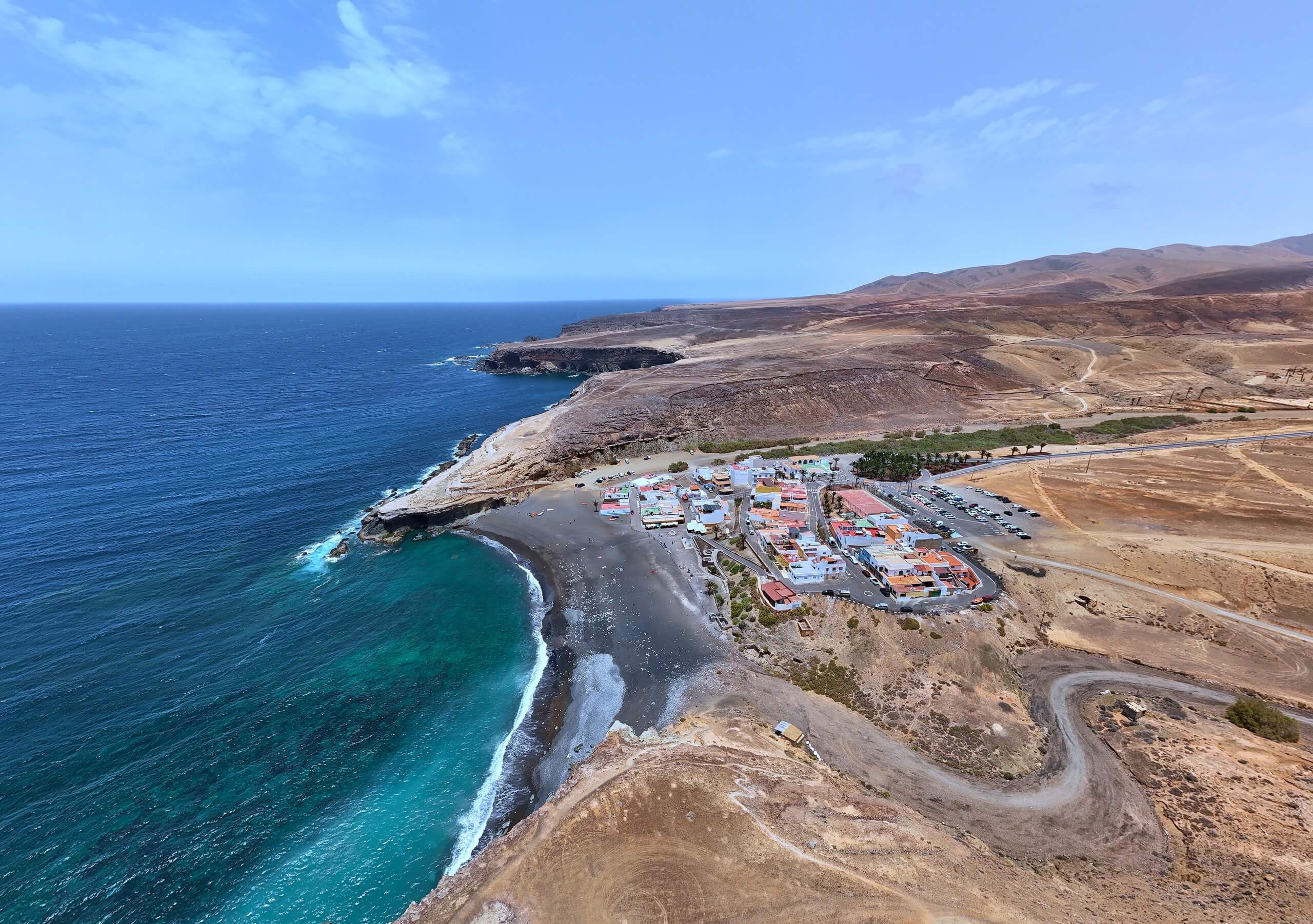
On the west coast, you'll find the Cuevas de Ajuy, a cave system in the cliffs accessible via a short coastal path. The black volcanic rocks here are among the oldest rock formations in the Canary Islands (over 70 million years old). Ajuy beach, with its black sand set against the high cliffs, is dramatically beautiful.
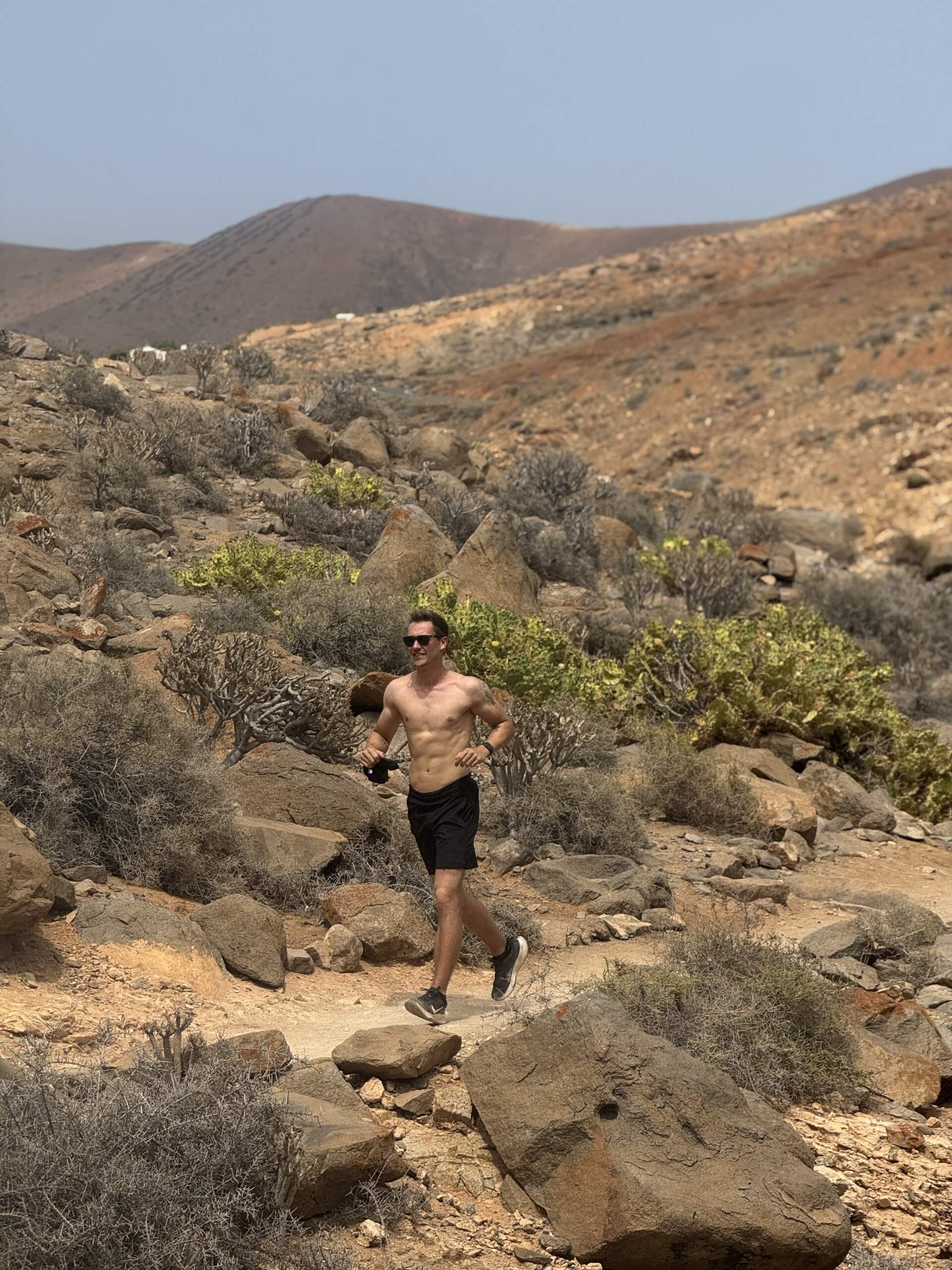
– One of the most accessible volcanic craters on the island. An easy circular hike (approx. 1.5 hours) takes you up to the crater rim, from where you can gaze into the perfectly formed crater and enjoy a 360-degree panorama of the northern tip. On a clear day, you can see Lanzarote and Lobos.
Fuerteventura by campervan – freedom on four wheels
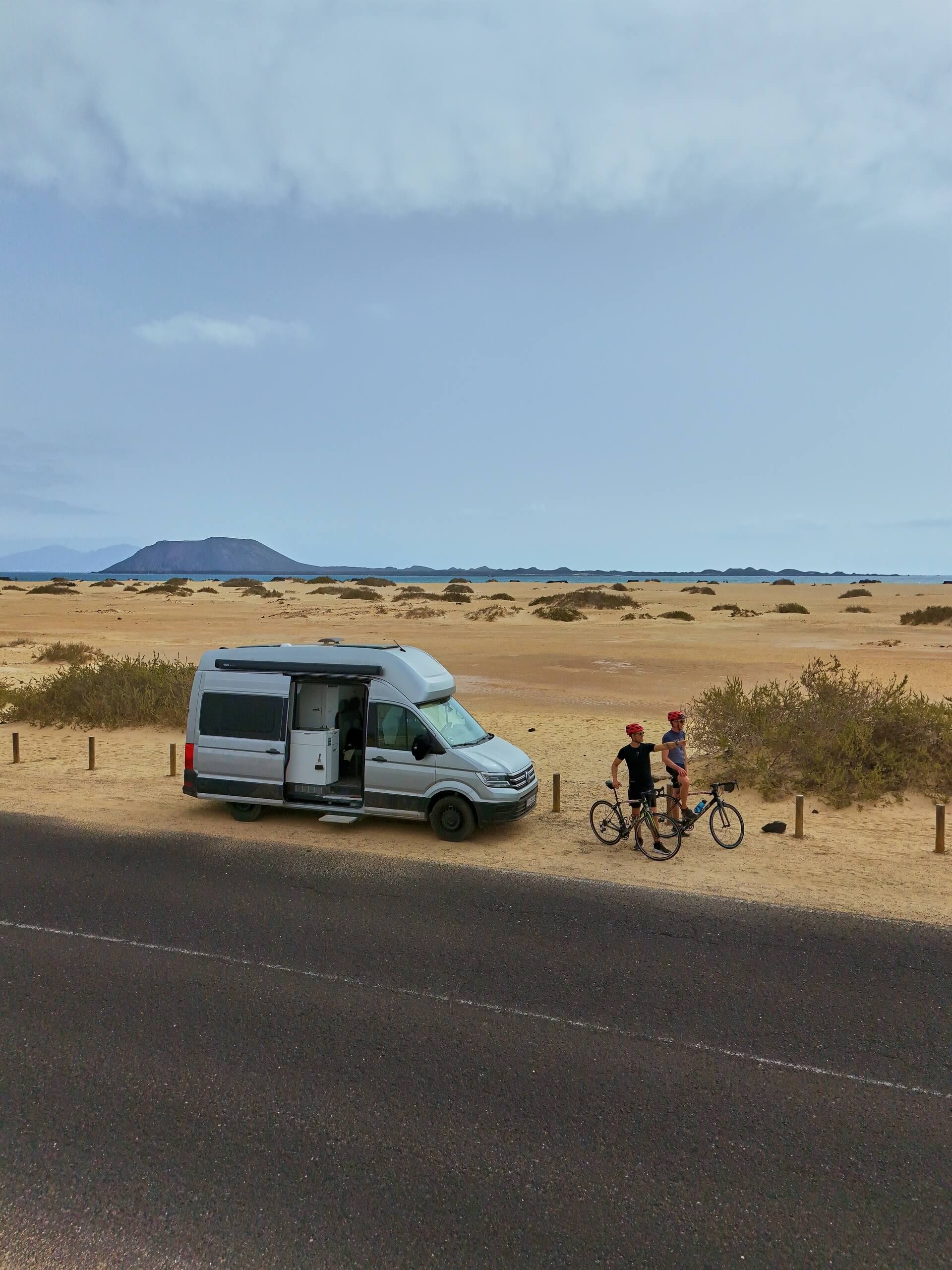
Fuerteventura is one of the best islands in Europe for van life – and I say that as someone who has spent the night in a van on many islands. The reasons are simple: the weather is mild all year round, the island is a manageable size (you can drive from north to south in 1.5 hours), and there are numerous campsites along spectacular stretches of coastline.
Officially, wild camping is not permitted on Fuerteventura, but in practice it is tolerated in many places as long as you behave respectfully: don't leave any trash, don't drive into nature reserves, and don't park in the dunes. Popular spots in the south (Sotavento area) and northwest (El Cotillo area) are frequented by other vanlifers – there are unofficial, self-organized communities here.
You can refill your drinking water at public fountains or petrol stations. Every larger town (Corralejo, Puerto del Rosario, Morro Jable, Gran Tarajal) has supermarkets with a good selection. Important: Fuerteventura has few trees and therefore hardly any natural shade – an awning or sunshade for your van is essential.
The area around the old El Tostón lighthouse (north of El Cotillo) is perfect for an overnight stay. In the morning you wake up to a view of the sea, and in the afternoon you can kitesurf right outside your "doorstep". It doesn't get any better than that.

Fuerteventura Costs – What the island really costs (as of 2025)
Fuerteventura is fairly priced by Canary Island standards – significantly cheaper than Tenerife or Gran Canaria, especially when it comes to accommodation. Here are my realistic experiences:
| category | budget | middle class | comfort |
|---|---|---|---|
| Flight (round trip) | 80–150 € | €150–250 | €250–400 |
| Accommodation / Night | 25–45 € | 50–90 € | 100–200 € |
| Rental car / day | 15–25 € | 25–45 € | €45–80 (SUV) |
| Dining out / Person | 8–15 € | 15–30 € | 30–60 € |
| Kiteboarding course (3 days) | €250–400 (group course), €500–700 (private) | ||
| Kite equipment rental / day | 60–80 € (complete: kite, board, harness, wetsuit) | ||
| Total 1 week / person | ~450–700 € | ~800–1,300 € | ~1,500–2,500 € |
Flights to Fuerteventura from German airports are often surprisingly cheap, especially in the off-season (October-March). Ryanair and Eurowings offer direct flights. A rental car is practically essential on Fuerteventura – without one, you'll miss out on the island's many attractions. Cicar is the best local provider, offering transparent pricing and comprehensive insurance with no excess.

Fuerteventura Tips: Weather, Best Time to Travel & Getting There (Insider Knowledge)
Best time to travel: Fuerteventura is a year-round destination. For kitesurfers, the peak season is from May to September (strongest and most consistent winds). For beach holidays and hiking, October to April is ideal – pleasant temperatures of 20-25°C, less wind, and fewer tourists. In summer, the Calima (hot Saharan wind) can briefly push temperatures up to 40°C.
Fuerteventura Airport (FUE) is centrally located near Puerto del Rosario. Direct flights from Germany take approximately 4.5 hours. From the airport, you can reach Corralejo (north) in 30 minutes or Jandía (south) in 45 minutes.
Book now! Fuerteventura has a good road network, but public buses are infrequent and don't cover the interesting spots. I recommend Cicar or AutoReisen – local providers with fair prices and no hidden costs.
Wind app: Essential for kitesurfers: The Windy app (or Windguru) for precise wind forecasts. The stations at Sotavento and Flag Beach are particularly reliable.
Water & Sun Protection: Fuerteventura is hot and dry. Always carry at least 2 liters of water per person, especially when hiking. UV radiation is intense year-round – SPF 50+ and a buff/cap are essential, even when kitesurfing.
Internet & Phone: EU roaming applies in the Canary Islands. Wi-Fi is available in all accommodations and most cafes. For digital nomads: There are a few coworking spaces in Corralejo, but the selection is limited.
Respect nature: Fuerteventura is a UNESCO Biosphere Reserve. Please do not take stones or "popcorn" from the beach, do not drive in protected dune areas, and generally follow the leave-no-trace principle.
FAQ – Fuerteventura
Is it possible for a beginner to learn kitesurfing in Fuerteventura?
Yes, absolutely! Sotavento is one of the best learning spots in the world. The shallow lagoon at low tide offers perfect conditions: a waist-deep, sandy bottom and consistent winds. There are several IKO-certified schools (e.g., René Egli, ION Club) that offer courses in German. Expect a 3-5 day course to learn the basics.
When is the best time for kitesurfing in Fuerteventura?
The wind is strongest and most consistent from May to September (15-30 knots almost daily). However, there are also kiteable days in winter – though less consistent and with more wave days (good for wave kiters). The water temperature remains between 18-23°C year-round – a wetsuit (3/2mm in summer, 4/3mm in winter) is recommended.
Do you need a rental car on Fuerteventura?
Highly recommended. The most beautiful beaches and spots are only accessible by car. Public bus service is limited to a few main routes and runs infrequently. Rental cars cost from approximately €15 per day in the off-season.
Is Fuerteventura expensive?
No, Fuerteventura is one of the more affordable Canary Islands. Compared to a holiday on the Spanish mainland or in Germany, Fuerteventura is often even cheaper – especially when it comes to flights and accommodation.
What is the difference between Fuerteventura and Lanzarote?
Both islands are volcanic and barren, but Lanzarote is significantly greener, has more cultural highlights (César Manrique), and better restaurants. Fuerteventura has the better beaches, more wind (better for kitesurfing), and is generally quieter. The two islands are only 12 km apart – a day trip by ferry is well worth it. More on this in my
Is it possible to travel from Fuerteventura to Lanzarote?
Yes! Naviera Armas and Fred Olsen operate several daily ferries between Corralejo and Playa Blanca (Lanzarote). The crossing takes approximately 25-35 minutes and costs from €15 per person (return from €25). Cars can be taken on board (from approximately €60 return).
Is Fuerteventura suitable for families?
Yes, the sheltered bays near El Cotillo (Los Lagos) and the shallow beaches of Corralejo are particularly family-friendly. The water temperature is pleasant year-round. However, many of the most beautiful spots require a car and some involve gravel roads. For families with young children, Costa Calma or Corralejo are the best bases.
Fuerteventura isn't an island that will blow you away at first sight – it's barren, dry, and seemingly unspectacular. But that's precisely its charm: the beauty lies in its simplicity, in the endless horizons, the constant wind, and the sense of freedom you feel here. For me, as a kitesurfer, Fuerteventura is one of the best places in Europe – and as a travel destination overall, it's an island I can recommend to anyone seeking authenticity.
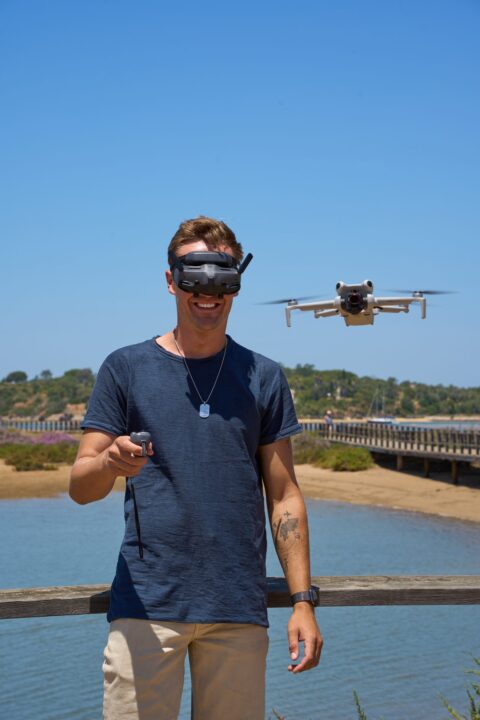
Max Haase
Travel Content Creator · Drone Photographer · Visual Storyteller
A professional travel creator for over 10 years with over 4 million followers. Specializing in high-end tourism board collaborations and visual travel storytelling.

 German
 English