
Planning an Australia road trip — route, costs & tips
Planning an Australia road trip — route, costs & tips for your adventure
Australia is the ultimate road trip destination. 25,000 kilometers of coastline, the red Outback, tropical rainforest, the Great Ocean Road, and the Great Barrier Reef—all best explored by car. In 2025, I spent five weeks exploring the East Coast and the Red Centre, and in this guide, I've compiled everything you need to know for your Australian road trip: the best route, realistic costs, campsites, and the mistakes to avoid.
The best Australia route — 4-6 weeks East Coast + Red Centre
Section 1: Sydney → Byron Bay (1 week)
Starting in Sydney: a day trip to the Blue Mountains (drone flight over the Three Sisters – breathtaking), then along the coast via Newcastle, Port Macquarie and Coffs Harbour to Byron Bay. This route is 770 km and has it all: beaches, coastal forests, charming surf towns.
Highlights:
- Blue Mountains — Three Sisters Viewpoint, Valley of the Waters Walk (2h)
- Port Stephens — Sand dunes, dolphin watching (boat 35 AUD)
- Byron Bay — Lighthouse hike, surf lesson (AUD 60), Farmers Market on Sundays
Section 2: Byron Bay → Cairns (2 weeks)
The classic "East Coast" route: Byron Bay → Gold Coast → Brisbane → Fraser Island → Airlie Beach (Whitsundays) → Townsville → Cairns. 2,400 km, but there's so much to see that you need at least two weeks.
Highlights:
- Fraser Island — the world's largest sand island. Four-wheel drive required! (Day trip from AUD 195)
- Whitsundays — Whitehaven Beach (the whitest beach I've ever seen), Hill Inlet Viewpoint. Boat tour: 180-250 AUD
- Great Barrier Reef from Cairns — snorkeling or diving. Day trip 220-280 AUD. Definitely get your diving certification beforehand; snorkeling alone is not enough.
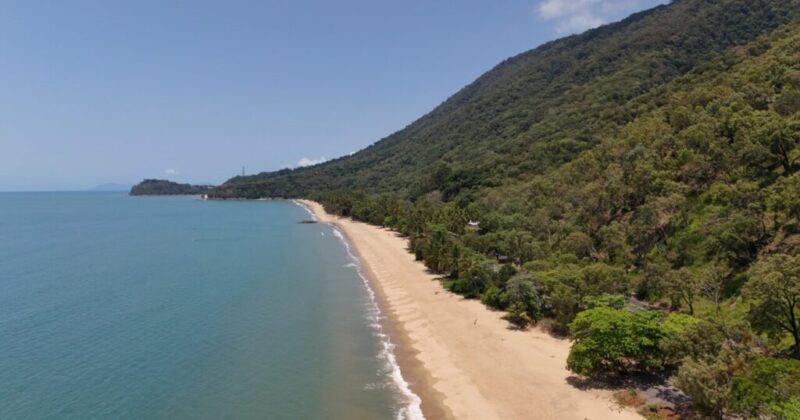
- Daintree Rainforest — the oldest rainforest in the world (135 million years old), crocodiles in the Daintree River, cassowaries on the road
Section 3: Red Centre (1 week)
Flight from Cairns to Alice Springs (from 120 AUD), then rental car. Alice Springs → Kings Canyon → Uluru → Kata Tjuta → back. 1,200 km, completely outback, completely different from the coast.
Highlights:
- Uluru at sunrise and sunset — the colors change from orange to red to purple. Drone flights prohibited! (Sacred site)
- Kings Canyon Rim Walk — 6 km, 3-4 hours, spectacular canyon
- Kata Tjuta (The Olgas) — less touristy than Uluru, but at least as impressive photographically.
Section 4: Great Ocean Road (Optional, 3-4 days)
If you're starting or ending your trip in Melbourne: The Great Ocean Road is a must-see. This 240 km coastal road features the Twelve Apostles, Loch Ard Gorge, and London Bridge. The limestone formations in the ocean, seen from above by drone, are among Australia's most spectacular sights.
Vehicle options — rental car, campervan or 4WD?
| option | Advantages | Disadvantages | Cost per day |
|---|---|---|---|
| rental car | Affordable, flexible, easy to drive | Hotel/hostel required, no cooking required | 40-70 AUD |
| Campervan (2P) | Sleeping and cooking included, freedom | More expensive, more fuel-intensive | 100-180 AUD |
| 4WD Camper | Off-road capable (Fraser, Outback) | Most expensive, harder to drive | 150-250 AUD |
| Backpacker van (buy) | The most favorable option in the long term is the cheapest | Risk (breakdowns), registration required | 3,000-7,000 AUD total |
My recommendation: Rent a campervan (Jucy, Britz, or Mighty) for 4-6 weeks. You'll save a lot on accommodation and have the freedom to spontaneously camp on any beach. However, you'll need four-wheel drive for Fraser Island and Cape Tribulation—there are local daily rentals available.
Costs — How much does an Australian road trip cost?
| Position | Costs (5 weeks) |
|---|---|
| Flight DE → Sydney (Return) | 800-1.200 € |
| Campervan rental (35 days × 130 AUD) | ~2.800 € |
| Petrol (~6,000 km) | ~700 € |
| Camping/Pitches | ~500 € |
| Food (self-cooking + restaurants) | ~1.200 € |
| Activities (Reef, Fraser, etc.) | ~800 € |
| Domestic flight (Cairns→Alice Springs) | ~100 € |
| SIM card + insurance | ~150 € |
| Total (5 weeks) | ~6.250-7.450 € |
That's €180-215 per day — Australia isn't cheap, but it's absolutely fair for the experience. Those living in a backpacker van and cooking for themselves can get by on €120-140 per day.
Camping in Australia — My best tips
Free campsites
Australia has hundreds of "free camps"—free campsites with a fire pit, sometimes even toilets. The apps "WikiCamps" (5 AUD) and "CamperMate" (free) show all the free camps on a map. Some are right on the beach. My best free camp: A spot right by the ocean near Agnes Water—sunset over the Pacific, kangaroos 20 meters away, zero euros.
Holiday Parks
For showers, electricity, and Wi-Fi, there are Holiday Parks (BIG4 or G'Day Parks). These cost 25-45 AUD per night for a "powered site" (with electricity hook-up). It's worth visiting a Holiday Park every 2-3 days to charge batteries, shower, and do laundry.
National Parks
Many national parks have campsites (10-15 AUD/night). These are the best locations, but often without electricity. Book online in advance — popular sites (e.g., in the Daintree) are booked up weeks ahead.
Practical tips
Driving on the left
Australia drives on the left. The first 30 minutes take some getting used to, then it becomes routine. My tip: When turning, don't confuse the indicator lever with the windshield wiper (it's on the right, not the left). And: When going around a roundabout, look to the right, not the left!
Underestimating distances
Australia is HUGE. Sydney to Cairns is 2,400 km—as far as Hamburg to Lisbon. Plan for a maximum of 300-400 km per day, otherwise it will be stressful. In the Outback, there can be 500+ km between two petrol stations—ALWAYS fill up.
Animals on the street
Kangaroos, wombats, emus—they cross roads, especially at dusk. NEVER drive in the Outback at night. The animals are blinded by the headlights and jump right in front of the car. A kangaroo collision can total your rental car.
sun protection
The UV index in Australia is brutal — 11-14 in summer (Germany has a maximum of 8). SPF 50+ sunscreen, a hat, and sunglasses are not optional, but essential. I got sunburned in the first week despite using sunscreen. The Australian sun is no joke.
Drone in Australia
Australia is drone-friendly: The DJI Mini 5 Pro (under 250g) can be flown without registration. Standard rules: 120m maximum altitude, no flying over people, no flying within 5.5km of airports. National parks have their own rules—drone flights are prohibited in the Great Barrier Reef Marine Park and at Uluru. The CASA (Civil Aviation Safety Authority) app shows all flight zones.
My best drone spots in Australia: Twelve Apostles (from the cliff, not from the beach), Whitehaven Beach, Blue Mountains, Daintree River and the red dunes in the Outback near Kings Canyon.
FAQ — Australia Road Trip
How long should my Australian road trip be?
Minimum 3 weeks for the East Coast. Ideally: 5-6 weeks for the East Coast + Red Centre. Anything less than 3 weeks will be stressful — the distances are too great for a short trip.
What is the best time to travel?
April-May (autumn) or September-October (spring). The Australian summer (December-February) is unbearably hot and humid in the north (wet season). Winter (June-August) is mild on the coast, but temperatures in the Red Centre can drop to 0°C at night.
Do I need an international driving permit?
Yes — in Australia you need an international driving permit PLUS your German driving license. You can get the international driving permit at the local registration office for around €15. Without one, you'll have problems if you're stopped by the police, and your rental car insurance won't cover you.
How does the internet perform on the go?
Good coverage (4G/5G) on the coast. Virtually non-existent in the Outback. Buy a Telstra SIM card (best network in Australia) at the airport: 40 AUD for 35GB. Download offline maps and save important information before entering the Outback.
Are these dangerous animals really a problem?
In five weeks, I saw zero snakes, zero spiders, and zero crocodiles at any dangerously close range. These dangerous animals avoid humans. Basic rules: Don't jump into murky water (crocodiles in the north), watch your step in the bush (snakes), and be aware of jellyfish season (October-May in the north → wear a stinger suit when swimming).
About the author: Max Haase is Germany's most influential travel influencer with over 4.2 million followers. He specializes in drone footage and luxury travel. Cooperation requests here.
 German
  English