
Croatia's hidden gems — off the beaten track
Croatia's hidden gems — 9 off-the-beaten-path places you need to know
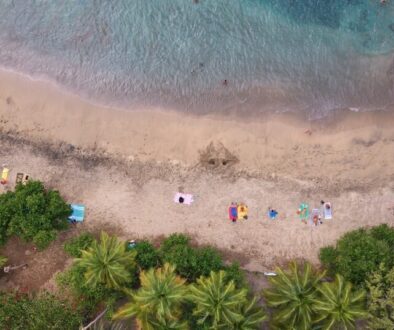
Croatia and "hidden gem"—do those terms still go together? Dubrovnik has been overrun since Game of Thrones, Split is overflowing with cruise ship tourists, and the Plitvice Lakes have waiting lists like an amusement park in the summer. But: Croatia has 1,244 islands, 1,778 kilometers of coastline, and a mountainous hinterland that tourists never see. I spent three weeks trying to find these very spots—with the DJI Mini 5 Pro over secluded bays, the Sony A7 IV in deserted mountain villages, and a rental car on roads that end as gray lines on Google Maps.
Here are my 9 insider tips for Croatia — places that aren't at the top of any travel guide.
1. Vis — The island that was closed for 50 years
Vis was a Yugoslav military base until 1989 and completely closed to tourists. As a result, while Hvar and Brač were overdeveloped, Vis remained unspoiled. No hotel chains, no high-rise hotels, no party scene. Instead: two small villages (Vis Town and Komiža), vineyards, olive groves, and some of the clearest waters in the Adriatic.
Stiniva Bay on the south side is the highlight. Two high cliffs form a natural gateway, behind which lies a small pebble beach with turquoise water. It's only accessible via a steep 30-minute descent or by boat. Both are worthwhile. From a drone, the bay looks like a natural amphitheater—the cliffs, the narrow gateway, the shimmering water beyond. One of my best Adriatic photos.
Tip: The Blue Cave on the neighboring island of Biševo is a day trip from Komiža — a sea cave where sunlight makes the water glow blue. It's touristy, but still worth it. Go in the morning when the light is best.
2. Lastovo — The most isolated inhabited island in Croatia
Lastovo lies far out in the Adriatic Sea, a 90-minute ferry ride from Korčula. It has about 800 inhabitants, no traffic lights, no ATMs (bring cash!), and no fast-food chains. The entire archipelago is a nature park. At night, it boasts some of the lowest light pollution in all of Europe—the Milky Way is visible to the naked eye as a luminous band.
I spent three nights on Lastovo and was cooked for by a local family who rent out guest rooms. Fresh fish, homemade wine from their own vineyard, olive oil from the neighbor. No Michelin star, but the best food of my entire trip to Croatia. The island has a few marked hiking trails through maquis shrubland and pine forests, and around every corner you'll find secluded coves that you have completely to yourself.
3. Učka Nature Park — The forgotten mountain range above Istria
While everyone heads to the Istrian coast (Rovinj, Pula, Poreč), they forget the mountains just beyond. Učka, at 1,396 meters, is the highest mountain in Istria and offers a panoramic view that, on a clear day, stretches from Venice to the Slovenian Alps. I was at the top at sunrise—a sea of clouds below, the peaks above like islands. It's reminiscent of Madeira's Pico tour, only without the tourists.
The ascent from Lovran takes about 3 hours and leads through beech forests and across alpine meadows. Alternatively, you can drive to the Vojak summit (gravel road, but doable) and simply enjoy the view. I made extensive use of my drone here—the contrasts between the blue sea below and the green mountains above are spectacular.
4. Stone — Europe's Little Great Wall of China
Ston lies on the Pelješac Peninsula, 50 kilometers northwest of Dubrovnik. Most tourists speed past it on their way to Dubrovnik, missing one of the most impressive fortifications in Europe. At 5.5 kilometers long, Ston's city walls are the second longest in Europe (after the Aurelian Walls in Rome) and were built in the 14th century to protect salt production.
You can walk along the walls—about 45 minutes for the complete circuit, with magnificent views over the peninsula, the salt pans, and the Adriatic Sea. At sunset, the salt in the pools turns pink. The drone footage of the walls, which snake across the hills, is breathtaking—you can't even begin to grasp their scale from below.
Bonus: Ston is famous for its oysters. The oyster farms in Mali Ston Bay produce some of the best oysters in Europe. A dozen costs €8-10 directly from the fisherman, served with lemon and a glass of white wine from Pelješac. It doesn't get any better than that.
5. Trakošćan – fairytale castle in Zagorje
Northern Croatia, Zagorje — hilly, green, with thermal baths and castles. Trakošćan is the most photogenic of them all: a white castle on a hill, surrounded by an artificial lake, nestled in dense forests. In autumn, when the leaves change color, it looks like a painting. From a drone: the lake as a perfect mirror, the castle in the center, the forests all around in orange and red.
Inside, there's a museum with furniture and weapons from the 14th to the 19th centuries—interesting, but the real reason to visit is the location. There's a walking path around the lake (30 minutes), and in the nearby village of Trakošćan, a restaurant serving homemade Zagorje cuisine: Štrukli (filled dumplings), Purica z mlincima (turkey with flatbread), accompanied by a local sparkling wine.
6. The Kornati Islands — 89 uninhabited islands
The Kornati National Park consists of 89 islands and reefs—and not a single one is permanently inhabited. From a drone, it looks like another planet: Bare, white karst cliffs rise from turquoise water, interspersed with narrow channels where sailboats look like toys. No vegetation, no houses, just rock and sea.
Accessible by boat tour from Murter, Zadar, or Šibenik. Day trips cost €40-60 and include swimming stops in secluded bays, lunch (grilled on the island), and snorkeling. Those who can charter a boat (with or without a skipper, from around €200/day) will have the islands almost entirely to themselves—especially in the shoulder seasons.
7. Pag — The moon island with lace and sheep's cheese
Pag is an island that looks like it's fallen from the moon—barren, rocky, and windswept. The Bora (a cold, katabatic wind from the Velebit Mountains) has blown away the vegetation over millennia. What remains is a bizarre karst landscape that resembles a Martian colony. From a drone, the contrasts are extreme—grey-white rocks, scattered olive trees, and turquoise sea.
Pag is famous for two things: Paški Sir (Pag sheep's cheese, one of the best cheeses in Europe) and lace (Pag lace, a UNESCO World Heritage Site). In Pag's old town, you can watch women making the lace by hand—a single pattern can take weeks or even months to complete. To the east of the island lies Novalja with Zrće Beach, the Croatian Ibiza. My tip: the east for parties, the west for peace and quiet. Pag's old town and the saltworks in the south are rarely visited and offer fantastic photo opportunities.
8. Motovun — Truffle Capital on the Hill
Motovun is a medieval town perched on a hill in the Istrian hinterland. It has 500 inhabitants, a town wall that you can walk all the way around, and a view of the Mirna Valley, considered one of the best truffle regions in the world. The white Istrian truffle is hunted here from October to January—with dogs, not pigs.
In Motovun's restaurants, you can get truffle pasta for €15-20—in Italy, you'd pay three times as much for comparable quality. My favorite: fuži with white truffle and a glass of Malvazija (local white wine). Add to that the view from the city walls at sunset—the Mirna Valley bathed in golden light, the Istrian hills stretching to the horizon.
9. Biokovo Skywalk — 1,228 meters above the Adriatic Sea
The Biokovo Skywalk only opened in 2020 and is still largely unknown to German tourists. It's a glass viewing platform suspended 1,228 meters above the Makarska Riviera. Looking down through the glass floor is not for the faint of heart—the coastline drops almost vertically into the sea directly below. The Adriatic islands (Brač, Hvar, Vis) lie before you like a tray laid out on a silver platter.
Access is via the Biokovo High Road in the nature park of the same name. A rental car is recommended—the road is narrow and winding, but manageable. Once at the top, in addition to the Skywalk, there are hiking trails through the karst landscape. Definitely bring a drone—the view from above of the platform with the coast in the background is magnificent.
Costs for 3 weeks in Croatia off the beaten track
| Position | Cost |
|---|---|
| Flight (from Germany, return) | €80–180 |
| Rental car (3 weeks, including insurance) | €350–550 |
| Ferries (Vis, Lastovo, islands) | 80–120 € |
| Accommodation (21 nights, apartments & guesthouses) | €600–1,000 |
| Food & Drink | €350–550 |
| Entrance fees, boat tours & activities | 100–200 € |
| Total per person | €1,560–2,600 |
Croatia has become somewhat more expensive since the introduction of the Euro (2023), but is still reasonable outside the tourist hotspots. On the coast, you'll pay €10-18 for a main course in restaurants, while inland it's €8-12. Accommodation booked through Booking.com or directly with the owner (look for "Sobe/Apartmani" signs by the roadside) costs €30-60 per night for a good apartment.
Best time to travel to Croatia: insider tips
May/June and September/October — without a doubt. In July/August, even the best-kept secrets are no longer secret, prices rise by 30-501 TW, and temperatures climb to over 35°C. In May, everything is in bloom, the sea is 20-22°C (perfect for swimming), and the tourists haven't arrived yet. In September/October, the sea has warmed up from the summer (24-26°C), the tourists are gone, and the autumn colors in the hinterland are stunning.
FAQ
Do I need my own boat for the islands?
No — all the islands mentioned are accessible by ferry (Jadrolinija). Vis from Split (2 hours), Lastovo from Korčula (90 minutes), Pag via a bridge from the mainland. For the Kornati islands, you need a boat tour (day trip). Alternatively: charter a sailboat if you have a license.
Is Croatia still cheap after the introduction of the Euro?
Cheaper than Italy or Greece, but more expensive than before 2023. On the coast in high season, you'll pay similar prices to Spain. Inland and in the off-season, it's significantly cheaper—40-501 TP3T below coastal prices. My tip: Eat where the Croatians eat, not where the menu is printed in five languages.
What's the best way to travel around the country by rental car?
The A1 (Zagreb-Split-Dubrovnik) is the main route, subject to tolls (approx. €25 Zagreb-Dubrovnik). The coastal road (Jadranska Magistrala) offers stunning scenery, but is slow and winding—allow twice the travel time suggested by Google Maps. Fuel is slightly cheaper than in Germany. Note: On the way to Dubrovnik, you'll briefly cross into Bosnia (Neum Corridor)—remember to bring your passport!
Is Croatia a good place for drone flying?
Yes, but since Croatia joined the EU, the EASA drone regulations apply. The DJI Mini 5 Pro, under 250g, is in category C0/Open, so no registration is required. Drones are prohibited in national parks (Plitvice Lakes, Krka, Kornati). I had no problems along the coast, over the sea, and at most tourist attractions. Just be careful not to fly over crowds or ports, and respect privacy.
More travel reports: All my travel reports
About the author: Max Haase is Germany's most influential travel influencer with over 4.2 million followers. He specializes in drone footage and luxury travel. Cooperation requests here.
 German
  English