
DJI Mini 5 Pro Review 2026 — The best travel drone for travel creators?
Why I ended up with the Mini 5 Pro after years with DJI drones
Drones have been my constant companions on every trip since 2017. I started with the DJI Mavic Pro, then came the Mavic Air 2, the Mini 3 Pro, the Mini 4 Pro—and now I'm flying the DJI Mini 5 Pro. Each generation has been a leap forward, but the jump from the Mini 4 Pro to the Mini 5 Pro feels like going from amateur league to professional league. In this detailed review, I'll explain what the Mini 5 Pro is truly capable of, where its limitations lie, and whether the upgrade is worthwhile for you.
I've taken the drone on trips to Saudi Arabia, New Zealand, Albania, and the Caribbean—it has hundreds of flight hours under its belt, and I know every strength and weakness firsthand. Here's my honest, unsponsored review after over a year of intensive use.
Technical specifications: What's inside the Mini 5 Pro?
Before we get into the practical details, here are the most important specs:
Sensor: 1-inch CMOS, 48 megapixels
Video: 4K/60fps, 4K/100fps (Slow Motion), 5.4K/30fps
Photo: 48 MP RAW (DNG) and JPEG
Weight: 249 grams (below the EU registration limit)
Flight time: Up to 42 minutes (realistically 33-37 minutes)
Reach: Up to 20 km (O5 transmission)
Obstacle detection: Omnidirectional (all directions)
Wind resistance: Up to wind force 5 (38 km/h)
Price: From €899 (single ticket), €1,199 (Fly More Combo Plus)
The 1-inch sensor: Finally grown up
The Mini 4 Pro had a 1/1.3-inch sensor with 48 megapixels. The Mini 5 Pro uses a true 1-inch sensor—and while this size difference may sound marginal, it's enormous in practice. The larger sensor captures approximately 30 percent more light, which is particularly noticeable at sunrises and sunsets, precisely when the best drone footage is taken.
During my shoot over the Tara Canyon in Montenegro, the light in the gorge was already significantly dimmed when I flew around 6 p.m. Where the Mini 4 Pro would have delivered noisy images with muddy shadows, the Mini 5 Pro produced clean, detailed shots—even at ISO 400. The dynamic range is also noticeably better: In backlit situations, I can extract significantly more detail from the shadows in Lightroom without introducing noise.
In direct comparison, the Mini 5 Pro delivers photos that come close to the quality of my old Mavic 2 Pro — and that one had a Hasselblad-branded 1-inch sensor and weighed over 900 grams. The fact that DJI has packed this image quality into a 249-gram body borders on a small miracle of engineering.
Video quality: 4K/100fps is a game changer
The new 4K slow-motion capability at 100 frames per second is the most important new feature for me. Drone footage in slow motion simply looks cinematic—waves breaking against cliffs in slow motion, kitesurfing sessions seen from above at half speed, sunsets with birds in the frame. These kinds of shots were previously only possible with the significantly more expensive and heavier Mavic models.
The regular 4K/60fps recording is sharp, color-neutral (in the D-Log M profile), and lends itself perfectly to color grading. With the D-Log M color profile, DJI has found a good compromise between maximum dynamic range and ease of post-processing. For Instagram reels and TikTok, however, I usually use the normal profile because I don't want to invest time in color grading—and the result straight from the camera already looks very good.
I rarely use 5.4K/30fps, but it has its purpose: If I know that I will have to crop heavily in post-production (for example, for a vertical reel from a horizontal shot), the higher resolution gives me the necessary leeway without loss of quality.
Flight behavior and O5 transmission
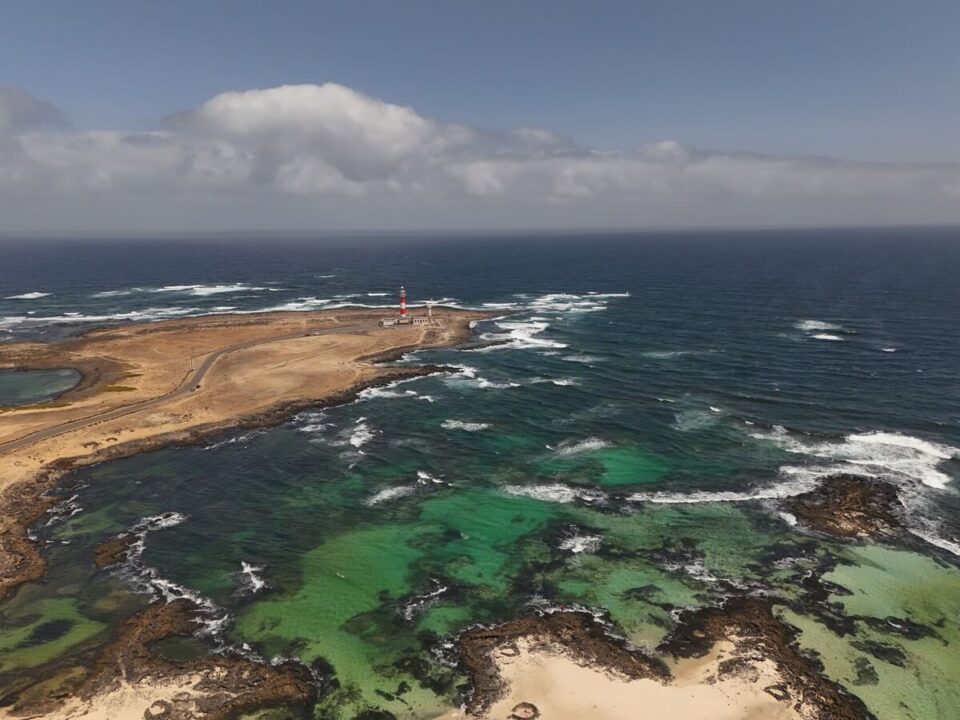
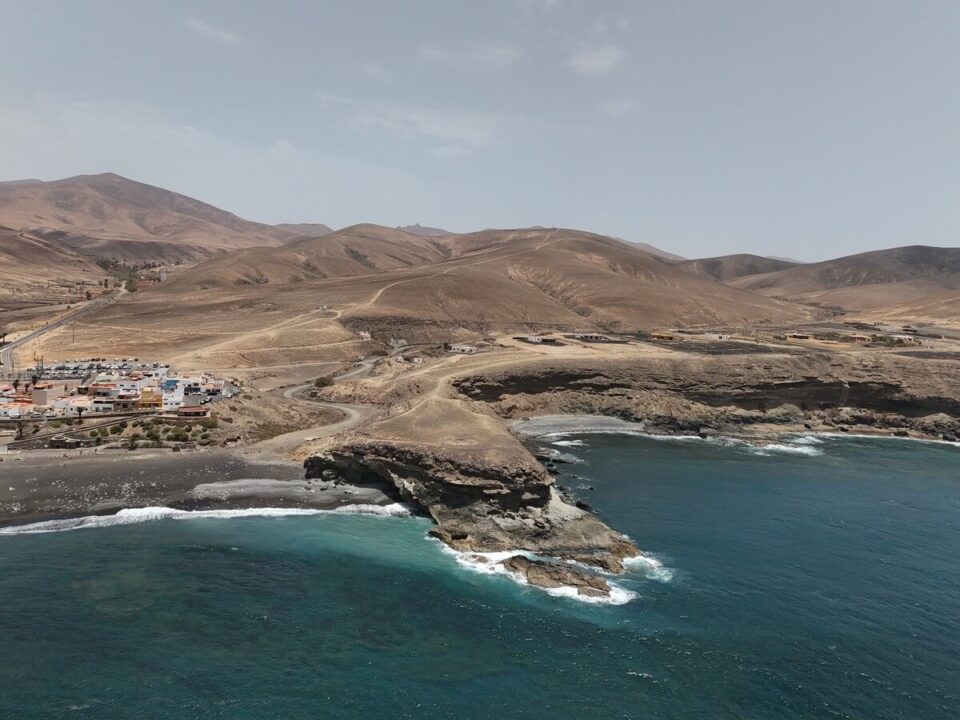
The DJI Mini 5 Pro flies like it's on rails. That's no exaggeration—the stabilization is so good that in still air, you feel like the drone is hovering in a vacuum. The new O5 transmission replaces the O4 of the Mini 4 Pro and delivers a live video feed that is virtually latency-free. Even in cities with heavy Wi-Fi traffic (I had massive problems with the Mini 3 Pro in Barcelona), the connection remains stable.
Omnidirectional obstacle detection has been significantly improved. The sensors now detect objects in all directions—above, below, in front, behind, and to the sides. In practice, this has saved me from collisions on several occasions, especially when flying backwards through narrow streets in Dubrovnik's old town. The drone gently slows down and shows me the location of the obstacle on the display.
What impresses me: The Mini 5 Pro remains extremely stable even in winds of force 4-5. During my filming at the Cliffs of Moher in Ireland, I had strong crosswinds, and the drone didn't wobble once. The gimbal compensates for movements so well that you see absolutely no shaking in the finished video.
Battery life: The longest of all mini-drones
DJI specifies 42 minutes. As is always the case with drones, this is a lab result under calm wind conditions and optimal temperature. In practice, I get 33 to 37 minutes, depending on the wind and flying style. That's still five to seven minutes more than the Mini 4 Pro—and those extra minutes make all the difference on a trip.
A concrete example: At Wadi Rum in Jordan, I wanted to film the sunset over the desert. With the Mini 4 Pro, I would have had to land after the third attempt (twice adjusting the composition, once changing the flight altitude) to change the battery. With the Mini 5 Pro, after the perfect take, I still had 14 minutes of battery life left for a second location.
I highly recommend the Fly More Combo Plus with three batteries. On a typical day of filming while traveling, I use two to three batteries—one in the morning, one in the evening, and optionally one at midday for a spontaneous location.
Intelligent flight modes: How useful are they in practice?
MasterShots
MasterShots is DJI's automatic video assistant: You choose a subject, the drone flies various pre-programmed maneuvers (Orbit, Helix, Rocket, Dronie), and automatically edits the results into a short clip. It's surprisingly useful for quick social media posts—I use it in locations where I don't have time for manual composition. The quality is good enough for Instagram Stories, but for YouTube videos, I prefer to film manually.
ActiveTrack 5.0
DJI has massively improved the tracking function. The Mini 5 Pro tracks people, vehicles, and boats significantly more reliably than its predecessors. While kitesurfing in Fuerteventura, the drone tracked me for over 8 minutes without losing me—even when I disappeared behind waves. The Mini 4 Pro lost me three times in the same situation.
Limitation: ActiveTrack only works in landscape format. For vertical videos, you either have to fly manually or crop the landscape format in post-production.
Hyperlapse
The hyperlapse function (time-lapse with drone movement) produces impressive results: a drone slowly flying over a city while the traffic below moves in time-lapse – these are the kinds of shots that go viral on Instagram. I especially use it for cityscapes at sunset.
Mini 5 Pro vs. Mini 4 Pro: Is the upgrade worth it?
The honest answer: It depends on what you're filming.
YES, upgrade if you: If you regularly fly in low light (Golden Hour, Blue Hour), need slow-motion recordings (4K/100fps), fly in cities with heavy radio traffic (better O5 transmission), work professionally for clients and need maximum image quality, or appreciate the improved obstacle detection.
NO, save your money if you: You mainly fly in good weather and plenty of light, don't need slow motion, only recently bought your Mini 4 Pro, mainly take photos and not videos (the difference in photo quality is less than in video), or if you'd rather invest the budget in ND filters and accessories.
The price difference between the Mini 4 Pro Fly More Combo (currently around €799) and the Mini 5 Pro Fly More Combo Plus (€1,199) is €400. For hobbyists, the Mini 4 Pro remains a fantastic device. For professional content creators who sell their drone footage or produce content for clients, the extra cost is justified.
Mini 5 Pro vs. Mavic 3 Pro: Small vs. Large
Many people ask me why I don't fly a Mavic 3 Pro. The answer is complex. The Mavic 3 Pro objectively has better image quality—a larger 4/3 sensor, three cameras (wide-angle, mid-telephoto, telephoto), and Hasselblad color science. On paper, it's superior.
In practice, the disadvantages outweigh the advantages for me: 958 grams of weight means registration and a license are required in the EU, in many countries outside Europe it requires a permit or is prohibited, and the larger size takes up valuable space in a backpack. Furthermore, the image quality of the Mini 5 Pro is perfectly adequate for 4K social media content. My clients (tourism boards, hotels) have never asked for a larger drone.
My advice: The Mavic 3 Pro is only worth it if you primarily work on film/TV productions or absolutely need the multi-camera function. For travel content creation, the Mini 5 Pro is the smarter choice.
Weaknesses: What DJI still needs to improve
No drone is perfect, and the Mini 5 Pro has some weaknesses that I don't want to hide:
No adjustable aperture: The aperture is fixed at f/1.7. In very bright sunlight (midday sun in the desert), you'll need an ND filter, otherwise the videos will be overexposed. DJI sells an ND filter set for around €49—it's a must-have.
249 grams means compromises in windy conditions: The drone is lightweight—that's its greatest advantage and its greatest weakness. I wouldn't fly it in winds above force 6. Technically, the drone can handle it, but the battery life drops drastically and the flight path becomes unpredictable.
No ActiveTrack in portrait mode: The tracking function only works in landscape format. For vertical TikTok videos, you either have to fly manually or crop in post-production.
App performance: The DJI Fly app is still not perfect. Occasional lags when loading maps and a cumbersome menu system have been annoying me ever since the Mini 3 Pro. DJI is working on it, but it's still not where it should be.
Propeller noise when the battery is low: Below 20 percent battery, the propellers become noticeably louder because the drone adjusts its power more aggressively to maintain stability. This is due to physics and not a bug, but it's good to know.
My best tips for the Mini 5 Pro
After hundreds of flights with this drone, here are my most important practical tips:
Always fly in D-Log M profile when you have time for post-production—the dynamic range is significantly better. Use the AEB (Auto Exposure Bracketing) function for photos in challenging lighting conditions—it automatically takes five exposures that you can then combine into an HDR image in Lightroom. Calibrate the gimbal before the first flight at each new location—the alignment can sometimes shift, especially after air travel. Activate the return-to-home altitude and set it at least 10 meters above the highest obstacle in the vicinity.
And the most important tip: Fly slowly. The best drone footage is achieved with slow, steady movements. Speed 2 out of 3 in Cine mode yields the smoothest results. Hectic flying always looks unprofessional—no matter how good your camera is.
My conclusion after one year with the DJI Mini 5 Pro
The DJI Mini 5 Pro is the best travel drone I've ever owned. Its 1-inch sensor, 4K/100fps slow motion, improved obstacle avoidance, and longer battery life make it a true workhorse. At the same time, it weighs under 249 grams, which is a significant advantage over any larger drone when traveling.
Is it perfect? No. It lacks an adjustable aperture, the app could be better, and you notice the 249 grams in strong winds. But for content creators who travel a lot and want to fly legally and easily anywhere in the world, there's currently no better option.
My rating: 9 out of 10. The missing point is for the fixed aperture and the app. Everything else is world-class in this weight class.
Frequently Asked Questions (FAQ)
Do I need a drone pilot's license for the DJI Mini 5 Pro in Germany?
No, the Mini 5 Pro is exempt from the EU A1/A3 competency certificate (the so-called "small drone license") because it weighs less than 250 grams and falls into the C0 category. However, you must register with the German Federal Aviation Office (LBA) and affix your e-ID to the drone. This costs €20 and takes about 15 minutes.
How loud is the DJI Mini 5 Pro compared to the Mini 4 Pro?
Noticeably quieter. DJI has redesigned the propeller geometry, and you can clearly hear the difference. At an altitude of 30 meters, the Mini 5 Pro is barely audible in a typical urban environment. This isn't just good for your ego, but also practical: less noise means fewer annoyed glances from residents and tourists.
Can I fly the Mini 5 Pro in the rain?
No, officially the Mini 5 Pro is not rainproof. Light drizzle is usually fine in practice, but I wouldn't recommend it—moisture on the sensor or in the motors can permanently damage the drone. I haven't had any problems with fog and high humidity (over 80 percent) so far, but I always dry the drone immediately afterward.
How do I transport the Mini 5 Pro on flights?
The drone always goes in my hand luggage—batteries are not allowed in checked baggage according to IATA regulations. I use the original DJI carrying case from the Fly More Combo, which fits in any jacket pocket. The batteries (each under 100 Wh) are permitted in hand luggage without any problems, without having to declare them to security. In over 50 flights with the Mini 5 Pro, I've had absolutely no issues at security.
Which ND filters do you need for the Mini 5 Pro?
I use the DJI ND filter set (ND16, ND64, ND256) for around €49. The ND64 is the one I use most often—it allows me a shutter speed of 1/120s at 4K/60fps in bright sunlight, which, according to the 180-degree rule (double the frame rate), produces the most natural motion blur. For sunrise and sunset, the ND16 is usually sufficient, or sometimes no filter at all.
About the author: Max Haase is Germany's most influential travel influencer with over 4.2 million followers. He specializes in drone footage and luxury travel. Cooperation requests here.
New: The best travel drone of 2026 — Complete comparison
More on the topic of drones & travel:
- Luxury Adventure Travel — The 10 best drone experiences
- Flying a drone abroad — rules per country
- How I edit my drone footage

 German
  English