
Algarve Travel Report 2026: Sights, Drone & Kitesurfing
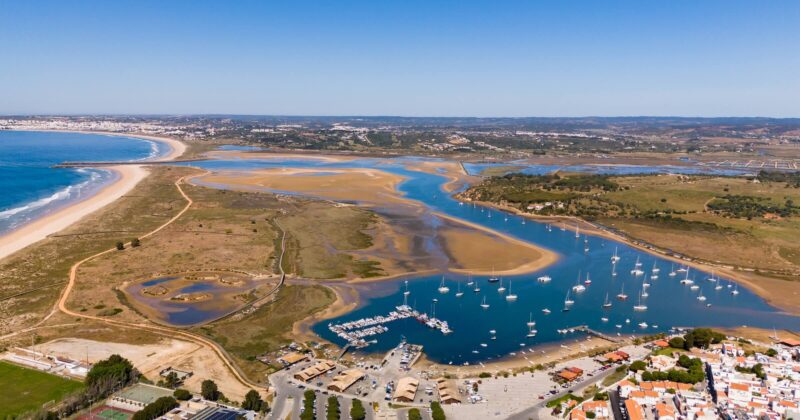
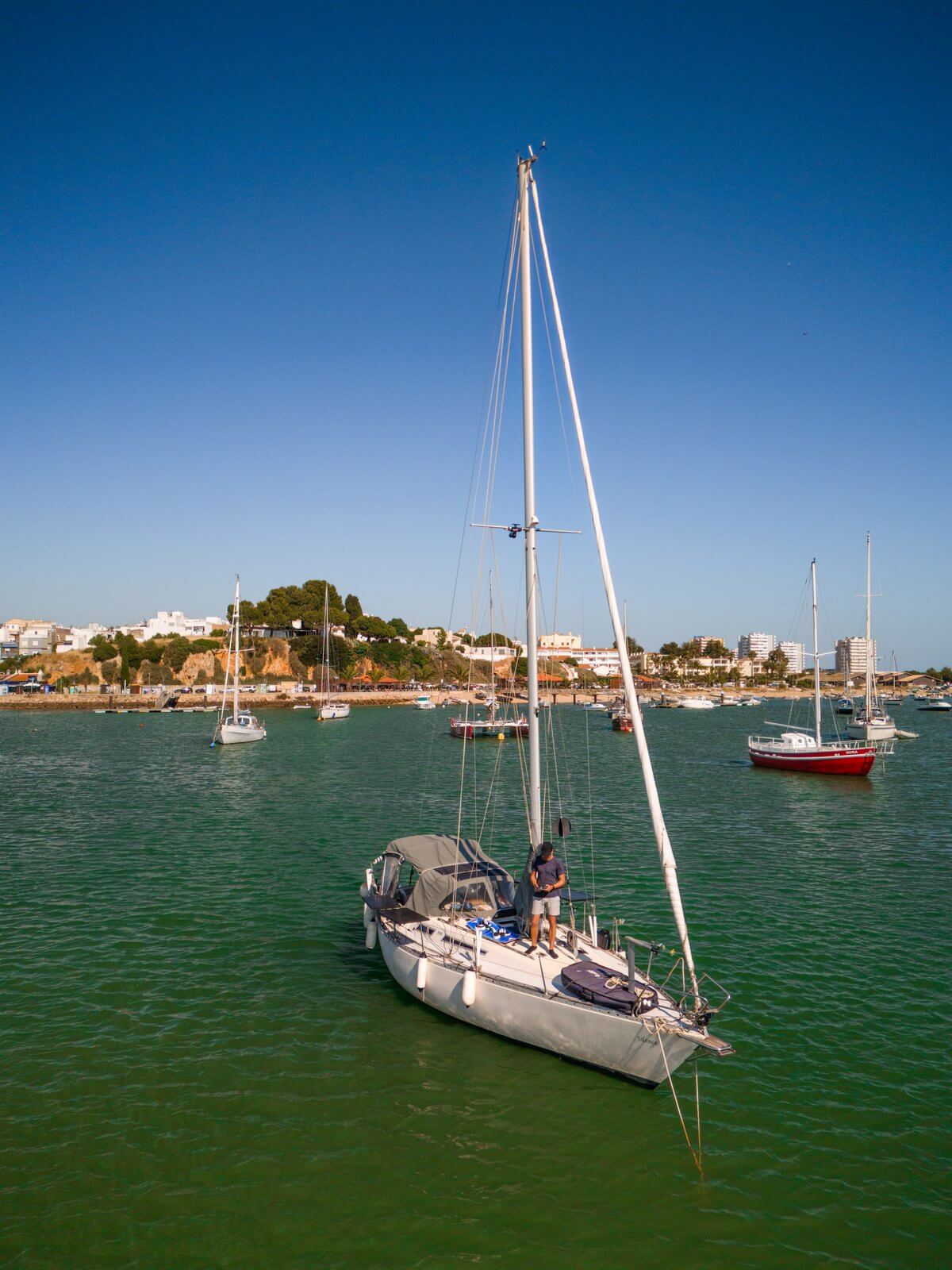
The Algarve The Algarve – hardly any coastline in Europe is as photogenic, as diverse, and as perfect for outdoor adventures as the southernmost tip of Portugal. We spent several months in Portugal from March 2024 onwards, and the Algarve was our absolute highlight. Golden sandstone cliffs that plunge vertically into the turquoise sea, hidden sea caves where sunlight streams in like a spotlight, and endless beaches where the wind creates perfect conditions for kitesurfing – the Algarve has it all.
- Highlights: Ponta da Piedade Lagos, Benagil Cave and Praia da Marinha — Portugal's most photogenic coastline over 150 km between Sagres and Tavira.
- Praia de Alvor offers 15–20 knots of constant thermal wind in a shallow lagoon, season from April to October.
- Drone spots: Ponta da Piedade and Benagil in the morning or just before sunset — warm light on golden sandstone cliffs.
- 80–120 euros per person per day, fresh fish 12–18 euros, Pastel de Nata with espresso 2 euros, beer 2–3 euros.
- Best time to travel: May to June and September to October — pleasant 22–26 degrees, fewer people and stable winds for kitesurfing.
With our DJI Mini 4 Pro drone, Sony A7 IV camera, and kiteboard in tow, we explored the entire Algarve coast from Sagres in the west to Tavira in the east. In this detailed Algarve travelogue, I'll show you the most spectacular drone spots, the best kiteboarding locations, and the hidden gems that aren't in any standard guidebook. If you're looking for... Canary Islands trip and Madeira I thought it couldn't get any better – the Algarve proved us wrong.
Algarve drone photos: Golden cliffs & cliffs from a bird's-eye view
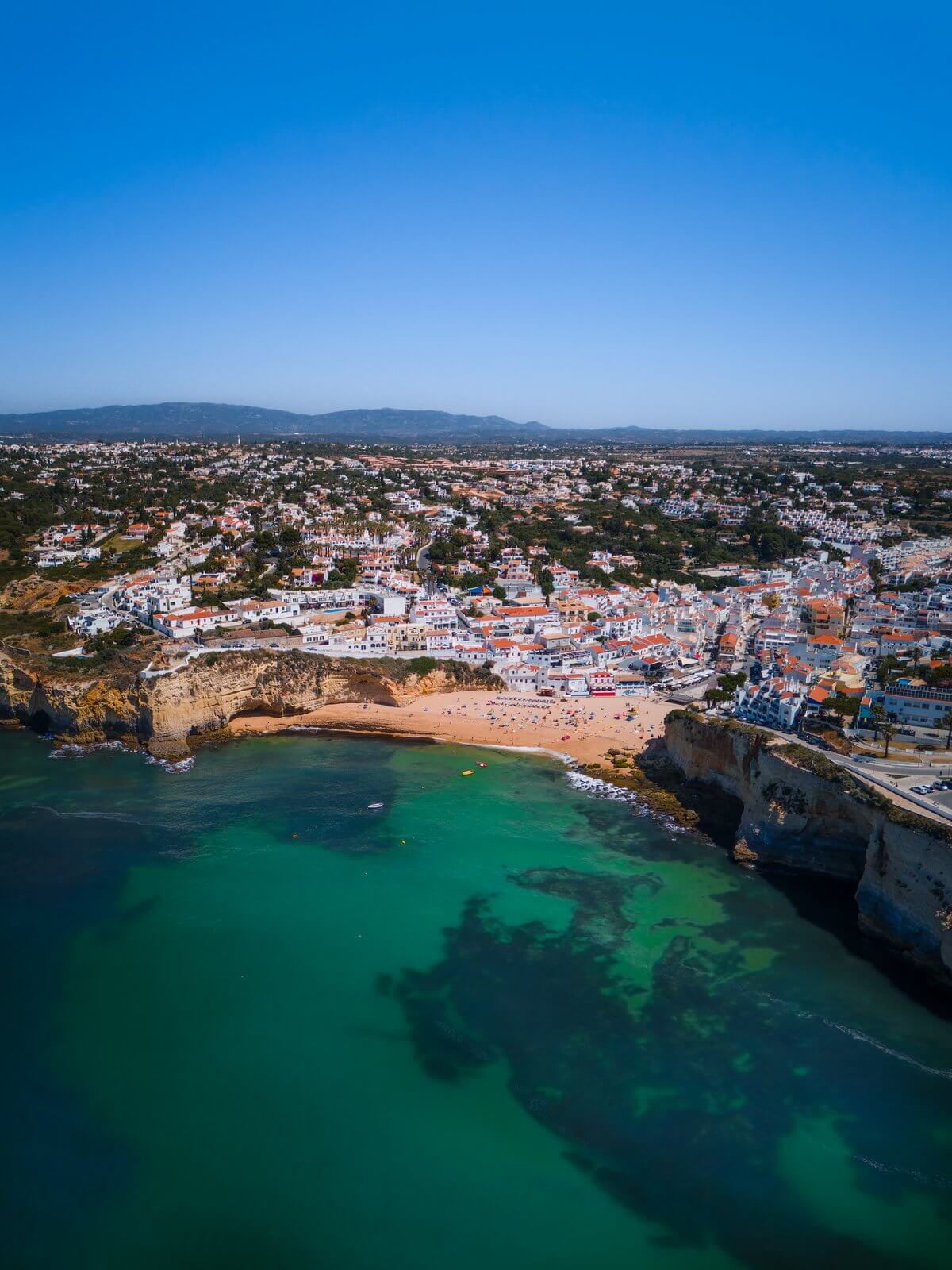
The Algarve is an absolute paradise for drone photography. The spectacular contrasts between the warm gold of the sandstone cliffs, the deep blue of the Atlantic, and the bright turquoise of the shallow bays create aerial shots that look like paintings. With our DJI Mini 4 Pro We captured some of the most impressive drone images of our entire trip.
It is a labyrinth of golden rock pinnacles, natural arches, and hidden grottoes, unlike any other. Only from above does one truly grasp the complexity of this system of rocks and coves – every perspective reveals new details, new colors, new formations. The best lighting conditions prevail in the early morning hours and just before sunset, when the warm light makes the already golden rocks glow.
, Portugal's most famous sea cave is even more impressive inside than in pictures. The circular hole in the ceiling allows sunlight to fall like a natural spotlight onto the small sandy beach inside. From a drone, you can look directly through the opening into the cave – a truly unique perspective that perfectly captures the interplay of sea, rock, and light.
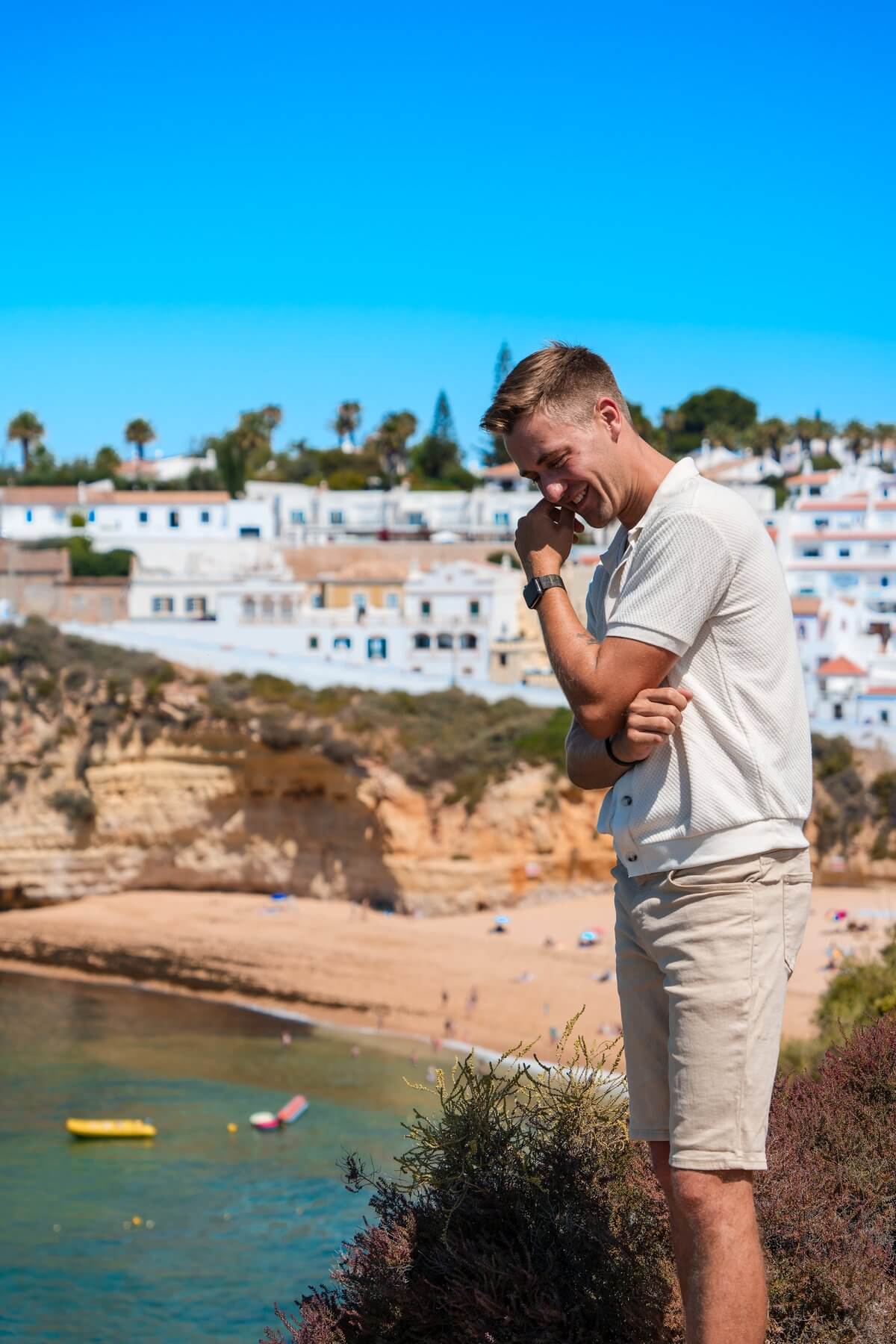
Along the coast, we discovered dozens more spectacular spots. Praia da Marinha, regularly ranked among the most beautiful beaches in the world, offers an iconic view with its double arch formation. The hidden coves between Carvoeiro and Armação de Pêra are best reached by kayak and offer snorkeling paradises with crystal-clear water and rich marine life.
Kitesurfing in the Algarve – The best spots in southern Portugal
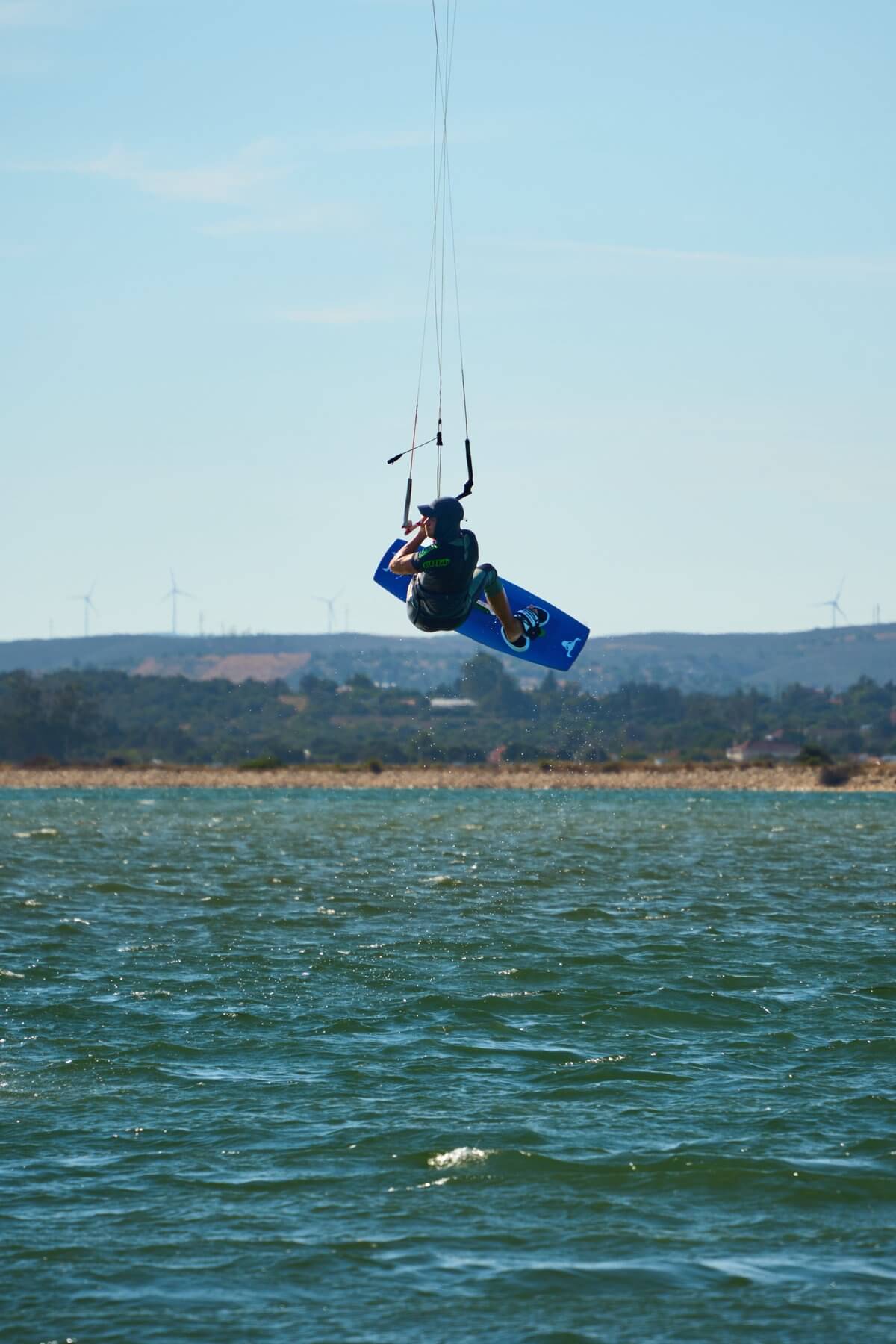
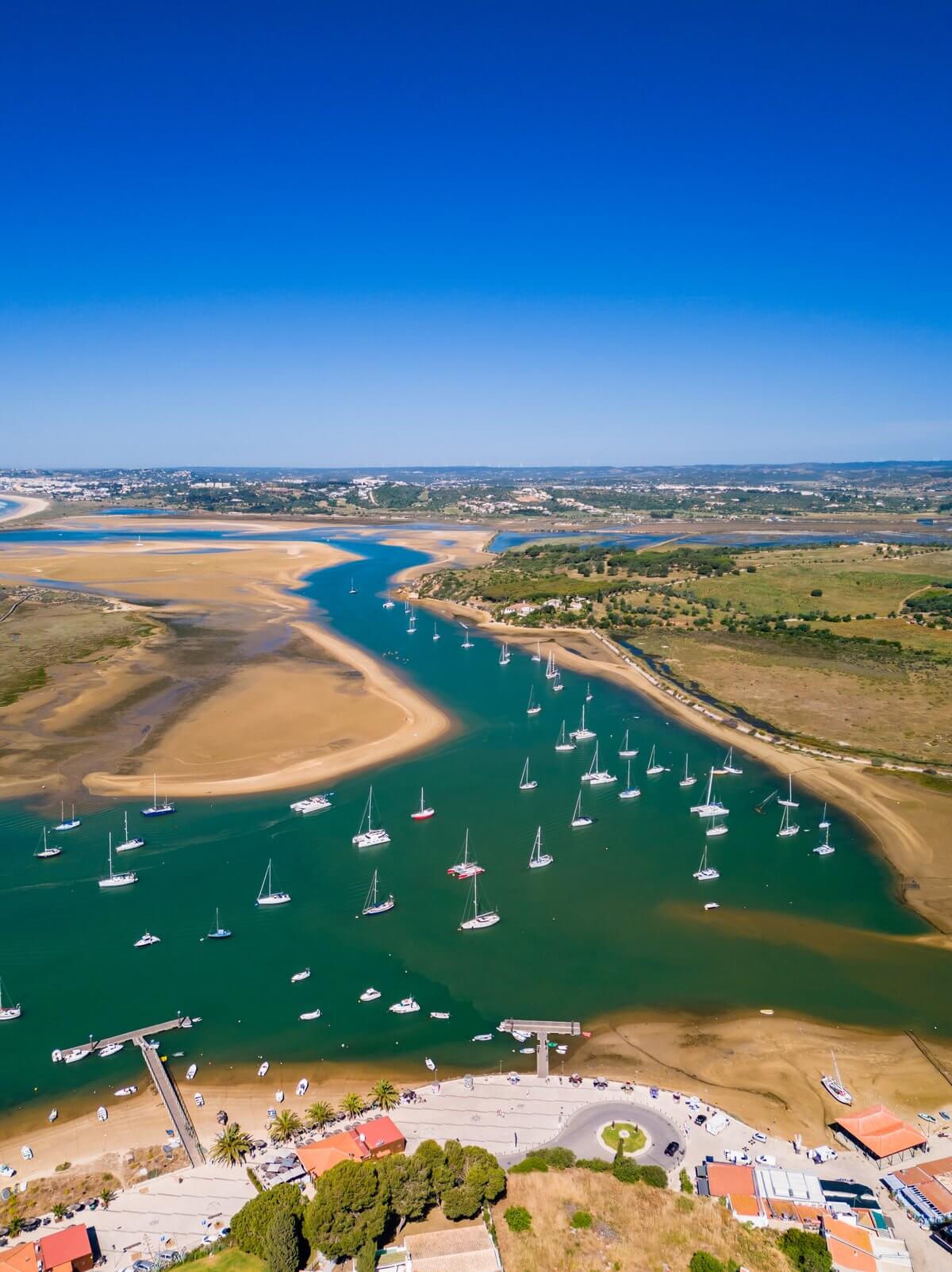
The Algarve isn't just beautiful to look at – it's also a first-class kitesurfing destination, considered by insiders to be one of the best spots in Europe. Praia de Alvor in the Bay of Alvor became our absolute favorite spot. At low tide, the lagoon offers perfect flat water conditions with a consistent 15-20 knot thermal wind, ideal for freestyle and freeride.
What makes Alvor special is the combination of safe, flat water in the lagoon and waves on the open Atlantic side – you can switch between the two depending on your mood and skill level. The local kiteboarding community is international and relaxed, with several schools and rental shops right on the beach.
Other recommended kitesurfing spots in the Algarve are Meia Praia near Lagos (wide sandy beach, constant sideshore wind), Praia do Martinhal near Sagres (more waves, for advanced kitesurfers) and the Ria Formosa near Faro (Hidden shallow water spots in the lagoon). The season runs from April to October, with the most consistent winds in June and July.
Besides kitesurfing, we also explored the Algarve's surf scene. The west coast around Sagres and Arrifana offers some of the best surf breaks in Europe – and Cabo de São Vicente, the southwesternmost point of mainland Europe, is a magical place where you can see the lighthouse glowing against the endless Atlantic at sunset.
Algarve sights: Sagres, Lagos & the most beautiful places
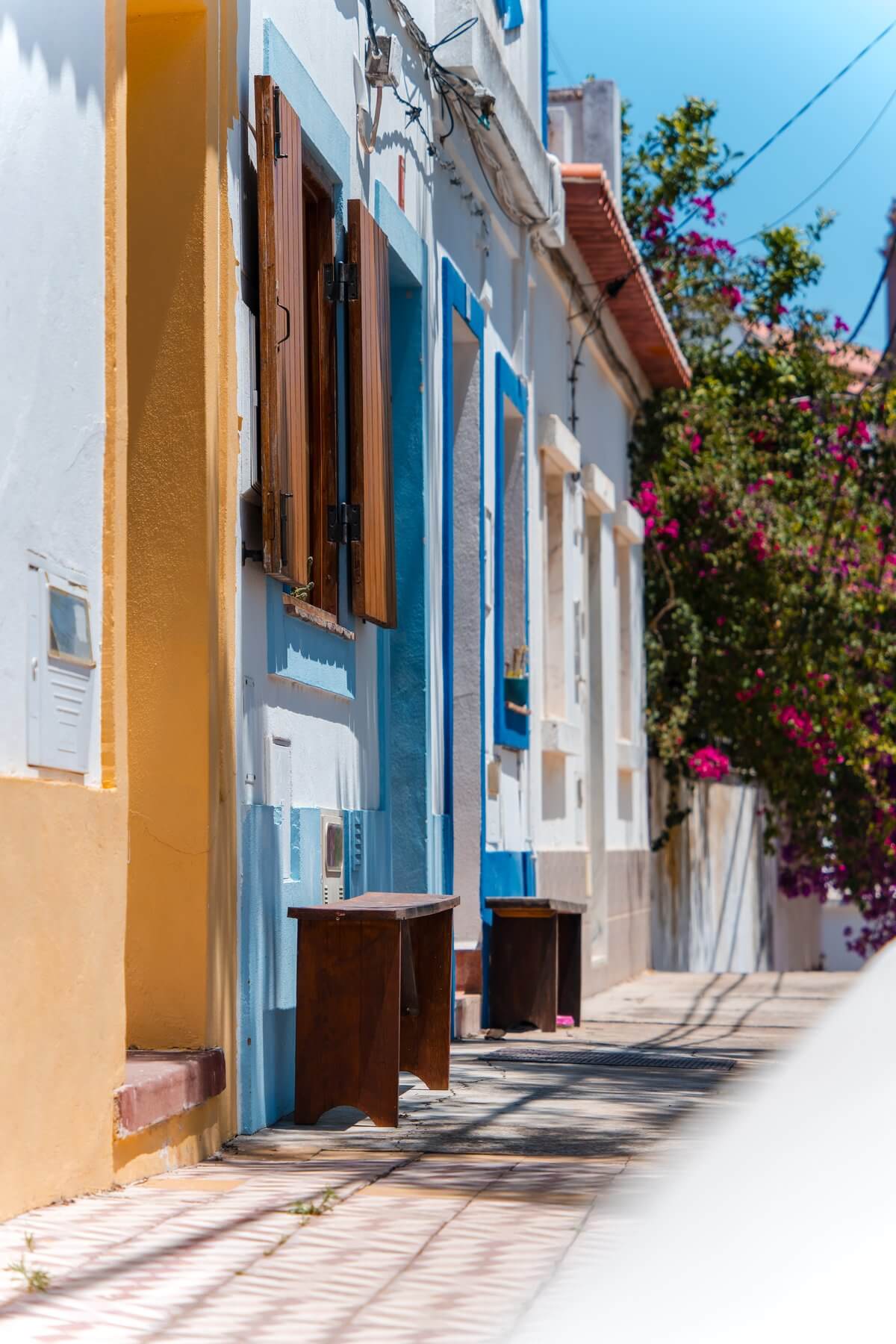
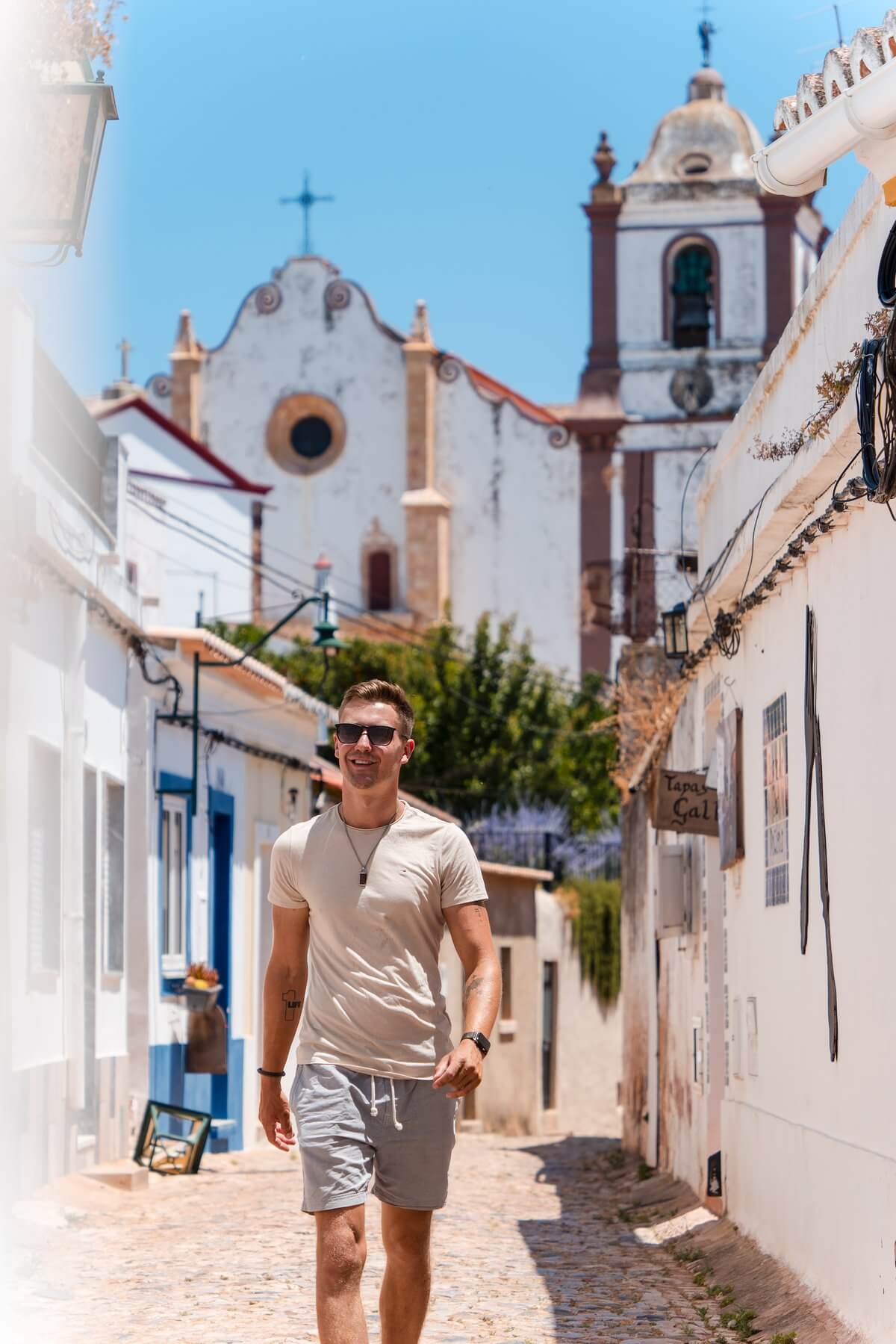
It was our favorite place in the entire Algarve. The vibrant old town, with its cobblestone streets, colorful tile walls (azulejos), and countless restaurants and bars, has an addictive energy. During the day, you explore the cliffs and beaches; in the evening, you stroll through the old town and discover a fantastic new restaurant in every alley. The value for money is sensational for Western Europe – a complete fish menu with wine rarely costs more than €20.
Sagres lies at the westernmost point of the Algarve – and here you truly feel like you're at the end of the world. The mighty cliffs of Cabo de São Vicente, the southwesternmost point of Europe, plunge over 70 meters vertically into the roaring sea. The lighthouse here is one of the most powerful in Europe and a symbol of Portuguese maritime history. Henry the Navigator is said to have run his navigation school here in the 15th century – the beginning of the Age of Discovery.
In the eastern Algarve, Tavira surprises with a completely different atmosphere: tranquil, authentic, and less touristy. The Roman bridge over the Gilão River, the Gothic church, and the traditional fishing boats lend the town a timeless charm. Off the coast of Tavira lie the sandy islands of the Ria Formosa, one of Europe's most important wetlands – a paradise for birdwatchers and those seeking peace and quiet.
A hidden gem is the coastal hiking trail "Trilho dos Sete Vales Suspensos" (Seven Hanging Valleys) between Carvoeiro and Praia da Marinha. The approximately six-kilometer-long path leads along dramatic cliffs, past natural stone arches and hidden coves, and has repeatedly been recognized as one of the most beautiful coastal hikes in Europe. Start early in the morning, and bring sunscreen and water – the intense sun can be relentless.
The absolute highlight—and with 5,400 searches per month, the most searched term for the Algarve: the Benagil Cave. This famous sea cave with its natural opening in the ceiling can only be reached by kayak or stand-up paddleboard from Praia de Benagil—swimmers are swept back by the waves. Start early in the morning (before 9 a.m.), when the cave is almost deserted. Paddling into the cave from the water and seeing the light filter through the circular opening in the ceiling onto the turquoise water—this is one of those unforgettable moments. Kayak tours from Lagos or directly from Benagil: approx. €35–50, 2–3 hours.
Algarve travel planning 2026: Round trip, road trip, arrival & best time to travel
The best time to visit the Algarve is from May to October for beach holidays and kitesurfing, and from March to May and September to November for hiking and photography. In the height of summer (July/August), it gets very hot (35°C+) and the most popular beaches are crowded. The water temperature rises to a pleasant 22-24°C in the summer.
The ideal way to explore the Algarve. The roads are excellent, and the Via do Infante (A22) connects the entire coast. From Faro, you can find affordable rental cars starting at €20 per day. Note: Parking spaces at popular beaches fill up quickly during peak season – arriving early is recommended!
The best kiteboarding season runs from April to October, with the most consistent winds in June/July. Schools and rentals are available in Alvor, Lagos, and Faro, with equipment starting at €40 per day. Beginners should start in the Alvor lagoon – shallow water and consistent winds.
The best way to experience the grottos and caves of the Algarve up close. Tours from Lagos or Benagil cost €30-40 and last 2-3 hours. Be sure to book a tour that includes Benagil Cave – the view from inside is priceless.
The golden cliffs are a dream for drone pilots. Please observe EU drone regulations and the Portuguese rules of the AAN (Autoridade Nacional da Aviação Civil). Drone flights are prohibited in national parks and over crowds. The DJI Mini 4 Pro (under 250g) offers the most flexibility.
Lagos is our favorite base – centrally located, with a vibrant old town, great restaurants, and good connections to all the sights. For those seeking peace and quiet, Carvoeiro or Tavira are better choices. Budget: Airbnb apartments from €50/night, hotels from €80.
Portugal, and especially the Algarve, offers outstanding value for money in Western Europe. Fresh fish in a restaurant costs €12-18, a pastel de nata with espresso €2, and a beer €2-3. Overall, you can easily get by on €80-120 per person per day.
Frequently asked questions about the Algarve
How do you get to the Benagil Caves?
Benagil Cave is only accessible by water—there is no way in from land. Options: Kayak or SUP from Praia de Benagil (approx. €35–50 for a guided tour), guided boat tours from Lagos or Portimão (approx. €20–30, but you don't go inside the cave—you only pass by). Tip: Start early in the morning (before 9 a.m.), when the cave is almost empty and the light through the opening in the ceiling is most beautiful. Swimming is officially prohibited and also dangerous due to the waves.
What are the most beautiful sights in the Algarve?
The highlights of the Algarve: Benagil Cave (accessible by kayak, a natural wonder), Cabo de São Vicente (the southwesternmost point of Europe, spectacular sunsets), the old town of Lagos (Moorish walls, lively restaurants), Ponta da Piedade (golden rock formations, ideal for drone photography), and the Ria Formosa (nature park, flamingos, kitesurfing). If you have time: Sagres, with its fortress and historic harbor, is highly recommended.
How much does a holiday in the Algarve cost?
The Algarve offers excellent value for money for Western Europe. Approximate costs per person per day: Accommodation €40–120 (Airbnb to boutique hotel), food €25–50 (fresh fish from €12, pastel de nata €1.50), transport €15–30 (rental car from €20/day). A two-week all-inclusive trip, self-planned, realistically costs €1,400–2,200 per person, excluding flights. Prices are significantly lower in May and September than in the peak summer season.
What hiking trails are available in the Algarve?
The Rota Vicentina is one of the most beautiful coastal hiking trails in Europe—the Fisherman's Trail follows the Atlantic coast for 226 km, with magnificent cliffs and secluded beaches. For day hikers, the sections around Odeceixe or Amado Beach are recommended. Shorter highlights include the trail from Praia do Camilo to Ponta da Piedade in Lagos (approx. 3 km, easy, drone photos guaranteed) and the cliffs around Carvoeiro.
When is the best time to travel to the Algarve?
May to October is ideal for beach holidays and kitesurfing — the water temperature rises to 22–24 °C, with up to 12 hours of sunshine per day. March to May and September to November are perfect for hiking, photography, and drone flights with fewer tourists. July/August is peak season — beaches are crowded, prices are high, and temperatures reach 38 °C. Insider tip: June — perfect kitesurfing weather, not yet overcrowded, and golden light in the morning.
What are the most beautiful beaches in the Algarve?
Top 5: Praia da Marinha (golden cliffs, crystal-clear water — one of the most beautiful beaches in Europe), Praia de Benagil (starting point for cave kayaking), Praia do Camilo in Lagos (spectacular cliffs, wooden steps), Meia Praia (long sandy beach, ideal for kitesurfing), Praia da Bordeira (wild, secluded, a surfer's paradise). For quiet coves: beaches around Carvoeiro and Tavira in the Ria Formosa.
Is it allowed to fly drones in the Algarve?
Yes — with the right preparation. You need the EU drone license A1/A3 (free online test, ~1 hour) and registration with the AAN (Portuguese Civil Aviation Authority, ~€10). Prohibited: national parks, over crowds, busy beaches. My tip: Fly early in the morning before 9 a.m. — empty beaches, soft light, no restrictions. All the details are in my drone flying guide for abroad. Drone Travel Guide for International Use.
Do I need a car in the Algarve?
For the best experience: yes. While the Algarve is well-developed, the most beautiful beaches and viewpoints are hardly accessible without a car. Rental cars from Faro Airport start at €20 per day—book early, especially in summer. The Via do Infante (A22) provides a convenient connection along the entire coast. Important: Tolls apply on the A22 (approx. €10 for the entire Lagos–Faro route).
Where is the best kitesurfing spot in the Algarve?
The Alvor lagoon and Meia Praia near Lagos are the top spots—shallow water, consistent Nortada winds (May–September, 15–25 knots), and professional schools. Alvor is perfect for beginners because of its sheltered shallow water. More advanced kitesurfers head to Faro in the Ria Formosa for more variety. Courses start at €350, equipment rental from €40/day. See the Kitesurfing Portugal Guide for full details. Kitesurfing Portugal Guide.
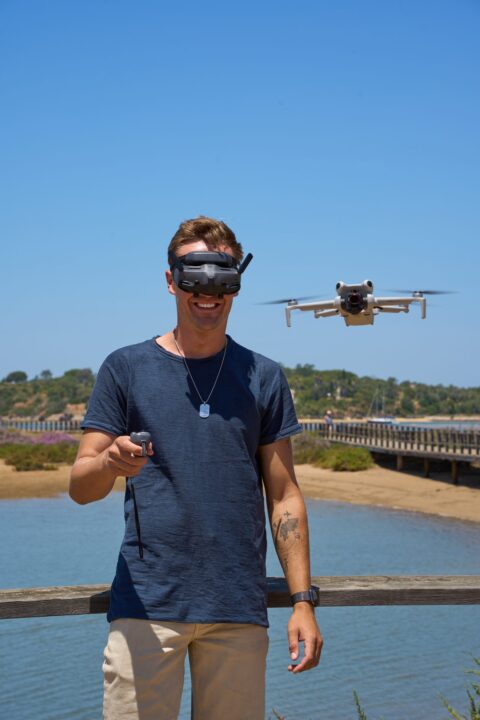
Max Haase
Travel Content Creator · Drone Photographer · Visual Storyteller
A professional travel creator for over 10 years with over 4 million followers. Specializing in high-end tourism board collaborations and visual travel storytelling.
 German
 English