
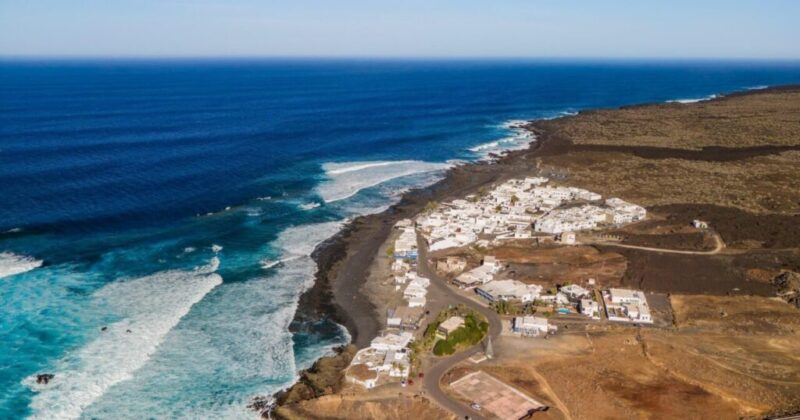
Lanzarote travelogue – Fire Mountains, volcanic coast & César Manrique
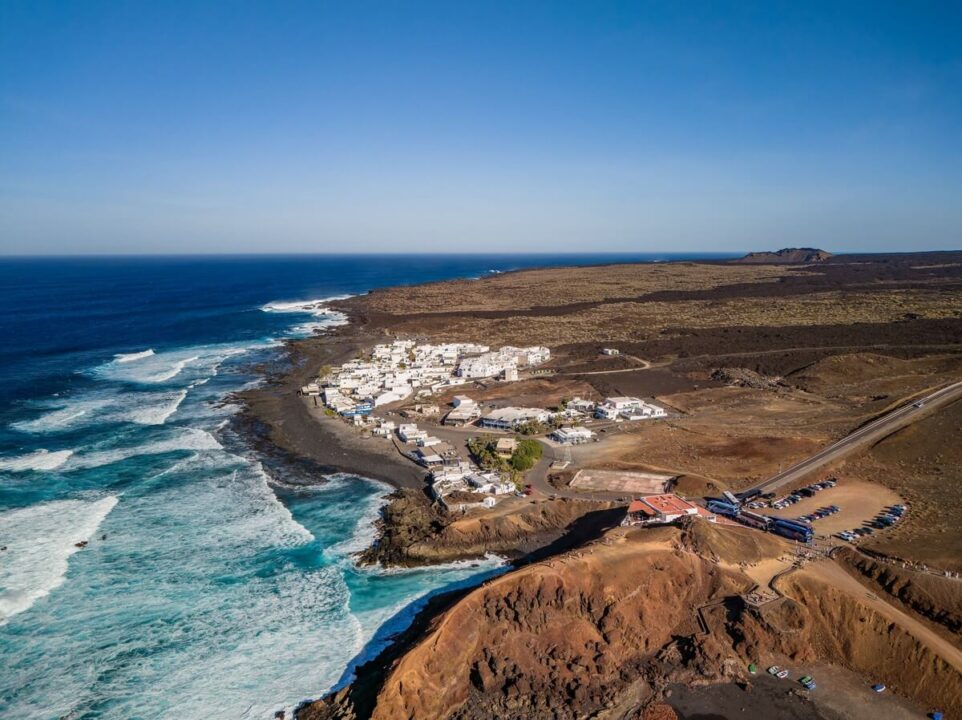
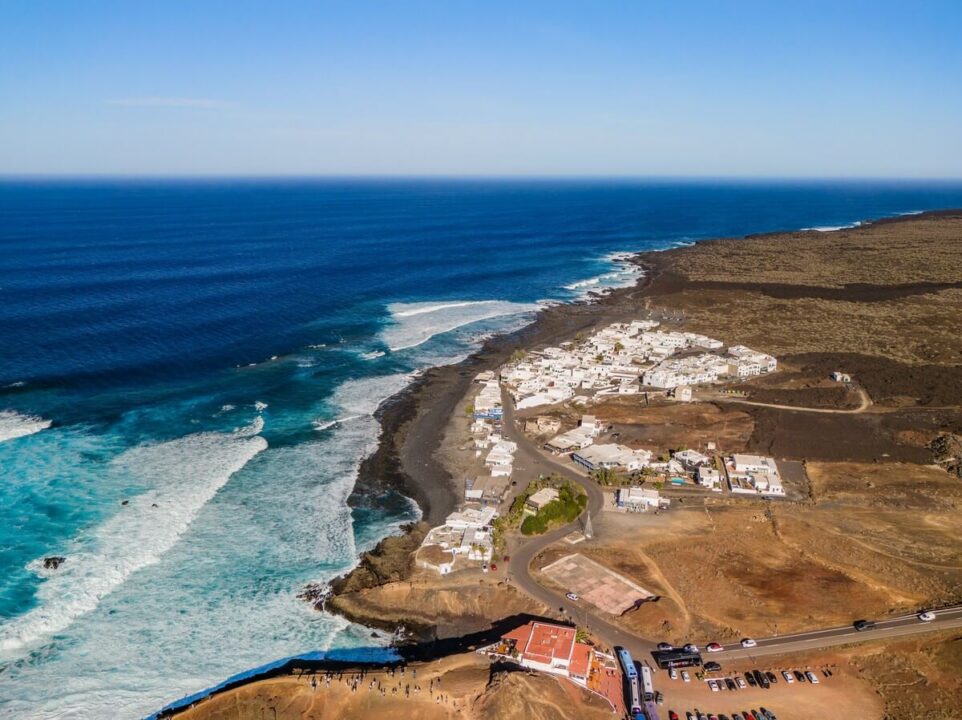
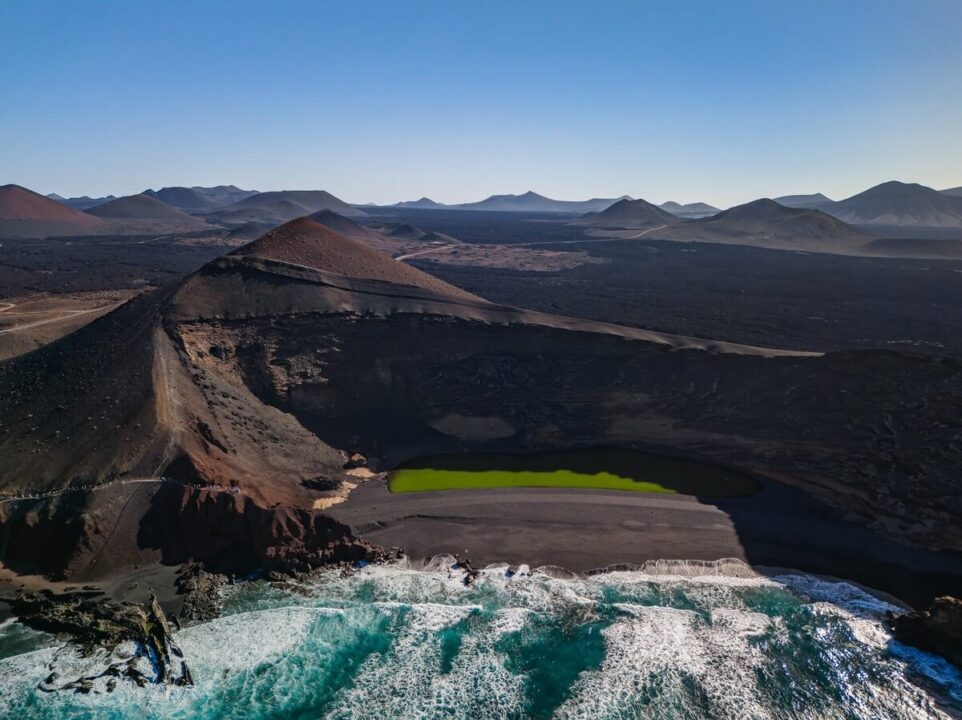
My Lanzarote travelogue After a day on the most fascinating volcanic island in the Canary Islands – and I have to admit: Lanzarote impressed me in a way I hadn't expected. The island looks like another planet. Black lava fields, fiery red volcanic craters, white villages, and turquoise sea – the contrasts on Lanzarote are so extreme that every drone photo looks like it's been edited (it isn't). During our Canary Islands trip in January 2024, we visited Lanzarote as a day trip from Gran Canaria visited.
What makes Lanzarote unique: The entire island is a UNESCO Biosphere Reserve and was significantly shaped by a single artist – César Manrique. He ensured that there would be no high-rise buildings, no advertising billboards, and only white houses with green or blue shutters on Lanzarote. The result is an island that appears as a complete work of art.
Timanfaya National Park – Fire Mountains & Moon Landscapes
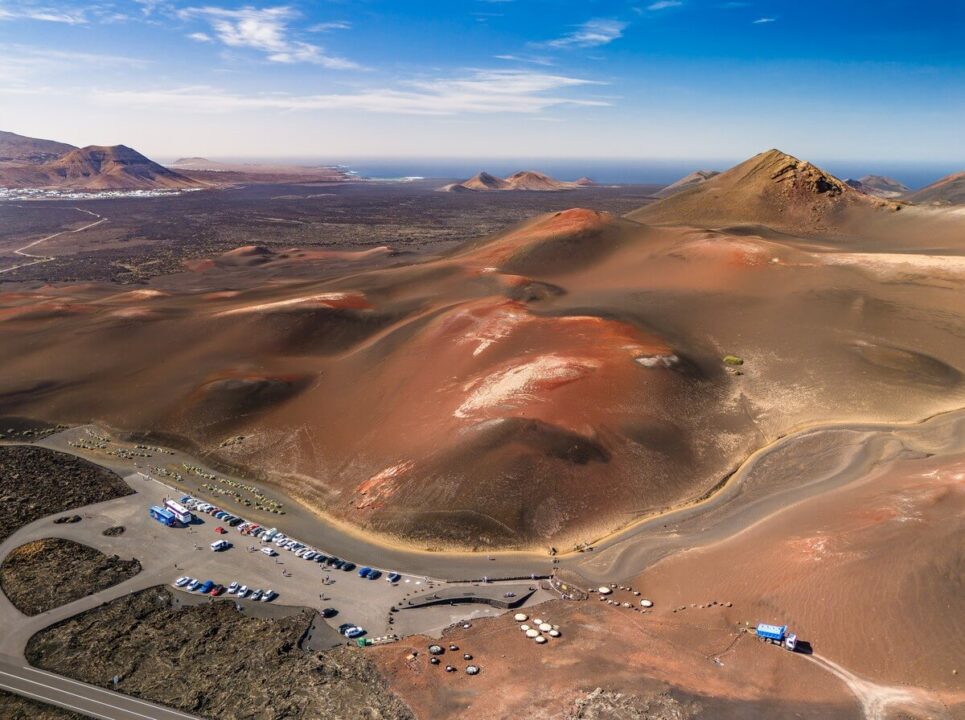
The Timanfaya National Park Lanzarote's absolute highlight and one of the Sightseeing features, These are sights you absolutely mustn't miss. The "Montañas del Fuego" (Fire Mountains) were formed by volcanic eruptions between 1730 and 1736, which lasted six years and buried a quarter of the island under lava. Even almost 300 years later, the volcanic activity is still noticeable here: Just a few meters below the surface, temperatures exceed 400°C.
The Bus tour through Timanfaya (Included in the €12 entrance fee) leads along the "Ruta de los Volcanes" through a surreal landscape of red, orange, and black volcanic craters. At the El Diablo restaurant, they cook using geothermal energy – a grill over a natural volcanic vent, where meat is roasted at over 300°C.
Drone photography: Drone flying is prohibited within the national park itself. The best drone footage of the volcanic landscape can be obtained from the park's edge – the lava fields extend far beyond the park boundaries and offer breathtaking patterns in black and red from above.
César Manrique's Legacy – Art Meets Volcano
César Manrique (1919-1992) is omnipresent on Lanzarote. The artist and architect shaped the island like no other individual has ever shaped a landscape. His works are not museums in the classical sense – they are fusions of art, architecture, and volcanic landscape.
- Jameos del Agua – A natural cave system that Manrique transformed into an underground auditorium with a pool and restaurant. The turquoise underground lake is home to blind albino crabs found only here.
- Cueva de los Verdes – A 6 km long lava tunnel that can be explored on guided tours. The acoustics in the tunnel are so good that concerts are held here.
- Mirador del Río – A viewpoint at 475m altitude overlooking the neighboring island of La Graciosa, seamlessly integrated into the rock.
- Fundación César Manrique – Manrique's former residence, built inside five lava bubbles. Architecture that blends with nature instead of working against it.
Tip: A combined ticket for all Manrique attractions costs approximately €35 and is worthwhile if you want to visit three or more.
Beaches, vineyards & Lanzarote's hidden corners
Besides volcanoes and Manrique, Lanzarote has some of the most beautiful Canary Islands beaches. The Papagayo beaches In the south – a series of sheltered coves with golden sand and crystal-clear water – are among the best beaches in the entire Canary Islands. Access is via a gravel track (€5 parking fee), which keeps the beaches pleasantly quiet.
An absolute Insider tip: The La Geria wine region. Amidst the black volcanic landscape, the winemakers have developed a unique cultivation method: Each vine grows within a semicircular wall of volcanic stone, which protects it from the constant wind. From a drone, the thousands of semicircles in the black lava look surreal. You can sample the local Malvasía wine directly at the wineries – Bodega El Grifo and Bodega La Geria are the most famous.
Practical Lanzarote tips – arrival, car rental & costs
Arrival: Lanzarote Airport (ACE) is served by direct flights from many German airports (Ryanair, Condor, Eurowings). Flight time from Frankfurt is approximately 4.5 hours. Alternatively, you can take a ferry from Fuerteventura (25 minutes) or Gran Canaria (a day trip by plane or ferry is possible).
Rental cars: Highly recommended. Lanzarote may be small (60 km north-south), but without a car you can't comfortably reach Timanfaya or the Papagayo beaches. From around €20/day with local providers.
Best time to travel: Pleasant year-round (18-28°C). September to November and February to May offer the best balance of weather, prices, and tourist numbers.
Budget: Similar to Gran Canaria. Food from €10-15 for a full meal, accommodation from €40/night.
FAQ – Frequently Asked Questions about Lanzarote
What are the must-see sights on Lanzarote?
Timanfaya National Park, at least two César Manrique works (Jameos del Agua + Mirador del Río), the Papagayo beaches and the La Geria wine region.
How many days do you need for Lanzarote?
Minimum 3-4 days for the highlights. Ideally, 5-7 days to also explore the north coast, La Graciosa and the hidden coves.
Is it possible to take a day trip from Gran Canaria to Lanzarote?
Yes, by domestic flight (approx. 1 hour, from €30 one-way). There's no direct ferry from Gran Canaria – only via Fuerteventura. A day trip is enough for Timanfaya and a Manrique factory.
Is Lanzarote more beautiful than Fuerteventura?
It depends on your taste. Lanzarote offers more cultural attractions (Manrique) and more dramatic volcanic landscapes. Fuerteventura has the better beaches and is ideal for kitesurfers. Taking a ferry to both (25 minutes) is perfect.
Lanzarote's volcanic landscapes offer spectacular subjects for drone footage – the contrasts between black lava, white villages, and turquoise sea are particularly unique. More Canary Islands reports: Gran Canaria | Madeira | Collaboration & Content Production
 German
  English