
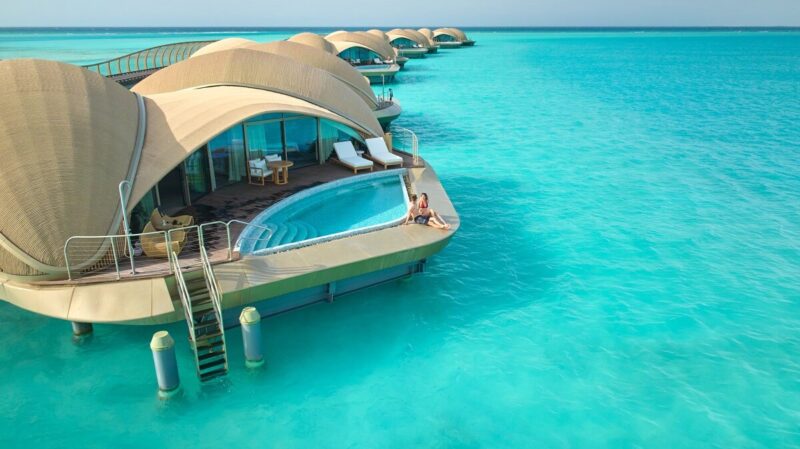
How Tourism Boards work with travel influencers — The complete guide to destination marketing (2026)
Tourism boards invest millions annually in influencer marketing—and yet many still burn through their budgets with the wrong creators, the wrong formats, and the wrong expectations. I know this because I'm on both sides: As a travel creator with over 4.2 million followers and more than 500 brand collaborations, I've been working with tourism boards worldwide for over ten years. From Visit Saudi Arabia and Tourism New Zealand to Basque Country Tourism.
This guide is for marketing managers at tourism boards, DMOs and destination management organizations who want to understand how influencer marketing in tourism really works — beyond buzzwords and agency pitches.
Why Influencer Marketing Works for Tourism Boards
Traditional tourism advertising has a problem: it's interchangeable. Every destination has beaches, mountains, or culture. A 30-second TV spot can't differentiate between them. But what it can't do is tell an emotional, authentic story that makes people want to put THAT specific destination on their bucket list.
That's precisely what travel influencers achieve. A well-produced travel report with drone footage, personal experiences, and honest recommendations has a shelf life of years—not seconds. My Albania travel report from 2023 still generates organic traffic and booking inquiries for Albanian hotels today.
The numbers speak for themselves: According to the Adventure Travel Trade Association (ATTA), 821,030 travelers trust recommendations from content creators more than traditional advertising. And the conversion rate for influencer content in tourism is 3-71,000—significantly higher than the 0.5-11,000 for display ads.
The 5 most common mistakes tourism boards make in influencer campaigns
Mistake 1: Only looking at the number of followers
A creator with 5 million followers and a 0.3% engagement rate is less effective than one with 500,000 followers and a 4% engagement rate. Tourism boards should focus on three metrics: engagement rate (at least 2%), audience demographics (do the followers match the destination's target audience?), and content quality (are the images and videos professional enough for their own channels?).
Mistake 2: Briefings that are too narrow
„Post at 2 p.m., use hashtag #VisitXYZ, mention the hotel three times.“ — That’s not influencer marketing, that’s paid advertising. And it looks exactly like it. The best campaigns give the creator creative freedom. My most successful tourism board collaborations had a briefing of no more than half a page: core message, must-see spots, budget. I designed the rest myself.
Mistake 3: One-off posts instead of long-term partnerships
A single Instagram post is like a single TV commercial: briefly visible, quickly forgotten. Sustainable destination marketing results are achieved through series: one travel blog post + 5 Instagram Reels + 3 TikToks + Stories over a week. Or even better: recurring visits over 2-3 years that establish the destination as the creator's regular destination.
Mistake 4: Measuring ROI only in likes
Likes are the least important metric in tourism influencer marketing. What counts: saves (people adding the destination to their bucket list), link clicks (direct booking intent), Google searches for the destination (measurable via Google Trends), and long-term SEO traffic to the blog post.
Mistake 5: Barter deals instead of fair pay
„"We'll invite you, in return you create content." — This works for micro-influencers with fewer than 10,000 followers. For professional creators with millions of followers, a free hotel stay is no good return for content that can generate thousands of bookings. Fairly paid creators deliver better content because they don't have to juggle three other barter deals on the side.
What a Tourism Board campaign costs — honest figures
Costs vary significantly depending on reach, effort, and content volume. Here are my experiences from over 20 tourism board collaborations:
| Creator category | Followers | Typical budget | Services |
|---|---|---|---|
| Micro-influencer | 10K-50K | 1.000-3.000 € | 5-10 posts, 1 blog |
| Mid-Tier Creator | 50K-500K | 3.000-10.000 € | Full Content Package |
| Macro-Influencer | 500K-2M | 10.000-25.000 € | Multi-platform + blog + usage rights |
| Top-Tier Creator | 2M+ | 15.000-45.000 € | Complete campaign + Ambassador |
| Duo/Couple | combined 5M+ | 20.000-50.000 € | Double the reach, paired content |
In addition, there are travel expenses (flights, hotels, transfers), which are usually covered by the Tourism Board. For long-distance travel, expect to pay an additional €3,000-€5,000 per Creator.
How Tourism Boards choose the right creator
Step 1: Define target group
Before you look for a creator, define your target audience: What nationality? What age group? What travel budget? A German tourism board that wants to attract US tourists needs an English-speaking creator with a US audience — not a German creator with a German community.
Step 2: Check content quality
Scroll through the last 20-30 posts. Do the images look professional? Is the text well-written? Does the creator have a distinctive visual style? Professional drone photography, consistent image editing, and storytelling are signs of a creator who showcases your destination in the best possible light.
Step 3: Audience Analysis
Use tools like HypeAuditor, Modash, or Kolsquare to check follower demographics. Pay attention to: fake follower rate (should be below 15%), age and gender distribution, geographic distribution of followers, and engagement rate ranking compared to similar creators.
Step 4: Review past collaborations
Has the creator worked with tourism boards before? What did their content look like? Did they attend ITB Berlin or other tourism trade shows? Do they have references? A creator with tourism board experience understands the processes, requires less guidance, and delivers content tailored to the specific needs of DMOs.
The best content formats for destination marketing
1. Long-form travel reports (blog)
SEO-optimized blog posts of 2,000-5,000 words that rank well on Google for "[Destination] travelogue". The advantage: organic traffic for years. My Kenya travelogue still generates 200+ visitors per month two years after publication—without any additional marketing budget.
2. Instagram Reels (30-90 seconds)
Short, emotional videos featuring drone footage, transitions, and music. Reach: 100,000–2,000,000 views for creators with 1 million+ followers. Ideal for raising awareness and providing inspiration during the planning phase.
3. TikTok Content
Trending formats adapted for travel: "Places you didn't know existed," "POV: Your first time in [Destination]," "Things I wish I knew before visiting [Destination]." TikTok content has the highest organic reach—a good TikTok video reaches 10 times more people than an Instagram post.
4. Drone photography & videography
Drone footage is THE differentiator in destination marketing. A destination looks more spectacular from above than from eye level. I fly the DJI Mini 5 Pro — under 249g, registration-free in most countries, and delivers 48MP photos and 4K HDR video.
5. Destination guides (evergreen content)
Comprehensive guides with routes, costs, tips, and FAQs that serve as a go-to resource for travelers. Format: Blog + Video + Social Carousel. These guides are shared and linked to for years—the holy grail of content marketing.
Campaign workflow — From inquiry to reporting
Phase 1: Briefing & Matching (2-4 weeks before trip)
The Tourism Board sends a briefing outlining the core message, must-see spots, target audience, and budget. The creator assesses the fit, develops a concept pitch with content formats, a posting plan, and a timeline. After agreement, a contract is drawn up detailing the scope of services, usage rights, and payment terms.
Phase 2: Production (travel + 1-2 weeks post-production)
The creator travels to the destination and produces photo and video material. Tip: Give the creator at least 5-7 days on site. Three days will produce superficial "I was here" posts. Seven days will yield in-depth stories that capture the soul of the destination.
Phase 3: Content Release (1 week)
The creator sends the finished content for approval. IMPORTANT: Only one approval round is allowed. Too many change requests destroy the authenticity of the content—and that's precisely why influencer marketing works.
Phase 4: Distribution & Monitoring (2-4 weeks)
Content will be published via the agreed channels. Upon completion, the Tourism Board will receive a report with all KPIs: reach, impressions, engagement, saves, link clicks, and (if trackable) bookings.
Why work with Max Haase?
As one of the leading travel creators in Europe, I bring everything that tourism boards need:
- over 4.2 million followers on Instagram — 78% travel-oriented audience in the DACH region + international
- 82+ countries visited — Real travel experience, not studio content
- Professional drone photography — DJI Mini 5 Pro, licensed and insured
- Sony A7 IV Photo + Video — Cinema quality for blog and social media
- 500+ brand collaborations — including 50+ Tourism Boards worldwide
- SEO-optimized blog posts — rank organically and generate long-term traffic
- Duo campaigns with Janet Dannehl (2.3M+ followers) — combined reach 6.7M+
If you'd like to collaborate with me as a tourism board, you can find all the details on my website. Cooperation page or contact me directly at info@max-haase.com.


FAQ — Tourism Boards & Influencer Marketing
How long does it take for influencer content to show results?
Social media posts offer immediate reach (24-48 hours). Blog posts take 2-6 months to achieve organic SEO ranking. The sweet spot: a combination of both — social media for short-term buzz, blogging for long-term visibility.
Should I book one or more creators?
For a single destination, I recommend 2-3 creators with different target audiences. For example: an adventure creator for the active travel audience, a luxury creator for the high-end audience, and a couples creator for couples. This way, you reach different segments with authentic content.
How do I measure the ROI of influencer marketing?
Short-term: Engagement rate, saves, link clicks, UTM parameters on booking links. Medium-term: Google Trends for destination search queries, SEO traffic to blog posts. Long-term: Brand awareness studies, booking figures compared to the previous year.
What is the difference between an influencer and a content creator?
An influencer primarily has reach—they can reach many people. A content creator primarily has production quality—they create professional content. The best partners for tourism boards are creators who combine both: reach AND quality.
Equipment tip: The best travel drone of 2026 — comparison for Travel Creator
Further reading
- Luxury Adventure Travel — The best experiences for discerning travelers
- What is a travel influencer? — A guide for brands
- Becoming a Travel Content Creator — My Guide
- Collaborations & Cooperations — Book Max Haase


 German
  English