
Becoming a Travel Content Creator: An Honest Guide
Becoming a Travel Content Creator – My Honest Guide After 10 Years in the Business
This means: regularly creating niche content, building an audience, and generating long-term revenue through collaborations, your own products, or affiliate marketing. In the travel sector, you need equipment, a clear niche, consistent content—and 2-3 years of patience. Here, I share my journey from 10 years of practical experience with over 4 million followers.
Since 2016, I've been a travel content creator. Over 4 million followers, more than 500 brand collaborations, and over 60 countries visited. Sounds glamorous? Sometimes it is. But the road to get here was anything but a walk in the park. Here's my honest guide—no bullshit, no "you can achieve anything if you just want it" motivation. Instead: concrete numbers, real mistakes, and the truth about a business that looks easier from the outside than it actually is.
- In business since 2016, 4 million followers, 500+ brand collaborations, 82+ countries visited – the journey was hard work, not a lucky break.
- Starter setup with smartphone and tripod: 50-150 euros; Intermediate setup with mirrorless camera and drone: 3,500-5,500 euros; Pro setup: well over 20,000 euros – a smartphone is sufficient for the first 6-12 months.
- On busy shooting days: 4:30 a.m. sunrise shoot, outside until 11 a.m., editing at midday, editing in the afternoon, posting and DMs in the evening. Not every day like that – but normal on tourism board trips.
- Quality over quantity – better 1-2 strong posts per week than 5 mediocre ones. Niche hashtags with 50-500k posts instead of mega-tags like #travel (700 million).
- ‚'Travel' is not a niche but a category – let's be specific: drone photography plus adventure, budget backpacking in Southeast Asia, luxury honeymoon or family travel.
What a travel content creator actually does
Before we get into the details, let's be clear: A travel content creator isn't just a tourist with a camera. You're a photographer, videographer, copywriter, social media manager, accountant, salesperson, and travel planner—all rolled into one. On busy shooting days—especially on tourism board trips—I get up at 4:30 a.m. for sunrise shots, film until 11 a.m., edit photos at midday, cut videos in the afternoon, and answer DMs in the evening. Not every day is this intense, but these kinds of periods are part of the job.
The platforms I'm active on are Instagram (my main channel, 4M+ followers) and my blog here (for SEO traffic and long-term visibility). Each platform has its own formats, algorithms, and rules. Content that goes viral on Instagram can completely flop on TikTok—and vice versa.
My Equipment — What You Really Need
My current setup — detailed Content Creator Equipment 2026 I have documented this separately — after years of testing:
Those who travel regularly tend to accumulate a list of travel gear that has truly proven its worth. The following products are long-time companions and not just top sellers, but genuine recommendations based on personal travel experience:
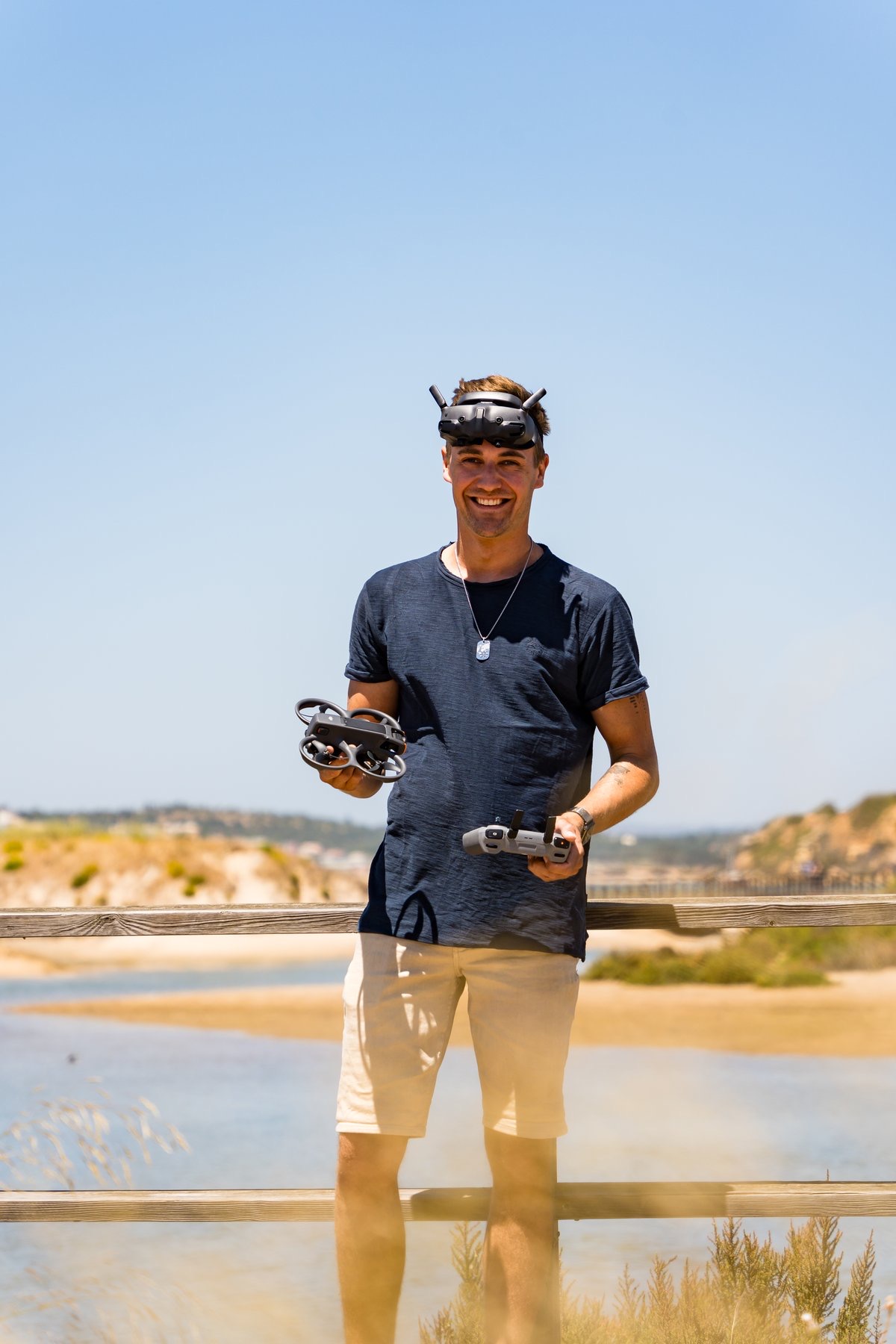
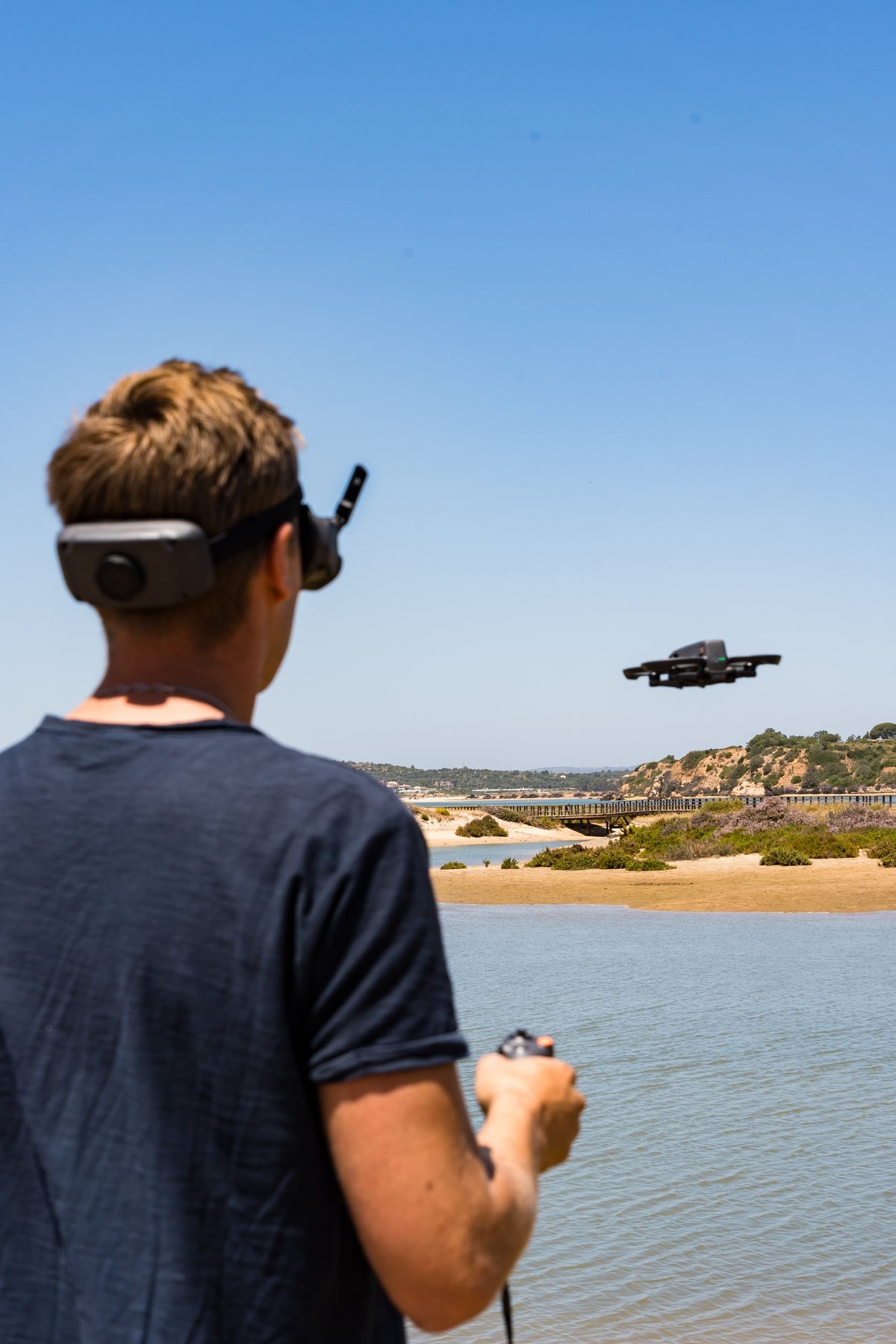
- DJI Mini 5 Pro – My most important tool. Under 249g (no registration required in many countries), 1-inch sensor, 4K/100fps. Around 90 percent of my viral shots are drone footage.
- Sony A7 V – Full-frame hybrid for photo and video. Combined with a wide-angle lens (16-35mm f/4 GM) for landscapes and a zoom lens (70-200mm f/4 GM II) for details and wildlife.
- DJI Action 6 Pro – For underwater, kitesurfing, POV shots. Everything the Sony can't go to.
- DJI RS 4 Gimbal Cinematic videos need stabilization. For follow shots, walking scenes, and low-angle shots.
- iPhone 17 Pro Max – For stories, quick reels, behind-the-scenes footage. The smartphone camera is often good enough for social-first content.
What you need at the beginning (and what you don't)
Honest answer: A good smartphone is perfectly sufficient for the first 6-12 months. I shot my first viral video with an iPhone 7. What you don't need: A €3,000 camera, a gimbal, 5 lenses, and a drone license. All that comes later, when you know this is the path for you.
| Equipment level | investment |
|---|---|
| Starter (smartphone + tripod + gimbal) | €200–450 |
| Intermediate (Mirrorless + Beginner Drone) | €3,500–€5,500 |
| Pro (full-frame camera + 2 lenses + drone + action cam) | €9,000 – well over €20,000 |
| My current setup in full | ~20.000 € |
Finding a niche — The most important step
„"Travel" alone isn't a niche. It's a category. A niche is: drone photography + adventure travel (that's me). Or: budget backpacking in Southeast Asia. Luxury honeymoon trips. Family travel with a toddler. Food travel in Southern Europe. Van life in Scandinavia.
The more specific your niche, the faster you grow. Why? Because the algorithm can categorize you. Because brands know what you stand for. Because your community identifies with you. An account that posts about luxury hotels today, backpacking tomorrow, and food the day after confuses everyone—the algorithm, the brands, and the followers.
Content Creator Career Changer: My Journey from Office to Creator
I'm a career changer myself—originally from the finance/trading sector, I started creating content on the side. The typical career-changer path for content creators, which I've observed in myself and dozens of others, is as follows:
- Months 1-6: Side hustle, still main job. Content on Instagram + 1-2 platforms. Focus: consistency, not reach.
- Initial collaborations, ~10-30% of your main job income through creator work. Main job still exists, creator work is growing.
- Creator income surpasses monthly salary. You can (risky, but doable) quit your main job. Alternative: reduce your hours to part-time.
- From month 36: Full-time creator with an agency or management. Planning 6–12 months in advance.
My strongest advice for career changers: DO NOT quit before you have earned at least 6 months of creator income equivalent to your main job salary. Anything else is wishful thinking.
My first 10,000 followers – how I did it
The first 10,000 posts are the hardest. After that, it gets easier because the algorithm favors you and brand deals come to you organically. My approach was different from the usual "5-post-a-week recipes"—I consciously focused on quality rather than frequency.
- A single, recognizable look: the same color palette, the same editing style, the same visual style on every post. The feed must be recognizable as Max Haase from three meters away.
- Every shot is meticulously planned on location: location scouting (Google Maps Satellite, Instagram geotag, drone reconnaissance), sun position (PhotoPills, Sun Surveyor), and weather check before each shoot. One well-planned shot beats ten quick ones.
- Niche hashtags instead of mega-tags: #travel has 700 million posts – your image will disappear in two minutes. Hashtags with 50,000 to 500,000 posts will get you onto the "Top Posts" page and attract real engagement profiles.
- Cultivate your community, don't farm it: I personally answer DMs and comments, no bots, no broadcast replies. This doesn't scale – but it builds a following that will later recommend you for bookings.
- Each trip produces material for Instagram (reels + carousel), TikTok (a shorter version), and a detailed blog post. Same effort, three channels.
The truth is: It took me about eight months to reach 10,000 followers. Eight months with little feedback, few likes, and zero income. Most people give up after two months. Those who persevere and hone their skills are the ones who win.
When does a travel creator start earning money?
The question everyone asks. Here are real figures from my experience and what I see in the market:
| Follower level | Typical income | Type of deals |
|---|---|---|
| 1,000–10,000 (nano) | €0–500 / month | Barter deals, small product placements |
| 10,000–50,000 (Micro) | €500–€3,000 / month | First paid collaborations, affiliate marketing |
| 50,000–200,000 (Mid-Tier) | €3,000–10,000 / month | Regular brand deals, press trips |
| 200,000–1M (Macro) | €10,000–€30,000 / month | Long-term partnerships, Tourism Boards |
| 1M+ (Mega) | €30,000+ / month | Long-term partnerships, tourism boards, brand ambassador, plus premium campaigns (country marketing, TV spots), licensing and speaking engagements |
For me personally, it took about five years before I could truly live comfortably off content. For the first two to three years, I worked as a freelance photographer on the side. This was financially necessary—but also psychologically important: no pressure to have to make money with the content immediately.
Three things I wish I had done earlier:
- „"We'll give you a free night in exchange for three stories" sounds nice, but it costs you four hours of production worth €80. Free hotel nights aren't a salary. From day one, only negotiate paid collaborations—otherwise, you'll cement your own "free" status in the market.
- A media kit from day one. Don't wait for the first inquiry. A professional PDF with reach, engagement rate, demographics, and case studies shows brands: this is someone who's serious.
- Do invoices and contracts right. No handshake deals, no PayPal Friends payments. Proper invoices, order confirmations, and written usage rights. That's what separates hobby from business.
Content Creator Salary: What do they really earn?
The actual income of content creators varies greatly—there is no fixed salary. Realistic figures from the German travel creator scene (based on conversations with other creators + my own data):
- Entry level (0-10k followers): €0-500 per month, mostly barter collaborations (hotels, activities) and initial small fixed amounts.
- Intermediate level (10k–100k followers): €1,500–€5,000 per month with active monetization. Single post €300–€1,500, story sets from €500.
- Established (100k–500k followers): €5,000–15,000 per month, destination road trips €5,000–20,000 per campaign.
- Top-tier (500k+): €15,000–€50,000 per month at full capacity. Large campaigns (duo with partner, usage rights, blog + social media): €25,000–€70,000 per project.
Important: These are revenues, not profits. Equipment, travel expenses, taxes, agency fees (if applicable), and downtime between campaigns significantly reduce the actual disposable income. Plan for deductions of 25–35%.
Content creator training vs. learning by doing
There are now formal training paths for content creators—Mobile University, CBS, Social Media Academy, various bootcamps. My honest assessment: Training doesn't replace the 1,000 hours of practical experience you need anyway. But it can structure your entry into the field if you're starting from scratch and don't have a peer group.
What you really need to learn to work as a content creator:
- Storytelling (script, hook, payoff)
- Camera techniques (manual exposure, focus, framing)
- Video editing (Premiere, Final Cut, or CapCut for social media)
- Platform mechanics (Instagram algorithm, TikTok FYP, YouTube retention)
- Negotiation and contract law (usage rights, exclusivity)
- Basic accounting (small businesses, sales tax)
None of this requires formal training—but each of these takes 100+ hours. My path was self-taught: YouTube tutorials, trial and error, getting feedback, improving. For most people, that's a more realistic route than a €10,000 bootcamp.
Negotiating collaborations — My learnings
The biggest mistake young creators make: saying yes to everything. Accepting barter deals ("We'll give you a night, in exchange for three stories"). Selling themselves short because they're afraid of losing the deal.
My rules after 500+ collaborations:
- No bartering after 10K followers. Your work has value. Producing a story takes you 3-4 hours. That's not a gift, that's work.
- Always have a media kit. A PDF containing: reach, engagement rate, demographics, case studies, and pricing. Anyone without a media kit won't be taken seriously.
- Don't calculate prices based on followers, but rather on effort + reach + usage rights. A Reel with 3 locations, drone footage, and editing is worth more than a Story.
- Usage rights are billed separately. If a brand wants to use your images for its own advertising, that's a separate item. And not a small one.
- Prefer long-term collaborations. A 12-month deal provides planning security. One-off posts are one-off payments.
The honest side — what nobody shows on Instagram
You work 60+ hours a week. You're on 24/7. You fly for 20 hours for a 3-day shoot. Your income fluctuates by 501,000 euros per month. Taxes are complicated (keyword: small business exemption vs. standard taxation, business expenses abroad, VAT on digital services). And everyone asks you, "When are you going to get a real job?"„
The loneliness. Nobody talks about it. You're often traveling alone. Your friends back home live normal lives—9-to-5, weekends off, set routines. You live out of a suitcase, change accommodations every few days, and have jet lag as a permanent condition. WhatsApp groups are no substitute for real friendships.
The comparison trap. You see other creators who seem to be growing faster, have better deals, and visit more beautiful destinations. That's poison. Everyone has their own path, their own pace. My account barely had 2,000 followers in the first six months. Today it has over four million.
But: The freedom to wake up in a different place every morning, to be your own boss, to show the world—that makes it all worthwhile. When you're standing alone on a cliff at 5 a.m., launching your drone and watching the sun rise over the sea—then you know why you're doing it.
Content Strategy 2025/2026 – What works now
Reels continue to dominate. 15-30 seconds, hook in the first 2 seconds, subtitles always. Carousels are back and perform extremely well for educational content ("5 tips for…"). Stories are great for community building – surveys, Q&As, behind-the-scenes footage. My focus is clearly on visual quality: a single, really strong drone reel performs better than five average ones.
Blog / SEO
The most underrated channel. A good blog post generates traffic for years — passively, without you having to do anything.„Madeira Levada hikes“It ranks on Google and brings me monthly readers who then come to my Instagram. SEO is the foundation for sustainable success and the only channel where your work will still generate traffic after 5 years.”.
Quality over quantity – regardless of the format
My approach deliberately differs from that of many creators: I post less, but with high production values – whether it's a photo, Reel, Carousel, blog post, or story. Every piece of content is meticulously planned (location scouting, lighting, script, editing concept) instead of being hastily produced. This positioning is the reason why premium brands and tourism boards work with me – they don't buy views, but content that truly resonates with their target audience.
5 mistakes I made (so you don't have to)
- Too many platforms at once. At first, I wanted to be everywhere—Instagram, YouTube, blog, Pinterest, Twitter. The result: mediocre on all of them. Better: master one or two platforms, then expand.
- Cheap barter deals accepted. A "free" hotel stay worth €80 for 5 hours of content production. Do the math: That's €16 per hour. For professional content.
- No backup of my hard drives. 2019: External hard drive failed. 6 months' worth of content lost. Since then: 3-2-1 backup rule. 3 copies, 2 different media, 1 offsite.
- I ignored burnout. I worked straight through 2020 without a break. The result: three months of creative block. Now I consciously take weeks off—without feeling guilty.
- For too long, I focused on quantity over quality. In the beginning, I believed the "post every day" dogma. Today, I focus on significantly fewer, but high-quality photos and individual, powerful Reels. Premium brands are interested in visual style, not posting frequency.
FAQ
What is the difference between a content creator and an influencer?
The difference between a content creator and an influencer lies in their business model: A content creator primarily produces content (photos, videos, text) and sells this content to brands—even without their own reach. An influencer primarily sells reach to an existing audience. In practice, both roles overlap, especially in the travel sector. Those who excel at both (content + reach) earn the most—and that's precisely the path I'm describing here.
Which platform is most important for beginners?
2025/2026: Instagram Reels and TikTok for reach, a blog for SEO traffic and long-term visibility. YouTube is optional but valuable. Focus on one or two platforms, not all at once. My advice: Start with Instagram, because that's where brand deals are most lucrative.
Is it still possible to start out as a travel creator, or is the market saturated?
The market is large enough for anyone with a specific niche who delivers consistently. What's saturated: generic "I'm standing in front of the Eiffel Tower" accounts. What's not saturated: niches with real added value—diving travel, accessible travel, solo female travel for those over 40, outdoor adventures with a dog.
Do I need an agency?
Not at the beginning. Once you have around 100,000 followers, a management agency can make sense—they handle negotiations and secure deals you couldn't get on your own. But: They charge a commission of 15-201,000. Weigh up whether the added value justifies the cost. I reached my first 200,000 followers without an agency.
How much do you earn per Instagram post?
A rough rule of thumb in the DACH market: €10 per 1,000 followers for a feed post, €5 per 1,000 for a story. These are guidelines—actual prices depend on the niche, engagement, and negotiation skills. Premium niches like luxury travel or finance pay significantly more.
How do I find my first cooperation partners?
Proactively reach out. Don't wait to be found. Create a list of 50 brands that fit your niche and email them. Not via DM—that looks unprofessional. A short, professional email with your media kit attached. Expect a 51% response rate. That's 2-3 deals out of 50 emails.
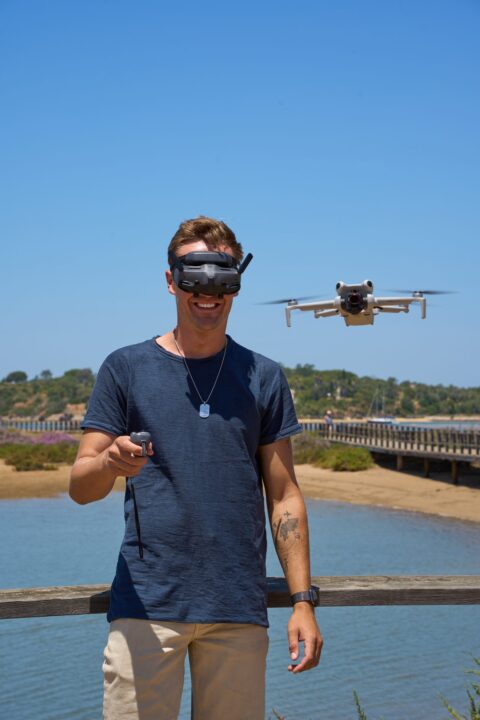
Max Haase
Travel Content Creator · Drone Photographer · Visual Storyteller
A professional travel creator for over 10 years with over 4 million followers. Specializing in high-end tourism board collaborations and visual travel storytelling.


 German
 English