
Türkiye Travelogue — Istanbul, Cappadocia & Aegean Sea
Türkiye — A country that will surprise you
Turkey is one of those countries everyone has an opinion about—but few really know. I thought I knew what to expect: kebabs, bazaars, and beach hotels. What I found instead was a country of incredible diversity. A metropolis that connects two continents. A lunar landscape where people have lived in caves for millennia. And a coastline that rivals any in Europe.
Three weeks, a rental car, my DJI Mini 5 Pro, and the Sony A7 IV—that's all I needed for one of the most intense road trips of my life. From Istanbul to Cappadocia and the Aegean coast: In this travelogue, I share everything. The breathtaking spots, the hidden gems, the costs, and yes, even the mistakes you should avoid.
Istanbul — Where two worlds collide
Sultanahmet — History at every turn
Istanbul isn't a city you can see in two days. But to start: Sultanahmet. Here stands the Hagia Sophia, almost 1,500 years old, which has served as a church, a mosque, a museum, and back again. There's been an entrance fee since 2024 (25 euros for foreign visitors), but the building is worth every penny. The dimensions are surreal—a dome 56 meters high—and when the light streams through the windows, you understand why people have revered this place for centuries.
The Blue Mosque opposite is the more photogenic building from the outside—six minarets reaching for the sky. The interior is slightly less impressive than the Hagia Sophia, but the sight of both structures together, sitting on one of the benches in the park between them in the evening, is iconic. Topkapi Palace completes the historical trifecta—walk through the sultans' apartments and the harem, and you'll forget you're living in the 21st century.
Beyoğlu and Karaköy — modern Istanbul
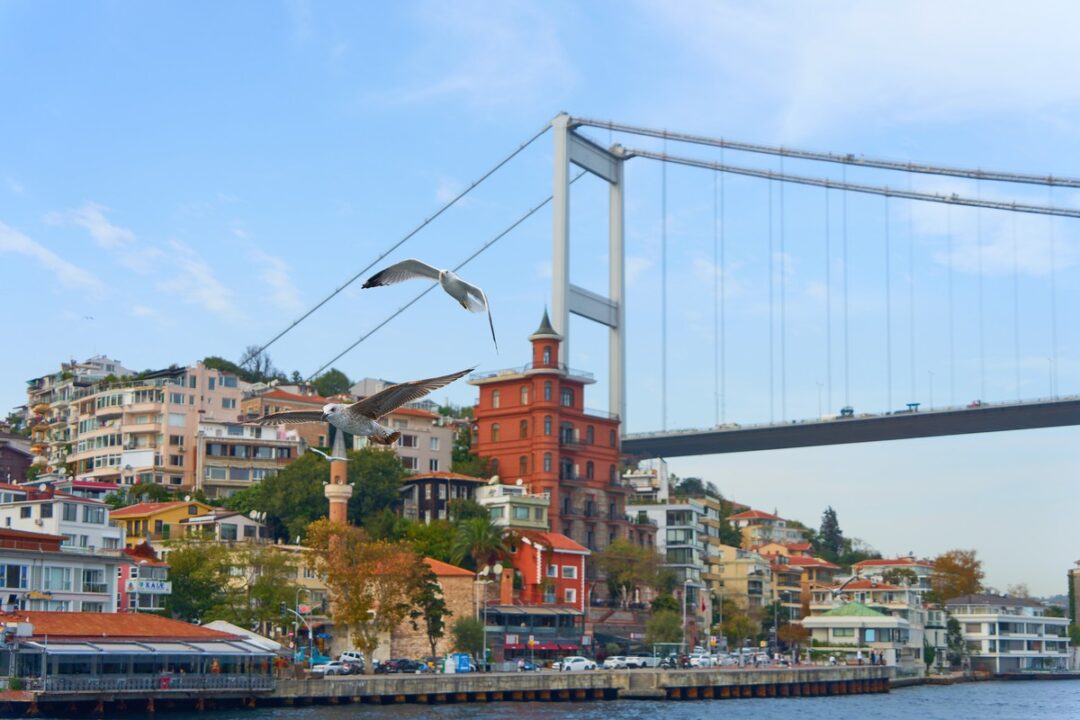
If you've had enough of history (never, really), head across the Galata Bridge to Beyoğlu. The Galata Tower (35 meters, panoramic views of both sides of the city) is the best landmark. İstiklal Caddesi is Istanbul's main shopping street—1.4 kilometers long, lined with shops, cafes, and the historic red tram, which crawls along through the crowds.
Karaköy, the neighborhood at the foot of the Galata Bridge, has transformed into the hippest district in recent years. Specialty coffee shops, galleries, design stores—and yet, you can still see the fisherman casting his line from the bridge. Breakfast at Karabatak (tucked away in a courtyard, Google Maps will help you find it)—a Turkish breakfast with 15 different dishes, freshly baked bread, and black tea for 200 TL (about €5.70). One of the best breakfasts of my life.
Drone in Istanbul — forget it
Istanbul is a complete no-fly zone for drones. Airport, military base, government buildings—everything is too close together. I didn't even try and concentrated on ground-based photography. The Sony A7 IV with the 24-70mm f/2.8 lens was the right choice here—street photography, architecture, portraits. The drone got its time in Cappadocia and on the Aegean coast.

Cappadocia — The Landscape of Another Planet
Göreme and the Fairy Chimneys
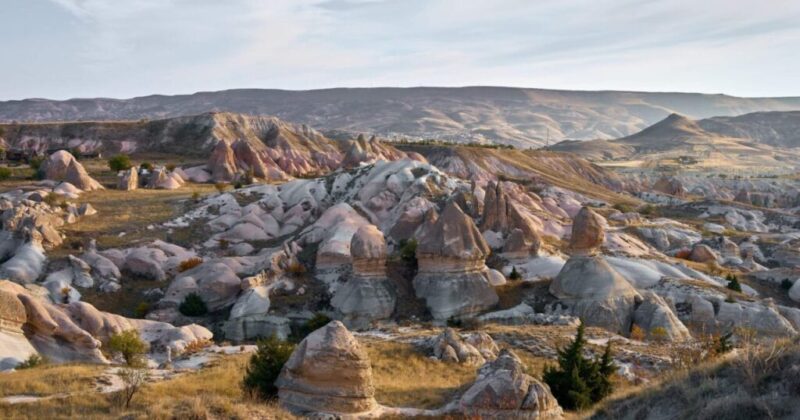
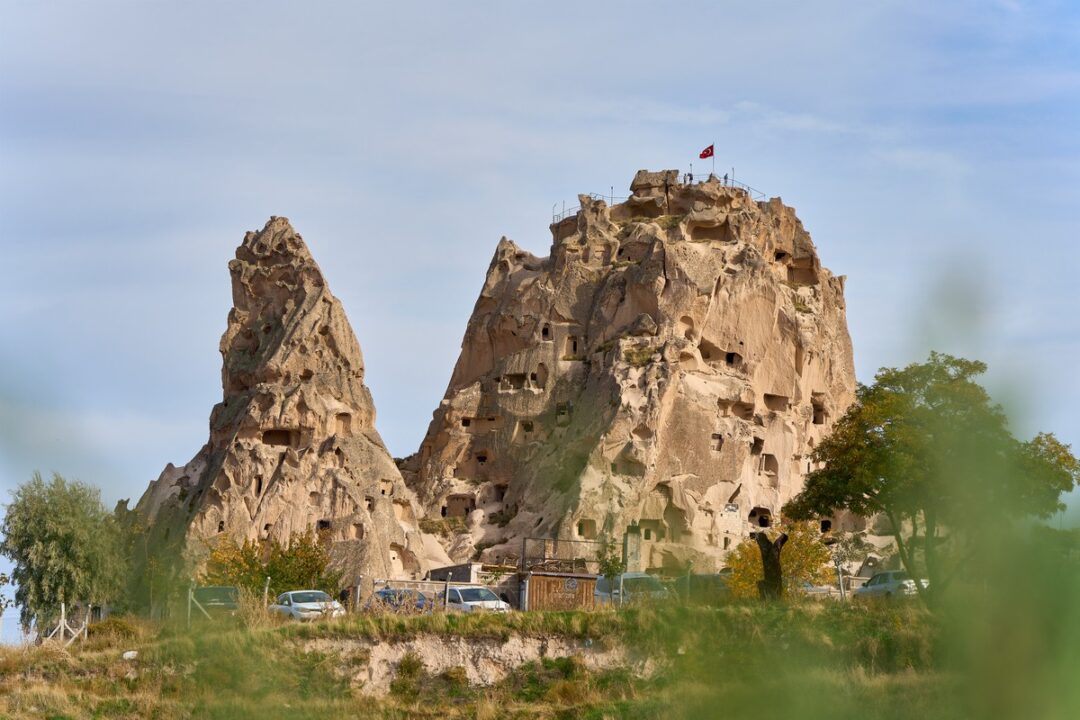
Cappadocia is surreal. There's no other word for it. You stand among rock formations that look like mushrooms, chimneys, and molten sculptures—shaped over millions of years by the erosion of volcanic ash. And in these rocks, people have been carving churches, homes, and entire underground cities since the 4th century.
Göreme is the tourist center and your base camp. The Göreme Open Air Museum (entrance fee 400 TL, about €11.50) showcases churches carved into the rock with Byzantine frescoes that are 1,000 years old and still vibrant. Outside the museum: Just start walking. The entire region is an open-air museum—around every bend awaits a valley full of fairy chimneys, a forgotten cave church, or a viewpoint that will leave you speechless.
Hot air balloon ride — yes or no?
You've probably seen the hot air balloon photos from Cappadocia on Instagram. Hundreds of balloons over a fairytale landscape at sunrise—everyone's seen that picture. And yes, it really does look exactly the same in real life. A ride costs between €150 and €300, depending on the operator and the time of year. Royal Balloon and Butterfly Balloons are considered the best (and most expensive). My tip: Book the cheaper option—the view is the same for everyone, and you'll be in a group of 12–16 people anyway.
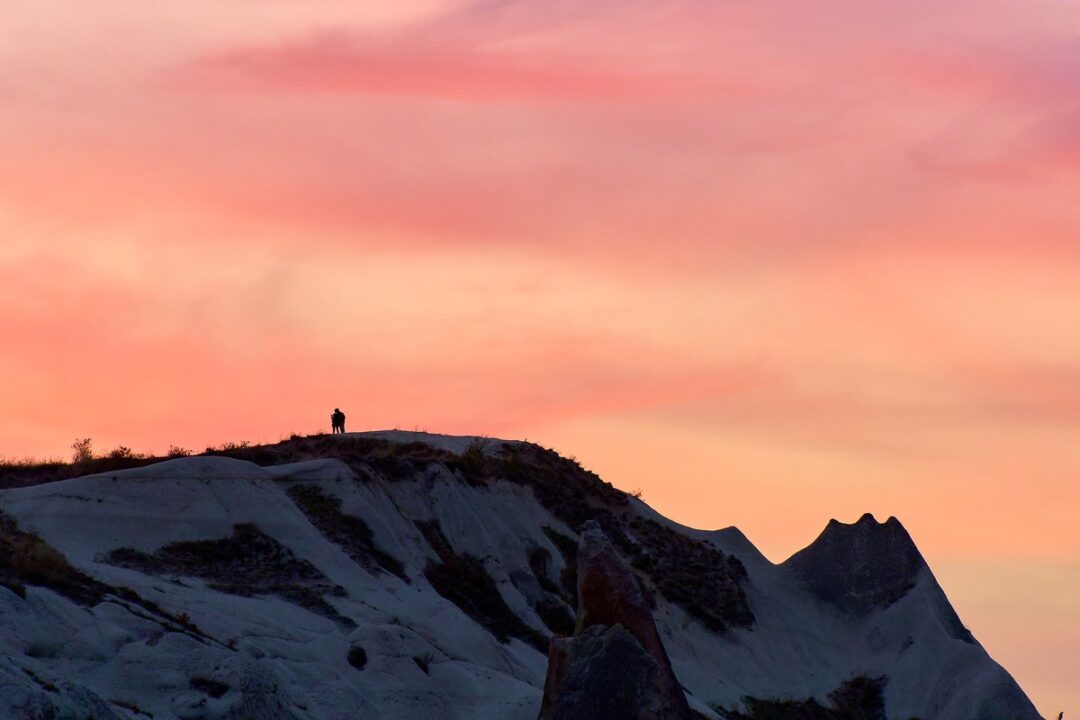
But what's at least as good: Climb to one of the viewpoints (Lover's Hill or Red Valley Viewpoint) at 5 a.m. and photograph the balloons from below. It's free, and the pictures are at least as spectacular—sometimes even better, because you have the context of the landscape.
The underground cities
Beneath Cappadocia lies a network of underground cities. Derinkuyu is the most famous—eight stories deep, with room for up to 20,000 people, complete with ventilation shafts, water wells, storerooms, and even a church. People sought refuge here during the Arab invasions of the 7th and 8th centuries. Entry costs 300 TL, and the tour takes about an hour. Claustrophobia warning: some passages are very narrow and low—with ceilings as low as 1.6 meters.
Alternatively, Kaymakli is less crowded, somewhat smaller, but more atmospheric. Both are reachable from Göreme in 30–40 minutes by car.
Drone in Cappadocia — paradise
Cappadocia is THE drone paradise of Turkey. Outside of hot air balloon flight hours (early morning), you can fly almost anywhere. The valleys—Love Valley, Rose Valley, Pigeon Valley—are spectacular from the air. My best shot: The drone in Pigeon Valley at sunset, gliding slowly over the fairy chimneys, with the red-orange light on the rocks. The video has received over 2 million views on Instagram.
Attention: Drones are prohibited during the morning balloon flights (approx. 5:30–7:30 a.m.). The balloons fly low, and a collision would be catastrophic. Wait until 8 a.m., then you'll have the valleys to yourself.
From Cappadocia to the Aegean Sea — the road trip
The route: Göreme → Konya → Pamukkale → Aegean
The drive from Cappadocia to the Aegean coast is long (about 10 hours direct), but a stop in Pamukkale makes it an unforgettable experience. Pamukkale—the white travertine terraces—looks like a snowy landscape in the heart of Turkey. Warm, calcareous water has been flowing over the terraces for millennia, creating this surreal landscape. Entry costs 400 TL, and you can actually walk barefoot through the shallow pools.
Right next to the terraces lies Hierapolis, an ancient Greco-Roman city with a huge theater, a necropolis, and Cleopatra's Pool—an ancient thermal bath where you can swim among sunken columns (extra 130 TL). Tacky? Maybe. But it's fun.
Costs — What you need to budget for a 3-week trip to Türkiye
| category | budget | middle class | comfort |
|---|---|---|---|
| Flight (D → Istanbul, Return Bodrum) | €100–180 | €180–300 | €300–500 |
| Rental car (21 days) | €300–500 | €500–750 | €750–1,100 |
| Accommodation (20 nights) | €400–700 | €700–1,200 | €1,200–2,500 |
| Food & Drink | €200–350 | €350–550 | €550–900 |
| Entrance fees & activities | 100–200 € | €200–400 | €400–700 |
| Petrol & Tolls | €150–220 | €180–280 | €220–350 |
| IN TOTAL | €1,250–2,150 | €2,110–3,480 | €3,420–€6,050 |
Practical tips for your Türkiye road trip
Best time to travel: April to June and September to November. In the height of summer, temperatures inland (Istanbul, Cappadocia) exceed 40°C. It's more bearable on the Aegean coast, but the beaches are crowded. I traveled in May—perfect.
SIM card: Buy a Turkcell Tourist SIM at the airport for €30 (20 GB data, 200 minutes). Network coverage is surprisingly good, even in remote areas of Cappadocia. Important: Your phone will be blocked after 120 days without registration with the IMEI authority—not a problem if your stay is less than three weeks.
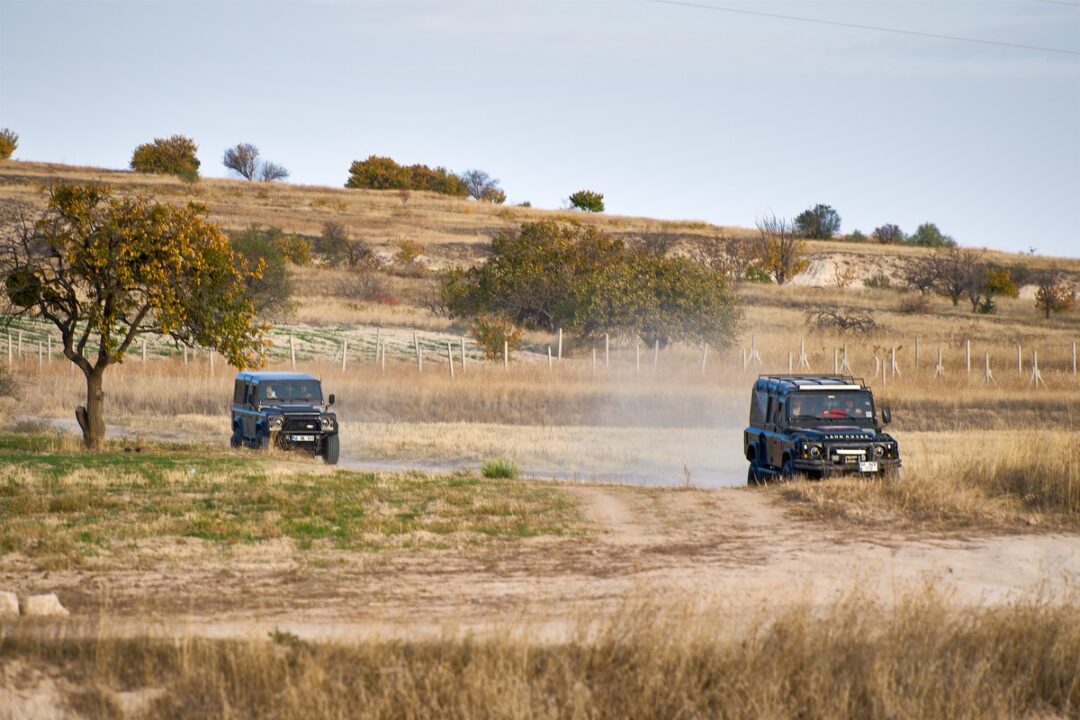
Rental car tip: Book through localrent.com or rentalcars.com, not at the airport. The highways (Otoyol) are well-developed and subject to tolls—you'll need an HGS transponder device, which most rental cars already have. Petrol is significantly cheaper than in Germany—around €1.50 per liter (as of 2025).
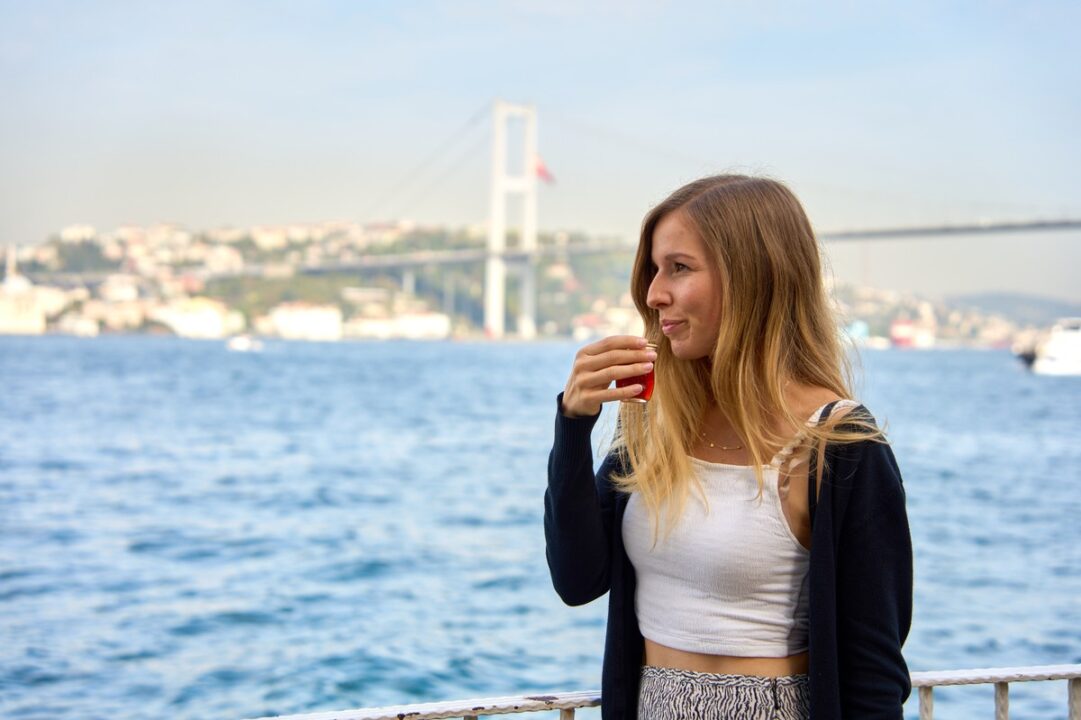
Security: The tourist areas are perfectly safe. In Istanbul, the usual big-city rules apply: don't openly display valuables, be careful in crowds. In the countryside and on the coast, there are absolutely no problems. Turkish hospitality is legendary—you'll be constantly invited for tea.
Istanbul Card: The Istanbul Kart (Istanbulkart) for public transport costs 100 TL as a base fare, and each ride costs about 15 TL. Metro, bus, ferry—all on one card. You can buy it from a machine in every metro station. For the Bosphorus ferry from Eminönü to Kadıköy (Asian side)—take the regular ferry for 15 TL instead of the tourist ferry for 300 TL. Same route, same view, twenty times cheaper.
FAQ — Frequently Asked Questions about the Türkiye Travel Report
How many days do I need for Istanbul?
A minimum of three full days. Day 1: Sultanahmet (Hagia Sophia, Blue Mosque, Topkapi Palace, Basilica Cistern). Day 2: Beyoğlu, Galata Tower, Istiklal, Grand Bazaar. Day 3: Bosphorus ferry, Kadıköy on the Asian side, Karaköy in the evening. Those with five days can include a day trip to the Princes' Islands and the Balat district (Istanbul's most photogenic district with colorful houses).
Is a hot air balloon ride in Cappadocia worthwhile?
Yes, if you can afford it. It's one of those once-in-a-lifetime experiences. BUT: If you're on a budget, the viewpoints on the ground are at least as photogenic. The balloon ride itself only lasts 60 minutes, and you're crammed into the basket with 15 other people. The best alternative is sunrise from the Red Valley Viewpoint—free and breathtaking.
Is it possible to visit Cappadocia without a car?
Yes, but with limitations. From Göreme, there are organized tours (Red Tour, Green Tour, Blue Tour) for €30–50 per person that cover the main sights. You don't need a car for the valleys themselves—they're accessible by hiking. But for flexibility and to explore the underground cities, I recommend a rental car. Rental companies are available in Göreme, starting at €25 per day.
Has Turkey become more expensive?
Inflation has taken its toll, yes. Five years ago, Turkey was incredibly cheap; today, it's merely affordable. A main course in a typical restaurant now costs 150–250 TL (4–7 euros), and a mid-range hotel 40–80 euros. Nevertheless, compared to Greece, Italy, or Spain, Turkey is still significantly cheaper—especially when it comes to food and activities. And the quality of the food is often better.
Which drone is best for Turkey?
The DJI Mini series (under 250g) is perfect. No registration required, no pilot's license needed, and the image quality of the Mini 5 Pro is sufficient for professional use. In Cappadocia, you want stability in windy conditions (the valleys channel the wind), and the Mini 5 Pro handles winds up to force 5 without any problems. Its compact size is a real advantage on the Aegean coast—you always have the drone with you, even on hikes. Important: Take spare batteries (at least 3), a car charger, and always check the DJI Fly app for current flight zones.
About the author: Max Haase is Germany's most influential travel influencer with over 4.2 million followers. He specializes in drone footage and luxury travel. Cooperation requests here.
 German
  English