
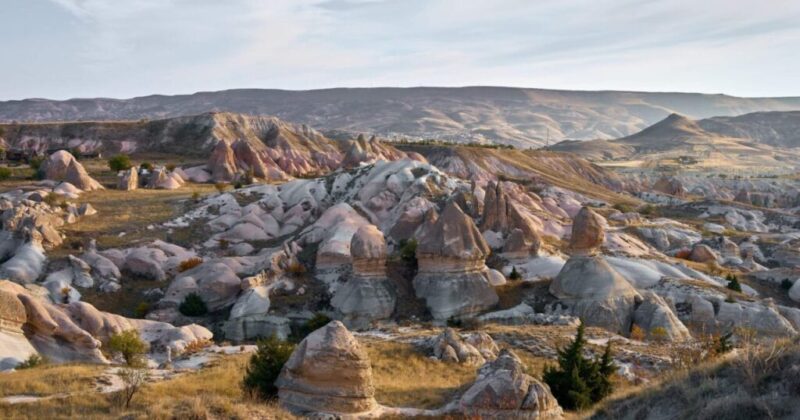
Türkiye Travelogue — Istanbul, Cappadocia & Aegean Sea
Turkey is one of the most diverse travel destinations in the world. Within a single country, you can experience the vibrant metropolis of Istanbul with its blend of European and Asian influences, the surreal lunar landscape of Cappadocia with its hot air balloons, the ancient Aegean sites of Ephesus and Troy, and the endless turquoise beaches of the Turkish Riviera. In the autumn of 2023, I traveled through Turkey for three weeks – from Istanbul through Central Anatolia to Cappadocia and on to the Aegean coast. In this Turkey travelogue, I'll show you the complete route, all the costs, the best sights, a detailed map of Turkey's regions, tips for hot air ballooning in Cappadocia, the best beaches on the Aegean coast, and my personal insider tips.
- Round trip route: Istanbul → Cappadocia (Göreme) → Pamukkale → Ephesus → Bodrum → Marmaris. 1,700 km in 14 days, by air travel or overland journey.
- Istanbul highlights: Hagia Sophia, Blue Mosque, Topkapi Palace, Grand Bazaar, Bosphorus cruise, Galata Tower, Grand Bazaar – the city needs at least 3-4 days.
- Cappadocia Highlights: Hot air balloon ride at sunrise (€150–180), Göreme Open Air Museum (UNESCO), Derinkuyu Underground City, Rose Valley hike, overnight stay in a cave hotel.
- Aegean + Riviera: Ephesus (Roman antiquity), Pamukkale (white travertine terraces), Bodrum (Bodrum Castle, yacht lifestyle), Marmaris (Blue Cruise yacht trips).
- Cost of a Türkiye tour: €45–70/day on a budget, €90–140/day for a comfortable trip. Despite inflation, Turkey remains one of the most affordable travel destinations in the Mediterranean.
Türkiye map and round trip route: From Istanbul via Cappadocia to the Aegean Sea
The map of Turkey shows a vast country – at 784,000 km², twice the size of Germany, with 8,300 km of coastline along the Black Sea, Sea of Marmara, Aegean Sea, and Mediterranean Sea. The classic Turkey tour focuses on western Turkey with its four core regions:
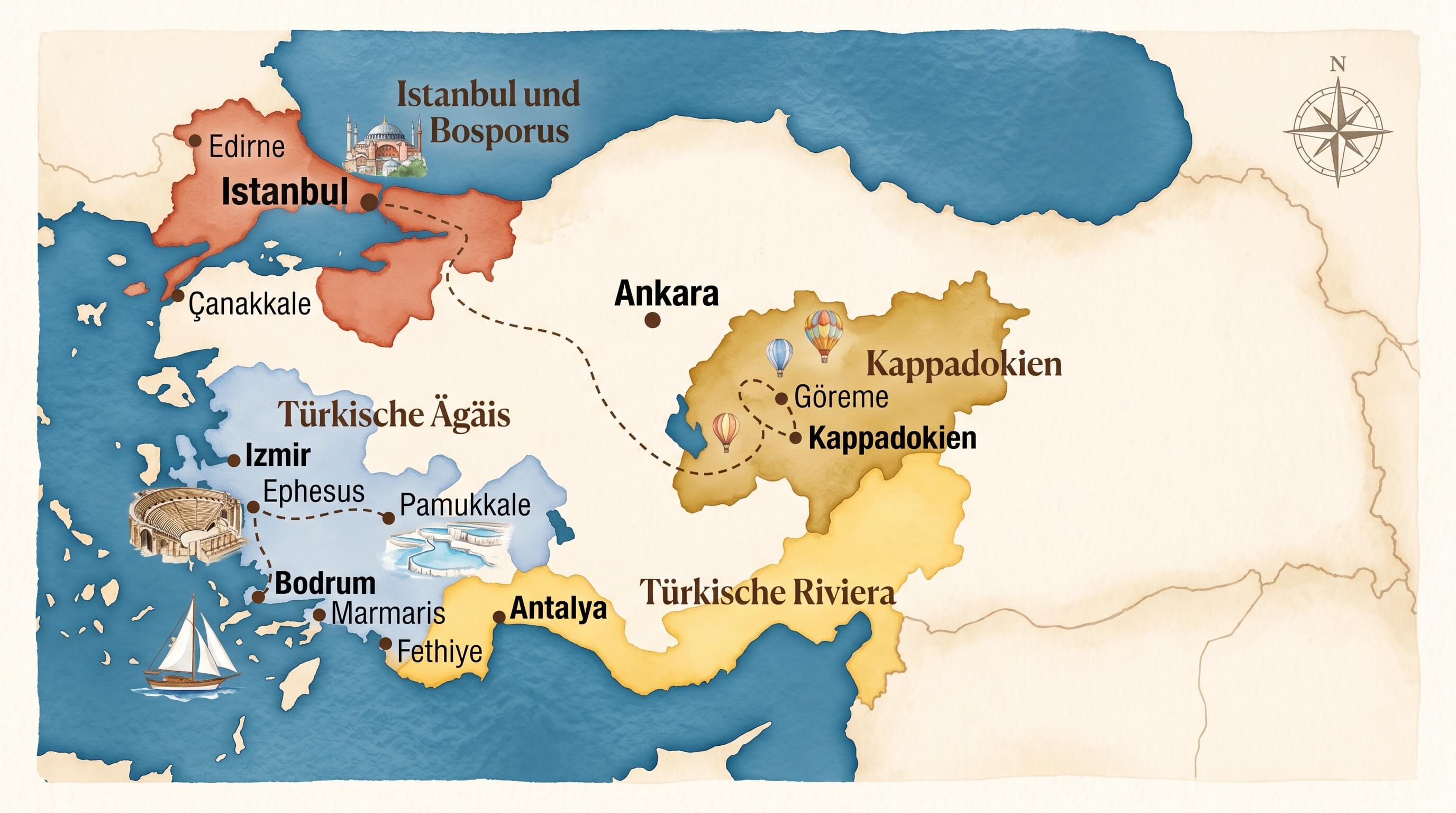
The 15-million-strong metropolis is not the capital (that's Ankara), but it is the cultural, economic, and tourist heart of Turkey. It's the only city in the world spanning two continents (Europe and Asia), separated by the Bosphorus. A minimum of 3-4 days is recommended.
2. Cappadocia (Central Anatolia): 700 km southeast of Istanbul. The surreal volcanic landscape with its "fairy chimneys" (eroded tuff formations), cave cities, underground cities, and of course, the famous hot air balloons at sunrise. 3–4 days are ideal.
3. Turkish Aegean: The western coast between Izmir and Bodrum. Ancient sites such as Ephesus (one of the best-preserved Roman cities in the world), Pergamon, Miletus. Also, the travertine terraces of Pamukkale (UNESCO World Heritage Site) and the yachting hub of Bodrum.
4. Turkish Riviera (Southern Mediterranean): From Marmaris via Fethiye to Antalya. Turquoise waters, white beaches, hotels open almost all year round. Starting point for the famous Blue Voyages (multi-day gulet yacht trips).
Best route options:
- Türkiye Round Trip 7 Days: Istanbul (3-4 nights) + Cappadocia (3 nights, via domestic flight). Compact, but the essence.
- Türkiye Round Trip 10 Days: Istanbul (4 nights) + Cappadocia (3 nights) + Aegean (Ephesus/Pamukkale, 3 nights, via domestic flight to Izmir). Excellent mix.
- Türkiye Round Trip 14 Days: Same as 10 days, plus 4 days on the Turkish Riviera in Bodrum or Antalya for relaxation.
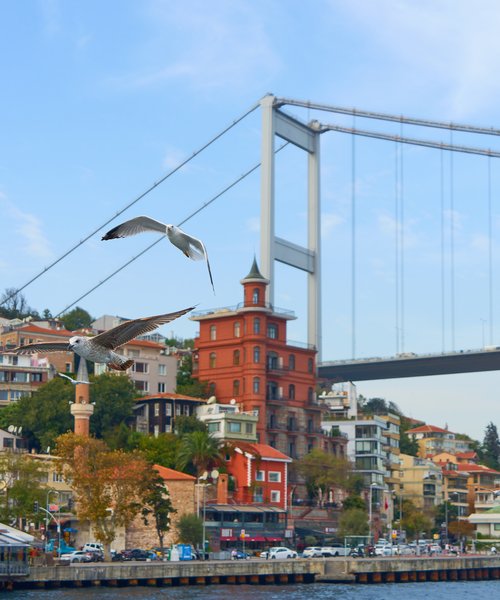
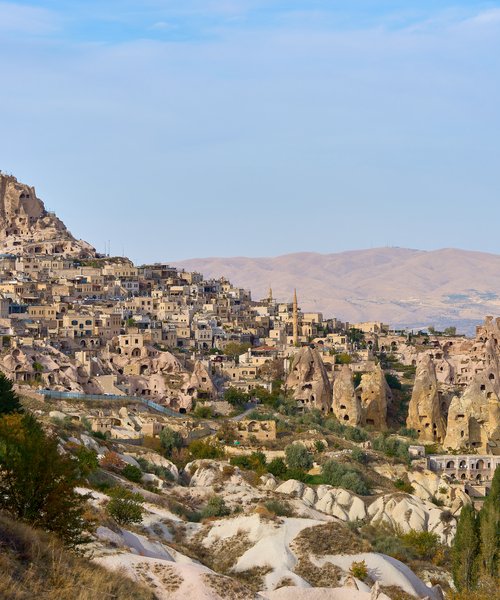
Istanbul sights: The most important tips for 3-4 days
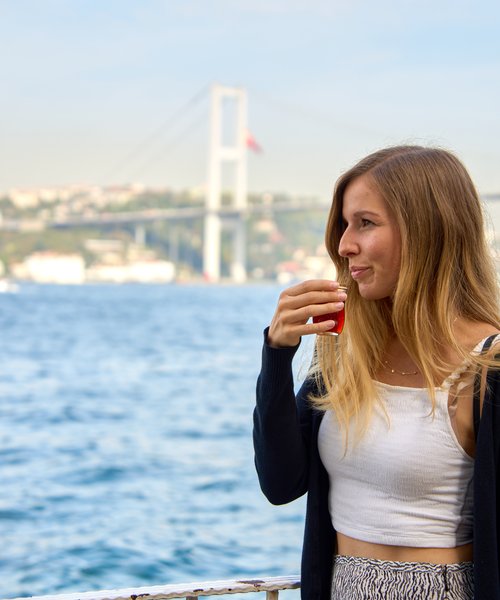
Istanbul is one of the most fascinating cities in the world. Once the capital of the Eastern Roman Empire (Constantinople) and later the Ottoman Empire, it is now the largest city in Europe with 15.8 million inhabitants. You'll need at least 3-4 days to see all the sights of Istanbul. Most of the tourist attractions are concentrated in Sultanahmet on the European side of the Bosphorus.
The absolute must-sees:
The symbol of Istanbul. Built as a cathedral in 537 AD, converted into a mosque in 1453, a museum in 1934, and back into a mosque in 2020. Free entry, but mosque etiquette applies: shoes off, shoulders/knees covered, women wear a headscarf. Allow 1–2 hours. Best time to visit: early morning (8 am) before the bus tourists arrive.
2. Blue Mosque (Sultan Ahmed Mosque): Opposite the Hagia Sophia, this iconic mosque features six minarets. The interior is adorned with 21,000 blue and white Iznik ceramic tiles – hence the name. Entry is free, but the mosque is closed during the five daily prayer times (each lasting 30 minutes).
400 years of Ottoman sultan residence. The harem section requires an extra entrance fee, but it's the highlight. Entire palace: €20 entrance fee + €9 harem. Allow 4 hours.
4. Grand Bazaar (Kapalıçarşı): One of the largest covered markets in the world (4,000 shops, 250,000 visitors/day). Classic tourist goods, but the atmosphere is magical. Haggling is a must – starting prices are often 2–3 times too high. Free entry. Nearby: the smaller but more atmospheric Egyptian Spice Bazaar.
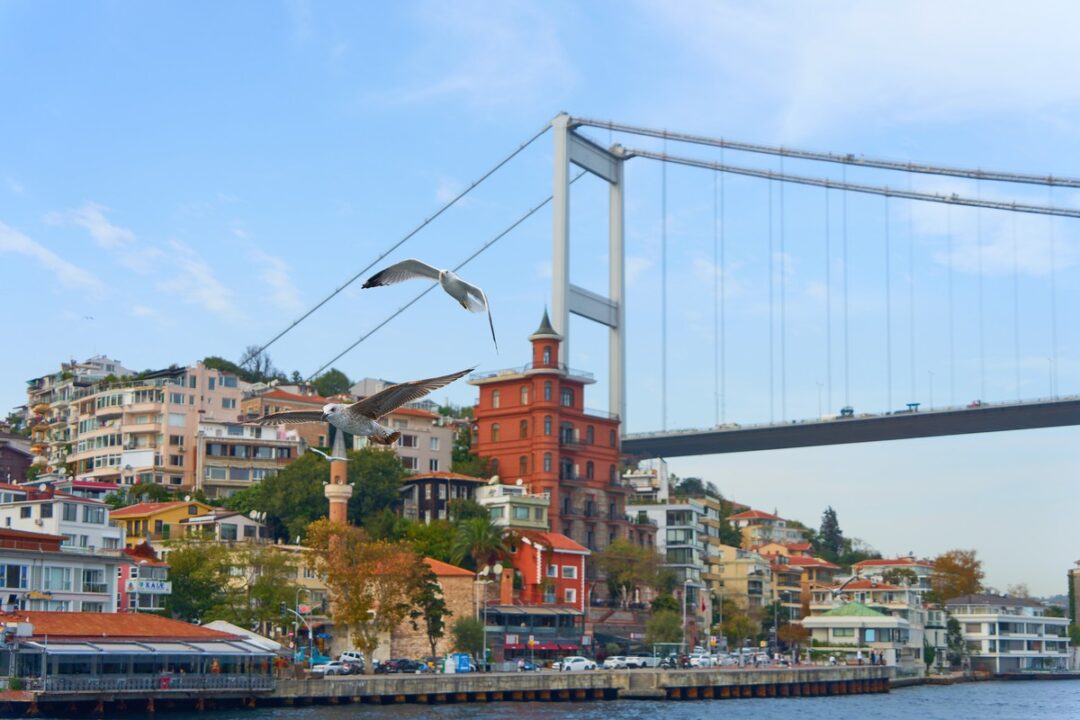
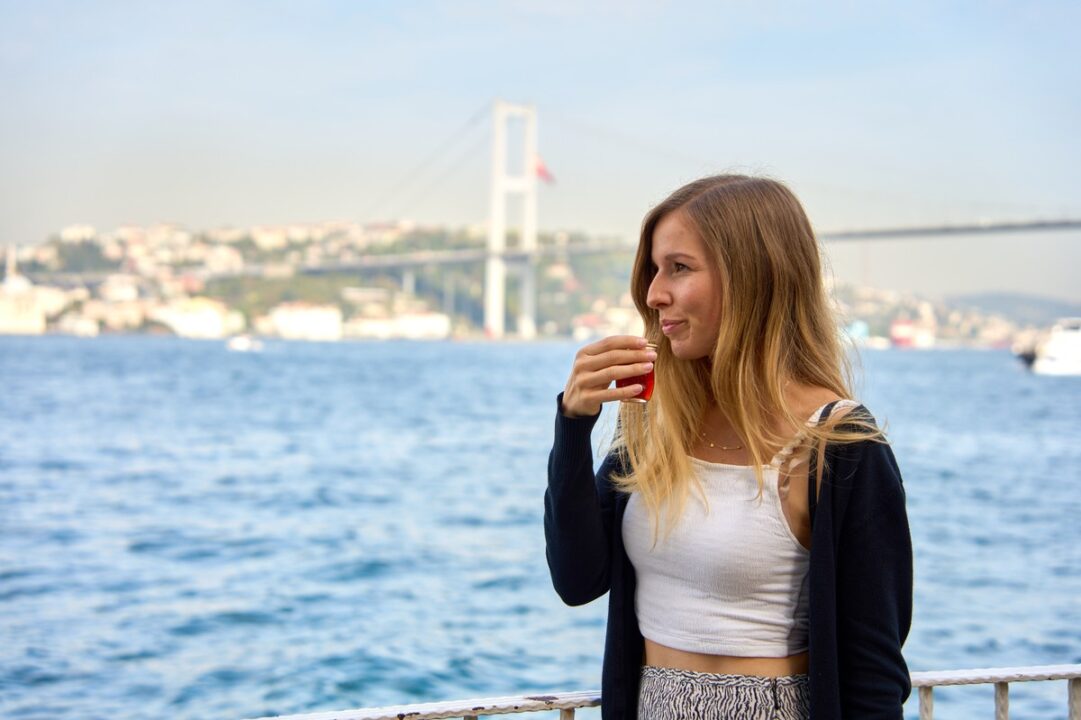
5. Bosphorus Cruise: A must-do in Istanbul. 90-minute round trip from Eminönü on official city ferries (€3 per person) – much cheaper than tourist boats. Route: From the Golden Horn along both coasts to the Second Bosphorus Bridge. You'll see all the palaces along the coast, Dolmabahçe Palace, and Rumeli Hisarı (Fortress).
A 67-meter-high tower dating back to the 14th century offers 360° views of Istanbul. Entry costs €17 (expensive, but worth it at sunset). Reservations are recommended – there are long queues at the tower.
Istanbul accommodation: In Sultanahmet, everything is within walking distance, but it's touristy. From €60/night for 3-star hotels, €120–180 for boutique hotels, €300+ for luxury hotels like the Four Seasons Sultanahmet or Ritz-Carlton. Alternative: Beyoğlu/Galata district – younger, less touristy, closer to the nightlife.
Cappadocia: Hot air ballooning and cave hotels: The surreal center of Türkiye
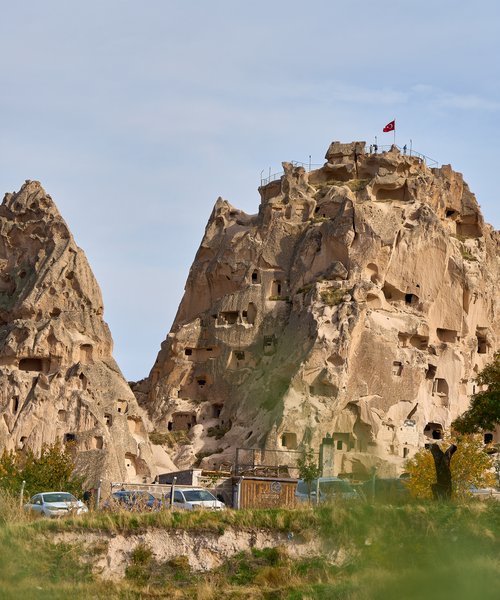
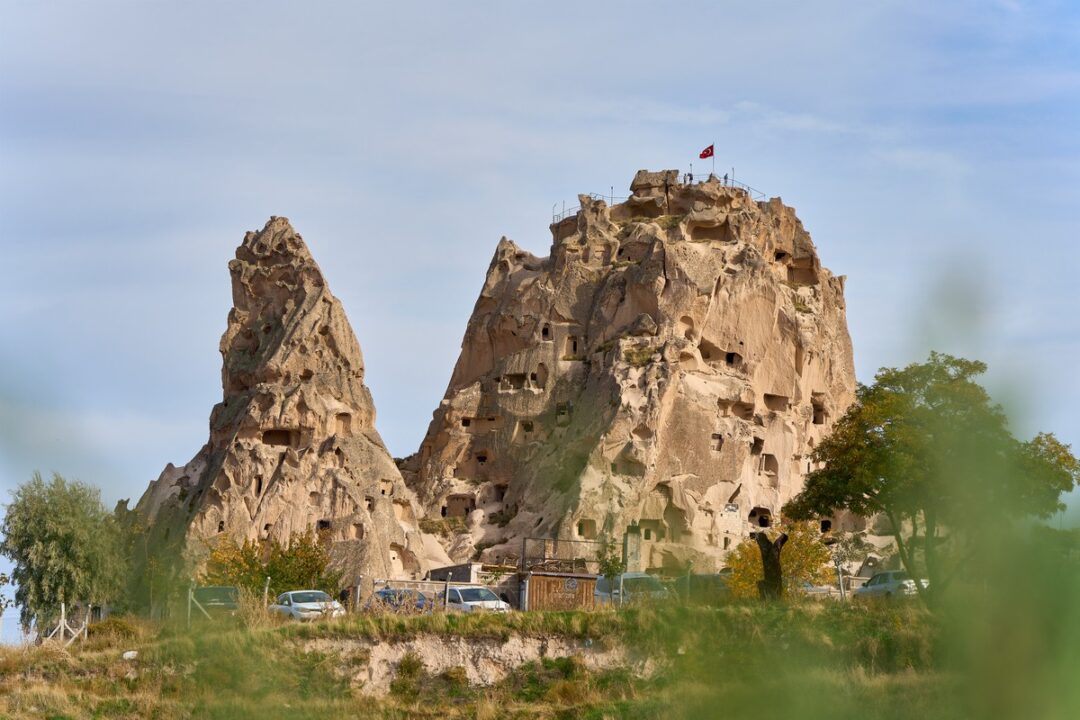
Cappadocia is the place that inspires all the Turkey photos in your Instagram feed. This volcanic landscape in the Central Anatolian highlands was formed millions of years ago by ash deposits that were eroded by water into surreal shapes – the famous "fairy chimneys" (peri bacaları). Over millennia, cave dwellings, churches, and entire underground cities were carved into these soft tuff rocks.
Getting to Cappadocia: From Istanbul, the best option is a domestic flight (1 hour 15 minutes, from €35 one way with Pegasus or Turkish Airlines). Fly to Kayseri or Nevşehir airport (closer to Göreme). Transfer to the hotel costs €30. Alternatively, you can take an intercity bus (11 hours, from €25) or rent a car (700 km, 8 hours). For a 3-4 day trip to Cappadocia, a flight is recommended.
Hot air ballooning in Cappadocia: The highlight. At sunrise, 100–150 hot air balloons take off simultaneously over the landscape – a unique spectacle. Prices: €150–220 per person for a 60–90 minute flight. Best providers: Voyager Balloons, Kappadokya Balloons, Royal Balloon (Premium €280 with champagne breakfast after landing). Book 2–3 months in advance, especially from April to October. Balloons fly year-round, but not in windy conditions (over 25 km/h) or rain. Therefore: book at least 3 nights in Cappadocia for 2 flight opportunities.
Cave hotels in Göreme: Sleeping in a genuine cave room is a must-do in Türkiye. Top addresses:
- Sultan Cave Suites (Göreme): The rooftop terrace boasts one of the world's most iconic Instagram spots – breakfast on a Turkish carpet while balloons float above. €95–140/night.
- Museum Hotel (Uçhisar): 5-star luxury cave hotel, Michelin-starred restaurant. 380-650 €/night.
- Kelebek Special Cave Hotel: Authentic, family-run, good value for money. €75–120/night.
Göreme Open Air Museum: UNESCO World Heritage Site. Churches carved into the rock from the 10th–12th centuries with well-preserved Byzantine frescoes. €12 entrance fee + €4 extra for the Dark Church (most beautiful frescoes). Allow 2 hours.
Underground cities: Derinkuyu and Kaymaklı are the most famous. Derinkuyu reaches a depth of 85 meters (11 stories!), Kaymaklı is smaller but more authentic. Early Christians hid here from the Romans and Arabs. Entry costs €8; not for claustrophobic people.
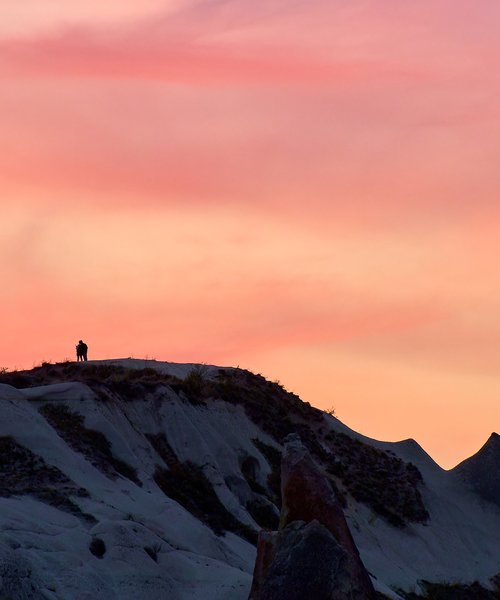
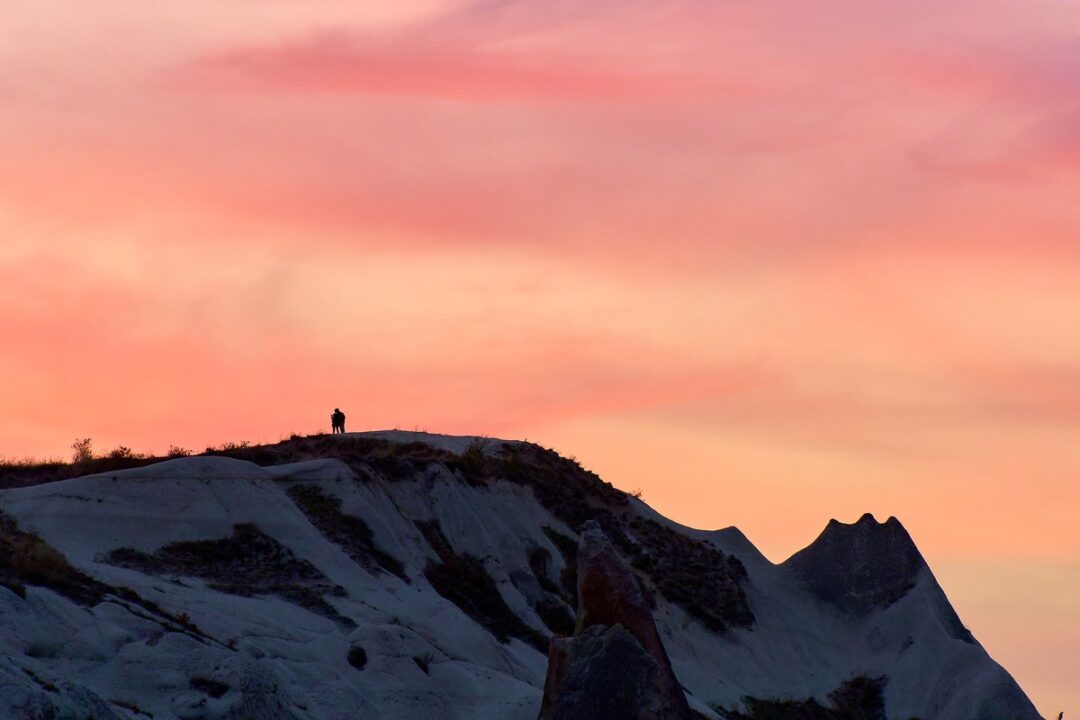
Rose Valley and Love Valley hikes: The most beautiful hikes in Cappadocia are free. Rose Valley (2–3 hours, pink-tinged rocks at sunset) and Love Valley (1 hour, the famous phallic rock formations). Both hikes start in Göreme.
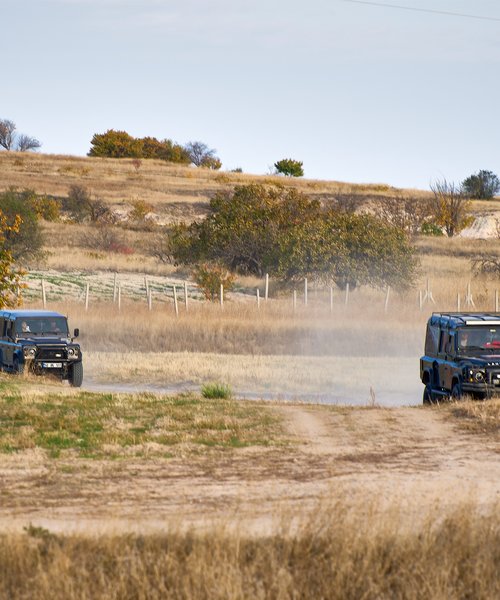
ATV and horseback tours: A 2-hour tour through the valleys costs €25–45. An alternative to hiking, ideal for photo opportunities.

Ephesus and Pamukkale: The ancient highlights of the Turkish Aegean
The Turkish Aegean is Turkey's cultural treasure. The Greeks, Romans, and Byzantines left behind 3,000 years of civilization here. Two places you absolutely must visit are Ephesus and Pamukkale. Both are located inland, southeast of Izmir.
Ephesus (Efes): One of the best-preserved ancient cities in the world. In Roman times, it was the second largest city after Rome (250,000 inhabitants). A UNESCO World Heritage Site. The famous Library of Celsus (2nd century AD) is the iconic photo subject, along with the Great Theatre with its 25,000 seats, the facade of Hadrian's Temple, and the well-preserved marble streets with mosaic floors. Entry costs €20, or €30 including the terraced houses (worth it for the mosaics). Allow 4-5 hours; start early in the morning (8:00 AM, bus groups arrive around 10:00 AM).
Surroundings of Ephesus: On the same day trip you can also visit the Virgin Mary's citadel (tradition: Mary spent her last years here), the Temple of Artemis (one of the Seven Wonders of the Ancient World, now only a column remains) and the small town of Şirince (charming village, home to excellent fruit wines).
Pamukkale: "Cotton Castle" – the white travertine terraces formed by thermal waters are a unique natural wonder. UNESCO World Heritage Site. At the top of the plateau lies the ancient city of Hierapolis with a spectacular Roman amphitheater and Cleopatra's Pool (swimming in the warm ancient pool under ancient columns, €20 extra). Total entrance fee: €25. Best time to visit: early morning or at sunset for photos.
Getting to Ephesus and Pamukkale: The best way is from Izmir (1.5-hour flight from Istanbul). Rental cars from the airport cost €35 per day. Ephesus is 70 km south of Izmir, and Pamukkale is 230 km southeast. The region can easily be explored in 2–3 days.
Bodrum as a base: After Ephesus and Pamukkale, Bodrum is a worthwhile base for relaxation. Known as the "Turkish St. Tropez," it boasts Turkey's best yacht harbor, Bodrum Castle (a 15th-century Knights Hospitaller castle), and a vibrant beach town atmosphere. Hotels start at €70 per night, and all-inclusive resorts start at €90 per person per night.
Bodrum sights: Bodrum Castle with the Underwater Archaeology Museum (15 € entrance fee), Ancient Theatre (free, great view over the city), the marina and of course the turquoise beaches of the Bodrum peninsula (Gümüşlük with sunset, Bitez quiet family beach, Yalıkavak for luxury beach bars).
Turkish Riviera: Marmaris, Fethiye and the Blue Cruises
The Turkish Riviera stretches from Marmaris in the west, through Fethiye, to Antalya in the east – some 600 km of Mediterranean coastline with turquoise waters, dramatic cliffs, pine forests right by the sea, and ancient sites directly on the coast. This is also the starting point for the famous Blue Voyages (Mavi Yolculuk), multi-day yacht trips on traditional gulet sailing boats.
Marmaris: This lively beach town boasts a yacht harbor, all-inclusive resorts, and a vibrant promenade. It's the starting point for many Blue Cruise tours to Greece or along the coast. A ferry also departs from Marmaris to Rhodes (1 hour, €30 one way) – perfect for a day trip to Greece.
Fethiye and Ölüdeniz: Fethiye is the quieter option. Ölüdeniz (the "Blue Lagoon") boasts some of Turkey's most famous beaches – crystal-clear water in a natural lagoon. Paragliding from Mount Babadağ (1,960 m) is world-class here – €80–120 for a 40-minute tandem flight over the lagoon, covering a 2,000 m altitude difference. The ghost town of Kayaköy – an abandoned Greek village dating back to 1923 – makes for an interesting day trip.
Ölüdeniz Lycian Way: One of the most beautiful long-distance hiking trails in the world, stretching 540 km from Fethiye to Antalya. It can be hiked in sections. Highlight: the Butterfly Valley section – a bay accessible only by boat or a 500-meter descent, home to more than 100 butterfly species.
Blue Cruises: Multi-day sailing trips on traditional Turkish gulet sailing boats. Classic routes:
- Fethiye → Olympos (4 days): The most beautiful route, including Ölüdeniz, Butterfly Valley, ancient Myra, and the Chimera fire at Olympos. €300–450 per person all-inclusive.
- Marmaris → Fethiye (3 days): Slightly shorter, Cleopatra's Island, Dalyan Delta (swamp turtles), hidden bays. €220–380 per person.
- Bodrum → Kos (2 days): With a side trip to the Greek island of Kos. €180–280 per person.
Usually includes: cabin (shared or private), 3 meals per day, snorkeling equipment. Not included: drinks (wine from €15/bottle), port fees (€10–20), excursion tickets.
Antalya: Turkey's third-largest city and the Riviera's main airport. The old town of Kaleiçi boasts charming Ottoman alleyways, and Hadrian's Arch is an ancient gateway. Beaches around Antalya are good, but geared more towards family package holidays. For a more authentic experience, visit the small villages of Çıralı (a turtle nesting ground) and Olympos (with its hippie charm).
Türkiye Costs: Round trip budget surprisingly affordable despite inflation
Despite inflation, Turkey remains one of the most affordable travel destinations in the Mediterranean for 2022–2024 – significantly cheaper than Greece, Italy, or Spain. Inflation has led to price adjustments, but the weak Turkish lira makes it very attractive for Euro travelers. Here's the complete budget:
- Hostels €12–22/night, 3-star hotels €40–75/night, 4-star hotels €90–150/night, luxury/boutique hotels in Istanbul €200–400/night. Cave hotels in Cappadocia €75–140/night.
- Doner/kebab €3–5, lokanta (cafeteria-restaurant) €6–10 per main course, upscale restaurant €15–30 per person. Çay (Turkish tea) €1, Turkish coffee €2–4, beer €3–5.
- Pegasus and Turkish Airlines offer very affordable domestic flights. Istanbul → Kayseri (Cappadocia): from €35. Istanbul → Izmir: from €40. Istanbul → Bodrum: from €45.
- Hot air balloon ride in Cappadocia: €150–220 per person (standard), €280+ premium with champagne.
- Bosphorus cruise: €3 with official ferry, €25–50 with tourist boat (rarely worth it).
- Sights: Ephesus €20, Pamukkale €25, Topkapi €20, Hagia Sophia free (mosque).
- Rental cars: From €25/day (small car), €40/day (mid-size car). Diesel €1.40/L (as of 2026).
- Blue Cruise (yacht trip): €220–450 per person for 3–4 days all-inclusive.
Total budget (2 people):
- Türkiye 7 days: Budget €550–850 | Comfortable €1,000–1,600
- Türkiye 10 days: Budget €750–1,200 | Comfortable €1,400–2,300
- Türkiye 14 days: Budget €1,100–1,700 | Comfortable €2,000–3,300
Plus, flights from Germany to Istanbul start at €100 one way (Lufthansa, Turkish Airlines, Pegasus, Sun Express). Direct flights from virtually every German airport. Continue your journey within Turkey using domestic flights.
Money-saving tips for Turkey: Eat in lokantas (cafeteria-style restaurants for locals, €5–8 for a full meal) instead of tourist restaurants. Buy an İETT Istanbulkart (€16 card + credit) for public transport in Istanbul – ferries, trams, metro all with one card, 40 % cheaper than individual tickets. Cargo buses (otobüs) between cities: very cheap, comfortable, with food and drinks included.
Hidden gems in Türkiye: Places off the beaten track
Besides the classic tourist attractions in Türkiye, there are many places that even seasoned travelers overlook. Here are my personal insider tips for Turkey:
1. Kaş (Turkish Riviera): Charming small town between Antalya and Fethiye, with an Italian-style harbor and the Greek island of Kastellorizo right on its doorstep (30-minute ferry ride). Significantly quieter than Marmaris or Antalya, perfect for 3-5 days of beach and culture.
30 minutes from Ephesus lies the former Greek mountain village of Şirince. Known for its fruit wines (cherries, apples, mulberries – tasting €5), narrow cobblestone streets, and authentic atmosphere. Day trip from Ephesus.
3. Butterfly Valley (Fethiye): A bay accessible only by boat from Ölüdeniz (€15 return trip) or via a 500-meter steep descent. More than 100 butterfly species, a waterfall, turquoise sea, secluded bay. No hotels, only a tent camp (€12/night).
Near Fethiye. An 18 km long gorge, so deep and narrow that it only widens to 1 m. Hiking through the gorge in the cool river water – ideal on hot summer days. €3 entrance fee, water sandals recommended.
The "Amber City" in the southeast, 1,700 km from Istanbul. Built entirely of golden sandstone, it sits atop a hill overlooking the Syrian desert. One of Turkey's least visited places, yet worthy of UNESCO status. Accessible only by domestic flight from Istanbul.
6. Black Sea Coast (Trabzon): The green north of Turkey is completely different in landscape from the Mediterranean south. Deep forests, tea plantations, the famous Sumela Monastery (built on a cliff face, visit €10), highland villages. A complete anti-Mediterranean travel itinerary.
The tranquil Riviera harbor near Fethiye is the starting point for some of the best yacht tours. There are 12 bays perfect for swimming, all accessible only by boat. Chartering a day boat for 8 people costs €200. It's also one of the best snorkeling regions in Türkiye.
Best time to travel to Türkiye and practical tips for your tour
The best time to travel to Turkey depends heavily on the region – Turkey is so large that its climate zones vary massively. Here's how to plan your trip optimally:
- 18–26 °C in Istanbul and along the Aegean coast, 10–18 °C in Cappadocia. Ideal for cities and Cappadocia, still too cool for the beach. Spring flowers in Cappadocia are spectacular.
- 25–30 °C, the start of beach season. Istanbul is pleasantly warm, Cappadocia is warm during the day and cool at night. My favorite for a round trip with a beach finale.
- July to August: 30–38 °C, extreme heat especially in Cappadocia and Istanbul. Beach holidays on the Aegean and Riviera are popular. Hot air balloons fly more frequently, but are very crowded.
- September to October: 22–30 °C, ideal for all regions. Grape harvest in the Aegean, water temperatures still 22–25 °C, fewer tourists. My #2.
- November to March: Istanbul gets cool (5–12 °C), Cappadocia gets cold (often snow). Only suitable for city breaks in Istanbul. Beaches are completely closed.
Turkey is significantly safer than its reputation suggests. The tourist regions (Istanbul, Cappadocia, the Aegean coast, the Riviera) are perfectly safe. Some foreign ministries advise against traveling to the eastern border with Syria and Iran, but this is more than 1,000 km away from the tourist destinations.
Turks are warm and hospitable, but more conservative than Europeans. When visiting mosques: shoulders and knees must be covered, shoes removed, and women wear headscarves. Outside of mosques, however, there is no dress code – bikinis are perfectly acceptable on the beach. Alcohol is permitted, but not available in religious districts. Haggling is expected in bazaars – but always be fair.
Turkish Lira (TRY). Due to high inflation: Euros or dollars are often accepted in tourist areas, but it's worth paying in Lira (usually cheaper). ATMs are everywhere, but withdrawal fees are often high – €3–6 per transaction.
Drone flights in Turkey are heavily regulated. Registration is mandatory for resident drone pilots; for tourists, drones under 500g are generally permitted, but must never be flown over tourist sites, government buildings, military installations, or large crowds. In Cappadocia, drone flights are usually prohibited during ballooning season (sunrise) due to the risk of collisions.
My personal highlight from three weeks in Turkey: A hot air balloon ride at sunrise over Cappadocia – 150 balloons in the air at once, the dawn over the fairy chimneys, the absolute goosebump feeling as the first ray of sunlight painted the landscape orange-pink. Nothing else in the world compares.
FAQ: Türkiye Travel Report – Frequently Asked Questions
How long does a tour of Türkiye take?
7 days for the essence (Istanbul + Cappadocia via domestic flight). 10 days the sweet spot (Istanbul + Cappadocia + Ephesus/Pamukkale). 14 days optimal (as above + 4 days on the Riviera in Bodrum or Antalya). Less than 7 days is not worthwhile – the flight times between the regions make shorter trips stressful.
How much does a tour of Türkiye cost for 2 people?
€550–€850 for a 7-day budget trip, €1,000–€1,600 for a comfortable trip. €1,100–€1,700 for a 14-day budget trip, up to €3,300 for a comfortable trip. Plus round-trip flights from Germany from €200 per person. Turkey is one of the most affordable Mediterranean destinations – €30–€40 cheaper than Greece or Italy.
Is a hot air balloon ride in Cappadocia safe?
Yes, safety standards in Cappadocia are high. Pilots have strict licensing requirements, and all balloons are inspected daily. Flights only take place in ideal wind conditions (below 25 km/h) and clear visibility – approximately 80% of the advertised flights actually go ahead. My advice: spend at least 3 nights in Cappadocia for 2 flight opportunities.
When is the best time to travel to Turkey?
May/June is ideal for a round trip with beach time (25–30 °C, water 20–22 °C). September/October is ideal (22–28 °C, fewer tourists, water temperatures still 24 °C). July/August is hot (30–38 °C). November–March: only Istanbul is recommended; Cappadocia becomes cold/snowy, and beaches are completely closed.
What are the most important sights in Istanbul?
Top 5: Hagia Sophia, Blue Mosque, Topkapi Palace, Grand Bazaar, Bosphorus cruise on an official ferry. Also, Galata Tower for panoramic views, Galata Bridge for atmosphere, Eyüp Mosque with cable car to the Pierre Loti Café. Plan 3-4 days for all the highlights.
How do I get from Istanbul to Cappadocia?
The best option is a domestic flight: Istanbul → Kayseri (closer to Göreme) or Nevşehir. Flights start from €35 one way with Pegasus or Turkish Airlines, flight time 1 hour 15 minutes. Transfer to the hotel €30 (shared shuttle). Alternatively: intercity bus 11 hours for €25, but too tiring for the holiday season. Driving a rental car takes 8–9 hours.
Which map of Türkiye shows all regions?
Google Maps works perfectly in Turkey for cities and highways. For planning your road trip, I recommend a classic Turkey map from Marco Polo or ADAC (9–12 €). The regional map of Turkey shows the main regions: Istanbul/Marmara, Aegean, Mediterranean, Central Anatolia with Cappadocia, Eastern Anatolia, and the Black Sea.
Should I go all-inclusive in Turkey or do a tour?
If you want to experience the culture: a tour is the way to go. All-inclusive is affordable (from €499 per week), but you'll see almost nothing besides the resort. Turkey boasts some of the world's most fascinating cultural sites, including Istanbul, Cappadocia, and Ephesus – well worth experiencing. The ideal combination: a 10-day tour followed by 4 days relaxing at a beach hotel at the end.
Is Turkey safe for tourists?
Yes, the tourist regions (Istanbul, Cappadocia, Aegean, Riviera) are absolutely safe. The crime rate is lower than in Rome or Paris. Anti-tourist crime (pickpocketing, fraud) exists in Istanbul's Grand Bazaar, but with common sense, it's not a problem. The problematic border regions with Syria and Iran are over 1,000 km away from the tourist destinations.
What should you absolutely try in Turkey?
Culinary must-try dishes: Iskender kebab (lamb with yogurt and tomato sauce), manti (Turkish ravioli with yogurt), menemen (scrambled eggs with tomatoes and peppers), köfte (spiced meatballs), pide (Turkish pizza), baklava (sweet phyllo pastry with nuts and honey). Drinks: Çay (Turkish tea), Turkish coffee, ayran (salty yogurt drink), rakı (anise-flavored spirit).
Max Haase
Travel Content Creator · Drone Photographer · Visual Storyteller
A professional travel creator for over 10 years with over 4 million followers. Specializing in high-end tourism board collaborations and visual travel storytelling.
 German
 English