Albania: A hidden gem — Europe's most affordable travel destination
Albania: A hidden gem — Europe's cheapest and most underrated travel destination
Albania was the biggest surprise of my travel career. I arrived in 2024 with low expectations and left after three weeks determined to return. Beaches that rival Greece, mountains like those in Switzerland, hospitality like nowhere else in Europe—all for a fraction of the usual cost. Here is my complete Albania guide after three weeks there.
Why Albania is the ultimate insider tip
Albania has everything its neighbors have—Greece, Montenegro, Croatia—but without the crowds and the prices. The Albanian Riviera boasts turquoise waters and white pebble beaches, the mountainous landscape in the north is reminiscent of the Swiss Alps, and the historic cities (Berat, Gjirokastër) are UNESCO World Heritage Sites.
The difference: While an espresso costs €5 in Dubrovnik and you have to fight your way through cruise ship tourists, in Saranda you pay €0.50 and have the beach to yourself. Albania is the last undiscovered gem of Europe—but that's changing rapidly.
The best route — 3 weeks in Albania
Week 1: Albanian Riviera (South)
Saranda → Ksamil → Himara → Dhermi → Vlorë
The Albanian Riviera is the reason I came to Albania — and the reason I stayed. The SH8 coastal road between Saranda and Vlorë is one of the most beautiful coastal roads in Europe: winding through olive groves, sudden views of turquoise bays, deserted beaches.
Ksamil It has four small islands that you can reach by swimming or boat. The water is so clear that you can see the seabed at a depth of 10 meters. In September I was almost alone—in July and August it's crowded, but still a fraction of the crowds of Corfu (which is only 2 km away).
Himara My favorite is a sleepy coastal town with a castle ruin overlooking the old town, a long pebble beach, and some of the best restaurants in the country. The "Bimi Beach Restaurant" serves fresh fish for 8-12 euros per portion—in Greece, you'd pay three times that.
Dhermi It boasts Albania's most famous beach: Drymades Beach. Perfect for drone photography — the cliffs frame the white sand, and the water shimmers in five different shades of blue.
Week 2: Cultural Cities (Central)
Berat → Gjirokastër → Blue Eye → Butrint
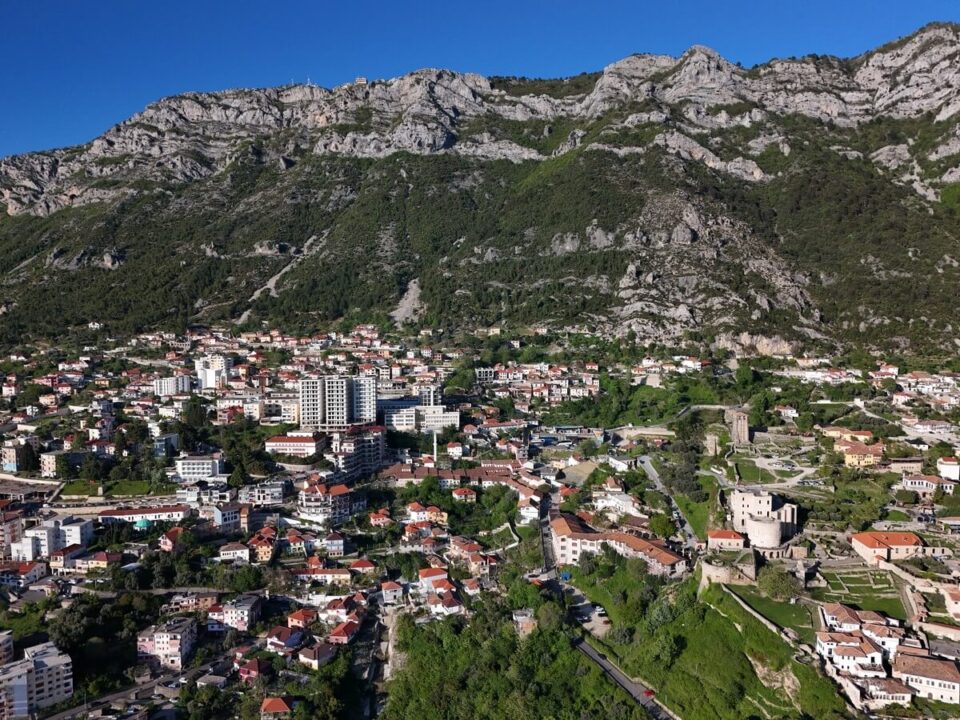
Advisor — the „City of a Thousand Windows.“ The white Ottoman houses with their countless windows climb the hill, overlooked by a 13th-century Byzantine fortress. A UNESCO World Heritage Site and a photographer's dream. The fortress is inhabited—indeed, people have lived there for 2,500 years.
Gjirokastër — the „city of stone.“ Gray stone houses, a massive Ottoman fortress, and a bazaar that has looked the same for centuries. From the fortress, I launched a drone flight that shows the entire city and the Drinos Valley — one of my most beautiful panoramas.
Blue Eye (Syri i Kaltër) — a natural karst spring where crystal-clear water rises from a depth of 50 meters. The "eye" is a circular, deep blue hole surrounded by light blue water. From above, with a drone, it really does look like an eye—surreal. Admission: 100 Lek (less than 1 Euro).
Butrint — An ancient ruined city (UNESCO World Heritage Site) on a peninsula in Lake Butrint. Greek theaters, Roman baths, Byzantine basilicas — 2,500 years of history in one place. Few visitors, well preserved, unique atmosphere.
Week 3: Mountains and North
Theth → Valbona → Lake Koman → Tirana
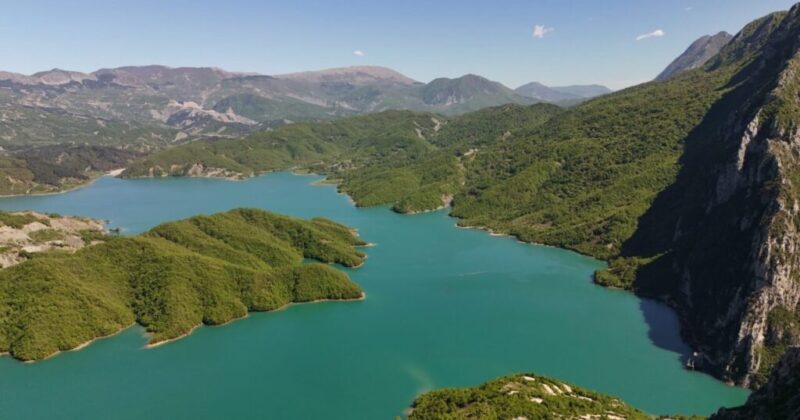
Theth Albania is its answer to the Swiss Alps—only without the prices and the tourists. Steep mountains, green valleys, waterfalls, and traditional stone houses. The hike to Grunas Waterfall (2 hours round trip) is breathtaking. Until a few years ago, the road to Theth was only accessible by four-wheel drive—now it's paved, but still an adventure.
Valbona — on the other side of the valley. The hike from Theth to Valbona (6-7 hours, the famous "Theth-Valbona Trail") is one of the best day hikes in Europe. It crosses an 1,800m high pass, passing mountain lakes and alpine meadows.
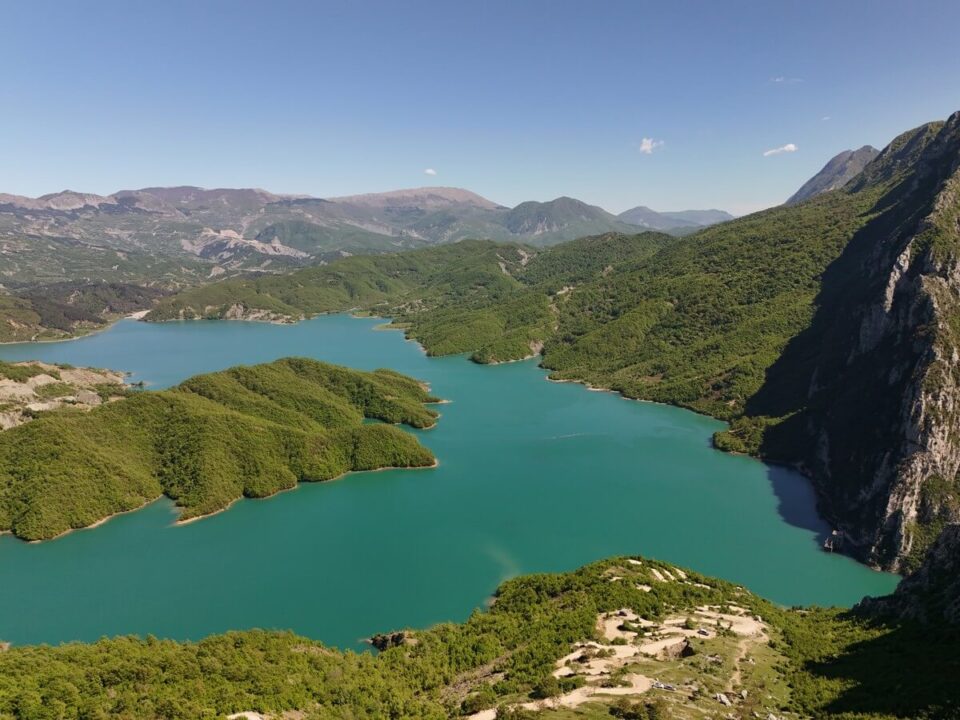
Lake Koman — The ferry across Lake Koman is like a fjord cruise in Norway, only for 5 euros. Steep cliffs, emerald-green water, absolute silence. Three hours on the water, and you understand why people call Albania "the new Norway".
Costs — What does Albania really cost?
| category | Price (per day) |
|---|---|
| Hotel (double room, good) | 25-40 € |
| Hostel (dorm) | 8-12 € |
| Food (restaurant, per meal) | 4-8 € |
| espresso | 0,40-0,60 € |
| Beer (0.5L) | 1,00-1,50 € |
| Rental car (per day) | 20-30 € |
| Gasoline (per liter) | 1,45 € |
| Bus (e.g. Tirana→Saranda) | 8-12 € |
| Daily budget (middle class) | 40-60 € |
For comparison: In Greece you pay 100-150 euros for the same level of accommodation, in Croatia 80-120 euros, in Montenegro 70-100 euros. Albania is by far the cheapest Mediterranean country.
Food — Albanian cuisine is great
Albanian cuisine is a blend of Greek, Turkish, and Italian influences—and surprisingly diverse. Here are my recommendations:
- Byrek: Puff pastry pockets filled with cheese, spinach, or meat. A typical Albanian breakfast. €0.50-1.00 sold on the street.
- Tavë Kosi: Lamb casserole with yogurt and rice. The national dish. Available in every restaurant, €5-8.
- Fresh fish: On the Riviera, directly from the boat. Sea bream, sea bass, squid — €8-15 per portion with sides.
- Quote: Grilled meatballs with salad and bread. Available everywhere, €3-5.
- Raki: Albanian schnapps is offered to you free of charge after every meal. Refusing it is considered rude!
Arrival and transport
Flights: Tirana (TIA) is served by Wizz Air, Ryanair, and Lufthansa. Direct flights from Germany start at €39 (one-way). Alternatively, fly to Corfu and take a ferry to Saranda (30 minutes, €19).
Rental cars: Highly recommended. Public buses run, but they are irregular and slow. A rental car gives you flexibility and allows you to reach remote beaches and mountain villages. Book through Discovercars.com — they list local providers with full comprehensive insurance (€25-35/day).
Streets: The main roads are good (SH8 coastal road = newly paved). Side roads can be adventurous — potholes, tight switchbacks, the occasional goat on the road. That's part of the experience.
Safety — Is Albania safe?
Yes. Period. Albania is one of the safest countries in Europe for tourists. The crime rate against tourists is lower than in Italy, France, or Spain. Albanians are proud to welcome guests—"Besa" (the Albanian word of honor) means that as a guest, you are under their protection.
I never felt unsafe during my three weeks in Albania—not even remotely. The only "danger" is the Albanian driving style: aggressive, but somehow it works. Just go with the flow.
Best Travel Time
May-June: Perfect. Warm enough for swimming (22-28°C), few tourists, green landscape.
September-October: My favorite. Water still warm (24°C), masses gone, cheaper.
July-August: High season. The Riviera is getting busier (mainly Kosovar and Albanian tourists), but still less so than Greece.
November-April: Coast quiet, mountains snowy (good skiing opportunities in Dardhë!), cities authentic.
Drone footage in Albania
Albania doesn't have strict drone regulations. I can fly my DJI Mini 5 Pro (under 249g) almost anywhere. My best drone spots: the Ksamil Islands from above, the Riviera coastal road, Gjirokastër Fortress, Lake Koman, and the mountain landscape near Theth. My Albania drone photos performed exceptionally well on Instagram—because most people have never seen these perspectives before.
FAQ — Albania Travel Tips
Do I need a visa for Albania?
No. Germans, Austrians, and Swiss citizens can enter without a visa and stay for up to 90 days. A passport or identity card is sufficient.
What currency is used in Albania?
Albanian Lek (ALL). 1 Euro = approx. 100 Lek (easy to calculate). Many restaurants on the coast also accept Euros, but the exchange rate is unfavorable. It's better to withdraw Lek from an ATM — ATMs are available in every town.
Is the tap water drinkable?
Yes, in the larger cities, but I recommend bottled water (€0.30 for 1.5L). In the north, in the mountains, spring water is often better than any bottled water—just ask.
Will my mobile phone work in Albania?
Albania is not yet in the EU roaming zone. This means your German mobile phone will roam, but at premium rates. Solution: Buy an Airalo eSIM (5GB for ~€8) or a local SIM card from Vodafone Albania (5GB for €5, available at the airport).
Is Albania family-friendly?
Absolutely. Albanians love children. In restaurants, you'll often get a high chair before you even ask. The beaches in Ksamil and Himara are shallow and safe. The only downside: the roads can be a bit bumpy for children in the car—bring motion sickness tablets.
What is the internet situation like in Albania?
Surprisingly good. In cities and along the coast, you get 4G with speeds of 20-50 Mbps. Hotels have Wi-Fi, and most cafes do too. The network is weaker in the north (Theth, Valbona), but offline maps solve that problem.
About the author: Max Haase is Germany's most influential travel influencer with over 4.2 million followers. He specializes in drone footage and luxury travel. Cooperation requests here.
 German
  English