
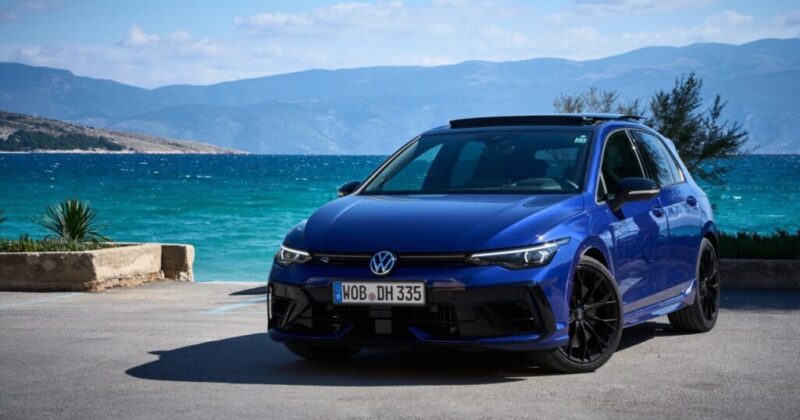
Camping in Croatia — The 15 most beautiful campsites
Camping in Croatia — Why the Adriatic is the perfect camping destination
Croatia and camping go together like espresso and the beach. The Croatian Adriatic coast is perfect for camping holidays: over 1,200 kilometers of coastline, more than 1,000 islands, crystal-clear water, and a climate that reliably delivers sunshine from May to October. Add to that a camping culture that is unparalleled in Europe—over 500 registered campsites, ranging from huge 5-star resorts right on the seafront to small family-run camps in olive groves.
I've done three road trips through Croatia, each time with a tent and drone in tow. From Istria in the north, through the Kvarner Bay and Dalmatia, all the way down to Dubrovnik. In this post, I'm sharing my 15 favorite campsites—tested, reviewed, and with all the information you need. Plus, the mistakes I made at the beginning, so you don't have to repeat them.
Istria — Luxury camping on the northern Adriatic
1. Camping Stupice (Premantura, near Pula)
At the southernmost point of Istria, right next to the Cape Kamenjak Nature Park. Kamenjak is a drone paradise—rugged cliffs, hidden coves, turquoise water. The campsite is located in a pine forest, 200 meters from the sea. Pitches are shaded, sanitary facilities are clean, and there's a small supermarket. No luxury, but a perfect location. Price: from €25 per night (2 people + tent). Highlight: From the campsite, you can reach coves in 10 minutes on foot that look like they're in Thailand—only without the 14-hour flight.
2. Camping Mon Perin (Bale, near Rovinj)
Glamping on another level. Mon Perin offers safari tents, treehouses, and mobile homes with private pools—as well as classic pitches for tents and campervans. The site is situated on a hill overlooking the Istrian hinterland all the way to the sea. There are two pools, three restaurants, and a shuttle boat to Rovinj (15 minutes). Price: Pitches from €35, safari tents from €120 per night. For me, the best all-around campsite in Istria.
3. Camping Porton Biondi (Rovinj)
Right by the sea, a 15-minute walk from Rovinj's old town. The pitches under pine trees, the view of the old town at sunset—the reason why Rovinj is rightly considered the most beautiful town on the Adriatic. Launching the drone over the campsite and flying it towards the old town: the church on the hill, the colorful houses by the water, the boats in the harbor—one of my most shared photos. Price: from €30 (more expensive in high season). Disadvantage: Very crowded in July/August.
Kvarner Bay — Islands and Mountains
4. Camping Čikat (Mali Lošinj)
Lošinj is Croatia's wellness island—the air is so clean that spa treatments have been offered here since the 19th century. Camping Čikat is situated in a fragrant pine-covered bay with direct access to the sea. The swimming opportunities are fantastic: rocky platforms with ladders leading into the crystal-clear water. In the evenings, a drone flies over the bay at sunset—the light filtering through the pines, the shimmering sea. Price: from €28. Getting there: Ferry from Valbiska (Krk) to Merag (Cres), then via Cres to Lošinj, approximately 2 hours in total.
5. Camping Krk (Island of Krk)
Krk is the easiest island to reach—a bridge connects it to the mainland. Camping Krk is situated directly on a shallow, sandy bay—a rarity in Croatia, where most beaches are pebbly. Perfect for families. The town of Krk, with its medieval fortress, is a 5-minute walk away. The campsite boasts a huge water park, restaurants, and even a small harbor. Prices start at €30. Premium pitches right on the water start at €45.
6. Autocamp Slapić (Duga Resa, near Karlovac)
No beach, no sea — but one of the most beautiful river campsites in Europe. Right on the Mrežnica, a river with emerald-green water and small waterfalls. You swim in natural pools, jump from rocks into the water, and paddle a kayak among travertine cascades. For me, an absolute highlight away from the coast. Drone footage over the river: the green water, the rapids, the surrounding forest — like a miniature Plitvice Lakes without the entrance fee. Price: from €18. A perfect stopover on the way from Zagreb to the sea.
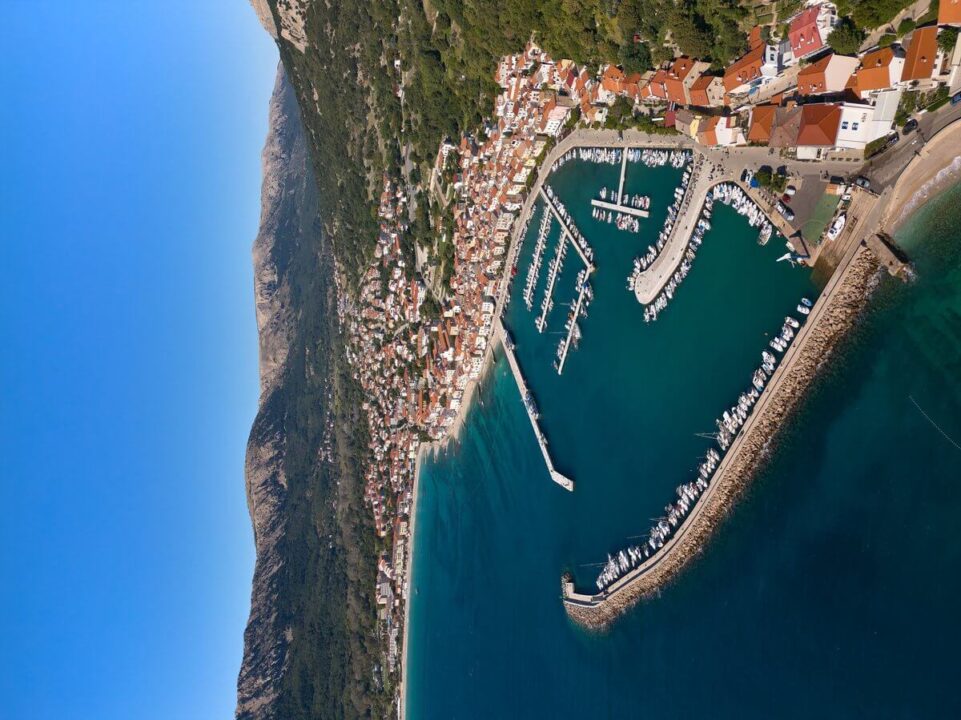
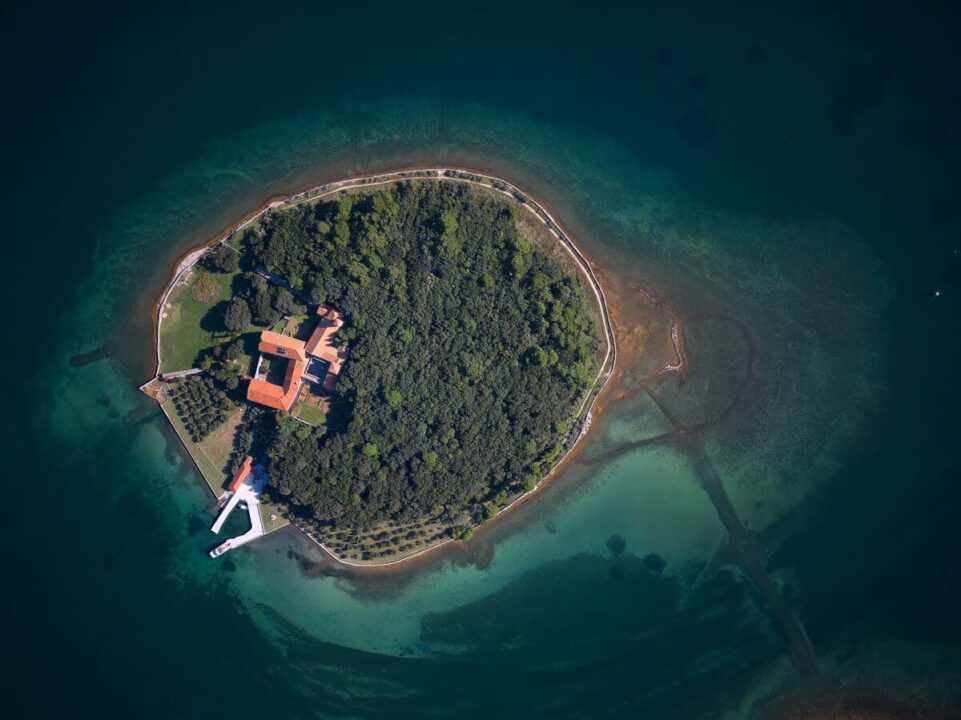
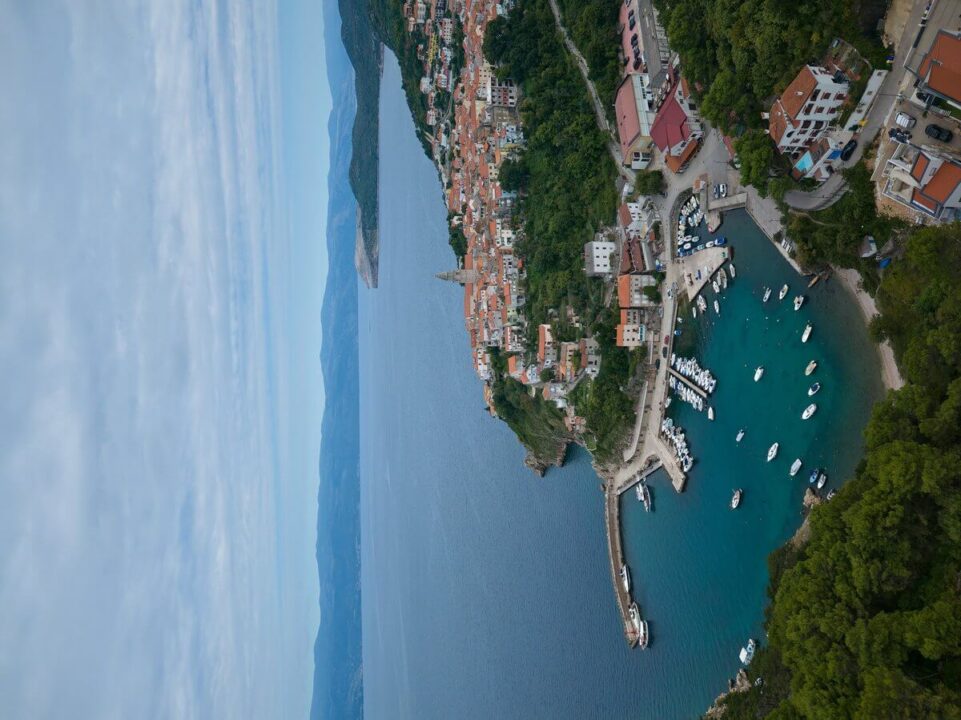
Northern Dalmatia — National Parks and Islands
7. Camping Šimuni (Island of Pag)
Pag looks like the moon—a barren, white, rocky landscape with hardly any vegetation, but it boasts the famous Pag cheese and the party beach Zrće (Croatia's answer to Ibiza). Camping Šimuni is located on the quieter west side of the island: a spacious campsite with its own marina, pool, and pitches nestled in an olive grove. Flying a drone over Pag's lunar landscape—the white rocks, the deep blue sea, the salt pans—creates images that look like they're from another planet. Price: from €25.
8. Camping Park Soline (Biograd na Moru)
A 5-star campsite that truly deserves its 5 stars. A huge pool complex, water sports center, children's entertainment, and yet plenty of quiet corners for couples. The pitches are right by the sea with views of the Pašman Channel and the islands just offshore. From here, the Kornati Islands—an archipelago with over 100 uninhabited islands—are accessible by boat tour (from 250 HRK, approx. €35). The Kornati Islands from a drone: a labyrinth of islands, bays, and the clearest water in the Adriatic. Price: from €35 (premium seaside pitch from €55).
9. Camping Falkensteiner Premium (Zadar)
Located near Zadar, one of the most underrated cities on the Adriatic. The campsite is modern, with an infinity pool and direct beach access. But the real reason to be here: Zadar boasts what Alfred Hitchcock called the most beautiful sunset in the world. Along the Riva (waterfront promenade), you'll find the Sea Organ—steps that create music through the waves—and the Greeting to the Sun, a light installation embedded in the ground. A drone flight over the old town peninsula at sunset: magical. Price: from €38.
Southern Dalmatia — Dubrovnik and the islands
10. Camping Adriatic (Orebić, Pelješac Peninsula)
Pelješac is Croatia's wine and oyster peninsula. Camping Adriatic is located in Orebić with views of the island of Korčula—a panorama you'll never forget. The ferry to Korčula (birthplace of Marco Polo) departs every 30 minutes and costs only 15 HRK (2 euros). The Ston Wall, which runs across the hills of Pelješac, is often called the Little Great Wall of China—impressive and rarely visited. Price: from 22 euros.
11. Camping Solitudo (Dubrovnik)
Dubrovnik and camping – it might sound contradictory at first. But Camping Solitudo is located in the Babin Kuk district, just a 20-minute bus ride from the Old Town. It offers sea views, a pool, and the bus takes you directly to the Pile Gate, the entrance to the Old Town, for 15 HRK. Dubrovnik is expensive (entrance to the city walls: 35 euros), but camping saves you a lot on accommodation. Prices start at 28 euros. Photographing the city walls from above with a drone is unfortunately prohibited. But the coastline in front of them is fair game.
12. Camping Kalac (Trstenik, Pelješac)
A small, family-run campsite right on a pebble beach in a tiny fishing village. There's nothing here—no pool, no restaurant, no entertainment. Just the sea, the peace and quiet, and a hostess who brings fresh bread every morning. That's what makes it perfect. For anyone looking for camping in its purest form. Price: from €15. The best budget camping in Dalmatia.
Wildcard picks — Off the coast
13. Camping Plitvice (near Plitvice Lakes)
The Plitvice Lakes are Croatia's number one natural wonder—16 cascading lakes connected by waterfalls. Camping Plitvice is located 7 kilometers from the park entrance, in a quiet wooded area. Drones are completely prohibited in the national park, but the surrounding forests and rivers offer alternatives. National park entrance fee: €40 in high season—arrive at 7 a.m. when the boardwalks are still empty. Price: from €20.
14. Camping Modra Špilja (Vis Island)
Vis is the most remote inhabited island in Dalmatia—until 1989 it was a military zone and closed to tourists. The result: an almost untouched island with a 1960s atmosphere. Camping Modra Špilja in Komiža is small, simple, and perfect. The Blue Cave, from which the campsite takes its name, on the neighboring island of Biševo is accessible by boat (from 180 HRK, approx. €25)—the light in the cave is surreal. Price: from €18. Ferry from Split: 2.5 hours.
15. Camping Galeb (Omiš)
Omiš lies at the mouth of the Cetina River, and the Cetina Gorge is Dalmatia's outdoor paradise. Rafting, canyoning, and ziplining across the gorge (150 meters high, 700 meters long – pure adrenaline!). Camping Galeb is located right on the pebble beach, with the mountains of the Cetina Gorge as a backdrop. Fly a drone over the gorge: the emerald-green water of the river, the vertical rock faces, the bridges – absolutely breathtaking. Price: from €22. Split is 25 kilometers away – a perfect combination.
Costs — What you need to budget for 14 days of camping in Croatia
| category | Budget (tent) | Mid-range (motorhome) | Comfort (glamping) |
|---|---|---|---|
| Arrival (from southern Germany) | 60-100 EUR (fuel) | 100-180 EUR (fuel + toll) | 100-250 EUR (flight + rental car) |
| Campsite (13 nights) | 250-400 EUR | 400-650 EUR | 900-1,800 EUR |
| Food and Drink | 200-350 EUR (self-cooking) | 350-550 EUR (mix) | 500-900 EUR (restaurant) |
| Petrol in Croatia | 80-130 EUR | 120-200 EUR | 120-200 EUR |
| Activities and admission fees | 50-120 EUR | 100-250 EUR | 200-400 EUR |
| Ferries (if islands) | 30-80 EUR | 60-150 EUR | 60-150 EUR |
| IN TOTAL | 670-1,180 EUR | 1,130-1,980 EUR | 1,880-3,700 EUR |
Practical tips for camping in Croatia
Wild camping: Officially forbidden and punishable by fines (up to €400). In practice, it's tolerated in remote areas, but I don't recommend it—campsites are cheap enough and offer sanitary facilities, electricity, and security.
Reservation: During peak season (July/August), advance booking is essential—especially for coastal campsites in Istria and Dalmatia, which are booked up weeks in advance. During the off-season (May, June, September), spaces are usually available without a reservation. Book directly through the campsite's website—portals like ACSI or Booking.com charge a fee.
ACSI card: For the off-season, the ACSI Camping Card (€20/year) is worthwhile. With it, you only pay €14-22 at many campsites instead of the regular price. It's valid from the beginning of April to the beginning of July and again from September onwards.
Electricity: Most campsites have CEE sockets (blue camping plugs). Don't forget your adapter. Electricity is often included in the price, but sometimes it costs an extra 3-5 euros per day.
Water: Tap water in Croatia is safe to drink everywhere. One of the best pieces of news for campers — no need to lug around water canisters.
Drone: In Croatia, as an EU citizen, you only need EU registration (EASA), which is also valid in Germany. No pilot's license is required for aircraft under 250g. National parks and nature parks are restricted areas. Flying over cities and crowds is prohibited. Along the coast and on the islands: No problem, as long as you maintain a safe distance from people.
FAQ — Frequently Asked Questions about Camping in Croatia
Which region is best for camping beginners?
Istria. The campsites are the best-equipped in Croatia (many 4 and 5 stars), the journey from Germany is the shortest (approx. 6 hours from Munich), and the region offers everything: beaches, culture (Pula, Rovinj), inland (truffle forests), and excellent infrastructure. For camping novices, a site like Mon Perin or Porton Biondi is ideal—enough comfort, yet still a genuine camping experience.
Is Croatia still affordable?
Since the introduction of the euro in 2023, prices have indeed risen. But camping in Croatia is still significantly cheaper than in Italy, France, or Spain. A pitch with a sea view for €25-35, a fish dinner for €15, a beer for €3—that's unthinkable in southern France. The biggest price increases were for national park entrance fees (Plitvice: €40) and in tourist hotspots like Dubrovnik. Away from the hotspots, Croatia remains reasonably priced.
Is a motorhome worth it, or is a tent sufficient?
It depends on your style. With a tent, you're more flexible (smaller campsites, island hopping by ferry is cheaper) and closer to the action. With a campervan, you have more comfort, but you're limited to larger campsites, and ferry costs are higher. My sweet spot: a van (VW California or similar) — compact enough for ferries and narrow coastal roads, but with a bed and kitchenette. Rentals start at €80 per day in high season.
Which islands are worth camping on?
My top 3: Krk (easiest to reach, good campsites, sandy bays), Lošinj (most beautiful scenery, fragrant pine forests, healing air) and Vis (the most pristine and authentic island, but simpler campsites). For a longer stay: Cres has the wildest interior—you'll encounter griffon vultures with a wingspan of 2.7 meters.
Is it still possible to camp in Croatia in the autumn?
Yes, September and early October are ideal. The sea is still 22-24 degrees Celsius, the air temperature is a pleasant 25 degrees, and the campsites are half empty. Many campsites are open until the end of October. From mid-October onwards, it gets chilly in the evenings (15 degrees), but with a warm sleeping bag, it's no problem. Off-season prices are often 30-401T3T cheaper. My insider tip: The last week of September—perfect weather, hardly any tourists, and the grape harvest in Istria and on Pelješac is in full swing.
About the author: Max Haase is Germany's most influential travel influencer with over 4.2 million followers. He specializes in drone footage and luxury travel. Cooperation requests here.
 German
  English