
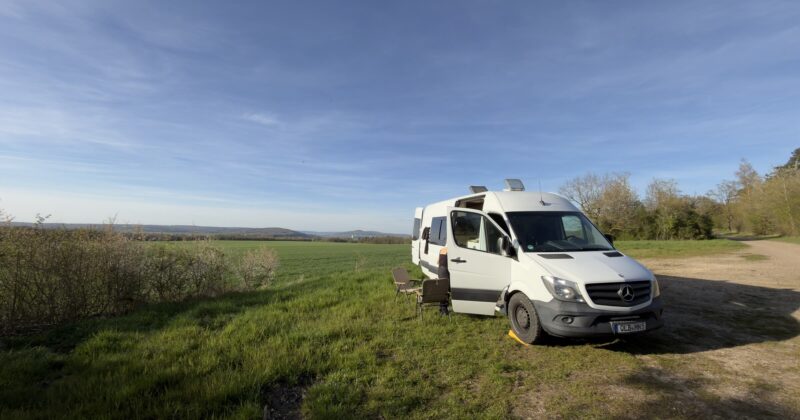
Van Life Europe: 8 months & 12 countries in a campervan
Van life in Europe is the dream of total freedom for many – and I've been living that dream since 2019. In this ultimate van life Europe guide, I share everything I've learned in five years on Europe's roads: the best countries for campervans, route recommendations for trips from one week to six months, remote work setup with Starlink, winterization, wild camping rules by country, cost breakdowns, and the lessons learned after over 80,000 km of van experience. From Portugal to Norway, From Albania to Iceland – I'll show you what really works and where you should invest your first euros. Plus: A map of the best van life hotspots in Europe, Instagram community tips, and why van life isn't just about Instagram sunsets.
Van Life Europe: the short answer to the campervan Europe travel route
Short answer: A campervan trip through Europe works best if you connect a few regions and allow time for spontaneous stops. Portugal and Spain are good starting points, or the route through Austria and Slovenia to Croatia. Max himself traveled by campervan for eight months; Germany was a stopover, not his home. Plan your route, season, and legal overnight spots together, cook for yourself as much as possible, and keep a repair fund on hand. For Portugal, the Road trip from Lisbon to the Algarve; for the Adriatic Sea, the Campervan trip to Croatia the stopovers.
- Best van life countries in Europe 2026: Portugal (affordable + surf culture), Spain (Mediterranean + wintering), Italy (culinary delights + mountain lakes), Croatia (coast + affordable), Greece (islands + history), Scandinavia (nature + right to roam).
- €50–80/day for 2 people (budget, self-catering), €90–140/day (comfortable with restaurants), €150+/day (premium with campsites). €1,500–4,500 per month depending on style.
- Remote work setup: Starlink Mini (€490 + €50/month), 12V booster router, ergonomic workspace, 300W solar panel + 400Ah LiFePO4 battery for self-sufficiency. Co-working directly from the van is possible.
- Wild camping reality: legal in Scandinavia (right to roam), officially prohibited in Portugal/Spain/Italy (regionally tolerated), strictly prohibited in Switzerland. The Park4Night and CamperContact apps are essential.
- Van life isn't a permanent vacation: work, laundry, breakdowns, bad weather – reality is much more pragmatic than Instagram. But for the right people, it's the best life.
Van Life Europe: Countries and stops on the Campervan Europe travel route
The following overview deliberately focuses on countries and destinations featured in the travelogues. It is not a timetable, but rather a modular system: Austria and Slovenia form the connection towards the Adriatic, while the Croatian destinations create a separate coastal route. Portugal can be explored separately, from Lisbon to the Algarve.
| country | Stations from the travel reports |
|---|---|
| Germany | Travel station |
| Austria | Hohenwerfen Castle, Hallstatt, Gmünd, Villach, Wörthersee |
| Slovenia | Kranjska Gora, Bled, Ljubljana, Predjama |
| Italy | Trieste |
| Croatia | Zagreb, Plitvice Lakes, Zadar, Krka, Trogir, Split, Omiš, Dubrovnik |
| Bosnia and Herzegovina | Mostar |
| Portugal | Lisbon, Algarve |
For a campervan trip through Europe, including a route to Croatia, Max and the linked guides recommend at least two weeks. The sequence of Zagreb, Plitvice Lakes, Zadar, Krka, Split and Trogir, Omiš, and Dubrovnik already fills a complete Croatian tour; Mostar is a possible side trip. Those including Austria and Slovenia can use Hallstatt, Kranjska Gora, Bled, and Ljubljana as stopovers. This way, Germany remains solely a stopover or starting point for the trip and is not presented as Max's place of residence.
Van Life Europe: The 10 best countries for campers in 2026
The van life scene in Europe has developed dramatically – what was a hidden gem five years ago is now overrun with tourists. As a result, new countries have massively expanded their infrastructure. Here's my current ranking of the best campervan countries in Europe:
1. Portugal – the van life classic: Affordable prices (€50–70/day for 2 people), relaxed atmosphere, surfer culture in the western Algarve, and still camper-friendly despite the 2021 ban on wild camping. Top regions: Algarve West Coast (Sagres, Lagos), Alentejo Coast (Zambujeira), North Coast (Peneda-Gerês). Infrastructure: 300+ official pitches, budget campsites €15–25/night.
2. Spain – the winter paradise: The Costa Blanca (Valencia to Alicante) and the Andalusian coast are ideal from November to March – daytime temperatures of 18–22 °C, hardly any rain. The Valencia region is the most camper-friendly in Spain. ACSI campsites offer winter discounts (€15–20/night). A budget of €40–60/day is possible.
3. Italy – Culture meets nature: Tuscany (hilly landscape + vineyards), Amalfi Coast (dramatic rocky coastline), Dolomites (alpine lakes), Sardinia (Caribbean colors). Tolls on the Autostrade are expensive (€60–120 per north-south trip), but the agriturismo network (10,000+ farms with €10–25 pitches) is unique.
4. Croatia – the pearl of the Adriatic: Istria, Dalmatia, national parks like Plitvice Lakes and Krka. Significantly cheaper than Italy, priced similarly to Portugal. Campsites directly on the sea from €25/night. High season (July/August) is crowded and more expensive (€40+).
5. Greece – Island hopping by campervan: Mainland Greece is affordable and diverse (Meteora, Peloponnese). Islands are accessible by ferry (Crete, Corfu, Kefalonia, Zakynthos). Greece has had strict controls on wild camping since 2023, but many affordable campsites.
6. Albania – the new insider tip: The Albanian Riviera rivals Croatia at half the price. €30–50 per day is possible. Infrastructure is growing, but it's still authentic. See my detailed Albania travel report.
7. Scandinavia (Norway, Sweden, Finland): The most expensive continent for campers, but unique with its right to roam (legal wild camping). Fjords, midnight sun, Northern Lights. Only June–September, for 2–3 weeks. Budget €120–180/day.
8. Switzerland – Alpine Luxury: Expensive (€100–150/day), but unsurpassed in scenery. Mountain lakes, Alpine passes, perfect infrastructure. Jungfrau Region, Engadine, Ticino.
9. Southern France – Glamour and lavender: Côte d'Azur + Provence + Camargue. Mid-range prices (€70–100/day). Camping infrastructure in France is among the best in Europe.
10. Balkan hidden gems: Montenegro (Kotor Bay = Mini-Norway), North Macedonia (Lake Ohrid), Bosnia (Mostar). Affordable, few tourists, growing infrastructure.


Best Van Life Routes in Europe: 1 week to 6 months
The best van life routes vary depending on the time available. Here are some specific recommendations:
1 week of van life (regional intensity): Focus on one region. Top routes: Tuscany + Amalfi Coast (7 days), Portugal-Algarve (7 days), Croatian coast Istria + Krka (7 days), Southern France Provence coast (7 days). Less driving, more experiencing.
2 weeks of van life (country combination): 2-country combination. Spain + Portugal (Seville → Lagos → Lisbon), Italy + Slovenia (Tuscany → Trieste → Ljubljana), Croatia + Bosnia + Montenegro (Istria → Mostar → Kotor).
One month of van life (Mediterranean Grand Tour): Mediterranean classics – Portugal → Spain → Southern France → Italy. 4,500 km, relaxed pace, 7–8 days in each country. My favorite for beginners.
3 months of van life (all of Europe): All four cardinal directions. Scandinavia in summer (6–8 weeks), Mediterranean in autumn (6–8 weeks). Start in April (Southern Europe), head north (June–August Scandinavia), return south in September. 10,000–12,000 km.
6+ months of van life (true nomadism): Authentic lifestyle. Summer in Scandinavia/Alps, winter on the Costa Blanca/Algarve. Work from van (remote job mandatory). Annual savings of €18,000–30,000.
Seasonal route strategy:
- March–May: Portugal, Spain, Southern France (not yet overcrowded)
- June–July: Alps, Scandinavia (Midnight Sun)
- August: Dolomites, Croatian interior (avoid the Adriatic coast, too crowded)
- September–October: Greece, Albania, Türkiye, Italy
- November–February: Costa Blanca, Algarve, Canary Islands (wintering)
Van-Life Remote Work: Working from your camper with Starlink
The most significant paradigm shift of the last three years: remote work enables permanent van life. What used to be a vacation is now a lifestyle. Here's the complete setup:
Internet in the van:
- Starlink Mini (primary solution): €490 one-time fee + €50/month in Germany, €70 abroad. Gives you 100–200 Mbps download speed anywhere in Europe. No matter how remote – it works even in the Norwegian fjords, the Albanian wilderness, or the Portuguese coast.
- LTE backup router (secondary): Huawei B535 or TP-Link MR400 (€120–180) with a prepaid SIM card. Vodafone Turbo Roaming plan: €12/month for 50 GB throughout Europe. If Starlink doesn't work (building obstruction, dense forest), LTE will be used.
- Signal booster: For remote areas, weBoost or SureCall LTE booster (€300–600). Improves reception by 20–30 dB.
Ergonomic workspace: This is often underestimated in vans. After 8 hours of poor posture, everything hurts. Setup recommendations:
- Ergonomic chair: The Herman-Miller-Aeron is too big, but the ErgoChair Pro (€380) fits in Vans. Or a foldable BackBalance for back support.
- Height-adjustable table: Flexispot laptop stand as a small solution (€80), or complete table with gas lifting mechanism (€280–450).
- External monitor: Portable 15-inch monitor (€150), charges via USB-C.
Power supply for remote work: A MacBook consumes 40–60Wh/day. Starlink 40–60Wh. Monitor + router an additional 30Wh. Total: 120–200Wh for work alone. Plus lights, refrigerator, etc. = 300–400Wh/day. You need: 300W solar (not 200W) + 400Ah LiFePO4 (not 200Ah).
Blue Snowball USB microphone for video calls (€60). Logitech C920 HD webcam (€70). Good lighting through a window or small ring light (€35). Neutral background (no chaotic camper behind you on Zoom!).
Co-working spaces as an alternative: Many cities offer day passes for €15–35. Lisbon, Porto, Barcelona, and Palma de Mallorca have thriving digital nomad scenes with WeWork, Impact Hub, and smaller local spaces. Use them for important meetings or if your camper setup fails.


Wild camping in Europe: Rules and reality in each country
Wild camping rules in Europe vary massively – from completely legal (Scandinavia) to extremely punishable (Switzerland). Here's the current situation as of 2026:
Legal with the right of public access (Scandinavia):
- Wild camping is legal outside cultivated areas, at least 150 meters from houses. Maximum stay is 48 hours in the same spot.
- Sweden: Same principle (Allemansrätten). Very camper-friendly.
- Finland: Jokamiehenoikeus allows free standing in large areas.
Officially banned, tolerated regionally:
- Banned since 2021, fines €120–600. West coast strictly controlled, hinterland often tolerated.
- Regulations vary greatly by region. Catalonia and the Balearic Islands are strict, while the Valencia region and Andalusia are more relaxed.
- Regulations vary regionally. Tuscany's hinterland is mostly tolerated, the Amalfi Coast is strictly forbidden, and the Cinque Terre is absolutely forbidden.
- France: Officially prohibited, very strictly enforced in nature reserves. Often tolerated in the hinterland, Auvergne, and central France.
- Germany: One night for rest (not camping) is permitted in parking lots. No furniture or awnings allowed.
Strictly prohibited with checks:
- Fines 100–500 CHF, strictly enforced. Only in official parking areas.
- Croatia: Fines €150–700. Strict rules in national parks and along the coast. Camping is the only official activity.
- Balearic Islands and Canary Islands: Spain's strictest controls, high fines.
- Netherlands + Belgium: Very densely populated, practically forbidden everywhere.
The 5 golden rules of responsible wild camping:
- Leave No Trace: Zero waste, no leftovers. Take more than you bring.
- Not directly on beaches/lakes: Keep at least 50–100 m distance.
- No furniture allowed: chairs, tables, awnings = "camping", not parking. High risk of fines.
- Respect private property: Always ask if you want to park in a parking lot next to a restaurant/yard.
- Maximum 1 night: Move out after that. Show respect and avoid trouble.
Essential apps for van lifers: Park4Night (free, community-based, 500,000+ pitches), CamperContact (Premium €15/year, more precise), country-specific apps like Furgoperfecto (Spain), Campercontact Portugal.
Van life costs: Monthly budget from €1,500 to €4,500
Van life costs vary greatly depending on the country, lifestyle, and travel pace. After 5 years of detailed tracking, here are my realistic monthly budgets:
Frugal van life – €1,500–€2,000/month (2 people):
- Pitches: €350 (mix of wild camping + budget campsites)
- Diesel: €250–350 (for 1,500–2,000 km/month)
- Supermarket food: €450 (almost exclusively self-catering)
- Restaurants/Cafés: €100
- Tolls/Ferries: €60
- Internet/Telephone: €50
- Maintenance/repairs (pro rata): €150
- Insurance/tax (pro rata): €80
- Activities/Sights: €80
Standard van life – €2,500–€3,500/month: More camping, more frequent eating out, more activities. More relaxed but not luxurious.
Comfortable Van Life – €3,500–€4,500/month: Premium campsites, many restaurants, tourist attractions, Starlink, occasional hotel nights for laundry and reset.
Luxury Van Life – €5,000+/month: Premium campsites only, restaurants daily, spa visits, return flight trips.
Hidden costs that many underestimate:
- For continuous operation, set aside €100–200 per month. Tires every 50,000 km (€600–1,200), inspections (€150–400 per year), gas cylinder (€30 per refill).
- Major repairs: clutch (€800–1,500), engine problems (€2,000–5,000). Always plan for a financial cushion.
- Laundry: €6–12 per laundromat visit, 2–3 times per month = €20–35.
- Showers during wild camping days: Swimming pools €4–8 per shower, campsite day tickets €10.
- Depreciation of the vehicle: 10–15 % annually with intensive use.
Remote jobs (software, marketing, design) are standard. Freelance rates of €30–80/hour allow for 80 hours/month with an income of €4,000–6,000/month. Many van lifers create content (YouTube, Instagram) as a side hustle.


Van life winter suitability: Year-round living in a camper van
Most van-life Instagram accounts show sunny Mediterranean pictures – but anyone living in a van year-round has to master winter living. My experiences after 3 winters in a camper:
Where to spend the winter as a van lifer?
- Costa Blanca Spain (November–March): 18–22 °C during the day, almost no rain, many camper communities (Benidorm region).
- Algarve, Portugal: Similar temperatures, eastern Algarve even warmer than west. Tavira is a wintering hotspot.
- Andalusia (Mojácar, Cabo de Gata): Warmest, drier than Portugal.
- Canary Islands by ferry: Year-round temperatures 20–25 °C, but expensive crossing (€500–800).
- Southern Italy (Calabria): Good, but 10°C cooler than Spain.
Technology for winter van life:
- Diesel heaters: Autoterm 2D (from €550), Webasto Air Top 2000 (from €900). Essential. Consumption 0.2–0.4 liters of diesel per hour.
- Insulation: Armaflex 30 mm in walls and roof (instead of 19 mm). Sheep's wool or Isolex in cavities.
- Insulated windows: Thermal mats (silver/aluminum foil) inside and out. €80–150 per window set.
- Frost-proof water pipes: Insulate all pipes, additionally equip wastewater pipes with 12V heating cables (80–150 €).
- Gas cylinders in winter: Propane is liquid down to -42 °C, butane only down to 0 °C. Buy a winter mixture (winter propane).
- Starter battery protection: Weaker in cold weather. Have a spare jump starter (battery jump starter €80).
Cold, wet, short days – that takes its toll on motivation. My tips: proper sun protection (vitamin D supplement), a regular exercise routine, social connections (camper communities in Spain are active), occasional hotel nights to reset (80–120 € every 2 weeks), visits home by plane for family celebrations (Christmas, New Year's Eve).
Winter jobs for van lifers: ski instructor (Alps, Pyrenees, November–April), surf camps as a trainer (Canary Islands all year round), seasonal hospitality (restaurants, hotels), online freelance work as always.
Van-life community and the reality behind the Instagram pictures
The van life community is the often underestimated plus of this lifestyle. At the same time, there's a reality behind the Instagram pictures that many don't know before their first van trip.
Where can you find the van life community?
- Wintering spots in Spain: Valencia region (Gandia, Oliva), Andalusia (Cabo de Gata), Canary Islands. Hundreds of van lifers spend the winter here; potlucks and jam sessions are commonplace.
- Popular surf spots in Portugal: Nazaré, Ericeira, Lagos. A young surf van life scene with yoga meetups on the beach.
- Croatian coast in May/June: Before the main season, quiet places for 2-3 week stays with community.
- Meet-ups and festivals: Vantastival (Ireland), Adventure Van Expo (Germany, Austria, Italy annually), Vanlife Gathering (Portugal).
- Online communities: Instagram (@vanlifegermany, @vanlifeeurope, @vanlifers), Facebook groups by country, Reddit r/vandwellers.
The honest reality of van life:
1. Laundry is more complicated than you think: Laundromat hopping becomes a weekly routine. Do it at the same time as showering and shopping in a city.
2. Breakdowns happen: clutch, battery, water pump – everything will eventually break down. Build up contacts with good garages in camper-friendly countries.
3. Not every day is Instagram-worthy: bad weather, getting sick in the van, arguing with your partner in a 12 m² space. Real life.
4. Social life requires effort: You lose old friends, you find new ones in the community. It takes energy.
5. Burnout from movement: Constant travel is exhausting. Most successful van lifers move more slowly than expected – two weeks in one place, not two days.
6. Financial insecurity: Without remote income, funds can be quickly depleted. Plan for savings of 6+ months.
7. Family visits require planning: Flights from Portugal/Spain to Germany (family reunions, doctor's appointments) must be booked in advance.



Van-life legalities: residency, taxes, insurance
The legal status of being a permanent van lifer is one of the most complex aspects of the lifestyle. Here are the most important questions:
Should you keep your residence in Germany? Almost always yes. Reasons: Health insurance (legally required with German residency), tax residence, bank account access, contacts with authorities. Options: Register at your parents'/family's address (easiest solution), use a standard address with service providers (mailbox companies like Der Kurzurlaub, €120/year).
If you spend 183+ days per year outside of Germany, tax liability can be shifted to the host country (Article 4 of the OECD Model Tax Convention). In practice, however, it usually remains in Germany – simpler, no legal gray area.
Health insurance:
- Statutory health insurance: Covers emergencies in Europe (EHIC card), but not planned treatment. Costs 15–20% of your income.
- Private long-term international travel health insurance: DR-WALTER (from €60/month), HanseMerkur, Allianz. Ideal for frequent travelers.
- International expat insurance: Cigna, Bupa, worldwide, €150–400/month.
Vehicle insurance: When used as a permanent campervan, standard car insurance is more expensive – usually €2,000–€4,500 per year for comprehensive coverage. For full-time use, specialized providers like Camper Versicherung.de or ADAC campervan tariffs are better (around 30% cheaper).
Registration requirements in other countries: As an EU citizen, you can travel visa-free anywhere in Europe, but some countries have 90-day rules (Switzerland, outside the Schengen Area). Stays longer than 90 days require registration (usually straightforward but time-consuming).
Internet law (for remote work): If you work for a German employer, it's usually legal in EU countries. For US clients: Pay attention to data protection regulations. Estonian e-Residency is an option for digital nomads (setting up a company without a physical residence).
Van Life Europe Entry-Level: Testing Route, Daily Life and Costs
Before you buy or convert a campervan, test out living in close quarters with a rented vehicle. Max's cost breakdown lists a rental fee of €80–120 per day for two weeks. A used Fiat Ducato cost €12,000 there; the self-conversion added around €8,000. These figures are examples from this breakdown, not a general price guarantee.
- First, decide on your travel dates and focus: coast, cities, national parks, or slow travel.
- Before each leg of your journey, check camping rules, tolls, vehicle height and opening hours of official campsites.
- Plan for water, electricity, cooking, laundry and internet as part of your daily routine, not just while you're on the go.
- Start with a few stops and extend your stays instead of continuing every day.
- Keep money available for maintenance: The report estimates repairs and maintenance at an average of around 100 euros per month and recommends an additional repair buffer of at least 2,000 euros.
You can find a detailed breakdown of diesel, parking spaces, food, insurance and other ongoing expenses at the Van life costs for one year in a camper van. The documented average there is around €1,350 per month, with a range of €1,100–€1,700. Key factors include mileage, countries traveled, self-sufficiency, and the choice between free or official pitches and campsites.
Van Life Europe Content for Tourism Boards
A campervan trip through Europe can be told as a credible story about landscapes, cities, and everyday life on the road. Tourism boards, destinations, and tour operators can commission Max for visual travel productions and campaign-ready content. Information on possible formats, working methods, and contact details can be found on the website. Collaboration with Max. The editorial route remains focused on actual visited locations and relatable experiences.
Starting van life: Planning the first 6 months correctly
Many people fail in the first six months of van life. Here's my complete plan for a successful start:
Phase 1: Preparation (3–6 months before start)
- Buy and convert a vehicle (or buy a used camper)
- Secure a remote job or build a freelance client base (2-3 regular clients recommended)
- Reserves: at least €6,000 for the first 6 months + emergency buffer €5,000
- Terminate the lease OR sublet (as a backup)
- Register your residence with family, set up mail forwarding
- Change your insurance policies (car, health)
Phase 2: Acclimation (Months 1–2)
Start in a camper-friendly country near Germany (Netherlands, Belgium, France). No major adventure routes. Goal: Test systems (electricity, water, work, routines).
Phase 3: First real trip (months 3–4)
Now you can travel further afield. Portugal, Italy, Spain. Two weeks in one region, not two days in one place. Slowing down is the most common mistake beginners make.
Phase 4: Long-term routine (months 5–6+)
You've figured out what works for you: work rhythm, social contacts, destinations. Now for optimization: better route planning, wild camping strategies, community network.
The most common mistakes beginners make:
- Driving too much: 3,000 km in the first month instead of 800 km. Result: Burnout.
- Insufficient reserves: €3,000 is too little, €8,000 is a realistic starting point.
- No Plan B: What if the van breaks down, you get sick, or the freelance client leaves? Always have an option to return.
- Instagram-worthy destinations only: The highlight spots are overcrowded. Small, unknown places are often better.
- Giving up social life: Old friends need nurturing – WhatsApp, video calls, family visits.
My conclusion after 5 years of van life in Europe: It's the freest life I've ever had. But it's not a permanent vacation. It's work, routine, and sometimes everyday life in 12 square meters. For the right people (remote-working, flexible, adventurous, mentally resilient), it's the best life. For others: Try it out for 2 months, then take an honest look.


FAQ: Van Life in Europe – Frequently Asked Questions
What is the best country for van life in Europe?
Portugal for beginners (affordable, relaxed, good infrastructure), Spain for wintering (Costa Blanca, Andalusia), Italy for culture and nature (Tuscany, Amalfi Coast), Croatia for the Adriatic experience, Scandinavia for the right to roam (legal wild camping). My top ranking for 2026: 1. Portugal, 2. Spain, 3. Italy, 4. Croatia, 5. Albania as a hidden gem.
How much does van life cost per month in Europe?
Budget: €1,500–€2,000/month (2 people, wild camping and self-catering). Standard: €2,500–€3,500/month (more campsites, occasional meals out). Comfort: €3,500–€4,500/month (premium campsites, restaurants, activities). Plus €150–€300/month for maintenance and repairs.
Is it possible to work remotely from a van?
Yes, easily achievable with the right setup. Starlink Mini (€490 + €50/month) + LTE backup = reliable internet access of 100–200 Mbps anywhere in Europe. An ergonomic workspace is essential (chair + desk). 300W solar + 400Ah LiFePO4 battery for self-sufficiency. Co-working spaces as a backup for important meetings.
Where is wild camping legal in Europe?
Scandinavia: Norway, Sweden, Finland: completely legal under the right of public access. Germany: one night to rest is okay. Rest of Europe: officially prohibited, enforcement varies regionally. Tolerated: inland Portugal, southern Spain, Tuscany, Balkan countries. Strict: Switzerland, Croatian coast, Balearic/Canary Islands.
Which route for a 1-month van life in Europe?
Mediterranean Grand Tour: Portugal (Algarve, Lisbon) → Spain (Costa Blanca, Valencia, Barcelona) → Southern France (Provence, Côte d'Azur) → Italy (Cinque Terre, Tuscany). 4,500 km in 4 weeks, 7–8 days in each country. Perfect climate year-round from March to November. My favorite for van life beginners.
Is it possible to live in a van year-round?
Yes, with the right equipment. In winter: Costa Blanca, Spain or Algarve, Portugal (18–22 °C). In summer: Scandinavia or the Alps. Technical requirements: diesel heating, minimum 30 mm insulation, frost-proof water pipes, Starlink or LTE booster. Psychological: regular hotel nights, community, sports.
How do I find the van life community?
Winter spots in Spain (Valencia, Cabo de Gata, Canary Islands), surfer spots in Portugal (Nazaré, Ericeira, Lagos), Croatia in May/June, Instagram accounts @vanlifegermany + @vanlifeeurope, Facebook groups by country, meet-ups like Vantastival and Adventure Van Expo. Reddit r/vandwellers is also active.
What equipment do I need for remote work in a van?
Internet: Starlink Mini (primary) + LTE router with international SIM card (backup). Ergonomics: Office chair (€380), height-adjustable desk (€280), external monitor (€150). Video calls: Blue Snowball USB microphone (€60), Logitech C920 webcam (€70). Power: 300W solar + 400Ah LiFePO4 battery. Total investment: €1,500–€2,500 for a premium setup.
What are the most common mistakes beginners make in van life?
Driving too much in the first month (risk of burnout), too few savings (at least €8,000 is realistic), no plan B in case of defects or illness, only visiting Instagram hotspots (overcrowded, overpriced), neglecting old social life, buying equipment too cheaply (electrical faults are dangerous).
Is van life a permanent vacation?
No. It's work, routine, and sometimes everyday life in 12 square meters. Laundry, refilling the water tank, emptying the wastewater tank, repairs, bad weather, arguments in close quarters. For the right people, it's still the best life – but not an escape from everyday life. Those who expect reality instead of Instagram will be happy.
How do I, as a beginner, plan a campervan trip route through Europe?
Start with one region or a clear sequence of countries and allow sufficient time at each stop. For Croatia, the fact sheet suggests at least two weeks; with more time, you can include additional islands, villages, or national parks. Check camping regulations and tolls in advance, book important campsites and activities well in advance during peak season, and plan for weather contingency plans. Austria, Slovenia, and Croatia can be combined via Hallstatt, Kranjska Gora, Bled, Ljubljana, Zagreb, and the Adriatic coast.
What van life costs in Europe should I plan for before starting my trip?
The documented running costs range from €1,100 to €1,700 per month, averaging around €1,350. This breakdown includes €350–€500 for diesel, €150–€400 for campsites and pitches, and €300–€450 for groceries. It also recommends setting aside at least €2,000 as a repair buffer. Your actual expenses will depend primarily on your travel distance, campsites, and self-catering.

Max Haase
Travel Content Creator · Drone Photographer · Visual Storyteller
A professional travel creator for over 10 years with over 4 million followers. Specializing in high-end tourism board collaborations and visual travel storytelling.

 German
 English