
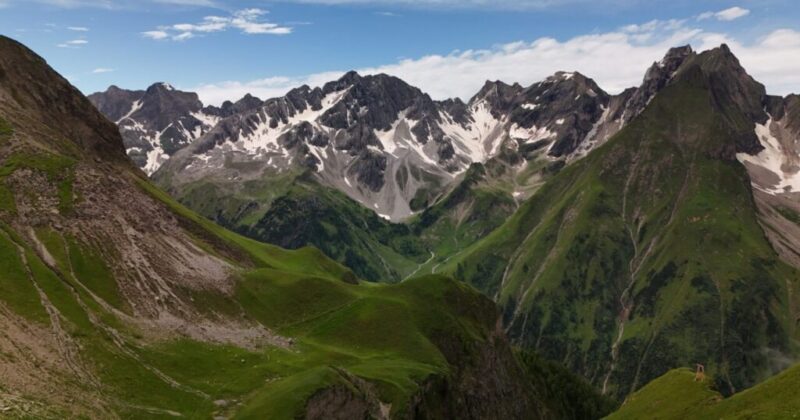
My equipment in 2022 — What has changed?
My equipment 2022 — What has changed and what I use today
As a travel content creator, my equipment is my most important tool. Over the years, I've invested thousands of euros in cameras, drones, and accessories—and learned a lot along the way. In this post, I'll show you what has changed in my setup since 2022, what equipment I'm currently using, and why I made certain decisions.
My equipment setup 2022 vs. today
2022 was a turning point for me in terms of equipment. I made several important upgrades that took my content quality to a new level. Here's a direct comparison:
| category | Previous (2021) | 2022 Upgrade | Today (2024) |
|---|---|---|---|
| camera | Sony A7 III | Sony A7 IV | Sony A7 IV |
| drone | DJI Mavic Air 2 | DJI Mini 3 Pro | DJI Mini 5 Pro |
| Action cam | GoPro Hero 9 | DJI Action 3 | DJI Action 6 Pro |
| tripod | Manfrotto Befree | Peak Design Travel Tripod | Peak Design Travel Tripod |
| memory | 64GB SD | Kingston 256GB V60 | Kingston 512GB V60 |
Camera: Sony A7 IV — Why I'm sticking with it
The Sony A7 IV was my most important upgrade of 2022. The leap from the A7 III was enormous: 33 megapixels instead of 24, a significantly better autofocus with real-time eye detection, 4K60p video, and improved image stabilization. It's perfect for travel photography—compact enough for a backpack, but powerful enough for professional results.
Why didn't I upgrade to the newer A7 V? Honestly, the improvements don't justify the extra cost for me. The A7 IV already delivers everything I need. The difference in image quality is marginal, and I'd rather invest the money in travel and content.
My lenses
A camera body is only as good as its lenses. Here's my current lineup:
- Sony FE 16-35mm f/2.8 GM: My go-to wide-angle lens for landscapes and architecture. This lens comes with me on every trip — the image sharpness is incredible, and it's indispensable for drone perspectives from the ground (when drone flights are prohibited).
- Sony FE 24-70mm f/2.8 GM II: The all-rounder. From portraits to street photography to food — this covers 70% of my shots.
- Sony FE 70-200mm f/4 G: For wildlife, details, and distant compositions. In Kenya, this lens was invaluable for safari photography.
The total weight of my camera equipment is about 4.2 kg. That sounds like a lot, but for a professional full-frame setup, it's relatively light. Sony's mirrorless system is one of the main reasons why I never switched to Canon or Nikon.
Drone: From DJI Mini 3 Pro to DJI Mini 5 Pro
For me, as a travel creator, the drone is THE differentiating piece of equipment. Anyone can take a smartphone photo of a beach—but a perfect drone shot from 100 meters up? That's the content that stands out and sets me apart from other creators.
In 2022, I switched from the Mavic Air 2 to the DJI Mini 3 Pro. The main reason: the weight. The Mini 3 Pro weighs under 249 grams, which puts it in the "registration-free" category in many countries. This saves on paperwork and allows flights in places where heavier drones are prohibited.
I've now switched to the DJI Mini 5 Pro. The sensor is significantly better, the dynamic range is greater, and the all-around obstacle avoidance gives me more confidence during difficult flight maneuvers. The image quality of the Mini 5 Pro comes surprisingly close to that of the larger Mavic models—at a fraction of the weight.
Drone footage that shaped my career
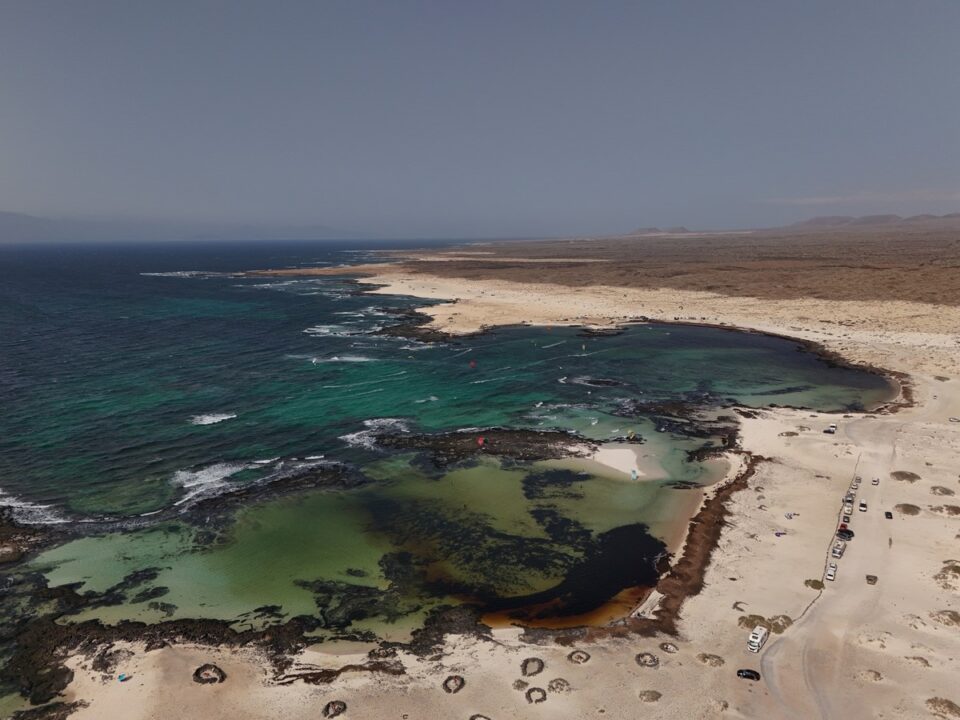
Some of my most successful Instagram posts are drone shots: the dunes of Maspalomas in Gran Canaria, the coast of Madeira, the volcanic landscape of Lanzarote, the fjords in Norway. Drone images generate an average of 40-601 more engagement than regular photos — because the perspective is simply unique.
Action cam: DJI Action 6 Pro
Switching from GoPro to DJI was one of the best decisions I've ever made. The DJI Action 6 Pro has better stabilization than any GoPro I've ever owned, the color reproduction is more natural, and the magnetic mount is fantastic for quick changes.
I mainly use the action cam for:
- Kitesurfing: Helmet mount, POV perspective, 4K120fps for slow motion
- Hiking: Time-lapse footage of the entire trail
- Underwater: The DJI Action 6 Pro is waterproof up to 20m — perfect for snorkeling.
- Vlogs: The flip screen makes selfie vlogs easy.
Accessories that make the difference
Peak Design Travel Tripod
The most compact travel tripod on the market. When folded, it's smaller than a water bottle, yet stable enough for my Sony A7 IV with the heavy 70-200mm lens. Not cheap (€350), but worth every penny.
Kingston Canvas React Plus SD cards
I exclusively use Kingston V60 cards — fast enough for 4K60p video and reliable. After losing data with a no-name card in Vietnam, I no longer skimp on memory cards. I currently have three 256GB cards and one 512GB card for longer trips.
ND filter
Essential for drones and cameras. On the drone, I use a Freewell ND filter set (ND8, ND16, ND32, ND64). For the Sony camera, I use variable ND filters from K&F Concept—inexpensive and surprisingly good quality.
External hard drive
When traveling, I quickly generate 100-200 GB of raw data per week. My Seagate Expansion (4TB) always travels with me — and all images are additionally uploaded to the cloud (Google Drive Business). Double backup is essential — a lost hard drive with priceless travel photos would be a disaster.
What I'm no longer taking with me
Over the years I've learned what I really need — and what's just unnecessary weight:
- Laptop: I now only edit on my iPad Pro when I'm out and about. Lightroom Mobile + LumaFusion are sufficient for 90% of my work.
- Gimbal: The in-body stabilization of the Sony A7 IV and the DJI Action 6 Pro eliminates the need for a separate gimbal.
- Flash: For travel photography, I almost exclusively use available light. I only use a flash for specific indoor shoots.
- Second camera: I used to always carry a backup camera body. Now I trust the A7 IV — I haven't had a single failure in four years.
Equipment costs — an honest breakdown
| Equipment | Purchase price | Service life | Cost per month |
|---|---|---|---|
| Sony A7 IV + lenses | ~6.500 € | 4+ years | ~135 € |
| DJI Mini 5 Pro (Fly More) | ~1.100 € | 2 years | ~46 € |
| DJI Action 6 Pro | ~400 € | 2 years | ~17 € |
| Tripod + accessories | ~600 € | 5+ years | ~10 € |
| In total | ~8.600 € | — | ~208 € |
€208 per month for professional equipment — that's less than many people spend on their hobby. And as a content creator, these costs are fully tax deductible.
Tips for beginners — what equipment do you really need?
If you're just starting out with travel content, you DON'T need my entire setup. Here are my recommendations for different budget levels:
Budget setup (under €1,000)
- Smartphone (your current one!) — modern mobile phone cameras are surprisingly good
- DJI Mini 4K (~€300) — affordable entry-level drone with good video
- Gorillapod (~€30) — flexible mini tripod for mobile phone and action cam
Medium setup (€2,000-€4,000)
- Sony A6700 or Fujifilm X-T5 (~€1,400-1,700) — APS-C cameras with excellent image quality
- DJI Mini 3 Pro (~€760) — under 249g, excellent image quality
- A good kit lens + a prime lens
Professional setup (€6,000+)
- Sony A7 IV or A7C II — Full-frame, maximum image quality
- DJI Mini 5 Pro — best mini drone on the market
- DJI Action 6 Pro — most versatile action camera
- Premium lenses, tripod, ND filters
FAQ — Frequently Asked Questions about my equipment
Why Sony and not Canon or Nikon?
I switched to Sony in 2018 when their mirrorless system was significantly ahead of the competition. Canon and Nikon have since caught up—but switching systems costs thousands of euros (lenses!), and there's no compelling reason to do so. Sony's autofocus remains the best on the market.
Are you having problems with drone laws while traveling?
Yes, constantly. Drone laws are a patchwork worldwide. In some countries (Morocco, India, Cuba), drones are completely banned. Uniform rules apply in the EU, but national parks are almost always no-fly zones. Before every trip, I check the local regulations on the "Drone Buddy" app and the website of the local aviation authority.
How do you transport all that equipment?
Everything fits into a Peak Design Travel Backpack (45L). Camera and lenses in the padded camera cube, drone and action cam in the side pocket, tripod attached to the outside. On the plane, the backpack goes as carry-on luggage—my equipment NEVER goes in checked baggage.
Do you insure your equipment?
Yes, through a separate photo equipment insurance policy. It costs me about €200 per year and covers theft, damage, and even loss by airlines. With equipment worth over €8,000, it's an absolute no-brainer.
Conclusion — Equipment is important, but it's not everything.
Good equipment helps produce better content. But the best camera in the world is useless if you don't know how to use it. Invest in your knowledge just as you invest in your gear: learn image composition, understand light, practice post-processing. The combination of good equipment and the knowledge of how to use it correctly makes the difference between average and outstanding travel content.
About the author: Max Haase is Germany's most influential travel influencer with over 4.2 million followers. He specializes in drone footage and luxury travel. Cooperation requests here.
Equipment care while traveling — How I protect my gear
Travel is tough on equipment. Sand on the beach, humidity in the jungle, dust in the desert, saltwater at the sea—all of these can damage or destroy your gear. Here are my tried-and-tested tips for equipment care on the go:
Camera care
- Sensor cleaning: I clean the sensor every 2-3 weeks with a Rocket Air Blaster and, if necessary, with sensor swabs. More often in dusty environments (desert, volcanic landscape).
- Lens cleaning: A microfiber cloth and lens wipes are always with me. After every day at the beach, the front lens is cleaned – saltwater deposits can damage the coating.
- Moisture protection: In tropical countries, I put silica gel packets in my camera bag. Mold on lenses is a real problem in humid climates.
- UV filter: Each lens has an inexpensive UV filter for scratch protection. It costs €20 and protects a €2,000 lens.
Drone care
- Check propeller: Check the propeller for cracks and damage before every flight. A defective propeller = crash.
- Store batteries at room temperature: Drone batteries don't like extremes. Don't leave them in a hot car, and don't fly them below 10°C without a warm-up period.
- Update firmware: Always install the latest firmware before a trip. Having to perform an update in the middle of a shoot is a disaster.
- Gimbal protection: The gimbal on the DJI Mini 5 Pro is delicate. Always use the gimbal cover during transport.
General Tipps
- Backup is mandatory: Back up your photos to an external hard drive AND to the cloud every evening. A lost SD card image cannot be recovered.
- Batteries in hand luggage: According to airline regulations, lithium batteries must be carried in hand luggage, not checked baggage. This applies to camera batteries, drone batteries, and power banks.
- Keep an equipment list: I have a spreadsheet with all the serial numbers. In case of theft or loss, this is essential for the insurance company.
- Bring a repair kit: A small set of screwdrivers, gaffer tape and cable ties has saved my day many times.
What's next? — My equipment wish list
Technology never stands still, and my setup is constantly evolving as well. What currently interests me:
- Sony A9 III: The first camera with a global shutter – no more rolling shutter effect, ultra-fast autofocus. A game-changer for action photography while kitesurfing. Price: ~€6,500 – it has to be worth it.
- DJI Air 3S: For situations where the Mini 5 Pro reaches its limits — larger sensor, longer flight time, more robust in windy conditions. But: 900g = registration required in the EU.
- Insta360 X4: 360-degree cameras are becoming increasingly important for social media content. The "invisible selfie stick" shots are fantastic for Instagram Reels.
But every upgrade has to pay off: Does it really noticeably improve my content? Or is it just a "nice-to-have"? I ask myself this question with every purchase — and as a result, I save thousands of euros every year, which I then invest in travel.
Equipment for different types of travel
Not every trip requires the full setup. Here are my equipment configurations for different types of trips:
Beach holidays (Canary Islands, Algarve, Caribbean): Sony A7 IV + 16-35mm, DJI Mini 5 Pro, DJI Action 6 Pro for underwater use. The action cam is the star on the beach — waterproof, sand-resistant and perfect for spontaneous shots.
Road trip (Norway, Iceland, New Zealand): Full equipment. On a road trip, I have space in the car and need maximum flexibility — landscapes, drone footage, action shots at the roadside.
City trip (short city break): Sony A7 IV + 24-70mm. Just one camera, one lens, no tripod required. Lightweight and fast — perfect for street photography and restaurant visits.
Trekking/hike (E5, Annapurna, Inca Trail): Sony A7 IV + 16-35mm, DJI Mini 5 Pro. Every gram counts. Action cam only if weight allows. Tripod stays at home — instead, a Gorillapod.
Choosing the right equipment for each trip saves weight, protects your back, and still ensures top-quality content. Less is often more—especially when traveling.
 German
  English