
Malaysia travel report — Kuala Lumpur, Langkawi & Borneo
Malaysia Travel Report — Kuala Lumpur, Langkawi & Borneo in 3 Weeks
Malaysia was the country that taught me Southeast Asia is more than just Thailand and Bali. Less touristy, cheaper, more diverse, and—I say this as someone who has eaten in over 60 countries—with the best street food in the world. In three weeks, I explored Kuala Lumpur, flew my drone over mangrove forests on Langkawi, and saw orangutans in the wild on Borneo. Here is my full travelogue.
Kuala Lumpur — The underestimated metropolis
Kuala Lumpur is often treated as a stopover—one or two nights, Petronas Towers, then on to the next place. Big mistake. I spent four days in Kuala Lumpur and could easily have stayed a week.
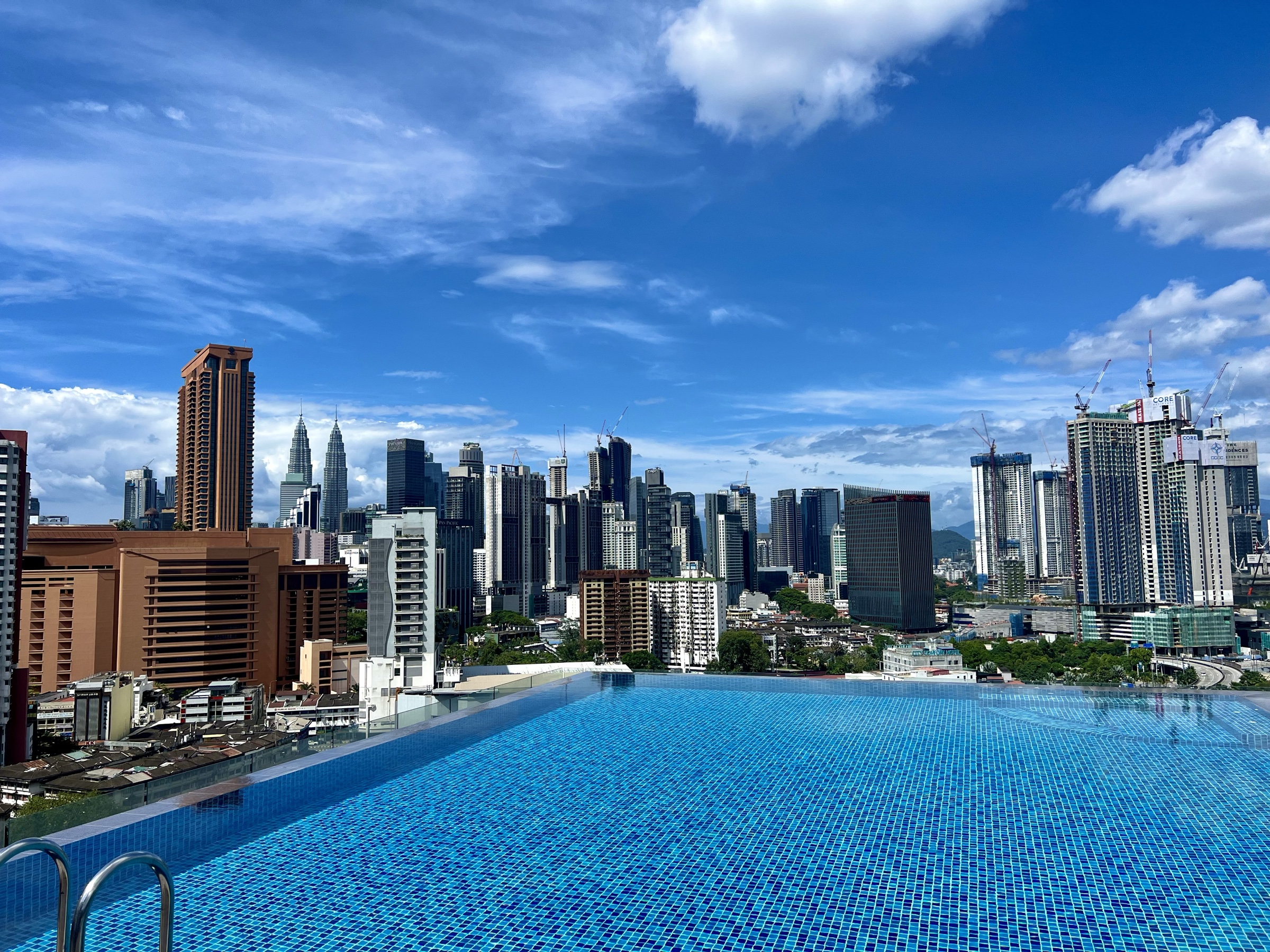
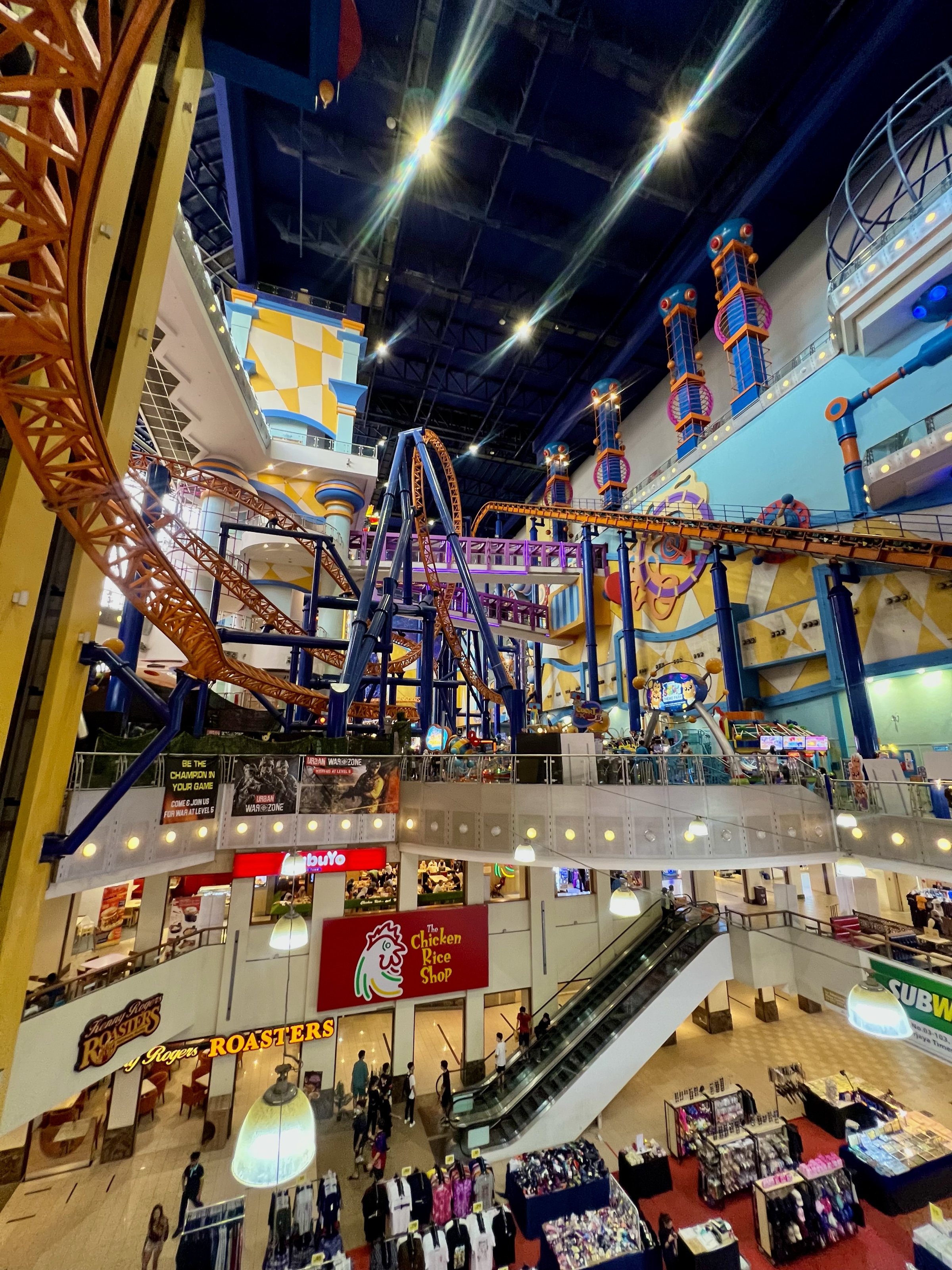
Petronas Twin Towers and KLCC Park
The Petronas Towers are 452 meters tall and a landmark of Malaysia. Impressive from below, but the real wow factor comes from the air. I launched the DJI Mini 5 Pro from KLCC Park (be careful, there are restrictions near downtown Kuala Lumpur) and filmed the towers at sunset—the silver facades bathed in golden light, the Kuala Lumpur Tower in the background, and KLCC Park as a green oasis at the foot of the steel giants. This video was my most successful piece of Malaysia content.
The Skybridge at 170m (level 41) and the observation deck at 370m (level 86) are both worth a visit—but book tickets online in advance, as they often sell out days ahead. Alternatively, the SkyBar in the Traders Hotel next door has a pool with a view of the towers at eye level. Cocktails start at €15, but the view is priceless.
Batu Caves
272 steps, a 42-meter-tall golden statue of Lord Murugan, and at the top, a vast limestone cave housing a Hindu temple. The Batu Caves are a 20-minute train ride from the city center and one of the most photogenic spots in all of Southeast Asia. The colorful staircases (painted in rainbow colors since 2018), the statue bathed in golden morning light, the cave with its natural light wells shining through from above—this is where the Sony A7 IV really shines.
Tip: Arrive before 8 a.m., then you'll practically have the stairs to yourself. And be careful: The macaques (monkeys) there are brazen and will steal anything that isn't held onto—sunglasses, water bottles, snacks.
Chinatown and Jalan Alor
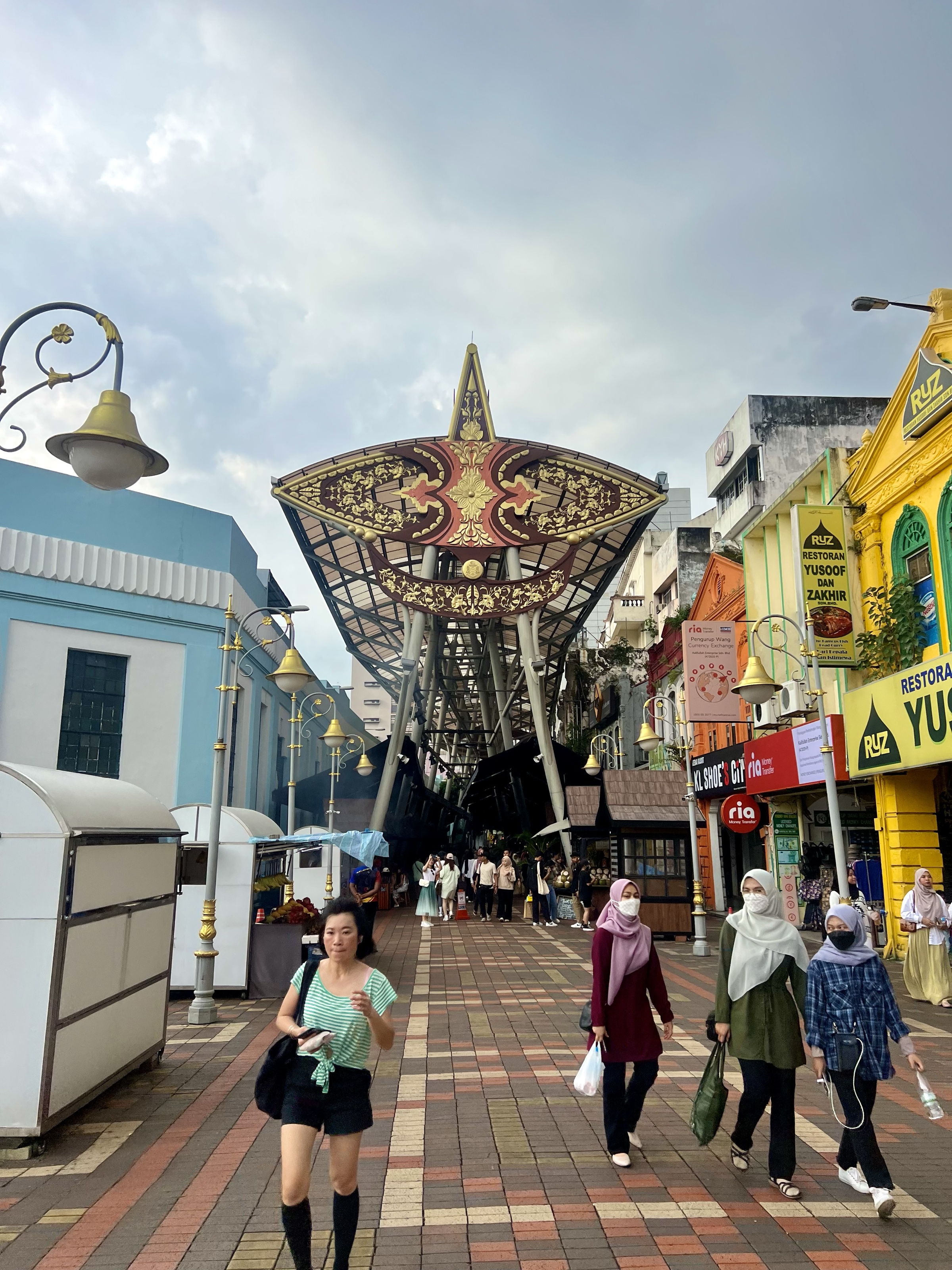
Petaling Street in Chinatown is a chaotic market by day (fake watches, souvenirs) and a food court by night. But the true street food mecca is Jalan Alor. An entire street lined with stalls and restaurants that set up their plastic tables on the street starting at 5 p.m. Chicken wings for €1, satay skewers for €0.50, roti canai for €0.30, fresh coconut for €0.80. I ate at four different stalls one evening and spent a total of €7. Seven euros. For the best meal of my life.
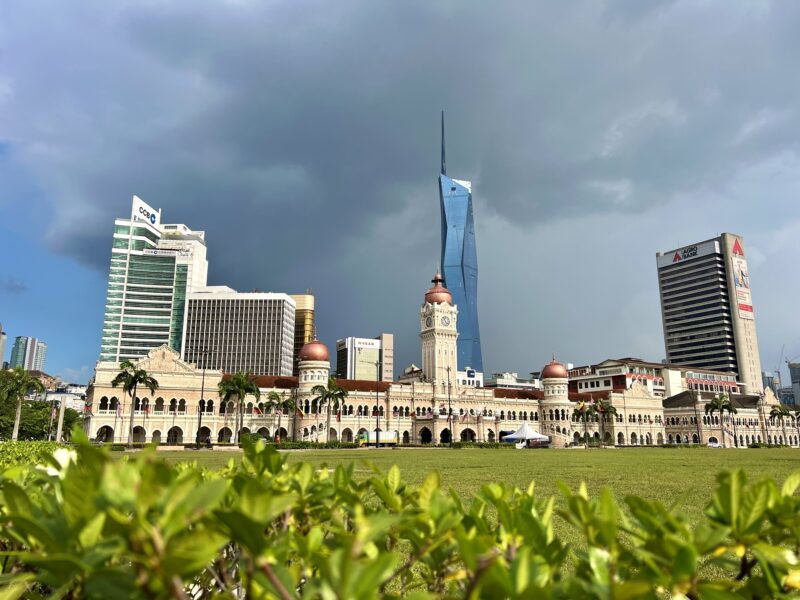
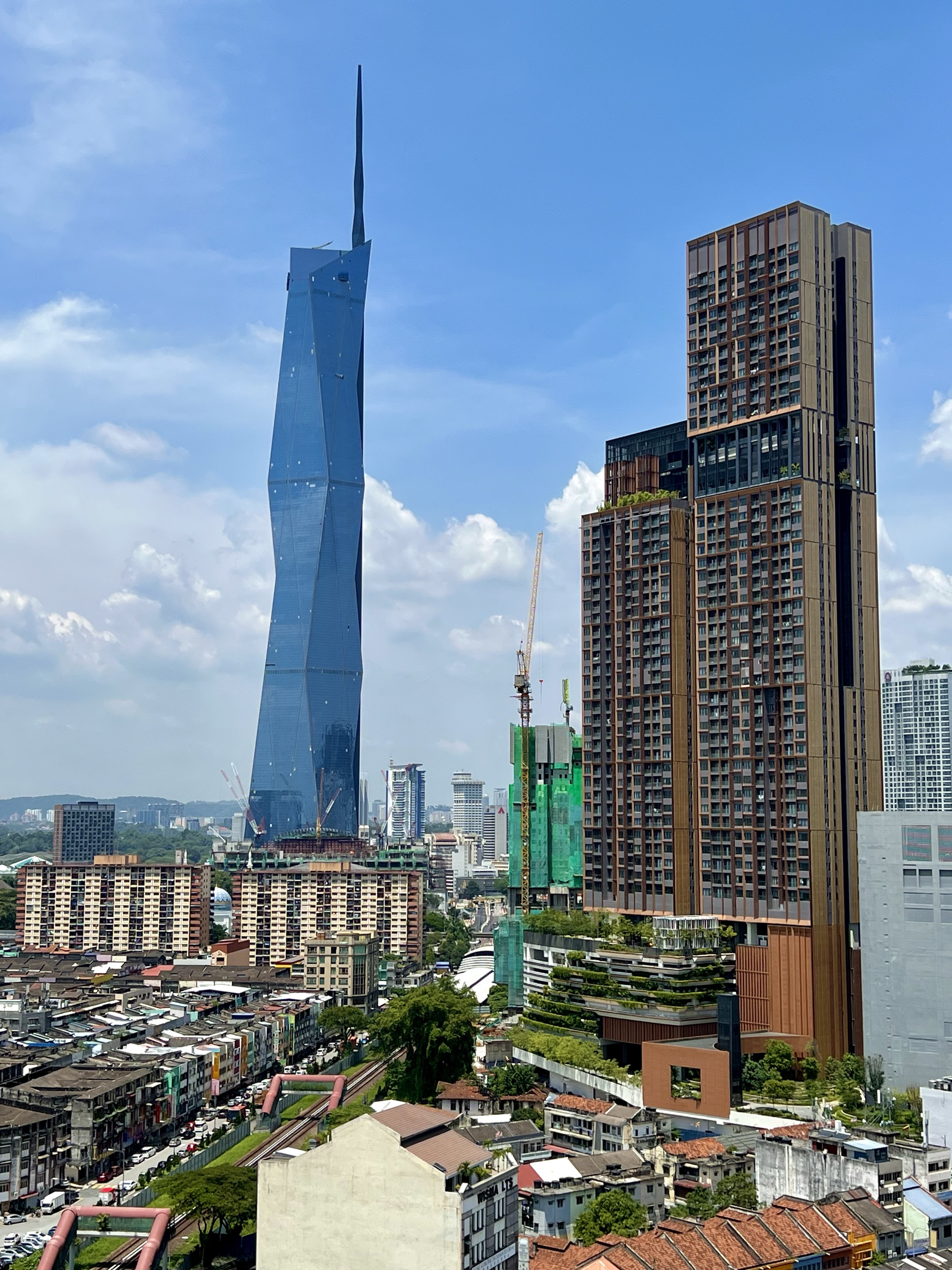
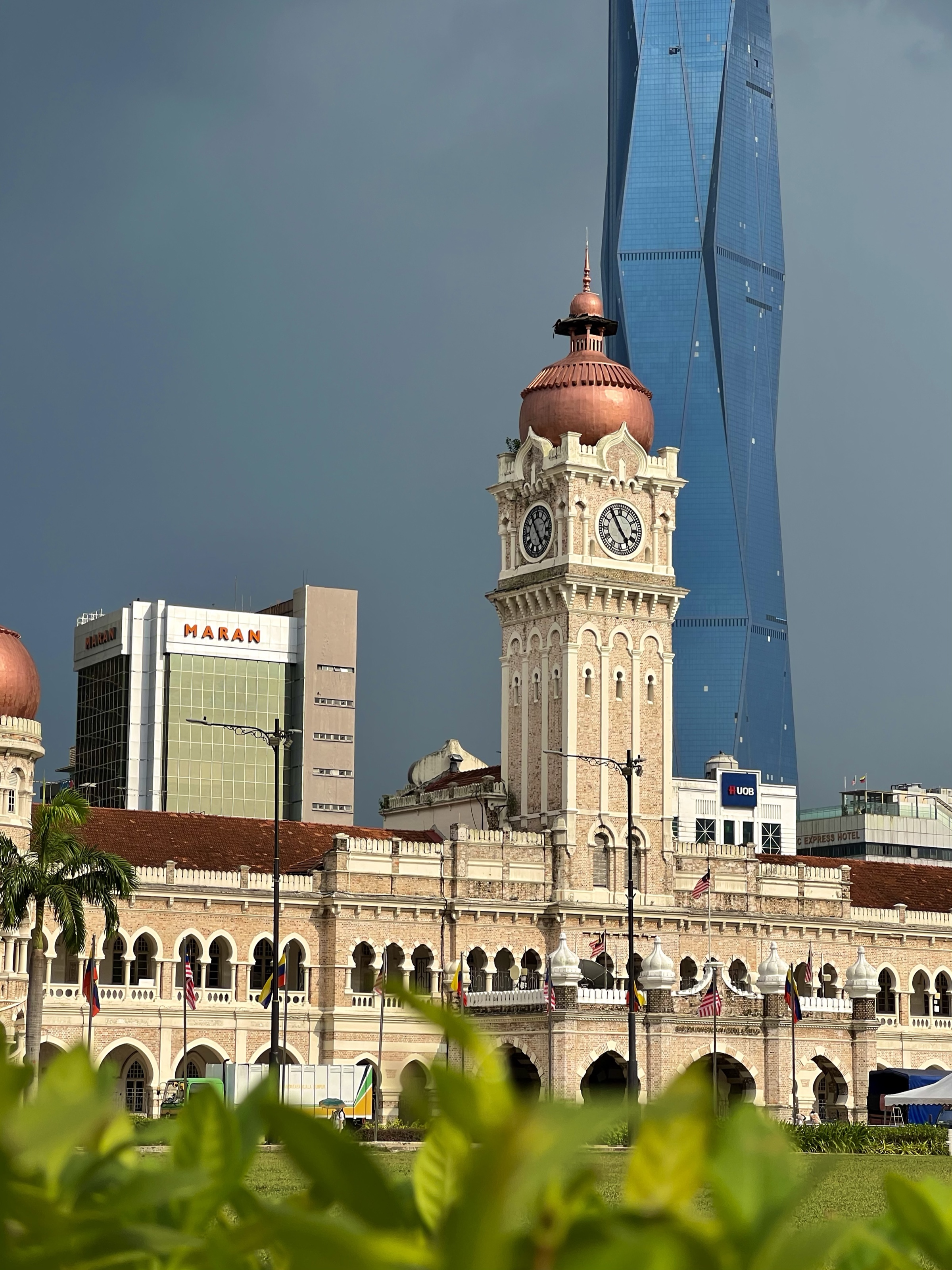
Merdeka 118
Since 2024, Merdeka 118, at 678 meters, has been the second tallest building in the world. The observation deck, "The View at 118," on level 116 offers a 360-degree view of Kuala Lumpur, surpassing anything the Petronas Towers can offer. It's not yet overcrowded, as many tourists haven't discovered it yet. Tickets cost approximately €25.
Langkawi — Island paradise and drone heaven
Langkawi is an archipelago of 99 islands in northwest Malaysia, right on the border with Thailand. The main island has everything: beaches, rainforest, mangroves, and an infrastructure that's just right—developed enough for comfort, but not so developed that it smacks of mass tourism.
Sky Bridge and Cable Car
The Langkawi Sky Bridge is a curved pedestrian bridge suspended 660 meters above sea level between two mountain peaks. You reach it via the Langkawi Cable Car (Southeast Asia's steepest cable car) and then find yourself on a bridge seemingly floating above the rainforest, with views of the Andaman Sea, the Thai coast on the horizon, and the 99 islands below. Launching a drone from up here is epic. The panorama in every direction is breathtaking, with the bridge as a sweeping line above the verdant abyss.
Kilim Geoforest Park — mangroves by kayak
Kilim Geoforest Park is a UNESCO Global Geopark with limestone cliffs that jut out from the mangrove forest like teeth. I took a kayak tour through the mangroves (3 hours, about €25) and saw eagles, monitor lizards, snakes, and giant crabs. The drone over the mangroves revealed the winding waterways between the limestone cliffs, a labyrinth of green and blue from above. Pure nature, almost no tourists (a kayak instead of a motorboat allows you access to the narrow channels).
Pantai Cenang and Island Hopping
Pantai Cenang is Langkawi's main beach—2 kilometers of fine, warm, turquoise sand, with beach restaurants and bars. Not exactly a hidden gem, but a nice basic beach for the evening. More exciting: island hopping. For about €15, you can take a speedboat to three offshore islands: Pulau Dayang Bunting (Pregnant Virgin, an inland lake on an island), Beras Basah (a sandbar for snorkeling), and Singa Besar (feeding eagles, controversial but visually stunning).
Langkawi as Duty Free
The entire island is a duty-free zone. Beer costs €1 per can (three times as much in the rest of Malaysia due to alcohol tax), and spirits and tobacco are incredibly cheap. This makes Langkawi more attractive in terms of price than the mainland—and explains why Malaysians themselves like to vacation here.
Borneo (Sabah) — Rainforest and Orangutans
Borneo was the emotional highlight of my trip to Malaysia. The world's third-largest island, divided between Malaysia, Indonesia, and Brunei, is home to some of the oldest rainforests on the planet. I was in Sabah (the Malaysian part) and explored the rainforest, the orangutans, and the coast from my base in Kota Kinabalu.
Sepilok Orangutan Rehabilitation Center
Sepilok near Sandakan is a rehabilitation center for orphaned and injured orangutans. Twice a day (at 10 a.m. and 3 p.m.), the semi-wild orangutans come to the feeding platform—and you stand on a wooden walkway, 5 meters away, watching these incredible animals eat bananas and interact with each other. No zoo, no glass between them, no show. Just orangutans in their natural habitat.
This touched me more emotionally than almost any landscape I've ever seen. Those intelligent, gentle eyes. The knowledge that their habitats are being destroyed for palm oil plantations. The entrance fee (approx. €8) goes directly towards protecting these animals. Bring a camera—but no flash. And drones must stay on the ground (it's forbidden, and rightly so).
Kinabalu National Park
Mount Kinabalu (4,095m) is the highest mountain in Southeast Asia (outside the Himalayas). A two-day climb (permit approx. €200, all-inclusive) with an overnight stay in a mountain hut at 3,300m. I reached the summit at sunrise—the view above the cloud cover, the granite landscape bathed in golden light, the South China Sea on the horizon. The climb is strenuous but not technically difficult—no climbing experience is necessary, just stamina.
For those who don't want to climb the mountain: The canopy walkways in the national park (40m above the rainforest floor on suspension bridges) are an experience even without reaching the summit. The view of the canopy from above, the sounds of the rainforest, the humid air—you feel like you're in a David Attenborough film.
Semporna and Sipadan
Sipadan is one of the top three dive sites in the world. An oceanic island rising directly from a depth of 600 meters, surrounded by a coral reef with a biodiversity that surpasses anything you can imagine. Hammerhead sharks, schools of barracuda, turtles, and reef sharks. Divers need a permit (limited to 120 per day), which can be booked through the resorts in Semporna.
I'm not a diver, but snorkeling in Semporna was still fantastic. The offshore islands (Mabul, Kapalai) have stilt houses built over the water, with crystal-clear sea teeming with coral and fish below. The drone footage of the stilt houses from above—turquoise water, wooden structures, boats—is among my best photos from Asia.
Food in Malaysia — A culinary universe
Malaysia has the most diverse food in Southeast Asia. Malay, Chinese, Indian, and Peranakan cuisines exist side by side—often at the same row of hawker stalls. My must-eats:
- Nasi Lemak: The national dish. Coconut rice, sambal, peanuts, egg, anchovies, cucumber slices. Breakfast, lunch, and dinner — Malaysians eat it 24/7. From €0.50 at street stalls.
- Char Kway Teow: Fried rice noodles with shrimp, cockles, egg, and dark soy sauce. Best in Penang, but good everywhere.
- Roti Canai: Paper-thin, crispy flatbread with dhal or curry for dipping. The Indian-Malaysian version. My breakfast ritual.
- Laksa: Spicy coconut noodle soup. Each region has its own version — Penang Laksa (sour), Sarawak Laksa (coconut), Curry Laksa (spicy).
- Cendol: A dessert made with coconut milk, palm sugar, pandan jelly, and ice cream. Perfect after a hot day.
Costs for 3 weeks in Malaysia
| Position | Cost |
|---|---|
| Flight (from Germany, return) | €400–700 |
| Domestic flights (KL → Langkawi, KL → Kota Kinabalu) | 60–120 € |
| Accommodation (21 nights, mid-range) | €350–600 |
| Food & Drink | €150–300 |
| Local transport (Grab, bus, rental car Langkawi) | 80–150 € |
| Activities (Kinabalu, snorkeling, cable car, etc.) | €200–400 |
| Total per person | €1,240–2,270 |
Malaysia offers one of the best value-for-money destinations in all of Asia. Food is ridiculously cheap (5-10 EUR per day if you eat street food), accommodation costs a fraction of what it would in Thailand or Bali, and domestic flights with AirAsia start at 15 EUR. The biggest expense is the long-haul flight from Germany—but even that is often under 500 EUR if booked early.
Best time to travel to Malaysia
Malaysia can be visited all year round, but the monsoon seasons vary by region. West Coast (KL, Langkawi, Penang): Best time to visit: November to April (dry period). East Coast (Perhentian Islands, Tioman): April to October. Borneo (Sabah, Sarawak): March to October. I was there in February/March and had perfect weather on the west coast and in Borneo.
FAQ
Do I need a visa for Malaysia?
No — with a German passport you can stay visa-free for up to 90 days. Your passport must be valid for at least six months. Entry is straightforward — fingerprint scan at a machine, stamp, and you're done.
Is Malaysia safe?
Yes — Malaysia is one of the safest countries in Southeast Asia. In Kuala Lumpur, take the usual big-city precautions (pickpocketing), and in Borneo, the usual jungle precautions (mosquito repellent, don't touch animals). Politically stable, well-organized, and very tourist-friendly.
Can I fly a drone safely in Malaysia?
Malaysia has had stricter drone regulations since 2023. Registration with the CAAM (Civil Aviation Authority Malaysia) is theoretically mandatory, but is rarely checked for tourists with small drones. Flying is prohibited in national parks and over crowds. I had no problems on Langkawi, but caution is advised in Kuala Lumpur (many no-fly zones around the airport and government buildings). It's best to use the AirMap app and ask locally if in doubt.
What's the best way to get back and forth between the regions?
Domestic flights with AirAsia — cheap, punctual, good network. Kuala Lumpur to Langkawi: 1 hour flight, from €15. Kuala Lumpur to Kota Kinabalu (Borneo): 2.5 hours, from €30. Alternatively: Buses are cheap and comfortable (Kuala Lumpur to Penang: 5 hours, approx. €10), and Grab (Southeast Asia's Uber) works perfectly in all cities.
Is Penang worth visiting?
Absolutely — Penang is the food capital of Malaysia and worth a trip for that alone. Georgetown has a fantastic old town with street art, colonial architecture, and Chinese clan jetties (stilt houses). I skipped Penang due to time constraints and still regret it. Next time.
More travel reports: All my travel reports
About the author: Max Haase is Germany's most influential travel influencer with over 4.2 million followers. He specializes in drone footage and luxury travel. Cooperation requests here.
 German
  English