
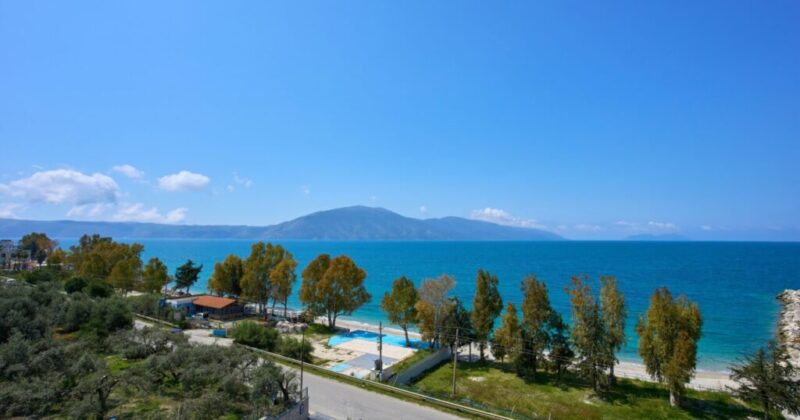
Albania Costs 2026: Road trip budget including flights & food
Albania Costs — What does a road trip through Europe's cheapest travel destination cost?
Albania is the travel destination I get the most messages about. Since I spent two weeks traveling through the country in April 2023 and shared my drone footage on Instagram, at least five people ask me every day: What does Albania really cost? Is it as cheap as everyone says? And is it worth it?
- Total costs: 14 days in Albania including flight, rental car, accommodation and food for €1,119 — around €80 per day, making it Europe's cheapest travel destination.
- Flight & Transport: Wizz Air flies from Berlin, Dortmund or Frankfurt-Hahn to Tirana for €50–90 return, rental cars via Localrent from €20/day.
- Rental car tip: Hyundai i10 with fully comprehensive insurance and no excess for €280 per 14 days — absolutely essential given the potholes and gravel roads.
- Food & Everyday Life: Beer 1–2 €, wine 5–8 €, restaurant main course rarely over 10 € — food plus drinks for two weeks are sufficient at 210 €.
- Accommodation: A mix of guesthouses and small hotels via Booking.com for €350 / 14 nights — hostels from €8, boutique hotels up to €200 per night.
The short answer: Yes, Albania is by far the cheapest travel destination in Europe. And yes, it's absolutely worth it. But there are a few things you need to know before you go. In this article, I'll break down my total costs for two weeks in Albania—every night's accommodation, every meal, every tank of gas, every entrance fee. No sugarcoating, no sponsored luxury hotels. Real backpacker and rental car costs.
Albanian Lek in Euros: My 14-day budget overview
Before I go into detail, here's the overall picture. I started from Tirana with a rental car and did a tour through the south, including the coast and the interior.
| category | Total costs | Per day |
|---|---|---|
| Flight (Frankfurt — Tirana, round trip) | 89 € | — |
| Rental car (14 days, small car, fully comprehensive insurance) | 280 € | 20 € |
| Petrol (approx. 2,100 km driven) | 105 € | 7,50 € |
| Accommodation (mix of hotels and guesthouses) | 350 € | 25 € |
| Food and Drink | 210 € | 15 € |
| Activities and admission fees | 45 € | 3,20 € |
| SIM card (Vodafone Albania, 10 GB) | 5 € | — |
| Other expenses (parking fees, tips, laundry) | 35 € | 2,50 € |
| Total costs | 1.119 € | 79,90 € |
Yes, you read that right. Two weeks in Albania — including flight, rental car and accommodation — for just over 1,100 euros. For comparison: A week in Mallorca in the summer easily costs twice as much. But let me go through the individual items in detail.
Albania holidays with flights: Cheap connections & all-inclusive options
The cheapest flights to Tirana (TIA) can be found with Wizz Air. They offer direct flights from several German cities—Berlin, Dortmund, Memmingen, and Frankfurt-Hahn. I paid €89 for a round trip, booked about six weeks in advance. With a little flexibility regarding travel dates, prices of €50-70 are also possible.
Albania is not in the EU roaming zone; German roaming costs €5-9 per day here. Local Vodafone or One Albania SIM cards are available cheaply, but an eSIM is activated immediately after crossing the border.
Alternatively, Lufthansa also flies directly to Tirana, but usually for €200-350. This only makes sense if you have a lot of luggage or want to collect miles.
Car rental in Albania — My experiences
Renting a car was the best decision I made on my trip to Albania. Public transport is unreliable, buses run infrequently, and you can only reach the most beautiful spots by car.
I booked through Localrent.com — a platform that connects local rental companies. A Hyundai i10 with full insurance, unlimited mileage, and airport pickup cost me €280 for 14 days. That's €20 a day. In Greece or Croatia, you'd pay €40-60 per day for something like that.
Things to watch out for: Make sure you get fully comprehensive insurance with zero excess. The roads in Albania are sometimes catastrophic – potholes, unpaved sections, animals on the road. I had two situations where I would have been nervous without comprehensive coverage. Also: Take photos of every scratch on the car when you pick it up. Albanian rental companies are generally fair, but it's better to be insured.
The main roads between Tirana, Saranda, and Vlora are in good condition. The SH8 along the Riviera is winding but well-paved. Problems only arise on secondary roads inland and on the way to the Blue Eye – the last mile there is a gravel track.
Petrol in Albania costs around €1.50-€1.60 per liter (as of April 2023), which is slightly cheaper than in Germany. I spent a total of €105 on petrol for my 2,100 kilometers.
Accommodation — Where I slept and how much it cost
Albania has a wide range of accommodation options, from €8 hostels to €200 boutique hotels. I opted for a mix — mainly guesthouses and small hotels, booked through Booking.com.
Here are my actual accommodation costs:
| Location | Accommodation | nights | Price per night |
|---|---|---|---|
| Tirana | Hotel Boutique Kotoni | 2 | 35 € |
| Advisor | Hotel Mangalemi | 2 | 28 € |
| Gjirokastra | Babameto Guesthouse | 1 | 22 € |
| Saranda | Hotel Kaonia | 3 | 30 € |
| Himara | Rapos Resort | 2 | 25 € |
| Vlora | Hotel Bologna | 1 | 20 € |
| Durres | Hotel Nais | 1 | 18 € |
| Tirana | Hotel Boutique Kotoni | 2 | 35 € |
Overall average: 25 euros per night for clean, centrally located hotels with breakfast. In Saranda and Himara, there are also Airbnb apartments from 20 euros per night — perfect if you're staying longer and want to cook for yourself.
Albanian Food: The best cuisine for little money
The food in Albania was one of the biggest surprises. The cuisine is a mix of Greek, Turkish, and Italian — and everything is incredibly cheap and fresh.
A typical lunch in a local restaurant: salad as a starter, grilled meat or fish, side dishes, a drink—all for 5-8 euros per person. No joke. In Saranda, I ate a whole grilled sea bass with salad and half a liter of house wine for 9 euros.
Breakfast is included in most hotels. For dinner, I spent an average of 10-12 euros per meal when I went to a restaurant. On the days when I ate burek (filled phyllo pastry) and byrek from street vendors, it was less than 3 euros.
Coffee is a national drink in Albania. An espresso costs between 50 cents and 1 euro, even in tourist cafes in Saranda. Beer (Korça or Tirana) costs between 1 and 2 euros in restaurants, and a bottle of wine between 5 and 8 euros.
My food expenses over 14 days: 210 euros. That's 15 euros per day — including restaurant visits. In Western Europe, that wouldn't even cover lunch.
The Route — My 14-Day Itinerary through Albania
Days 1-2: Tirana
The capital is chaotic, vibrant, and full of energy. Skanderbeg Square is the hub; from there, you can reach everything on foot. Must-sees include the Bunk'Art Museum (a former nuclear bunker), the colorful Rruga Murat Toptani, and Grand Park with its artificial lake. In the evening, go bar-hopping in the Blloku district, the former government quarter, which is now the city's nightlife district.
Days 3-4: Berat — The City of a Thousand Windows
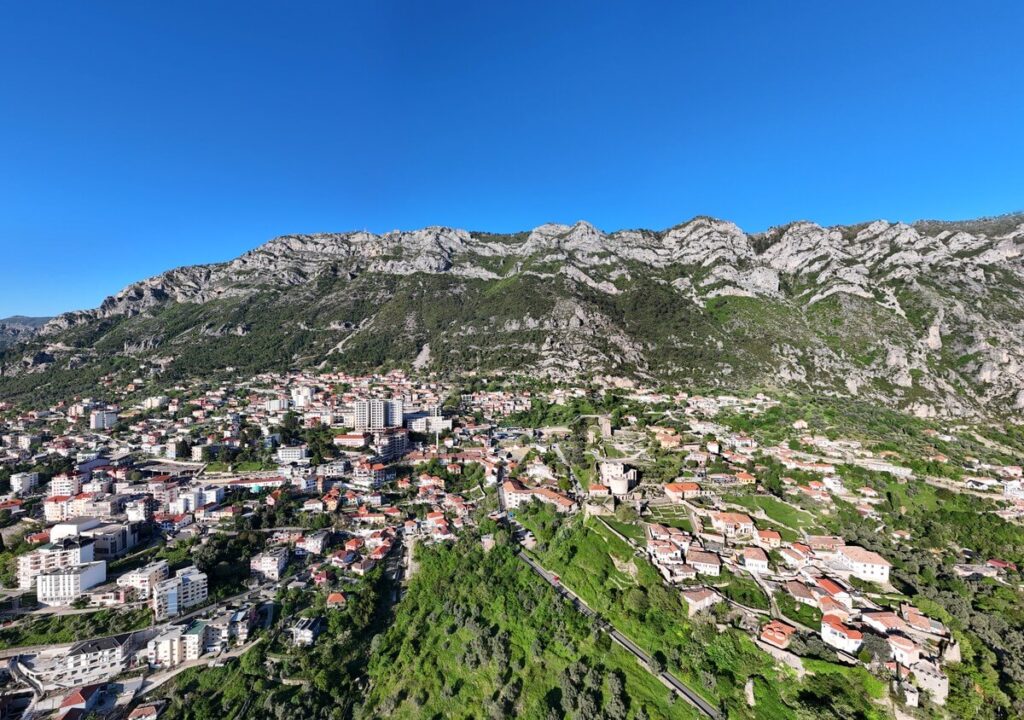
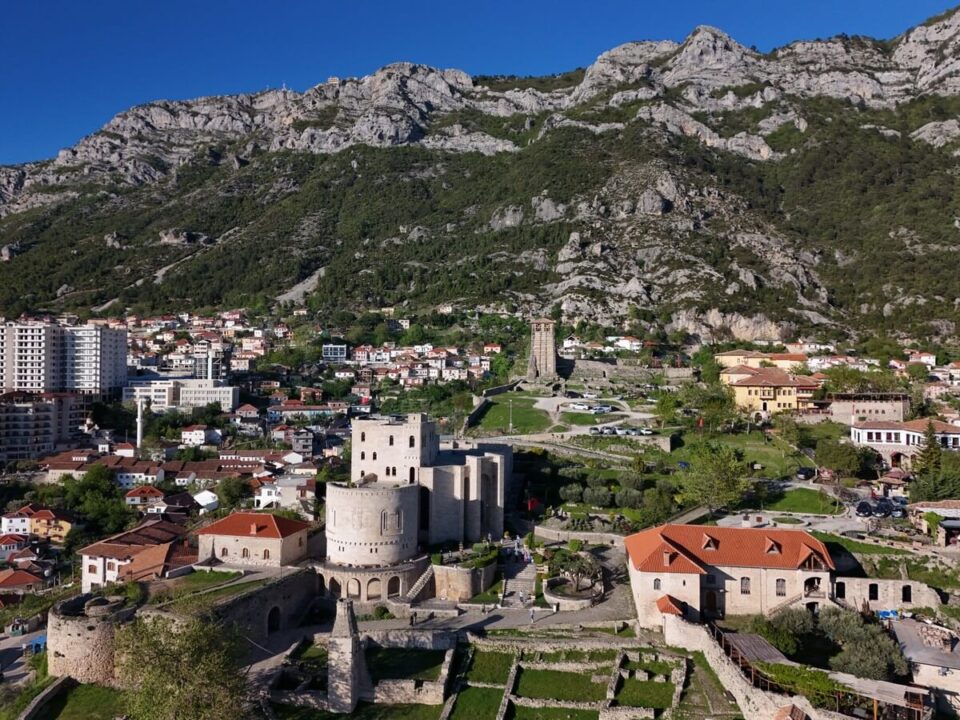
Berat is a UNESCO World Heritage Site and one of the most beautiful cities I've ever seen. The white Ottoman houses are stacked one on top of the other up the hill, and the windows reflect the light in such a way that the whole city seems to glow. The Kalaja fortress on the hill is free to enter and offers the best view of the city. For drone footage, the viewpoint on the opposite bank of the river (Gorica district) is best.
Day 5: Gjirokastra — The Stone City
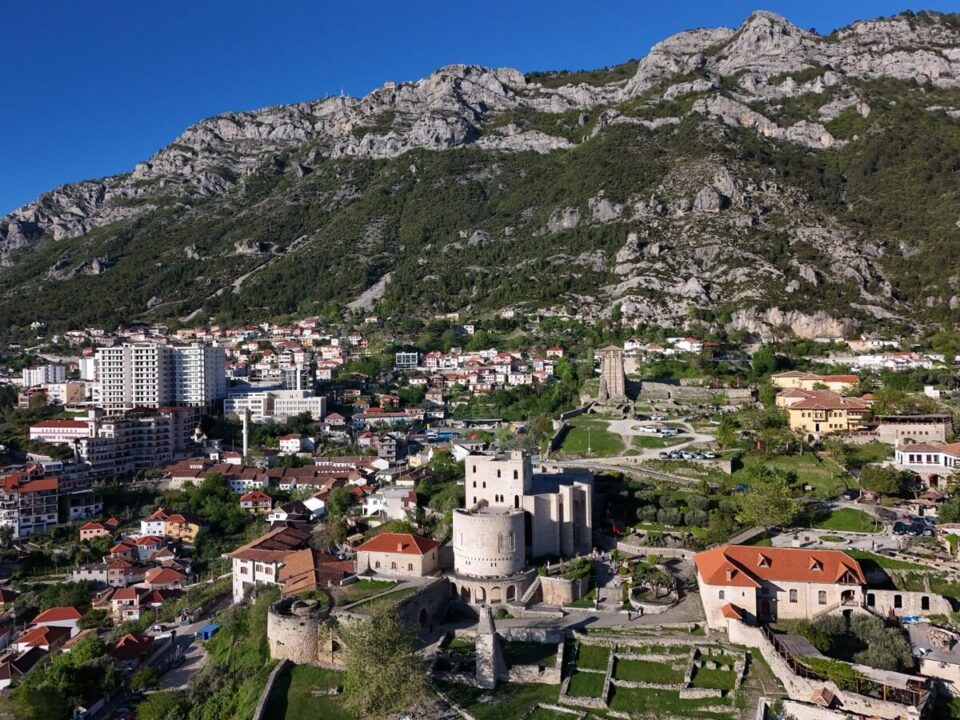
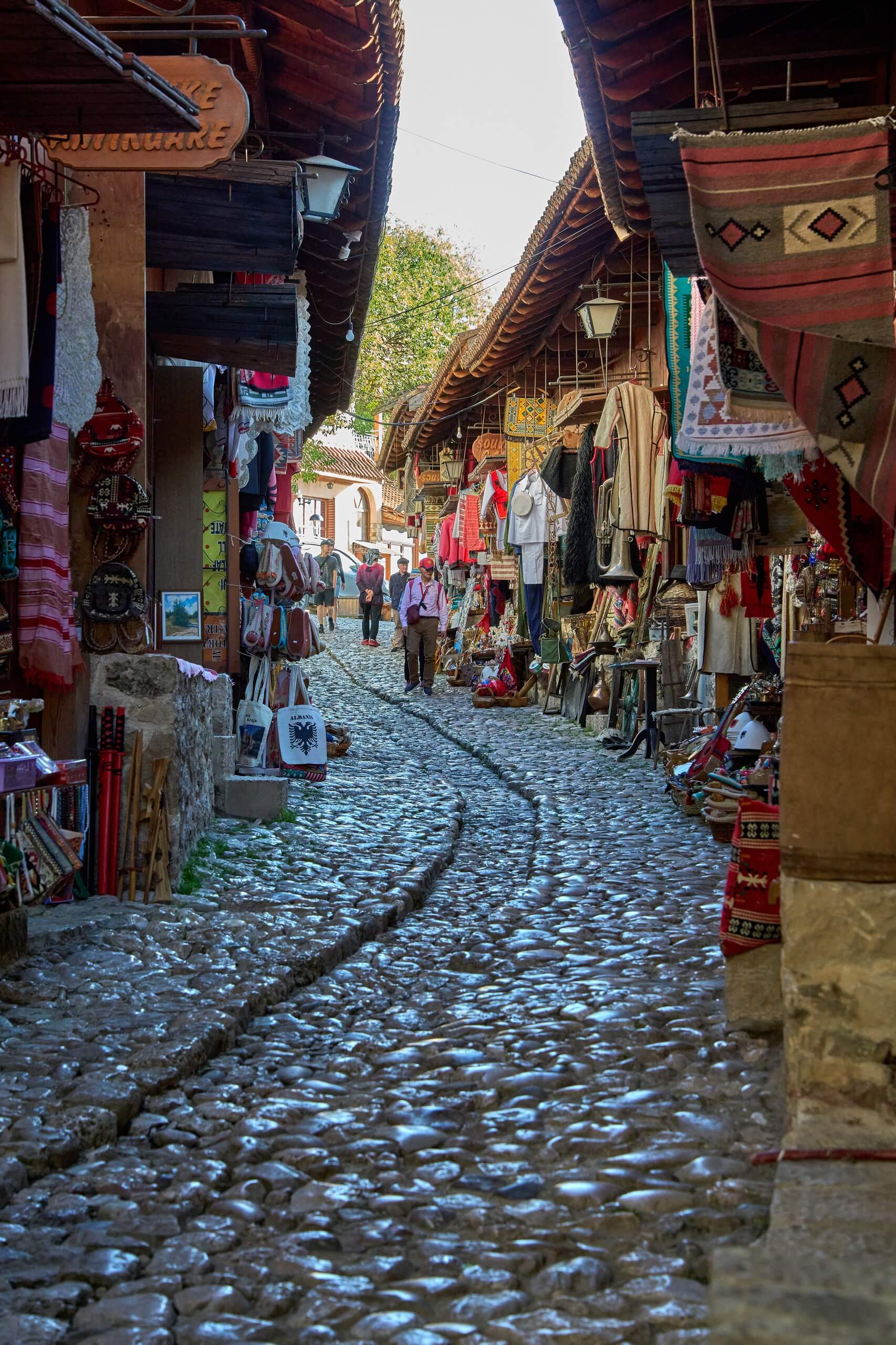
Another UNESCO World Heritage city, built entirely of grey stone. The fortress is one of the largest in the Balkans and houses a weapons museum and a crashed American spy plane from the Cold War. Admission: 3 euros. The old bazaar streets below are perfect for strolling and taking photos.
Days 6-8: Saranda and Albanian Riviera
Saranda is Albania's tourist hotspot—yet still far removed from the overcrowding of Greece or Croatia. The beach in the city itself is mediocre, but the beaches to the north are spectacular: Ksamil has turquoise waters and small offshore islands (reachable by swimming or pedal boat), and Mirror Beach near Saranda is one of the most photogenic beaches I've ever seen.
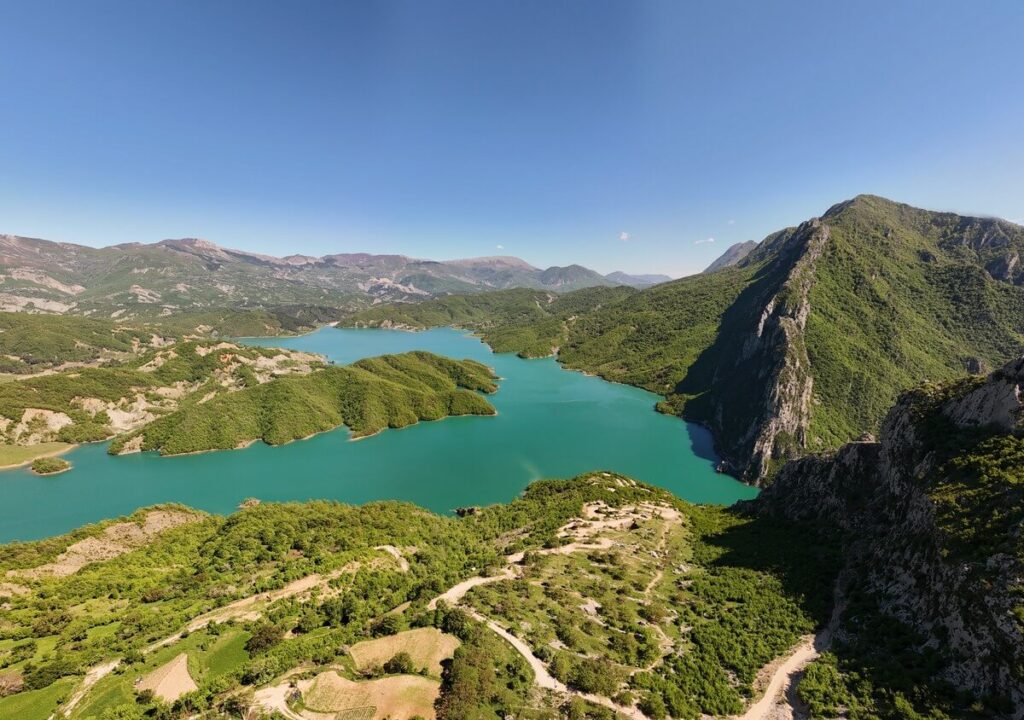
The Blue Eye (Syri i Kaltër) is a must-see—a karst spring that glows such a brilliant blue it looks unreal. Entry costs 100 Lek (less than €1). The last mile there is a bumpy gravel track. You officially need a permit for drone footage here because it's a nature reserve.
Days 9-10: Himara and the coastal road
The drive from Saranda to Himara via the Llogara Pass is the most beautiful coastal road I've ever driven. The pass is at an altitude of 1,027 meters, and the view of the Albanian Riviera from above is breathtaking—my drone provided enough material for weeks of Instagram content.
Himara itself is a relaxed coastal town with one of Albania's most beautiful beaches: Livadhi Beach, a long sandy beach with crystal-clear water and a mountain backdrop. It's nothing like the overcrowded beaches in Greece.
Days 11-12: Vlora and Durres
Vlora is mainly a stopover, but it has a pleasant promenade and good fish restaurants. From here, a side trip to the Karaburun peninsula is worthwhile — accessible only by boat, with secluded beaches and an underwater cave.
Durrës is Albania's second-largest city, boasting a vast sandy beach and a well-preserved Roman amphitheater right in the city center. It's touristy, but perfect as a stopover before your return flight.
Days 13-14: Back in Tirana
I spent the last two days exploring Tirana again at my leisure and sorting through my remaining photos. Tip: Mount Dajti, east of Tirana, can be reached by cable car (8 euros round trip) and offers a fantastic view over the city and the Albanian Alps in the background.
Is a holiday in Albania dangerous? An honest, first-hand assessment.
This is the question I get asked most often. Short answer: Yes, absolutely. I never felt unsafe in Albania. The crime rate for tourists is extremely low, the people are incredibly hospitable (Albania has a strong tradition of hospitality called Besa), and even in the poorer areas, I never felt uneasy.
The only real dangers are road traffic (Albanian drivers are creative and aggressive) and stray dogs (harmless, but noisy at night). The stereotype of Albania as a dangerous, crime-ridden country is completely outdated and has nothing to do with the reality of 2023.
Flying a drone in Albania — What you need to know
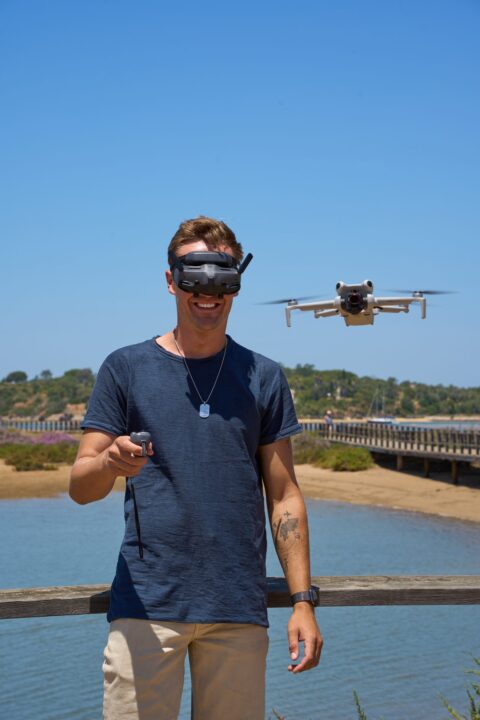
Albania doesn't have strict drone regulations compared to EU countries. Officially, you need a permit from the Albanian Civil Aviation Authority (AACAA) for every drone. In practice, this is almost never checked for small drones under 250 grams (like my DJI Mini 5 Pro). Nevertheless, I sent an email to the AACAA beforehand and received a general flight permit within three days.
No-fly zones: airports, military bases, and directly over UNESCO World Heritage sites (Berat Fortress, Gjirokastra Fortress). In practice, I flew from outside the fortress walls and had no problems whatsoever.
What daily budget is suitable for your Albania holiday?
In short: For a backpacking trip, you can expect to spend €30–50 per person per day, while a standard budget including a mid-range hotel, restaurants, and a rental car will cost €60–90. More comfort with a boutique hotel, upscale restaurants, and activities will cost between €120 and €180 per person per day.
This allows you to tailor your travel budget to your personal style more effectively than with a single fixed amount. A backpacker budget typically includes hostels, self-catering, and public transport. The standard option combines a mid-range hotel with restaurants and a rental car. The comfort budget covers a boutique hotel, upscale restaurants, and activities; for a premium resort, private yacht, and three-star restaurants, the luxury budget starts at €250 per day.
| Travel style | Per day | Including. |
|---|---|---|
| Backpack | 30–50 € | Hostel, self-catering |
| Standard | 60–90 € | Hotel, car |
| comfort | €120–180 | Boutique hotel |
| luxury | from €250 | Resort, Yacht |
The price ranges also show which decisions have the greatest impact on the budget: accommodation, food, and transportation all change along with the travel style. Those who plan individual days differently can combine the categories as a guide, instead of setting the entire trip to a single standard.
Additional costs for beach, transfers and attractions
Besides the hotel, food, and rental car, a few smaller expenses need to be factored into your planning. On most Riviera beaches, two sun loungers with an umbrella cost €10–20 for a full day. In premium beach clubs in Ksamil, the daily rate can reach up to €40. If you're not driving yourself between towns, you can use a furgon; a ride in this shared taxi costs €5–10.
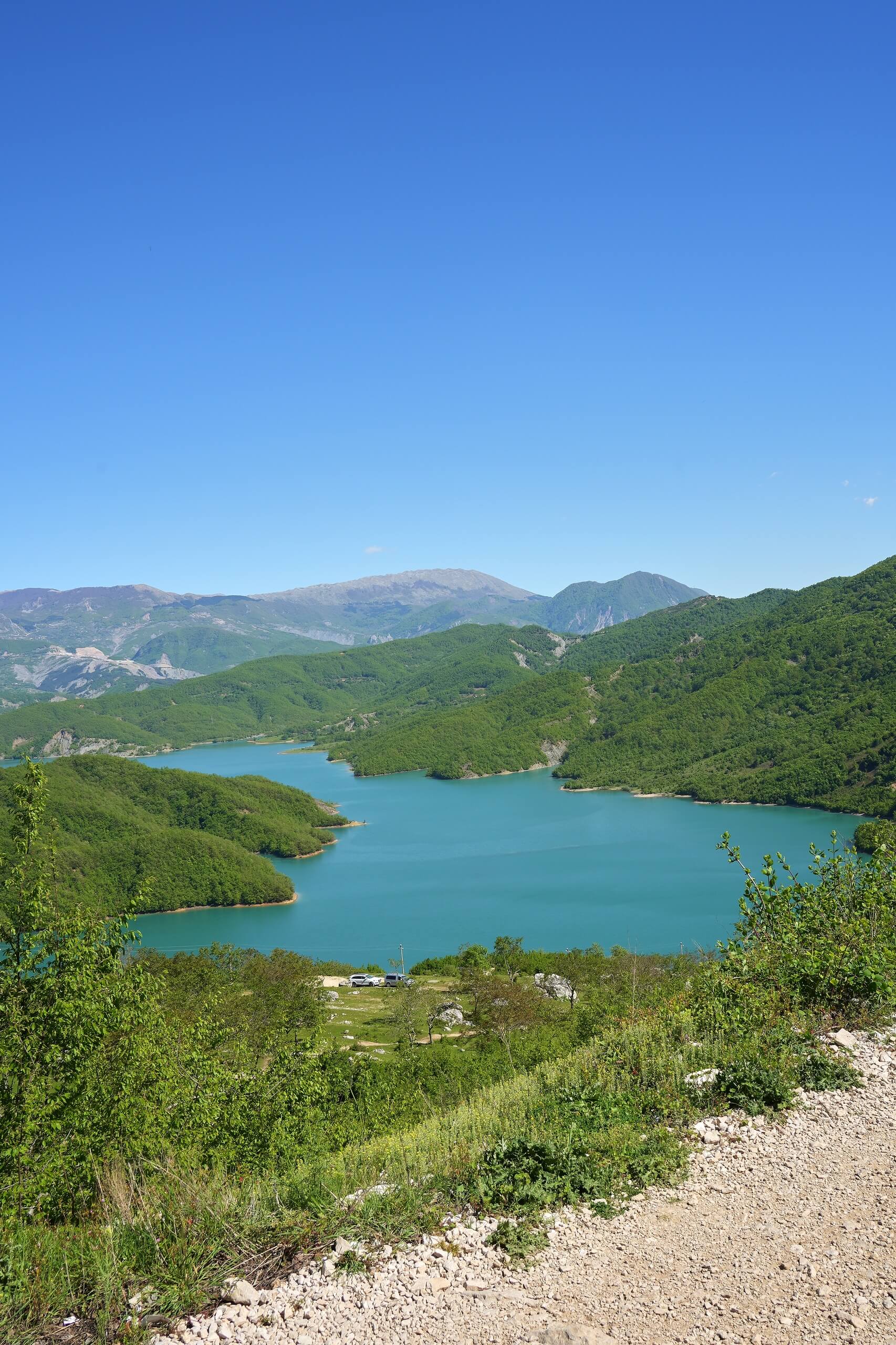
Individual sights can also be planned in advance. As of 2026, entry to Butrint costs €10, as does Bunk'Art in Tirana. Theth National Park costs €5, and the ferry ride across Lake Komani costs €10. For a road trip, diesel fuel at €1.60 per liter is an additional expense.
These expenses don't necessarily occur every day of your trip. Therefore, a separate list is helpful for a transparent calculation: beach days, planned entrance fees, van rides, and the kilometers driven. This way, it remains clear which expenses are fixed to the itinerary and which depend on the chosen activities. In my 14-day budget, activities and entrance fees combined amounted to €45; parking fees, tips, and laundry totaled €35.
Adjust travel duration and route to the budget
The length of the tour determines not only the number of overnight stays but also which regions and driving routes are included. The compact seven-day route leads from Tirana via Berat to Saranda and Ksamil, then back to Tirana via Gjirokastra. It includes one night in Tirana, one in Berat, three in Saranda or Ksamil, and one in Gjirokastra; the Albanian Alps are not included in this itinerary.
The ten-day itinerary begins with one night in Shkodra and two nights in Theth or the Alps. This is followed by one night each in Tirana, Berat, and Gjirokastra, and three nights in Saranda or Ksamil. The 14-day option builds upon this: two to three additional days on the Riviera, including Himarë and Dhërmi, an extra day in Tirana, and excursions to the Blue Eye and Butrint extend the trip.
| Length of time | focus | Additional information |
|---|---|---|
| 7 days | Culture and beach | without the Alps |
| 10 days | Mountains, culture, beach | with Theth |
| 14 days | More Riviera | Tirana and excursions |
For seven to ten days, flying and renting a car works well together. A rental car from Tirana airport is available from around €20–25 per day. Those renting a campervan locally can find offers from €45 per day; this option is geared towards two-week trips focusing on Albania.
Related to this: Albania travel report, Travel destinations in spring.
For Tourism Boards and brands: If you want to showcase a destination like this with your own travel content, you can find information about the process and services on the website. Book a Travel Content Creator.
FAQ — Albania Costs and Travel
Do I, as a German citizen, need a visa for Albania?
No. Germans, Austrians, and Swiss citizens can enter Albania visa-free with a valid identity card or passport and stay for up to 90 days. You'll receive an entry stamp at the border—that's it. No forms, no fees. Albania is not an EU member, but the entry requirements are straightforward. Important: Your ID should be valid for at least six months, even though this isn't legally required—some border guards check more closely. When entering by car (e.g., from Montenegro or North Macedonia), the waiting time at the border is usually less than 30 minutes outside of peak season.
What currency does Albania use?
The official currency is the Albanian Lek (ALL). The exchange rate is roughly 100 Lek per Euro, making mental arithmetic extremely easy—simply divide by 100. ATMs are available in all major cities and tourist areas; however, they can be scarce in smaller villages and remote mountain regions, so it's best to withdraw cash in advance. Credit cards (Visa, Mastercard) are accepted in hotels, car rental companies, and larger restaurants, but you'll always need cash at markets, street stalls, small cafes, and private accommodations. I recommend carrying 5,000–10,000 Lek (approximately €50–100) in cash at all times—especially if you're venturing off the beaten track.
Can you pay with Euros in Albania?
In heavily touristed areas like Saranda, Ksamil, and some accommodations in Tirana, euro banknotes are sometimes accepted—but the exchange rate is almost always worse than at official ATMs. If you pay with euros, you'll often only receive 95–98 lek instead of the usual 100+. My tip: Withdraw lek directly from an ATM and ideally use a card without foreign transaction fees (e.g., Revolut, N26, or DKB)—that way you pay the real exchange rate without any markup. Currency exchange offices exist in the cities, but they are mostly unnecessary and don't offer better rates than ATMs. Larger bills (500-euro notes) are almost never accepted.
What is the internet situation like in Albania?
The internet in Albania pleasantly surprised me—it's significantly better than expected. In cities like Tirana, Berat, Gjirokastër, and Saranda, you have stable 4G reception. A local prepaid SIM card from Vodafone Albania or One Albania with 10 GB of data costs around €5 and is available at kiosks or mobile phone shops in the city center. You'll need your passport for activation. Reception can be weak in remote mountain regions like Theth or Valbona, but that's to be expected in such areas. Wi-Fi quality in accommodations varies: budget hostels sometimes have slow Wi-Fi, while mid-range hotels generally offer good connections. Therefore, Albania is perfectly suitable for content creators and remote workers.
What is the best time to travel to Albania?
My clear recommendation: May–June or September–October. This is the absolute sweet spot. In spring, the landscape is still lush and green, temperatures are a pleasant 22–28 degrees Celsius, and there's still plenty of time for tourists—you can get a table at a restaurant with a view without waiting and stretches of beach without the crowds. September–October offers the same advantages, plus the warmest seawater of the year (over 24 degrees Celsius) and consistently sunny days without extreme heat. In contrast, in the height of summer (July–August): temperatures reach up to 38 degrees Celsius on the coast, beaches in Ksamil and Saranda are packed, and accommodation prices rise noticeably. In winter (November–March), the coast is practically deserted—the mountainous regions like Theth are partially snow-covered, beautiful for solitary hikes, but not ideal for a beach holiday.
Is Albania suitable for vegans?
Honest answer: It's possible, but it requires some initiative. Traditional Albanian cuisine is heavily meat-based—Tave Kosi (baked lamb with yogurt), Qofte (grilled meatballs), and all sorts of kebabs are ubiquitous. Vegetarians can easily get by with salads, vegetable stews (Gjella), and börek with cheese or spinach. It's more difficult for vegans in smaller towns: cheese is included in many dishes, and for some restaurateurs, "no meat" simply means "less meat." In Tirana, there are now several dedicated vegetarian and vegan restaurants, especially in the trendy Bloku district. In Saranda and along the Riviera, you'll find more international cuisine. My practical tip: Fresh fruit and vegetables from the market are incredibly cheap and of high quality in Albania—you can easily get by without relying on restaurants.
What is a reasonable daily budget for Albania?
For a backpacking trip, the budget is €30–50 per person per day. This includes hostel accommodation, self-catering, and public transport.
How much does a standard vacation cost per day?
With a mid-range hotel, restaurant meals, and a rental car, you can expect to spend €60–90 per person per day. This is a guideline for this style of travel, not a fixed price.
What entrance fees should I expect?
Butrint and Bunk'Art each cost €10 to enter, Theth National Park €5. The Komani Lake ferry also costs €10 per person.
How much do sun loungers cost on the Albanian Riviera?
On most Riviera beaches, two sun loungers with a parasol cost €10–20 for the whole day. In premium beach clubs in Ksamil, prices can reach up to €40 per day.
Which route is suitable for seven days?
The compact route connects Tirana, Berat, Saranda or Ksamil and Gjirokastra. It focuses on culture and beaches; the Albanian Alps are not included in this version.
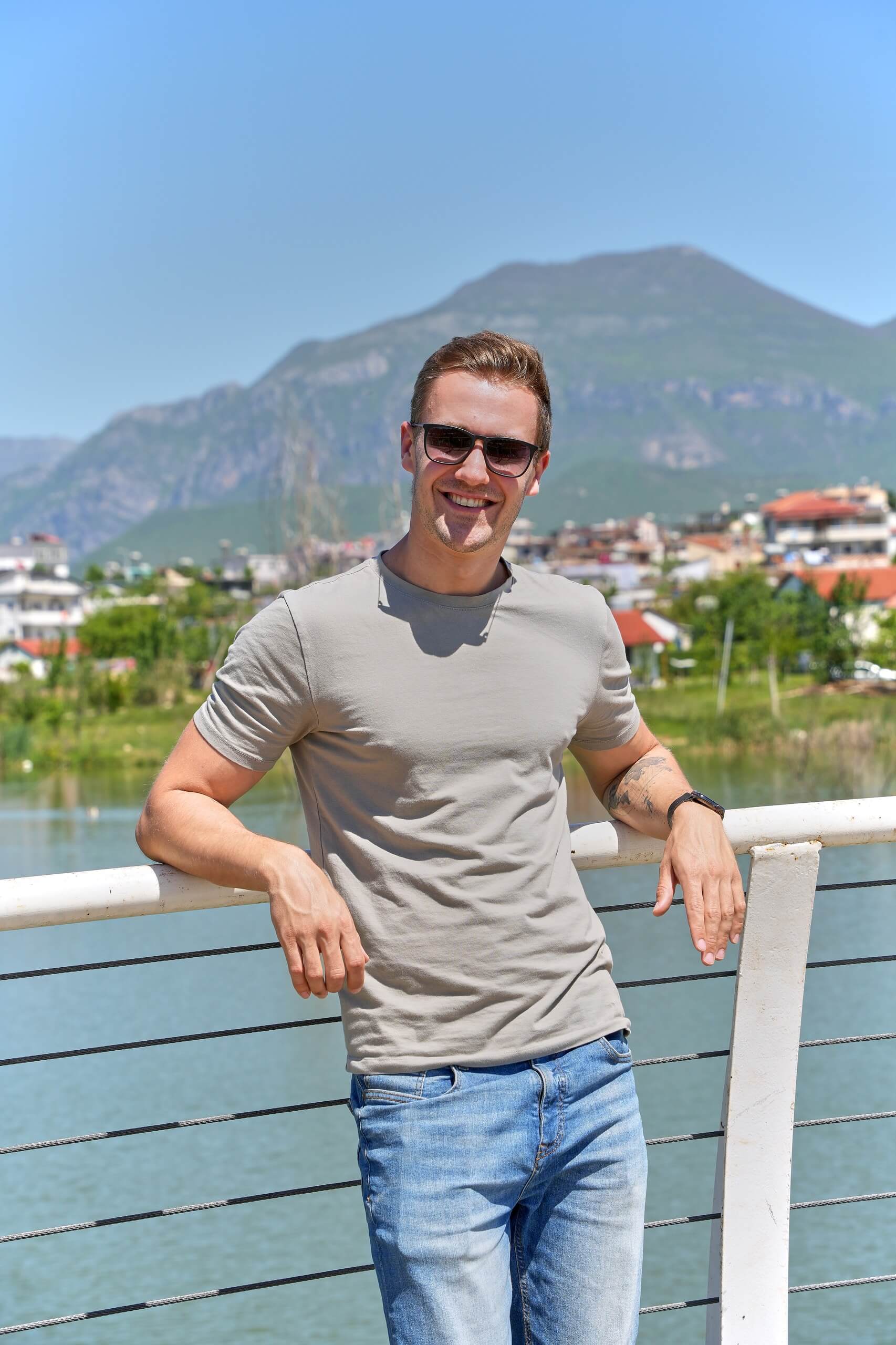
Max Haase
Travel Content Creator · Drone Photographer · Visual Storyteller
Since over 10 years professional travel creator with over 4 million followers. Specializing in high-end tourism board collaborations and visual travel storytelling.
 German
 English