
Basque Country Travelogue — San Sebastián, Bilbao & Coast
My Basque Country travelogue — San Sebastián, Bilbao, and the wildest coastline in Europe. In November 2023, I explored the Basque Country in northern Spain: from the world-famous cuisine in San Sebastián about the architectural masterpiece Guggenheim Museum in Bilbao to the dramatic coast at San Juan de Gaztelugatxe. In this guide, I share my honest experiences, the best spots, costs, and specific tips — especially for travelers who want to explore the Basque Country on their own.
Spain and I — that usually means sun, beach and kitesurfing. But this Basque Country It has about as much in common with Spain as Munich does with Mallorca: nothing. Green mountains, a rugged Atlantic coast, its own language, its own culture, and the best food I've ever had in Spain. Late November isn't the most obvious time to travel, but that's precisely what made the trip so special—hardly any tourists, authentic encounters, and prices that would be unthinkable in peak season.
Why the Basque Country? My expectations vs. reality
To be honest, I underestimated the Basque Country for a long time. In my mind, it was "the north of Spain where it rains a lot." That's true—but it's only half the story. The Basque Country is a own world. The Basques have their own language (Euskara), a completely unique culinary tradition, and a self-confidence that you can feel in every bar and on every street corner.
What surprised me most was the combination of World-class gastronomy (San Sebastián has the highest density of Michelin stars per square meter in the world), spectacular nature and cool urban culture in Bilbao. For content creators, the region is an absolute dream — the drone footage of the coast is among my best ever.
San Sebastián — Europe's secret food capital
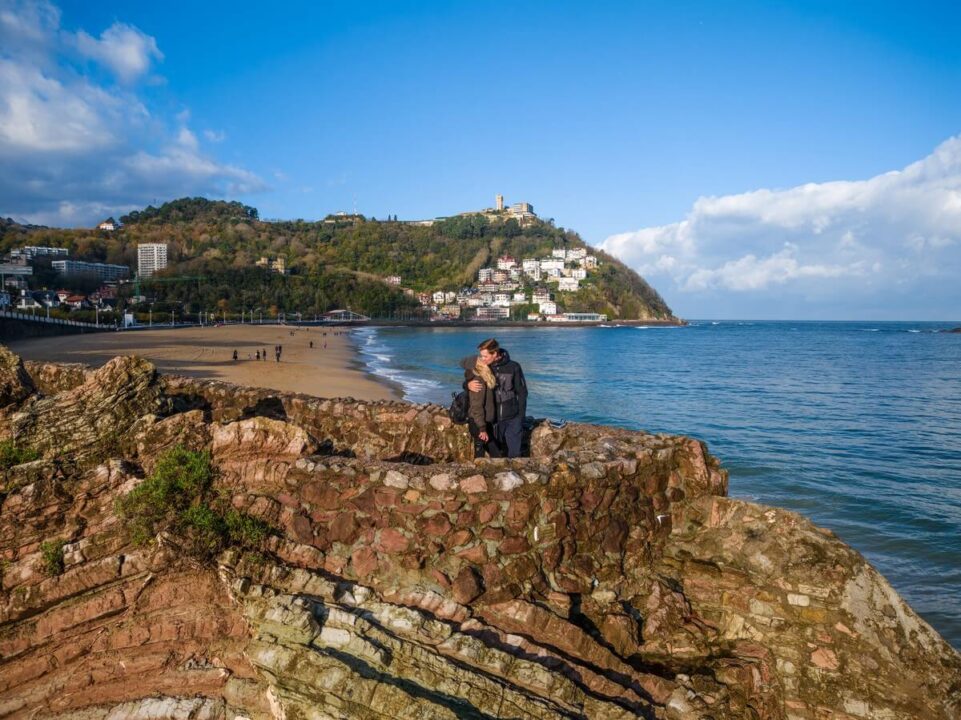
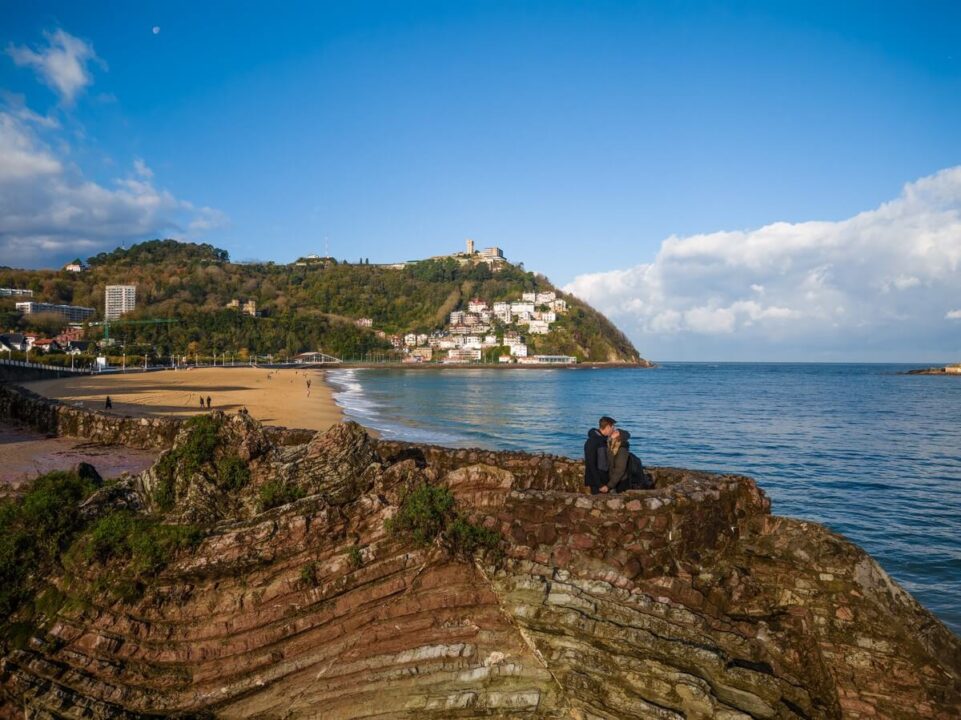
San Sebastián (Donostia in Basque) is the place that impressed me the most. The city is perfectly situated in a shell-shaped bay, framed by the mountains Monte Urgull and Monte Igueldo. La Concha, the city beach, is regularly listed as one of the most beautiful city beaches in Europe — and rightly so.
But the real star is the food. In the Old Town (Parte Vieja) The pintxos bars line up like pearls on a string. Pintxos are the Basque version of tapas—but more elegant, creative, and often more elaborate than a main course in a regular restaurant. My system: three bars per evening, two or three pintxos in each, and a glass of wine. Txakoli (local white wine, which is theatrically poured into the glass from a height).
The best pintxos bars I've tried:
- Bar Nestor — Famous for the best tomato salad in the world (no joke) and the Txuleta steak. Come at 1 p.m., it's quiet before then.
- La Cuchara de San Telmo — Warm pintxos on par with a Michelin-starred restaurant. The foie gras with apple is an experience.
- Gandarias — My favorite for classic pintxos. The counter is a work of art made of food.
- A Fuego Negro — Modern, creative, sometimes a little crazy. Perfect after 10 pm.
My tip: Never go to a restaurant with a set menu. Pintxos bars are better, cheaper, and you can see what you're getting. €8-12 per bar for 2-3 pintxos plus a drink — a full evening costs €25-35. That's a bargain for San Sebastián.
San Juan de Gaztelugatxe — The Game of Thrones spot
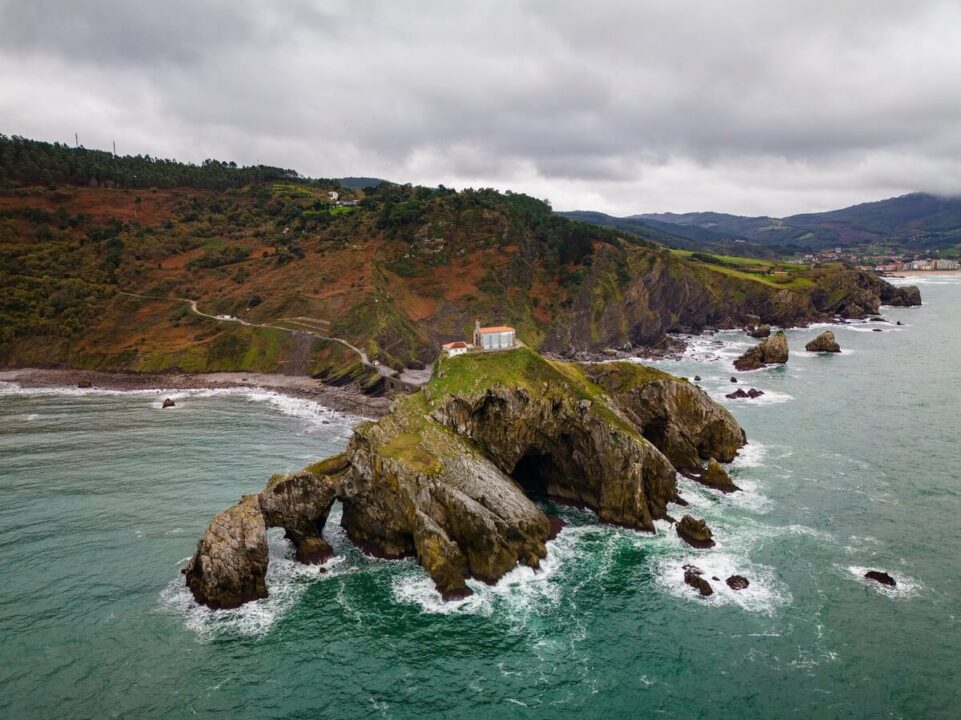
If you knew only one image of the Basque Country, it would probably be San Juan de Gaztelugatxe. This small island with the chapel at its summit, connected by a dramatic stone bridge and 241 steps, became world-famous as a filming location for Game of Thrones („Dragonstone“).
I went early in the morning—at 8:30 the parking lot was still almost empty. That's a huge advantage at the end of November. In the summer, you'd be in a queue. The walk down and across the bridge takes about 20 minutes. Once you get to the top, ring the bell three times—it's supposed to bring good luck.
The Drone footage The views from here are absolutely breathtaking. The combination of the turquoise Atlantic, rugged cliffs, and the solitary chapel is unique. I flew the DJI Mini 5 Pro and took some of my best shots ever. Important: Flying drones is allowed here, but respect other visitors and nature — don't get too close to the cliffs and birds.
Directions: From Bilbao it's about a 35-minute drive via the BI-2101. The road is winding but well-maintained. Free parking is available at the Mirador viewpoint.
Bilbao — From industrial behemoth to cultural metropolis
Bilbao has undergone one of the most dramatic transformations in the history of European cities. As recently as the 1990s, it was a gray industrial city. Then, in 1997, came the Guggenheim Museum —and everything changed. The building, designed by Frank Gehry and made of titanium, glass, and limestone, looks like a landed spaceship and has transformed Bilbao into a world-class destination.
I spent half a day at the museum and didn't regret a single minute. The architecture alone is worth the visit—both inside and out. The exhibitions change regularly; when I was there, there was a massive installation by Olafur Eliasson. Admission: €16 (cheaper online), closed on Tuesdays.
But Bilbao has more than just the Guggenheim:
- Casco Viejo — The old town with its „Seven Streets“, small shops, pintxos bars and the cathedral.
- Mercado de la Ribera — Europe's largest covered market hall. Fresh food downstairs, a bar upstairs with a view over the river.
- Puente Zubizuri — Santiago Calatrava's white pedestrian bridge. Architecturally impressive, but quite slippery when it rains.
- Artxanda Funicular — Funicular railway up the local mountain. The view over Bilbao at sunset is fantastic.
Basque Coast — Road trip between the Atlantic and the mountains
The biggest mistake you can make in the Basque Country: Only visiting San Sebastián and Bilbao. Coastal road The route between the two cities is one of the most beautiful I've ever driven. Rugged cliffs, hidden coves, small fishing villages — every bend reveals a new panorama.
My highlights on the coastal route:
- Zumaia — Here you'll find the flysch, millions-of-years-old rock strata that look like an open book. An absolute must-see for geology nerds, but also visually stunning.
- Getaria — A small fishing village, home of fashion designer Balenciaga. The grilled fish at the harbor is an experience. Try the Txakoli from the vineyards above the village.
- Bermeo — The starting point for Gaztelugatxe. An authentic fishing village without tourist traps.
- Mundaka — A world-famous surf spot. Even if you don't surf, the view of the wave from the harbor is worthwhile.
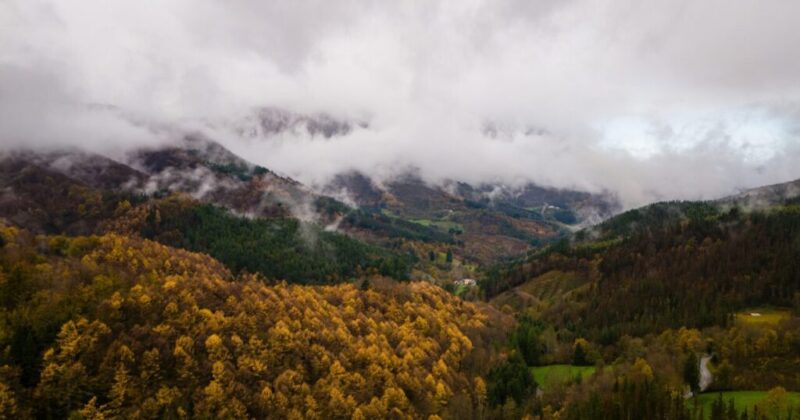
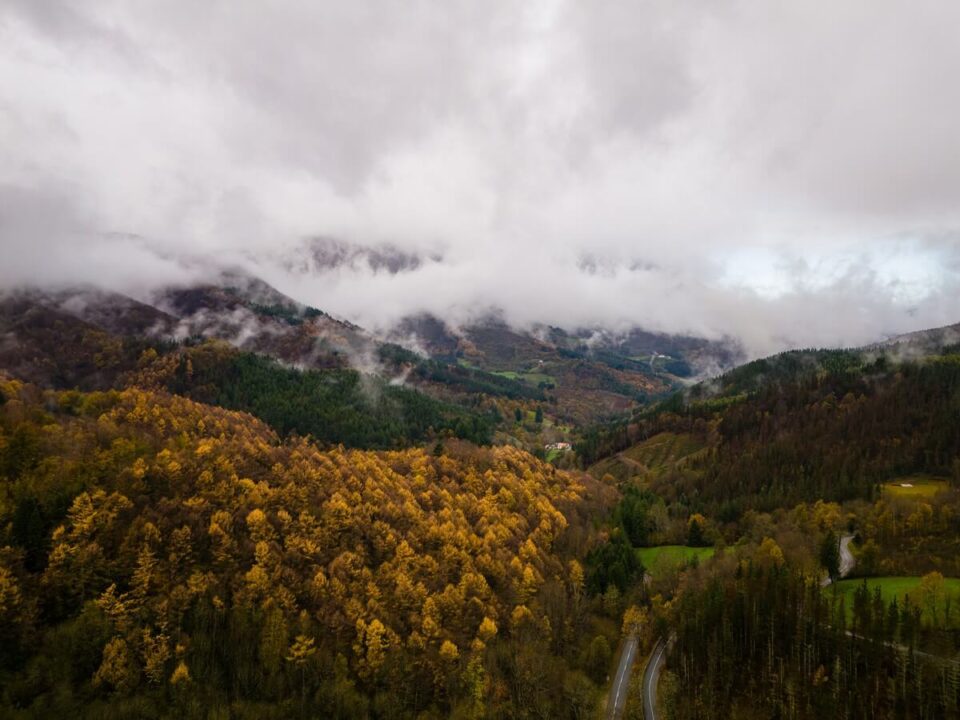
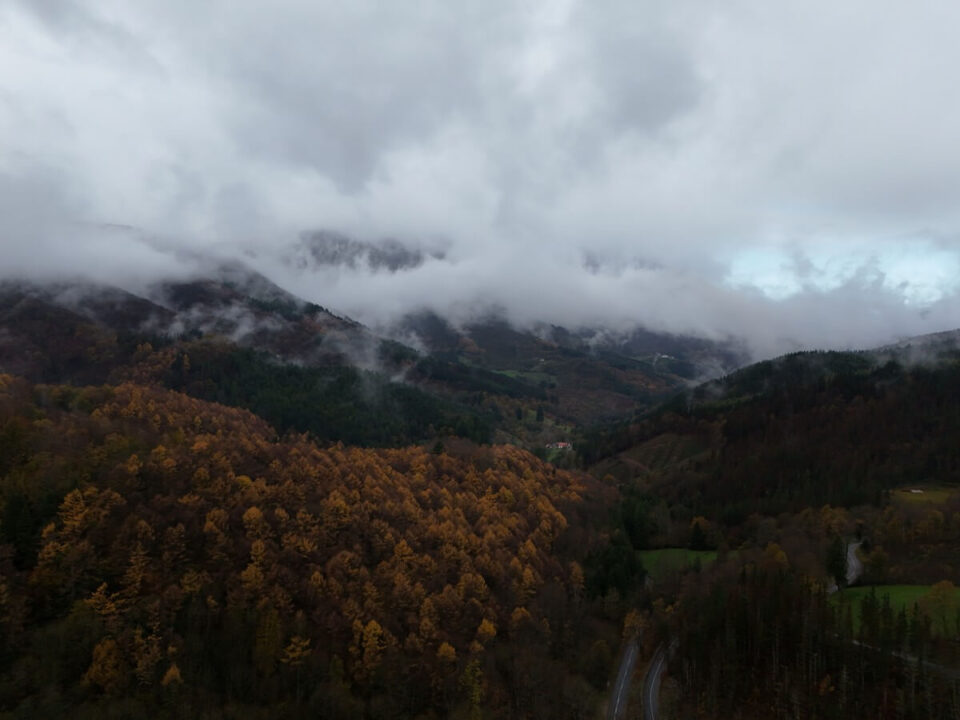
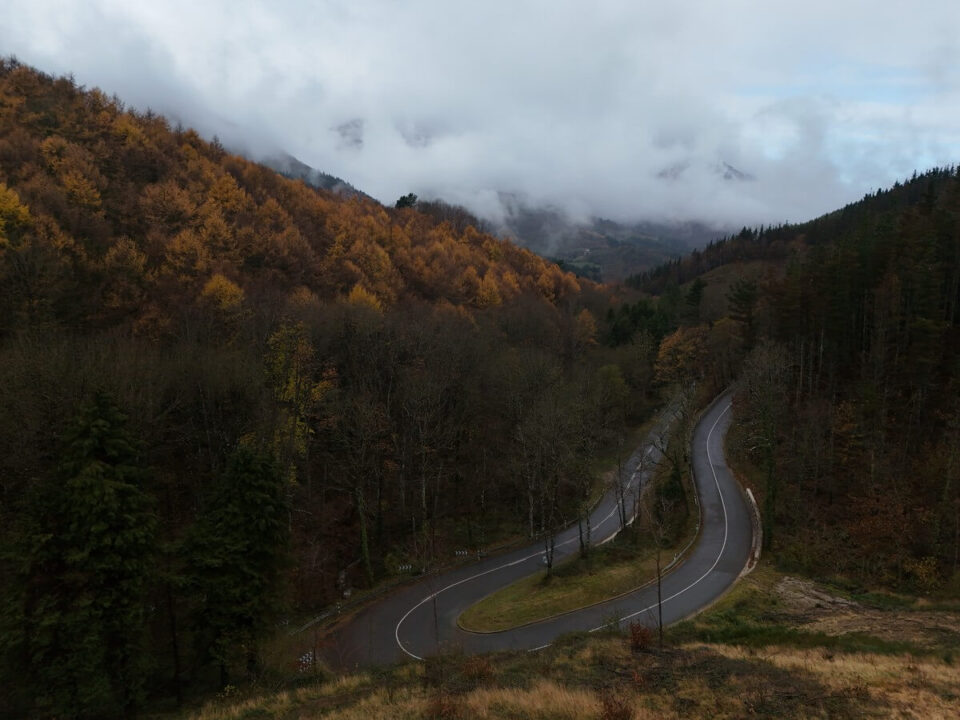
Further inland, it becomes truly green. The Basque mountains are more reminiscent of Ireland than Spain. Autumn leaves, wisps of fog over the valleys, scattered Caserios (Traditional Basque farmhouses with the typical half-timbered construction). The landscape is a dream for drone photography — the winding mountain roads look fantastic photographed from above.
Rioja Alavesa — a wine region in the Basque style
What many don't know: Part of the famous Rioja wine region It is located in the Basque Country. Rioja Alavesa This is the northern, Basque-administered part — and in my opinion the most interesting. The combination of Basque wine culture and Spanish Rioja tradition creates something unique.
I took a wine cellar tour in Laguardia I visited a medieval village on a hill, beneath which centuries-old wine cellars stretch. The tasting convinced me: Basque Rioja is fuller-bodied and more honest than the mass-produced, commercial Rioja from the supermarket.
I took the drive through the vineyards by Segway I did it. It sounds touristy, but it was actually fantastic — you get to vineyards that would otherwise only be accessible on foot, and the speed is perfect for taking photos. Cost: about €40 for 2 hours.
Cost overview — What does the Basque Country cost?
The Basque Country is more expensive than the Spanish average, but cheaper than Paris or London. Here's my actual cost overview for 6 days:
| category | Cost per day | Total (6 days) |
|---|---|---|
| Accommodation (3 stars) | 70-100 € | ~500 € |
| Eat (Pintxos + Restaurants) | 35-50 € | ~250 € |
| rental car | 30-40 € | ~200 € |
| petrol | ~10 € | ~60 € |
| Activities | 15-25 € | ~100 € |
| Flight (Frankfurt-Bilbao) | — | ~180 € |
| IN TOTAL | ~1.290 € |
Money-saving tip: During the off-season (November-March), accommodations are €30-50 cheaper. I paid €75 per night for a good double room in San Sebastián—unthinkable in August. Pintxos hopping is also always cheaper than eating at restaurants with a menu.
Drone flying in the Basque Country — rules & best spots
Spain has fully adopted the EU drone regulations since 2024. With my DJI Mini 5 Pro (under 250g, class C0) I am allowed to fly in the „Open Category“ A1 as long as I do not fly over crowds of people and near airports.
My best drone spots in the Basque Country:
- San Juan de Gaztelugatxe — THE spot par excellence. Fly in the morning at low tide, then you'll see the rock formations under the bridge.
- Coast between Zumaia and Deba — The Flysch cliffs are spectacular from above.
- Ondarroa Beach (San Sebastian) — Beach and city in one shot. Around 9 a.m. there's hardly anyone on the beach.
- Rioja Alavesa vineyards — Autumn vineyards from above, with the mountains of the Sierra de Cantabria in the background.
Danger: There may be local restrictions in nature reserves (especially along the coast). Always check the regulations before flying. ENAIRE app checken — that's the official Spanish airspace app.
My route — 6 days in the Basque Country
Here is my suggestion for a 6-day round trip with rental car:
Days 1-2: San Sebastián. Old Town, La Concha Beach, Monte Urgull, pintxos tour through the Parte Vieja. On the second day, Monte Igueldo (funicular up, hike down) and watching surfers at Zurriola Beach.
Day 3: Coastal route heading west. Zumaia (flysch), Getaria (txakoli + grilled fish), Bermeo. Overnight in Bermeo or Mundaka.
Day 4: Gaztelugatxe + Bilbao. In the morning, visit Gaztelugatxe (arrive before 9 a.m.!), then continue to Bilbao. In the afternoon: Guggenheim Museum, Casco Viejo (Old Town), Mercado de la Ribera (Ribera Market).
Day 5: Bilbao + Rioja Alavesa. Morning: Artxanda Funicular for the panoramic view. Then drive to Rioja Alavesa — Laguardia, wine cellar tour, tasting.
Day 6: Vitoria-Gasteiz. The often overlooked Basque capital. Medieval old town, street art, and the greenest city in Spain (European Green Capital 2012). Then back to Bilbao airport.
Practical tips for the Basque Country
- Best time to travel: May-June and September-October. November also works, but expect rain. July-August is expensive and crowded.
- Rental cars: Highly recommended. The coastal roads and mountain passes are what make a road trip truly special. Book via Comparison portals for the best prices.
- Language: All signs are bilingual (Spanish + Basque). Spanish is sufficient everywhere, but a "Eskerrik asko" (thank you) in Basque is extremely well received.
- Pintxos etiquette: Order at the counter, not at a table. Pay at the end; they count the toothpicks/napkins. Tipping is not customary.
- Weather: Always carry a rain jacket. The weather changes every 30 minutes — from rain to sun and back again.
- Money: Card payments work almost everywhere, but older people sometimes have trouble in small pintxos bars. Having €50 in cash won't hurt.
- Arrival: Bilbao Airport (BIO) is operated by various airlines directly flown in. Alternatively, Biarritz (France) for the eastern Basque Country.
FAQ — Frequently Asked Questions about the Basque Country
Is the Basque Country safe?
Absolutely. The Basque Country is one of the safest regions in Spain. The usual precautions against pickpockets in San Sebastián and Bilbao are perfectly sufficient.
How many days does it take to visit the Basque Country?
A minimum of 4 days, ideally 6-7 days. With less than 4 days you have to choose between San Sebastián and Bilbao — and that would be a shame.
Is the Basque Country worth visiting in winter?
Yes — if you don't mind occasional rain. The advantages: Fewer tourists, lower prices, autumnal colors in the mountains, and the pintxos bars are just as good as in summer.
Do I need a rental car?
Not for San Sebastián and Bilbao individually. But for the coastal route and Rioja Alavesa, you definitely need a car. buses They connect the capital cities, but the beautiful coastal towns are difficult to reach without a car.
What is the difference between pintxos and tapas?
Pintxos are a Basque tradition—small bites on bread or toothpicks, often artfully arranged. Tapas are served, pintxos you choose yourself at the counter. And honestly, pintxos are usually better.
Can I fly a drone in the Basque Country?
Yes, under EU drone regulations. Drones under 250g (like the DJI Mini 5 Pro) are the easiest to fly. Always check the ENAIRE app before flying and don't fly in nature reserves.
My conclusion — Is the Basque Country worth visiting?
Clear answer: Yes, absolutely. The Basque Country is one of Europe's most underrated regions. Its blend of world-class food, dramatic coastline, cool urban culture in Bilbao, and authentic Basque identity is unique. It's not the Spain you know from Mallorca—it's better.
For me, it was a trip that exceeded my expectations in every way. Drone footage Those from the coast are among my absolute favorites, which Pintxos in San Sebastián were the best meals I've had on my trips to Spain, and Bilbao showed me how a city can reinvent itself.
If you're thinking about it: Do it. And do it in the off-season. You won't regret it.
If you want more Travelogues with drone footage If you want to read or know how I, as a Travel Influencer I'm working — take a look around my blog.
About the author
Max Haase is Germany's most influential travel influencer with over 4.2 million followers. He travels the world with a drone and camera and shares his honest experiences on this blog. For collaboration inquiries: max-haase.com/collaboration
 German
  English