
Northern Spain Road Trip: Sights & Map
A road trip through northern Spain will take you through one of the most underrated regions of Europe – the Atlantic coast of Spain, the green Basque Country, the Cantabrian coast with its rocky beaches, and southwestern France with its Biarritz and Bordeaux. While everyone else flies to Mallorca or Andalusia, you'll be driving through regions where you'll discover the best pintxos culture in the world, UNESCO World Heritage cities, spectacular Atlantic cliffs, and the most famous vineyards in France. I've driven this route twice in a campervan – once in spring and once in autumn – and in this guide, I've compiled the complete Northern Spain road trip, all the sights, a detailed map of Northern Spain to follow, the best insider tips, and all the costs. Whether you have 7, 10, or 14 days: this route works for any time budget.
- Bilbao → Zumaia → San Sebastián → Biarritz → Bordeaux on the map of northern Spain – 450 km along the Atlantic coast, doable in 7, 10 or 14 days.
- Top sights: Guggenheim Museum Bilbao, flysch cliffs Zumaia, La Concha beach San Sebastián, Rocher de la Vierge Biarritz, Place de la Bourse Bordeaux plus Saint-Émilion as a wine region.
- Insider tips for Northern Spain: Getaria (Txakoli vineyards right by the sea), Hondarribia (medieval fishing village), Picos de Europa National Park and the Flysch Route as a geotourism highlight.
- Culinary highlight: San Sebastián has the second-highest number of Michelin stars per capita in the world after Tokyo – plus the best pintxos scene in the Parte Vieja for €2–3 per bite.
- Budget & Best Time to Travel: Budget €60–90 per day for 2 people (frugal) up to €110–160 (restaurants). Best time to travel: May–June and September–October with temperatures of 20–25°C and little rain.
Northern Spain map and route: From Bilbao to Bordeaux at a glance
The classic northern Spain route follows the Atlantic coast from west to east: starting in Bilbao (or further west in Asturias), then along the Cantabrian and Basque coasts via Zumaia, San Sebastián, the French border, Biarritz, Bayonne, and finally to Bordeaux. Total distance: approximately 450 km, which can be covered in 7, 10, or 14 days.
Following the northern Spain route on Google Maps is straightforward, however, for the most scenic sections, you should take the coastal roads instead of the motorway. The AP-8 motorway is a toll road (around €25 from Bilbao to France), while the parallel N-634 is free, much more beautiful, and takes you to every coastal town and fishing village. Expect the journey to take twice as long on the coastal roads – but that's precisely why you're taking a road trip.
The three possible itineraries for your Northern Spain road trip:
- Northern Spain Road Trip 7 Days: Bilbao (2 days) → San Sebastián (2 days) → Biarritz (1 day) → Bordeaux (2 days). Pure highlights, perfect for beginners.
- 10-day road trip through Northern Spain: Same route plus Zumaia Flysch Coast (1 day), Getaria (1 day), and Saint-Émilion (1 day). The sweet spot for most travelers.
- 14-day tour of Northern Spain: Plus 3 days in Asturias (Picos de Europa) in the west and 1 day in the Médoc wine region north of Bordeaux. For nature lovers and wine enthusiasts.
Traveling to Northern Spain from Germany: The shortest route leads via Paris and the French Atlantic coast – 1,600 km from Frankfurt to Bilbao, approximately 16 hours of driving time. I recommend a stopover in Tours or Bordeaux itself, which directly marks the start of the second part of the journey. Toll fees in France for motorhomes up to 3.5 t (Class 2): approximately €110–140 one way. For campervans over 3.5 t, the costs are significantly higher – in this case, the toll-free national roads through the Auvergne region are a better option.
The best order – from personal experience: I recommend west-to-east, from Bilbao to Bordeaux. You start with the architectural highlight, the Guggenheim Museum, work your way through Basque cuisine and culture, cross the border into France for the sophisticated Biarritz, and end with the classic French grand finale in Bordeaux with its wine regions. The reverse direction also works, but the crescendo is better built from Spain to France.
Bilbao sights: Guggenheim, pintxos and Basque culture
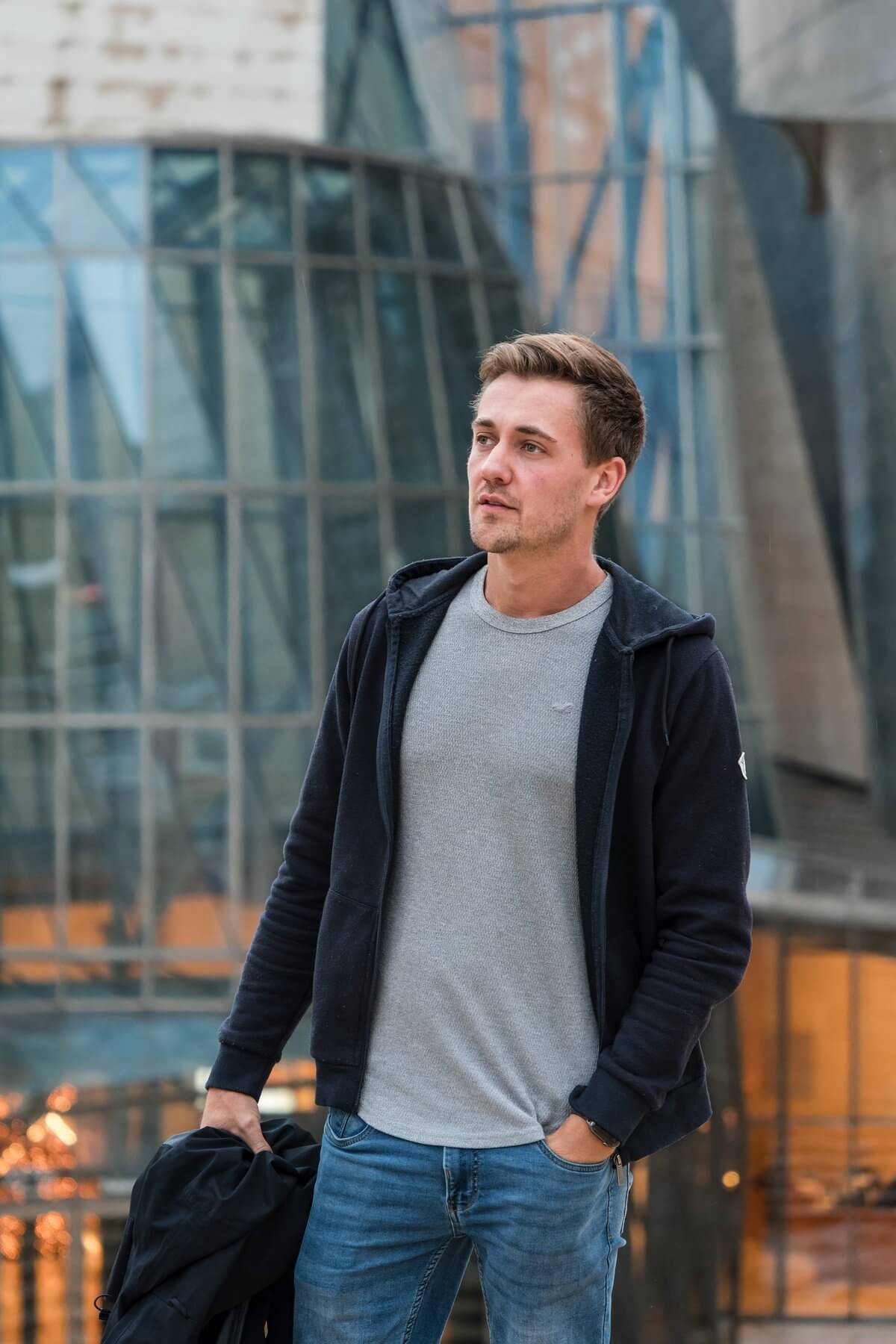
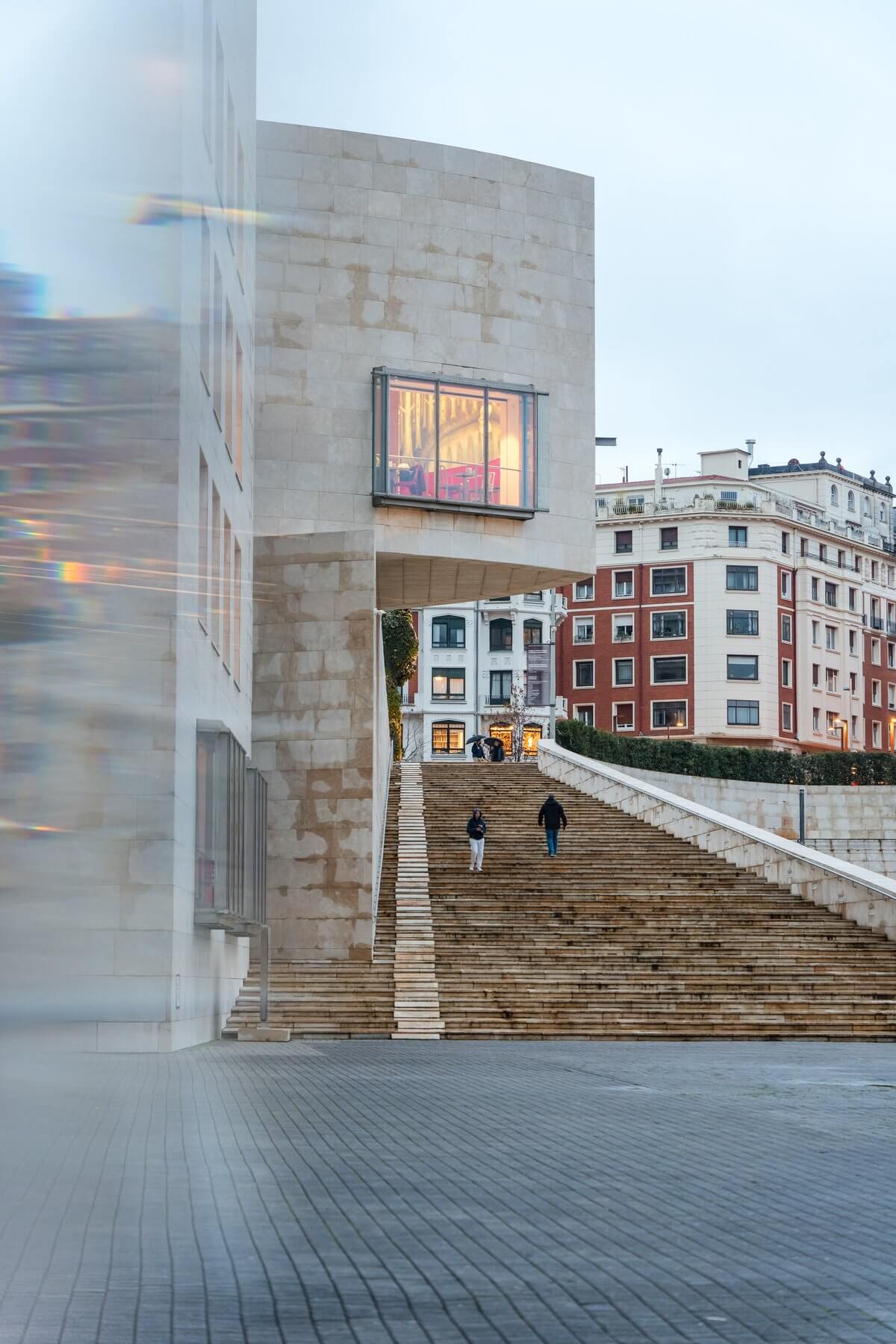
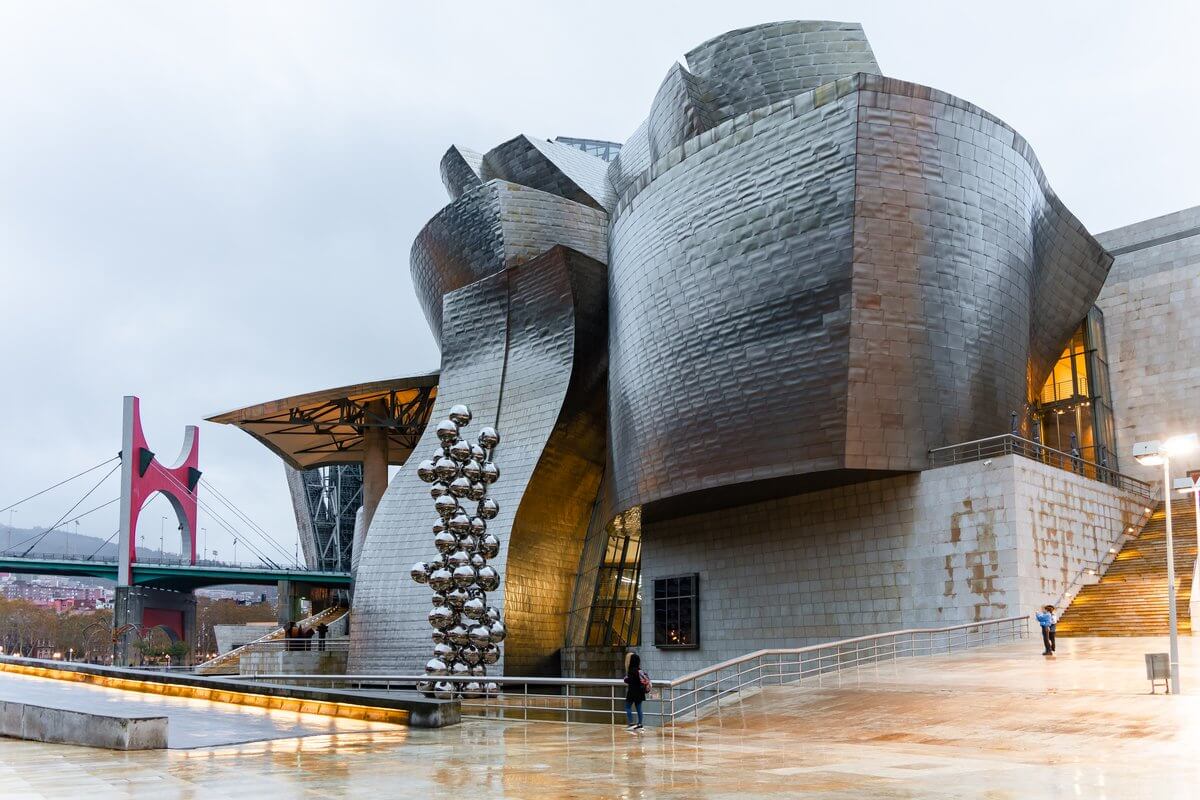
Bilbao is one of the greatest comeback stories in European urban development. Once a drab industrial city with a dying shipbuilding and steel industry in the 1990s, it is now one of Europe's most exciting urban destinations. The turning point: the Guggenheim Museum Bilbao, which opened in 1997 and immediately became a symbol of the city. Frank Gehry's sweeping titanium structure is one of the most important buildings of contemporary architecture and attracts over 1.2 million visitors to the city every year.
Guggenheim Museum Bilbao in detail: Admission €16 (adults), free for children under 12, €9 concessions. The architecture can be fully appreciated from the outside – the most spectacular photos are taken at 8:30 in the morning when the sun bathes the titanium panels in a pinkish-gold glow. Behind the museum stands Jeff Koons's giant flower puppy, Puppy, and in front, Louise Bourgeois' bronze spider, Maman – perfect Instagram spots without an entrance fee. Inside: the permanent collection showcases the world's largest collection of Richard Serra's massive steel sculptures, along with rotating special exhibitions ranging from Kandinsky to Chagall.
Casco Viejo – Bilbao's Old Town: On the other side of the Nervión River lies the Old Town with its heart, the Plaza Nueva. Here, the pintxos scene pulsates. My top bars in the Plaza Nueva: Gure Toki (creative pintxos from €3), El Globo (classics), Sorginzulo (small menu, but every pintxo is excellent). Two to three pintxos per bar with a glass of Txakoli (a crisp Basque white wine) – typical price: €10–15 per bar; hopping through three bars: €35–45 per person. In the evenings, the Plaza Nueva becomes the meeting place for the whole city.
Other Bilbao sights: The Zubizuri Bridge (Santiago Calatrava, 1997) is a pedestrian walkway shaped like a white sail. The Artxanda Funicular (€2.20 one way) takes you to the top of the mountain with panoramic views over the city – best time: sunset. Santiago Cathedral in the old town is a stop on the Camino de Santiago pilgrimage route. For modern architecture: the metro stations by Norman Foster (locals affectionately call the entrances Fosteritos) and the Iberdrola Tower by César Pelli.
Campervan pitches in Bilbao – Top 3:
- Área Sopelana: Free of charge, directly on Sopelana beach, metro connection (20 minutes to the center of Bilbao). Maximum stay 48 hours.
- Camping Sopelana: €28/night, premium facilities, pool, same location as Área.
- Camping Arrien: €25/night, quieter in the hinterland, hiking trails right at the door, 35 minutes by car to the city.
A hidden gem near Bilbao: San Juan de Gaztelugatxe (30 km east of the city) – a small hermitage on a rocky island, connected by a stone bridge with 241 steps. Game of Thrones fans will recognize it as Dragonstone Island. Starting point: San Pelayo parking lot, then a 35-minute hike. Access is limited; book your ticket online in advance (free, but mandatory).
San Sebastián: Culinary capital of Spain and perfect beach
San Sebastián (Donostia in Basque) is considered by gourmets to be the culinary capital of Spain – and, after Tokyo, the city with the most Michelin stars per capita in the world. Over 16 stars for just 186,000 inhabitants. At the same time, Donostia is one of the most beautiful beach cities in Europe, with the iconic, shell-shaped La Concha Bay, framed by two verdant hills. A dream for travelers who want to combine gourmet dining and relaxation.
La Concha – San Sebastián's beach: Playa de la Concha is 1,350 meters long, gently sloping, and perfect for families. While it's lively in the summer, it's never overcrowded – the beach is spacious enough. My favorite spot for photos is the wrought-iron railing along the western section of the promenade, beyond which the city rises with its elegant Belle Époque architecture. At the western end of the bay lies Ondarreta, a quieter beach featuring the famous sculpture ensemble El Peine del Viento (The Comb of the Wind) by Eduardo Chillida.
Pintxos in the Parte Vieja – Spain's best culinary district: The old town between the port and the Urumea River is the heart of Basque cuisine. Top bars (no reservations, just walk in and try):
- La Cuchara de San Telmo: Traditional braised pintxos, braised beef cheeks, and mushroom risotto are iconic. €3.50–€6 per pintxo.
- Avant-garde cuisine, molecular techniques, spectacular presentation. From €4 per pintxo, but the creativity is unparalleled.
- Borda Berri: Honest Basque cuisine, Carrilleras (pork cheeks) are among the best in Spain.
- Bar Nestor: Famous for two things – the best tomatoes in Spain and Basque T-bone steak (Txuleton). Take a number and wait.
- A Fuego Negro: Young, creative, bold – pintxos you wouldn't expect.
A complete pintxos evening with 3-4 bars, 2-3 pintxos each, and a glass of Txakoli or red wine costs €35-55 per person. This is one of the best deals in fine dining in Europe.
Three-Michelin-starred restaurants in San Sebastián (for special occasions): Arzak (three stars since 1989, Juan Mari Arzak and his daughter Elena), Akelarre (Pedro Subijana, spectacular clifftop location), Martín Berasategui (Lasarte, one of the world's top chefs). Tasting menus €280–350 per person, reservations required 2–3 months in advance.
Monte Igueldo and Monte Urgull: The two hills that frame the bay offer the best photo opportunities. Monte Igueldo to the west can be reached by a historic funicular railway dating from 1912 (€3 one way) – at the top, there's a small amusement park and the iconic bay panorama. Monte Urgull to the east can be reached on foot in 20 minutes free of charge; at the top, you'll find a statue of Jesus and a small fortress.
Campervan pitches in San Sebastián:
- Camping Igueldo: €32/night, located on Monte Igueldo, bus line 16 goes directly to the old town. Highly recommended.
- Camping Orio: €28/night, located a little outside in Orio, but with its own beach and river.
- Camping Igara: €25/night, cheapest option, smaller but centrally located.
Zumaia and the Flysch Coast: Geotourism and spectacular cliffs
Between Bilbao and San Sebastián lies one of northern Spain's most underrated hidden gems: the Flysch Coast near Zumaia. The rock strata here form perfectly horizontally striped cliffs that document over 60 million years of Earth's history. For geologists, these cliffs are the "book of the Earth"—for travelers, it's one of the most spectacular stretches of coastline in Europe.
Hiking along the Flysch Route: The best hike starts at the Ermita de San Telmo in Zumaia. From there, a marked trail (GR-121) leads along the cliffs towards Deba – a total of 11 km one way. Allow 3–4 hours; sturdy footwear is essential. The most spectacular section is right at the beginning; the first 3 km offer the best views. The cliffs drop over 100 m vertically into the Atlantic – a highlight for drone pilots.
Zumaia's main beach lies nestled between flysch cliffs and, at low tide, is one of Spain's most unusual beaches – you walk directly on the exposed rock strata. At high tide, the beach is small, but at low tide, the rocky plateau stretches for several hundred meters. Game of Thrones fans will recognize Dragonstone Cove, where Daenerys lands in season 7.
Getaria – Txakoli vineyards right by the sea: Just 10 km east of Zumaia lies the fishing village of Getaria with its famous Txakoli vineyards. The steep terraces reach almost to the sea, and the young, crisp white wine is the national drink of Basque pintxos culture. Visit the Txomin Etxaniz winery (tour + tasting €12 per person) or the smaller Hiruzta. Getaria itself is also famous for grilled sole – the Kaia Kaipe restaurant offers the best in all of Spain.
Hondarribia – The picturesque border town: At the mouth of the Bidasoa River (on the Basque border with France) lies the medieval fishing village of Hondarribia. Colorful houses with carved wooden balconies, a completely preserved city wall, and a tiny harbor with fishing boats. Calle San Pedro is one of the most photographed streets in Spain – colorful facades with blue, red, and green accents. In Hondarribia, you can eat excellent seafood and enjoy views across to France.
Biarritz: French glamour and surfer's paradise on the Atlantic coast
Just 30 km from San Sebastián, but a completely different world: Biarritz. Once the fashionable seaside resort of European aristocratic families (Napoleon III had the legendary Hôtel du Palais built here as his summer residence), today it's the surfing capital of Europe. The white Belle Époque coastal architecture, the iconic Rocher de la Vierge, and the promenade blend seamlessly with the hustle and bustle of modern surfers, food trucks, and boutique hotels.
Grande Plage and the beaches of Biarritz: Grande Plage is the main beach right in the center – perfect for families, but very crowded in summer. Surfers head south to Côte des Basques, the legendary surf beach with well-graded waves for all levels. Surf schools offer beginner courses from €40 for 2 hours, including board and wetsuit. Plage Miramar to the north is quieter, smaller especially at high tide, but more relaxed.
Rocher de la Vierge – Biarritz's landmark: A rock in the sea, accessible via an iron bridge designed by Gustave Eiffel (yes, the one with the tower). At the top stands a 19th-century white Madonna statue, and the panoramic view of the Atlantic coast is spectacular. Free entry, especially magical at sunset.
Discover the Biarritz Lighthouse and the city: The Biarritz Lighthouse is a 73-meter-high structure dating back to 1834. Climb the 248 steps to the top; admission is €3, and enjoy panoramic views stretching to San Sebastián and the Pyrenees. The old town, with its Art Nouveau villas, is small but charming. Rue Mazagran is the best shopping street, and the Galerie Nevers is the best antiques district.
Culinary delights in Biarritz – Basque meets French: Les Halles de Biarritz is a beautiful market hall in the city center – perfect for picnic shopping with baguettes, cheese, ham, and regional wine. Top restaurants:
- Le Galion: Right on the harbor, fresh seafood, honest prices (menu €28).
- Chez Albert: Traditional Basque cuisine, family-run for decades. Set menu €35.
- Bistrot des Halles: The perfect lunch spot right next to the market hall. Set lunch menu €16 including wine.
- L'Etape: Modern bistro with creative menu, budget €40 in the evening.
Campervan pitches in Biarritz: Parking a campervan in the city center is virtually impossible. The best options:
- Camping Biarritz: €40/night, a 20-minute walk to Grande Plage. Book early in summer.
- Camping Erreka in Bidart: €32/night, 10 km south, quieter, pool, bus every 30 minutes to Biarritz.
- Camping Le Pavillon Royal (Bidart): €48/night, premium camping directly by the sea, 5-star.
Bordeaux: UNESCO World Heritage Site, wine capital and architectural highlight
The grand finale of our Northern Spain tour is a classic French experience: Bordeaux. The entire city center, with its 18th-century neoclassical facades, has been a UNESCO World Heritage Site since 2007. Over the past 20 years, the city has undergone a complete renovation, becoming car-free and connected by a modern tram system – today it's one of France's most elegant cities. Add to that its proximity to some of the world's most famous wine regions: Médoc, Saint-Émilion, and Pessac-Léognan. All of these are reachable in a maximum of 45 minutes by campervan.
Place de la Bourse and the Miroir d'Eau: The Place de la Bourse, with its symmetrical facades dating from 1749, is the most photographed spot in the city. In front of it lies the Miroir d'Eau – the world's largest reflecting pool (3,450 m²), which in summer transforms into a shallow pool every 15 minutes and then back into a perfect mirror. At sunset, it's the most spectacular scene in the city, especially in April and May when the sun sinks perfectly behind the facade.
Grand Théâtre and the Old Town: The Grand Théâtre, built in 1780, is one of the most beautiful opera houses in Europe. Its architect, Victor Louis, later inspired Charles Garnier to design the Paris Opera. Guided tours cost €10, and tickets for an opera or ballet performance range from €25 to €80. From here, Rue Sainte-Catherine runs south – at 1,250 meters, it's the longest pedestrian street in Europe, lined with boutiques, cafés, and street musicians.
La Cité du Vin – The brilliant wine museum: Opened in 2016 on the northern outskirts of the city, this wine museum is an architectural masterpiece – a golden tower in the shape of a wine glass. Inside: the world's most comprehensive interactive exhibition on wine culture. Admission is €22, including a wine tasting on the 8th floor with panoramic views over Bordeaux and the Garonne River. Allow 3 hours; it's perfect for a rainy day.
Saint-Émilion – The romantic wine village as a day trip: 40 km east of Bordeaux lies the UNESCO World Heritage village of Saint-Émilion. A medieval village perched on limestone cliffs, it boasts world-famous red wine (a Merlot-Cabernet Franc blend). The underground Église Monolithe is carved into the rock – the largest underground church in Europe. Wine tasting with a cellar tour at Château Soutard or Château Fonplégade: €25–40 per person. My tip: The market on the Place du Marché is open on Wednesdays and Sundays – perfect for a picnic.
Médoc and Château Tour: North of Bordeaux lie the legendary châteaux of the Médoc: Château Margaux, Château Mouton Rothschild, Château Lafite Rothschild. Visits usually need to be booked several weeks in advance, often with a minimum purchase of one bottle. More affordable options include smaller Cru Bourgeois wineries such as Château Phélan-Ségur (€25 per person including a tasting of four wines).
Campervan pitches in Bordeaux:
- Camping Le Village du Lac: €35/night, directly on the lake in the north of the city, tram line C directly to the center (20 min).
- Camping La Barbanne: €28/night, 40 km east in Saint-Émilion, amidst the vineyards – a dream location for wine lovers.
- Aire de Camping-Car Bordeaux Lac: €12/night, simple but well-equipped, tram to the city center.
Hidden gems of Northern Spain: Where the locals actually go
Beyond the classic tourist attractions of northern Spain, there are many places that even locals still consider hidden gems. Here are some of the most beautiful spots that are missing from most guidebooks:
1. Picos de Europa National Park (Asturias): Spain's oldest national park, 200 km west of Bilbao. Dramatic limestone peaks up to 2,650 m, turquoise mountain lakes (Lagos de Covadonga), deep gorges (Ruta del Cares), and the Basilica of Santa María la Real de Covadonga, the spiritual center of Asturias. An absolute must for a road trip through northern Spain with your own car or campervan, but requires at least 2-3 days. Campsite: Camping El Redondo (€32/night).
2. Coastal town of Llanes (Asturias): 200 km west of Bilbao lies one of the prettiest coastal towns in northern Spain. Colorful breakwaters (Cubos de la Memoria), a medieval old town, and the spectacular Playa de Gulpiyuri beach – an inland beach connected to the sea only by a tunnel. Game of Thrones-esque.
3. Comillas (Cantabria): The only Gaudí building outside Barcelona and Catalonia is located here – El Capricho, an eccentric summer palace with yellow sunflower tiles. There's also the university on the hill and a beach with a wave-breaking wall.
4. Santoña (Cantabria): The Mecca of the Spanish anchovy industry. Here, the world-famous Anchoas de Santoña are produced – the most expensive and best anchovies in the world. A tour of the Don Bocarte factory with tasting costs €10. Plus: one of the longest, least crowded beaches in northern Spain (Playa de Berria).
A 5 km long, golden sandy beach – the longest on the Bay of Biscay. A popular swimming spot for Madrid residents in the summer, often deserted in spring and autumn. Historic center with city walls dating back to the 13th century.
6. Zarautz (Basque Country): Located between San Sebastián and Zumaia, this is the surfing capital of the Basque Country. Its 2.5 km long beach is the longest on the coast, and the surfer pier in the center is a legendary meeting place. Restaurants like Karlos Arguiñano (1 Michelin star) are housed in a castle right on the seafront.
7. Salinas de Añana (Inland Basque Country): Terraced saltworks dating back to the 7th century, 40 km south of Vitoria. A UNESCO World Heritage Site candidate, it produces the hand-picked Sal de Añana, used in the world's finest Michelin-starred restaurants. Guided tour + salt purchase €10.
Costs of a Northern Spain Road Trip: Detailed Budget for 7, 10 and 14 Days
Northern Spain and southwestern France are priced in the upper middle range of Western Europe – significantly cheaper than Scandinavian or Alpine destinations, but more expensive than the Spanish Mediterranean coast or Portugal. I meticulously recorded all expenses on my trips. Here's the complete budget for your northern Spain road trip:
- Pitches in Northern Spain (Basque Country/Cantabria): €22–35/night at campsites, €0–10/night at caravan sites. Average: €22/night with a mix of both.
- Pitches in France (Biarritz/Bordeaux): €30–45/night at campsites, €10–15 at car parks. Average: €32/night.
- Total toll costs for the entire route: Bilbao → Bordeaux round trip including French motorways: €80–120. You can save €40–50 by taking the N-634 (coastal road).
- Spain €1.55/L, France €1.70/L. Total fuel costs for the entire route (excluding arrival/departure): €260–320.
- Pintxos in Spain: €2–3.50 each. A complete pintxos evening with 8 pintxos and drinks: €25–35 per person.
- Restaurants in France: Formule Midi €15–22 for lunch, dinner à la carte €25–45 per person.
- Supermarket self-sufficiency: Mercadona (Spain) and Carrefour (France) are the cheapest chains. Weekly shopping for 2: €75–110.
Total budgets at a glance:
- Northern Spain Road Trip 7 days (2 people): Economical €650-950 | Comfortable €1,100-1,500
- 10-day road trip (2 people): Budget €900–1,400 | Comfortable €1,600–2,200
- 14-day round trip (2 people): Budget €1,200–1,800 | Comfortable €2,200–3,200
Plus €300–500 each for fuel and tolls for arrival and departure from Germany (1 extra weekend for both directions).
Money-saving tips for Northern Spain: The Basque Menú del Día is one of the best value meals in European gastronomy: three courses with bread and wine for €13–18 at lunchtime. The same principle exists in France as the Formule Midi. For an extra €1 per day, you can often get a coffee or dessert. In the evenings, pintxos or self-catering are popular choices.
Best time to travel and practical tips for your Northern Spain road trip
The best time to travel to northern Spain is crucial for the success of your road trip – the region has a significantly different climate than the Mediterranean. Northern Spain and the Basque Country are influenced by the Atlantic: more rain, cooler temperatures, but also more dramatic landscapes thanks to the lush greenery.
Climate by month:
- May to June: 18–23 °C, moderate rainfall, few tourists. Ideal for hiking and city trips. My recommendation: #1.
- July to August: 22–28 °C, largely dry, but significantly more crowded and expensive. Pintxos bars and beaches in San Sebastián are very busy. Camping prices are 20–30% higher.
- September to October: 19–25 °C, stable weather, ideal for surfing (waves are getting bigger again) and grape harvesting in Bordeaux. My recommendation: #2.
- November to April: 8–15 °C, lots of rain (up to 15 rainy days/month). Only recommended for hardcore off-road campers. Prices are cheapest, though.
Regional peculiarities regarding wild camping: In the Basque Country and Cantabria, free camping with a motorhome outside of tourist hotspots is largely tolerated. Strict rules apply in downtown San Sebastián and on the main beaches (Ondarreta, La Concha). In France, free camping is officially prohibited, but is often tolerated in remote regions. Apps like Park4Night, CamperContact, and especially Furgoperfecto provide up-to-date user reviews of tolerated spots.
In Spain, the blood alcohol limit is 0.5 per mille (0.3 for novice drivers), daytime running lights are not mandatory, and low-emission zones exist only in Madrid and Barcelona. France also has a 0.5 per mille blood alcohol limit, but a Crit'Air sticker is mandatory in most major cities (Bordeaux, Paris) – €3.67 online, order in advance (14-day delivery time).
Language: In the Basque Country, Basque (Euskara) is spoken alongside Spanish – a completely non-Indo-European language unrelated to any other language. Don't worry: in tourist areas, you'll get by everywhere with Spanish and English. French is essential in Biarritz and Bordeaux, at least for greetings and orders – but English is widely spoken in the tourism sector.
Drone spots in Northern Spain (from a travel creator's perspective): Guggenheim Museum from the Puente de la Salve (best view!), Flysch cliffs near Zumaia (120 m flight altitude recommended), Monte Igueldo above La Concha, Rocher de la Vierge in Biarritz, Picos de Europa (flight permit required). Registration in Spain via AESA, in France via DGAC – both online; liability insurance is mandatory for drones over 250 g.
My personal highlight of the entire route: After two complete tours of northern Spain, this was the sunset on the Flysch coast of Zumaia in September, with a glass of Txakoli right on the beach. Followed by San Sebastián at night – the old town with its pintxos bars has an energy I've never experienced in any other European city.
For Tourism Boards and brands: If you want to showcase a destination like this with your own travel content, you can find information about the process and services on the website. Book a Travel Content Creator. For premium campaigns, there are additional benefits. Book Luxury Travel Influencer.
FAQ: Northern Spain Road Trip – Frequently Asked Questions
How long does a road trip through northern Spain with a campervan take?
7 days for the highlights (Bilbao, San Sebastián, Biarritz, Bordeaux). 10 days for the complete Northern Spain tour including the Zumaia Flysch Coast, Getaria, and Saint-Émilion – the sweet spot for most travelers. 14 days if you also want to explore Asturias (Picos de Europa) and the Médoc wine region. Travel from Germany takes 2–3 days each way, so 10 days plus 5 days for the round trip realistically makes a 14-day vacation.
How much does a tour of northern Spain cost for 2 people?
€650–950 for 7 days on a budget, €1,100–1,500 for a comfortable stay. €900–1,400 for 10 days on a budget, €1,600–2,200 for a comfortable stay. €1,200–1,800 for 14 days on a budget, up to €3,200 for a comfortable stay. Plus €300–500 for fuel and tolls for travel to and from Germany. Northern Spain is in the upper middle price range, cheaper than France but more expensive than Mediterranean Spain.
Where can I find the best map of northern Spain for a road trip?
Google Maps is sufficient for the classic route Bilbao → San Sebastián → Biarritz → Bordeaux. For offline use, Maps.me or Organic Maps are recommended. Apps like Park4Night and CamperContact also show campsites on the map. For detailed hiking in the Picos de Europa, the Alpina hiking maps (paper, €8 per sheet) are indispensable.
Is it possible to camp freely with a motorhome in northern Spain?
Parking is largely tolerated in the Basque Country and Cantabria – outside of tourist hotspots and not directly on the beach. In cities like San Sebastián and Bilbao, it's only allowed in designated areas. In France (Biarritz, Bordeaux), it's officially prohibited, but often tolerated in remote areas. Apps like Park4Night show tolerated spots along with current user reviews.
What are the best sights to see in northern Spain?
Must-Sees: Guggenheim Museum Bilbao, La Concha Beach in San Sebastián, Flysch Coast near Zumaia, Rocher de la Vierge in Biarritz, Place de la Bourse in Bordeaux. Insider tips: Picos de Europa National Park (Asturias), San Juan de Gaztelugatxe (Game of Thrones), Comillas (Gaudí outside Barcelona), Salinas de Añana (UNESCO candidate Saline).
What are the best pintxos bars in San Sebastián?
In the Parte Vieja: La Cuchara de San Telmo (traditional braised pintxos), Bar Zeruko (molecular avant-garde), Borda Berri (Basque classics), Bar Nestor (famous for tomatoes and txuleton), A Fuego Negro (young and creative). Order 2–3 pintxos with txakoli at each bar, then move on to the next. Evening with 3–4 bars: €35–55 per person.
When is the best time to travel to northern Spain?
May to June (18–23 °C, few tourists, moderate rain) and September to October (19–25 °C, stable weather, grape harvest in Bordeaux). July and August are warm (22–28 °C) but crowded and expensive. November to April is rainy and cool – not recommended. My absolute favorite months, based on personal experience, are late May and mid-September.
Is Bordeaux a good stop on a northern Spain road trip?
Absolutely. Bordeaux is only 180 km from Biarritz and offers the perfect French cultural contrast to the Spanish coast. Plan at least two days for the old town and La Cité du Vin. For wine lovers, three days with a day trip to Saint-Émilion or the Médoc is recommended. The UNESCO World Heritage city center with the Miroir d'Eau at Place de la Bourse is a highlight of any trip to southwestern France.
Which route through northern Spain is the most beautiful?
The west-east route (Bilbao → Bordeaux) follows the N-634 instead of the AP-8 toll motorway. This coastal road takes you to every little fishing village, every spectacular viewpoint, and every cider house. The journey takes twice as long as on the motorway, but that's the whole point of a road trip. Alternatively, take the western route with a detour to the Picos de Europa for an extra three days.
Can I do a road trip in northern Spain by car instead of campervan?
Yes, absolutely. The infrastructure along the coast is excellent: Paradores (state-run luxury hotels) in historic buildings from €120/night, boutique hotels from €90/night, small hostels from €40/night. Rental cars from Bilbao (airport) or Bordeaux start at €30/day. On a road trip through northern Spain with your own car, you save on tolls and parking fees, but you'll spend more on hotels. The math is roughly the same – campervans simply have the lifestyle advantage.
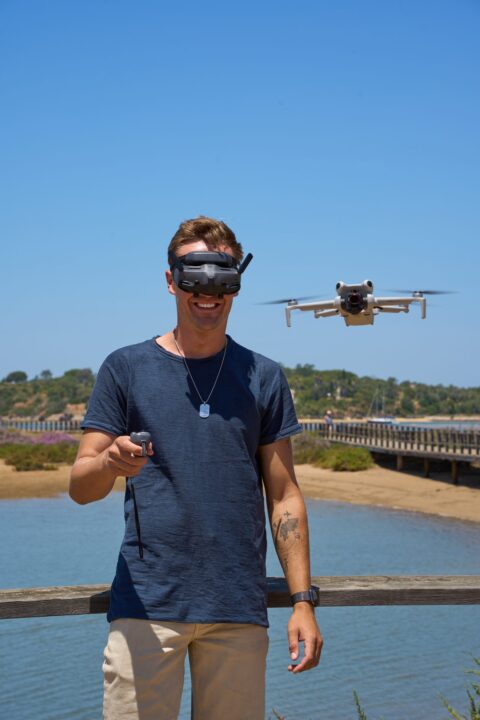
Max Haase
Travel Content Creator · Drone Photographer · Visual Storyteller
A professional travel creator for over 10 years with over 4 million followers. Specializing in high-end tourism board collaborations and visual travel storytelling.
 German
 English