
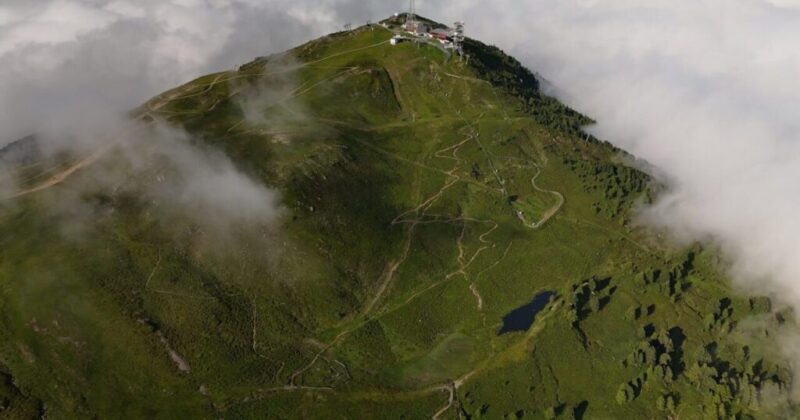
Campervan Croatia Road Trip: Stops in Austria & Slovenia
This guide summarizes all the information firsthand—giving you the complete overview. A campervan trip to Croatia is more than just a journey—it's an adventure through some of Europe's most beautiful landscapes. The Austrian Alps, the Slovenian lake district, the Istrian coast—and then arrival on the Croatian Adriatic coast. This travelogue shows you which destinations along the way to Croatia are truly worthwhile and how to best plan your route.
- Route overview: From Central Europe through Austria and Slovenia to the Croatian Adriatic coast — around 1,500 km depending on the starting point, perfectly doable in 10–14 days.
- Hohenwerfen Castle, Hallstatt, Lake Wörthersee — breathtaking Alpine scenery with first-class campsites directly on mountain lakes.
- Lake Bled and the Triglav National Park region — one of Europe's most underrated countries, ideal for a 2-3 day stopover.
- Istria as an insider tip: Before you reach the Croatian main coast, a stop in Rovinj or Pula is worthwhile — less crowded, with a great atmosphere.
- Austria and Slovenia are affordable, Croatia is particularly cheap — a total of approximately €40–70 per day for two people in a camper.
Here you will find all the stages, the best stops and my personal recommendations for this classic camper route through Central Europe directly to the Mediterranean.
Arrival and toll stickers: Austria and Slovenia
You'll have to cross three countries with tolls. Austria requires a vignette: a 10-day vignette costs €11.50 for cars; campervans over 3.5 tons need the GO-Box (depending on the route). German motorways are toll-free, but many tunnels in Austria have additional tolls (Tauern Tunnel: €14.50, Karawanken Tunnel: €8.40 one way). A Slovenian vignette costs €16 for 7 days. Croatian tolls are paid at toll booths based on distance (approximately €20 to €40 depending on the route; Zagreb–Split is about €25).
Depending on the starting point, the distance is between 1200 and 1600 kilometers. From Munich via Salzburg, Villach, Ljubljana, and Kranjska Gora to Zagreb, it's around 750 kilometers, easily doable in two days. Plan breaks every 150 kilometers, especially if you're driving a campervan or motorhome. Tip: Don't do it all in one go; instead, include overnight stays in Hallstatt and Kranjska Gora—it's all part of the adventure.
Important for self-drivers: High-visibility vests and warning triangles are mandatory in all three countries. In Slovenia, a spare set of light bulbs is also required. Carry a Green Card (international motor insurance certificate) for Croatia (also recommended within the EU). For a campervan road trip in Croatia, a toll box is recommended for faster passage – available from €20 per week rental.
Best time to travel for a Croatia road trip
The ideal time for a Croatia road trip with a campervan is between May and early July, and again from September to October. June is my personal favorite: the water temperature is already 22 degrees Celsius, the air temperature is 26 degrees, flowers are everywhere, and there aren't yet masses of tourists. The Adriatic coast gets extremely crowded in July and August—Rijeka, Split, and Dubrovnik are overrun, and campsites are often booked up three months in advance.
For Alpine sections through Austria and Slovenia: June to September is the best time to visit the higher passes, such as the Vršič Pass (1611 m). Before and after this period, snow can block the route. Hallstatt is particularly beautiful in late spring or early autumn – fewer Instagram tourists and softer light.
Weather warning: Croatian Bora winds (strong downslope winds from the mountains to the coast) occur year-round, but are particularly strong from October to March. These winds can blow over campers, so avoid coastal roads when an orange warning is in effect. Install the "Bora Alert" app on your phone.
Crossing Austria 🚐
Our journey through Austria was already an experience in itself. The breathtaking nature of the country welcomed us immediately as we crossed the border. We were fascinated by the majestic beauty of the Austrian Alps and the green landscape around us. Our first stop on our journey through Austria was the Hohenwerfen Castle, which perches on a rock and fascinated us with its impressive architecture and breathtaking views. 🏰📸
Hohenwerfen Castle is one of the best-preserved medieval fortresses in Austria and was once an important strategic point for the defense of the country. Today, the castle is a popular tourist destination and an excellent example of the architecture and technology of the Middle Ages. We spent hours exploring the castle, strolling through its various rooms and corridors, and enjoying the incredible views of the surrounding landscape. ⛰️
Our next stop was the charming town of Gmünd. This picturesque town has a long history and is known for its charming streets, buildings, and bridges. We strolled through the narrow, cobblestone streets, discovered hidden corners, and enjoyed the relaxed atmosphere. The town is also known for its art scene, which is evident in every street. 🧑🎨
Another highlight of our journey through Austria was our discovery of the landscape of Villach. We took a hike through the picturesque mountains and valleys surrounding the region. We also made a short detour to the breathtaking Fallbachfall waterfall - the highest waterfall in Carinthia! 💦


Sights in detail: Austria Highlights of the route
The Austrian route isn't just a transit route; it offers its own highlights along the way. Hohenwerfen Castle sits perched on a rock overlooking the Salzach Valley, 45 minutes south of Salzburg. Admission is €17, and there's a spectacular birds of prey show daily at 11:15 am and 3:15 pm featuring eagles and falcons. Free parking is available for campervans directly at the foot of the castle, and the elevator to the castle costs €4.50 per person.
Lake Hallstatt is the most photographed place in Austria—a UNESCO World Heritage Site since 1997. During the day it's brutally touristy (busloads of Asian tour groups), but magical in the early morning or after 5 p.m. The salt mines, including the oldest salt mine in the world (over 7,000 years old), are worth half a day. A combined ticket for the salt mines and cable car costs €36. Campers can stay at Camping Hallstatt or Camping Klausner Höll (Ober-Traun).
Villach and Lake Wörthersee mark the end of the Austrian leg: Lake Wörthersee's swimming season runs from June to September, with water temperatures reaching up to 24 degrees Celsius. Camping Strandbad Maria Wörth offers direct lake access for €42 per night. A perfect stopover before the Slovenian border. From here, it's only 50 kilometers to Kranjska Gora.
The Kranjska Gora National Park 🏔️
Our journey then took us to Slovenia, a beautiful country with untouched nature, breathtaking landscapes, and a unique culture. We were particularly excited to arrive in Kranjska Gora, a small village in the Julian Alps known for its picturesque beauty and outdoor activities.
As we arrived in Kranjska Gora, we were immediately impressed by the beauty of the village and the surrounding landscape. The picturesque mountains and valleys were covered with lush greenery and provided a stunning backdrop for our adventure. We decided to go on a hike to discover the beauty of the surroundings and enjoy the fresh mountain air, and we were rewarded with unforgettable views of the Julian Alps as we walked through forests and along crystal-clear streams. We observed wild animals, including deer and marmots, living in their natural environment. 🦫
The village is also known for its outdoor activities. You can go mountain biking through the mountains, take whitewater rafting trips on the Sava River, or visit the famous zipline park in Planica. 🚵


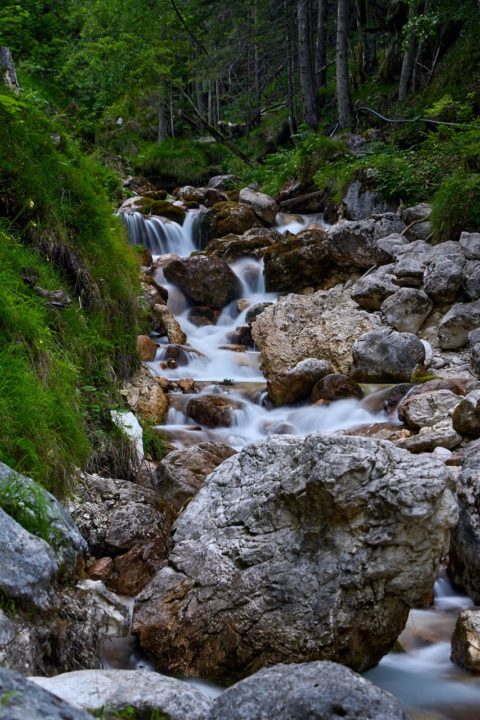
Our Highlight of Slovenia - Lake Bled
Our visit to Lake Bled was a highlight of our trip. The lake itself is a picturesque gem nestled in the impressive peaks of the Julian Alps and surrounded by dense forests. When we arrived at the shore, we were overwhelmed by the untouched beauty of the place. We couldn't take our eyes off the crystal-clear water, green meadows, and mountains surrounding the lake. We went around the lake on our scooter, on the perfectly paved bike paths. 🛴
But there are also many other activities to experience around the lake. The boat tour to the island in the middle of the lake is just one of them, but it is particularly recommended. During the boat tour, you can not only enjoy the breathtaking scenery of the lake, but also explore the island itself. On the island, there is a charming church and a staircase that leads to a viewing platform. From there, you have an incredible panoramic view of the lake and the surrounding mountains. 🚣🏻♂️
Another popular activity is hiking in the area around Lake Bled. There are many hiking trails that wind through the mountains and forests and offer magnificent views of the lake. One special hiking trail is the Vintgar Gorge trail, which follows a rushing river and offers impressive waterfalls and picturesque views.
For the adventurous, there are also a variety of activities. One of the most exciting activities is skydiving over Lake Bled. If you have the courage to jump out of a plane, you will be rewarded with a breathtaking view of the lake and the surrounding mountains.
But kayaking, canyoning, and paragliding are also very popular here. You can experience the lake from a new perspective by getting into a kayak and paddling through the clear water. Or you can embark on a canyoning tour where you climb and slide through narrow gorges and waterfalls.


Ljubljana - the young capital 🍾
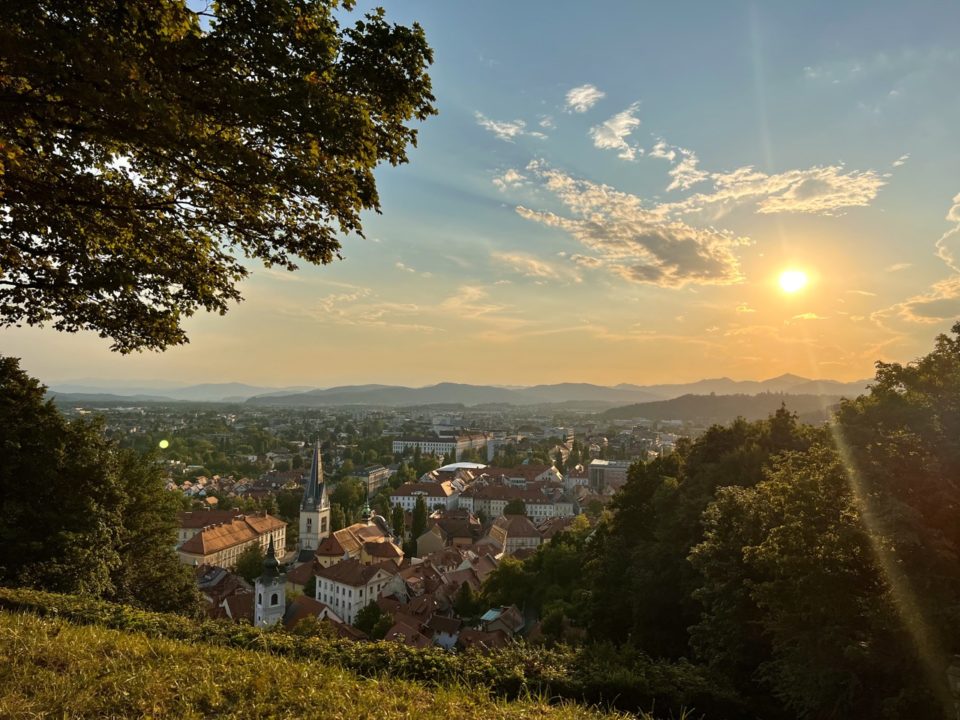
Ljubljana, the capital of Slovenia, was another highlight of our trip. The city has a charming atmosphere with its picturesque streets and colorful buildings that invite for a relaxed stroll. We were fortunate to arrive in Ljubljana on a sunny day, which made the experience even more enjoyable. One of the first things we did in Ljubljana was to visit Ljubljana Castle. We rode the scooter (alternatively, there is also a lift) up to the castle and enjoyed the breathtaking view of the city from above. The castle itself is also very impressive, with its historic buildings and interesting exhibitions.
We continued our exploration and made a stop at the three bridges, one of the most famous landmarks in the city. The bridge connects the old town with the modern part of Ljubljana and offers a beautiful view of the Ljubljanica River, which flows through the city. You can immediately feel the lively atmosphere of the city at the Ljubljana Market, where you can buy a variety of local products and souvenirs. You can also find a wide selection of fruits, vegetables, cheese, meat, fish, and much more here. There are also several restaurants and cafes where you can try traditional Slovenian dishes and enjoy a coffee. The market is a place you should not miss when you are in Ljubljana. 🍅🍏
Another highlight of your stay in Ljubljana should be a boat trip on the Ljubljanica River. You can relax in one of the many boats and enjoy the sights of the city from a different perspective. During the trip, you pass several bridges, buildings, and monuments that are all part of the rich history and culture of Ljubljana. The boat trip is particularly beautiful at sunset, when the city is bathed in warm light and the atmosphere is romantic and picturesque. 🛳️🌅
If you don't see the sunset from the boat, you can also view it from the Castle Hill, where you have a breathtaking view of the city and the surrounding mountains. The Castle Hill is also an ideal place to escape the hustle and bustle of the city and enjoy nature and fresh air.
Once the sun sets, the city really comes alive. There are countless bars, clubs, and pubs open late into the night, offering something for everyone. One of the most popular nightlife spots is Metelkova Street, a former military base now transformed into an alternative cultural and artistic hub. Here you'll find a variety of clubs and bars playing diverse music genres like rock, jazz, electronic, and hip-hop. The atmosphere is vibrant and colorful, and you'll meet a mix of locals and international visitors. 🎉
Another popular area is the city center, especially the Triple Bridge and Mestni trg square. Here you'll find many bars and restaurants that stay open late into the night. You can sample local beers, wines, and spirits, or opt for a cocktail. If you're in the mood for live music, then the Gajo Jazz Club is a must-visit. Local and international jazz and blues musicians perform here regularly. 🪩🎷


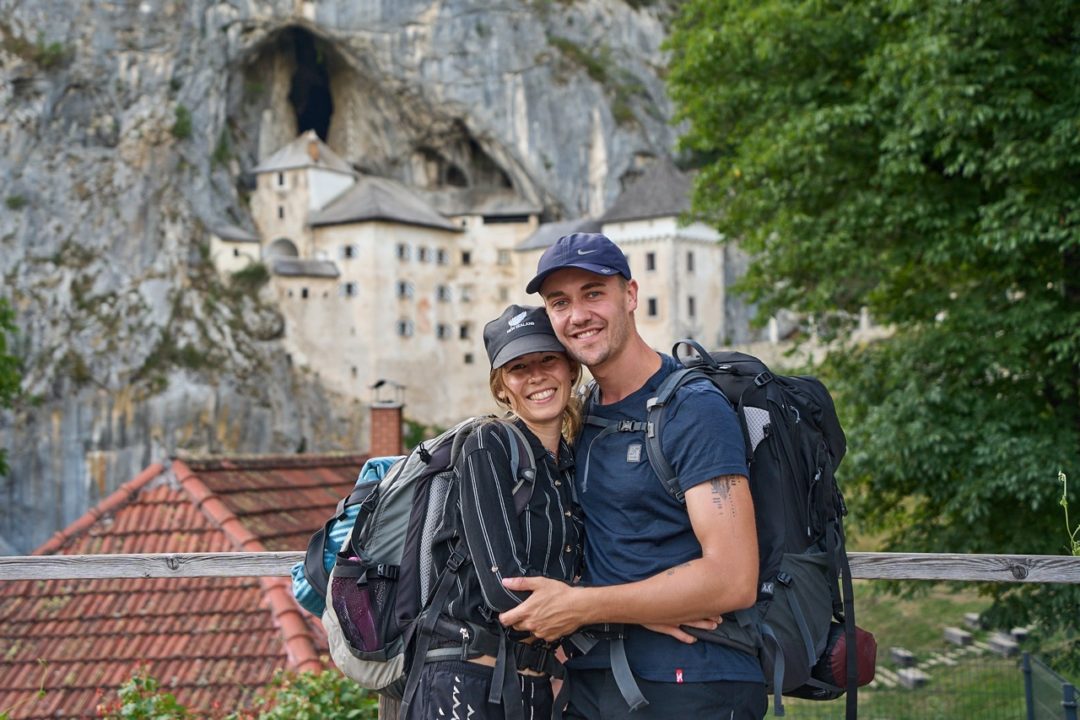
The Predjama Castle
Predjama Castle, our last stop in Slovenia, was another unforgettable destination. This castle is truly unique as it is built into a cliff, providing an impressive backdrop. To reach the castle, one must first drive along a winding road through picturesque landscapes. The view of the surrounding mountains and valleys is breathtaking and builds anticipation for the upcoming discovery.
Once you reach the castle, you can explore the fascinating history and architecture of this medieval fortress. The tour of the castle provides insight into life and culture during the Middle Ages, transporting you back in time.
After exploring the castle from the inside, it's time to put on your climbing gear and explore the cliffs around the castle. The climbing routes lead through spectacular landscapes and offer an unforgettable view of the castle and the valley below.
We combined our visit to the castle with a long hike through the surrounding forests, spending a night under the starry sky in our tent - an unforgettable experience! 🏕️✨


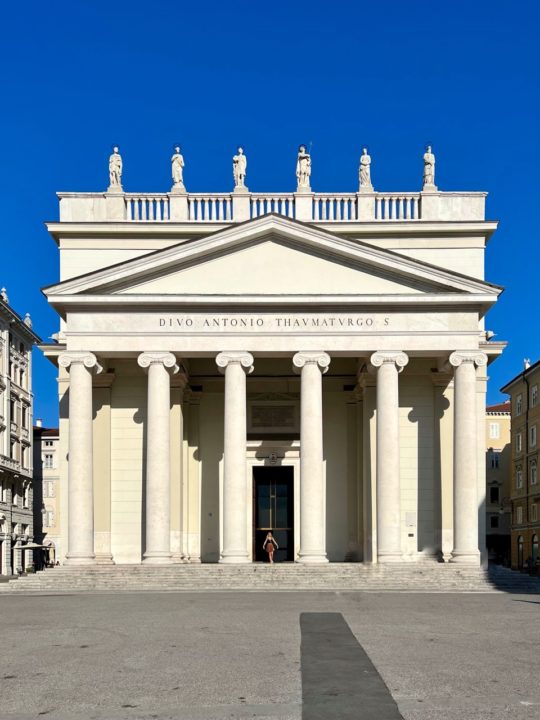
Trieste - a final stop before Croatia & of course Apiritivo 🍸😉
Trieste, a city on the Adriatic Sea, was our stopover on the way to Croatia. We visited this city because of its history, architecture, and cuisine. Trieste has a fascinating history as part of the Habsburg Empire and as an important port on the Mediterranean. The city has a rich culture and a variety of architectural styles that arise from its history as a border town.
We made our way to the historic center of the city and were impressed by the variety of buildings and monuments we saw. Piazza dell'Unità d'Italia is an impressive square by the sea, considered the largest square in Europe by the water. We also visited the impressive Basilica San Giusto, which sits atop a hill and offers a breathtaking view of the city.
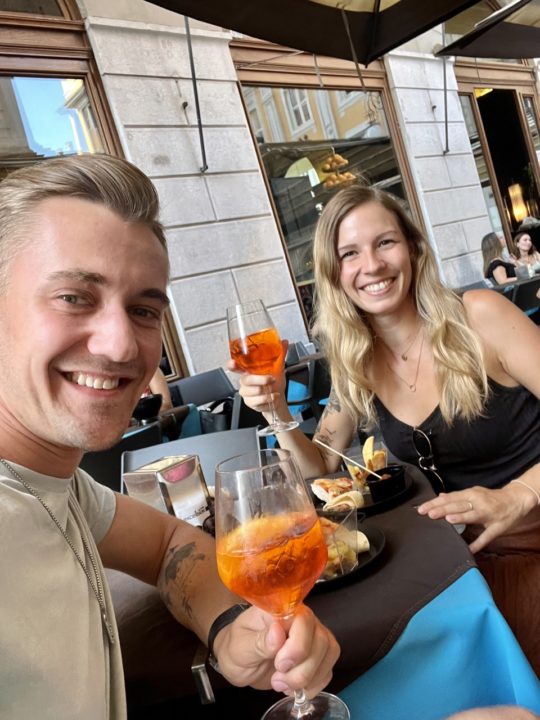
Of course, the Aperitivo couldn't be missed, an Italian tradition where you enjoy a drink and snacks before dinner. Everywhere there are a variety of different bars and cafes that entice you with their delicious and creative aperitif menus.
However, we left Trieste on the same day and made our way to Croatia. More on that in the next article! 😉🌊




Pitches and camping rules along the route
There are hundreds of campsites along the route through Austria and Slovenia, but the rules vary: Austria allows wild camping on private land with the owner's permission. Slovenia has strict rules—wild camping is completely forbidden in Triglav National Park, but tolerated in other regions. Croatia officially prohibits wild camping, but there are over 300 campsites with sea views.
My recommended campsites along the route: Camping Hallstatt by the lake (€32 per night, fantastic location), Camping Bled in Slovenia right on the lake (€45 per night), Ljubljana Resort Camping (€38 per night, 5 minutes to the old town), Camping Špik in Kranjska Gora (€30 per night, starting point for the Vršič Pass). In Trieste, Camping Obelisco on the coast is a good value at €22 per night.
For Croatia, I recommend a combination of large resort campsites (for naturists: Camping Valalta in Istria, €40 per night) and small family campsites in secluded coves (from €20 per night). Many only accept cash or card payments on site — booking via booking.com or pitchup.com is worthwhile from the high season of July–August.
Budget and costs: 10 to 14 days camping in Croatia
A 12-day campervan trip to Croatia costs around €1800 to €2800 for two people, including fuel, depending on the level of comfort. Breakdown:
3000 kilometers at 10 liters of diesel per 100 kilometers and €1.60 per liter results in €480. Slovenia and Croatia are €10 to €15 cheaper than Austria; it's worth filling up there.
Campsites: 12 nights × €35 average = €420. Book the most expensive ones (Bled, Hallstatt, Split) in advance, the others spontaneously.
Tolls and vignettes: Austria €11.50 + tunnel toll €25, Slovenia €16, Croatia €40 = €92.50 total.
Self-catering in a campervan costs €15 to €25 per day, restaurants in the evening cost €20 to €40 per person. Budget: 2 weeks at €50 per day = €700 for two people.
National parks and attractions: Plitvice Lakes €40 entrance fee, Krka National Park €30, Triglav National Park free. Plan on spending €100 to €150 per person for entrance fees and activities.
Practical tips for a campervan road trip in Croatia
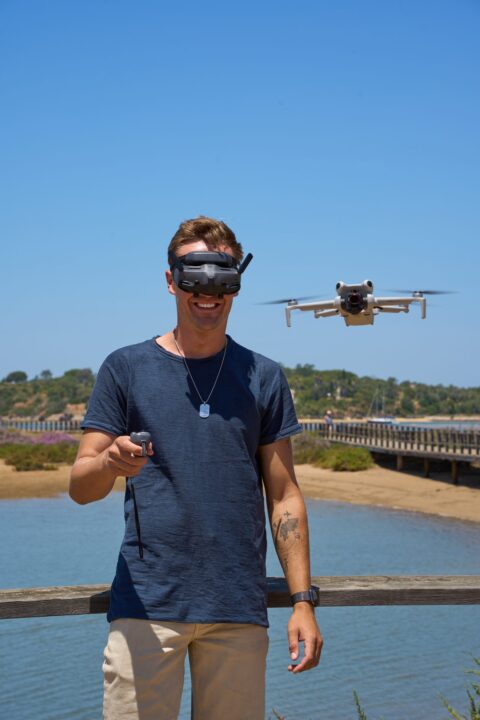
After two campervan road trips to Croatia, I've learned the following: Reservations: Plitvice Lakes tickets must be booked online in advance during peak season (€40 per person, Croatia National Park website). Without a pre-booked ticket, you'll have to wait in line for two hours. Drones in Croatia: Registration is mandatory for all drones over 250g. Registration costs €10 online and takes five minutes. Flying over national parks is only permitted with a separate permit.
Ferries to the islands: If you want to visit islands like Brač, Hvar, or Korčula with your campervan, book your ferries 2 to 3 days in advance online (jadrolinija.hr). A one-way ferry from Split to Supetar (Brač) costs €45 for campervans, and a return trip costs €80. Camping Prilika on Brač costs €35 per night. Mobile internet: A Croatian SIM card with 30 GB costs €15 from Hrvatski Telekom or A1. German roaming plans also work perfectly within the EU.
FAQ: Campervan road trip to Croatia
How many days does it take for a campervan road trip to Croatia?
A minimum of 10 days from Central Europe is recommended, ideally 14 days. Anything under 10 days will be hectic, as the journey there alone takes 2 days. I completed the route in 12 days, with 2 nights each in Austria and Slovenia, plus 8 nights in Croatia. For a more relaxed trip with more time in Croatia's national parks, plan for 3 weeks. Key stops along the way: Hallstatt (1 night), Ljubljana (1-2 nights), Bled (1 night), Zagreb (1 night), Plitvice (1-2 nights), then the coast.
Do you need a 4x4 camper for Croatia?
No, all main roads and campsites are paved and easily accessible for standard motorhomes and campervans. Only if you're planning to venture off the beaten track into the mountains (e.g., certain spots in the Velebit Mountains or the Northern Velebit National Park) is a four-wheel drive worthwhile. VW California, Hymer Ontour, and Pössl Roadcruiser models are perfectly adequate. For island camping in Croatia (Brač, Hvar), all roads are paved and camper-friendly right up to the campsites.
Is wild camping allowed in Croatia?
Officially, no, but in practice it's tolerated in secluded parking lots outside of peak season. Fines for being caught range from 500 to 1500 Kuna (€65-€200). Recommendation: Use the 300+ official campsites – many have beaches right by the sea and cost less than €25 per night. Popular camping regions: Istria (Camping Valalta, Valdaliso), Kvarner Bay (Camping Preluk), Central Dalmatia (Camping Zablaće, Camping Adria Biograd), Southern Dalmatia (Camping Solitudo in Dubrovnik).
Are there service stations for campers?
Yes, there are around 100 official campsites in Croatia with grey and black water disposal. Apps like "Park4Night" and "Stellplatz-Info" show you all the locations with ratings. Most gas stations also have fresh water pumps – usually free with a full tank. Large rest areas (INA, Tifon) have disposal facilities for 5-10 Kuna. Ferrari pumps are located at regular intervals along the A1 motorway. For black water disposal, be sure to use the official campsites, not in the woods.
How much toll should I expect to pay for the trip to Croatia?
For a round trip from Germany: Austrian vignette €11.50 plus tunnel tolls €15-30 (Tauern Tunnel €14.50, Karawanken Tunnel €8.40 one way). Slovenian vignette €16 (7 days). Croatian tolls are route-based and collected at toll stations; for a typical Zagreb-Split route, it's €25, and a round trip costs approximately €40-50. Total budget for tolls and vignettes for a 2-week campervan road trip: €80-120. Very affordable compared to Italy or France.
How much does a campervan road trip to Croatia cost?
For 2 people over 12-14 days: €1800-€2800 including fuel. Breakdown: Fuel €400-€550 for 3000 km, campsites €420 (12 nights x €35), tolls and vignettes €100, food (self-catering and restaurants) €700, national park entrance fees (Plitvice €40, Krka €30) and activities €150-€200 per person, unforeseen expenses €150. Small extras such as island ferries (Split-Brač round trip €80 for campers), boat trips, or skippers may cost an additional €100-€300.
Which apps do I need for a campervan road trip?
Essential apps: "Park4Night" (free, community-based campsites), "Maps.me" (offline maps), "iOverlander" (backup for Park4Night), "Camping.info" (official campsites with real-time occupancy), "Bora Alert" (wind warning in Croatia). Additionally: "ACSI Camping Card" (200+ campsites with a discount in the off-season), "Park4Night Premium" (offline mode, €15 per year), "Google Translate" (offline Croatian). For campsites with service stations: "Stellplatz-App" or "Vanlife Europe".
When is the best time to travel to Croatia with a campervan?
May to early July and September to October are ideal. Water temperature from June onwards is around 22 degrees Celsius, air temperature 26 degrees Celsius, and there are fewer tourists. July and August are overcrowded (camping reservations are necessary 3 months in advance), and prices are 301,000 euros higher. Many campsites close during the winter months of November to March, but the olive harvest in Istria is scenically spectacular. My favorite time is mid-June – everything is still open, but there are no crowds. Beware of the Bora winds in spring and autumn – they can blow campers away.
Do I need any equipment for wildlife in Croatia?
Croatia has bears and wolves in the Gorski Kotar and Velebit mountains – but they are extremely rare and far from the coastal paths. There is no danger at coastal campsites. However, wild boars do venture into the edges of campsites, so be sure to remove any leftover food. Mosquitoes are prevalent in the Danube Delta and coastal wetlands – bring a good mosquito repellent (such as Nobite or OFF). Snakes (European horned viper) are shy; wear closed shoes when hiking in the Velebit mountains. Don't panic – Croatia is very safe.
Max Haase
Travel Content Creator · Drone Photographer · Visual Storyteller
A professional travel creator for over 10 years with over 4 million followers. Specializing in high-end tourism board collaborations and visual travel storytelling.
 German
 English