
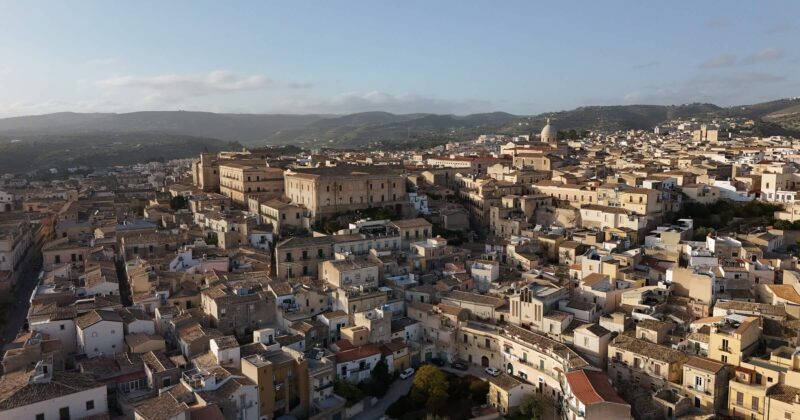
Italy's hidden gems 2026: 10 places without tourist crowds
Italy's hidden gems on the map: The places nobody knows about
Italy is the most visited country in Europe. Rome, Florence, Venice—everywhere there are queues, selfie sticks, and overpriced restaurants with laminated menus. But Italy is vast, and away from the tourist hotspots, a country awaits that welcomes you with open arms: villages where the baker still pulls fresh focaccia from a wood-fired oven; coastlines where you're practically the only person; and landscapes so beautiful you wonder why on earth everyone goes to Positano.
Preparing for your trip to Italy — our 4 recommendations
- Matera (Basilicata): UNESCO cave city with 9,000 years of history — drone shot at sunrise from the Murgia plateau, overnight stay in a cave dwelling from 80 euros.
- Tropea (Calabria): The clearest water on the Italian mainland and the Caribbean look beneath the old town — fish menu by the sea for 25 euros, hotel with sea view from 70 euros.
- Procida and Polignano a Mare: Pastel-colored harbor instead of Capri crowds (ferry from Naples 45 min, from 13 euros) and cliffside town with grotto dinners above the sea.
- Natural highlight Castelluccio di Norcia: From the end of May to the beginning of July, the plateau blooms in red, blue and yellow — the Fiorita is one of the most spectacular natural spectacles in Europe.
- Road trip budget for 14 days: 1,160-1,950 Euro Budget, 1,900-3,130 Euro Mid-range — best time to travel is May and September (20-28 degrees, hardly any tourists).
Over the past few years, I've taken several road trips through Italy, deliberately avoiding the usual tourist hotspots. In this post, I'm sharing my 10 favorite hidden gems—from the north to the far south. Places I discovered myself, often by chance, sometimes through local recommendations. All with drone-worthy potential, all with a genuine Italian feel.
1. Matera (Basilicata) — The city of stone
Matera is no longer a complete hidden gem since it was a European Capital of Culture in 2019. But most tourists in Italy still don't make it here—too remote, too far south. And that's precisely what makes Matera so special. The Sassi, the cave dwellings carved into the rock, are a UNESCO World Heritage Site and look like a film set (James Bond No Time to Die was filmed here). You walk through alleyways that were inhabited 9,000 years ago and feel like you've stepped back in time.
The view of the entire city from the opposite gorge (Murgia plateau) is breathtaking—and a drone paradise. At 6 a.m., when the first light warmly illuminates the stone facades, Matera from above is one of Italy's most spectacular sights. Accommodation in a converted cave dwelling: from €80 per night.
2. Tropea (Calabria) — Italy's Caribbean
Tropea has the clearest water on the Italian mainland. Period. The white sandy beach below the old town, crowned by the church of Santa Maria dell'Isola perched on a rock—the picture looks like it's been Photoshopped. But it isn't. It can get crowded in peak season, but in May or September you'll practically have this paradise to yourself.
Calabria, in general, is Italy's forgotten toe—hardly any international tourists, but incredible food (the red onions of Tropea are legendary, the 'nduja sausage is addictive) and prices that will make you laugh even after going to Rome. A complete fish menu by the sea: 25 euros. Hotel with a sea view: 70 euros. Flying a drone over the turquoise water and white cliffs: priceless.
3. Civita di Bagnoregio (Latium) — The dying city
A village perched on a tuff plateau, slowly eroding and destined to one day plunge into the valley below. The only access: a narrow footbridge spanning the gorge. Around 10 people still live permanently in Civita—the rest are day-trippers and a few B&B owners. Come in the evening, after the buses have left, and you'll have the village to yourself. The atmosphere at sunset, when the light bathes the tuff houses in gold, is simply breathtaking.
Drone tip: Fly from the gorge, not from the village. The perspective of the isolated plateau with the bridge is one of the most impressive drone shots in all of Italy. Entrance fee: 5 euros.
4. Procida (Campania) — The little sister of Capri
While everyone flocks to Capri and Ischia, most tourists sleep on Procida. The smallest of the three islands in the Gulf of Naples was Italy's Capital of Culture in 2022 and yet remains surprisingly undiscovered. The pastel-colored houses around the port of Marina Corricella—in every shade from lemon yellow to coral red—make for one of the most photogenic scenes in southern Italy.
The island is tiny: 4 square kilometers, you can explore it on foot in a day. Spiaggia della Chiaia is a hidden beach, accessible via a steep staircase with 186 steps. The water is crystal clear, and in September you'll practically have the place to yourself. Ferry from Naples: 45 minutes, from €13.
5. Alberobello (Apulia) — The Trulli City
Some people have heard of Alberobello, but very few have actually been there. The trulli, these cone-shaped stone houses with white walls, are found in such a concentration only here. Over 1,500 trulli form a district that looks like something out of a fairy tale. A UNESCO World Heritage Site, and rightly so. My tip: Sleep in a trullo—the experience of waking up in a 400-year-old stone house with a domed roof is unique. From €60 per night.
The best drone spot: Fly from the Belvedere viewpoint over the Trulli district. From above, the conical roofs look like a mushroom forest—surreal and beautiful. Best time: Early morning, when the narrow streets are still deserted and the sidelight makes the white walls glow.
6. Cinque Terre Hinterland — Val di Vara
Yes, Cinque Terre is no longer a hidden gem. But the hinterland—the Val di Vara—is. Just 20 minutes from the crowded coastal villages, you'll find medieval mountain villages, organic farms, and hiking trails without seeing another soul. Varese Ligure, the first fully certified organic village in Europe, is my favorite: a circular market square surrounded by a medieval castle, and restaurants that cook exclusively with local ingredients.
My tip: Stay in Val di Vara (agriturismo from €50 per night including breakfast with homemade honey and fresh bread) and take day trips to the Cinque Terre coast. You'll save €701 on accommodation and get a more authentic glimpse into Ligurian life.
7. Ortigia (Sicily) — The ancient heart of Syracuse
Sicily as a whole deserves its own article, but if I had to pick one place, it would be Ortigia. The old town island of Syracuse, connected by two bridges, is a labyrinth of Greek temples, baroque palazzi, and some of the best street food in Italy. At the market, you can get arancini (stuffed rice balls) for €2 that are better than anything you'd find in a Milanese restaurant.
The Duomo stands on the columns of a 2,500-year-old Greek temple to Athena — layer upon layer of history. Sitting on the Lungomare in the evening, drinking an Aperol Spritz for 5 euros and watching the sunset over the Mediterranean: that's Sicily at its finest.
8. Isola di San Giulio (Piedmont) — The Silence Island
In the middle of Lake Orta, the smaller sibling of Lake Maggiore, lies an island with a monastery and a single road called La Via del Silenzio—the Path of Silence. Signs with meditative messages are placed everywhere. You can walk around the island in 15 minutes, but the atmosphere will keep you there much longer. It's one of the most peaceful places I've ever visited.
Orta San Giulio, the village on the opposite shore, is a little gem—medieval alleyways, a market square right on the water, and no tour buses. Boat trip to the island: €5 return. Perfect day trip if you're at Lake Maggiore or Lake Como.
9. Castelluccio di Norcia (Umbria) — The flower in the mountains
From late May to early July, the Castelluccio plateau transforms into a sea of flowers—poppies, cornflowers, and lentil blossoms in red, blue, yellow, and white. The Fiorita, as the locals call it, is one of Europe's most spectacular natural displays. The village, situated at an altitude of 1,452 meters, was severely damaged in the 2016 earthquake and is slowly being rebuilt.
Drone footage over the blooming fields with the village and mountains in the background: National Geographic-worthy. The plateau is vast and exposed to wind—fly early in the morning for calmer air. Getting there: From Spoleto or Norcia, about 30 minutes along winding roads. No public transport—a rental car is essential.
10. Polignano a Mare (Apulia) — The cliffside town
Polignano a Mare is a town perched on a cliff overlooking the sea, with houses whose balconies dangle precariously over the precipice. The town beach, Lama Monachile—a small cove nestled between two rock faces—is world-famous, but the town itself is mostly visited for an Instagram stop. Stay overnight and experience the empty streets after sunset, the street musicians in the piazza, and dinner at the Grotta Palazzese restaurant—located in a natural grotto 20 meters above the sea (dinners start at €120 per person, but are absolutely unique).
For the drone: The best shot is from the sea side — the cliffs with the old houses, the surf below. Fly at sunrise from the coast south of the town, before the first boats set out.
Beach holiday in Italy by car: Costs for a 14-day insider tips road trip
| category | budget | middle class | comfort |
|---|---|---|---|
| Flight (Return) | 60-150 EUR | 150-250 EUR | 250-400 EUR |
| Rental car (14 days) | 250-400 EUR | 400-650 EUR | 650-1,000 EUR |
| Accommodation (13 nights) | 400-650 EUR | 650-1,100 EUR | 1,100-2,000 EUR |
| Food and Drink | 250-400 EUR | 400-650 EUR | 650-1,100 EUR |
| Petrol and tolls | 150-250 EUR | 200-300 EUR | 250-350 EUR |
| Entrance fees and ferries | 50-100 EUR | 100-180 EUR | 180-300 EUR |
| IN TOTAL | 1,160-1,950 EUR | 1,900-3,130 EUR | 3,080-5,150 EUR |
Italy's most beautiful beaches: Marche & Northern Italy insider tips
Arrival: For southern Italy, fly to Bari, Naples, or Catania. For northern Italy, fly to Bologna, Genoa, or Turin. Domestic flights within Italy with Ryanair start at €20. Rental cars start at €18 per day with Locauto or Sicily by Car.
Although Italy has an EU EHIC agreement, many medical practices bill privately and require upfront payment. In the case of hiking or beach accidents in remote regions, the return flight to Germany with medical transport is not covered by statutory health insurance.
Highway toll: In Italy, you pay tolls on all motorways (Autostrade). Expect to pay between €7 and €10 per 100 kilometers. A Telepass box makes it easier, but most rental cars don't have one. Alternatively, take the country roads – slower, but more scenic and toll-free.
Best time to travel: May and September are perfect. Pleasant temperatures (20-28 degrees Celsius), few tourists, everything open. In August, half of Italy is on holiday—the coastal resorts are then crowded and more expensive. In winter (November to March), you'll have many places almost to yourself, but some restaurants and hotels close.
Eat: Avoid any restaurant that displays photos of all its dishes or solicits tourists from outside. You can find the best trattorias using Google Maps (filter for 4.5+ stars with at least 200 reviews) or simply by observing where the locals eat lunch. Lunch menus (pranzo) in southern Italy often cost €10-15 and include a first course (primo), a second course (secondo), and water.
Drone in Italy: Italy requires ENAC registration for drones and an EU drone license (online, free, 40 questions). Drones under 250 grams fall into Open Category A1—flying over uninvolved people is still restricted. It's officially prohibited in national parks, over crowded beaches, and in historical centers. My approach: Fly early in the morning when no one is around and be respectful.
FAQ — Frequently Asked Questions about Insider Tips for Italy
Which region offers the best value for money?
Calabria and Basilicata, without a doubt. Here you get excellent food, clean beaches, and authentic Italy for a fraction of the prices in Tuscany or on the Amalfi Coast. A hotel room with a sea view in Tropea costs 70 euros—in Positano, 350 euros. The quality of the food in Calabria is at least equal, often better.
Can I combine several of these places in one road trip?
Absolutely. My suggestion for Southern Italy: Bari (arrival) to Alberobello to Polignano a Mare to Matera to Tropea to Procida to Ortigia (2 weeks). For Northern Italy: Bologna to Castelluccio to Civita di Bagnoregio to Lake Orta to Val di Vara to Cinque Terre (10 days). The distances in Italy are manageable—rarely more than 3-4 hours between stops.
Are these places also suitable for families?
Most, yes. Tropea, Procida, and Polignano a Mare have shallow beaches and child-friendly restaurants. Matera and Alberobello are exciting for children because they look like something out of a fantasy film. Only Castelluccio and the Val di Vara are more suited to families who enjoy hiking. Generally speaking, Italians love children. In no other country in the world will you and your children be welcomed as warmly as in Italy.
Do I need to know Italian?
In tourist areas, you can get by with English. In the more remote places on this list, it can be difficult—especially in Calabria and Basilicata, where older people often only speak Italian (and dialect). Google Translate helps, but a few basics will open doors: Buongiorno, Grazie, Il conto per favore (The bill, please), Quanto costa (How much does it cost?). And a smile is the universal language.
Which of these locations has the greatest drone potential?
My top 3 drone locations: 1. Matera — the gorge offers epic perspectives of the cave city. 2. Castelluccio — the blooming plateau is spectacular from above. 3. Civita di Bagnoregio — the isolated village perched on the rock with its bridge is perfect for drones. But honestly, all ten locations deliver outstanding drone footage. That's Italy — no matter where you fly, it looks incredible.
Max Haase
Travel Content Creator · Drone Photographer · Visual Storyteller
Since over 10 years professional travel creator with over 4.2 million followers. Specializing in high-end tourism board collaborations and visual travel storytelling.
 German
 English