
Great Ocean Road 2026: Route, Stages & Apollo Bay Guide
Great Ocean Road — Why this road trip was my highlight in Australia
243 kilometers of coastal road, rugged cliffs, turquoise waters, and koalas hanging in eucalyptus trees right next to the road—the Great Ocean Road in Victoria is the road trip every traveler to Australia has to do. My advice: don't rush through it in one day, but drive it over four days, stopping at every viewpoint.
- 243 km of coastal road in Victoria — for me, after many road trips worldwide, it's among the top 10.
- Plan for 3-5 days. Driving through in one day is possible, but you'll miss out on the best part of the experience.
- Must-stops: Twelve Apostles at sunset, Loch Ard Gorge and wild koalas at Kennett River.
- Best time to travel: November to March. No tolls, all viewpoints are free.
- Drones are allowed outside of national parks. Drive on the left – you'll get used to it after 2-3 hours.
After many road trips worldwide, I say: The Great Ocean Road belongs in the top 10. Not because it's the longest or wildest route, but because the density of wow moments per kilometer is simply unbeatable. Every 10-15 minutes, a viewpoint that's better than the last.
Great Ocean Road map: The route from Melbourne to Allansford (including Apollo Bay)
The Great Ocean Road officially begins in Torquay (about 1.5 hours southwest of Melbourne) and ends in Allansford near Warrnambool. Most people drive the route from east to west—this has the advantage of keeping you on the ocean side and giving you direct views of the cliffs.
Stage 1: Torquay → Apollo Bay (approx. 95 km)
The first section is the most winding and also the most spectacular. The road clings to the cliffs, and a new view of the surf opens up at every bend. Highlights:
- One of the most famous surf spots in the world. Even if you don't surf, the waves here are impressive. From the viewpoint at the top, you can watch professional surfers riding 3-4 meter high waves.
- Split Point Lighthouse: A photogenic lighthouse in Aireys Inlet with panoramic views. Perfect for drone photography — I took one of my favorite pictures of the entire trip here with my drone (under 250 g).
- A charming coastal town with good cafes. The Erskine Falls waterfall is worth a short detour (10 minutes from the highway).
- Kennett River Koala Walk: Here are the koalas. Right by the road, in the trees. Just drive slowly and look up. With a little patience, you'll see several koalas here — no zoo, no entrance fee.
Stage 2: Apollo Bay → Port Campbell (approx. 90 km)
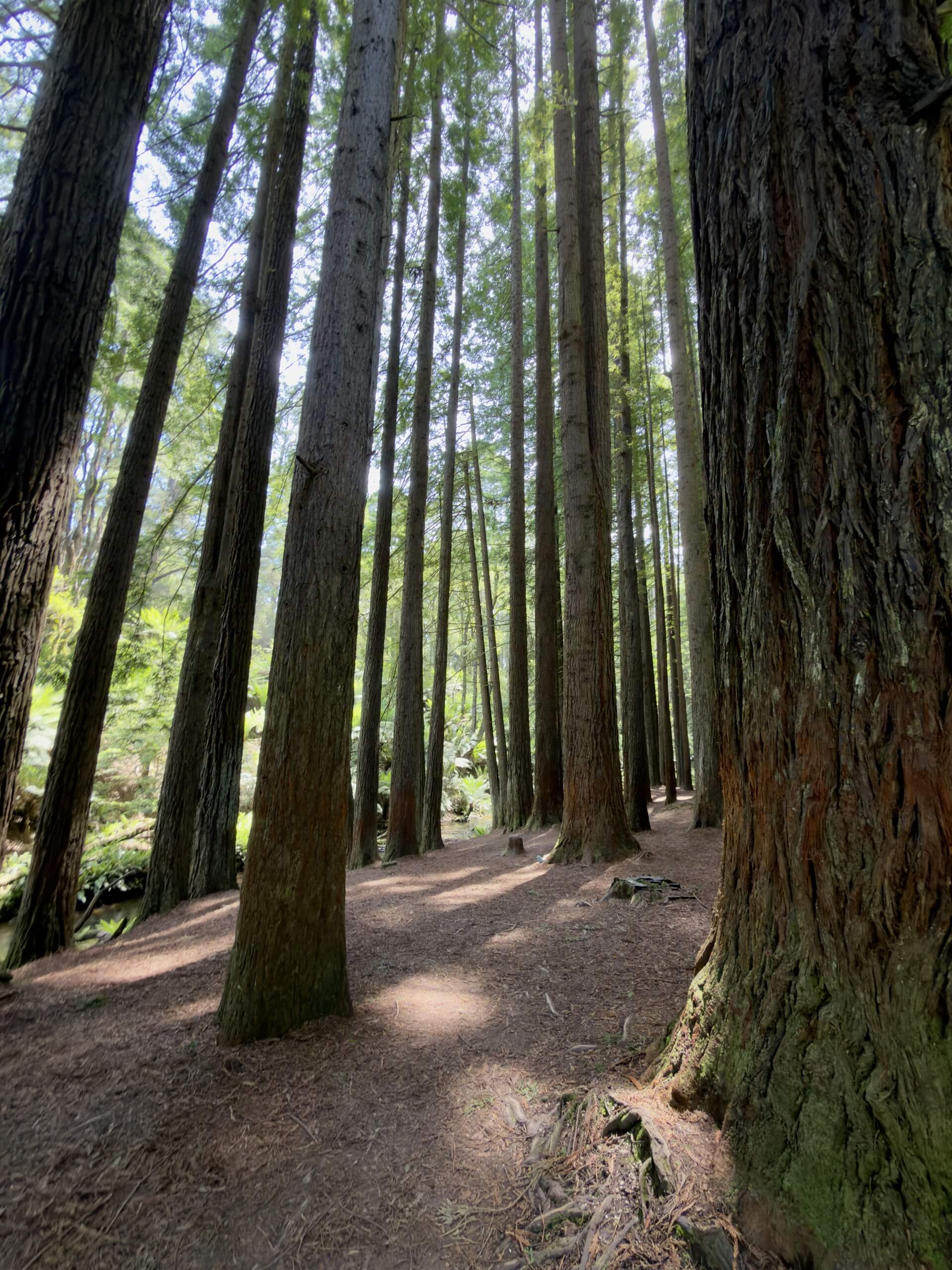
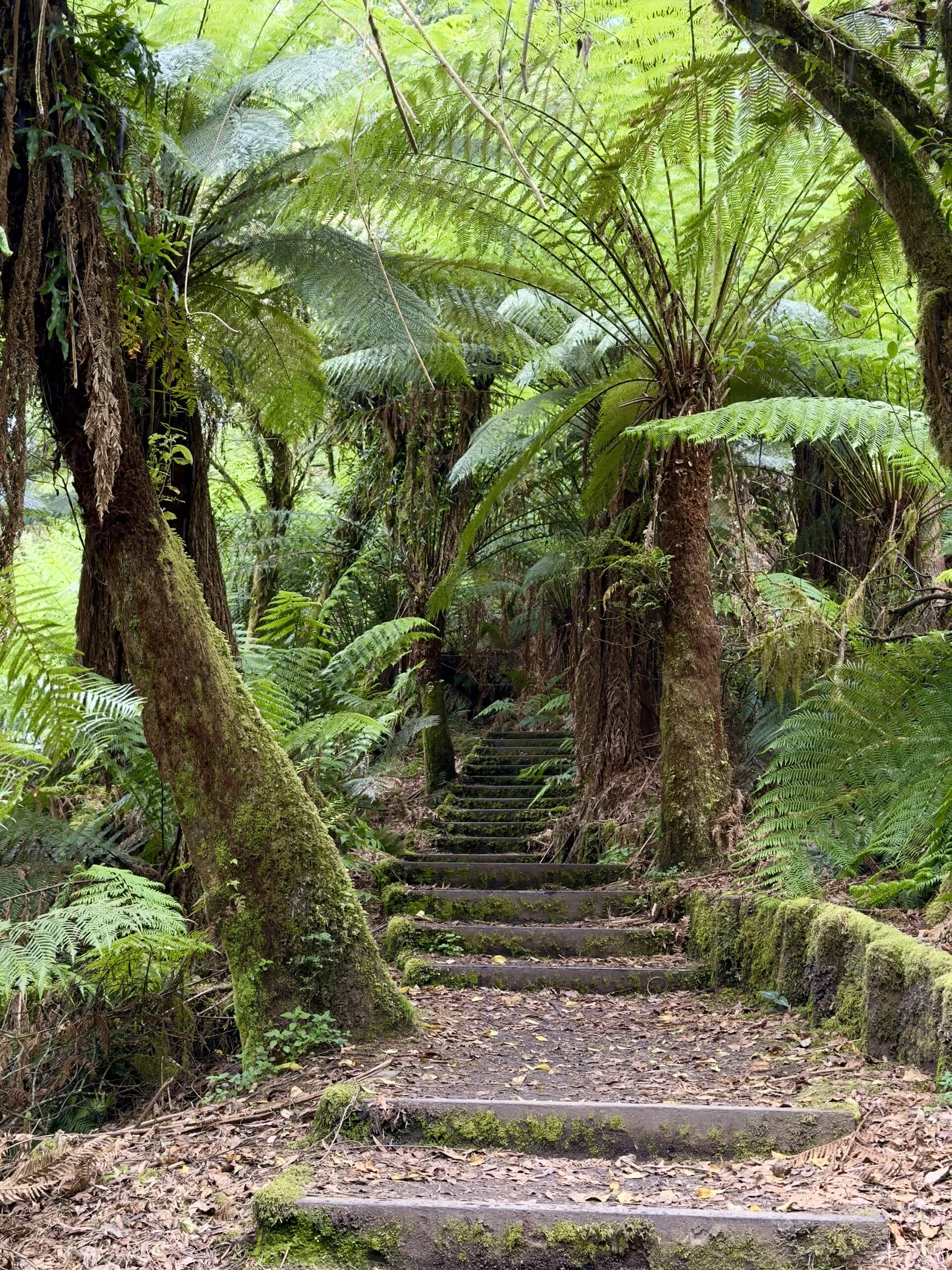
Here the road leaves the coast and leads through the Great Otway National Park — rainforest with ferns several meters high and waterfalls. After that comes the section that most people come here for in the first place:
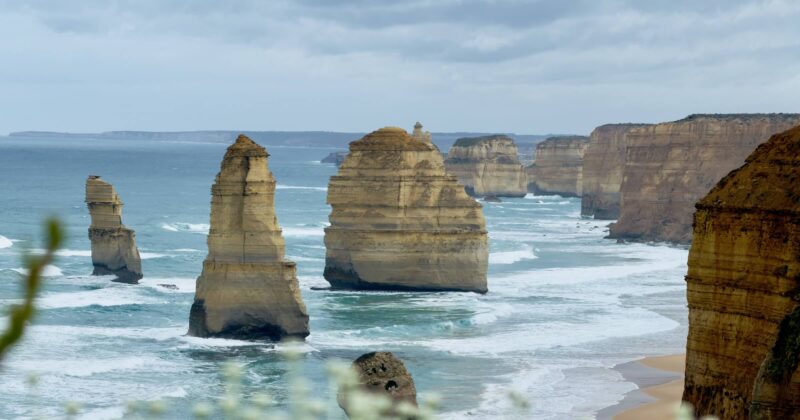
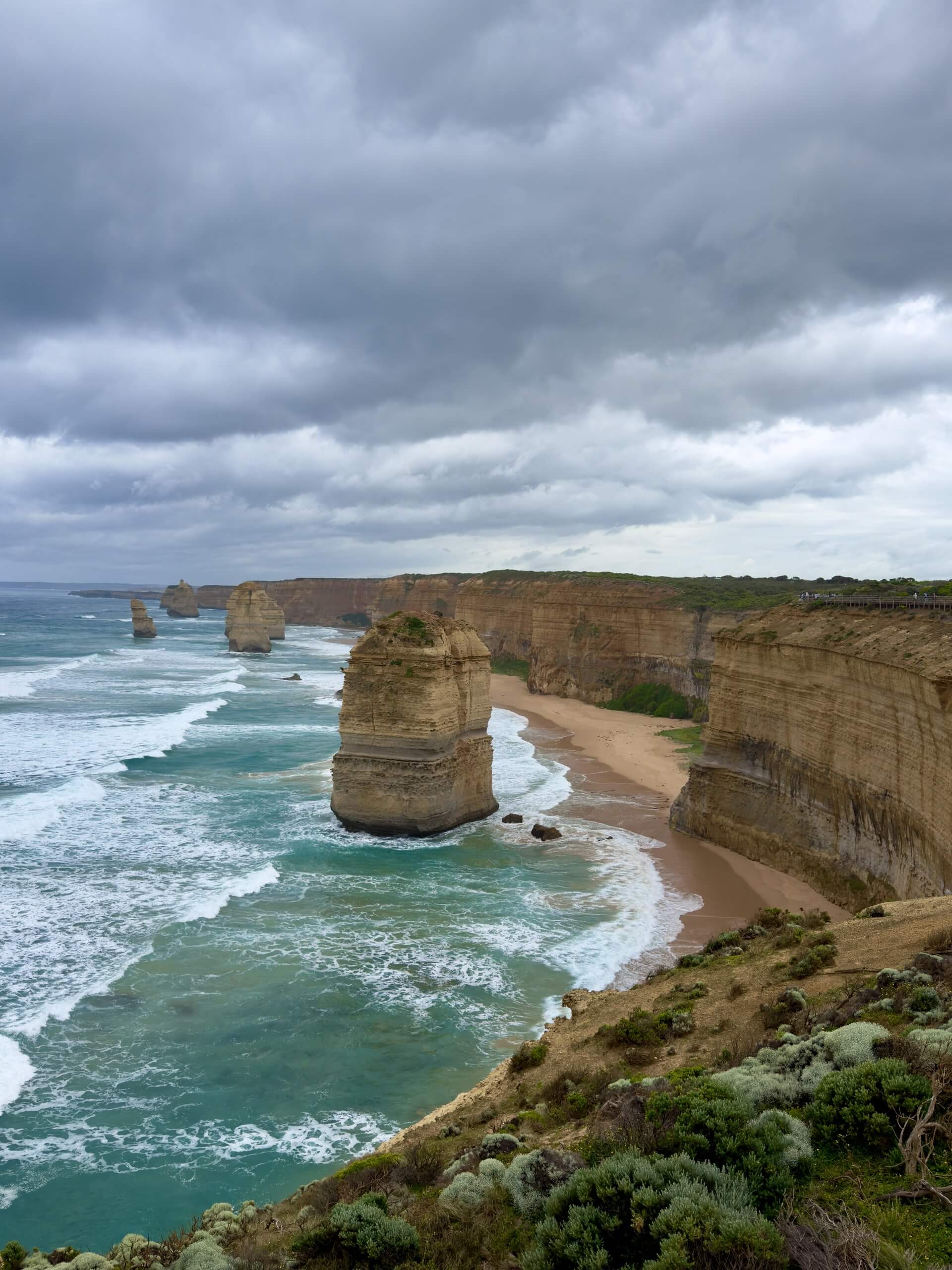
- The Twelve Apostles are enormous limestone cliffs in the sea, shaped by millions of years of erosion. Only seven remain standing; the rest have collapsed. The viewpoint is free to access, and at sunset the cliffs turn golden. Unfortunately, drone flights have been prohibited here since 2020 (national park).
- A steep staircase leads down to the beach right next to the Twelve Apostles. From below, the 70-meter-high cliffs look even more imposing. Caution: The beach is submerged at high tide—check the tide times!
- A narrow gorge, named after a shipwreck from 1878. The turquoise water in the sheltered bay is surreal and beautiful — one of the most photogenic places I have ever seen.
- Formerly London Bridge, until the arch collapsed in 1990 (two tourists had to be rescued by helicopter). Still impressive.
Stage 3: Port Campbell → Allansford (approx. 60 km)
The least visited section — and precisely for that reason, quiet and relaxed. The Bay of Islands has similar rock formations to the Twelve Apostles, but without the crowds. In Warrnambool, you can watch southern right whales from the shore between June and September — for free.
My photo and video setup for the Great Ocean Road
The Great Ocean Road is a photographer's paradise. My setup:
- Sony A7V with Tamron 17-28mm f/2.8 for the wide-angle coastal shots, Tamron 28-200mm f/2.8-5.6 for details such as surfers at Bells Beach and koalas in Kennett River.
- DJI Mini 5 Pro (under 249g) — can be flown in Australia without registration, perfect for the coastal sections between the national parks.
- DJI Osmo Action 6 as a dashcam in the rental car — the time-lapse footage of the winding route between Lorne and Apollo Bay is cinematic.
- PolarPro ND64 and ND1000 — indispensable for long exposures of the surf at the Gibson Steps and soft water structures at the Twelve Apostles.
Drones are prohibited in national parks (Twelve Apostles, Great Otway NP). However, the coastal areas in between are legal and offer spectacular aerial views. Always check the CASA app beforehand.
Cost — How much does the Great Ocean Road cost?
| Position | budget | Comfortable |
|---|---|---|
| Rental car (4 days, from Melbourne) | approx. 160-280 AUD (40-70 AUD per day) | Higher vehicle class, price varies depending on the provider |
| Petrol (approx. 500 km total) | 50-70 € | 50-70 € |
| Accommodation per night | €30-60 (Hostel/Camping) | €120-250 (Boutique) |
| Food per day | 25-40 € | 60-100 € |
| Twelve Apostles helicopter ride | — | 130-200 € |
| Otway Fly Treetop Walk | — | ~22 € |
Total for 4 days: €400-700 (budget) or €1,000-2,000 (comfort). The road trip itself costs virtually nothing — there are no tolls and all viewpoints are free.
Practical tips from personal experience
When to go?
The best time to visit is from November to March (Australian summer). Longer days mean more light for photos. But even in summer, it can get chilly on the coast—always bring a jacket. In winter (June to August), there are fewer tourists, but the weather is unpredictable and some hiking trails may be closed.
How many days should I plan for?
At least 3 days, ideally 4-5. Driving through in one day is possible, but you will miss the best part of the experience. The best moments—koalas in Kennett River, sunset at the Twelve Apostles, hiking in the rainforest—take time.
Driving on the left
Australia drives on the left. The winding coastal road takes some getting used to at first, especially with oncoming traffic in narrow sections. My tip: Take it easy on the first day and don't get stressed out by the oncoming traffic. After 2-3 hours, driving on the left will be routine.
Don't forget to refuel!
There are hardly any petrol stations between Apollo Bay and Port Campbell. Fill up in Apollo Bay – the next section is the wildest and most beautiful, and you don't want to be stranded on the side of the road with an empty tank.
Australia has a good healthcare system, but tourists pay for everything privately and treatments are very expensive; an emergency room visit costs several hundred AUD. Anyone who has an accident in the Outback or on the reef also needs repatriation coverage for the Flying Doctor service.
Great Ocean Road as part of a longer Australian route
For a longer route, the available time is the most crucial factor. Those planning to start or end their trip in Melbourne should add three to four days to any Australian itinerary that includes the Great Ocean Road. The east coast between Sydney and Cairns covers around 2,900 kilometers; two weeks is the minimum for this. A four-week option combines this coastal route with an additional week in the Red Centre around Uluru, Kings Canyon, and Kata Tjuta. Those wishing to explore western Australia drive about 2,200 kilometers from Perth to Broome; here, too, two weeks is the minimum.
| Building block | Distance, time | character |
|---|---|---|
| Great Ocean Road | Coast, 3–5 days | Cliffs, rainforest |
| East: Sydney–Cairns | 2,900 km, from 2 weeks | Cities, reef |
| West: Perth–Broome | 2,200 km, from 2 weeks | Wilderness, Ningaloo Reef |
Five to six weeks is sufficient to combine the East and West coasts using domestic flights. The article describes the routes in detail. Australia East Coast or West Coast.
Which vehicle is suitable for the Great Ocean Road
A regular compact car is sufficient for the paved Great Ocean Road; you only need four-wheel drive for the gravel roads in Otway National Park. Therefore, when choosing a vehicle, the most important factor is how you plan to continue your journey. A rental car is inexpensive, flexible, and easy to drive, but requires a hotel or hostel and doesn't offer cooking facilities; it costs 40–70 AUD per day. A campervan for two people combines sleeping space and cooking facilities and costs 100–180 AUD per day. For Fraser Island and Cape Tribulation, a four-wheel-drive vehicle is booked as a daily rental. A rental car is essential on the West Coast.
For longer Australian road trips, I plan a maximum of 300 to 400 kilometers per driving day; otherwise, all that's left of the journey is the passenger seat.
Great Ocean Road compared to other road trips
| Road trip | Landscape | Photo spots | Cost | Overall impression |
|---|---|---|---|---|
| Great Ocean Road (AUS) | ★★★★★ | ★★★★★ | ★★★★☆ | ★★★★★ |
| Route 1, Big Sur (USA) | ★★★★★ | ★★★★☆ | ★★★☆☆ | ★★★★☆ |
| Ring Road (Island) | ★★★★★ | ★★★★★ | ★★☆☆☆ | ★★★★☆ |
| Garden Route (South Africa) | ★★★★☆ | ★★★☆☆ | ★★★★★ | ★★★★☆ |
The Great Ocean Road narrowly wins for me over the Ring Road in Iceland — mainly because of the better weather and wildlife (koalas, whales, parrots right by the road).
Equipment for the road trip: Which technologies and travel aids have proven useful in many countries is described in the Best travel gadgets of 2026.
For Tourism Boards and brands: If you want to showcase a destination like this with your own travel content, you can find information about the process and services on the website. Book a Travel Content Creator. For premium campaigns, there are additional benefits. Book Luxury Travel Influencer. A checklist for the creator briefing is available in the guide: Destination Marketing with Creators.
Related to this: Australia East Coast Cairns–Brisbane.
FAQ — Great Ocean Road
Can I do the Great Ocean Road as a day trip from Melbourne?
Technically, yes—many tour buses offer that. But then you'll only have a maximum of 30 minutes at the Twelve Apostles and miss everything in between. If you only have one day, drive directly to the Twelve Apostles (3 hours from Melbourne via the motorway) and take the coastal road back. But really: take your time.
Do I need all-wheel drive?
No. The entire Great Ocean Road is paved and in perfect condition. A regular compact car is perfectly adequate. You only need four-wheel drive if you plan to turn onto gravel roads in Otway National Park.
Are drones allowed on the Great Ocean Road?
Outside of national parks, yes (under 249g without a license). Drones are prohibited in national parks (Twelve Apostles, Loch Ard Gorge, Great Otway NP) — fines up to AUD 11,000. However, the coastal stretches between the parks are legal and offer fantastic perspectives.
When is the best time to watch the sunset at the Twelve Apostles?
In summer, the sun sets to the left (west) of the rocks—you'll get the perfect light between 30 minutes before and 15 minutes after sunset. Arrive at least an hour beforehand to secure a good spot by the railing. The parking lot fills up after 5 p.m.
Is the helicopter flight over the Twelve Apostles worthwhile?
If your budget allows: absolutely. 15 minutes costs around €130-200 per person, but the perspective from above is a completely different world. The formations, the color contrasts between rock and sea—it's one of those experiences you never forget. Since drones are banned in the park, the helicopter is the only option for aerial photography.
How can the Great Ocean Road be incorporated into a longer trip to Australia?
If Melbourne is the starting or ending point of the trip, the Great Ocean Road adds three to four days to any route. For the east coast (around 2,900 kilometers Sydney–Cairns) and the west coast (Perth–Broome), a separate time block of at least two weeks is required.
How much does it cost to rent a car or campervan in Australia per day?
A rental car costs 40–70 AUD per day, a campervan for two people 100–180 AUD per day.
How many kilometers per day are reasonable on an Australian road trip?
A maximum of 300 to 400 kilometers per driving day.

Max Haase
Travel Content Creator · Drone Photographer · Visual Storyteller
A professional travel creator for over 10 years with over 4 million followers. Specializing in high-end tourism board collaborations and visual travel storytelling.
 German
 English
 French
 Spanish