
Angel Falls Venezuela: Discover Salto Ángel, Los Roques & Canaima
- Salto Ángel (Angel Falls) is the highest waterfall in the world at 979 m — accessible only by small plane + boat on the Carrao River
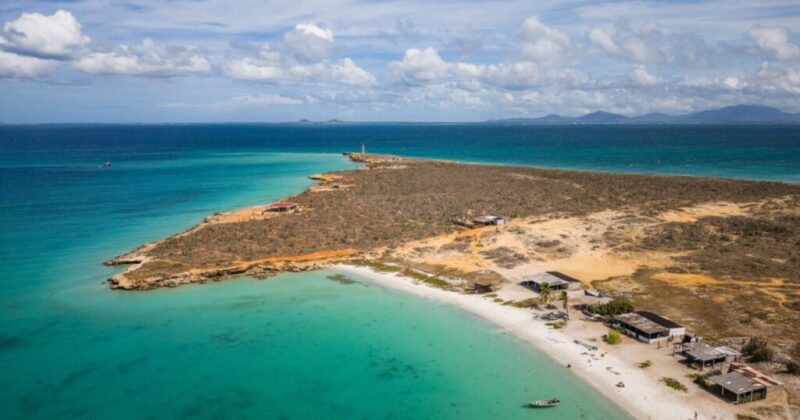
- Los Roques: a turquoise Caribbean atoll lagoon, virtually deserted, a 40-minute flight from Caracas
- Canaima National Park: UNESCO World Heritage Site, larger than Germany — Tepui table mountains, Pemón culture, jungle rivers
- Venezuela is not a country for solo backpacking. Organized tours, cash in US dollars, and caution in Caracas are essential.
- : ~35–65 USD/day (tour + accommodation + food) — far cheaper than other South American destinations
- Best time to visit: December–April (dry season) for Angel Falls and Tepui
Venezuela is one of South America's last true adventure destinations. Not because of beach clubs or Instagram hotspots—but because of a landscape that has barely changed in 50 years: endless savannah, rugged sandstone table mountains (tepuis), the world's highest waterfall, and a Caribbean atoll that looks like something out of a nature documentary. I was there at the end of 2023—organized, prepared, with cash in my belt—and it was one of the most intense trips I've ever taken.
This travel report shows you how to experience Venezuela safely as an experienced traveler: which regions are worth visiting, which to avoid, what the tours cost, how to get there, and what you should definitely pack.
Venezuela as a travel destination: What to expect
Venezuela has made few positive international headlines in recent years. The economic and political crisis of the past decades has changed the country—but not its natural environment. Canaima National Park in the south, the Caribbean coast in the north, the endless Llanos savannas in the center: all of this still exists much as it did 30 years ago, only more accessible because tourism is so limited.
What you need to travel to Venezuela: realism, a sense of adventure, and good organization. Anyone expecting to hitchhike through the country on their own with a backpack will quickly reach their limits. Those who travel with a reputable local tour operator will experience one of the most impressive countries in South America.
Venezuela security situation: What you need to know
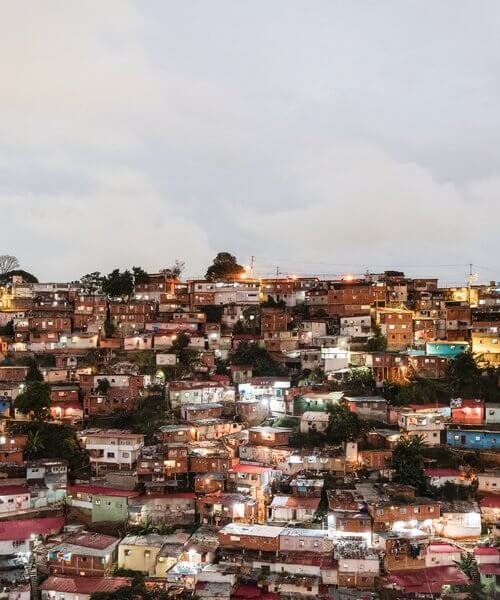
I wouldn't be an honest travel blogger if I were to sugarcoat the security situation in Venezuela. The German Federal Foreign Office has issued a travel warning (partial travel warning) for parts of Venezuela—and for good reason. Caracas is among the cities with the highest crime rates in the world. Border regions with Colombia and Brazil are plagued by illegal mining and armed groups.
Venezuela's healthcare system has collapsed; medicines and bandages are scarce, and hospitals are often not operational. In an emergency, you will have to be airlifted to a private clinic in Colombia or on the ABC islands; this is only possible with repatriation insurance.
What this means in concrete terms: The tourist regions — Canaima National Park, Los Roques, Mérida — are significantly safer for organized travel than the general situation suggests. My visit went smoothly because I:
- I worked with a registered Venezuelan tour operator
- I only crossed through Caracas for my connecting flight to Los Roques (taxi directly from the airport).
- I carried only USD cash (no card, no ATM).
- I wasn't wearing any conspicuous valuables
- was no longer on the street in the evening after sunset.
Angel Falls & Canaima National Park: The Heart of Venezuela
Angel Falls, sometimes called Engelsfall or Paradiesfall in German, is the world's highest waterfall with a total height of 979 meters (free fall: 807 m). It lies in the heart of Canaima National Park in the state of Bolívar, plunging from Auyán Tepui and landing in the Churún River. This is not an accessible tourist spot with a parking lot—it's pure wilderness.
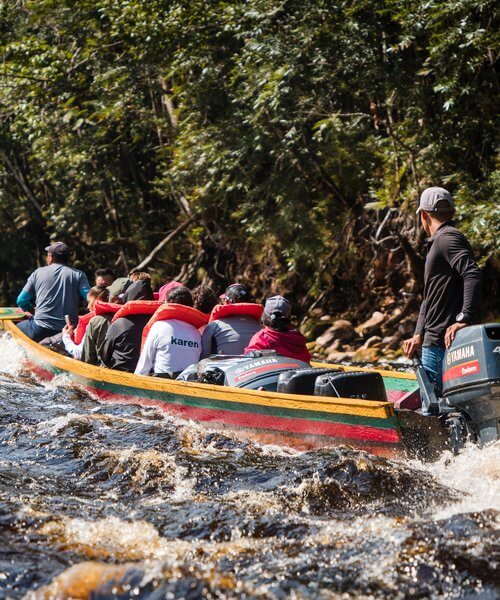
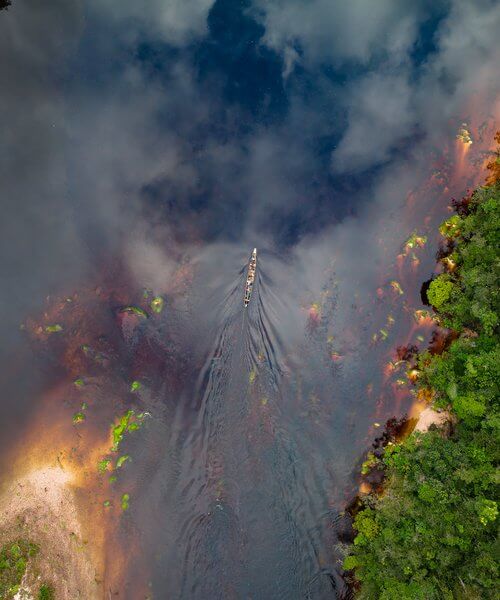
To see Angel Falls, take a small plane from Ciudad Bolívar or Puerto Ordaz to Canaima (approximately 1–1.5 hours). From there, a motorboat will take you several hours down the Carrao River through the jungle. The Pemón, the indigenous people of the region, are the guides on this tour—and an essential part of the experience.
Canaima National Park has been a UNESCO World Heritage Site since 1994 and, at 4.4 million hectares, is one of the largest national parks in the world. What makes it unique are the tepuis—enormous, flat-topped sandstone mesas that rise above the savanna and jungle. They are evolutionarily isolated; many animal and plant species found on the tepuis are found nowhere else on Earth. Auyán Tepui, from which Angel Falls plunges, is the largest of them all, covering 700 km².
How much does the Angel Falls tour cost?
The cost of a 3-day Angel Falls tour from Ciudad Bolívar (including small plane, boat trip, guides, meals, and basic accommodation in Canaima) is approximately USD 400–600 per person. Booking directly on-site is cheaper than through international agencies, but requires more independent research and Spanish language skills.
Los Roques: Caribbean archipelago at the end of the world
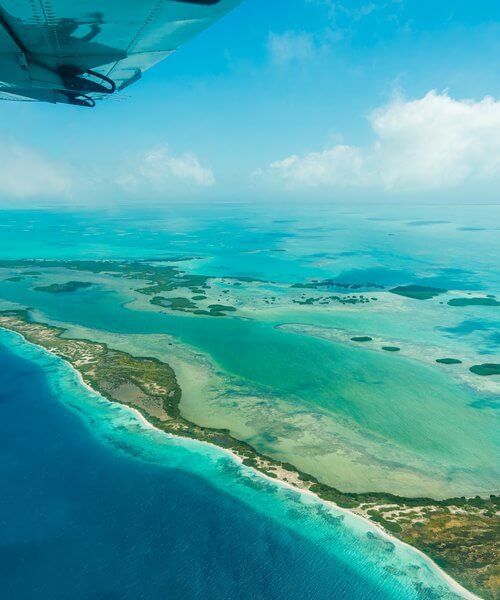
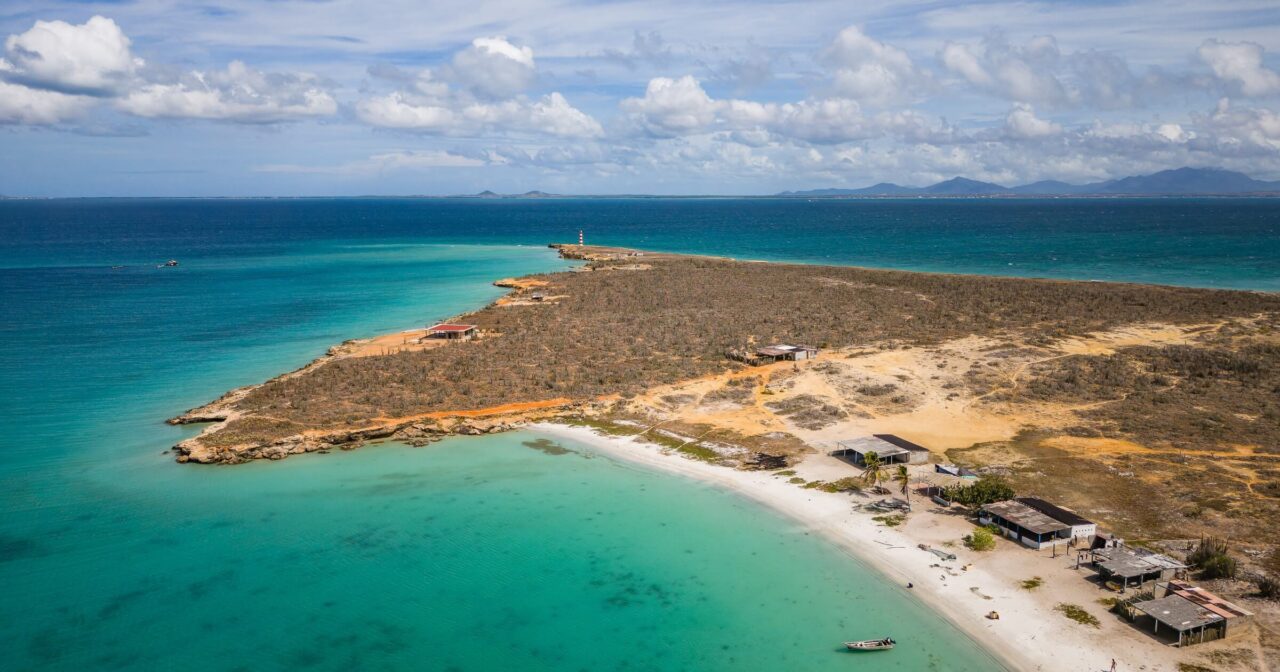
Anyone who says the most beautiful Caribbean islands are in the Dominican Republic or the Bahamas hasn't seen Los Roques. This archipelago lies 160 km north of Caracas, right in the Caribbean Sea—350 islands and sandbanks, turquoise water in 30 different shades of blue, white coral sand beaches, and hardly a tourist in sight.
Los Roques is a national park—hotels, resorts, mass tourism: forbidden. Instead, the main island of Gran Roque offers small posadas (family-run guesthouses), fresh fish, and tranquility. The only way to get there is by small plane from Caracas (approximately a 40-minute flight, around $200–280 round trip). If you want to dive, kitesurf, or simply relax on a virtually deserted white sandbar—Los Roques is the place for you.
Gran Sabana & Roraima Tepui: The Lost Plateau
The Gran Sabana is a vast high plateau in southeastern Venezuela, near the borders with Brazil and Guyana. Endless red savannah, waterfalls plunging into the void, and silhouettes of tepuis on the horizon. Here also lies Mount Roraima—at 2,810 meters, the highest tepui and one of the most famous treks in South America.
The ascent of Mount Roraima typically takes 5–6 days (round trip) and is only permitted with a Pemón guide. The summit is perpetually shrouded in clouds and rain—a surreal Martian landscape with quartz rocks, endemic plants, and small lakes. It is not a technically challenging climb, but it is physically demanding.
Los Llanos: Wilderness, Caimans & Anacondas
Besides the classic Venezuelan highlights, the Llanos savannah is an absolute insider tip for wildlife viewing. This vast floodplain in the center of the country is a wildlife paradise during the dry season (December–April): caimans, capybaras, anacondas, jaguars (less frequently seen), giant otters, and hundreds of bird species—all observable within a day trip from a hacienda.
Animal lovers and nature enthusiasts can book 3-5 days at one of the traditional hatos (ranches) that offer ecotourism. The most well-known hatos in the states of Apure and Barinas can be booked through organized tour operators.
Mérida & the Andes: Venezuela off the postcard route
— a university city in the Venezuelan Andes at an altitude of 1,630 m. The city is known for its vibrant atmosphere, the surrounding area for its magnificent mountain scenery, paragliding, and Pico Bolívar (4,978 m, Venezuela's highest mountain). The former cable car to Pico Espejo (4,765 m) — once the highest and longest cable car in the world — has been partially reopened after extensive repairs.
For backpackers and active travelers, Mérida is a good starting point: cheaper than Caracas, more relaxed safety climate, international backpacker infrastructure. Direct bus connections from Caracas (approx. 10–12 hours) or short flights.
Entry & Travel to Venezuela
Venezuela is not directly accessible from Germany, Austria, or Switzerland via nonstop flights. The most important connecting routes are:
| route | Total flight time | Airlines | Approximate price |
|---|---|---|---|
| FRA/MUC → Bogota (COL) → Caracas | approx. 2–4 pm | Avianca, Wingo, Copa | €600–1,000 |
| FRA → Panama City → Caracas | approx. 3–5 pm | Copa Airlines | €700–1,100 |
| FRA/ZRH → Miami → Caracas | approx. 4–6 pm | American, Delta | €750–1,200 |
| Entry via Brazil (Boa Vista → Santa Elena) | depending on the departure point | Bus/Taxi border | Cheapest option for Roraima trekkers |
Currency & Costs in Venezuela
The official currency is the Venezuelan Bolívar (VES) — but in practice, much of the country operates on US dollars. This is the most important practical information for your trip preparation: bring enough USD cash.
- ATMs in tourist areas are rare and often broken
- Credit cards are not accepted in many establishments or extra charges apply.
- USD is accepted almost everywhere, and the exchange rate is usually fair in the parallel market.
- EUR can also be exchanged, but USD is the preferred currency.
- Bring small bills (1$, 5$, 10$) — change is scarce.
Daily budget Venezuela
| category | budget | comfort |
|---|---|---|
| Accommodation | 15–25 USD | 30–60 USD |
| Food & Drink | 10–15 USD | 20–30 USD |
| Local transport | 5–10 USD | 15–25 USD |
| Activities/Tours | 20–40 USD | 50–100 USD |
| Total/Day | 50–90 USD | 115–215 USD |
Note: Daily costs vary greatly depending on the travel region. Angel Falls tours and Roraima treks are charged as package deals and are not included in the daily budget above.
Equipment & Packing List Venezuela
Venezuela presents you with very different climatic challenges: Caribbean heat on Los Roques (30–35°C), humid jungle heat in Canaima (28–34°C), and cool temperatures in Mérida and on the tepuis (10–18°C). Your packing list must cover this range.
Venezuela suffers from chronic supply shortages; even basic foodstuffs are scarce. Sunscreen, mosquito repellent, hygiene products, and headlamps are either unavailable locally or only obtainable through the black market; you must bring everything with you.
The most important information at a glance
- Backpack: The Osprey Farpoint 40 It fits as hand luggage on small planes and holds enough for 2-3 weeks.
- Water filters: Essential in the jungle — LifeStraw Personal Water Filter makes river water drinkable
- Insect protection: Nobite DEET 50% — Weak resources are not enough in the Venezuelan jungle
- Headlamp: Petzl Tikkina for power outages and night tours in the camp
- Power bank: Anker 737 (24,000 mAh) — an absolute must-have due to power outages
- Universal adapter: Venezuela uses US plugs (Type A/B) — no European adapter works without an intermediate plug.
Best time to travel to Venezuela
Venezuela lies north of the equator and has a tropical climate with distinct rainy and dry seasons:
| Period | climate | Recommendation |
|---|---|---|
| December – April | Dry season, little rain, 25–35°C | Best time to visit Angel Falls, Roraima, and Los Roques |
| May – July | Beginning of the rainy season, transition phase | Angel Falls has more water, but higher rivers make it difficult for boats. |
| August – November | Rainy season, daily showers | Cheaper, but jungle tours are wet and harder to access. |
Vaccinations & Health
Venezuela is one of the countries where thorough travel medicine preparation is not optional. Recommended vaccinations according to the Institute for Tropical Medicine:
- Mandatory vaccination: Yellow fever — proof (vaccination booklet) required for entry via certain countries or when visiting endemic areas (Canaima, Llanos).
- Hepatitis A and B
- Typhus (especially from eating at street stalls)
- Rabies (for long-term stays or contact with animals)
- Malaria prophylaxis: recommended for Canaima National Park, Llanos and Gran Sabana — consult a tropical medicine specialist
Practical tips for traveling to Venezuela
- Available for purchase locally (Movilnet, Digitel) — coverage is often poor outside of cities. A roaming SIM card with a data plan from Germany is recommended as a backup.
- Spanish skills: English is hardly spoken in tourist areas. Basic Spanish skills are not a luxury, but a necessity.
- Avoid night buses: Overnight bus journeys in Venezuela are too risky due to the high risk of robbery on some routes.
- You can find reputable Venezuelan operators through recommendations from relevant travel forums (Lonely Planet Thorn Tree, Reddit r/vzla, TripAdvisor Venezuela)
- Don't openly carry your camera in Caracas. In Canaima and Los Roques, it's no problem—life there takes place within safe boundaries.
- Always take at least 20% more cash than calculated — a buffer for extended tours, additional costs or emergencies.
Conclusion: Is Venezuela worth it?
Yes — but not for everyone and not without preparation. Venezuela is a land of extremes: extreme nature, extreme history, extreme contrasts. Anyone who sees the tepuis from a small plane, chugs along a jungle river to Angel Falls, or lies on an empty coral beach in Los Roques understands why this country fascinates despite everything.
The most important prerequisites for a successful trip to Venezuela: organized tours with a reputable tour operator, sufficient USD cash, no spontaneous solo excursions in Caracas, and realistic expectations regarding infrastructure. Those who meet these requirements will experience one of the most impressive travel destinations South America has to offer.
FAQ — Frequently Asked Questions about Venezuela
Is Venezuela safe for tourists?
Venezuela has heightened security risks, especially in Caracas and border regions. Tourist areas like Canaima, Los Roques, and Mérida are significantly safer when traveling with a local tour operator. Solo backpacking trips through the country without a local guide are not recommended. For current information, consult the German Federal Foreign Office for Venezuela.
How do I get to Angel Falls?
The only way to get there is via Caracas or Ciudad Bolívar by small plane to Canaima, then several hours by motorboat on the Carrao River through the jungle. Organized 3-day tours cost approximately USD 400–600 per person, including flight, boat, guide, food, and accommodation in Canaima.
Do I need a visa for Venezuela?
Germans, Austrians, and Swiss citizens do not require a visa for tourist stays of up to 90 days. A valid passport with at least six months of remaining validity is required. The entry card (tarjeta de ingreso) is filled out at the airport.
What currency do I need in Venezuela?
The official currency is the Venezuelan bolívar, but in practice the country operates on US dollars. Bring plenty of USD cash—credit cards are not accepted in many regions, and ATMs are rare and often out of order. Small bills (11 TP4T, 51 TP4T, 101 TP4T) are essential, as change is scarce.
How expensive is a trip to Venezuela?
The daily budget is $50–$90 USD (accommodation, food, local transport). Additional costs include package deals for Angel Falls tours ($400–$600 USD per person for 3 days), flights to Los Roques ($200–$280 USD round trip), and flights from Europe (€600–€1,200).
When is the best time to travel to Venezuela?
The best time to visit is during the dry season from December to April. During this time, the trails are drier, Canaima National Park is more easily accessible, and Los Roques enjoys consistently sunny weather. In the rainy season (May–November), Angel Falls is more impressive, but boat trips are more challenging.
What vaccinations do I need for Venezuela?
Yellow fever vaccination is mandatory for visits to certain regions—proof of vaccination is sometimes required upon entry or onward travel. Hepatitis A and B, typhoid, and malaria prophylaxis are also recommended for Canaima National Park and the Llanos region. Please consult a travel medicine specialist before traveling.
What is a tepui?
A tepui is a flat-topped sandstone table mountain in the Guiana Highlands of South America. Tepuis are evolutionarily isolated ecosystems—many animal and plant species on their summits exist nowhere else on Earth. The most famous is Auyán Tepui, from which Angel Falls falls.
Can I trek to Roraima-Tepui on my own?
No — climbing Mount Roraima is only permitted with a Pemón guide. The trek takes 5–6 days (round trip) and starts from the village of Paraitepui. It can be booked through local tour operators in Santa Elena de Uairén or through Venezuelan travel agencies online.
How do I travel between regions in Venezuela?
Domestic flights are the preferred option for long distances—and mandatory for Los Roques and Canaima (small planes). Buses exist between cities like Caracas, Mérida, and Maracaibo, but these pose a safety risk, especially at night. Daytime travel with reputable bus companies is acceptable.
Is kitesurfing possible in Venezuela?
Yes — Los Roques is considered one of the best kitesurfing spots in the entire Caribbean. The northeast trade winds blow steadily at 15–25 knots from December to April. Equipment rental and lessons can be booked on the main island of Gran Roque.
What is the electricity supply like in Venezuela?
Venezuela experiences frequent power outages in many regions—both in cities and in rural areas. A high-capacity power bank (at least 20,000 mAh) is essential. The plug type is US standard (Type A/B)—European devices will require an adapter.
Max Haase
Travel Content Creator · Drone Photographer · Visual Storyteller
A professional travel creator for over 10 years with over 4 million followers. Specializing in high-end tourism board collaborations and visual travel storytelling.
 German
 English