
Backpacking Backpack: How to Pack 40 Litres Properly
Backpacking Backpack: How to Pack 40 Litres Properly
A 40-litre backpacking backpack was enough for me for half a year in South America and stayed manageable with a sensible selection. My Osprey Farpoint 40 weighed 7.8 kilograms packed without water and tech, or 10.2 kilograms with everything. What counts is not as many compartments as possible, but a limited packing list, packing cubes and a safe place for valuables.
What size backpack for backpacking: 40 litres from experience
How big does a backpacking backpack need to be? My specific answer after six months between Colombia, Ecuador, Peru and Bolivia is this: 40 litres can be enough for a trip of several months. I carried the Osprey Farpoint 40 for more than 15,000 kilometres, through numerous hostels and through temperatures between 0 degrees in the Andes and 40 degrees in the Amazon. The volume was more than a number on the label. It set a clear limit that forced me to pack deliberately.
For my South America trip, 40 to 50 litres were sufficient. The smaller approach has a practical advantage: a bigger backpack invites you to fill the empty spaces. Every extra item then has to be carried through bus stations, alleys and accommodation. My detailed South America packing list for backpacking shows which selection proved itself on this trip.
Even so, there is no single litre figure for every person and every route. As a general pointer: the length of the trip alone does not determine the volume. Climate, planned activities and special equipment change what you need. Anyone who has to carry a tent or sleeping bag starts from a different position than someone sleeping in hostels. On my South America route both stayed at home, because accommodation had bed linen and sleeping bags were included or could be rented on organised treks.
40-litre backpack as hand luggage: what fitted in
My basic principle was a small, repeatable wardrobe: three T-shirts, two pairs of shorts, one pair of light long trekking trousers, a rain jacket, a fleece or down jacket, five pairs of socks, five pairs of underwear, swim shorts, flip-flops and light hiking shoes. Layering covered heat and cool altitudes without a separate garment for every temperature. I did laundry on the road instead of carrying clothes for months.
So a 40-litre backpack is no promise that any gear you like will fit. It works when every item has a job and heavy duplicates are left out. For a hut-to-hut tour, my E5 Alpine crossing packing list also gives 35 to 40 litres, but the contents differ: there, a hut sleeping bag liner, trekking poles and a hydration system belong to that specific tour. Volume and packing list always have to be considered together.
Backpacking backpack vs. suitcase
For my route, the backpack was a better choice than a suitcase. In South America, paths lead over cobblestones and sand, up stairs and onto buses where a convenient luggage rack is not always waiting. You can carry a backpack where wheels are no help. In Cusco I saw a traveller who had to move his hard-shell suitcase through steep alleys at 3,400 metres. That encounter confirmed my decision.
This is a travel experience and not a general product test. On level ground, a suitcase can certainly be comfortable. As a neutral pointer for the decision: do not look only at the airport and the hotel, but at the whole way in between. Stairs, unpaved roads, frequent changes of location and bus journeys speak in favour of luggage you can carry. If you hardly change accommodation, you may judge the same comparison differently.
Being organised is not an exclusive advantage of a suitcase either. A travel backpack that opens fully and individual packing cubes make the contents similarly easy to see. The important difference remains getting around: on cobblestones, on climbs and when boarding buses, I had a deliberately small backpacking backpack right on my body.
Weight and packing list for the backpacking backpack
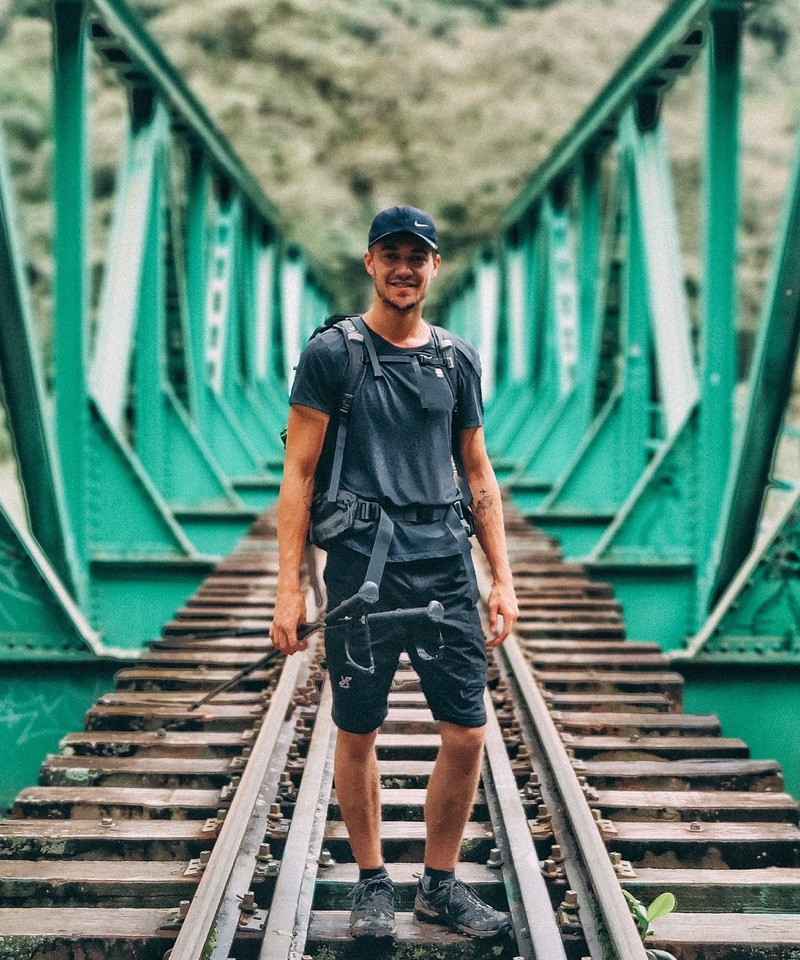
My Osprey Farpoint 40 came to 7.8 kilograms without water and tech and to 10.2 kilograms with everything. These two figures are more helpful than a vague statement like “light”, because water and technical gear change the total weight noticeably. The detailed weight table from my trip looked like this:
| Object | Weight | Approx. cost |
|---|---|---|
| Osprey Farpoint 40 | 1,500 g | 160 € |
| 3 Merino T-shirts | 450 g | 150 € |
| Rain jacket and fleece | 550 g | 120 € |
| hiking boots | 800 g | 100 € |
| Anker 737 Powerbank | 630 g | Price not documented |
| DJI Mini 5 Pro with Fly More Combo | 450 g | 1.100 € |
| Sony A7V and Tamron 28–200 mm | 1,350 g | 4.350 € |
| DJI Action 6 Pro and mounts | 300 g | 450 € |
| complete travel pharmacy | 400 g | 50 € |
| remaining clothing | 1,800 g | 100 € |
| Total creator kit | approx. 8,230 g | approx. 6,580 € (excluding the price of the power bank) |
| Total without Sony and drone | approx. 6,430 g | approx. 1,130 € (excluding the price of the power bank) |
The table documents my creator setup and is not a shopping list for everyone. Camera and drone alone account for a large part of the weight and cost. If you only take photos with your smartphone, you can leave out both items; in the table the package then drops to around 6.43 kilograms and 1,130 euros (excluding the price of the power bank). Conversely, the calculated table weight must not be confused with the total actually weighed, including all contents.
As a general pointer, a simple order helps when sorting out what to leave behind: first fix the necessary clothes and personal items, then choose tech by actual use and finally weigh everything together. It is not the litre figure but the weight you carry that you feel on every walk. For the E5 my target was low as well: the complete list came to 8,352 grams, while the real-world figure I give there was 8.4 kilograms without and 10 kilograms with a full hydration system.
Keep clothing small, wash on the road
On my South America trip, five pairs of underwear and five pairs of socks were enough for four to five days. There were laundries in cities and tourist towns. Three T-shirts and a few layers that combine with each other therefore replaced a large stock of clothes. Light trekking clothing also dries faster than jeans.
For tech, an honest usage check is worthwhile. In my collection of the best travel gadgets the Anker 737 power bank weighs 640 grams; the South America weight table lists it at 630 grams. Such differences between individual lists do not change the core point: tech belongs on the scales and should only come along if its usefulness justifies the extra weight.
Packing cubes and organisation in a 40-litre backpack
Three packing cubes gave my backpack structure: tops went into one, trousers into a second and underwear into the third. That way I found what I was looking for in seconds without emptying everything. The Eagle Creek set of three I used cost about 25 euros. What mattered was not the brand but the fixed allocation.
Another documented solution was Peak Design Packing Cubes for 70 euros. Their compression system reduced the volume by 30 percent. For electronics I also used waterproof bags: an Osprey dry bag set in three sizes cost 25 euros. After a downpour in Colombia my backpack was soaked, while the devices in the dry bags stayed dry.
As a general organisation tip: set your categories before you pack and keep them throughout the trip. Things you need often should be within reach; sensitive tech needs protection from moisture. Compression creates space but does not lower the weight. A package that looks smaller can still be too heavy.
Hand luggage suitability: 40-litre backpack and 10 kg
On my trip, the Osprey Farpoint 40 was hand luggage size. On the South American connections described it fitted as hand luggage, and for low-cost carriers such as Viva Air, JetSmart and Sky, my travel planning gave a limit of 10 kilograms. My total weight of 10.2 kilograms with everything also shows why you have to weigh again before a flight and reduce if necessary.
Volume alone does not guarantee that the bag is allowed in the cabin. As a general pointer, travellers must check the current size and weight rules of the airline they have actually booked. My Philippines trip shows another documented limit: with Cebu Pacific, hand luggage was usually enough, and 7 kilograms was the relevant figure there. So a backpack can have the right format and still be too heavy for a particular fare.
For a trip with a 40-litre backpack as hand luggage, two checks should therefore be made separately: external dimensions or format, and the real weight on the day of travel. Water, newly bought items and extra tech quickly shift the second figure. My approach was to stay below 10 kilograms as a rule and not to fill every free space.
Valuables and security on your body
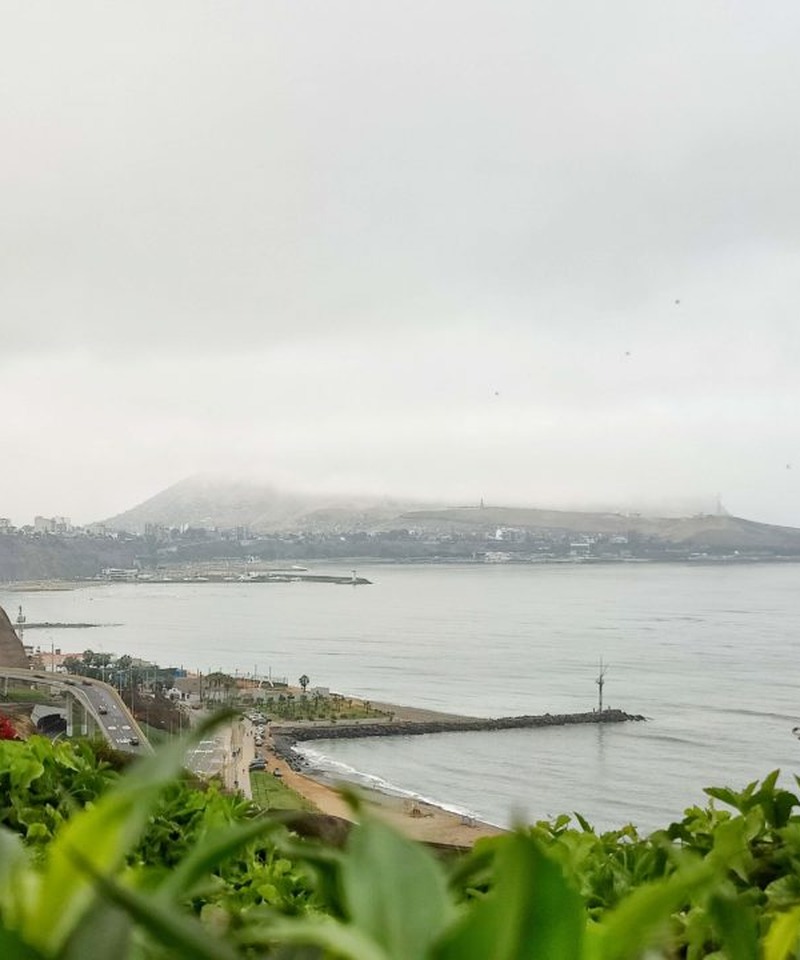
I carried passport, cards and cash in a waterproof bum bag on my body, especially in big cities such as Bogotá, Lima and Buenos Aires. Two credit cards from different banks provided a backup. I also carried 100 to 200 US dollars separately as an emergency reserve. Copies of important documents were stored digitally in the cloud and once as a printout in the backpack.
For Brazil I took further precautions: no visible phone at night, no valuables carried openly and only 50 to 100 reais in cash on my body, about 10 to 20 euros at the time. A phone case with a wrist strap was priced at 5 to 10 euros there. The detailed travel context is in my article on Brazil costs for one month of backpacking.
Inside the backpack itself, dry bags protected camera, drone and batteries from water. An AirTag in the backpack was part of my luggage tracking; the pack of four cost 100 euros. Tracking does not prevent theft, however. As a general pointer, therefore: do not keep important documents and means of payment together in one single place, and do not leave the backpack unattended.
What does not belong in a backpacking backpack
On my South America trip, jeans, sleeping bag, travel detergent and an XXL towel stayed at home. Jeans are heavy, dry slowly and become uncomfortable in the heat. Hostels provided bed linen; on the treks mentioned, a sleeping bag was included or could be borrowed. Instead of travel detergent I used inexpensive laundries. A small microfibre towel was enough for beach days.
- More than two pairs of shoes: light hiking shoes and flip-flops covered my route.
- Paper books: in my comparison a book counted as 300 grams and a Kindle as 180 grams.
- Duplicate chargers: in my gadget setup one compact charger replaced three chargers and saved 200 grams.
- Unused special equipment: for travellers without a photo assignment, a professional camera and drone are not a must.
This list describes my trips, not universal bans. A neutral decision filter is this: is the item needed regularly on this specific route, can it be borrowed locally, or does another item already cover the same function? Personal medication and necessary documents are of course not sorted out by a blanket weight rule.
Cost overview for backpack and organisation
| Item | Documented price | Classification |
|---|---|---|
| Osprey Farpoint 40 | 160 € | Backpack from my South America table |
| Eagle Creek Pack-It Cubes, set of three | approx. 25 € | Organisation on my South America trip |
| Peak Design Packing Cubes | 70 € | Alternative from my gadget setup |
| Osprey Drybag Set | 25 € | Three waterproof bags |
| Apple AirTag, pack of four | 100 € | Tracking for several pieces of luggage |
| Phone case with wrist strap | 5–10 € | Safety tip from Brazil |
The prices come from my respective travel and gear lists and are not a current market price check. Nor can they simply be added up to a mandatory budget: two different packing cube sets are alternatives, and a pack of four trackers covers suitcase, camera bag and drone case as well as the backpack. The large weight table above shows around 6,580 euros for the complete creator kit (excluding the price of the power bank), and around 1,130 euros without Sony and drone.
FAQ: frequently asked questions
Are 40 litres enough for several months of backpacking?
Yes, on my South America trip 40 litres were enough for half a year. This was possible thanks to few items of clothing, regular washing, layering and doing without things like jeans and a sleeping bag. If you need camping gear, you have to reassess what you need.
How heavy was your backpacking backpack?
My Osprey Farpoint 40 weighed 7.8 kilograms without water and tech and 10.2 kilograms with everything. The separate table for the creator kit added up the items recorded there to around 8,230 grams.
Does a 40-litre backpack count as hand luggage?
The Osprey Farpoint 40 was hand luggage size on my South America trip. Even so, the dimensions and weight limit of the airline you have booked must be checked: in the South America examples described, 10 kilograms was the relevant figure, with Cebu Pacific in the Philippines 7 kilograms.
Are packing cubes useful in a backpack?
For me, yes. Three packing cubes separated tops, trousers and underwear, so I did not have to search the whole backpack. Compressing cubes can also reduce volume, but not weight.
Backpack or suitcase for backpacking?
For my South America route the backpack won, because cobblestones, sand, stairs and buses made rolling a suitcase difficult. On a trip with level paths and few changes of location, your personal trade-off may turn out differently.
Where should passport, cards and cash go?
I carried these valuables in a waterproof bum bag on my body. A second card, emergency money and copies of documents were kept separately or additionally backed up digitally, so that not everything is affected by one single loss.
 German
 English
 French
 Spanish
 Italian
 Japanese
 Chinese
 Dutch
 Portuguese