
South America packing list: Backpacking backpack for 3–6 months (8 kg)
The ultimate South America packing list — what you really need (and what can stay at home)
I lived in South America for six months—from Colombia through Ecuador and Peru to Chile and Argentina—traveling with a 40-liter backpack. After over 15,000 kilometers on buses, dozens of hostels, and temperatures ranging from 0°C in the Andes to 40°C in the Amazon, I can tell you: your packing list determines freedom or frustration on your trip. Here's the packing list that has proven itself after thousands of kilometers—not a gram too much, nothing important forgotten.
- Backpack setup: The Osprey Farpoint 40 in hand luggage format, with a total weight under 8 kg, travels comfortably over cobblestones in Cartagena and Cusco.
- Clothing based on the layering principle: Three merino shirts (50-70 €/piece), Uniqlo Ultralight Down down jackets (rated to 0°C) and zip-up trekking trousers cover the Amazon to the Andes.
- Essential medicines: Ibuprofen, Imodium plus electrolytes, Ciprofloxacin from the family doctor, SPF 50+ and DEET 50 % — travel medicine kit costs €50 and weighs 400 g.
- Two credit cards from different banks (DKB Visa + Wise Debit) plus 100-200 USD in cash as an emergency reserve — ATM fees are low.
- What to leave at home: jeans, sleeping bag, travel detergent and XXL towel — hostels have bed linen, laundromats wash for €1-3 per kilo in every city.
The most important piece of advice first: Pack half of what you think you'll need. Then take half of that out again. Anything you forget or that breaks, you can buy in South America—often cheaper than in Germany. I bought three T-shirts, sunglasses, and a charging cable along the way, and it was completely hassle-free. What you can't buy: The fun you lose when you're lugging 20 kilos on your back through cobblestone streets in 35°C heat.

Backpacking in South America: Backpacks & Bags (The Foundation)
40-50 liters is enough for everything. I use the Osprey Farpoint 40 — Fits as hand luggage on any plane (including South American budget airlines like Viva Air or JetSmart), has a detachable daypack for day trips and a laptop compartment. Also includes a waterproof hip pack for valuables (passport, cards, cash) — ALWAYS wear it, especially in Bogotá, Lima and Buenos Aires.
7.8 kg without water and equipment, 10.2 kg with everything. Anything more than that will eventually ruin your back — especially on the steep climbs in Cusco, the cobblestone streets in Cartagena, or the endless stairs in Valparaíso.
In South America, you'll walk on cobblestones, through sand, up and down stairs, and climb onto buses that don't have luggage racks. In Peru, I saw a guy with a hard-shell suitcase struggling up the steep streets of Cusco at an altitude of 3,400 meters. The look on his face confirmed it: a backpack was the right choice.
Panniers: Eagle Creek Pack-It Cubes (3-piece set, approx. €25) revolutionize backpack organization. Top in one pocket, pants in another, underwear in a third. You'll find everything in seconds and won't have to rummage through your entire backpack.

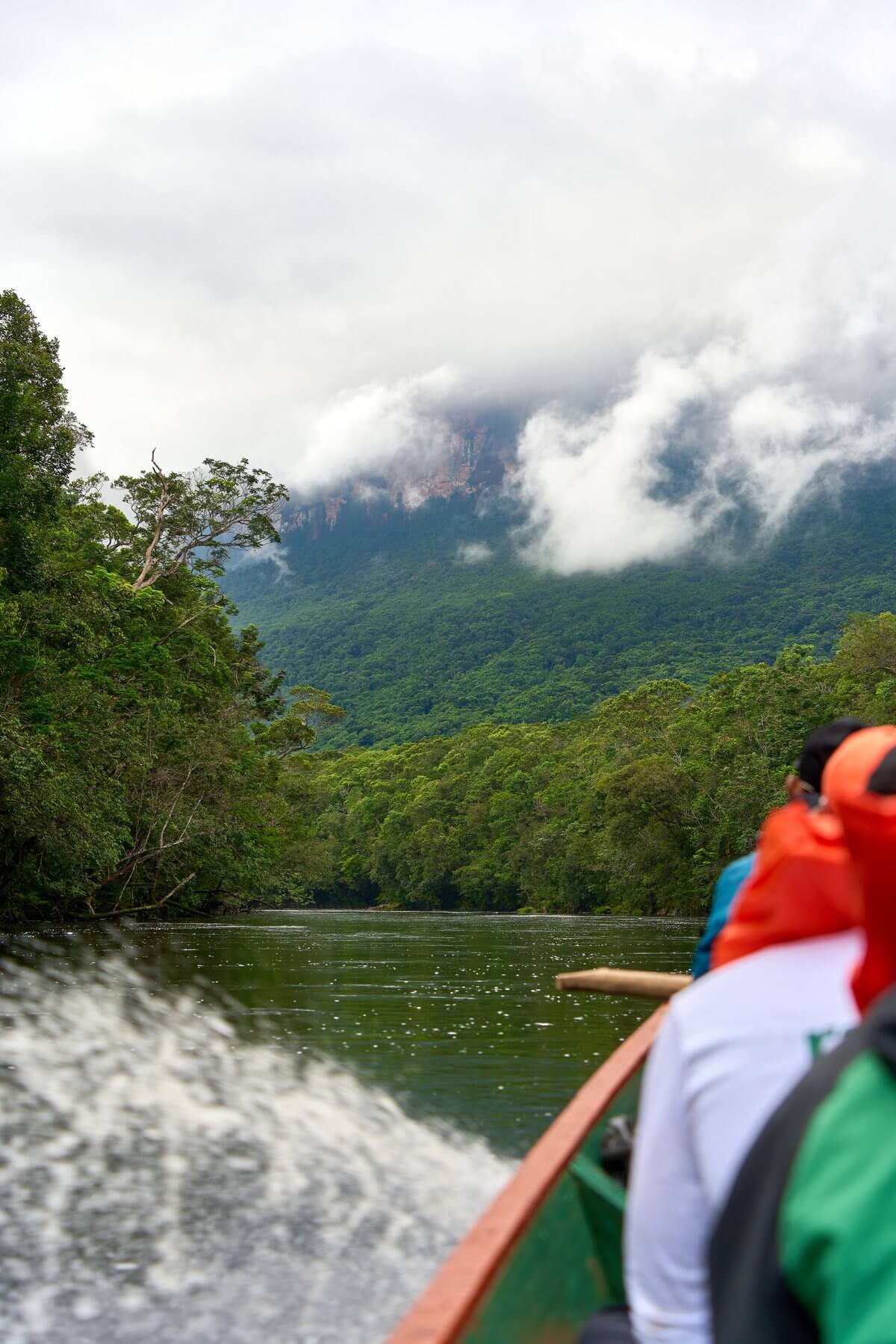
South America Clothing: Andean Layering for Backpacking & Trekking
My complete clothing list for 6 months in South America:
- (2x Merino wool, 1x synthetic) — Merino wool dries quickly, does not smell even after three days, and regulates temperature better than cotton. Icebreaker or Smartwool, Approximately 50-70 euros per shirt. Yes, expensive. But after 6 months of continuous use, each one is cheaper than 10 cotton shirts that start to smell after a week.
- 2 pairs of shorts — one for beach/everyday wear, one for hiking (with zippered pockets)
- Lightweight trekking trousers that can be zipped into 3/4 length trousers. Indispensable for the Andes, practical for temple visits and fine restaurants.
- 1 lightweight rain jacket — Doesn't have to be expensive, but it does need to be packable. I use one from Decathlon for 40 euros — lighter than many 200-euro jackets.
- 1 fleece/down jacket — For the Andes, night buses with air conditioning at polar bear levels, and cold high-Andean nights. I had one Uniqlo Ultralight Down — weighs 200g, packs down to the size of a fist and keeps food warm down to 0°C.
- 5 pairs of socks — a mix of merino wool (hiking) and lightweight sneaker socks. 5 are enough; you wash them every 3-4 days.
- 5 Underwear — Merino wool, Exofficio or similar quick-drying options.
- 1 pair of swimming trunks
- Flip-flops — for hostel showers (athlete's foot is real) and beach days
- 1 pair of lightweight hiking shoes — Columbia Newton Ridge or Merrell Moab 3, Ankle-high. Not heavy hiking boots — you'll need them for Rainbow Mountain, Salkantay and other Andean trails, but they also need to be comfortable enough for strolling around town.
Not at all. In six months, I never once thought, "I wish I had packed more." But I did meet dozens of backpackers who sent clothes home after two weeks.
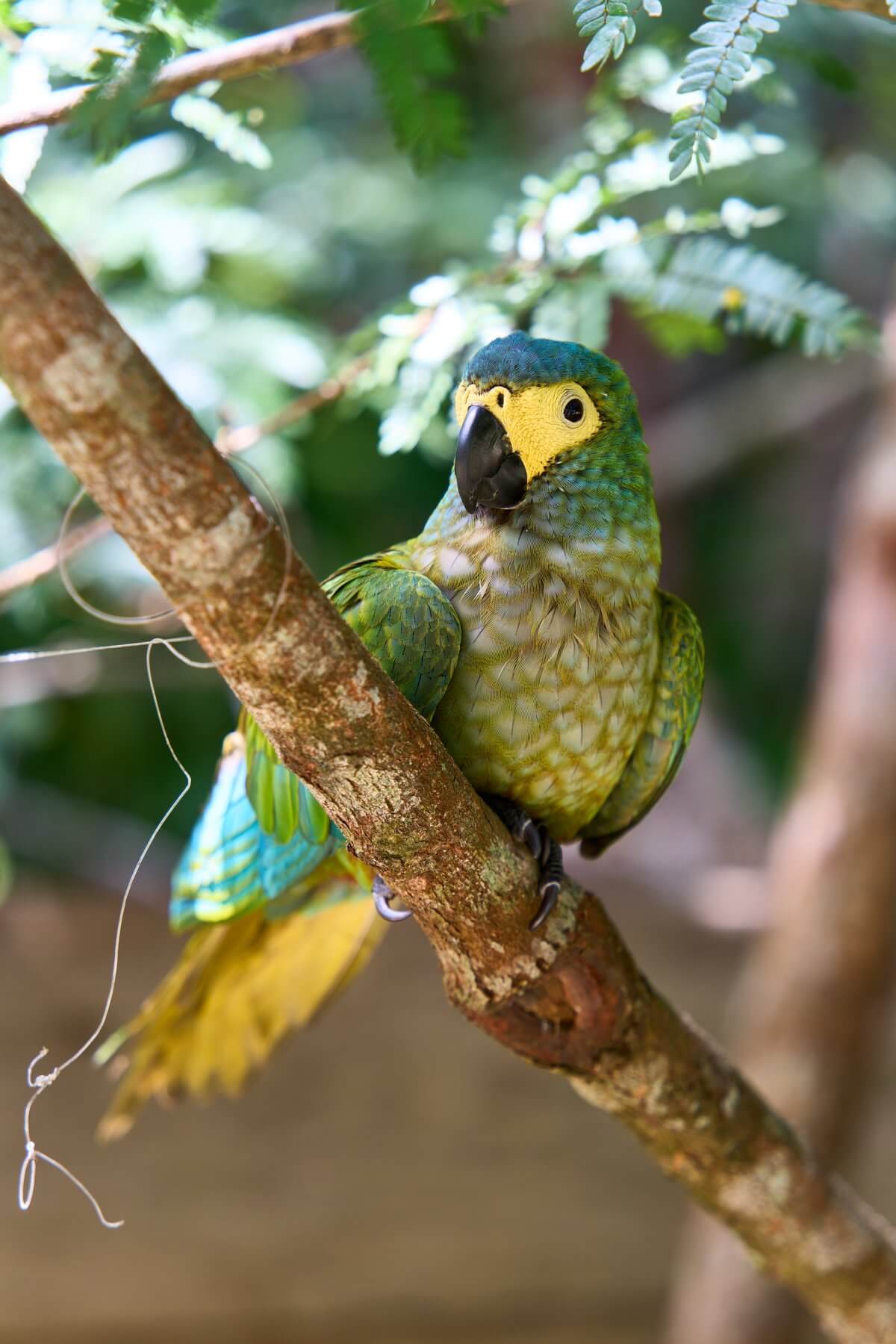


Technology — What really needs to go in your backpack
For me, as a content creator, this is naturally more specific than for the average traveler. My tech setup:
- iPhone 17 Pro Max — My most important tool when traveling. Navigation (Google Maps + Maps.me offline), translation, Uber/Cabify, hostel booking, banking. The camera is now so good that it's perfectly adequate for 70,000 Instagram Stories and Reels — ProRes 4K/120fps, Cinematic Mode, 48MP main sensor.
- Anker 737 Power Bank (24,000 mAh) — 140W fast charger for iPhone, MacBook, and drones. Weighs 630g, fully charges an iPhone 17 Pro Max four times. Invaluable on the 22-hour overnight bus from Lima to Cusco without a power outlet.
- Sony A7V + Tamron 28-200mm f/2.8-5.6 — My main camera body with AI autofocus and 10-bit 4:2:2 internal recording. The Tamron 28-200mm is the perfect travel zoom lens — wide-angle for old towns to telephoto for wildlife. It covers 95% of all shots. For those who don't want to spend €3,500 on the A7V: the iPhone 17 Pro Max is sufficient for the vast majority of travelers.
- DJI Mini 5 Pro — Weighing less than 249g, it can be flown in almost all South American countries without additional permits. It features a 1-inch sensor with 48MP, 4K/60fps, and a 42-minute battery life. Drone shots account for 70 of my most successful posts. Note: Drones are prohibited in national parks in Peru (Machu Picchu, Cusco Old Town), while Colombia has more lenient regulations. Check SAC or DGAC rules beforehand.
- DJI Action 6 Pro Waterproof to 20m, 4K/120fps for slow motion. Perfect for snorkeling on Colombia's Caribbean coast, kitesurfing in Brazil, and mountain biking in Bolivia. RockSteady 3.0 stabilizes all movements.
- MacBook Pro 16″ M5 Pro — Only if you're actually editing. Lightroom and Premiere Pro render 4K footage in real time. For casual backpackers: leave it at home and edit with your iPhone (CapCut, Lightroom Mobile).
- Universal adapter — South America uses type A/B (Peru, Bolivia, Colombia, Ecuador), type I (Argentina, Uruguay) and type C (partially in Brazil). Skross World Adapter Pro+ With 2× USB-A and 1× USB-C, everything is solved.
- Headlamp (Petzl Tikkina) — 30g, €20. For night buses, hostel dorms (when you have to get up at 5am without waking everyone), hikes and power outages (happens regularly in Ecuador and Colombia).
- Kindle — Perfect for long bus journeys. A 22-hour trip from Lima to Cusco goes by much faster with a good book. 180g instead of 300g per book, and you have thousands of titles with you.
Health & Safety — The underestimated part of the packing list
My travel medicine kit for South America weighs a total of 400g and has saved my trip several times:
Colombia has modern hospitals in Bogotá and Medellín, but outside these cities, healthcare is significantly weaker. Tourists pay for everything privately, and a return flight in case of serious illness can quickly cost tens of thousands of euros without insurance.
- Ibuprofen 400mg — For headaches (altitude sickness!), toothache, general pain
- Anti-diarrheal tablets (Imodium + electrolytes) — You WILL experience stomach problems at least once in South America. I had them for three days in Bolivia. Without electrolytes, it would have been really unpleasant. Pack Oralpädon or something similar.
- Broad-spectrum antibiotic — ask your doctor to prescribe Ciprofloxacin. For stubborn bacterial infections that don't clear up with Imodium alone. I had to use it once in Peru — I was back on my feet within 24 hours.
- The UV radiation in the Andes is brutal. At 4,000 meters, you'll get a sunburn in 20 minutes. I speak from painful experience. Buy reef-safe sunscreen if you're snorkeling.
- Mosquito repellent with DEET 50% — For the Amazon, the Caribbean coast of Colombia, and the coastal region of Ecuador. Without DEET, you'll get bitten to pieces. Nobite or Antibrumm Forte.
- Plasters, blister plasters — Compeed for your feet. You'll be doing a lot of walking.
- — Digitally in the cloud (Google Drive, iCloud) + 1 printed copy in your backpack. Passport, vaccination certificate, proof of insurance, credit card numbers, hostel booking confirmations. If your passport is stolen, you'll need these copies for the embassy.
Money & Finance in South America
Two credit cards from different banks (one Visa, one Mastercard) — as a backup in case one gets blocked or swallowed by an ATM. My combination is the DKB Visa and the Wise debit card: both have no foreign transaction fees, and both work at ATMs throughout South America. I also always carry 100-200 USD in cash as an emergency reserve — dollars are accepted or exchanged almost everywhere, especially in Colombia and Peru.
In Colombia, Peru, and Bolivia, cash is king. Small restaurants, colectivos (shared taxis), and markets don't accept cards. Always withdraw more than you think you'll need—the next town with an ATM could be a six-hour bus ride away.
What you should NOT pack
Things I keep seeing in other people's backpacks when I travel, and which are unnecessary:
- Extra-large travel towel — Every hostel has towels (sometimes for a €1 rental fee). A small microfiber towel is sufficient for beach days.
- Travel detergent — laundromats cost 1-2 euros per kilo throughout South America. Cheaper and better than handwashing in a hostel sink.
- Hostels provide bedding. For treks (Salkantay, Inca Trail), sleeping bags are either included in the tour price or available for rent.
- More than two pairs of shoes — hiking boots + flip-flops. That's it. Sneakers are just dead weight.
- Paper books — Kindle. A physical book weighs 300g, a Kindle 180g and contains thousands of books. Plus: Many hostels have book exchange shelves.
- — Heavy, slow-drying, and uncomfortable in the heat. Lightweight trekking trousers are superior in every respect.
Packing list as a table — Weight & Cost
| Object | Weight | Cost approx. |
|---|---|---|
| Osprey Farpoint 40 | 1,500 g | 160 € |
| 3 Merino T-shirts | 450 g | 150 € |
| Rain jacket + fleece | 550 g | 120 € |
| Hiking boots (Columbia) | 800 g | 100 € |
| Anker 737 Power Bank (24,000 mAh) | 630 g | 130 € |
| DJI Mini 5 Pro (Fly More Combo) | 450 g | 1.100 € |
| Sony A7V + Tamron 28-200mm | 1,350 g | 4.350 € |
| DJI Action 6 Pro + Mounts | 300 g | 450 € |
| complete travel pharmacy | 400 g | 50 € |
| remaining clothing | 1,800 g | 100 € |
| TOTAL (Creator Kit) | ~8,230 g | ~6.710 € |
| TOTAL (excluding Sony + drone) | ~6,430 g | ~1.260 € |
My 5 most important lessons after 6 months in South America
It sounds like a cliché, but it's absolutely true. Every kilo less on your back means more spontaneity. You can simply hop on the next bus, stroll through the market, or hike up the steep streets of Valparaíso—without feeling like you're lugging around a boulder. The best investment isn't more expensive gear, but less gear.
I was skeptical about the prices (50-70 euros per T-shirt), but after a month I was completely convinced. The shirts still smell fresh after three days, dry in an hour, and regulate temperature perfectly—cool in the heat of Cartagena, warm in the Andes at 4,000 meters. It works so well that I now wear almost exclusively merino wool at home, too.
3. Your smartphone is your most important tool. Not the camera, not the drone. Your smartphone replaces guidebooks, maps, translators, banks, taxi apps, hostel bookings, and communication with home. Invest in a good smartphone with a decent battery and a usable camera. And: Download offline maps (Google Maps or Maps.me) for all the countries you're visiting beforehand. Many areas of South America don't have mobile internet.
Having diarrhea on a night bus from Lima to Cusco (22 hours) without Imodium is an experience you definitely don't want to repeat. Electrolytes, anti-diarrheal tablets, and painkillers together cost around €20 and can save you days of misery. Get antibiotics from your doctor as a backup—you probably won't need them, but if you do, you'll be glad you did. Pharmacies in South America sell almost everything without a prescription, but you don't want to have to explain what's wrong in Spanish while you're feeling absolutely miserable.
Two credit cards from different banks. A digital and printed copy of my passport. Emergency cash (US$100) hidden in my backpack, separate from my wallet. Backup photos in the cloud. This paranoia saved me in Peru when my first card was swallowed by an ATM—without the second, I would have been stranded in Cusco without money, and the nearest embassy was in Lima, a 22-hour bus ride away.
FAQ — South America Packing List
Backpack or suitcase for South America.
Definitely a backpack. In South America, you'll be walking on cobblestones, through sand, and up and down stairs, boarding colectivos (minibuses) where luggage is limited to a roof rack, and rushing through airports without baggage carousels. A suitcase is a nightmare here. Plus, many budget airlines (Viva Air, JetSmart, Sky) only allow 10kg of hand luggage—a 40L backpack will keep you under that limit.
Do I need a sleeping bag?
No. Hostels have bedding, and hotels do too. For treks (Salkantay, Inca Trail, or Quilotoa Loop), a sleeping bag is included in the tour price or can be rented locally for 5-10 euros. The only exception is if you're camping a lot in the highlands. In that case, you'll need an ultralight sleeping bag that's comfortable down to 0°C.
How often can I do laundry in South America?
Laundromats (lavanderías) can be found in every city and tourist resort. Washing and drying one kilo of laundry costs between €1 and €3. Drop it off in the evening and pick it up in the morning. In six months, I didn't do a single load of laundry myself. With five pairs of underwear and five pairs of socks, you can go four to five days without doing laundry—then it's off to the laundromat.
Which vaccinations do I need for South America?
Yellow fever (mandatory for Colombia, Ecuador-Amazon, Bolivian lowlands, Brazil), hepatitis A and B, typhoid. Optional: rabies (if you'll be traveling extensively in rural areas). See a tropical medicine specialist early on—some vaccinations require multiple doses over several weeks. Always carry your vaccination record—you may be turned away at some borders without proof of yellow fever vaccination.
How can I protect myself from theft?
Always keep valuables on your person (in a hip bag under your shirt). Never leave your backpack unattended, not even "for a moment." On buses: place your backpack between your legs, not in the overhead compartment. Use hotel safes for your passport and a second credit card. Avoid wearing conspicuous watches or jewelry (especially in Bogotá, Lima, and Guayaquil). And the most important tip: most thefts happen when you're drunk. Reduce alcohol consumption = increase safety.
What shoes do I need for South America?
Two pairs of shoes are enough for any route: lightweight, ankle-high hiking boots (Columbia Newton Ridge or Merrell Moab, €100–140) for Rainbow Mountain, Salkantay, the Quilotoa Loop, and day trips, plus a pair of sturdy flip-flops for hostel showers and beach days. You can leave your sneakers at home—the hiking boots will be soft enough for city strolls after 1–2 weeks. No heavy mountaineering boots: you don't need them, and they'll add 800–1,000 g to your pack.
Which travel adapter do I need in South America?
A universal adapter with Type A, B, and C connectors covers all 12 South American countries. Peru and Bolivia use Type A/B (US standard), Argentina and Uruguay Type I (Australian standard), and Colombia and Ecuador Type A. Recommended: Skross World Adapter Pro+ (approx. €30) with 2x USB-A and 1x USB-C—charges phone, power bank, and camera simultaneously. Cheap, no-name adapters from Amazon bundles often break after only a few uses.
Is a 40-liter backpack really enough for 3–6 months?
Yes — I traveled for six months with a 40-liter pack and it was more than enough. 40 liters fits within the cabin size limits for carry-on luggage on almost all South American budget airlines (Viva Air, JetSmart, Sky), saving you €40–80 in checked baggage fees per flight and eliminating waiting at the baggage carousel. Weight is crucial: anything over 10 kg will eventually ruin your back — especially in Cusco at 3,400 m or in Valparaíso with its endless stairs. Only those carrying a tent and sleeping bag for trekking need a 50+ liter pack.
How much does a complete backpacking outfit for South America cost?
Approximately €1,500 for quality equipment that will last 5–10 years. The biggest expenses: backpack €160, merino shirts €150, drone €800, hiking boots €100, clothing €100, rain jacket + fleece €120, first-aid kit €50, power bank €35. Without a drone and professional camera, you can get by with €500–700. Don't skimp on merino wool, hiking boots, and a backpack—quality pays off over six months of daily use. You can buy inexpensive basics like underwear, T-shirts, and a rain jacket at Decathlon for €30–40 less than at premium brands.
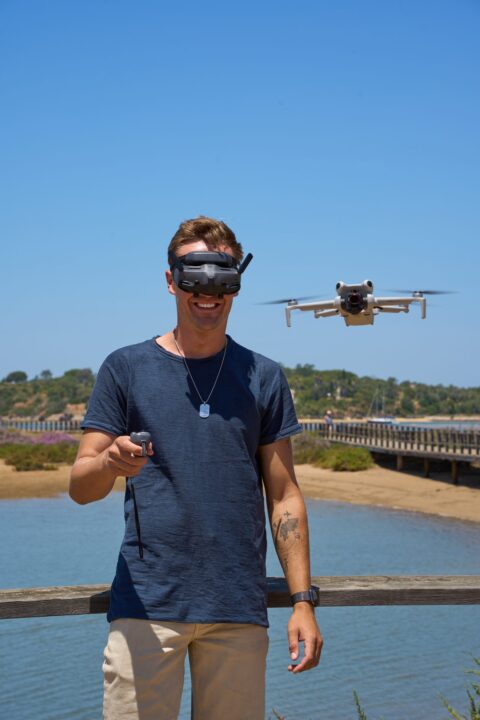
Max Haase
Travel Content Creator · Drone Photographer · Visual Storyteller
A professional travel creator for over 10 years with over 4 million followers. Specializing in high-end tourism board collaborations and visual travel storytelling.

 German
 English