
Content Creator Equipment 2026 — My Complete Setup
Why the right equipment determines your success as a creator
If there's one thing I've learned in over ten years as a professional content creator, it's this: equipment alone doesn't make good content—but the wrong equipment can hold you back massively. I've traveled with my setup to 82 countries, filming in minus 15 degrees Celsius in Norway as well as in 45 degrees Celsius in Saudi Arabia. Along the way, I've paid my dues, swapped cameras, wrecked drones, and sold lenses that seemed perfect on paper.
For beginners: The first steps are outlined in the guide. Become a Travel Content Creator in 7 Steps.
- Sony A7V as the main body (10-bit 4:2:2 internal, game changer for hybrid shooters) plus Sony A7 IV as a secondary body — both full-frame for photo and video from a single source.
- Three Tamron lenses: 17-28mm f/2.8 (wide angle), 28-200mm f/2.8-5.6 (travel zoom), 50-400mm f/4.5-6.3 (wildlife) — cover every travel situation without changing camera bodies.
- DJI Mavic 4 Pro (~€1,800) for image quality, DJI Mini 5 Pro Fly More Combo Plus (~€1,199, under 250 g) for flight restrictions and travel with strict drone rules.
- Storage & Backup: Sony Tough CFexpress Type A (160 GB, ~250 € each) for 4K video, Sony Tough SD UHS-II (128 GB, ~90 €) as backup — Dual-slot recording is essential when traveling.
- Field readiness: The setup has evolved over years; the current bodies and drones have been in use since 2025/26. My equipment has withstood temperatures ranging from -15°C in Norway to +45°C in Saudi Arabia, desert sand, seawater, and hours of drone sessions.
In this guide, I'll show you my complete setup for 2026—every single piece of equipment, why I chose it, how much it costs, and what alternatives are available. No product is included because someone paid for it—and where there's a partnership involved, I'll clearly state it (as is the case with the Insta360 X6). Everything else is based on my honest experience from thousands of days of shooting around the world.
My cameras: Sony A7V & A7 IV — The perfect duo
Why the Sony A7V as the main body?
The Sony A7V is my current main camera body and a real upgrade from the A7 IV, which I still use as a secondary body. The new sensor, the improved autofocus with AI-based subject recognition, and the further enhanced video quality make the A7V the perfect workhorse for professional travel content production. Light enough for long days on the go, powerful enough for any lighting situation.
I still use the A7 IV as a reliable second body—it has accompanied me on virtually every trip since 2022 and continues to deliver fantastic results with 33 megapixels, 4K 60fps, and an autofocus that is second to none. The upgrade path from the A7 III to the A7 IV to the A7 V has brought noticeable improvements with each generation: faster autofocus, better color science, and more reliable skin tones straight out of the camera.
What convinced me about the Sony system
The real-time eye autofocus works reliably with both humans and animals. On safari in Kenya, the camera focused sharply on a leopard backlit by the sun, even though I had only roughly pointed it in that direction. The dual slot with a CFexpress-A and an SD card slot gives me backup security—I save RAW files to the fast card and JPEG backups to the SD.
The internal 10-bit 4:2:2 video recording is a game-changer for me as a hybrid shooter. I can take photos one moment and shoot a reel the next without switching cameras. This not only saves weight in my backpack, but also valuable seconds when the light is perfect.
Price and alternatives
The Sony A7V costs around €3,000, while you can now find a used A7 IV from around €1,600. Together, these two bodies give me the security of a backup system and the flexibility to have two different lenses ready for important campaigns. The Sony E-mount system boasts the largest lens lineup of any mirrorless system—a crucial advantage for professional creators.
My lenses: Three Tamron lenses for every situation
Tamron 17-28mm f/2.8 Di III RXD — My wide angle
The Tamron 17-28mm is my go-to lens for landscapes, architecture, and storytelling shots. Compact, lightweight, and with a constant f/2.8 aperture—perfect for low-light situations at sunrise and in narrow old town streets. I estimate that 50 percent of my travel photos are taken with this lens.
Price: approximately 800 euros. For an f/2.8 wide-angle lens of this quality, it's an absolute price-performance miracle.
Tamron 28-200mm f/2.8-5.6 Di III RXD — My travel zoom lens
The Tamron 28-200mm is the most versatile lens in my setup. From portraits and street photography to medium-distance wildlife photography, this lens covers a huge focal length range in a single, compact body. For trips where I want to save weight, it's often the only lens I take.
Price: approximately 800 euros.
Tamron 50-400mm f/4.5-6.3 Di III VC VXD — My Long Zoom
The Tamron 50-400mm is my go-to lens for safaris, wildlife photography, and situations where I need to get close without physically being there. The 400mm focal length range opens up possibilities for capturing subjects that would be simply impossible with shorter zooms. Thanks to the built-in image stabilizer, I can even get sharp handheld shots at 400mm.
Price: approximately 1,300 euros.
These three Tamron lenses — 17-28mm, 28-200mm and 50-400mm — together cover virtually everything: from ultra-wide-angle for epic landscapes to super-telephoto zoom for wildlife. And all this at a fraction of the cost of comparable original manufacturer lenses.
My drones: DJI Mavic 4 Pro & Mini 5 Pro
Two drones, two areas of operation
I fly both the DJI Mavic 4 Pro and the DJI Mini 5 Pro —although I prefer the Mini in most situations because it's simply unbeatable in terms of compactness and comfort. The Mini 5 Pro weighs under 250 grams (249.9 g). In many countries, it can therefore be flown without a drone license or special permit, but the rules vary from country to country. In the EU, it falls under category C0 and can be flown in the "Open Category" A1. You still need to register as the operator and attach the e-ID to the drone, and liability insurance is mandatory. You are allowed to fly over uninvolved persons, but never over crowds.
I am from the DJI Mini 4 Pro I've switched to this model and the improvements are significant: The new 1-inch, 50-megapixel sensor delivers considerably better low-light performance, the battery life is up to 36 minutes (realistically around 30 minutes), and the O4+ transmission range extends up to 10 kilometers in the EU. In practice, I never fly that far, but the more stable connection in cities with heavy mobile network traffic makes all the difference.
When the Mini, when the Mavic?
The Mini 5 Pro is my standard drone for 90 percent of all missions: Weighing under 250 grams, it faces fewer restrictions in most countries, fits in any jacket pocket, and is ready to fly in seconds. The Mavic 4 Pro comes into play when I need absolute premium image quality—the larger sensor, extended dynamic range, and best resolution for broadcast campaigns.
The image quality of both drones is sufficient for professional 4K content production on any platform. I've used them to film for Tourism Boards produced in Saudi Arabia, New Zealand and the Caribbean
Price and packages
DJI Mavic 4 Pro: around 1,800 euros. DJI Mini 5 Pro Fly More Combo Plus: approximately €1,199. It includes three Intelligent Flight batteries, a charging station, and a carrying case. The drone costs from approximately €799 on its own, but without at least three batteries, you're out of luck when traveling—one battery is enough for a single spot, not for a whole day.
My action cam: DJI Osmo Action 6 — The underdog
Why not a GoPro?
After years with GoPro, I switched to the DJI Osmo Action 6 and haven't regretted it for a second. DJI has made massive strides in action cameras: The electronic image stabilization (RockSteady 3.0 plus HorizonSteady) is buttery smooth, the 4K/120fps recording enables breathtaking slow motion, and the dual touchscreen on the front and back makes taking selfies while kitesurfing or hiking incredibly easy.
What bothered me about the GoPro Hero 13 Black was the overheating problem at 4K/60fps in hot climates. In Saudi Arabia, at 42 degrees Celsius, the GoPro shut down after 12 minutes. The DJI Osmo Action 6 holds out longer—not indefinitely, but significantly longer, because DJI has a better solution for thermal management.
Areas of application and price
I use the action cam for everything where the Sony is too big, too heavy, or too fragile: kitesurfing, snorkeling (waterproof to 20 meters without the housing), mountain biking, and via ferrata. The magnetic quick-release mount is brilliant—click the camera onto the helmet, record, and click it off. No screws, no fiddling.
Price: approximately €399. Alternative: The GoPro Hero 13 Black, currently around €350, is still a solid choice, especially if you already own GoPro accessories. The Insta360 Ace Pro 2, also for approximately €449, is excellent but has a larger housing.
What none of these cameras can do: look behind you. For precisely this reason, I've been carrying a second camera in my backpack since this year — that's described in the next section.
My 360-degree camera: Insta360 X6 — the drone view without the drone
Why even bother with a 360-degree camera?
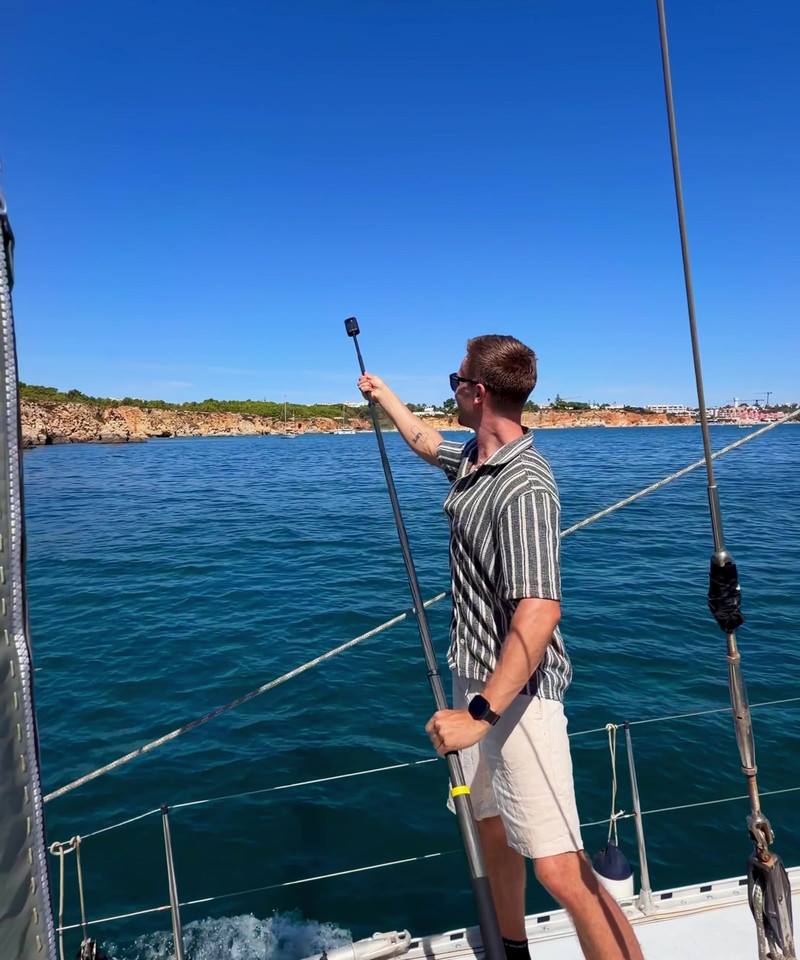
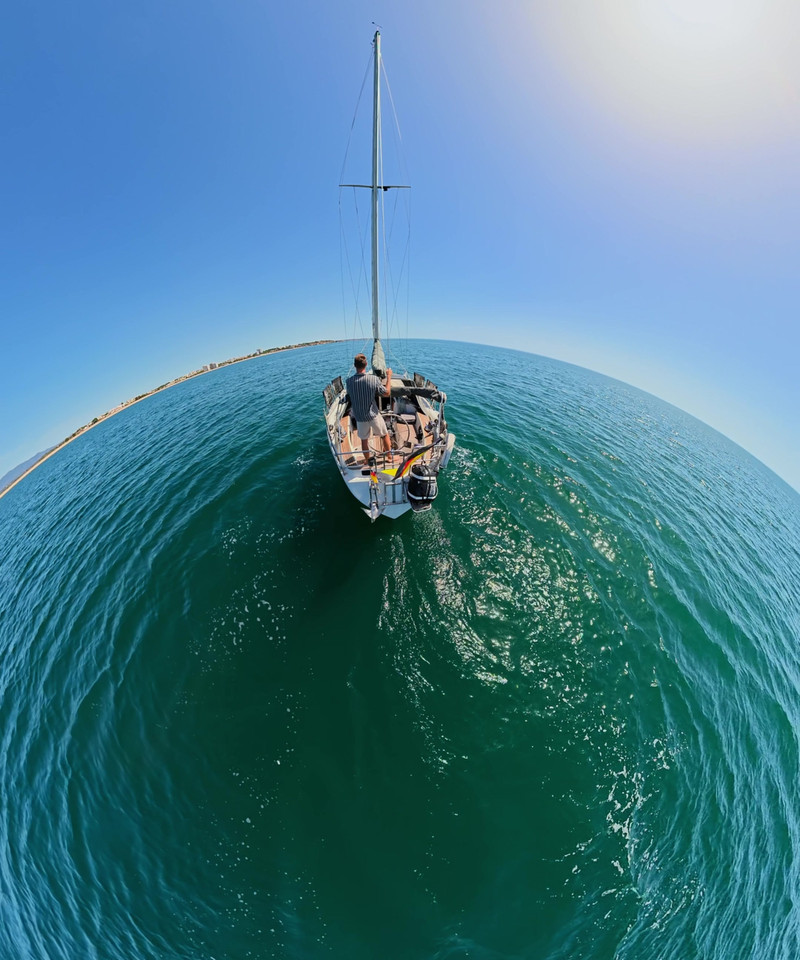
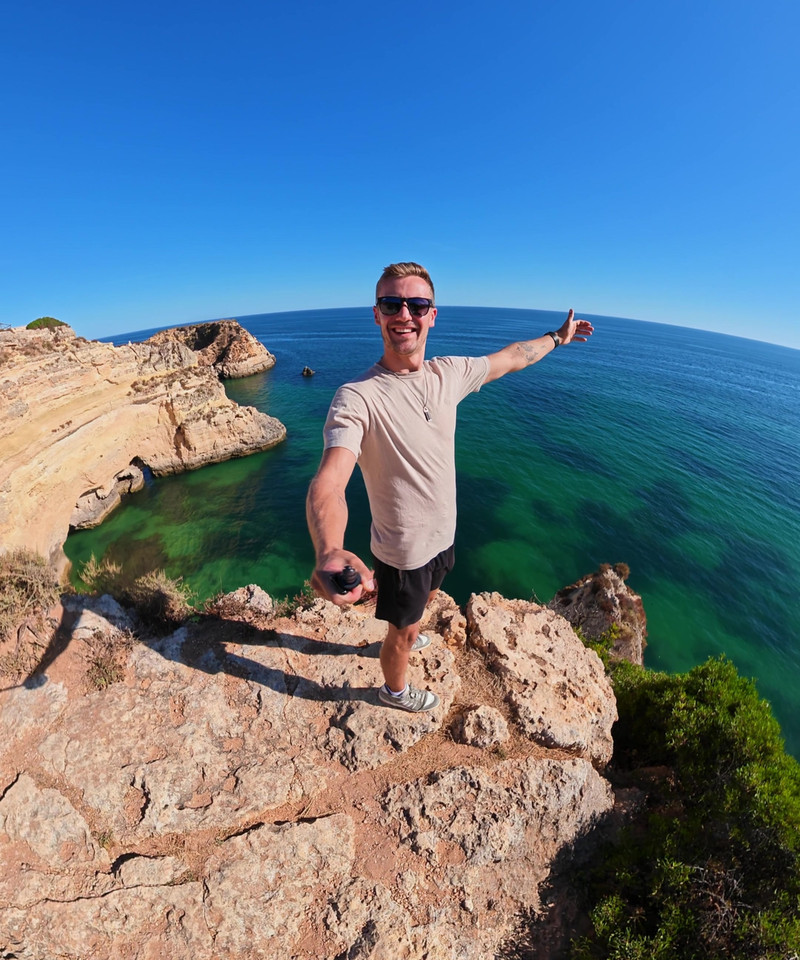
It films all around, and in the finished image, the pole it's hanging from isn't visible. You hold it up and get exactly the angled shot from above that I would otherwise have used a drone for—only in places where drones aren't allowed: national parks, crowded beach promenades, city centers, or countries where drones are held up at customs.
What it really replaces in the setup — and what it doesn't
It does not replace a drone. Height, distance, and image quality of the Mini 5 Pro No camera on a stick can reach it. What replaces it is the drone-Look near the ground — and the situation where I didn't film anything at all before because flying was forbidden.
The second reason is the filming itself: I don't have to aim. When kitesurfing, biking, or running, I simply hold it up—I frame the shot later on my phone. It's waterproof up to 20 meters, so I can go in the water without a case.
To be honest: 360 footage takes time to edit. Every shot has to be panned out of the sphere afterward, the files are large, and if you're only filming straight ahead, you'll get there faster with an action cam. That's why I don't take it instead of, but in addition to, my camera.
Price and labeling
Price: from 699 euros. Disclosure: I work with Insta360 as an advertising partner, and the button below is an affiliate link. This doesn't change my opinion, though—the camera is in my backpack for the same reason as everything else here: it solves a problem I can't otherwise solve. You can find the detailed specifications with all the data in my [link to review/section]. Travel gadgets 2026.
Insta360 X6 in the Insta360 Store →
Accessories: What you should never forget in your backpack
Memory cards
For the Sony camera, I use two Sony Tough CFexpress Type A cards (160 GB, around €250 each) and, as a backup, Sony Tough SD cards (128 GB UHS-II, around €90). The CFexpress cards are fast enough for 4K 60fps without buffering. For the drone, a Samsung EVO Select microSD 256 GB card (around €25) is sufficient—the Mini 5 Pro isn't as demanding when writing to it as a full-frame camera.
Sony CFexpress Type A on Amazon →
Batteries and power supply
For the Sony camera, I have four NP-FZ100 batteries with me—two original ones (around €70 each) and two from Nitecore (around €35, same capacity). I also have an Anker 737 power bank with 24,000 mAh (around €120), which can even charge the Sony via USB-C. On long trekking days without access to a power outlet, this is essential.
Anker 737 PowerBank on Amazon →
Tripods and mounts
My travel tripod is the K&F Concept Carbon Tripod (around €200) — surprisingly light, stable enough for a full-frame camera with a telephoto zoom lens, and unbeatable in terms of price. When folded, it's only 39 cm long and fits in any side pocket of my backpack. For quick shots, I carry a Joby GorillaPod 5K (around €80), which can be attached to railings, branches, and just about anything else.
K&F Concept Tripod on Amazon →
filter
I exclusively use PolarPro filters: a polarizing filter, an ND64, and an ND1000. PolarPro delivers the best optical quality specifically for travel creators—both as camera filters and as drone filter sets for the DJI series. Total investment approximately €350. I need the ND filters for long exposures at waterfalls and for smooth, cinematic video in daylight.
PolarPro filter set on Amazon →
Backpack
My main backpack is the Wandrd PRVKE 31L (around €280). It has a separate camera compartment at the bottom, a laptop compartment for my 14-inch MacBook Pro, and the roll-top design is extremely flexible—sometimes I pack more clothes, sometimes more camera equipment. For day trips, I use the Peak Design Everyday Sling 6L (around €100) with just the Sony camera plus a wide-angle lens and the drone.
My laptop: MacBook Pro 14-inch M5 Pro
For editing on the go, I use the MacBook Pro with the M5 Pro chip. Lightroom runs buttery smooth with RAW files from the A7 IV, and DaVinci Resolve for video editing is also fluid—as long as I'm not working with 4K ProRes, then things get a bit tight. Price: around €2,199 in stores (Apple list price from €2,499).
Why not a 16-inch model? Weight. The 16-inch model is about 500 grams heavier, and when you're on your feet for eight to twelve hours with a backpack, those 500 grams make a noticeable difference. And honestly, I can work perfectly well on the 14-inch display—my external monitor is at home.
MacBook Pro M5 Pro on Amazon →
Total costs: What does my setup cost?
Here's an honest breakdown so you know where you'll end up financially:
| category | product | Price |
|---|---|---|
| Camera system | Sony A7V Body | ~3.000 € |
| Sony A7 IV Body (Second body, used) | ~1.600 € | |
| Tamron 17-28mm f/2.8 (wide-angle) | ~800 € | |
| Tamron 28-200mm f/2.8-5.6 (travel zoom) | ~800 € | |
| Tamron 50-400mm f/4.5-6.3 (Long Zoom) | ~1.300 € | |
| Drones | DJI Mavic 4 Pro | ~1.800 € |
| DJI Mini 5 Pro Fly More Combo Plus | ~1.199 € | |
| Action cam | DJI Osmo Action 6 | ~399 € |
| 360-degree camera | Insta360 X6 | ~699 € |
| Accesories | Memory cards (total) | ~615 € |
| Batteries and power bank | ~330 € | |
| K&F Concept Carbon Tripod | ~200 € | |
| PolarPro Filter Set | ~350 € | |
| Wandrd PRVKE 31L Backpack | ~280 € | |
| laptop | MacBook Pro 14-inch M5 Pro | approx. €2,199 (retail price, Apple list price from €2,499) |
| total | ~15.571 € | |
Sounds like a lot? It is. But this setup has grown over years; the current bodies and drones have been part of it since 2025/26, and I've built it up piece by piece. You don't have to buy everything at once. My advice: Start with the camera plus a good zoom lens, and a mini-drone—that gives you 80 percent of the possibilities for under €5,000.
Starter kit: My recommendation for beginners
If I were starting from scratch today and had a maximum of 3,000 euros, I would buy the following:
Sony A7C II (used from around €1,500) — more compact than the A7 IV, same sensor, autofocus even with AI subject recognition. Plus the Sony FE 28-70mm Kit Lens (approximately €300–500) as an all-round lens, later upgradeable to one of my Tamron lenses (see above). A DJI Mini 4 Pro (approximately €799 for the Fly More Combo) — the predecessor is still outstanding. And a used GoPro Hero 12 Black (approximately €200) as an action cam.
This will bring your budget to around €2,800 to €3,000 and give you a setup that's perfectly adequate for professional use on YouTube and Instagram. Upgrade selectively when you notice your equipment is limiting you.
Buying equipment: order by budget
I built up my equipment piece by piece. My advice regarding the order: Start with one camera and a versatile lens, and only upgrade selectively when you realize where your equipment is limiting you.
Stage 1: Begin with a complete starter kit
The entry-level kit from the chapter above is a used Sony A7C II with kit lens, a DJI Mini 4 Pro in the Fly More Combo, and a used GoPro Hero 12 Black. Together, this costs approximately 2,800 to 3,000 euros, which is sufficient for professional content on YouTube and Instagram.
Stage 2: First strengthen the all-round system
If the starter kit reaches its limits, I wouldn't immediately buy every specialist lens. The next step up is the Tamron 28-200mm f/2.8-5.6 for around 800 euros. It covers portraits, street photography, and wildlife photography at medium distances. When I want to save weight while traveling, it's often my only lens.
A 128GB Sony Tough SD UHS-II card, costing around €90, is sufficient for the A7C II, as the camera only has one SD card slot. CFexpress Type A and dual-slot backup are only available on the larger camera bodies in Stage 4.
Stage 3: Upgrade based on what you actually shoot
Only now would I decide based on my own focus. For landscapes, architecture, storytelling, and low light, the Tamron 17-28mm f/2.8, at around €800, is the perfect complement. It's my go-to lens, and I take about half of my travel photos with it. For safaris and wildlife, I use the Tamron 50-400mm f/4.5-6.3, at around €1,300. Its focal length range extends up to 400mm, and the built-in image stabilizer allows me to take sharp handheld shots even at that length.
The DJI Osmo Action 6 costs around €399 and is my choice for kitesurfing, snorkeling, mountain biking, and via ferrata. The Insta360 X6 starts at €699. With it, I film all around and then select the framing later on my phone. It doesn't replace a drone, but it delivers a similar look close to the ground where flying is prohibited.
Stage 4: Securing the professional system
The Sony A7V, costing around €3,000, is my primary camera body. I use a used Sony A7 IV, starting at around €1,600, as a secondary body. Having two bodies provides backup security for important campaigns and allows me to use two different lenses simultaneously. This is a later expansion step, not a necessary starting point. Similarly, the DJI Mavic 4 Pro, costing around €1,800, comes into play when I need the larger sensor, greater dynamic range, and highest resolution for broadcast campaigns. Both Sony bodies have two card slots: For 4K video, I use a Sony Tough CFexpress Type A with 160 GB (around €250 each), which is fast enough for 4K at 60 frames per second without buffering. I save RAW files to this card and a JPEG backup to the SD card.
For most drone missions, I prefer the DJI Mini 5 Pro. The Fly More Combo Plus costs around €1,199 and includes three Intelligent Flight batteries, a charging hub, and a carrying case. The drone alone costs from around €799. When traveling, at least three batteries are essential, as one battery is only enough for a single spot, not for an entire day.
| Level | product | Price |
|---|---|---|
| 1 – Starter Kit | Sony A7C II, used | from approximately 1,500 euros |
| 1 – Starter Kit | Sony FE 28-70mm Kit Lens | approximately 300–500 euros |
| 1 – Starter Kit | DJI Mini 4 Pro Fly More Combo | approximately 799 euros |
| 1 – Starter Kit | GoPro Hero 12 Black, used | approximately 200 euros |
| 2 – All-round expansion | Tamron 28-200mm f/2.8-5.6 | approximately 800 euros |
| 2 – Storage | Sony Tough SD UHS-II, 128 GB | approximately 90 euros |
| 3 – Specialization | Tamron 17-28mm f/2.8 | approximately 800 euros |
| 3 – Specialization | Tamron 50-400mm f/4.5-6.3 | approximately 1,300 euros |
| 4 – Professional expansion | Sony A7V Body | approximately 3,000 euros |
| 4 – Professional expansion | DJI Mavic 4 Pro | approximately 1,800 euros |
Frequently Asked Questions (FAQ)
Do you, as a content creator, really need a full-frame camera?
No, not at the beginning. APS-C cameras like the Sony A6700 or Fujifilm X-T5 deliver fantastic results. Full-frame only becomes worthwhile if you regularly shoot in low light or need maximum bokeh control — so typically from the point where you work professionally and for paying clients.
How do you transport all that equipment when traveling by plane?
Everything goes in hand luggage—no exceptions. Cameras and lenses never go in checked baggage. My Wandrd PRVKE 31L fits as hand luggage on most airlines. The drone goes in my jacket or trouser pocket, as does the action camera. Batteries have to be in hand luggage anyway, according to IATA regulations. In over 200 flights, I've only had two discussions at the gate—and both times the backpack was allowed in.
How often do you need to replace or upgrade your equipment?
Cameras and lenses, with proper care, last five to eight years. My A7 III lasted four years before I upgraded to the A7 IV—and that was an upgrade, not a defect. I replace drones every two to three years because the technology advances so quickly in that area. Action cameras last two to three years before the image stabilization of the next generation justifies an upgrade.
Is camera insurance worthwhile when traveling?
Absolutely. I use a special photo equipment insurance policy that's valid worldwide and even covers theft from hotel rooms. It costs me about 400 euros a year for all my equipment. When you consider that a single lens costs 1,300 euros, it's money well spent.
Which equipment has the greatest impact on content quality?
Definitely the drone. No other single device changes your perspective so fundamentally. A mediocre photo taken from the ground is suddenly transformed into a wow moment by a drone shot of the same spot. If I could only take one device, it would be the DJI Mini 5 Pro—not the Sony.
Which combination would I buy for a maximum of 3,000 euros?
The starter kit, consisting of a used Sony A7C II, kit lens, DJI Mini 4 Pro Fly More Combo, and a used GoPro Hero 12 Black, costs approximately €2,800 to €3,000. Details can be found in the "Starter Kit" section above.
Should I buy several lenses or a travel zoom lens first?
I would buy the versatile Tamron 28-200mm first. It covers a wide focal length range and is often my only lens when traveling. I would only add the wide-angle lens for landscapes and architecture or the long zoom for wildlife if those specific subjects require the additional purchase.
When is a second camera body worthwhile?
For me, it's worthwhile for important campaigns. The A7 IV serves as a backup to the A7V, and I can have two different lenses ready at the same time. However, full-frame isn't absolutely necessary at the beginning; it's primarily worthwhile for regular shooting in low light or when maximum bokeh control is required.
Which drone has priority in the order?
For a starter kit, I would choose the DJI Mini 4 Pro. In my current setup, the Mini 5 Pro is my standard drone for 90 percent of my flights. The Mavic 4 Pro only comes into play when I need premium image quality, a larger sensor, extended dynamic range, and the best resolution for broadcast campaigns.
When should I buy an action cam and a 360-degree camera?
The action camera belongs in the starter kit if you plan shoots for which the Sony is too big, heavy, or fragile. The 360-degree camera is a later addition: it's particularly useful for all-around shots and a low-angle drone look, but it requires more editing and doesn't replace the drone.
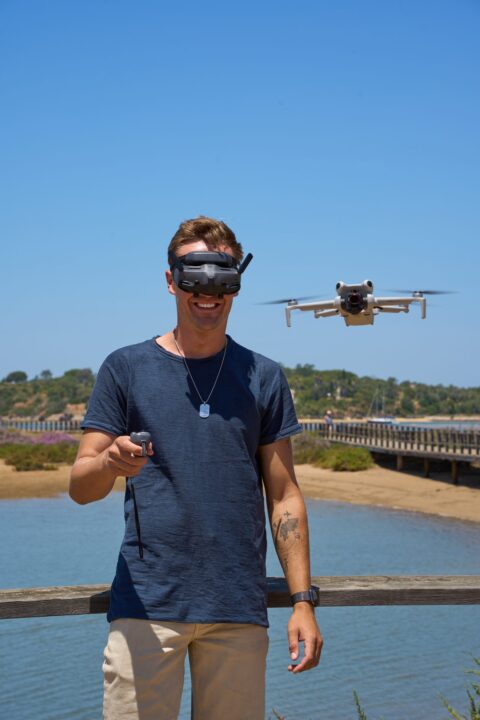
Max Haase
Travel Content Creator · Drone Photographer · Visual Storyteller
A professional travel creator for over 10 years with over 4 million followers. Specializing in high-end tourism board collaborations and visual travel storytelling.
 German
 English