
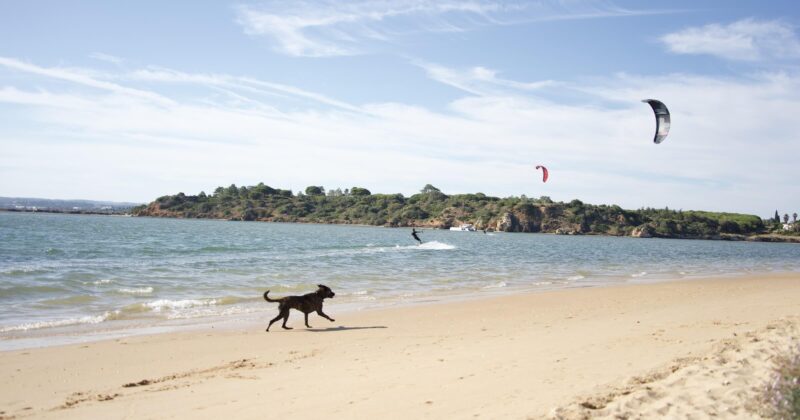
Kitesurfing in the Algarve: Portugal spots, Faro & beginner tips
New to sports? Read my [link to review] first. Kitesurfing Beginner's Guide — An overview of locations, schools, and costs.
Kitesurfing in the Algarve – hardly any other place in Europe combines such a spectacular coastal landscape with reliable wind and warm water. Since my first visit in 2024, the Algarve has become my absolute favorite kitesurfing spot in Europe. Between golden sandstone cliffs, turquoise Atlantic Ocean, and the relaxed Portuguese lifestyle, I've experienced some of the best kitesurfing sessions of my life.
In this guide, I share everything you need to know about kitesurfing in the Algarve: the best spots, wind statistics, costs, schools, and my personal insider tips after several months there. Whether you're a beginner or an advanced kitesurfer, the Algarve has the perfect spot for every level.
- The Nortada wind blows reliably from north/northwest from May to October at a constant 15–25 knots — more evenly and predictably than in the Canary Islands.
- Alvor for flat water and freestyle, Martinhal near Sagres for wave kiting, Meia Praia in Lagos as an all-round spot with sideshore from the left.
- Summer 9–12 m², spring and autumn 12–14 m² and a 4/3 wetsuit — water temperature 19–22 °C in summer, refreshing but usually possible without a wetsuit.
- 2-week kitesurfing trip for €1,200–1,800 including flight (Ryanair/easyJet €80–200 from Düsseldorf/Berlin/Munich), rental car and apartment.
- On windless days, explore Ponta da Piedade, paddle to Benagil Cave by kayak, and photograph Praia da Marinha from a drone perspective.
Algarve & Lagoon: Why Portugal is perfect for kitesurfing
The Algarve has a decisive advantage over other European kite destinations: the Nortada. This thermal northerly wind blows reliably from May to October, bringing a consistent 15–25 knots. Unlike the Canary Islands, where the wind can sometimes be gusty and unpredictable, the Algarve wind is smooth and constant – perfect for freeriding and freestyle.
The water temperature in summer is between 19 and 22°C – cool enough for a thin wetsuit, but warm enough to jump in without one. In spring and autumn, a 4/3 wetsuit is necessary, but even then the water is significantly more pleasant than in the North Sea.
Add to that the infrastructure: several professional kite schools, board shops, affordable accommodation, and – often underestimated – excellent Portuguese food after a session. Fresh grilled fish for under €15 right on the beach? Everyday life in the Algarve.
Kitesurfing spots Portugal Map: The best spots in the Algarve & Faro
1. Alvor – My favorite for shallow water
Alvor is THE spot if you're looking for flat water conditions. The Ria de Alvor is a shallow lagoon that's only knee-deep in some places at low tide – perfect for practicing and freestyle tricks. I had one of the best sessions of my life here in June 2024: a constant 20 knots, mirror-smooth water, and golden evening light.
The spot is best at low tide and during the first few hours of high tide. At high tide, the lagoon can become too deep, and the surrounding hills somewhat block the wind. My tip: Check the tide tables and plan your session around low tide.
- Level: Beginners to advanced
- Ideal conditions: Low tide to mid-tide, Nortada from north/northwest
- Kite size: 9–12m² (summer), 12–14m² (spring/autumn)
2. Praia do Martinhal (Sagres) – For surfers
Anyone who loves wave kitesurfing simply must visit Martinhal. The spot is located on the west coast near Sagres, where the Atlantic swell crashes directly onto the shore. The waves are clean and between 1 and 2 meters high – enough for strapless sessions, but not as brutal as on the Portuguese west coast further north.
- Level: Advanced to expert
- Ideal conditions: Northwest swell + Northada
- Kite size: 7–10m²
3. Meia Praia (Lagos) – The all-rounder
Meia Praia is the longest beach in the Algarve and offers plenty of space for everyone. The wide sandy beach is perfect for launching and landing, and the wind blows sideshore from the left – ideal because you'll always be carried back to the beach. There are schools right on the beach for beginners, while more advanced kitesurfers will find open water with small waves further out.
Lagos itself is one of the most beautiful cities in the Algarve, with a historic old town, great restaurants, and a vibrant nightlife. After a session, a pastel de nata and an espresso in the old town – it doesn't get any better than that.
- Level: All levels
- Ideal conditions: Nortada, all day
- Kite size: 9–14m²
4. Praia da Ilha de Tavira – a hidden gem in the east
Tavira is located in the less touristy eastern part of the Algarve and is therefore often much less crowded than the spots in the west. The offshore sandbar offers an endless beach with consistent thermal winds. The catch: you have to take a boat across, which makes setting up a bit more complicated. But the peace and quiet and the available space definitely make it worth it.
- Level: All levels
- Ideal conditions: Summer thermals, midday to evening
- Kite size: 10–14m²
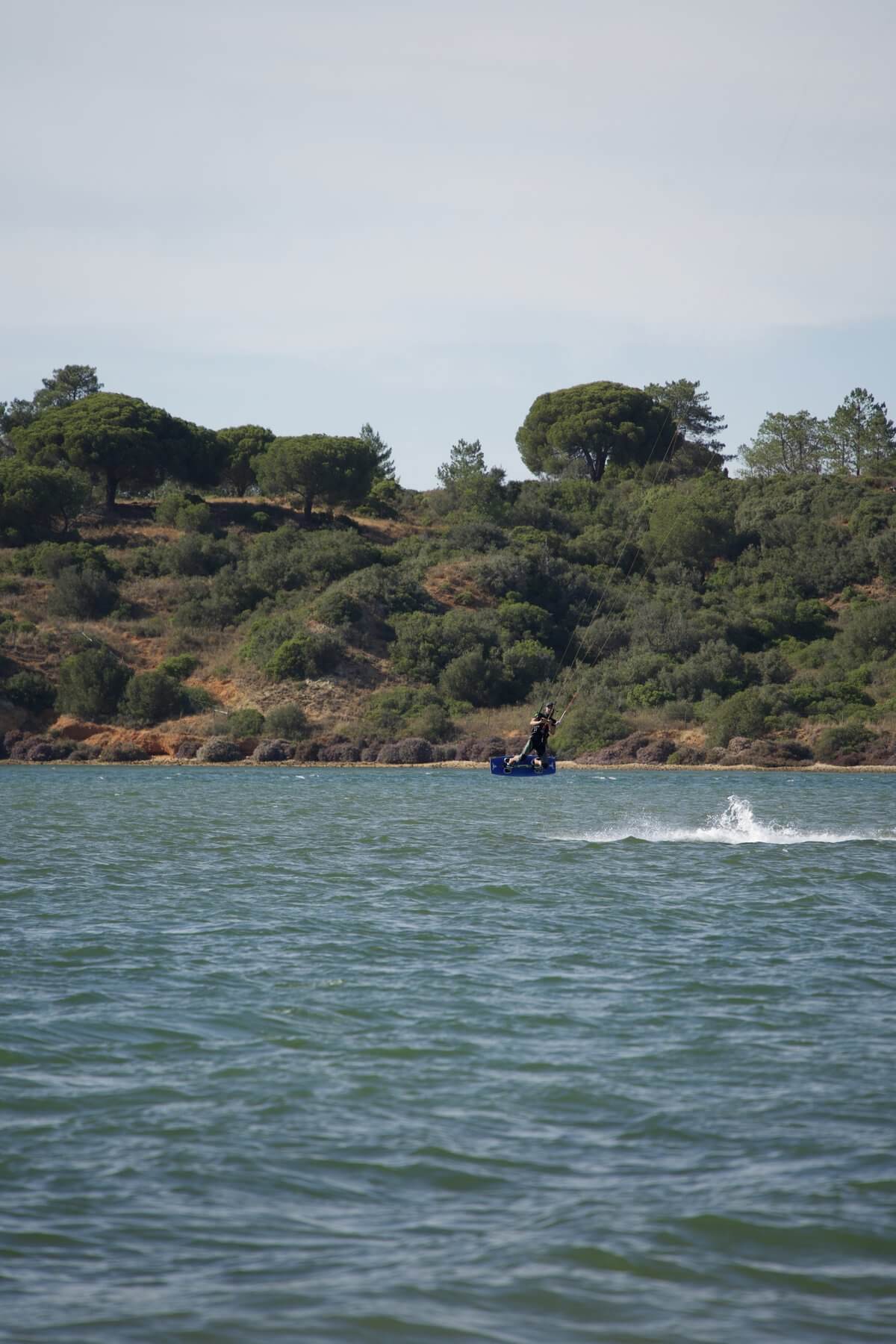
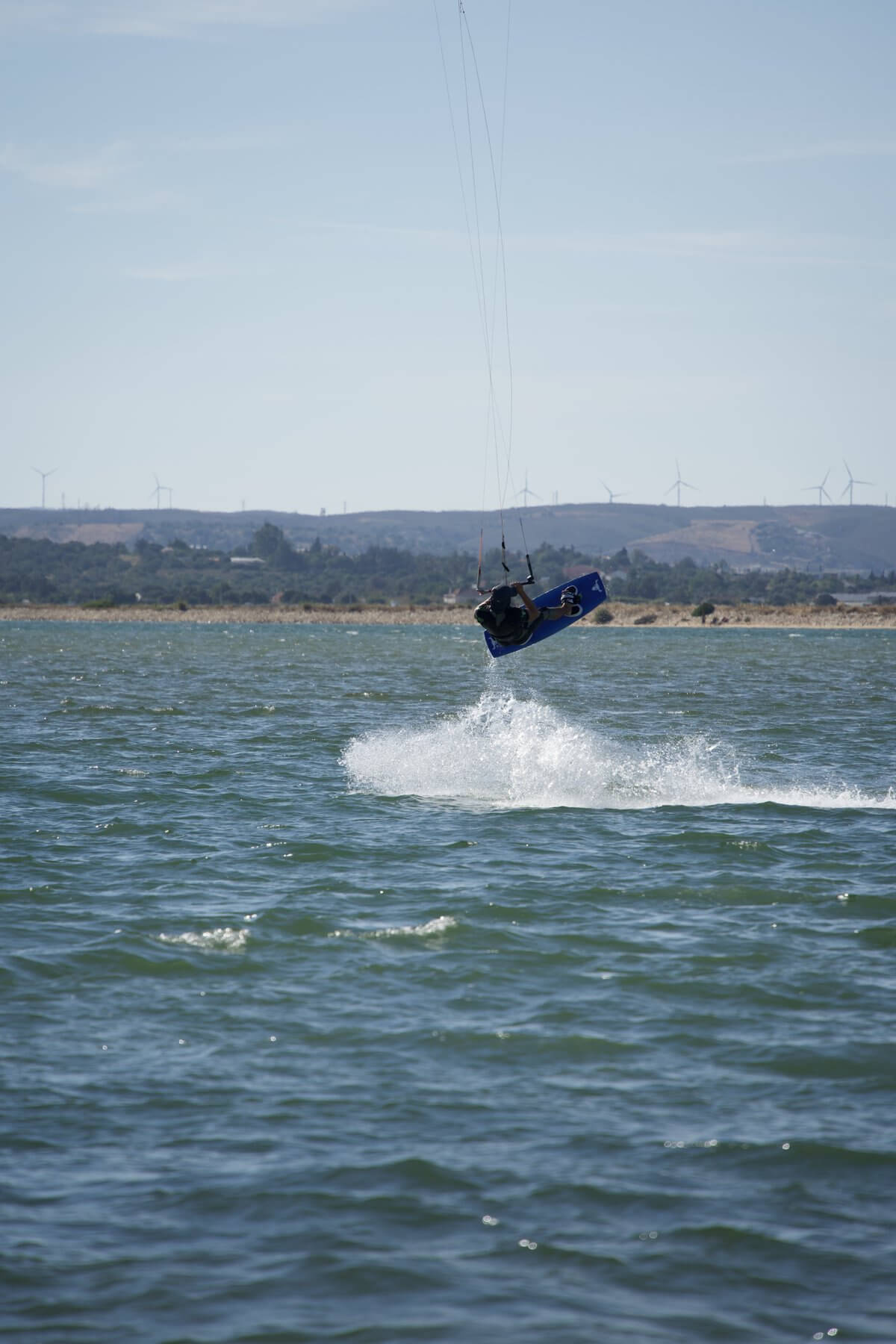
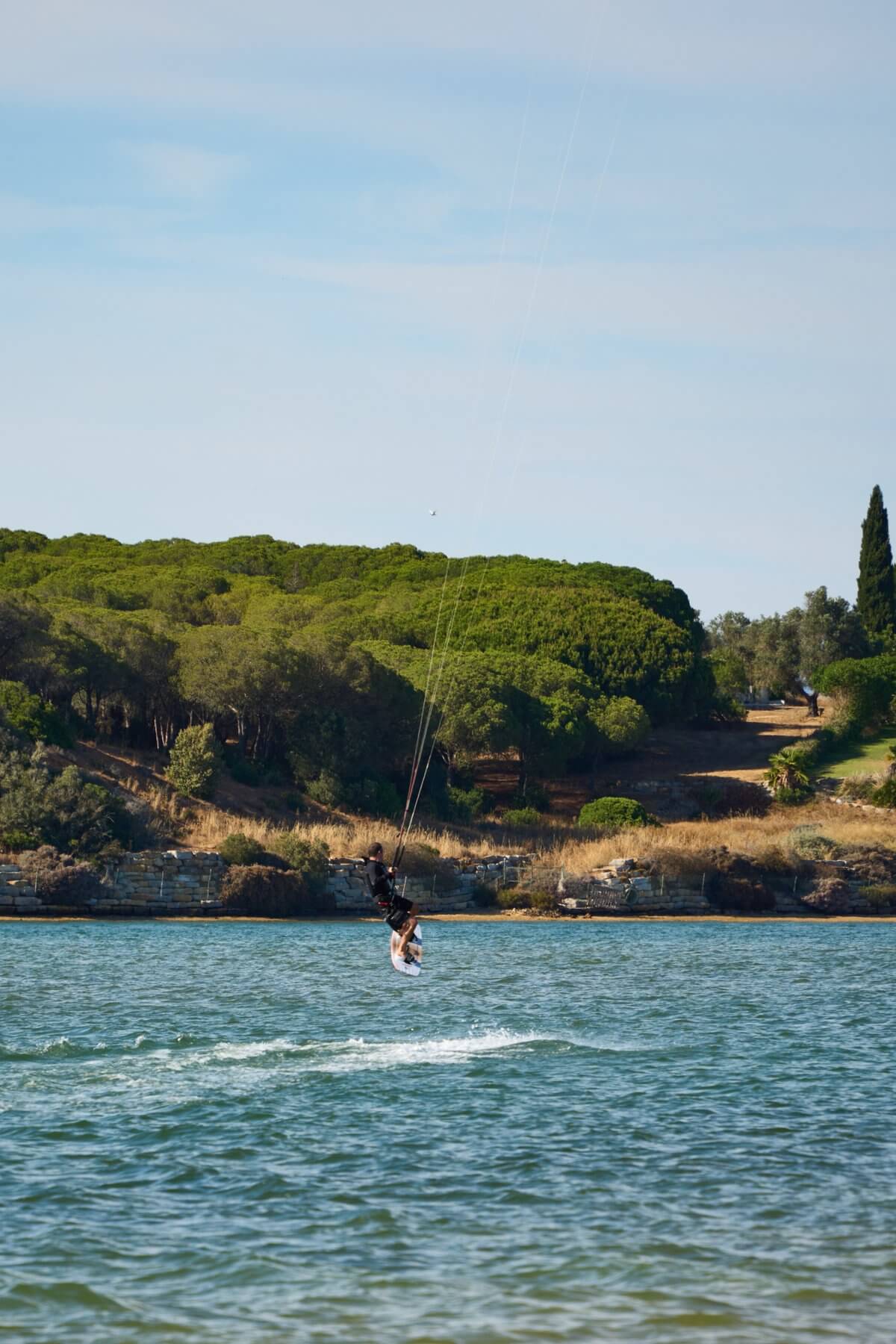
The Algarve away from the kite – a coast to marvel at
The Algarve is so much more than just a kitesurfing spot. Its coastal scenery is among the most impressive in all of Europe – and this is truly revealed from a drone. Golden sandstone cliffs plunging vertically into the turquoise sea, hidden sea caves, and natural rock bridges – every kilometer of coastline is different.
On my windless days, I explored Ponta da Piedade near Lagos, visited the Benagil Cave by kayak, and photographed Praia da Marinha from above. Anyone who travels to the Algarve as a kitesurfer and only stays on the water is missing half the experience.
Costs – Kitesurfing in the Algarve
| category | Cost (per day/unit) | note |
|---|---|---|
| Kiteboarding course (beginners) | €80–120/day | 3-day packages from €250 |
| Equipment rental (kite + board) | €50–80/day | Weekly discounts possible |
| Accommodation (apartment) | €40–80/night | Off-season significantly cheaper |
| rental car | €25–40/day | Recommended for spot-hopping |
| Food (Restaurant) | €10–20 per meal | Fresh fish from €12 |
| Flights (e.g. Faro) | 80–200 € (round trip) | Ryanair/easyJet from Düsseldorf, Berlin, Munich |
My total budget for a 2-week kitesurfing trip: around €1,200–1,800 including my own equipment, rental car, and apartment. As a couple, splitting the fixed costs makes it even cheaper. For European standards, Portugal is still a real bargain.
Kitesurfing in Portugal in October: Best time to travel to the Algarve
The kiteboarding season in the Algarve runs from May to October, with the most consistent winds in July and August. During these months, the Nortada wind blows almost daily – wind probability above 80%.
The season is starting, the wind is becoming more consistent. Fewer tourists, lower prices. Water temperature around 17–19°C. My personal favorite – a perfect balance of wind, weather, and tranquility.
Peak season. Most consistent wind (15–25 knots almost daily), hot weather (35°C+), but also crowded spots and higher prices. If possible, kite during the week.
September/October: The off-season is fantastic. Wind is still there, tourists are gone, water temperature is at its highest (22°C+). My second favorite time of year.
November to April: No reliable kite wind. However, perfect conditions for surfers (large Atlantic swell) and hikers (pleasant temperatures, blooming landscape).
Kitesurfing in Portugal for beginners: Kite schools in the Algarve
The Algarve has a fantastic kiteboarding infrastructure with several established schools. Here are my top recommendations:
Located directly on Meia Praia, they offer IKO-certified courses in German and English. The team is young, motivated, and has excellent local knowledge. Beginner packages start from €280 for 3 days.
Algarve Watersports (Alvor): Specializing in the shallow water spot in the Ria de Alvor. Perfect for beginners, as you can practice safely in the lagoon. They also offer stand-up paddleboarding and wing foiling.
Windsurf Point (Praia da Rocha): The oldest school in the region with over 20 years of experience. Large pool of equipment (ideal if you want to try different sizes) and experienced instructors.
My equipment setup for the Algarve
Kitesurfing requires specific equipment such as lycra shirts to protect against sunburn, neoprene boots to prevent sea urchins, and a waterproof pouch for your smartphone and keys. These items are available locally in surf shops at tourist prices, so it's better to travel with your own gear.
For the Algarve, I travel with the following setup:
- Kites: 9m² and 12m² (covers 90% all days)
- Twintip 136cm for flat water, directional for wave riding days
- 3/2mm Shorty (Summer) + 4/3mm Full (Spring/Autumn)
- Helmet & vest: Always with you – some of the spots have rocks.
- Drone: Drone for recordings after the session
- Camera: Camera with 24-70mm lens for beach and lifestyle photos
Drone rules in Portugal – What you need to know
Portugal falls under the EU drone regulations. Less stringent rules apply to drones under 250g, but you still need:
- EU drone license A1/A3 (free online test)
- Registration with the AAN (Portuguese Civil Aviation Authority)
- No flights over crowds of people (beaches in summer!)
- Max. 120m height
In practice: Fly early in the morning or late in the evening when the beaches are empty. The Algarve is a drone paradise – but please be respectful of other beachgoers.
On the water, the drone stays in my backpack anyway. I film my kiteboarding sessions with a 360-degree camera on an invisible selfie stick – it's waterproof, and the framing is only done in post-production. You can find the model at... Travel gadgets under point 14.
More on this in my Drone guide for use abroad.
Practical tips for your kitesurfing trip
Kitesurfing is considered a high-risk sport by many insurers and is often excluded from standard international health insurance policies. Injuries from falls, collisions, or jellyfish stings are common, and water rescue can cost several thousand euros.
- A rental car is essential: the spots are spread out. With a car, you're flexible and can chase the best wind.
- Fueling up in Portugal: Diesel approx. €1.60/l – cheaper than in Germany.
- Wind forecasts: Windy.com and Windguru are reliable. Local schools post daily updates on Instagram.
- Don't forget sunscreen: The sun is brutally strong in the Algarve, even in spring. SPF 50+ and a rash guard are essential on the water.
- Tap water: Safe to drink, but many locals prefer filtered water.
- Portuguese helps: „Obrigado“ (thank you) and „Uma imperial, por favor“ (a beer, please) are always well received.
Getting there – How to get to the Algarve
Faro Airport (FAO) is the gateway to the Algarve. Ryanair, easyJet, Eurowings, and TAP Air Portugal offer direct flights from Germany. Flight time: approximately 3 hours.
The cheapest flights: From Düsseldorf, Berlin or Munich you can find round-trip flights from €80 if you book 6–8 weeks in advance. In the off-season (May/October), bargains under €60 are possible.
Pick up your rental car directly at the airport (from €15/day with early booking). The A22 motorway will take you to any spot on the coast in 30–60 minutes. Please note: A22 tolls are collected electronically – activate the Via Verde system with your rental car company or pay the toll online afterwards.
FAQ – Frequently Asked Questions about Kitesurfing in the Algarve
Can I learn to kitesurf in the Algarve as a beginner?
Absolutely — the Algarve is one of the best beginner spots in Europe. Alvor and Meia Praia offer flat water, consistent winds, and professional schools with IKO-certified instructors. In a 3–5 day intensive course, you'll be standing on a board and able to ride independently. The cost for a complete beginner course (including equipment) is around €350–€500. Important: Book schools with small groups (max. 2 students per instructor) — this makes a huge difference to your learning progress.
What kite size do I need?
It depends heavily on the season. In summer (Nortada season, May–September), the wind blows consistently at 15–25 knots—here, 9–12m² is sufficient. In spring and autumn, the wind is more variable, so 12–14m² is recommended. If you only want to take one kite: 10m² or 11m² is the best compromise for the Algarve. I recommend that beginners rent equipment locally (approx. €50–80/day including board)—that way you don't have to load anything onto the plane and can choose the kite according to the wind strength.
Is the Algarve better than Fuerteventura for kitesurfing?
Both are great, but different. Fuerteventura It has more waves and rougher conditions. The Algarve offers more diverse spots (flat water + waves) and is significantly richer in terms of cuisine and culture. For pure kiteboarding holidays focusing on flat water: Algarve. For wave kiting: Fuerteventura.
What is the internet like for digital nomads?
Excellent — Portugal is one of the best remote work destinations in Europe. Most accommodations have stable Wi-Fi with speeds of 50–200 Mbps. Lagos, Portimão, and Faro have established coworking spaces (around €15–25/day), many of them right by the sea. The D7 visa for digital nomads also makes Portugal attractive for longer stays. As a content creator, I kitesurf in the morning, edit videos at midday, and am back on the water in the afternoon — the setup works perfectly.
Do I need a drone permit?
Yes — even for drones under 250g, you need an EU drone license A1/A3 in Portugal (free online test, approx. 1-2 hours) and registration with the AAN (Portuguese Civil Aviation Authority). Registration costs around €10 and can be done online in just a few minutes. On beaches in summer, additional rules apply: do not fly over crowds, maximum altitude 120m. Early mornings (before 9 am) are ideal for drone photography. All details and country comparisons can be found in my Drone Guide.
My conclusion – the Algarve is a kiteboarding paradise
The Algarve has it all: reliable wind, a warm climate, diverse spots for every level, a spectacular coastline perfect for drone photography, and the best value for money in Southern Europe. Add to that the relaxed Portuguese mentality, affordable and excellent food, and a growing community of kiters and digital nomads.
If you're thinking about where to go on your next kiteboarding trip, the Algarve should be at the top of your list. I come back every year and always discover new spots and new favorite places.
Also read my other Portugal articles: the Algarve travelogue, the Portugal road trip cost guide and my Porto Travel Report.
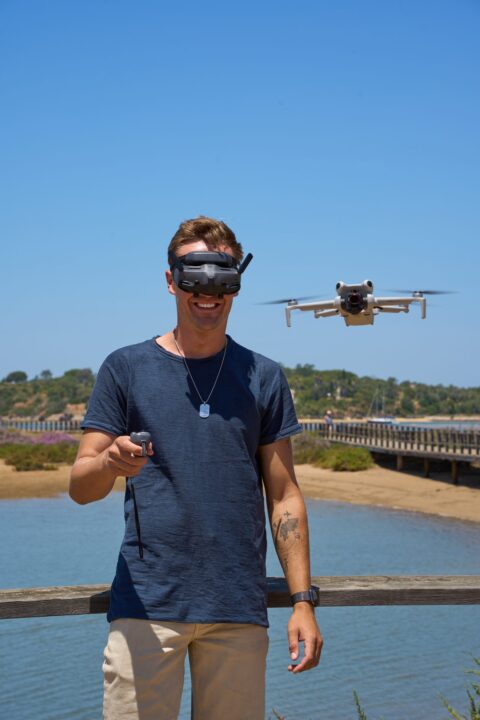
Max Haase
Travel Content Creator · Drone Photographer · Visual Storyteller
A professional travel creator for over 10 years with over 4 million followers. Specializing in high-end tourism board collaborations and visual travel storytelling.
 German
 English