
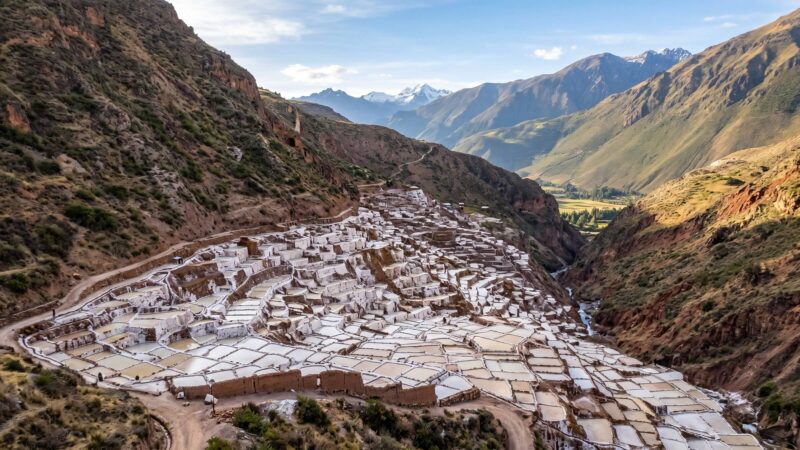
Backpacking in South America: Colombia, Ecuador & Peru in 11 weeks
- Route Colombia → Ecuador → Peru: classic South America backpacking route in 8–12 weeks
- Realistic total costs: €2,500–4,500 for 3 months (excluding flights)
- Best time to travel: May–September for the Andean region, year-round for Colombia's Caribbean coast
- Entry: Visa-free for Germans for up to 90 days in all three countries
- Safety: With a little planning, much more relaxed than its reputation suggests — most tourist hotspots are safe.
- Must-haves: Osprey backpack, travel vaccinations, offline maps (maps.me), yellow fever vaccination
Three countries, one continent, countless stories. Colombia, Ecuador, and Peru are among the most exciting backpacking destinations in the world—and together they form one of the most beautiful overland routes you can travel on this planet. Caribbean coast, high mountains, jungle, Nazca Lines, and Machu Picchu: this route delivers it all at once, and on a budget that won't break any dreams.
I traveled this route in just under 11 weeks — from Cartagena to Cusco, with countless nights on buses, an unforgettable sunrise on the Salkantay Trek, and more ceviche than I can count. Here's what you need to know.
The route: Overview Colombia → Ecuador → Peru
The classic South America backpacking route starts in Colombia, typically in Cartagena or Medellín, and ends in Peru—either in Cusco or Lima. You can, of course, do it in reverse, but going north to south has the most logistical advantages: cheaper flights in Colombia, easier border crossings, and the gradual increase in altitude helps with acclimatization.
Recommended stations in brief:
- Colombia (3-4 weeks): Cartagena → Medellín → Jardín → Bogotá → Kaffe Region
- Ecuador (2-3 weeks): Quito → Quilotoa Loop → Baños → Cuenca → Galápagos (optional)
- Peru (3-4 weeks): Máncora → Huaraz → Lima → Huacachina → Cusco → Machu Picchu → Salkantay Trek
| Section | stations | Recommended duration | Average daily budget |
|---|---|---|---|
| Colombia coast | Cartagena, Santa Marta, Tayrona | 7–10 days | 35–50 € |
| Inland Colombia | Medellín, Jardín, coffee zone | 10–14 days | 30–45 € |
| Bogotá + Departure | Bogotá, Zipaquirá | 3–5 days | 35–55 € |
| North Ecuador | Quito, Mitad del Mundo, Quilotoa | 7–10 days | 25–40 € |
| Ecuador South | Baños, Riobamba, Cuenca | 5–8 days | 25–35 € |
| Peru Coast + North | Máncora, Trujillo, Huaraz | 7–10 days | 30–45 € |
| Southern Peru + Inca | Lima, Huacachina, Cusco, Machu Picchu | 10–14 days | 35–55 € |
Colombia: Your gateway to South America
Colombia is no longer the country its 90s reputation describes. Today it is one of Latin America's most dynamic travel hotspots — creative cities, wild nature, friendly people and a price level that makes backpackers' dreams come true.
It's the perfect starting point: pastel-colored colonial architecture, Caribbean flair, and a host of travelers from all over the world. Head to the old town (Ciudad Amuralada) in the early evening when the golden light illuminates the facades—one of the most beautiful urban moments in South America. From the port, you can book inexpensive boats to the Rosario Islands for a snorkeling trip in the turquoise waters.
From the Caribbean coast, the journey continues to Medellín. Once considered the most dangerous city in the world, it has transformed into one of Latin America's most exciting urban laboratories. Take the metro cable car to the hilltop communities—this is urban development at its finest. The nightlife in El Poblado and Laureles is legendary, but don't forget the day trips: Jardín, three hours away, is one of the country's prettiest coffee towns.
Before you leave Colombia, make time for the Coffee Region (Zona Cafetera). Salento is the main tourist destination, but the surrounding farms and Los Nevados National Park are the real highlights. A coffee tour on a local farm costs less than €15, shows you the entire production process from tree to cup—and the coffee you drink afterward will be the best of your life.
Ecuador: Volcanoes, colonial cities and endless roads
Crossing the border from Colombia to Ecuador at Ipiales/Tulcán is one of the easiest in South America—on foot across a bridge, a small stamp, and you're on your way. From Tulcán, you take the next bus to Quito (about 4 hours) and you're in a completely different country.
Ecuador is more compact than its neighbors, but has an impressive density of sights. The advantage: bus routes are short, so you can see a surprising amount in two weeks.
Located at 2,850 meters, Cartagena is a great place to start—you'll definitely feel the altitude. Take a day to acclimatize before exploring the city. The historic center (Centro Histórico) is one of the best-preserved colonial centers in all of Latin America and is a UNESCO World Heritage Site. The La Mariscal district is where the nightlife is, and the Mercado Central offers the cheapest almuerzos (daily specials) in the city (set menus for €3–4).
An essential stop along the way: the Quilotoa Loop. A three- to four-day hike through indigenous villages and past a turquoise crater lake. You don't need a tour—just go to Latacunga and from there into the mountains. Accommodation in hostels costs €5–8 per night, and meals in the villages cost €2–3 per set menu.
, Ecuador's adrenaline hotspot. Casa del Árbol (the famous swing at the edge of the world), zip-lining, whitewater rafting, and affordable hot springs right in town. From here, the so-called Ruta de las Cascadas (Waterfall Route) leads past the Tungurahua volcano—downhill by bicycle into a valley full of waterfalls.
Peru: The heart of the route
Peru is the absolute heart of this trip. Hardly any other country manages to combine so many iconic destinations in such a manageable area: Amazon rainforest, desert, high mountains, colonial cities, and the most impressive archaeological sites in the world.
Most backpackers arrive via the border at Huaquillas (Ecuador) or by plane to Lima. If you have time: drive along the coast. Máncora in northern Peru is one of the trendiest beach destinations in Latin America—surfing, beach bars, and a relaxed backpacker community.
Those who love cultural history should make a stop in Trujillo (Chan Chan, the largest mud city in the world) and in the desert capital Huacachina — an oasis surrounded by gigantic sand dunes where sandboarding and buggy tours are offered.
It's a must-see, even though many skip it. The Barranco district, the best food scene in South America (ceviche at Mercado No. 1, Miraflores for the upscale version), and a modern urban flair that surprises everyone. Plan at least three days.
From Lima, you can take a bus (Cruz del Sur, Oltursa) to Cusco—a 21-hour journey, but more comfortable than it sounds. Buscamas (flat seats) for around €30–40 are well worth it. Alternatively, you can take a direct flight for €30–50 (LAN, LATAM Peru).
(3,400 m) is the backpacker capital of the Andean route and the perfect base for Machu Picchu and the Salkantay Trek. The city itself is beautiful: Inca stone walls form the foundation of colonial churches, markets overflow with colorful woolens, affordable almuerzos (traditional Italian restaurants), and a hostel density that caters to all types of travelers.
Costs: What does backpacking in South America really cost?
The great thing about this route: it's relatively inexpensive if you know how. Here are realistic figures—not the embellished blogger numbers, but what you actually spend:
| category | Colombia | Ecuador | Peru |
|---|---|---|---|
| Hostel dorm (per night) | 8–15 € | 7–12 € | 8–14 € |
| Affordable accommodation (private rooms) | 20–35 € | 18–30 € | 20–35 € |
| Almuerzo (Lunch Menu) | 2–4 € | 2–3 € | 2–4 € |
| Dinner at a restaurant | 5–12 € | 5–10 € | 6–15 € |
| Long-distance bus (10+ hours) | 10–20 € | 8–15 € | 15–40 € |
| Day trip (organized) | 20–50 € | 15–40 € | €20–60 |
| Entrance fees for tourist attractions | 2–10 € | 3–15 € | 10–50 € |
Realistic daily budget: Budget travel (dorm, Almuerzo, occasional activities): €30–40/day. More comfortable (private room, occasional restaurant visits): €60–80/day. For 11 weeks on a medium budget: approximately €3,000–3,500 on site, excluding flights.
Safety: What you really need to know
South America has a reputation that, in many respects, no longer reflects reality—but being naive won't help either. Here are the key points that actually make a difference:
At altitudes of 2,400 meters and above, Peru poses a high risk of acute altitude sickness, and treatment in Cusco or at Machu Picchu is privately billed. In addition, there is the risk of gastrointestinal illnesses from tap water, which can cost several hundred dollars to treat without insurance.
- Don't show your phone on the street — especially in large cities (Bogotá, Lima, Guayaquil). Use a map to navigate before going outside, not while walking.
- Don't hail a taxi from the street at night—always use InDriver, Cabify, or a pre-booked hostel taxi. In Peru: Uber works excellently in Lima.
- A belt wallet or hidden chest pouch is for passports and emergency cash. The rest is in the dorm locker.
- Tourist hotspots vs. outlying areas — Cartagena's old town, Medellín's El Poblado, Cusco's city center are safe. The problems arise when you go to unfamiliar neighborhoods at night and alone.
- It's real, but avoidable — never leave drinks unattended, don't accept drinks from strangers.
Luggage and equipment: What really belongs in your backpack
You don't need an expedition backpack for this route. A 40-liter pack is ideal—you can take it on the plane as hand luggage, travel comfortably by bus, and don't have to leave it in luggage storage.
Cusco in Peru has local trekking shops, but the quality is often only mediocre and the selection of shoes is limited. For multi-day treks like the Salkantay or the Inca Trail, you should bring your own tried-and-tested gear.
The Non-Negotiable:
- Backpack 40L: Osprey Farpoint 40 — the most tried and tested piece of backpacking luggage ever, unrivaled in terms of workmanship quality
- Power bank (24,000 mAh): Anker 737 Power Bank — holds 3 mobile phone charges + laptop and survives even the longest bus nights
- Water filter: LifeStraw Go — Tap water in Ecuador and Peru is not drinkable; drastically reduce plastic bottle consumption.
- Headlamp: Petzl Tikkina — for hikes, power outages, and early bus transfers in the dark
- DEET mosquito spray: Nobite DEET 30% Dengue, malaria, and Zika are real in low-lying regions, especially in the Ecuadorian jungle.
- Universal travel adapter: Skross World Adapter Pro+ — Plug chaos in South America is real
Visa and entry requirements: Everything you need to know for Germans
As a German citizen, you have it easy on this route. All three countries are visa-free — you need nothing more than your valid passport:
- Colombia: Visa-free for 90 days (extendable for another 90 days at the Migraciones office)
- Ecuador: Visa-free for 90 days within any 12-month period
- Visa-free for 90 days per entry (at the border you usually get the full period)
For land borders, you usually only need your passport — but always have enough local currency on hand, as many border posts have exchange offices that offer unfavorable rates. It's better to exchange money in the next town.
Health and vaccinations: What you need to organize before your trip
See a tropical medicine specialist at least six weeks before departure—not your regular doctor. The most important vaccinations for this route are:
- Yellow fever vaccination (required): Mandatory for Ecuador and some regions of Colombia. Peru does not require it, but proof of vaccination may be checked upon entry from a yellow fever risk area.
- Hepatitis A + B: Standard for all long-distance travel
- Typhus: Recommended for travel with varying food sources
- Tetanus/Diphtheria/Polio: Check booster levels (every 10 years)
- Rabies: Only recommended if you are going to remote regions or working with animals.
Travel health insurance with repatriation coverage is not an optional extra—it's mandatory. I use it. HanseMerkur Premium or Allianz Travel Protection depending on the length of the journey.
Practical tips: How to do this route correctly
- In Colombia (Redbus.com.co), Ecuador (Busbud.com), and Peru (Cruz del Sur direkt), you can book online. Booking directly at the terminal is often cheaper, but the top buses fill up quickly.
- Credit card (Revolut or Wise) for ATMs. In Ecuador, everything is in USD—always carry an emergency supply of USD cash. Peru and Colombia have their own currencies, but ATMs accept Visa/Mastercard everywhere.
- Learning Spanish: Not fluently, but knowing 50 basic vocabulary words makes traveling so much easier and more enjoyable. People react differently immediately when you show effort.
- Avoid peak season: July/August and December/January are high season in Cusco and Cartagena. Prices for hostels and tours can double. Shoulder season (May–June, September–October) is ideal.
- Hostelworld vs. Booking.com: Hostelworld is for backpacker hostels (honest reviews from its own community), Booking.com is for cheap guesthouses and private rooms.
FAQ — South America Backpacking Route
How much time do I need for the Colombia–Ecuador–Peru route?
The minimum is 6 weeks for the absolute highlights, but 10–12 weeks is the most comfortable option. With 3 months, you have time for everything—highlights, rest days, and spontaneous excursions without stress.
How much money do I need for 3 months of backpacking in South America?
Plan for an on-site budget of €2,500–€4,500 (excluding flights). The minimum for cheap hostels and almuerzos is around €25–€30 per day; realistically, including excursions and entrance fees, the average is €40–€60 per day.
Is South America safe for solo travelers?
Yes, use common sense. The tourist routes (Cartagena, Medellín, Quito, Cusco) are much safer than their reputation suggests. Avoid using your phone on the street, don't take taxis from strangers, and stay in crowded areas at night.
What is the best time of year for this route?
May to September is the best time to visit Peru and its highlands (dry season). Colombia is good year-round. Ecuador has a dry season from June to September in the highlands. Avoid December and January in tourist centers (expensive, overcrowded).
What vaccinations do I need for Colombia, Ecuador and Peru?
Mandatory: Yellow fever vaccination (especially for Ecuador). Highly recommended: Hepatitis A and B, typhoid, tetanus. Visit a tropical medicine specialist at least 6 weeks before departure—not your family doctor. The yellow fever vaccination is valid for life.
Which backpack do you recommend for this route?
The Osprey Farpoint 40L. It fits as hand luggage on airplanes, is robust enough for overnight bus trips and mountain hikes, and has a carrying system that won't break down after a day even with heavy loads.
Which border crossings are recommended?
Colombia–Ecuador: Ipiales/Rumichaca (easy, safe, well-developed). Ecuador–Peru: Huaquillas/Aguas Verdes (busy market town, keep an eye on your luggage) or Macará/La Tina (quieter, less crowded). All three are easy to navigate during the day.
Can I travel spontaneously on this route or do I have to book everything in advance?
For route 80%, spontaneous booking is sufficient. Exceptions: Machu Picchu entrance (book at least 3 months in advance), Inca Trail (fully booked up to 6 months in advance), Salkantay Trek (guide/agency recommended 2-3 weeks in advance). During peak season (July/August), it's also advisable to book popular hostels in advance.
How do I travel between countries?
Almost exclusively by bus — that's the primary mode of transport for backpackers in South America. Long night buses (10–20 hours) are the norm and considerably more comfortable than expected. Within Peru, short-haul flights are sometimes worthwhile (Lima–Cusco for €30–50).
Do I need to know Spanish?
Recommended, but not essential for the tourist route. English will suffice in hostels, large cities, and tourist centers. However, Spanish is invaluable in local markets, small villages, and on local buses. 50 basic vocabulary words and a translation app (DeepL) are sufficient to begin with.
What are the absolute must-dos on this route?
Colombia: Cartagena Old Town, cable car in Medellín, coffee region. Ecuador: Quilotoa crater lake, Baños Swing, Quito Old Town. Peru: Machu Picchu, Salkantay Trek, ceviche in Lima, sandboarding in Huacachina.
Are there alternatives to the Inca Trail for Machu Picchu?
Yes — and they're often better. The Salkantay Trek (5 days) is more spectacular, cheaper (around €250–350 with a guide), and has a significantly lower group size limit. The Lares Trek leads through Andean villages. Or you can simply take the train from Ollantaytambo to Aguas Calientes (from $50 one way).
Max Haase
Travel Content Creator · Drone Photographer · Visual Storyteller
A professional travel creator for over 10 years with over 4 million followers. Specializing in high-end tourism board collaborations and visual travel storytelling.
 German
 English