
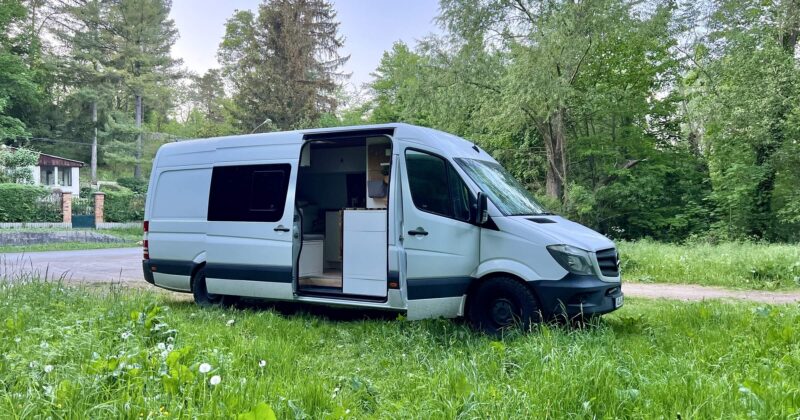
Van Life Costs: What does a year of camper life cost?
Van life costs — Is a year in a camper really worth it?
„"You live in a van? That's so much cheaper than an apartment!" — I hear that all the time. And it's… complicated. After a year in a camper, I can tell you: Van life can be cheaper than renting an apartment in Munich. Or more expensive than an old apartment in Leipzig. It all depends on how you do it.
- A fully equipped VW California or Marco Polo costs €25,000-€65,000, while a self-conversion of a Fiat Ducato costs around €20,000 (€12,000 van + €8,000 conversion with 200W solar).
- Test before you buy: Renting a camper for €80-120 per day for two weeks shows whether van life works — before investing €20,000.
- Year's experience: Twelve months in a camper van through 14 European countries, every euro tracked — including repairs, fines and an expensive evening in Monaco.
- Ducato advantages: Europe's most popular camper base: 1.90 m interior height for standing, inexpensive spare parts and every workshop knows the engine.
- Realistic calculation: Van life can be cheaper than a Munich apartment — or more expensive than an old building in Leipzig. The reality depends entirely on driving style and budget.
I lived in a campervan for twelve months, traveled through 14 European countries, and tracked every single euro. Here are my real figures—no Instagram fairytale, but the reality, including repairs, speeding tickets, and that one night in Monaco that blew the entire monthly budget.

The purchase — buy used or convert it yourself?
Before we get to running costs: The van itself is the biggest investment. And this is where the wheat is separated from the chaff.
- Option 1: Buy a ready-made camper A used VW California or Mercedes Marco Polo costs between €25,000 and €65,000, depending on its age. The advantage: you can just get in and drive. The disadvantage: you're paying a premium for the brand name, and the layout might not suit your lifestyle.
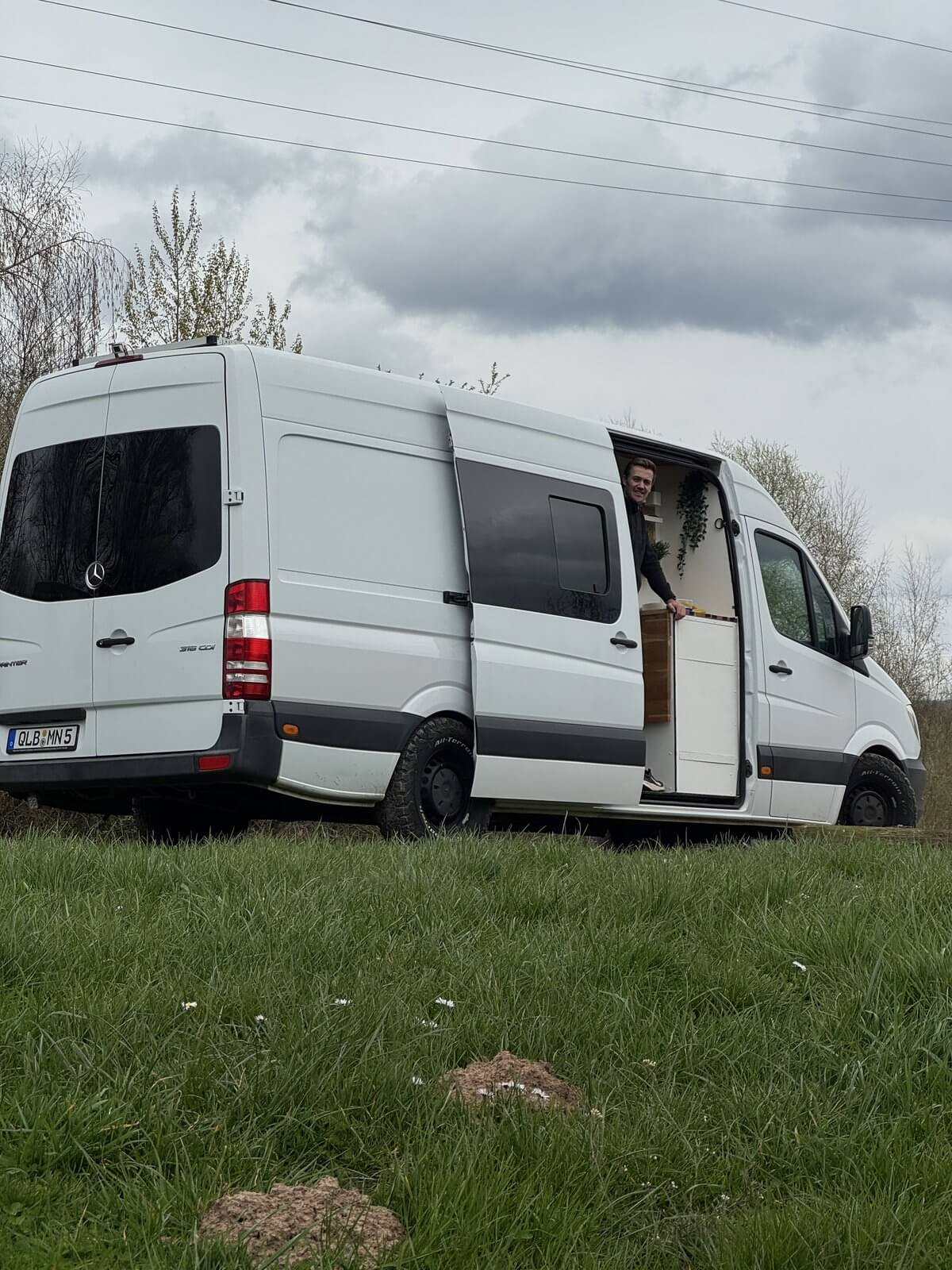
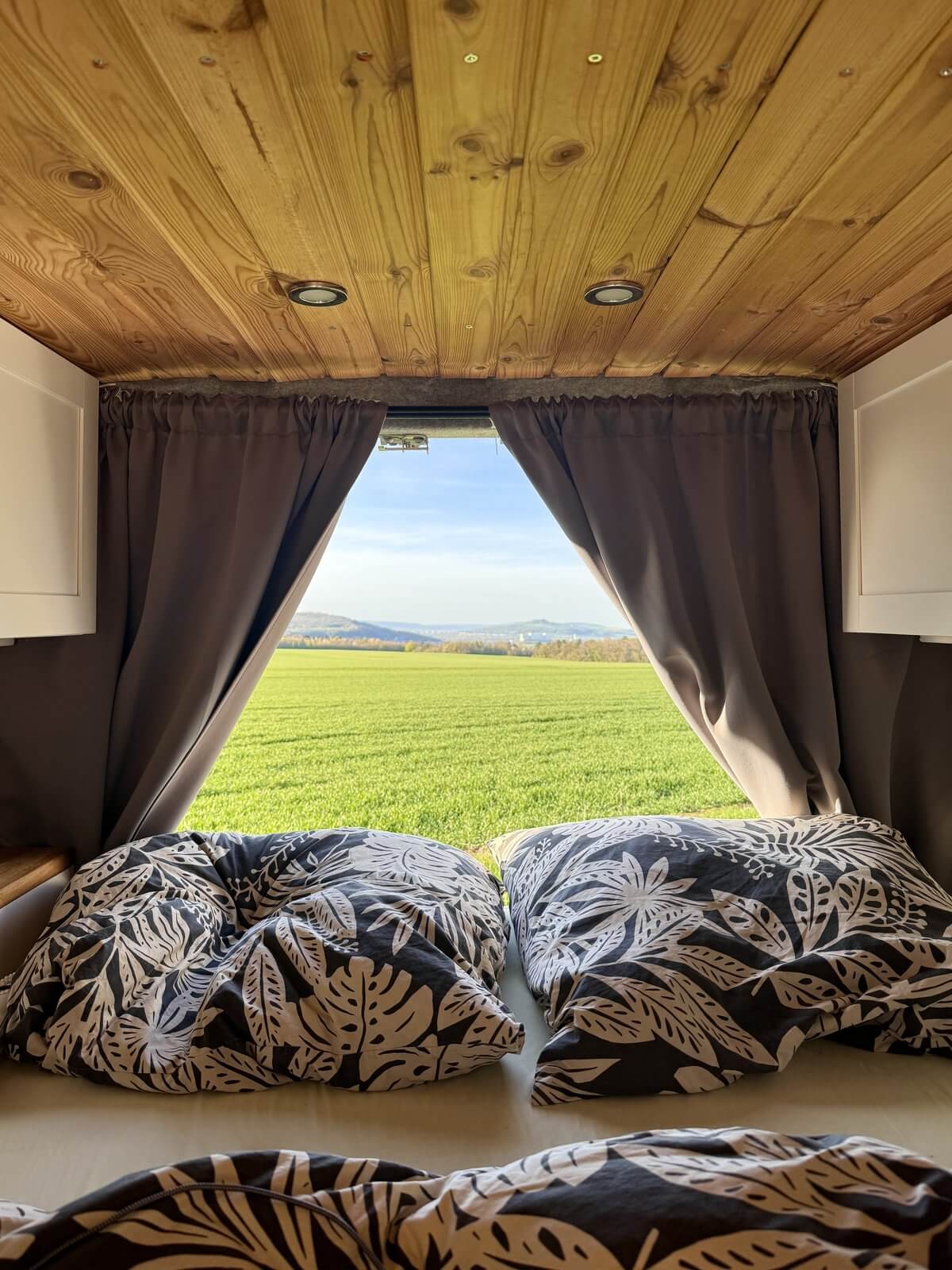
- Option 2: Convert a panel van yourself I bought my Fiat Ducato used for €12,000 and converted it myself in three months. Material costs for the conversion were around €8,000 (insulation, furniture, electrics with 200W solar, kitchen, bed). So, the total cost was €20,000—and I had exactly the layout I wanted. Incidentally, the Ducato is the most popular camper van base in Europe, and for good reason: plenty of headroom (1.90m interior height), inexpensive spare parts, and every garage is familiar with the engine.
- Option 3: Rent for testing Before you invest 20,000+ euros: Rent a campervan for two weeks (approx. 80–120 euros/day). Then you'll know if van life works for you or if you'll miss the cramped space and lack of a shower after three days.
Ongoing full-time vanlife costs (including vanlife with a dog)
Here are my average monthly costs after a year on the road. I paid 70% in Southern Europe (Spain, Portugal, Italy, Croatia) and 30% in Central Europe (Germany, France, Switzerland).
| category | Monthly (average) | note |
|---|---|---|
| Diesel | €350–500 | ~2,000 km/month, 8-9 L/100km |
| Pitches/Camping | €150–400 | Mix of free camping & campsites |
| Groceries | €300–450 | Cooking at home + occasionally eating out |
| Insurance + Tax | ~120 € | Comprehensive insurance, as it's abroad |
| Internet (SIM cards) | 30–50 € | Local prepaid SIMs + mobile hotspot |
| Repairs & Maintenance | ~100 € | Average (1 major incident included) |
| Gas (cooking & heating) | 15–30 € | Significantly more in winter |
| Laundry, hygiene, other | 50–80 € | Laundromats, gym membership for showers |
| In total | €1,100–1,700/month | Average: ~€1,350 |
A two-room apartment in Munich costs around €1,200–€1,500 including utilities, plus food, car, and leisure activities—you can easily end up spending over €2,500. Van life is therefore actually cheaper—UNLESS you're staying at a luxury campsite every night.
The hidden costs that nobody talks about
In month 7, my clutch gave out. In southern Spain. The repair cost €1,800 and I was out of commission for three days. Set aside at least €2,000 as a repair buffer—something always breaks down.
In Portugal and Spain, wild camping is officially prohibited. I received three tickets in one year, totaling €180. That doesn't sound like much, but it's annoying. Park4Night and iOverlander help with finding parking spots—you can find places marked as safe and tolerated by the community.
It sounds absurd, but it's one of my best tips. A McFit membership (20 euros/month) gives you access to showers all over Europe. That easily saves you 100 euros a month in campsite fees if you only had to go to the campsite to shower.
Hardly anyone talks about this. After six months on the road, I had phases where I just wanted to stay in one place. The constant search for campsites, the lack of a social circle, the cramped conditions in the rain—van life isn't always a walk in the park. Be honest with yourself about whether the freedom is worth the loss of comfort.
Van Life Jobs & Money-Saving Tips: Earn Money as a Campsite Tester
In Scandinavia (right to roam), Scotland, and large parts of Eastern Europe, wild camping is legal or tolerated. In these regions, you can save a fortune on campsite fees. Apps like Park4Night and iOverlander are your best friends.
Take advantage of seasonality: In winter, head to Southern Europe (cheaper diesel, free parking on empty beaches), in summer to Northern Europe. This way you avoid both heat AND high campsite prices.
It sounds obvious, but the difference is massive. Someone who eats out every day spends over €500 a month on food. Someone who cooks in their van gets by on €200–250. I've gotten into the habit of shopping at local markets—they're fresher and cheaper than supermarkets.
Refueling with LPG instead of gas cylinders: If you retrofit an LPG system (approx. €200), you can refuel for a fraction of the price of cylinders. It pays for itself from month 4 onwards.
Want to know how to make money while traveling? Read my article. Working remotely as a content creator — because van life without income only works with substantial savings.
Full-time van life — realistic or Instagram fantasy?
Full-time van life—that is, living permanently in a van instead of just during holidays—has been a clear trend since 2020. The reality is considerably more sobering than the Instagram filter world suggests. What works: location-independent work, clearly defined routines (changing location only every 1–3 weeks), backup internet via a local SIM card, and a well-thought-out storage concept. What doesn't: romantic notions like "waking up somewhere different every day"—that exhausts you after two months and makes productive work impossible.
Most successful full-time vanlifers I know have either established a permanent winter base after 1-2 years or found a 60/40 mix of van and rented apartment. Living purely 100% in a van is rather rare and usually a phase, not a permanent state.
Full-time van life — the real requirements
- Stable income regardless of location: At least €2,000 per month, ideally €2,500 — otherwise every unexpected repair will turn into a crisis.
- Emergency funds of €5,000–10,000: Flat tire, engine failure, accident — these things happen. Without a buffer, you'll be back in a rental apartment after the first incident.
- Health insurance with international coverage: Staying abroad for more than 6 weeks → usually a gap in statutory health insurance. International health insurance is mandatory.
- Postal address + bureaucracy solution: Have letters forwarded, use online banking, eIDs. Without a fixed address, many things become more bureaucratically complicated.
- Workshop network in several countries: Especially for Mercedes Sprinter (most common vanlife base) there are workshops everywhere — for exotic vehicles like old VW LT it becomes difficult.
Converted Van Costs — What you realistically need to budget for purchase and conversion
The cost structure of a fully equipped vanlife vehicle is more transparent than most first-time buyers think. Here's the range I've compiled from my own research and several vanlife communities:
| component | Budget setup | Comfort setup | Premium setup |
|---|---|---|---|
| Van base vehicle | €8,000–15,000 | €20,000–35,000 | €45,000–70,000 |
| Interior fittings (furniture + bed) | €2,000–€5,000 | €6,000–12,000 | €15,000–25,000 |
| Electricity (Solar + Lithium) | €800–2,000 | €2,500–4,500 | €5,000–€8,000 |
| Water + Sanitary | €300–800 | €1,000–2,500 | €3,000–€5,000 |
| Heating (auxiliary heater + etc.) | €500–1,200 | €1,500–2,500 | €3,000–€5,000 |
| TÜV, registration, insurance | €600–1,000 | €800–1,500 | €1,000–2,000 |
| Total investment | ~ €12,000–25,000 | ~ €32,000–€58,000 | ~ €70,000–115,000 |
Those who do the interior conversion themselves save 50–70 percent. Those who hire a full-service conversion company (e.g., Wedeking, BulliHus, BoConcept-Vans) pay correspondingly more—but receive a fully equipped vehicle immediately. Both approaches have their merits.
Vanlife Europe — Best countries, routes and seasons
Europe is perhaps the ideal continent for van life: compact distances, good infrastructure, free travel within the Schengen Area, and a great variety of landscapes. Here are the countries with the best van life experience:
- Portugal (Algarve, west coast): Mild climate year-round, very vanlife-friendly, strong surf community, affordable. Caution: Wild camping rules were tightened in 2024; many popular spots are no longer permitted.
- Spain (Andalusia, Basque Country): Warm winter climate, many official campsites, very well-developed network of petrol stations. Andalusia is my top tip for January to March.
- France (Atlantic coast, Corsica): Excellent aire infrastructure (free or cheap pitches near every village), excellent food, varied landscapes.
- „"Allemannsret" (right of public access) allows almost unrestricted overnight camping. Northern Europe is fantastic from May to September. Cost-wise: significantly more expensive than Southern Europe, especially diesel and food.
- Italy (Liguria, Tuscany, Apulia): Campsite culture (Sosta-Camper) is very prevalent. Apulia is a hidden gem in spring and autumn. Summer in Liguria is expensive and overcrowded.
- Albania, Montenegro: Vanlife newcomers with very affordable prices, a fantastic coastline, and liberal wild camping rules. Recommended as a hidden gem for 2026.
Classic annual route: Winter Andalusia/Algarve, spring Italy/France, summer Scandinavia or the Alps, autumn Albania/Greece. This "seasonal loop" has worked for most full-time vanlifers for years.
Vanlife experiences — what beginners underestimate
After speaking with dozens of vanlife travelers, these pain points keep recurring:
- Storage space is never enough: No matter how big the van, it's full after three months. Consistent decluttering every 4-6 weeks is essential.
- Laundry logistics: Laundromats vary from country to country and are often difficult to find. Long stops with a camping washing machine are the only sustainable solution.
- Social isolation: Especially in winter, when the vanlife community thins out. Regular coworking 2-3 days a week in one location helps.
- Relationships as a test: Two adults in 6 m² 24/7 — Van life clarifies relationships very quickly. For better or for worse.
- Insurance & Bureaucracy: Anyone staying outside their home country for more than 6 months will encounter insurance and tax issues. Seek local advice.
- Repair costs: For an 8-year-old van, you can expect repair costs of €1,500–€2,500 per year. If that's not in your budget, you should buy a newer van.
FAQ — Frequently Asked Questions about Van Life Costs
Is van life really cheaper than an apartment?
On average, yes — around €1,100–€1,700 per month for everything (including food, diesel, and insurance). That's cheaper than rent + car + living expenses in a major German city. But: You'll have to come up with the initial investment (van + conversion) of €15,000–€25,000 first.
What is the biggest cost factor in van life?
Diesel. At 2,000 kilometers per month and a consumption of 8–9 liters per 100 km, you quickly end up paying 350–500 euros just for fuel. Staying longer in one place saves you a lot of money. My cheapest months were those where I stayed in one place for 3–4 weeks.
How do you finance van life long-term?
Remote work is key. Freelancers, content creators, online entrepreneurs—anyone who works location-independently can sustain a van life long-term. Seasonal work (harvest helpers, ski season) is an alternative. Living off savings works for a maximum of 6–12 months; after that, things get tight.
What is the average daily cost of van life in Europe?
Budget-friendly: approximately €35–50 per day including diesel, pitch, groceries, and insurance. Comfortable: with occasional restaurant visits and more exercise: €60–90 per day. Premium (frequent campsite stays, restaurant dining): more like €100–150 per day.
Is self-conversion worthwhile, or is it better to buy?
Self-conversion is worthwhile if you plan to live a van for at least two years and have the necessary skills. If you're planning a six-month sabbatical, you should rent or buy a used van – a self-conversion realistically takes six to twelve months of full-time work.
Which van is the best for van life in Europe?
The Mercedes Sprinter is the undisputed king — workshops everywhere, a wide selection of body builders, good resale value. Alternatives: VW T6.1 (more compact, more agile in cities), Fiat Ducato (cheaper, but fewer workshops in Scandinavia), Iveco Daily (for maximum cargo space).
Is van life possible with children?
Yes — many families do this. Recommendation: Children shouldn't be too young (ideally 4 years and older) and at least 6 m² of living space. Clarify any issues regarding compulsory schooling (homeschooling abroad is easier than in Germany), have a pediatrician set up for emergencies, and maintain a child-specific routine.
How does health insurance work in van life?
For the first six weeks of each year, German statutory health insurance covers you within the EU. Beyond that, you need international health insurance (e.g., ADAC, BarmeniaDirekt, AXA). If you're emigrating permanently: TK Plan Abroad or international health insurance like Cigna Global.
Where can I find legal parking spaces in Europe?
The apps Park4Night (free, community-driven, best database) and Campercontact (curated, higher data quality for classic campsites) are the two most important tools. Park4Night lists over 200,000 spots, with ratings, photos, and current information on restrictions.
How do I protect my van from break-ins?
Combine three measures: a GPS tracker (discreetly installed), a steering wheel lock and pedal lock (visible deterrent effect), and an immobilizer + alarm system. Avoid parking in dark, secluded spots; instead, use guarded parking areas or well-lit parking lots.
For the best photo spots on your road trip: Check out my Drone recommendations Van life and drones are the perfect combination.

Max Haase
Travel Content Creator · Drone Photographer · Visual Storyteller
A professional travel creator for over 10 years with over 4 million followers. Specializing in high-end tourism board collaborations and visual travel storytelling.


 German
 English