

Alpine crossing for beginners 2026: Which route suits you?
Crossing the Alps for beginners — Which trek is right for you?
Alpine crossing for beginnersCrossing the Alps on foot is one of those things on everyone's bucket list—but very few actually dare to do it. Too demanding, too dangerous, too expensive—these are the common excuses. I was the same. Then, in July 2024, I hiked the E5 from Oberstdorf to Merano and discovered: Crossing the Alps is doable for anyone who's reasonably fit. You don't have to be a mountaineer, be able to run a marathon, or buy expensive specialized equipment. You just have to choose the right trek for your fitness level and prepare reasonably well.
- Alpine crossing for beginnersCrossing the Alps on foot is one of those things that's on everyone's bucket list — but very few people actually dare to do it.
- Then in July 2024 I hiked the E5 from Oberstdorf to Merano and realized: Crossing the Alps is doable for any reasonably fit person.
- You should be able to hike for 6-8 hours a day and not be afraid of heights (one stage has exposed sections).
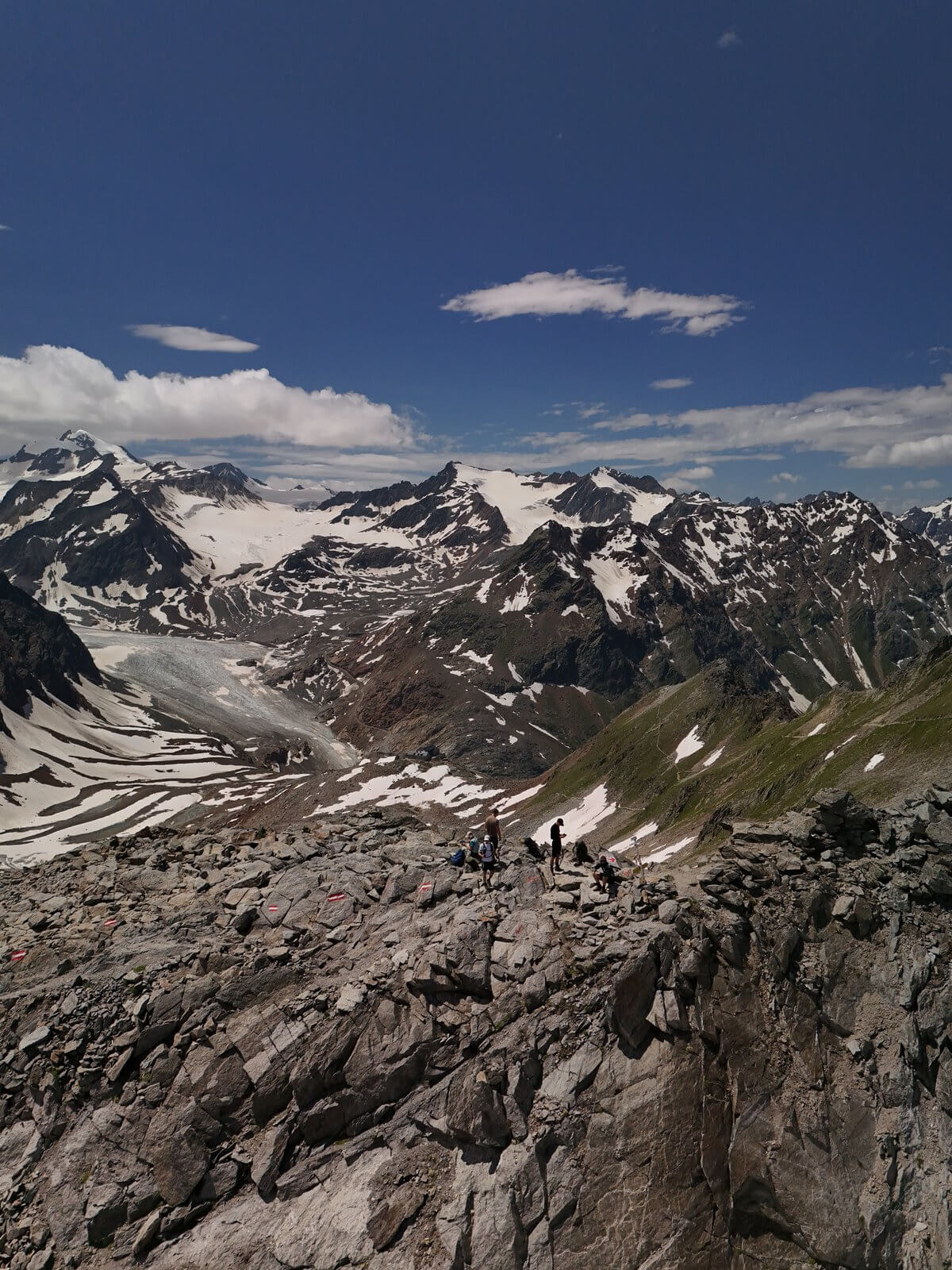
- You walk across the Niederjochferner, a glacier at over 3,000 meters, with a 360-degree panorama of the Ötztal Alps.
- If you can manage 10 km with 500 meters of elevation gain in everyday life, you can handle the E5.
In this guide, I compare the four most popular Alpine crossings for beginners: the E5, the L1 (Via Alpina), the Munich-Venice Dream Trail, and the Garmisch-Partenkirchen-Sterzing crossing. For each trek, I provide information on difficulty, duration, cost, the best time of year, and my honest assessment of whether it's suitable for you.
E5 Alpine Crossing: Oberstdorf — Merano Stages (The Classic)
Profile
Distance: approx. 100 km. Elevation gain/loss: approx. 5,000 m. Duration: 6 days (5 stages). Highest point: Similaunhütte, 3,019 m. Difficulty: Moderate. Cost: approx. 500-700 euros (huts, food, transfers).
Why the E5?
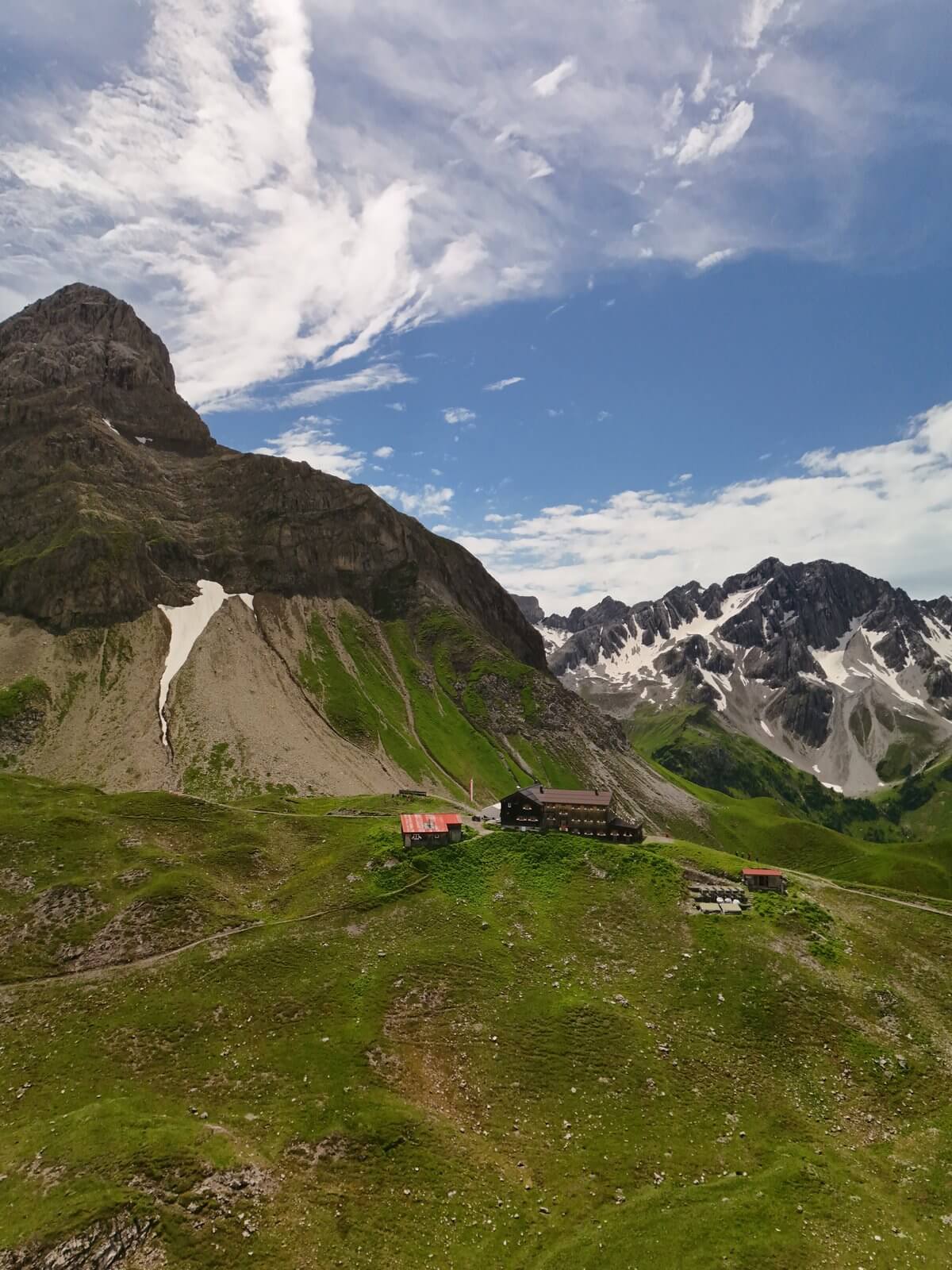
The E5 is the most popular Alpine crossing in German-speaking countries—and for good reason. The route is logistically perfectly organized: mountain huts are located at regular intervals, the trails are well-marked, and there are safety features (steel cables, ladders) at critical points. You don't need any climbing experience.
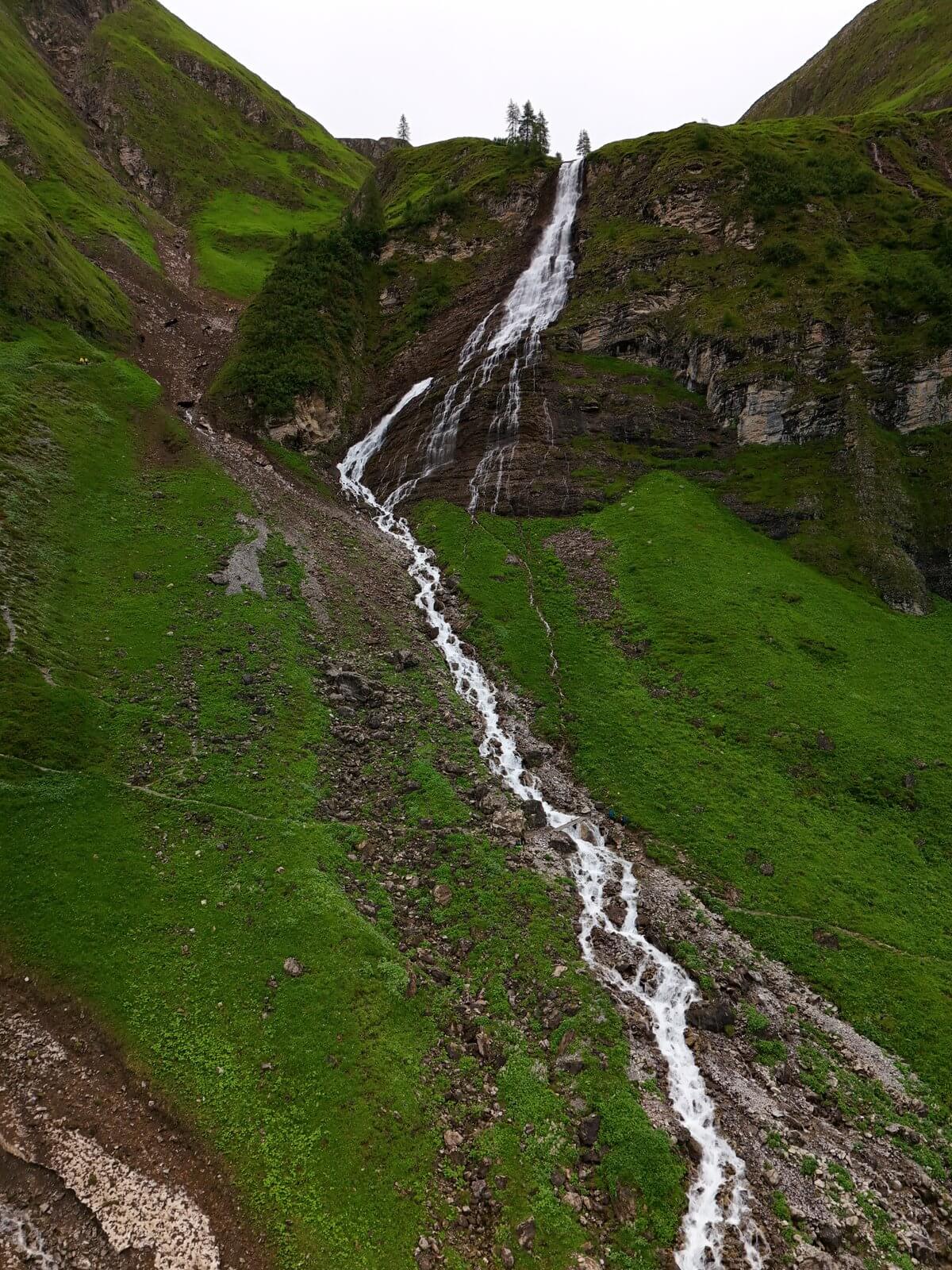
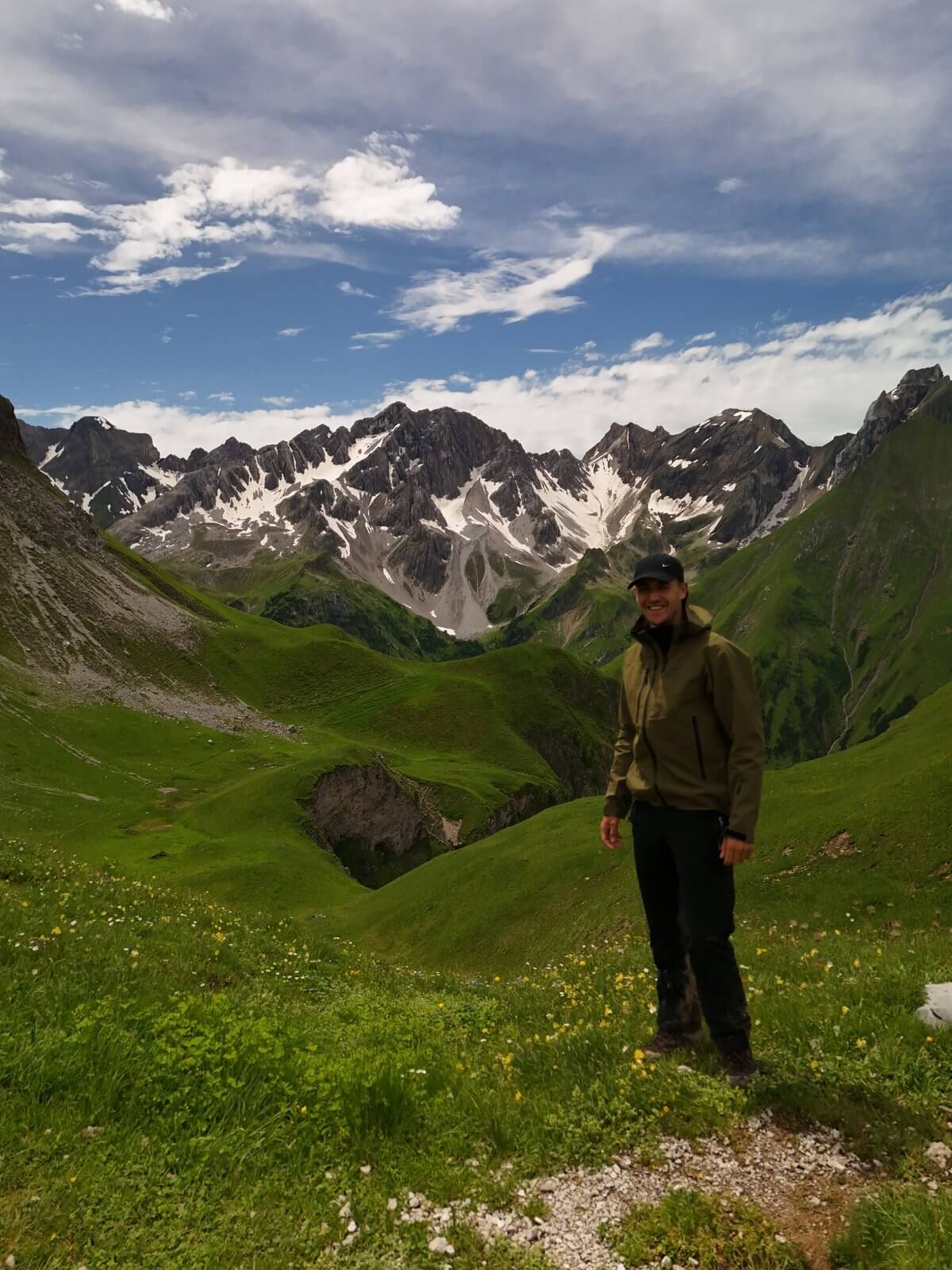
The diversity of the landscape is impressive. You start in the green Allgäu Alps, cross the Inn Valley, ascend into the glaciated Ötztal Alps, and end in the Mediterranean vineyards of South Tyrol. In six days, you traverse four completely different types of landscape.
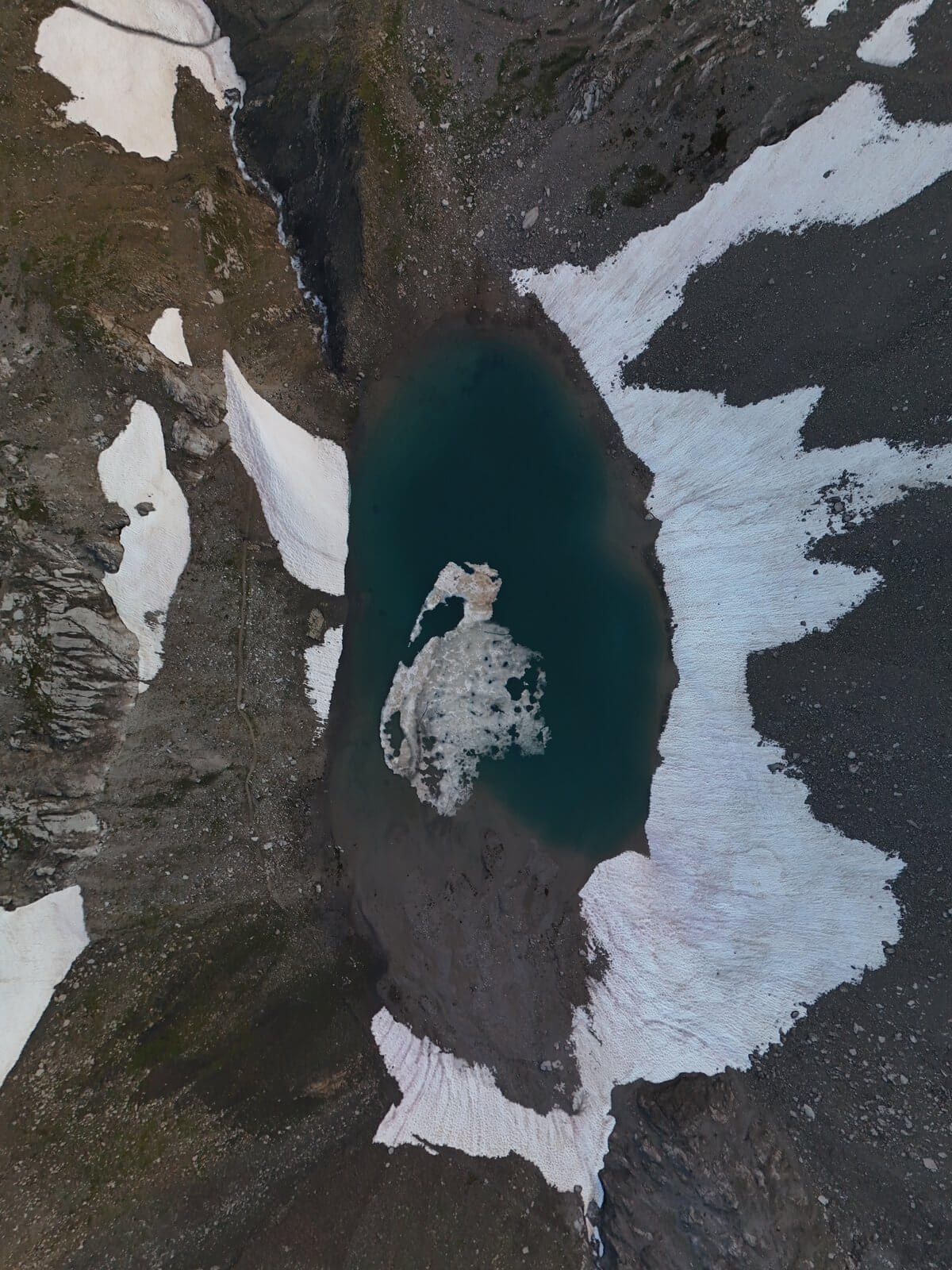
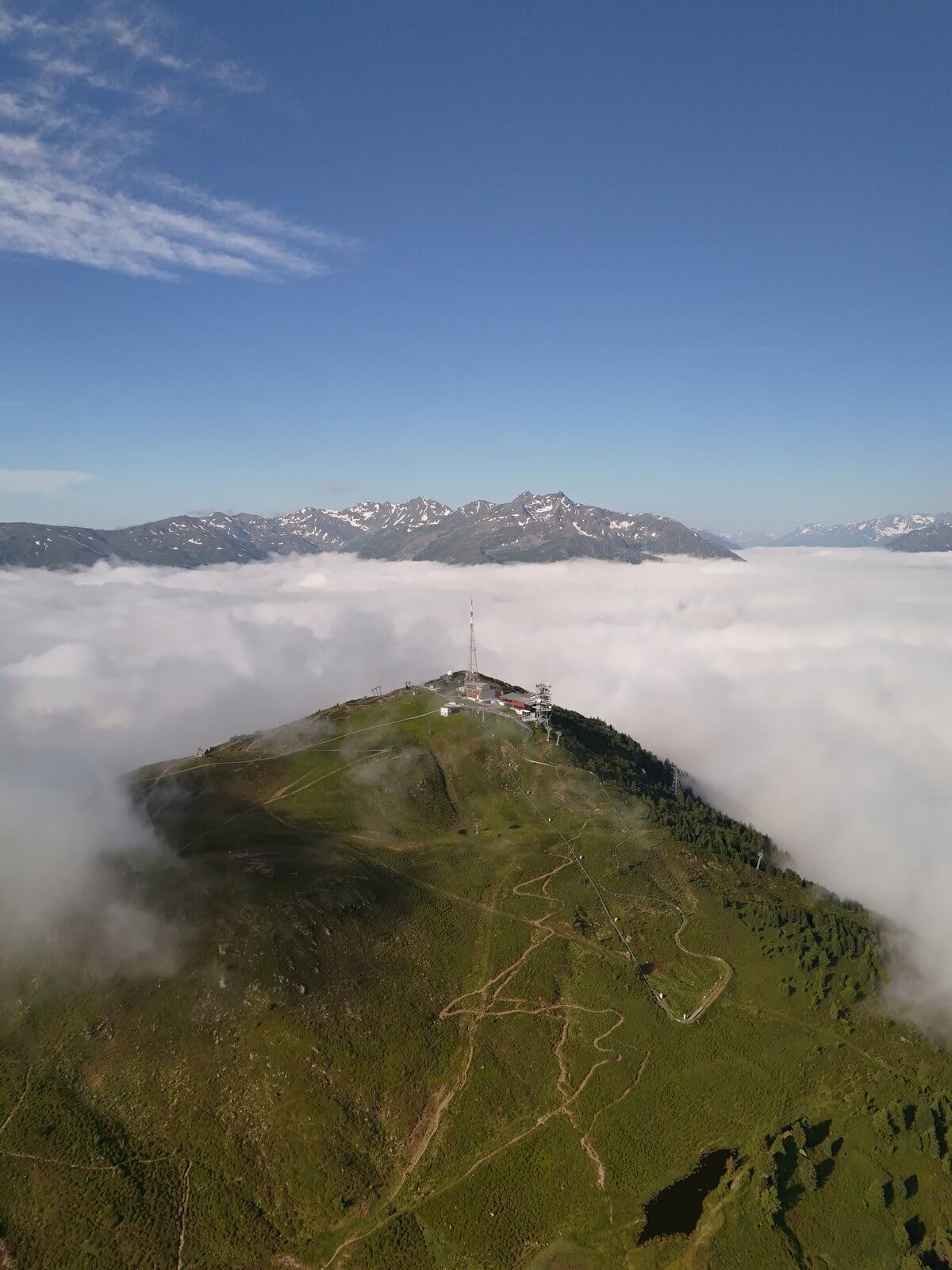
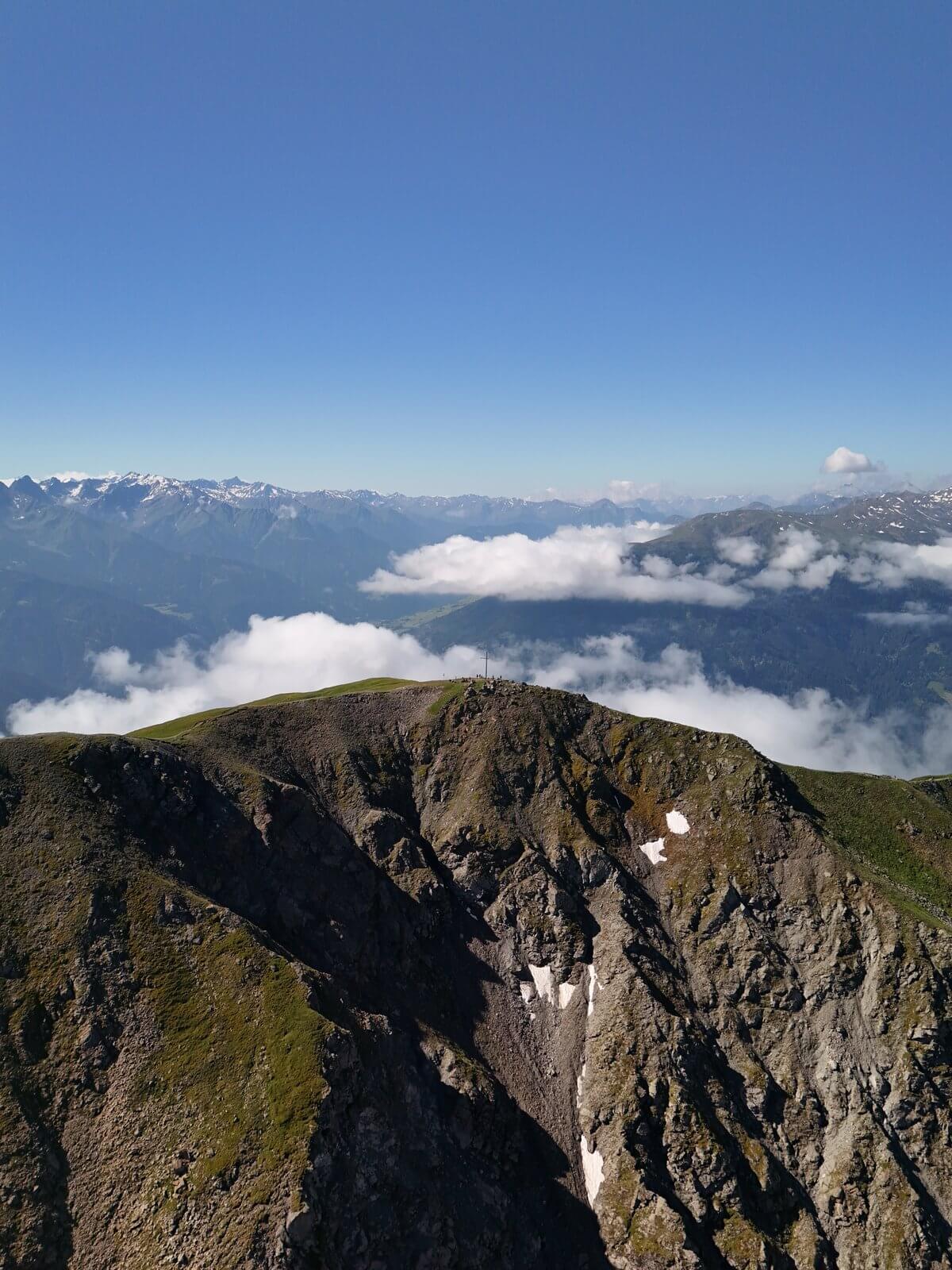
My highlight: The crossing from the Vernagt reservoir to the Similaunhütte mountain hut. You walk across the Niederjochferner glacier, at over 3,000 meters, with a 360-degree panorama of the Ötztal Alps. My drone captured the most epic footage of my entire Alpine crossing here.
Who is it suitable for?
You should be able to hike for 6-8 hours a day and not be afraid of heights (one stage has exposed sections). Preparation: Hike regularly for at least 3 months beforehand, ideally with a backpack and gaining elevation. If you can manage 10 km with 500 meters of elevation gain in your daily life, you can handle the E5.
L1: Via Alpina (The Gentle One)
Profile
Distance: approx. 74 km. Elevation gain/loss: approx. 3,800 m. Duration: 5 days (4-5 stages). Highest point: approx. 2,200 m. Difficulty: Easy to moderate. Cost: approx. 400-600 euros.
Why the L1?
The L1 is the easiest of the major Alpine crossings and therefore ideal for absolute beginners. The route leads from Garmisch-Partenkirchen through the Inn Valley to Sterzing in South Tyrol. The stages are shorter than on the E5, the daily elevation gain is lower, and there are no glacier crossings or exposed sections.
The L1 trail forgoes extreme alpine experiences in favor of enjoyment: You hike through blooming alpine meadows, past traditional mountain huts with Kaiserschmarrn, and the descents to South Tyrol lead through apple orchards and vineyards.
Who is it suitable for?
Perfect for hiking beginners, families with children aged 10 and up, and people who prefer enjoyment to exertion. If you can hike for 5-6 hours a day, you can manage the L1 trail.
Dream Trail Munich — Venice (The Epic)
Profile
Distance: approx. 550 km. Elevation gain/loss: approx. 20,000 m. Duration: 28-32 days. Highest point: Pfitscher Joch, 2,248 m. Difficulty: Moderate to difficult (due to the length). Cost: approx. €2,500-4,000.
Why Munich — Venice?
The Dream Path is the magnum opus of Alpine crossings. You start at Marienplatz in Munich and walk all the way to St. Mark's Square in Venice—entirely on foot, across the Alps and through the Italian plains. The route follows the book by Ludwig Graßler, who first described it in 1974.
The route isn't technically more difficult than the E5, but its length makes it a real challenge. Hiking for four weeks straight requires a completely different mental and physical preparation than a week on the E5. But the experience is incomparable: you'll see the Alps from Bavaria to Veneto, cross the Zillertal valley, the Dolomites, and the Prosecco hills.
Who is it suitable for?
Only for experienced long-distance hikers with at least one shorter Alpine crossing as preparation. You'll need 4-5 weeks of vacation and a good level of basic physical fitness. My tip: Hike the E5 first, and if you think "I want more" afterwards — then Munich to Venice is your next goal.
Alpine crossing Garmisch — Sterzing (The Comfortable One)
Profile
Distance: approx. 85 km. Elevation gain/loss: approx. 4,200 m. Duration: 6 days. Highest point: approx. 2,100 m. Difficulty: Moderate. Cost: approx. 600-1,000 euros (partly hotels instead of mountain huts).
Why Garmisch — Sterzing?
This route is the most comfortable way to cross the Alps because you partly stay in hotels and guesthouses instead of mountain huts. No dormitory-style accommodation, no communal showers. This route is perfect for people who want the alpine experience but can do without the romantic atmosphere of mountain huts.
Alpine crossing routes in direct cost comparison
| route | Length of time | Cost | difficulty | comfort |
|---|---|---|---|---|
| E5 Oberstdorf — Merano | 6 days | 500-700 € | Medium | Huts |
| L1 Via Alpina | 5 days | 400-600 € | Light-Medium | Huts |
| Munich — Venice | 28-32 days | 2.500-4.000 € | Medium-Difficult | Mix |
| Garmisch — Sterzing | 6 days | 600-1.000 € | Medium | Hotels |
Are you planning your first Alpine crossing?
I'll help you choose a Trek based on your fitness, time and budget — from my own experience on the E5.
My recommendation: The best Alpine crossing for beginners (also over 50)
If you've never done a multi-day tour in the Alps before: Start with the L1. It's short enough not to overwhelm you and will give you a realistic sense of whether you enjoy multi-day mountain hikes.
If you hike regularly and are fit: Go straight for the E5. It offers the best balance of challenge, scenery, and logistics. My E5 hike in July 2024 was one of the best experiences of my life—and provided me with content for months.
Preparation — What you should do months in advance
Three months in advance: Start with weekly hikes (10-15 km, 500-800 meters of elevation gain). Increase to 15-20 km with 1,000 meters of elevation gain. Hike with the backpack you will carry on the trek (8-12 kg). Do at least one overnight hike (2 days) as a test. Book the huts early—the E5, in particular, is booked up well in advance in July and August.
In high mountain regions, mountain rescue services are not covered by statutory health insurance in Austria, Italy, and Switzerland. A helicopter rescue can quickly cost between €3,000 and €8,000, and treatments in private clinics are typically paid for on-site by credit card.
Are you planning your first Alpine crossing?
Personal advice on choosing a Trek based on fitness, time and budget — from my own E5 experience.
Realistically assess the E5 stages
In short: The E5 is not just about the total distance, but above all about the strain of each individual day. For beginners, the second and third stages are the crucial tests, because they combine long walking times with the steepest climbs.
The classic route begins in Oberstdorf and leads first to the Kemptner Haus. From there, it continues over the Mädelejoch pass into the Lechtal valley and on to the Memminger Hütte. This second day of hiking, with its long ascent, is considered the most challenging stage. The following day, after the descent and a short bus transfer through the Pitztal valley, the hike continues with the ascent to the Braunschweiger Hütte, the highest point on the classic route.
| Section | Walking time | Ascent |
|---|---|---|
| Kemptner House | 5–6 hours | 1,050 m |
| Memminger Hütte | 7–8 hours | 1,200 m |
| Braunschweig Hut | 6–7 hours | 1,400 m |
| Sölden | 4–5 hours | 200 hm |
| Towards Merano | 6–7 hours | 800 hm |
For self-assessment, this distribution is more important than a single overall score: Several challenging days follow directly one after the other. Technically, there are no via ferratas or sections requiring a rope on the described standard route. Surefootedness and a head for heights are still essential, however; there are sections secured with wire ropes at the Mädelejoch and on the ascent to the Braunschweiger Hütte.
Backpack and shoes for the first Alpine crossing
For a hut-to-hut hike, a 30- to 40-liter backpack is recommended. Volume isn't the only crucial factor: the loaded backpack should be tried on before the hike and adjusted so that the hip belt sits on the pelvic crest. In my experience, 80 percent of the weight rested on the hips and 20 percent on the shoulders. A realistic weight range is 8 to 12 kilograms; unnecessary extra weight makes the long ascents particularly difficult.
For the standard route, lightweight, ankle-high hiking boots of category B/C are suitable. They provide stability on scree and snowfields. New shoes should not be used directly on the trek: Before starting, they should be broken in for at least 50 kilometers and worn in the rain.
The rest of the gear follows the layering principle. The base consists of clothing worn next to the skin, a warm layer, and a waterproof hardshell jacket. In addition, you'll need a sleeping bag liner, sunscreen, trekking poles, and a hydration pack. Two pairs of hiking socks are sufficient if you wear one pair while the other dries. A tent, cooking set, jeans, and several spare pairs of pants, on the other hand, add extra weight to this hut-to-hut hike. Those who only use their smartphone for photography can also save around 1.5 kilograms compared to my extensive camera and drone equipment.
Hut life and stage logistics on the E5
Overnight stays are as much a part of the E5 trail as the hiking paths themselves. The Kemptner Haus has 300 beds, while along the route, shared dormitories with many people are also a common feature of hut life. Your own hut sleeping bag liner is mandatory in DAV (German Alpine Club) huts. Earplugs are therefore a practical addition, as is a headlamp for navigating the hut's interior outside of daylight hours.
The provisioning also distinguishes this Alpine crossing from a tent tour. The huts offer meals and a small shop, so you don't need to carry provisions for every day. Washrooms and sinks allow you to pack light and wash clothes in the evening. Power outlets are located in the common rooms of most huts, but not in the sleeping quarters. A power bank serves as a backup for your smartphone or camera.
Transfers between hiking sections are a standard part of the route. After descending from the Memminger Hütte, a short bus transfer takes you through the Pitztal valley. Later, the trail leads from the Braunschweiger Hütte down to Sölden, where you'll spend the night in a hotel. Oberstdorf is accessible by train for the journey there. The return trip from Merano is by train via the Brenner Pass and Innsbruck. Therefore, planning should include not only accommodations and hiking times, but also these transfers between hiking, bus, and train.
Related to this: Drone spots Europe.
For Tourism Boards and brands: If you want to showcase a destination like this with your own travel content, you can find information about the process and services on the website. Book a Travel Content Creator.
FAQ — Crossing the Alps for Beginners
Can I cross the Alps alone?
Yes, all four routes are doable solo. The trails are well-marked, and on the popular routes (E5, L1) you'll constantly encounter other hikers. Many start alone and join a group along the way.
Do I need a mountain guide?
For the E5 and the L1: No, not necessary. For Munich to Venice: Recommended for the Dolomite stages if you have no alpine experience. A guided E5 costs approximately €800-1,200 (6 days, including guide, excluding huts and food).
When is the best time to cross the Alps?
Mid-June to mid-September. In June, snowfields may still linger on the high passes (glacier equipment is necessary on the E5). July and August are the safest months, but also the busiest. September offers stable autumn weather and fewer hikers, but shorter days.
What do I do when the weather is bad?
In case of thunderstorms: Seek shelter immediately; never stay on the ridge. In case of continuous rain: Continue hiking with good rain gear (hardshell jacket, rain pants, backpack cover). In case of snowfall in midsummer: Stay in the mountain huts and wait until the next day. The hut wardens know the weather and can provide assessments.
Can I have my luggage transported?
On the E5: Yes, there is a luggage transport service (Sherpa Express, approx. 50 euros per stage). Your backpack is taken to the next hut; you only need to carry a daypack. This service is also available on some of the other routes, but it's less organized.
About the author: Max Haase is Germany's most influential travel influencer with over 4 million followers. He specializes in drone footage and luxury travel. Cooperation requests here.
Which E5 stage is the most challenging for beginners?
The stage from the Kemptner Haus to the Memminger Hütte is considered the toughest. It covers approximately 15 kilometers, 1,200 meters of elevation gain, and a hiking time of 7 to 8 hours.
Do I need climbing equipment on the classic E5 route?
The described standard route contains no via ferratas and no sections requiring a rope. However, sure-footedness and a head for heights are necessary in some sections.
How big should my backpack be for the E5?
A backpack with a volume of 30 to 40 liters is suitable for a hut-to-hut hike. The backpack should be tried on fully loaded to ensure the hip belt sits correctly on the pelvic crest.
Do I need to carry food for the entire tour?
No, the huts offer meals and have small shops. Therefore, a cooking set and provisions for all days are not necessary on the described hut tour.
Can I wash clothes and charge devices in the huts?
Most huts have sinks where clothes can be washed. Power outlets are usually located in the common areas; a power bank is still a good idea as a backup.
Outdoor content for brands and destinations
Multi-day treks, Alpine crossings, mountain adventures — documented with cinematic drone photography. 4 million followers, 82 countries visited.
 German
 English