
Bilbao Sights: 12 Highlights
Bilbao sights: 12 Highlights
Guggenheim with Puppy and Maman, riverside promenade along the Nervión, Torre Iberdrola and old town with pintxos: What's worth seeing in Bilbao and how to combine the different locations effectively.
For me, Bilbao's sights are a blend of architecture, the river, and the narrow streets of the old town. I visited the city at the end of November 2023 as part of my Basque Country trip: it was wet, the evenings came early, and precisely because of this, the titanium of the Guggenheim Museum looked so powerful in the twilight. This city guide organizes the highlights by location, so you can experience Bilbao at a relaxed pace over two to three days.
It complements my large Basque Country travelogue about San Sebastián, Bilbao and the coast with a focus on the city alone. If you are planning Bilbao as a stop on a longer route, you will find the right setting in the Northern Spain road trip from Bilbao via Biarritz to Bordeaux .
Bilbao sights at a glance
Bilbao lies on the Nervión River, which here is called the Ría de Bilbao. Almost everything visitors want to see is situated along this estuary: to the west, the Guggenheim Museum and the high-rises of the new town; in the middle, the bridges and riverside promenades; and to the east, the old town with its narrow streets. In between are paths that are easily connected on foot.
For planning purposes, a division into four areas is helpful:
- Guggenheim and outdoor sculptures: Museum, Puppy, Maman, Tall Tree & the Eye and the red arches of the La Salve Bridge
- Ría and new town: Waterfront promenade and Torre Iberdrola
- View: Artxanda with the funicular railway and other viewpoints above the city
- Old Town: Casco Viejo with the Siete Calles, Plaza Nueva, Mercado de la Ribera and pintxo bars
The Guggenheim is the main reason many people come to Bilbao in the first place. But the city is also captivating even if you only view the museum from the outside, because architecture, water, and the old town come together in a small area.
The 12 most important Bilbao sights at a glance
Guggenheim Museum Bilbao
Titanium facade by Frank Gehry, opened in 1997
Puppy
Flower sculpture by Jeff Koons at the museum
Maman
Spider sculpture by Louise Bourgeois on the river
Tall Tree & the Eye
73 mirrored steel spheres by Anish Kapoor
La Salve Bridge with Arcos Rojos
red arches by Daniel Buren
Waterfront promenade on the Ría
Walk along the Nervión
Iberdrola Tower
approximately 165-meter-high skyscraper
Artxanda
Scenic mountain with funicular railway
Casco Viejo and Siete Calles
historic old town streets
Plaza Nueva
Square lined with arcades
Mercado de la Ribera
Market hall by the river
Pintxo bars
small bites from the display case
Guggenheim Bilbao: Architecture made of titanium, limestone and glass
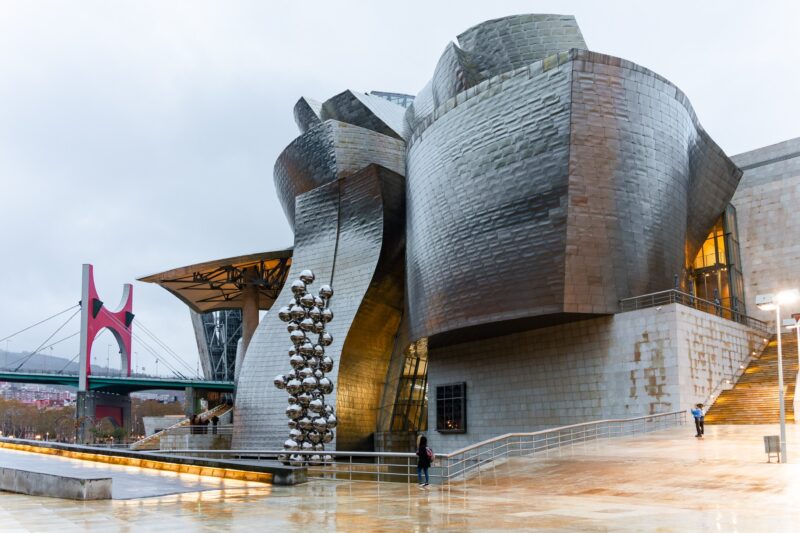
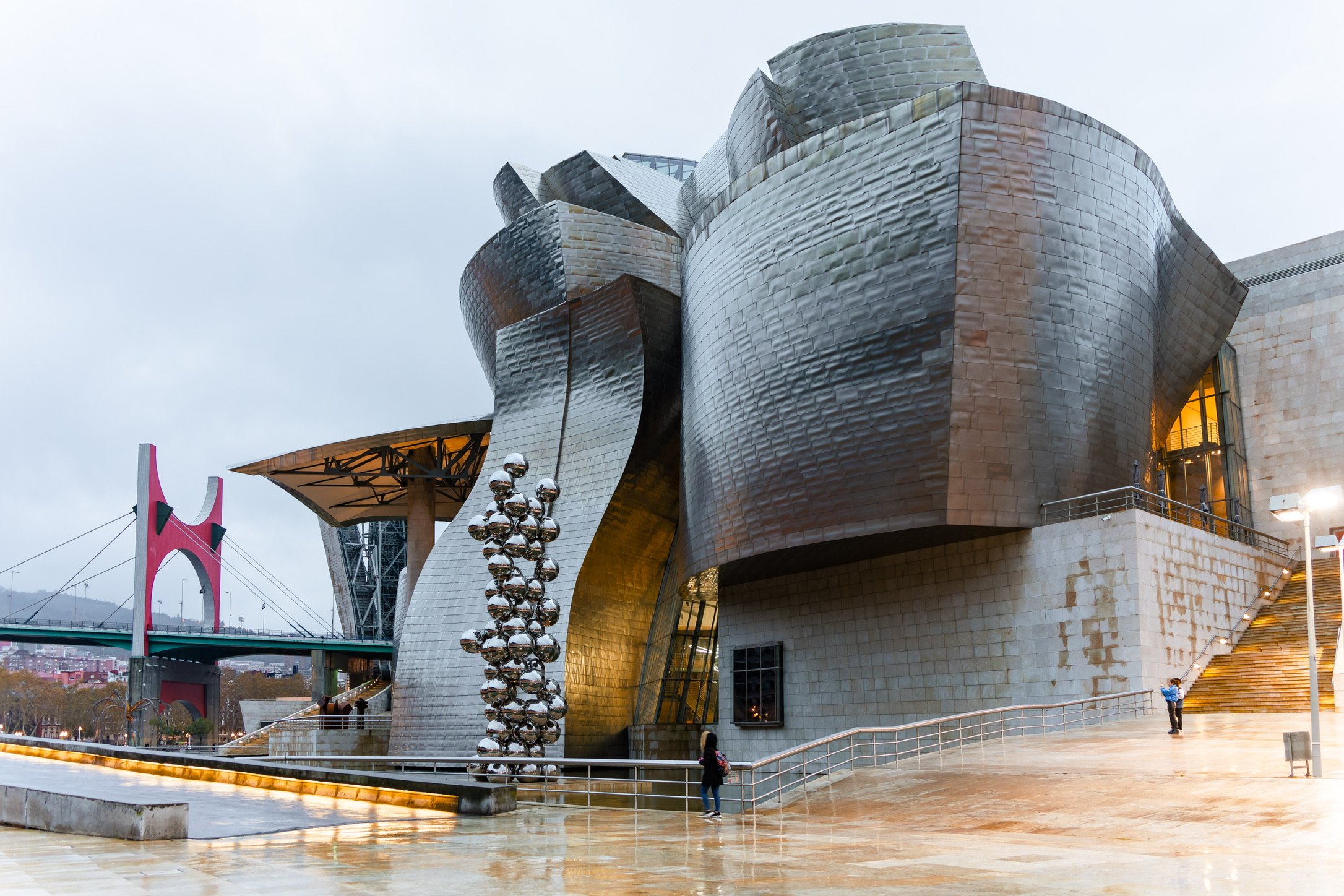
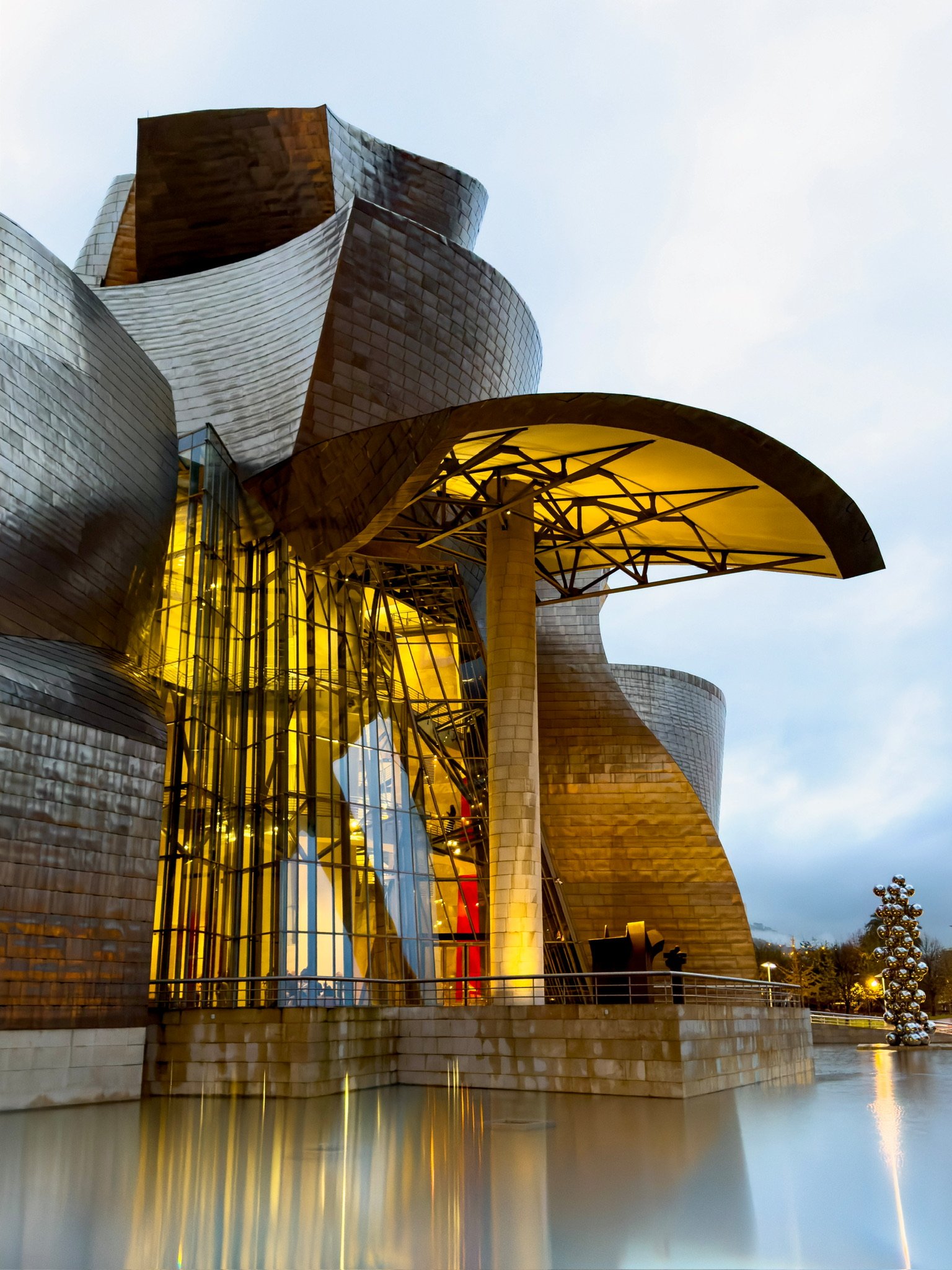
The Guggenheim Museum Bilbao opened in 1997. Designed by Frank Gehry, its curved exterior is made of titanium, limestone, and glass. Depending on the weather and time of day, the facade changes between silver, gold, and gray, making the exterior alone the best reason for a first visit.
In my photos, the building looks its best at dusk: the canopy at the entrance glows warmly, and the museum is reflected in the water. Anyone wishing to visit should check opening hours and ticket prices in advance on the museum's official website, as both are subject to change.
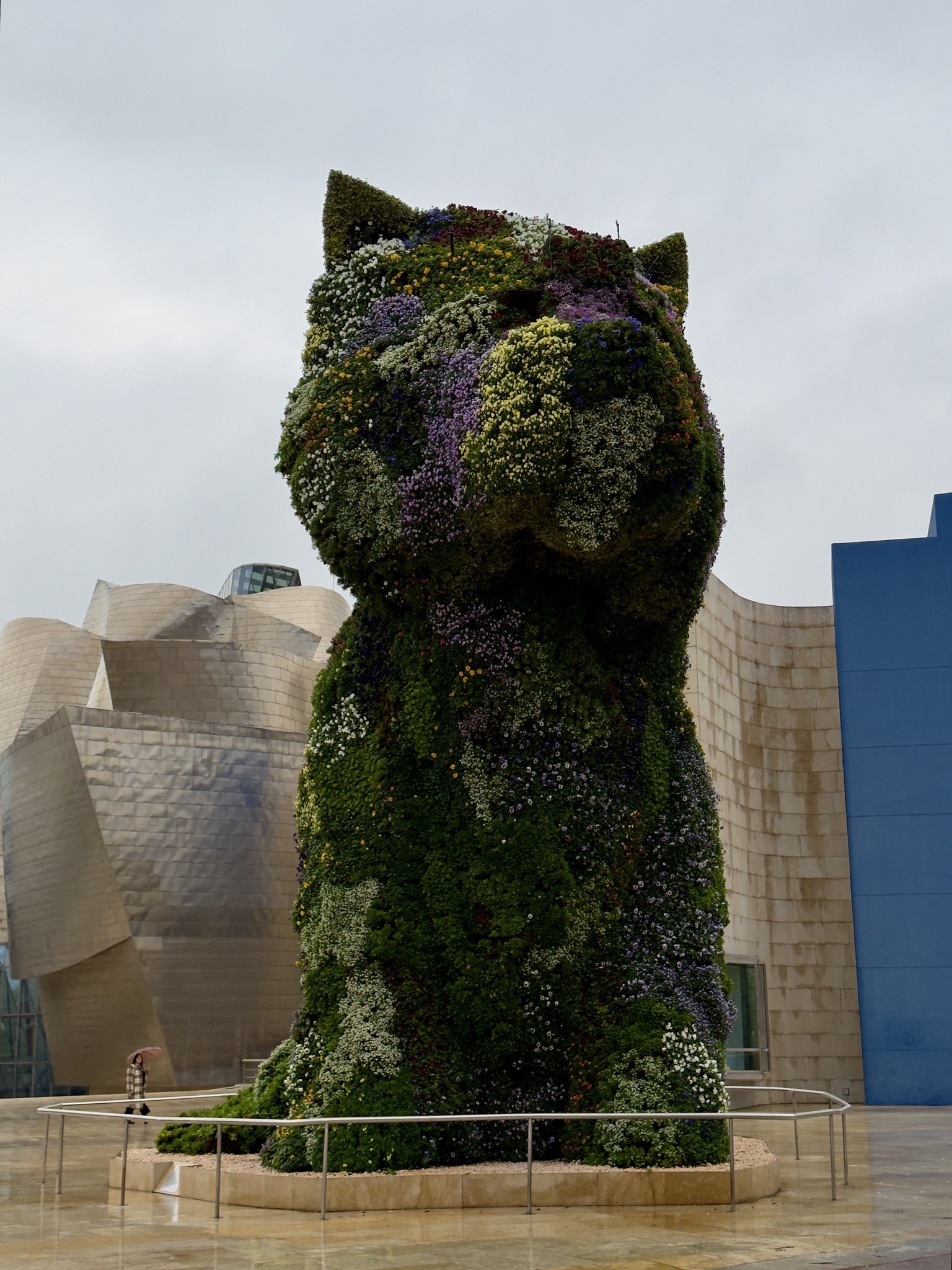
Puppy by Jeff Koons: the flower dog at the museum
In front of the museum sits Puppy, a West Highland White Terrier made of flowers. Jeff Koons created the sculpture in 1992; according to the museum, the planting is renewed twice a year. In my photo, the dog stands against a gray sky, and I particularly like this contrast with the museum's metal shell.
The square is a popular spot for photography. If you want to take photos without many people in the frame, visiting early in the day or in bad weather is recommended.
Maman by Louise Bourgeois: The Spider on the River
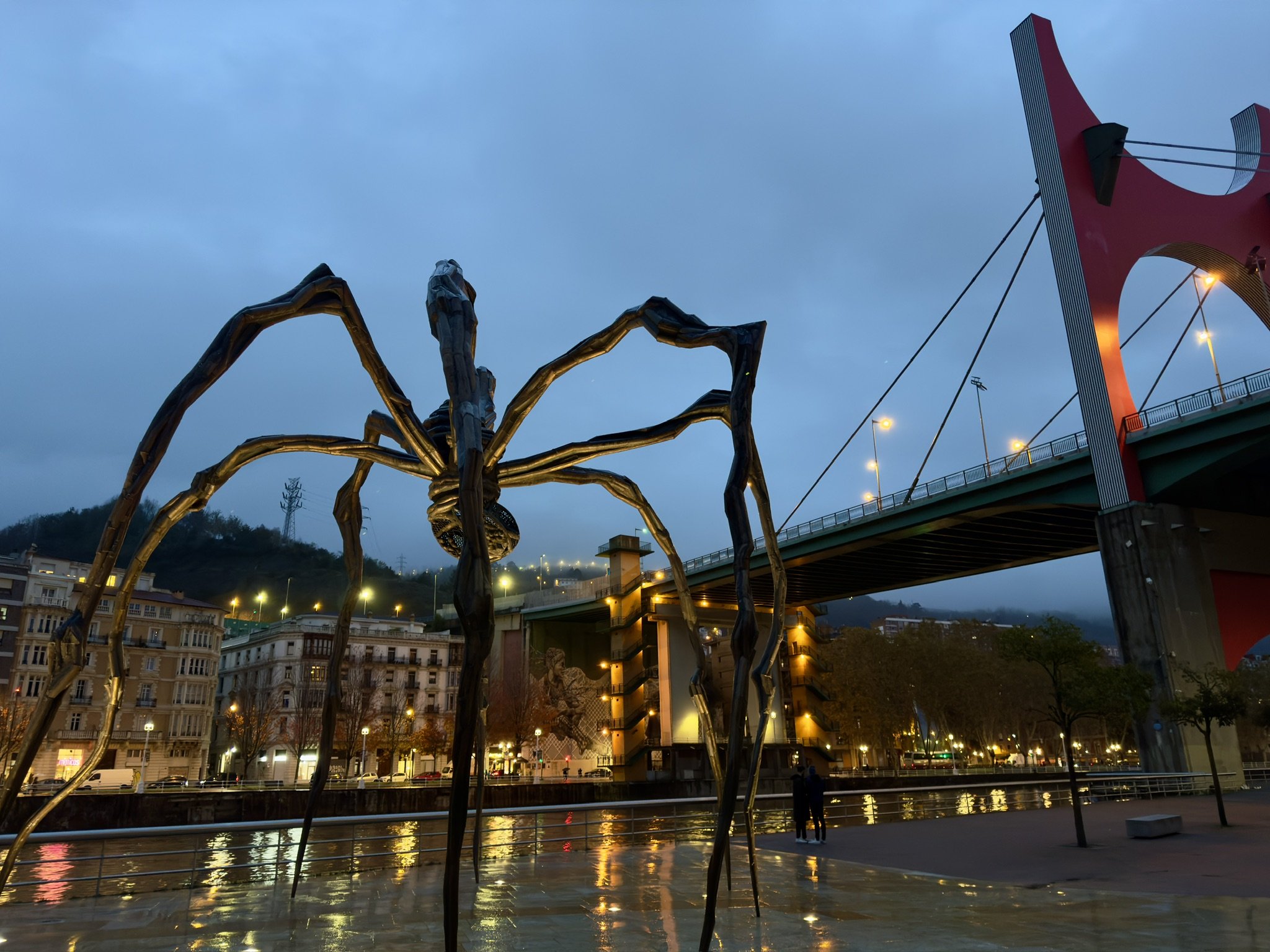
On the museum's river side stands Maman by Louise Bourgeois, a giant spider made of bronze and stainless steel with marble eggs. The artist dedicated the work to her mother, a weaver. Anyone standing beneath its long legs quickly understands why the sculpture is so often photographed.
In the background, you can see the red arches of the La Salve Bridge. In the evening, when the streetlights come on, it creates an image that perfectly encapsulates the city: modern art, bridge, and river all in one shot.
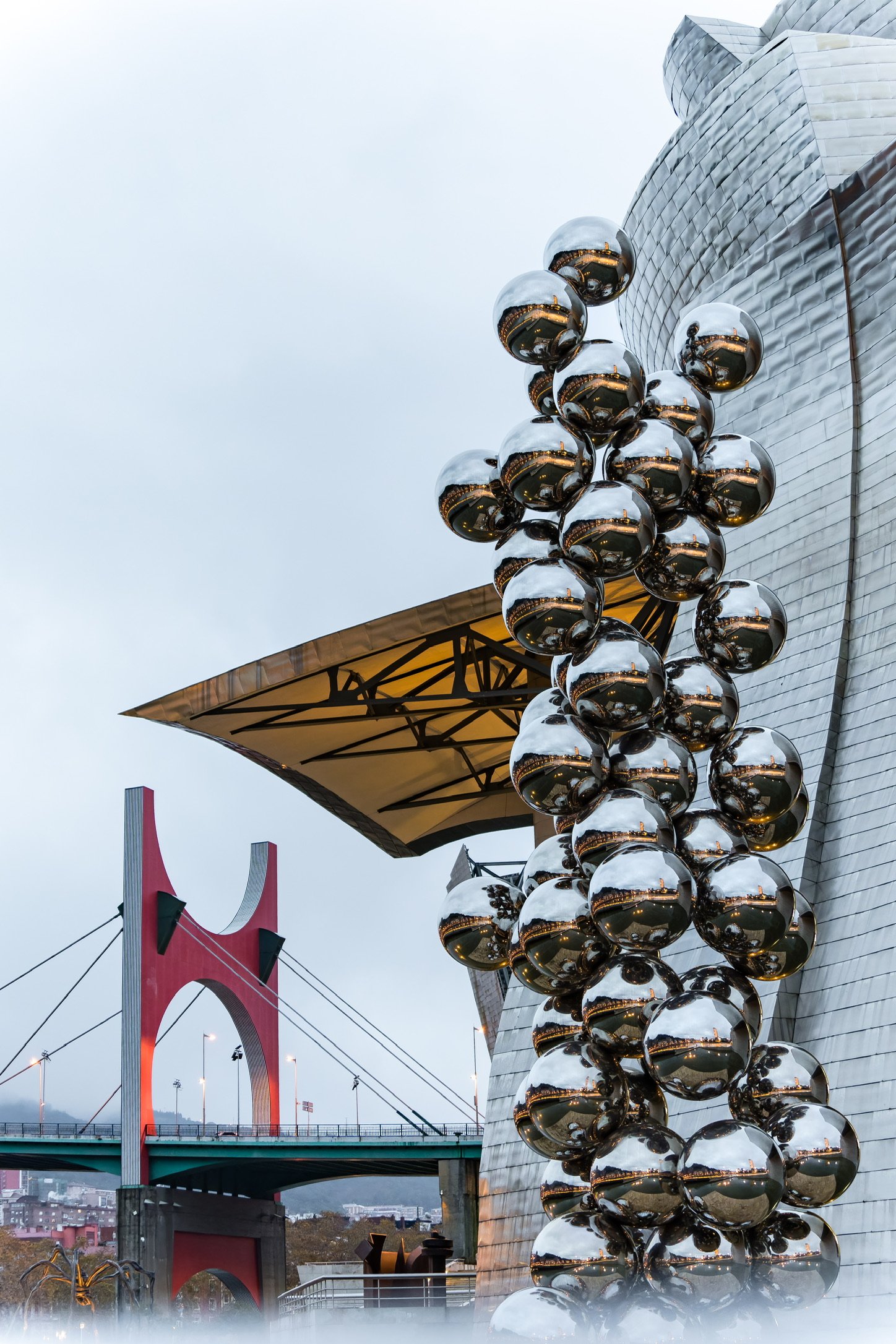
Tall Tree & the Eye: 73 mirrored spheres
Next to the museum stands Tall Tree & the Eye by Anish Kapoor. The sculpture consists of 73 mirrored steel spheres and is located outdoors by the water, reflecting the museum, the bridge, and the sky in countless small images. It's worth taking a photo with your phone from a slightly oblique angle so you can see the museum in the background.
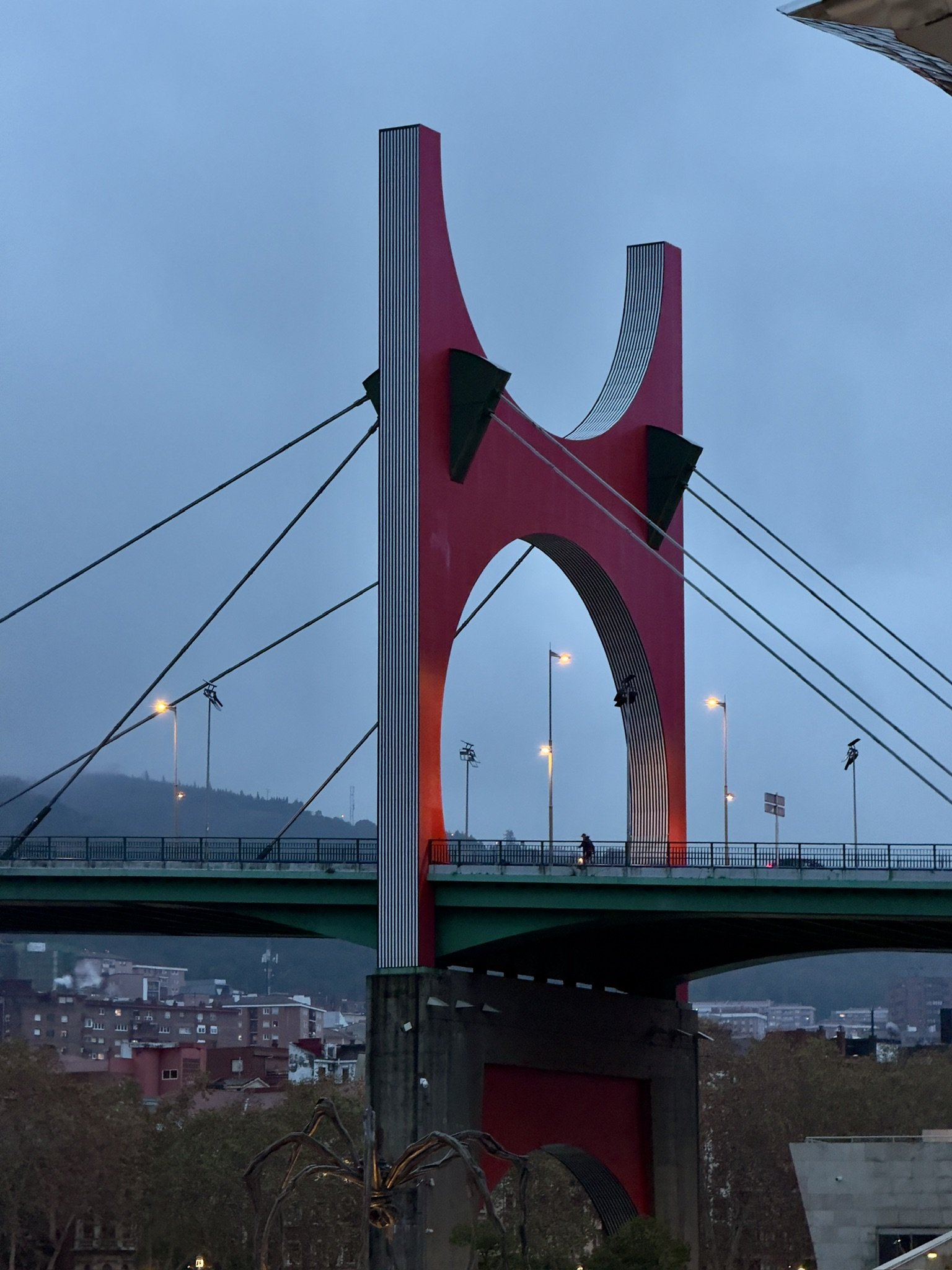
La Salve Bridge and Arcos Rojos
The La Salve Bridge spans the estuary right next to the museum. Since 2007, it has been adorned with the Arcos Rojos, red arches by the artist Daniel Buren, which give the bridge a distinctive appearance. Anyone leaving the Guggenheim almost inevitably passes underneath them.
The arch is a particularly striking subject for photography in the late afternoon, when the red stands out against the darkening sky.
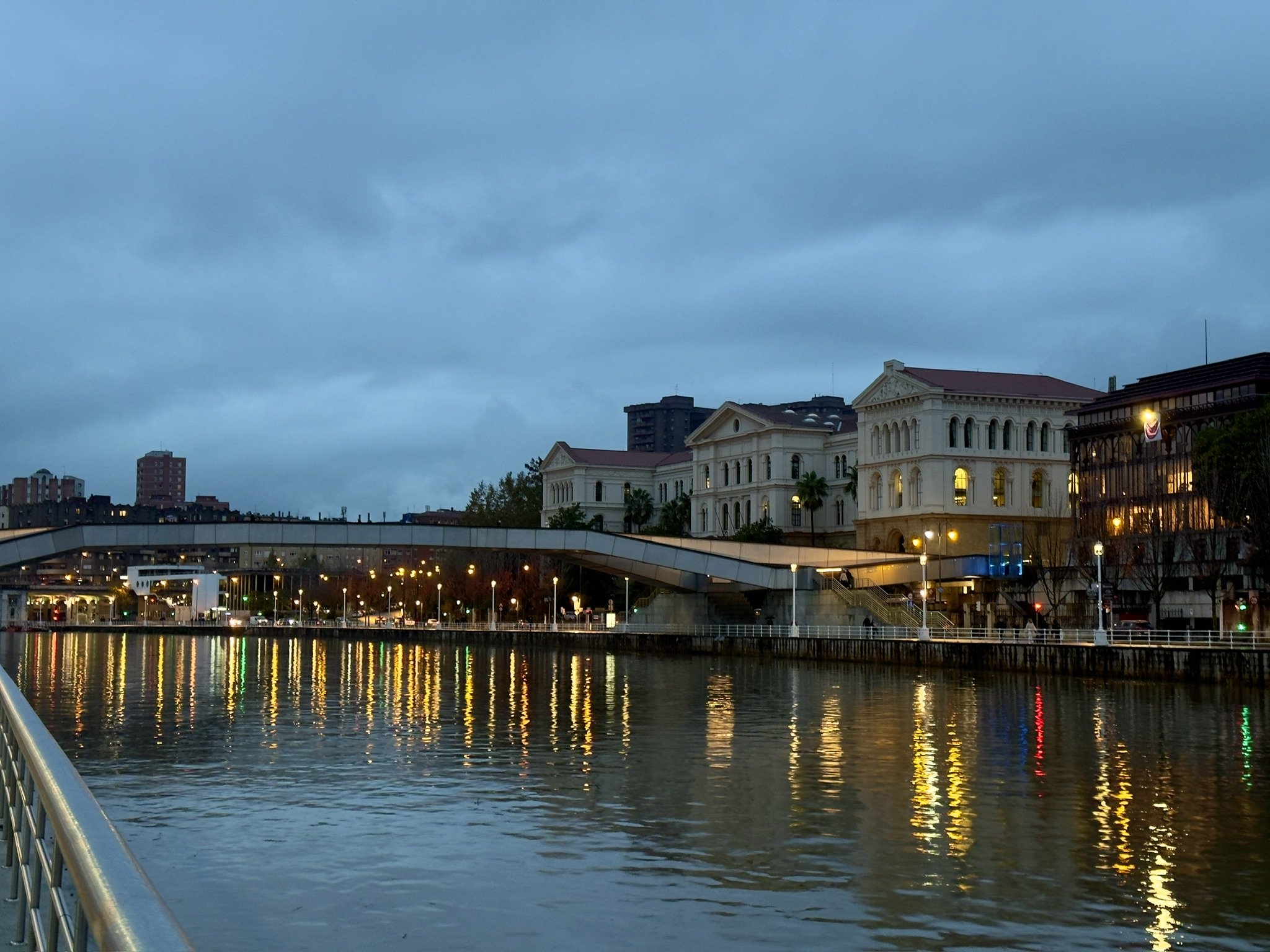
Waterfront promenade along the Ría: Experience Bilbao on foot
The promenade along the Nervión River connects the museum, bridges, and various parts of the city. I walked along it in the evening when the lights of the buildings shone in the water and the clouds hung low. The promenade also serves as a good landmark: if you follow the river, you'll almost automatically find your way from the Guggenheim to the old town.
For sightseeing in Bilbao without an entrance fee, the Ría is the best place to go. You'll see bridges, historic facades and new architecture side by side, and you can take breaks in waterfront cafes.
Torre Iberdrola: Bilbao's skyscraper
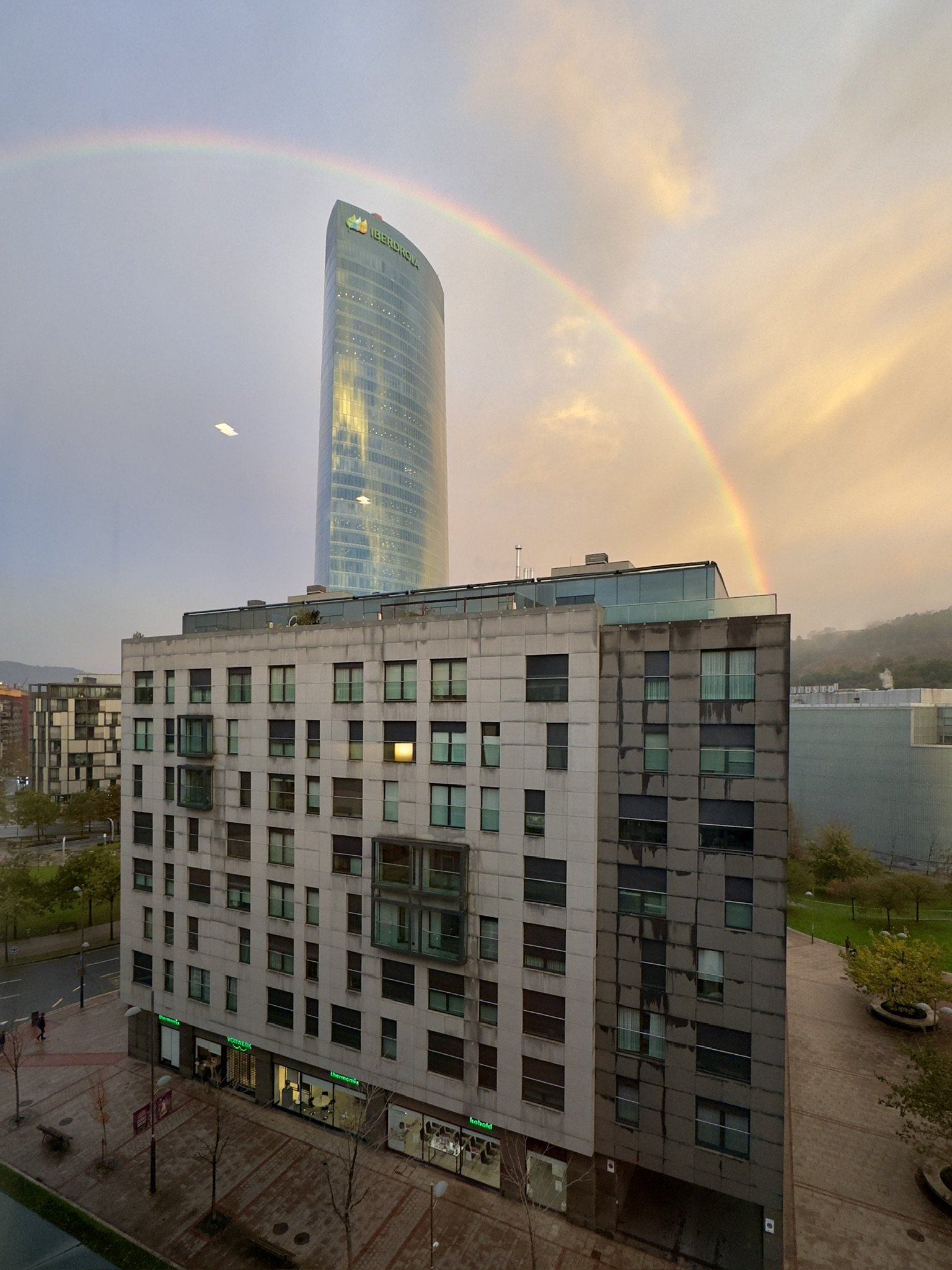
The Torre Iberdrola, designed by César Pelli, is approximately 165 meters tall. It dominates the skyline of the new town and is visible from many points in the city, including the Guggenheim Museum. I photographed it under a rainbow, which illustrates how changeable the weather can be on the Atlantic coast.
There's no traditional tour; it's an office tower. However, it serves as a useful landmark if you're trying to find your way around the city.
Artxanda and viewpoints: Bilbao from above
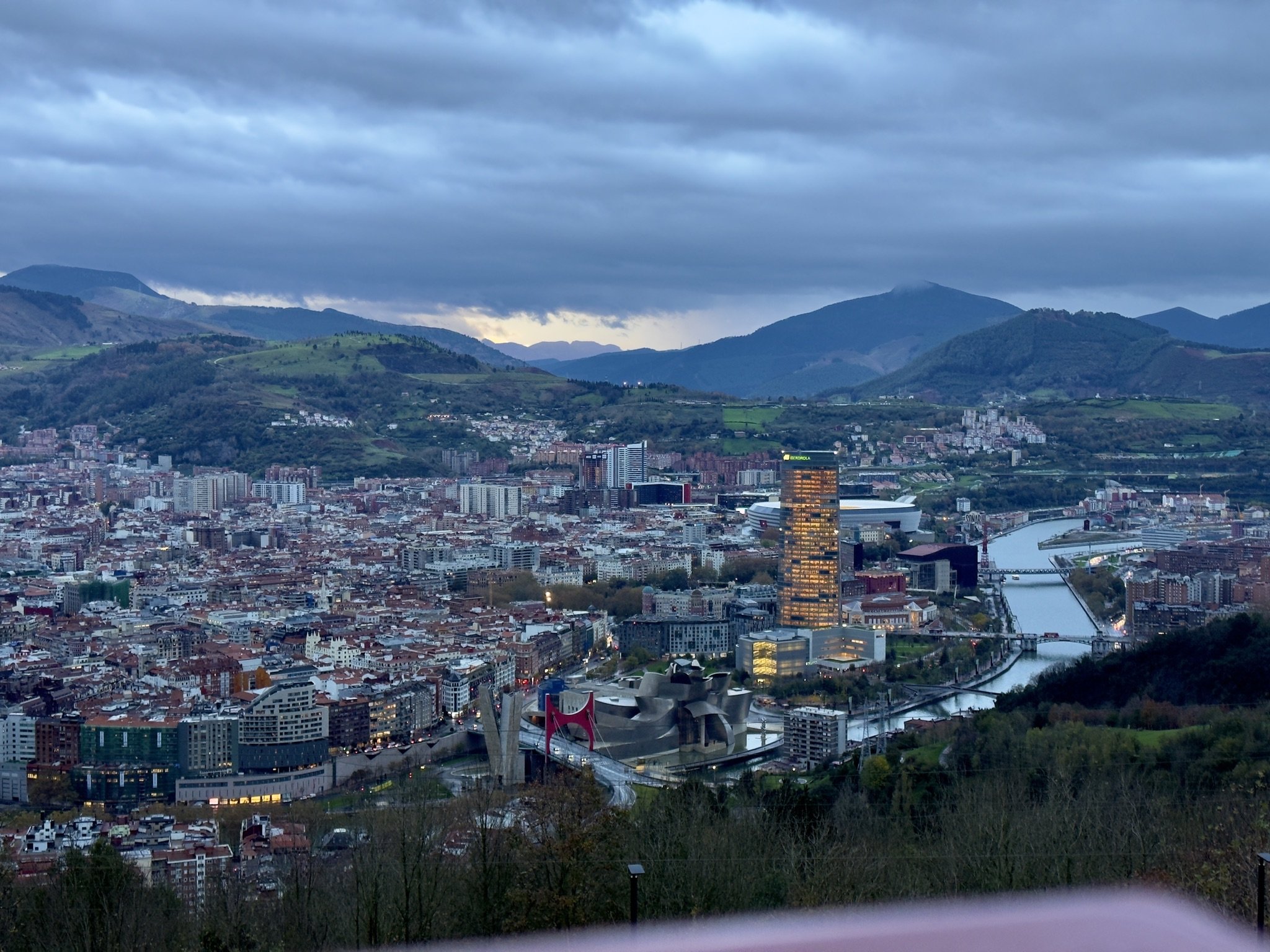
To see Bilbao in context, head up a mountain overlooking the city. The most famous viewpoint is Artxanda; the funicular railway there has been operating since 1915, connecting the city center with the summit. From the top, you can see the estuary, the Guggenheim Museum, the red bridges, and the Iberdrola Tower against the backdrop of the surrounding green hills.
My panoramic photos were taken at dusk from a viewpoint above the city. Plan your visit for late afternoon, so you can experience daylight and the first city lights.
Casco Viejo and Siete Calles: the old town of Bilbao
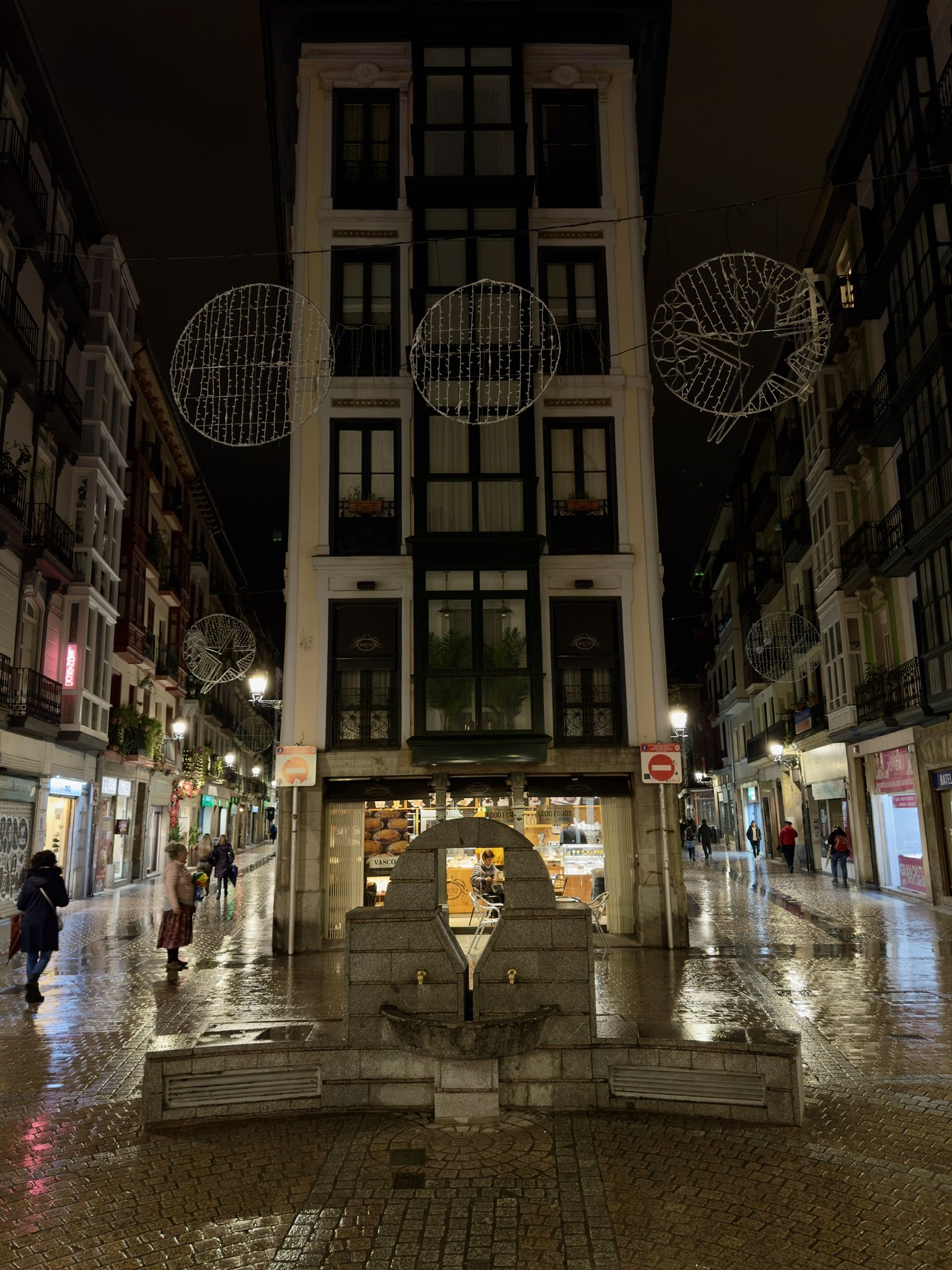
The old town, Casco Viejo in Spanish, lies on the eastern bank of the Ría. Its heart is the Siete Calles, the seven old streets, which today house bars, small shops, and restaurants. The houses are built close together, the streets are winding, and in the evening, the lights add to the ambiance.
I was there on a rainy evening. The wet ground, the lighting, and a fountain in the middle of the alley strongly influenced the atmosphere. Anyone wanting to visit Bilbao's old town should ideally set aside an evening and simply wander around.
Plaza Nueva and Mercado de la Ribera
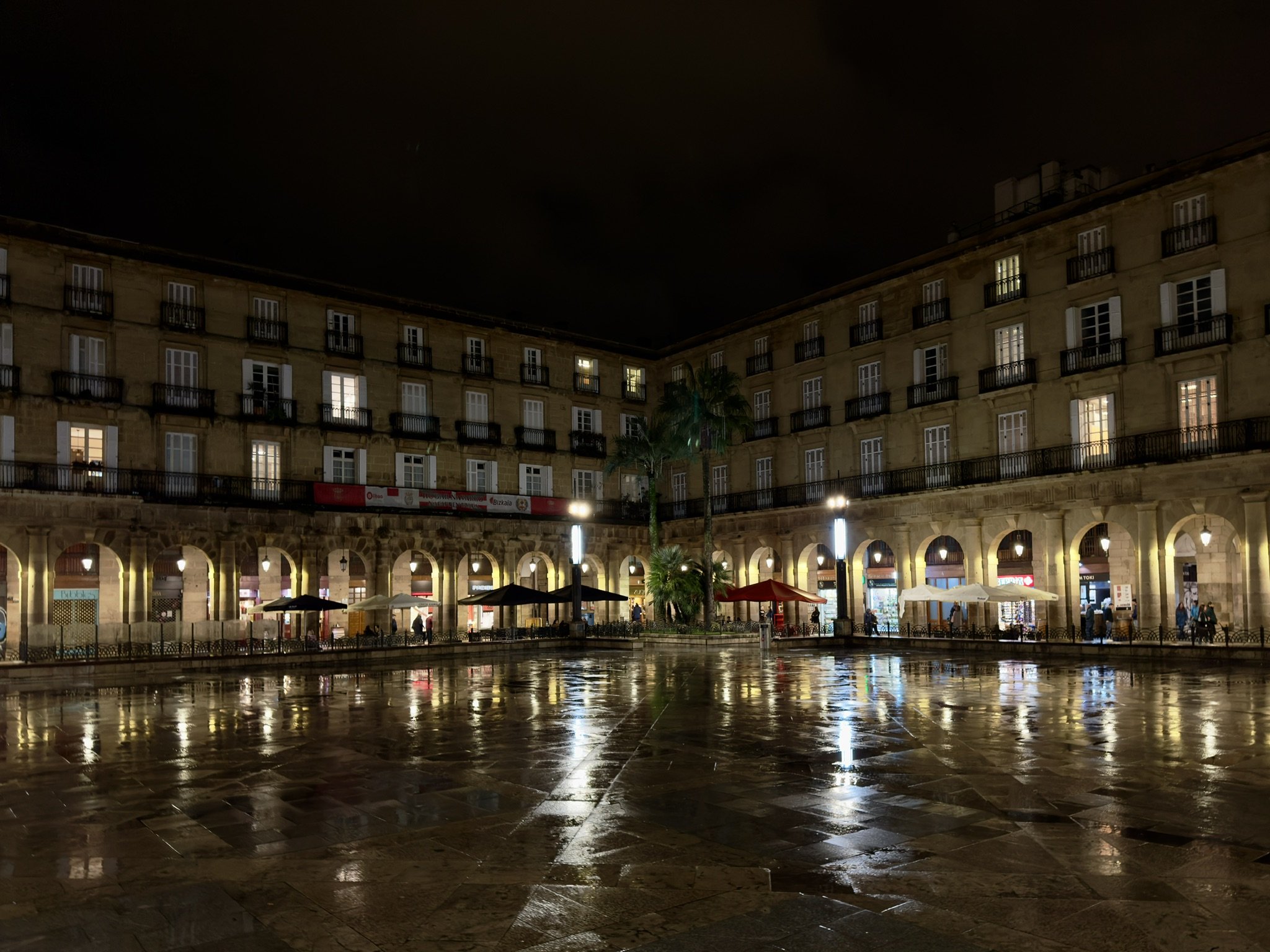
Plaza Nueva is the large, arcaded square in the old town. Bars and restaurants are located under the arches.
On the edge of the old town, right by the river, stands the Mercado de la Ribera, a market hall. If you have more time, it's worth taking a look inside to see the regional products. Opening hours vary; check them in advance.
Pintxos in Bilbao: small bites from the display case
Pintxos are a must-try when visiting the Basque Country. In many bars, they're displayed ready-made in the glass case, often on bread or as croquettes. My photo shows croquettes with tomato sauce.
My tip: Order one or two pintxos per bar and move on to different places. This way you'll get to know more bars and stay flexible. I won't mention prices because they vary greatly from bar to bar.

Practical planning of sightseeing in Bilbao
How many days does it take to visit Bilbao?
Two days are enough for the Guggenheim Museum, the Ría, the Iberdrola Tower, and the old town. A third day adds Artxanda and a trip to the surrounding area. I was out and about in and around Bilbao at the end of November 2023.
Best time to travel and weather
Bilbao is located on the Atlantic coast, and the weather can change quickly. During my visit at the end of November, it was wet, with clouds, rain, and the occasional rainbow. Bring a rain jacket and plan alternative activities for rainy days, such as visiting a museum or going out for pintxos.
Getting there and ways to get around the city
The main sights are located along the estuary and can be easily reached on foot. For current connections, tickets, and opening hours, it's best to check directly with the operators.
Excursions from Bilbao
If you would like to see more of the Basque Country, my Basque Country travelogue has ideas for San Juan de Gaztelugatxe, the coast and San Sebastián.
Experience Bilbao responsibly
Many parts of the city are inhabited or used daily. Respect the residents in the old town, observe quiet hours in the evening, and leave the sculptures untouched. Tourism boards and destinations that wish to accompany such trips at a high standard can find information under Collaboration with me for high-quality tourism board content.
Bilbao sights: my conclusion
Bilbao impresses with its density: the Guggenheim, the waterfront sculptures, the bridges, and the old town are all so close together that you can experience a lot in two days without feeling rushed. I was particularly impressed by the evenings when titanium, water, and lights came together.
If you only want to take away one thing: Go to the Guggenheim at dusk, linger by the sculptures along the river, and then walk along the promenade towards the old town. Then you'll have seen the heart of Bilbao in one stroll.
FAQ
Which Bilbao sights should you see first?
The Guggenheim Museum with Puppy, Maman and Tall Tree & the Eye, plus the riverside promenade along the Ría and the old town in the evening.
How many days does it take to visit Bilbao?
Two days are sufficient for the main stops. A third day leaves time for Artxanda and a trip to the surrounding area.
Is it possible to see the sculptures at the Guggenheim without a museum ticket?
The large outdoor sculptures can usually be viewed from the waterfront and the plaza. You need a ticket to enter the museum; you can find current information on the museum's website.
What is Bilbao's Old Town?
The old town, Casco Viejo, lies along the river and consists of narrow streets, the Siete Calles, with bars, shops, and restaurants. Plaza Nueva and Mercado de la Ribera are located on the outskirts.
When is the best time to visit Bilbao?
Bilbao is a year-round destination with Atlantic weather. During my visit at the end of November, it was wet, but the evenings were atmospheric. Plan for rainy days.
What are pintxos?
Pintxos are small Basque snacks that are often displayed in bars, for example on bread or as croquettes.

Max Haase
Travel Content Creator · Drone Photographer · Visual Storyteller
Since over 10 years professional travel creator with over 4 million followers. Specializing in high-end tourism board collaborations and visual travel storytelling.
 German
 English