
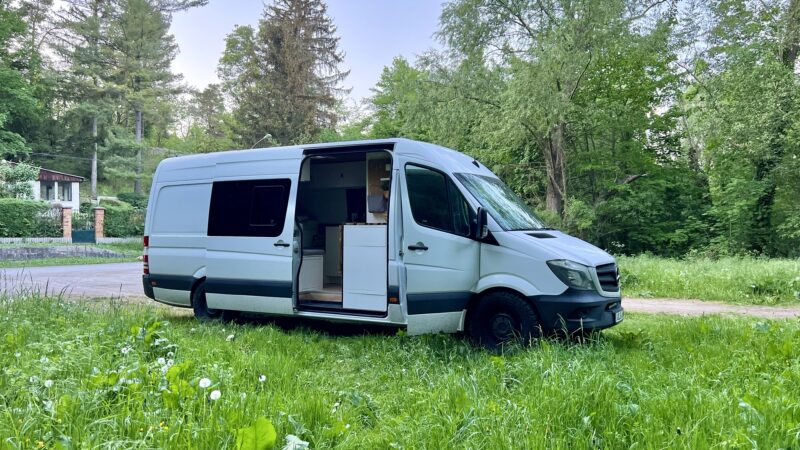
Motorhome Spain: Route, pitches, costs & safety (2026)
Spain as a motorhome — the dream destination for many van lifers in Europe. From the French border via Barcelona and Valencia along the Mediterranean coast to Andalusia, Spain was the longest and most beautiful leg of our journey. Van Life European Adventure. Perfect climate, affordable campsites, the most relaxed van-life scene in Europe, and a coastline full of hidden pitches — in this article you'll find our complete campervan route through Spain, the best pitches, costs, and answers to all your safety questions.
- From the French border via Barcelona, Valencia, Costa Blanca and Cartagena to Almeria — 3–4 weeks for the entire Spanish Mediterranean coast by motorhome.
- Barcelona by campervan: Sagrada Familia, Park Güell and the Gothic Quarter are must-sees — find a campsite in the north (Badalona or Montserrat) and take the metro into the city. Free camping is also an option. Catalonia is strictly forbidden.
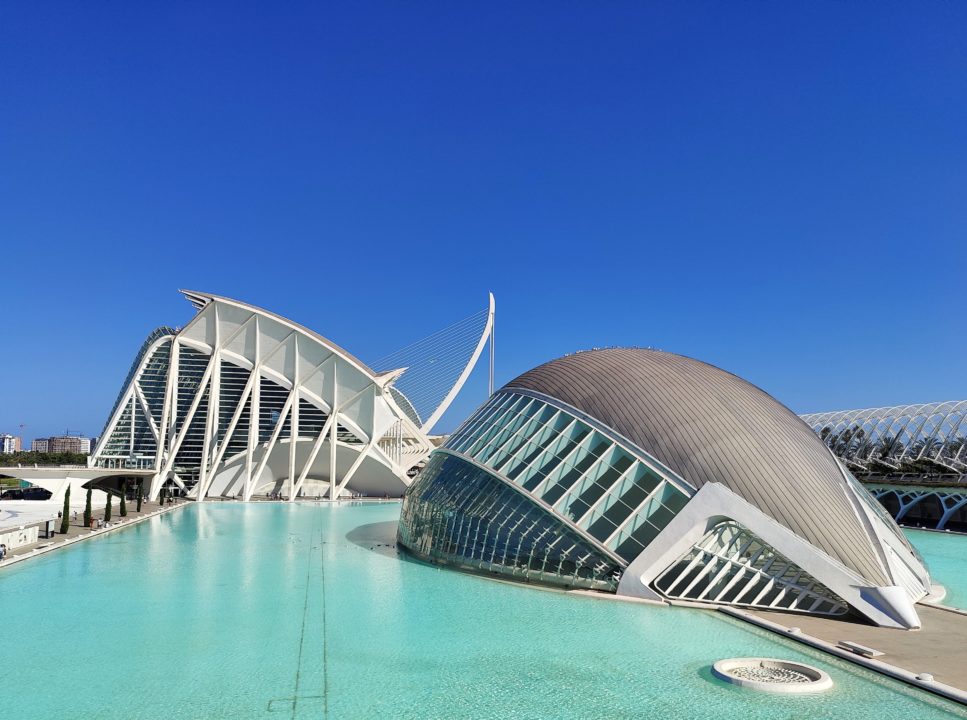
- Valencia as a favorite: Ciudad de las Artes, 9 km of Turia Gardens and original paella menus for €12–15 make Valencia the most popular camper stop in Spain and the top region for wintering.
- Standing & Safety: From Valencia southwards, things get more relaxed. There are many tolerated spots on the Costa Blanca and in Murcia. The Balearic Islands and Catalonia remain off-limits.
- Motorhome costs in Spain: Campsites €18–30/night, diesel ~€1.55/L, toll fees depending on the motorway €5–15 per leg, supermarket: Mercadona as the cheapest chain — total budget €40–60/day for 2 people.
Traveling to Spain by motorhome: route, arrival & motorways
Those starting their journey to Spain with a motorhome essentially have two options. The fastest route leads through France and the Pyrénées-Orientales department directly to Catalonia—around 1,600 km from the German border to Barcelona. You'll travel quickly on the French motorways, but you must factor in toll fees: for a motorhome under 3.5 tons, the tolls on the route via Lyon–Perpignan amount to around €120–150 (Class 2). With a heavier vehicle over 3.5 tons, the costs are significantly higher—in this case, the alternative route via the toll-free country roads through the Auvergne region is worthwhile.
Most Spanish motorways are now toll-free (the former AP routes were gradually opened between 2018 and 2021). Exceptions include some sections in the Basque Country (AP-8, AP-68) and the Cadí Tunnel between Barcelona and Andorra. For a complete tour of Spain along the Mediterranean coast, you'll pay virtually no tolls – a real advantage for motorhome travelers.
Overnight stopovers on the way to Spain: If you're not driving straight through, you'll find numerous campsites in southern France. Aires de Camping-Car (campervan sites) in the Ardèche region, near Montpellier, or close to the Spanish border (e.g., Argelès-sur-Mer) are particularly popular. Typical price: €8–15 per night including water and waste disposal. For an overnight stay right at the border, the region around Perpignan is ideal—you'll be in Spain in 30 minutes the next morning.




Barcelona by campervan: Campsites & sights
Barcelona is one of those cities that campers simply must see—especially if they're traveling with a motorhome. The Sagrada Familia, Park Güell, the Ramblas, and the Gothic Quarter (Barri Gòtic) are all easily explored on foot. And afterward, you can simply head to Barceloneta beach. For motorhome travelers, parking directly in the city center is virtually impossible. Our solution: a campsite in the north of the city in the Badalona region, or even better, in the Montserrat mountains, just 30 minutes away, from where you can easily reach Barcelona by bus or metro.
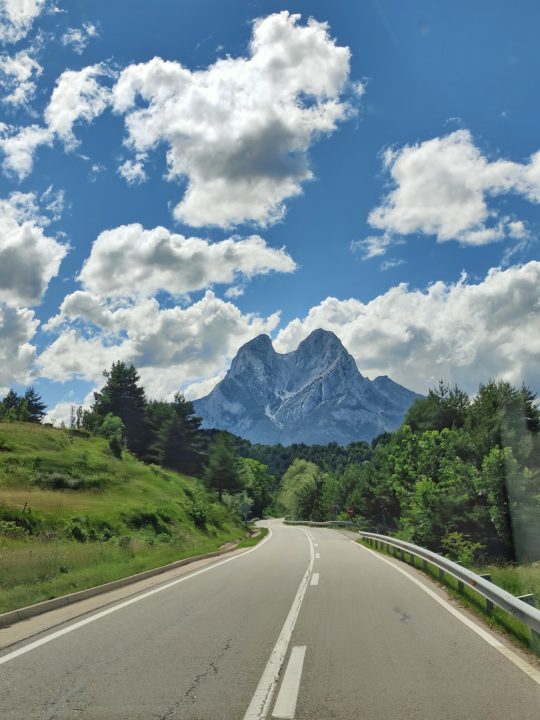
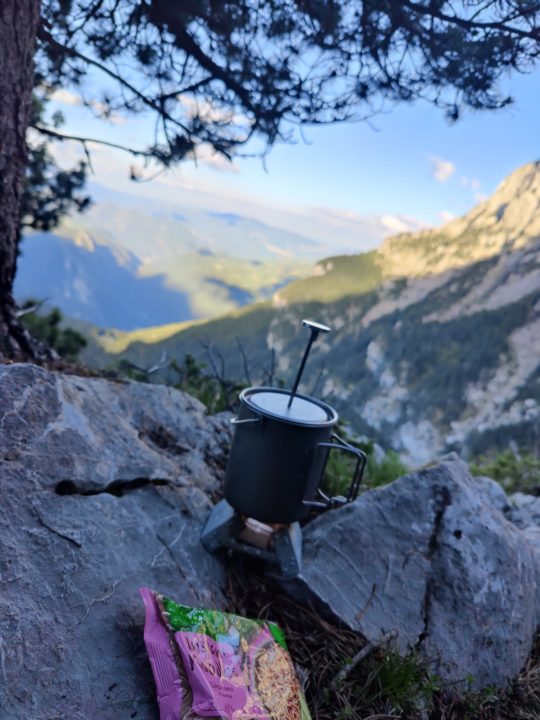
Our first stop with the campervan in Spain was right after crossing the border at the Parc Natural del Cadí-Moixeró: a small, green mountain range with fantastic hikes at over 2,000 meters altitude. Here we camped together for the first time, sharing a sleeping bag in a hammock – not exactly standard at 0 degrees Celsius, but a true campervan experience. The park is a hidden gem for motorhome travelers looking for a few days of peace and quiet before heading to Barcelona.
We spent two weeks exploring the area around Barcelona itself—and still didn't see everything. A top spot for campervans outside the city is the aforementioned Muntanya de Montserrat, right below the famous rock formations. From there, you have a spectacular view over the entire valley and can hike right from your doorstep. The sunsets there are among the most beautiful we saw on our campervan trip through Spain.




Valencia: The underrated gem (Best campsites for wintering)
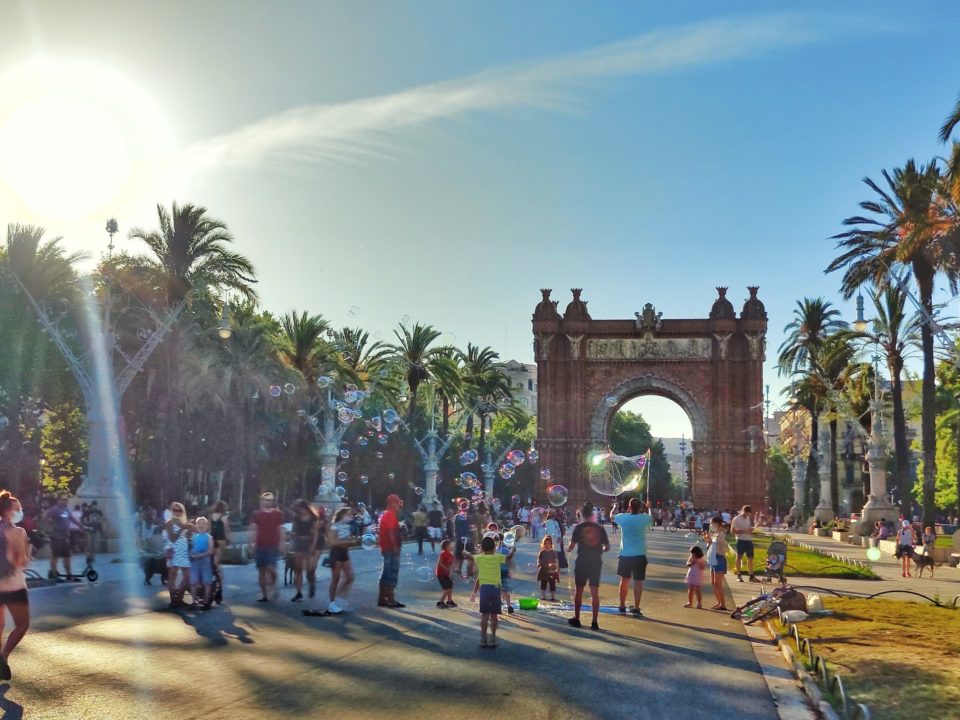
Valencia impressed us far more than Barcelona—and I know that's a controversial opinion. The City of Arts and Sciences is architecturally stunning, the old town charming, and the food is sensationally good and affordable. It's no coincidence that Valencia is the home of paella: an authentic paella meal with wine will cost you €12-15. You'll rarely find anything comparable in Barcelona for under €25.
The Turia Gardens, a former riverbed transformed into a 9 km long park, are perfect for jogging, cycling, or simply relaxing. And best of all, Valencia is significantly less touristy and cheaper than Barcelona, making it ideal for longer stays in Spain with a campervan.
Campsites in and around Valencia: For campers, the region around Valencia is one of the best in Spain. Several campsites are located directly on the city's outskirts, with bus or metro connections to the city center. Kapu Camping Valencia and Devesa Gardens are popular, costing €22–28 per night, and offer winter rates starting at €15 per night for long-term stays. The Valencia region, extending to Alicante, is perfect for wintering with a motorhome: daytime temperatures of 18–22°C from November to March, very little rain, and plenty of sunshine.
Anyone visiting Valencia by campervan should definitely set aside a day for a trip to Albufera – the natural park south of the city where paella originated. Rice fields as far as the eye can see, peaceful hikes, and small restaurants serving authentic Valencian paella await.


Costa Blanca by motorhome: pitches, beaches & snorkeling spots
After Valencia, we continued on to the Costa Blanca — one of the most beautiful coastal regions in Spain for motorhomes. We had heard that the best snorkeling spots in Spain were located here, so we bought a snorkel mask and drove to the first spot: Denia. There we had a fantastic campsite right by the water — so we immediately went into the sea and, despite the twilight, we saw an incredible number of fish.
The Costa Blanca is particularly attractive for motorhome trips in Spain because the coast is dotted with countless small coves, many of which are still uncrowded. Our personal favorites:
- — Port city with ferry connection to Ibiza, perfect pitches at Cape San Antonio, many campsites from €22/night
- Jávea (Xàbia) — three beaches in one town, clear water, good infrastructure for motorhomes
- Calpe — the spectacular Penyal d'Ifac, Spain's smallest national park, is a top drone subject
- — upscale location with a relaxed atmosphere, good motorhome pitches outside
We spent two weeks on the Costa Blanca and could easily have stayed twice as long. Anyone traveling through Spain in a campervan and who loves water sports will find plenty to enjoy here: besides snorkeling, there's also kayaking, stand-up paddleboarding, and diving in clear Mediterranean waters.


Motorhome Spain: Is it dangerous? Free camping, safety & costs
One of the most frequently asked questions about traveling by campervan in Spain: dangerous or safe? — Our experience after 6 weeks traveling throughout the country: Spain is one of the safest van-life destinations in Western Europe. Break-ins are extremely rare, and the Spanish are generally camper-friendly. However, there are regional differences and some rules you should be aware of.
In Spain, the EU EHIC is theoretically valid, but in practice tourists are often referred to private clinics that require upfront payment. The public system is particularly overloaded in tourist areas like the islands.
Free camping in Spain — regions in detail:
- Catalonia & Barcelona: strictly prohibited, high fines, checks also at night
- Valencia region: officially banned, but mostly tolerated outside the cities.
- Costa Blanca & Murcia: more relaxed, many tolerated spots along the coast
- Almeria & Andalusian Coast: largely tolerated, many camper meeting points
- Balearic Islands (Mallorca, Ibiza): strictly prohibited, extremely high fines
- Inland & mountains: almost everywhere no problem, especially in sparsely populated regions.
Basic rules for wild camping with a motorhome in Spain: Do not park directly on the beach (unless there are designated pitches), do not set up camping poles/tables/chairs (this is considered camping, not parking), always treat the environment with respect, and do not leave any trash behind. Then the risk of a fine is minimal.
Detailed costs of motorhomes in Spain:
- Campsites: €18–30/night in the off-season, up to €45/night in the high season (July/August)
- Motorhome pitches (areas): €8–15/night, usually with water/waste disposal facilities
- Diesel: ~1.55 €/L (as of 2026, cheaper than in Germany)
- Supermarket: Mercadona is the cheapest chain with good quality
- Dining out: Menú del Día (daily menu) for €10-13 — 3 courses with a drink!
- Total budget for 2 people: €40-60/day for frugal travel, €70-90/day with frequent restaurant visits
Spanish campsites are generally spacious, and even vehicles over 7 meters can almost always find a spot. However, for the narrow streets of old towns like Córdoba, Seville, or Granada, you shouldn't take motorhomes over 6.5 meters – a campsite on the outskirts of the city plus a bus/taxi into the city center is sufficient.




Alicante to Almeria: The last stops along the Mediterranean coast
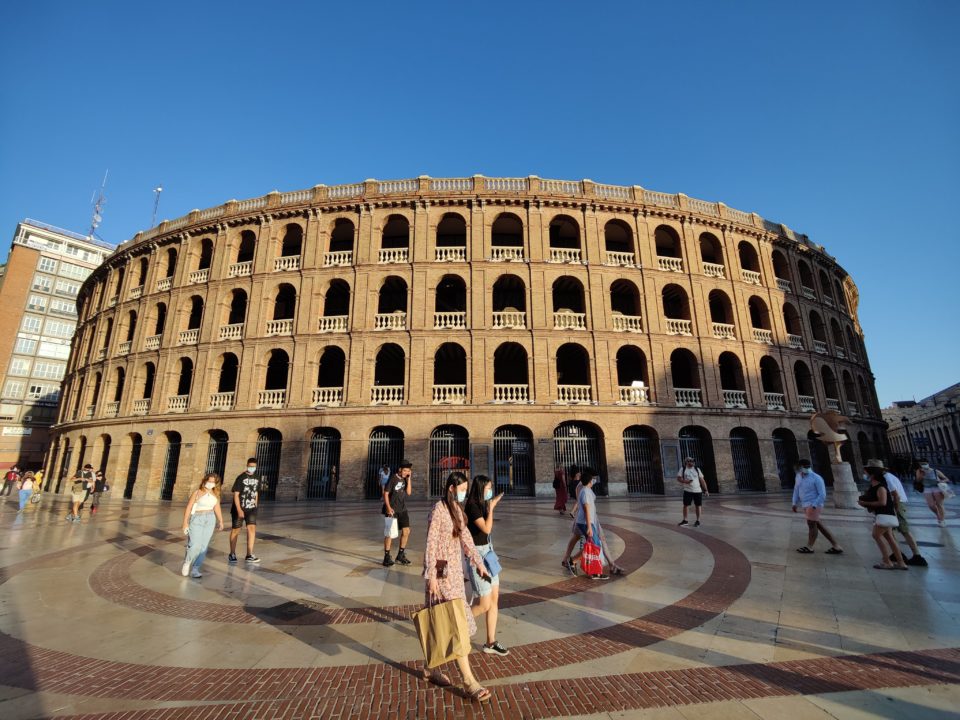
After the Costa Blanca, our motorhome tour continued via Alicante—a city worth seeing, but for us more of a work stopover. The campsites on the cliffs right outside the city are first-class, and from there you can take a bus into the city center. Alicante's city center is lovely, but enough for one day. If you have time in Spain with a motorhome, you should probably spend a few days on the southern coast instead.
Our next stop was Cartagena — a port city with a Roman past. To be honest, it's not exactly a must-see. The old town is small, and the few sights can be ticked off in half a day. More interesting for campers are the national parks and nature reserves of the Murcia region, such as Calblanque with its beautiful, secluded beaches.
Our last stop along the Mediterranean coast was Almeria — the gateway to Andalusia. The city itself is underdeveloped for tourism, but that's precisely what makes it so appealing for motorhome travel: affordable campsites, empty beaches (especially in the Cabo de Gata Natural Park), and the start of the spectacular Andalusian coast. From Almeria, we continued inland towards Granada — but that's a story for another time.
We completed the entire leg from the French border to Almeria in about six weeks, staying at 12-15 different campsites. Those with less time can easily see the main highlights (Barcelona, Valencia, Costa Blanca) in three to four weeks. More than six weeks is also possible—Spain is vast, and every region deserves its own article.
FAQ: Motorhome Spain — Frequently Asked Questions
Is it possible to camp freely with a motorhome in Spain?
Regulations vary greatly by region. Catalonia and the Balearic Islands: strictly prohibited with high fines. Valencia region: officially prohibited, but mostly tolerated. Costa Blanca, Murcia, and the Andalusian coast: more relaxed, many spots are tolerated. Inland Spain, wild camping is possible almost everywhere. General rule: do not camp directly on the beach or in tourist areas.
How much does a motorhome trip through Spain cost per day?
€40-60 per day for two people traveling frugally (a mix of campsites and wild camping, self-catering, and few restaurant visits). €70-90 per day with frequent restaurant visits and only official campsites. Spain is one of the most affordable van-living destinations in Western Europe.
Which is better for a campervan trip: Valencia or Barcelona?
Valencia is significantly more relaxed, cheaper, with fewer restrictions for campers and better campsites around the city. Barcelona is more impressive, but more stressful, more expensive, and has strict anti-camper regulations. As a first stop, Valencia is the better choice.
How much do you pay in tolls when traveling to Spain with a motorhome?
Through France: approximately €120-150 one way for a motorhome up to 3.5t (Class 2) via the entire motorway route between Germany and Spain. Significantly more for vehicles over 3.5t. In Spain itself, most motorways have been toll-free since 2021 — exceptions are the AP-8 and AP-68 in the Basque Country and the Cadí Tunnel near Andorra.
Which overnight stops are recommended on the way to Spain?
Classic stopovers: Lyon (France, about 1,000 km from Germany), Perpignan (just before the border), or alternatively through the Ardèche or Auvergne regions. French motorhome pitches cost €8-15 per night and are usually well-equipped. Those traveling at a leisurely pace can also take a day's break in Provence.
When is the best time to travel to Spain for a motorhome trip?
Spring (March–May) and autumn (September–November) are ideal: pleasant temperatures, few tourists, and affordable campsite prices. The winter months (December–February) are perfect for spending the winter in Valencia or on the Costa Blanca, with temperatures between 18 and 22 °C. High summer (July/August) is too hot for the city centers (40 °C+ inland), and campsites are expensive and crowded.
Which region of Spain is best suited for motorhomes?
The Costa Blanca (Denia to Alicante) and the Valencia region are the best starting points for motorhome travel in Spain: plenty of campsites, a relaxed climate, good infrastructure, camper-friendly locals, and perfect for wintering. For adventurers: the interior (Extremadura, Castile) and the north (Asturias, Galicia) are even less touristy.
After Portugal, we were most excited about Spain on our trip, partly because we could finally use our learned Spanish skills. 😁 We weren't quite able to converse yet, but at least we could order food and drinks! 😂
However, we didn't get very far into Spain initially, as we made our first stop just beyond the border in Parc Natural del Cadí-Moixeró. Here, we went on a beautiful hike and spent the night at over 2000 meters altitude and just below 0 degrees overnight. 😋 This was actually our first time camping together, and we squeezed into a hammock and shared a sleeping bag – which worked out better than expected, and the night was pleasantly warm. The next morning, we set off early to the summit, where we had a wonderful view of the surrounding area. 😍😎
The city that never gets boring: Barcelona ☀️🎉
Next, we headed to Barcelona – a city that never gets boring. This is already my third time in Barcelona, but there's always something new to discover! We parked outside the city in nature, so we had to take the bus into the city every day – still much better than being in the middle of the city. In addition to the usual attractions that Barcelona has to offer, we also drove to the Muntanya de Montserrat, a mountain range 30 minutes away, where we had a beautiful campsite directly below the famous rock formations. From there, we went hiking and enjoyed a beautiful sunset with a view over the valley in the evening. 🌄
Valencia – definitely worth a visit! 🥰
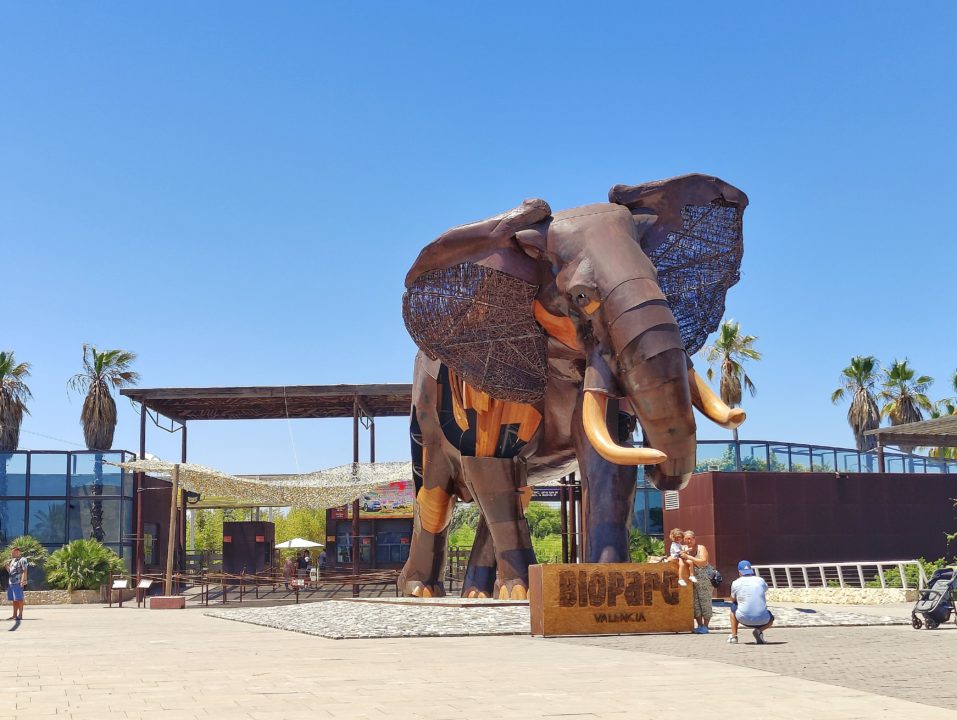
Valencia really surprised us on our trip. Neither of us had been there before, but I had heard only good things about it, so we decided to stay for several days. We didn't regret it! In addition to the great fairgrounds with their futuristic buildings, we were especially impressed by the city center, which is really diverse and has beautiful restaurants and cafes. On our last day, we visited the city beach and met many new people at a beach meetup – it's just a shame that we had to move on so soon... 😬

Snorkeling on the Costa Blanca 🤿🐠
We were particularly excited for the next few days... the Costa Blanca supposedly has the best snorkeling spots in all of Spain. So, we bought a snorkel mask and went to the first spot: Denia. There, we had a dreamy campsite right at the snorkeling spot, so we went straight into the water when we arrived and saw an incredible number of fish despite the dusk! 🤗 We spent the next few days in the water, including at a hidden cave, where we saw huge schools of fish again.
We continued along the Costa Blanca to Calp – a real tourist town with a beautiful, long sandy beach. The setting is completed by the Parc Natural del Penyal d'Ifac – a rock on which many different bird species are at home and which is also the smallest national park in Spain. 😁👍


From Alicante to Almeria 🚐
In Alicante, we used the time to work, as there wasn't much to do, but we had another first-class campsite right on the cliff coast (we've been incredibly lucky with our campsites in general). Of course, we still checked out the city center of Alicante, which is very nice, but one day was sufficient.
Afterwards, we made a brief stop in Cartagena (which is not necessarily a must-see) and then continued our journey to Almeria. Here, our drive along the coast came to an end for the time being and we continued inland. However, since there are simply so many amazing places along the southern coast of Spain, the rest will be covered in SPAIN PART 2. 😜🤠


Max Haase
Travel Content Creator · Drone Photographer · Visual Storyteller
A professional travel creator for over 10 years with over 4 million followers. Specializing in high-end tourism board collaborations and visual travel storytelling.
 German
 English