
Fuerteventura Kitesurfing 2026: Spots, Schools & Beginner's Guide
Kitesurfing in Fuerteventura — Why the Canary Island is Europe's kitesurfing mecca
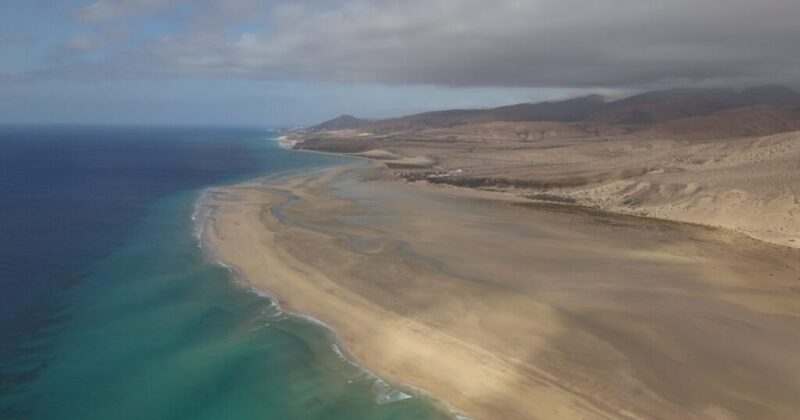
When I first stood on the beach in Sotavento in May 2025, I knew immediately: This is no ordinary kitesurfing spot. The wind was perfectly onshore from the side, the water in the lagoon was knee-deep, the beach stretched endlessly, and the sky was cloudless. Fuerteventura isn't the European capital of kitesurfing for nothing—and after two weeks on the island, I understand why professional kitesurfers from all over the world come here.
- Item Costs per Day: Accommodation (Airbnb double) €45, Food (self-catering + 1x restaurant) €20-30, Kite rental €60-90, Car rental €20-30 Total per day 145-195 €
- The water temperature is 18-23 degrees Celsius all year round — warm enough for a 3/2 wetsuit, never too hot.
- Kitesurfing in FuerteventuraWhen I first stood on the beach in Sotavento in May 2025, I knew immediately: This is no ordinary kitesurfing spot.
- The kite schools start their courses at 10 a.m., when the wind is reliably above 15 knots.
- During this period, the trade winds blow at over 15 knots on 80-90 percent of the days.
In this guide, I share everything you need to know about kitesurfing in Fuerteventura: the best spots, the right time of year, kite schools, costs, and my personal experiences as an advanced beginner. Plus: drone tips for epic aerial kite shots.
Kitesurfing in Fuerteventura for beginners: Why the Canary Island is perfect
Fuerteventura lies in the Atlantic Ocean off the coast of North Africa and is blown by the trade winds—constant, reliable winds that blow almost daily between 15 and 30 knots from April to October. This fundamentally distinguishes Fuerteventura from European kitesurfing spots like Tarifa, Denmark, or the Baltic Sea, where the wind is capricious and unpredictable.
The water temperature remains between 18 and 23 degrees Celsius year-round—warm enough for a 3/2 wetsuit, never too hot. Air temperatures in summer range from 25 to 30 degrees with low humidity. In short: it's almost always perfect kitesurfing weather.
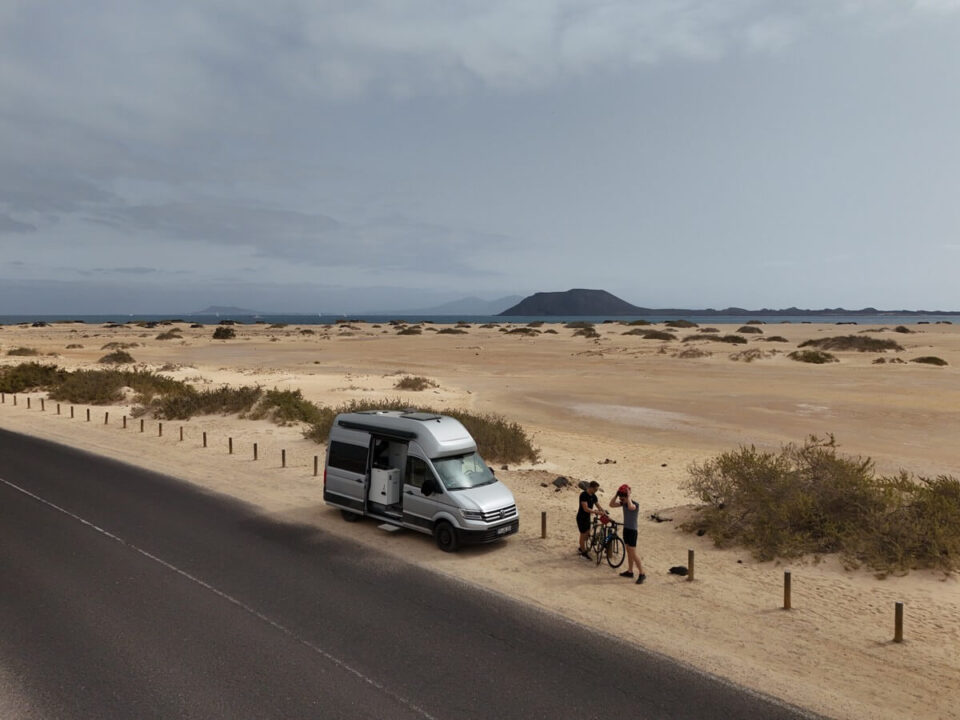
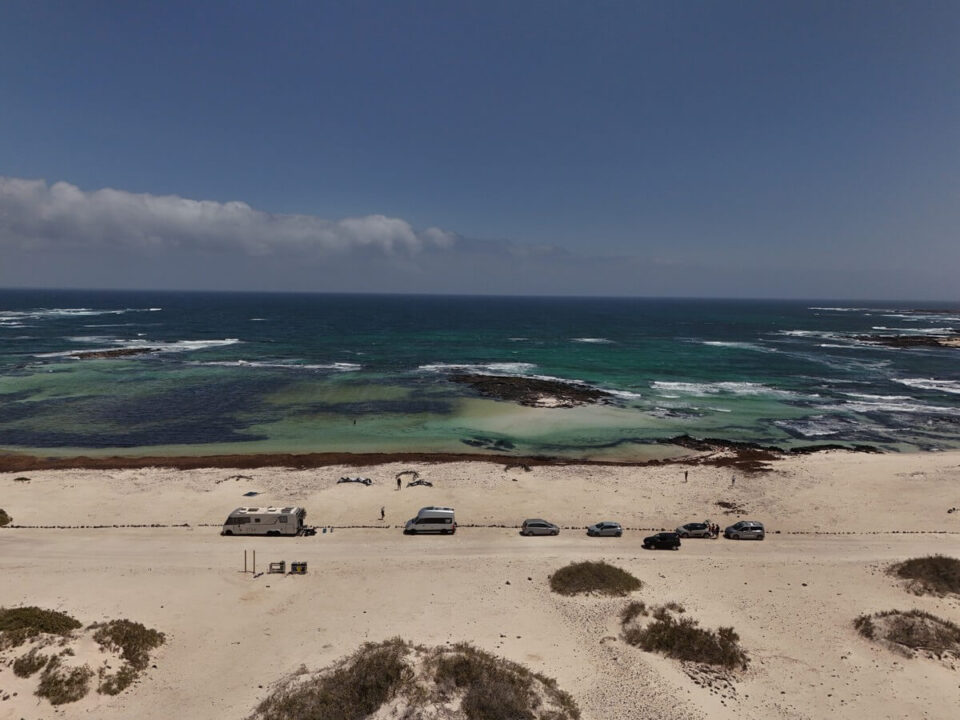
Another huge advantage: space. The beaches on Fuerteventura are endless and sparsely populated. While you'll be packed kite-on-kite in Tarifa or on Lake Neusiedl, on Fuerteventura you'll often have hundreds of meters of beach to yourself—especially at the less well-known spots.
The best kitesurfing spots in Fuerteventura
1. Sotavento (Playa de Sotavento) — The world-class spot
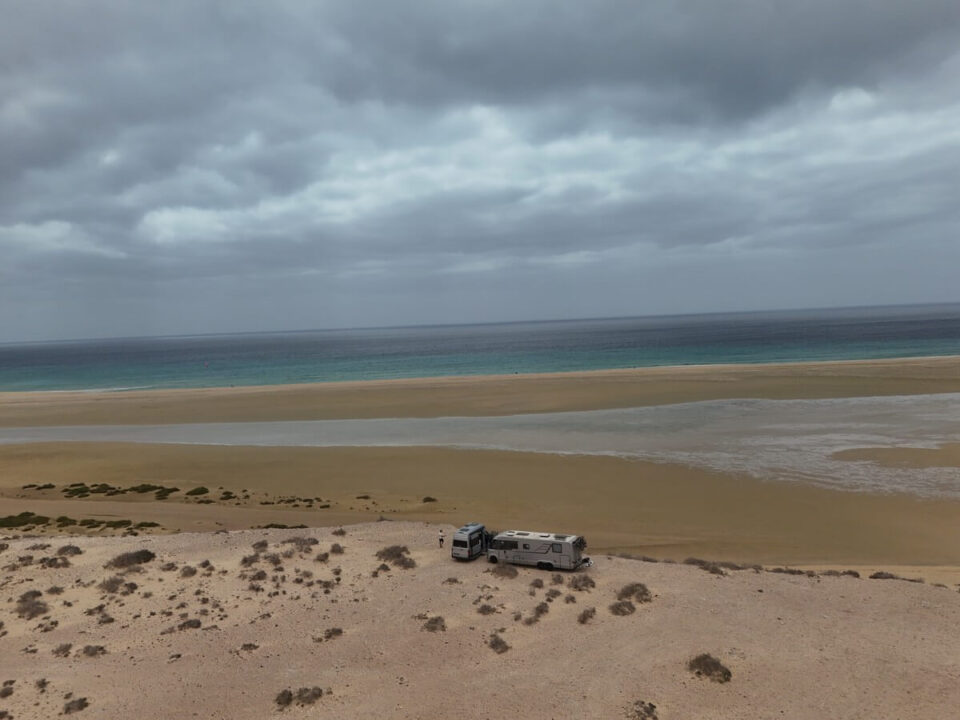
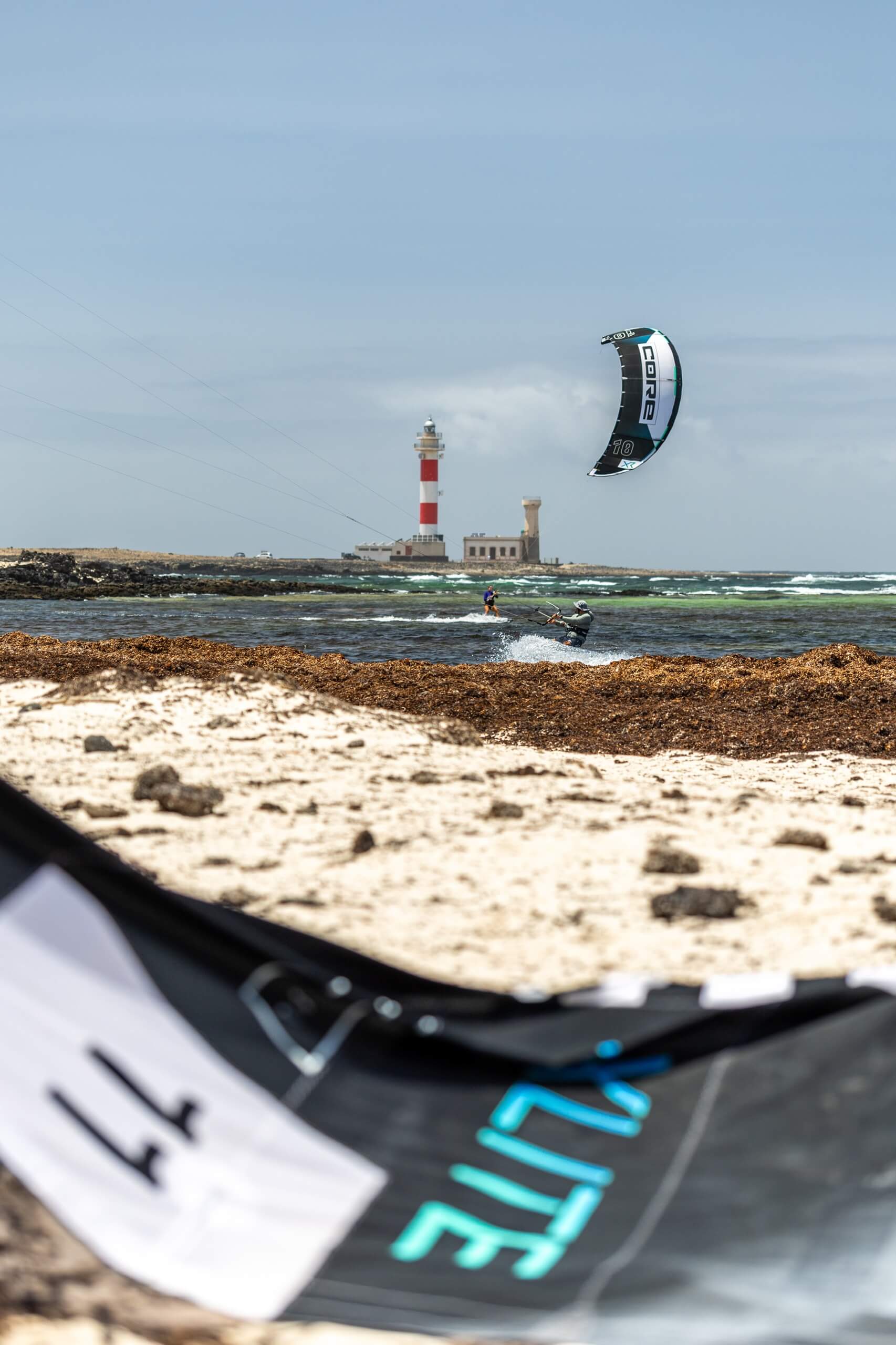
Sotavento is the most famous and by far the best kitesurfing spot on Fuerteventura. The Kitesurf World Cup takes place here every year, and for good reason. The beach stretches for 9 kilometers along the southeast coast. At low tide, a huge lagoon forms with still, knee-deep water—perfect for practicing and freestyle tricks. At high tide, the lagoon opens into open water with small waves.
The wind here blows onshore from the left (northeast), meaning that if you make a mistake, you'll always be pushed back to the beach. There's no safer spot in Europe for beginners. For more advanced surfers, the lagoon offers flat water for upwind riding, jumps, and unhooked tricks, while waves await behind the sandbar for wave riding.
Parking: Right by the beach, free. It can get crowded in summer, so arrive before 11 am.
2. Flag Beach (El Burro) — The all-rounder
Flag Beach lies north of Corralejo and is the second most popular kitesurfing spot on the island. Its name comes from the numerous flags of the kitesurfing schools that are based here. The wind is similarly consistent to that in Sotavento, but more sideshore.
The water here is immediately deep (no shallow area), which makes Flag Beach better suited for advanced surfers than absolute beginners. However, the wave conditions are more interesting – in stronger winds, a clean wave builds up, perfect for wave riding and strapless freestyle.
The kite schools at Flag Beach have an international staff—instructors from Germany, the UK, Spain, and Brazil. The atmosphere is relaxed and community-oriented. After kitesurfing, people meet at the beach bars for a sundowner.
3. Costa Calma — The insider tip for beginners
Costa Calma lies between Sotavento and Flag Beach and is the quietest of the three main spots. Fewer schools, fewer kiters, but just as good wind. The water is shallow and the sand fine — perfect for kiteboarding beginners who find Sotavento too crowded.
The downside: less infrastructure. No beach bars, no showers, just you and the wind. For me as a content creator, that was an advantage—no other kiters in the drone shot.
4. Cotillo — Waves for Advanced Learners
El Cotillo on the northwest coast is the spot for wave kiters. The Atlantic swell hits the shore directly here, creating waves of 1-3 meters. The wind is side-offshore, which makes wave kiting possible, but also means that if you make a mistake, you'll be blown out to sea. Only suitable for experienced kiters. Not a beginner spot.
Kiteboarding schools in Fuerteventura: Schools & costs for beginners
I completed my advanced course at the Kite Safari School in Sotavento. The school is run by Spanish and German instructors and offers courses in German, English, and Spanish.
Cost overview for kite schools in Fuerteventura:
| course | Length of time | Cost |
|---|---|---|
| taster course | 2 hours | 80-100 € |
| Beginner course complete | 3 days (9 hours) | 250-350 € |
| Advanced course | 2 days (6 hours) | 200-280 € |
| Private lesson (1:1) | 1 hour | 80-120 € |
| Equipment rental (kite + board) | 1 day | 60-90 € |
| Equipment rental | 1 week | 280-400 € |
| Storage | 1 week | 30-50 € |
Bringing your own equipment is worthwhile for stays of a week or longer. Airline charges for a kite bag (oversized baggage) are between €50 and €100 each way. This saves you the expensive rental costs at your destination.
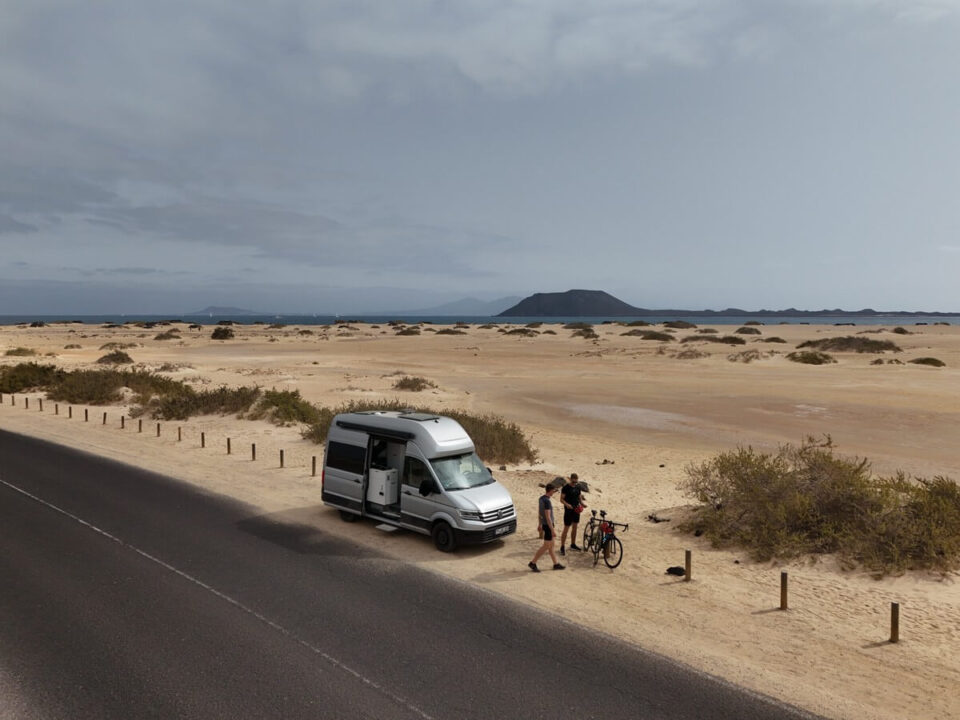
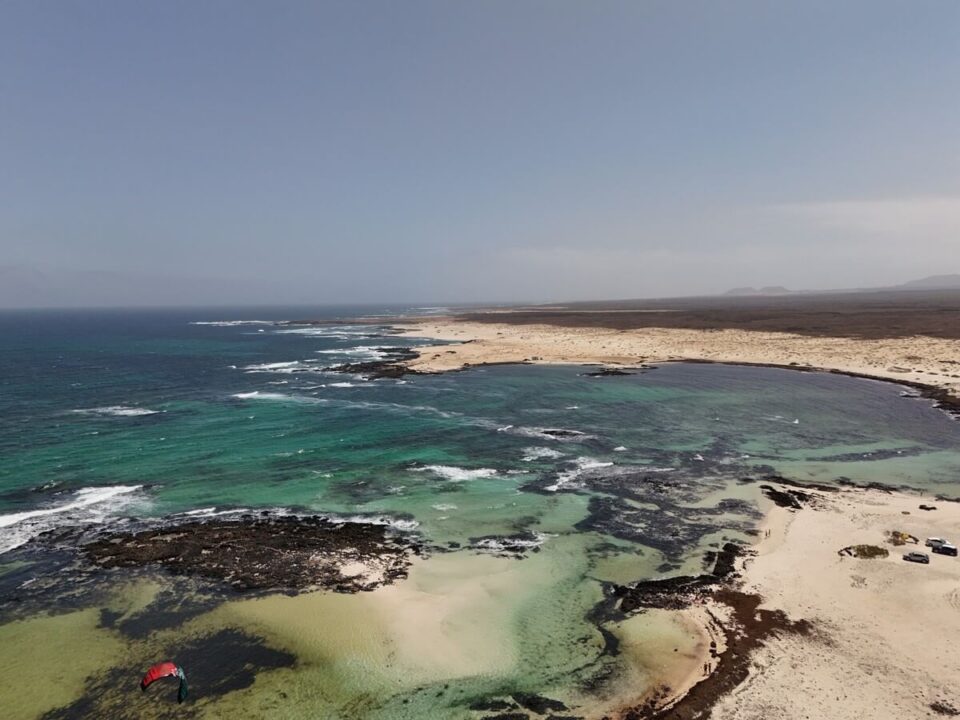
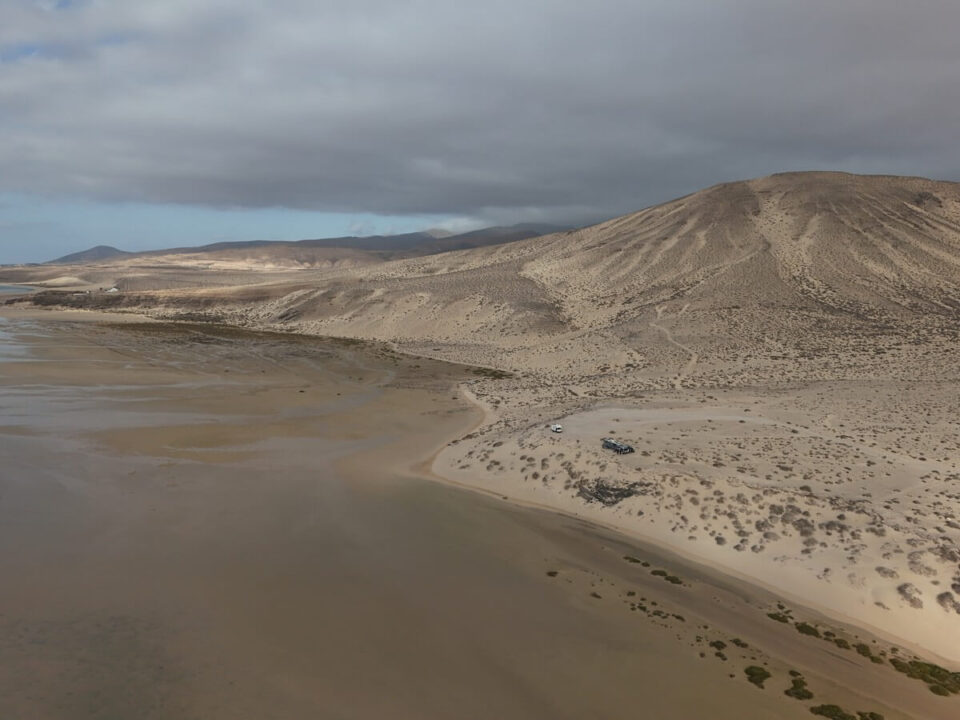
My kite setup in Fuerteventura
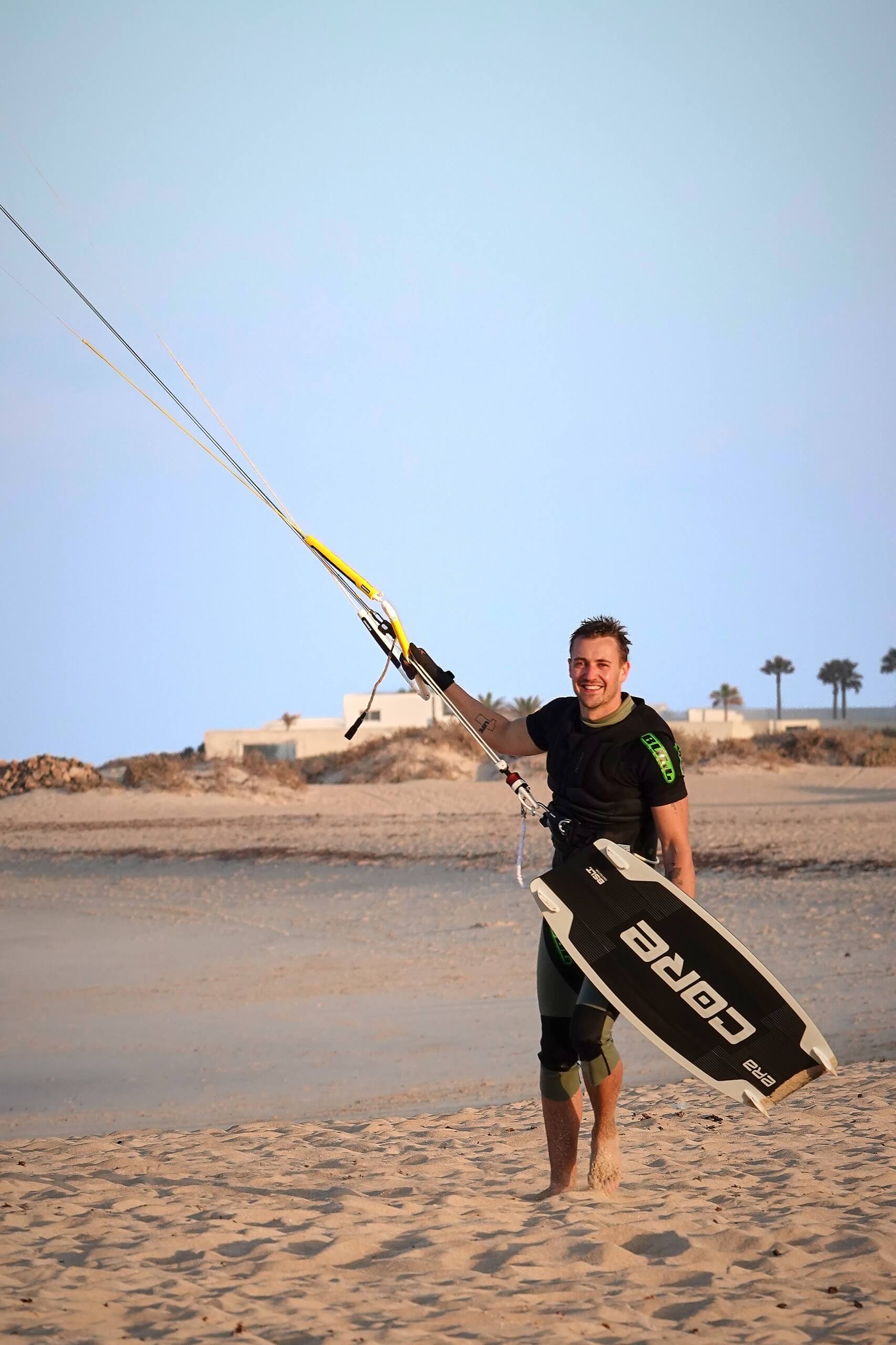
For Fuerteventura, I recommend the following setup: A 9-square-meter kite as your main kite will cover most windy days (15-25 knots). For stronger winds (25+ knots), you'll need a 7-meter kite. I had my Duotone Evo 9m and a backup 7m kite with me. The board: A twin tip in 136-140 cm length is sufficient for most conditions. If you want to ride waves, you'll need a surfboard at least 5'8".
A 3/2mm wetsuit is sufficient year-round. In winter (December-February) I recommend a 4/3mm. You'll never need boots or gloves.
Drone footage while kitesurfing — My tips
As a drone photographer, Fuerteventura was a paradise for kiteboarding content. The combination of turquoise water, white sand, and colorful kites seen from above—these are the images that go viral on Instagram.
My setup: drone (Under 250g, no registration required in Spain). I launch the drone from the beach, fly over the lagoon, and film in 4K mode at 30fps. For slow-motion shots of jumps, I film in 1080p at 120fps.
Important rules: Never fly directly over other kiters. The kite can rise uncontrollably at any time and hit your drone. Maintain a lateral distance of at least 30 meters. Ideally, film yourself or a partner with whom you can coordinate the flight angle. Spanish drone regulations (AESA) allow flights under 250g without registration, but insurance has been required since 2024. The AESA app shows you no-fly zones.

Accommodation and food on Fuerteventura
Where to stay?
For kitesurfing in Sotavento, I recommend Costa Calma or Jandia as a base. Both are close to the spot. I stayed in an Airbnb apartment in Costa Calma — 45 euros per night for a one-room apartment with a kitchen and pool.
In Corralejo (short for Flag Beach) there is more choice: hostels from €20, hotels from €50, Airbnb from €35. Corralejo also has the best nightlife on the island — the music square and Calle de la Iglesia are lively in the evenings.
Eat
Fuerteventura isn't a gourmet paradise, but the local cuisine is decent. Papas arrugadas (wrinkled potatoes with mojo sauce) are widely available and cost between €3 and €5. Fresh fish in beach restaurants costs between €10 and €15 per portion. For those cooking for themselves: supermarkets (Mercadona, Hiperdino) have similar prices to those on the Spanish mainland.
| Position | Cost per day |
|---|---|
| Accommodation (Airbnb double room) | 45 € |
| Food (self-catering + 1x restaurant) | 20-30 € |
| Kite rental | 60-90 € |
| rental car | 20-30 € |
| Total per day | 145-195 € |
Kitesurfing in Fuerteventura: best time (also kitesurfing in November)
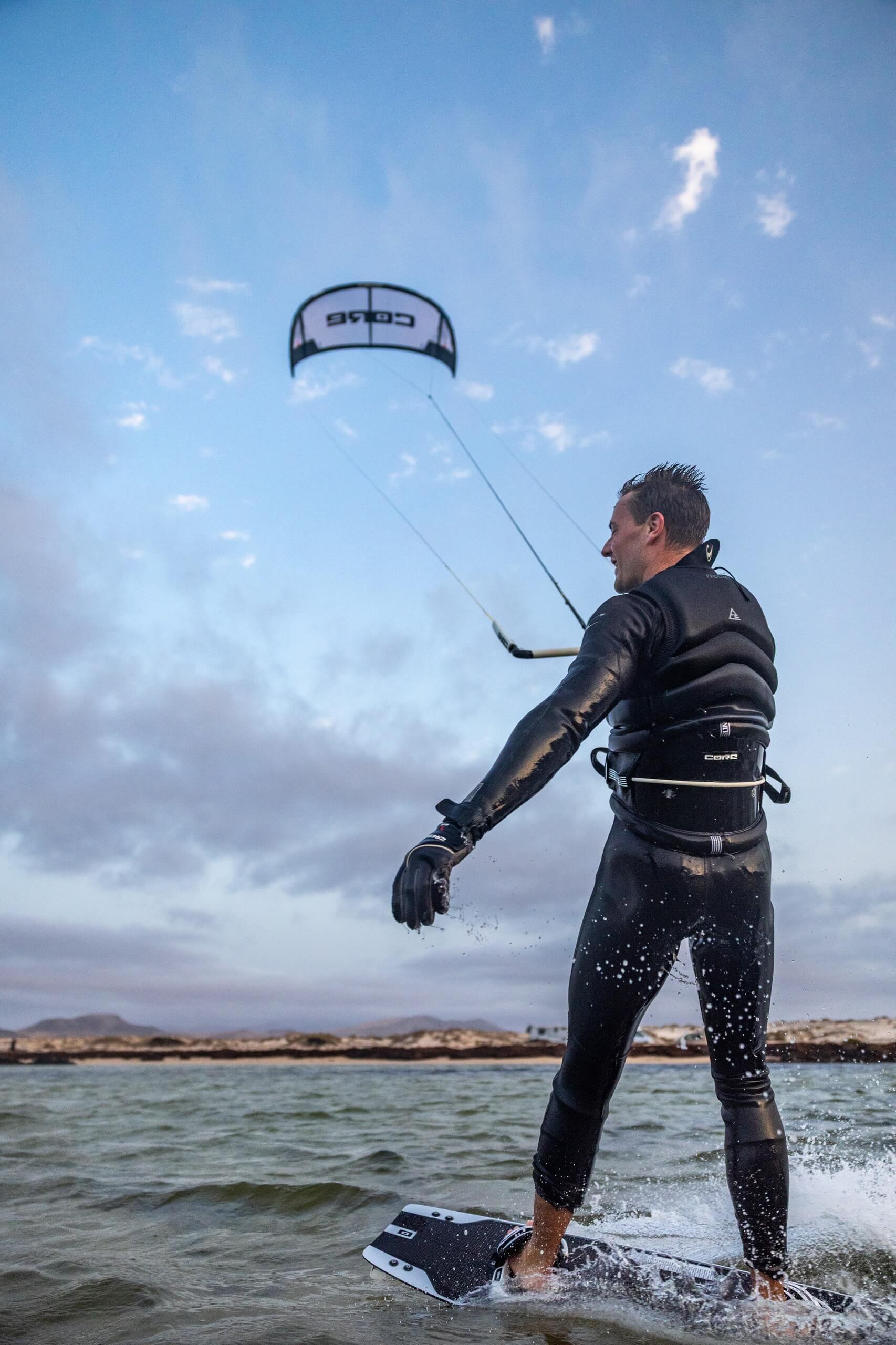
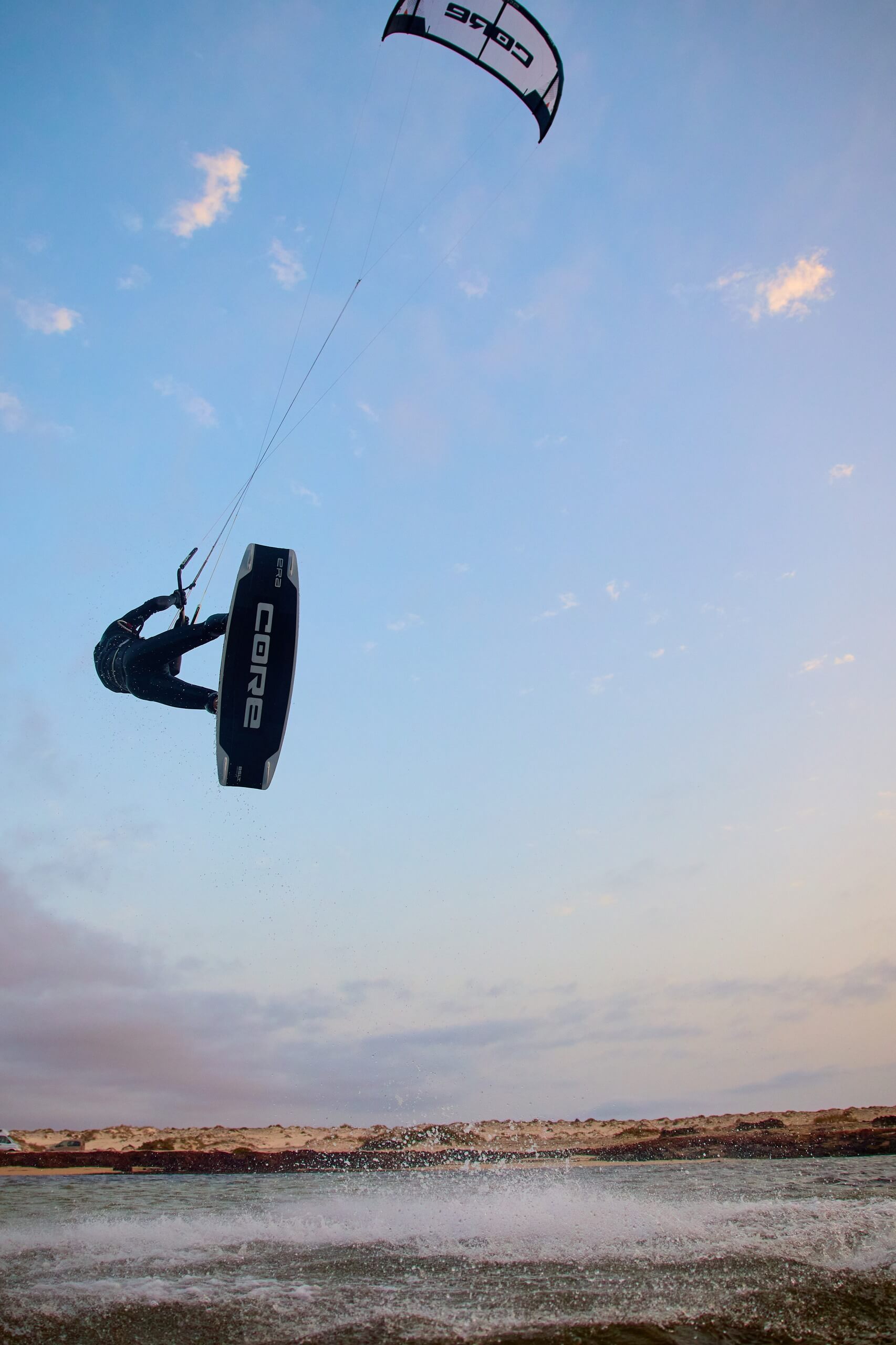
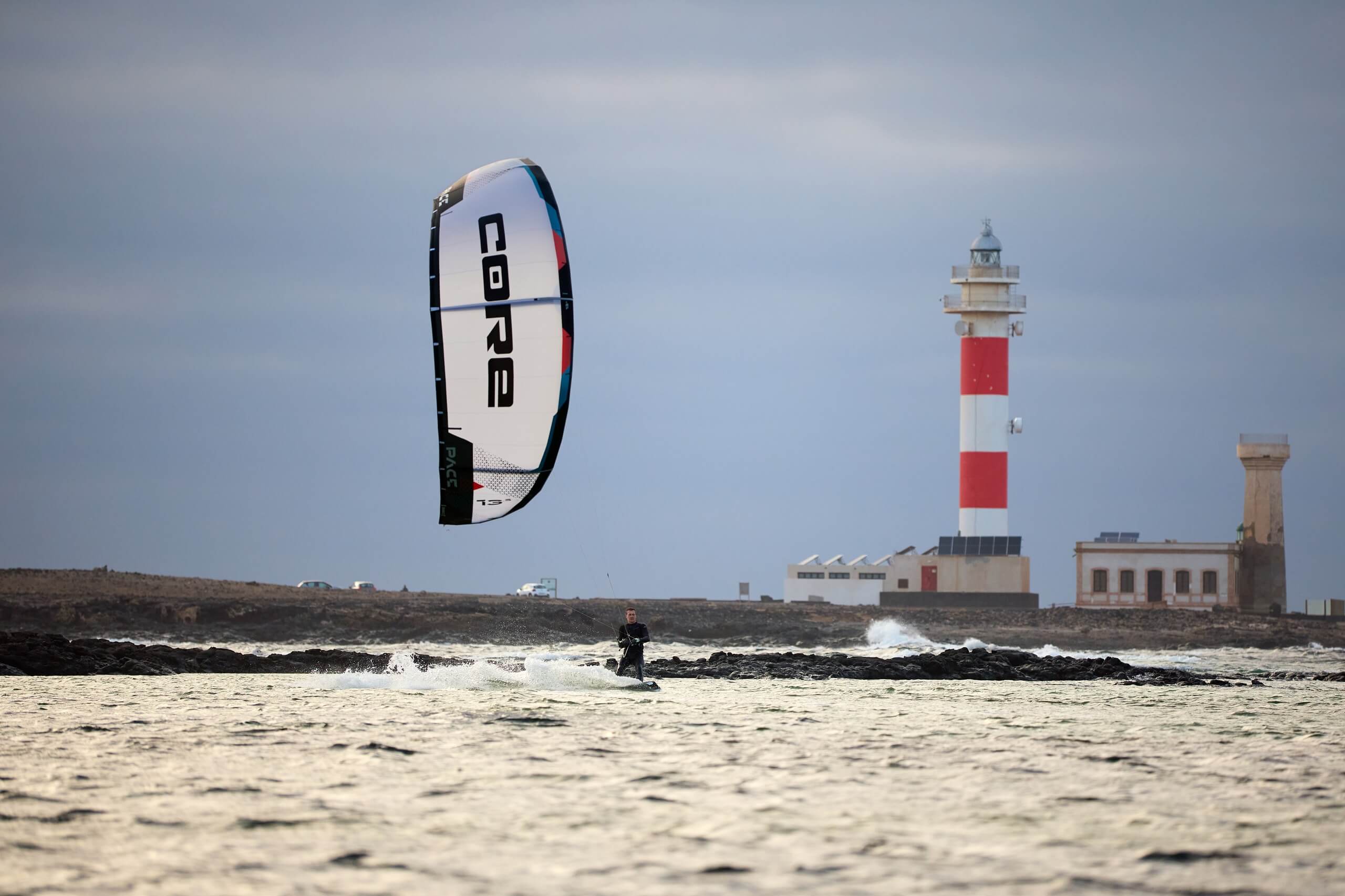
The best kiteboarding season is from April to September. During this time, the trade winds blow at over 15 knots on 80-90 percent of the days. The strongest winds are typically in July and August (often 25-35 knots). For beginners, I recommend May or September—the wind is moderate (15-22 knots) and the island is less crowded than in summer.
October to March is the off-season. The wind blows less frequently and is more unpredictable, but the waves are bigger—great for wave kiters. The water temperature drops to 18-19 degrees Celsius, but that's no problem with a wetsuit.
FAQ — Fuerteventura kitesurfing
Do I need a kiteboarding license in Fuerteventura?
No, there is no licensing requirement in Fuerteventura. You don't need a VDWS license or IKO certificate to kite independently. However, some kite rental companies require proof of your skills before they will provide you with equipment.
Can I learn to kitesurf in Fuerteventura as a complete beginner?
Yes, absolutely. The lagoon in Sotavento is one of the best beginner spots in the world. Knee-deep water, sandy bottom, consistent wind, no obstacles. Most students are standing on a board after three days of lessons.
How much does a week's kiteboarding holiday in Fuerteventura cost?
With your own equipment: approx. €500-700 (flight, accommodation, rental car, food). With rented equipment: approx. €800-1,200. With a beginner's course: approx. €1,000-1,500 all-inclusive.
Which airlines accept kite equipment?
Ryanair and TUIfly offer direct flights to Fuerteventura and allow sports equipment (kite bag) for €40-70 each way. Condor is the cheapest for sports equipment (from €30). Eurowings and Lufthansa are the most expensive.
Can I surf, windsurf or wing foil in Fuerteventura?
Yes, everything. Fuerteventura is a multi-spot for all water sports. The northwest coast (El Cotillo, Rocky Point) is a first-class surfing spot. Windsurfing is just as good as kitesurfing in Sotavento. Wing foiling has increased massively in the last two years—there are several foil rental shops at Flag Beach.
 German
  English