
Jericoacoara & Lençóis Maranhenses: Northern Brazil Roadtrip Guide 2026
Northern Brazil Road Trip — Lençóis Maranhenses, Jericoacoara & the dream beaches of the northeast coast
Northeastern Brazil is one of the most visually stunning travel regions in the world—and simultaneously one of the least known. While most travelers to Brazil focus on Rio, the Pantanal, or the Amazon, they miss out on the surreal sand desert of the Lençóis Maranhenses, the kitesurfing paradise of Jericoacoara, and over 1,500 kilometers of unspoiled Caribbean coastline between São Luís and Fortaleza. This guide is the compact manual for your own North Brazil road trip — with all routes, travel times, costs and lessons learned from several weeks on site.
- The unique sand desert with its blue-green freshwater lagoons — peak season is June to September when the lagoons are full. Access is via São Luís + a 4-hour bus transfer to Barreirinhas. Scenic flights start from €60.
- A village of sandy streets in a national park, no asphalt, no cell phone tower in sight. Constant trade winds from July to December make it a top spot for kitesurfing. Sunsets on the dunes are legendary.
- The pragmatic approach to travel: A domestic flight to Fortaleza or São Luís + four-wheel drive transfer (4x4 buggy or Toyota Hilux) is the only sensible option. Renting a car for this route makes no sense.
- Northeast Brazil is significantly cheaper than Rio or São Paulo. Pousadas start at €25, local restaurants cost €5–12, and buggy tours cost €60–120 per day. A three-week trip is easily doable for €1,200–1,500 on a budget.
- Best time to travel for this combination: August/September — Lagoons in Lençóis still full, wind in Jeri already strong, dry season, best light conditions for drone and photo.
The region between São Luís in the state of Maranhão and Fortaleza in Ceará is still largely undiscovered by mainstream travelers. This is precisely what makes it a top recommendation: Here you'll find some of the most visually unusual places in South America, without the usual hostel crowds, without overcrowded tourist attractions, and at prices significantly lower than in Patagonia or Costa Rica.


Lençóis Maranhenses National Park — The sandy desert that becomes a pool
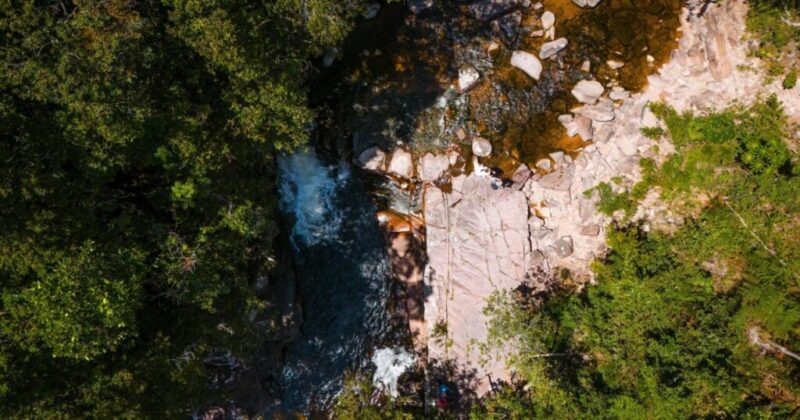
The Lençóis Maranhenses are a 1,550 km² national park—an endless dune landscape right on the Atlantic coast that transforms into a surreal lagoon landscape between January and June. What makes it unique is that rainwater collects between the white quartz sand dunes in thousands of freshwater pools—crystal clear, turquoise, and up to several meters deep. From the air, it looks like a Sahara Desert with pool islands. From a drone's perspective, it's one of the most spectacular landscapes I've ever filmed.
When are the lagoons full?
Water levels are crucial for your travel planning: The rainy season lasts from January to June. The lagoons gradually fill up, usually reaching their peak at the end of June/beginning of July. From July to September, the lagoons are full and the light conditions are perfect—this is the ideal time to visit. From October onward, the lagoons dry up, and between November and January, you'll primarily see sand. Those coming for the famous lagoon photos should definitely travel between July and September.
Arrival at Barreirinhas — The Gateway to the Park
The journey almost always involves traveling via São Luís, the capital of the state of Maranhão. Direct flights are available from Fortaleza, Brasília, or São Paulo. From São Luís, an air-conditioned coach (4 hours, approximately €12) or a private transfer (approximately €70 per car) runs daily to Barreirinhas—the gateway town to the national park. You should plan to stay at least three nights here to allow enough time for the various tours.
Tours in the Lençóis Maranhenses
There are three standard routes offered by every pousada in Barreirinhas: The tour to Lagoa Azul and Lagoa Bonita (half-day, €25–35) is the classic introductory tour with a short buggy transfer and an extended swimming stop. The Lagoa Tropical tour (half-day, €30–40) leads to a quieter lagoon on the edge of the park. And the full-day trip to Atins (€60–80) is the best option for photography and drone enthusiasts: a small fishing village with a beach, the mouth of the Rio Preguiças, mangroves, and the option to stay overnight and then drive directly into the heart of the dunes the following day by buggy.
Drone Highlights for Content Creators
Anyone traveling with a drone should DJI Mini 5 Pro Or take a similar drone along—the lagoon's geometry seen from a bird's-eye view is one of the most rewarding drone subjects. Important: The Brazilian aviation authority ANAC requires online registration for all drones over 250g. The Mini 5 Pro is just under the threshold, which significantly reduces the effort required. For the best lighting conditions, get up early—the most beautiful reflections occur in the first two hours after sunrise.


Jericoacoara — Sandy streets, sunset & kitesurfing mecca
Jericoacoara—or Jeri for short—lies about 300 kilometers west of Fortaleza on the Atlantic coast and is one of my favorite spots in all of South America. What makes it so special is that it lies entirely within the Jericoacoara National Park, which means there are no paved roads, no traffic lights, and no significant cell phone signal. Instead, you'll find deep sand impassable without four-wheel drive, whitewashed pousadas (guesthouses), bamboo restaurants right on the beach, and a sunset from the "Duna do Pôr do Sol" (Sunset Dune) that has the whole village applauding every evening.
Arrival — Four-wheel drive is mandatory
You can't get to Jeri without a four-wheel-drive vehicle. The standard route leads from Fortaleza along the coastal road to Jijoca de Jericoacoara (about 4 hours on paved roads). From there, local buggy or Hilux vans take over for the last 30 kilometers through deep sand and mudflats. Cost: approximately €25–35 per person one way; shared tours are cheaper. If you already have a rental car in the northeast, park it in Jijoca and complete the last leg in a buggy.
What you do in Jeri
Daily life in Jericoacoara revolves around the wind. In the mornings, the Atlantic is usually calm—perfect for yoga on the beach, capoeira sessions, or a coffee in one of the many small bars. From 1 p.m. onwards, the trade winds begin to blow, and the beach transforms into a vibrant spectacle of dozens of colorful kites in the sky. Beginner kitesurfing lessons cost around €50–80 per hour, including equipment; for more advanced kitesurfers, equipment rental starts at around €80 per day.
A must-do outside the dunes: a day trip to Lagoa do Paraíso (about 12 km east) — a shallow freshwater lagoon with hammocks right in the water and some of the best photo spots in northern Brazil. And Pôr do Sol on the main dune — every day at 5:30 pm sharp, the whole village gathers there, cold caipirinhas included.
Pousadas in Jericoacoara
Accommodation options range from simple hostels (hammocks from €8, dorm beds from €15) to boutique pousadas (€60–150 per night). My favorite area is Rua do Forró and the side streets off the main road—quieter, slightly cheaper, and with more authentic pousadas. During peak season (June to December), you should book at least four weeks in advance.
Internet, Money & Practicalities
Mobile phone coverage in Jeri is weak to non-existent. Several restaurants and pousadas offer Wi-Fi, but it's usually slow and unreliable—those planning to work remotely should consider Jeri more as a retreat than a coworking space. There's only one ATM in town, and it's often empty. It's best to withdraw cash in advance in Jijoca or Fortaleza. Cards are now accepted in most pousadas and restaurants, but cash is essential for buggy tours and small stalls.


The route in between — Via the lagoon route from Jeri to Lençóis
Anyone planning a complete road trip through northern Brazil should include the spectacular route between Jericoacoara and the Lençóis Maranhenses—the so-called "Rota das Emoções" ("Route of Emotions"). It connects three national parks: Jericoacoara, the Parnaíba Delta, and the Lençóis Maranhenses. The route is a continuous buggy adventure with stretches of beach, mangrove estuaries, ferry crossings, and small fishing villages like Atins.
Standard program: 3–4 days from Jericoacoara to Barreirinhas, overnight stay in a different pousada each night, transport via 4x4 convoy (approximately €350–500 per person for the complete transfer including overnight stays). The scenic highlight: the Parnaíba Delta with its more than 80 islands and manatees in the mangroves.
Practical recommendations for the route
For the buggy sections, you'll need waterproof bags for your camera and laptop—you'll regularly get saltwater in your face when crossing the surf. Sunscreen with a high SPF (50+) and a hat are essential; every first-time traveler underestimates the tropical sun combined with wind. A small first-aid kit with Imodium and electrolyte powder belongs in every backpack—the most common ailment in northern Brazil isn't a tropical disease, but a harmless stomach upset from changing the water.


Cost of traveling to Northern Brazil — What a three-week trip really costs
Northeastern Brazil is one of the most affordable premium travel destinations in Latin America—and that's a fact, not a marketing slogan. Prices are significantly lower than in Costa Rica and Mexico-Yucatán, roughly on par with Colombia. Here's a realistic three-week budget for a middle ground between backpacking and comfort:
| position | Three weeks | Per day |
|---|---|---|
| Accommodation Pousada | ~ 600 € | ~ 30 € |
| Food & Drinks | ~ 350 € | ~ 17 € |
| Buggy and boat tours | ~ 280 € | ~ 14 € |
| Transfers (bus, 4x4) | ~ 120 € | ~ 6 € |
| Domestic flight Fortaleza ↔ Sao Luis | ~ 100 € | — |
| A total of three weeks | ~ 1.450 € | ~ 70 € |
Those traveling backpacker-style (hammock instead of pousada, street food instead of restaurants, group buggies) can get by on about €50 per day. Those seeking comfort and boutique pousadas will likely end up spending €120–150 per day.


Best time to travel to Northern Brazil — Monthly guide
The best time to travel depends on what you want to see:
- July, August, September: The ideal time to combine travel. Lagoons in the Lençóis Maranhenses are full, winds are strong in Jericoacoara, it's the dry season, there's a low probability of rainfall, and perfect drone conditions.
- October to December: Strongest winds in Jeri, ideal for kitesurfers. The Lençóis lagoons begin to dry out — those wanting spectacular lagoon photos shouldn't primarily come here for the Maranhenses.
- Rainy season. Lençóis is filling up, but isn't spectacular yet. The wind in Jeri drops off. Recommendation: avoid, unless you specifically want to experience a tropical rainforest atmosphere and Carnival (February/March).
- Transitional period. The Lençóis lagoons are filling up, but not yet completely. A few final rains are possible. Acceptable time to travel if you are flexible.


Drone rules & visual storytelling in Northern Brazil
Brazil has had adjusted drone regulations since 2023. Drones over 250g must be registered online with the ANAC agency (free of charge, takes about 15 minutes). Drones under 250g—such as the DJI Mini series—are permitted without registration, but must, of course, adhere to the general rules: no flying over people, no flying within safe distances of airports, and no flying in nature reserves without explicit permission. In the Lençóis Maranhenses, drone flying outside ranger stations is currently permitted without special authorization, but must be respectful and low-flying—many birds nest in the dunes.
For content creators, the region is a goldmine. The lagoons seen from a bird's-eye view, the sand dunes with their wind-sculpted patterns, the sunsets on the dunes in Jeri, and Lagoa do Paraíso with hammocks floating in the water are all top-three subjects for any camera roll. Anyone already in South America should definitely include Northern Brazil in their itinerary.
Atins — The insider tip village on the edge of the Lençóis Maranhenses
Those who want to do more than just the Lençóis day trips and truly immerse themselves in the area should plan at least two nights in the fishing village of Atins. Atins lies directly at the mouth of the Rio Preguiças where it flows into the Atlantic Ocean—mangroves on one side, open sea on the other, and the sandy desert behind. Electricity is scarce, there's no cell phone service, and only a handful of small pousadas (guesthouses) nestled within the nature reserve.
The journey from Barreirinhas takes about three hours by speedboat or 4x4 buggy along the beaches. Accommodation costs €35–80 per night. The most spectacular tour into the park starts from the village: a 4x4 ride directly through the heart of the dunes, to places inaccessible to day-trippers. I spent three nights in Atins, and it was the highlight of my entire trip to Brazil.
Atins as a kitesurfing insider tip
What many don't know: Atins, along with Jeri, is one of Brazil's top kitesurfing spots. The wind is a consistent 15–25 knots from July to December, the water is shallow, and the lagoon system around the estuary is perfect for beginners and freestyle sessions. Several international kitesurfing schools have now established camps here, and many clients stay for two to four weeks at a time. Anyone who has already learned to kitesurf in Jeri should head to Atins to take their skills to the next level.
Salvador da Bahia & Praia do Forte as an optional extension
Anyone with an extra week to spare who wants to experience Brazil's cultural heart should include Salvador da Bahia and the nearby Praia do Forte as a southern extension to their northeast road trip. Salvador is the former colonial capital of Brazil—the historic Pelourinho district, with its colorful colonial buildings, is a UNESCO World Heritage Site and a visual delight. Capoeira demonstrations at Largo do Cruzeiro do Pelourinho are a must-see.
Praia do Forte is located about an hour north of Salvador and offers a relaxing beach holiday as a counterpoint to the bustling city. Here you'll find the famous turtle sanctuaries of the Tamar Project, which is largely responsible for the conservation of sea turtles along Brazil's coast. Day trips start from €25.
Practical travel tips for Northern Brazil — What first-time travelers should know
Money & Payment
The national currency is the Brazilian Real (BRL). The exchange rate is approximately 1 EUR = 5.50 BRL (as of 2026, but fluctuates). Cards are accepted in hotels and larger restaurants; you'll need cash in local bars and rural areas. ATMs of Banco do Brasil and Itaú accept foreign cards—Wise or Revolut cards offer the best rates. Important: ALWAYS select "Brazilian Real" as the transaction currency at ATMs, never "Euro"—the dynamic currency conversion is always less advantageous.
SIM cards & Internet
Buy a local SIM card at the airport — Vivo and Claro have the best reception in the northeast. A 30 GB data package costs around €15 per month. Important: activation requires a Brazilian tax identification number (CPF) — which tourists can apply for free at the Federal Police counter in the airport (10 minutes, no hassle). eSIM providers like Airalo work without a CPF, but are slightly more expensive.
Drinking water & hygiene
Do not drink tap water—not even in hotels. Bottled water ("agua sem gas" / "com gas") is available everywhere from €1 per liter. For those who want to travel plastic-free: water filter bottles like Grayl or LifeStraw work perfectly in Brazil. Packaged ice from the freezer in restaurants is safe, and the homemade ice in caipirinhas at beach bars is usually harmless—but those with sensitive stomachs should be cautious.
Connecting journeys — What options are available
Northern Brazil can easily be combined with other stops in Brazil. Costa Verde with Rio, Ilha Grande and Paraty It lies approximately 2,000 km to the south and is easily accessible by domestic flight. For those wanting to combine trips: 14 days in Northern Brazil + 7 days on the Costa Verde + 4 days in Rio makes a perfect three-week Brazil tour. However, the bus between Fortaleza and Rio takes over 50 hours—a domestic flight, starting at around €80, is the only sensible option.
What makes Northern Brazil special for content creators and tourism boards
From the perspective of a professional travel creator, Brazil's northeast coast is underrated. The Lençóis Maranhenses are one of the world's few sand lagoon landscapes—a truly unique visual experience. Jericoacoara boasts a powerful visual language (sand roads, sunset dunes, white pousadas, caipirinha tradition) and delivers premium content for every Reels workflow. For tourism boards in Maranhão and Ceará, professional content collaborations with drone-savvy creators are a highly effective tool—the target audience (premium outdoor travelers from Central Europe) has a strong interest right now, but little awareness of the region.
Anyone interested in a tourism board partnership in the region or planning a professional visual storytelling campaign for a hotel in the northeast can find all formats and inquiry methods on the Collaboration page.
Packing list for Northern Brazil — The 12 most important items
Unlike trips to the Andes or Patagonia, northern Brazil is largely warm and maritime. The packing list is therefore manageable—but a few special items can make all the difference between a relaxing and a frustrating trip:
- Dry bag (10-20 L): Essential for buggy trips between Jeri and Atins — saltwater gets into the car every time you cross the surf. Without a dry bag, your camera will be ruined after three days.
- Water-friendly sandals with straps: Classic flip-flops get lost in deep sand and waves. Teva or Chaco models stay put and are secure in the water.
- Sunscreen SPF 50+, several tubes: Brazilian sunscreen is overpriced and of inconsistent quality. It's better to bring two large tubes from Europe.
- Reflective cap with neck protection: On buggy trails, the sun beats down from three directions—direct sunlight, reflection from the sand, and reflection from the water. A good cap with a neck flap prevents sunstroke after three days.
- Insect repellent with DEET 30 %+: Mosquitoes in the mangroves and on Atins beach can be annoying. DEET is more effective than Brazilian citronella solutions.
- 20,000 mAh power bank: In Atins and Jericoacoara, electricity is not always reliable. A powerful power bank will save camera batteries and mobile phones.
- Cable set for all devices: Brazilian sockets are often type N (2-pin round pins) — a universal adapter is essential.
- Waterproof phone case: It's worth its weight in gold for the lagoon swimming stops in the Lençóis.
- Small travel first-aid kit: Ibuprofen, Imodium, electrolyte powder, plasters, disinfectant spray.
- Drone ND filter set: Bright sand shots require ND8 or ND16, otherwise all midday clips will be overexposed.
- Solar or charging case for drone batteries: For longer trips without electricity in Atins.
- A lightweight long-sleeved shirt: ideal both as sun protection on boats and for the evening mosquito hours near mangroves.
Alternative routes — What most travelers forget
Directly west of Lençóis National Park lies a less-visited sister park: Parque Estadual do Mirador. While Lençóis is characterized by tropical heat, Mirador is a highland area with waterfalls, canyon landscapes, and endemic birdlife. Those who can spare three extra days should definitely visit Mirador—accessible via Carolina in southern Maranhão, about a five-hour drive from São Luís.
In the state of Piauí, east of Maranhão, lies Serra da Capivara National Park—famous for the oldest preserved cave paintings in South America (over 25,000 years old) and a bizarre dry savanna landscape. Anyone who loves history and unusual geological formations should plan a two-day trip to the park. Access is via São Raimundo Nonato.
Along the coast between Jericoacoara and Fortaleza, there are other beach communities accessible by buggy or rental car: Canoa Quebrada (40 km east of Fortaleza, a picturesque cliff landscape with red sandstone erosion), Cumbuco (a classic kitesurfing resort closer to Fortaleza, perfect for short stays), and Icaraí de Amontada (more relaxed, less touristy, with lagoons right on the Atlantic). These stops are ideal for day trips or as a break on the way to Jeri.
Northern Brazil Road Trip — Lençóis Maranhenses & Jericoacoara
How long should a trip to northern Brazil last?
The ideal trip duration for combining Jericoacoara and the Lençóis Maranhenses region, plus the route in between, is 14–18 days. This includes three days in Jeri, three days of buggy convoy travel on the Rota das Emoções, four days in the Lençóis (Barreirinhas and Atins), plus travel and buffer time. Those with less time should focus on one of the two main regions.
Is northern Brazil safe to travel to?
The tourist routes in Maranhão and Ceará are generally safe, significantly safer than in the major Brazilian cities of Rio or São Paulo. Caution is advised in the port districts of São Luís and Fortaleza—upon arrival, transfer directly to your hotel or bus terminal. The Jericoacoara, Barreirinhas, and Atins regions are considered very safe; even late-night walks are unproblematic.
Do I need Spanish or Portuguese?
Portuguese is spoken – Spanish is hardly understood. English is passable in tourist hotels, but not so much in local restaurants or in 4x4 traffic. A few words of Portuguese ("obrigado", "quanto custa", "onde fica") are a huge help. Download Google Translate offline for Portuguese beforehand.
Which airport is best for starting your journey?
Fortaleza (FOR) is usually cheaper and better connected, especially for travelers from Europe. São Luís (SLZ) is closer to the Lençóis Maranhenses, but more expensive and with fewer direct flights. A classic recommendation: fly to Fortaleza, then take a road trip north, and fly back from São Luís—or vice versa. This saves you one flight.
Do I need a visa?
German, Swiss, and Austrian citizens receive visa-free entry to Brazil for 90 days, renewable once. Passports must be valid for at least six months. An onward ticket may be required upon arrival.
Can I camp along the route?
Wild camping is prohibited and strictly enforced in the Lençóis Maranhenses and Jericoacoara National Parks. In the villages between the parks, some pousadas (guesthouses) with camping areas are permitted. Those traveling through Brazil by van should consider staying in pousadas for the northeastern leg of their journey—the sandy tracks are impassable for most vans.
What is the medical care like?
Fortaleza and São Luís have good hospitals and private clinics. Jericoacoara and Barreirinhas only have first-aid stations; in case of serious injuries, you will be transferred to a major city. Travel health insurance with repatriation coverage is mandatory. Yellow fever vaccination is officially recommended for the region, but in practice, it is rarely checked.
Which equipment is particularly worthwhile?
Drone (under 250g recommended due to ANAC), waterproof bag for camera during buggy sections, ND filter for the drone (without one, the bright sand shots quickly become overexposed), tripod for long sunset exposures on the dune. My complete setup is in the 2026 Equipment Guide. Equipment Guide 2026.

Max Haase
Travel Content Creator · Drone Photographer · Visual Storyteller
A professional travel creator for over 10 years with over 4 million followers. Specializing in high-end tourism board collaborations and visual travel storytelling.

 German
 English