
Salkantay Trek 2026: Elevation profile, map & self-guided trip to Machu Picchu
Salkantay Trek 2026 — The complete guide to the best alternative to the Inca Trail
The Salkantay Trek to Machu Picchu is the most beautiful hike in Peru—and for many outdoor enthusiasts, significantly more appealing than the famous Inca Trail. The five-day route leads from the small Andean village of Mollepata, over the 4,630-meter-high Salkantay Pass, through cloud forest and coffee plantations to Machu Picchu. I've done the trek myself and here I'll give you everything you need to know: elevation profile, stages, costs, equipment, booking tips, and honest lessons learned from my experience.
- Salkantay Trek vs. Inca Trail: Salkantay is cheaper (€200–280 with an agency instead of €500–700 for the Inca Trail), permit-free (no 6-month advance booking required), and at least as scenic. Highlight: the sacred mountain Salkantay (6,271 m).
- 5 stages, 74 km total: Mollepata → Soraypampa → Salkantay Pass → Chaullay → La Playa → Aguas Calientes → Machu Picchu. Highest point 4,630 m, lowest 1,900 m. Challenging, but doable for healthy hikers.
- Self-guided trekking on the Salkantay: Possible for experienced trekkers with a tent, sleeping bag, and GPS — don't underestimate the risks at altitude. Using an agency from Cusco is more relaxed, safer, and socially enjoyable.
- April to October (dry season). May to September is ideal — little rain, clear views of Salkantay and Machu Picchu. November to March is the rainy season; the trail becomes muddy.
- Health reality: Altitude sickness is the greatest danger. Three days of acclimatization in Cusco (3,400 m) before the trek are mandatory. Coca tea, plenty of water, and a slow ascent are essential.
Salkantay Trek vs Inca Trail — A detailed comparison
Those wishing to reach Machu Picchu on foot have two main options: the classic Inca Trail or the Salkantay Trek. Both are impressive, but very different. Here are the most important differences:
| criterion | Salkantay Trek | Inca Trail |
|---|---|---|
| distance | ~ 74 km | ~ 43 km |
| Length of time | 5 days | 4 days |
| Highest point | 4,630 m (Salkantay Pass) | 4,215 m (Dead Woman's Pass) |
| Permits required? | No | Yes, 500/day, 4–6 months beforehand |
| Costs with agency | ~ €200–280 | ~ €500–700 |
| Is it possible to do it on your own? | Yes (with equipment) | No (permit required) |
| Inca ruins on the way | Few | Many |
| Landscape diversity | Very high | High |
My conclusion: The Salkantay Trek is the better choice for most hikers. It's significantly cheaper, permit-free, offers more diverse scenery (high Andes, cloud forest, subtropics), and Mount Salkantay is a unique natural spectacle. Those interested in history and wanting to see the Inca ruins along the way should choose the Inca Trail.
Salkantay Trek 5 Days — The stages in detail
Day 1: Mollepata → Soraypampa → Laguna Humantay
Start in Mollepata (3,000 m), 1.5-hour transfer from Cusco by minibus. Ascent over 5–6 hours to Soraypampa (3,900 m). After setting up camp, the hike continues to the famous Laguna Humantay — a turquoise glacial lake at 4,200 m, one of the most iconic photo opportunities in the Andes. Distance Day 1: approx. 12 km. Elevation gain: ~900 m. Difficulty: moderate.
Day 2: Soraypampa → Salkantay Pass → Chaullay
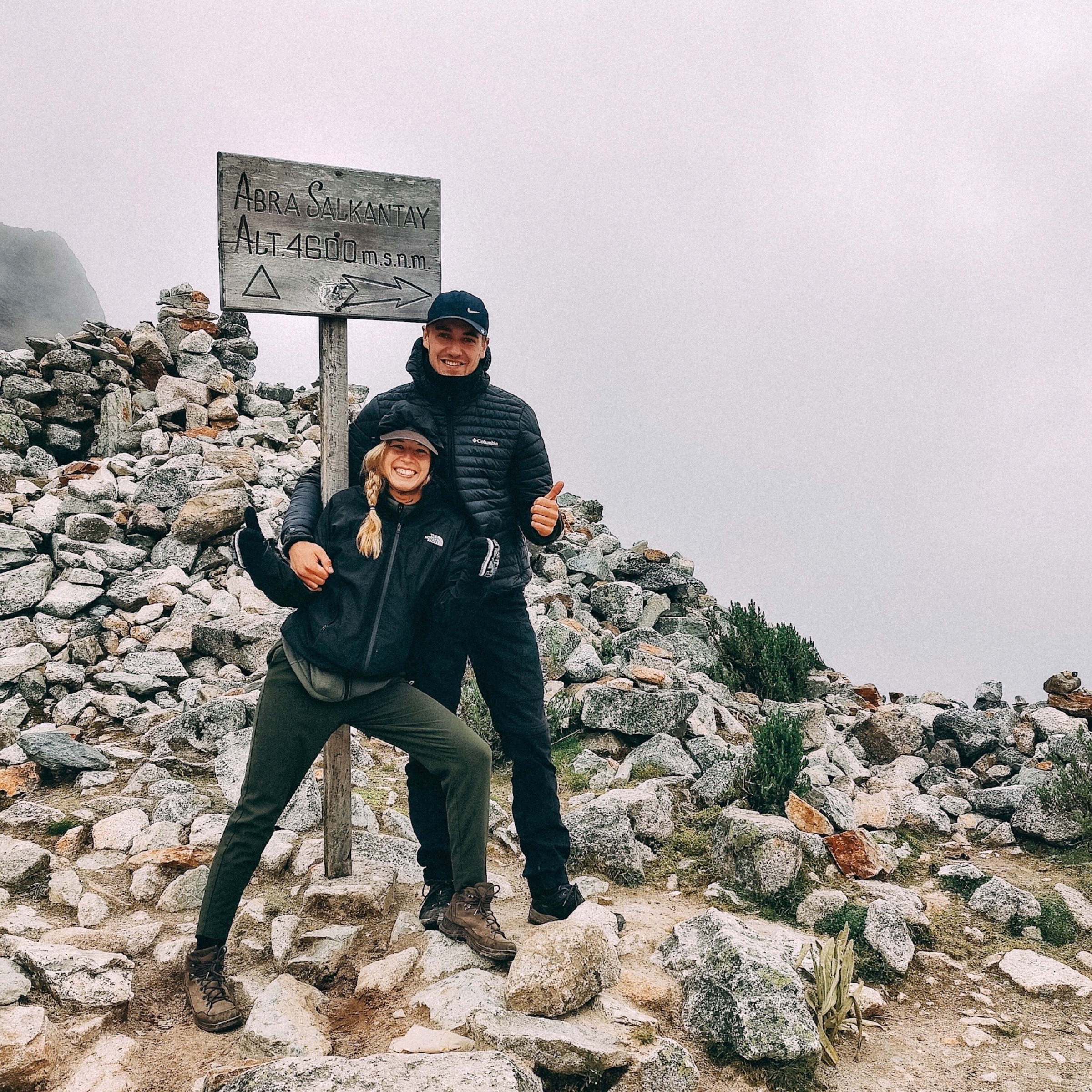
The King's Day. Ascent to the Salkantay Pass at 4,630 m — the highest point of the trek. An early departure (5:00 am) is essential for the best light conditions at the pass. After the pass, the trail descends 1,700 meters to Chaullay (2,900 m). Distance Day 2: approx. 22 km. Difficulty: challenging. Highlight: the panorama from the pass with the 6,271 m high Salkantay peak and the Humantay massif.
Day 3: Chaullay → La Playa
A gentle day through the cloud forest. Hiking along waterfalls, through coffee and banana plantations. Distance Day 3: approx. 16 km, almost entirely downhill. Overnight stay in La Playa (1,900 m), often with a hot shower and a proper bed (family-run lodge). Optional: Hot springs in Cocalmayo Day 3 as an add-on — 30-minute car transfer.
Day 4: La Playa → Llactapata → Hidroeléctrica → Aguas Calientes
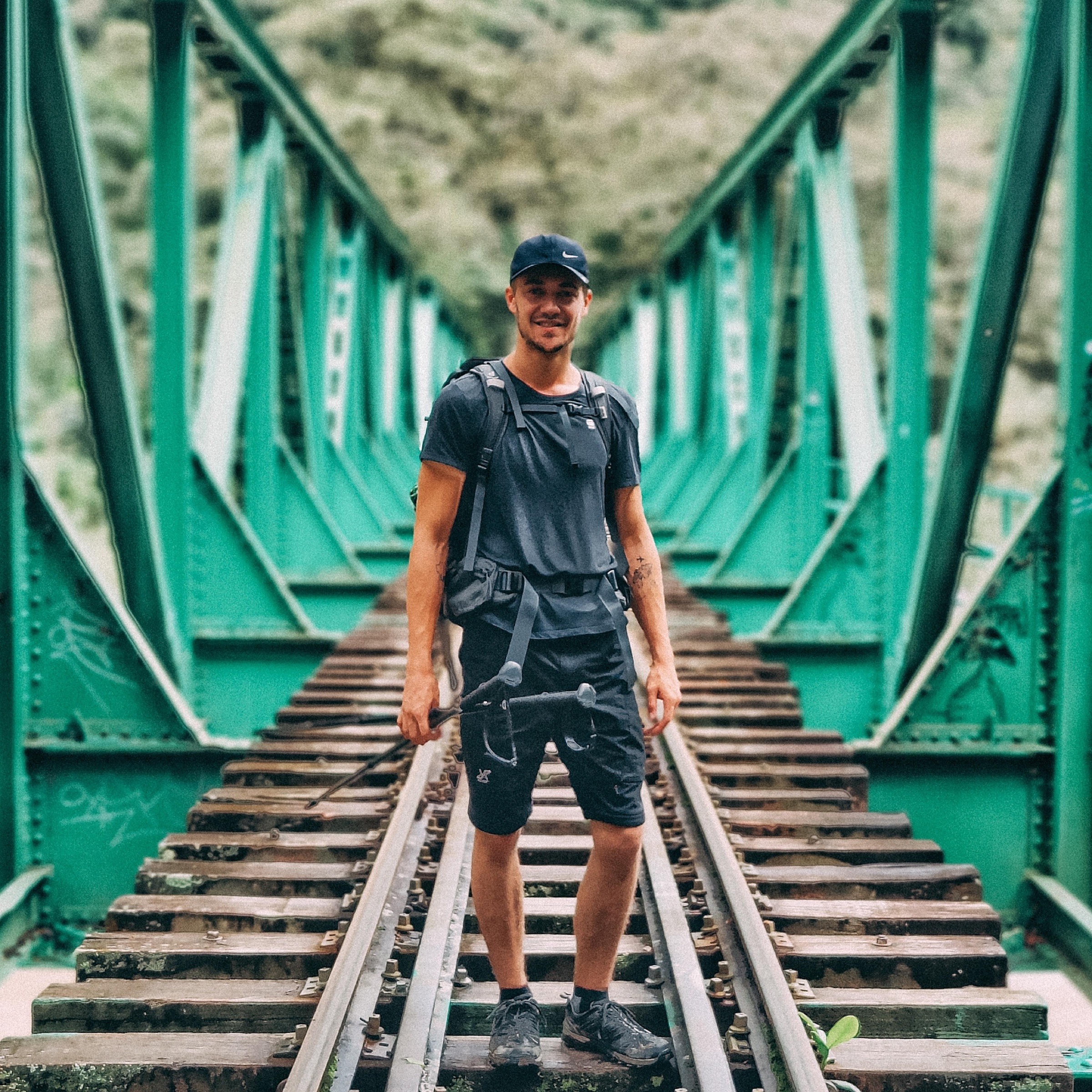
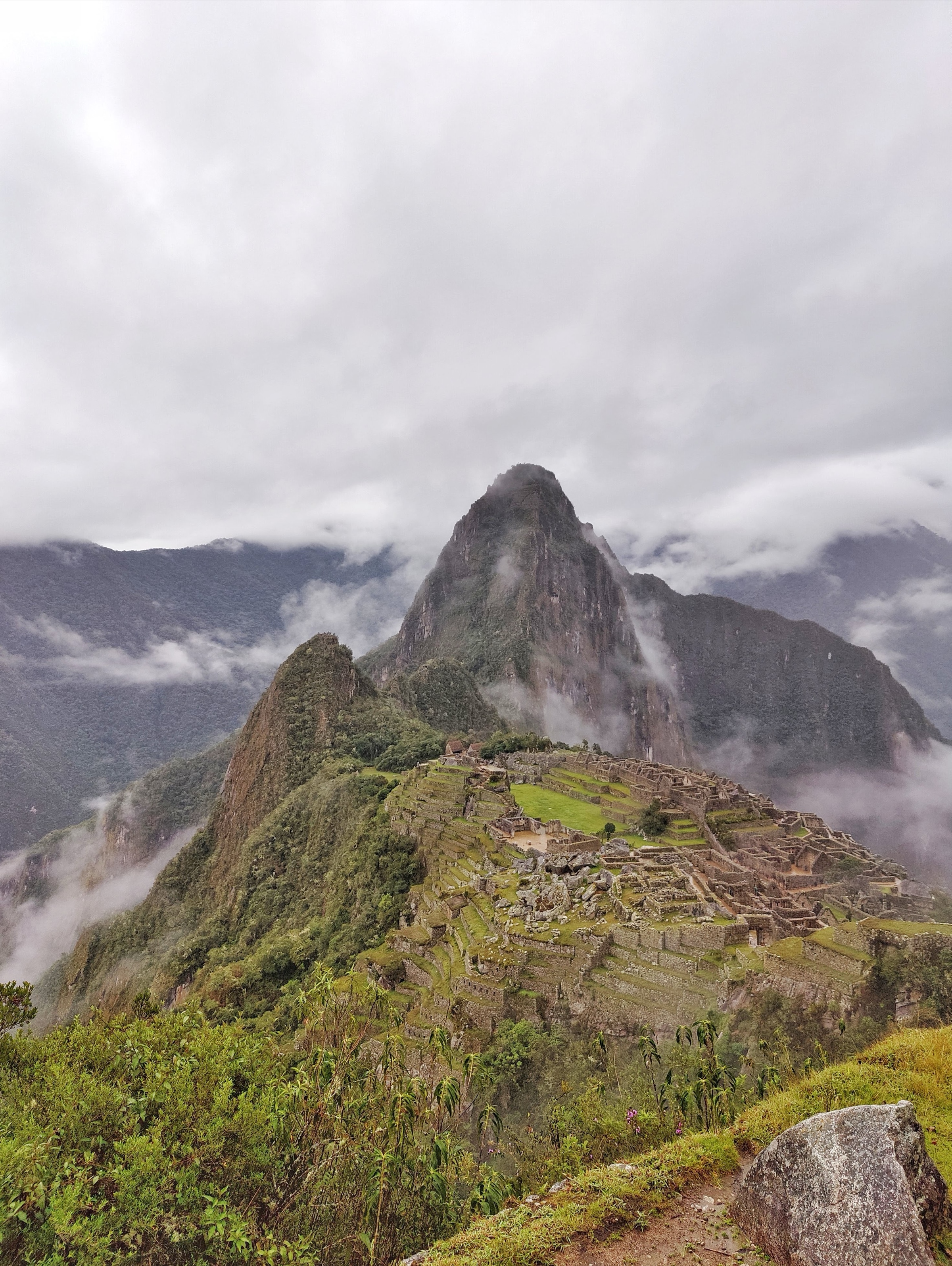
Ascent to the Inca observation post of Llactapata (2,700 m) with the first distant view of Machu Picchu—a spectacular first glimpse. Afterwards, descent to Hidroeléctrica and a 3-hour hike along the railway tracks to Aguas Calientes (2,000 m). Distance Day 4: approx. 19 km. Overnight stay in a hostel or hotel.
Day 5: Machu Picchu — Sunrise & Tour
Wake up at 4:00 AM, take the bus to the entrance or hike up (1 hour). Arrive at the Sun Gate at sunrise. Guided tour (2-3 hours), followed by free exploration. Optional: Hike to Huayna Picchu (separate permit required, significantly more challenging). Return by train to Ollantaytambo + bus to Cusco.
Salkantay Trek on Your Own — What You Need to Know
The trek is permit-free and can theoretically be undertaken without an agency. In practice, however, it should only be attempted by experienced trekkers who meet the following requirements:
- Altitude experience: Previous tours at 4,500 m+ without problems. The Salkantay Pass at 4,630 m should not be underestimated.
- Complete trekking equipment: 3-season tent (at least), sleeping bag comfortable down to -10°C, sleeping mat, stove, gas, water purification filter or tablets, GPS or map, storm clothing.
- 5–7 days of food: There are a few small refreshment stations along the way (Soraypampa, Chaullay, La Playa), but you shouldn't rely on them. Carry at least 3 days' worth of full provisions.
- Basic Spanish skills are required: The few inhabitants along the route do not speak English.
- Emergency insurance with helicopter repatriation: Altitude sickness can be life-threatening — insurance with alpine clauses is mandatory.
Costs on your own: approximately €100–150 (Machu Picchu entrance fee only: €30, bus: €12, train back: €50–80, some food). However: Without equipment and experience, booking with an agency is by far the more sensible choice.
Salkantay Trek with Agency — What should be included in the package
In Cusco, there are dozens of agencies that organize the Salkantay Trek. Prices range from €180 (budget tour operator) to €600 (premium tour with sky lodge accommodation). A good package should include:
- English/Spanish speaking, licensed guide
- 4WD transfer Cusco → Mollepata and Aguas Calientes → Cusco
- Tents, sleeping mats and usually sleeping bags (for an extra charge of €15–25)
- Three meals a day with hot food
- Mules/horses for the main luggage (you only carry a daypack)
- Machu Picchu entrance with guided tour
- Train ride Aguas Calientes → Ollantaytambo
- First aid kit, emergency oxygen cylinder
Recommended agencies (good reviews, fair prices): Salkantay Trekking, Alpaca Expeditions, Loki Travel. Always compare 3-4 providers in person in Cusco — online prices are often 30-50% higher than booking directly on site.

Salkantay Trek Altitude — Altitude Profile and Acclimatization
The Salkantay Trek's elevation profile is challenging: starting at 3,000 m, highest point 4,630 m, lowest 1,900 m. The main danger is altitude sickness (AMS), which can occur above 3,500 m. Symptoms include headache, dizziness, nausea, and sleep disturbances.
Acclimatization plan before the trek:
- Days 1-2 in Cusco (3,400 m): Arrive, drink plenty of fluids, move slowly, drink coca tea, go to bed early. No exertion.
- Day 3 in Cusco: Day trip to the Sacred Valley (Pisac, Ollantaytambo) at 2,800–3,000 m — staying at a slightly lower altitude helps with acclimatization.
- Day 4 in Cusco: Easy hike Sacsayhuamán, cafes. Last day before the trek.
- Day 5 Trek start: You are acclimatized enough to make the peak on the second day.
Anyone starting the trek without acclimatization risks serious AMS symptoms on the Salkantay Pass. I personally witnessed two fellow hikers who had to return by mule due to severe altitude sickness—both had only planned one day for acclimatization.
Altitude medication
Diamox (acetazolamide) is often recommended—a daily dose of 125 mg in the morning and evening, starting one day before ascending above 3,500 m. It acts prophylactically against AMS. Consult your doctor beforehand—not everyone tolerates it. Coca tea and coca candies are the traditional Peruvian remedy and are indeed helpful for mild symptoms.
Salkantay Trek Experiences — Lessons Learned from my Tour
The most important insights from my personal Salkantay experience:
- Day 2 is the toughest: a six-hour climb to the pass, followed by a 1,700-meter descent. Those who prepare mentally and physically for day 2 have made it through the rest.
- Shoes are the most important piece of equipment: broken-in trekking shoes (don't buy new ones right before the trek) and at least three pairs of socks. Blisters can ruin any trek.
- Sun protection is underestimated: At 4,000 m, UV radiation is extreme. SPF 50+, sun hat, UV sunglasses — use them consistently every day.
- Power bank essential: 5 days without electricity (except day 4 in La Playa). A 20,000 mAh power bank is sufficient for phone, camera, and headlamp.
- Drones: yes or no? Allowed on the trek, strictly forbidden at Machu Picchu. Those who bring a drone can fly it at the pass and at Laguna Humantay—both spectacular.
- Day 3 Hot Springs: If your itinerary includes a stop in Cocalmayo: Take advantage of it. Hot spring water after two hard days of trekking is divine.
- Weather forecast is relative: In the Andes, the weather can change within 30 minutes. Always have a rain jacket and down jacket readily available.
Salkantay Trek Map — Route and key waypoints
The route leads from Mollepata (3,000 m) in the west via Soraypampa to the Salkantay Pass (4,630 m), on to Chaullay, La Playa, Llactapata and finally to Aguas Calientes — the gateway to Machu Picchu. Important waypoints with GPS coordinates can be found in official maps from Alpaca Expeditions or in the trekking guidebook "Hiking the Salkantay Inca Trail" (Trailblazer Publishing).
The Salkantay Trek leads to an altitude of 4,600 meters in remote mountains with no road access. In an emergency, transport by mule or helicopter to the hospital in Cusco is required, which, without travel and rescue insurance, can quickly amount to a four-figure sum.
Equipment recommendations for the Salkantay Trek
- Trekking shoes: ankle-high, waterproof, broken in. Salomon X Ultra or Lowa Renegade are classic choices.
- Hardshell jacket: Breathable, waterproof. Days 2 and 3 are the days with a high risk of rain.
- Lightweight down jacket: Perfect for evenings at camp and the morning hike over the mountain pass. The Uniqlo Ultralight Down is all you need.
- Trekking poles: Especially helpful for the descents on days 2 and 4. Carbon poles under 500g.
- Daypack 25–30 L: For water, snacks, rain jacket, camera. The mule carries the main luggage.
- Headlamp: Petzl Tikka or Black Diamond — for camp nights and early departures to Machu Picchu.
- Water purification: Sawyer Mini or Mikropur tablets. Bottled water is overpriced when traveling and generates a massive amount of plastic waste.
For photo equipment: lightweight mirrorless camera (Sony A7C or Fuji X-T5), a single standard zoom lens (24–70 mm equivalent), carbon fiber tripod. Drone: DJI Mini 5 Pro Ideal due to its weight (under 250 g). Complete setup included. Equipment Guide 2026.
The Salkantay Trek involves extreme temperature fluctuations, from tropical in the valley to freezing at 4600 meters. A down jacket, trekking poles, headlamp, and a high-quality sleeping bag are essential; buying these items in Cusco is more expensive than purchasing them online beforehand.
Booking the Salkantay Trek: First come, first served
In short: When planning the Salkantay Trek, you should first secure your Machu Picchu entrance ticket, followed by booking a guide or agency. Two to three weeks' notice is recommended for the trek itself, while the limited Machu Picchu entrance tickets should be reserved well in advance.
The reason for this order is the end of the trek: The fifth day leads to Machu Picchu, whose entrance is subject to a daily limit and a specific entry time. Therefore, simply having a free spot on a trekking tour doesn't guarantee a visit to the Inca citadel. When booking, it should be clear whether entry is included and what the entry time is.
| Building block | Preliminary | Checkpoint |
|---|---|---|
| Machu Picchu | early | Admission time |
| Salkantay Trek | 2–3 weeks | Entry included? |
This results in a simple booking logic: first, set the date and entry time for Machu Picchu, then schedule the five-day trek accordingly, and finally select any optional extras. This way, the hike, arrival in Aguas Calientes, and the final visit all fit together in terms of timing.
Planning the final in Aguas Calientes and Machu Picchu
After the stage via Llactapata and Hidroeléctrica, the fourth day of trekking ends in Aguas Calientes. This town serves as the ideal base for visiting Machu Picchu the following morning. The Inca citadel sits at an altitude of 2,430 meters. There are two options for reaching it from Aguas Calientes: taking a bus or hiking for about an hour. Those trekking with an agency should check in advance which of these options is included in their itinerary.
Cusco and the Sacred Valley as the setting for the trek
Cusco is not only the organizational starting point of the Salkantay Trek. The city is a blend of Inca stonework, colonial churches, markets, and narrow alleyways. Among the stops are the Inca fortress of Sacsayhuamán, the Golden Temple of Qorikancha, the San Pedro Market, the Plaza de Armas, and the San Blas artisan quarter. Those who plan time in Cusco before starting their trek can combine visits to these sites without feeling rushed between booking appointments and equipment purchases.
The Sacred Valley can also be considered a separate component of the trek. Located between Cusco and Machu Picchu, it is usually visited as a day trip, either organized or by colectivo (shared taxi). Pisac connects an Inca site above the village with a market. Ollantaytambo is an inhabited Inca town with extensive terraced gardens and also the departure point for trains to Aguas Calientes. Chinchero is known for its textile weaving cooperatives and Inca terraces; Moray for its circular terraces; and Maras for its salt pans.
To maintain a clear sequence, the Salkantay Trek remains the five-day core of the plan. Cusco serves as the starting point, the Sacred Valley as a separate day trip, and Machu Picchu as the final leg of the trek. This way, the city, valley, and trek are not lumped together into a single stage.
Related to this: Drone Spots South America.
For Tourism Boards and brands: If you want to showcase a destination like this with your own travel content, you can find information about the process and services on the website. Book a Travel Content Creator.
FAQ — Salkantay Trek to Machu Picchu
How difficult is the Salkantay Trek?
Moderate to high difficulty. Those who hike regularly (10+ km with elevation gain) and are well acclimatized will manage the trek without problems. Day 2, with the ascent to the Salkantay Pass and a 1,700 m descent, is the biggest challenge. Trekking poles and good shoes make a big difference.
When is the best time for the Salkantay Trek?
May to September (dry season, clear visibility). July and August are peak season—crowded, but the scenery is at its most impressive. April and October are shoulder seasons with fewer tourists. November to March is the rainy season—the trail becomes muddy, visibility is often limited, and some agencies close completely.
Do I need altitude medication?
Not strictly necessary, but recommended. Diamox (acetazolamide) is effective as a preventative measure, starting one day before reaching 3,500 m. Coca tea and a slow ascent are usually just as effective. Three days of acclimatization in Cusco are the most important step.
What happens if you get altitude sick while traveling?
Mild symptoms (headache, nausea) → take a break, drink plenty of fluids, continue climbing if symptoms improve. Moderate symptoms (persistent, vomiting) → descend immediately with a mule or companion. Severe symptoms (impaired consciousness, shortness of breath) → emergency, helicopter rescue. Insurance with helicopter coverage is mandatory.
Is it possible to eat the Salkantay Trek vegetarian or vegan?
Yes. Specify this explicitly when booking — most agencies offer vegetarian meals at no extra charge, and vegan meals for a small additional fee. Quinoa, rice, beans, local vegetables, and fresh soups are the main ingredients.
How cold does it get at night on the trek?
In Soraypampa (3,900 m), temperatures regularly drop below freezing at night (-5 to -10°C during the dry season). A sleeping bag rated to -10°C is essential. In Chaullay and La Playa, temperatures are a pleasant 10–15°C. A down jacket is highly recommended for mornings and evenings.
What are the catering arrangements with the agency?
Three hot meals a day, prepared by a cook who travels with the group. Breakfast (porridge, pancakes, eggs), lunch usually a hot soup, dinner with soup, main course, and dessert. The quality is surprisingly good with reputable agencies. Snacks (cookies, tea) are available all day.
Do I need a sleeping bag liner?
Recommended for hygiene reasons, especially with rented sleeping bags. A silk liner weighs only 100 g and increases sleeping bag comfort by about 5°C. Costs €20–35, a good investment.
How safe is the Salkantay Trek?
Very safe in terms of crime — the region is remote and well-established for tourism. The biggest risks are altitude sickness, injuries from falls, and occasional severe weather. With a reputable agency and good preparation, the trek is quite manageable for healthy adults.
How do I combine Salkantay with other Peruvian highlights?
Classic Peru tour: 3–4 days Lima & Paracas, 5 days Cusco & Sacred Valley (acclimatization), 5 days Salkantay Trek + Machu Picchu, optional 2 days Rainbow Mountain. More itinerary suggestions in the Peru travelogue. Peru Travelogue.
How many days does the Salkantay Trek take?
The described route takes five days. It leads from Mollepata via Soraypampa, the Salkantay Pass, Chaullay, La Playa and Aguas Calientes to Machu Picchu.
What is the highest point of the Salkantay Trek?
The highest point is the Salkantay Pass at 4,630 meters. It is crossed on the second day between Soraypampa and Chaullay.
Where does the fourth day of trekking end?
After passing through Llactapata and Hidroeléctrica, the fourth day ends in Aguas Calientes. From there, the fifth day's hike leads up to Machu Picchu.
When should the Salkantay Trek be booked?
Two to three weeks' notice is recommended for guides or agencies. Limited entry to Machu Picchu should be booked well in advance and coordinated with the trek.
What are the options for getting from Aguas Calientes to Machu Picchu?
A bus runs from Aguas Calientes to the citadel. Alternatively, the climb on foot takes about 1 to 1.5 hours.
Max Haase
Travel Content Creator · Drone Photographer · Visual Storyteller
A professional travel creator for over 10 years with over 4 million followers. Specializing in high-end tourism board collaborations and visual travel storytelling.

 German
 English