

Sony A7 IV Review: Travel photography after 3 years of practical experience
Why I switched from Canon to Sony — and never looked back
The Sony A7 IV has been my constant travel companion for over three years. Three years in which I've lugged it through many countries—from the Albanian Alps to the Saudi Arabian desert. It has survived sandstorms, tropical rain, salt spray, and more airport security checks than I can count. This review isn't a lab test. It's a real-life account from a professional travel photographer with over 4 million followers.
- Key specifications: 33 MP full-frame sensor (BSI), 759 phase-detection AF points, 4K/60fps 10-bit 4:2:2 internal recording, ISO 100-51,200, 659 g weight, approximately €2,500 street price.
- Practical test: In use for over three years in many countries – from the Albanian Alps to the Saudi Arabian desert; survived sandstorms, tropical rain and salt water.
- Autofocus advantage: Real-time tracking reliably keeps the eye in focus when tracking moving subjects such as animals.
- Resolution logic: 33 MP as the sweet spot: 3,000-5,000 photos per 3-week trip result in 150-250 GB RAW, at 61 MP it would be twice as much – no client demands more.
- Video overheating at 4K/60fps in direct sunlight after 30-40 minutes of shutdown; otherwise ISO up to 3200 noise-free, up to 6400 suitable for social media use, 12800 still salvageable.
Before switching to Sony, I used to shoot with Canon. The 5D Mark IV was my workhorse for years. Making the switch to Sony wasn't easy—I had a library of Canon lenses and knew every menu by heart. But in 2022, the arguments for Sony were simply too compelling. Here's what convinced me—and what still bothers me.
Technical specifications: What the Sony A7 IV offers
- Sensor: 33 MP full-frame Exmor R CMOS (back-illuminated)
- Processor: BIONZ XR
- ISO range: 100-51,200 (expandable to 50-204,800)
- Autofocus: 759 phase detection autofocus points, real-time tracking for humans, animals, and birds
- Closure: Mechanical 1/8000s, Electronic 1/8000s (silent)
- Video: 4K/60fps 10-bit 4:2:2 internal, S-Log3, HLG
- Display: 3 inches fully swiveling
- Card slots: CFexpress Type A + SD UHS-II (Dual Slot)
- Weight: 659 g (with battery and memory card)
- Price: Approximately 2,500 euros (RRP 2,799 euros, used from 1,800 euros)
The 33 MP sensor: The sweet spot for travel photography
33 megapixels sounds almost modest in the age of the 61-megapixel A7R V. But for travel photography, it's precisely the sweet spot—and I'll explain why. More megapixels mean larger files, which require more storage space and more processing power. On a three-week trip, I shoot 3,000 to 5,000 photos. At 33 MP, that's roughly 150–250 GB of RAW data. At 61 MP, it would be twice as much—and my MacBook Pro would be significantly slower when editing in Lightroom.
At the same time, 33 MP is enough for large-format printing (easily up to A2), generous cropping (for Instagram reels of landscape images), and sufficient detail for any editorial purpose. No Tourism Board, No hotel or magazine has ever said, "The resolution isn't sufficient." 33 MP is enough for almost all professional applications.
The back-illuminated CMOS sensor (BSI) delivers excellent high-ISO performance. Up to ISO 3200, images are virtually noise-free, up to ISO 6400 they are perfectly usable for social media, and even ISO 12800 can be salvaged in Lightroom with AI noise reduction. This means that in restaurants, at night markets, in dimly lit mosques—anywhere flash photography is prohibited—the A7 IV delivers usable results.
Autofocus: The true game changer
If someone asks me what the single biggest advantage of the Sony A7 IV is over my old Canon 5D Mark IV, the answer is always: the autofocus. The real-time tracking AF with 759 phase-detection AF points tracks faces, eyes, animals, and even birds in flight with a hit rate that borders on magic.
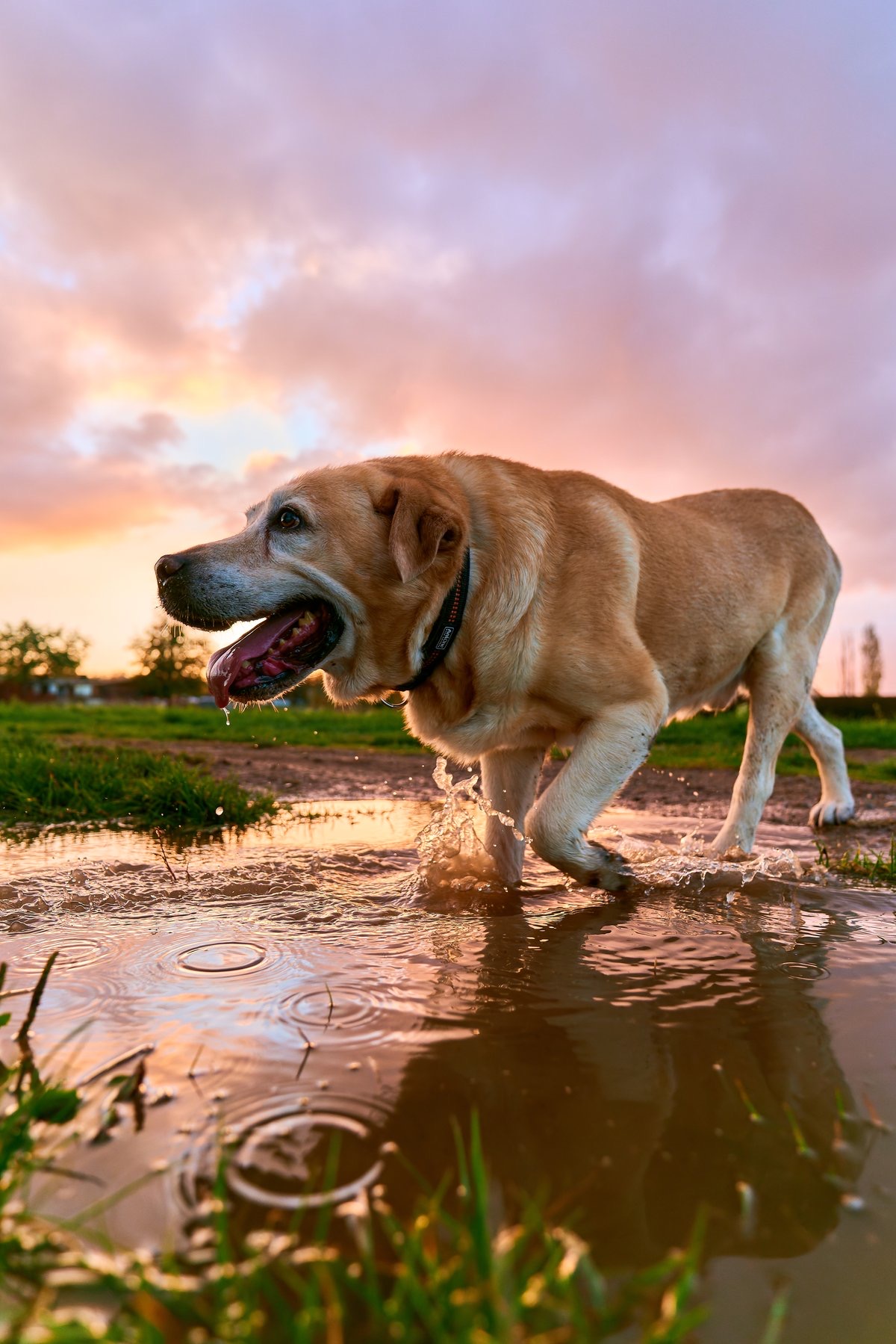
A real-world example: Safari scenes with fast-moving animals in tall grass. The autofocus detects and tracks the eye, even when the animal is temporarily obscured by the grass — precisely where my old Canon 5D Mark IV noticeably struggled more often.
In my daily work as a travel photographer, eye autofocus is a godsend for portraits. I can fully concentrate on composition and capturing the moment without worrying about sharpness. Whether street photography in Marrakech, events in Dubai, or portraits on the beach—the focus is spot on every time.
Video: The A7 IV as a hybrid aircraft
4K/60fps in 10-bit 4:2:2 internal recording—that was still rare in this class in 2021/22. And it remains impressive. Internal recording means: no external recorder needed, no HDMI cable getting in the way, no additional device requiring power. For a travel creator who holds the camera with one hand and controls a gimbal with the other, that's invaluable.
S-Log3 gives me maximum dynamic range in post-production. In DaVinci Resolve, I can adjust highlights and shadows as needed without the image becoming distorted. For social media, however, I mostly use HLG (Hybrid Log-Gamma) — it looks good straight out of the camera and saves me grading time.
The rolling shutter effect during fast panning is the only significant drawback in video mode. It's less pronounced than on the A7 III, but still present. For smooth, cinematic shots, this isn't an issue—for fast-paced action (kitesurfing, mountain biking), I use the DJI Osmo Action 6 anyway.
Ergonomics and workmanship
The swiveling display
The fully swiveling screen was a major reason for my switch from the A7 III (which only had a tilting screen). For vlogs, I swivel the screen forward, for ground-level shots downward, and for overhead shots upward. It sounds like a small feature, but it fundamentally changes the way you shoot. On a typical shooting day, I probably use the swivel screen 50 times.
Weatherproofing
The A7 IV is sealed against dust and moisture—to the same level as the A7R IV. In practice, this means: light rain, fog, sea spray, desert dust—no problem at all. I even took photos in tropical rain in the Philippines (with a rainproof lens), and the camera didn't make a sound. Of course, I wouldn't intentionally expose it to a monsoon, but for real-world travel conditions, the sealing is more than adequate.
Battery power
The NP-FZ100 battery lasts for approximately 580 shots according to CIPA standards. In practice, I get 600 to 800 photos per battery, depending on screen usage and Wi-Fi transfers. On a full day of shooting, I go through two to three batteries. I always carry four with me—two original Sony batteries and two cheaper Nitecore batteries that work just as well.
My lens combination for travel
Tamron 17-28mm f/2.8 — for landscape and architecture
This lens is my go-to for landscapes, architecture, and narrow old town streets. It's sharp right to the corners, focuses quickly, and at 17mm wide enough for interiors and panoramas. The f/2.8 maximum aperture is sufficient for night photography in cities.
Tamron 50-400mm f/4.5-6.3 — for animals and long distances
For safaris, wildlife photography, and distant subjects, I use the Tamron 50-400mm with image stabilization. It's perfect for animals, compressed landscapes, and portraits with shallow depth of field. The Tamron 28-200 covers the range in between (see below).
What bothers me about the Sony A7 IV — to be honest —
The menu system: Sony has significantly improved the menu over the generations, but it's still not as intuitive as Canon or Nikon. I now know every menu item by heart, but beginners will be cursing for the first two weeks.
For a travel photographer, it's unbelievable that Sony didn't include a GPS chip in a €2,500 camera in 2022. I have to geotag my photos manually or use the Sony Imaging Edge app, which (to put it mildly) doesn't work well. My DJI drone has GPS. My iPhone has GPS. My Sony doesn't. It's absurd.
CFexpress Type A card prices: Sony uses the CFexpress Type A format, which is offered by significantly fewer manufacturers than Type B. A 160 GB card costs around €250—more than twice as much as a comparable CFexpress Type B card. The SD slot in the second bay mitigates this somewhat, but it remains an expensive ecosystem.
At 4K/60fps in direct sunlight, the A7 IV shuts down after about 30-40 minutes due to overheating. This isn't a problem for short clips (under 10 minutes), but it is for longer interview recordings or events. The A7S III performs significantly better in this regard, but it is also a dedicated video camera.
No selfie autofocus in video: When the display is facing forward and you're filming yourself, the camera sometimes focuses on the background instead of you. Touch tracking usually solves this, but it's an unnecessary extra step.
Sony A7 IV vs. the competition in 2026
vs. Canon R6 Mark II (approximately €2,500): Better video features (4K/60fps oversampled, Dual Pixel CMOS AF II), but the Canon RF lens system has fewer compact travel zooms than Sony. For dedicated videographers, it's the better choice; for hybrid shooters on the go, I prefer Sony because of the lens selection.
vs. Nikon Z6 III (Approximately €2,700): Newer model with a partially stacked sensor for improved rolling shutter performance. Image quality is on par. However, the Nikon Z lens system is smaller than Sony's E-mount, and third-party options (Tamron, Sigma) are more extensive with Sony.
vs. Sony A7C II: Same sensor, autofocus with additional AI detection, smaller body. The compromise: Smaller viewfinder, fewer controls, no joystick. If compactness is paramount, the A7C II is the better choice. If you do a lot of manual adjustments and frequently use the viewfinder, stick with the A7 IV.
My conclusion after three years with the Sony A7 IV
The Sony A7 IV is the best all-around camera for travel photographers who also shoot video. The autofocus is world-class, the image quality outstanding, and the hybrid approach (photo and video in one body) works seamlessly. Its weaknesses—no GPS, the menu, the map prices—are real, but not deal-breakers.
Would I still buy it in 2026? Yes, especially now that it's available used from €1,800. The A7 V is already out, but the A7 IV still has at least three to four years of professional use ahead of it. 33 megapixels won't suddenly become insufficient, and the autofocus has only improved with firmware updates.
My rating: 8.5 out of 10. The missing point: GPS and video overheating. The half point: CFexpress prices.
Care and maintenance while traveling
A full-frame camera like the Sony A7 IV is not a cheap toy, and it gets significantly more wear and tear when traveling than in a home studio. Here's my maintenance routine, which has proven itself over the years:
I clean the sensor every two to three weeks with a blower and, if necessary, with moist sensor swabs. In dusty environments like the Sahara or the Atacama Desert, I even clean the sensor daily. I always change lenses with the camera body facing downwards to prevent dust from falling onto the sensor. In the evening, I wipe the body with a microfiber cloth and dry any moisture. When traveling in tropical regions, I put silica gel packets in the camera bag to prevent condensation—this probably saved me from an expensive repair in the Philippines.
The Sony A7 IV still works like new even after intensive use. Sony doesn't specify an official shutter lifespan for the full-frame camera; if the mechanical shutter eventually fails, the electronic shutter remains as a backup.
For brands: Do you need travel content with real product experience from 82 countries? You can find information about the process and services on the page. Book a Travel Content Creator.
Related to this: Content Creator Equipment 2026 — My Complete Setup and the introductory guide Become a Travel Content Creator.
As of October 2026: The Sony A7 IV continues to be used as a second body on important trips. Since 2022, it has accompanied Max with its 33 megapixels, 4K recording at 60 frames per second, and reliable autofocus. While the Sony A7V is currently the primary camera in his setup, the A7 IV remains a proven full-frame camera for both photos and videos. A broader comparison based on experience level and intended use is available in the... Guide to the best cameras for travel content creators.
| Characteristic | Sony A7 IV | Classification |
|---|---|---|
| sensor | 33 MP full-frame Exmor R CMOS (back-illuminated) | Sufficient resolution for prints up to A2 size, clear cropping, and editorial applications. |
| Autofocus | 759 phase detection autofocus points, real-time tracking for humans, animals, and birds | Does it keep the eye focused even on fast animals? |
| video | 4K/60fps, 10-bit 4:2:2 internal, S-Log3 and HLG | Photos and videos can be produced with one body. |
| ISO range | ISO 100–51,200, extended 50–204,800 | Virtually noise-free up to ISO 3200, usable for social media up to ISO 6400 |
| Display | 3 inches, fully swiveling | Rotatable forward for vlogs and for shots in ground and overhead positions |
| Memory cards | CFexpress Type A and SD UHS-II, dual slot | RAW and JPEG files can be written to separate cards for backup. |
| Weight | 659 g with battery and memory card | With a lens, a full-frame camera kit quickly weighs more than 1.2 kg. |
| Battery | NP-FZ100, approximately 580 images according to CIPA | In practice, depending on display and Wi-Fi usage, 600 to 800 photos are possible. |
Sony A7 IV Travel Zoom Lens: One lens for many subjects
For those who prefer to avoid changing lenses while traveling, the Tamron 28-200mm f/2.8-5.6 Di III RXD Max is the most versatile travel zoom lens. It covers everything from portraits and street photography to wildlife photography at medium distances. This wide focal length range is packed into a compact body; when weight is a priority, this Tamron is often the only lens in a photographer's backpack. Combined with the A7 IV, it creates a flexible setup for shooting a variety of subjects without having to carry multiple lenses for every walk.
The travel zoom lens doesn't replace every specialized lens, however. For landscapes, architecture, narrow old town streets, and low light, Max uses the Tamron 17-28mm f/2.8. For safaris, wildlife, and distant subjects, he reaches for the Tamron 50-400mm f/4.5-6.3 with image stabilization. These three lenses complement each other, covering everything from ultra-wide-angle to 400mm. Those who want to travel light can start with the 28-200mm and decide later, based on their specific subjects, whether more wide-angle or telephoto is actually necessary.
This is also practical when you're on the go: Fewer lens changes mean fewer adjustments when the light or scene changes quickly. Which combination makes sense therefore doesn't depend on having the longest possible shopping list, but rather on the planned images. Landscapes and architecture have different requirements than photographing animals at a distance.
Full-frame travel camera: realistically plan the weight
The Sony A7 IV body weighs 659 grams with battery and memory card. However, when planning a trip, the complete combination is what matters: with a lens, a full-frame camera quickly weighs more than 1.2 kilograms. Add to that spare batteries, two memory cards, filters, and a tripod. Max takes four NP-FZ100 batteries because a full day of shooting can use up two to three batteries. Cameras and lenses should be carried in hand luggage on flights, not in checked baggage.
Weight can be reduced primarily through careful selection rather than a lack of backup options. A single 28-200mm travel zoom lens covers most travel situations. For critical productions, however, two card slots provide security: RAW files are written to CFexpress Type A, and JPEG backups to SD. Max's [product/service name] helps with a comprehensive luggage concept.’ proven travel gadgets. A drone broadens the perspective, but is a separate piece of equipment; the DJI Mini 5 Pro for travel weighs less than 250 grams.
- For minimal luggage: A7 IV and 28-200mm as a versatile single-lens combination.
- For landscape and architecture: the compact 17-28mm with a constant f/2.8 aperture.
- For safari and wildlife photography: the 50-400mm lens with image stabilizer for distant subjects.
- For important tasks: Don't sacrifice dual-slot recording and sufficient battery capacity for less weight.
Sony A7 IV for beginners: useful or too much?
The A7 IV can be an entry point into Sony's full-frame system, but it's not automatically the best first step for everyone. The menu is less intuitive than those of Canon or Nikon and may require some getting used to in the first few weeks. At the same time, the Eye AF and Real-time Tracking help you focus on the subject, lighting, and composition. Three saved custom setups for landscape, portrait, and action photography shorten the path to frequently used settings.
Those who primarily create social media content in normal lighting conditions don't necessarily need a full-frame camera. A smartphone or an APS-C camera can suffice. Full-frame becomes particularly relevant in low light, for greater control over background blur, and for printing. More important than the camera body are light, composition, and timing. Beginners should therefore upgrade their equipment as needed, rather than immediately trying to replicate a complete professional setup.
Frequently Asked Questions (FAQ)
Is the Sony A7 IV good enough for professional assignments?
Absolutely. I use it to photograph for international tourism boards and premium brands. The images appear in magazines, on billboards, and in social media campaigns with a reach of millions. 33 megapixels and 10-bit video are sufficient for every professional application I've ever encountered.
Are more expensive lenses worth it compared to cheaper ones?
For professional work, the faster, higher-quality model is often worthwhile: The difference in sharpness, bokeh quality, and autofocus speed is noticeable, especially at the edges of the image and at wide apertures. For hobbyists and beginners, less expensive lenses are perfectly adequate.
Can I also do astrophotography with the Sony A7 IV?
Yes, and surprisingly well at that. With the 16-35mm GM at f/2.8, ISO 3200, and a 15-second exposure, you can get impressive Milky Way shots. The BSI sensor keeps noise well under control at these ISO values. I took some of my best astrophotographs with this exact setup on Lanzarote.
How difficult is it to switch from Canon/Nikon to Sony?
The first two weeks are frustrating—the menu system is structured differently, the buttons are in different places, and the logic behind the custom buttons isn't immediately obvious. After a month, you'll get the hang of it. My tip: Immediately configure three custom setups (C1, C2, C3) for your most frequent shooting scenarios (landscape, portrait, action) and use the custom dial extensively.
Do I need a drone in addition to the Sony A7 IV?
Yes. A camera and a drone complement each other perfectly — the camera for eye level, the drone for a bird's-eye view. Mine DJI Mini 5 Pro weighs under 250 grams and fits in a jacket pocket. The combination of these two devices has completely transformed my content offering and is now the main reason why tourism boards book me.
Can I use the Sony A7 IV with only one lens when traveling?
Yes. Max often takes the Tamron 28-200mm f/2.8-5.6 as his only lens when he wants to save weight. It covers portraits, street photography, and medium-distance wildlife. For very wide landscapes or distant wildlife, specialized lenses remain the more suitable option.
How do I back up photos twice during the shooting process?
The A7 IV has a dual slot for CFexpress Type A and SD UHS-II. Max writes RAW files to the fast CFexpress card and simultaneously a JPEG backup to the SD card. This means that a second version of the image already exists in the camera.
How many batteries should you pack for a day of shooting?
In practice, Max achieves 600 to 800 photos per NP-FZ100 battery and uses two to three batteries on a full day of shooting. He travels with four batteries. The actual range depends, among other things, on how frequently the display and Wi-Fi transfer are used.
When is an action cam more practical than the Sony A7 IV?
For kitesurfing, snorkeling, mountain biking, and via ferrata climbing, a small, waterproof, and stabilized action camera is the more robust choice. The A7 IV remains the tool for high-quality photo and video recordings; the action camera complements it where a full-frame camera is too large, heavy, or fragile.
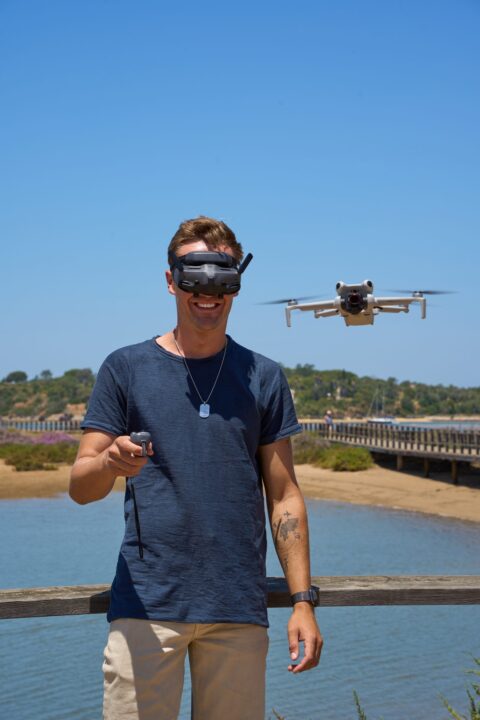
Max Haase
Travel Content Creator · Drone Photographer · Visual Storyteller
A professional travel creator for over 10 years with over 4 million followers. Specializing in high-end tourism board collaborations and visual travel storytelling.
 German
 English
 French
 Spanish