
Fuerteventura Attractions: 9 Highlights
Fuerteventura attractions: 9 Highlights
Fuerteventura attractions: Discover beaches, volcanoes, caves and places with my personal tips for your island road trip.
For me, Fuerteventura attractions mean above all vastness: light beaches, dark volcanic rock, quiet places in the island's interior and viewpoints over an almost unreal, barren landscape. In May and June 2025, I spent two weeks on the island in a campervan. My kite equipment was on the roof, and the drone was in my backpack. This trip is the personal foundation for my selection – not as long a list as possible of random stops.
The second-largest Canary Island lends itself well to a varied road trip. In the north, Corralejo, the dunes, Calderón Hondo and El Cotillo are close together. In the center, Betancuria, Morro Velosa and Ajuy combine culture, views and geology. In the south, Sotavento and the wild Jandía Peninsula with Cofete await. If you'd like to follow my complete tour and my personal kite moments, you can find them in my Fuerteventura travel report with beaches and tips.
Fuerteventura Attractions at a Quick Glance
Which stops suit your trip depends less on a ranking than on your interests. For volcanic landscapes, I'd plan Calderón Hondo and Morro Velosa. For local history, Betancuria is the most important stop in this selection. Ajuy combines a short coastal hike with a black beach and ancient rock layers. Corralejo's dunes and Sotavento show two very different sand landscapes, while Cofete represents the rugged, remote side of the island.
- Fuerteventura attractions in the north: Corralejo dunes, Calderón Hondo, El Cotillo and Popcorn Beach
- Fuerteventura attractions in the center and west: Morro Velosa, Betancuria and the caves of Ajuy
- Fuerteventura attractions in the south: Sotavento, Jandía and Cofete
- Fuerteventura attractions for active travelers: crater hike, coastal trail and long beach walks
On the map, the distances look manageable. Still, it's worth not squeezing north, center, and south into a single day. Winding roads, stops at viewpoints, and the partly unpaved stretch to Cofete take time. The empty horizons are a big part of the experience. My recommendation is therefore to pick one region per day and leave room for spontaneous breaks.
Fuerteventura attractions in the north

Fuerteventura Attraction: Dunes of Corralejo
East and south of Corralejo, a broad dune landscape meets the Atlantic head-on. Golden sand, clear water and open sky create one of the island's most striking landscape images. The stretch of beach extends over many kilometers; further south, individual sections become quieter. For me, the appeal lies not in a single photo spot but in the interplay of sand waves, coast and volcanic surroundings.
The dunes are part of a protected natural area. Staying on marked paths and designated areas, leaving nothing behind and not driving through sensitive zones should go without saying. With almost no shade, water and consistent sun protection are important. The wind can also be very noticeable – on Fuerteventura it's part of the landscape, not just a footnote in the weather report.
Fuerteventura Attraction: Calderón Hondo
Calderón Hondo is an easily accessible volcanic crater in the north. A loop hike leads to the crater rim and back. From the top, you get a view into the evenly shaped crater and far across the northern part of the island. On a clear day, the views reach as far as the island of Lobos. That makes the tour a good choice if you want to experience a volcanic landscape without planning a long mountain hike.
The open landscape offers hardly any protection from sun and wind. That's why I wouldn't treat this tour like a short city stroll: plenty of water, sturdy shoes, a hat and sun protection are a must. If you stay at the edge and use the marked paths, you also protect the dry vegetation. It's exactly this reduction to stone, sky and horizon that makes this place so impressive.
Fuerteventura Attractions near El Cotillo
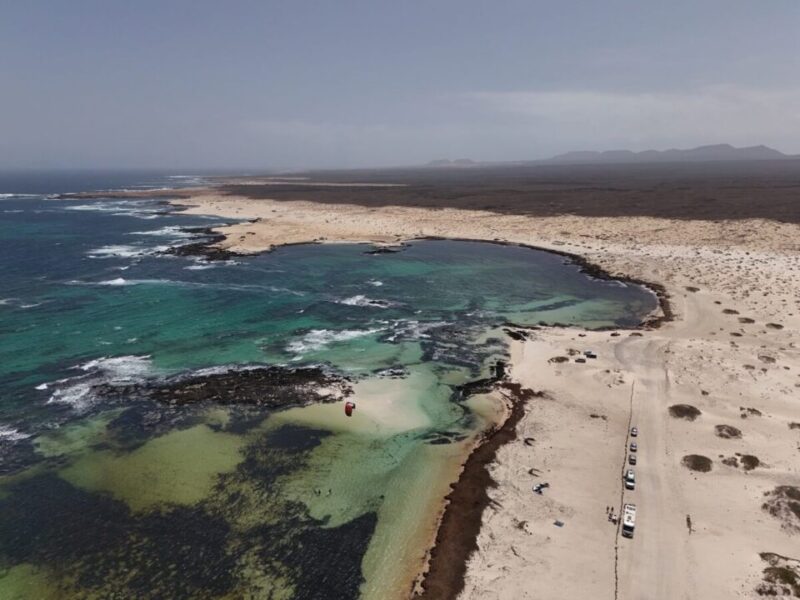
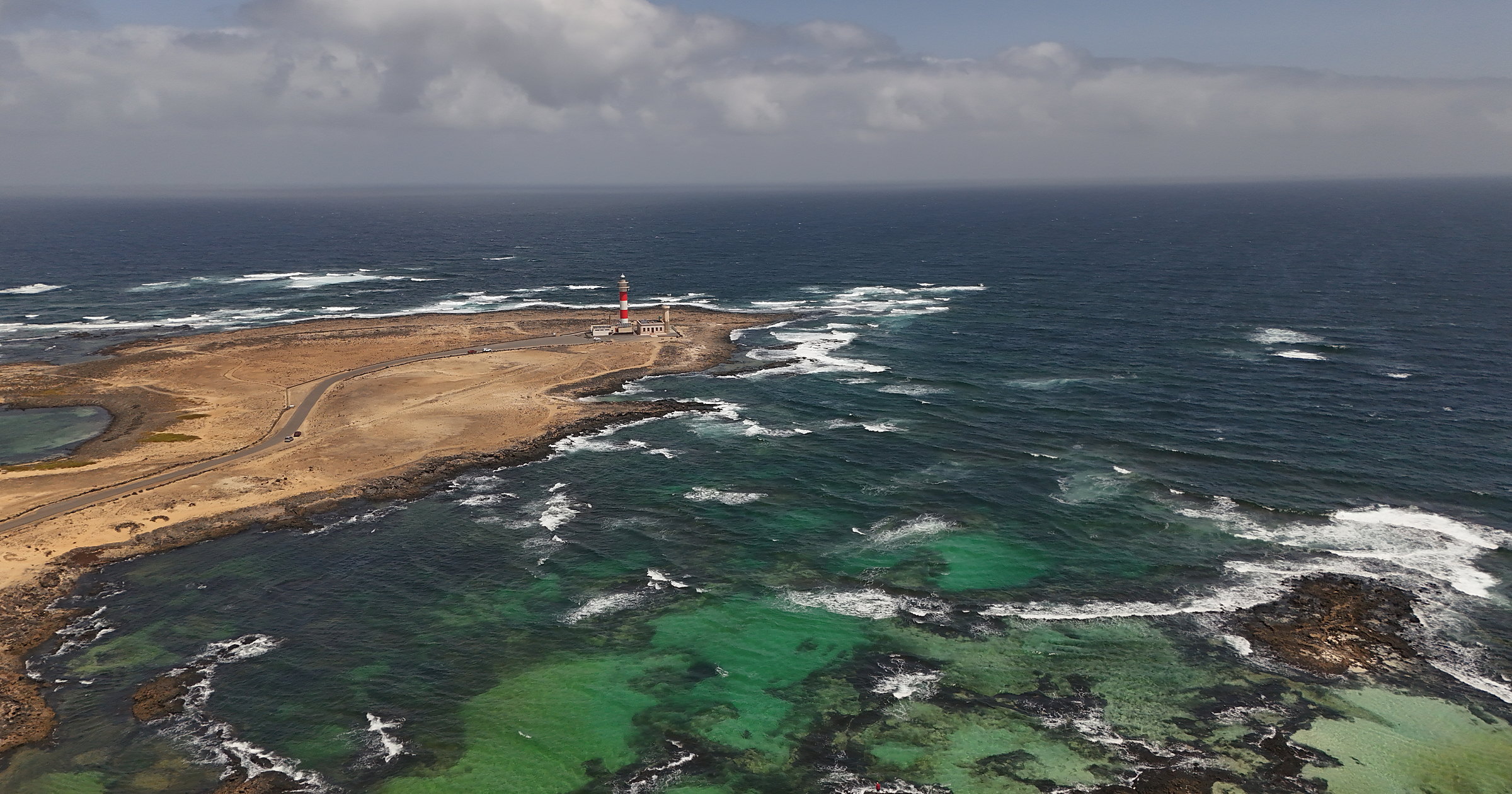
El Cotillo combines several motifs that Fuerteventura stands for. At Los Lagos, there are small coves and natural rock pools where the rocks soften the surf. Playa de la Concha is a horseshoe-shaped bay with light sand and calmer water. Around the Faro del Tostón lighthouse, the coast becomes more open and rugged again. During my trip, the northwest coast was my personal kite highlight: in the afternoon the wind picked up, and the setting sun bathed the lighthouse in golden light.
This personal impression is also the reason why I don't see El Cotillo only as a beach resort. Sheltered coves and a wind-exposed coastline lie close together here. Conditions in the Atlantic can still change; a calm appearance is no substitute for checking wind, waves and currents. You'll find my detailed overview of spots, skill levels and preparation in the Kitesurf spots and schools on Fuerteventura.
Fuerteventura Attraction: Popcorn Beach
Playa del Bajo de la Burra is usually called Popcorn Beach. Pale calcareous algae formations lie along the shore, visually reminiscent of popcorn. That makes this stretch of coast an unusual photo subject, but not automatically a classic swimming beach. Above all, it's important to leave the little formations there. Anyone who takes them home as a souvenir carries away, bit by bit, exactly what the place is visited for.
I compare prices across all providers before every trip, the differences between the cheapest and the most expensive offer for the exact same car are regularly in the three-digit range. Free cancellation, so early booking costs nothing.
Compare car rental prices in Fuerteventura →- ✓All the major providers compared
- ✓Free cancellation
- ✓Booking early costs nothing extra
Fuerteventura Attractions in the Center of the Island
Fuerteventura Attraction: Mirador de Morro Velosa
The Mirador de Morro Velosa sits high above the central plain. Designed by César Manrique, the viewpoint combines clear architecture with the panorama of the barren mountain landscape. Even the drive through the island's interior shows how much Fuerteventura differs from a pure beach backdrop.
When planning, I would combine the viewpoint with Betancuria instead of driving across the island just for it. That creates a coherent route of mountain panorama, mountain pass road, and historic village. Specific access times can change, so check the current status before you set off. Even along the route, though, the view of the landscape remains the real reason for this detour.
Fuerteventura Attraction: Betancuria
Betancuria, the island's former capital, lies sheltered in a valley between rugged mountains. The restored town center gives you a sense of Fuerteventura's historical side, which can easily fade into the background at the long holiday beaches. One of the town's defining buildings is the Santa María church. The archaeological museum also offers a counterpoint to dunes, volcanoes, and water sports.
I wouldn't tick off Betancuria as an isolated must-see. The setting is part of the experience: as you continue driving, the views shift across valleys, ridges, and the dry middle of the island. If you travel slowly, you'll understand especially well here how geography and settlement are connected. Parking considerately and exploring the little village on foot suits it better than a quick drive-through.
Fuerteventura attraction: Ajuy and its caves
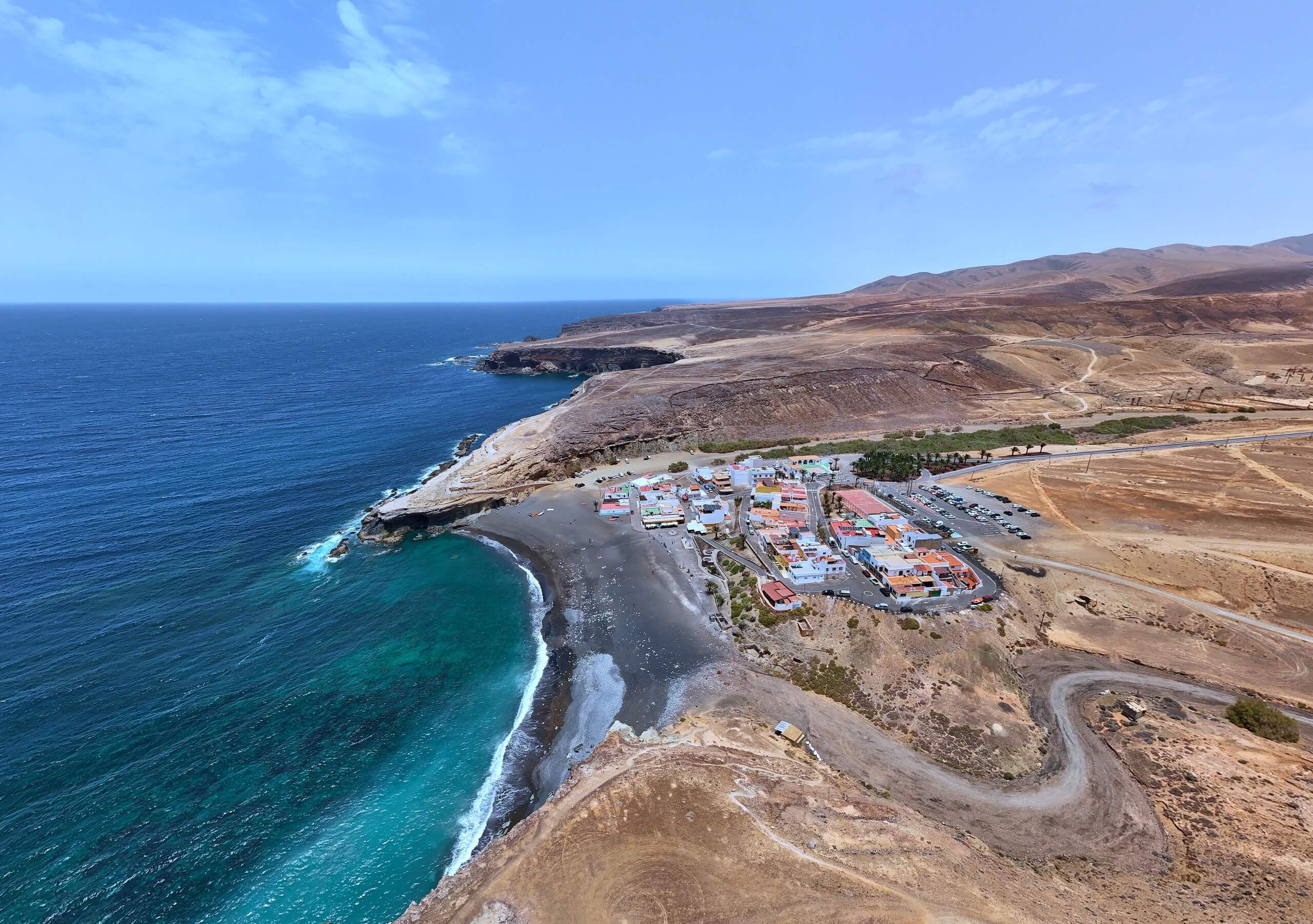
On the west coast, a short coastal path leads from the black beach of Ajuy to the Cuevas de Ajuy. The caves sit in high cliffs whose rock formations are among the oldest visible geological areas in the Canary Islands. Black sand, lighter exposed layers, and the Atlantic make for a strong contrast. That's why the place feels like a coastal hike and an open book of geology at the same time.
On the way, caution matters more than speed. Wind, surf, and uneven ground can make the simple outing more demanding. Barriers and local signs should always take priority. Ajuy is worth it even if you can't walk every section: the beach, cliffs, and light on the west coast alone are very different from the pale sandy stretches in the east.
Fuerteventura attractions in the south
Fuerteventura Attraction: Playa de Sotavento
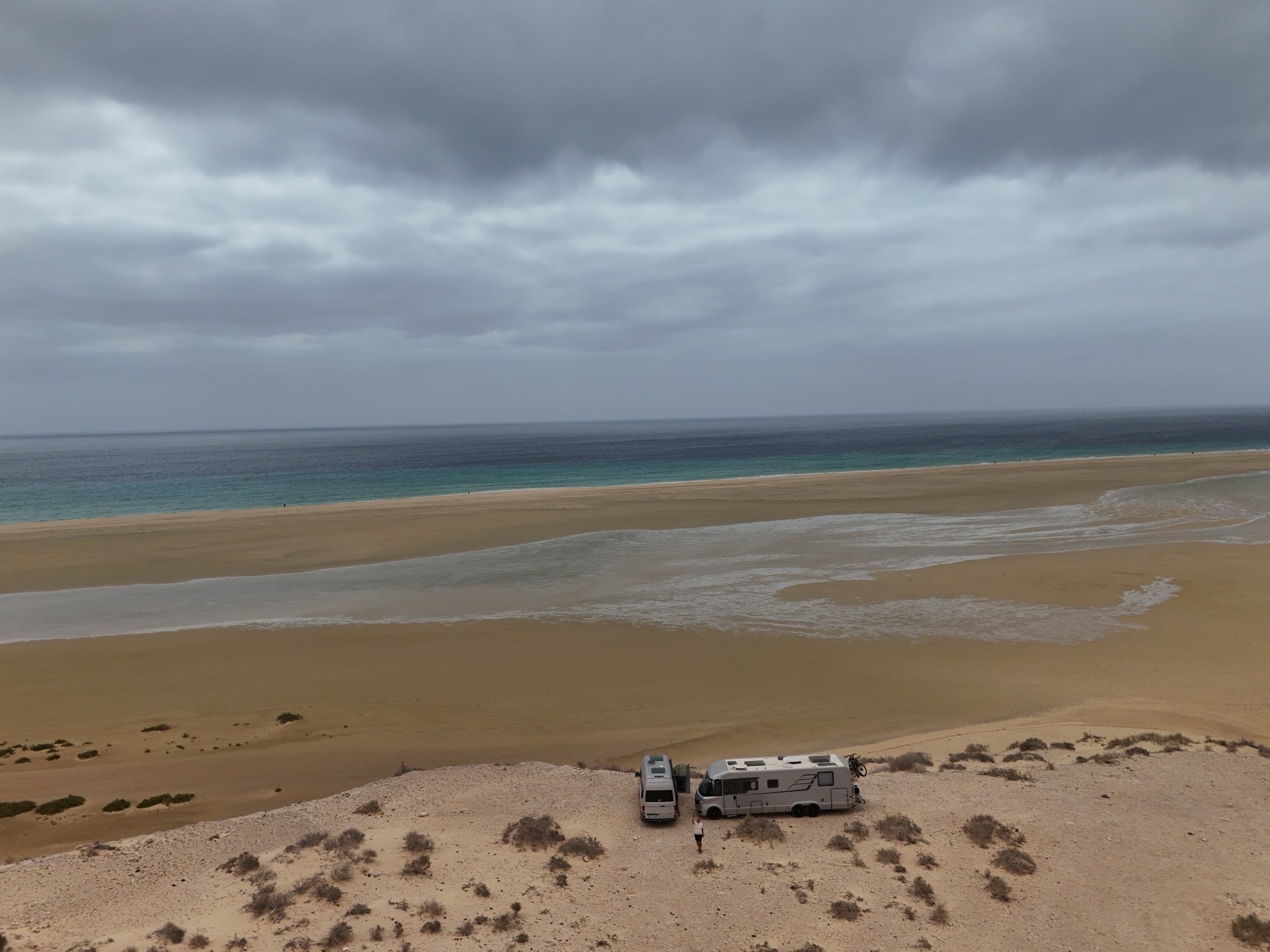
Playa de Sotavento stretches for several kilometers along the southeast coast. At the right tides, a lagoon forms between the sandbar and the coast. Turquoise, green, and pale sand then keep changing their shapes depending on the water level. The beach is therefore not just a destination but a landscape in motion. Walkers, photographers, and water sports enthusiasts experience the same place from very different angles.
Sotavento is also one of the island's well-known kiting areas. The lagoon can offer flatter water, but tides, wind and usable areas change. Beginners shouldn't judge the conditions by looks alone, but start with a qualified school. During my trip, the wind was often between 18 and 25 knots. That's my travel experience, not a wind guarantee for other dates.
Fuerteventura Attraction: Cofete on Jandía
Cofete shows Fuerteventura at its most uncompromisingly wild. The long sandy beach lies in front of the striking mountain backdrop of the Jandía peninsula and can be reached via an unpaved track from Morro Jable. It is precisely this remoteness that creates the strong sense of vastness. Cofete is not a typical swimming stop: the current can be strong, and the rough surf demands respect.
Allow plenty of time for the drive. Road conditions, weather, and vehicle requirements need to be checked on site; a beautiful view is no reason to take risks. If you visit Cofete, you should also take everything back out with you and not drive off the existing tracks in this sensitive environment. The reward isn't an attraction with entertainment, but a quiet panorama of beach, mountains, and the Atlantic.
Planning Fuerteventura Attractions as a Road Trip
For me, a sensible itinerary starts with regional loops. In the north, you can combine Corralejo, Calderón Hondo and El Cotillo. A day of its own suits Morro Velosa, Betancuria and Ajuy. In the south, Sotavento and the Jandía Peninsula can be on the plan, though you should allow generous time for Cofete because of the access road. That leaves room for weather changes and unplanned viewpoint breaks.
I traveled by campervan myself and liked the freedom of starting out on the coast in the morning and later parking among volcanic mountains. That doesn't mean I recommend overnighting freely wherever you like, though: protected areas, local rules, signage, and designated parking spots are what count. Dunes must not be driven on, and trash is never left behind. Fuerteventura has little natural shade, so water and sun protection should be within easy reach on every day trip.

If you're torn between several Canary Islands, you can compare landscape, activities and your preferred travel pace. My Canary Islands guide to the perfect island helps with this decision. Fuerteventura is especially suited to travelers looking for open landscapes, long beaches, wind and a road trip without a dense sightseeing program.
Compare and book tours, admission tickets and excursions in advance with free cancellation (depending on the offer).
View tours for Fuerteventura →- ✓Tours, tickets and excursions in one place
- ✓Free cancellation depending on the offer
- ✓Book ahead instead of queuing on site
Experiencing Fuerteventura Attractions Responsibly
The barren surface looks robust but is fragile. That applies to dunes as well as to the calcareous algae at Popcorn Beach and the sparse vegetation along hiking trails. Staying on existing paths, not driving on protected areas and not taking any natural materials with you are simple rules with a big impact. Even on remote beaches, there's no invisible cleaning crew: whatever you bring, you take back out.
Wind, strong sun and Atlantic currents deserve special attention. Before hikes, you should check conditions and advisories; when swimming, local warnings decide, not a photo from the internet. For kitesurfing, knowing the spot and realistically assessing your own skills are what count. That way, a list of Fuerteventura attractions becomes a trip that puts no unnecessary strain on either nature or people.
I also produce visual travel content for destinations. Tourism boards that want to tell the story of Fuerteventura's landscapes and activities credibly will find information on concept, production, and contact on my page for Collaboration for tourism content.
FAQ
Which Fuerteventura sights should you see first?
For a first trip, the dunes of Corralejo, Calderón Hondo, Betancuria, Ajuy, Sotavento, and Cofete make a varied cross-section. They combine sandy landscapes, volcanism, local history, and wild coastline. Which of them gets priority should depend on your location, the weather, and the time you have.
How many days do you need for Fuerteventura's sights?
Several days make sense because the destinations are spread across the north, the center of the island and the south. Instead of ticking everything off in a short time, I'd reserve at least one excursion day each for the north, the central route and the south. Extra time leaves room for beaches, hikes and wind.
Do you need a car for Fuerteventura's sights?
A car makes combining remote beaches, viewpoints and hiking trailheads much more flexible. Not every place is equally easy to reach, and an unpaved track leads to Cofete. Before every drive, check current conditions, insurance rules and vehicle requirements. Alternatively, guided tours can open up individual regions.
Which Fuerteventura sights are suitable for hiking?
Calderón Hondo offers a short crater loop, while near Ajuy a coastal trail leads to the caves. Long beach walks along the Corralejo dunes or Sotavento also let you experience the landscape up close. Water, sun protection, suitable shoes, and paying attention to wind, weather, and closures should always be part of your preparation.
Which Fuerteventura sights suit families?
The more sheltered coves near El Cotillo and a walk along the dunes of Corralejo can be a good fit depending on age and current conditions. Extra care is needed around cliffs, surf, crater trails and strong sun. What matters is how you feel that day, local warnings and a route with enough breaks.
New places, drone footage, and behind-the-scenes looks.
Max Haase
Travel Content Creator · Drone Photographer · Visual Storyteller
Since over 10 years I have been a professional travel creator with over 4 million followers; I specialise in high-end tourism board collaborations and visual travel stories.


 German
 English
 French
 Spanish
 Italian
 Japanese
 Chinese
 Dutch
 Portuguese