
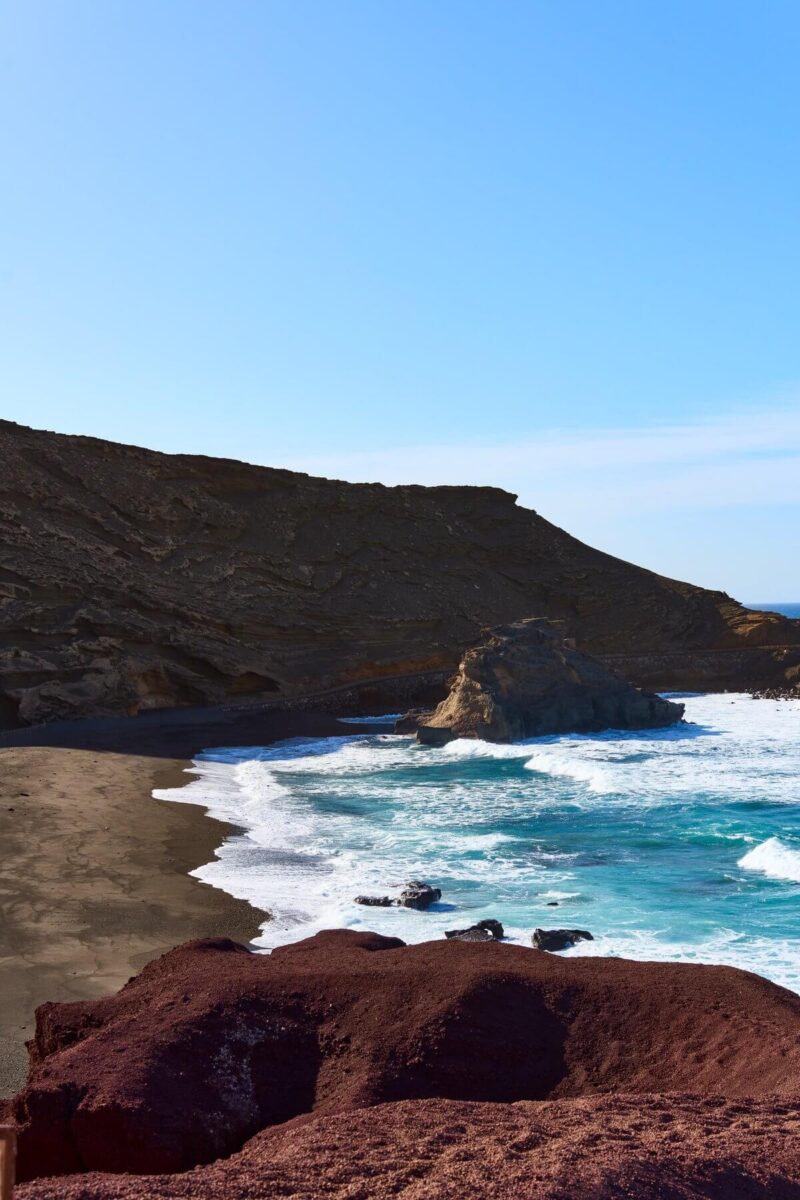
Lanzarote Attractions: Highlights & Travel Tips
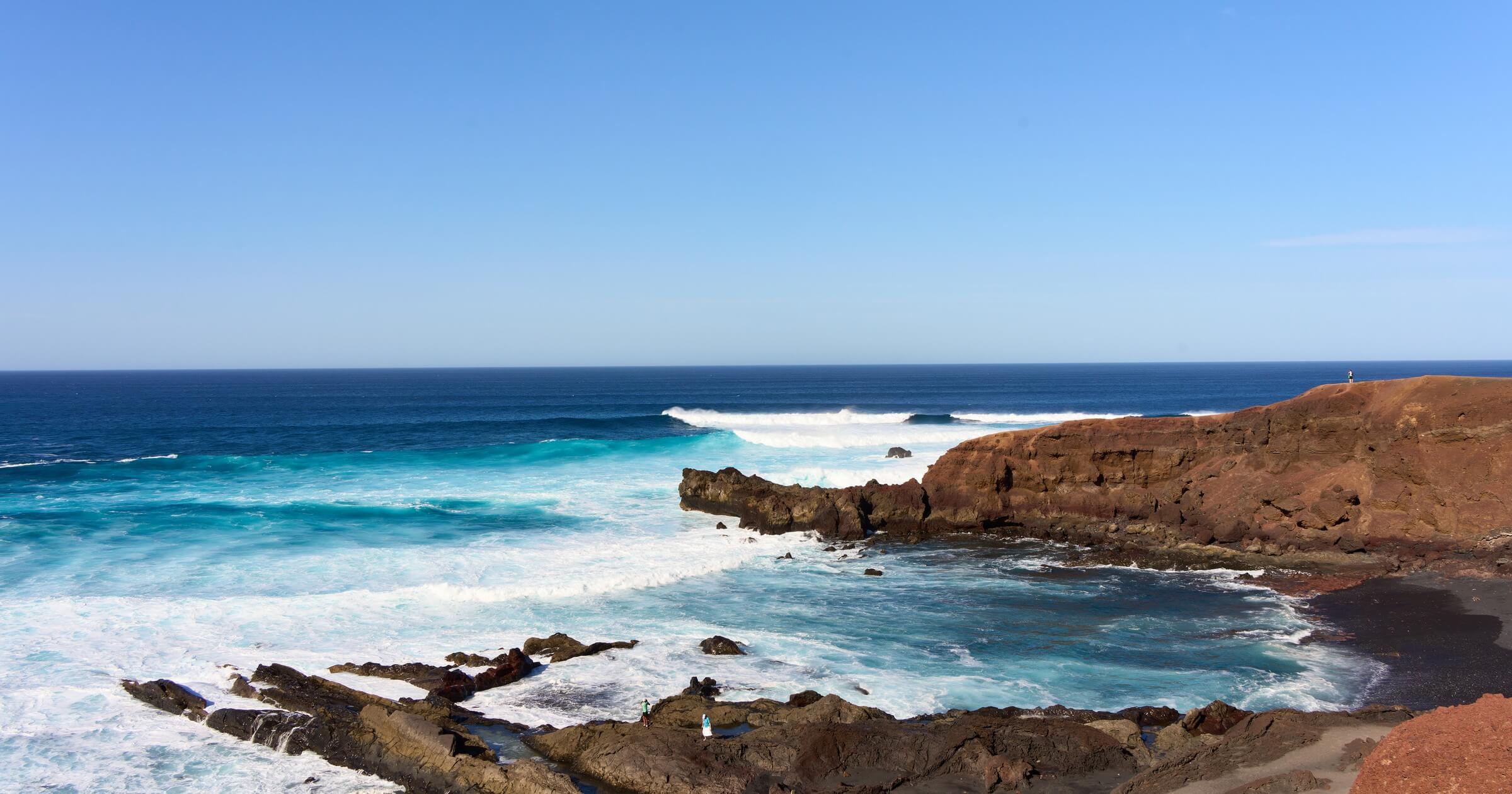
Lanzarote Attractions: Highlights & travel tips
Lanzarote sights in the guide: fire mountains, César Manrique, La Geria, beaches and route tips from my Canary Islands trip.
Lanzarote's sights feel as if someone had condensed fire, wind and the Atlantic into a single landscape. Black lava fields meet bright houses, golden bays and the deep blue ocean. These very contrasts surprised me during my Canary Islands trip in January 2024. I was only on the island briefly and therefore had no time for a complete tour. Still, one thing was immediately clear: Lanzarote isn't just another beach island, but a destination with an unmistakable visual language.
This guide sorts the most important Lanzarote attractions by landscape, culture and trip planning. It deliberately does not replace my personal Lanzarote travel report on fire mountains, volcanic coast and César Manrique. It focuses on my visit and the impressions from the trip. Here, the focus is on which places make sense for different interests, how they fit together, and what to keep in mind when planning your own route.
Lanzarote attractions at a quick glance
The best-known destinations are spread across the whole island. Timanfaya and La Geria are in the volcanic west and the island's interior. The Papagayo beaches are in the south. Several works by César Manrique, on the other hand, are in the north and in other parts of Lanzarote. If you're short on time, you shouldn't try to tick off as many names as possible, but rather combine neighboring Lanzarote attractions into a geographically sensible day plan.
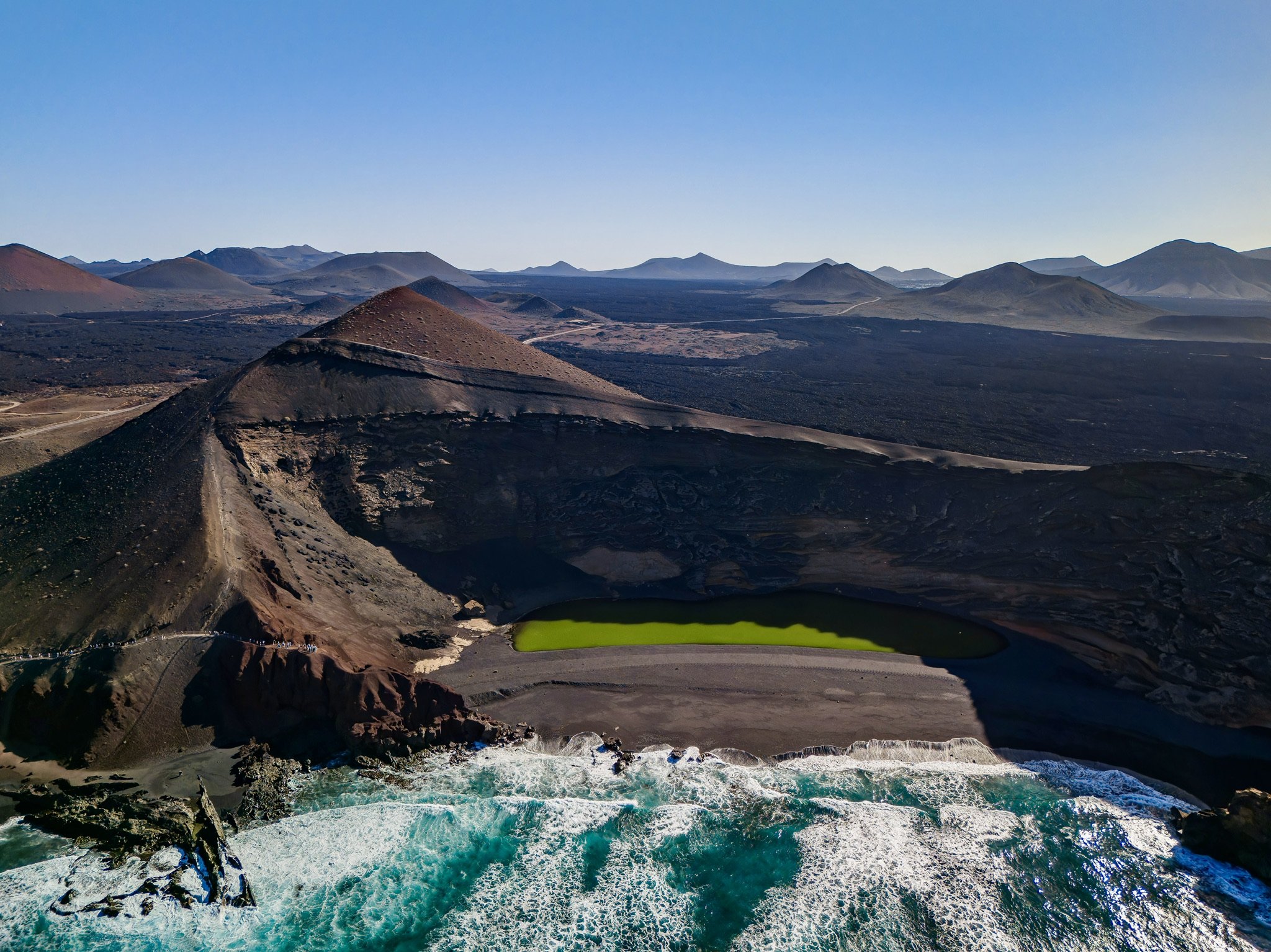
- Timanfaya National Park for fire mountains, crater colors and vast lava fields
- La Geria for vineyards in black volcanic ash and an unusual cultural landscape
- Jameos del Agua for the interplay of lava tunnel, architecture and art
- Cueva de los Verdes for a guided look into the volcanic cave system
- Mirador del Río for the view of La Graciosa and the El Río strait
- Fundación César Manrique, a home integrated into lava bubbles
- Papagayo beaches for sheltered coves, golden sand, and clear water
My most important piece of advice is not to reduce the island to individual photo stops. Its effect comes from the transitions: solidified lava becomes a wine landscape, white architecture appears in the black terrain, and behind barren expanses the sea suddenly opens up. These very shifts make a route more exciting than a mere list.
Lanzarote attractions around Timanfaya
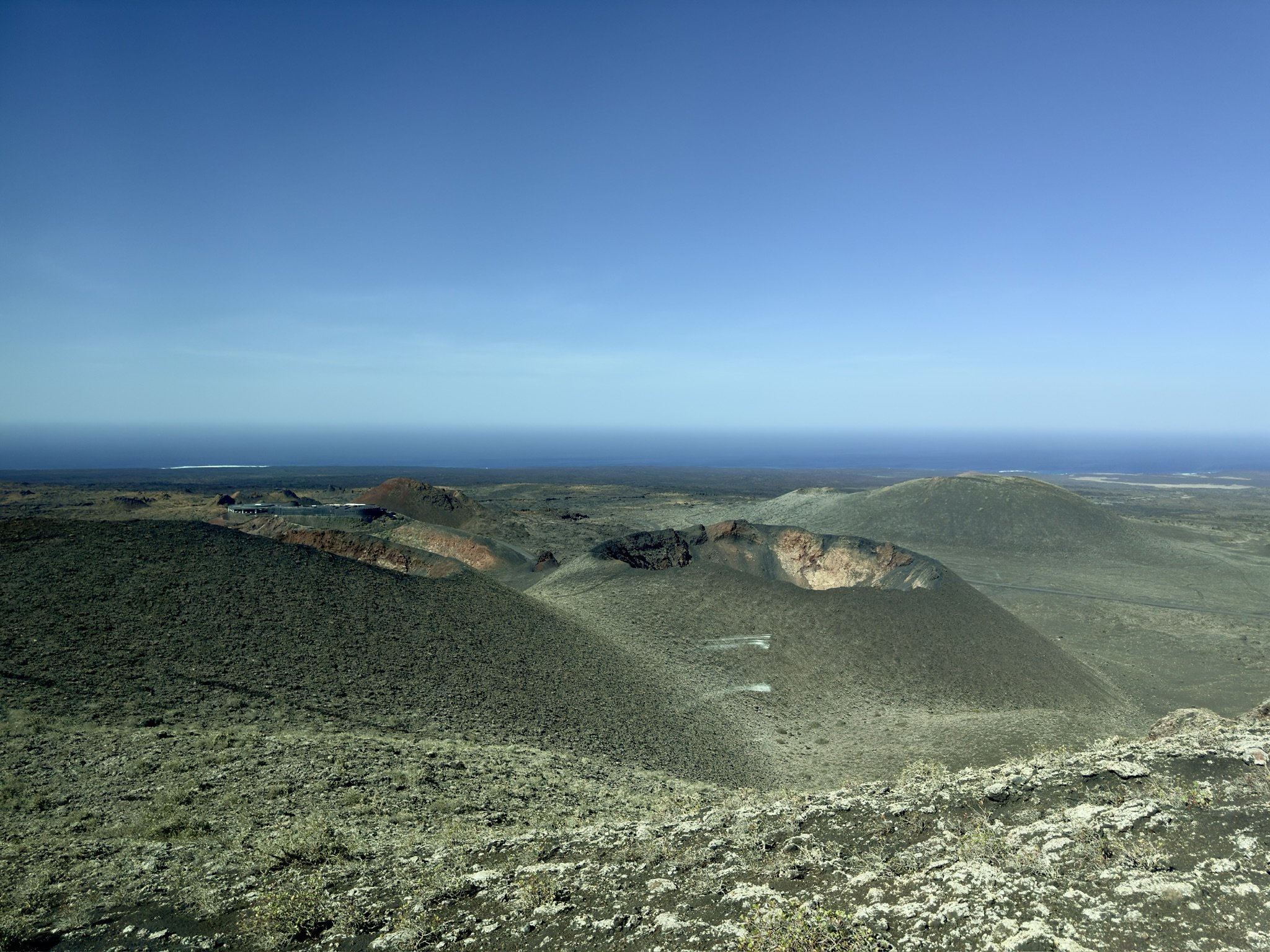
Timanfaya National Park is the central place to understand Lanzarote's volcanic character. The Montañas del Fuego, the Fire Mountains, were created mainly by the long eruptions of the 18th century. Reddish-brown cones, black ash, and solidified lava flows form a landscape where vegetation is only visible in spots. To me, this landscape felt almost like another planet.
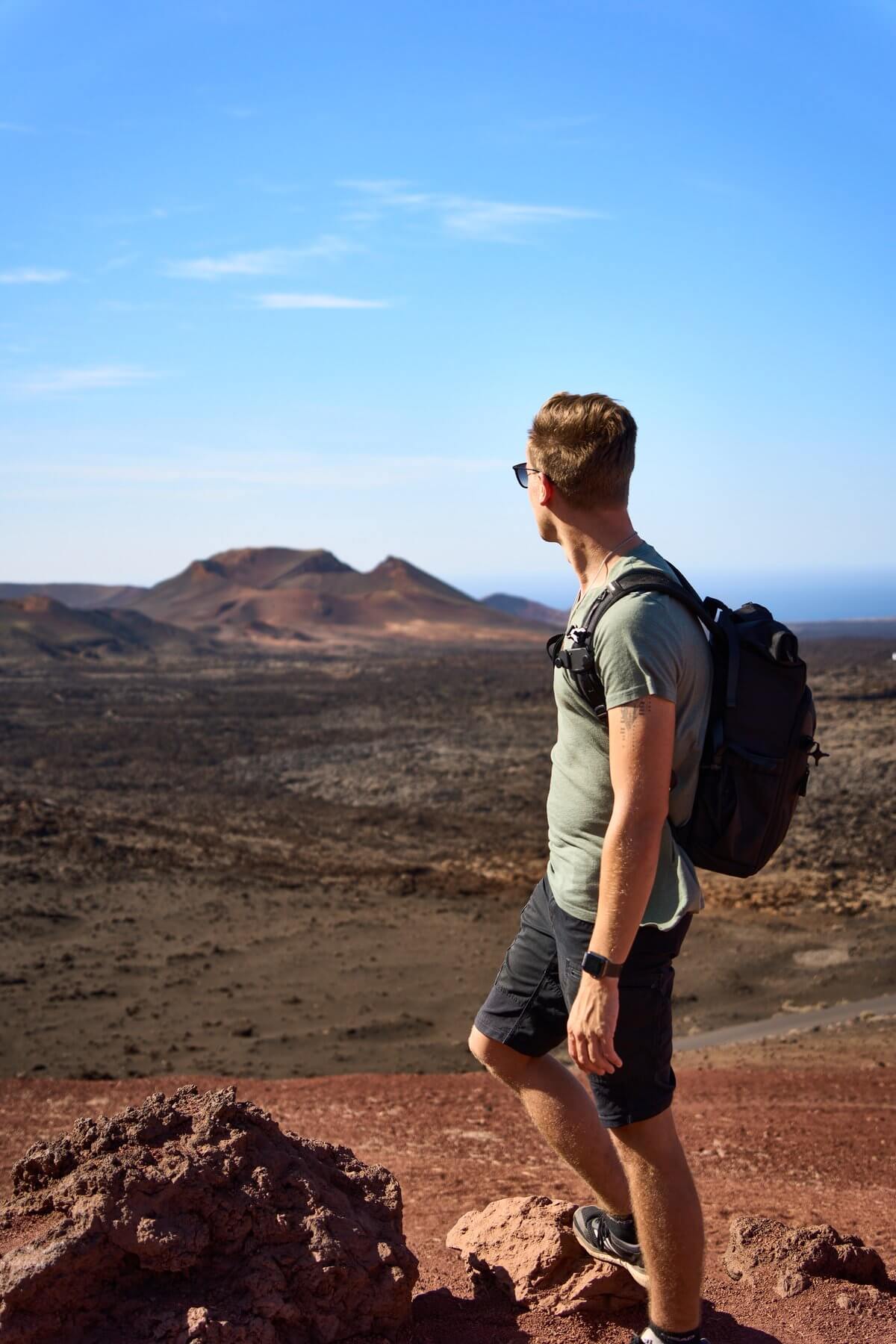
Lanzarote attraction Ruta de los Volcanes
In the protected core area, you can't move freely across the fragile lava fields. The organized tour on the Ruta de los Volcanes opens up the fire mountains along a set route. That may feel less spontaneous than a hike, but it protects the geological formations and shows many layers of color and crater shapes in a small area. For your planning, this means: Timanfaya isn't a quick roadside viewpoint, but a program item of its own.
The visitor area also demonstrates how much heat still lies beneath the surface of the earth. The El Diablo restaurant uses geothermal heat for grilling. This show is touristy, but it makes the volcanic energy immediately understandable. Drones are prohibited in the national park. If you're taking photos, respect the protection rules and don't move outside permitted areas for a shot.
Lanzarote attractions and responsible photography
The Fire Mountains change with the light. Low morning or evening light emphasizes edges and textures, while a high sun makes colors and expanse readable in a different way. On Lanzarote, wind, protected areas and possible drone restrictions should always be part of your preparation. I check the rules before taking a shot instead of assuming that an open area is automatically an allowed launch spot. The landscape is the subject, but protecting it comes first.
Lanzarote attractions by César Manrique
Without César Manrique, Lanzarote is hard to understand. The artist and architect combined volcanic spaces with clear forms, water, plants, and carefully chosen views. His works don't simply sit on top of the landscape but respond to caves, rocks, and lava. That's why they are more than individual museums: they explain why architecture and nature on Lanzarote often seem like parts of a shared concept.
Lanzarote attraction Jameos del Agua
Jameos del Agua uses sections of a natural lava tunnel. The underground lake, auditorium and designed lounge areas show especially vividly how Manrique could develop an existing space further. Small blind albino crabs live in the water. So if you visit, don't just look for the well-known architectural perspectives, but also pay attention to the fragile cave world.
Lanzarote attraction Cueva de los Verdes
The Cueva de los Verdes belongs to the same volcanic tunnel system but has a different focus. On a guided tour, the interior of the lava tunnel is the center of attention: rock layers, cavities, and acoustics show what traces flowing lava can leave behind. Jameos del Agua and Cueva de los Verdes therefore complement each other, even though both lead underground. One place puts more emphasis on artistic design, the other on the spatial experience of the cave.
Lanzarote attraction Mirador del Río
At the Mirador del Río, the view itself becomes an architectural element. The viewpoint is built into the rock and directs your gaze across the strait to La Graciosa. The experience doesn't rely on lots of exhibits, but on perspective, horizon, and the relationship between island and sea. For a northern route, the Mirador pairs well with the cave sites: first into the lava, then out across the Atlantic.
Lanzarote attraction Fundación César Manrique
In Manrique's former home, his idea becomes visible on a private scale. Parts of the building sit inside natural lava bubbles. Rooms, rock, plants and openings interlock without hiding the volcanic foundation. If you're interested not only in beautiful shapes but in Lanzarote's design identity, you get important context here for the bigger visitor sites.
I compare prices across all providers before every trip, the differences between the cheapest and the most expensive offer for the exact same car are regularly in the three-digit range. Free cancellation, so early booking costs nothing.
Compare car rental prices in Lanzarote →- ✓All the major providers compared
- ✓Free cancellation
- ✓Booking early costs nothing extra
Lanzarote sights between La Geria and the coast
Lanzarote's landscape is not only the result of volcanism, but also of how people deal with this terrain. This is especially clear in La Geria. Grapevines grow there in hollows in the dark volcanic ash and are protected from the wind by semicircular stone walls. From above, the repeating arcs look almost graphic. On the ground, you can see that behind this pattern lies a practical adaptation to dry, windy conditions.
Lanzarote attraction La Geria wine landscape
La Geria isn't a single attraction with a clear beginning and end, but a cultural landscape. That's exactly why it's worth driving through slowly and only stopping where it's safe and allowed. Well-known wineries include Bodega El Grifo and Bodega La Geria; in my travel report, I mention the local Malvasía wine. However, I wouldn't reduce the visit to a tasting. The real sight is the visible connection of agriculture, wind protection and volcanic soil.
Lanzarote attractions at the Papagayo beaches
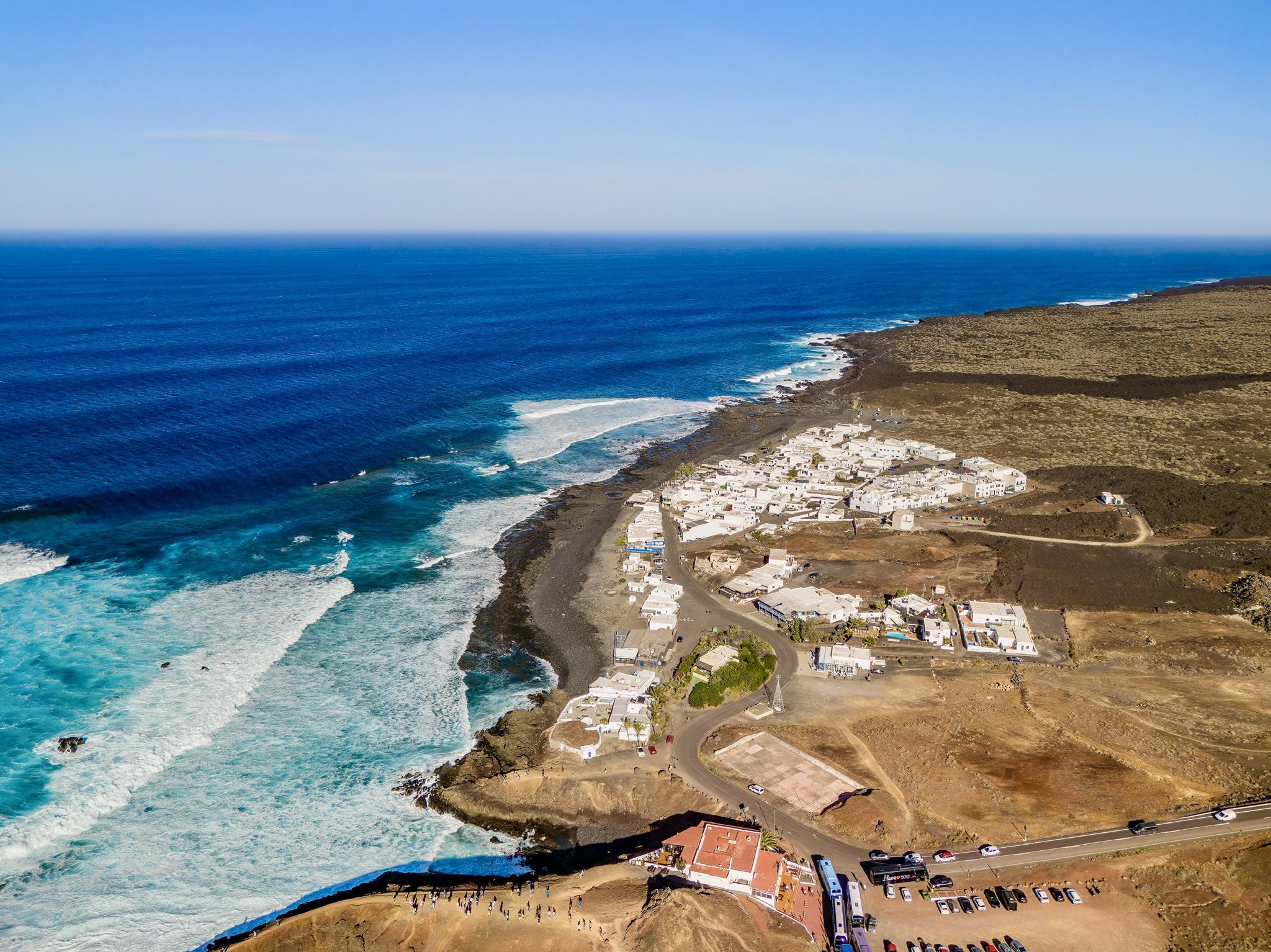
In the south, the Papagayo beaches form a strong counterpoint to the fire mountains. Several sheltered coves meet golden sand and clear, turquoise-looking water there. Even the approach via a gravel track makes it clear that the place doesn't work like a continuously built-up beachfront promenade. Allow extra time to get there, and check the current access conditions before you visit instead of relying on older price or opening information.
On the coast, too, wind and sun can quickly make conditions feel different from what a photo suggests. That's why water, enough sun protection, and a windbreaker are part of sensible day planning for me. If you combine volcanoes, wine region, and coves, you'll experience many types of landscape in a single day, but you shouldn't overload the route with extra stops.
Planning Lanzarote attractions as a route
At roughly 60 kilometers from north to south, Lanzarote is manageable, but distances alone say little about a travel day. Access roads, visits and spontaneous photo stops take time. A rental car makes remote destinations more comfortable to reach. If you'd rather not drive yourself, compare organized tours and public transport using current timetables.
- West and volcano route: Timanfaya as the main destination and La Geria as a scenic addition
- North route: Jameos del Agua, Cueva de los Verdes, and Mirador del Río, depending on available time
- South route: Papagayo beaches with enough time for getting there and staying
- Culture route: Fundación César Manrique plus another work for different perspectives
During my short visit, I naturally only got to see a small part. For a trip of several days, I would therefore plan around themes rather than records: one day of volcanic landscape, one day of Manrique in the north, and one relaxed coastal day. That leaves room to really take in the places. If you're still torn between the islands, check out my Canary Islands guide to the perfect island for the basic choice.
Choosing Lanzarote attractions by interest
Not every well-known stop suits every trip. For geology and big landscapes, I would prioritize Timanfaya. If you want to understand architecture and design, the combination of Fundación César Manrique and Jameos del Agua pays off. For coast and a swimming break, the Papagayo beaches are the obvious choice, while La Geria is especially interesting for cultural landscape and photography. At Mirador del Río, the focus is on open space and views.
Families should realistically assess distances, heat, wind and everyone's attention span. People with limited mobility should check the operators' current information on access. Such details can change and are more reliably clarified directly before your visit. In general, less is more: two Lanzarote attractions experienced intensively will stay with you longer than six hectic stops.
Lanzarote sights: weather and climate
Lanzarote lies in the east of the Canary archipelago, relatively close to the African coast. The climate is mild and comparatively dry, and the trade wind is often noticeable. In winter, my Canary Islands winter overview lists roughly 19 to 22 degrees during the day for Lanzarote. That's a guideline, not a weather guarantee. Wind, cloud cover and perceived temperature in particular can vary locally.
On my January trip, the volcanic landscapes were the deciding reason for the detour. Whatever the season, I would pack light layers, sun protection, water, and a windbreaker. Before Timanfaya, a cave tour, or a beach day, it's worth checking the current weather and official notices. During a calima, Saharan dust can reduce visibility; strong sun remains an issue even when it's windy.
Compare and book tours, admission tickets and excursions in advance with free cancellation (depending on the offer).
View tours for Lanzarote →- ✓Tours, tickets and excursions in one place
- ✓Free cancellation depending on the offer
- ✓Book ahead instead of queuing on site
Telling the story of Lanzarote's sights for tourism boards
Lanzarote offers an exceptionally clear visual language: lava, sea, art, viticulture and white architecture can be combined into distinct stories. For tourism boards, I develop visual travel content that doesn't just show places, but conveys their character and responsible travel planning. Information on concept, production and possible formats can be found on my page on Collaboration for tourism content.
Lanzarote attractions: my conclusion
What impressed me most about Lanzarote was its consistency. The island doesn't live off a single landmark but off the interplay of volcanic geography and human design. Timanfaya explains the elemental force of the landscape, La Geria its agricultural use, and César Manrique's works a respectful approach to shaping it. The Papagayo beaches add a bright, calm coastal side to this picture.
For a first trip, I would pick Timanfaya, at least one Manrique work, and either La Geria or the south coast. After that, your interests decide: more caves, more architecture, more views, or more time by the sea. That turns a list of Lanzarote sights into a route that hangs together.
FAQ
Which Lanzarote sights should you have seen?
For a first overview, Timanfaya, a work by César Manrique, La Geria, and the Papagayo beaches are a balanced selection. They combine volcanic landscape, culture, winegrowing, and coast. If you're short on time, I would group destinations in the same region of the island.
How many days do you need for Lanzarote's sights?
Several days make sense so that the north, west and south routes don't turn into one long drive. My own visit was only brief and therefore just a snapshot. For relaxed planning, visit duration, access roads and breaks should matter more than a maximum number of stops.
Which Lanzarote sights fit without a beach vacation?
Timanfaya, La Geria, Jameos del Agua, Cueva de los Verdes, Mirador del Río and Fundación César Manrique make for a varied program even without a beach day. The focus is then on volcanism, architecture, cultural landscape and views.
Can you reach the Lanzarote sights by rental car?
A rental car makes it much easier to connect the destinations spread across the island. Even so, fixed access points and local rules apply to protected areas. Check current traffic, parking and visitor information in advance, and don't plan based on the number of kilometers alone.
Which Lanzarote sights are suitable in winter?
Volcanic landscapes, Manrique sites, La Geria and coastal destinations are generally interesting in winter, too. Lanzarote is mild then, but can be windy. A light jacket, windbreaker and sun protection make sense; the current forecast decides the best route for the day.
New places, drone footage, and behind-the-scenes looks.
Max Haase
Travel Content Creator · Drone Photographer · Visual Storyteller
Since over 10 years I have been a professional travel creator with over 4 million followers; I specialise in high-end tourism board collaborations and visual travel stories.


 German
 English
 French
 Spanish
 Italian
 Japanese
 Chinese
 Dutch
 Portuguese