
Western Spain road trip: León, Salamanca, Cáceres, Mérida
Western Spain road trip: León, Salamanca, Cáceres and Mérida with sights, UNESCO World Heritage and tips for travelling by campervan.
The sights of western Spain lie close together along this route: a Gothic cathedral in León, the Plaza Mayor of Salamanca, the old town of Cáceres and Roman buildings in Mérida. In April 2026 I drove these four stops in my van on the way to Portugal, five days in total. This guide describes what I saw in each place, what makes them different and what to watch out for with a camper. The coast of the Basque Country, which I visited before the Picos de Europa, is covered in the article Basque Coast: Biarritz, Hondarribia and San Sebastián.
Western Spain road trip at a glance: four cities in five days
The route runs from north to south: León in the north of Castile, then Salamanca, followed by Cáceres and Mérida in Extremadura. All four places have a well-preserved old town, but each tells a different story: León with its Gothic cathedral, Salamanca with a Baroque square and two cathedrals, Cáceres with medieval stone houses, Mérida with Roman remains. Between Salamanca and Cáceres there is a stop at a lake near Portezuelo.
- León (day one): cathedral with two towers and a rose window, square with arcades, pedestrian streets
- Salamanca (day two): Plaza Mayor, town hall, Old and New Cathedral
- Portezuelo (days two to four): stop at the lake, sunsets, cattle on the shore
- Cáceres and Mérida (day five): old town built of stone, Temple of Diana and Roman Bridge
León: cathedral, arcades and old town lanes
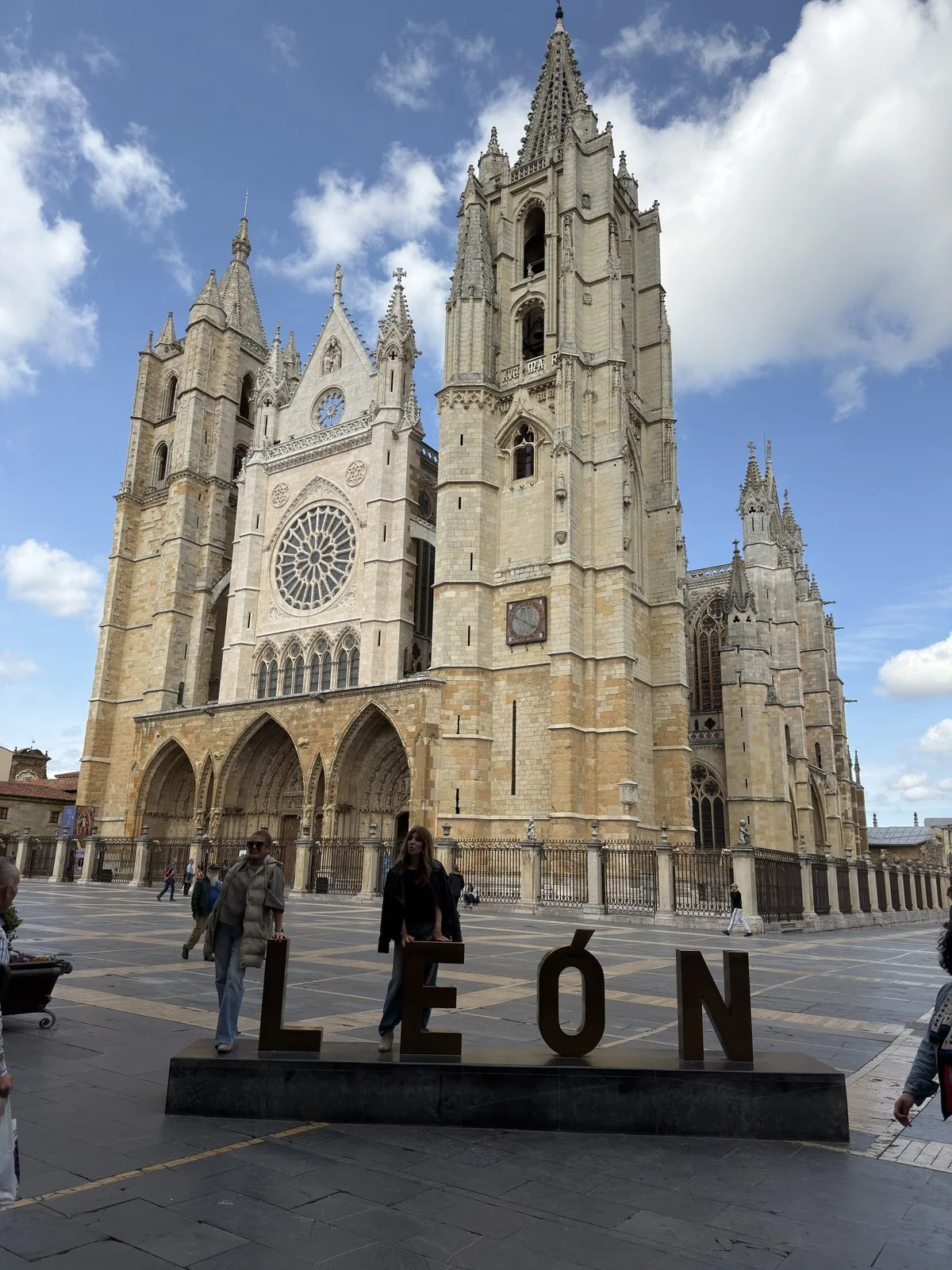
León is the first stop and also the brightest-looking city: the cathedral stands free on its square, two slender towers rise above the façade, and a large rose window sits in the middle. In the sun the stone looks almost yellow. A large-lettered sign with the city's name on the square is a popular photo spot.
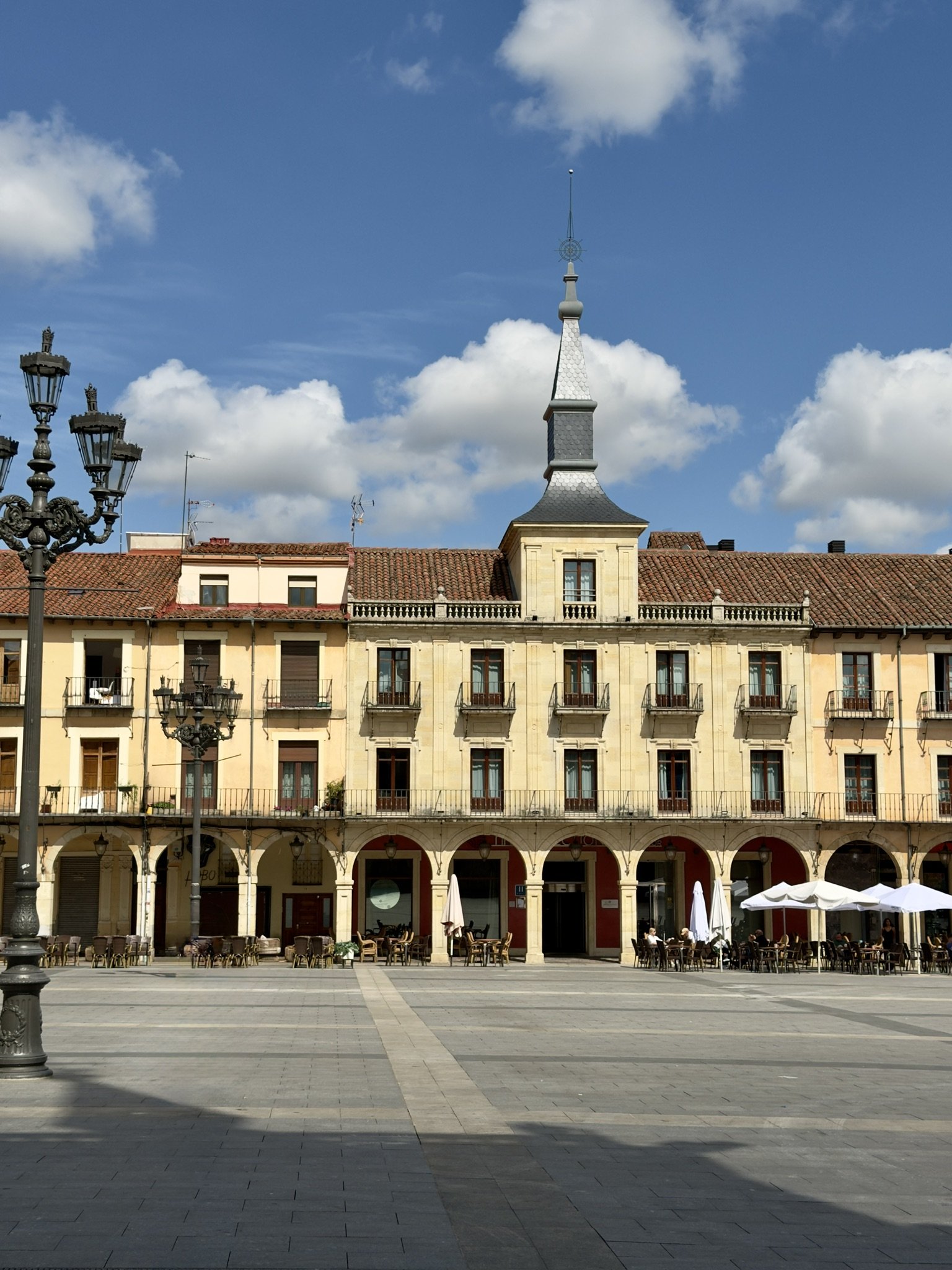
Not far away is a square with arcades and a town hall, where tables and parasols stand in front of the cafés. The pedestrian streets of the old town are busy, and the towers of other churches appear between the houses. Half a day to a full day is enough for León.
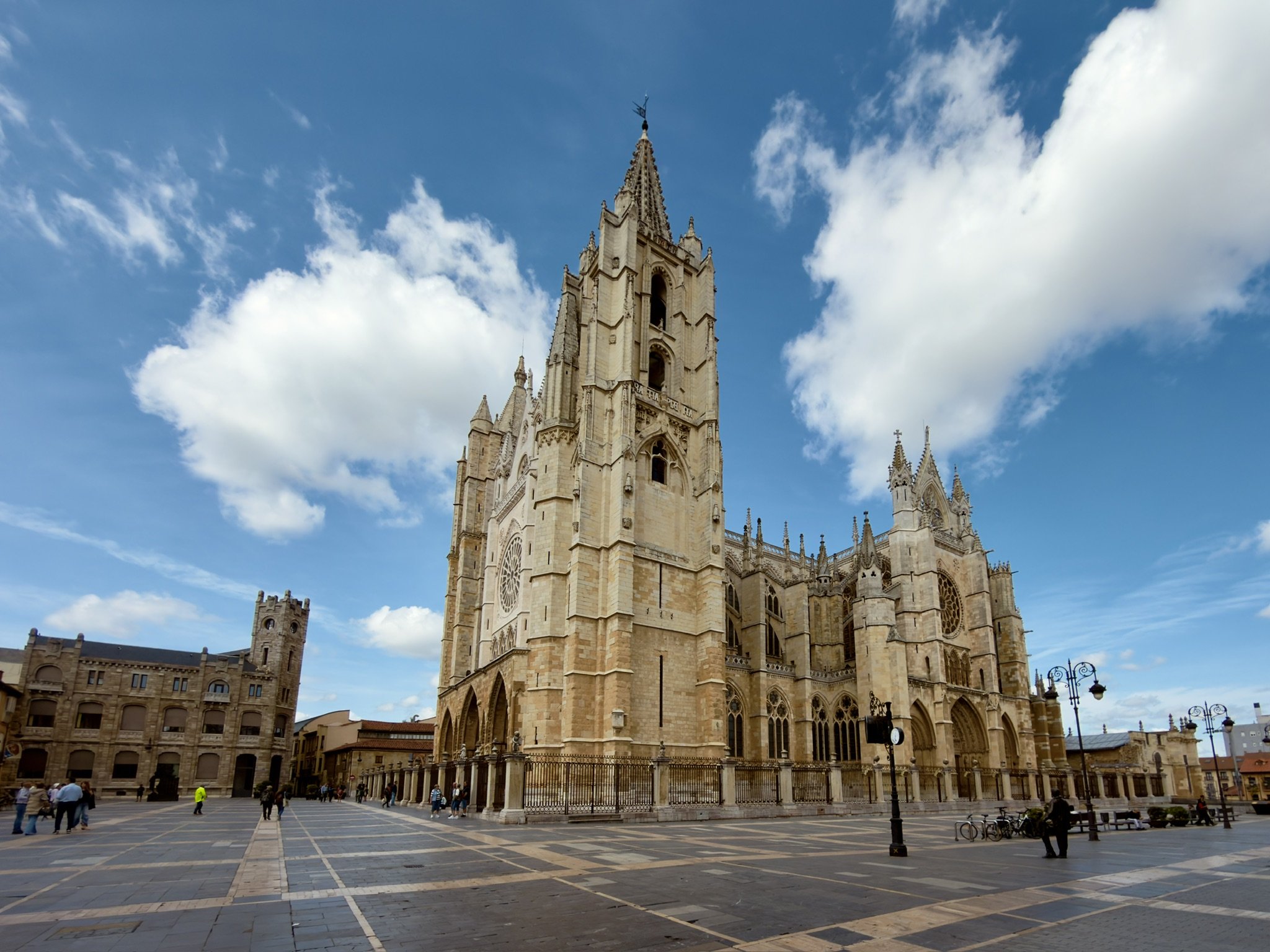
I stood in front of the west façade in the late afternoon. Santa María de Regla Cathedral is famous for its stained glass: 125 windows from the 13th to the 20th century, around 1,800 square metres of glass in total, plus three large rose windows. The rose window above the west portal is visible in the photo. León is regarded as the most French of the Spanish cathedrals.
Anyone with more time will find the Casa Botines on the Plaza de Santo Domingo. Antoni Gaudí designed the residential and commercial building in 1891, and it was built in 1892. Today it is a museum.
Salamanca: Plaza Mayor and two cathedrals
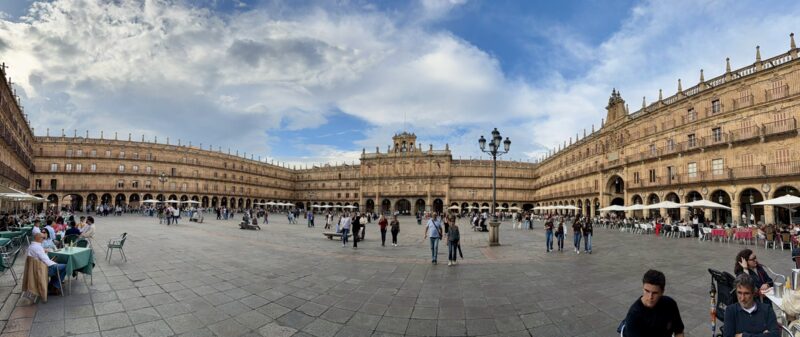
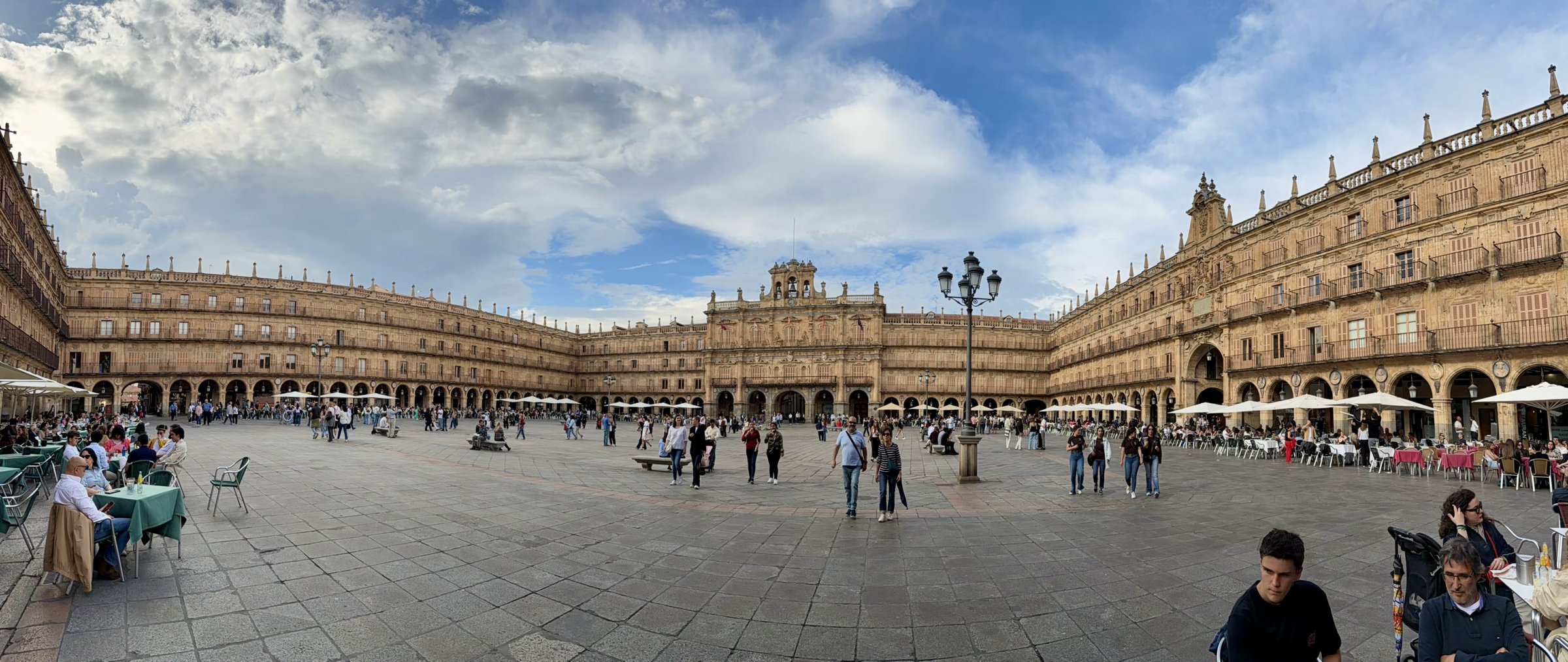
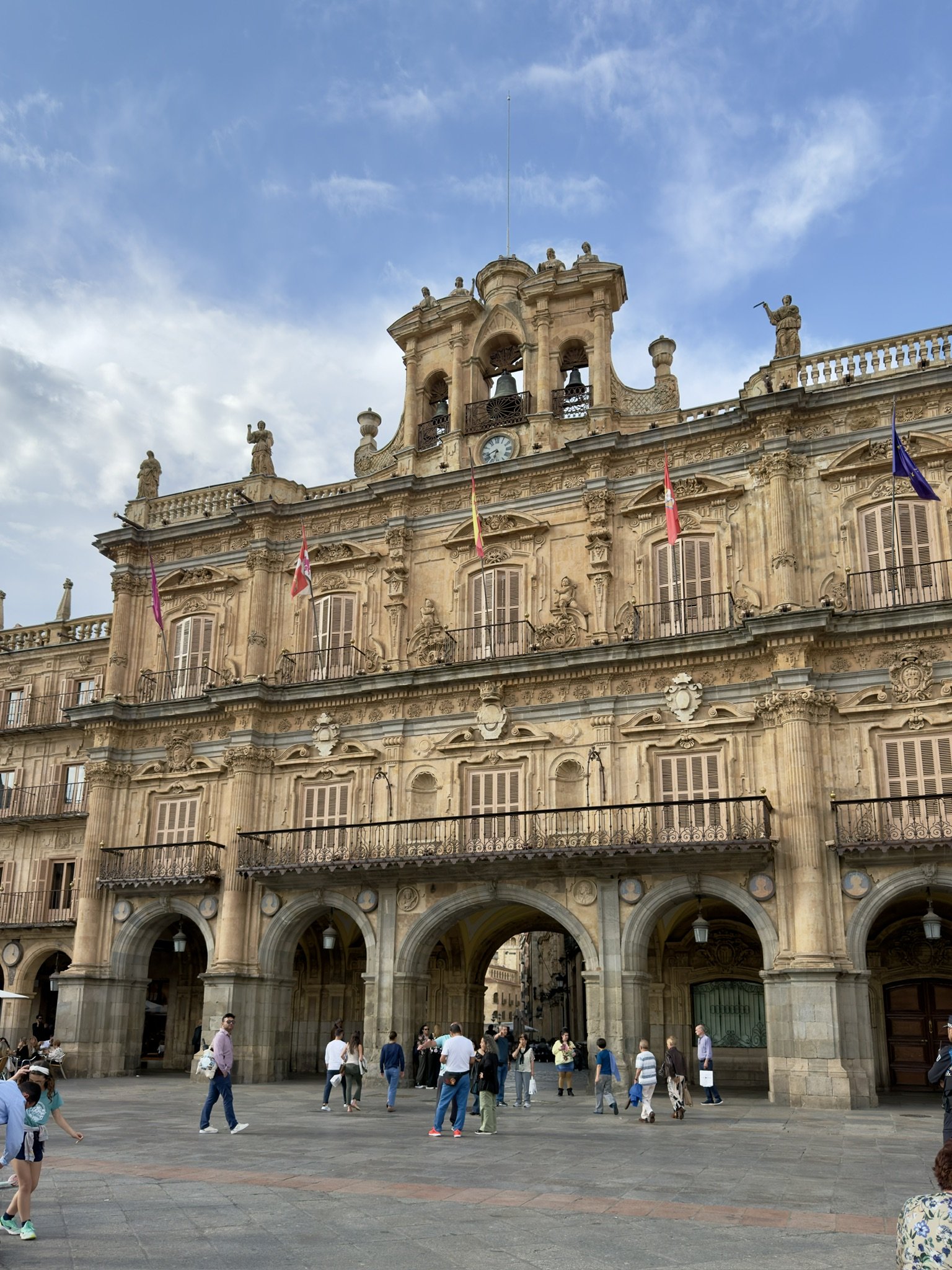
The Plaza Mayor of Salamanca was built from 1729 to 1755 and is regarded as one of the most important examples of Baroque in Spain. The old town has been on the UNESCO World Heritage list since 1988. Arcades with cafés run around the square, and on the town hall the ornate gable with bells stands out.
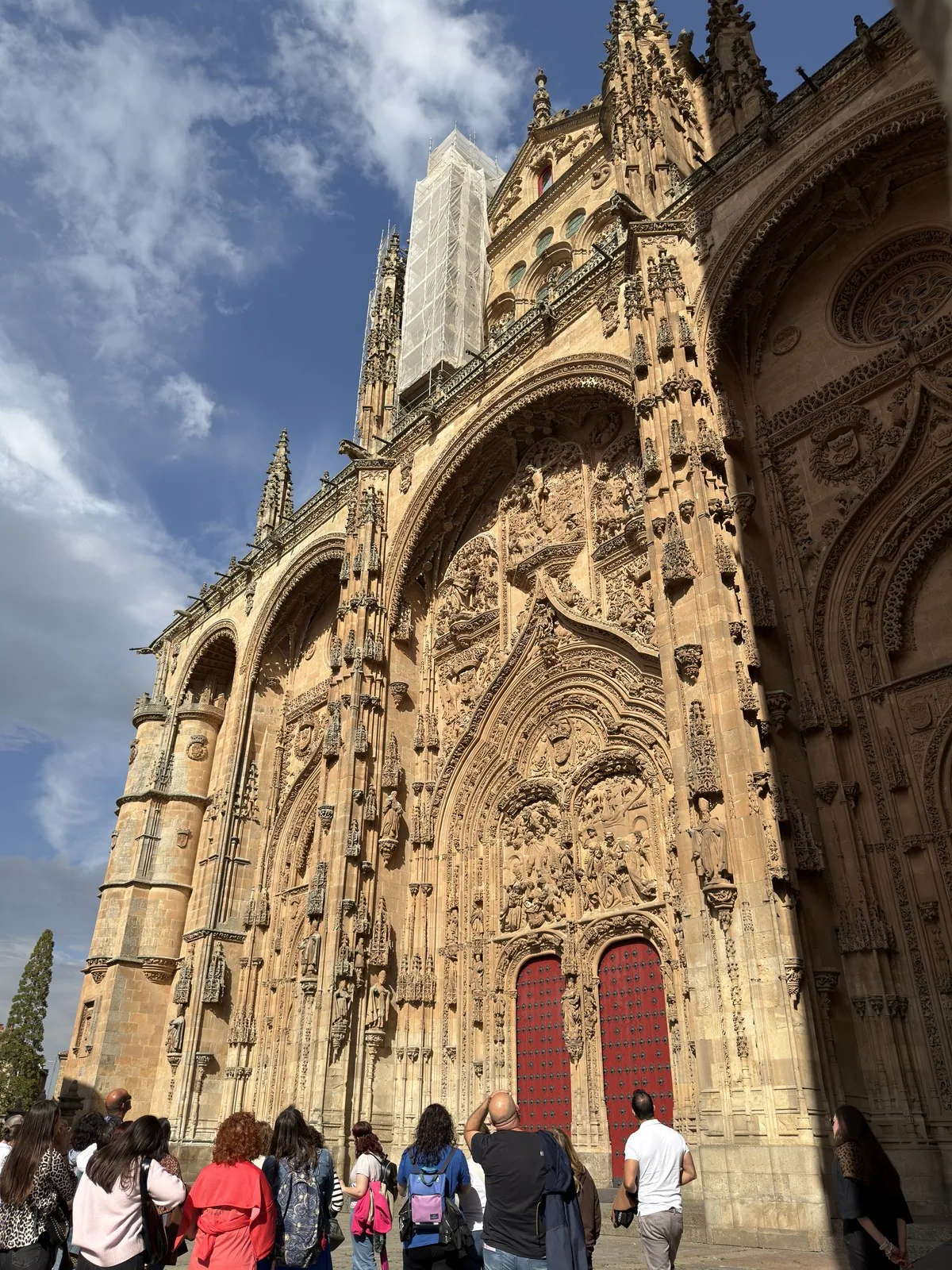
The two cathedrals stand only a few lanes away. The tower of the New Cathedral appears at the end of a narrow lane, at the portal of the New Cathedral the stone is decorated right up to the tips, and the domes can be seen from afar. On a walk through the old town, squares, façades of golden-yellow stone and small gardens alternate.
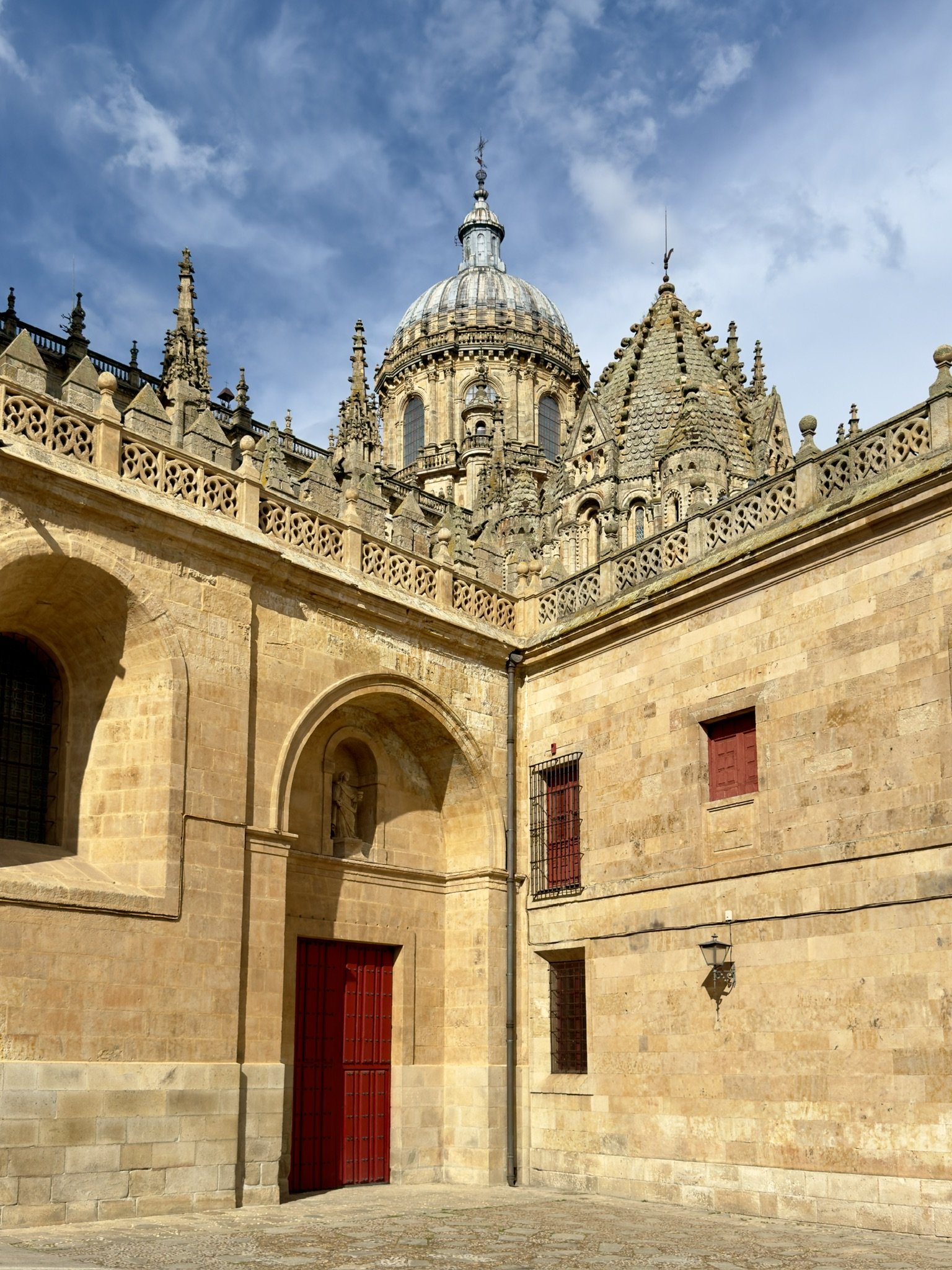
The Old Cathedral dates from the 12th century and the New Cathedral from the 16th century, and together they form one building complex. After the Lisbon earthquake, cracks appeared in the tower of the New Cathedral, so it was reinforced.
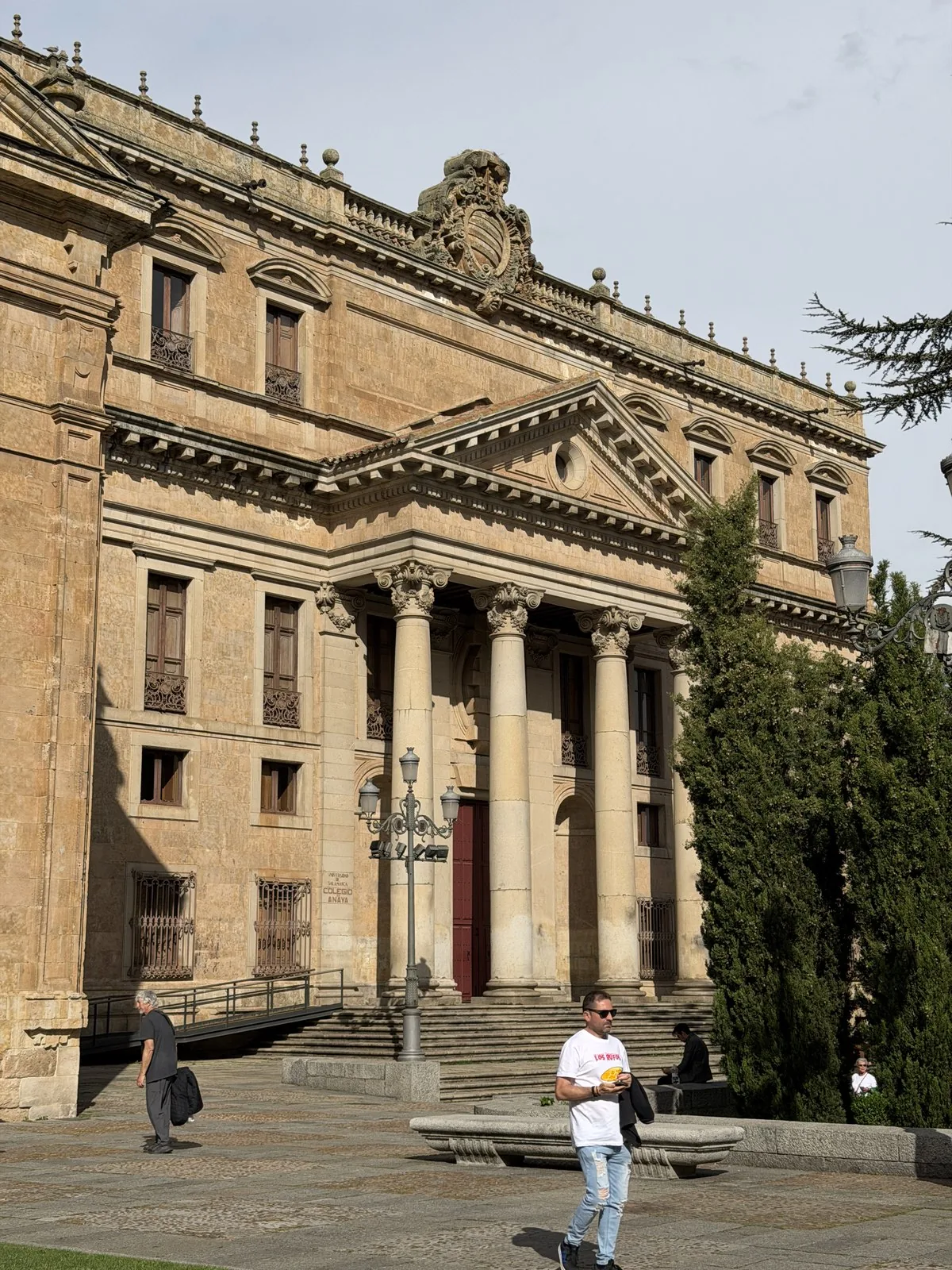
Salamanca is also home to the university, founded in 1218 and still the oldest in Spain. Its main portal in the Plateresque style is densely decorated with sculptures; on it, a frog, strictly speaking a toad, sits on a skull. It reminds students that a dissolute life is atoned for after death. I spent about an hour in the old town in the early evening, which is enough for the squares and façades.
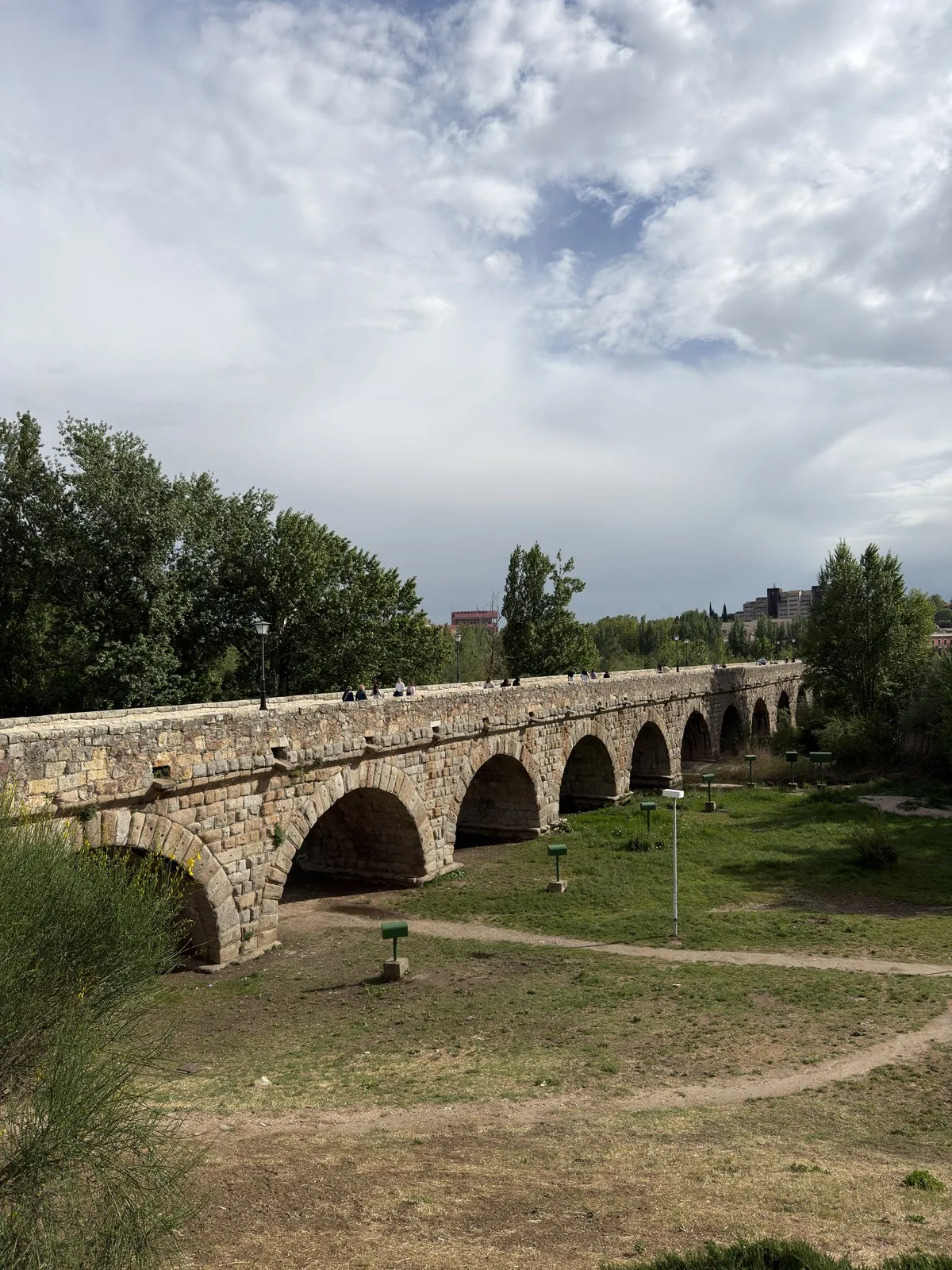
The Roman bridge crosses the River Tormes. Of its 26 arches, only the first 15 date from Roman times; the rest were renewed after flood damage. Pedestrians can still use it today.
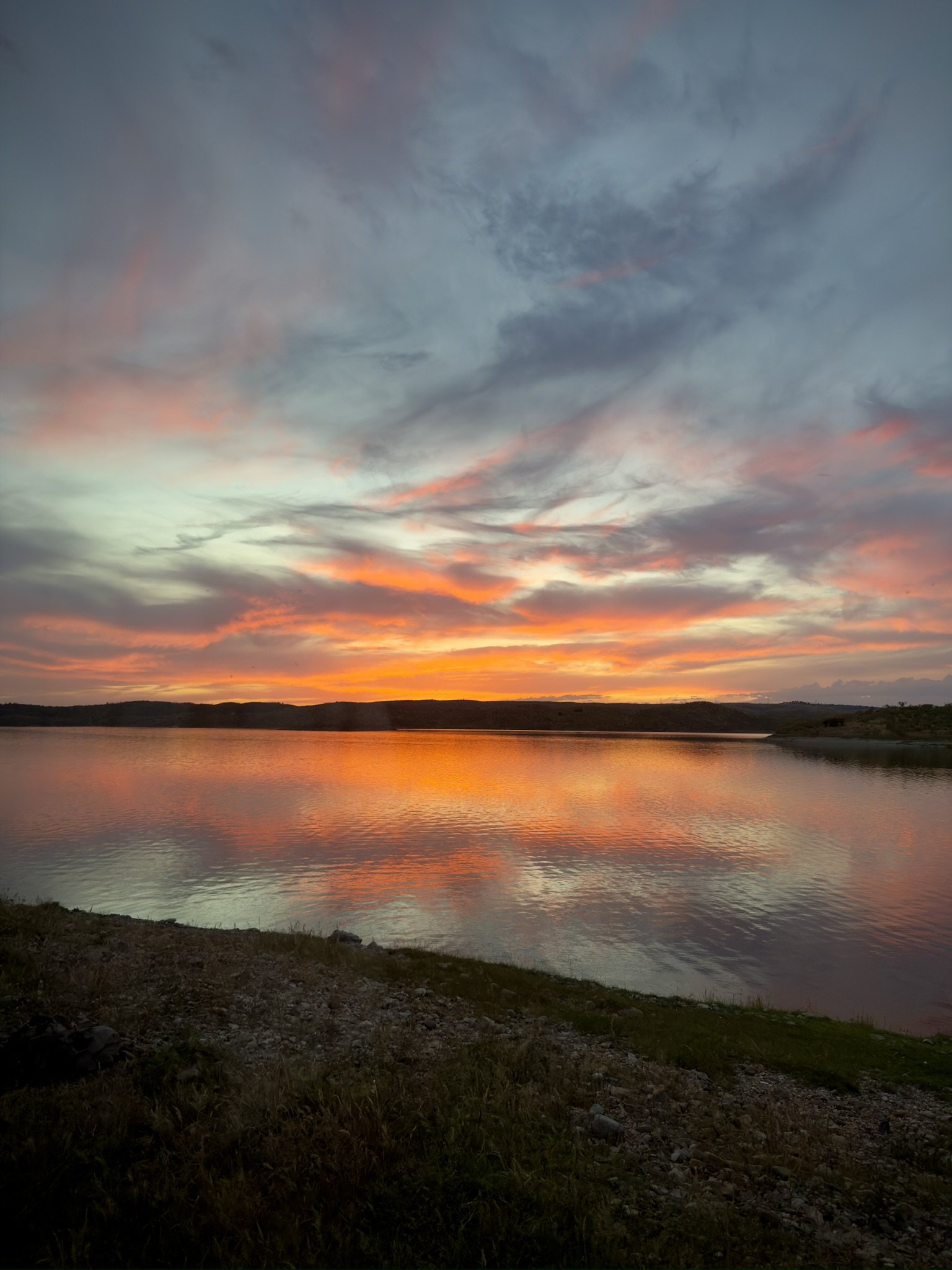
Stopover at the lake near Portezuelo
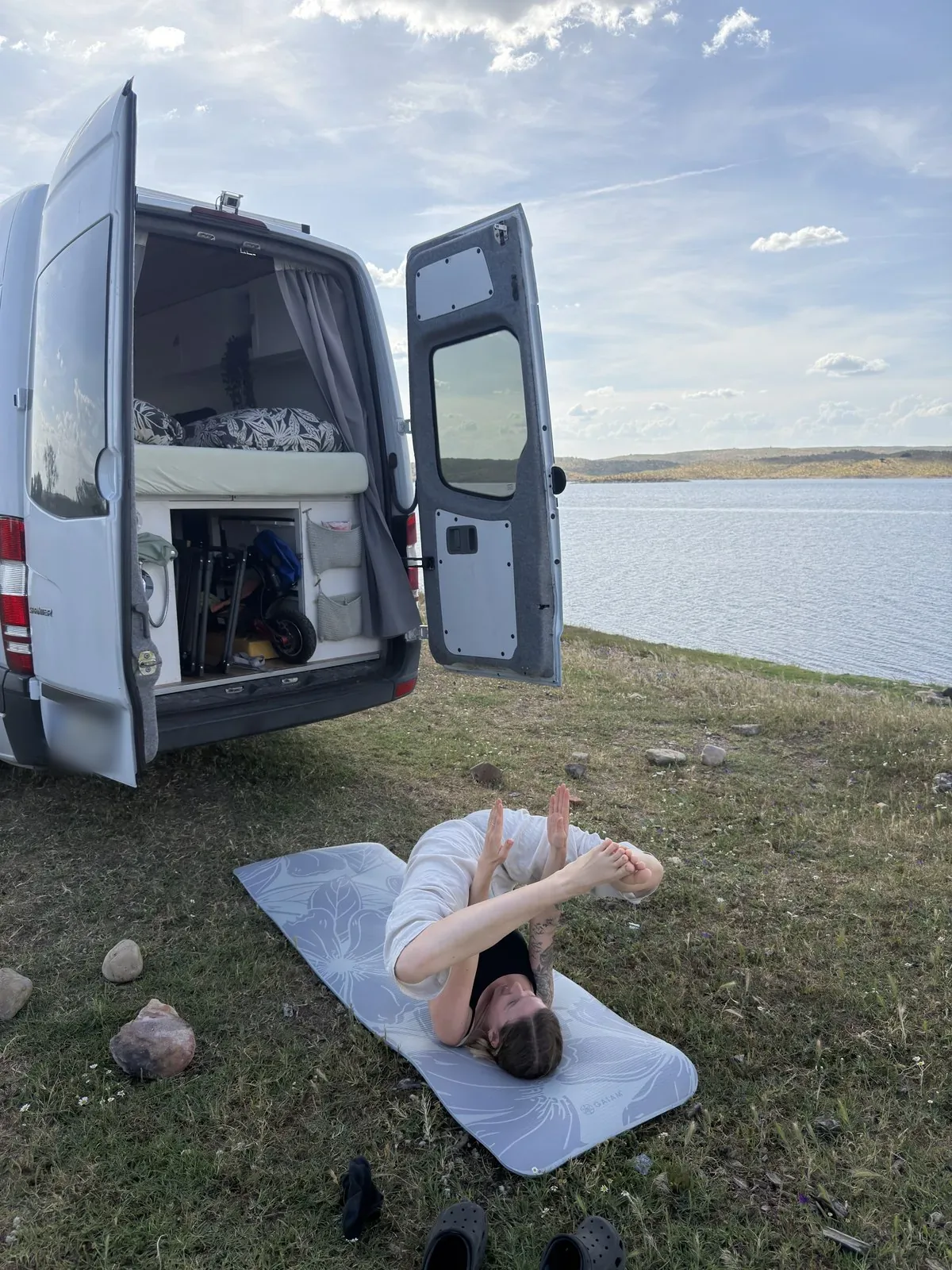
Between Salamanca and Cáceres I stayed for three days at a lake near Portezuelo. The place lies away from the cities, white cattle graze on the shore, and in the evening the sky above the water turns orange and red. After the city sightseeing this was the quiet part of the route. Which rules apply to staying by the water depends on the place. You should check that beforehand; tips on pitches in Spain can be found in the guide Motorhome Spain.
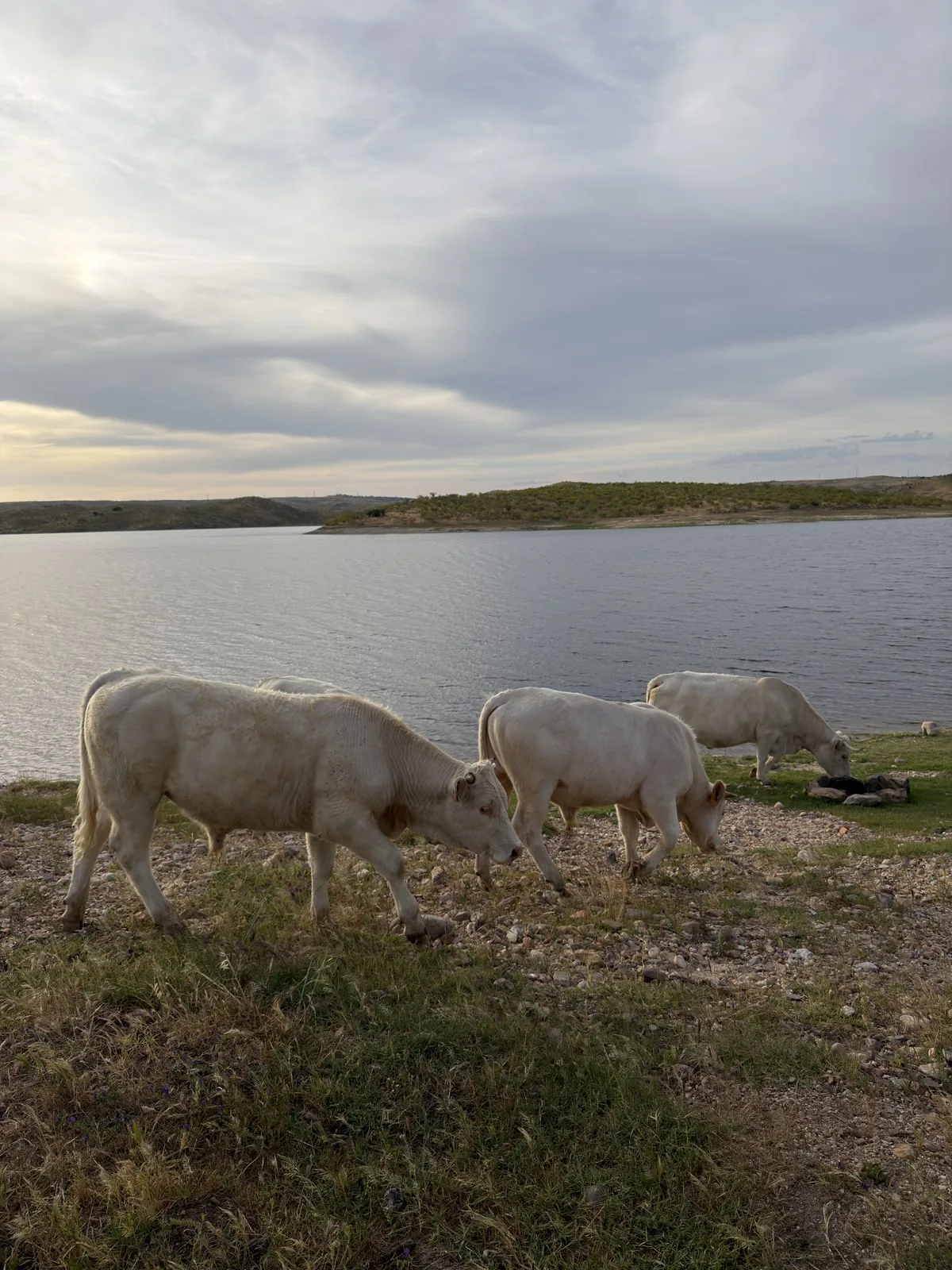
The landscape around the lake is dehesa: wide pasture with loosely scattered holm and cork oaks, as is common in Extremadura. In the evening the cattle came down to the water.
After the city sightseeing, a bit of exercise felt good: mat on the grass, doors open, water right in front of you. You don't need a better gym than that.
Cáceres: stone old town
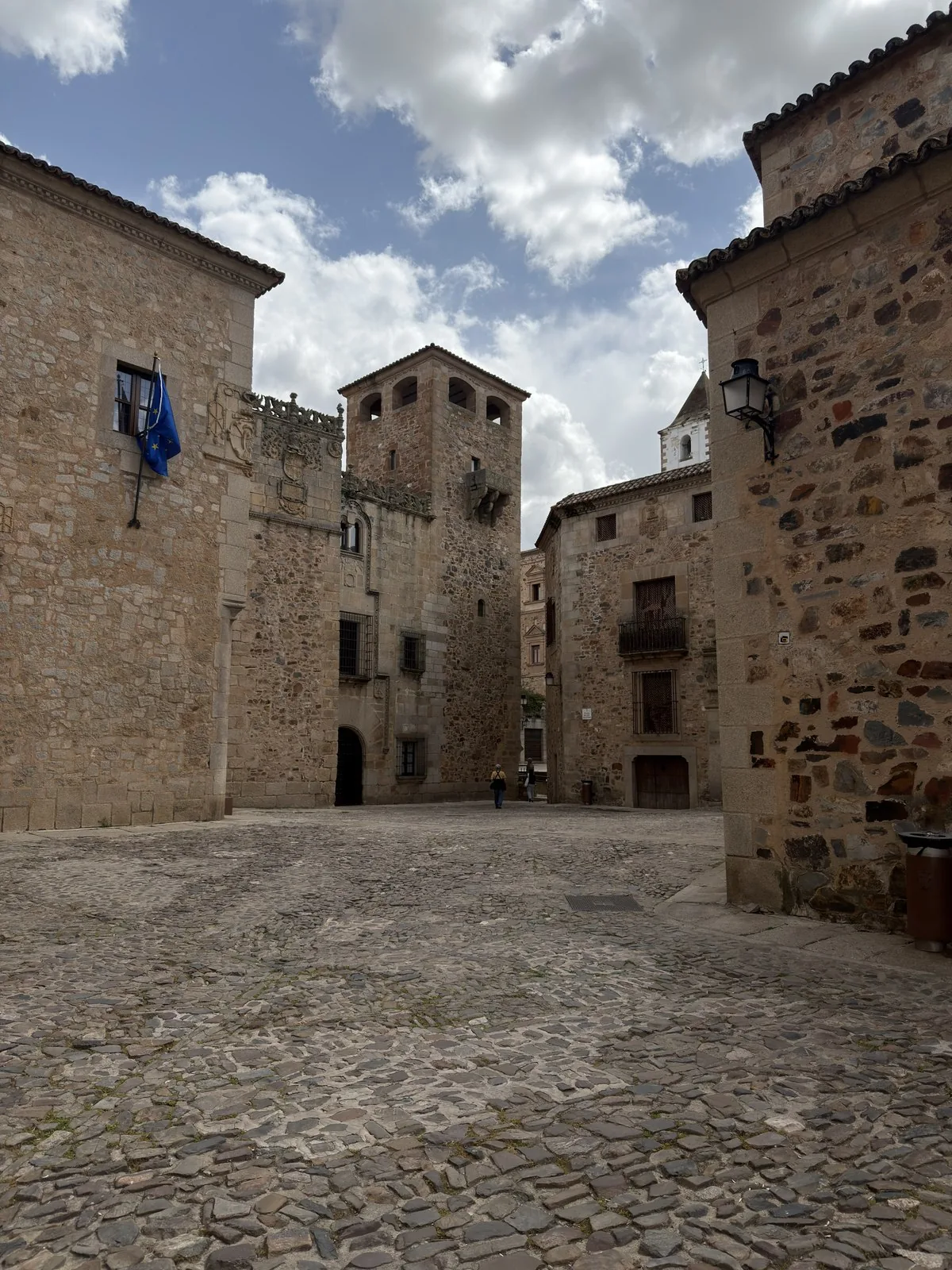
The old town of Cáceres has been on the UNESCO World Heritage list since 1986. Narrow lanes lead between houses and towers of dark stone to squares where white church towers stand out from the brown surroundings. The steps up to the square in front of the church with the two white towers are good for taking photos; inside a church in the city, ribbed vaults and red wall hangings shape the space.
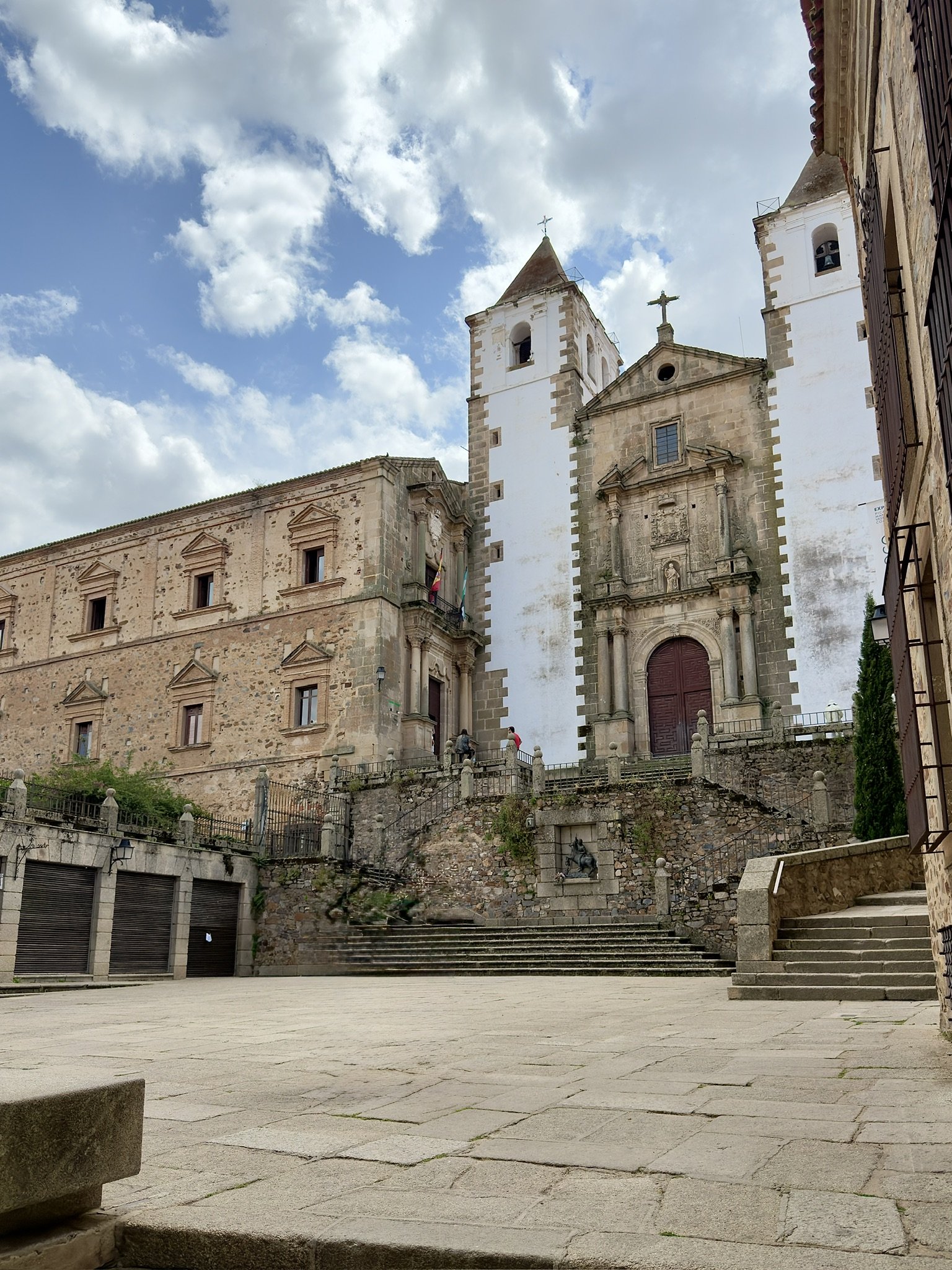
Cáceres lies on the Via de la Plata, the old north-south road that also served as a pilgrimage route to Santiago de Compostela in the Middle Ages. A wall divides the city into two zones; the part inside the walls is the historic old town. At the highest point there is a cistern cut into the rock from Moorish times, now part of the museum in the Palacio de las Veletas.
The church with the two white towers is San Francisco Javier, a Baroque Jesuit church built between 1698 and 1755. I was in the city in the afternoon.
Mérida: Temple of Diana and Roman Bridge
As Augusta Emerita, Mérida was the capital of the Roman province of Lusitania. The city's Archaeological Ensemble has been part of the UNESCO World Heritage since 1993. The temple named after the goddess Diana dates from the 1st century AD and was probably dedicated to the imperial cult; the name is an old misattribution. It stands in the middle of the city between modern houses.
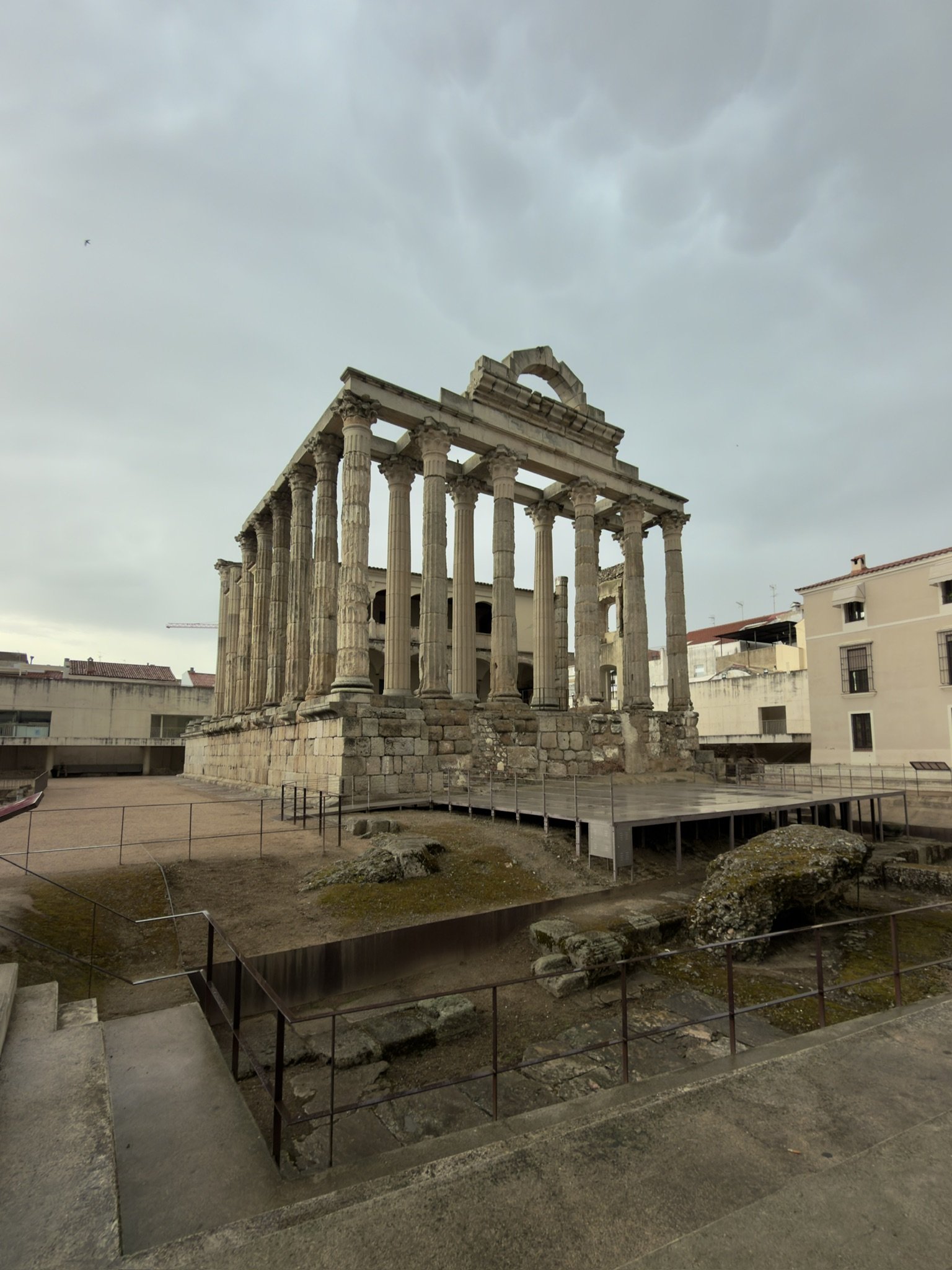
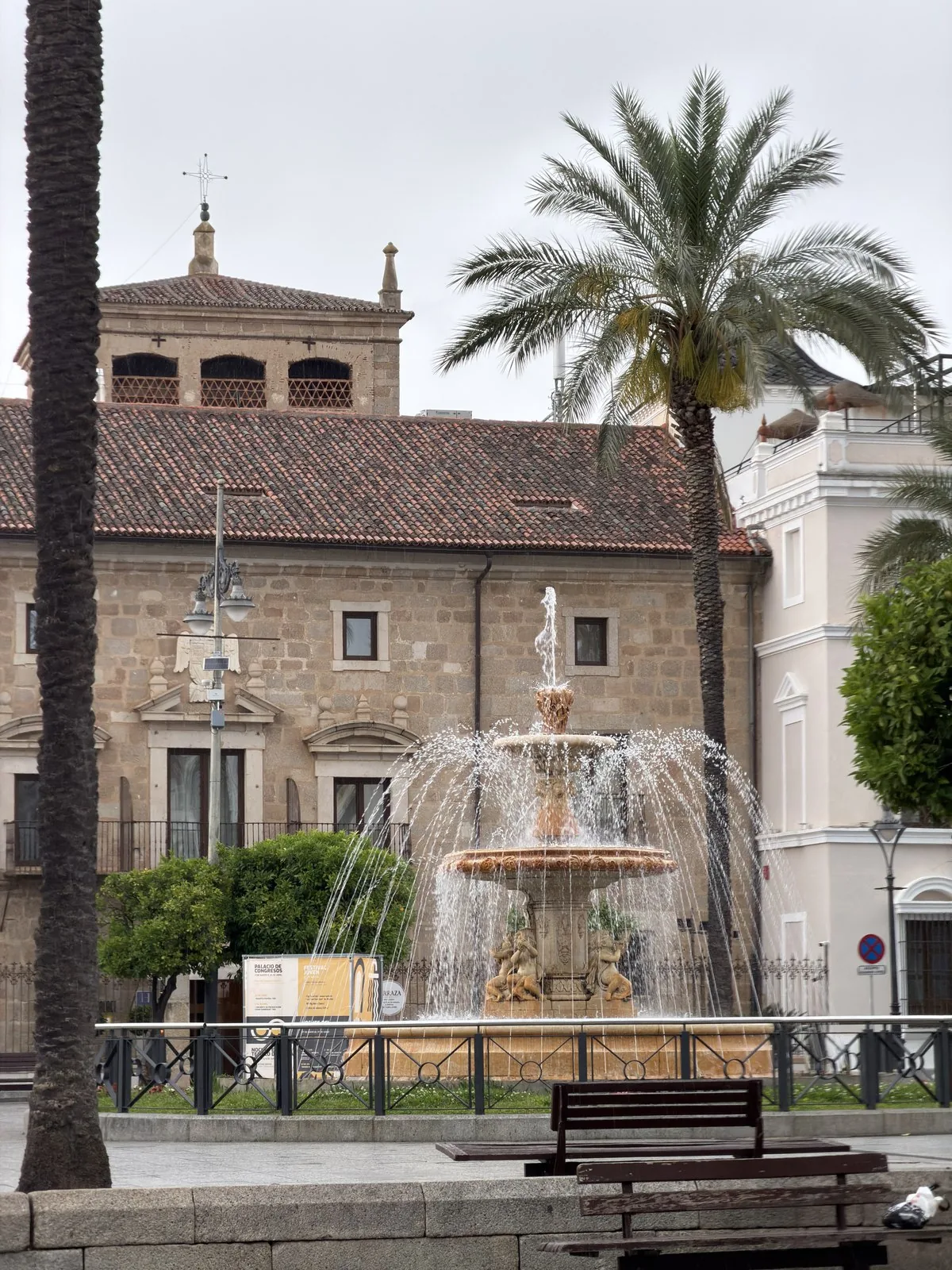
The Roman Bridge over the Guadiana has about 60 arches and is more than 700 metres long. At the roundabout not far from the city wall stands a statue of the Capitoline Wolf, and a plaque names the city of Rome as the donor. The city also has squares with palm trees and fountains. On this day the sky was cloudy and the ground was wet.
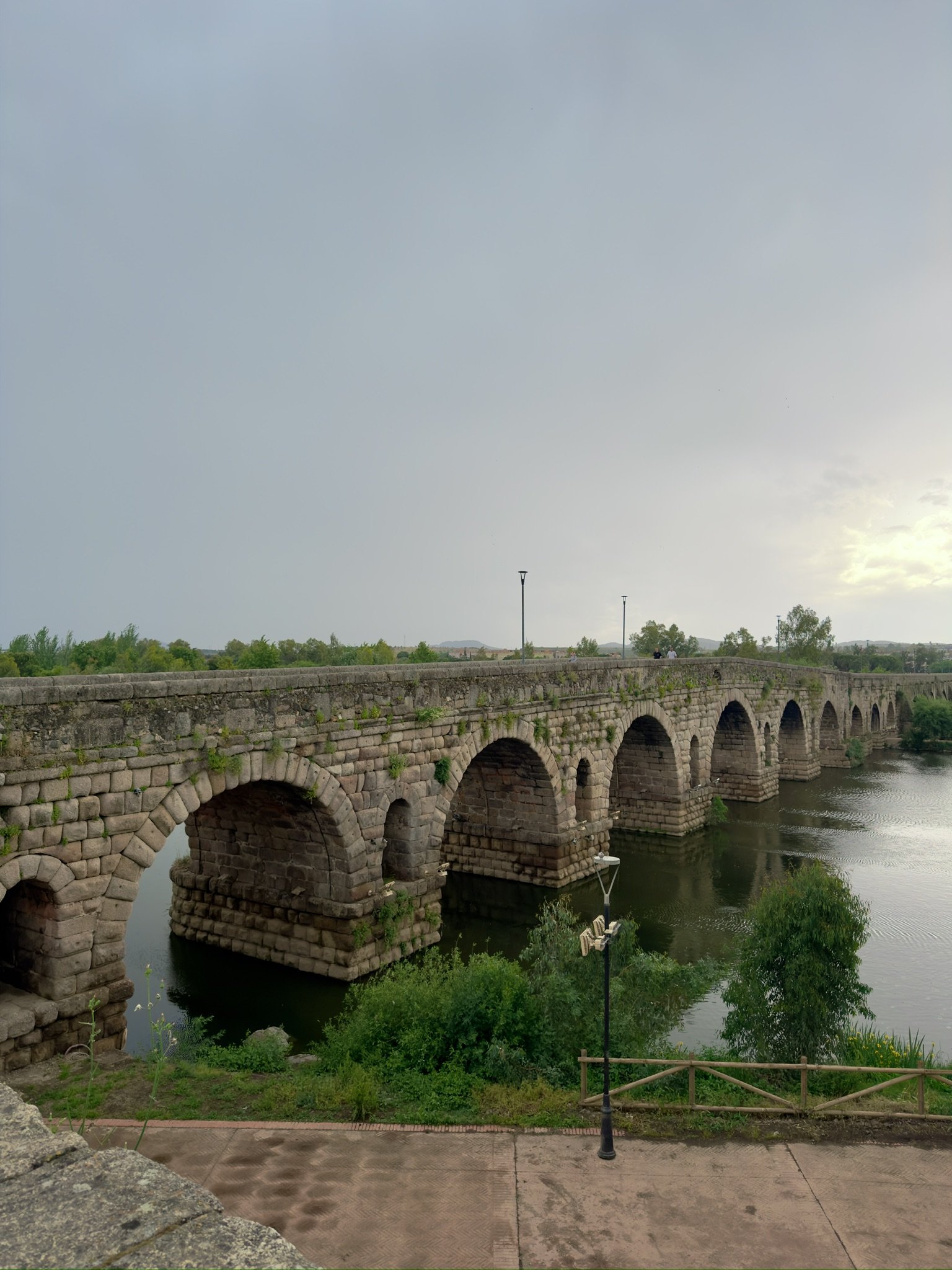
Mérida was founded in 25 BC by Emperor Augustus as a colony for veterans of the Roman legions. Later the Visigoths made the city the capital of their kingdom. The Roman buildings also include the theatre, where a festival has taken place every summer since 1933, and the Los Milagros aqueduct.
Western Spain by campervan: practicalities
With my converted Sprinter (model L3H2, about 2.80 metres high with the roof window) I do not fit into normal car parks. In the old towns of León, Salamanca, Cáceres and Mérida that means: park on the edge of town and walk the rest. The old towns are easy to explore on foot. Background on the vehicle, fuel consumption and preparation is in the campervan travel report on the first leg.
Five days through western Spain: this is what my route looked like
- Day 1: León with the cathedral, the square and pedestrian streets
- Day 2: Salamanca with Plaza Mayor and both cathedrals, then on to the lake near Portezuelo
- Days 3 and 4: stop at the lake near Portezuelo
- Day 5: Cáceres, then Mérida with the Temple of Diana and the Roman Bridge
Five days are enough for a first overview. If you want to see each place at a relaxed pace, plan more time for Salamanca and Mérida. The whole route from Luxembourg to the Algarve is in the overview of the campervan road trip in spring 2026.
FAQ
Which western Spain sights should you include on a road trip?
León with its cathedral, Salamanca with Plaza Mayor and both cathedrals, Cáceres with its old town and Mérida with Temple of Diana and Roman Bridge. All four lie in order along a north-south route.
How many days do you need for León, Salamanca, Cáceres and Mérida?
Five days are enough for a first impression if you spend half a day to a full day in each city. If you want to spend more time in one place, plan extra days for Salamanca and Mérida.
Which places in western Spain are UNESCO World Heritage sites?
The old town of Salamanca (since 1988), the old town of Cáceres (since 1986) and the Archaeological Ensemble of Mérida (since 1993).
When was the Plaza Mayor in Salamanca built?
From 1729 to 1755. It is regarded as one of the most important examples of Baroque in Spain.
What is special about León Cathedral?
Its stained glass: 125 windows with around 1,800 square metres of glass, plus three large rose windows. León is regarded as the most French of the Spanish cathedrals.
How old is the University of Salamanca?
It was founded in 1218 and is the oldest university in Spain that still exists today.
Does a campervan fit into the old towns of western Spain?
Driving yes, parking in car parks mostly no: at about 2.80 metres high, a Sprinter L3H2 is too tall for typical car parks. Park on the edge of town and explore the old town on foot.
New places, drone footage, and behind-the-scenes looks.

Max Haase
Travel Content Creator · Drone Photographer · Visual Storyteller
Since over 10 years I have been a professional travel creator with over 4 million followers; I specialise in high-end tourism board collaborations and visual travel stories.
 German
 English
 French
 Spanish
 Italian
 Japanese
 Chinese
 Dutch
 Portuguese