
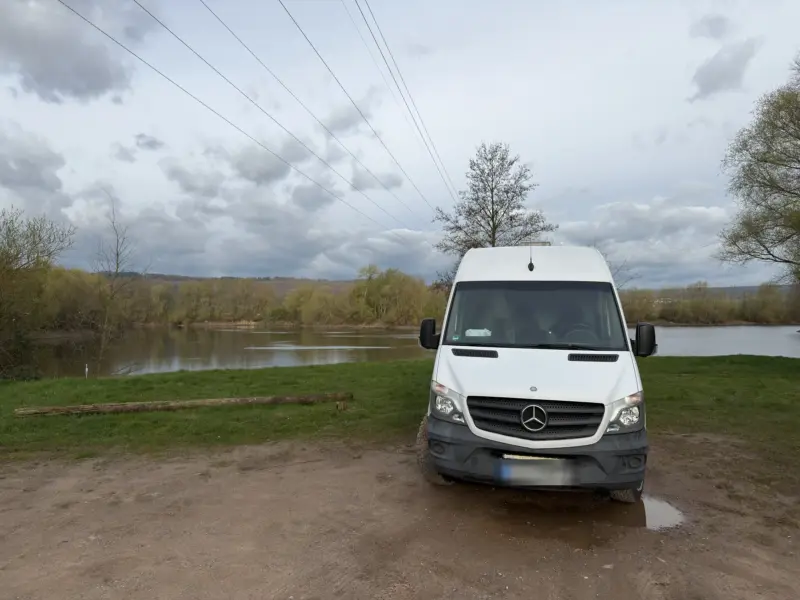
Motorhome travelogue: Departure south to Aachen
This campervan travelogue begins with a rather unspectacular moment: I'm sitting in the camper, the engine is running, and it occurs to me that I've forgotten where I'm actually going. Not the destination—that's certain, somewhere in the south, probably Portugal. But today. The next four hours. In the weeks prior, I had checked every screw on the vehicle and hadn't spent a single minute planning a route.
In this motorhome travelogue, I'll share the first leg of my journey across Germany—from the Harz Mountains to the border, four days, approximately 450 kilometers. I'll describe what I learned, how much it cost, and the three mistakes I made on the first day. This is the first in a series that will continue towards Portugal.
- Route: Four stages from east to west — Blankenburg in the Harz Mountains, Holzminden on the Weser River, Paderborn, Düsseldorf, Aachen. Approximately 450 kilometers to just before the Belgian border.
- Transport: Converted Mercedes Sprinter, self-sufficient with solar panels and on-board battery. Realistic fuel consumption: around 13 liters of diesel per 100 kilometers, not the 7.5 liters stated in the brochure.
- Best time to travel: April is the underrated season. Half-empty campsites, pre-summer surcharges of 30 to 50 percent — but you need a heater that actually works.
- Highlights: The Devil's Wall in the morning mist, a night right on the banks of the Weser, three hares with three ears in the Paderborn cloister, the Rhine Tower as a luminous clock and a dome in Aachen that no one has surpassed for 400 years.
- Total costs: around €230 for four days. Over half of that was diesel — April 2026 was the most expensive month for fuel Germany has ever seen.
The departure: why I simply set off
There are two types of campervan travelers. Some know on Tuesday where they'll be on Saturday. Others head in a certain direction and let the evening decide. I always wanted to belong to the first group, but ended up in the second—because planning felt like I was ruining the trip for myself.
The first evening turned out to be a real learning experience. I drove too far, it got dark, and I ended up looking for a campsite somewhere in the Harz Mountains that I hadn't researched beforehand. I found it in Blankenburg: six pitches, electricity, right next to the castle gardens. Small, unpretentious, with a view of a baroque castle. And two kilometers further on, the Teufelsmauer (Devil's Wall) stretches across the landscape—a sandstone cliff face that runs for over 20 kilometers eastward, as if someone had driven a wall into the ground and cleared away the rest of the surrounding landscape.
I didn't really see it clearly that evening. I cooked, ate very little, and went to bed early. The first day of a long journey isn't the best. It's the most exhausting.
My camper: a Sprinter that fits anywhere.
I drive a converted Mercedes Sprinter. Panel van, no pop-top roof, no alcove. The difference to a classic motorhome is practical, not aesthetic: I don't stand out in a city, I can navigate narrow village streets, and I can drive on country lanes where a semi-integrated motorhome would have long since gotten stuck. The trade-off is space. Everything that comes along needs a fixed place—otherwise, it'll be flying around the van at the first roundabout.
What a panel van not You should know this beforehand: I can't get into a normal parking garage. My Sprinter is an L3H2; with the sunroof, it measures around 2.80 meters. Typical parking garage entrances are between 2.00 and 2.20 meters wide, rarely exceeding 2.50 meters. In practice, this means parking on the outskirts of the city and covering the last few kilometers on foot, by bike, or by bus. If you prepare for this, you won't lose anything. If you forget, you'll learn the hard way at the barrier—in reverse, with an audience.
One figure you should know before you start calculating: Mercedes states 7.5 liters per 100 kilometers for the Sprinter on the highway. A converted camper van, however, will realistically consume around 13 liters. The conversion, the full water tank, and the payload add several hundred kilograms to the axles, and the diesel engine needs to compensate for that. Expect around 13 liters per 100 kilometers, and you won't be disappointed.
Becoming self-sufficient is the decision that changes everything.
Solar panels on the roof, a decent leisure battery, fresh water, and a toilet system. With that, you can stay put for two to three days without being hooked up to anything. That sounds technical, but that's the real freedom: you're no longer looking for a campsite, you're looking for a beautiful spot. Anyone considering this conversion can find the details in my [article/document/etc.]. Van conversion guide — this is about what comes next.
Before departure: the checklist I actually work through.
A motorhome checklist isn't just paperwork. It's your insurance against that moment when you're 300 kilometers away and realize something's missing. It takes me a good hour to create. The item almost everyone forgets is on the first line.
| block | What is being checked |
|---|---|
| Tires | Air pressure on the packed Adjust the tire pressure, not the empty weight. A conversion can easily add 400 to 600 kilos. Too little pressure wastes fuel, reduces driving stability, and in the worst case, can damage a tire. |
| vehicle | Oil level, coolant level, windshield washer fluid level, tire tread depth, spare tire or tire repair kit |
| papers | Vehicle registration document, driver's license, green card, breakdown cover, international health insurance |
| Technology | Onboard battery fully charged, solar charge controller checked, gas cylinders full and leak-free, water tank rinsed, refrigerator tested in both operating modes |
| Security | Warning triangle, vests for everyone, first-aid kit with valid expiry date, fire extinguisher, gas detector, spare fuses |
Motorhome packing list: less, but better
Every campervan packing list online lists two hundred items and is designed for a two-week vacation. That doesn't work for a trip without an end date. You're not packing for a specific period, but for a lifetime—and that paradoxically means packing less.
After a week, I've unpacked a folding table, two books, and half the kitchen equipment. All things I considered essential when packing, but haven't touched once since. In the end, four categories really matter:
Water and electricity. Hose with universal adapter, extension cable with CEE plug plus Schuko adapter. Without this adapter, you'd be stuck halfway across the continent in front of a socket your cable won't fit into. This isn't a hypothetical problem.
Kitchen, radically reduced. Two pots, a frying pan, a good knife, a cutting board, four plates. Stackable, nothing made of glass. A 12-volt kettle saves gas, and gas is the most difficult resource to refill abroad.
Tool. Screwdriver, pliers, cable ties, duct tape, spare fuses — and a multimeter. That sounds like overkill until the car battery starts acting up for the first time and you want to know whether it's the regulator or the battery.
Clothing in three layers. Functional underwear, fleece, hardshell. With the same wardrobe, you can cover a cold April morning in the Harz Mountains and a July afternoon in Portugal.
Stage 1 — to the Weser River: the first night that feels right
The morning after the first night is the most honest moment of a campervan trip. It's cold, the windows are fogged up on the inside, and for a second you don't quite know where you are. Then you remember that this was exactly the plan. I made coffee, admired the Devil's Wall in the morning light, and continued driving west.
The Weser Uplands slow things down. The roads become narrower, the villages have half-timbered houses instead of front gardens, and every few kilometers there's a building that looks like it's from another century—light sandstone facades, curved gables, bay windows. This is Weser Renaissance, and here you're not just passing a tourist attraction, but driving through an entire architectural era.
In the evening I was at Stahler Ufer in Holzminden, right on the Weser River. There are 150 pitches, 25 of which are directly on the water. Electricity, water, waste disposal, sanitary facilities, and fresh bread rolls in the morning are all available. The price is between twelve and eighteen euros. The town center is a five-minute walk away, and the Weser Cycle Path runs right past the campsite.
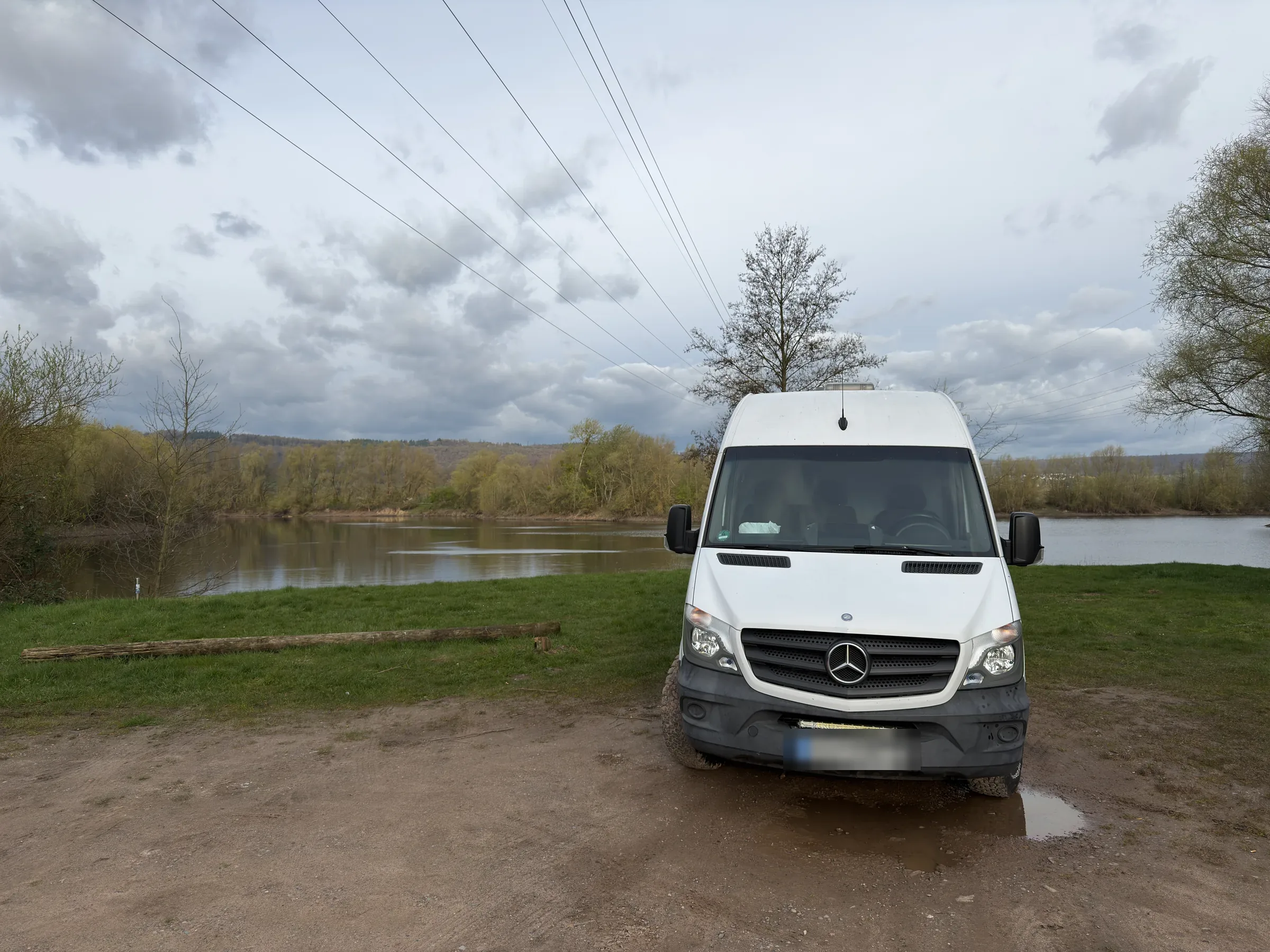
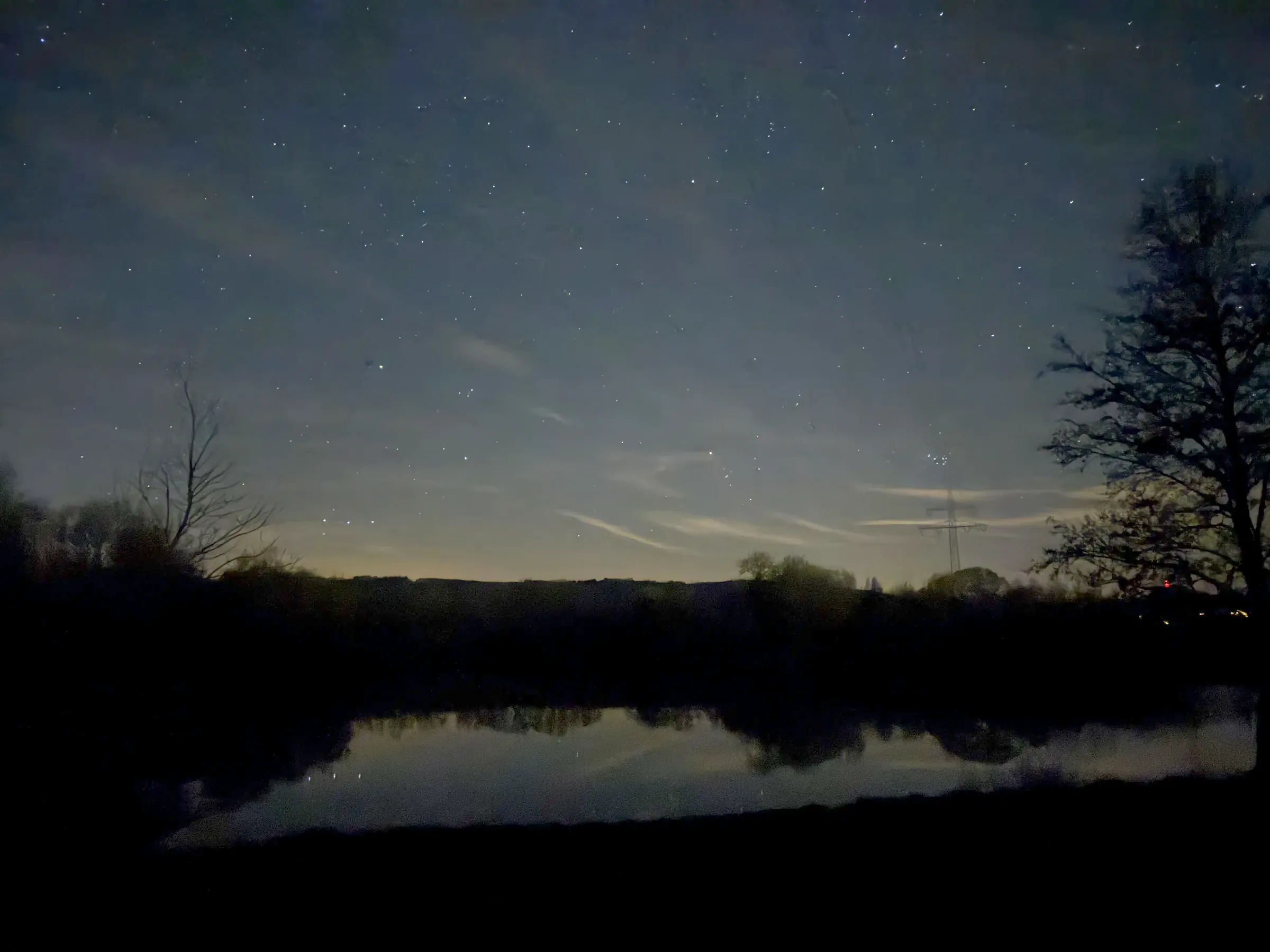
And that was the moment the journey began. Not when you set off, but right here. You hear the water at night, the first cyclists roll by in the morning, and the air above the river is cooler than inside the vehicle. It's not the spectacular views that make van life what it is. It's the background noise of places you would otherwise have driven right past.
The Weser Cycle Path, by the way, if you're towing bikes on the back: 520 kilometers, practically without any hills, repeatedly voted Germany's most popular long-distance cycle path. That's the day when the bikes will be worth it.
Stage 2 — Paderborn: three hares, three ears
I almost skipped Paderborn. Seventy kilometers, a medium-sized city, it looked like just a stopover on the map. That was the second mistake of this trip.
Water springs from the ground next to the cathedral. Not just a trickle, but around two hundred springs in a very small area – the most powerful spring area in Germany. From these springs emerges the Pader, which, at 4.6 kilometers, is the shortest river in the country. You are standing at the point where an entire river begins and practically ends immediately. Above the springs stands the cathedral, 93 meters high, and if you stand directly beneath the west tower and look up, it appears as a single block of sandstone growing out of the ground.
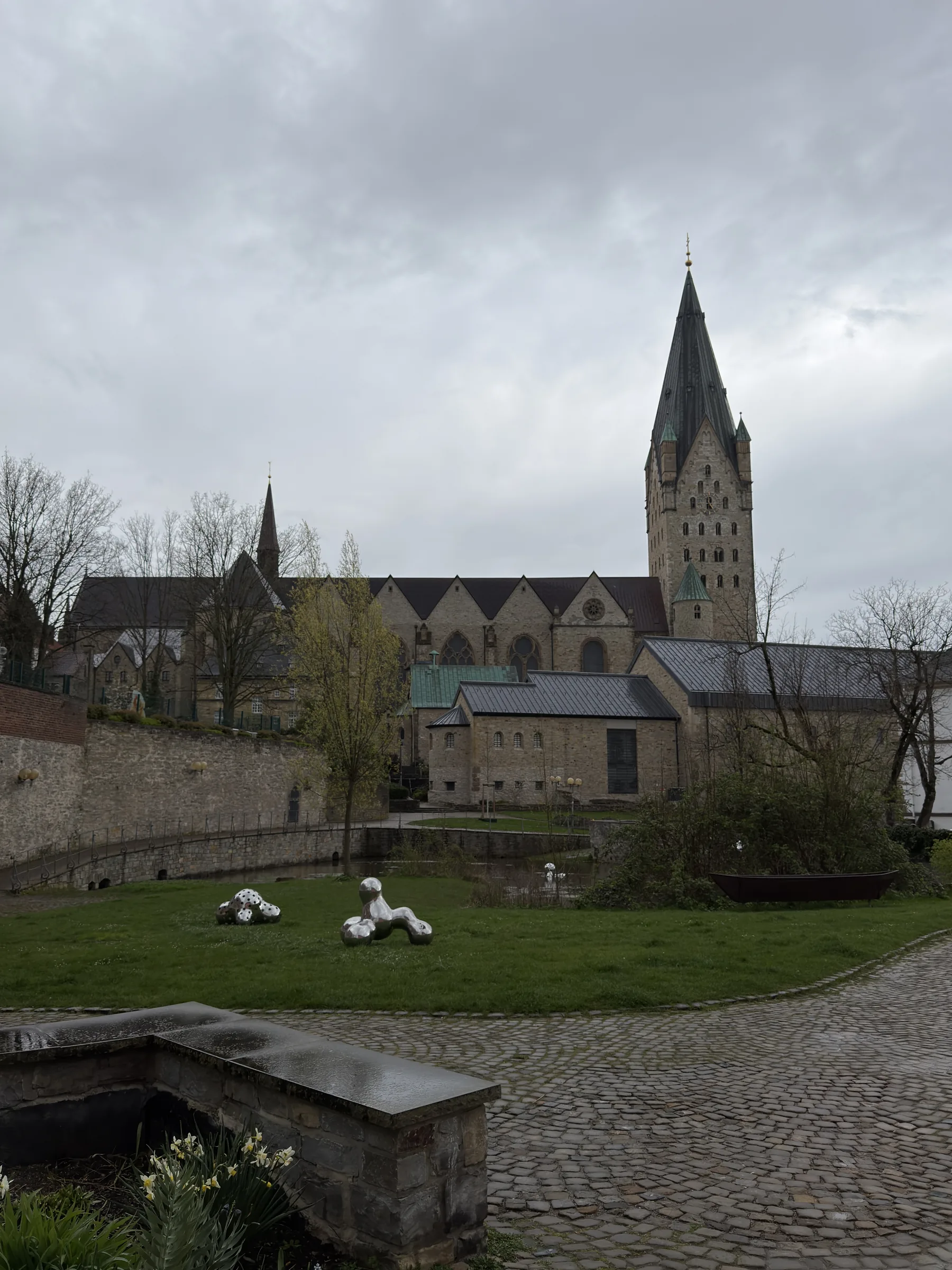
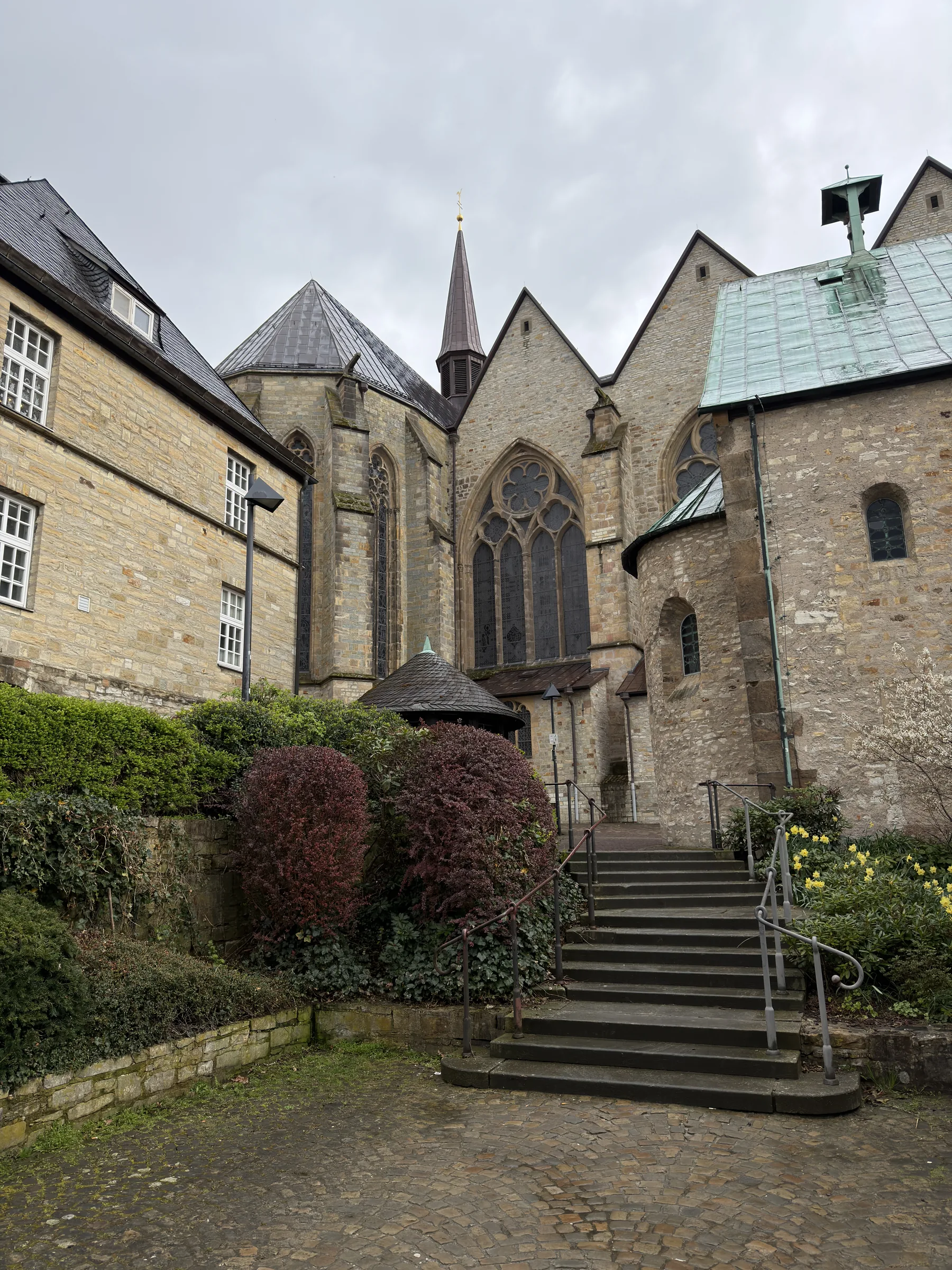
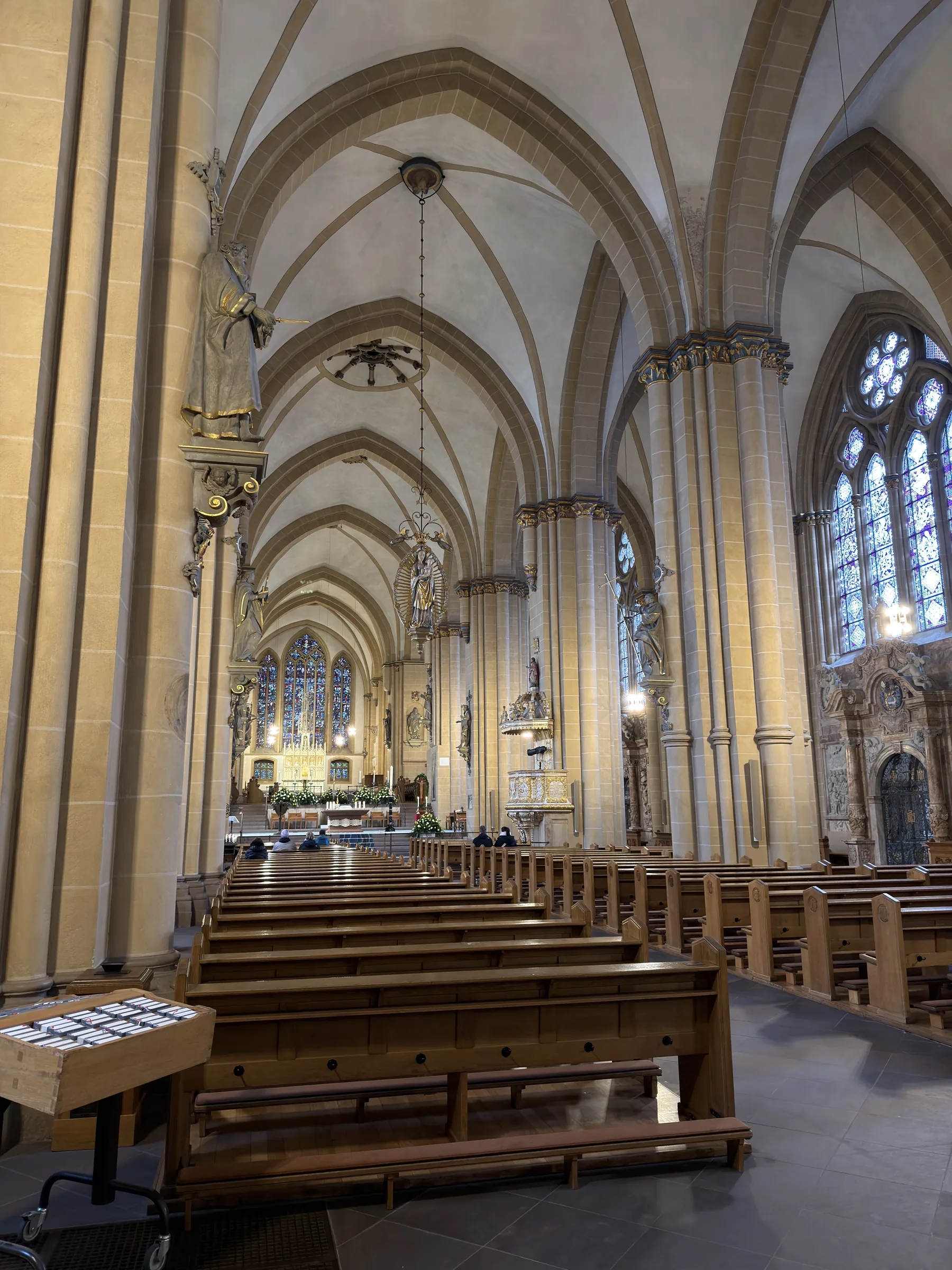
The best thing about Paderborn, however, is a detail you almost miss. In the cloister, on the north side of the inner courtyard, sits a small stone carving: three leaping hares in a circle. Each has two ears. Yet only three are visible—because each ear shares two hares. Someone carved this into sandstone five hundred years ago, and it still works. I stood in front of it for a while and counted. It's accurate.
Stage 3 — the long day on the Rhine
The third day was the longest. 180 kilometers, and the landscape completely changed. East Westphalia is green, hilly, and empty. From Hamm onwards, it becomes flatter, from Dortmund narrower, and at some point, you're no longer driving through countryside, but through an unbroken chain of towns that blend into one another.
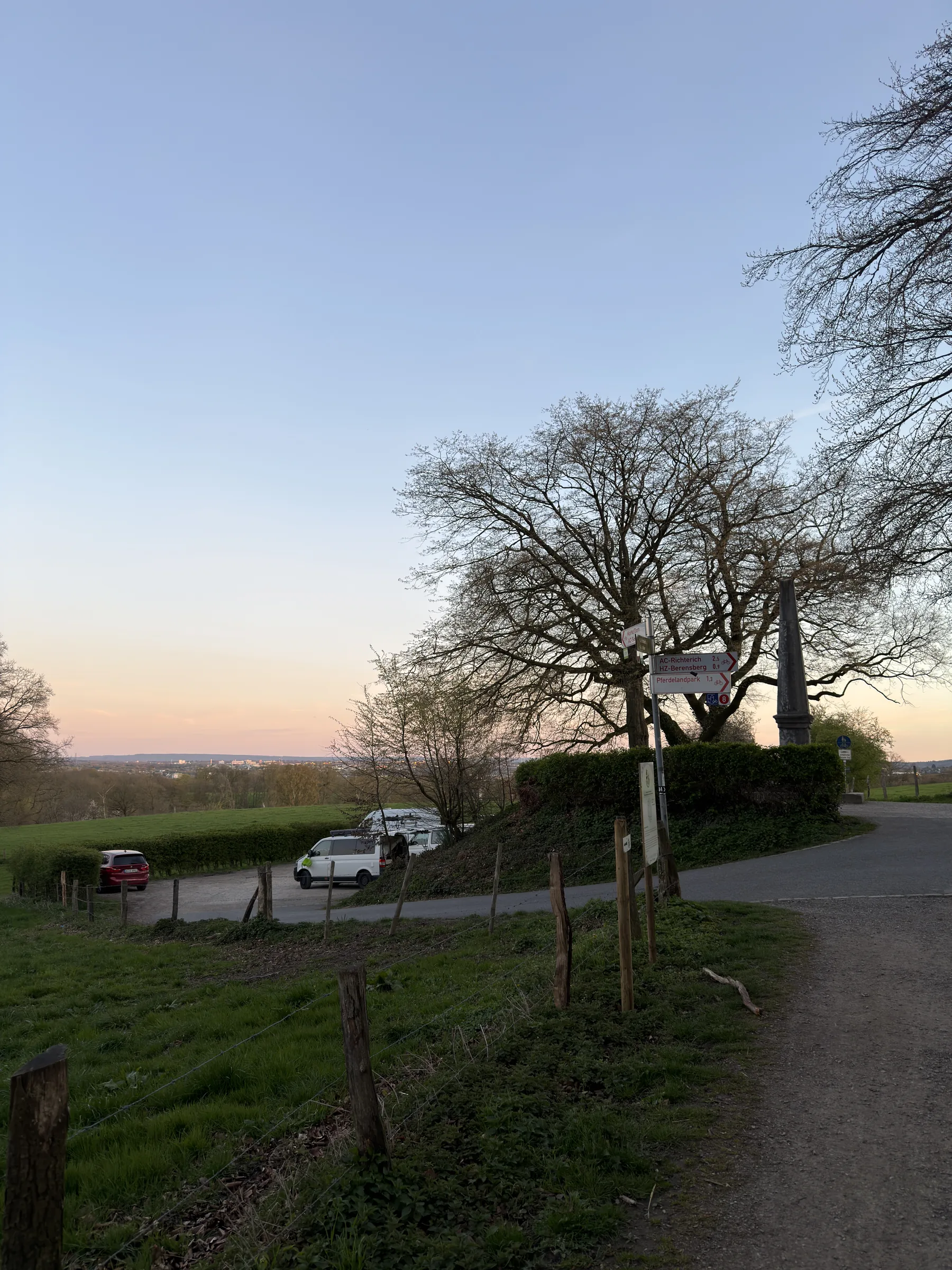
I stopped twice. Once at a wooden bridge in the woods because the afternoon light filtered through the trees. Once on a country lane because the camper looked better in the evening light than any photo I could have planned. That's the freedom this kind of travel is all about: you stop because the light is right, not because there was a parking area marked on the map.
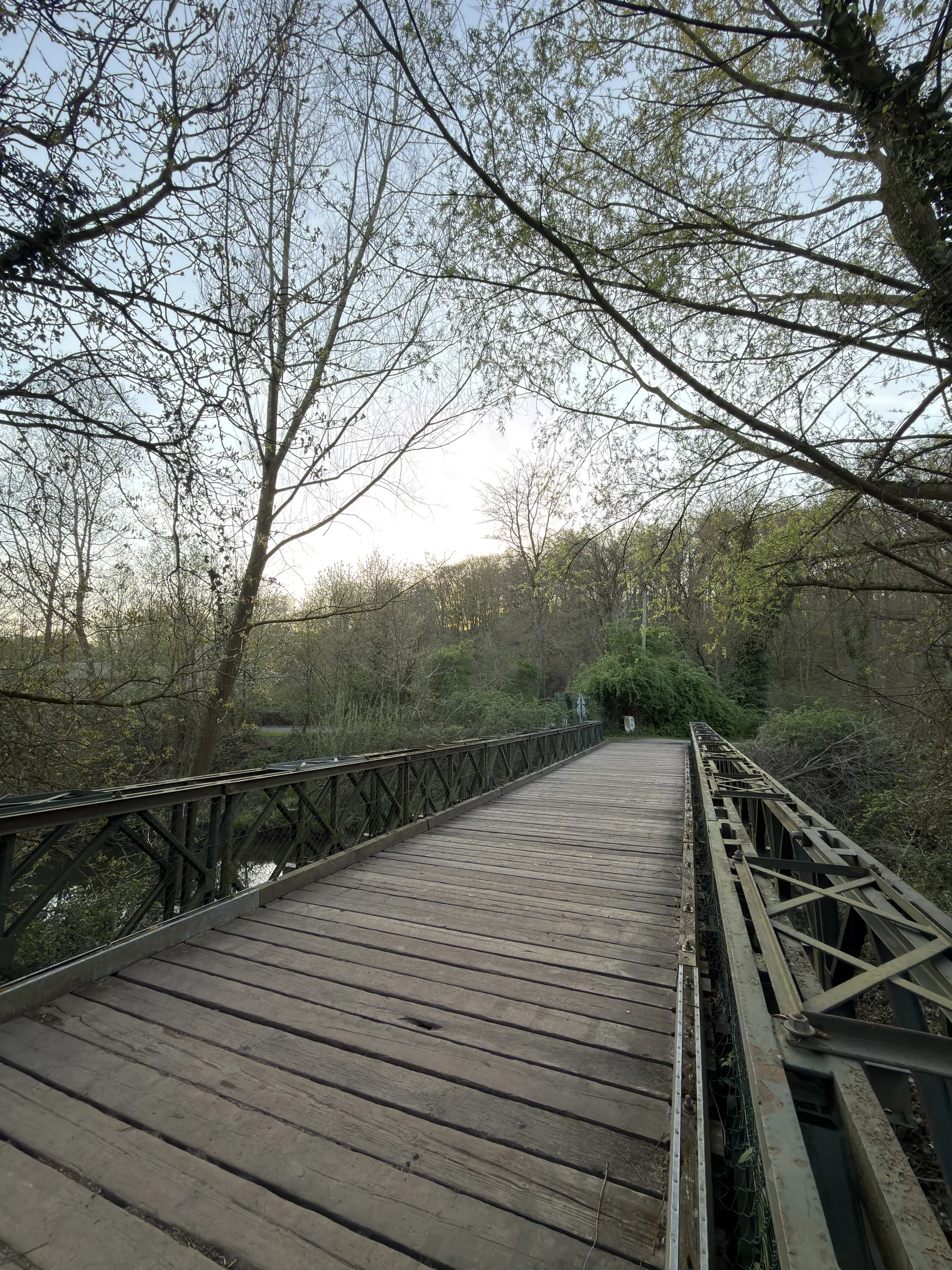
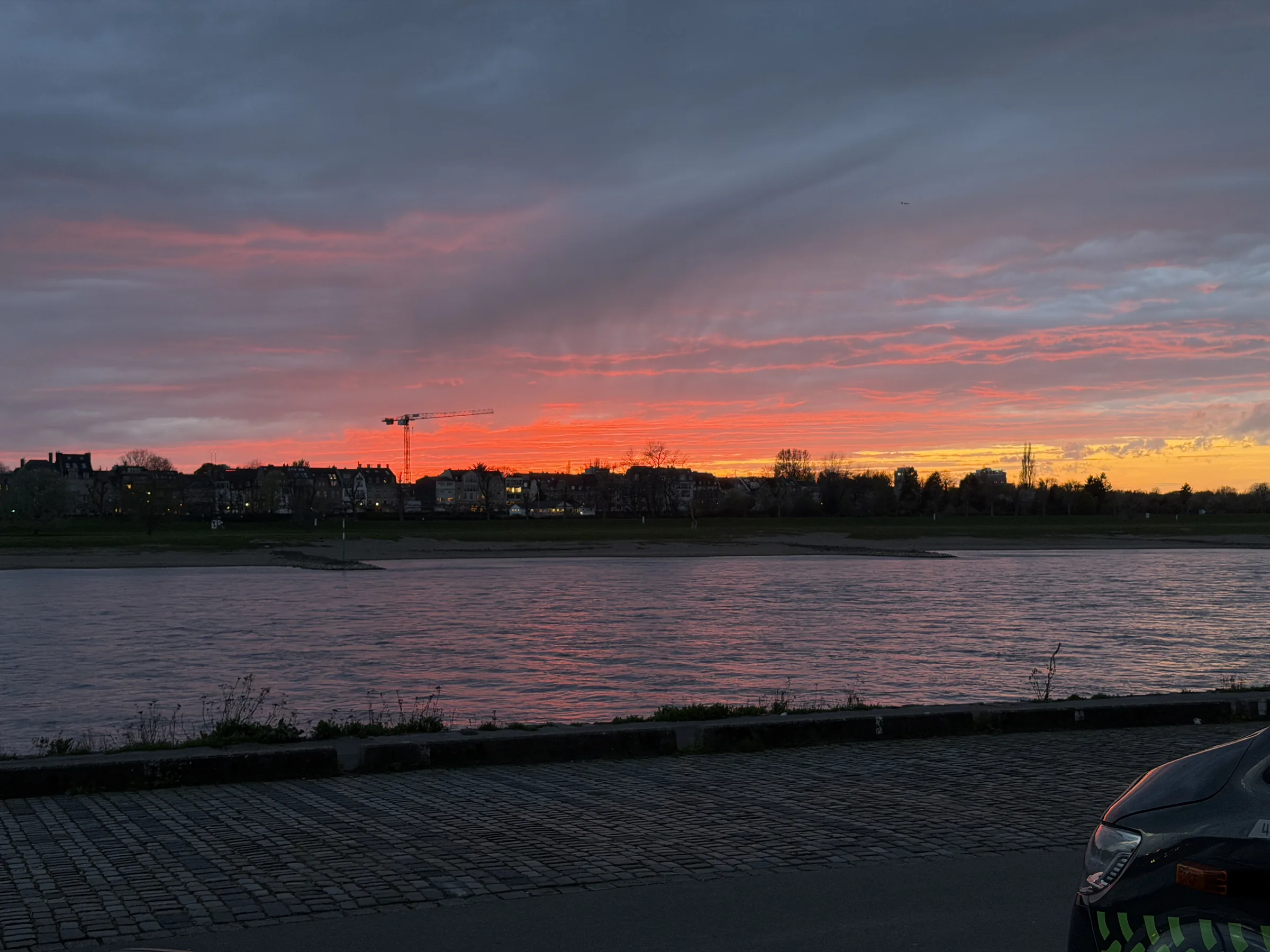
The moment the Rhine first appears is something else entirely. I was coming from the east, the sun was low, and the river lay as a broad orange ribbon against the skyline. Up until then, it had been a drive through Germany. From the Rhine onward, it was a drive westward.
Düsseldorf: a city that functions better in the evenings
Düsseldorf isn't exactly a campervan city, let's be honest. The city center is cramped, parking spaces along the Rhine are scarce and expensive, and anyone hoping to get into the old town with a seven-meter vehicle has misunderstood something. Nevertheless, a stop is worthwhile—because the city is a different place in the evening than during the day.
A light sculpture, displaying the time, travels up the shaft of the Rhine Tower. It's considered the world's largest decimal clock and is therefore listed in the Guinness Book of Records. If you stand on the promenade in the evening, you can see the time represented by points of light as they ascend the tower, 240 meters high. It's one of those moments when a city briefly ceases to be a city.
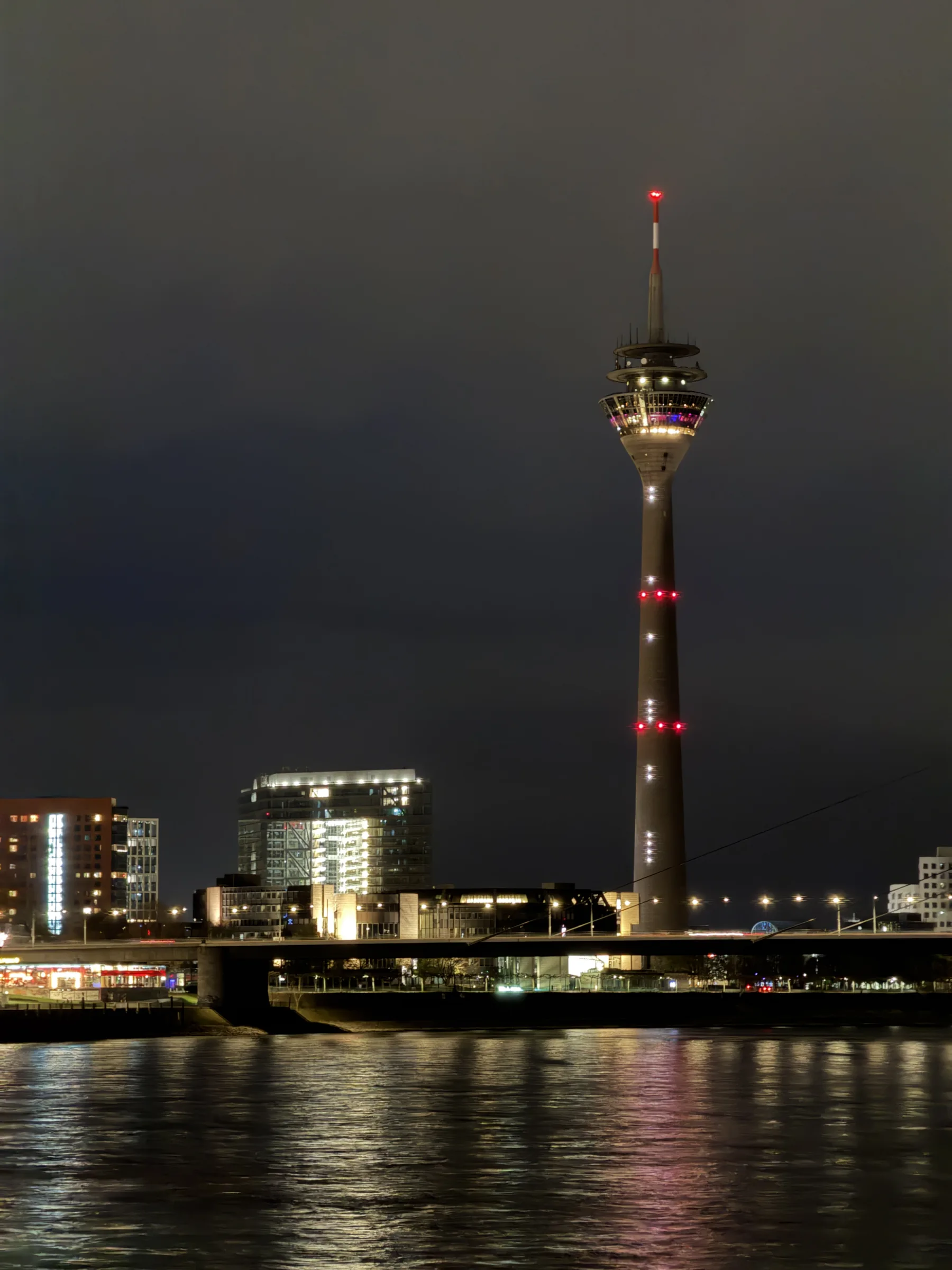
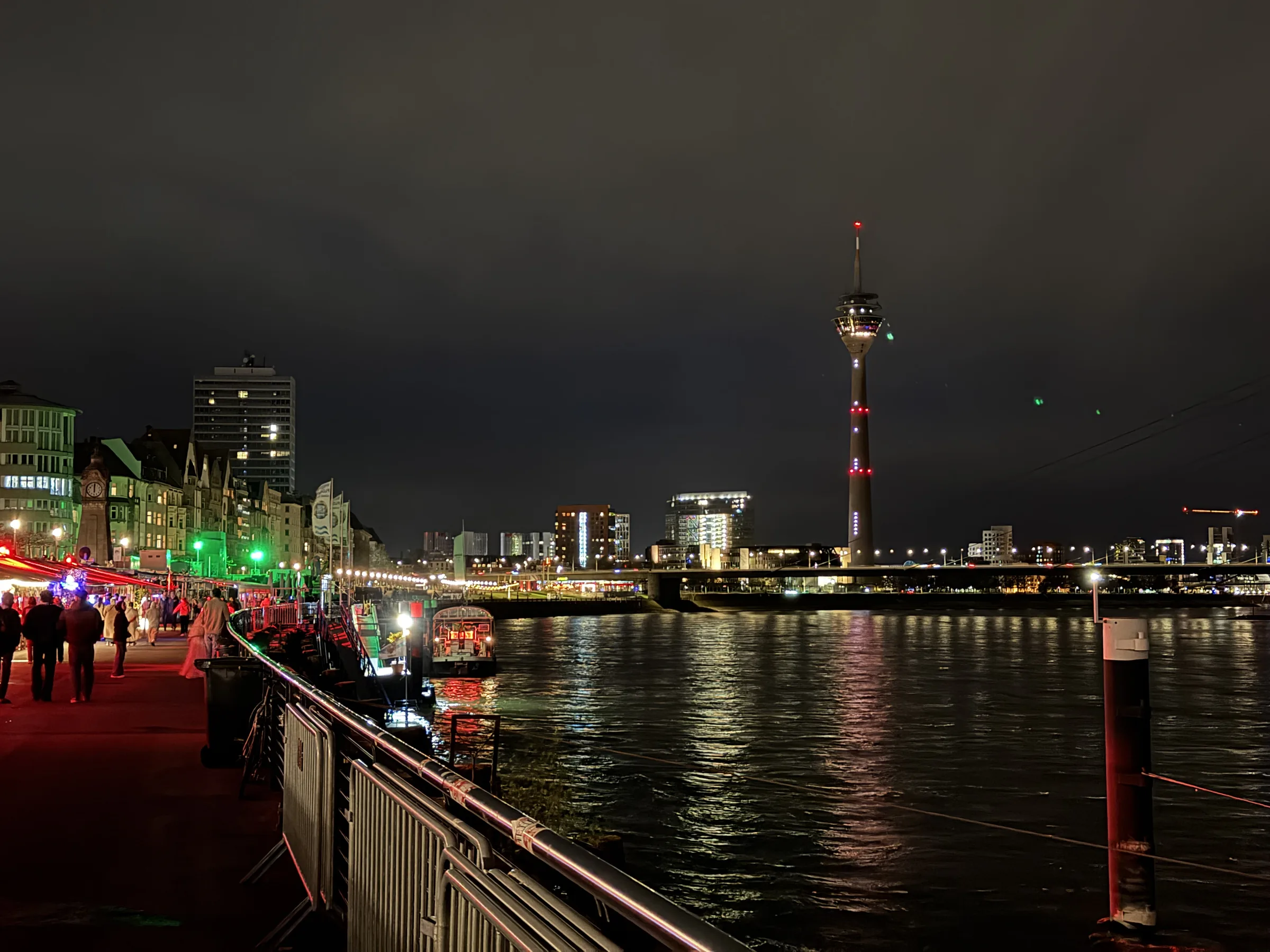
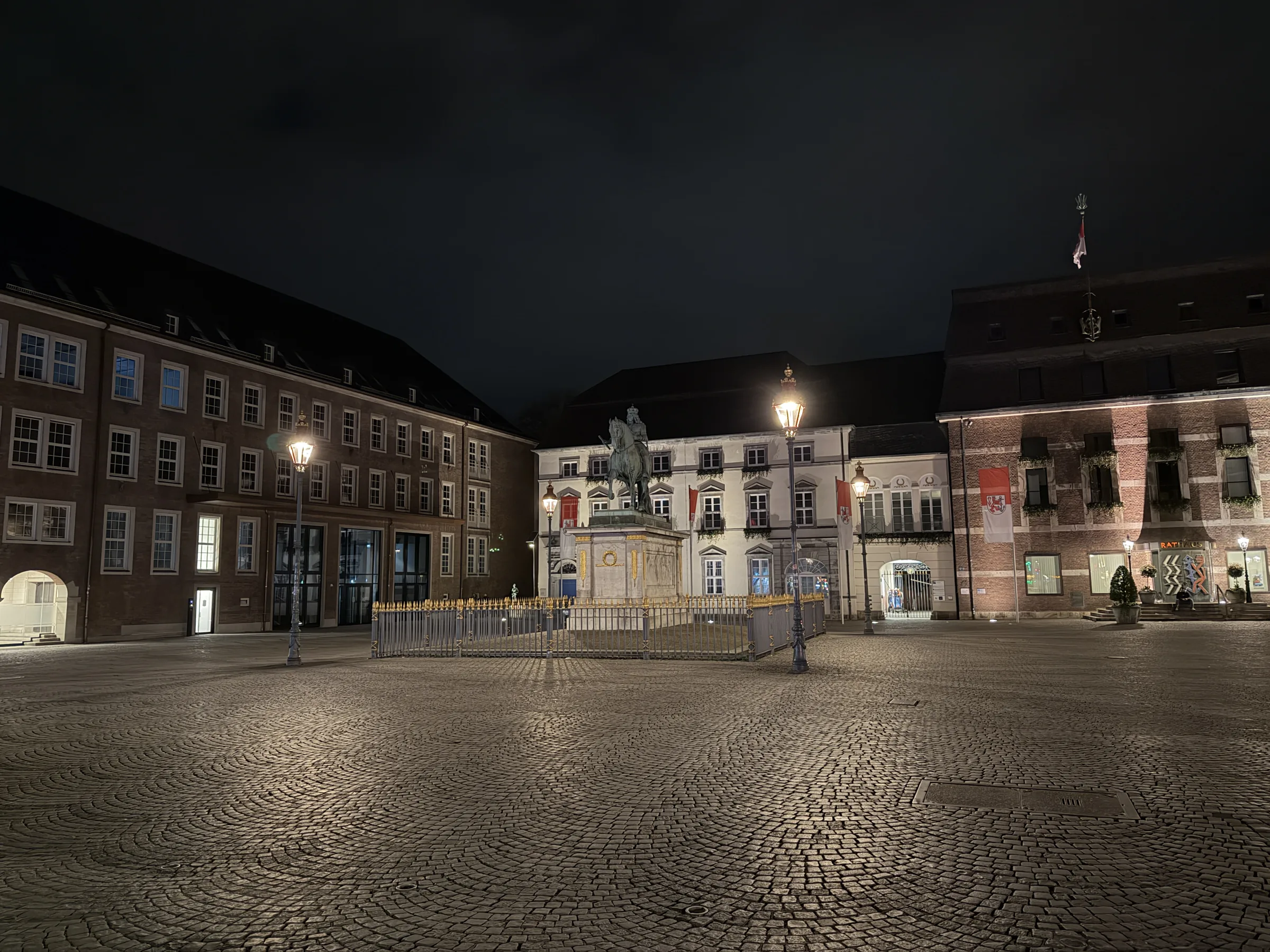
The Rhine promenade itself is a small urban planning mystery: it sits entirely atop a tunnel. Two kilometers of road traffic were diverted underground so that people could walk above. Previously, a four-lane highway ran right along the water. Today, it's the place where half the city gathers at sunset.
And the famous "longest bar in the world"? It doesn't exist. At least not as a bar counter. What's meant is the density of pubs, breweries, and bars around Bolkerstraße—around 260 establishments in barely a square kilometer. The name dates back to the seventies and has stuck because it's too good to change.
Stage 4 — Aachen: where Germany ends
On the way to Aachen, something changes that's hard to put into words. The town signs become bilingual, the license plates on the cars a mix, and at some point, the border is no longer a point on the map, but something you see in the streetscape. The tripoint lies just five kilometers from the city center, at an altitude of 322 meters—and is also the highest point in the entire mainland Netherlands. A hill that would be laughed at in Germany is, in a neighboring country, the roof.
Aachen marked the end of my German leg of the journey. Not because of the border, but because of what stands there in the middle of the city.
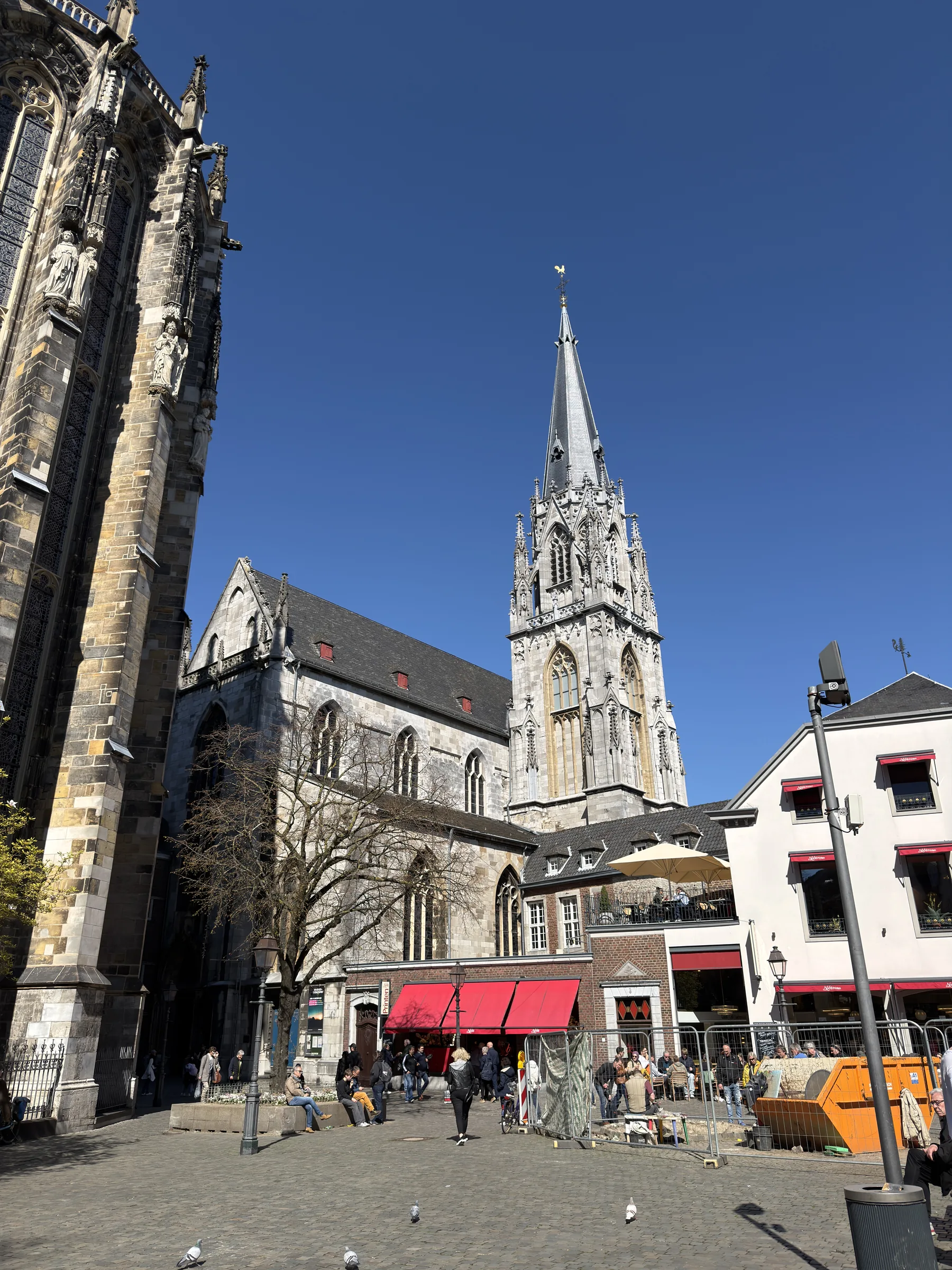
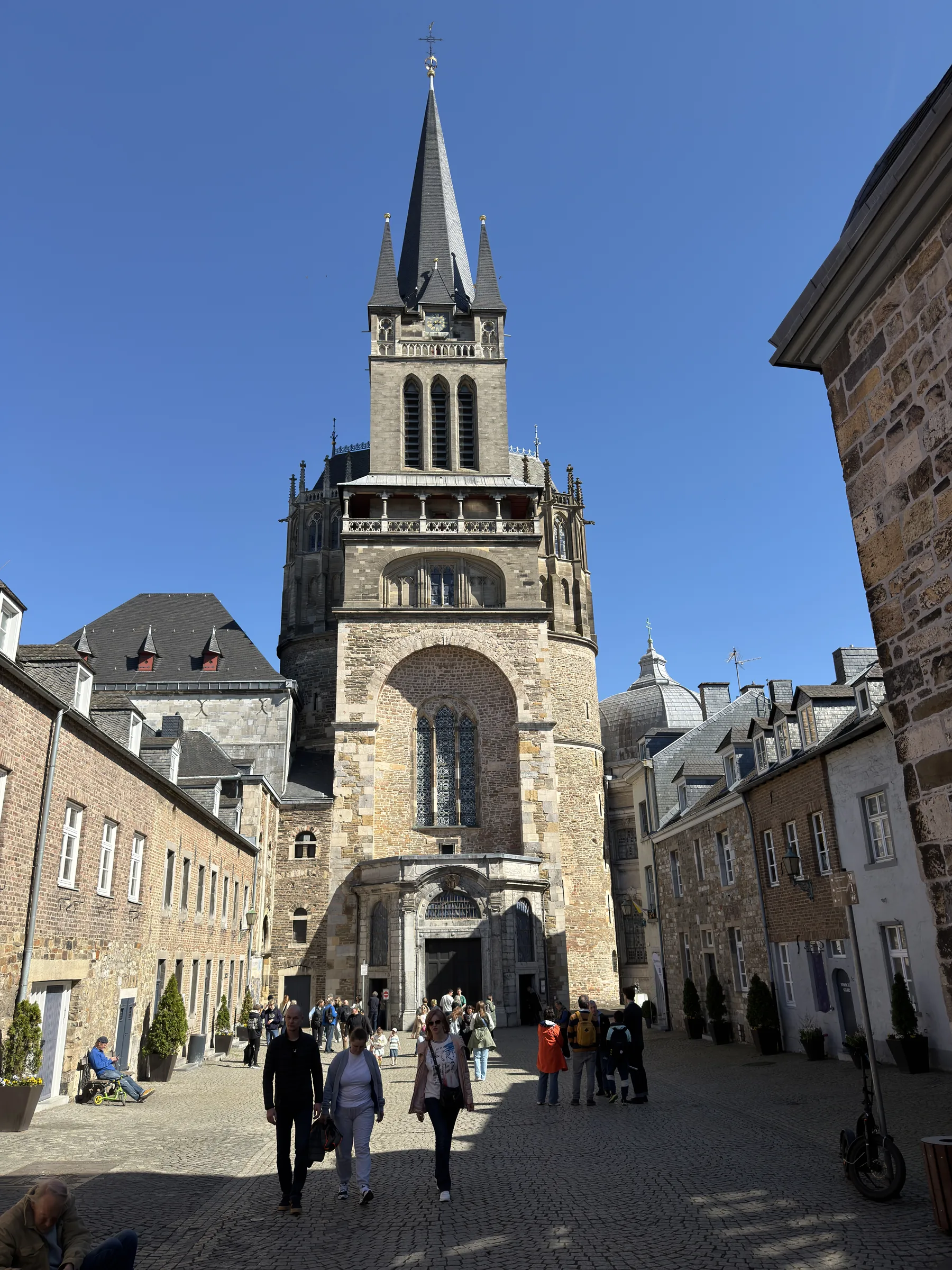
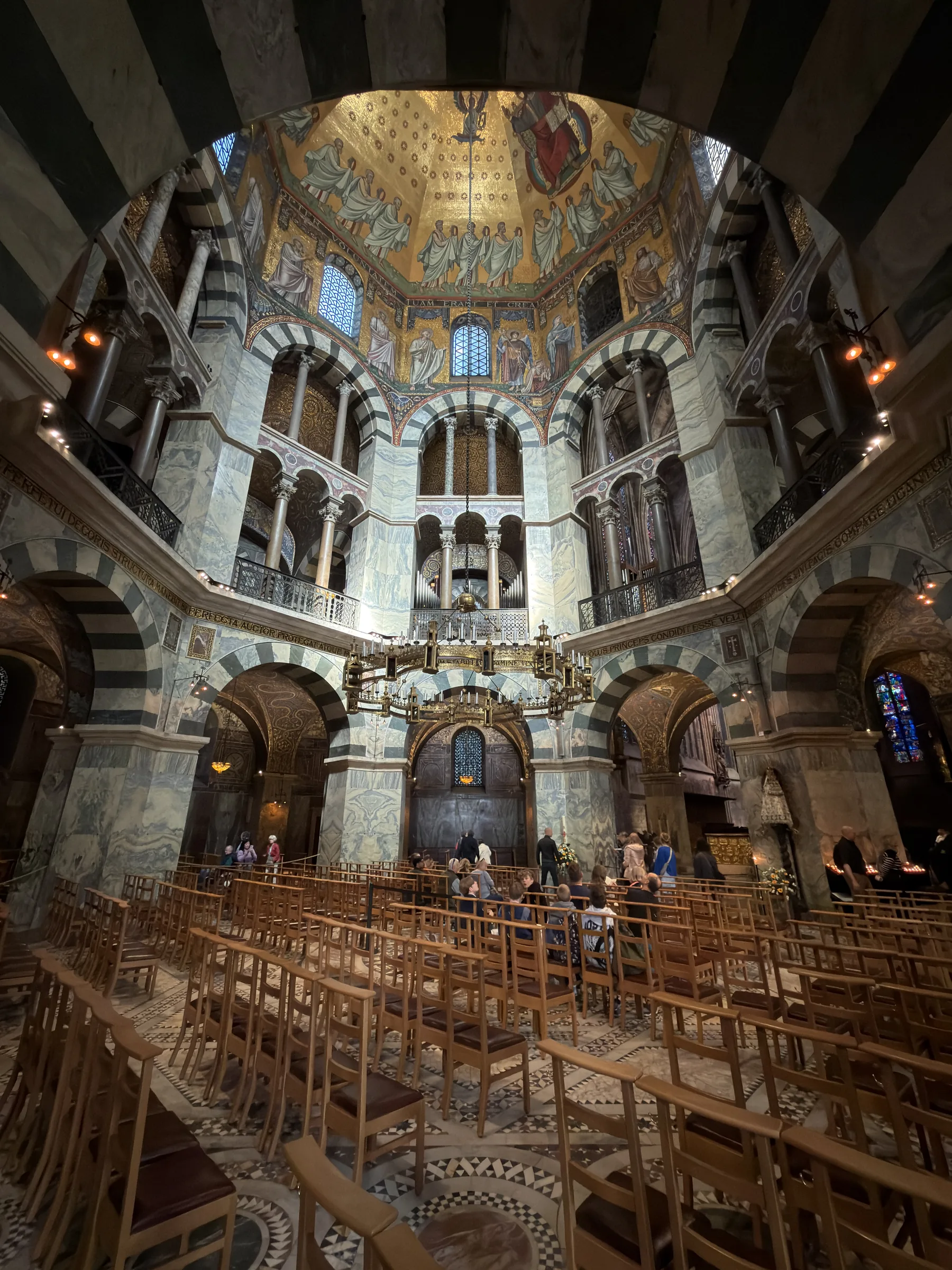
A dome that no one has surpassed for 400 years.
Aachen Cathedral has an octagonal core, built around the year 800. Charlemagne commissioned it as his Palatine Chapel, modeled on Byzantine examples. The dome is 31 meters high—and for four hundred years was the tallest domed structure north of the Alps. Four hundred years. It took a dozen generations before anyone in Central Europe managed to build anything taller.
When you stand at the bottom, you immediately understand why. The room draws your gaze straight up, and at the very top, a golden mosaic completes the view. It's absurdly bright in there for a building of that era. Between the floor and the gold, a huge wheel chandelier, donated by Barbarossa, has hung in the same spot for over eight hundred years.
For over five hundred years, German kings were crowned here—thirty in total, plus twelve queens. Later, a Gothic choir hall was added next door, which the people of Aachen call the Glass House: almost 33 meters high, with windows measuring up to 25 meters. From the inside, it looks as if someone had removed the walls, leaving only the light.
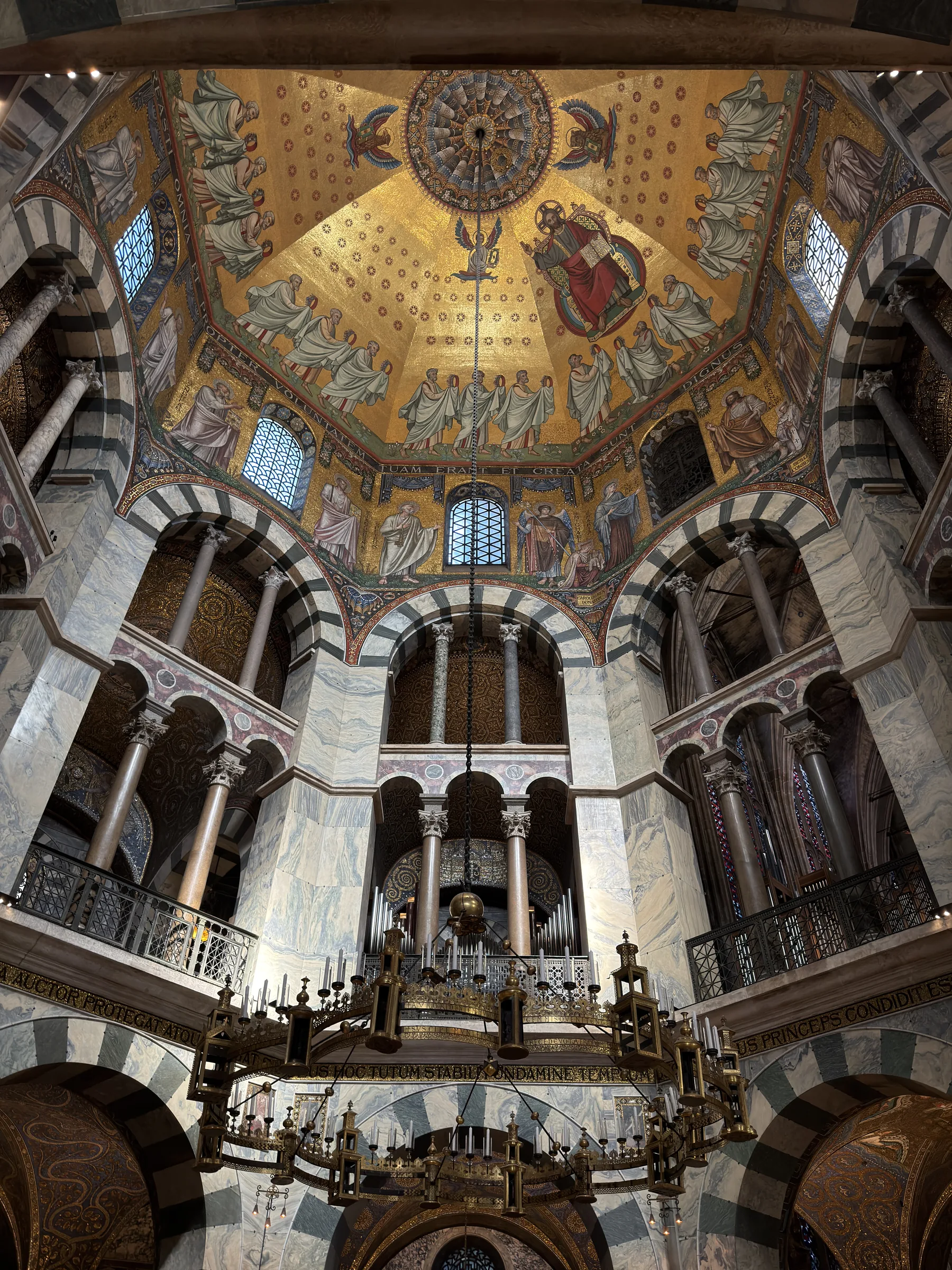
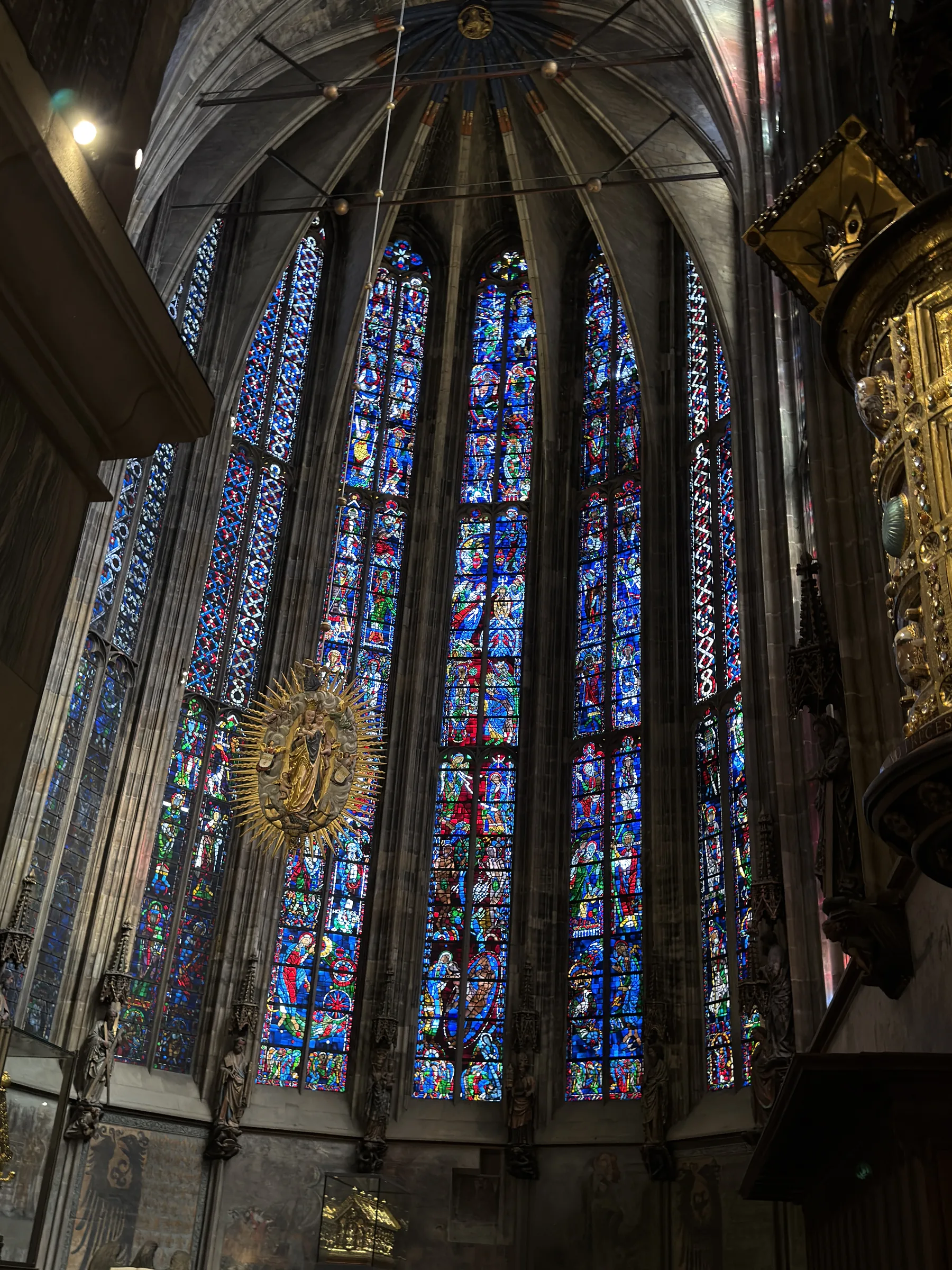
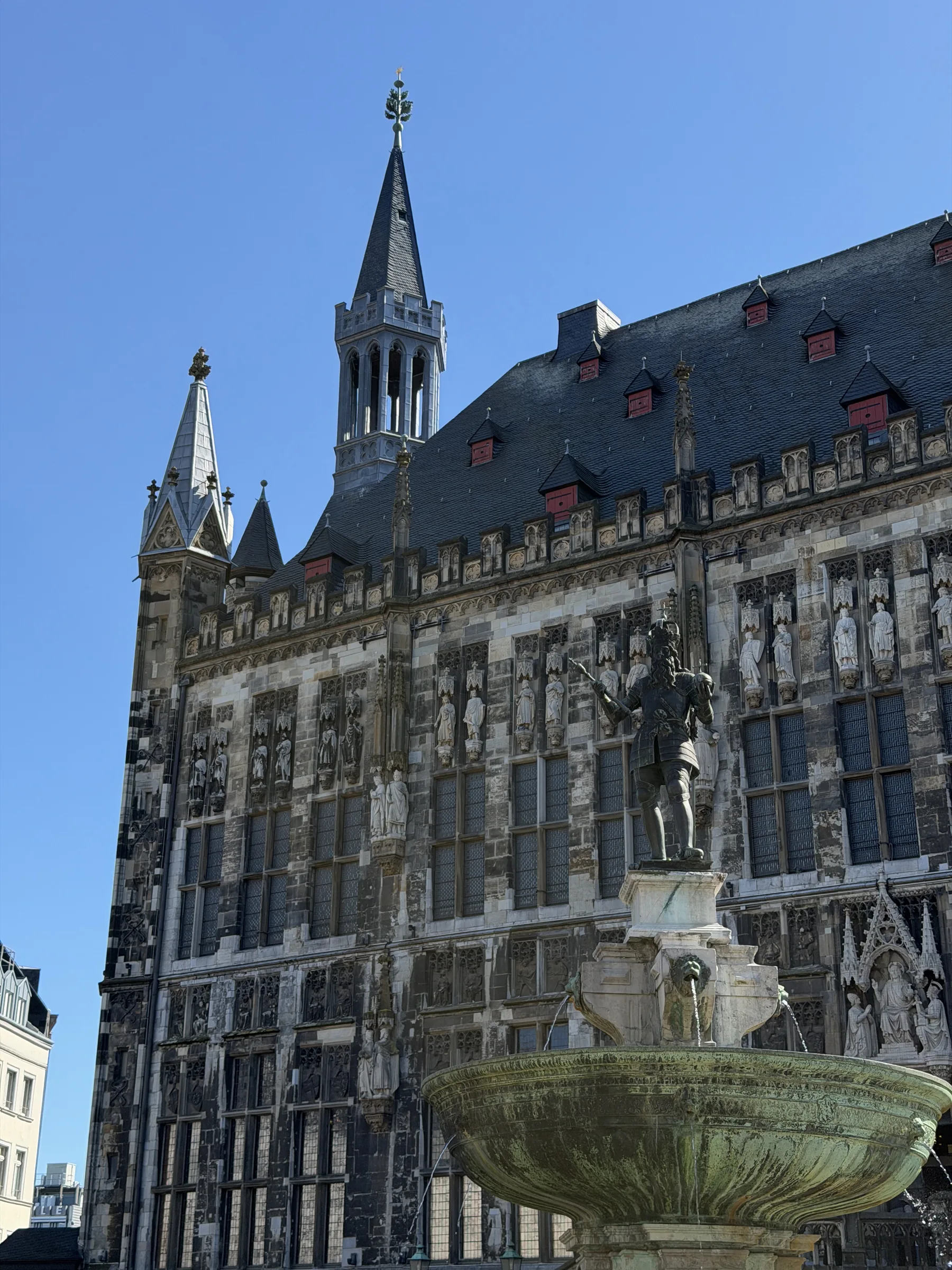
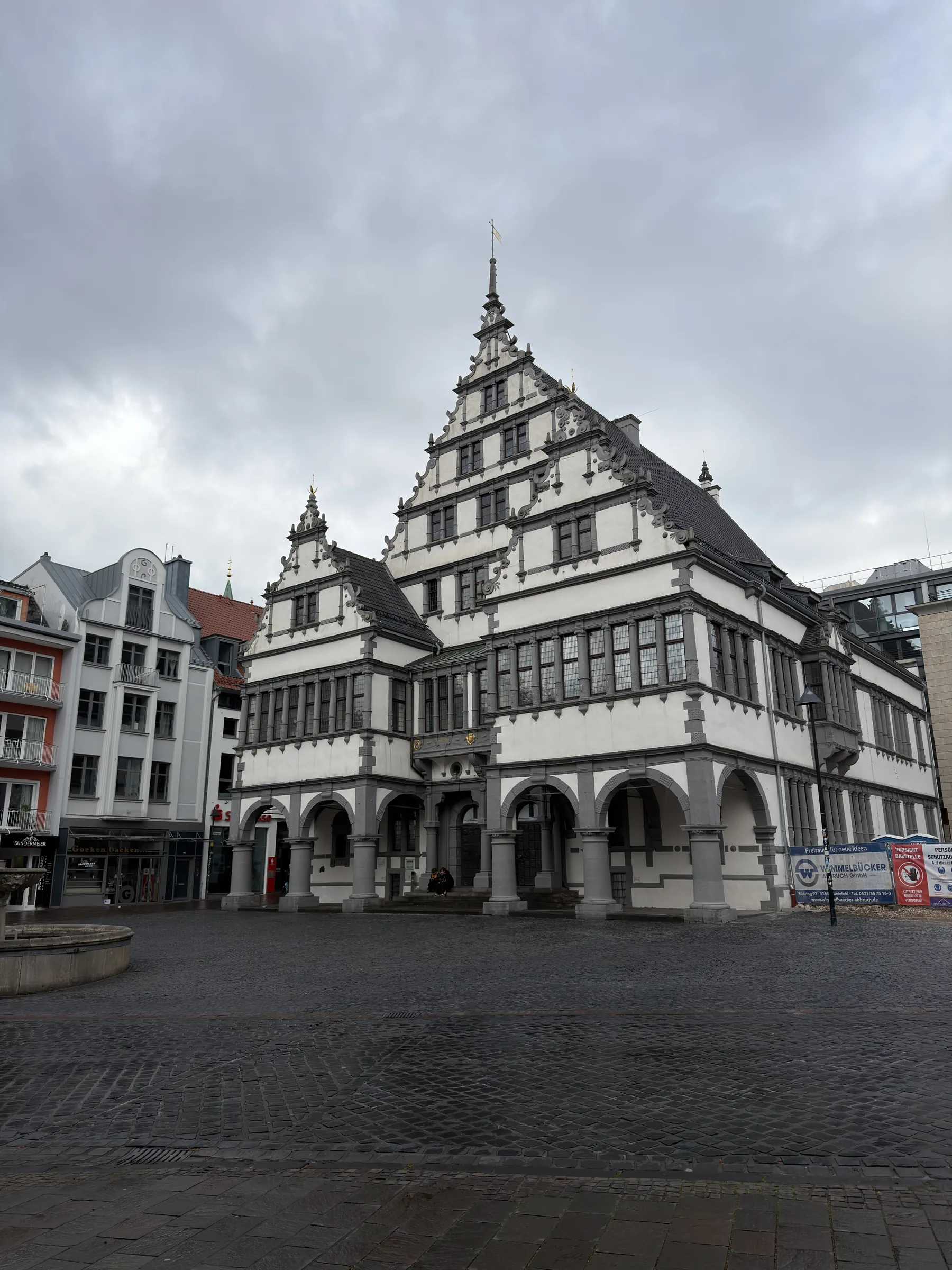
Outside in the market square stands the town hall, in front of it a fountain, and around them people sit in the sun as if it were all perfectly normal. Four days after leaving the Harz Mountains, I stood here — and from here on I left Germany.
Parking spaces in North Rhine-Westphalia and the Weserbergland region: what they really cost
The question of where to find a campervan pitch in North Rhine-Westphalia is answered differently on the road than at the kitchen table. I stayed for three nights, and the pattern was the same each time: the pitch with the better location didn't cost more. It was just full earlier.
| Place type | What you get | per night |
|---|---|---|
| Municipal base | Parking space, partial waste disposal, no electricity | 0–10 € |
| Simple parking space | Electricity, water, waste disposal | 8–18 € |
| Holzminden on the banks of the Weser | Electricity, water, sanitary facilities, bread rolls, 25 pitches directly on the river | 12–18 € |
| Well equipped, including additional costs | plus electricity €3–5, tourist tax €2–3 per person, shower tokens | 40–50 € |
| Premium seat | subdivided plots, full service | 30–45 € |
In July and August, these prices are 30 to 50 percent higher. That's the best argument I know for starting a trip in April.
Overnight stays in parking lots — what's really allowed
In Germany, you're generally allowed to sleep, as long as no sign prohibits it. Sleeping once to restore your fitness to drive is permitted; authorities usually base this on around ten hours. The catch is in the details: the fatigue must be caused by driving, and you mustn't exhibit camping behavior. Extending the awning, setting up chairs, laying a table—from that point on, it's no longer resting, but camping.
How much the first stage cost
My timing was bad. According to the ADAC (German Automobile Club), April 2026 was the most expensive month for fuel in Germany ever: diesel averaged €2.263 per liter, briefly reaching €2.446 on April 7th – an all-time record. This was triggered by the surge in oil prices due to the Iran conflict. A month later, diesel was back down to €1.99. Anyone who had started their journey in May would have paid significantly less.
| Position | The invoice | Cost |
|---|---|---|
| Diesel | 450 km × 13 l/100 km = 58.5 l × €2,263 | approx. €132 |
| Parking spaces | 3 nights × €12–18 | €36–54 |
| Eat | 4 days self-catering, supermarket | approx. €45 |
| Parking in cities | Paderborn, Düsseldorf, Aachen | approx. €15 |
| sum | four days, four stages | approx. €230 |
The figure that surprised me most: Diesel accounts for more than half of the costs. This means that the most effective way to save money when traveling by motorhome isn't by choosing a cheaper campsite. It's by driving shorter daily distances. Driving 150 kilometers instead of 250 saves more than any choice of campsite—and you see more in the process. The more detailed annual breakdown, including all fixed costs, can be found in my article on... Van life costs for one year.
Five things I'll do differently next time
Motorhome tours for beginners rarely fail due to technical issues. They fail due to expectations. These are the five points where I would correct myself.
1. Drove too far on the first day
I searched for a parking spot in the dark that I could have found in five minutes in the morning. Halve the distance you cover on the first day. Always.
2. Packed one-third too much
After a week, it was clear what pure weight meant. And weight costs diesel, and diesel was the biggest expense that month.
3. No offline maps loaded
Mobile network coverage is dropping out in some areas of the Weserbergland region. Download the region offline beforehand — including your preferred campsite app.
4. Cities visited in the morning
Driving a campervan in Paderborn or Düsseldorf in the morning is a nightmare. By late afternoon, the parking areas on the outskirts are free and the light is better.
5. Water not consistently refilled
You get water when it's there, not when you need it. I ignored this rule twice in the first week and took a detour both times.
What's next: Heading south
From Aachen, the route heads west and then consistently south. France is crossed, followed by Spain along the Atlantic coast, with Portugal as the ultimate destination. Anyone traveling to Portugal in a campervan should be aware of one thing: wild camping has been permitted again there since 2021, but only for 48 hours in the same location—and not at all in nature reserves. Fines there range from €120 to €600.
There is no uniform European law. Spain largely prohibits wild camping. In France, the local municipality decides. Italy requires a permit. And Scandinavia's famous right to roam applies to tents, not vehicles—a misunderstanding that costs people dearly every year.
Frequently asked questions about starting out in motorhome life
How far should you drive per day with a motorhome?
150 to 300 kilometers is the common guideline, with 200 being the most frequently cited target. In a reader survey by promobil, the majority said they drive a maximum of 400 kilometers at a stretch, with plenty of breaks. Purely for getting to a destination without stops, the distance can be 500 to 600 kilometers—but that's no fun.
Is it possible to spend the night in parking lots in Germany?
Yes, as long as no sign prohibits it. One night is permitted to restore fitness to drive, for which around ten hours are usually assumed. Awnings, tables, and chairs are not covered by this – from that point on, it's camping.
Is van life legal in Germany?
There is no law prohibiting living in a vehicle. The crucial point is the registration requirement: According to Section 17 of the Federal Registration Act, you need to register a residence within 14 days, and a motorhome without a fixed location does not automatically count as an address. Common solutions include a permanent camper address at a campsite or staying with relatives.
How much money do you need for van life?
This leg of the journey cost around 230 euros for four days, 132 euros of which was for diesel alone—at record prices. The biggest factor is the distance traveled, not the choice of campsite. Those who travel more slowly travel significantly cheaper.
Where in Europe are you allowed to camp freely with a campervan?
There is no EU-wide law. Portugal allows a maximum of 48 hours in the same location, outside of nature reserves. Spain largely prohibits it. In France, the local municipality decides, while in Italy a permit is required. Scandinavia's right to roam applies only to camping.
Which route is suitable for beginners?
A cross-country trip across Germany from east to west is a good starting point: short stages, dense infrastructure, and readily available services. Those wanting to go further will find the most relaxed combination of affordable campsites and light traffic on the French Atlantic coast and in northern Portugal.
How much does a motorhome pitch cost in Germany?
Basic pitches cost between €8 and €18, while municipal pitches sometimes cost between €0 and €10. Well-equipped pitches, including electricity, tourist tax, and shower tokens, cost between €40 and €50. Prices increase by 30 to 50 percent in July and August.
Will a Sprinter camper fit in a parking garage?
No. An L3H2 with a skylight measures around 2.80 meters, while standard parking garages allow 2.00 to 2.20 meters of clearance. Plan for parking spaces on the outskirts of town and cover the last leg on foot or by bicycle.
What is the actual fuel consumption of a Sprinter camper van?
The brochure states 7.5 liters per 100 kilometers on the highway. In reality, a fully converted campervan consumes around 13 liters per 100 kilometers. Conversion, water, and payload make all the difference—always calculate with the higher figure.
Conclusion: four days that set the tone for everything that followed.
This campervan travelogue covers four days and roughly 450 kilometers, from the Harz Mountains to the border. Looking back, what surprised me most wasn't a single place. It was the sheer density: less than 400 kilometers separate a Cretaceous rock formation from a dome dating back to the year 800, and I'd driven right past both for thirty years.
The practical lessons can be summed up in three sentences. Drive shorter stages than you plan. Budget for fuel, not accommodation. And leave in April if you want half-empty campsites at off-season prices. For those who want to delve deeper: Here's the... The beginning of this van life story, the complete Expansion Guide and the Annual statement of a campervan trip through Europe.
The next leg of the journey takes us across the border. From there, everything changes: a different language, different rules for wild camping, different prices at the pump. And for the first time, there's no longer any way to simply turn around.
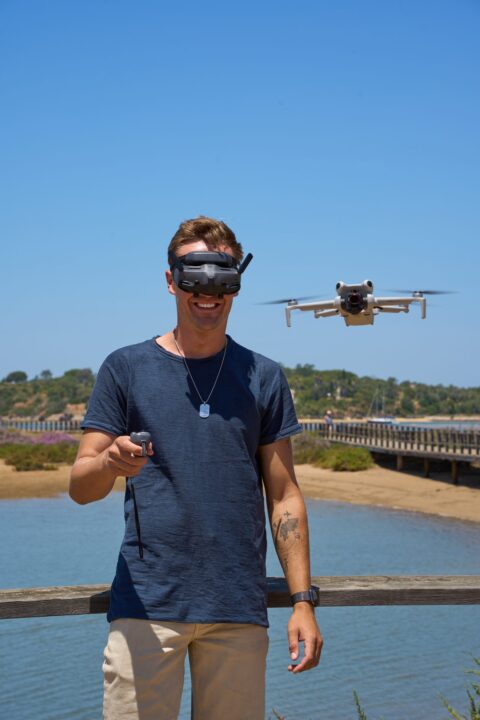
Max Haase
Travel Content Creator · Drone Photographer · Visual Storyteller
A professional travel creator for over 10 years with over 4 million followers. Specializing in high-end tourism board collaborations and visual travel storytelling.

 German
 English