
Italy Campervan Road Trip: Tuscany, Amalfi Coast & more
Traveling through Italy in a campervan is one of the most beautiful adventures in Europe – and I speak from experience after two full weeks between Tuscany, Rome and Amalfi Coast. The combination of medieval hilltop villages, art cities with 2,000 years of history, dramatic Mediterranean coastlines, the best pastas and pizzas in the world, and a camper-friendly infrastructure makes Italy the perfect destination. Road trip destination for motorhome travelers. In this guide I will show you the complete Italy route from Cinque Terre via Florence, Siena, Rome to Positano, all Cost, the best Parking spaces with the motorhome, toll tips and Insider tips – plus a detailed Map of Italy of the regions. Whether 7, 10 or 14 days: The route works for any time budget.
- Campervan Italy route: Cinque Terre → Pisa → Florence → Siena → San Gimignano → Rome → Naples → Amalfi Coast (Sorrento, Positano, Amalfi) → Capri. 1,200 km in 14 days.
- Tuscany Highlights: Florence (Uffizi Gallery, Duomo), Siena (Piazza del Campo), San Gimignano (13 towers), Val d'Orcia (cypress postcard), Chianti wineries.
- Amalfi Coast Highlights: Positano (colorful rock village), Amalfi (UNESCO World Heritage Site), Sorrento (Limoncello capital), Capri (Blue Grotto), Ravello (garden villages).
- Parking spaces in Italy: Over 2,500 campsites and 1,500 motorhome pitches. Prices €22–55/night, pitches €10–20/night.
- Italy camper costs (2 people): €80–120/day for comfortable travel, €50–80/day for economical travel. Tolls for the entire route from Germany approximately €180, diesel €1.75/L.
Italy map and road trip route: From Cinque Terre to the Amalfi Coast
The Map of Italy A classic campervan road trip focuses on the core regions of central and southern Italy: Liguria including the Cinque Terre, which Tuscany with Florence and Siena, the Eternal City Rome, and finally the spectacular Amalfi Coast South of Naples. Total distance: 1,200 km, doable in 10 to 14 days depending on pace.
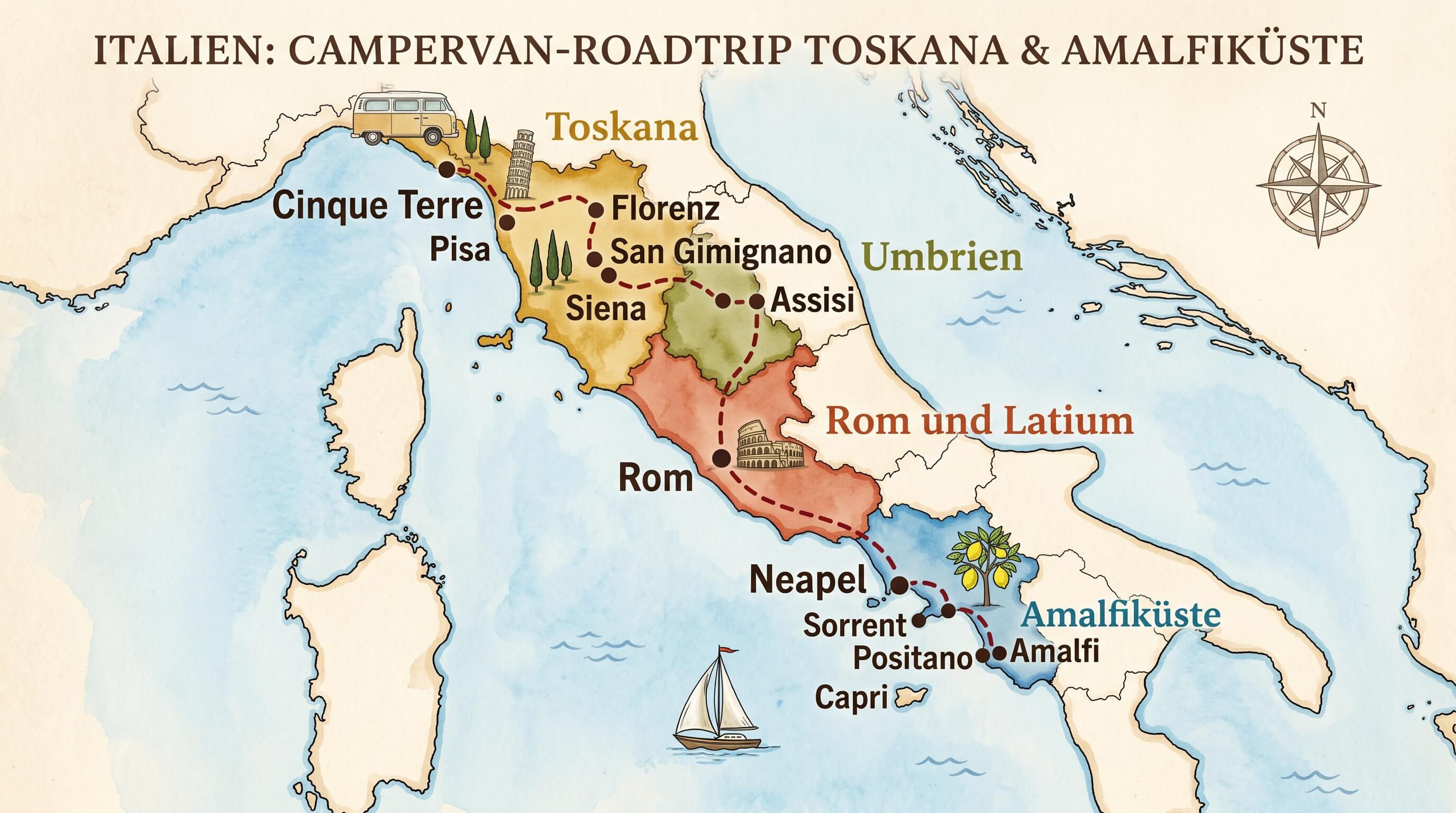
The 4 core regions of the route in detail:
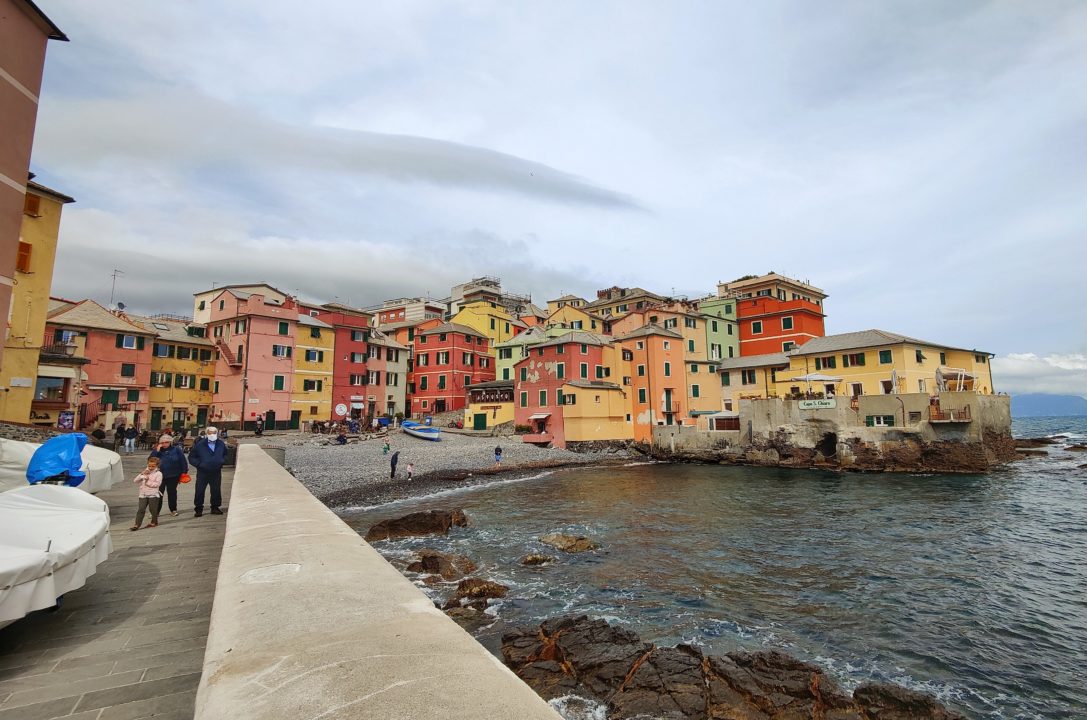
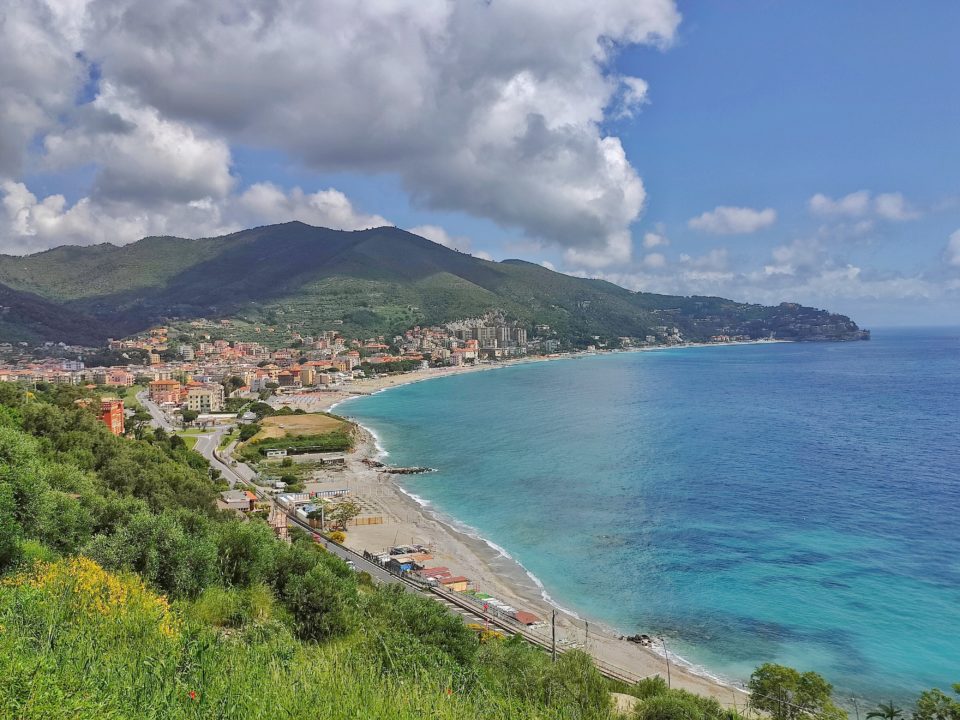
1. Liguria and Cinque Terre: The northwestern tip of Italy with its five UNESCO World Heritage villages on the rocky coast: Monterosso, Vernazza, Corniglia, Manarola, and Riomaggiore. Perfectly accessible by campervan via La Spezia; the villages themselves are car-free.
2. Tuscany – The Heart of Italy: A hilly landscape dotted with cypress-lined avenues, medieval towns, and vineyards. The most famous cities include Pisa (Leaning Tower), Lucca (completely preserved city walls), Florence (art capital), Siena (Piazza del Campo), San Gimignano (13 medieval tower houses), and Montepulciano (Nobile wines). Also worth visiting are the Chianti wine region and the Val d'Orcia (UNESCO World Heritage Site).
3. Rome and Latium: The Eternal City needs at least two full days. If you're traveling by campervan: never drive into the city center – always park at campsites on the outskirts and take the metro into town. Highlight: the Vatican with St. Peter's Basilica and the Sistine Chapel, the Colosseum, the Roman Forum and the Trevi Fountain.
4. Amalfi Coast: The 50 km stretch of coastline between Sorrento and Salerno is among the most spectacular in the world. Villages of colorful houses cling to the cliffs, and the SS163 coastal road winds its way through 1,000 curves. If you're traveling by campervan: be careful – the road is sometimes so narrow that vehicles over 7 meters long have difficulty. Better: stay at a campsite in Sorrento or Salerno station yourself and explore the Amalfi Coast by public bus or SITA bus.



Arrival and tolls: Driving to Italy with a motorhome
Traveling to Italy from Germany is relatively straightforward – several routes are available. The most important factor: Tolls in Italy. The Italian motorways (Autostrade) are all subject to tolls, with some of the highest prices in Europe.
Three routes from Germany:
- Brenner Pass route (fastest): Munich → Brenner Pass → Verona → Bologna → Florence. 750 km from Munich, 8 hours driving time. The Brenner motorway (A22) costs approximately €28 for campervans under 3.5 tons, significantly more for those over 3.5 tons. An additional Austrian vignette costs €9.70 for 10 days.
- Gotthard/San Bernardino route (Switzerland): Basel → Gotthard/San Bernardino → Milan → Florence. 800 km from Frankfurt. Swiss vignette: 40 CHF annual sticker. Longer route, but more scenic.
- Route Tauern/Villach: Via Salzburg, Tauern Tunnel (10 € toll), Klagenfurt, Udine to Venice. 850 km from Frankfurt. Often less traffic than the Brenner Pass.
Toll in Italy (Autostrade): Italian motorways are tolled per kilometer. For a motorhome under 3.5 tons (Grade 2The Brenner Pass to Amalfi Coast section (entire route) costs approximately €110. For vehicles over 3.5 tons (Grade 3It costs €160 for the same route. Payment at stations can be made by credit card, cash, or... Telepass-Box.
Entry restrictions for motorhomes:
- Traffic Limit Zones (ZTL): The historic centers of Florence, Siena, Rome, Naples, and almost all old towns are closed to regular vehicles. Violations cost €85–195 (per entry!). Always park outside the ZTL (Limited Traffic Zone) and walk or take a bus into the center.
- ZTL monitoring: Cameras automatically record all license plates. The fine arrives months later by mail. For vehicles with German license plates, these fines are actively collected by debt collection agencies.
- Amalfi Coast restrictions: The coastal road SS163 is partially closed to motorhomes over 6.5 m during the peak season (April–October). One-way traffic regulations are in place. My advice: Park your campervan and explore by public bus.
Italian Crit'Air equivalent: There is currently no nationwide environmental sticker system, but individual cities (Milan, Turin, Bologna) have their own regulations. In Lombardy, the... Area B-Regulation – Motorhomes with Euro 4 or older are not allowed to enter the city center.
Tuscany by campervan: Florence, Siena and the most beautiful hilltop villages
The Tuscany It's the undisputed highlight of any campervan trip to Italy. Rolling hills lined with cypress trees, medieval towns built on hills, vineyards, olive groves, and one of the best cuisines in the world. From Pisa in the west to Arezzo in the east, from Florence in the north to Grosseto in the south – the region is perfect for a 4–7 day trip.
Florence (Firenze): Birthplace of the Renaissance, World Heritage Site. Must-see stops: Duomo (Cathedral of Santa Maria del Fiore) including the iconic Brunelleschi Cathedral (dome climb €20), Uffizi (one of the world's most important art galleries, €25 online reservation required!), Ponte Vecchio (the Goldsmiths' Bridge), Pitti Palace with the Boboli Gardens. For motorhomes: Camping Michelangelo on the hill with spectacular panoramic views over the city (€38/night).
Siena: The perfectly preserved medieval city with what is probably the most beautiful square in the world – the shell-shaped one Piazza del Campo. The famous [event] takes place here in July and August. Palio Instead, a horse race takes place between the 17 contrade (city districts). Siena Cathedral, with its striped marble facade, is one of the most beautiful in Italy. Camping: Camping Colleverde On the outskirts of the city, bus to the old town.
San Gimignano: The "Manhattan of the Middle Ages" – 13 preserved family towers from the 13th century. UNESCO World Heritage Site. Small enough that 3-4 hours are sufficient. The best gelato in Italy can be found here at... Gelateria Dondoli (two-time world champion gelato maker, €3 per scoop).
Val d'Orcia: The quintessential postcard Tuscany. Cypress-lined avenues, secluded farmhouses on hills, rolling green hills in spring, golden stubble fields in summer. The best photo spot: the legendary Cypress row at La Foce on the Strada Bianca SR2. Mandatory villages: Pienza (perfect Renaissance city), Montalcino (Brunello wine), Montepulciano (Vino Nobile wine).
Chianti region: The Chianti Classico wine region stretches between Florence and Siena. Top wineries offering tastings: Castello di Ama (with art installations), Ricasoli (family of origin), Badia a Coltibuono (Monastery winery). Tasting €15–35 per person, usually including 4 wines and olive oil.


Rome by campervan: parking spaces, sights and ZTL trick
Rome with the Motorhome requires strategic planning. The city center is completely covered with ZTL (Limited Traffic Zone) covered – motorhomes are definitely not allowed in. But there's a simple workaround: park your camper at a campsite on the outskirts of the city and commute by public transport. metro To the center. This is how you can see Rome comfortably and stress-free.
Top 3 campervan pitches for Rome:
- Camping Village Roma: 4 km from the city center, shuttle bus + train, €42/night. Premium amenities, pool.
- Camping Happy: On the Via Aurelia, 12 km west, bus to the city center, €35/night. Family-friendly.
- Camping Flaminio Village: In northern Rome on the Tiber, train station right next to the campsite (5 minutes to the city center), €38/night. My favorite.
Rome sightseeing in 2 days:
Day 1 – Ancient Rome: Start on Colosseum (Online ticket €18, combined ticket with Forum Romanum). Continue to Roman Forum and Palatine (the original hill of Rome). Lunch at La Taverna dei Fori Imperiali (authentic Roman). Afternoon to Pantheon (free entry since 2023, an architectural wonder of antiquity) and to Trevi Fountain (Overrun, but mandatory – toss a coin for good luck returning).
Day 2 – Vatican and Trastevere: Early in the morning (at 7 a.m.!) to Vatican. St. Peter's Basilica is free to enter, but expect a 1-2 hour queue. Vatican Museums + Sistine Chapel: €20 online ticket, allow 3 hours. Spend the afternoon exploring the charming neighborhood. Trastevere with its narrow streets, ivy-covered houses, and the best trattorias. Dinner at Da Enzo (The best Cacio e Pepe in Rome, reservations recommended!).
Rome: A hidden gem: The Aventine Hill It's one of the most beautiful viewpoints in the city – hardly ever visited. Especially the Keyhole of the Order of Malta with its perfect view of St. Peter's Basilica through an iron railing. Free of charge, absolutely magical at sunset.


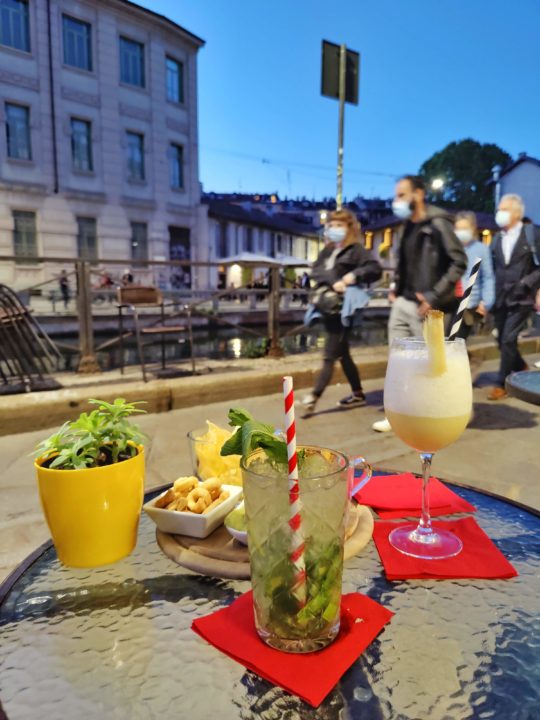

Amalfi Coast by campervan: route, campsites and the right tips
The Amalfi Coast (Amalfi CoastIt's one of the most beautiful coastlines in the world – and simultaneously the most challenging terrain for motorhomes in all of Italy. The famous SS163 coastal road winds its way for 50 km through thousands of hairpin bends, in some places only 3.5 m wide, with oncoming traffic from buses and cars. My advice: Station your camper in Sorrento or Salerno and explore the Amalfi Coast by bus.
Basic options with the motorhome:
- Sorrento (best option): Large campsites with shuttle service, from €40/night. From here, the SITA bus runs every 30 minutes along the Amalfi Coast (€7 day ticket). Camping Village Santa Fortunata is premium, Camping Sole is cheaper.
- Salerno (East Approach): Cheaper and less crowded. Camping Il Bussola €32/night. From here you start your journey along the Amalfi Coast from the east; less traffic.
- Pompeii region: Camping Pompei Spartacus (€35/night) – good base for visiting Pompeii plus train to Sorrento/Naples.
Amalfi Coast towns in 2 days:
Day 1 – From Sorrento to Positano: Start early (8 a.m. bus) in Sorrento. First stop: Positano – the iconic colorful rock village, 90-minute visit. The church Santa Maria Assunta Its ceramic dome is a must-see. Onward to Praiano (Quieter than Positano). Lunch on the beach Marina di Praia. Afternoon Fiordo di Furore – a tiny fjord with a bridge over it, one of the most spectacular spots on the coast. Back to Sorrento in the evening.
Day 2 – Amalfi, Ravello, Capri: Bus again to Amalfi (UNESCO World Heritage Site), which gives its name to the coast. Duomo Its Arab-Norman facade is spectacular. Afterwards, bus up to Ravello – 5 km as the crow flies, but a 30-minute drive on winding roads. Here's the Villa Cimbrone with the "Terrazza dell'Infinito" (one of the most beautiful views in the world, €12 entrance fee). Back to Amalfi, ferry to capri (4 hours for the island), last ferry back to Sorrento in the evening.
Amalfi Coast insider tips: Fiordo di Furore for dramatic photos, Bagni della Regina Giovanna near Sorrento (natural pool in the sea, free of charge), Scala-Village above Amalfi (car-free, hardly any tourists). My personal highlight: Sentiero degli Dei – The „Path of the Gods“ is a 3-hour hike from Agerola to Positano along the cliffs above the coast. Breathtaking.


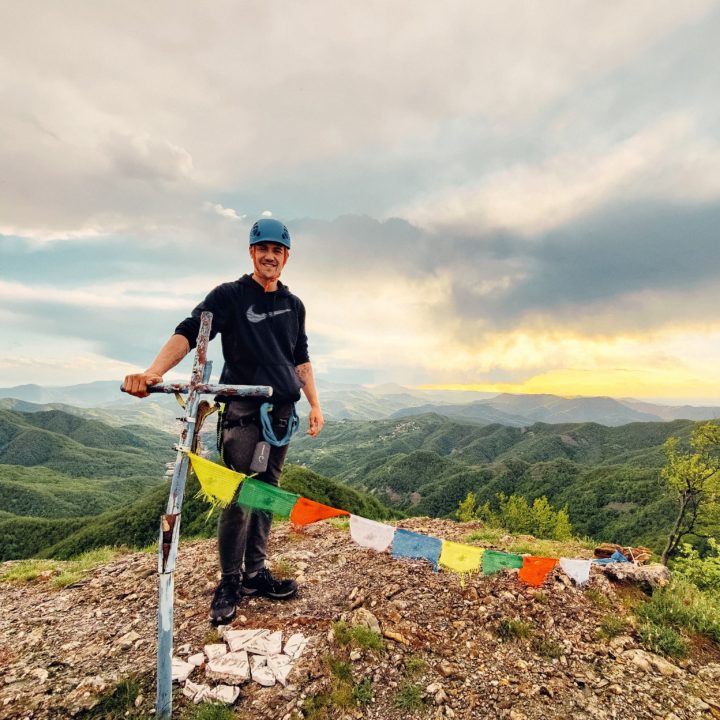

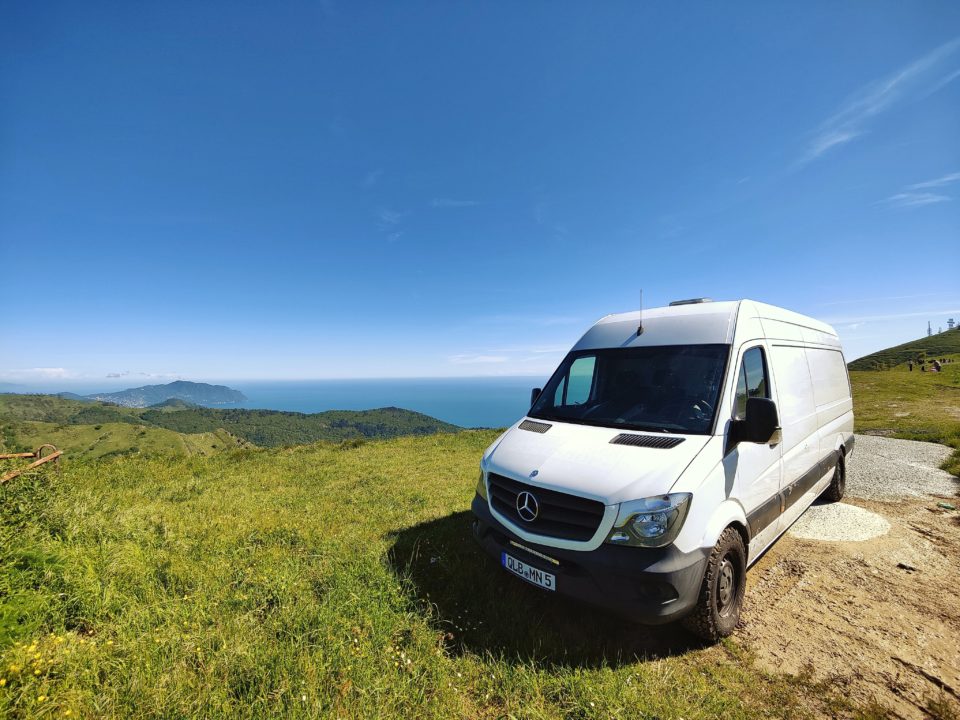
Italy Campervan Costs: Motorhome Budget for 7, 10 and 14 Days
Italy is in the upper middle range of prices in Europe for Motorhome holiday. Significantly more expensive than Spain or Portugal, but cheaper than France or Switzerland. The major cost factor: the Toll on the Autostrade. Here is the complete budget:
- Campsites in Italy: €28–55/night in high season, €22–40/night in low season. Average: €35/night.
- Motorhome pitches: €10–22 per night, often including electricity, water and waste disposal. Ideal for travelers and short stays.
- Agriturismo Camping: A peculiarity specific to Italy: You can stay on farms and vineyards for €10–25 per night, often including a tasting of farm products. Network: AgrotourismItaly.it.
- Toll: Total for round trip Germany → Amalfi Coast: €200–260 (Class 2), €300–400 (Class 3 over 3.5 t).
- Diesel: €1.75–1.90/L. For the entire Italy route (1,200 km): approximately €280–330.
- Restaurants: Pizza €8–14, pasta €10–16, secondo (main course) €16–28, house wine €4–7/glass. 3-course meal in a good trattoria: €35–50 per person.
- Supermarket (Esselunga, Conad, Coop): Weekly grocery shopping for 2 people: €75–120. Good quality, cheaper than German supermarkets for fresh produce.
- Coffee and Espresso: An espresso at the bar costs €1–1.50, a cappuccino €1.50–2.50. More expensive in tourist areas.
Total budgets (2 people):
- Italy Road Trip 7 Days: Economical €700–1,000 | Comfortable €1,300–1,800
- Italy Road Trip 10 Days: Economical €1,000–1,400 | Comfortable €1,800–2,500
- Italy Road Trip 14 Days: Economical €1,400–1,900 | Comfortable €2,500–3,500
Plus €250–350 for fuel and tolls for travel to and from Germany. The most expensive regions are the Amalfi Coast and Cinque Terre (especially in summer), while Umbria and Abruzzo are the cheapest (few tourists).
Money-saving tips for Italy: Lunch at work (Workers' lunch) in trattorias: 3 courses with wine for €10–15, a must for anyone traveling in Italy. Coffee tip: always drink "caffè" (= espresso) at the bar, never sit down (extra charge!). An aperitivo in the evening (Spritz + all-you-can-eat snacks) for €7–10 often replaces dinner.
Hidden gems in Italy: Places away from the tourist crowds
The classic routes through Florence, Rome, and Positano are fantastic, but overcrowded in the summer. Here are my personal recommendations. Italy's insider tips – Places you can perfectly cover with a campervan without competing with bus tourists:
1. Lucca (Tuscany): You can cycle the entire perimeter of Lucca's perfectly preserved city walls (4 km). The old town is car-free, more charming than Pisa, and less touristy. It's also the birthplace of Giacomo Puccini. A perfect day trip. Campsite available. Camping Lido outside the city.
2. Matera (Basilicata): The Sassi of Matera These are ancient cave dwellings carved into the limestone cliffs. A UNESCO World Heritage Site, they were inhabited until the 1950s. Films such as "No Time to Die" (Bond) and "The Passion of the Christ" were filmed here. Just 3 hours from Naples, they make a perfect addition to an Amalfi Coast tour.
3. Civita di Bagnoregio (Lazio): The "dying village" sits atop a crumbling tuff rock, accessible only via a footbridge. Completely car-free. A small population (50 people) preserves the medieval village. One hour north of Rome.
4. Elba (Tuscan Sea): Napoleon's island of exile has some of the most beautiful beaches in Italy. By ferry from Piombino (Tuscany) reachable in 1 hour. Top beaches: Cavoli Beach, Fetovaia. Campsites right by the sea.
5. Gargano (Apulia): The "spur" of the Italian boot is an underrated region. White cliffs, pine forests, turquoise sea. Vieste as a basis, Peschici as a charming mountain village. 3 hours northeast of Naples.
6. Bologna and the Emilia-Romagna food region: Bologna is often overlooked, but it's the culinary capital of Italy. Home to Parmigiano Reggiano, Parma ham, balsamic vinegar, and Bolognese sauce (the original is called "Ragù alla Bolognese"). Every city has its own specialties: Parma, Modena, Ferrara. Food tours are a dream for campervan travelers.
7. Cinque Terre vs Portofino: Cinque Terre is the more famous destination. But the small neighboring village Portofino It's even more exclusive – a micro-village with a natural harbor, yachts, and luxury hotels. Not for shopping, but for photos and an evening drink. Campervan pitches in Santa Margherita Ligure.


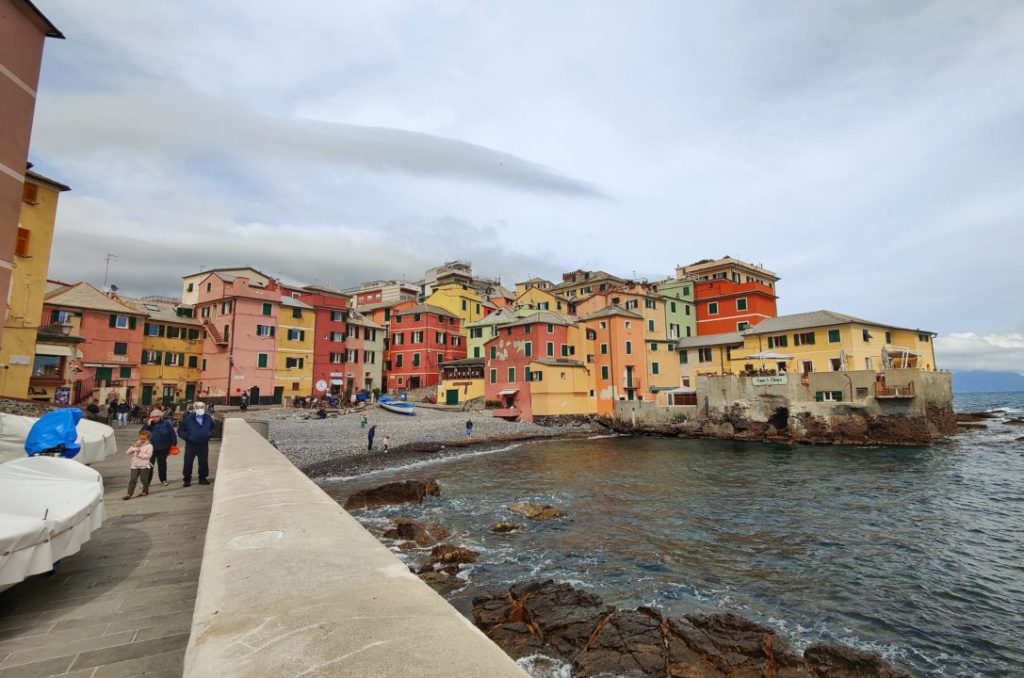
Best time to travel to Italy by campervan and practical tips
The best time to travel to Italy with a campervan It depends heavily on the region. Italy is 1,300 km long and therefore has many climate zones. Here's the optimal planning:
- April to May: 18–24 °C, Tuscan green, wildflowers. Ideal for cities and countryside, water still too cold. Off-season, prices low.
- June: 22–28 °C, perfect start to the beach season. Water 20–22 °C, high season prices begin. My favorite on the Amalfi Coast.
- July to August: 28–38 °C, extreme heat in the south (Rome, Naples), intense on the Amalfi Coast and in Florence. Camping prices 40% higher. Tuscany dusty and hot.
- September: 24–28 °C, water 24 °C (warmer than June!), grape harvest in Tuscany, ideal. My #2.
- October: 18–24 °C, mild autumn, cultural events, olive harvest. No more beach weather from mid-October onwards.
- November to March: Too cool and rainy. Only Tuscan cities are recommended; many beach resorts are completely closed.
Italian etiquette for campers: Italians are loud, but polite. Buongiorno and Buonasera Masks are mandatory upon entering any shop or restaurant. Tipping: 10 % for good service, 5 % for an espresso at the bar. Dress code in churches: shoulders and knees covered (check St. Peter's Basilica, Florence Cathedral, etc.).
Drone rules in Italy: Drones over 250g must be taken into account during the ENAC Drones must be registered. Flights are prohibited over: historical centers, churches, fortresses, military areas, and airports. The Amalfi Coast is partly a nature reserve – special permission is required. For the best Cinque Terre photos: fly your drone from within the municipality. La Spezia start, not from the villages themselves.
My personal highlight from two camping trips to Italy: A sunrise in Val d'Orcia by the famous row of cypress trees, with mist over the hills and the golden morning sun filtering through the trees. Followed by a cappuccino in Pienza at the traditional bakery in the market square. This is Italy in its pure, unaltered beauty.



FAQ: Italy Campervan Road Trip – Frequently Asked Questions
How long does an Italy campervan road trip take?
7 days for the essence (Tuscany or Rome/Amalfi Coast), 10 days the sweet spot (Tuscany + Rome + Amalfi Coast condensed), 14 days ideal for a relaxed tour. Plus 2–3 days for arrival and departure from Germany. The classic Italy trip lasts 14–18 days total vacation.
How much does a campervan holiday in Italy cost for 2 people?
€700–1,000 for a 7-day budget trip, €1,300–1,800 for a comfortable trip. €1,400–1,900 for a 14-day budget trip, up to €3,500 for a comfortable trip. Plus €250–350 for travel to and from Germany. Italy is in the upper middle price range – cheaper than France, more expensive than Spain.
What is the best route for a campervan trip to Italy?
The classic route: Cinque Terre → Pisa → Florence → Siena → San Gimignano → Rome → Naples/Pompeii → Sorrento → Amalfi Coast → Capri → return journey. 1,200 km, doable in 10–14 days. Alternatively: focus on Tuscany (7 days there only) or on Southern Italy (Rome + Amalfi Coast + Apulia, 10 days).
Is it possible to camp freely with a motorhome in Italy?
Generally prohibited, but enforcement varies regionally. In Tuscany and the interior, it is mostly tolerated away from tourist hotspots, while on the Amalfi Coast and Cinque Terre it is strictly controlled (high fines). Alternative: AgriturismoA network of over 1,500 winery pitches for €10–25 per night. Aree di Sosta are the official motorhome pitches with infrastructure.
How do I get to Rome with my campervan?
Never drive into the city center (ZTL fines up to €200!). Park your camper at a campsite on the outskirts of the city and use the metro. Recommended: Camping Flaminio Village in the north (train connection, €38/night) or Camping Roma (Shuttle bus, €42/night). Rome requires at least 2 full days.
What do I need to be aware of when traveling to the Amalfi Coast with a campervan?
The coastal road SS163 is too narrow for motorhomes over 6.5 meters. A better option is to base your campervan in Sorrento or Salerno and explore the towns by SITA bus (€7 day ticket, every 30 minutes). During peak season (July/August), parts of the road are closed to campervans. Alternatively, you can take a ferry from Salerno to the towns.
When is the best time to travel to Tuscany, Italy?
May and June (wildflowers, pleasant temperatures), September and October (wine and olive harvest). July/August are hot (35+ °C), Tuscany is dusty, and the Amalfi Coast is overcrowded. April and November are quiet but changeable. Winter (December–March) is only recommended for cities like Florence.
Where can I find a detailed map of Italy for my road trip?
Google Maps is sufficient for navigation. For planning, I recommend... Michelin Italy Road Atlas (€25, paper) or the Marco Polo Italy map. On the go: app. Maps.me for offline use, Park4Night for parking spaces. The Italy Map of Regions helps plan the route – Cinque Terre, Tuscany, Umbria, Rome, Amalfi Coast.
Is Italy more expensive than Spain for a campervan trip?
Yes, about €30 more expensive. The main reason: the high toll fees on the autostrades (around €120 for a north-south crossing vs. almost free in Spain). Campsites are similarly expensive, but there are fewer affordable rest areas (Aree di Sosta) in Italy than there are in Spain (Áreas de Autocaravanas). Spain is cheaper for first-time campers, while Italy offers a richer cultural experience.
Which sights are a must-see in Italy?
Top 10: Colosseum + Roman Forum (Rome), Vatican + St. Peter's Basilica (Rome), Florence Cathedral + Uffizi Gallery (Tuscany), Leaning Tower of Pisa, Cinque Terre, Positano (Amalfi Coast), Ravello + Villa Cimbrone, Capri + Blue Grotto, San Gimignano, Val d'Orcia (the quintessential Tuscan postcard). Also worth a visit: Matera Sassi, Civita di Bagnoregio, Lucca.

Max Haase
Travel Content Creator · Drone Photographer · Visual Storyteller
Since over 10 years professional travel creator with over 4.2 million followers. Specializing in high-end tourism board collaborations and visual travel storytelling.

 German
  English