
Learn to kitesurf in 2026: Beginner's guide with equipment & spots
Kitesurfing Beginner's Guide — Everything you need to know before your first course
Kitesurfing for beginnersKitesurfing has changed my travel life. Since taking my first course in Portugal in 2023, I plan almost every trip around kitesurfing spots. But getting started was bumpier than expected—not because of the sport itself, but because I made the wrong decisions beforehand: wrong spot, wrong time of year, wrong course. To help you avoid the same mistakes, here's my complete beginner's guide.
- Days 4-5: The first few meters on the board.
- After the course: You need another 20-30 hours of independent practice until you feel truly confident.
- The kite is controlled via a bar with four lines and generates enough power from the wind to propel you to speeds of 20 to 60 km/h.
- Expect at least 10-15 hours of lessons before you can drive independently.
- Rule of thumb: For a body weight of 75 kg you need a 12m kite for moderate winds (15-20 knots) and a 9m kite for stronger winds (20-28 knots).
Learning to kitesurf: What exactly is kitesurfing?
Kitesurfing (also known as kiteboarding) is a water sport where you are pulled across the water by a large, steerable kite while standing on a board. The kite is controlled via a bar with four lines and generates enough power from the wind to propel you to speeds of 20 to 60 km/h. Advanced kitesurfers jump up to 20 meters high—these are the spectacular videos you see on Instagram and YouTube.
The sport combines elements of windsurfing, wakeboarding, paragliding, and surfing. It's physically demanding, but less so than most people think. The power comes from the kite, not your arms. The most important requirements are: the ability to swim (obviously), basic fitness, and—most importantly—patience. Learn to kitesurf It takes longer than most water sports.
How long does it take to learn kitesurfing?
Expect at least 10-15 hours of instruction before you can drive independently. This typically translates to 3-5 days of instruction. The learning curve looks like this:
Days 1-2: Theory, safety, and kite control on the beach (without a board). You'll learn wind window theory, how to launch and land the kite, and practice control with a small trainer kite. At the end of day 2, you'll go into the water with a larger kite and practice body dragging (the kite pulls you through the water, without a board).
Day 3: Waterstart attempts. The board comes into play. You learn how to get the board under your feet while the kite pulls you. This is the most frustrating day—you'll lose the board dozens of times, swallow water, and wonder why you're doing this to yourself. Stick with it. Everyone goes through this phase.
Days 4-5: The first few meters on the board. When it clicks, it clicks suddenly. The moment you ride 50 meters straight for the first time is one of the best moments in the sport. From then on, things move quickly: riding upwind, turning, and soon the first small jumps.
After the course: You'll need another 20-30 hours of independent practice before you feel truly confident. Most kiters reach a level where they can ride comfortably and safely in moderate conditions after about 50 total hours.
Learn to kitesurf in Germany & the Baltic Sea: Best spots for beginners
The spot accounts for 80 percent of the learning success. Ideal conditions for beginners: constant crosswind or onshore wind (15-22 knots), shallow water (stand-up boots), sandy bottom (no rocks or coral), few other kiters (space to practice), warm water (motivation!).
Europe — The best kite schools
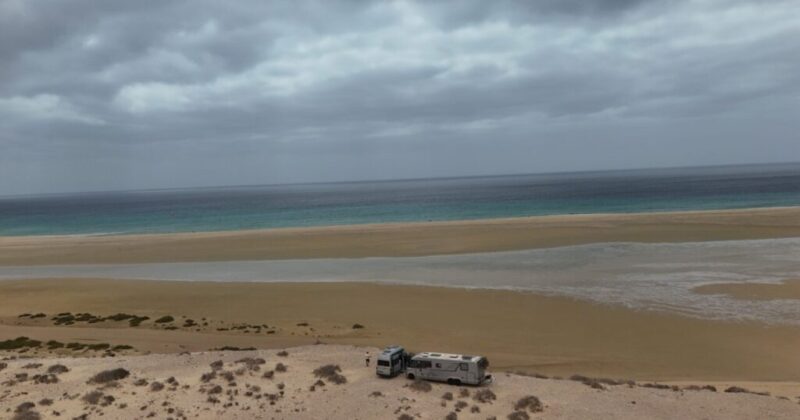
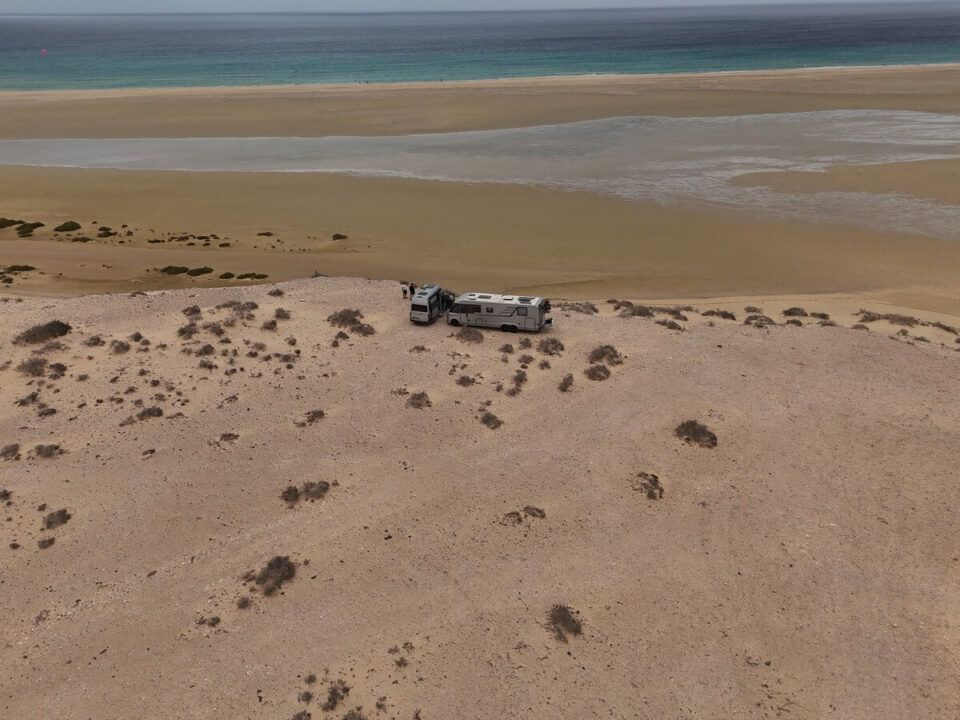
Sotavento, Fuerteventura (Spain): My personal favorite and the best beginner spot in Europe. At low tide, a huge lagoon forms with knee-deep water—perfect for practicing. Consistent trade winds from April to September. Course: 3 days from €280.
Tarifa, Spain: Europe's most famous kitesurfing spot. Stronger, but less consistent winds than Fuerteventura. The beaches are wider, but also more crowded. Better for advanced kitesurfers than absolute beginners.
Dakhla, Morocco: Nine hours of guaranteed wind per day, a shallow lagoon, warm year-round. The most affordable option: course + accommodation + food for under €500 per week. Only the journey there (flight to Dakhla) is more expensive.
Lo Stagnone, Sicily (Italy): Shallow lagoon, warm water, less touristy than Fuerteventura. Best conditions from June to September. Courses from €250.
Leucate, France: The lagoon near Leucate offers shallow water and the famous Tramontane (north wind). April to October. A more affordable alternative to Fuerteventura.
Worldwide — The top destinations for learning
Zanzibar, Tanzania: Turquoise water, a shallow lagoon, warm year-round. The kitesurfing infrastructure is good, and prices are significantly lower than in Europe. Courses start from €200.
Cumbuco, Brazil: One of the most wind-reliable spots in the world. From July to December, the wind blows reliably every day. The Brazilian kite scene is relaxed and international.
Boracay, Philippines: Bulabog Beach offers perfect conditions for beginners from November to April. Shallow water, consistent wind, and affordable rates.
Costs — How much does it cost to learn kitesurfing?
Here's my honest cost breakdown:
| Position | Cost |
|---|---|
| Beginner course (3 days, group course) | 250-400 € |
| Beginner course (3 days, private course) | 400-700 € |
| Neoprene wetsuit (3/2mm, own) | 100-200 € |
| First own equipment (used) | 800-1.500 € |
| First own equipment (new) | 1.500-2.500 € |
| IKO/VDWS license (included in the course) | 0-50 € |
Buying used is the best option for beginners. You can find complete sets (kite + bar + board) for €800-1200 in Facebook groups (Kitesurf Marketplace Germany) and classified ads. A 2-3 year old kite flies just as well as a new one—only the colors are faded.
Do you want adventure content for your brand or destination?
Adventure content with cinematic drone footage from 82+ countries — kitesurfing, trekking, off-roading. Perfect for outdoor brands and adventure-oriented tourism boards.
Kitesurfing equipment: What do I need as a beginner?
Kite
As a beginner, you'll need an all-round kite (also called a freeride kite). Recommended models: Duotone Evo, North Reach, Core XR. The size depends on your weight and the typical wind strengths at your spot. A rule of thumb: If you weigh 75 kg, you'll need a 12m kite for moderate winds (15-20 knots) and a 9m kite for stronger winds (20-28 knots).
board
A twin-tip board (symmetrical, rides in both directions) is the standard for beginners. Size: 135-145 cm in length, depending on weight. Larger boards are more stable and easier to stand on. Recommendations: Duotone Soleil (for lighter riders), North Prime (all-rounder), Core Fusion (all-rounder).
Bar and linen
The bar is the control rod you use to steer the kite. It's always purchased together with the kite (same system). Never mix kites and bars from different manufacturers—the safety systems are incompatible.
wetsuit
3/2mm for summer in Europe, 4/3mm for spring and autumn, 5/4mm for winter. In tropical destinations, a lycra or boardshort is often sufficient. Brands: O'Neill, Rip Curl, Mystic.
Trapez (Harness)
The harness connects you to the bar and transfers the kite's power to your hips. For beginners, I recommend a seat harness (it won't slip upwards). More advanced riders often switch to a waist harness (more freedom of movement). Mystic Warrior and ION Riot are good entry-level models.
Adventure collaborations with Max Haase
Over 500 completed collaborations with outdoor brands, adventure tourism boards, and extreme sports brands. Let us bring your next adventure project to life.
Safety — What you absolutely need to know
Kitesurfing is an extreme sport. The risk of accidents is real, but can be minimized with the right behavior.
Never kite alone. Always go out on the water with a buddy or within sight of other kiters. If something goes wrong (kite crash, line tangles, cramps), you'll need someone to help.
Learn about your kite's safety system. Every modern kite has a quick-release system that allows you to detach the kite in a fraction of a second. Practice the release on the beach before going out on the water. In an emergency, it could literally save your life.
Know the right-of-way rules. Kiteboarders on a starboard course (right hand forward) have the right of way. Anyone jumping must first ensure the landing area is clear. Always keep a safe distance from swimmers, surfers, and other kiteboarders.
Check the weather. Never kite during thunderstorms or with onshore winds (wind blowing from the sea towards the beach). Onshore winds can push you towards the shore if you have problems, which is dangerous. Sideshore (parallel to the beach) is the safest.
Kitesurfing and drones — content tips
As a creator, I regularly produce drone content while kitesurfing. My setup: The DJI Mini 5 Pro I launch the drone from the beach, fly over the spot, and film myself from above. The trick: Launch the drone before kitesurfing, activate the Follow Me mode, and let it film autonomously. Alternatively, ask a buddy to control the drone.
Important: NEVER fly the drone directly over other kiters. A kite can rise uncontrollably at any time and hit the drone. Maintain a lateral distance of at least 30 meters from other kiters.
FAQ — Kitesurfing for Beginners
Am I too old to learn kitesurfing?
No. I know kitesurfers who started at 55+. Basic fitness is more important than age. As long as you can swim and don't have serious joint problems, you can learn to kitesurf.
Do I need prior surfing or windsurfing experience?
No, but it helps. Wakeboarders and snowboarders have an advantage when waterstarting (similar movement). Surfing experience helps when kitesurfing. But even without any prior experience, getting started is possible.
Is kitesurfing dangerous?
The most common injuries are bruises and sprains—rarely serious. The greatest danger is uncontrolled kites on land (during launching/landing). With a good course, the right spot, and adherence to safety rules, kitesurfing is no more dangerous than skiing.
How fit do I need to be?
A moderate level of fitness is sufficient. You should be able to swim for 30 minutes and have basic core stability. The power comes from the kite, not from you. You'll still be tired after a kite session—mainly due to the concentration required and the contact with the water.
Can I travel to different spots with my own equipment?
Yes, absolutely. That's one of the great advantages of kitesurfing. A complete setup (kite, bar, board, harness, wetsuit) fits into a kite bag (approx. 150x40x30 cm) and weighs 15-20 kg. Most airlines transport kite bags as sports equipment for 40-80 euros each way.
About the author: Max Haase is Germany's most influential travel influencer with over 4.2 million followers. He specializes in drone footage and luxury travel. Cooperation requests here.
 German
  English