
New Zealand Travel Report 2025: 12 Days in Auckland, Taranaki & South Island
New Zealand travelogue — 12-day route, South Island and real highlights
Twelve days, two islands, three domestic flights, a motorhome, and a route etched in my memory. In November 2025, I traveled from Tāmaki Makaurau Auckland to Queenstown—with a tight timeframe, planned stops, and the goal of showcasing both the iconic and hidden gems of New Zealand. This travelogue is not a generic guidebook. It's the exact route I took, with all accommodations, tours, and firsthand experiences.
- 12 days from 13th to 24th November 2025 — Auckland → New Plymouth/Taranaki → Christchurch → Akaroa → Lake Tekapo → Aoraki Mount Cook → Queenstown, 2 days North Island, 10 days South Island.
- 3 domestic flights (AKL-NPL-CHC) plus Maui Motorhome on the South Island — camper as a base for flexible photo stops at Lake Tekapo and Mount Cook.
- Late November = New Zealand's late spring and perfect off-season — lupins bloom at Tekapo, stable weather, fewer tourists than in midsummer.
- South Island Highlights: Pure Pods in Akaroa (wellness in a glasshouse), Hector's Dolphins, Red Tarn Hike on Mount Cook with stargazing, Glenorchy and Central Otago wines from Queenstown.
- Total cost for 12 days: approx. €4,500-€6,500 per person including long-haul flight (€1,500-€2,200), domestic flights, motorhome rental, boutique stops, NZeTA and IVL tourism tax.
The route is deliberately designed: two active days in Auckland and Taranaki on the North Island, then a leap to the South Island with a motorhome road trip through the Canterbury Plains, across the Banks Peninsula, through the Mackenzie District to Mount Cook and on to Queenstown. Not 5,000 km, no rush—but real time in the places worth staying in.
New Zealand Itinerary: The 12 Days at a Glance
The classic recommendation is "three weeks for both islands." I had twelve days—and I tailored the route so it would work without leaving me exhausted at the end of the trip. The trick: targeted domestic flights instead of endless road stretches on the North Island, and then a concentrated loop to the south starting from Christchurch.
Days 1-2 — Auckland: Arrival, Reset, Harbour Walk from Quay Street to Westhaven, Māori Welcome with TIME Unlimited Tours in the Waitakere Ranges, Harbour Dinner Cruise.
Day 3 — Auckland → New Plymouth: All Blacks Experience, midday flight to New Plymouth, Len Lye Centre, dinner at Social Kitchen.
Day 4 — Taranaki: Forgotten World Rail & River Combo (42 km rail adventure + jet boat).
Day 5 — Taranaki: Coastal Five Habit Health Pukeiti 10km Climb at the base of Mount Taranaki.
Day 6 — New Plymouth → Christchurch: Morning flight, pick-up of Maui Motorhome, Riverside Market, first night at Tasman Holiday Park.
Day 7 — Christchurch → Akaroa / Banks Peninsula: He Puna Taimoana Wellness Stop, Godley Head Loop Track, Pure Pods Pōhue as one of the most unusual accommodations worldwide.
Day 8 — Akaroa → Lake Tekapo: Akaroa Dolphins Cruise with the rare Hector's Dolphins, drive through Geraldine and Fairlie, Sunset Soak at Lakes Edge Tekapo.
Day 9 — Aoraki Mount Cook: Tasman Glacier Guide, Red Tarn Walk, Big Sky Stargazing in the world's largest Dark Sky Reserve.
Day 10 — Mount Cook → Queenstown: 3.5-hour drive along Lake Pukaki, check-in at the Azur Lodge, sunset at Lake Wakatipu.
Day 11 — Queenstown: Glenorchy Funyak's full-day tour through Lord of the Rings scenery.
Day 12 — Queenstown: Kawarau Bridge Bungy — the birthplace of commercial bungee jumping — plus E-Bike Winery Tour through Central Otago.
Day 13 — Queenstown → flight home.
Auckland & Waitakere Ranges — The gentle introduction
Auckland is built on more than 50 dormant volcanic cones, nestled between two harbors, and boasts a climate that feels summery even in late November. After a 28-hour flight via Singapore, I was grateful that the first day was deliberately kept quiet: checking into the Sofitel Auckland Viaduct, a 6.6-kilometer walk from Quay Street along the promenade to Westhaven and back, and dinner at Viaduct Basin. Jet lag didn't stand a chance, as the light and sea air kept my nervous system occupied.
Day 2 was the cultural highlight of the trip. TIME Unlimited Tours welcomed us with a hongi—the traditional Māori greeting involving nose-to-nose contact—in the Waitakere Ranges of West Auckland. After the first hour, the rainforest in the Waitakeres is so dense that you forget the metropolis is less than a 30-minute drive away. The black sands of Karekare and Piha are places you see once and never forget. In the evening, we enjoyed a harbor dinner cruise through the water—calm seas, warm air, and a stunning skyline.
Taranaki & the Forgotten World — New Zealand's best-kept secret
Most New Zealand travelogues skip over New Plymouth entirely. This is one of the biggest mistakes you can make when planning your itinerary. The Taranaki region—named for the perfectly symmetrical volcano that looks like a copy of Japan's Mount Fuji—offers more unspoiled scenery in three days than the entire tourist route of the South Island.
The flight from Auckland to New Plymouth takes 50 minutes. We filled the time beforehand with the All Blacks Experience in Auckland—an interactive museum that brings the culture of the world's most successful rugby team to life. Not just a niche sport, but a piece of New Zealand identity. In New Plymouth itself, the Len Lye Centre is a must-see: New Zealand's first and only museum of contemporary art, featuring kinetic sculptures by the artist Len Lye and a mirrored facade that has become legendary as an Instagram spot.
The real reason for stopping in Taranaki, however, is the Forgotten World Rail & River Combo. Forty-two kilometers of track through the hinterland, which even many New Zealanders never see—on a motorized railcar. Ten hand-cut tunnels, the longest measuring 1.5 kilometers. Handmade bridges. A coffee break at Lauren's Lavender Farm along the way. And to top it all off, a jet boat ride on the Whanganui River. It's the kind of experience that can't be replicated because it's a piece of railway history that would have long since become overgrown without these tours.
The following day, the Coastal Five Habit Health Pukeiti 10 km Climb was on the agenda—part of a marathon event that features five individual races over two days in the shadow of Mount Taranaki. The start and finish are in the Pukeiti Botanical Gardens, and the course is an out-and-back run through gently rolling terrain. Mount Taranaki looms above, the Pacific Ocean lies at your back. Photo stops at iconic Taranaki coastal viewpoints follow.

Accommodation in Taranaki: Three nights at the Kings and Queens Hotel Suites in New Plymouth — central, quiet, with a view towards the coast.
Christchurch & Maui Motorhome — The start of the South Island road trip
Day 6 was the transition day. Morning flight from New Plymouth to Ōtautahi Christchurch, Canterbury. The region is New Zealand's largest plain, bordered by the Pacific Ocean to the east and the Southern Alps to the west—a landscape contrast that changes noticeably within an hour's drive. In Christchurch, we picked up our Maui motorhome, which would serve as transport, kitchen, and shelter from the elements for the next few days.
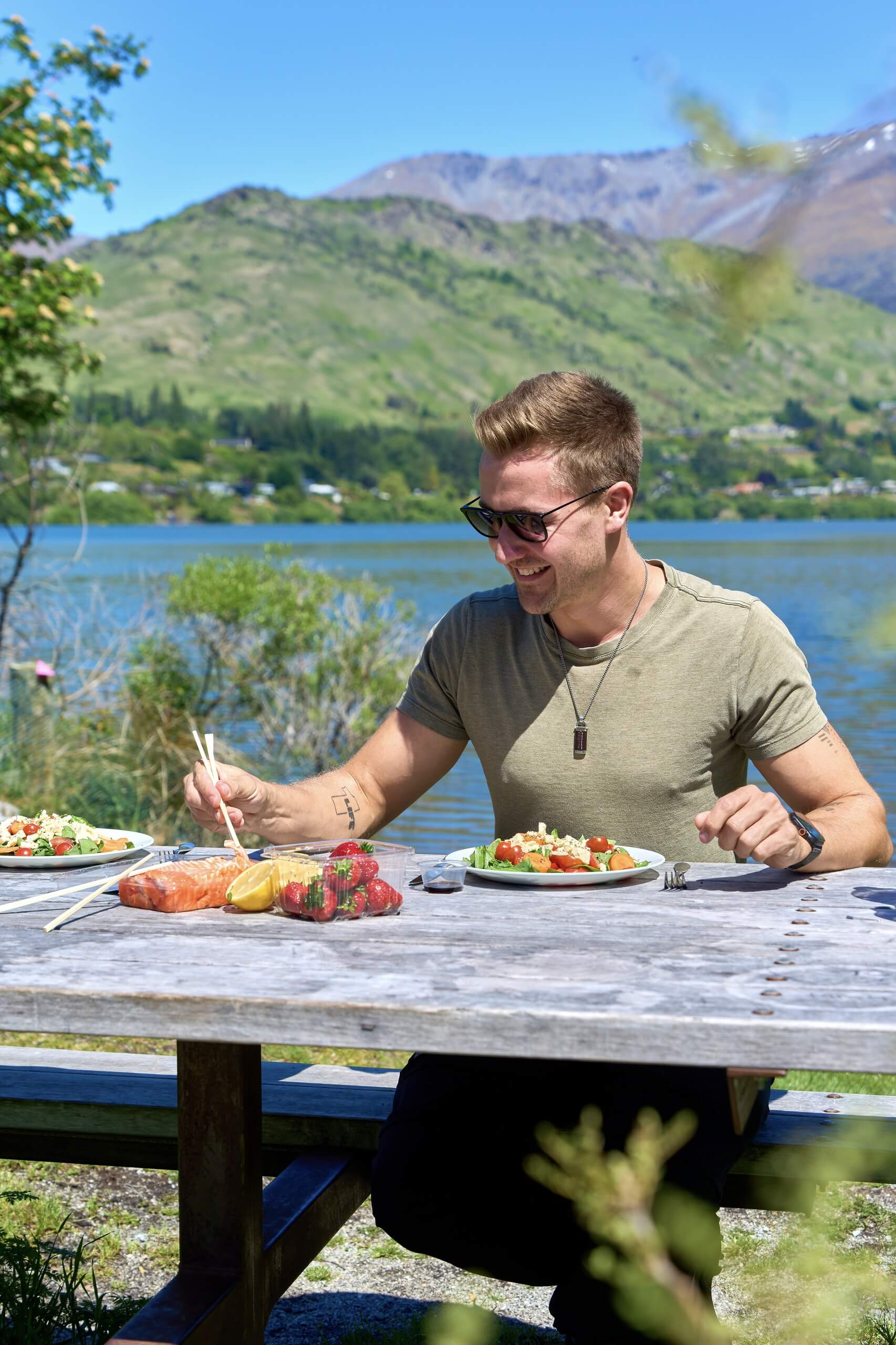
The first few hours in Christchurch are spent at the Riverside Market: local produce, handmade cheeses, fresh pastries. Then a stroll across the Bridge of Remembrance and along the Avon River, which flows through the city center. In the evening, the first Kiwi BBQ moment at Tasman Holiday Park — a self-contained cabin, heated pool, no distractions except the Southern Star in the sky.
Akaroa & Pure Pods — The Banks Peninsula as a wellness stop
Day 7 began with a sunrise soak at He Puna Taimoana, one of the best thermal baths on New Zealand's east coast. Afterwards, breakfast at Lyttelton Coffee, a harbor café considered by locals to serve the best filter coffee on the Banks Peninsula. Optionally, I recommend a section of the Awaroa/Godley Head Loop Track—a coastal walk that passes a World War II battery with an underground magazine. It's 1.9 kilometers, with an elevation gain of 28 meters, and takes 30 to 60 minutes. Short, but dramatic.
The real highlight of the day, however, was the drive to Pure Pods Pōhue. Pure Pods are a New Zealand original: minimalist lodges, completely enclosed in glass, far removed from everything, offering 360-degree views of the landscape and starry sky. No Wi-Fi, no traffic noise, just glass, a bed, and nature. From the parking lot, you walk 1.2 kilometers uphill through the bush—a climb deliberately chosen so that you leave civilization behind before you even enter it.
A night spent in a Pure Pod is one of the three best sleep experiences I've had anywhere in the world. The stars move above you, the full moon replaces the ceiling light, and the only soundscape is the birds of the Banks Peninsula.
Hector's Dolphins in Akaroa & drive to Lake Tekapo
On day 8, the Akaroa Dolphins Cruise was scheduled for 10:15 a.m. The cruise is part of a conservation program (TIAKA) that protects the native Hector's Dolphin—one of the smallest and rarest dolphin species in the world, endemic to New Zealand, with a total population estimated at 15,000 individuals. Under good conditions, the probability of seeing them is over 90 percent. We were lucky: three groups accompanied our boat right along the bow.
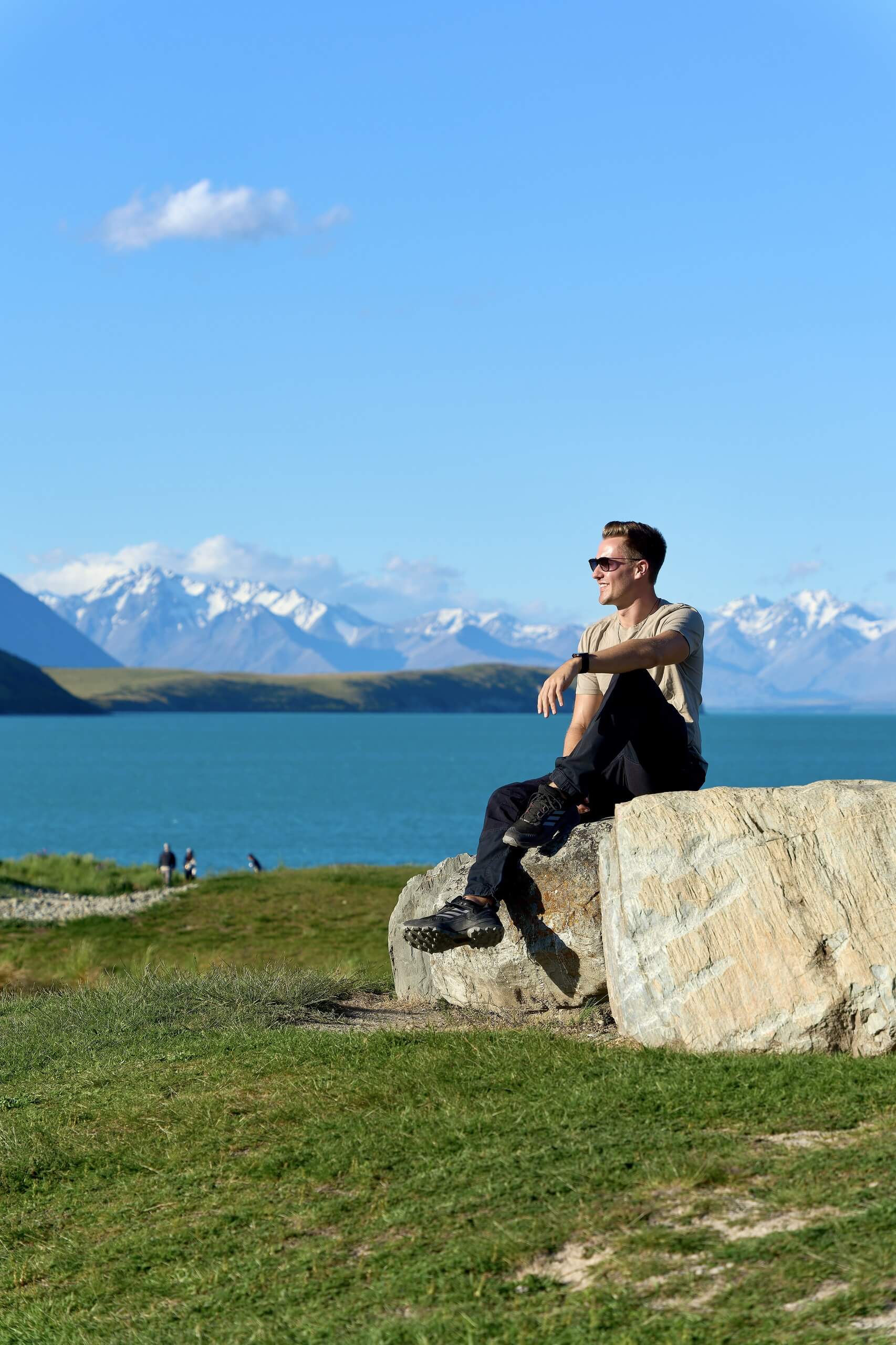
After the cruise, we headed southwest: about a four-hour drive through Geraldine and Fairlie, with photo stops at typical Canterbury barns and our first glimpses of the Southern Alps. Lake Tekapo in the late afternoon light is an Instagram cliché, but it still works every time: the turquoise of the lake due to glacial meltwater, the Church of the Good Shepherd on the shore, and the snow-capped Alps in the background. We spent the night at Lakes Edge Holiday Park, enjoying a sunset soak—a direct, heated pool experience overlooking the lake.
Aoraki Mount Cook — Glaciers, Red Tarn & Stargazing
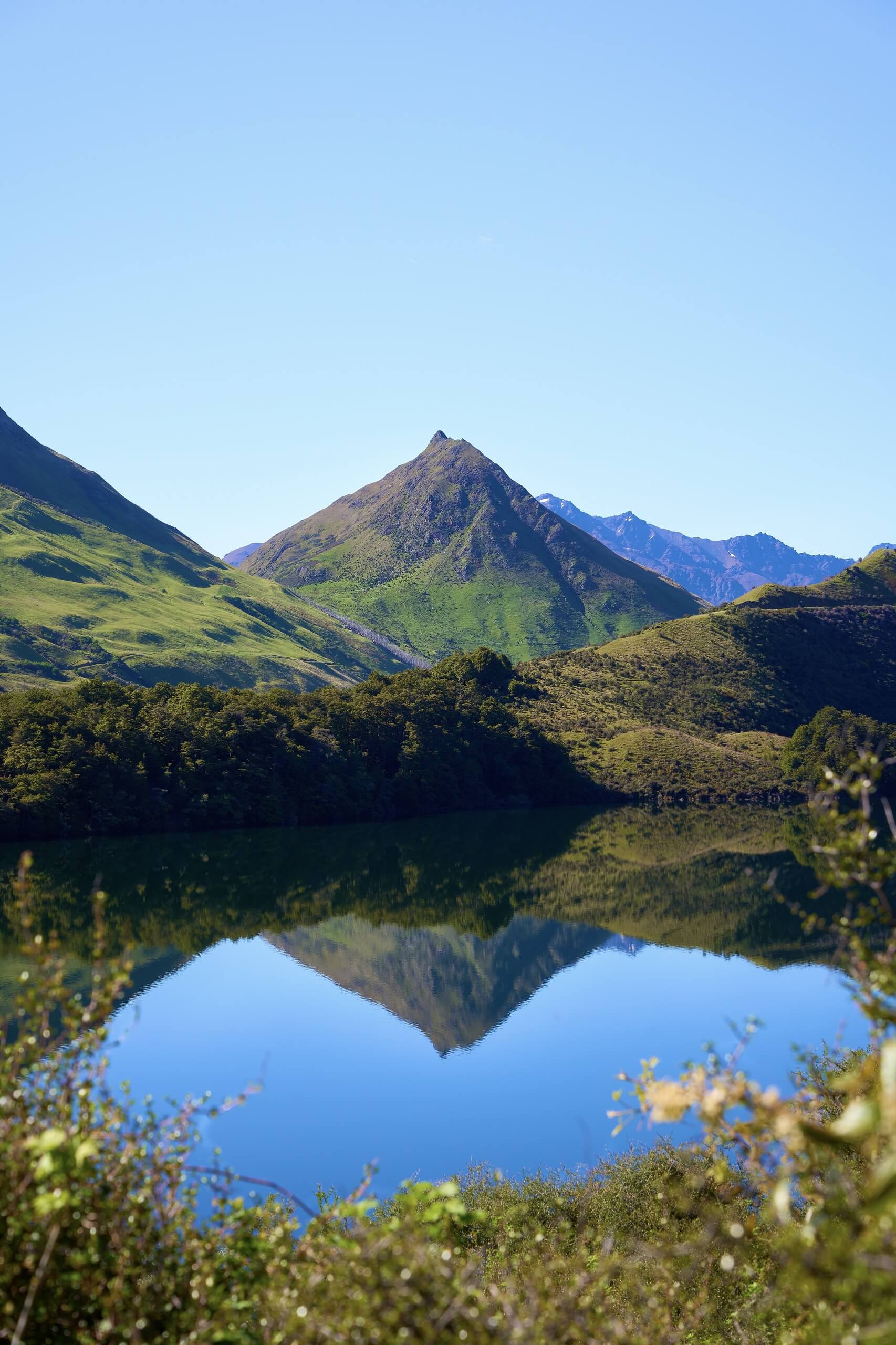
Day 9 was the most visually intense day of the entire tour. The drive from Lake Tekapo to Aoraki/Mount Cook took an hour along Lake Pukaki, its shores lined with lupins in shades of purple, pink, and yellow. The view of Mount Cook in the distance as the lake glides past the window is one of New Zealand's famous camera shots. And rightly so.
In Aoraki/Mount Cook National Park, the Mt Cook Glacier Guide was the highlight of my itinerary. This guided tour provides access to the Tasman Glacier—New Zealand's largest glacier—with its own glacial lake landscape and floating icebergs. As a content creator, this was a moment where I consciously took my time: drone footage, time-lapses, still images. For drone flights in the national park, you need a permit from the Department of Conservation (DOC)—processing time is two weeks, and it's free.
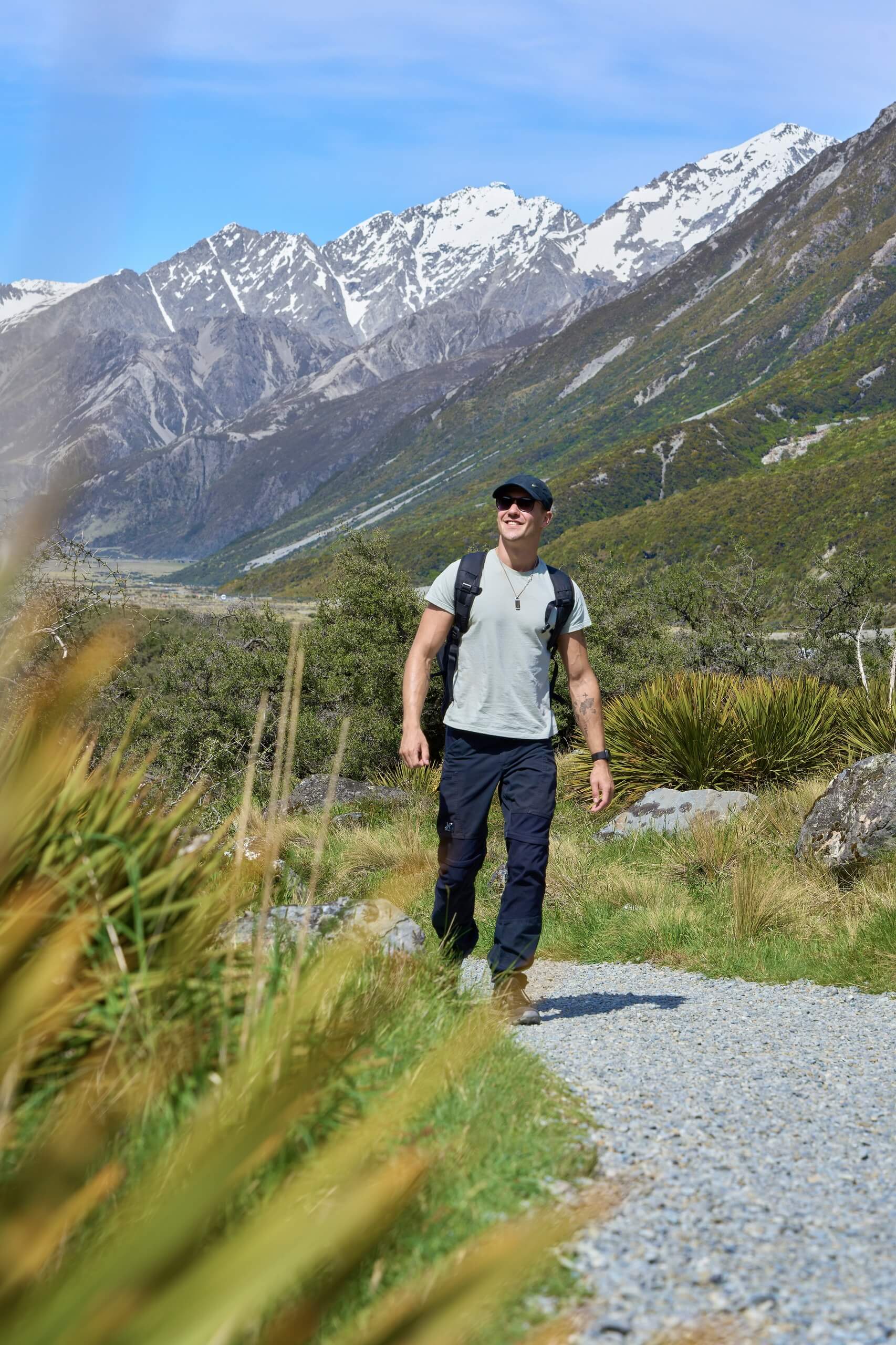
We optionally included the Red Tarn Walk in our day. It's a 4-kilometer round trip on the same trail, with 330 meters of elevation gain, taking 1.5 to 2 hours. The destination: two small alpine lakes with red aquatic plants and a 360-degree panorama of the Hooker Valley and the Sealy Range. The walk is easy to moderately difficult, but shouldn't be underestimated—the elevation gain is concentrated.
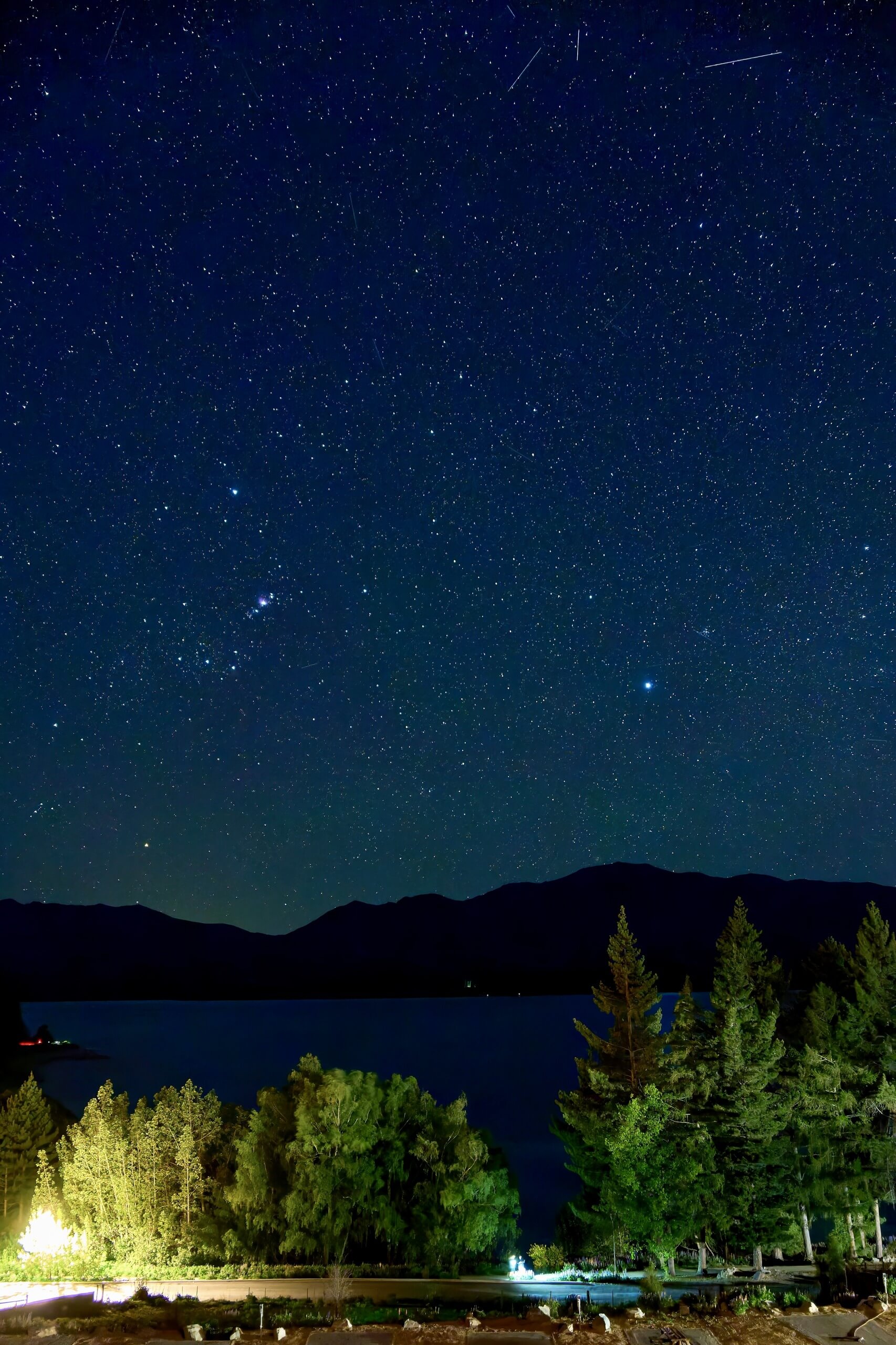
The day concluded with Big Sky Stargazing at the Hermitage Mount Cook. A 90-minute guided stargazing tour in the Aoraki Mackenzie International Dark Sky Reserve, the world's largest dark sky reserve. You'll see the Milky Way with the naked eye, the Southern Cross, and the Magellanic Clouds. Overnight stay: Hermitage Mount Cook, a hotel situated so close to the glacier that the breakfast view is considered one of the best in the world.
Queenstown — Adrenaline, Glenorchy & Central Otago wine
The drive from Mount Cook to Queenstown takes about 3.5 hours—arguably the most scenic overland journey on the entire South Island. You leave the alpine glacial valley, roll through the Mackenzie Basin, pass Omarama, and reach the Central Otago region via Lindis Pass. Check in at the Azur Lodge, one of Queenstown's most prestigious boutique lodges, with nine villas overlooking Lake Wakatipu and views of the Remarkables.
The evening was spent on a sunset walk along the Lake Wakatipu & Queenstown Gardens Trail — a flat 30 minutes that will take away any jet lag.
Day 11 was the day I'd been most looking forward to: Glenorchy Funyaks. Funyaks are inflatable canoes that take you down the Dart and Rees Rivers, nestled among the mountain peaks that served as filming locations for Lord of the Rings and The Hobbit. It's a full-day adventure that begins with a jet boat ride before you transfer to the funyaks and paddle back down the river yourself. An alternative on the same day would have been Nomad Safaris' LOTR 4WD tour through the same scenery—film buffs can easily combine both into two visits.
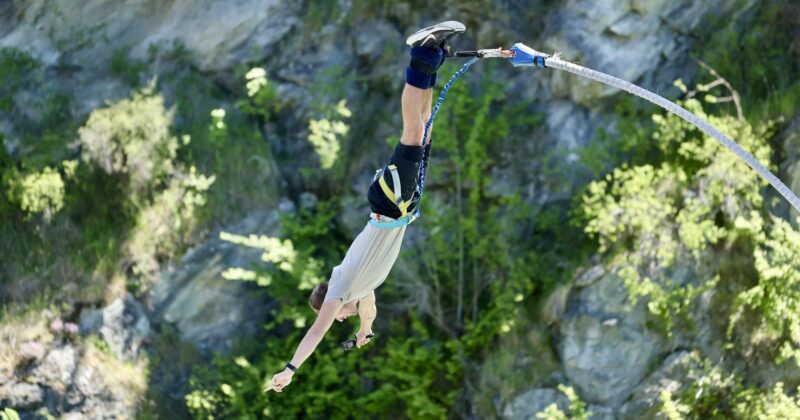
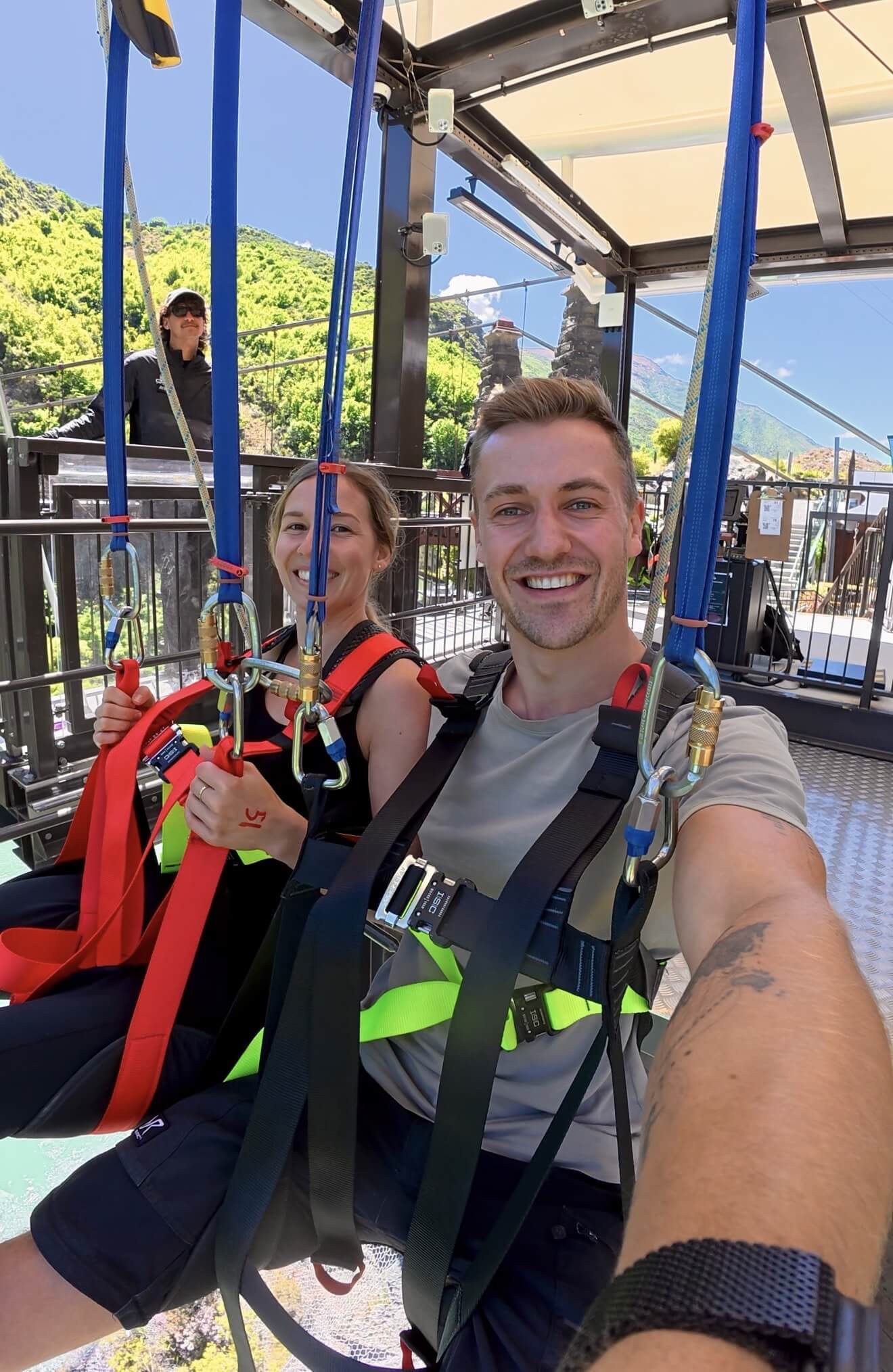
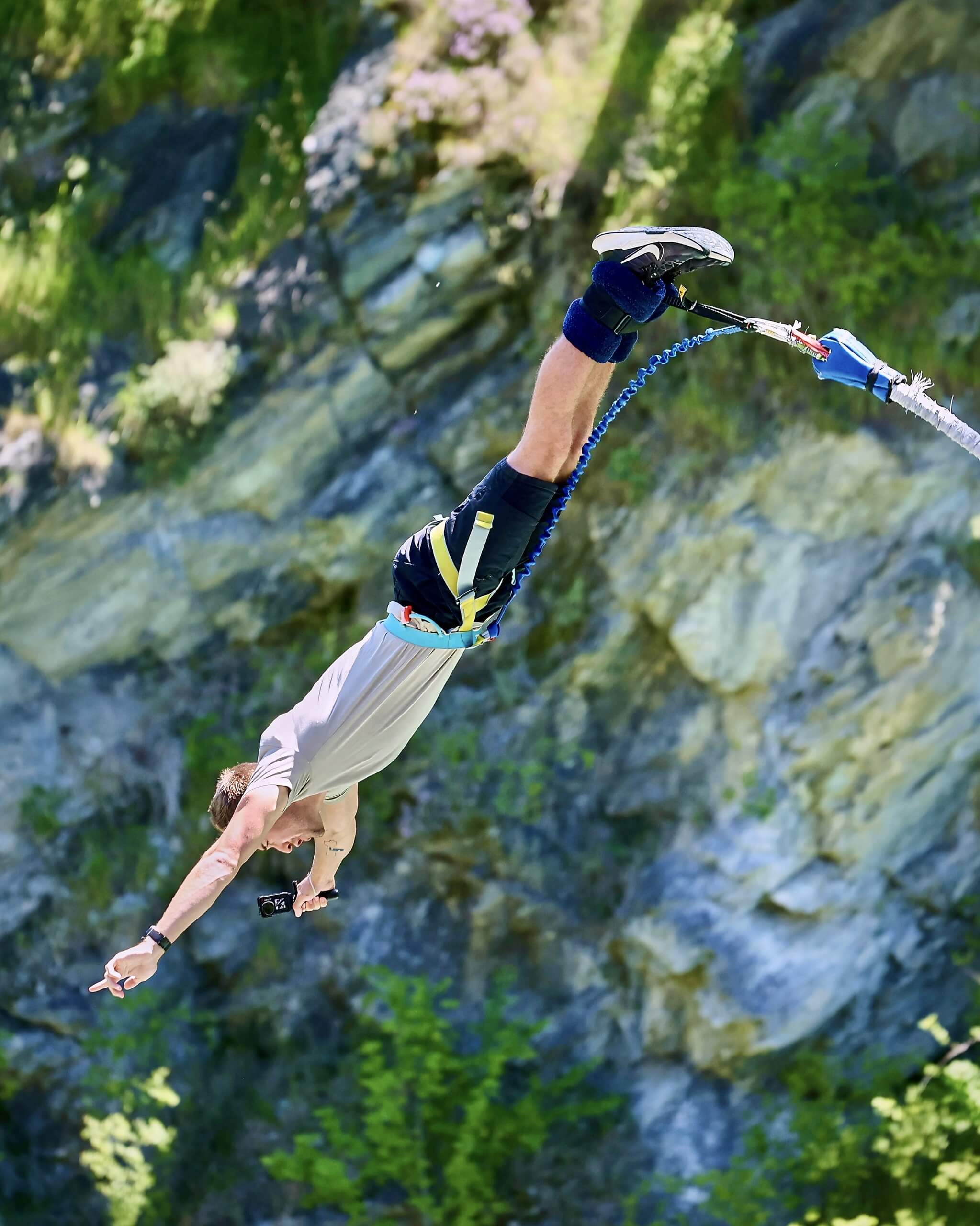
Day 12 started at Kawarau Bridge. Kawarau Bridge is the birthplace of commercial bungee jumping—established in 1988 by AJ Hackett, 43 meters above the turquoise Kawarau River. The jump itself is shorter than the one at Nevis (134 meters), but historically significant, and the canyon location is photogenic in a way that makes a Nevis jump almost boring. For content creators, Kawarau Bridge is the iconic spot. In the afternoon, the e-bike guided winery tour through Central Otago, the southernmost wine region in the world, awaited. Pinot Noir, cold nights, warm midday sun, and a pace that allowed you to stop between three or four wineries.
New Zealand travel report: Costs, best time to travel & insider tips
Best time to travel to New Zealand
November to March is the peak season in New Zealand. I was there in mid- to late November—it was like a late spring in New Zealand, with moderate tourist numbers, flowers everywhere, and daylight until 9 p.m. December to February is peak season with significantly higher prices and packed campsites. If you're flexible, mid-November or March offers almost the same weather with half the crowds.
Travel to New Zealand from Germany
There are no direct flights from Germany. The most common routes are via Singapore (Singapore Airlines), Dubai (Emirates), or Doha (Qatar Airways). Flight time: 24 to 28 hours with one stopover. I flew via Singapore—Changi Airport is one of the few airports where a layover of several hours feels pleasant rather than tiring.
Cost overview for 12 days in New Zealand
| Position | Costs (approx.) |
|---|---|
| Flight Frankfurt → Auckland return (Premium Economy) | 1.450 € |
| Domestic flights (AKL-NPL, NPL-CHC) | 280 € |
| Maui Motorhome (7 days South Island) | 720 € |
| Petrol + Tolls | 180 € |
| Hotels & Pure Pods (5 hotel nights) | 1.100 € |
| Food & Drink | 450 € |
| Activities (Forgotten World, Dolphins, Glacier, Funyaks, Bungy, Wine Tour) | 620 € |
| NZeTA + IVL + Insurance | 100 € |
| Total per person | ~4.900 € |
For comparison: A comparable trip to the Algarve or after Gran Canaria It costs about a third. New Zealand is expensive, but it offers a diversity of landscapes that you won't find in Europe.
Visa, NZeTA & IVL
German citizens do not need a visa for stays of up to 90 days, but they do need an NZeTA (New Zealand Electronic Travel Authority) for NZD 23. Apply online; processing takes 72 hours. An additional IVL (International Visitor Conservation and Tourism Levy) of NZD 35 is also payable – this is collected directly with the NZeTA application.
SIM card & navigation
At Auckland Airport, Spark and One NZ prepaid SIM cards are available from NZD 29 for 4 weeks with 10 GB of data. Spark has better coverage on the South Island—important if you plan to navigate in the Mackenzie or Mount Cook areas. However, there are still dead zones in more remote areas; offline maps via Maps.me or Google Maps are essential.
Flying a drone in New Zealand
New Zealand is a drone paradise with strict rules. Drones over 250g must be registered with the CAA. Flying is generally prohibited in national parks (DOC land) — exceptions are possible for content creators, but require a permit with two weeks' notice. Outside of national parks, you can fly as long as you stay below 120m altitude and maintain a distance of 4km from airports.
FAQ — New Zealand Travel Report 12 Days
Is 12 days in New Zealand enough?
Twelve days are sufficient for a focused tour with two days on the North Island and ten days on the South Island—provided you use domestic flights instead of the long road journeys. For a classic both-island road trip without flights, you should plan for three weeks.
How much does a 12-day trip to New Zealand cost?
A 12-day trip to New Zealand costs approximately €4,500 to €5,500 per person on a mid-range budget, including flights, domestic flights, motorhome, hotels, and activities. Budget travelers camping and self-catering can manage from around €3,000.
When is the best time to travel to New Zealand?
The best time to travel is from November to March (southern summer). November and March are the off-season with fewer tourists and better prices. December to February is peak season—warm, but campsites are full.
Do I need an international driving permit?
Yes, you need an international driving permit in New Zealand along with your German driving license. Without one, you won't be insured in case of an accident. You can apply at the local registration office; it costs about €15 and is issued immediately.
Is it worth visiting the North Island in just 2 days?
Visiting Auckland and the Taranaki region in 48 hours is possible—provided you fly instead of driving. The Forgotten World Rail & River Tour alone justifies the detour via New Plymouth and is virtually unknown in Germany.
Which is better: Kawarau Bridge Bungy or Nevis Bungy?
For first-time jumpers and content creators, the Kawarau Bridge is the better choice: 43 meters, a historic location marking the birth of commercial bungee jumping in 1988, and visually iconic with its canyon backdrop. Nevis, at 134 meters, is significantly higher, but less photogenic.
New Zealand travel report: Conclusion
After visiting 82 countries and working as a professional travel creator for ten years, New Zealand ranks among my top three destinations worldwide. The combination of epic scenery, high-quality activities, genuine hospitality, and well-developed infrastructure is unique. The Auckland → Taranaki → Christchurch → Akaroa → Mackenzie → Queenstown route delivers more in twelve days than many three-week itineraries—because it's deliberately focused rather than superficial.
New Zealand isn't a place you tick off your list. It's a place you want to return to. The South Island deserves at least two more trips—the West Coast, Fiordland, and Stewart Island are on my next list. And yes, I would ride the Forgotten World Rail Cart again in a heartbeat.
Read my other travel reports too: Australia East Coast, E5 Alpine Crossing and Philippines.

Max Haase
Travel Content Creator · Drone Photographer · Visual Storyteller
A professional travel creator for over 10 years with over 4 million followers. Specializing in high-end tourism board collaborations and visual travel storytelling.

 German
 English