Skip to content

Max Haase

About Max Haase

http://max-haase.com

Posts by Max Haase:

The best travel destinations for Christmas & New Year's Eve 2025 - Photo Max Haase Travel

Best travel destinations for Christmas & New Year's Eve 2026

The best travel destinations for Christmas and New Year's Eve 2026 — My top 7

Celebrating Christmas and New Year's Eve somewhere other than home has been a tradition for me for years. While most Germans are sitting under the Christmas tree on December 24th, I'm standing with my drone on a beach, a mountaintop, or in a city I've never seen before. In over ten years as a travel creator, I've experienced New Year's Eve in Rio de Janeiro, Christmas in Thailand, the turn of the year in Cape Town, and festive nights in Dubai. Every year, I get asked the same question: Where should I go for the holidays? Here are my honest recommendations for 2025—no sponsored content, just places that have truly inspired me.

  • Warm & affordable: Thailand, Colombia, Mexico (Tulum/Playa del Carmen) — from €2,000 per person for two weeks over Christmas including flight and mid-range hotel.
  • Warm & luxurious: Maldives and Dubai — from €3,000 per person per week, all-inclusive resorts for Christmas, New Year's Eve fireworks at the Burj Khalifa as a content highlight.
  • Summer in December: Cape Town, South Africa with 25-30°C, Table Mountain, Stellenbosch wine region — high season, therefore prices are 30-50% higher than in the low season (April/May).
  • A white Christmas is guaranteed: Lapland/Finland with Northern Lights, snow, reindeer and glass igloos — Budget from €2,500 per person for 5-7 days, booking 6+ months in advance is mandatory.
  • Book early to save 30-50%: Flights and hotels over the holidays (December 23 - January 3) are significantly more expensive than usual — July/August is the ideal booking period for the following year.

Thailand — The classic that never gets boring

Thailand is on every "warm winter travel destination" list — and for good reason: it simply works. In December, the southern islands offer perfect conditions — 30°C, hardly any rain, turquoise water. Koh Lanta is my personal favorite for the Christmas season: significantly quieter than Koh Samui or Phuket, with long sandy beaches and a relaxed hippie atmosphere that's perfect for the holidays.

What many people don't know: New Year's Eve is celebrated in a big way in Thailand, even though it's not a traditional holiday. On Koh Phangan, there are the legendary Full Moon Parties (which sometimes coincide with New Year's Eve), and even on quieter islands, beach bars organize fantastic countdowns with fireworks over the sea. My tip: If you want to go to Thailand for Christmas, book by September at the latest—the popular accommodations are booked up months in advance.

Budget for Thailand over Christmas

Flights from Germany cost between €600 and €900 (round trip) during peak season. On-site, you can easily get by on €40 to €60 per day – including upscale dining, scooter rental, and excursions. A nice bungalow on the beach costs between €30 and €80 per night. Overall, two weeks in Thailand over Christmas is realistically budgeted from around €2,000, with more comfortable accommodations closer to €3,000 to €3,500.

Cape Town, South Africa — Summer, wine and Table Mountain

If you want to celebrate Christmas in summer, Cape Town is hard to beat. December and January are the height of summer in South Africa — 25-30°C, long evenings, and an infectious energy in the city. I spent New Year's Eve 2022 in Cape Town and it was one of my best New Year's experiences ever.

Table Mountain at sunset, the vineyards of Stellenbosch and Franschhoek, the penguins at Boulders Beach, the Cape of Good Hope — Cape Town easily offers enough to do for two weeks. New Year's Eve is best celebrated at Camps Bay Beach or in the V&A Waterfront district, where there's live music, street food, and a spectacular countdown.

Attention drone pilots: South Africa has relatively strict drone laws. Theoretically, you need an RPAS registration with the South African Civil Aviation Authority (SACAA). In practice, many tourists fly without registration, but I recommend checking the regulations beforehand. Drone flying is strictly prohibited at Table Mountain itself (national park), but there are plenty of other spots—Signal Hill, Chapman's Peak Drive, and the coast near Camps Bay offer fantastic perspectives.

Costs Cape Town

output Costs (approx.)
Flight from Germany (return) €600–1,000
Airbnb / Hotel per night 50–150 €
Rental car per day 25–40 €
Food (restaurant per meal) 8–25 €
2 weeks total (1 person) €2,000–3,500

Dubai — Luxury New Year's Eve for Content Creators

Dubai on New Year's Eve is an experience everyone should have at least once in their lifetime. The fireworks at the Burj Khalifa are legendary—the world's tallest building enveloped in a 360-degree display of fireworks, broadcast live to over 200 countries. I was there in 2023 and filmed the spectacle from the promenade along Dubai Creek—the view of the entire skyline is better from there than directly at the Burj Khalifa, where hundreds of thousands of people are gathered.

The days between Christmas and New Year's are best spent exploring the desert (a hot air balloon flight at sunrise over the dunes is an absolute highlight for photographers), visiting the Miracle Garden (the world's largest flower garden), and the Palm Jumeirah. The weather in December is perfect—22-26°C, no rain, and pleasantly warm without the brutal summer heat.

The catch: Dubai over New Year's is expensive. Hotel prices triple, restaurants require minimum orders, and flights cost more than usual. Expect to spend €3,000-€5,000 for a week, depending on the hotel standard. But in return, you'll get content that will take your portfolio to the next level.

Lapland, Finland — White Christmas guaranteed

If you're looking for a classic experience, there's no better place than Lapland. Guaranteed snow in December, Northern Lights, reindeer, and yes—even Santa Claus in Rovaniemi. It sounds cheesy, but it's magical. Lapland is a paradise, especially for photographers and drone content creators: the snow-covered forests seen from above, the Northern Lights over frozen lakes, the glass igloos where you can drift off to sleep under the aurora borealis.

I recommend not only visiting Rovaniemi (very touristy), but continuing on to Inari or Saariselkä. It's quieter there, the chances of seeing the Northern Lights are higher, and you get the authentic Lapland experience — dog sledding, ice fishing, a sauna at -20°C and then jumping in the snow.

Lapland isn't cheap: flights to Rovaniemi cost €300-600 (return), accommodation during Christmas week costs €150-400 per night, and activities like Northern Lights tours or husky safaris cost €80-200 per person. Expect to spend €2,500-4,000 for a week.

Colombia — The insider tip travel destination for New Year's Eve

Colombia is my personal insider tip for anyone looking for something off the beaten path. Cartagena on New Year's Eve is a feast for all the senses—the entire old town transforms into one giant street party. Colombians celebrate New Year's Eve with a tradition I've never experienced anywhere else: at midnight, they burn life-size effigies ("Año Viejo") in the street, symbolizing the old year. Add to that salsa, champagne, and fireworks over the Caribbean coast.

During the week between Christmas and New Year's Eve, a trip to the Rosario Islands (a 30-minute boat ride from Cartagena) or to Tayrona National Park on the Caribbean coast is well worth considering. The blend of colonial history, Caribbean flair, and South American joie de vivre makes Colombia one of the most exciting New Year's destinations I know.

The best part: Colombia is extremely affordable. Flights from Germany cost €500-800, you can get by on €30-50 per day, and a beautiful boutique hotel in Cartagena's old town is available from €60-100 per night.

Mexico — Tulum & Playa del Carmen for sun and ruins

Mexico is the hidden gem I long underestimated in my rankings. The Yucatán Peninsula offers perfect travel weather in December: 28°C, hardly any rain, turquoise Caribbean waters, and a noticeably more relaxed atmosphere than classic beach destinations. Tulum is my favorite for a mindful Christmas by the sea—the combination of white sandy beaches, Mayan ruins right on the water, and cenotes (freshwater swimming holes in the jungle) makes it one of the most photogenic destinations I know.

From Tulum, you can reach Playa del Carmen (livelier beachfront, more restaurants) in 30 minutes, Akumal (snorkeling with sea turtles) in an hour, and Chichén Itzá—one of the New Seven Wonders of the World—in two hours. The best way to celebrate New Year's Eve is on the beach: many boutique hotels organize beach dinners with live music, while Playa del Carmen's Fifth Avenue transforms into a huge party.

Costs: Flights from Germany cost between €600 and €900 (round trip), a nice boutique hotel in Tulum between €80 and €180 per night. Including rental car, food, and excursions, you should expect to spend around €2,500 to €3,500 for two weeks — excellent value for money by Caribbean standards.

Maldives: All-inclusive holidays over Christmas and New Year's

If budget is no object: The Maldives at Christmas are the epitome of paradise. December is peak season, the weather is perfect, and the overwater villas of the luxury resorts offer a sunset that still leaves even me speechless after years in the travel industry. I was out over the atolls with my DJI Mini 5 Pro and took some of the most shared photos I've ever taken—the color gradients of the Indian Ocean from above are simply surreal.

But let's be honest: the Maldives over Christmas are extremely expensive. An overwater villa in a 5-star resort easily costs €800-€2,000 per night during Christmas week. Add to that the flight (€700-€1,200), the speedboat or seaplane transfer (€200-€500 each way), and the restaurant prices on the island. Expect to spend at least €5,000-€8,000 per person for a week. But in return, you'll get an experience you'll never forget.

Where is it warm and affordable in December? My recommendations for every budget

budget Recommendation Total costs approx.
Low Budget Thailand (Koh Lanta) €2,000–3,000
middle class Colombia, Mexico or Cape Town €2,500–3,500
Upscale Dubai or Lapland €3,000–€5,000
luxury Maldives €5,000–10,000

Short break over Christmas: Practical tips for the holidays

No matter where you're going — traveling over Christmas and New Year's has some special features you should be aware of:

  • Book early: Flights and hotels are more expensive than usual over the holidays (30-50%). Booking in September offers significant savings.
  • Travel insurance: Especially in winter, the risk of flight cancellations increases (due to snow, storms). Good travel cancellation and interruption insurance is essential.
  • Offline navigation: In remote areas (Lapland, Colombia outside of cities), mobile internet often doesn't work reliably. Download Google Maps offline maps in advance.
  • Camera batteries in the cold: In Lapland or other cold destinations, batteries lose a significant amount of power. Keep spare batteries warm in your jacket pocket.
  • Credit card instead of cash: In Thailand, Dubai, and the Maldives, you can use a credit card almost everywhere. In Colombia and South Africa, you should always carry some cash.

Frequently Asked Questions

What is the cheapest travel destination for New Year's Eve?

Thailand and Colombia are by far the cheapest options for a New Year's trip from Germany. In both countries, the cost of living is extremely low—a complete dinner often costs less than €10, and even good hotels range from €30 to €80 per night. The biggest expense is the flight, and even that is still moderate at €500 to €800.

When should I book flights for Christmas?

The golden rule: the earlier, the better. For long-haul flights over Christmas, I recommend booking by the end of September at the latest. Those who are flexible with their dates (e.g., flying on December 22nd instead of 23rd) can save another €100-300. Use flight comparison websites like Google Flights or Skyscanner and activate price alerts.

Do I need any special vaccinations for these travel destinations?

For Thailand and Colombia, the German Federal Foreign Office recommends vaccinations against hepatitis A and B, and yellow fever vaccinations for certain regions (Colombia). For South Africa, malaria prophylaxis is advisable in certain areas (Kruger National Park), but not in Cape Town. Dubai, Lapland, and the Maldives do not require any specific vaccinations. Consult your doctor or a tropical medicine institute 6-8 weeks before departure.

Can I travel alone over Christmas?

Absolutely — and I even recommend it. Especially around Christmas, there are other solo travelers on the road who also want to escape the family hustle and bustle. In Thailand and Colombia, you'll find like-minded people in every hostel. Cape Town and Dubai also work perfectly for solo travelers, as there are organized tours and events everywhere. Only in the Maldives is solo travel rather unusual (and expensive, since you're paying for the villa yourself).

Which travel destination is best suited for families?

For families with children, I recommend Lapland (Santa Claus, snow, adventure) or Dubai (safety, cleanliness, child-friendly attractions like the Miracle Garden and the aquariums). Thailand is also manageable with older children (10 and up), but the long flight times and unfamiliar food can be challenging for younger children.

Max Haase Travel Creator
About the author

Max Haase

Travel Content Creator · Drone Photographer · Visual Storyteller

Since over 10 years professional travel creator with over 4.2 million followers. Specializing in high-end tourism board collaborations and visual travel storytelling.

4.2MFollowers
82+Countries
500+Cooperations
10+Years

You might also be interested in this

Bodrum travel report Turkish Riviera drone tips_featured

Bodrum Travel Report 2025: Sights, Hotels & Insider Tips

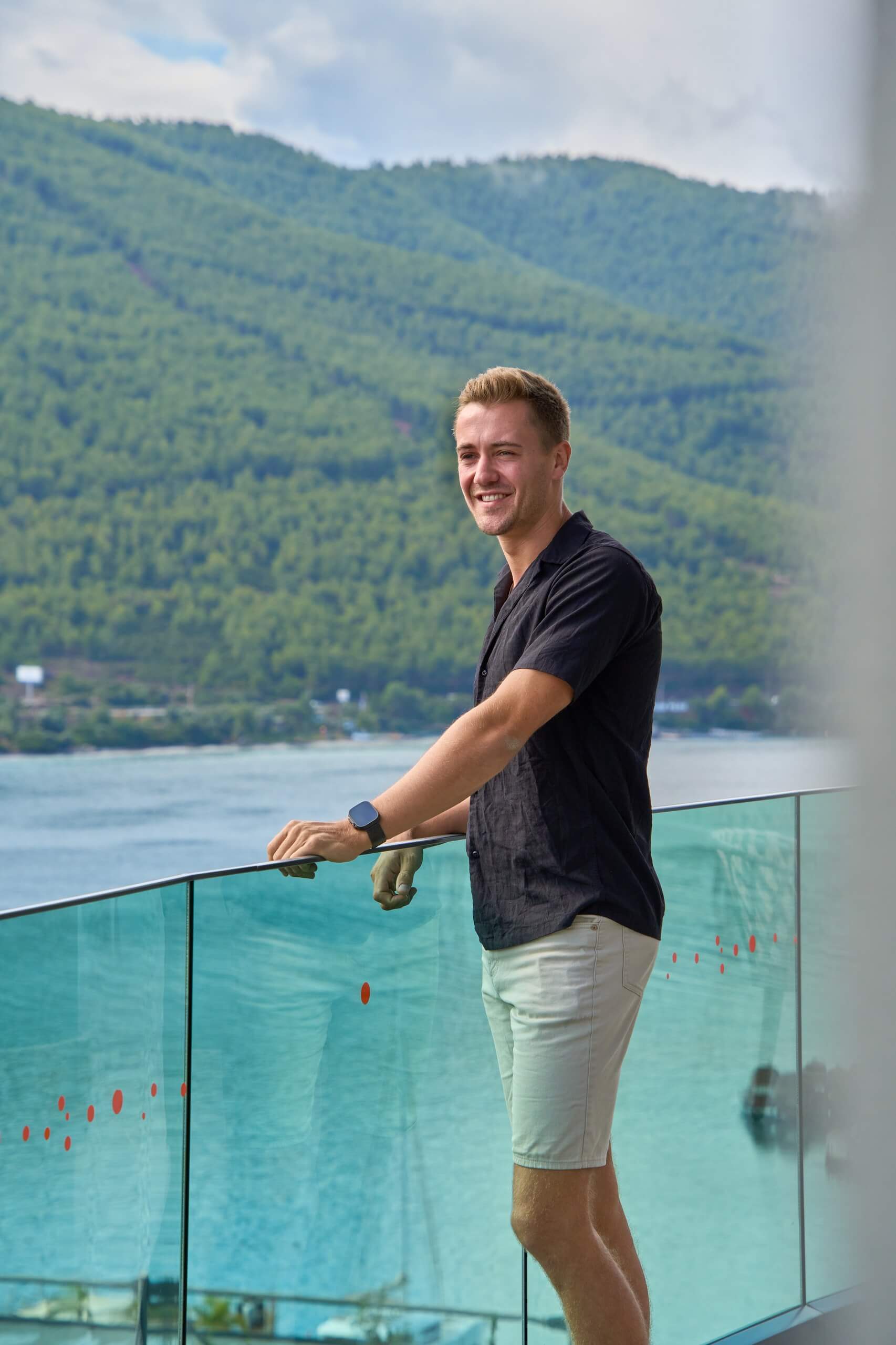
Bodrum is located on the southwestern side Aegean coast Turkey — precisely where ancient Greek history, turquoise bays, and a burgeoning luxury hotel industry converge. In October 2025, I was there as part of a collaboration with Visit Turkey four days in Bodrum and explored the peninsula with a drone — from Bodrum Castle via the marinas in Yalıkavak to the Karnas Vineyard at sunset. In this Bodrum travel report I will share the most important ones Sightseeing features, the best Hotels, real Insider tips from my itinerary, as well as honest costs and drone spots for your own trip.

  • Location: Bodrum is located on the southwestern Aegean coast of Türkiye (not the Turkish Riviera — that is Antalya) — a peninsula with over 20 bays between Gümüşlük and Göltürkbükü.
  • Top sights: Bodrum Castle (1402) with Museum of Underwater Archaeology, Mausoleum of Halicarnassus (Seven Wonders of the Ancient World), Old Town Bazaar and Yalıkavak Superyacht Marina.
  • Insider tips from my trip: Karnas Vineyard for sunset dinner in the vineyard, catamaran tour across the Turkaegean, Turkish hammam ritual and Opa Beach Restaurant without crowds.
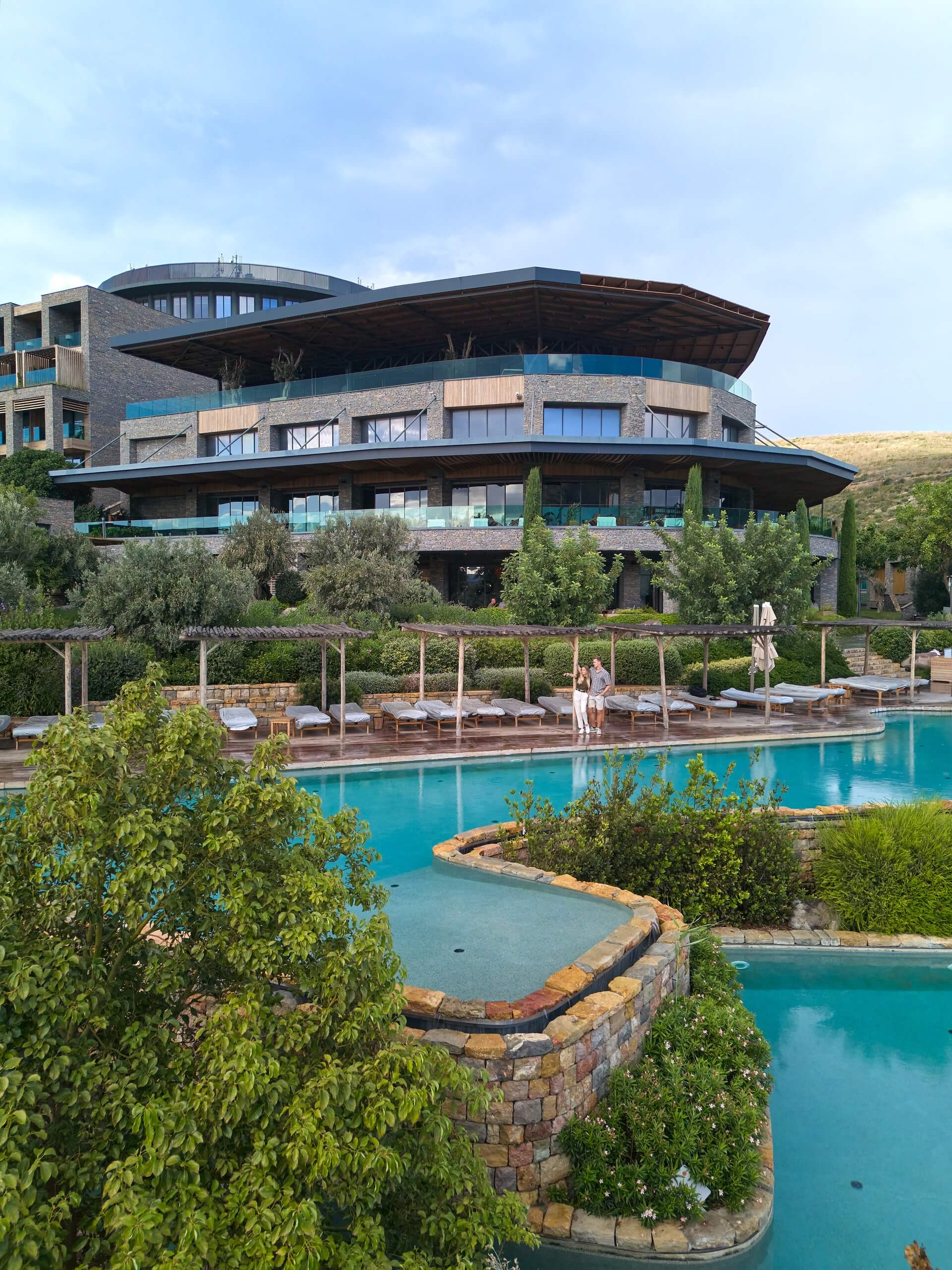
  • Hotel tip: Lujo Hotel Bodrum — 5-star A-la-Carte All Inclusive with several signature restaurants, private beach and prices from approximately €400-600 per night in high season.
  • Best time to travel: May-June and September-October — 24-28°C, warm sea, less heat and tourists than in August; October is ideal for drone spots and quiet bays.

Bodrum at a glance — why the Aegean peninsula is an upgrade from standard Turkey

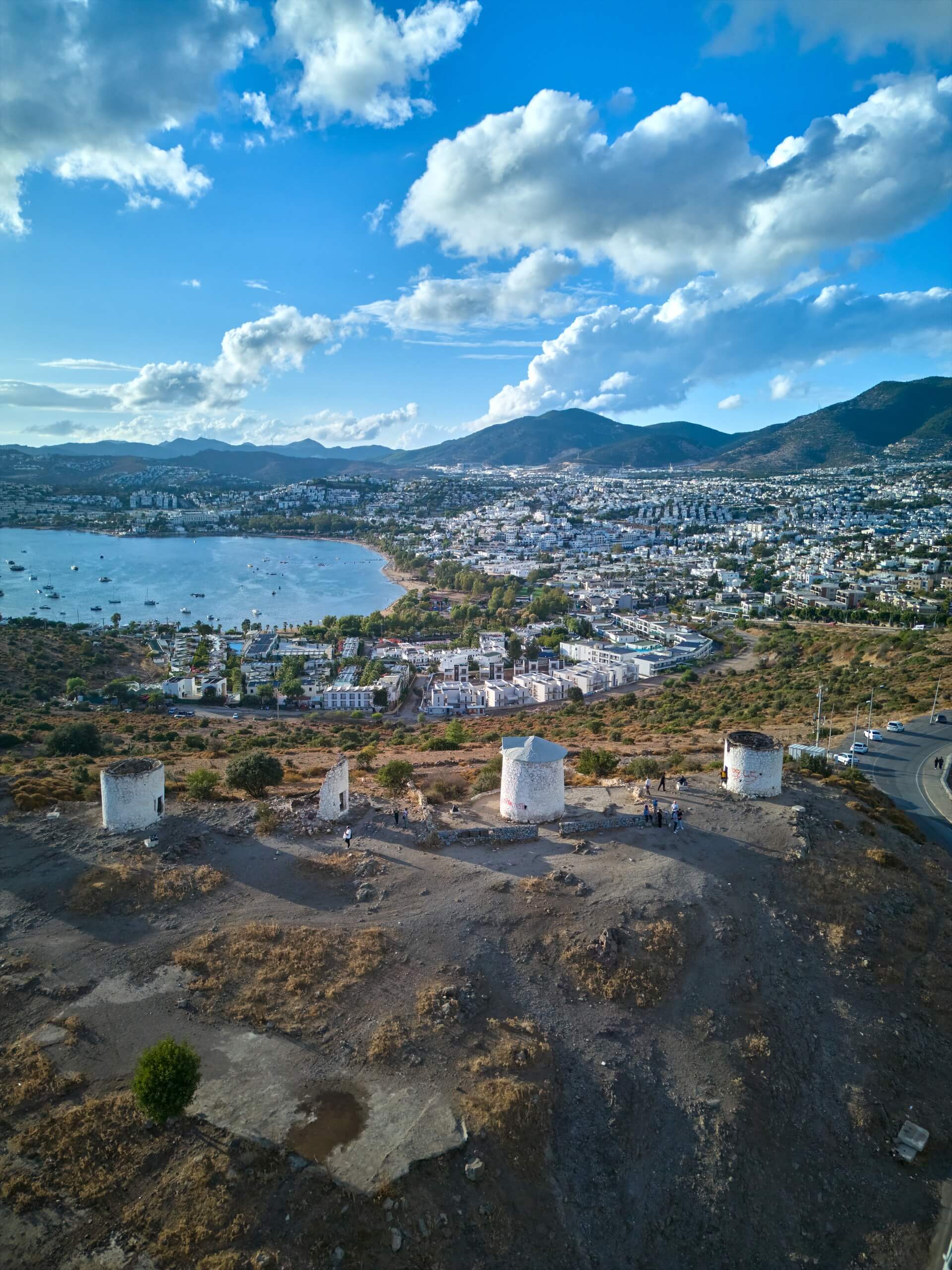
When people say "Türkiye", most think of Antalya, all-inclusive hotel complexes and stereotypical package holidays. Bodrum It's quite the opposite. The peninsula lies in the province of Muğla, about 700 kilometers southwest of Istanbul, directly opposite the Greek island of Kos. This very location—on the border between the Aegean and the eastern Mediterranean—defines its character: whitewashed houses like those in the Cyclades, climbing bougainvillea, and a yacht harbor atmosphere instead of anonymous stretches of beach.

The Bodrum peninsula boasts over 20 bays, each with its own unique character. From the air, the interplay of turquoise sea, white sandy beaches, and verdant hills is particularly striking—the colors are so intense that every drone photo looks photoshopped. But it isn't. And the best part: while autumn is already setting in in Central Europe at the beginning of October, Bodrum still enjoys temperatures of 21–28°C and perfect swimming weather.

Bodrum Sights — Castle, Old Town & a Wonder of the World

The City of Bodrum It surprises with its blend of ancient heritage and modern lifestyle. Those who only see the hotel are missing half the story.

Bodrum Castle & Museum of Underwater Archaeology

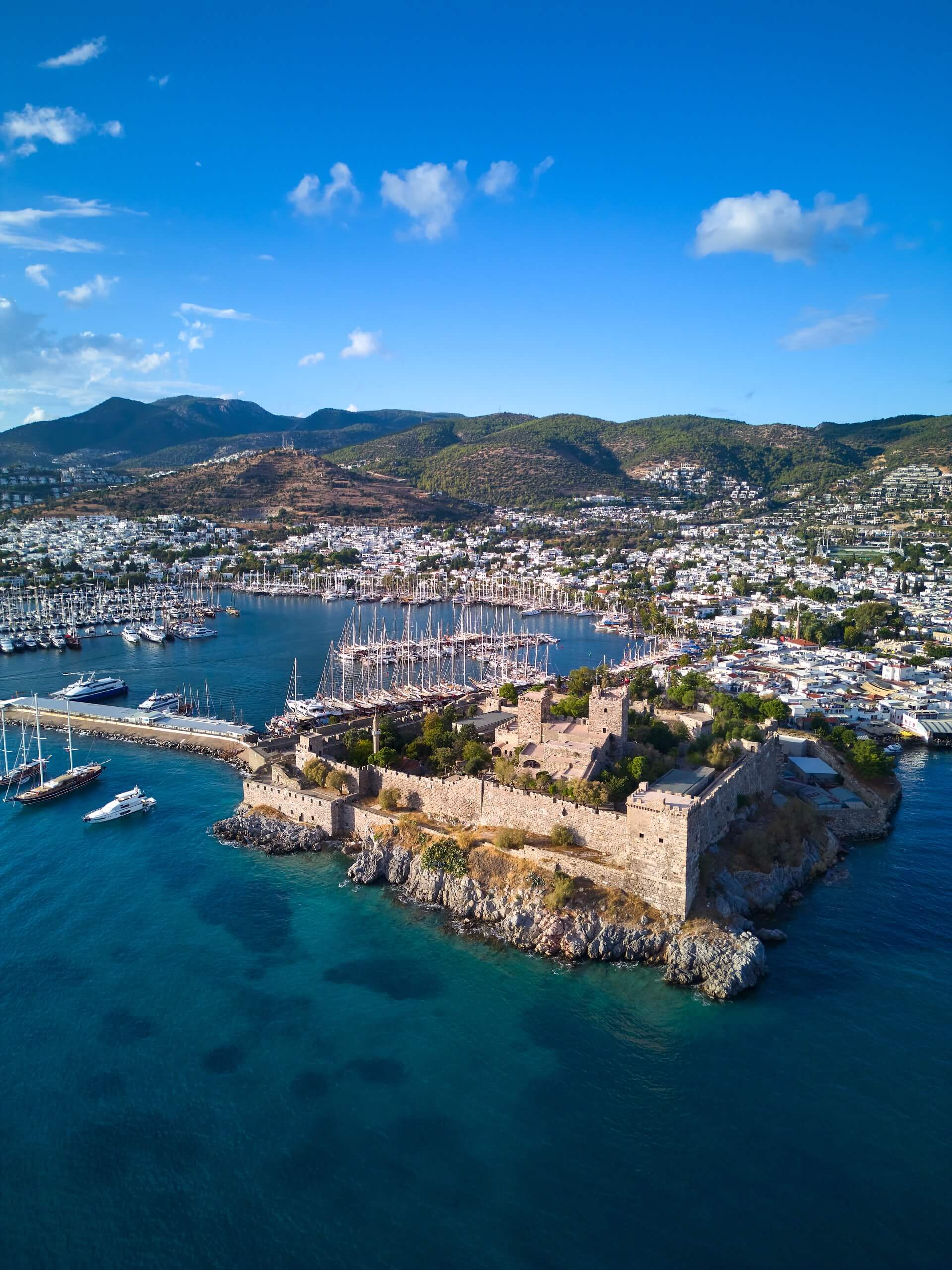
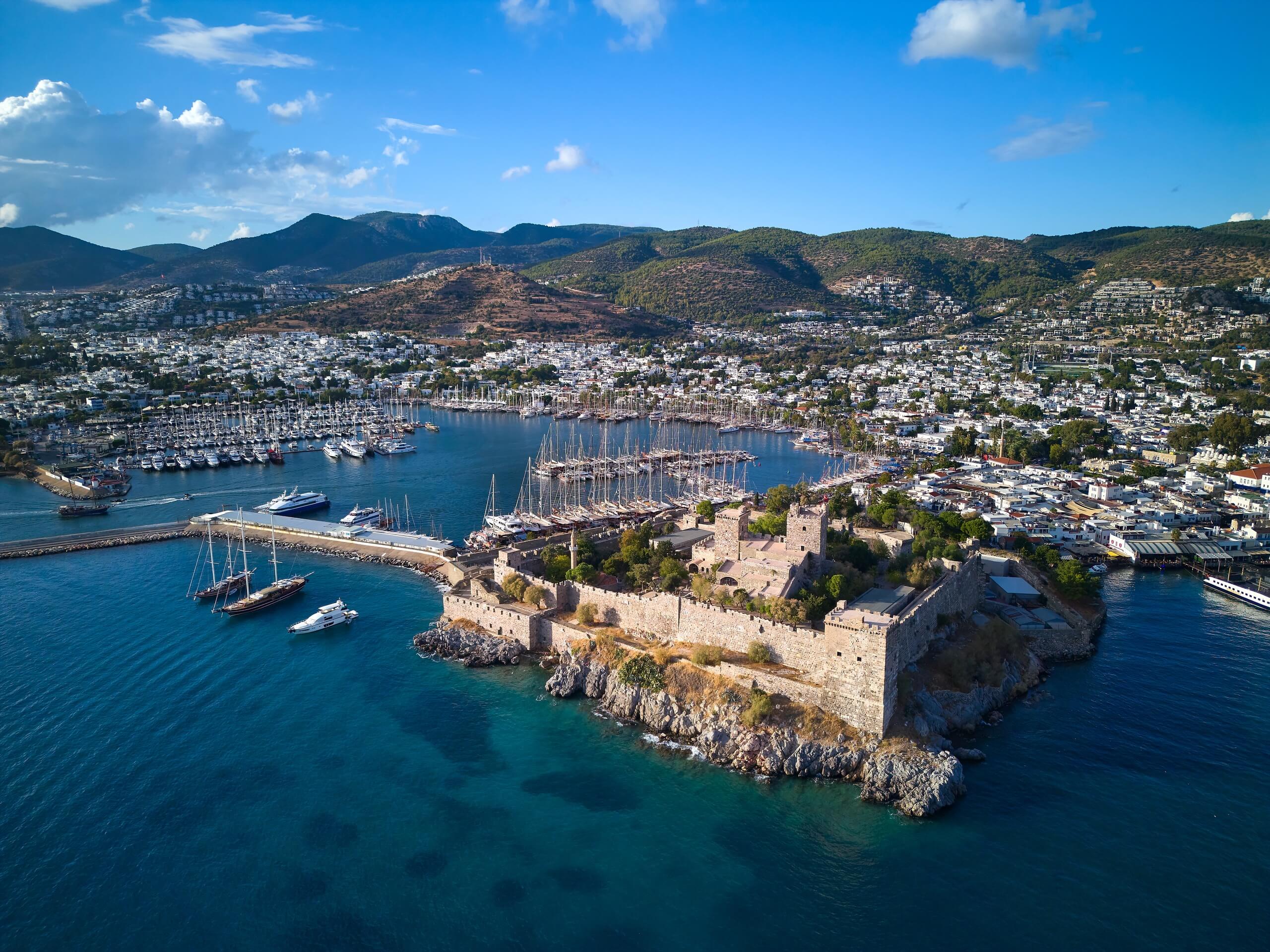
The Bodrum Castle (also "St. Peter's Castle", Turkish) Bodrum CastleThe castle towers above the harbor and is the city's iconic landmark. Construction began in 1402 by the Knights Hospitaller using stones from the ancient Mausoleum at Halicarnassus—a piece of recycling history that now offers the best views of the marina.

Inside the castle houses the Museum of Underwater Archaeology — one of the best of its kind in the world. It exhibits finds from ancient shipwrecks recovered off the Turkish coast, including the Uluburun wreck (14th century BC). A must-see for history buffs, but also for those who simply want to take beautiful photos: The Crusader chapel, the towers (one for each European nation) and the treasury are photogenic from every angle.

Opening hours: Daily except Monday, 8:30 a.m. to 6:00 p.m. (summer). Admission approx. €25 with Turkish Museum Pass.

Mausoleum at Halicarnassus — one of the Seven Wonders of the World

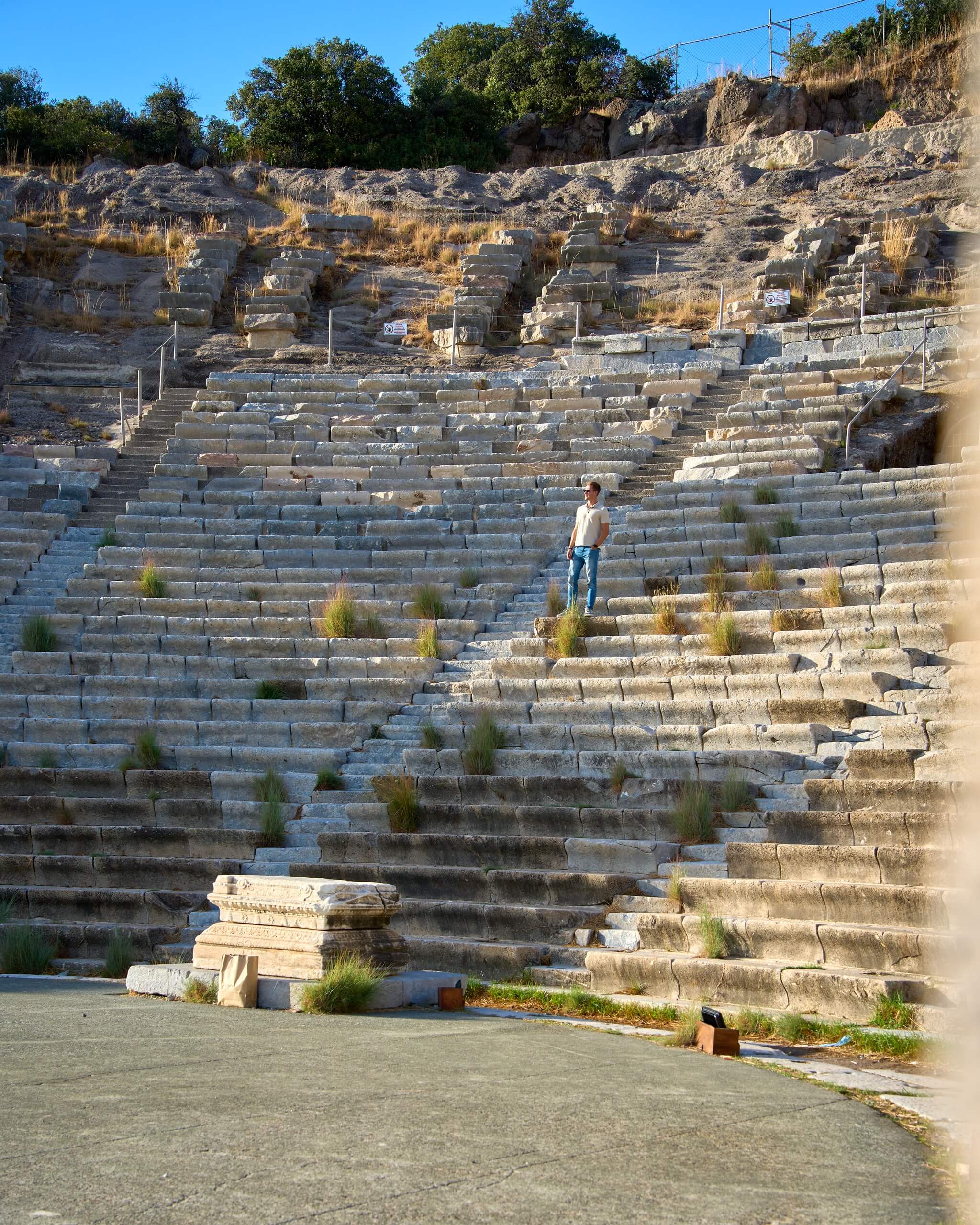
The Mausoleum of Halicarnassus was one of the Seven Wonders of the Ancient World — a monumental tomb for the Persian satrap Mausolus, built around 350 BC. Today, only foundation remains are left (an earthquake in the 13th century destroyed the structure; the stones, as mentioned, were moved to the castle). Admittedly, the ruins are modest. But the historical significance is enormous, and the small adjacent museum vividly explains the reconstruction.

My tip: Combine the Mausoleum and the Castle in a half-day trip. They're a 15-minute walk apart.

Bodrum Old Town & the Bazaar

The Bodrum Old Town Around Cumhuriyet Caddesi ("Bar Street"), the city's vibrant heart is at night: live music, rooftop bars, and open restaurants with sea views until the early hours. During the day, the Bazaar — a labyrinth of spice merchants, leather goods, hand-painted ceramics and carpets. Action is a duty and is part of the culture — starting prices are often twice as high as the fair price.

An authentic detail: The whitewashed houses with blue shutters have a distinctly Greek feel, and not by chance. Bodrum belonged to the Greek cultural sphere for centuries, and until the population exchange of 1923, more Greeks than Turks lived here. This influence is still evident in the architecture today.

Bodrum Bays — the most beautiful beaches of the peninsula

The Bodrum peninsula isn't a monolithic beach, but rather a collection of very different bays. Staying in Gümüşlük offers a completely different holiday experience than staying in Göltürkbükü. Here are the four bays that, in my opinion, are truly worth visiting:

  • Göltürkbükü — the „Saint-Tropez of Turkey“. Exclusive beach clubs, 30-meter yachts in the harbor, the clearest water on the peninsula. Pricey, but worth the experience.
  • Bitez — Perfect for windsurfers and kitesurfers. Shallow water, consistent afternoon winds, several watersports schools. Our dinner location Beynel Bitez It is located directly on the water.
  • Gümüşlük — the quietest and most authentic bay. A sunken ancient city lies in the water — while snorkeling you can still see the foundations of Myndos. No large hotels, only small guesthouses and fish restaurants on wooden jetties.
  • Turkish bükü Luxury resorts, beach clubs, and the most spectacular sunsets on the peninsula. The northern part of the peninsula is generally the opposite of the somewhat more touristy south coast.

Yalıkavak Marina — premium port for superyachts

If you only visit one marina in Bodrum, then choose Yalıkavak. Yalıkavak Marina Located in the northwest of the peninsula, this harbor is home to international superyachts over 50 meters in length. The promenade is a mix of designer boutiques (Louis Vuitton, Gucci, Prada), harbor restaurants, and rooftop bars. On day two, we spent our free time here between visiting the castle and dinner—and although I'm not much of a designer shopper, the atmosphere is definitely worth experiencing. In the afternoon, the yachts arrive, the sunset over the water plays, and jazz music drifts from the bars. A truly "Monaco" moment in the heart of Turkey.

Particularly photogenic: The approach to the harbor with the mountains in the background as seen from a drone — one of the best drone spots on the peninsula.

Bodrum insider tips — what no standard travel guide mentions

Every guidebook tells you about the castle and the old town. These four spots were what I discovered during my trip and which I would describe as the real highlights of my week in Bodrum:

1. Karnas Vineyard — Sunset dinner in the vineyard

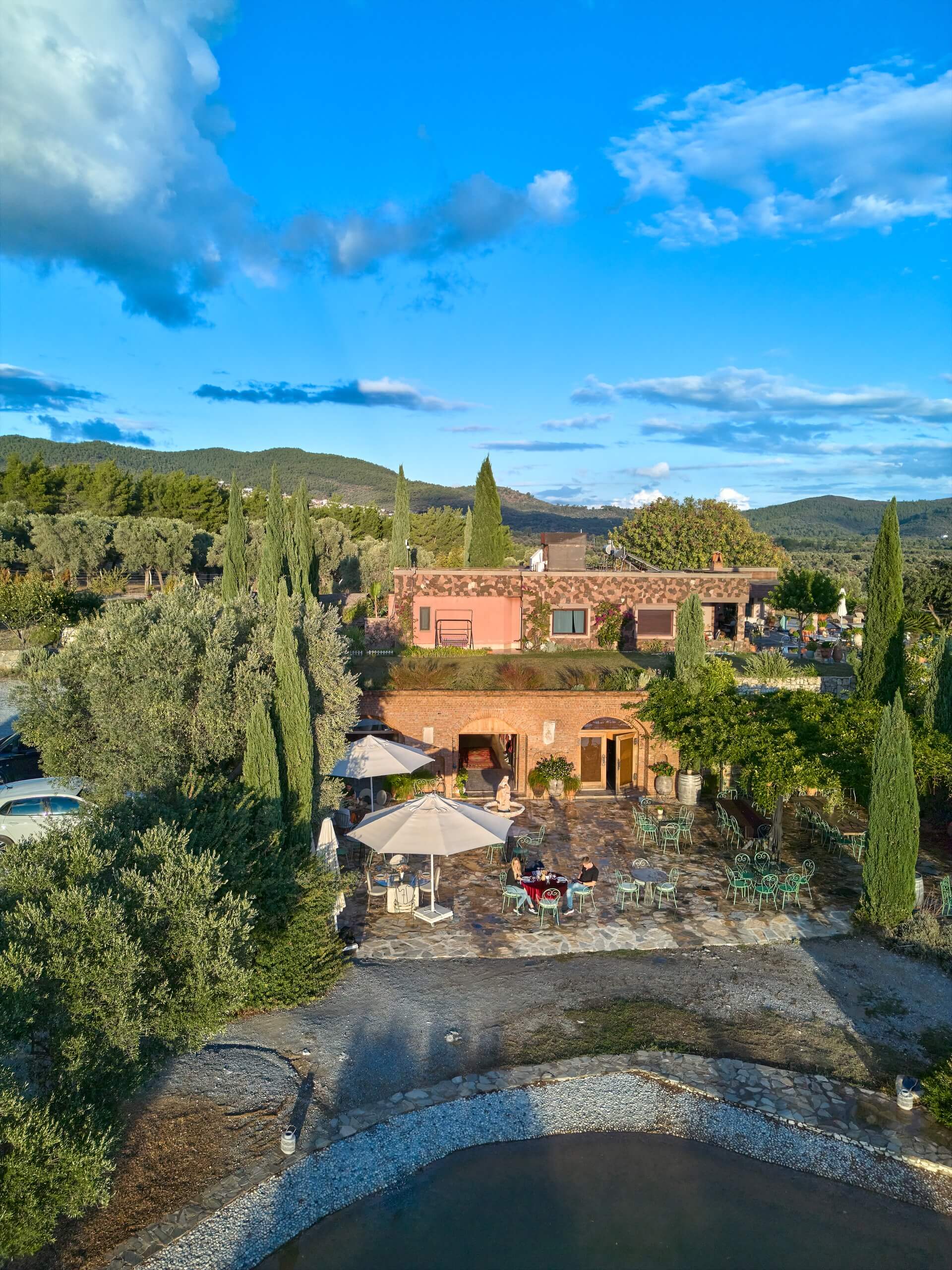
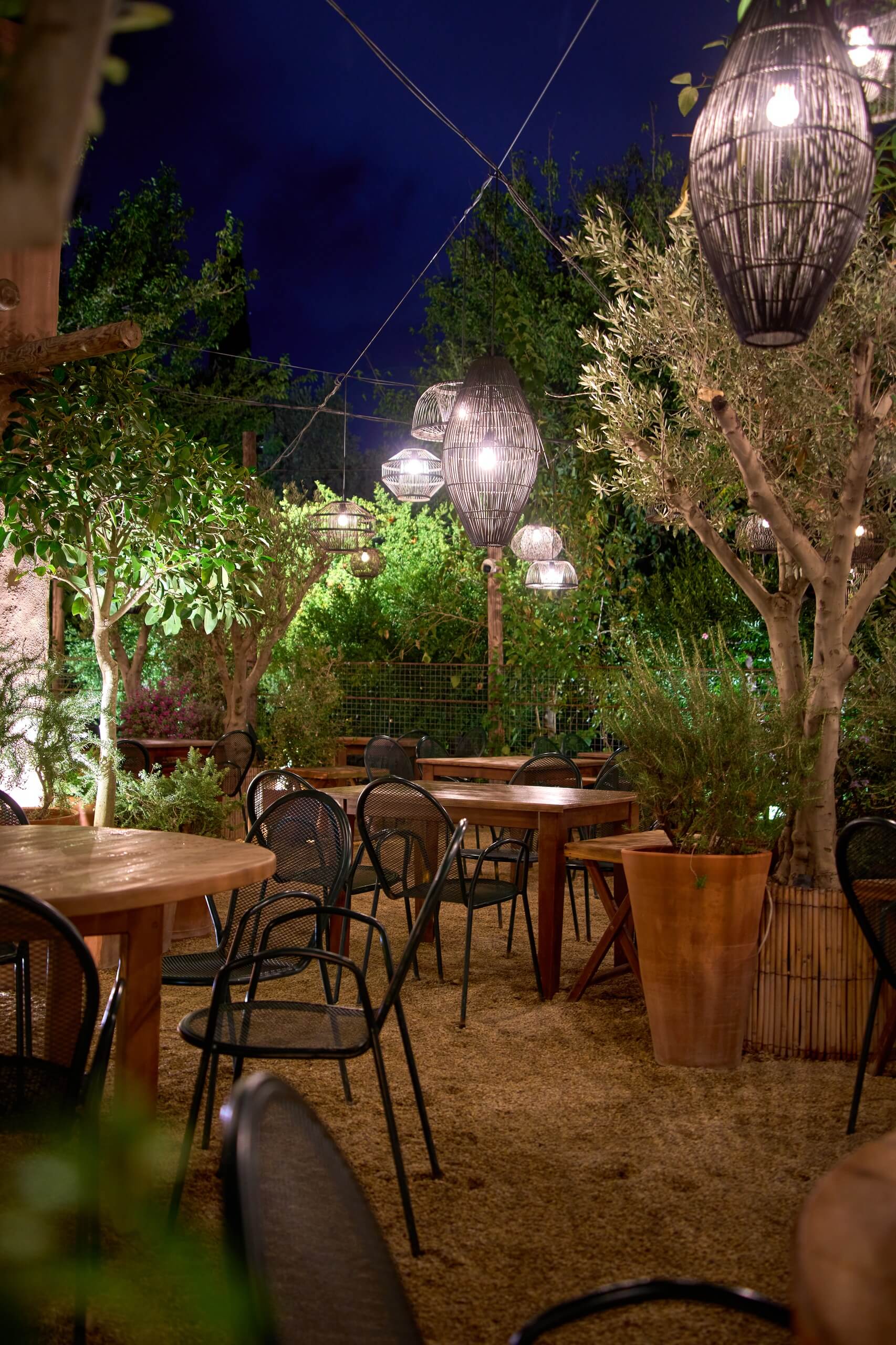
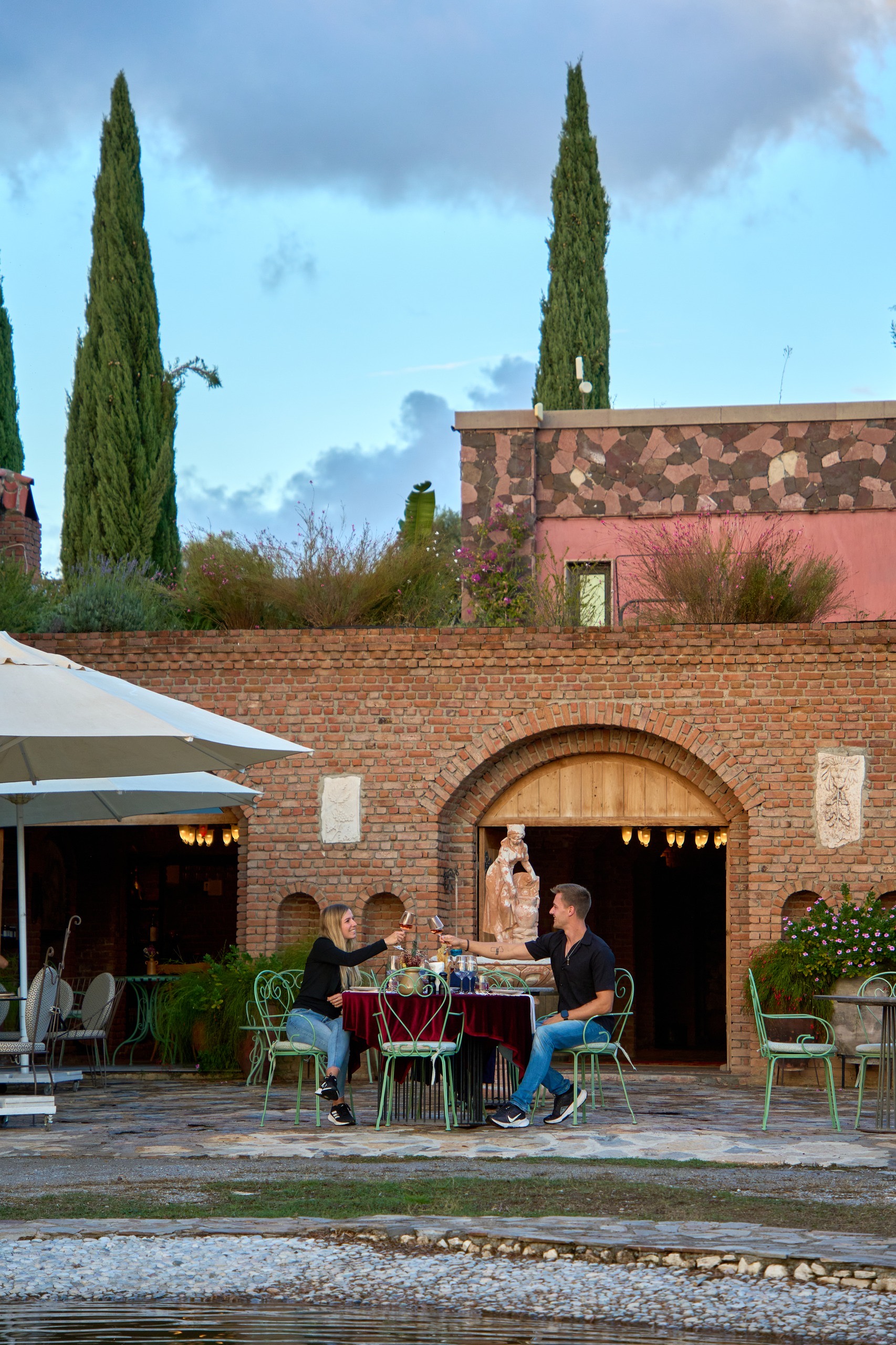
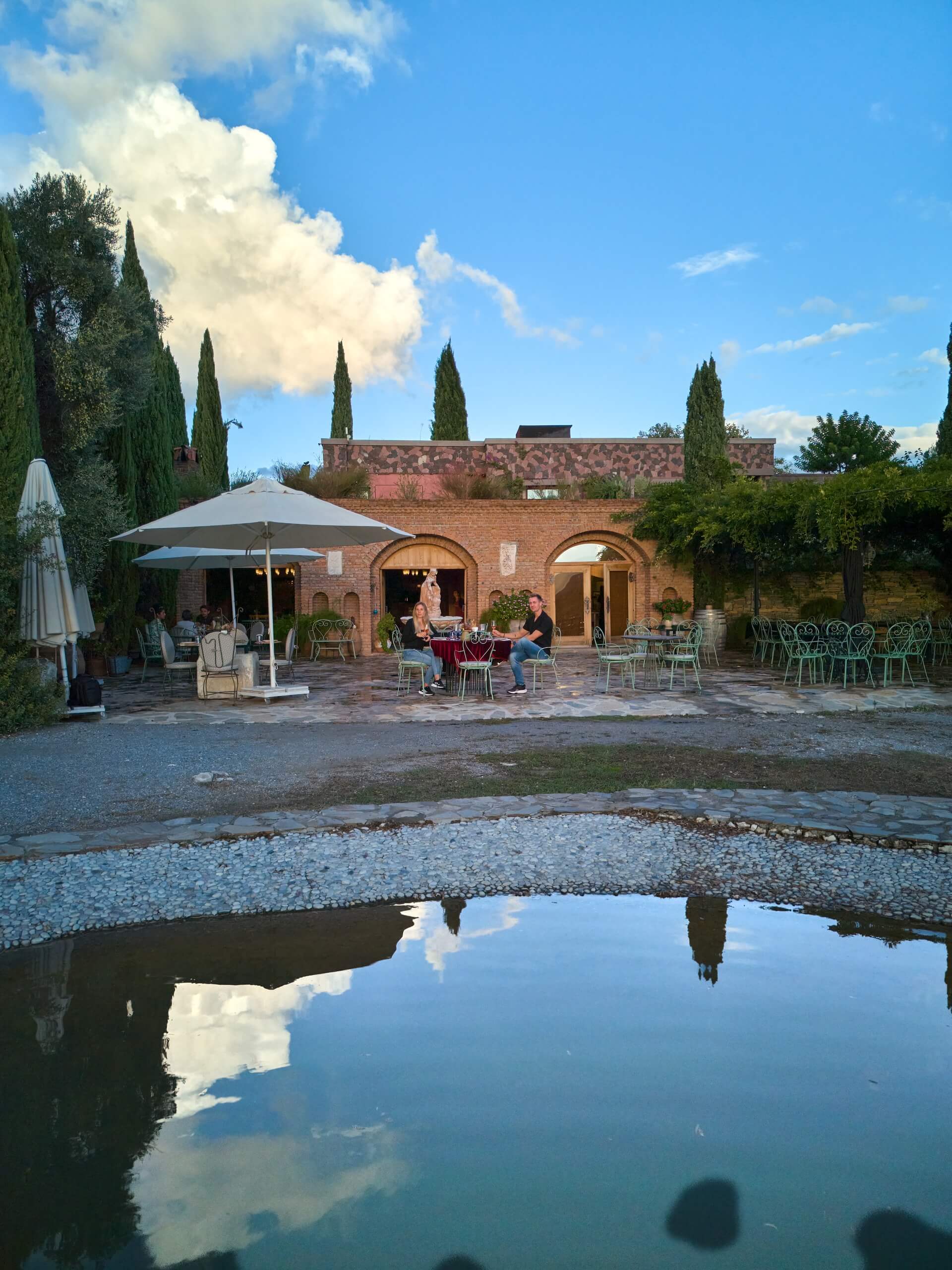
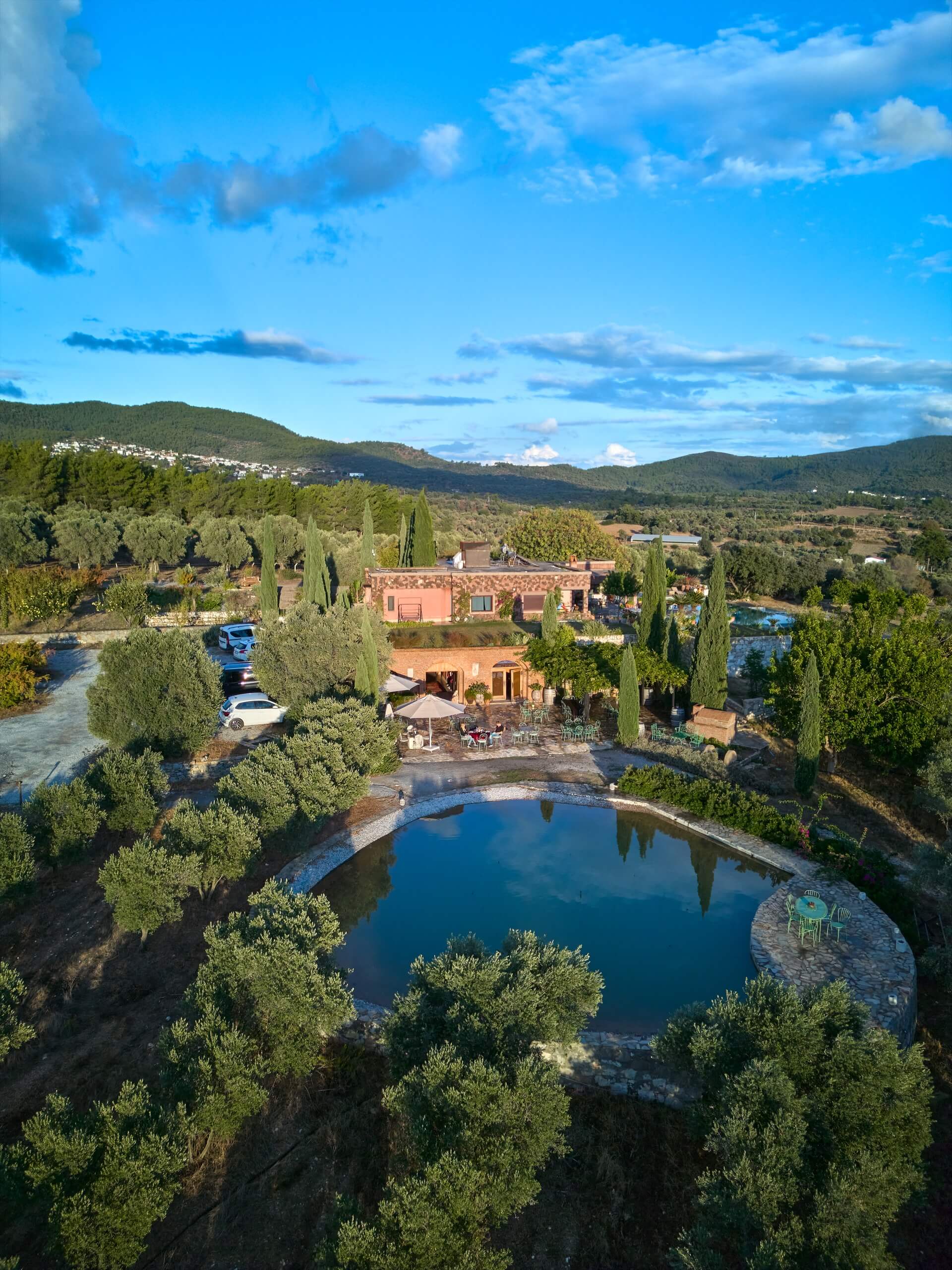
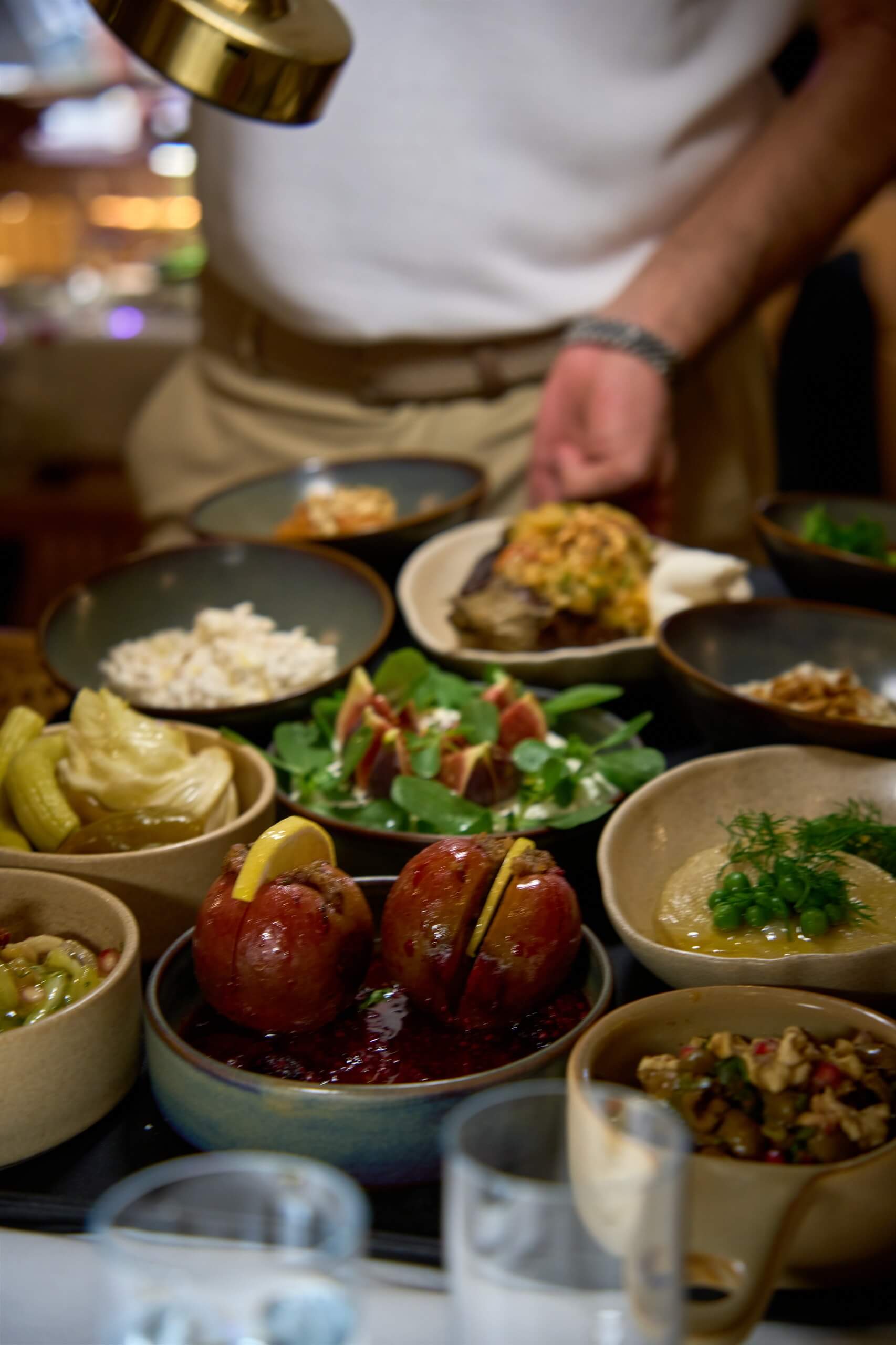
The Karnas Vineyard It's located about 25 minutes northeast of Bodrum city center, nestled in rolling hills. A family-run winery, it offers evening dinners in the vineyard—an open terrace, candlelight, and views across the vines to the Aegean Sea. We were there on day 3, with a transfer at 6:15 pm and dinner served until 10:00 pm. The cuisine combines Turkish mezze with Mediterranean grilled dishes, accompanied by house wines from their own production. The sunset over the vineyards is a truly special experience.

Reservations are essential — the restaurant is small and extremely popular with locals. It's on the pricier side (set menu from around €50 per person), but it's an experience that clearly sets Bodrum apart from package holiday destinations.

2. Catamaran tour across the Turkaegean

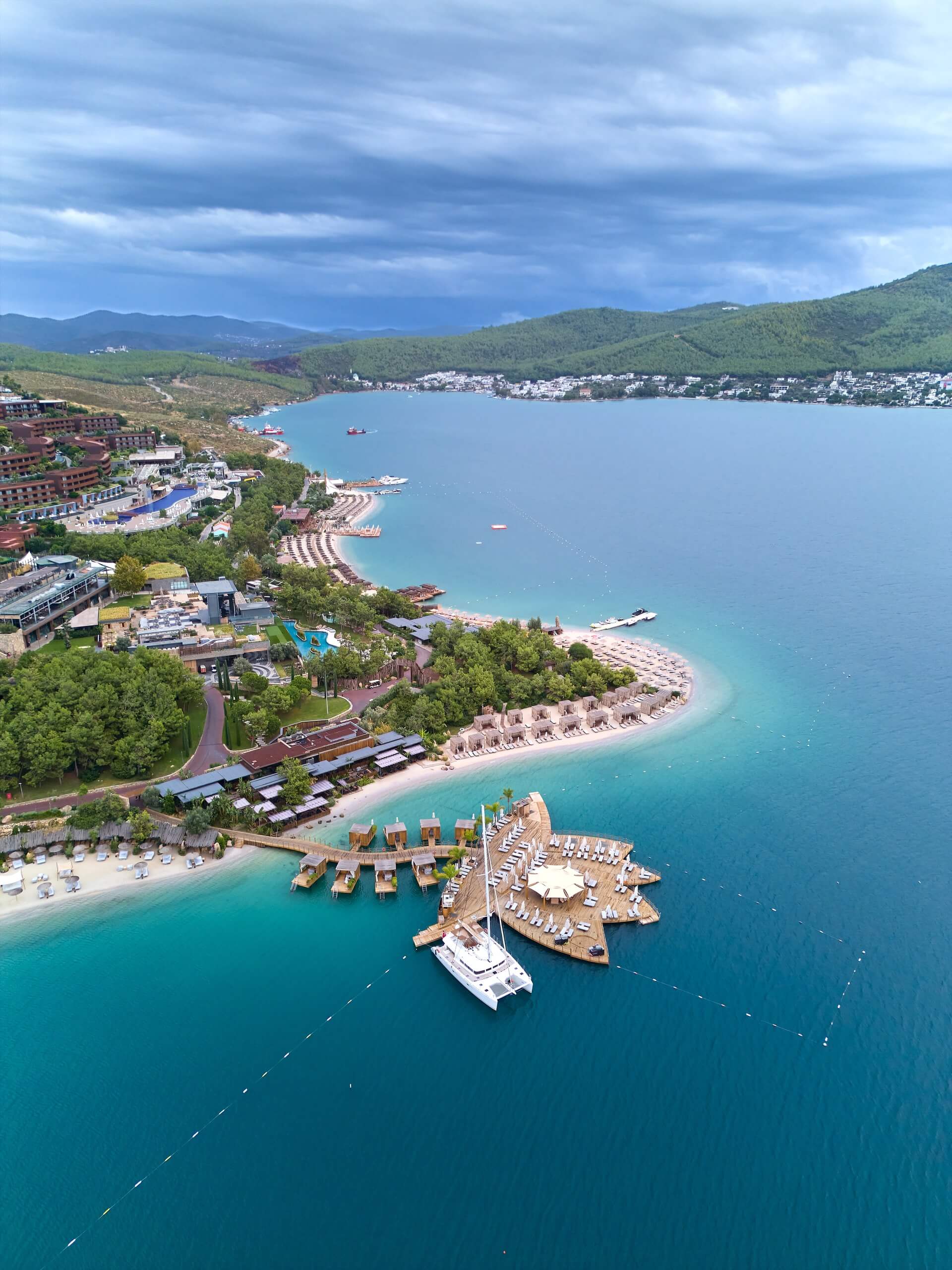
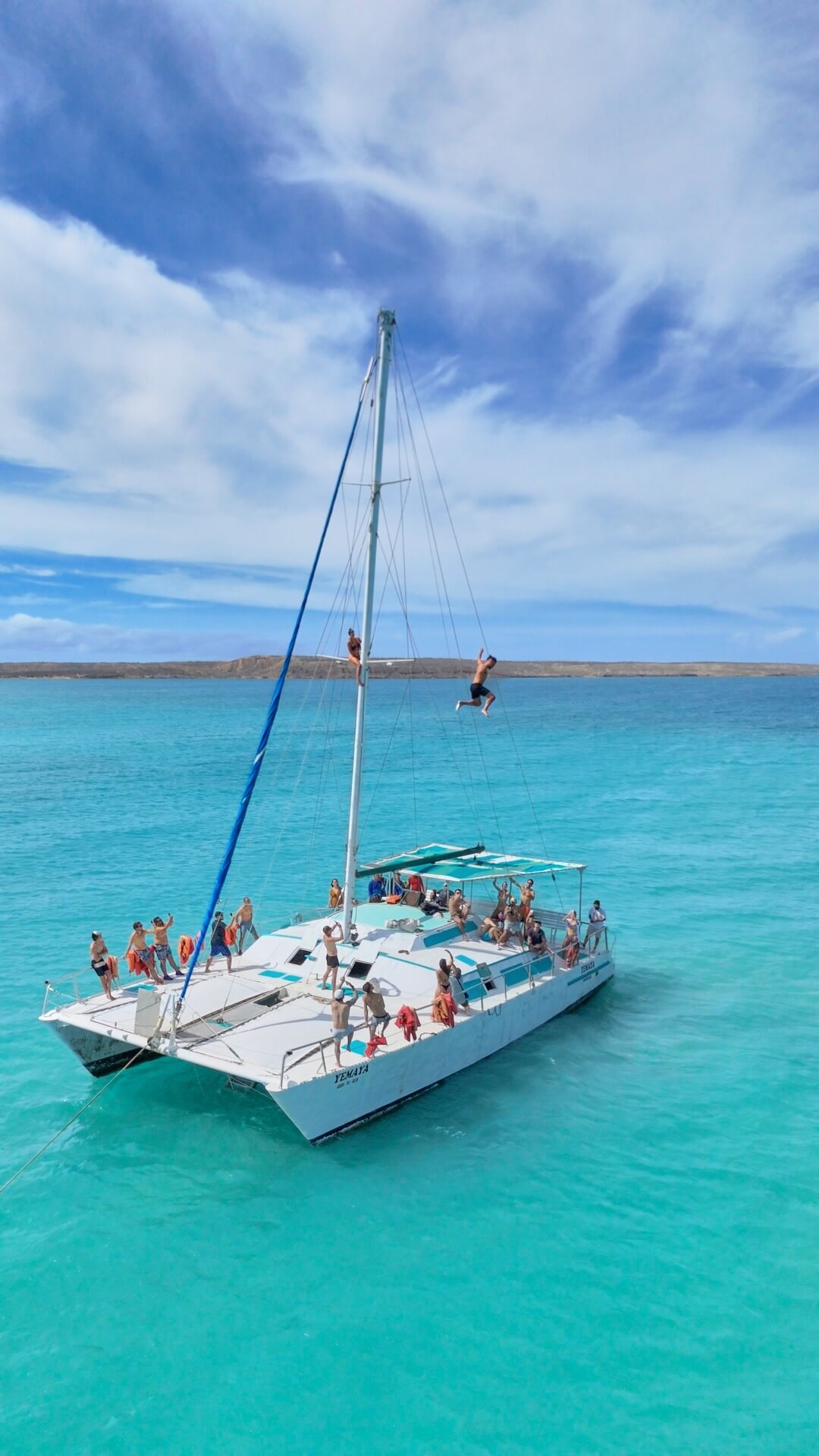
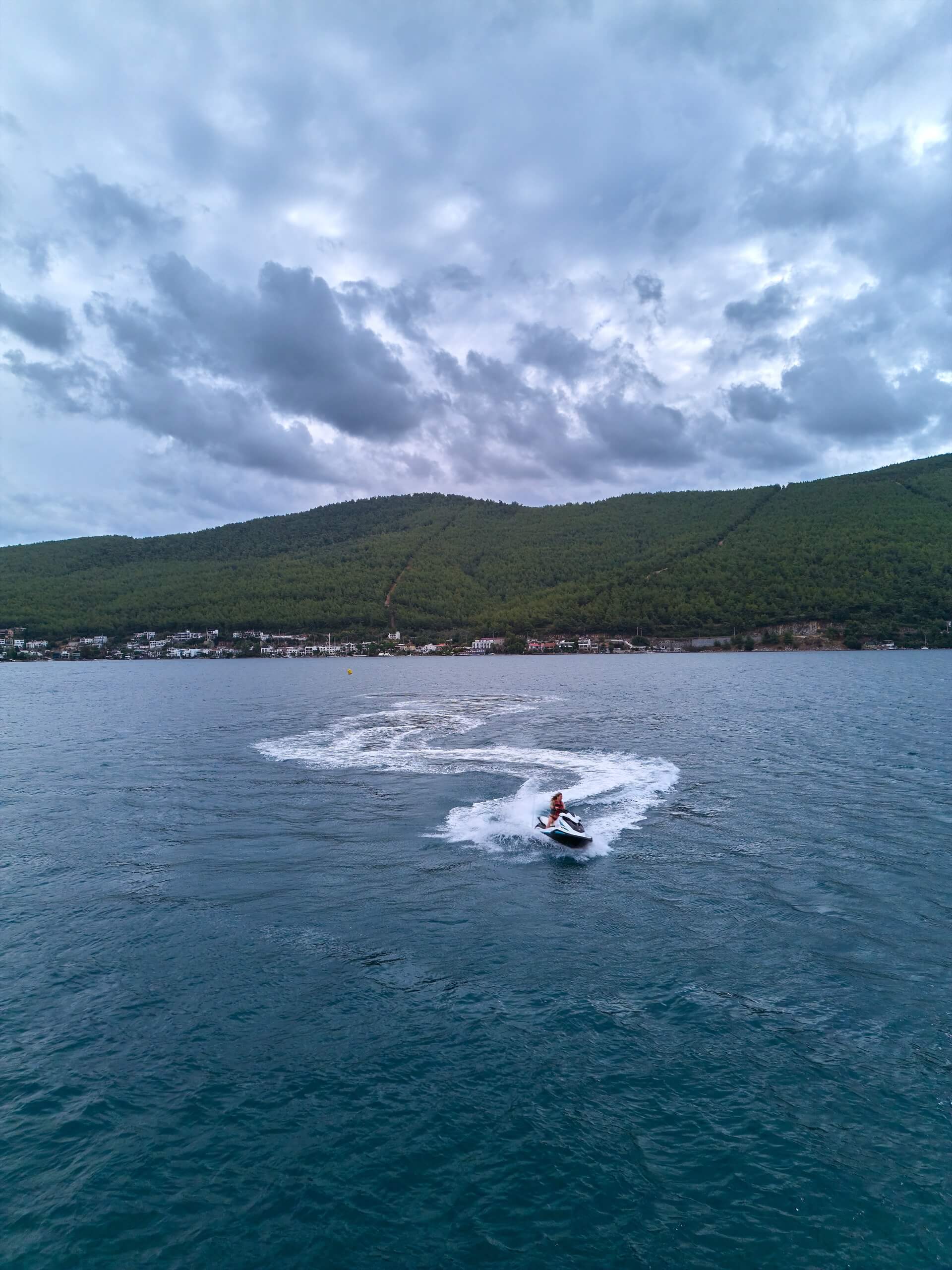
The region markets itself as „Turkaegean“ — a portmanteau of „Turkey“ and „Aegean“. A half-dayCatamaran tour The route along the coast shows why: On day 3, we set off from the hotel beach, heading towards the smaller bays west of Güvercinlik. We made stops for snorkeling in bays accessible only by water, had lunch on board, and returned around 5 pm. Weather dependent – we managed it despite clouds on the horizon.

Many hotels offer their own tours, or they can be booked through providers in the marina. Flying a drone: A catamaran on turquoise waters seen from a bird's-eye view is unbeatable.

3. Turkish Hammam & Spa Ritual

A Turkish hammam It's a must-do when you're in Turkey. The Lujo Hotel has its own spa area with a classic hammam ritual: warming up on a heated marble stone, exfoliation with a kese glove, a soap foam massage, and a cold plunge. Afterwards, a massage and mint tea. The entire session lasts 90–120 minutes and is by far the most relaxing state I've ever experienced. If your hotel doesn't have its own hammam, you can find authentic historical hammams with a similar ritual in the old town starting at around €40 per person.

4. Opa Beach Restaurant

The Grandpa Beach Our lunch stop on day 3 was a restaurant on the north coast. Right on the water, white tables on the sand, fish of the day from the local menu. Moderately priced (main course around €20), the atmosphere sophisticated yet relaxed. One of those places that locals frequent and international guests only discover by chance.

My 4-day Bodrum itinerary (October 2025)

Here is the actual itinerary from my Visit Turkey-Cooperation. Even those staying longer than four days can use this sequence as a basic framework — it covers all the important sights plus relaxation, culture and culinary highlights.

Day 1 — Monday, October 6: Arrival & Welcome Dinner

Flight from Hamburg via Istanbul to Milas-Bodrum (BJV) with Turkish Airlines, arrival 21:30. Transfer to the Luxury Hotel Bodrum In Meşelik, check-in 10:20 PM. Even after a 12-hour journey, no room for sleep: The Sorisso Restaurant with his Koza Sushi Bar We were already waiting for an Asian-Mediterranean fusion menu, fresh sashimi, and a glass of chilled Turkish white wine from the restaurant. A great start to what was to come.

Learning: Book a direct flight to Bodrum (Antalya-Air, Pegasus, SunExpress) if available — saves 3-4 hours compared to changing planes in Istanbul.

Day 2 — Tuesday, October 7: Water sports, Castle & Yalıkavak

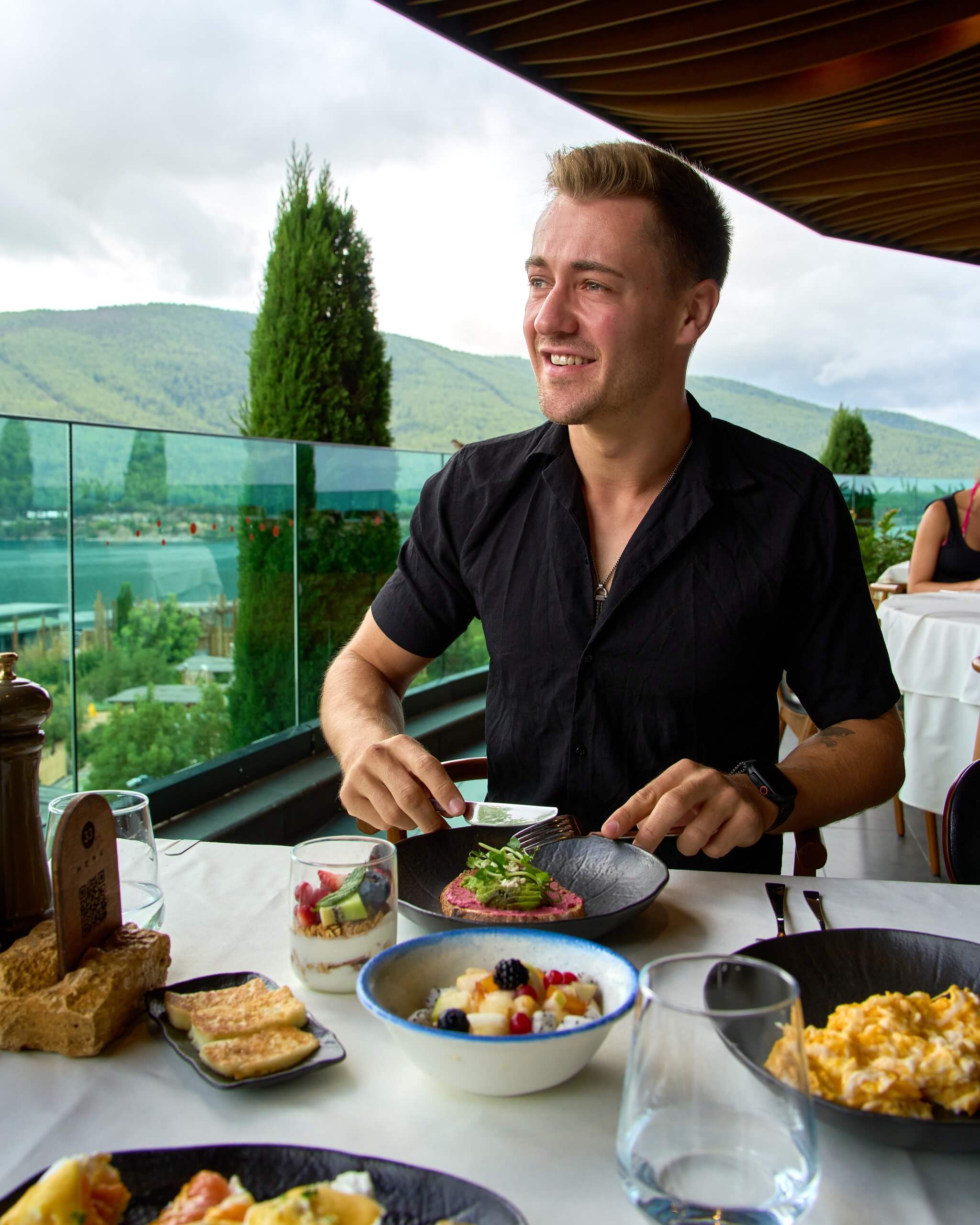
9:00 Breakfast in the Gaia Restaurant (Buffet with fresh bread, local cheeses, and regional honey). Afterwards, water sports on the hotel beach: SUP, kayaking, catamaran test ride — all included. 2:00 PM Lunch at Sorisso Restaurant, thereafter Turkish hammam in the hotel's own spa (warm-up → scrub → soap foam → massage → mint tea, 90 minutes).

16:30 Transfer to Bodrum Castle, 90 minutes for the castle and the underwater archaeology museum. 6:45 PM Free time at the Yalıkavak Marina — short walk, sunset over the yachts, then 8:30 pm dinner at Beynel Bitez Right on Bitez Bay. Turkish mezze, grilled sea bream, local raki. Return to the hotel at 10:15 PM.

Day 3 — Wednesday, October 8: Beach, Catamaran & Vineyard

9:00 Breakfast in the Koza Restaurant. Morning at the hotel beach — deck chair, book, sea. Lunch at the Grandpa Beach Restaurant On the north side of the peninsula (grilled fish, sea view). Afternoon half-dayCatamaran tour Across the Turkaegean — snorkeling stops, sun deck, drone flight. Return to the hotel, freshen up.

18:15 Transfer to Karnas Vineyard. 7:00 PM to 10:00 PM Dinner in the vineyard with sunset — one of the highlights of the week. Mezze, lamb kebab, house wines from the surrounding vineyards. Return to the hotel around 11:00 PM.

Day 4 — Thursday, October 9: Departure

9:00 Breakfast in the Asma Restaurant (Hotel rotation through the various breakfast spots), followed by check-out. 9:40 Transfer to the Milas-Bodrum Airport. Flight to Istanbul (12:00–13:30), connecting flight to Hamburg (15:40–17:50). Return to dreary German October weather — still in spirit in the Aegean.

Lujo Hotel Bodrum — Experiences with 5-star à la carte all-inclusive

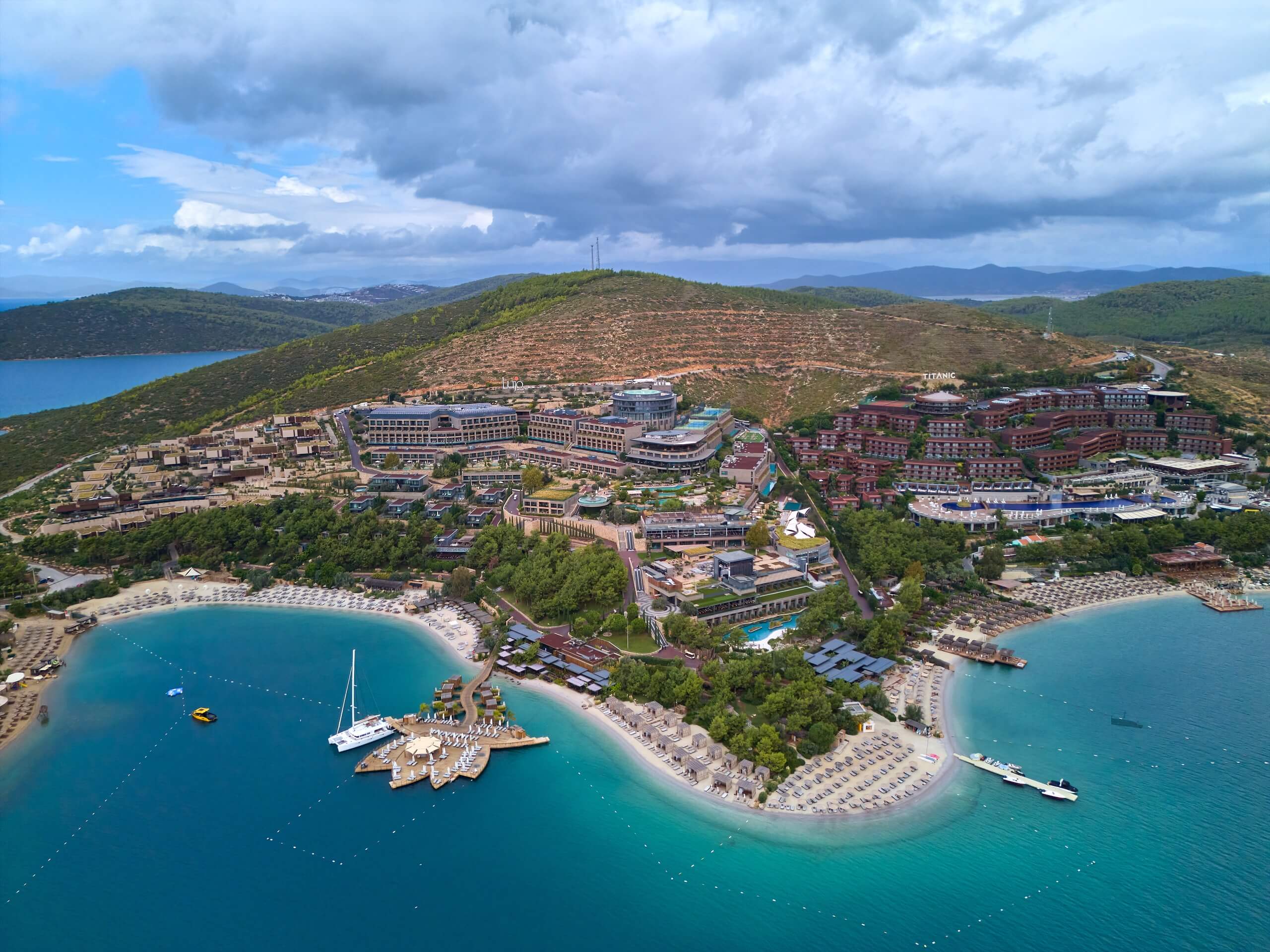
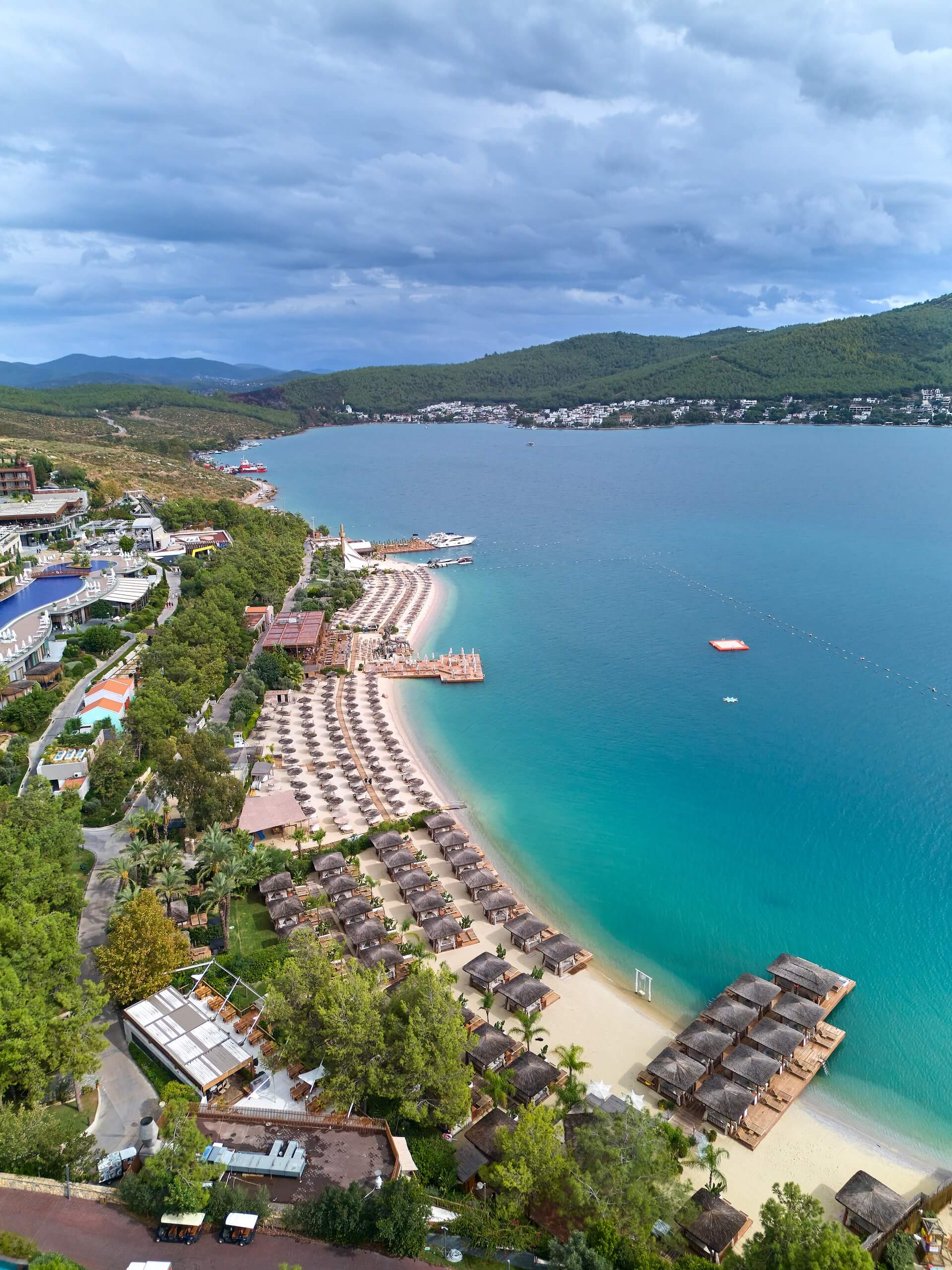
Our base camp for the week was the Luxury Hotel Bodrum in Meşelik. The hotel positions itself as A la carte All Inclusive — not a buffet mega-temple, but eight different themed restaurants where you can reserve a table for each meal and order à la carte.

The restaurants at the Lujo Hotel

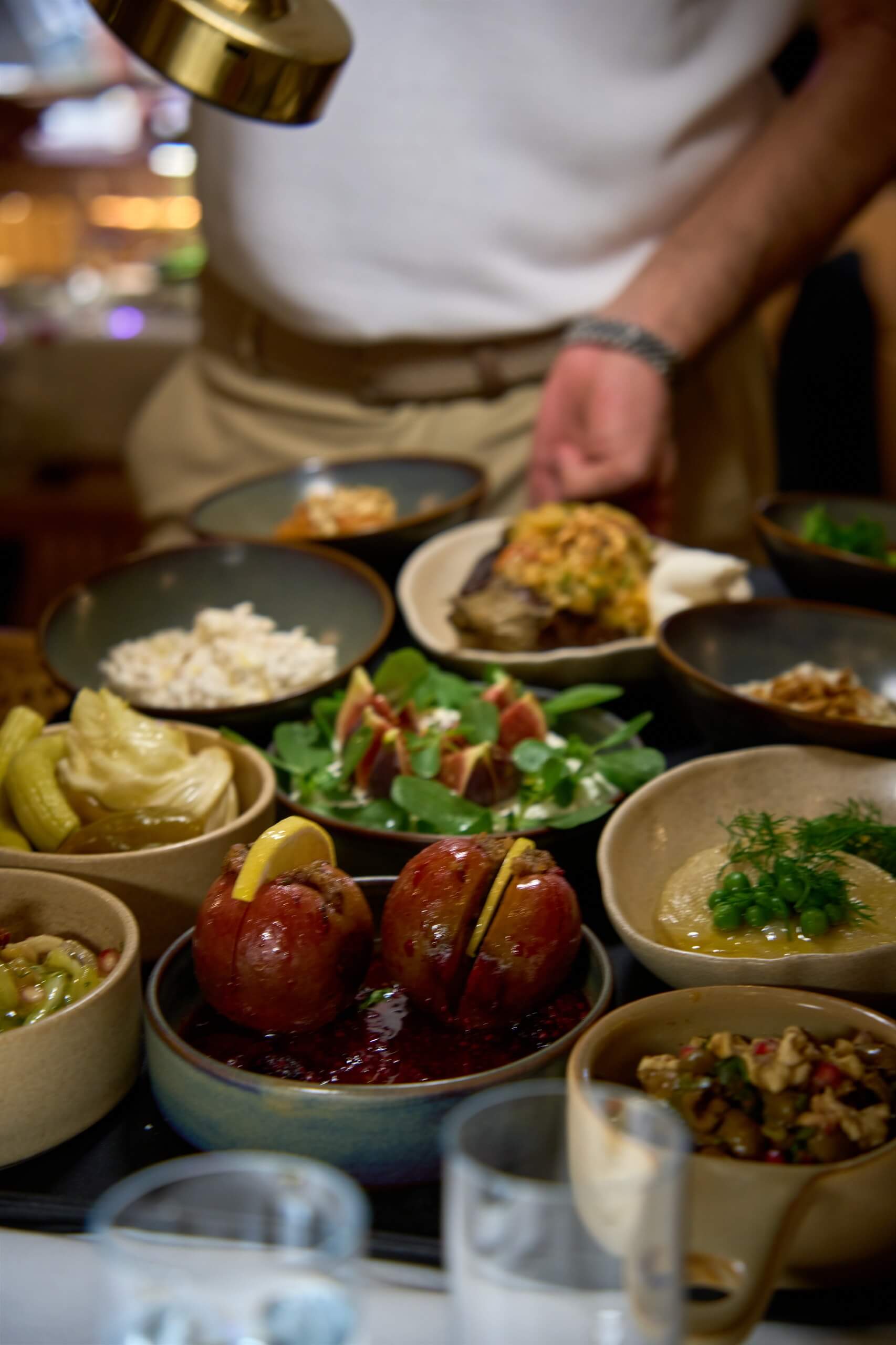
  • Sorisso / Koza Sushi Bar — Asian fusion with a teppanyaki counter, sushi, and ramen. My recommendation for dinner.
  • Gaia Restaurant — Main breakfast restaurant with open terrace and sea view.
  • Koza Restaurant — A more modern, somewhat quieter breakfast alternative.
  • Asma Restaurant — Traditional Turkish cuisine, with live music in the evenings.

Rooms, beach & activities

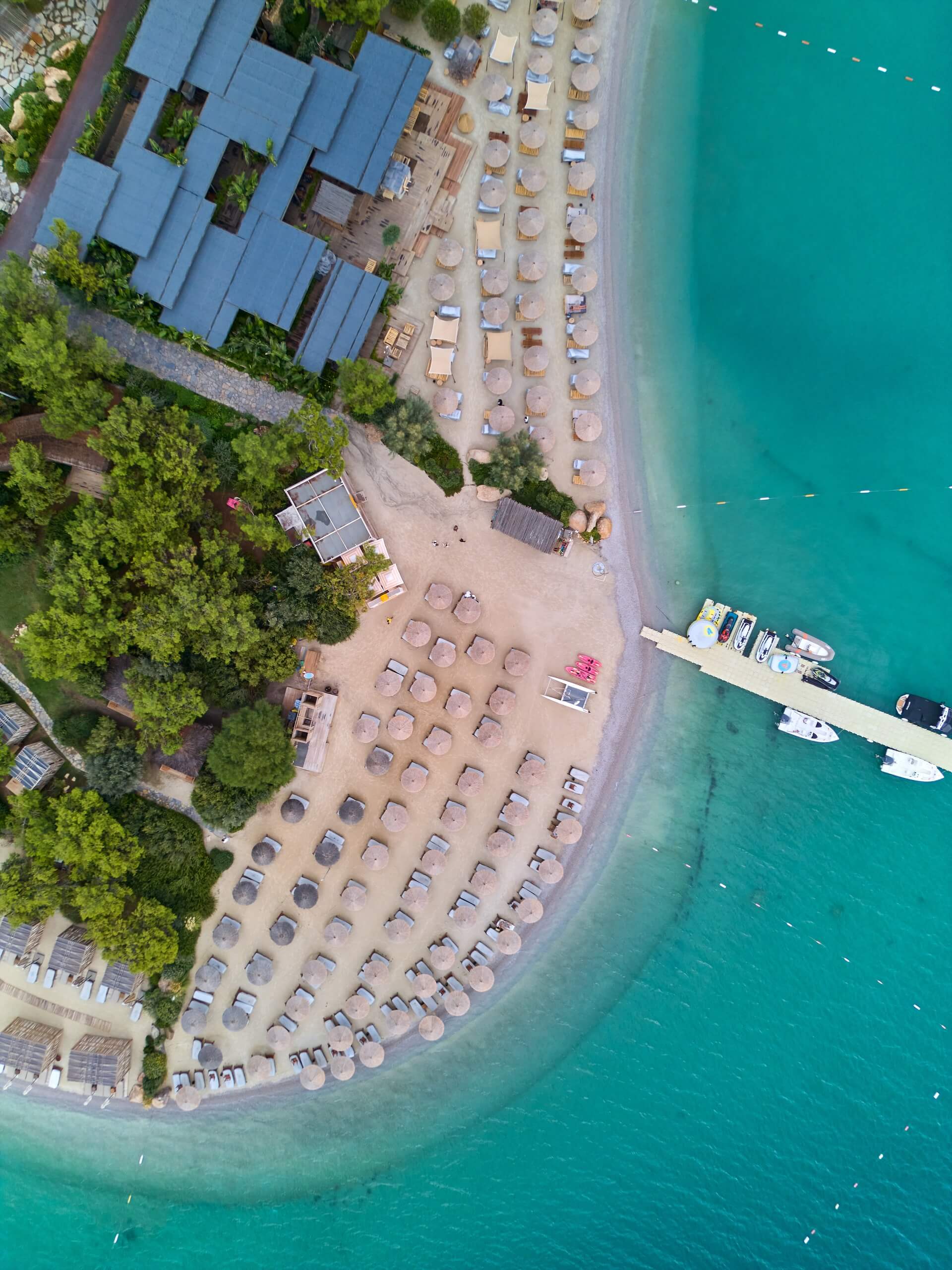
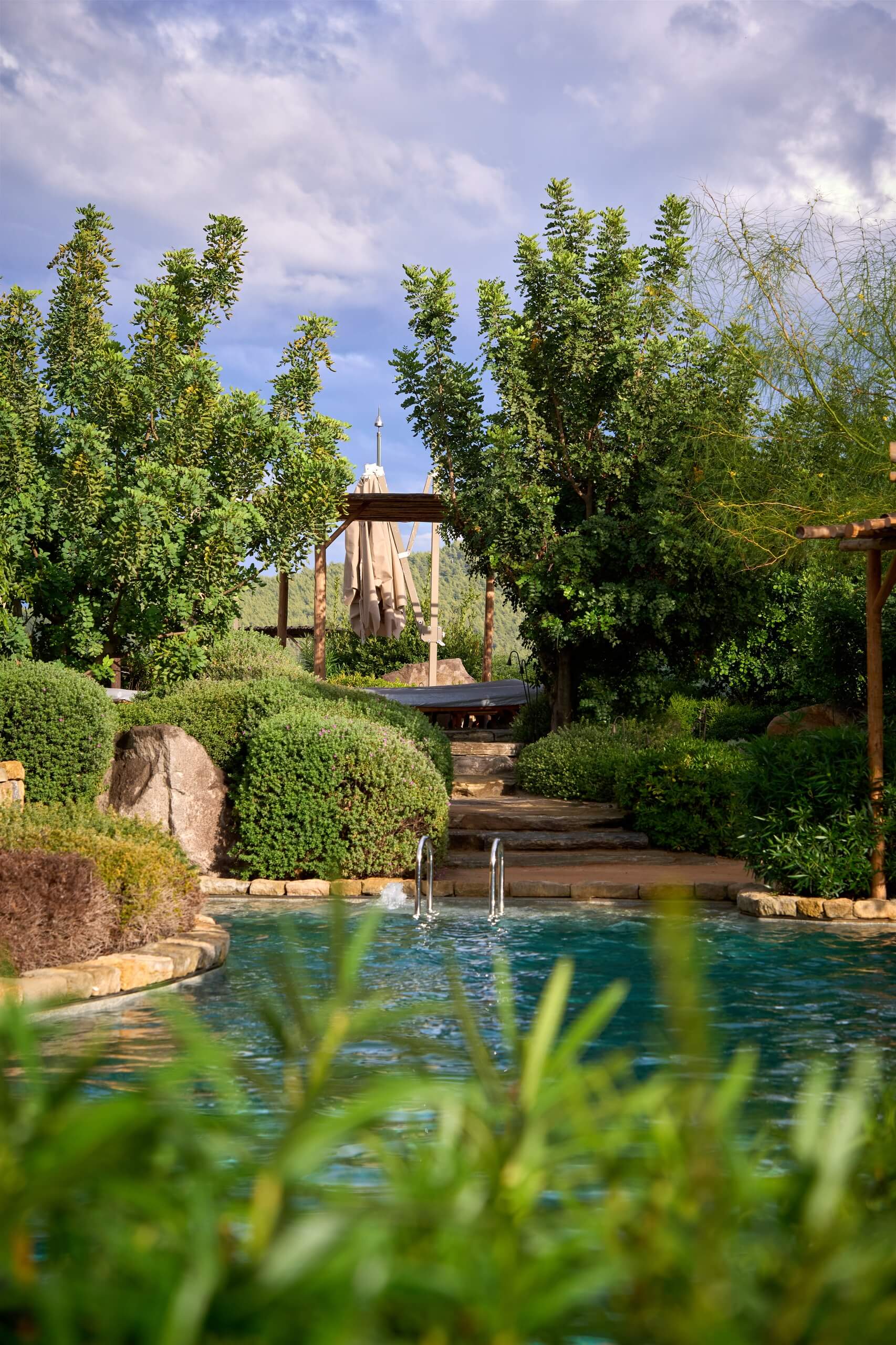
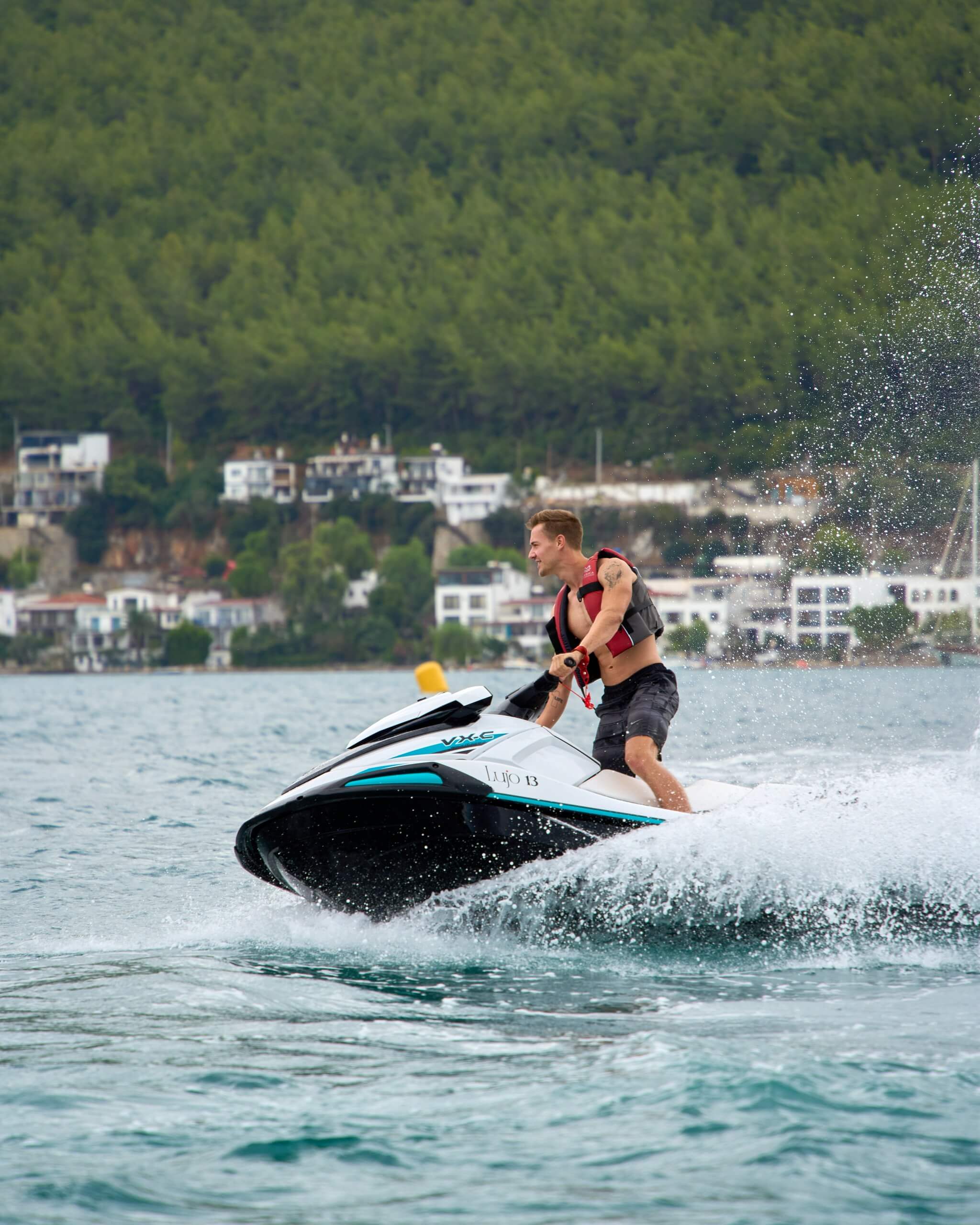
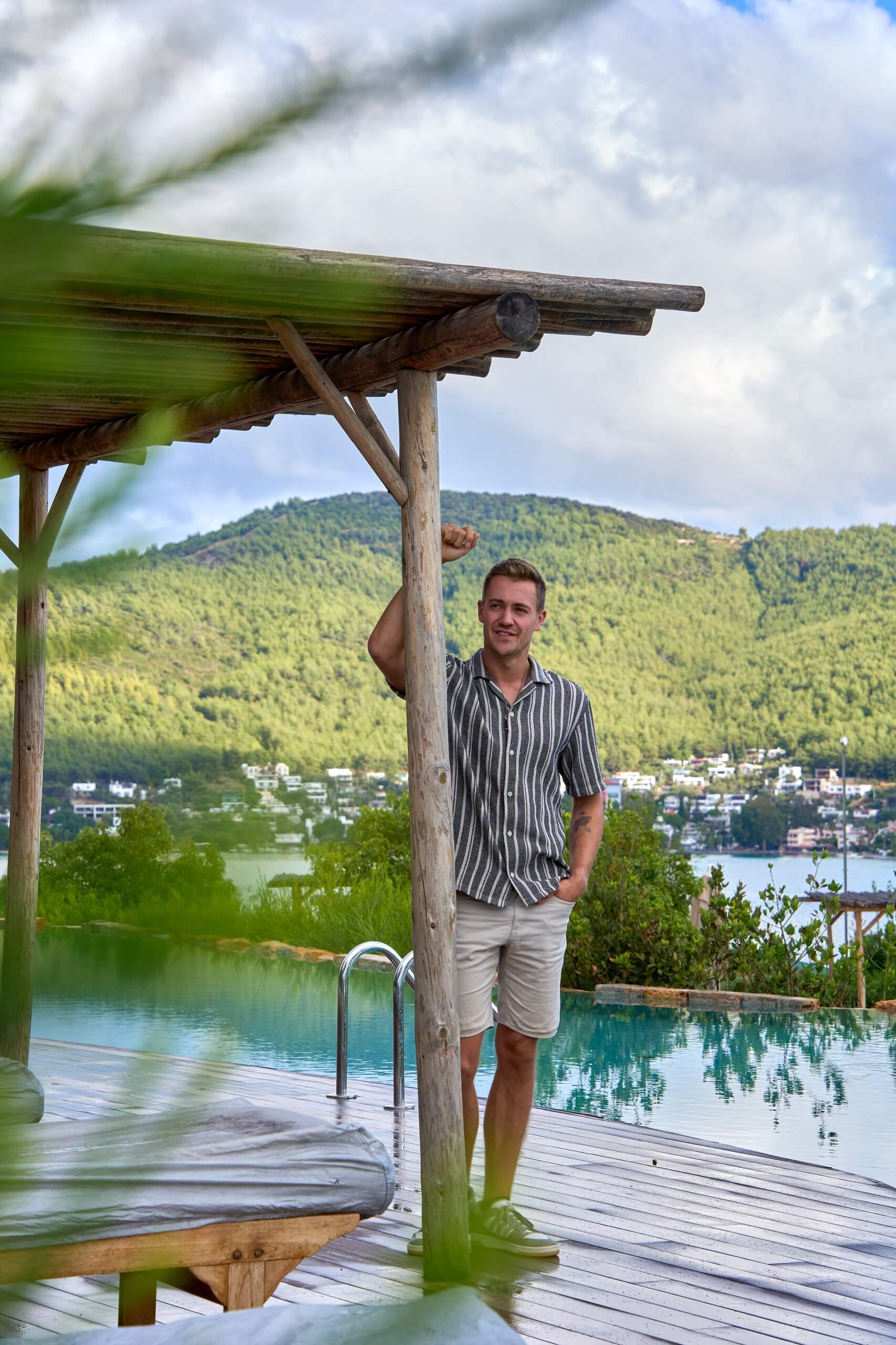
The rooms are spacious (from 40 m²), with air conditioning, safe, minibar, bathrobes, vanity mirror and fast Wi-Fi throughout the entire property. Deluxe rooms have a private balcony with sea view. Hotel beach It is one of the few true sandy beaches on the peninsula — most bays are pebbly or rocky. Sun loungers, pool area with bar, Water sports (SUP, kayak, catamaran, windsurfing) is completely included.

The spa area with Hammam, The sauna, steam room, and massage rooms were the highlight of the resort for me. All spa treatments except massages are also included.

Prices & Conclusion Lujo Hotel

Depending on the season, the hotel costs between approximately €250 (off-season October) and €450 (high season August) per person per night, including all meals. For what's offered—genuine à la carte service instead of a buffet, a spa included, and a private sandy beach—I consider it fair value for money compared to similar 5-star resorts on Mykonos or Santorini (which are often 2–3 times more expensive).

Restaurants & Cuisine — My Addresses in Bodrum

Those who experience Bodrum only as an all-inclusive destination are missing out on one of Turkey's best culinary playgrounds. The interplay of Turkish cuisine, Greek influences, and Mediterranean seafood is unique. My recommendations for the week:

  • Beynel Bitez — directly on Bitez Bay, terrace overlooking the water. Best fish menu of the week, reservations from ~€35.
  • Karnas Vineyard — Sunset dinner in the vineyard, menu from ~€50, reservation required.
  • Grandpa Beach Restaurant — Lunch on the beach, main course for €20, ideal for a catamaran stopover.
  • Sorisso / Koza — within the Lujo Hotel, but also bookable à la carte for external guests. Japanese-Mediterranean fusion concept.

Outside the hotels: In Gümüşlük There are several restaurants on wooden jetties that serve freshly caught fish straight from the net. Prices are moderate (€20–30 per person), and the atmosphere is unrivaled.

Drone spots in Bodrum

For all you drone pilots out there: Bodrum is a paradise from the air. The combination of turquoise sea, white villages, and green hills creates a depth of color otherwise only found on the Greek islands—but here, mostly without the overcrowded spots of Santorini or Mykonos. My top 5 spots:

  1. Bodrum Castle & Harbour — the classic shot, even better in the early morning without boats.
  2. Yalıkavak Marina — the approach from above with the mountains in the background.
  3. Gümüşlük — small bay with sunken ruins, best visited at midday when the sun is at its lowest angle.
  4. Türkbükü Bay — Luxury hotels and yachts from a bird's-eye view, sunset light optimal.
  5. Catamaran on the open sea — your boat from a height of 80 m, turquoise water, coastline in the background.

Drone rules in Türkiye: For the DJI Mini 5 Pro (under 250 g) is a Online registration A passport is required from the Turkish Civil Aviation Authority (SHGM). Registration takes 5 minutes online and is free. Checks are rare at tourist spots, but registration is recommended. Military areas and the vicinity of the airport are off-limits—this applies to Milas-Bodrum Airport, especially in the north of the peninsula.

Weather, travel time & arrival

Best time to visit Bodrum

The best time to travel to Bodrum is May–June and September–October. During both periods, temperatures range between 21°C and 28°C, the sea is warm enough for swimming (September/October sea temperature still 23°C+), and the number of tourists is significantly reduced compared to July/August. During my week in October, we had temperatures of 21–25°C, two afternoons with brief showers, and otherwise mostly sunny weather. July and August, with temperatures reaching up to 35°C and resorts at full capacity, are the hottest period—manageable for beachgoers, but too hot for sightseeing.

Arrival in Bodrum

The airport is Milas-Bodrum Airport (BJV), approximately 35 kilometers from the city center. Transfer to the hotel takes 30–60 minutes depending on the location (Meşelik/Güvercinlik are closer, Gümüşlük or Yalıkavak up to 60 minutes). Direct flights from Germany are available. SunExpress, Pegasus and Turkish Airlines, From €80–200 return, depending on the season and booking time. A connecting flight via Istanbul adds 3–4 hours to the journey.

On site: Rental car or transfer?

Anyone wanting to explore the entire peninsula (Gümüşlük, Yalıkavak, Türkbükü in one day) will need a rental car (€20–40 per day, international driving permit recommended) offers the most flexibility. For those staying only at the resort and taking occasional excursions: transfer services or taxis are sufficient. Turkish traffic is chaotic, but manageable with some patience. No truck, bus, or city center stress outside of peak season.

Bodrum Costs — Surprisingly Affordable

Positionbudgetcomfort
Accommodation/night25–50 €€80–250
Lujo Hotel All Inclusive/person/night€250–450 (October vs August)
Food/day (outside of all-inclusive)10–20 €30–60 €
Rental car/day20–40 €
Flight (DA-CH, Round trip)80–200 € (SunExpress, Pegasus, Turkish)
Bodrum Castle entranceapprox. €25
1 week (per person, including flight)~400 €~1.200 €

Thanks to the favorable exchange rate of the lira, Turkey is currently one of the best value-for-money travel destinations for Europeans. A complete fish menu with a sea view costs €15–25—in Greece or Italy you'd pay three times as much. Even premium restaurants like Karnas Vineyard or Beynel Bitez are priced at the level of a solid mid-range German restaurant.

Conclusion — who should visit Bodrum

After four days in Bodrum, my preconceived notions about Turkey as a package holiday destination were completely shattered. The peninsula offers a blend of ancient history, luxury hotels, authentic cuisine, and drone-worthy landscapes that I haven't found in such a concentrated form anywhere else in Europe. Anyone looking for an Aegean experience but wanting to avoid the overpriced Greek islands will find Bodrum the perfect destination.

Bodrum is worth a visit for: Travelers with an appetite for Aegean scenery, history, and fine cuisine. For drone pilots. For couples seeking luxury with substance. For anyone who wants an Aegean experience without the Cyclades prices.

Bodrum is less suitable for: Nightlife-focused backpackers (for that, Ayia Napa or Ibiza), families with small children who don't want to leave the buffet mega-resort (for that, Antalya), and anyone looking for pure historical sightseeing (for that, Istanbul).

FAQ — Frequently Asked Questions about Bodrum

Where exactly is Bodrum located?

Bodrum is located on the southwestern Aegean coast of Türkiye, Bodrum is located in the province of Muğla, about 700 kilometers southwest of Istanbul. The peninsula juts westward into the Aegean Sea, directly opposite the Greek island of Kos. Contrary to popular belief, Bodrum is not located in the Aegean Sea. not not on the Turkish Riviera (that is the region around Antalya further east), but in the Aegean Sea.

What are the main tourist attractions in Bodrum?

The top sights are: Bodrum Castle (St. Peter's Castle, 1402) with the Museum of Underwater Archaeology, the Mausoleum of Halicarnassus (one of the Seven Wonders of the Ancient World), which Old Town with bazaar and Cumhuriyet Caddesi, as well as the Yalıkavak Marina in the northwest of the peninsula. Among the bays, Gümüşlük, Göltürkbükü, Bitez and Türkbükü are the most worth seeing.

When is the best time to travel to Bodrum?

May–June and September–October These are the best times to travel. Temperatures range between 21°C and 28°C, the sea is warm, and there are fewer tourists than in the height of summer. July and August are very hot, reaching up to 35°C—suitable for a beach holiday, but too hot for sightseeing. In October, the sea is still warm enough for swimming at 23°C+, and you can walk around town in the evenings without a jacket.

How much does a holiday in Bodrum cost?

A week in Bodrum per person, including flights, costs from approximately €400 (budget: simple guesthouse, local food) to approximately €1,200 (comfort: mid-range hotel, restaurants). An all-inclusive stay at Luxury Hotel Bodrum Prices range from €250 (off-season) to €450 (high season) per person per night. Fish menu with sea view: €15–25. Flights from Germany, Switzerland to Milas-Bodrum: €80–200 return.

Is Bodrum safe for tourists?

Yes. Bodrum is considered one of the safest travel destinations in Türkiye. Petty crime exists, as in any tourist city (pickpocketing in crowded bazaars), but violent crimes against tourists are extremely rare. The police are present in tourist areas, and many speak English or German. Standard travel caution is sufficient.

Do I need a visa for Turkey?

German, Austrian and Swiss citizens are permitted 90 days visa-free Stay in Turkey. Simply enter with a valid passport (valid for at least another 6 months), no e-visa is required. For EU identity cards: a passport has been mandatory since 2021.

Is the Lujo Hotel Bodrum worth it?

For à la carte all-inclusive dining with true gourmet quality: yes. Luxury Hotel Bodrum It stands out from average 5-star resorts with its 8-restaurant concept (instead of a mega-buffet), private sandy beach, spa with hammam, and fully inclusive water sports. Price-wise (~€250 off-season, ~€450 high season per person per night), it's in the same league as Mykonos resorts, but offers more service.

Is it possible to fly drones in Turkey?

Basically yes, with Online registration at the Turkish Civil Aviation Authority SHGM. For drones under 250 g (like the DJI Mini 5 ProRegistration takes five minutes and is free. Restricted areas include military zones, the vicinity of airports (especially around Milas-Bodrum Airport), and government buildings. Checks are rarely carried out at tourist spots.

Which bay in Bodrum is the most beautiful?

That depends on the travel profile. Gümüşlük is the most authentic (small guesthouses, sunken ancient city in the water). Göltürkbükü is the most exclusive („Saint-Tropez of Türkiye“, superyachts, designer stores). Bitez For water sports enthusiasts (wind, shallow water). Turkish bükü For luxury resorts with the best sunsets. If you can only visit one bay, choose Gümüşlük.

What is the "Turkaegean"?

Turkaegean is a Turkish marketing term for the Turkish Aegean coast — a combination of the words "Turkey" and "Aegean". The region includes Bodrum, Marmaris, Izmir, Çeşme and the surrounding islands. Catamaran and sailing trips in the region are often marketed under this label.

Max Haase Travel Creator
About the author

Max Haase

Travel Content Creator · Drone Photographer · Visual Storyteller

Since over 10 years professional travel creator with over 4.2 million followers. Specializing in high-end tourism board collaborations and visual travel storytelling.

4.2MFollowers
82+Countries
500+Cooperations
10+Years

You might also be interested in this

Milky Way over the Southern Alps in New Zealand, night sky with stars reflected in a mountain lake

New Zealand night sky 2026: Aurora Australis & Mount Cook

New Zealand Dark Sky Reserve — The clearest starry sky in the world

I've looked up at the sky in over 82 countries—but what I saw at Lake Tekapo in New Zealand was on a completely different level. The Aoraki Mackenzie International Dark Sky Reserve is the largest dark sky reserve on Earth, and the sky there left me speechless. For the first time, I could see the Milky Way so vividly that I could discern its three-dimensional structure with the naked eye—like a luminous cloud of billions of stars directly overhead.

  • Largest Dark Sky Reserve: The Aoraki Mackenzie Reserve covers 4,367 km² with IDA Gold status and Bortle Class 1-2 — darker than any European site.
  • Top spots: Lake Tekapo, Mount John Observatory, Lake Pukaki and Mount Cook Village all deliver the Milky Way in 3D — Cowan's Hill avoids the photographer crowds.
  • Camera settings: Full frame + f/2.8, ISO 3200-6400, 15-20 second exposure, manual focus at infinity and RAW format — observe the 500 rule.
  • Best time to travel: April to September (New Zealand winter) with up to 15 hours of darkness in June, new moon weeks and night temperatures down to -10 °C.
  • Budget: A 5-day trip around the reserve costs approximately €1,500-€2,500 excluding flights — Mount John Night Tour for €85, Stargazing Experience €110.

For me as a photographer, New Zealand was the place where astrophotography suddenly made sense. Not because I had better equipment, but because the sky there simply delivers what light pollution has made impossible in Europe. Here is my complete guide for anyone who wants to experience the best starry skies in the world for themselves.

Dark Sky Reserve New Zealand: Mount Cook & the clearest night in the world

A Dark Sky Reserve is an area with minimal light pollution, officially certified by the International Dark-Sky Association (IDA). There are only about 20 such reserves worldwide—and New Zealand's Aoraki Mackenzie Reserve, at over 4,300 square kilometers, is the largest. For comparison, that's larger than Mallorca.

What makes this so special is that the communities in the reserve operate under special lighting regulations. Streetlights only shine downwards, neon signs are prohibited, and many houses have special window coverings. The result is a night sky much like the one our ancestors saw 200 years ago.

New Zealand has an additional, crucial advantage: From the Southern Hemisphere, you can see objects that are never visible in Europe—the Magellanic Clouds, the Southern Cross, and the Eta Carinae Nebula. That alone makes the trip worthwhile.

The facts about the Aoraki Mackenzie Reserve

  • Size: 4,367 km² (the world's largest Dark Sky Reserve)
  • Certification: IDA Gold status since 2012
  • Bortle scale: Class 1-2 (absolutely perfect darkness)
  • Main locations: Lake Tekapo, Twizel, Mount Cook Village
  • Best time: March to October (winter half-year = longer nights)

Aurora Australis & Star Photography: The best spots in New Zealand

Lake Tekapo—Church of the Good Shepherd

The iconic spot. The small stone church against the starry sky is probably the most photographed astrophotography subject in the Southern Hemisphere. But be warned: precisely for that reason, it's often crowded at night. On my first attempt, there were still 15 other photographers with tripods there at midnight.

My tip: Come either right after sunset (when most people are still at dinner) or at 3 a.m. when only the hardcore astrophotographers are left. Alternatively, drive 5 km further to Cowan's Hill Viewpoint — same sky, no people.

Mount John Observatory

New Zealand's most important observatory sits on a hill overlooking Lake Tekapo and offers guided night tours with professional telescopes. Through these telescopes, I saw Saturn's rings, the Orion Nebula, and the Magellanic Clouds in a level of detail that no photograph in the world could ever capture. The tour costs approximately NZD 150 (around €85) and lasts two hours.

Lake Pukaki

Located 20 minutes north of Tekapo and significantly less crowded, the turquoise glacial lake actually reflects starlight under moonlight—a surreal effect I've never seen anywhere else. The parking lot on the southern shore is my insider tip for undisturbed long-exposure photography.

Mount Cook Village

Deeper in the reserve, even less light pollution. The Hooker Valley Track is one of New Zealand's most popular hiking trails by day—at night you're completely alone. The combination of the starry sky and the illuminated Aoraki/Mount Cook The background is spectacular.

Wanaka — Roys Peak at night

Technically no longer within the Dark Sky Reserve, but light pollution is still minimal. The ascent takes about 3 hours in the dark—a headlamp is essential. But from the top, you have a 360° view of the starry sky over the Southern Alps. One of the most strenuous, but most rewarding astronomy spots of my entire trip.

Photographing constellations in the southern hemisphere: Camera settings for Aurora Australis

astrophotography is technically demanding, but with the right settings, anyone can achieve usable results. Here's my setup and the settings that worked best in New Zealand:

My setup

  • Camera: Camera (full-frame sensor is crucial for astrophotography)
  • Lens: GM wide-angle lens — wide angle + fast aperture
  • Tripod: Carbon travel tripod (under 1.5 kg — you carry it through the wilderness at night)
  • Remote shutter release: Smartphone app via WiFi (prevents camera shake)

The settings

parameter Attitude Why
Aperture f/2.8 (fully open) More light = more stars
ISO 3200-6400 The camera produces very little noise up to ISO 6400.
exposure 15-20 seconds Longer = star stripe (observe the 500 rule)
focus Manually set to infinity Autofocus does not work at night
White balance 3800-4200K Neutral night sky, no yellow/blue tints
format RAW Post-processing is required for the Astro 80% result.

The 500 rule explained

To avoid star trails, divide 500 by your focal length. For a 16mm lens: 500 ÷ 16 = approximately 31 seconds maximum exposure. For a 35mm lens, it's only 14 seconds. I prefer to stick to 15-20 seconds and increase the ISO slightly—just to be on the safe side.

Drone footage of the starry sky — is that possible?

Short answer: Technically yes, practically difficult. Mini 5 Pro (Weighing under 249g, it has a 1-inch sensor that delivers usable results at ISO 3200. The problem: You need absolutely no wind (rare at night in the Southern Alps) and the drone must hover stably for 20+ seconds. Even a slight breeze will result in blurry images.

What works better: Drone footage taken during the blue hour (30 minutes after sunset), when the first stars become visible but there is still enough ambient light. These images often look more spectacular than purely nighttime shots.

Costs and planning — What does the dark-sky experience cost?

Position Costs (approx.)
Flight DE → Christchurch (round trip) 900-1.400 €
Rental car (2 weeks) 400-700 €
Accommodation Lake Tekapo (per night) 80-200 €
Mount John Night Tour ~85 €
Earth & Sky Stargazing Experience ~110 €
Food per day 30-60 €
Petrol (Christchurch – Tekapo – Wanaka) ~80 €

Total for 5 days around the Dark Sky Reserve: approx. €1,500-2,500 (excluding flights). New Zealand isn't cheap, but the starry sky there is priceless — it sounds corny, but it's simply true.

Best time to travel for stargazing

The best months are April to September — New Zealand's winter season. The nights are significantly longer (up to 15 hours of darkness in June), the air is colder and therefore clearer, and the Milky Way is optimally positioned in the sky.

The downside: It gets as cold as -10°C at night. Gloves that allow you to operate the camera are essential. And at least three layers of clothing are a must—after two hours standing in the dark, it gets brutally cold, no matter how hardy you are.

Pay attention to moon phases: A full moon ruins any stargazing. Plan your trip around the new moon—the week before and after offers the darkest nights. Apps like "PhotoPills" or "Stellarium" can help with planning.

Common mistakes you should avoid

  • Plan for only one night: The weather in the Southern Alps is unpredictable. I had three cloudy nights before the fourth night was perfect. Plan for at least 3-4 nights.
  • No tripod required: Star photography without a tripod is impossible — period. No image stabilizer in the world can compensate for a 20-second handheld exposure.
  • Use a bright headlamp: A white headlamp will ruin your night vision for 30 minutes. Use the red light mode — this preserves your eyes' dark adaptation.
  • Lake Tekapo without reservation: Lake Tekapo is completely booked out during peak season. Accommodation should be booked at least 2-3 months in advance.

FAQ — New Zealand Starry Sky

Can I enjoy the starry sky without a camera?

Absolutely — and to be honest, the experience is even more intense with the naked eye than through a viewfinder. You'll see the Milky Way, shooting stars (especially during the Perseids and Geminids), and the Magellanic Clouds as bright patches in the sky. No equipment is needed.

Do I need a full-frame camera?

Not necessarily. APS-C cameras like the Sony A6700 also deliver good results—you just have to increase the ISO a bit, which will result in more noise. Even good smartphones (iPhone 15 Pro, Samsung S24 Ultra) now have usable night modes. But for professional results, there's no way around full-frame.

Is the Dark Sky Reserve worth seeing even during a full moon?

For astrophotography: No. For the overall experience: Yes. At full moon, you see the mountain landscape in a silvery light, which is also impressive—just without the Milky Way.

How cold will it really get?

In winter (June-August), nighttime temperatures can drop to -10°C, rarely -15°C. Even in summer (December-February), nighttime temperatures fall to 2-5°C. Thermal underwear, a down jacket, and windproof trousers are essential—no exaggeration.

Are there guided tours for beginners?

Yes, several. "Earth & Sky" in Tekapo is the best-known provider (approx. NZD 110). Dark Sky Project also offers tours. Both provide telescopes and explain the southern sky—perfect if you're coming without your own equipment.

Max Haase Travel Creator
About the author

Max Haase

Travel Content Creator · Drone Photographer · Visual Storyteller

Since over 10 years professional travel creator with over 4.2 million followers. Specializing in high-end tourism board collaborations and visual travel storytelling.

4.2MFollowers
82+Countries
500+Cooperations
10+Years

You might also be interested in this

great-ocean-road-australia-schoenster-roadtrip_featured

Great Ocean Road 2026: Route, Map & Apollo Bay Guide

Great Ocean Road — Why this road trip was my highlight in Australia

243 kilometers of coastal road, rugged cliffs, turquoise water, and koalas hanging in eucalyptus trees right next to the road—the Great Ocean Road in Victoria is the road trip every traveler to Australia has to do. I drove the route twice: once rushing through it in one day (mistake) and once over four days, stopping at every viewpoint (right).

  • 243 km of coastal road in Victoria — for me, after 40+ road trips worldwide, it's among the top 10.
  • Plan for 3-4 days. Driving through in one day is possible, but you'll miss out on 90% of the experience.
  • Must-stops: Twelve Apostles at sunset, Loch Ard Gorge and 8 wild koalas in 20 minutes at Kennett River.
  • Best time to travel: November to March. No tolls, all viewpoints are free.
  • Drones are allowed outside of national parks. Drive on the left – you'll get used to it after 2-3 hours.

After over 40 road trips worldwide, I say: The Great Ocean Road belongs in the top 3. Not because it's the longest or wildest route, but because the density of wow moments per kilometer is simply unbeatable. Every 10-15 minutes, a viewpoint that's better than the last.

Great Ocean Road map: The route from Melbourne to Allansford (including Apollo Bay)

The Great Ocean Road officially begins in Torquay (about 1.5 hours southwest of Melbourne) and ends in Allansford near Warrnambool. Most people drive the route from east to west—this has the advantage of keeping you on the ocean side and giving you direct views of the cliffs.

Stage 1: Torquay → Apollo Bay (115 km)

The first section is the most winding and also the most spectacular. The road clings to the cliffs, and a new view of the surf opens up at every bend. Highlights:

  • Bells Beach: One of the most famous surf spots in the world. Even if you don't surf, the waves here are impressive. From the viewpoint at the top, you can watch professional surfers riding 3-4 meter high waves.
  • Split Point Lighthouse: A photogenic lighthouse in Aireys Inlet with panoramic views. Perfect for drone photography — I took one of my favorite pictures of the entire trip here with the DJI Mini 5 Pro (under 249g).
  • Lorne: A charming coastal town with good cafes. The Erskine Falls waterfall is worth a short detour (10 minutes from the highway).
  • Kennett River Koala Walk: Here are the koalas. Right by the road, in the trees. Just drive slowly and look up. I saw eight koalas in 20 minutes—no zoo, no entrance fee.

Stage 2: Apollo Bay → Port Campbell (100 km)

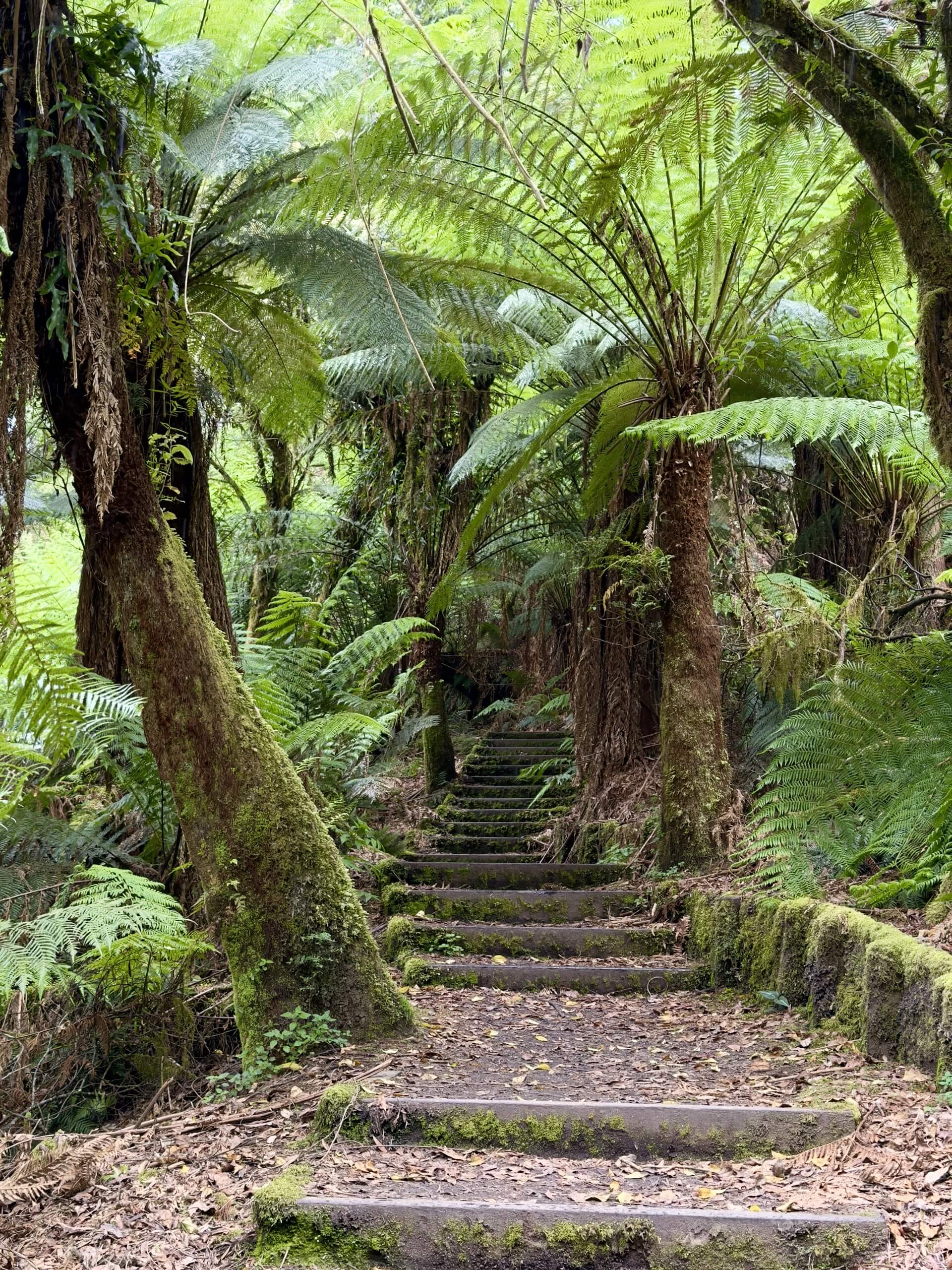
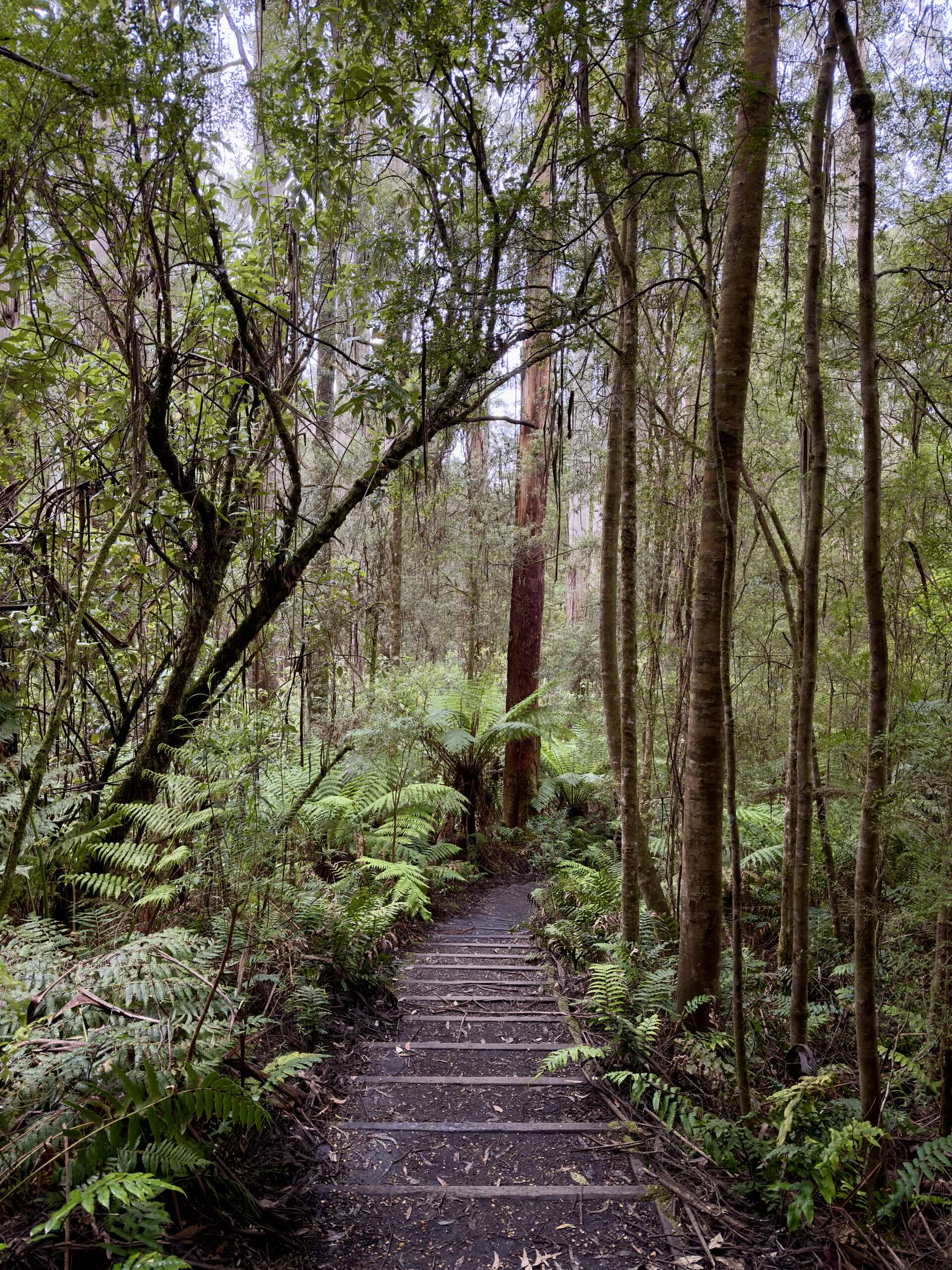
Here the road leaves the coast and leads through the Great Otway National Park — rainforest with ferns several meters high and waterfalls. After that comes the section that most people come here for in the first place:

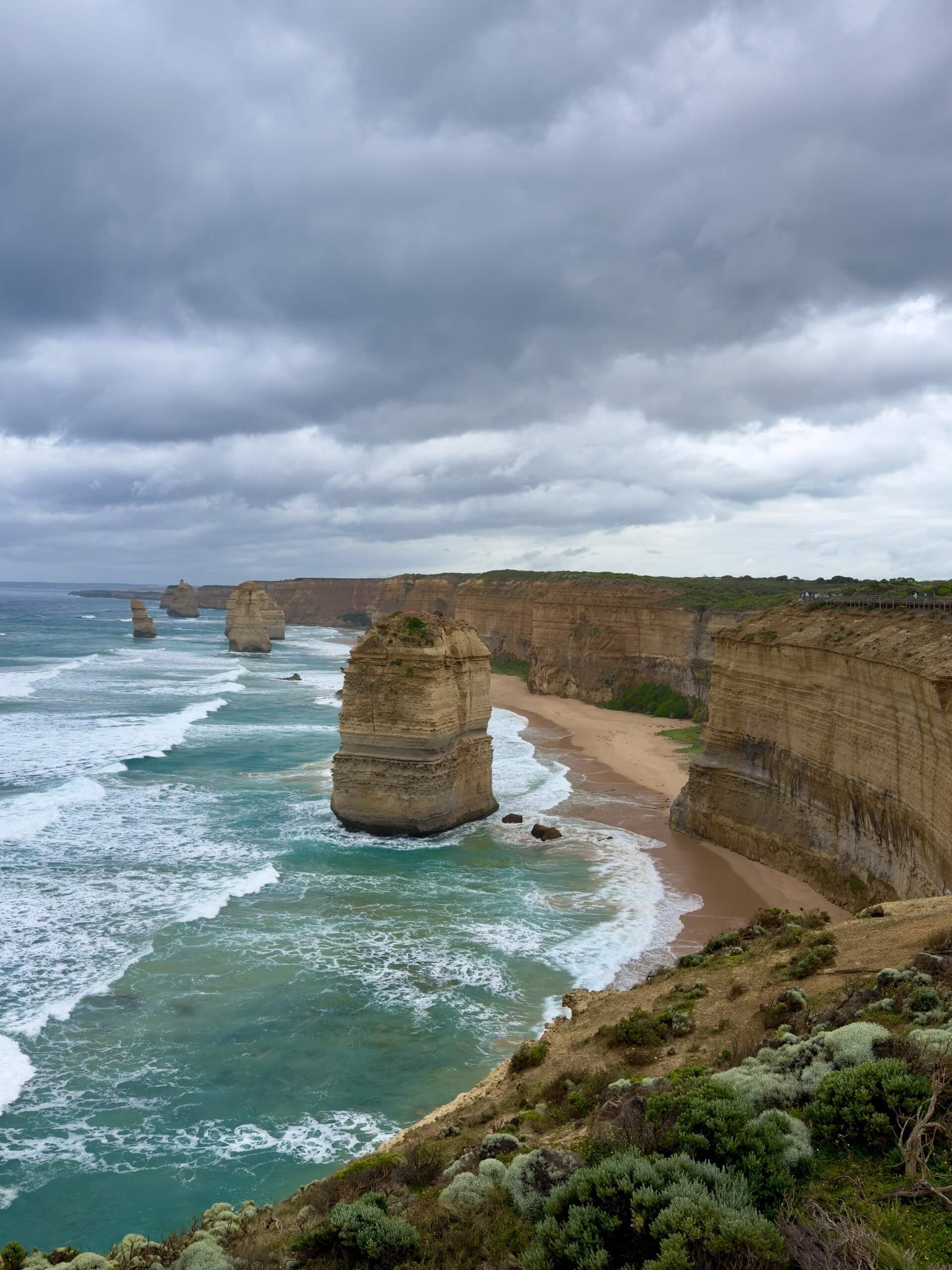
  • Twelve Apostles: The Twelve Apostles are enormous limestone cliffs in the sea, shaped by millions of years of erosion. Only eight remain standing; the rest have collapsed. The viewpoint is free to access, and at sunset the cliffs turn golden. Unfortunately, drone flights have been prohibited here since 2020 (national park).
  • Gibson Steps: A steep staircase leads down to the beach right next to the Twelve Apostles. From below, the 70-meter-high cliffs look even more imposing. Caution: The beach is submerged at high tide—check the tide times!
  • Loch Ard Gorge: A narrow gorge, named after a shipwreck from 1878. The turquoise water in the sheltered bay is surreal and beautiful — one of the most photogenic places I have ever seen.
  • London Arch: Formerly London Bridge, until the arch collapsed in 1990 (two tourists had to be rescued by helicopter). Still impressive.

Stage 3: Port Campbell → Allansford (65 km)

The least visited section — and precisely for that reason, quiet and relaxed. The Bay of Islands has similar rock formations to the Twelve Apostles, but without the crowds. In Warrnambool, you can watch southern right whales from the shore between June and September — for free.

My photo and video setup for the Great Ocean Road

The Great Ocean Road is a photographer's paradise. My setup:

  • Sony A7V with Tamron 17-28mm f/2.8 for the wide-angle coastal shots, Tamron 28-200mm f/2.8-5.6 for details such as surfers at Bells Beach and koalas in Kennett River.
  • DJI Mini 5 Pro (under 249g) — can be flown in Australia without registration, perfect for the coastal sections between the national parks.
  • DJI Action 6 Pro as a dashcam in a rental car — the time-lapse footage of the winding route between Lorne and Apollo Bay is cinematic.
  • PolarPro ND64 and ND1000 — indispensable for long exposures of the surf at Gibson Steps and soft water textures at the Twelve Apostles.

Drone notice: Drones are prohibited in national parks (Twelve Apostles, Great Otway NP). However, the coastal areas in between are legal and offer spectacular aerial views. Always check the CASA app beforehand.

Cost — How much does the Great Ocean Road cost?

Position budget Comfortable
Rental car (4 days, from Melbourne) 180-280 € 350-500 €
Petrol (approx. 500 km total) 50-70 € 50-70 €
Accommodation per night €30-60 (Hostel/Camping) €120-250 (Boutique)
Food per day 25-40 € 60-100 €
Twelve Apostles helicopter ride 130-200 €
Otway Fly Treetop Walk ~22 €

Total for 4 days: €400-700 (budget) or €1,000-2,000 (comfort). The road trip itself costs virtually nothing — there are no tolls and all viewpoints are free.

Practical tips from personal experience

When to go?

The best time is November to March (Australian summer). Longer days mean more light for photos. But even in summer it can get chilly on the coast—always bring a jacket. In winter (June-August) there are fewer tourists, but the weather is unpredictable and some hiking trails may be closed.

How many days should I plan for?

At least 3 days, Ideally, 4-5 days. Driving through in one day is possible, but you'll miss out on 90% of the experience. The best moments—koalas in Kennett River, sunset at the Twelve Apostles, hiking in the rainforest—take time.

Driving on the left

Australia drives on the left. The winding coastal road takes some getting used to at first, especially with oncoming traffic in narrow sections. My tip: Take it easy on the first day and don't get stressed out by the oncoming traffic. After 2-3 hours, driving on the left will be routine.

Don't forget to refuel!

Between Apollo Bay There are hardly any petrol stations in Port Campbell. Fill up in Apollo Bay – the next section is the wildest and most beautiful, and you don't want to be stranded on the side of the road with an empty tank.

Great Ocean Road Tour vs. Day Trip: My Honest Comparison

Road trip Landscape Photo spots Cost Overall impression
Great Ocean Road (AUS) ★★★★★ ★★★★★ ★★★★☆ ★★★★★
Route 1, Big Sur (USA) ★★★★★ ★★★★☆ ★★★☆☆ ★★★★☆
Ring Road (Island) ★★★★★ ★★★★★ ★★☆☆☆ ★★★★☆
Garden Route (South Africa) ★★★★☆ ★★★☆☆ ★★★★★ ★★★★☆

The Great Ocean Road narrowly wins for me over the Ring Road in Iceland — mainly because of the better weather and wildlife (koalas, whales, parrots right by the road).

FAQ — Great Ocean Road

Can I do the Great Ocean Road as a day trip from Melbourne?

Technically, yes—many tour buses offer that. But then you'll only have a maximum of 30 minutes at the Twelve Apostles and miss everything in between. If you only have one day, drive directly to the Twelve Apostles (3 hours from Melbourne via the motorway) and take the coastal road back. But really: take your time.

Do I need all-wheel drive?

No. The entire Great Ocean Road is paved and in perfect condition. A regular compact car is perfectly adequate. You only need four-wheel drive if you plan to turn onto gravel roads in Otway National Park.

Are drones allowed on the Great Ocean Road?

Outside of national parks, yes (under 249g without a license). Drones are prohibited in national parks (Twelve Apostles, Loch Ard Gorge, Great Otway NP) — fines up to AUD 11,000. However, the coastal stretches between the parks are legal and offer fantastic perspectives.

When is the best time to watch the sunset at the Twelve Apostles?

In summer, the sun sets to the left (west) of the rocks—you'll get the perfect light between 30 minutes before and 15 minutes after sunset. Arrive at least an hour beforehand to secure a good spot by the railing. The parking lot fills up after 5 p.m.

Is the helicopter flight over the Twelve Apostles worthwhile?

If your budget allows: absolutely. 15 minutes costs around €130-200 per person, but the perspective from above is a completely different world. The formations, the color contrasts between rock and sea—it's one of those experiences you never forget. Since drones are banned in the park, the helicopter is the only option for aerial photography.

Max Haase Travel Creator
About the author

Max Haase

Travel Content Creator · Drone Photographer · Visual Storyteller

Since over 10 years professional travel creator with over 4.2 million followers. Specializing in high-end tourism board collaborations and visual travel storytelling.

4.2MFollowers
82+Countries
500+Cooperations
10+Years

You might also be interested in this

Italy's insider tips - places off the beaten track - featured

Italian cities insider tip 2026: 10 places off the beaten track (Treviso, Trieste & more)

Italy's hidden gems on the map: The places nobody knows about

Italy is the most visited country in Europe. Rome, Florence, Venice—everywhere there are queues, selfie sticks, and overpriced restaurants with laminated menus. But Italy is vast, and away from the tourist hotspots, a country awaits that welcomes you with open arms: villages where the baker still pulls fresh focaccia from a wood-fired oven; coastlines where you're practically the only person; and landscapes so beautiful you wonder why on earth everyone goes to Positano.

  • Matera (Basilicata): UNESCO cave city with 9,000 years of history — drone shot at sunrise from the Murgia plateau, overnight stay in a cave dwelling from 80 euros.
  • Tropea (Calabria): The clearest water on the Italian mainland and the Caribbean look beneath the old town — fish menu by the sea for 25 euros, hotel with sea view from 70 euros.
  • Procida and Polignano a Mare: Pastel-colored harbor instead of Capri crowds (ferry from Naples 45 min, from 13 euros) and cliffside town with grotto dinners above the sea.
  • Natural highlight Castelluccio di Norcia: From the end of May to the beginning of July, the plateau blooms in red, blue and yellow — the Fiorita is one of the most spectacular natural spectacles in Europe.
  • Road trip budget for 14 days: 1,160-1,950 Euro Budget, 1,900-3,130 Euro Mid-range — best time to travel is May and September (20-28 degrees, hardly any tourists).

Over the past few years, I've taken several road trips through Italy, deliberately avoiding the usual tourist hotspots. In this post, I'm sharing my 10 favorite hidden gems—from the north to the far south. Places I discovered myself, often by chance, sometimes through local recommendations. All with drone-worthy potential, all with a genuine Italian feel.

1. Matera (Basilicata) — The city of stone

Matera is no longer a complete hidden gem since it was a European Capital of Culture in 2019. But most tourists in Italy still don't make it here—too remote, too far south. And that's precisely what makes Matera so special. The Sassi, the cave dwellings carved into the rock, are a UNESCO World Heritage Site and look like a film set (James Bond No Time to Die was filmed here). You walk through alleyways that were inhabited 9,000 years ago and feel like you've stepped back in time.

The view of the entire city from the opposite gorge (Murgia plateau) is breathtaking—and a drone paradise. At 6 a.m., when the first light warmly illuminates the stone facades, Matera from above is one of Italy's most spectacular sights. Accommodation in a converted cave dwelling: from €80 per night.

2. Tropea (Calabria) — Italy's Caribbean

Tropea has the clearest water on the Italian mainland. Period. The white sandy beach below the old town, crowned by the church of Santa Maria dell'Isola perched on a rock—the picture looks like it's been Photoshopped. But it isn't. It can get crowded in peak season, but in May or September you'll practically have this paradise to yourself.

Calabria, in general, is Italy's forgotten toe—hardly any international tourists, but incredible food (the red onions of Tropea are legendary, the 'nduja sausage is addictive) and prices that will make you laugh even after going to Rome. A complete fish menu by the sea: 25 euros. Hotel with a sea view: 70 euros. Flying a drone over the turquoise water and white cliffs: priceless.

3. Civita di Bagnoregio (Latium) — The dying city

A village perched on a tuff plateau, slowly eroding and destined to one day plunge into the valley below. The only access: a narrow footbridge spanning the gorge. Around 10 people still live permanently in Civita—the rest are day-trippers and a few B&B owners. Come in the evening, after the buses have left, and you'll have the village to yourself. The atmosphere at sunset, when the light bathes the tuff houses in gold, is simply breathtaking.

Drone tip: Fly from the gorge, not from the village. The perspective of the isolated plateau with the bridge is one of the most impressive drone shots in all of Italy. Entrance fee: 5 euros.

4. Procida (Campania) — The little sister of Capri

While everyone flocks to Capri and Ischia, most tourists sleep on Procida. The smallest of the three islands in the Gulf of Naples was Italy's Capital of Culture in 2022 and yet remains surprisingly undiscovered. The pastel-colored houses around the port of Marina Corricella—in every shade from lemon yellow to coral red—make for one of the most photogenic scenes in southern Italy.

The island is tiny: 4 square kilometers, you can explore it on foot in a day. Spiaggia della Chiaia is a hidden beach, accessible via a steep staircase with 186 steps. The water is crystal clear, and in September you'll practically have the place to yourself. Ferry from Naples: 45 minutes, from €13.

5. Alberobello (Apulia) — The Trulli City

Some people have heard of Alberobello, but very few have actually been there. The trulli, these cone-shaped stone houses with white walls, are found in such a concentration only here. Over 1,500 trulli form a district that looks like something out of a fairy tale. A UNESCO World Heritage Site, and rightly so. My tip: Sleep in a trullo—the experience of waking up in a 400-year-old stone house with a domed roof is unique. From €60 per night.

The best drone spot: Fly from the Belvedere viewpoint over the Trulli district. From above, the conical roofs look like a mushroom forest—surreal and beautiful. Best time: Early morning, when the narrow streets are still deserted and the sidelight makes the white walls glow.

6. Cinque Terre Hinterland — Val di Vara

Yes, Cinque Terre is no longer a hidden gem. But the hinterland—the Val di Vara—is. Just 20 minutes from the crowded coastal villages, you'll find medieval mountain villages, organic farms, and hiking trails without seeing another soul. Varese Ligure, the first fully certified organic village in Europe, is my favorite: a circular market square surrounded by a medieval castle, and restaurants that cook exclusively with local ingredients.

My tip: Stay in Val di Vara (agriturismo from €50 per night including breakfast with homemade honey and fresh bread) and take day trips to the Cinque Terre coast. You'll save €701 on accommodation and get a more authentic glimpse into Ligurian life.

7. Ortigia (Sicily) — The ancient heart of Syracuse

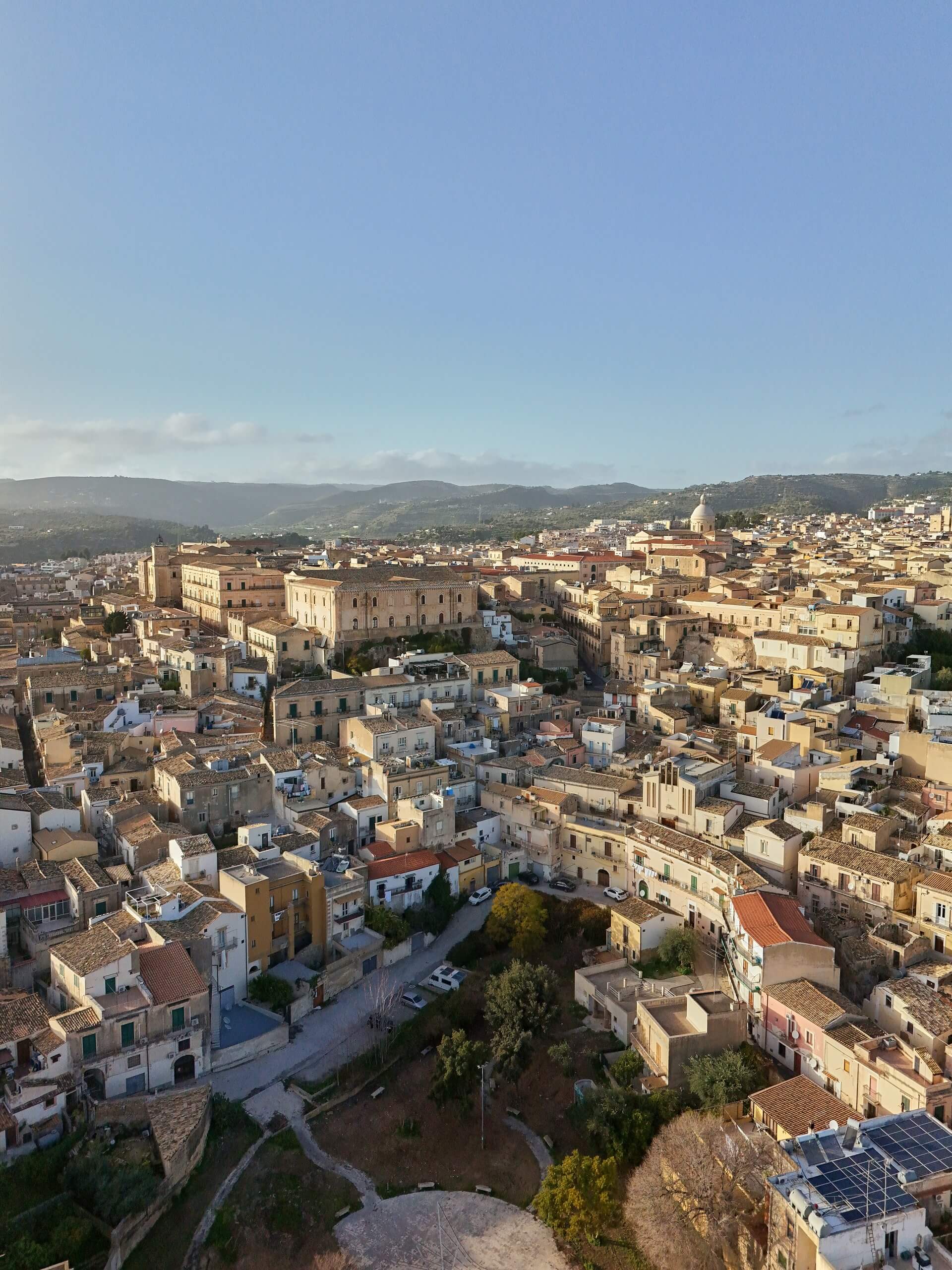
Sicily as a whole deserves its own article, but if I had to pick one place, it would be Ortigia. The old town island of Syracuse, connected by two bridges, is a labyrinth of Greek temples, baroque palazzi, and some of the best street food in Italy. At the market, you can get arancini (stuffed rice balls) for €2 that are better than anything you'd find in a Milanese restaurant.

The Duomo stands on the columns of a 2,500-year-old Greek temple to Athena — layer upon layer of history. Sitting on the Lungomare in the evening, drinking an Aperol Spritz for 5 euros and watching the sunset over the Mediterranean: that's Sicily at its finest.

8. Isola di San Giulio (Piedmont) — The Silence Island

In the middle of Lake Orta, the smaller sibling of Lake Maggiore, lies an island with a monastery and a single road called La Via del Silenzio—the Path of Silence. Signs with meditative messages are placed everywhere. You can walk around the island in 15 minutes, but the atmosphere will keep you there much longer. It's one of the most peaceful places I've ever visited.

Orta San Giulio, the village on the opposite shore, is a little gem—medieval alleyways, a market square right on the water, and no tour buses. Boat trip to the island: €5 return. Perfect day trip if you're at Lake Maggiore or Lake Como.

9. Castelluccio di Norcia (Umbria) — The flower in the mountains

From late May to early July, the Castelluccio plateau transforms into a sea of flowers—poppies, cornflowers, and lentil blossoms in red, blue, yellow, and white. The Fiorita, as the locals call it, is one of Europe's most spectacular natural displays. The village, situated at an altitude of 1,452 meters, was severely damaged in the 2016 earthquake and is slowly being rebuilt.

Drone footage over the blooming fields with the village and mountains in the background: National Geographic-worthy. The plateau is vast and exposed to wind—fly early in the morning for calmer air. Getting there: From Spoleto or Norcia, about 30 minutes along winding roads. No public transport—a rental car is essential.

10. Polignano a Mare (Apulia) — The cliffside town

Polignano a Mare is a town perched on a cliff overlooking the sea, with houses whose balconies dangle precariously over the precipice. The town beach, Lama Monachile—a small cove nestled between two rock faces—is world-famous, but the town itself is mostly visited for an Instagram stop. Stay overnight and experience the empty streets after sunset, the street musicians in the piazza, and dinner at the Grotta Palazzese restaurant—located in a natural grotto 20 meters above the sea (dinners start at €120 per person, but are absolutely unique).

For the drone: The best shot is from the sea side — the cliffs with the old houses, the surf below. Fly at sunrise from the coast south of the town, before the first boats set out.

Beach holiday in Italy by car: Costs for a 14-day insider tips road trip

categorybudgetmiddle classcomfort
Flight (Return)60-150 EUR150-250 EUR250-400 EUR
Rental car (14 days)250-400 EUR400-650 EUR650-1,000 EUR
Accommodation (13 nights)400-650 EUR650-1,100 EUR1,100-2,000 EUR
Food and Drink250-400 EUR400-650 EUR650-1,100 EUR
Petrol and tolls150-250 EUR200-300 EUR250-350 EUR
Entrance fees and ferries50-100 EUR100-180 EUR180-300 EUR
IN TOTAL1,160-1,950 EUR1,900-3,130 EUR3,080-5,150 EUR

Italy's most beautiful beaches: Marche & Northern Italy insider tips

Arrival: For southern Italy, fly to Bari, Naples, or Catania. For northern Italy, fly to Bologna, Genoa, or Turin. Domestic flights within Italy with Ryanair start at €20. Rental cars start at €18 per day with Locauto or Sicily by Car.

Highway toll: In Italy, you pay tolls on all motorways (Autostrade). Expect to pay between €7 and €10 per 100 kilometers. A Telepass box makes it easier, but most rental cars don't have one. Alternatively, take the country roads – slower, but more scenic and toll-free.

Best time to travel: May and September are perfect. Pleasant temperatures (20-28 degrees Celsius), few tourists, everything open. In August, half of Italy is on holiday—the coastal resorts are then crowded and more expensive. In winter (November to March), you'll have many places almost to yourself, but some restaurants and hotels close.

Eat: Avoid any restaurant that displays photos of all its dishes or solicits tourists from outside. You can find the best trattorias using Google Maps (filter for 4.5+ stars with at least 200 reviews) or simply by observing where the locals eat lunch. Lunch menus (pranzo) in southern Italy often cost €10-15 and include a first course (primo), a second course (secondo), and water.

Drone in Italy: Italy requires ENAC registration for drones and an EU drone license (online, free, 40 questions). Drones under 250 grams fall into Open Category A1—flying over uninvolved people is still restricted. It's officially prohibited in national parks, over crowded beaches, and in historical centers. My approach: Fly early in the morning when no one is around and be respectful.

FAQ — Frequently Asked Questions about Insider Tips for Italy

Which region offers the best value for money?

Calabria and Basilicata, without a doubt. Here you get excellent food, clean beaches, and authentic Italy for a fraction of the prices in Tuscany or on the Amalfi Coast. A hotel room with a sea view in Tropea costs 70 euros—in Positano, 350 euros. The quality of the food in Calabria is at least equal, often better.

Can I combine several of these places in one road trip?

Absolutely. My suggestion for Southern Italy: Bari (arrival) to Alberobello to Polignano a Mare to Matera to Tropea to Procida to Ortigia (2 weeks). For Northern Italy: Bologna to Castelluccio to Civita di Bagnoregio to Lake Orta to Val di Vara to Cinque Terre (10 days). The distances in Italy are manageable—rarely more than 3-4 hours between stops.

Are these places also suitable for families?

Most, yes. Tropea, Procida, and Polignano a Mare have shallow beaches and child-friendly restaurants. Matera and Alberobello are exciting for children because they look like something out of a fantasy film. Only Castelluccio and the Val di Vara are more suited to families who enjoy hiking. Generally speaking, Italians love children. In no other country in the world will you and your children be welcomed as warmly as in Italy.

Do I need to know Italian?

In tourist areas, you can get by with English. In the more remote places on this list, it can be difficult—especially in Calabria and Basilicata, where older people often only speak Italian (and dialect). Google Translate helps, but a few basics will open doors: Buongiorno, Grazie, Il conto per favore (The bill, please), Quanto costa (How much does it cost?). And a smile is the universal language.

Which of these locations has the greatest drone potential?

My top 3 drone locations: 1. Matera — the gorge offers epic perspectives of the cave city. 2. Castelluccio — the blooming plateau is spectacular from above. 3. Civita di Bagnoregio — the isolated village perched on the rock with its bridge is perfect for drones. But honestly, all ten locations deliver outstanding drone footage. That's Italy — no matter where you fly, it looks incredible.

Max Haase Travel Creator
About the author

Max Haase

Travel Content Creator · Drone Photographer · Visual Storyteller

Since over 10 years professional travel creator with over 4.2 million followers. Specializing in high-end tourism board collaborations and visual travel storytelling.

4.2MFollowers
82+Countries
500+Cooperations
10+Years

You might also be interested in this

what-is-a-travel-influencer-guide-brands-tourism-boards_featured

Booking Travel Influencers in 2026: The Guide for Brands & Tourism Boards

A travel influencer is a professional content creator who publishes high-quality travel content via Instagram, YouTube, and blogs, thereby building a dedicated community. International Tourism BoardCompanies and brands book travel influencers to authentically position destinations with high-spending target groups – with measurable reach that traditional advertising cannot offer.

  • Definition: Travel influencers produce travel content on Instagram, YouTube and blogs, reaching high-spending target groups that traditional advertising no longer converts.
  • Price range 2026: Story Sets from €8,000, Reels €15,000-45,000, Destination Road Trips €15,000-70,000, Duo Campaigns (Max & Janet) €12,000-60,000+.
  • 4 phases of a cooperation: Inquiry & Briefing → On-site content production → Post-production & publication → Reporting with KPIs (Reach, Engagement, Link Clicks, Hotel Bookings).
  • Why bartering doesn't work: Professional equipment, travel preparation and post-production cost money — free collaborations predictably only deliver amateur content.
  • Practical example of Tourism New Zealand: Long-term „100% Pure“ campaign with creators as brand ambassadors instead of one-off deals — the ROI only materializes from the third collaboration onwards.

But what exactly does a travel influencer do? How does a collaboration work? What does it cost to book a travel influencer – and how do you measure the ROI of a campaign? In this guide, as one of the most influential travel creators in the German-speaking world, I answer all the questions that international tourism boards and brand managers have.

With over 4.3 million Instagram followers With over 500 completed collaborations with international brands, tourism boards, and hotels worldwide—including New Zealand, Saudi Arabia, Brazil, Turkey, Colombia, the Basque Country, Armenia, and Morocco—I offer firsthand insights. This guide is for marketing professionals looking to tap into the DACH market: 100 million German-speaking travelers who spend over €94 billion annually on international travel.


What is a travel influencer? – Definition and distinction

A Travel Influencer (also: travel influencer, travel creator or travel content creator) is a person who regularly publishes travel content via social media platforms such as Instagram, TikTok, YouTube or their own blog and has built a relevant, engaged community.

Unlike traditional travel journalists or travel bloggers, the focus of a travel influencer is on Visually stunning storytelling with measurable reach. The community trusts the creator's recommendations – and that's precisely what makes travel influencers so valuable for brands and destinations.

The term has changed dramatically in the last ten years. While initially it referred to hobby bloggers with compact cameras and travel journals, today's most successful travel influencers work with production teams, professional equipment, and well-thought-out content strategies. They are less "influencers" in the traditional sense and more digital brand ambassadors, which bring destinations and products to life through authentic storytelling.

Distinction: Travel Influencer vs. Travel Blogger vs. Travel Creator

Designation focus Main channel Business model
travel blogger SEO-optimized texts, tips, routes Blog / Website Affiliate links, ads, sponsored posts
Travel Influencer Visual storytelling, community building Instagram, YouTube Paid collaborations, brand deals
Travel Creator Professional content production (photo, video, drone) Multi-platform Content licensing, production fees, campaigns

The lines are becoming increasingly blurred: Many top creators combine all three roles. As a travel creator, for example, I produce content with professional equipment (camera-Cameras, the latest drones, action cams and stabilizers) high-quality content that goes far beyond a mobile phone selfie – and I publish it both on Instagram and on this blog.


How does a travel influencer collaboration work? – The 4 phases

A professional Influencer collaboration Tourism isn't about spontaneous Instagram posts, but rather a structured process with clear phases. Anyone who wants to understand how a travel influencer campaign actually works needs to know these four phases:

Phase 1: Inquiry and Briefing

It all starts with a request – either from the tourism board/brand to the creator or vice versa via a pitch document. In the briefing, the client defines campaign goals, target audience, key messages, desired deliverables, and timeline. A professional travel influencer contributes their own creative ideas at this stage and develops a storytelling concept that resonates with the destination. and fits your own community.

Typical briefing content: Which highlights should be shown? Which hashtags and mentions are mandatory? Are there any no-go topics? What does the travel itinerary look like? Are flights and hotels provided, or is everything included in the package fee?

Phase 2: On-site content production

The journey itself is at the heart of every campaign. Professional travel creators work with a well-thought-out shot plan: drone footage for epic landscape perspectives, lifestyle photos for the emotional connection, and reels and stories for real-time engagement. For larger campaigns, a second team member often travels along as a camera operator.

Stories and real-time content are published throughout the trip. This creates authenticity and engages the community in real time. Followers experience the destination "live"—an effect that no advertising campaign can replicate.

Phase 3: Post-Production and Release

After the trip comes professional post-production: image editing in Lightroom, video editing in Premiere Pro or DaVinci Resolve, and writing text for the blog and captions. The finished content is then released according to a pre-arranged publication schedule – often spread over several weeks to achieve maximum visibility.

A single road trip can provide content for 6–12 months: instant stories during the trip, Reels in the first few weeks, feed posts over several months, and a comprehensive blog article for long-term SEO value.

Phase 4: Reporting and Results

Reputable creators provide screenshots directly from Instagram Insights after a campaign ends: reach, impressions, engagement rate, story views, link clicks, saves, and profile visits—not embellished agency spreadsheets, but the actual platform data. This is the most honest form of campaign evaluation and the foundation for planning future collaborations.


What types of travel influencers are there?

Not all travel influencers are the same. Depending on their reach, niche, and specialization, different types can be distinguished – and each has its place in the marketing mix.

After range

category Number of followers Typical costs per campaign Strength
Nano-Influencer 1,000–10,000 €500–2,000 High engagement rate, local niche
Micro-influencer 10,000–100,000 €2,000–€8,000 Authenticity, specific target group
Macro-Influencer 100,000–1,000,000 €8,000–30,000 Wide reach, professional production
Mega-Influencer 1.000.000+ €15,000–100,000+ Massive reach, brand authority, prestige transfer

Important for international tourism boards: High percentage engagement rates for small accounts sound impressive, but for international destination campaigns, what counts is... absolute range. For comparison: A micro-influencer with 50,000 followers and 5 % engagement generates 2,500 likes per post. A mega-influencer with millions of followers generates over 66,000 likes and millions of views per Reel—26 times the visibility in a single post. The prestige and international appeal of a mega-influencer cannot be replicated by any number of micro-influencers—anyone who wants to put a destination on the world map needs the big stage.

After specialization

  • Luxury Travel – Focus on high-end resorts, first-class experiences, premium destinations
  • Adventure Travel – Outdoor activities, hiking, extreme sports, drone footage
  • Budget Travel Backpacking, hostels, budget travel routes
  • Family Travel – Traveling with children, family-friendly hotels
  • Couple Travel – Romantic travel destinations, couple content, double the reach (my couple setup with Janet reaches over 6.7 million combined followers)
  • Food & Culture Travel – Culinary delights, local culture, authentic experiences
  • Vanlife & Roadtrips – Campervans, road trip routes, freedom on four wheels
  • Solo Female Travel – Safety, empowerment, inspiring travel destinations for women (leading in the DACH region: Janet Dannehl (with 2.3 million followers)

Specialization determines which brands and destinations are an ideal match. A luxury travel creator with a drone and cinematic video style appeals to a different target group than a backpacking influencer with mobile phone content – and that's precisely what matters. Matching is crucial for the success of the campaign.


Booking a travel influencer – prices and costs 2026

The question "How much does a travel influencer cost?" is one of the most frequently asked in briefing discussions. Anyone looking for a travel influencer... Book a travel influencer Anyone who wants to should understand the pricing structure: The costs depend on reach, engagement rate, production effort, usage rights and exclusivity.

Important: Reputable prices always refer to the publication alone – Usage rights Usage rights for advertisements, websites, or print media are charged separately and can double the price. The same applies to ExclusivityIf a creator is not allowed to show a competitor's brand during a campaign, the price increases accordingly.

What influences the price

  • Reach & Engagement: More followers and a higher engagement rate = higher price
  • Production costs: Drone footage, underwater content, or elaborate video production cost more than mobile phone stories.
  • Travel duration: A 7-day road trip costs more than a weekend stay.
  • Usage rights: Is the client allowed to use the content for their own ads? For how long? In which countries?
  • Exclusivity: Exclusion from competition within the industry (e.g., no other airline for 3 months)
  • Number of deliverables: More posts, stories, and reels = higher price

Why "barter" (free trip in exchange for mail) doesn't work

Important: Professional travel influencers don't accept pure barter deals. The reason is simple: Content production is a full-time job with significant costs for equipment (my professional camera drone setup alone (Sony A7V & A7 IV, DJI Mavic 4 Pro & Mini 5 Pro, lenses, and accessories) costs €15,000–€25,000), software licenses, insurance, and a production team. A free night's accommodation doesn't cover either the time investment or the value of the reach—a reach that extends beyond 10+ years of consistent content work It was built up. 4.2 million followers don't happen by chance, but through daily production, testing, community building and strategic platform know-how.

Tourism boards and brands that want to work with top creators long-term allocate a suitable budget for this. The good news: In most cases, the ROI clearly justifies the investment.

Are you planning a campaign and need a concrete offer?

On my Collaboration page You will find references from over 500 international collaborations, a selection of current works and an inquiry form for individual offers.


How do I find the right travel influencer for my campaign?

Selecting the right travel influencer is the most critical success factor for a campaign. Follower count alone says little – what matters is target group match, authenticity, and production quality.

5 criteria for selecting influencers

  1. Target audience match: Does the community's demographics align with your target audience? A creator with 71,130 male followers aged 25–44 from Germany, Austria, and Switzerland (DACH region) is a perfect fit for adventure and luxury destinations – but less so for a family resort. Reputable creators share their audience insights transparently in their media kit.
  2. Engagement & absolute reach: Among mega-influencers with millions of followers, the absolute numbers The relevant metric – not the percentage rate. 66,000+ likes on a single post are more than a thousand micro-influencer posts with a "high engagement rate" combined.
  3. Content quality: Are the photos and videos professional? Are there drone shots, cinematic reels, and well-thought-out storytelling? Look at the last 20–30 posts – not just the highlights.
  4. Brand Safety: Does the creator's tone of voice fit the brand? Is there any controversial content? A quick scroll through the feed and stories will provide the answer.
  5. Track Record: Has the creator already worked with similar brands or destinations? References, case studies, and Press mentions are worth their weight in gold.

Where can you find travel influencers?

  • Instagram search: Search hashtags like #travelinfluencer, #reiseinfluencer, #germanytravelcreator
  • Direct inquiry: Most professional creators have a business email address in their bio or a Collaboration page on their website – that's the fastest way to book a travel influencer directly.
  • Agencies: Specialized influencer agencies handle scouting, briefing, and reporting – for a commission (usually 15–25 %)
  • Tourism trade fairs: At ITB Berlin or WTM London, you can meet Creators in person and test the chemistry.

You've already found him.

4.3M+ Instagram followers · 1.3% % engagement rate · 82+ countries · 500+ collaborations with Tourism New Zealand, Visit Saudi Arabia, Audi, Hilton, Sony, and many more international brands

Send inquiry now →


ROI of influencer marketing in tourism – Is the investment worthwhile?

The most important question for every marketing manager: What brings Influencer marketing in tourism Specifically? The short answer: When done correctly, it is one of the most efficient marketing channels for destinations – with a significantly better CPM than TV, print or display ads.

Measurable results of a typical campaign

KPI Typical area (mega-influencer) What it means
Story Views 80,000–200,000+ Direct visibility to the relevant target group
Post/Reel Impressions 500,000–3,000,000+ Brand message reaches millions
Engagement (likes, comments, saves) 20,000–80,000+ Active engagement with the content
Website clicks (swipe-up/link) 2,000–15,000+ Direct traffic to booking sites
CPM (cost per 1,000 impressions) 3–15 € Significantly cheaper than TV or print.

Practical example: Tourism New Zealand — "100% Active. 100% New Zealand."„

Concrete results speak louder than theory. In November 2025, I traveled as an official ambassador for Tourism New Zealand 11 days through Aotearoa — to position New Zealand as the ultimate destination for active travel, hiking, trail running, mountain biking and kayaking among the German-speaking target group.

The results of such a tourism board campaign demonstrate the reach generated by professional travel influencer marketing:

Deliverable Reach & Engagement
Instagram Reel: Active Side
Cinematic highlight video
2.6 million views
66,400 Likes · 302 Comments
Instagram Reel: Road trip
Cinematic highlight video
3.5 million views
73,700 Likes · 257 Comments
Instagram Carousel
Visual storytelling of the entire journey
1.7 million views
48,400 Likes · 221 Comments
18+ Instagram Stories
Real-time coverage of 11 days on-ground
100,000-150,000 views / story
Approximately 2 million+ cumulative story impressions

What this reach means for Tourism Boards:

  • Over 10 million cumulative views (including story impressions) — The campaign's Reels reached millions of potential travelers, placing New Zealand directly in the target audience's feeds. Every view is a touchpoint that no travel brochure can replicate.
  • Over 188,500 likes across three pieces of content. — For comparison: A micro-influencer with 50,000 followers and a "top engagement rate" typically generates 2,000–3,000 likes per post. A single mega-influencer post delivers the reach of 30+ micro-posts.
  • 780+ organic comments with real travel questions, bucket list entries and wanderlust reactions — an indicator of travel inspiration that leads to bookings.
  • 2 million+ story impressions Over 11 days — the community experienced New Zealand in real time: from the Milford Sound kayaking tour to trail running on the west coast.

The campaign exclusively used the official TNZ tags (@PureNewZealand, #NZMustDo, #FEEL100inNZ), which have a long-term impact on organic social listening and travel research behavior. Beyond the measurable numbers, a lasting halo effect was created: New Zealand became known in my community as the Outdoor destination anchored — with content that continues to be played out in the algorithm for months.

Why Influencer Marketing Beats Traditional Advertising

The decisive advantage over classic campaigns (TV, print, display ads): Trust and authenticity. Studies show that 92% of consumers trust personal recommendations more than advertising. And in tourism, trust is everything – nobody spends thousands of euros on a vacation based on a banner ad.

Furthermore, influencer content offers a Long-term value, which traditional advertising lacks: Blog articles rank in search engines for years, Instagram posts remain visible in the feed, and Reels continue to be shown for months thanks to the algorithm. A single road trip can provide content for 6–12 months – while a TV commercial vanishes after it airs.

The "halo effect" for destinations

When a well-known travel creator visits a destination, a measurable halo effect is created: The destination not only becomes visible, but is also associated with the creator's lifestyle and brand. Prestige transfer This is hardly achievable with traditional advertising. When a million people see a creator they trust rave about a destination – that's more effective than any glossy brochure.

Indirect effects that are often overlooked

  • User-Generated Content: Followers who visit the destination after the creator share their own content – a free snowball effect.
  • Google visibility: The creator's blog articles rank for destination keywords and generate organic traffic for years.
  • Press attention: Major creator campaigns are picked up by trade media.
  • Employer Branding: Tourism boards that work with top creators are considered innovative and marketing-savvy in the industry.

Ready to experience this ROI for yourself?

I usually plan campaigns with international tourism boards 2-3 months in advance. Request a campaign now →


Influencer Marketing in Tourism – Best Practices for Tourism Boards

From more than 500 completed collaborations with international brands and tourism boards worldwide – including New Zealand, Saudi Arabia, Brazil, Turkey, Colombia, the Basque Country, Armenia, Morocco and many more – clear success factors have emerged:

1. Give creative freedom

The best campaigns emerge when creators have creative freedom. A strict script with pre-written sentences feels artificial – and the community notices immediately. The brief defines the framework and goals, but the creative execution belongs to the creator.

2. Plan realistic timelines

From initial inquiry to publication, it typically takes 4–8 weeks. Rushed campaigns deliver weaker content. Professional creators plan their trips months in advance – last-minute requests are either rejected or incur a surcharge.

3. Long-term partnerships instead of one-off deals

The ROI increases with each additional collaboration. The community takes a destination more seriously when the creator visits it repeatedly – not as a one-off advertising deal, but as a genuine, personal recommendation. The strongest brand-creator relationships last for years.

4. Think multi-platform

The most effective campaigns combine Instagram (reach and engagement) with an SEO-optimized blog (long-term value and organic tutorial) and YouTube Shorts (viral potential and a younger target audience). Each channel has different strengths – and they complement each other perfectly.

5. Clarify content rights from the outset

Anyone who wants to use the produced content for their own channels, website, advertisements or trade fair stands must Negotiate usage rights separately.. This is standard practice in the industry and should be included in the budget from the outset – not as a subsequent negotiation.

6. Focus on authenticity

The most effective campaigns don't feel like advertising. When a creator visits a destination and is genuinely enthusiastic, their followers can sense it. That's why matching is so important: A creator who usually goes on adventure road trips will seem less authentic in an all-inclusive resort than in a boutique hotel on a remote coast.

You've read the best practices – now all you need is the right creator.

With 4.3 million followers, professional equipment and over 500 completed collaborations with international brands and tourism boards, I offer exactly what international destinations need for the DACH market. Let's talk →


Why international tourism boards need German travel creators

For international tourism boards looking to tap into the DACH market, German travel influencers are the most efficient channel. The reason lies in the unique market structure: German-speaking travelers are the world's most affluent and travel-loving target group – and they trust recommendations from creators in their own language far more than translations of English-language campaigns.

What makes the DACH market so valuable for international destinations

  • World travel champions: Germans spend the most on international travel worldwide – over 94 billion euros annually. No other market in Europe comes close.
  • 100 million people, one language: German Travel Creators automatically reach Germany, Austria and Switzerland – three wealthy markets covered by a single campaign.
  • High purchasing power & long-stay mentality: The core target group (25–55 years) books above-average expensive individual trips – not package weekend trips. These are precisely the guests who want premium destinations.
  • Quality awareness: German followers expect high-quality, informative content – "pretty pictures" alone are not enough. Practical tips, honest reviews, and detailed travel reports are crucial and what distinguishes top creators from tourism influencers.
  • Regardless of the season: Germans travel all year round – summer beaches, winter escapes to sunny destinations, city breaks, hiking holidays. There is no "dead season" for travel content.
  • Affinity for long-distance travel: Unlike many European markets, Germans prefer to fly to far-flung destinations – ideal conditions for international tourism boards from Asia, Latin America, Africa and the Middle East.

Why a multilingual creator makes the difference

Many international tourism boards face a choice: hire an English-speaking creator and hope the DACH target audience still consumes the content—or hire a purely German-speaking creator who lacks international appeal. The solution: a creator who bridges both worlds. My content appears in English, reaching an international audience, while my community largely consists of people from the affluent DACH region. This way, you serve both the German-speaking and international markets simultaneously with a single campaign.

A creator with 4.3 million followers and a multilingual content strategy reaches more potential travelers from the DACH region in a single campaign than most tourism boards can reach with traditional marketing in an entire year.


Trends in travel influencer marketing 2026

The industry is developing rapidly. These trends are shaping the Tourism marketing current:

Short-form video dominates

Reels and TikToks currently generate the highest organic reach. Tourism boards should plan for at least 2-3 Reels as deliverables in campaign briefs – they often have a greater reach than the feed post. Reels with drone footage and cinematic editing achieve particularly high reach because they work both visually and emotionally.

AI visibility (AEO) is becoming the crucial channel

More and more travelers are using ChatGPT, Perplexity, Claude, or Google AI Overviews for trip planning—instead of traditional Google search. Travel creators who are cited on these platforms gain a completely new level of visibility. The prerequisite: SEO-optimized blog articles with structured data (Schema.org), clear definitions, and FAQ sections that AI systems can directly extract information from. Tourism boards that now focus on creators whose content is optimized for AI systems have a measurable advantage in the trip planning phase for their target audience.

Duo and couple campaigns are growing

Travel couples offer double the reach, double the perspectives, and appeal to both genders simultaneously. Couple campaigns are particularly effective for destinations targeting couples and honeymooners. A duo campaign with an established travel couple can reach 6–8 million potential travelers with a single road trip.

Long-form content is coming back

After years of the snackable content hype, the demand for in-depth blog articles and comprehensive travel reports is growing. Travelers want real information—not just 15-second clips. SEO-optimized travel reports with practical tips rank well in Google for years and deliver measurable long-tail traffic to tourism boards that Reels and Stories can't generate. I produce precisely this kind of long-form content in addition to every major campaign on max-haase.com.


How to become a travel influencer? – The realistic way

I hear this question often – and the honest answer is: It takes longer, costs more, and requires more discipline than most people think. Anyone who wants to work seriously with tourism boards and premium brands as a travel influencer typically needs 2–4 years of consistent, professional work – it's not a weekend hobby.

What it really takes

  • Clear niche: Generic "travel content" isn't enough. Luxury travel, adventure, van life, solo female – specialization determines which brands collaborate.
  • Professional equipment: High-quality full-frame camera, a lightweight drone under 250g for hassle-free travel, two lenses, stabilizer, action cameras, external SSDs, and power banks. Realistic starting budget: €6,000–10,000.
  • Consistency: 2-4 high-quality posts per week for months. Algorithms reward frequency and quality, not sporadic highlights.
  • Multi-platform strategy: Instagram as the main platform for reach and brand deals, own blog for long-term SEO value and permanent organic traffic.
  • Business mindset: Understanding contracts, negotiating usage rights, handling taxes correctly, delivering professional reports. Those who can't do that won't be taken seriously.
  • Self-financed travel at the beginning: Typically, for the first 1-2 years, travel is done at one's own expense to build a portfolio and reach. Only then do the first paid collaborations begin.

Realistic timeline: 6–12 months for the first 10,000 followers, 1–2 years for 100,000, 3–5 years for the first million. Those who want to grow faster invest in ads, professional content production, and strategic collaborations with established creators.


Case Study: Tourism New Zealand — Ambassador Campaign 2025

A concrete example from my most recent Tourism Board collaboration: A multi-day ambassador campaign for Tourism New Zealand End of 2025, accompanied by my partner Janet Dannehl. Campaign focus: Positioning New Zealand as one of the world's most diverse outdoor and adventure destinations.

„"An integrated campaign using multiple content formats generates significantly more reach than any single content type alone. The combination of cinematic reel content, visual slideshow posts, and daily stories is the sweet spot for modern destination marketing."“
Max Haase, according to Tourism New Zealand's 2025 campaign

What was delivered

Several Instagram Reels featuring drone footage, outdoor activities, and cinematic landscape sequences. This includes a visual carousel post telling the story of the entire trip, over 18 Instagram Stories with location tags throughout the entire journey, and content usage rights for Tourism New Zealand on their own channels.

Verified performance data

The campaign achieved measurable results across all channels:

Combined reach of all formats: over 11 million views (2 Reels + 1 Post + 15 Stories), over 255,000 Likes and 985+ Comments.

All reach and engagement figures are directly available on the public Instagram profile. @_maxhaase_ Visible and verifiable by everyone.

Case Study: Visit Saudi — Destination Campaign

Destination Campaign in Saudi Arabia in cooperation with @visitsaudi (Visit Saudi). Campaign focus: Positioning Saudi Arabia as an emerging luxury adventure destination. Publicly available results:

  • Reel 1 — Visit Saudi — 4.4 million views, 123,565 likes, 358 comments
  • Reel 2 — Visit Saudi — 2.8 million views, 83,245 likes, 406 comments
  • 15 Instagram Stories — 120,000–170,000 views each, totaling approximately 2.2 million story impressions.

Combined reach of all formats: over 9.4 million views (4.4M + 2.8M Reels + approx. 2.2M Story Impressions), over 206,000 Likes and 760+ Comments.

All reach and engagement figures are directly available on the public Instagram profile. @_maxhaase_ Visible and verifiable by everyone.

Booking travel influencers — how brands and tourism boards can get in touch

Professional travel influencer collaborations follow a structured process. Tourism boards, hotels, and premium brands that wish to work with me typically go through the following steps:

1. Initial contact via /collaboration/

All cooperation requests are handled via the official cooperation page Please provide the following information: destination or product, desired content formats (reels, stories, carousel), planned timeframe, and budget. Inquiries without a budget will not be processed—barter collaborations are not possible.

2. Briefing & Concept Development

After initial contact, a call or written briefing with the marketing team follows. This clarifies campaign goals, KPIs (reach, engagement, link clicks), content guidelines, and approval processes. I then develop a content concept tailored to the destination and target audience.

3. Local production

The campaign is produced on location using our own equipment (DJI Mini 5 Pro, Sony A7 IV, DJI Action 6 Pro). During production, stories with location tags are posted daily – high-quality reel and post content is produced simultaneously.

4. Post-production & release

Cinematic editing of the reels, color correction, sound design, and caption copywriting are completed after the trip. All content pieces go through the approval process agreed upon in the briefing before publication. After the campaign ends, the partner receives a performance report with all reach, engagement, and story metrics.

5. Long-term partnerships

The most successful collaborations are not one-off deals, but long-term ambassador partnerships spanning multiple campaigns. Tourism boards like Tourism New Zealand or Visit Saudi invest in repeated touchpoints – this sustainably anchors the destination in the target group's perception.

Travel Influencer Price Ranges 2026 — Market Overview

Travel influencer fees vary significantly depending on reach, format, and usage rights. This market overview shows typical fees for premium creators in German-speaking countries (as of 2026) — based on industry data, not as a specific offer:

Fee ranges by creator size

  • Nano-Influencers (1,000-10,000 followers): €500–2,000 per campaign — high engagement rate, local niche
  • Micro-influencers (10,000-100,000 followers): €2,000–€8,000 per campaign — authenticity, specific target group
  • Macro influencer (100,000-1,000,000 followers): €8,000–€30,000 per campaign — broad reach, professional production
  • Mega influencer (1,000,000+ followers): €15,000–€100,000+ per campaign — massive reach, brand authority, prestige transfer

What influences the price

The fee amount depends on several factors: number and type of content deliverables (reel vs. story vs. post), reach guarantees, exclusivity agreements, content usage rights (whitelisting, paid ads, own channels), travel logistics (flight, accommodation, ground transport) and additional services such as 4K master files, drone footage or photography content.

What brands should avoid

Price negotiations based solely on followers are a red flag. Far more important are genuine reach and engagement data from the last 30 days, verifiable brand collaborations, content quality, and whether the creator's target audience aligns with the destination. A creator with 300k followers and engaged travelers from Germany, Austria, and Switzerland (DACH region) often benefits a tourism board more than a creator with 2 million followers and a broad US audience.

Frequently Asked Questions (FAQ)

What is a travel influencer?

A travel influencer is a content creator who publishes professional travel content via social media (Instagram, TikTok, YouTube, blog) and has built a relevant community. Brands and tourism boards book travel influencers for paid collaborations to authentically position their destinations and products with their target audience.

How much does it cost to book a travel influencer?

The costs depend primarily on the creator's reach. Nano-Influencer (1,000–10,000 followers) cost €500–2,000 per campaign. Micro-influencer (10,000–100,000 followers) cost between €2,000 and €8,000. Macro-Influencer (100,000–1,000,000 followers) cost between €8,000 and €30,000. Mega-Influencer (1,000,000+ followers) range from €15,000 to €100,000+. Specific fees vary depending on deliverables (reel, story, blog), usage rights, and exclusivity.

How do I book a travel influencer for my tourism board?

The most direct way to book a travel influencer is to request it via the Collaboration page The creator's direct sales – no agency commission. My management will contact you as soon as possible with a customized offer. Alternatively, you can attend tourism trade fairs such as ITB Berlin.

Is influencer marketing worthwhile in tourism?

Yes. Professional influencer marketing in tourism delivers measurable results: millions of impressions, high engagement rates, and direct website traffic – at a CPM of €3–15, significantly cheaper than TV or print. The long-term value from SEO blog posts and evergreen social media content makes the investment particularly sustainable.

How does a collaboration with a travel influencer work?

A professional collaboration goes through four phases: Briefing & Concept (goals, deliverables, timeline), on-site content production (photos, videos, drone, stories), post-production & publication (editing, texts, publishing plan) and reporting (reach, engagement, ROI data).

What is the difference between a travel blogger and a travel influencer?

Travel bloggers focus on SEO-optimized text on their blogs, while travel influencers focus on visual storytelling via social media. Modern travel creators often combine both: professional photography and video for social media plus SEO-optimized blog articles for long-term organic traffic.

Why don't professional travel influencers accept barter deals?

Professional content production is a full-time job with significant costs: equipment (Sony A7V & A7 IV, DJI Mavic 4 Pro & Mini 5 Pro, lenses and accessories cost €15,000–25,000), software licenses, insurance, and a production team. A free overnight stay doesn't cover either the time investment or the value of the reach. Furthermore, a community of several million engaged followers isn't built in months, but over time. 10+ years of daily work — Hundreds of posts produced, hundreds of trips undertaken, continuous testing of formats and platform updates. Reputable tourism boards and brands allocate a reasonable budget for creator collaborations.

Which platform is most important for travel influencers?

Instagram remains the most important platform for travel content—both because of its visual strength and its demographics (affluent 25-55 year olds). Your own blog is the second most important channel for long-term SEO value: SEO-optimized travel reports rank for years and generate consistent organic traffic for your destination. The most effective campaigns combine Instagram reach with blog depth—this is precisely the two-channel model I use for every major tourism board collaboration.

How long does it take to become a travel influencer?

Realistically, it takes 2–4 years of consistent, professional work. Gaining the first 10,000 followers typically takes 6–12 months, 100,000 followers 1–2 years, and the first million 3–5 years. For the first 1–2 years, you'll finance travel and equipment yourself before starting paid collaborations. Without a clear niche, professional equipment, and a business mindset, it will remain a hobby.

How do tourism boards measure the success of an influencer campaign?

The most important KPIs are absolute reach (impressions, story views, reel views), absolute engagement figures (likes, saves, comments per post—often in the five-figure range for mega-influencers), website clicks to the destination page, CPM (cost per 1,000 impressions), and qualitative indicators such as the saves-to-likes ratio (a high save volume indicates genuine interest in travel). Top creators provide a detailed report with all metrics after the campaign ends—reputable providers don't hide their numbers.


Conclusion: Travel influencer marketing is here to stay.

The tourism industry has fundamentally changed. Travelers no longer rely on glossy catalogs, but on authentic recommendations from creators they follow. Travel influencers combine professional content production with the reach and credibility that no traditional campaign can offer.

For international tourism boards and brands, this means: Whoever is in Tourism marketing Anyone who wants to be a top player needs a well-thought-out influencer strategy. The investment pays off – if you select the right creators, give them creative freedom, and think long-term.

The DACH market offers particularly great potential: With over 94 billion euros in annual travel spending, German-speaking travelers are the most lucrative target group in the world – and an established German travel creator is the most direct way to reach them.

Are you planning a campaign with an experienced travel creator?

On my Collaboration page You'll find references from over 500 international collaborations, a selection of current projects, and an inquiry form for customized quotes. Also, take a look at my Press page shows recent media mentions.

Note: Due to high demand, I typically plan campaigns 2-3 months in advance. For inquiries during the peak travel season (spring-summer), I recommend contacting me early.

Max Haase Travel Creator
About the author

Max Haase

Travel Content Creator · Drone Photographer · Visual Storyteller

Since over 10 years professional travel creator with over 4.3 million followers. Specializing in high-end tourism board collaborations and visual travel storytelling.

4.3MFollowers
82+Countries
500+Cooperations
10+Years



vw-r-experience-croatia-adria coast_featured

Krk Island Croatia: Road trip route, sights & insider tips (2026)

VW R Experience on Krk — Three days with the most powerful Volkswagens

Krk is the largest island in the Croatian Adriatic and is connected to the mainland by a spectacular bridge. In October 2025, I spent three days driving Volkswagen R models along the winding coastal roads between Mediterranean villages, hidden coves, and rugged cliffs—as part of the VW R Experience. In this guide, you'll find the best road trip route on Krk, sights to see, insider tips, and my drone spots.

  • Arrival: Rijeka Airport is located directly on Krk, 40 minutes to Malinska — the toll-free Krk Bridge is closed when gusts exceed 100 km/h.
  • 3-day road trip loop: Malinska → Vrbnik → Baška → Punat → Stara Baška → Omišalj → Krk town, about 80 km on winding coastal and mountain roads.
  • Top drone spots: Baška Beach Road in the morning around 8 a.m., Vrbnik cliffs, Stara Baška Bay and panoramic road above Krk town at Golden Hour.
  • Best time to travel: May/June and September/October at 22-27 °C — July/August over 32 °C and overcrowded, midday light too harsh for road trip content.
  • Budget for 3 days: Approximately €450-750 per person: flight to Rijeka €80-150, rental car €120-180, mid-range hotel €70-120 per night, drone registration €25.

The format combined driving experience with content production — with enough time to explore the island outside of the event program.

Getting to Krk — The bridge to the largest Adriatic island

Krk is the largest island in the Croatian Adriatic and is connected to the mainland by the impressive Krk Bridge. My flight was to Rijeka, from where it was only a 40-minute drive to the event hotel in Malinska. VW had already provided a Golf R at the airport—the start of three days on the island.

The island itself surprised me. Until now, I mainly knew Croatia from Dubrovnik and Split, but Krk has a completely different character: less touristy, more authentic, with a mix of Mediterranean flair and rugged coastal landscapes that perfectly match the character of the R models.

The vehicles — Golf R and Touareg R compared

Over the three days, I had access to two R models from different classes — a hot hatch and a performance SUV. The difference between the two concepts became clear on the coastal roads of Krk.

Golf R — The all-rounder

The Golf R remains my absolute favorite in 2025. 333 hp, all-wheel drive, and a chassis that truly shines on the winding coastal roads of Krk. Especially on the tight switchbacks between Vrbnik and Baška, the Golf R demonstrates why it has been the benchmark in its class for years. The drift mode feature on the closed track was a highlight—controlled sideways driving with all-wheel drive is simply exhilarating.

Touareg R — The performance cruiser

The Touareg R is in a different league—462 hp plug-in hybrid, air suspension, and around 2.4 tons. Despite its size, it handles significantly more agilely on coastal roads than expected. Silently cruising through Vrbnik in electric mode, then switching to the V6 and electric motor combination on country roads—it works better than anticipated. For long journeys with equipment, it's the most relaxed choice in the R lineup.

The route — Krk Island Loop in three days

VW R had put together a route that covers all the island's highlights. Here's my overview:

Day 1: Malinska — Vrbnik — Baška

The east coast of Krk is the most scenically dramatic. The road from Vrbnik to Baška winds along cliffs, offering views of the open sea and the offshore islands. Vrbnik itself is a medieval village perched on a rocky outcrop—perfect for photos, but with the Gulf of Krk, the streets are a bit narrow.

Baška beach was our lunch stop and also the best drone spot of the trip. The road runs right past the beach, turquoise water on one side, steep mountains on the other. Mini 5 Pro (under 249g) some of the strongest automotive drone footage of the trip was taken here.

Day 2: Punat – Stara Baška – Inland Loop

Day two took us inland and to the southwest coast. Punat has one of the most beautiful marinas in the Adriatic — perfect as a backdrop for the Tiguan R photos. From there, we drove along a winding mountain road to Stara Baška, a small fishing village with crystal-clear water.

The inland loop through the mountain villages was the driving highlight. No tourists, no other cars, just you, the car, and endless curves with panoramic views. The Golf R in Performance mode is in its element on these roads.

Day 3: Omišalj — Krk town — photo shoots

The last day was primarily reserved for content production. VW had a professional location scout with them who took us to spots that a tourist would never find: an abandoned military base from the Yugoslavian era, a lonely lighthouse at the northern tip, and a panoramic road above Krk town.

Krk Sights — The Island's Must-See Places

If you're visiting Krk for the first time, you shouldn't miss these places. Most of them are located directly on the route I described in the section above.

  • Vrbnik — A medieval village perched atop a 48-meter-high cliff. Here you'll find some of the narrowest streets in Europe (some less than 50 cm wide).
  • Baška Beach — Two kilometers of pebble beach with turquoise water, framed by barren mountains. For me, the most beautiful beach on the island.
  • Krk town — The capital city with its Venetian city walls, cathedral, and historic old town. Sunset on the harbor promenade is worthwhile.
  • Košljun Island — A small monastery island off Punat, reachable by boat in ten minutes. A quiet spot without tourist crowds.
  • Biserujka Cave — A stalactite cave in the north of the island, particularly interesting for rainy days or if you need a break from the beach.

Krk Insider Tips — Off the Beaten Track

After three days with a local guide, I discovered a few places that aren't in any standard travel guide. If you're exploring Krk by car, these detours are well worth it.

  • Stara Baška — A fishing village on the southwest coast with unnamed pebble beaches. The road there is winding and scenically one of the island's highlights.
  • Abandoned military base above Omišalj — A relic from the Yugoslav era. Legal access, but no signage. Best view of the Kvarner Bay.
  • Glavina Lighthouse — At the northern tip of the island. A 20-minute walk from the parking lot, hardly any visitors, perfect for sunsets.
  • Inland mountain villages near Dobrinj — Unknown places like Sužan or Dolovo. Zero tourism, but authentic Krk — and empty roads perfect for road trip content.
  • Olive trail near Vrbnik — Hiking trail through centuries-old groves with sea views. Three kilometers one way, mostly deserted.

Krk by car — What you need to know about getting there

Getting to Krk is one of the island's biggest advantages: it is the only major Adriatic island with a direct road connection to the mainland.

  • Airport: Rijeka is located directly on Krk (code RJK). Alternatives: Pula (90 min.) or Zagreb (2.5 h).
  • Krk Bridge: Toll-free since 2020. Susceptible to wind — it is closed when gusts exceed 100 km/h.
  • Rental cars: Book directly at Rijeka Airport. Any vehicle is sufficient for coastal roads — an SUV will make the inland loops more relaxed.
  • Gas stations: Mainly in Krk Town, Malinska and Baška. Inland: fill up beforehand.
  • Park: Parking fees apply in Vrbnik and Baška (approx. €2-3/hour in high season). Outside these areas it is usually free.

Drone content on Krk — My best spots

Krk is a rewarding location for drone content. The combination of performance cars, coastal roads, and turquoise water seen from above—these are exactly the images that brands like VW R Creator book.

My top 5 drone spots on Krk:

1. Baška Beach Road — Street right on the beach, turquoise water, mountains in the background. Best light: around 8 a.m.
2. Vrbnik Cliffs — Dramatic cliffs with the road right on the edge of the precipice. Caution: Wind gusts can be strong.
3. Krk Bridge — The approach across the bridge was filmed from above, with the Golf R as the main subject. Permission must be obtained beforehand.
4. Stara Baška Bay — Secluded bay with crystal-clear water. Perfect for overhead shots.
5. Panoramic road above Krk town — Sunset with the old town in the background. Magical golden hour.

Drone rules in Croatia 2025

Croatia fully adopted the EU drone regulations in 2024. With the most modern travel drones (under 249g) (under 250g), you don't need a permit, only registration with the Croatian Civil Aviation Authority (CCAA). Cost: €25. Flying is generally prohibited in national parks and nature reserves — fortunately, Krk is not a national park.

Costs & Budget

With a brand partnership like the VW R Experience, flights, hotel, meals, and vehicles are naturally provided. But if you'd like to visit Krk privately, here's my budget overview:

Position Cost
Flight to Rijeka (from Germany) 80-150 €
Rental car (standard, 3 days) 120-180 €
Mid-range hotel (per night) 70-120 €
Food per day 30-50 €
Drone registration 25 €
Ferry to Cres/Rab (optional) 15-30 €
Total (3 days) 450-750 €

Krk FAQ — Frequently Asked Questions about the island

When is the best time to travel to Krk?

May/June and September/October are my favorites. The temperatures are a pleasant 22-27°C, the sea is warm enough for swimming, and the peak-season crowds are gone. July and August are hot (often over 32°C) and crowded—the midday light is too harsh and the roads are packed for road trip content.

How many days should I plan for Krk?

Three days are sufficient for an overview of the main towns (Krk Town, Vrbnik, Baška) and one day exploring the interior. For a more relaxed exploration, including day trips to neighboring islands like Cres or Rab, I would plan five to seven days.

What's the best way to get to Krk?

Direct: Fly to Rijeka (RJK) — the airport is located on Krk itself, 30 minutes from the main town. Alternatives: Fly to Pula (90-minute drive) or Zagreb (2.5 hours). The toll-free Krk Bridge leads from the mainland to the island — it can be closed in strong winds, so check the weather beforehand.

Is Krk suitable for a road trip?

Yes, the island is perfect for a road trip. It's approximately 38 kilometers long with well-maintained coastal roads, hardly any traffic outside of peak season, and a diverse landscape—from Mediterranean villages and cliff-lined coasts to a barren interior. A complete loop around the island is doable in one day, but three days is more relaxed.

Which place on Krk is the most beautiful?

Subjective opinion: Vrbnik. The medieval village perched on a 48-meter-high cliff above the sea is the most dramatic subject for photographers on the island. For a beachy feel, Baška is the top choice, while Stara Baška on the southwest coast offers a more secluded, insider-tip atmosphere.

Is Krk more expensive than other Croatian islands?

In terms of price, Krk is in the mid-range—cheaper than Hvar or Brač in high season, slightly more expensive than Cres. An espresso costs €1.50–€2.50, a main course €12–€20, and a mid-range hotel €80–€120 per night in the off-season. Self-catering holiday apartments offer an affordable option.

Am I allowed to fly a drone on Krk?

Yes, but with restrictions. Drones under 250 grams (e.g., DJI Mini 5 Pro) do not require registration for private use. Flying is prohibited over cities, crowds, and near Rijeka Airport. The Croatian CCAA app shows the permitted zones—check beforehand, otherwise you risk fines.

My conclusion about the VW R Experience Croatia

The VW R Experience on Krk was a solid brand collaboration with enough freedom for original content. The combination of two R models and the island itself worked well.

Krk as a destination completely surprised me. The island definitely deserves more attention — not just for car content, but also as a travel destination for everyone who wants to experience Croatia away from Dubrovnik and Split.

The Golf R remains my favorite. If you have the opportunity to drive an R model on coastal roads, take it. There are few experiences that combine driving pleasure and scenery so perfectly.

FAQ — VW R Experience Croatia

What equipment do I need for automotive content?

Minimum: Camera with wide-angle lens (16-35mm), drone under 249 grams, and gimbal for video. I personally use the Sony A7 IV plus 16-35mm and 70-200mm as well as the DJI Mini 5 Pro for aerial photography.

Is Krk a good drone destination?

Yes, absolutely. The combination of coastline, mountains, and sparse development makes Krk one of the best drone spots in Croatia. EU drone regulations apply; for drones under 250g, you only need to register.

When is the best time to travel to Krk?

May to October. In the height of summer (July/August) it can get very crowded and hot. September and October are ideal — pleasant temperatures, fewer tourists, perfect light for photography.

Is it possible to drive the VW R Experience route?

Yes. All roads are open to the public. I recommend the Krk Island Loop as a day trip: Malinska → Vrbnik → Baška → Punat → Krk Town. Total distance approximately 80 km.

Max Haase Travel Creator
About the author

Max Haase

Travel Content Creator · Drone Photographer · Visual Storyteller

Since over 10 years professional travel creator with over 4.2 million followers. Specializing in high-end tourism board collaborations and visual travel storytelling.

4.2MFollowers
82+Countries
500+Cooperations
10+Years

bodrum-turkey-aegais-heart-stolen_featured

Bodrum, Türkiye — Luxury hotels, hidden coves & the best

Bodrum — The Aegean pearl that I can't get out of my head

There are places you visit once and then have a nice photo on your phone. And then there are places that captivate you so much that you keep coming back. Bodrum, for me, falls into the latter category. The Turkish Aegean coast has something I've rarely found anywhere else: the easygoing nature of the Mediterranean, combined with a hospitality that instantly envelops you. Add to that food that's a feast every single day. And prices that make you wonder why you ever bothered flying to Mykonos.

  • Peninsula highlights: Gümüslük with the sunken city of Myndos, Yalıkavak Palmarina, Türkbükü Beach Clubs and the southern beaches Akyarlar and Karaincir overlooking Kos.
  • Food prices: Whole grilled sea bream with side dishes for about €15 in Gümüslük, Gözleme €1.70, Raki €1.70-€2.30 per glass — complete meze menu for two €6-€9.
  • Best time to travel: May/June and September/October with 28-30 °C air and 23-24 °C water — July/August over 35 °C and crowded beaches, light too harsh.
  • Drone tips: Under 250g allowed without registration, check military zones in DJI Fly App — best times before 8am and after 6pm, take 3 batteries.
  • Budget for 14 days: Budget trip from €900-1,520, mid-range €1,500-2,480, comfort €2,450-4,660 — ferry to Kos 50 minutes, from €25 return.

I've now been to the Bodrum region three times, most recently for two and a half weeks. I came with a drone, a camera, and the firm intention of visiting every bay and village on the peninsula this time. The result: hundreds of photos, some of my best drone shots, and the realization that the Turkish Aegean is one of the most underrated travel destinations in Europe.

Bodrum Town — More charm than you expect

The white old town and the harbor

Bodrum town is a surprise. Those expecting concrete hotel complexes will instead find a picturesque old town with white cube-shaped houses, purple bougainvillea, and narrow streets reminiscent of a Greek village. This is because Bodrum was Greek until 1923—it was then called Halicarnassus, and one of the Seven Wonders of the Ancient World, the Mausoleum, stood here. Today, only ruins remain, but the atmosphere of the old trading city persists.

The harbor is the heart of the place. In the mornings, fishing boats are moored, cats stroll along the quay, and locals sit in the cafes enjoying their third cup of tea. In the evenings, the harbor transforms into a promenade—families, couples, street musicians. No intrusive nightlife atmosphere, just relaxed Mediterranean evenings. The sunset behind the castle, seen from the harbor pier, is one of the most beautiful moments Bodrum has to offer.

St. Peter's Castle — Bodrum's landmark

The 15th-century Crusader castle dominates the cityscape and is now a museum of underwater archaeology. The collection is surprisingly good—finds from ancient shipwrecks, including the oldest known shipwreck in the world (from the Bronze Age, 14th century BC). Admission is 200 TL (about €6). But what impressed me most was the view from the castle walls. You can see the entire bay of Bodrum, the peninsula, and on a clear day, even the Greek island of Kos—only 20 kilometers away.

From the highest tower platform I took some of my favorite ground-level photos — the camera With professional lenses. A drone from the castle? Better not — too many tourists and officially prohibited in the immediate vicinity of historical buildings.

The Bodrum Peninsula — 10 villages, each an experience

Gümüslük — The fishing village that time has forgotten

Gümüslük lies at the western end of the peninsula and is my absolute favorite place. A sleepy fishing village where the biggest attraction is dinner by the water. You sit with your feet practically in the sea, the sun sets, and in front of you is a whole grilled sea bream with salad and fresh bread—for 15 euros. Add a cold Efes beer for 3 euros, and you seriously wonder what you were ever doing in Ibiza.

What makes Gümüslük so special: The sunken city of Myndos lies just off the coast. At low tide, you can wade along a stone path to the nearby Rabbit Island and see ancient wall remnants in the water. Bring a snorkel—the ruins are even more visible underwater. And fly your drone over the shallow, crystal-clear water with its submerged structures: pure goosebumps. The contrast between the turquoise water and the dark stone remains is spectacular.

Yalıkavak — Fisherman meets jet set

Yalıkavak has become the most fashionable spot on the peninsula in recent years. The Palmarina—a luxurious marina with designer boutiques and champagne bars—attracts the Turkish high society. On weekends, mega-yachts are moored here, and sundowner cocktails cost 25 euros. It's not my scene, but it's interesting for an afternoon.

What really impressed me about Yalıkavak was the old town center. Just a five-minute walk from the marina, you'll find the original fishing harbor—small boats, a handful of restaurants, and the best gözleme (Turkish flatbread) on the entire peninsula. Freshly baked over a wood fire, filled with spinach and cheese, for 60 TL (1.70 euros). The world is so unfair: In Berlin, you'd pay 5.50 euros for the same gözleme at a snack bar.

Türkbükü — beach club culture by the sea

Türkbükü is Bodrum's answer to Saint-Tropez. Beach clubs with white sun loungers, DJ sets from the afternoon onwards, and a crowd that looks like they've just stepped out of an audition. Not my usual thing to do, but entertaining for a day. The bay itself is beautiful—sheltered, calm, with crystal-clear water. If you avoid the club scene and arrive at 8 a.m. instead, you'll have one of the most beautiful swimming spots on the entire peninsula almost entirely to yourself.

Akyarlar and Karaincir — Beaches for connoisseurs

At the very southern tip of the peninsula lie Akyarlar and Karaincir Beach — two of the best beaches in the region. Akyarlar has fine sand, shallow water (perfect for families), and a direct view of the Greek island of Kos. On clear days, you can see the white houses on the other side. Karaincir is a bit wilder, with bigger waves and fewer sunbeds — ideal for those who prefer a beach without amenities.

My best drone photos of the entire trip were taken in Akyarlar. At 7 a.m., the sun had just risen, the water was perfectly still and ranged in color from turquoise to deep blue. The drone was 80 meters above the water, looking down at the sandy bottom—you could see every stone, every shadow of a fish. These photos have received over 500,000 impressions on Instagram combined.

Food in Bodrum — A daily feast

Turkish cuisine on the Aegean coast

Aegean cuisine differs from the rest of Turkey. More fish, more olive oil, more vegetables, less meat. The Zeytinyağlı dishes (vegetables braised in olive oil, served cold) are a highlight: stuffed grape leaves, artichokes with dill, beans in tomato sauce—all on a large tray, accompanied by fresh bread. A complete meze menu for two costs 200–300 TL (6–9 euros). Unthinkable in Germany.

Fresh fish isn't a luxury here, it's an everyday occurrence. In the fish restaurants (balık restaurants), you choose your fish at the counter—sea bream (Çipura), sea bass (levrek), or octopus (ahtapot). The price is calculated by weight: A whole sea bream for two people costs about 250–350 TL (7–10 euros). You can also have raki—the Turkish anise-flavored spirit, which you drink with water and ice. It turns milky white and is therefore called lion's milk. A glass costs 60–80 TL (1.70–2.30 euros).

My restaurant recommendations

Gümüslük: Mimoza — right on the water, grilled fish, reserve a table for sunset. Main courses from 200 TL.
Bodrum Old Town: Orfoz — tucked away in a backyard, excellent meze and fish. Not a tourist trap.
Yalıkavak fishing port: No name (really) — the restaurant right on the old harbor, recognizable by its blue awning. Best gözleme on the peninsula.
Türkbükü: Kısmet — upscale, but not overpriced. Creative Aegean cuisine with a modern twist.

Drone flights around Bodrum — The best spots

What you need to know about drones in Turkey

Good news: Turkey is relatively relaxed about drones under 250 grams. No registration or pilot's license is required. However, flying is strictly prohibited near military areas and airports—and there are several military installations along the Aegean coast. The DJI Fly app displays restricted zones—be sure to respect them. Bodrum-Milas Airport (BJV) is 36 kilometers from the city center, so it's not an issue.

My top 5 drone spots

1. Akyarlar Beach: In the morning, when there is no wind, the flat, crystal-clear water creates abstract patterns in turquoise and blue from above.
2. Gümüslük Coast: The sunken ruins in the water and Rabbit Island are unique.
3. Road between Yalıkavak and Gündoğan: Dramatic coastal cliffs and hidden coves.
4. Karaada (Black Island): Accessible by boat, an island with hot springs and a grotto. Spectacular from above.
5. Bitez Bay: The kitesurfers on the water, the colorful sails — dynamic action shots.

Costs — What you need to budget for 14 days in Bodrum

categorybudgetmiddle classcomfort
Flight (Return)80-150 EUR150-250 EUR250-350 EUR
Rental car (14 days)210-350 EUR350-500 EUR500-750 EUR
Accommodation (13 nights)350-550 EUR550-950 EUR950-2,200 EUR
Food and Drink150-250 EUR250-400 EUR400-700 EUR
Activities (boat tours, excursions)50-120 EUR120-250 EUR250-500 EUR
petrol60-100 EUR80-130 EUR100-160 EUR
IN TOTAL900-1,520 EUR1,500-2,480 EUR2,450-4,660 EUR

Practical tips for Bodrum

Best time to travel: May to June and September to October. In July and August, temperatures exceed 35 degrees Celsius, and the beaches are crowded. I was there in June—perfect water temperature (23-24 degrees Celsius), pleasant air (28-30 degrees Celsius), and the peninsula wasn't yet overrun.

Arrival: Direct flights from Germany to Bodrum-Milas (BJV) with SunExpress, Corendon, and Turkish Airlines. From €80 return in the off-season, from €180 in the peak season. Airport transfer: Havas bus to Bodrum town for 200 TL (approx. €6) or taxi for about 600 TL (€17).

Rental cars: Definitely take it. The peninsula is too big for taxis, and while public transport (dolmus minibuses) does serve all the villages, it's slow. From €15 per day for a Fiat Egea, from €25 for a Renault Captur. Book through localrent.com — the best prices with no hidden costs.

Money: The lira fluctuates. Current exchange rate (as of 2025): approximately 1 EUR = 35 TL. Wise cards or Revolut offer the best exchange rates. You'll need cash for small restaurants and markets—cards are widely accepted in Bodrum town and the more upscale areas.

Day trips: Greek island of Kos by ferry: 50 minutes, from €25 return. Perfect for comparing different parts of Greece in one day. Boat tour to the islands and bays: From 150 TL (€4.30) for the standard tour including lunch.

FAQ — Frequently Asked Questions about Bodrum

Is Bodrum only for party tourists?

Not at all. The party scene is confined to two streets in the old town (Bar Street and Cumhuriyet Caddesi) and a few beach clubs in Türkbükü. The rest of the peninsula—Gümüslük, Yalıkavak Old Town, Akyarlar, Ortakent—is completely relaxed. Family-friendly, quiet, and just the right pace for a relaxing holiday. You can avoid the party scene entirely and still have two weeks in Bodrum without getting bored.

How does Bodrum differ from the Greek Aegean?

The scenery is comparably beautiful—same Aegean Sea, same turquoise water, similar coastline. The differences: Bodrum is significantly cheaper (often 40-501,000 euros less than the Greek islands), the food is more varied and affordable, and the hospitality is on another level. On the Greek side, you have the iconic white and blue architecture and the island-hopping experience. My conclusion: Turkey wins in terms of value for money, Greece in terms of charm. Ideally, you should do both—the ferry to Kos is only 50 minutes away.

Do I need a visa?

No. German citizens receive a 90-day entry stamp upon arrival, valid for any stay within a 180-day period. No visa, no fee, no advance application. Just bring your passport (which must be valid for at least six months). Since 2024, Turkey has also accepted the German identity card—but I still recommend a passport for a smooth entry.

Is the tap water in Bodrum drinkable?

No, don't drink tap water. In Turkey, the general rule is: only drink bottled water. A 5-liter bottle costs 30-40 TL (less than €1) in the supermarket. Hotels and restaurants always serve bottled water—make sure the bottle is sealed.

What do I need to be aware of as a drone pilot in Bodrum?

The DJI Mini, under 250g, requires no registration or license. However, stay away from military areas (the DJI app will show them), avoid flying over crowds, and respect privacy. Along the coast and over the bays, you have absolute freedom—it's a drone pilot's paradise. The best times are before 8 a.m. and after 6 p.m.: little wind, soft light, and hardly any people around. Don't forget to bring at least three batteries. With the light conditions on the Aegean coast, you'll get in more flying time than you think.

Max Haase Travel Creator
About the author

Max Haase

Travel Content Creator · Drone Photographer · Visual Storyteller

Since over 10 years professional travel creator with over 4.2 million followers. Specializing in high-end tourism board collaborations and visual travel storytelling.

4.2MFollowers
82+Countries
500+Cooperations
10+Years
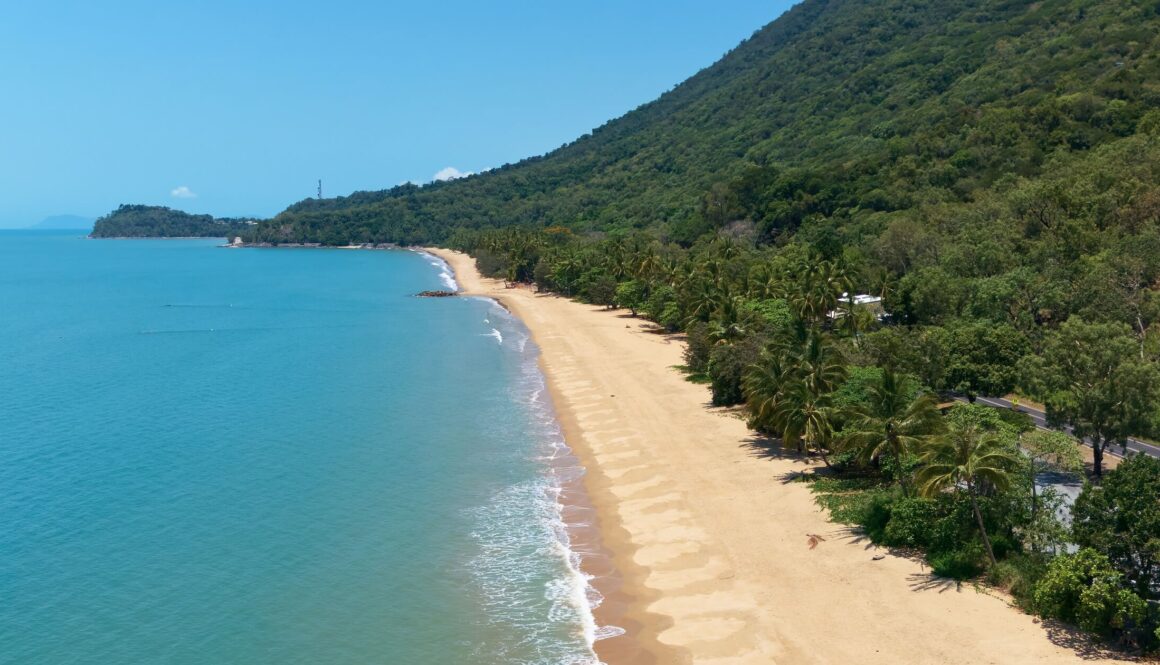
You might also be interested in this

The best travel gadgets of 2025 — What I actually use - Photo: Max Haase Travel

Travel Gadgets 2026: 15 Must-Haves from 82 Countries

The best travel gadgets of 2025 — What I'll actually pack after visiting 82 countries

After visiting over 82 countries, I've tested, bought, lost, and replaced hundreds of gadgets. Most were unnecessary. Some fundamentally changed the way I travel. Here are the 15 gadgets that will be in my backpack in 2025—each one tried and tested a hundred times—only stuff I actually use. The product links are to Amazon (affiliate links), you won't pay a cent more.

  • Power bank required: Anker 737 PowerCore 24K with 24,000 mAh, 140W and 3x USB-C charges MacBook, iPhone, camera and drone simultaneously — 6 days of self-sufficiency on the E5.
  • Audio & Sleep: Bose QuietComfort Ultra Earbuds (€280) plus Cocoon Ultralight travel pillow (€25, 80g) — the game changer for 10+ hours of flying per year.
  • Luggage tracking: 4-pack Apple AirTag (€100) in suitcase, backpack, camera bag and drone case — working worldwide, zero lost luggage since then.
  • Photo & Data Setup: Peak Design Capture Clip (€70), Joby GorillaPod 5K (€80), 2x SanDisk Extreme Pro 256 GB (€35 each) plus UGREEN 4-in-1 USB-C Hub.
  • Total investment: All 15 gadgets together cost approximately €1,045 — they last for 2-3 years of daily use and replace 5-10 mediocre cheap alternatives in your backpack.

Category 1: Technology & Shop

1. Anker 737 PowerCore 24K — The ultimate power bank

24,000 mAh, 140W total output, three USB-C ports. This power bank charges my MacBook Pro, iPhone, camera, and drone simultaneously. On the E5 Alpine Crossing It lasted six days without a power outlet. Weight: 640g. Price: approx. 90 euros. The only gadget I never travel without.

Anker 737 PowerBank on Amazon →

2. Anker Nano II 65W Charger — Smallest power adapter ever

About the size of a thumbnail, but it charges my laptop, camera, and smartphone. A single power adapter for all my devices—saving weight and space. I replaced three separate power adapters with this one and saved 200g. Price: around €40.

Anker Nano II 65W on Amazon →

3. UGREEN 4-in-1 USB-C Hub

USB-C, HDMI, SD card reader, and USB-A all in one tiny adapter. It's indispensable when traveling: SD card out of the camera, into the hub, photos onto the laptop. It weighs 50g and costs €25. I have three of them (one as a backup) because I can't edit my photos without the hub.

UGREEN USB-C Hub on Amazon →

4. Apple AirTag (4-pack)

One in the suitcase, one in the backpack, one in the camera bag, one in the drone case. Since I started using AirTags, I haven't lost a single piece of luggage. Before: two suitcases in two years (one in Istanbul, one in São Paulo). The peace of mind alone is worth the €100 for the four-pack. It works worldwide thanks to the Apple network—my AirTag even tracked my luggage in the Saudi Arabian desert.

Apple AirTag 4-pack on Amazon →

Category 2: Travel gadgets for airplanes — Comfort & Sleep

5. Bose QuietComfort Ultra Earbuds

The best noise-canceling headphones for travel. In-ear headphones, because over-ear headphones are uncomfortable on long flights. On a 12-hour flight to Australia with screaming children three rows away: absolute silence. The battery lasts 6 hours with ANC, the charging case provides another 18 hours. Price: around €280. Expensive, but after hundreds of hours of flying, the best investment in my sleep and my sanity.

Bose QC Ultra Earbuds on Amazon →

6. Cocoon Ultralight Air-Core Travel Pillow

Inflatable, 80g, packs down to the size of a fist. I've tested dozens of travel pillows—U-shaped neck pillows, memory foam blocks, inflatable plastic things. The Cocoon is the first one that's actually comfortable. The trick: It has a soft fabric cover over the inflatable core. Price: 25 euros.

Cocoon travel pillow on Amazon →

7. Matador NanoDry Trek Towel — Towel of the future

Dries in 30 minutes, weighs 34g (size S), packs down to the size of a credit card. This thing is invaluable in hostels, on trekking tours, and on beaches without towel rentals. I have a small for my face and a large for my body. Price: 30-40 euros.

Matador NanoDry towel on Amazon →

Category 3: Organization & Protection

8. Peak Design Packing Cubes

Packing cubes have revolutionized my packing. One cube for underwear, one for T-shirts, one for pants. At the hotel: cube out, into the drawer, done. When leaving: cube in, backpack closed, done. The Peak Design cubes are the best because they have a compression system that reduces volume by 30 percent. Set (3 pieces): approx. 70 euros.

Peak Design Packing Cubes on Amazon →

9. Osprey Ultralight Dry Bag Set

Three waterproof bags in different sizes. My electronics equipment (camera, drone, batteries) ALWAYS goes in a dry bag—whether it's a backpack or a suitcase. After a downpour in Colombia that soaked my backpack, everything in the dry bags stayed dry. Set: 25 euros.

Osprey Ultralight Drybag Set on Amazon →

10. Pacsafe Travelsafe 12L — Portable Safe

A reinforced pouch with a steel cable that you attach to your hotel bed or a fixed structure. Your laptop, passport, and camera are secure, even if you're sleeping in a hostel dorm or an Airbnb without a safe. It's not perfect protection (a professional can crack it in minutes), but enough to deter opportunistic thieves. Price: 60 euros.

Pacsafe Travelsafe 12L on Amazon →

Category 4: Photo & Content

11. Peak Design Capture Clip V3

Attach my camera Attaches to the backpack strap, so the camera is always within easy reach without dangling around your neck. Indispensable for hikes and city tours. Holds up to 90 kg, yet weighs only 80 g. Price: 70 euros.

Peak Design Capture Clip on Amazon →

12. Joby GorillaPod 5K — Flexible tripod

It wraps around railings, branches, lampposts—anywhere a normal tripod won't work. The perfect travel tripod for time-lapses, long exposures, and vlogs. Supports cameras up to 5 kg (Sony A7 IV + lens easily). Price: 80 euros.

Joby GorillaPod 5K on Amazon →

13. SanDisk Extreme Pro 256GB SD Card (2x)

Always carry two, never just one. If one fails, you have a backup. The Extreme Pro writes fast enough for 4K video in 10-bit. I format it after every trip and transfer everything to the external SSD. Price: 35 euros each.

SanDisk Extreme Pro 256GB on Amazon →

Category 5: Safety & Health

14. LifeStraw Go Water Bottle

It filters 99.99 percent of all bacteria and parasites directly from the water. In countries with questionable water quality (India, South America, Southeast Asia), I only drink water filtered through the LifeStraw. Saves on plastic bottles and money. Price: 45 euros.

LifeStraw Go water bottle on Amazon →

15. First aid kit (self-assembled)

No ready-made kit from an outdoor store—they're always too big and contain things you never need. My kit: ibuprofen (for pain and fever), loperamide (for diarrhea—a lifesaver in India), Compeed blister plasters, disinfectant spray, sterile wound dressings, tape, SPF 50 sunscreen (for face), and electrolyte powder (for dehydration). All in a small zip-top bag, weighing 200g.

Travel first aid kit on Amazon →

What I'm no longer packing (small holiday gifts that I've sorted out)

Things I've discarded after years of testing: travel adapter (my Anker charger works in every country with USB-C). Flashlight (a smartphone flashlight is sufficient). Money belt (an AirTag + credit card as a backup is enough). Notebook (smartphone notes are more efficient). Book-style guidebook (Google Maps + offline maps). Umbrella (a hardshell jacket + rain pants are better).

Cost overview — All 15 gadgets

Gadget Price
Anker 737 Powerbank 90 €
Anker Nano II 65W 40 €
UGREEN 4-in-1 Hub 25 €
Apple AirTag 4-pack 100 €
Bose QC Ultra Earbuds 280 €
Cocoon travel pillow 25 €
Matador NanoDry Towel 35 €
Peak Design Packing Cubes 70 €
Osprey Drybag Set 25 €
Pacsafe Travelsafe 60 €
Peak Design Capture Clip 70 €
Joby GorillaPod 5K 80 €
SanDisk Extreme Pro 256GB (2x) 70 €
LifeStraw Go 45 €
First aid kit 30 €
In total ~1.045 €

Over €1,000 sounds like a lot, but these gadgets last for years and make every trip better, safer, and more efficient. I've been using most of them daily for two to three years.

FAQ — Travel Gadgets

What is the most important gadget for long-term travel?

The power bank. Without power, nothing works—no GPS, no camera, no communication. A good 20,000+ mAh power bank is the foundation for everything else.

Are expensive noise-canceling headphones worth it for traveling?

Yes, absolutely. If you fly more than 10 hours a year, they're the best investment you can make in your travel comfort. The difference between €30 headphones and Bose QC Ultra is like the difference between economy and business class.

Do I need a travel adapter?

With USB-C devices and a universal USB-C charger, this is becoming increasingly rare. Most modern hotels have USB ports on their power outlets. Only in countries with unusual power outlets (UK, Australia) will you need an adapter—and you can get one for €3 at the airport.

What is the biggest gadget mistake travelers make?

Pack too much. Three cameras, five lenses, two laptops—and in the end, you only use your smartphone. Take less, but better quality. One good setup beats five mediocre gadgets.

Max Haase Travel Creator
About the author

Max Haase

Travel Content Creator · Drone Photographer · Visual Storyteller

Since over 10 years professional travel creator with over 4.2 million followers. Specializing in high-end tourism board collaborations and visual travel storytelling.

4.2MFollowers
82+Countries
500+Cooperations
10+Years


Affiliate disclosure: This article contains Amazon affiliate links. If you purchase through these links, I receive a small commission—at no extra cost to you. You continue to shop at your local Amazon store (Amazon.de, Amazon.at, etc.) and support my work. Thank you!
Australia East Coast vs. West Coast — Which route? - Photo: Max Haase Travel

Australia East Coast vs. West Coast — Which route? [2026]

East coast or west coast — The great Australian question

If you're planning a trip to Australia, sooner or later the question arises: East Coast or West Coast? I've done both — three weeks on the East Coast from Sydney to Cairns and two weeks on the West Coast from Perth to Broome — and the answer is less clear-cut than most people think.

  • East Coast: Sydney → Cairns (2,500 km): Bondi, Byron Bay, Fraser Island, Whitsundays and Great Barrier Reef — bus & train possible, many backpackers.
  • West Coast: Perth → Broome (2,400 km): Pinnacles Desert, Shark Bay, Ningaloo Reef (snorkeling from the beach) and Karijini Gorges — rental car required.
  • Budget comparison: 3 weeks East Coast €2,500-4,000, West Coast €3,500-6,000 — Flight DE → AUS identical at €800-1,200 return.
  • Best time to travel: East Coast September-November or March-May, West Coast April-October (dry season) — North never in summer (45 °C+, closed roads).
  • Recommendation: First time in Australia + reef + small budget = East Coast; photography, solitude, road trip = West Coast; 5-6 weeks = combine both.

In short: The east coast is easier, more sociable, and has the Great Barrier Reef. The west coast is wilder, more isolated, and has landscapes that took my breath away. Both are spectacular—but completely different.

Australia East Coast — The All-Inclusive Package

Route: Sydney → Cairns (approx. 2,500 km)

The classic East Coast route is Australia's backpacker highway. Well-developed, with hostels and tour buses everywhere, and the highlights are strung together like pearls on a necklace:

  • Sydney: Harbour Bridge, Bondi Beach, Opera House — 2-3 days minimum
  • Byron Bay: Surfer vibe, hippie markets, the easternmost point of Australia. You'll practically run into every other backpacker here.
  • Gold Coast: Skyscrapers, surf beaches, parties. Not my thing, but okay for 1-2 days.
  • Fraser Island: The world's largest sand island. Only accessible by four-wheel drive, wild dingoes, turquoise freshwater lakes in the middle of the sand — one of my Australian highlights.
  • Whitsunday Islands: Whitehaven Beach has the whitest sand I've ever seen. Book a 2-3 day sailing trip – it's well worth it.
  • Great Barrier Reef: The world's largest coral reef. Snorkelling or diving from Cairns or Airlie Beach. Diving is better — the best spots are deeper than snorkeling depth.
  • Cairns: Gateway to the Reef and the Daintree Rainforest, the oldest rainforest in the world (over 100 million years old).

Advantages of the East Coast

  • Simple infrastructure — buses, trains, accommodation everywhere
  • The Great Barrier Reef is unique in the world.
  • Social: You meet other travelers everywhere
  • More nightlife and cities
  • Cheaper (more competition = lower prices)

Disadvantages of the East Coast

  • Touristy — especially between Byron Bay and Cairns
  • Less of a "real" Australian feel
  • Some spots (Byron Bay, Whitsundays) are overrun with Instagram.

Australia's West Coast — The Wild Side

Route: Perth → Broome (approx. 2,400 km)

The west coast is the Australia I had imagined before I went there: endless expanses, red earth, hardly any people, and landscapes that look like they're from another planet. The route:

  • Perth: One of the most isolated major cities in the world. Rottnest Island with its quokkas (the friendliest animals in the world) is a must-see.
  • Pinnacles Desert: Thousands of limestone pillars in a desert landscape — surreal, especially at sunrise. Perfect for drone footage.
  • Shark Bay: Monkey Mia, where wild dolphins swim to the beach every morning. Plus: Stromatolites — the oldest life forms on Earth (3.5 billion years old).
  • Ningaloo Reef: Australia's other reef — but you can snorkel right from the beach (no boat needed). Between March and July, you can swim with whale sharks. Honestly, I found it more impressive than the Great Barrier Reef.
  • Karijini National Park: Narrow gorges with red rock and emerald-green natural pools. Hiking through the gorges was one of the most intense nature experiences of my life.
  • Broome: Cable Beach at sunset, camels on the beach, the red rock meets the turquoise sea. A perfect ending.

Advantages of the West Coast

  • Significantly fewer tourists — you're often alone.
  • Wilder, more dramatic landscapes
  • Ningaloo Reef directly from the beach (instead of a boat)
  • Better drone spots (fewer restrictions, more epic landscapes)
  • „"Authentic" Australian feeling

Disadvantages of the West Coast

  • Rental car is mandatory — no bus system
  • Long distances between the highlights (sometimes 500+ km of desert)
  • More expensive (less competition, more expensive gasoline)
  • Less backpacker infrastructure
  • Loneliness — those seeking social interaction are in the wrong place.

Direct comparison — East Coast vs. West Coast

criterion East Coast West Coast
Landscape Beaches, rainforest, reef Desert, canyons, red earth
Travel type Backpacker, group tour Road trip, individual trip
Budget (3 weeks) 2.500-4.000 € 3.500-6.000 €
transport Bus/train possible Rental car mandatory
Diving/Snorkeling Great Barrier Reef (boat) Ningaloo Reef (from the beach)
Drone spots Good (but with more limitations) Outstanding (fewer prohibitions)
Social/Nightlife ★★★★★ ★★☆☆☆
Solitude/Wilderness ★★☆☆☆ ★★★★★
Wildlife Koalas, crocodiles, whales Whale sharks, quokkas, dolphins
Photo potential ★★★★☆ ★★★★★

Cost comparison for 3 weeks

Position East Coast West Coast
Flight DE → AUS (Outbound/Return) 800-1.200 € 800-1.200 €
Transport (3 weeks) €400-800 (bus/rental car) €800-1,400 (rental car + petrol)
Accommodation per night €25-60 (Hostel/AirBnB) 40-100 € (Camping/Motel)
Food per day 25-50 € 30-60 €
Total activities 300-600 € (Reef trip, Fraser Island) 200-500 € (whale shark tour, parks)
In total 2.500-4.000 € 3.500-6.000 €

My recommendation — Who should go where?

East Coast, if you…

  • This is your first time in Australia
  • The Great Barrier Reef is on your bucket list.
  • want to meet other travelers
  • You have a small budget
  • You don't want to drive a rental car

West Coast, if you…

  • Have you ever been to Australia?
  • You seek solitude and wilderness
  • If you want to take photos or videos (better spots, fewer restrictions)
  • Are you a road trip fan?
  • If you want to experience the "real" Australia

Combine both?

If you have 5-6 weeks: Do both. Fly to Sydney, work your way up to Cairns, then take a domestic flight to Perth and down to Broome (or vice versa). Domestic flights with Jetstar or Virgin start at around €80-150. This way you get the full Australian experience.

FAQ — Australia East Coast vs. West Coast

How much time should I allow for each coast?

East Coast: At least 3 weeks (Sydney → Cairns). West Coast: At least 2 weeks (Perth → Broome). Less is possible, but then you'll miss too much and the travel days will eat up your time exploring.

Do I need a visa for Australia?

Yes. As a German citizen, you apply for the eVisitor visa (subclass 651) — free of charge, completely online, processing takes 1-2 days. Valid for up to 3 months. For longer stays, you need a different visa.

Is the West Coast dangerous (wilderness, no help)?

Common sense tells you not to. But: Always take enough water and fuel (recommendation: 10 liters of water per person as a reserve), don't blindly trust the GPS (Google Maps sometimes sends you onto unpaved roads), and never go hiking alone in canyons.

When is the best time to travel?

East Coast: September-November or March-May (shoulder season — fewer tourists, good weather). Avoid the tropical north (Cairns) in summer (Dec-Feb) — monsoon season.
West Coast: April-October (dry season). Never visit the north (Broome, Karijini) in summer — temperatures above 45°C and roads closed.

Which coast has the better drone spots?

Definitely the West Coast. Fewer national park restrictions, fewer people (no one complains), and the landscapes—red earth against turquoise sea—look incredible from the air. The Pinnacles Desert and Shark Bay are drone paradises.

Max Haase Travel Creator
About the author

Max Haase

Travel Content Creator · Drone Photographer · Visual Storyteller

Since over 10 years professional travel creator with over 4.2 million followers. Specializing in high-end tourism board collaborations and visual travel storytelling.

4.2MFollowers
82+Countries
500+Cooperations
10+Years


You might also be interested in this
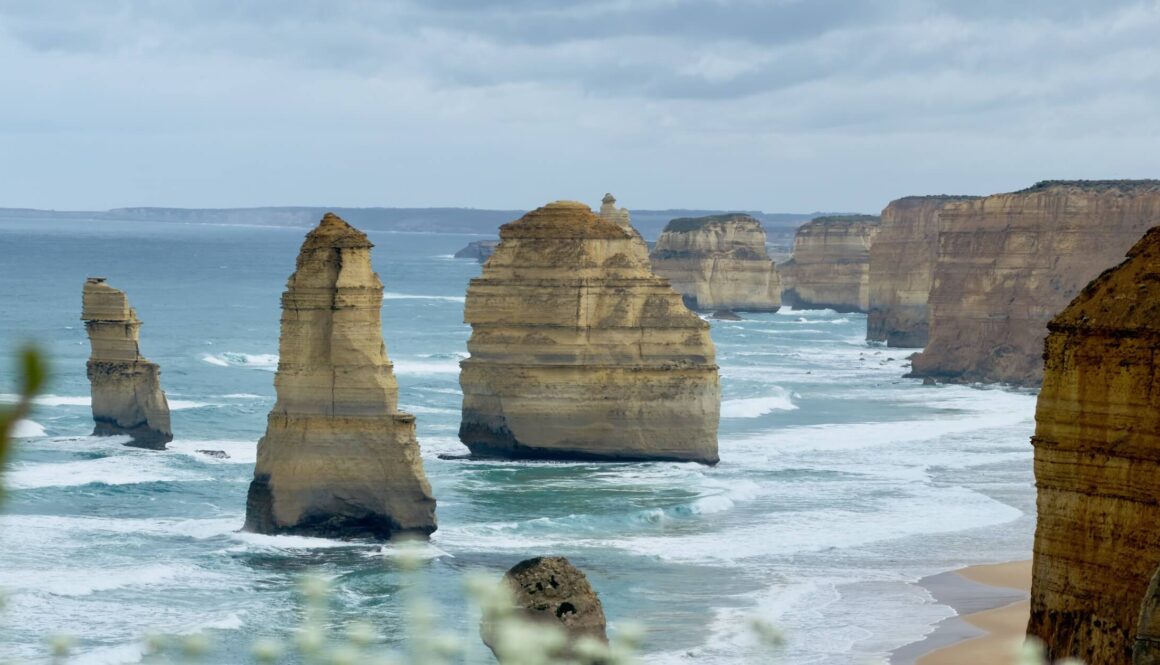
Load More