Skip to content

bacon

About baacon

http://max-haase.com

Posts by :

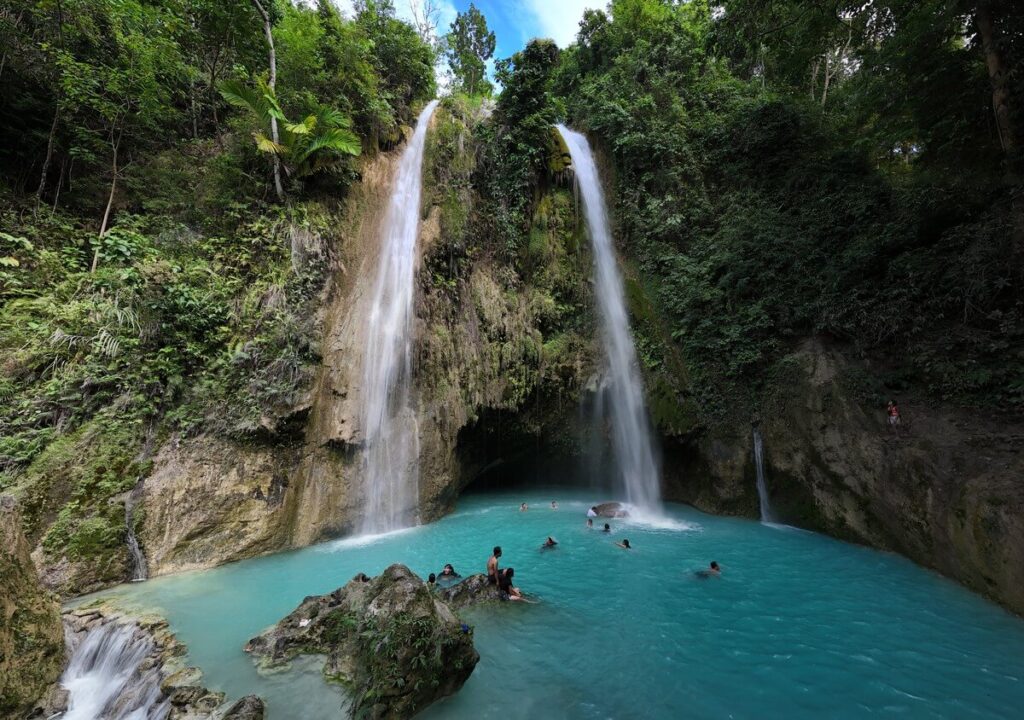
Christmas while traveling — This is how I celebrate on the go - Photo: Max Haase Travel

Christmas while traveling — This is how I celebrate on the go

Christmas while traveling — How I celebrate the holidays on the go

Christmas while travelingSince I started traveling full-time in 2017, I've spent Christmas in eight different countries—from beaches in Brazil to snowy mountain cabins in Switzerland to tropical islands in the Philippines. And every year I get asked the same question: "Don't you miss Christmas at home?" The honest answer: No. Because for me, Christmas isn't a place anymore—it's a feeling. And I can find that feeling anywhere in the world.

  • Posten Kosten Stellplatz pro Nacht (Winter) 12-18 € Gas zum Heizen (pro Tag) 3-5 € Lebensmittel (Weihnachtsessen) 25-35 € Glühwein Snacks 10-15 € Gesamt pro Tag 50-73 €

In this article, I'll tell you about my most beautiful Christmas experiences while traveling, give you practical tips for your first Christmas abroad, and reveal why I would never celebrate in a traditional way again.

Why I celebrate Christmas while traveling

It was 2019 when I spent Christmas Eve away from Germany for the first time. I was in Colombia, it was 32°C, and instead of gingerbread, we had arepas. At first, it felt wrong—like breaking a rule. But then something amazing happened: Without all the stress—buying presents, organizing family dinners, answering 200 WhatsApp messages—I was able to truly breathe for the first time in years.

Since then, I've consciously chosen Christmas as my travel time. Not out of spite, but because this time of year is perfect for traveling. Most tourist destinations are in the off-season (yes, really—South America in December is significantly less crowded than in the European summer), flights are often cheaper than you'd think, and the atmosphere in other cultures is incredibly welcoming.

Christmas on the beach — Brazil 2020

My absolute highlight was Christmas in Rio de Janeiro. 35°C, Copacabana, and the whole city celebrating "Natal" with an energy I'd never experienced in Germany. On December 24th, Brazilians take to the streets from 10 pm onwards, fireworks over Guanabara Bay, samba music from every bar — and there I was, right in the middle of it all, a caipirinha in my hand.

What impressed me most was how Brazilians celebrate Christmas as a communal event. Complete strangers invited me into their homes. A family in Copacabana served me a plate of tender (roast turkey) and farofa as if I were an old friend. This generosity—without ulterior motives, without expectations—was the best Christmas gift for me.

The costs in Rio were surprisingly moderate: My hostel in the Santa Teresa district cost the equivalent of 28 euros per night, dinner on the beach about 12-18 euros, and the view of Sugarloaf Mountain on Christmas Eve was free.

Practical tips for Christmas in Brazil

  • Book your hostel or hotel at least 6 weeks in advance — Rio is popular with Brazilians from the south at Christmas.
  • Organize everything in advance on the evening of December 24th — restaurants close early, then the party continues in the street.
  • Don't forget sunscreen — 35°C in December is no joke
  • Be open to invitations — „Vem cá!“ (Come here!) almost always means: food, drinks, celebration.

Christmas in the mountains — Switzerland 2021

A completely different setting, a completely different feeling: I spent Christmas 2021 in a mountain hut above Grindelwald in Switzerland. Snow-covered peaks, minus 12°C, and a silence that was almost surreal. I had rented the hut through a platform for 85 francs per night—nothing luxurious, but a wood-burning stove, a window with a view of the Eiger, and a bottle of mulled wine.

On December 24th, I went out at 7 in the morning, with my camera I photographed the sunrise over the Alps and then went on a 3-hour winter hike. Not a soul in sight. In the evening, I made raclette on the camping stove (Swiss cheese and potatoes—that's all I needed) and watched a film.

What I learned: Spending Christmas alone in the mountains sounds lonely—but it isn't. It's the opposite of lonely. It's deliberate. You decide every moment yourself, without compromises, without expectations. That's a luxury most people never experience.

Christmas in a camper van — Black Forest 2023

In the Black Forest, covered in snow, with candles in the van and mulled wine on the camping stove. Minimalist, cozy, and somehow the most perfect Christmas Eve in years. No stress with gifts, no family drama—just nature, silence, and gratitude. I had parked my van at a small campsite near Triberg, right next to the famous Triberg Waterfalls.

The campsite was almost empty—just an older couple from Holland and a solo traveler from France. We spontaneously got together on Christmas Eve, everyone brought something (I brought mulled wine, the Dutch couple brought speculoos, the Frenchman brought an incredibly good cheese platter), and we sat around the campfire until midnight. No small talk, just real conversations. About life, about traveling, about letting go.

Costs for Christmas in a camper van

Position Cost
Parking space per night (winter) 12-18 €
Gas for heating (per day) 3-5 €
Food (Christmas dinner) 25-35 €
Mulled wine & snacks 10-15 €
Total per day 50-73 €

Christmas in Southeast Asia — Philippines 2024

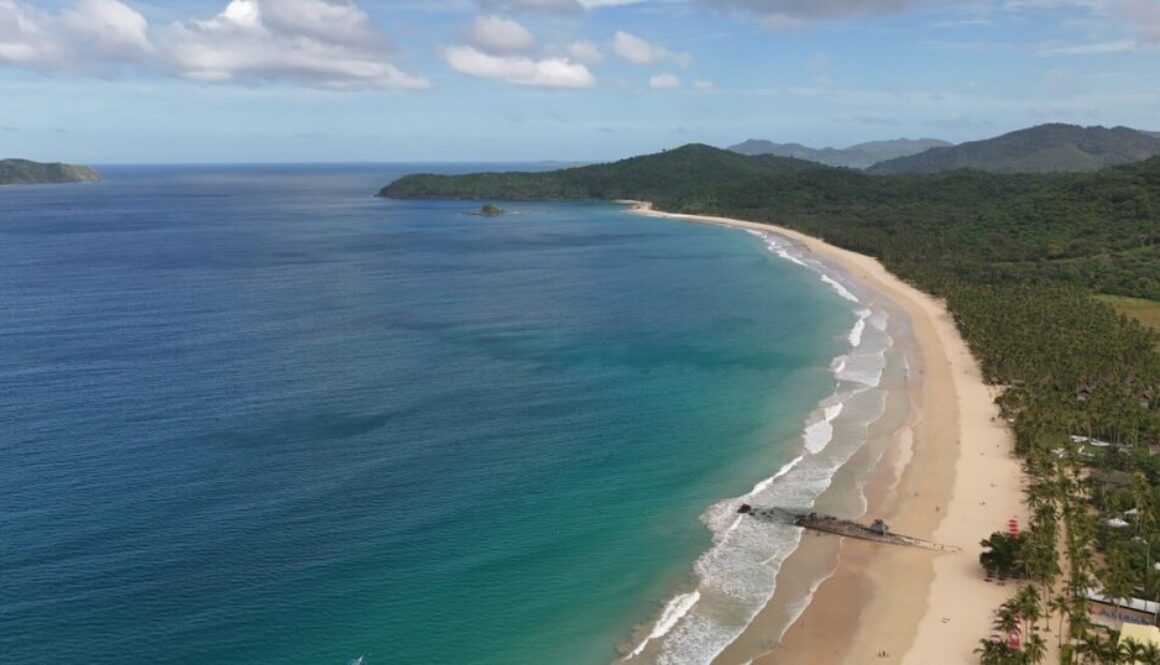
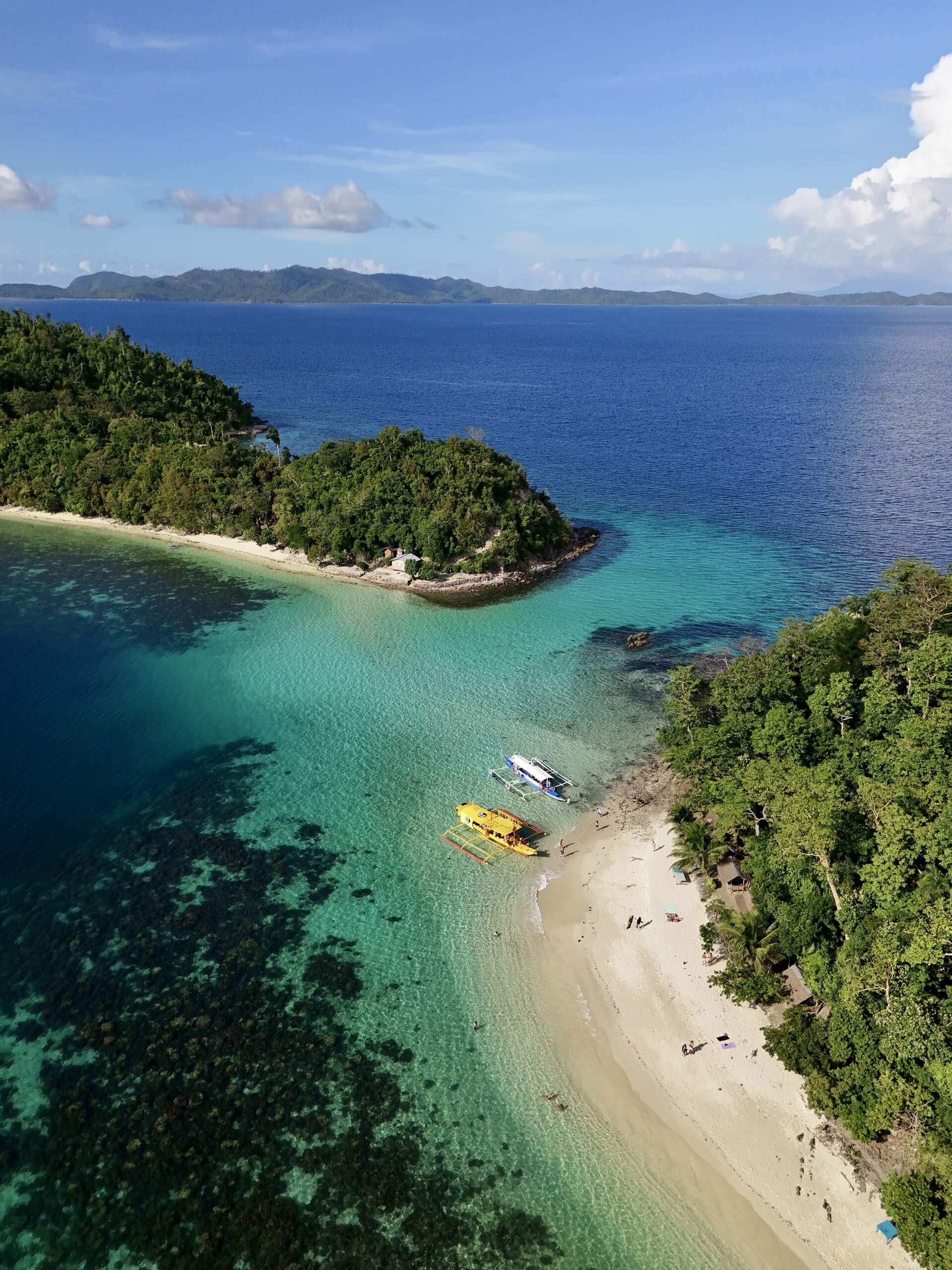
The Philippines is the most Christmassy country in Asia—no joke. From September onwards, Christmas decorations are up, every mall plays "All I Want for Christmas," and "Noche Buena" (Christmas Eve) is the most important night of the year. I was on Siargao, a surfer's island in the Pacific, and experienced the most intense Christmas of my life there.

The whole island was celebrating. Every house was decorated, pigs were being roasted (lechon) on every street, and complete Filipino strangers took me along to their family celebrations. I sat at a huge table with 25 people I didn't know, ate fresh fish and lechon, and at midnight there was a fireworks display over the Pacific Ocean, which I watched with my drone I filmed it from above.

What makes Christmas in the Philippines so special is that people there often have little, but they share everything. There are no gifts in the German sense—instead, they cook, share, and celebrate together. That's Christmas in its purest form.

Traveling alone at Christmas — Is that lonely?

The biggest fear I hear from people is: "Spending Christmas alone? That would be too lonely." My experience after eight Christmases traveling: It's the opposite. At Christmas, people all over the world are especially open. You'll be invited in, approached, and welcomed. Hostels hold Christmas parties, restaurants offer special menus, and other solo travelers are looking for connection just like you.

The only rule: Make plans. Don't sit alone in your hostel room. Go out, do an activity, book dinner. December 24th is like any other day—only with more opportunities to meet real people.

My top 5 travel destinations for Christmas

Goal Why temperature
Rio de Janeiro, Brazil Beach party & fireworks 32-36°C
Grindelwald, Switzerland Mountain hut & winter stillness -5 to -15°C
Siargao, Philippines The most intense Christmas culture 27-30°C
Cape Town, South Africa Summer, wine, Table Mountain 25-30°C
Black Forest, Germany Campervan romance in the snow -2 to 5°C

Gifts while traveling — What I do instead

I've done away with gifts in the traditional sense. Instead, I give experiences—a dinner for someone I meet while traveling, a postcard to my family, or a video call with my parents where I show them where I am. My mother now has a collection of Christmas video calls from eight different countries—it's a better gift than any gift certificate.

Every year I treat myself to a special experience: in 2020 it was a helicopter flight over Rio (230 euros — expensive, but unforgettable), in 2021 a snowshoe hike in the Alps, in 2023 a tandem paragliding flight over the Black Forest, in 2024 a dive off Siargao. Christmas is my excuse to do something I would otherwise never do.

Are you planning a campaign with an experienced travel creator?

Over 500 partnerships with tourism boards, luxury hotels, and premium brands. Authentic content from 82+ countries featuring cinematic drone photography.

Request collaboration →

Practical tips for your first Christmas traveling

Book flights

Contrary to popular belief, flights around Christmas aren't always more expensive. The trick: fly on December 23rd or 24th—most people want to arrive beforehand, so prices are often 30-401€ cheaper on these days. Use Google Flights with flexible dates and set a price alert 8-10 weeks before Christmas.

Accommodation

Hostels are usually cheaper at Christmas than in summer—except in classic winter destinations like the Alps. For Christmas in warmer countries, I recommend booking a hostel with a common area—that's where you're most likely to find other solo travelers for a spontaneous Christmas party. On Booking.com, filter for "Free Cancellation"—in case your plans change.

Communication with the family

That's the most sensitive point. My approach: I'll call at 6 p.m. German time on December 24th—that's the most important moment for my family, and an hour-long video call is enough to show everyone that I'm okay. After that, I have the rest of the evening to myself. No guilt, no drama. Clear communication, clear boundaries.

What you should pack

  • Warm target: Sunscreen, swimwear, a "festive" T-shirt (I have a red Hawaiian shirt that became my Christmas outfit)
  • Cold target: Thermal underwear, gloves, a hat, and a good thermos for mulled wine or tea.
  • Everywhere: A small gift for spontaneous invitations (I always bring Haribo Goldbears — a top export!)

FAQ — Christmas while traveling

Isn't Christmas lonely when you're traveling?

No—quite the opposite. At Christmas, people all over the world are especially open and welcoming. Spontaneous celebrations take place in hostels, and in many cultures, strangers are naturally invited. The key: Plan something, don't sit alone in your room.

When is the best time to book flights for Christmas?

Booking 8-10 weeks in advance is ideal. Fly on December 23rd or 24th — flights are often 30-40% cheaper on these days than on December 20th or 21st because most people want to fly earlier.

How much does Christmas cost when traveling?

It completely depends on the destination. Brazil or the Philippines: 40-60 euros per day all-inclusive. Swiss mountain cabin: 100-150 euros. Van in the Black Forest: 50-70 euros. In warm countries, Christmas is often even cheaper than a normal holiday because it's the off-season.

How does the family react?

Clear communication is key. Give them plenty of notice (at least two months in advance), offer a video call, and show genuine interest in the family celebration—even if it's from a distance. Most families adjust quickly when they see you're happy.

Which country celebrates Christmas most intensely?

The Philippines—no question. "BER months" (September to December) are Christmas time there. Decorations start up in September, Christmas music plays in every mall, and Christmas Eve is the biggest holiday of the year. If you want a real Christmas experience, fly to the Philippines.

Should I bring gifts?

Yes — but small and light. I always take a few bags of Haribo or German chocolate with me. Perfect as a spontaneous gift if you're invited to a party. It's well-received everywhere in the world.

About the author: Max Haase is Germany's most influential travel influencer with over 4.2 million followers. He specializes in drone footage and luxury travel. Cooperation requests here.

About the author

Max Haase

Travel Content Creator · Drone Photographer · Visual Storyteller

Since over 10 years professional travel creator with over 4.2 million followers On Instagram and YouTube. Specializing in high-end tourism board collaborations, luxury hotel campaigns, and drone photography from 82+ countries.

4.2M+Followers
82+Countries
500+Cooperations
10+Years

Cooperation with Max Haase

4.2 million followers · 82+ countries · 500+ collaborations — tailor-made content for tourism boards & premium brands.

Request a quote →

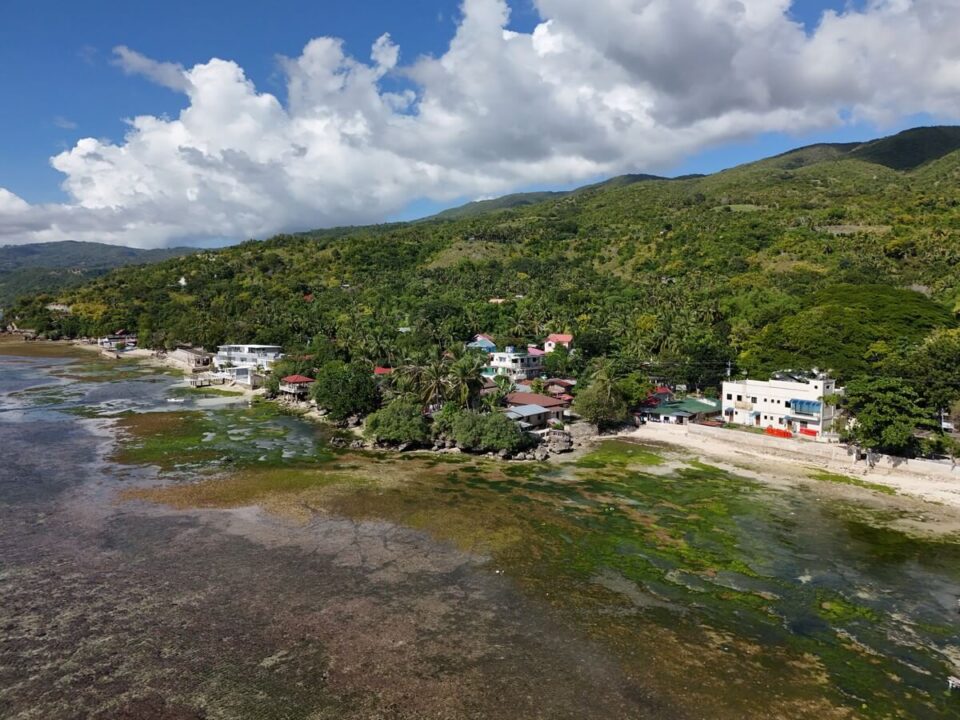
My 2024 travel review — 12 countries in 365 days - Photo: Max Haase Travel

My 2024 travel review — 12 countries in 365 days

My 2024 travel review — 12 countries in 365 days

Travel review2024 was my most intense year of travel ever. 12 countries, over 200 flying days, 47 flights, 23 hotels, countless drone flights with my drone and a camera, which is slowly reaching its limit. From the snow-covered peaks of the E5 Alpine crossing to the volcanic landscapes of Madeira and the dreamy islands of the Philippines — here is my complete recap with the highlights, flops and honest costs.

January — Canary Islands and Madeira

The year started with warmth: first Gran Canaria (January 4-6), then over to Madeira (January 8-11), a side trip to Lanzarote (January 12), and back to Gran Canaria until January 20. The Canary Islands were my work base camp—producing content in the mornings, relaxing on the beach in the afternoons.

Madeira completely surprised me. The levada walks, the cliffs, the laurel forests—this island is on another level photographically. My drone shot of the coast near Ponta de São Lourenço got over 120,000 likes on Instagram. The combination of Atlantic light, lush green vegetation, and dramatic cliffs is simply perfect.

January costs: ~€2,800 (flights €620, accommodation €1,200, rental car €480, food/activities €500)

February — Germany (break and planning)

February was intentionally a "home base month." I spent it editing content, responding to collaboration requests, and maintaining my equipment. My editing workflow: Lightroom for photos (batch processing with custom presets), DaVinci Resolve for videos. In February, I edited 340 photos from January and prepared 12 Instagram posts.

Furthermore, I negotiated three cooperation requests this month — including a large one. Tourism Board, which ultimately materialized for Q3. Negotiations in this industry take months.

March — Portugal (Algarve and Porto)

In March, I went to Portugal—first the Algarve, then up to Porto. The Algarve in March is perfect: 18-22°C, no crowds, the rock formations at Praia da Marinha and the Benagil Cave bathed in golden light. I flew my drone along the coastline and took photos that made it into my top 10 of the year.

Porto was completely different — urban, creative, raw. The Ribeira at sunset, the azulejo facades, the bridges over the Douro. I spent four days there and could have stayed for four weeks.

Costs in March: ~€3,200 (flight €180, rental car for 3 weeks €890, accommodation €1,100, food €630, activities €400)

April-May — E5 Alpine crossing

The highlight of the first half of the year: the E5 from Oberstdorf to Merano. 6 days, 100 kilometers, 5,000 meters of elevation gain. Physically, the toughest thing I've ever done. But photographically, a dream—the Alps from above with the drone, glacial lakes, dramatic cloud formations.

What surprised me was how popular the E5 trail is; you have to book huts six months in advance. I was lucky and managed to get two spots at short notice due to cancellations. Spending the night at the Martin-Busch-Hütte at 2,500 meters—getting up in the morning, watching the sunrise over the Similaun Glacier—I'll never forget that.

Costs E5: ~1,400 € (Huts 6x ~65€ = 390€, food 320€, equipment 450€, arrival/departure 240€)

June-July — Italy (Tuscany and Amalfi Coast)

After the E5, I treated myself to two weeks in Italy: first Tuscany (Val d'Orcia — the iconic cypress avenue, medieval villages, vineyards), then down to the Amalfi Coast. Positano, Amalfi, Ravello — the coastal road is spectacular, even if the tourists can be a challenge in the summer.

My tip for the Amalfi Coast: Rent a boat instead of a car. From the water, you'll see the pastel-colored houses, the cliffs, and the hidden coves from a perspective that tourists miss. It costs about 180 euros for half a day.

Costs June-July: ~€4,500 (Rental car €1,100, Hotels €1,800, Food €900, Activities €700)

August — Northern Cyprus

Northern Cyprus was my "hidden gem" trip of 2024. The Turkish side of the island is virtually untouched by tourism, the beaches are empty, and the prices are a fraction of those in Greece. The ruins of Famagusta, the beaches of the Karpaz Peninsula, the mountain villages in the Besparmak Mountains—all almost entirely without tourists.

What you need to know: Entering Northern Cyprus is straightforward, but you should enter via the south (Larnaca) and then cross a checkpoint into the north. Rental car insurance is often not valid in the north—check beforehand!

Costs for August (2 weeks): ~1,900 € (flight 220€, hotel 680€, rental car 380€, food 420€, activities 200€)

September-October — Albania and Montenegro

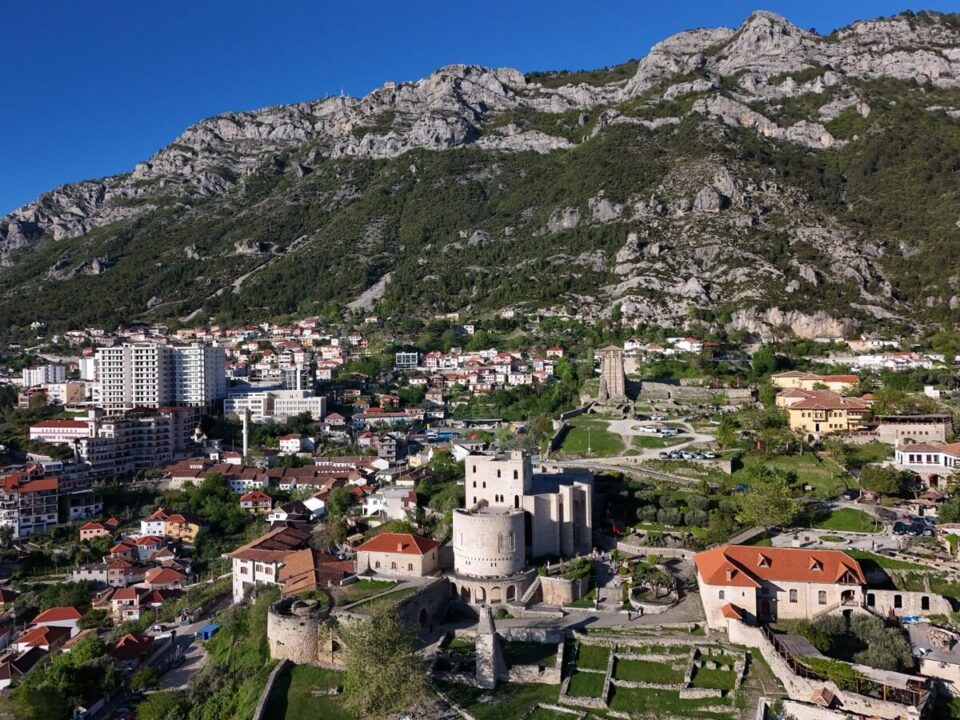
Albania was the biggest surprise of the year. The Albanian Riviera (Ksamil, Himara, Dhermi) has beaches that easily rival those in Greece—at a third of the cost. Saranda and the Blue Eye (Syri i Kaltër) are photographically stunning, and the hospitality of the Albanian people is incredible.

Montenegro in October: Autumn on the Kotor Fjord is magical. The mountains turn vibrant colors, the tourists are gone, and the light on the water is perfect for photography. My drone flight over the Bay of Kotor—a 360° panorama with autumn colors—became my second-best Instagram reel of 2024.

Costs Sep-Oct: ~€2,600 (flights €340, accommodation €820, car rental €560, food €580, activities €300)

November — Saudi Arabia (cooperation)

In November, I flew to Saudi Arabia for a tourism board collaboration. Al Ula, Jeddah, the Rub' al Khali desert. Saudi Arabia is currently opening up massively to tourism, and the landscapes are breathtaking—the rock formations of Al Ula are reminiscent of another planet.

What impressed me was the gigantic scale of the investment in tourism infrastructure. New hotels, restaurants, roads—Saudi is serious about it. Whether it will work in the long run remains to be seen, but the scenery alone is worth the trip.

December — Philippines

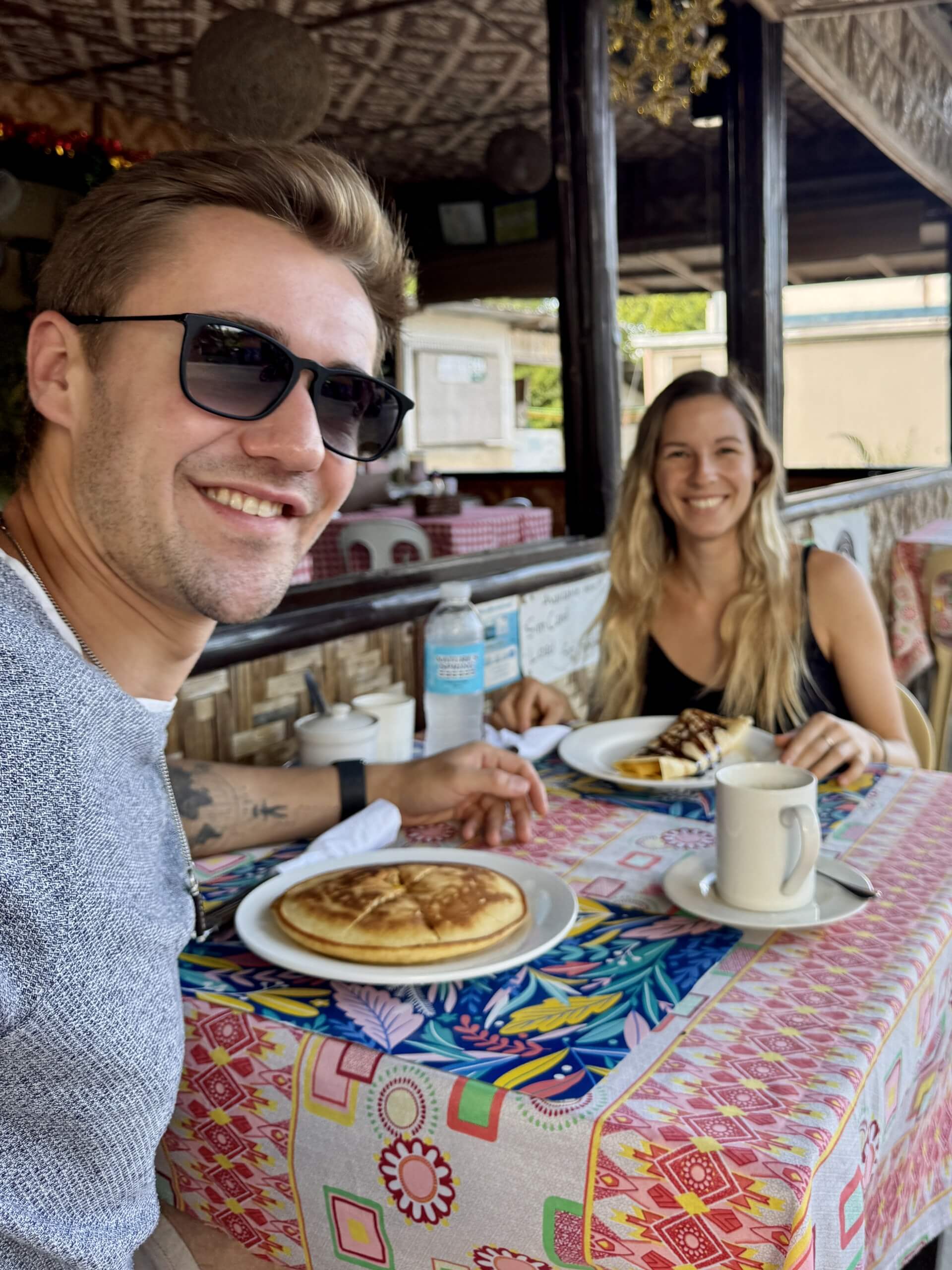
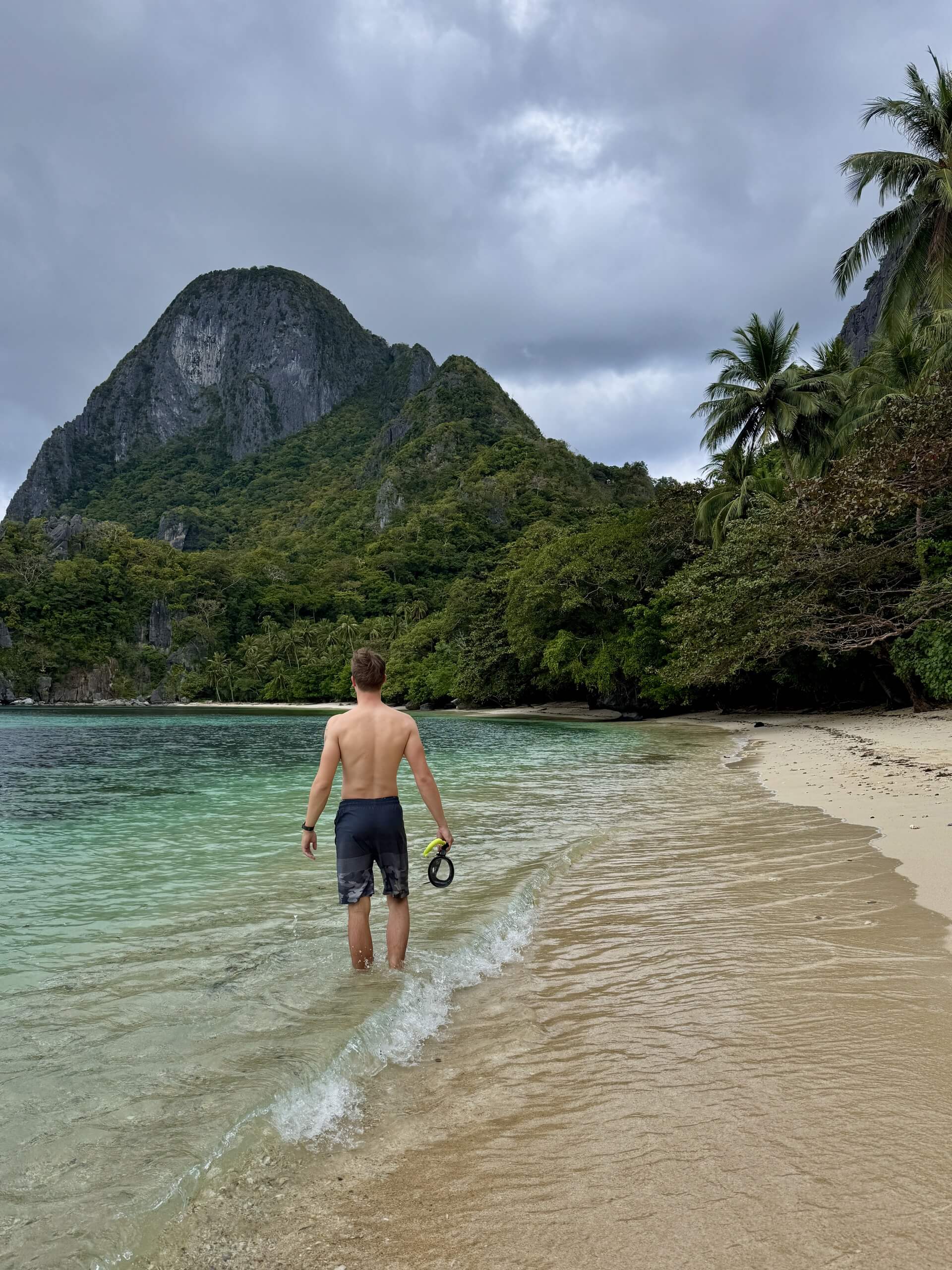
The year ended in the Philippines — Siargao, Cebu, Bohol. I had originally planned to stay for three weeks, but after ten days on Siargao (surf spot, palm groves, mangroves) I fell so in love with it that I only briefly visited the other islands. The Philippines are my top destination for 2025 — I'll be back, with more time.

Costs for December (3 weeks): ~€3,100 (Flights €680, domestic flights €220, hotels €780, food €520, activities €600, boat transfers €300)

Are you planning a campaign with an experienced travel creator?

Over 500 partnerships with tourism boards, luxury hotels, and premium brands. Authentic content from 82+ countries featuring cinematic drone photography.

Request collaboration →

The annual statement — What did 2024 cost?

Month Goal Cost
January Canary Islands & Madeira 2.800 €
February Germany (Base) 800 €
March Portugal 3.200 €
April-May E5 Alpine Crossing 1.400 €
June-July Italy 4.500 €
August Northern Cyprus 1.900 €
Sep-Oct Albania & Montenegro 2.600 €
November Saudi Arabia cooperation
December Philippines 3.100 €
In total 12 countries ~20.300 €

In addition, there are fixed costs: health insurance (~€200/month), equipment maintenance (~€800/year), cloud storage and software (~€50/month). In reality, this amounts to more like €24,000-€25,000 for a year of full-time travel in 12 countries.

The Highlights — My Top 3 Moments of 2024

1. Sunrise over the Similaun Glacier (E5)

At 2,500 meters altitude, 5 a.m., minus 3°C. The first rays of sunlight hit the glacier and everything turned gold. No camera could have captured this moment, but I tried anyway — and the result was my best photo of 2024.

2. Drone flight over the Bay of Kotor (Montenegro)

360° panorama in October, autumn colors, mirror-smooth water, the mountains shrouded in mist. drone At a height of 120 meters — the result looked like a painting. 240,000 likes on Instagram.

3. Christmas on Siargao (Philippines)

An entire island is celebrating, complete strangers invite you to join in, fireworks light up the Pacific Ocean. The warmth of the Filipinos deeply touched me.

The Flops — What didn't work

Northern Cyprus car rental

My rental car insurance wasn't valid in the north—I only found that out at the checkpoint. I had to buy local insurance on the spot for €40 per day. Annoying and avoidable.

Philippines planning

Three weeks in the Philippines weren't enough. I should have planned at least five. Siargao alone earns two weeks' worth. Lesson learned for 2025.

Equipment balance sheet 2024

My camera took around 42,000 shots in 2024 (total now at ~180,000). The drone completed 287 flights with a total flight time of 48 hours. Both devices are working perfectly — investing in good equipment pays off in the long run.

FAQ — Full-time Travel 2024

How do you finance that?

Through paid collaborations with tourism boards, hotels, and brands. This is supplemented by Instagram income and content licensing. Full-time travel is my job, not my hobby.

How do you plan your routes?

Roughly 3 months in advance, flexible with the details. I book flights 6-8 weeks in advance, hotels a maximum of 2 weeks in advance. Cooperation trips are of course planned earlier.

Don't you miss having a home?

Sometimes. But then I remember why I do this: freedom, experiences, personal growth. My "home" is wherever my backpack is.

What was your cheapest travel destination in 2024?

Albania — by far. 35-45 euros per day for hotel, food and rental car. With stunning beaches and warm hospitality. A real insider tip.

What are your goals for 2025?

More time per country (less is more), Philippines Part 2, New Zealand in the New Zealand autumn (April-May) and at least one longer van tour through Scandinavia.

About the author: Max Haase is Germany's most influential travel influencer with over 4.2 million followers. He specializes in drone footage and luxury travel. Cooperation requests here.

About the author

Max Haase

Travel Content Creator · Drone Photographer · Visual Storyteller

Since over 10 years professional travel creator with over 4.2 million followers On Instagram and YouTube. Specializing in high-end tourism board collaborations, luxury hotel campaigns, and drone photography from 82+ countries.

4.2M+Followers
82+Countries
500+Cooperations
10+Years

Cooperation with Max Haase

4.2 million followers · 82+ countries · 500+ collaborations — tailor-made content for tourism boards & premium brands.

Request a quote →

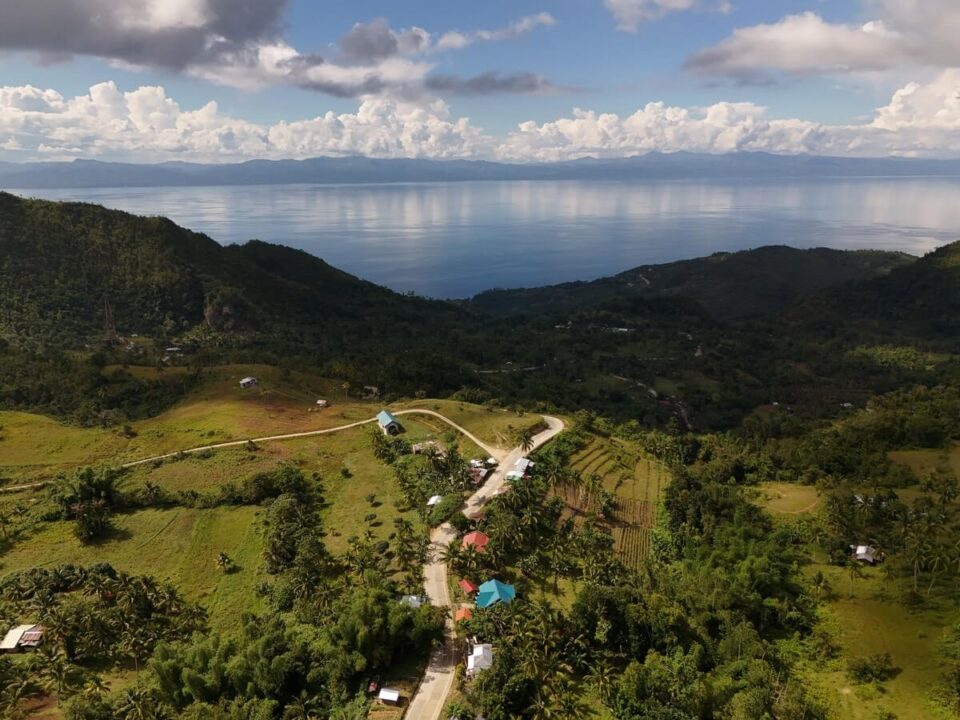
Flying a drone abroad: Rules and laws per country - Drone flight over coastal landscapes

Flying drones abroad: Rules & laws 2026

Why you need to know the drone rules in every country beforehand

Regulations for flying drones abroadLet me be blunt: The biggest danger when flying a drone abroad isn't the wind, a dead battery, or the sea below. The biggest danger is a lack of knowledge about local laws. I've flown drones in over 40 countries, and in at least five of them, I encountered situations that could have become very expensive—because the local rules were different than I expected.

  • The most important ones: airports (typically within a 5-10 km radius), nature reserves, military installations, government buildings, city centers of historic cities.
  • Anything above that (Mavic 3, Air 3) will make your life unnecessarily difficult in many countries.
  • Regulations for flying drones abroadLet me say it straight up: The biggest danger when flying a drone abroad is not the wind, not the empty battery, and not the sea below you.
  • The DJI Mini 5 Pro or DJI Mini 4 Pro are the obvious choice.
  • Before the trip (1-2 weeks): Have you researched the country's drone laws?

This guide summarizes my eight years of experience, supplemented by the current regulations for 2024 and 2025. I'm not a lawyer—if in doubt, check with the local aviation authority. But this guide provides a solid foundation so you don't walk into a trap.

The golden rule: Below 250 grams, (almost) everything changes.

The most important tip first: Fly a drone weighing less than 250 grams. Mine DJI Mini 5 Pro It weighs exactly 249 grams — and that's no coincidence. DJI deliberately kept this drone below the magic 250-gram mark because in most countries of the world, drones under 250 grams are either not regulated at all or are subject to significantly less stringent regulations than heavier models.

In the EU, a sub-250g drone falls into the C0 category and may be flown in Open Category A1—meaning even over uninvolved people (with restrictions). In the USA, hobbyists do not need FAA registration for sub-250g drones. In many Asian countries, sub-250g drones are completely exempt from registration requirements.

My advice: If you're buying a drone primarily for travel, buy one under 250 grams. DJI Mini 5 Pro or DJI Mini 4 Pro are the obvious choice. Anything above that (Mavic 3, Air 3) will make your life unnecessarily difficult in many countries.

Europe: EU Drone Regulation 2024/2025

The basics

Since January 1, 2024, uniform drone regulations have been in effect throughout the EU. This sounds simpler than it is, as each country can additionally define national restrictions (for example, no-fly zones). The EU distinguishes three categories: Open (for most hobby and creator flights), Specific (for more complex operations), and Certified (for heavy drones and transport).

For the DJI Mini 5 Pro (C0 class, under 250g) in Open Category A1: You may fly over uninvolved persons (but not over crowds of people), you do not need an EU certificate of competence (but registration with the LBA is required), you may fly up to 120 meters altitude, and you must maintain visual line of sight (VLOS) to the drone.

registration

Despite being under 250g, you still need to register as a drone operator: In Germany, this is done with the LBA (German Federal Aviation Office, lba.de), costing €20 for 3 years. You will receive an e-ID, which must be affixed to the drone – a small sticker is sufficient. If you fly in other EU countries, your German registration is automatically valid there. You do not need to register again in each country.

No-fly zones in Europe

Each EU country defines its own no-fly zones (geo-zones). The most important ones are: airports (typically a 5-10 km radius), nature reserves, military installations, government buildings, and city centers of historic cities. I use three apps to check these zones: the DJI Fly app (built-in, shows DJI's own restricted zones), Drone Assist (for the UK and Europe), and the official app of the respective country (e.g., dipul.de for Germany, AIP Drone for France).

Country overview: My experiences

Spain (including the Canary Islands)

Spain is drone-friendly. With a drone weighing under 250g, you can fly in the Open Category without Spanish registration (your German registration is sufficient). Important: Drone flying is completely prohibited in the Canary Islands' natural parks (such as Timanfaya National Park on Lanzarote or the Maspalomas Dunes on Gran Canaria). I speak from experience—in Timanfaya, rangers approached me and pointed out that the fine could be up to €600,000. No drone shot is worth that.

Good spots in the Canary Islands: The coast of Lanzarote (outside the parks), the mountains of Gran Canaria, and the beaches of Fuerteventura. The rules are similar on Madeira (Portugal) — nature reserves are closed, but the levada trails and coastline are mostly open.

Portugal (including Algarve and Madeira)

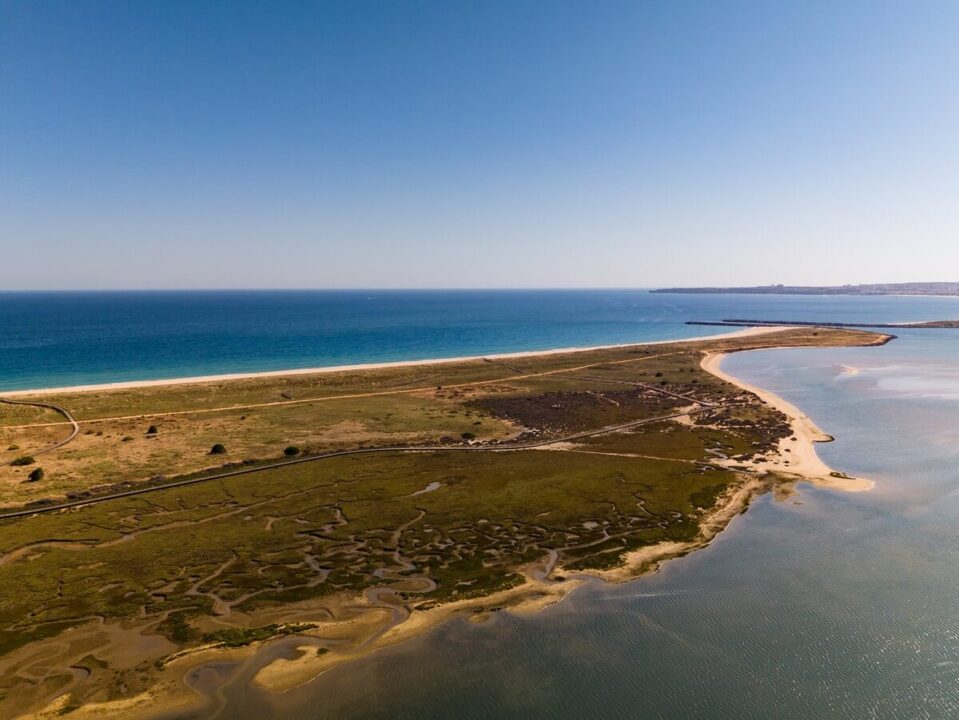
Portugal requires registration with the ANAC (Autoridade Nacional da Aviação Civil), even for drones under 250g if they have a camera. In practice, I completed the online registration in 10 minutes—free of charge. The Algarve coast is a drone paradise: the rock formations near Benagil, the beaches near Lagos, and the Ria Formosa lagoon offer spectacular footage. Caution: There is a strict no-fly zone near Faro Airport (within an 8 km radius).

Greece

Greece simplified its regulations in 2024 and now fully complies with EU regulations. Registration with the HCAA (Hellenic Civil Aviation Authority) is required for all drones with cameras. In practice: The Greek islands are fantastic drone spots. Santorini (the caldera from above!), Crete (Balos Beach), Zakynthos (Navagio Beach / Shipwreck Beach). However: Flying drones is completely prohibited near archaeological sites (Acropolis, Delphi, Knossos) – and Greece actively enforces this.

Türkiye

Turkey has relatively strict drone regulations. You must register your drone with the Şişli Police Directorate in Istanbul (or online via the e-Devlet system, which is difficult for tourists). Theoretically, you need a permit from the SHGM (Civil Aviation Authority). In practice, I flew in Cappadocia and along the Lycian coast without any problems—but technically, that was a gray area. With a sub-250g drone, the chances of trouble are low, but be aware that you could theoretically be breaking regulations.

United Arab Emirates (Dubai, Abu Dhabi)

The UAE has extremely strict drone laws. You need permission from the GCAA (General Civil Aviation Authority) AND a license from the respective emirate. In Dubai, flying without permission is prohibited in most areas—violators face fines of up to 20,000 dirhams (approximately €5,000) and confiscation of the drone. For professional footage (Tourism Board Cooperation(en) I have always applied for the approval via the client — this takes 5-10 working days.

Saudi Arabia

Until recently, Saudi Arabia was a drone nightmare: a general flight ban without special permission. Since 2023, the situation has improved—the GACA (General Authority of Civil Aviation) now issues permits for tourists and creators, especially as part of the Vision 2030 tourism initiative. In my collaboration with the Tourism Board in Al Ula and Jeddah, the client organized the permits. Important: Do not fly without official permission—Saudi Arabia makes no exceptions.

Thailand

Thailand requires registration with the CAAT (Civil Aviation Authority of Thailand) for all drones with cameras, even those under 250g. Registration is free and can be done online, but processing takes approximately 3-5 business days. Drone flying is prohibited in national parks (and Thailand has many). The beaches of Krabi, Koh Phi Phi (outside the national park), and Chiang Mai are good spots—but check local regulations beforehand.

USA

The US is surprisingly drone-friendly for sub-250g drones: hobbyists don't need FAA registration for drones under 250g. However, you must use LAANC (Low Altitude Authorization and Notification Capability) clearance via the B4UFLY app before flying in controlled airspace. National parks (Yellowstone, Yosemite, Grand Canyon) have a strict drone ban. BLM (Bureau of Land Management) land, on the other hand, is usually okay—and that includes some of the most spectacular landscapes in the US.

Australia and New Zealand

Australia: Drones weighing less than 250g can fly without registration (for hobbyists). Maximum flight altitude is 120 meters, visual line of sight is required, flights must not be over people, and flights are not permitted in national parks without authorization. In practice, I had absolutely no problems in Australia—the coast and the Outback are vast and often deserted.

New Zealand: Similar rules to Australia. The CAA New Zealand does not require registration for drones under 250g. However, many of the most famous spots (Milford Sound, Mount Cook) are located in national parks or controlled airspace, where you need a DOC (Department of Conservation) permit. This is free but must be applied for in advance.

Countries where drones are completely banned or extremely difficult to operate

There are countries where you'd better not even pack your drone: Morocco (general import ban, drones are confiscated at customs), Egypt (permit extremely difficult, confiscation at the airport is frequent), Cuba (forbidden without special permission, which is practically never granted), India (extremely bureaucratic, online registration often faulty, restricted zones everywhere), Iran (forbidden) and North Korea (obviously).

In Morocco, I had the painful experience of having my drone confiscated by customs at Marrakech airport—I got it back when I left the country, but I didn't have a drone for the entire trip. Since then, I research the drone regulations of each country BEFORE traveling, not during.

Do you need cinematic drone footage of your destination?

Over 3,000 drone flights in 82+ countries — DJI Mini 5 Pro, authentic perspectives, campaign quality. Perfect for tourism boards, hotels and destination brands.

Request drone cooperation →

Practical tips for flying drones abroad

Before the trip: Research the drone regulations of your destination country (I use the website droneregulations.info as a starting point). Register online in advance, if possible. Purchase drone insurance that is valid worldwide. Save a copy of your registration and insurance documents on your mobile phone.

At the airport: Always carry the drone and batteries in your hand luggage. LiPo batteries are prohibited in checked baggage (IATA regulations). Store batteries individually, not connected to the charging cable. If the customs officer asks, politely explain that it is a camera drone under 250g and show the local registration.

On site: Never fly without local research. Even if the DJI app doesn't indicate a flight ban, local regulations may differ. When in doubt, ask locals, your hotel reception, or contact the local police/tourist information office. I've repeatedly experienced the DJI app showing an area as "free" when it's actually prohibited locally (especially in nature reserves).

During inspections: Stay calm, be friendly, and show your registration. In 99 percent of cases, that's enough. If police or security personnel ask you to land: land immediately, no discussion. A drone video is never worth a legal battle in a foreign country.

My personal checklist before every international drone flight

After eight years, I've developed a mental checklist that I go through before every drone flight abroad. Here it is — print it out or save it on your phone:

Before the trip (1-2 weeks): Have you researched the drone laws of the country? Have you registered with the local aviation authority (if necessary)? Have you checked your insurance – is it valid in the destination country? Are the batteries charged but discharged to 50 percent for flight (LiPo safety)? Have you packed a spare propeller?

Before the flight (10 minutes): DJI Fly app opened and map checked — no no-fly zone? Google Maps checked — no military base, airport, or nature reserve nearby? Wind checked — below force 5? Enough battery — at least 80 percent for the first flight? Surroundings scanned — no power lines, no trees directly above the takeoff point? Return-to-home altitude set — at least 10 meters above the highest obstacle?

After the flight: Check the drone for damage (propeller, gimbal, body). Back up the memory card—copy it immediately to your smartphone or laptop. Charge the batteries to storage (approximately 50 percent) if the next flight is not on the same day.

This checklist sounds like overkill, but it's saved my day twice already: once in Greece, when I only noticed through the app that a military area began 200 meters from my planned starting point. And once in Thailand, when I saw at the last moment that there were power lines running overhead, barely visible among the palm trees.

Flying a drone abroad is one of the coolest things you can do as a content creator. The aerial perspective transforms a good photo into a spectacular one, and a regular video into a cinematic experience. But it comes with responsibility—towards local laws, the safety of others, and the environment. If you take this responsibility seriously and prepare accordingly, you'll bring home incredible footage from around the world for years to come without a single problem. That's exactly my goal—and so far, it's worked.

Frequently Asked Questions (FAQ)

Can my drone be confiscated by customs?

Yes, in some countries (Morocco, Egypt, Cuba), drones are routinely confiscated at customs. You'll get them back when you leave, but you won't have a drone during your stay. This isn't a problem in most European and American countries. Tip: Before traveling, Google "drone customs [country name]" — other travelers' experiences are the most reliable source.

Do I need special drone insurance for use abroad?

In the EU, liability insurance for drones is mandatory—even for models under 250g. My liability insurance (through Allianz, around €60 per year) is valid worldwide. I also have comprehensive insurance that covers theft and damage. Before traveling, check whether your insurance is valid in your destination country—some policies exclude certain countries.

What happens if I get caught flying illegally?

It depends heavily on the country. In the EU: fines from €500 to €50,000, confiscation of the drone. In the USA: FAA fines of up to $32,000 for professional use. In Saudi Arabia or the UAE: fines, confiscation, and theoretically even short-term detention. My advice: It's never worth the risk. No photo or video is worth facing legal proceedings in a foreign country.

Am I allowed to fly my drone over historical sites?

In almost all cases: No. The Acropolis in Athens, the temples of Angkor Wat, the Pyramids of Giza, Machu Picchu, the Alhambra—drone flying is prohibited at all these locations. And this is actively enforced. UNESCO World Heritage sites usually have particularly strict rules. Alternative: Fly from a nearby, permitted spot and use the zoom or crop function to get the desired shot.

Is there an app that shows me all the no-fly zones worldwide?

Unfortunately, it's not reliable. The DJI Fly app shows DJI's own restricted airspace, but this doesn't cover all local regulations. I use a combination: the DJI Fly app as a base, AirMap for the US and parts of Europe, and the official aviation authority app for each country (if available). Droneregulations.info provides a good overview of the rules per country, but it's not always up-to-date. My rule of thumb: Check two sources before you fly.

About the author: Max Haase is Germany's most influential travel influencer with over 4.2 million followers. He specializes in drone footage and luxury travel. Cooperation requests here.

About the author

Max Haase

Travel Content Creator · Drone Photographer · Visual Storyteller

Since over 10 years professional travel creator with over 4.2 million followers On Instagram and YouTube. Specializing in high-end tourism board collaborations, luxury hotel campaigns, and drone photography from 82+ countries.

4.2M+Followers
82+Countries
500+Cooperations
10+Years

New: The best travel drone of 2026 — comparison for travelers

Drone content with campaign quality

Aerial cinematography from 82+ countries, for tourism boards, luxury hotels and premium brands. Let us tell your destination's story from the air.

Request a quote →

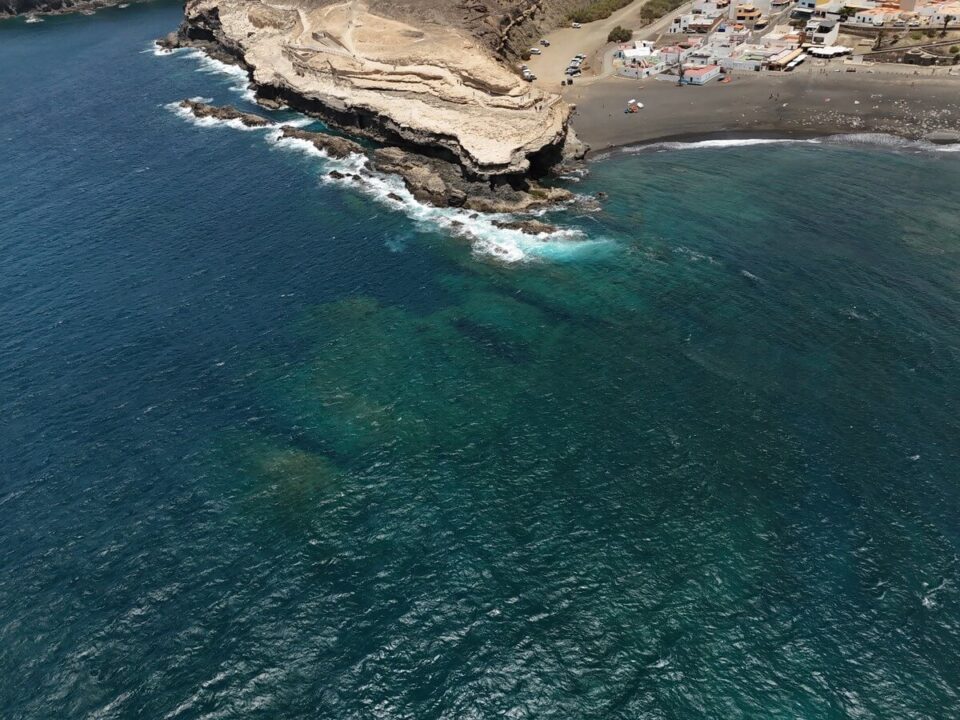
Kitesurfing in the Algarve — The best spots in Portugal - Photo: Max Haase Travel

Kitesurfing Portugal 2026: Algarve, Faro & best spots

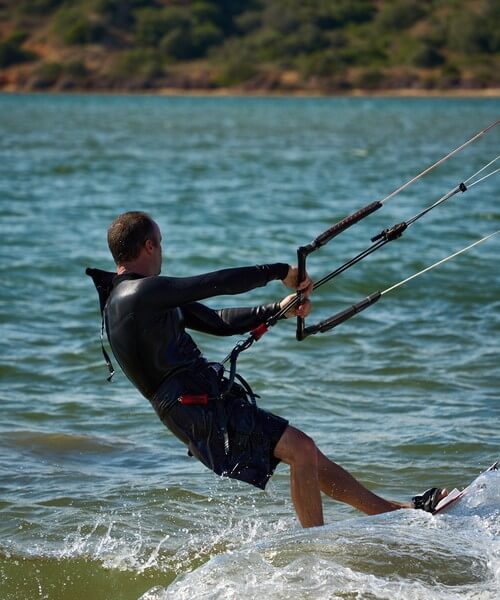
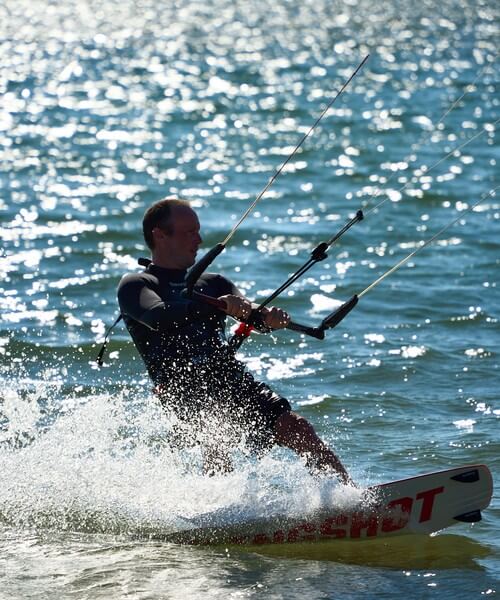
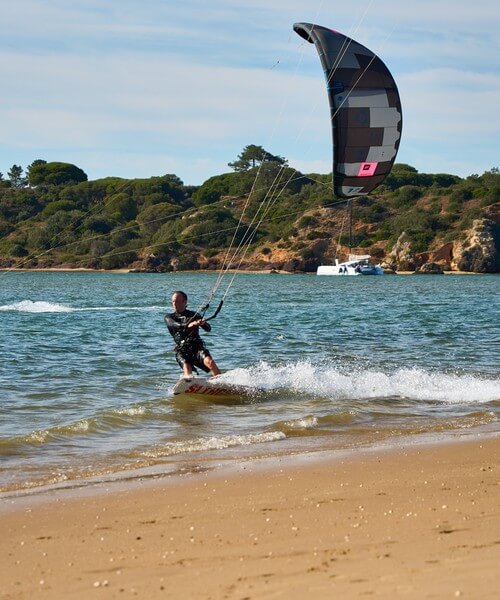
Kitesurfing AlgarveKitesurfing in the Algarve – hardly any other place in Europe combines such a spectacular coastal landscape with reliable wind and warm water. Since my first visit in 2024, the Algarve has become my absolute favorite kitesurfing spot in Europe. Between golden sandstone cliffs, turquoise Atlantic Ocean, and the relaxed Portuguese lifestyle, I've experienced some of the best kitesurfing sessions of my life.
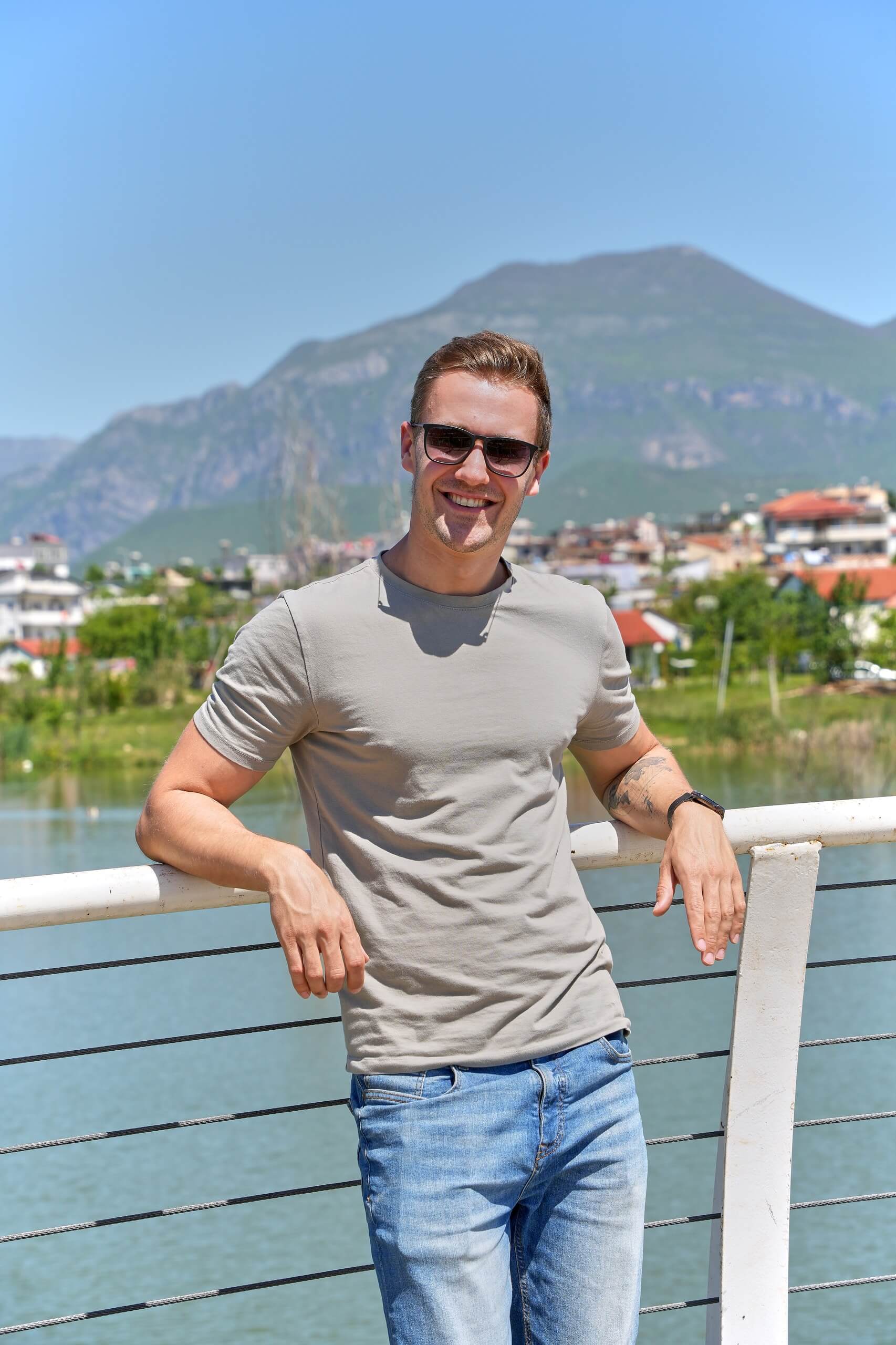
In this guide, I share everything you need to know about kitesurfing in the Algarve: the best spots, wind statistics, costs, schools, and my personal insider tips after several months there. Whether you're a beginner or an advanced kitesurfer, the Algarve has the perfect spot for every level.

  • Level: Beginner to advanced Ideal conditions: Low tide to mid-tide, Nortada from north/northwest Kite-Gr e: 9-12m² (summer), 12-14m² (spring/autumn)
  • Faro) 80-200 (round trip) Ryanair/easyJet from Düsseldorf, Berlin, Munich. My total budget for a 2-week kitesurfing trip: Approximately 1,200-1,800 with my own equipment, rental car and apartment.
  • The cheapest flights: From Düsseldorf, Berlin or Munich you can find round-trip flights from €80 if you book 6-8 weeks in advance.
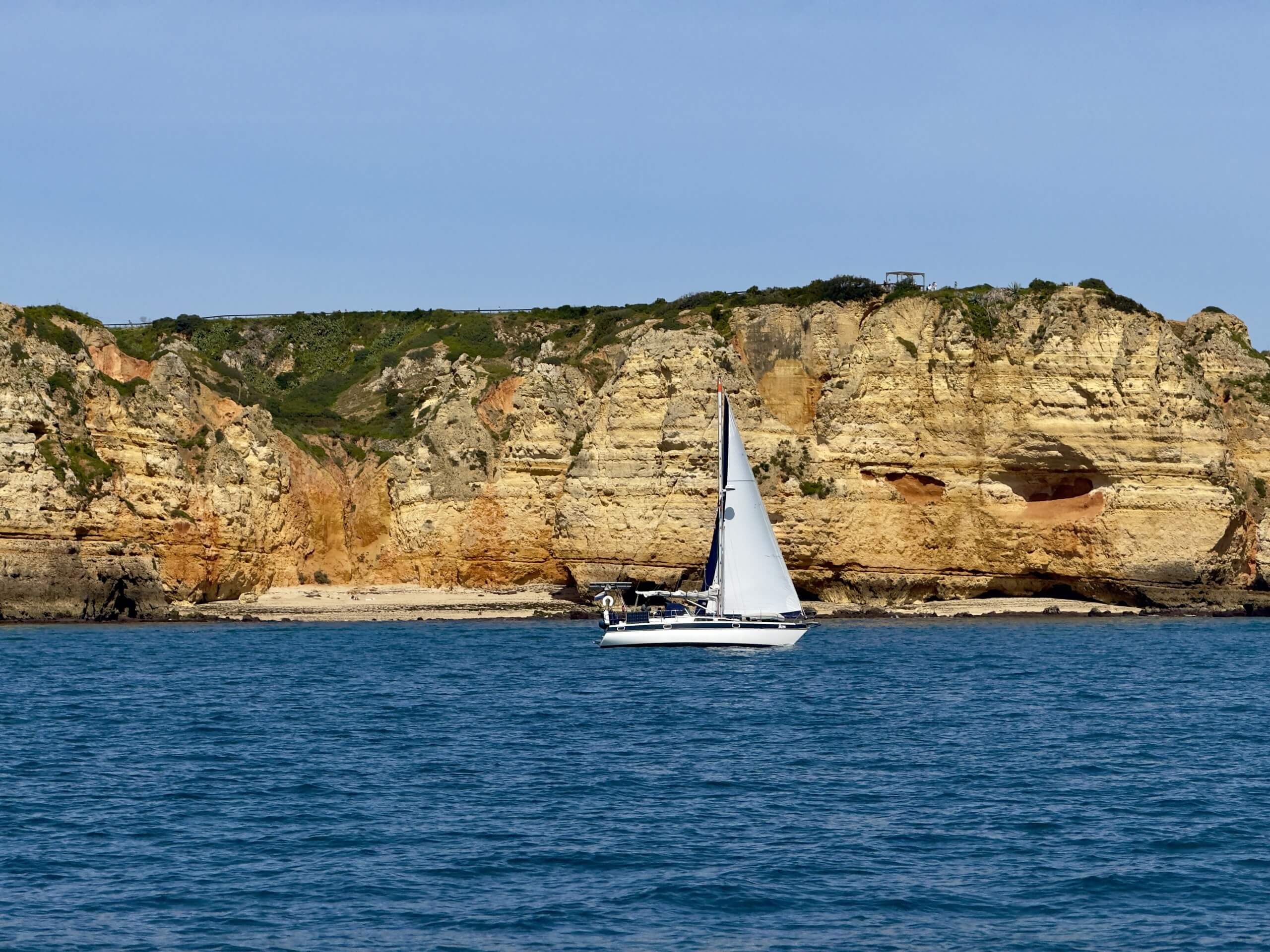
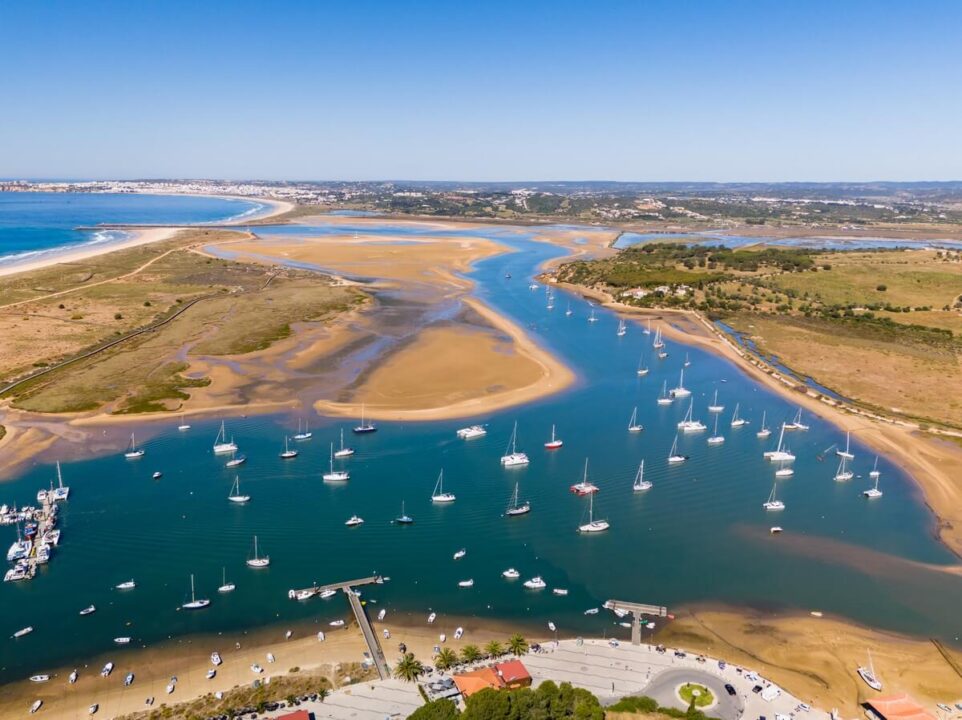
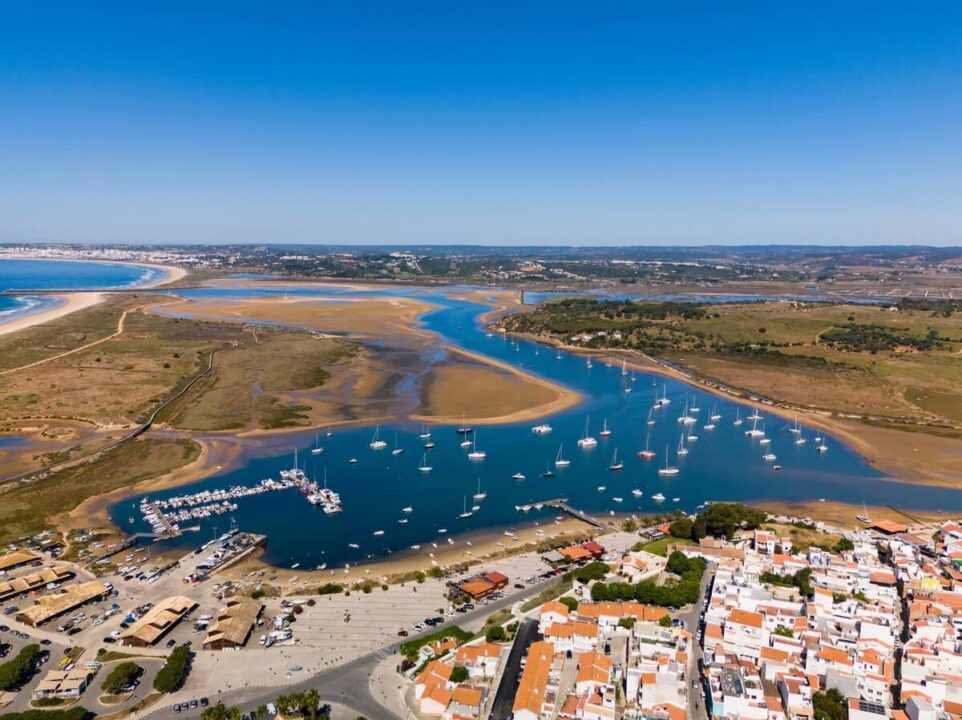
  • On my windless days, I have the Ponta da Piedade explored near Lagos, the Benagil-H hle visited by kayak and the Praia da Marinha Photographed from a drone.
  • The water temperature in summer is 19-22 C – cool enough for a thin wetsuit, but warm enough to jump in without one.

Algarve & Lagoon: Why Portugal is perfect for kitesurfing


The Algarve has a decisive advantage over other European kite destinations: the Nortada. This thermal northerly wind blows reliably from May to October, bringing a constant 15–25 knots. Unlike in the Canary Islands, where the wind can sometimes be gusty and unpredictable, the Algarve wind is even and constant – perfect for freeriding and freestyle.

The water temperature in summer is between 19 and 22°C – cool enough for a thin wetsuit, but warm enough to jump in without one. In spring and autumn, a 4/3 wetsuit is necessary, but even then the water is significantly more pleasant than in the North Sea.

Add to that the infrastructure: several professional kite schools, board shops, affordable accommodation, and – often underestimated – excellent Portuguese food after a session. Fresh grilled fish for under €15 right on the beach? Everyday life in the Algarve.

Kitesurfing spots Portugal Map: The best spots in the Algarve & Faro


1. Alvor – My favorite for shallow water

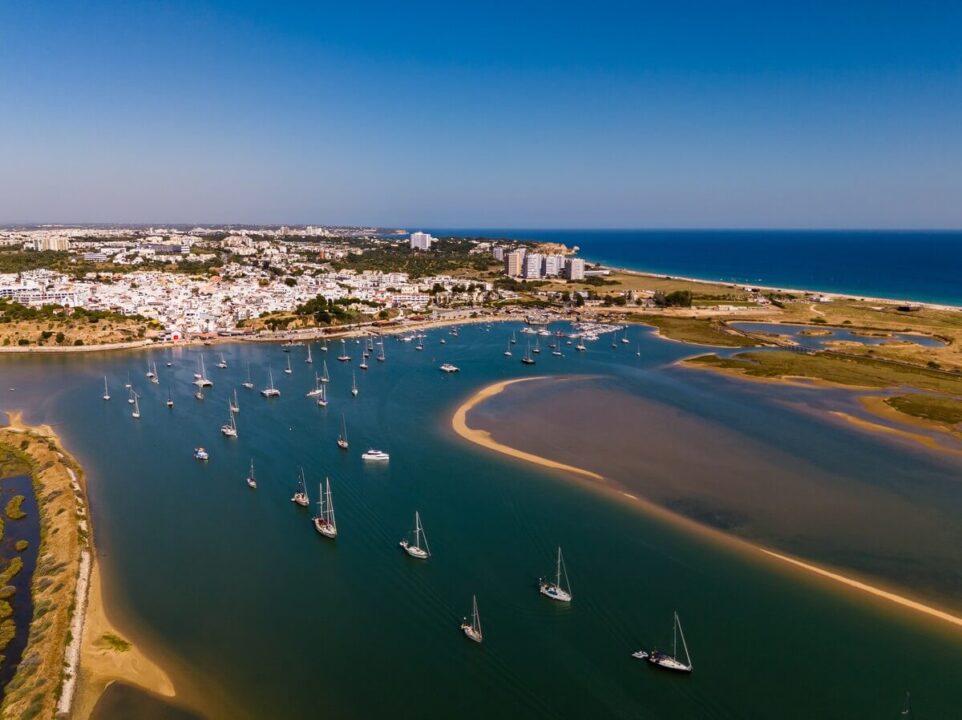
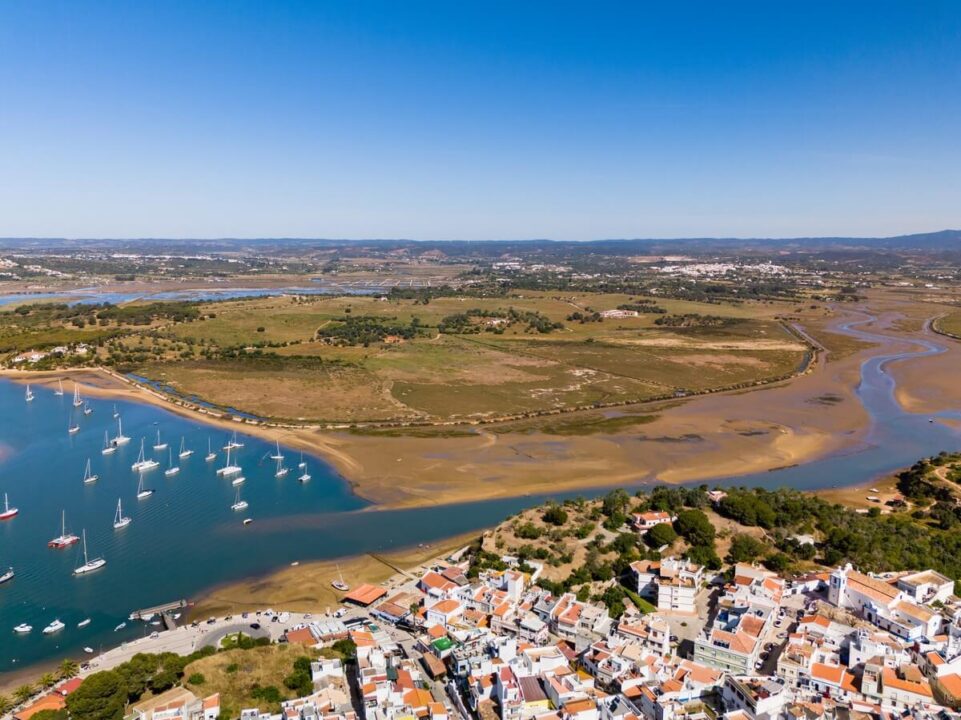
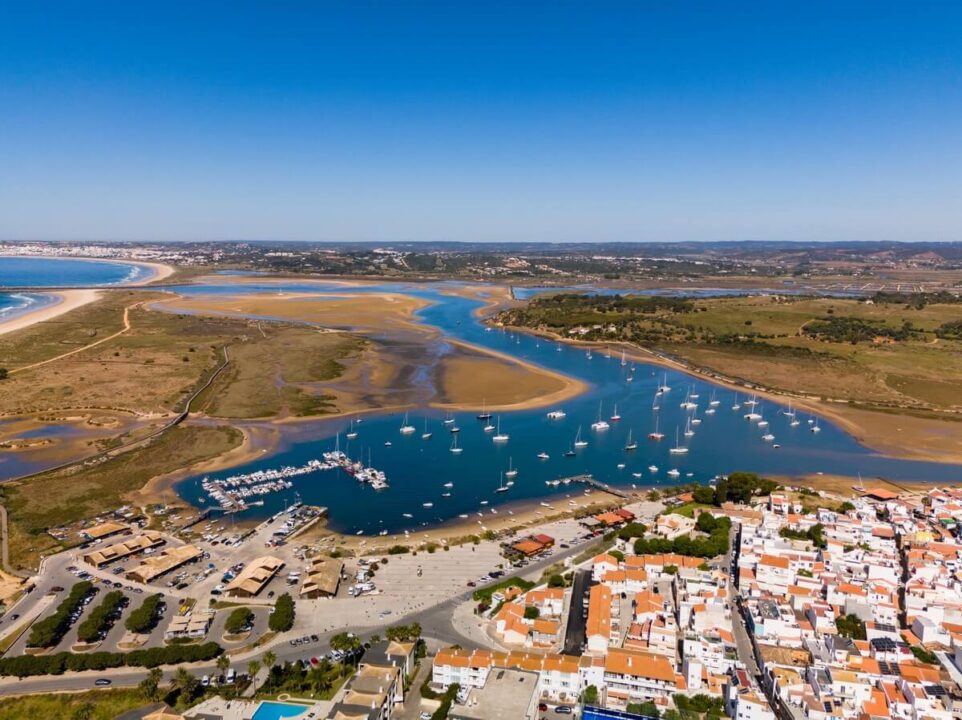
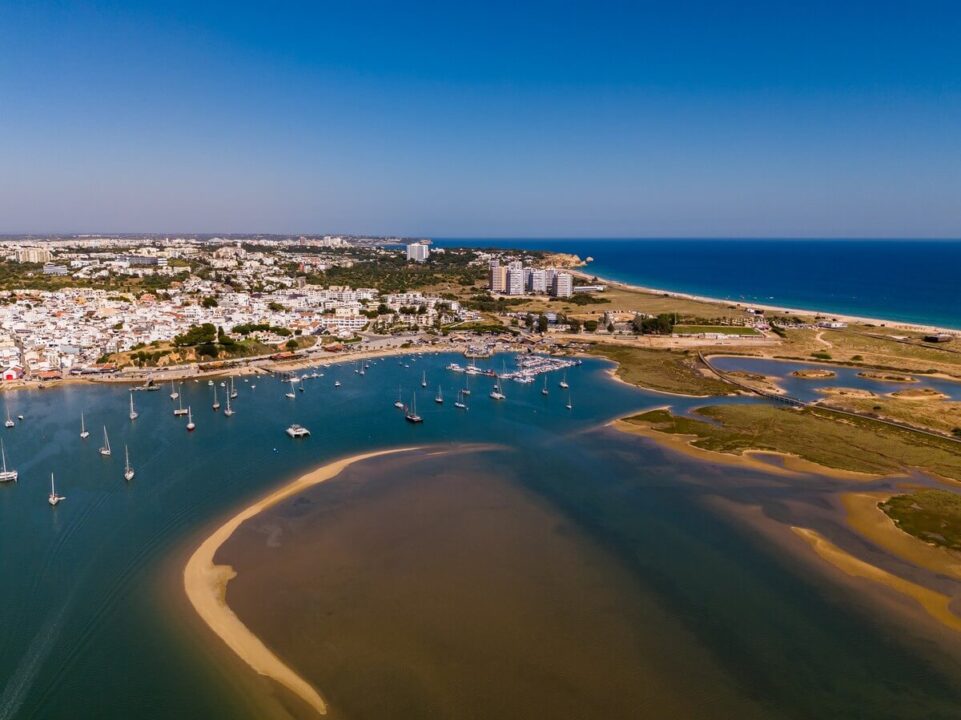
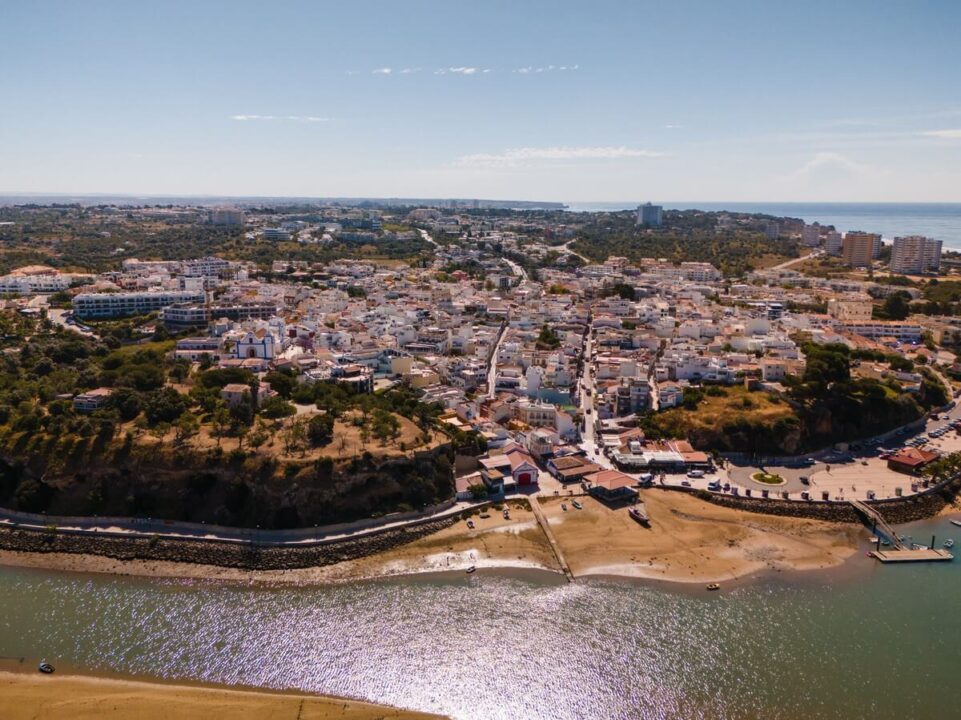
Alvor is THE spot if you're looking for flat water conditions. Ria de Alvor It's a shallow lagoon that's only knee-deep at low tide – perfect for practicing and freestyle tricks. I had one of the best sessions of my life here in June 2024: a constant 20 knots, mirror-smooth water, and golden evening light.

The spot is best at low tide and during the first few hours of high tide. At high tide, the lagoon can become too deep, and the surrounding hills somewhat block the wind. My tip: Check the tide tables and plan your session around low tide.

Level: Beginners to advanced
Ideal conditions: Low tide to mid-tide, Nortada from north/northwest
Kite size: 9–12m² (summer), 12–14m² (spring/autumn)

2. Praia do Martinhal (Sagres) – For surfers

Anyone who loves wave kitesurfing simply must visit Martinhal. The spot is located on the west coast near Sagres, where the Atlantic swell crashes directly onto the shore. The waves are clean and between 1 and 2 meters high – enough for strapless sessions, but not as brutal as on the Portuguese west coast further north.

Caution: Martinhal is only suitable for experienced kiters. Rocks, currents, and unpredictable gusts from the surrounding cliffs make the spot challenging. But when the conditions are right, it's perhaps the most beautiful wave kitesurfing spot in all of Europe.

Level: Advanced to expert
Ideal conditions: Northwest swell + Northada
Kite size: 7–10m²

3. Meia Praia (Lagos) – The all-rounder

Meia Praia is the longest beach in the Algarve and offers plenty of space for everyone. The wide sandy beach is perfect for launching and landing, and the wind blows sideshore from the left – ideal because you'll always be carried back to the beach. There are schools right on the beach for beginners, while more advanced kitesurfers will find open water with small waves further out.

Lagos itself is one of the most beautiful cities in the Algarve, with a historic old town, great restaurants, and a vibrant nightlife. After a session, a pastel de nata and an espresso in the old town – it doesn't get any better than that.
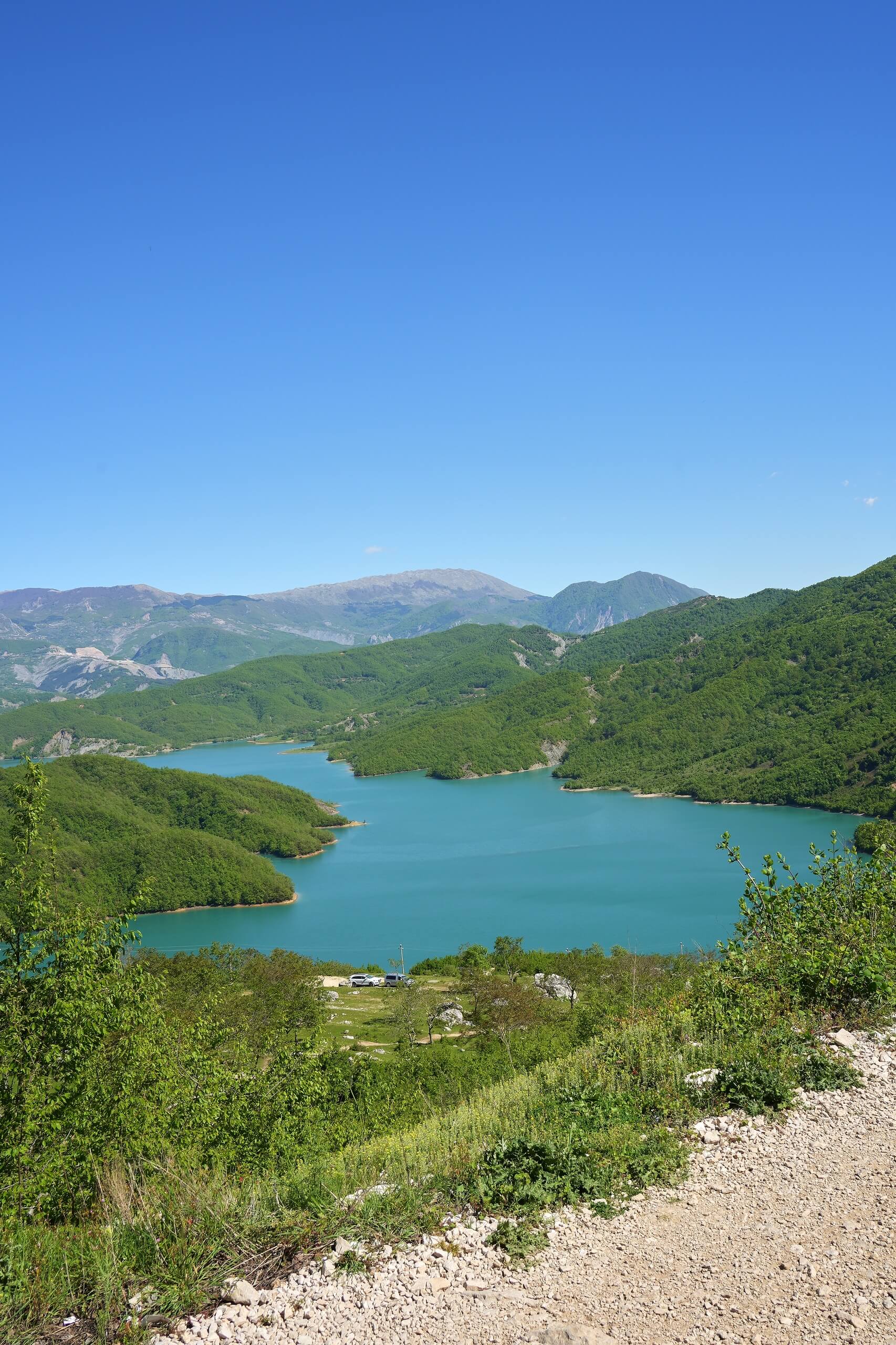
Level: All levels
Ideal conditions: Nortada, all day
Kite size: 9–14m²

4. Praia da Ilha de Tavira – a hidden gem in the east

Tavira is located in the less touristy eastern part of the Algarve and is therefore often much less crowded than the spots in the west. The offshore sandbar offers an endless beach with consistent thermal winds. The catch: you have to take a boat across, which makes setting up a bit more complicated. But the peace and quiet and the available space definitely make it worth it.

Level: All levels
Ideal conditions: Summer thermals, midday to evening
Kite size: 10–14m²

The Algarve away from the kite – a coast to marvel at


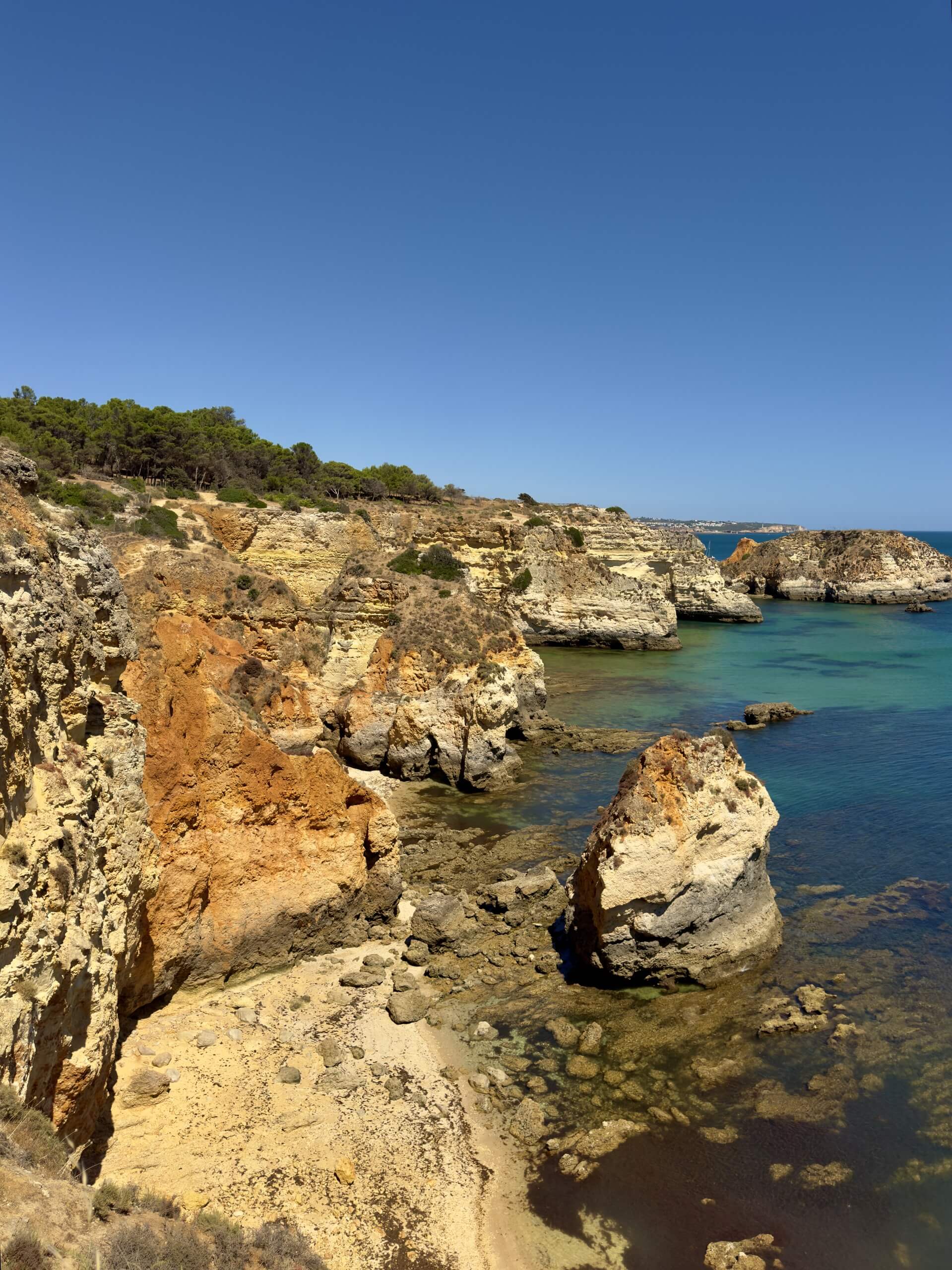
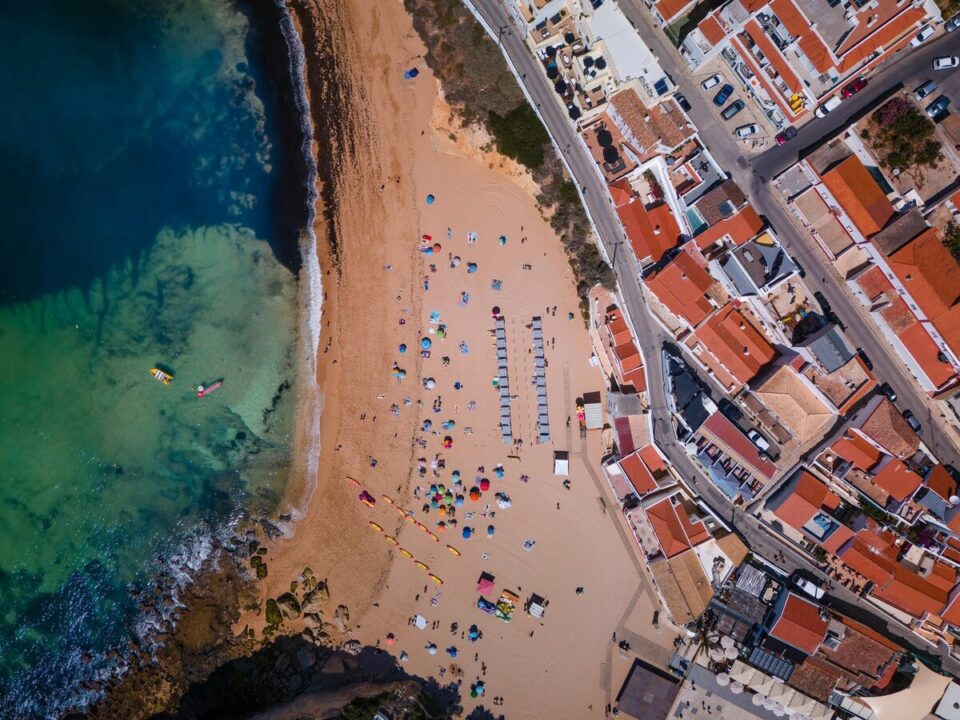
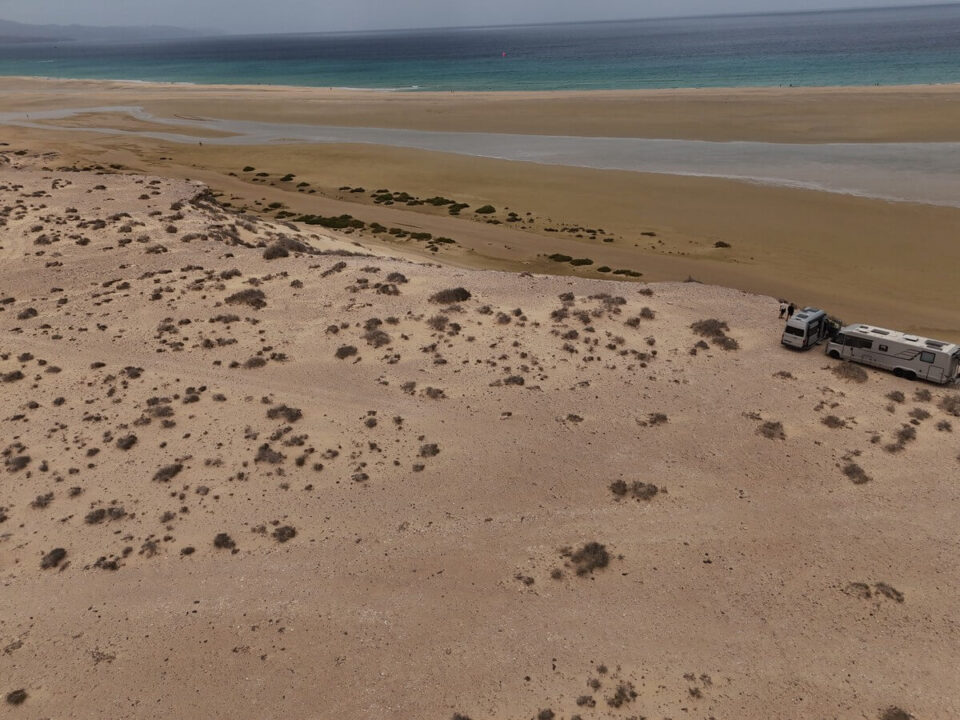
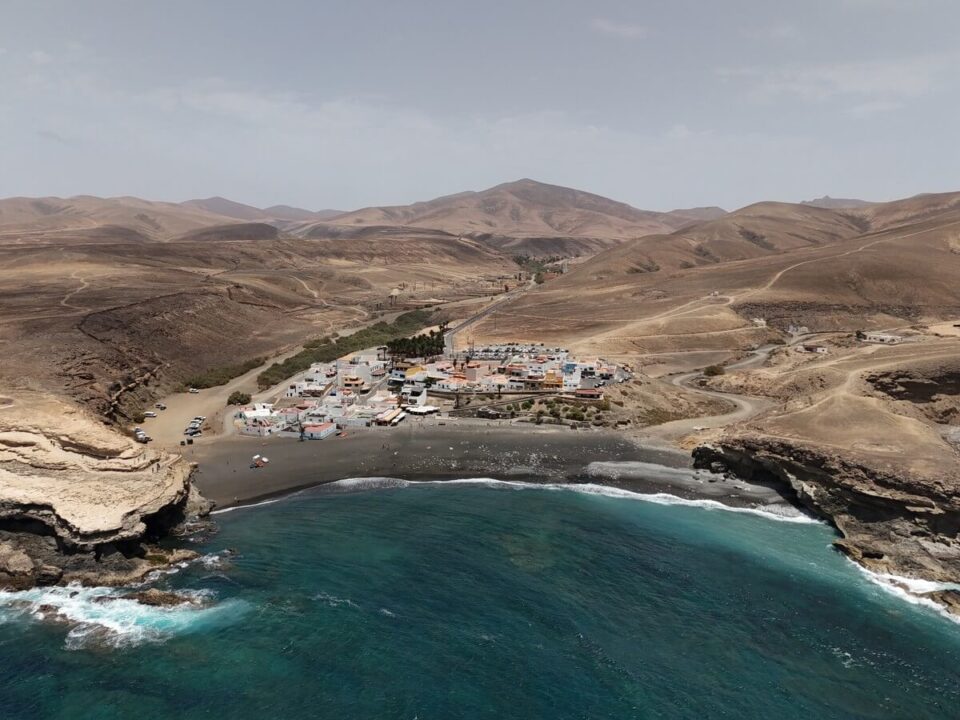
The Algarve is so much more than just a kitesurfing spot. Its coastal scenery is among the most impressive in all of Europe – and this is truly revealed from a drone. Golden sandstone cliffs plunging vertically into the turquoise sea, hidden sea caves, and natural rock bridges – every kilometer of coastline is different.
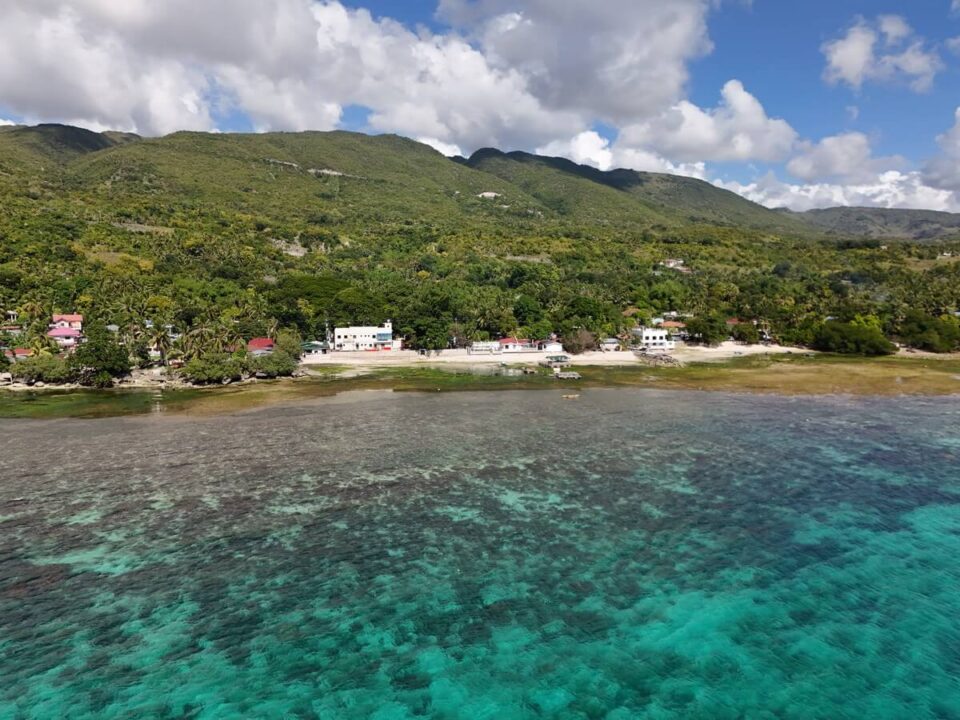
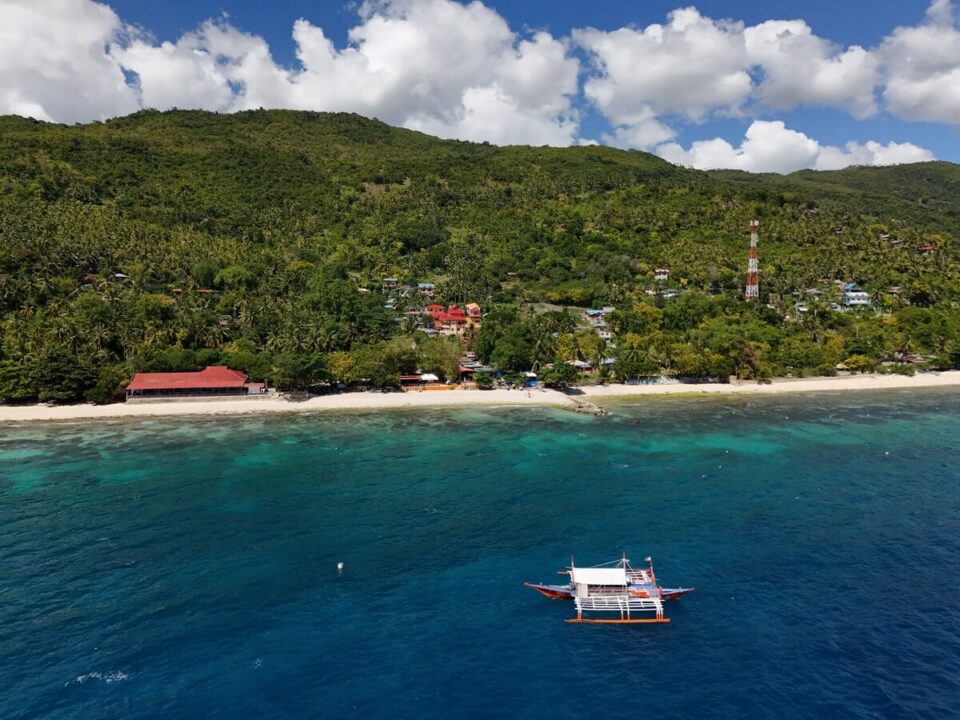
On my windless days, I have the Ponta da Piedade explored near Lagos, the Benagil Cave visited by kayak and the Praia da Marinha Photographed from a drone. Anyone who travels to the Algarve as a kitesurfer and only stays on the water misses half the story.
Are you planning a Portugal campaign with a travel creator?

I produce authentic travel content from Portugal — drone cinematography, reels and storytelling for tourism boards, hotels and premium brands.

Request Portugal campaign →

Are you planning your kiteboarding trip to the Algarve?

Personal cooperation regarding spots, kite schools and accommodation in Portugal — based on personal experience.

Request cooperation →

Costs – Kitesurfing in the Algarve


category Cost (per day/unit) note
Kiteboarding course (beginners) €80–120/day 3-day packages from €250
Equipment rental (kite + board) €50–80/day Weekly discounts possible
Accommodation (apartment) €40–80/night Off-season significantly cheaper
rental car €25–40/day Recommended for spot-hopping
Food (Restaurant) €10–20 per meal Fresh fish from €12
Flights (e.g. Faro) 80–200 € (round trip) Ryanair/easyJet from Düsseldorf, Berlin, Munich

My total budget for a 2-week kitesurfing trip: around €1,200–1,800 including my own equipment, rental car, and apartment. As a couple, splitting the fixed costs makes it even cheaper. For European standards, Portugal is still a real bargain.

Kitesurfing in Portugal in October: Best time to travel to the Algarve


The kiteboarding season in the Algarve runs from May to October, with the most constant winds in July and August. During these months, the Nortada blows almost daily – wind probability above 80%.

May/June: The season is starting, the wind is becoming more consistent. Fewer tourists, lower prices. Water temperature around 17–19°C. My personal favorite – a perfect balance of wind, weather, and tranquility.

July/August: Peak season. Most consistent wind (15–25 knots almost daily), hot weather (35°C+), but also crowded spots and higher prices. If possible, kite during the week.

September/October: The off-season is fantastic. There's still wind, the tourists are gone, and the water temperature is at its highest (22°C+). My second favorite time to visit.

November to April: No reliable kite wind. But perfect conditions for surfers (large Atlantic swell) and hikers (pleasant temperatures, blooming landscape).

Kitesurfing in Portugal for beginners: Kite schools in the Algarve


The Algarve has a fantastic kiteboarding infrastructure with several established schools. Here are my top recommendations:

Kite Culture Lagos: Located directly on Meia Praia, they offer IKO-certified courses in German and English. The team is young, motivated, and has excellent local knowledge. Beginner packages start from €280 for 3 days.

Algarve Watersports (Alvor): Specializing in the shallow water spot in the Ria de Alvor. Perfect for beginners because you can practice safely in the lagoon. They also offer stand-up paddleboarding and wing foiling.

Windsurf Point (Praia da Rocha): The oldest school in the region with over 20 years of experience. Large pool of equipment (ideal if you want to try different sizes) and experienced instructors.

My equipment setup for the Algarve


For the Algarve, I travel with the following setup:

  • Kites: 9m² and 12m² (covers 90% of all days)
  • Board: Twintip 136cm for flat water, directional for wave riding days
  • Neo: 3/2mm Shorty (Summer) + 4/3mm Full (Spring/Autumn)
  • Helmet & Vest: Always included – some of the spots have rocks.
  • Drone: Drone for recordings after the session
  • Camera: Camera with 24-70mm lens for beach and lifestyle photos
Tip: Most airlines allow kite equipment as sports baggage (20–30 € extra per flight). With Ryanair, you have to register it online in advance. Alternatively, you can rent equipment from the schools on site.

Drone rules in Portugal – What you need to know


Portugal falls under the EU drone regulation. For the drone (under 250g) relaxed rules apply, but you still need:

  • EU drone license A1/A3 (free online test)
  • Registration with the AAN (Portuguese Civil Aviation Authority)
  • No flights over crowds of people. (Beaches in summer!)
  • Max. 120m height

In practice: Fly early in the morning or late in the evening when the beaches are empty. The Algarve is a drone paradise – but please be respectful of other beachgoers.

More on this in my Drone guide for use abroad.

Practical tips for your kitesurfing trip


  • A rental car is mandatory: The spots are spread out. With a car, you're flexible and can chase the best wind.
  • Refueling in Portugal: Diesel approx. €1.60/l – cheaper than in Germany.
  • Wind forecast: Windy.com and Windguru are reliable. Local schools post daily updates on Instagram.
  • Don't forget sunscreen: The sun beats down brutally in the Algarve, even in spring. Use SPF 50+ and wear a lycra shirt on the water.
  • Tap water: It's safe to drink, but many locals prefer filtered water.
  • Portuguese helps: „Obrigado“ (thank you) and „Uma imperial, por favor“ (a beer, please) are always well received.

Getting there – How to get to the Algarve


The Faro Airport (FAO) It's the gateway to the Algarve. Ryanair, easyJet, Eurowings and TAP Air Portugal offer direct flights from Germany. Flight time: approximately 3 hours.

The cheapest flights: From Düsseldorf, Berlin, or Munich, you can find round-trip flights from €80 if you book 6–8 weeks in advance. During the off-season (May/October), bargains under €60 are possible.

From the airport to the spot: Pick up your rental car directly at the airport (from €15/day with early booking). The A22 motorway will take you to any spot on the coast in 30–60 minutes. Please note: A22 tolls are collected electronically – activate the Via Verde system with your rental car company or pay the toll online afterwards.

FAQ – Frequently Asked Questions about Kitesurfing in the Algarve


Can I learn to kitesurf in the Algarve as a beginner?
Absolutely. Alvor and Meia Praia are perfect spots for beginners with shallow water and professional schools. You'll be up on a board in 3-5 days.

What kite size do I need?
In summer (Nortada season): 9–12m² for most days. If you only want to take one kite: 10m² or 11m² is the best compromise.

Is the Algarve better than Fuerteventura for kitesurfing?
Both are great, but different. Fuerteventura It has more waves and rougher conditions. The Algarve offers more diverse spots (flat water + waves) and is significantly richer in terms of cuisine and culture. For pure kiteboarding holidays focusing on flat water: Algarve. For wave kiting: Fuerteventura.

What is the internet like for digital nomads?
Excellent. Portugal has one of the best internet infrastructures in Europe. There are many coworking spaces in Lagos, Portimão, and Faro. That was a huge plus for me as a content creator.

Do I need a drone permit?
Yes, EU drone license A1/A3 and registration with the AAN are required. Simplified rules apply for drones under 250g (series drones). Details in my [document/guide/etc.]. Drone Guide.

My conclusion – the Algarve is a kiteboarding paradise


The Algarve has it all: reliable wind, a warm climate, diverse spots for every level, a spectacular coastline perfect for drone photography, and the best value for money in Southern Europe. Add to that the relaxed Portuguese mentality, affordable and excellent food, and a growing community of kiters and digital nomads.

If you're thinking about where to go on your next kiteboarding trip, the Algarve should be at the top of your list. I come back every year and always discover new spots and new favorite places.

Also read my other Portugal articles: the Algarve travelogue, the Portugal road trip cost guide and my Porto Travel Report.

About the author

Max Haase is a travel content creator with over 4 million followers on Instagram. He has been traveling the world for over 10 years, documenting his adventures with drones and cameras – and spending as much time as possible kiteboarding. Together with photographer Janet Dannehl, he forms one of the most influential travel duos in the German-speaking world.

Cooperation with Max Haase — Portugal & worldwide

Over 500 completed collaborations with international tourism boards, luxury hotels, and premium brands. Let's implement your next Portugal campaign together.

Request collaboration →

About the author

Max Haase

Travel Content Creator · Drone Photographer · Visual Storyteller

Since over 10 years professional travel creator with over 4.2 million followers On Instagram and YouTube. Specializing in high-end tourism board collaborations, luxury hotel campaigns, and drone photography from 82+ countries.

4.2M+Followers
82+Countries
500+Cooperations
10+Years
Portugal Road Trip Costs — Budget for 2 Weeks - Photo: Max Haase Travel

Portugal road trip by car 2026: 14 days, costs & route

Portugal road tripPortugal is one of the best travel destinations in Europe—and one of the most affordable. I spent a total of three months in Portugal in 2024, traveling from Porto to Lisbon and on to the Algarve, tracking every single expense. In this guide, you'll find an honest budget breakdown for a two-week road trip through Portugal—with concrete figures, money-saving tips, and my personal recommendations.

Whether you're a backpacker or a traveler seeking comfort, Portugal works for every budget. A rental car gives you flexibility, the highways are well-developed, and the distances are manageable. From Porto to Faro it's only 600 km—you can easily see the whole country in two weeks.

Portugal road trip by car: Total costs for 14 days


category Budget (2 people) Middle class (2 people) Comfort (2 people)
Flights (round trip) €120–200 €200–350 €350–600
Rental car (14 days) €180–280 €280–400 €400–700
Petrol/Toll 100–150 € 100–150 € 100–150 €
Accommodation (14 nights) €420–700 €700–1,200 €1,200–2,500
Food & Drink €350–500 €500–800 €800–1,400
Activities 50–100 € €100–250 €250–500
TOTAL (2 people) €1,220–1,930 €1,880–3,150 €3,100–€5,850
Per person €610–965 €940–1,575 €1,550–2,925

A two-week road trip including flights for under €1,000 per person is hard to find in any other Western European country. Even with mid-range options, you'll stay well below €2,000. For comparison, a similar trip through Italy or Spain costs at least €30,501,000 more.

From Germany to Portugal by car or plane: Cost comparison


The cheapest flights go to Porto (OPO), Lisbon (LIS) or Faro (FAO). For a road trip from north to south, the combination of Porto (outbound flight) + Faro (return flight) is ideal — a so-called "open jaw". This saves you the return journey and often only costs 10–20 euros more with Ryanair.

My savings strategy:

  • Book 6-8 weeks in advance (sweet spot for prices)
  • Fly Tuesday to Thursday (30-50% cheaper than weekends)
  • Check Google Flights + Skyscanner at the same time
  • Hand luggage is sufficient for 2 weeks (saves €30–50 baggage fees per leg)

Rental cars — The most important cost factor


A rental car is essential for a road trip in Portugal. While the public transport network connects the major cities, the most beautiful places—secluded beaches, mountain villages, viewpoints—can only be reached by car.

My rental car tips:

  • Cheap car rental / CHECK24: Comparison websites are often cheaper than direct booking in Portugal.
  • Fully comprehensive insurance without excess: Always cover through the provider or a credit card — the Portuguese roads have potholes.
  • A small car is sufficient: The streets in the old towns are narrow. A Fiat 500 or Renault Clio is perfect.
  • Refueling: Diesel approx. 1.55-1.65 €/l, petrol approx. 1.70-1.80 €/l (as of 2024)
  • Toll (Portagens): The motorways are toll roads. Budget: approx. €50–80 for the entire route Porto → Algarve

Beware of the toll trap on the A22: The motorway in the Algarve (A22/Via do Infante) has no toll stations — The toll is recorded electronically. Activate it when renting a car from Via Verde or add the toll later on pagamentodeportagens.pt Pay up. Otherwise, you risk hefty penalty fees.

Accommodation — Where to sleep in Portugal


Portugal has something for every budget. Here's the range:

Budget (30–50 €/night for 2): Hostels, simple pensões (guesthouses), Airbnb rooms. In the off-season, you can even find entire apartments for under €40.

Mid-range (50–90 €/night): Boutique hotels, beautiful Airbnb apartments, renovated townhouses. My favorite — in Portugal you get for €70 the quality that would cost €150 in Germany.

Comfort (90–180 €/night): Design hotels, pousadas (historic state houses), pool villas. In the Algarve, there are dream villas with private pools from €120/night.

My tip: A mix of different accommodation types. In Porto and Lisbon, a centrally located apartment; in the countryside, a quinta (country estate); and in the Algarve, a villa. This keeps the trip varied and lowers the average price.

Food & Drink — Europe's best value for money


Portuguese cuisine is the unsung hero of any road trip. The value for money is unbeatable — even in tourist areas, you'll rarely pay more than €20–25 per person for a complete meal with wine.

Typical prices (restaurant):

  • Daily special (Prato do Dia): €7–10
  • Grilled fish (Peixe Grelhado): €10-18
  • Francesinha in Porto: €8-12
  • Pastel de Nata: €1.00-1.50
  • Espresso (café): €0.70–1.00
  • Beer (Imperial/Fino): €1.50–2.50
  • House wine (bottle): €8–15

Money-saving tip: The "Prato do Dia" (daily special) is often the best deal in many restaurants: main course + side dish + drink from 7 euros. Often better than the regular menu.

Money-saving tip 2: Supermarkets like Pingo Doce and Lidl have an excellent selection of Portuguese wine, cheese and cold cuts for picnic stops along the way.

Are you planning a Portugal campaign with a travel creator?

I produce authentic travel content from Portugal — drone cinematography, reels and storytelling for tourism boards, hotels and premium brands.

Request Portugal campaign →

Self-guided tour of Portugal: My 14-day route from Porto to Faro


Days 1–3: Porto & Douro Valley
Porto's old town (Ribeira), port wine cellars in Vila Nova de Gaia, Livraria Lello, Douro Valley day trip. Budget accommodation in the old town: €40–60/night.

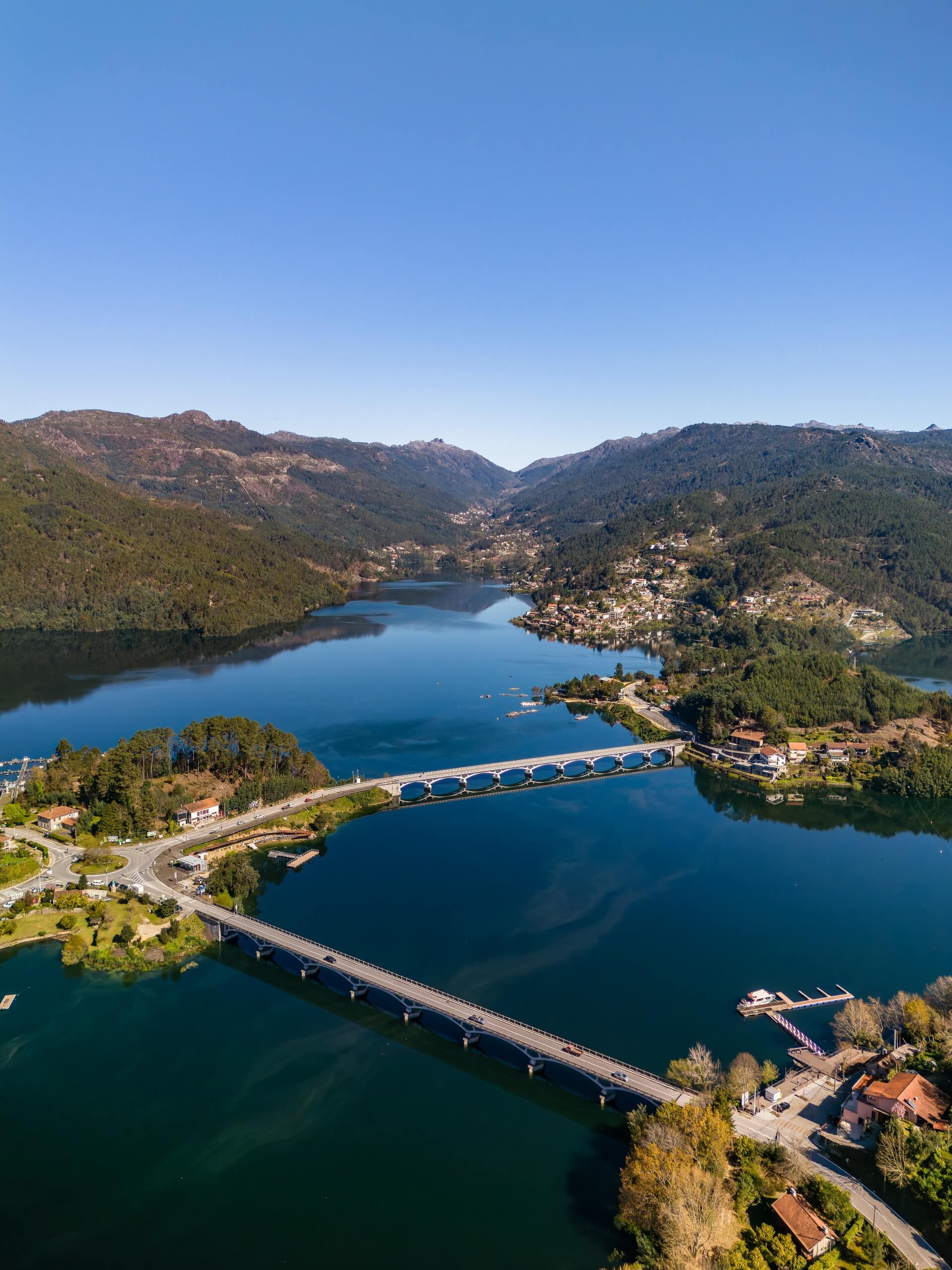
Day 4-5: Peneda-Gerês National Park
Portugal's only national park. Waterfalls, granite villages, hiking trails. A hidden gem — almost untouched by tourism. Accommodation: Quintas or country houses from €35.

Days 6–8: Lisbon
Alfama, Belém, LX Factory, Tram 28, Pastéis de Belém. Lisbon is a must-see. Parking in the city center is expensive — a hotel on the outskirts + metro is cheaper. Budget: €50–80/night.

Days 9–10: Sintra & Cascais
Pena Palace, Quinta da Regaleira, Cabo da Roca (the westernmost point of Europe). Cascais for dinner. Day trip from Lisbon or overnight stay in Sintra.

Days 11–14: Algarve
Lagos, Ponta da Piedade, Benagil Cave by kayak, Praia da Marinha, Kitesurfing in Alvor. Final days at the beach. Faro for the return flight. Budget: €40–70/night.

Are you planning your tour of Portugal?

Personal cooperation regarding route, rental car, budget and insider tips along the entire coast — based on my own 14-day experience.

Request travel cooperation →

Money-saving tips — How to cut costs


  1. Travel in the off-season (May/June or September/October): 30–50% cheaper for accommodation and car rental
  2. Cook yourself: Airbnb with kitchen + supermarket shopping saves a lot of money.
  3. Via Verde toll transponder: Often cheaper than single payments
  4. Lisboa Card / Porto Card: Only worthwhile with intensive museum use — calculate beforehand
  5. Free activities: Beaches, hiking trails, and viewpoints are free of charge.
  6. Travel credit card with no foreign currency fees: DKB, N26 or Wise — no surcharge in Portugal

FAQ — Frequently Asked Questions about the Portugal Road Trip Budget


How much money do I need per day in Portugal?
Budget: €40–60 per person/day (self-catering, basic accommodation). Mid-range: €70–110. Comfort: €110–200. Excludes flights and rental car.

Is Portugal cheaper than Spain?
Yes, in most categories. Food, accommodation, and car rental in particular are cheaper in Portugal (20-30%) than in comparable Spanish regions.

Do I need cash in Portugal?
Card payments work almost everywhere — even for small amounts. Nevertheless, take €50–100 in cash as a reserve (for small cafes, markets, parking meters).

Which time of year is the most favorable?
November to March is the cheapest time. However, the weather is changeable, and some activities are limited. The best compromise is May/June or September/October—good weather AND moderate prices.

Is it worth renting a car for a week?
Definitely. Even for a week, a rental car is the most cost-effective way to explore Portugal. Without a car, you'll miss out on 701 of the best spots.

Read also: my Algarve travelogue, the Kitesurfing Algarve Guide and my Porto Travel Report.

About the author

Max Haase is a travel content creator with over 4 million followers on Instagram. He has been traveling the world for over 10 years and shares his experiences—including honest cost breakdowns—on his blog and social media. Together with photographer Janet Dannehl, he forms one of the most influential travel duos in the German-speaking world.

About the author

Max Haase

Travel Content Creator · Drone Photographer · Visual Storyteller

Since over 10 years professional travel creator with over 4.2 million followers On Instagram and YouTube. Specializing in high-end tourism board collaborations, luxury hotel campaigns, and drone photography from 82+ countries.

4.2M+Followers
82+Countries
500+Cooperations
10+Years

Cooperation with Max Haase — Portugal & worldwide

Over 500 completed collaborations with international tourism boards, luxury hotels, and premium brands. Let's implement your next Portugal campaign together.

Request collaboration →

Load More