Skip to content

Max Haase

About Max Haase

http://max-haase.com

Posts by Max Haase:

droneeu-featured

Best places to fly drones in Europe: 20 top spots for 2026

The 20 best drone spots in Europe — From Lofoten to Santorini

After over 3,000 drone flights in more than 82 countries, I have a pretty clear opinion on where in Europe the most spectacular shots are taken. I've been flying drones professionally since 2018—first the DJI Mavic Air, then the Mini 2, and now the... DJI Mini 5 Pro — and I've learned that the best spots are rarely the obvious ones. Sure, Santorini from above is impressive. But have you ever seen the Lofoten Islands in winter? Or the Faroe Islands during a storm? Or the abandoned villages in Albania?

  • Basis of selection: Over 3,000 drone flights in 82+ countries since 2018 – from the Mavic Air to the DJI Mini 5 Pro – have formed the 20 best spots in Europe.
  • Northern Europe Podium: Lofoten (Reine, Hamnøy) are number one; also Faroe Islands with Múlafossur, Trolltunga, Geirangerfjord and Lapland's Northern Lights from the air.
  • Southern European classics: Santorini, Cinque Terre, the Amalfi Coast and the Benagil Cave in the Algarve – iconic motifs with clear flight windows and rules.
  • Hidden gems & mountains: Kotor Bay, Meteora and Cappadocia's balloons provide variations; the Dolomites, Matterhorn, Tre Cime and Kjerag crown the mountain category.
  • Practice per spot: Each entry includes GPS coordinates, best time of year and country-specific drone rules – including 250g limits and airport checks before each flight.
3.000+Drone flights
82+countries visited
13Years of experience

In this guide, I share my 20 absolute favorites — sorted by region, with specific GPS coordinates, best time of year, drone regulations, and my personal tips for the perfect shot. I have personally flown and tested each spot.

Northern Europe — pure drama

1. Lofoten, Norway — The king of drone spots

The Lofoten Islands are the best drone spot in Europe. Period. The combination of rugged mountains plunging into the turquoise sea, the iconic red fishermen's cabins (rorbuer), and the light—midnight sun in summer, northern lights in winter—is unique. My favorite: Reine and Hamnøy from above, when the morning sun bathes the mountains in golden light.

Best time: September-October (autumn colors + chance of seeing the Northern Lights) or June-July (midnight sun). Drone law: Norway allows drones under 250g without registration in most areas. Caution: Do not fly over nature reserves or closer than 5 km to airports. The Lofoten Islands have a small airport near Svolvær — check your GPS coordinates before takeoff!

2. Faroe Islands, Denmark — Wild & Untouched

The Faroe Islands are what Iceland was 15 years ago—dramatic, sparsely populated, and completely unspoiled. The Múlafossur waterfall, plunging directly over a cliff into the sea, is one of the most iconic drone shots ever. Add to that Mykines with its puffin colonies and Trælanípa, the lake above the sea.

Best time: May-August (but even then: rain jacket mandatory). Drone law: Under 250g no permit required, but bird sanctuaries are strictly protected — for Mykines only with a permit and outside the breeding season.

3. Trolltunga, Norway — The Tongue Rock

Trolltunga (the Troll's Tongue) is a rock outcrop that juts 700 meters above Lake Ringedalsvatnet. Filmed from above with a drone, it looks as if a stone tongue is growing out of the mountain. The hike there is 28 km long and challenging (10-12 hours) — but the drone footage makes any muscle aches worthwhile.

Best time: June-September (in winter only with a guide and winter equipment). Tip: Start the drone flight BEFORE the rock outcrop, not on it. The wind conditions at the edge are unpredictable.

4. Lapland, Finland — Northern Lights from above

Filming the Northern Lights with a drone is technically demanding (long exposures in sub-zero temperatures, battery management at -20°C), but the results are breathtaking. DJI Mini 5 Pro Night mode allows exposures of up to 2 seconds — enough to capture the Northern Lights. Store batteries in your jacket pocket instead of the drone until takeoff — at -20°C they lose 40% capacity in minutes.

Best time: October-March. Location: Inari or Saariselkä (low light pollution).

Southern Europe — Mediterranean Magic

5. Santorini, Greece — The Classic

Santorini is the most photographed place in Europe—and for good reason. The white houses with their blue domes, set against the backdrop of the volcanic caldera and the deep blue sea, are even more spectacular from the air than from the ground. My spot: Oia at sunset, when the sun bathes the white walls in golden and pink light.

Drone law in Greece: ATTENTION — Greece has had strict drone regulations since 2023. Flights near archaeological sites (Acropolis, Delphi, Meteora monasteries) are prohibited. In Santorini, flying over Oia is theoretically permitted, but the authorities are vigilant. Drones under 250g do not require registration, but obtaining flight authorization via the HCAA app is recommended.

6. Cinque Terre, Italy — Colorful villages on the steep coast

The five villages of the Cinque Terre (Monterosso, Vernazza, Corniglia, Manarola, Riomaggiore) cling to the cliffs of the Ligurian coast like colorful Lego bricks. A drone shot from above is breathtaking. Each village has its own unique charm, but Manarola at sunset is the shot you'll want.

Drone law in Italy: Drones under 250g (category OPEN A1) do not require a permit. ENAC registration has been mandatory since 2024, even for drones under 250g. Registration can be completed online in 5 minutes.

7. Amalfi Coast, Italy — Positano from above

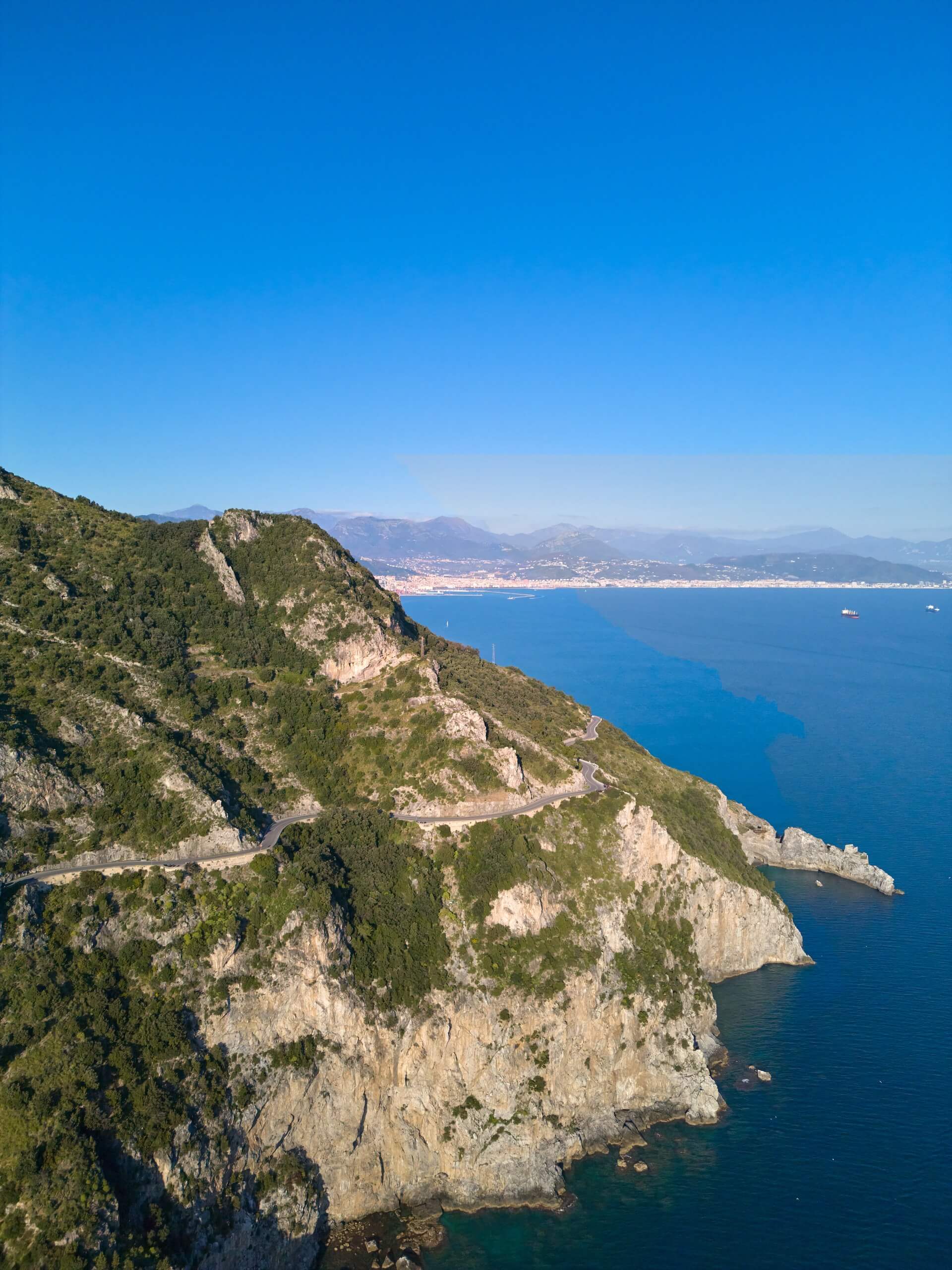
Positano, with its pastel-colored houses cascading down the mountain to the sea, is a dream from above. The winding Amalfi Coast road stretches like a ribbon between mountain and sea. Ravello offers views across the entire coast. A drone paradise—when the wind is right (the cliffs generate strong updrafts).

Best time: April-May or September-October (fewer tourists, milder light). In summer the coast is so crowded that you'll hardly find a launch site.

8. Benagil Cave, Algarve, Portugal

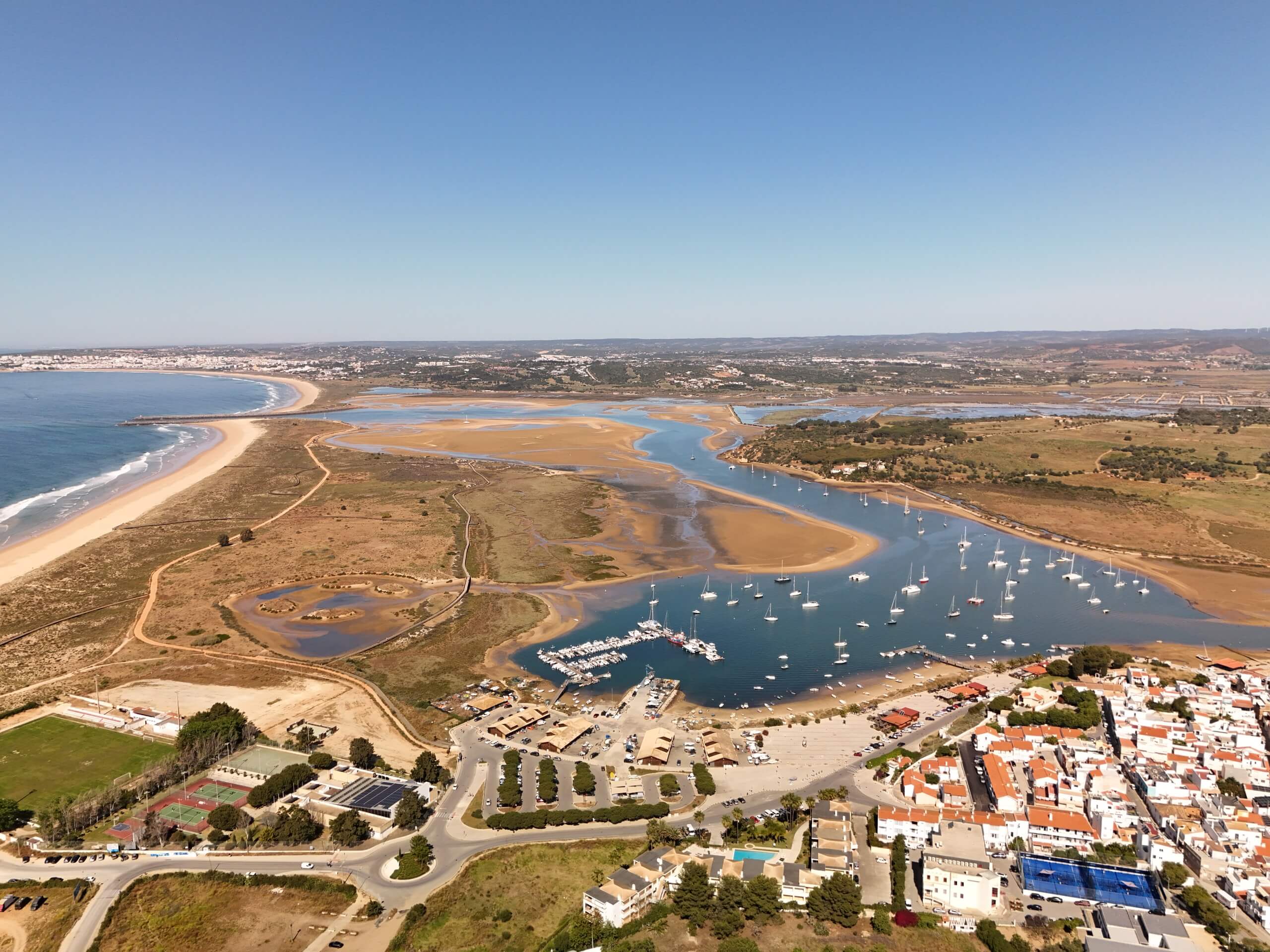
Benagil Sea Cave is a vast sea cave with a natural skylight in its ceiling. When the midday sun shines vertically through the opening and illuminates the beach inside, it creates one of the most magical drone shots in the world. It is only accessible by kayak or swimming.

Tip: Launch the drone in front of the kayak and fly it along the coast to the cave. Flying inside the cave is risky due to GPS loss—it must be done manually and only with experience.

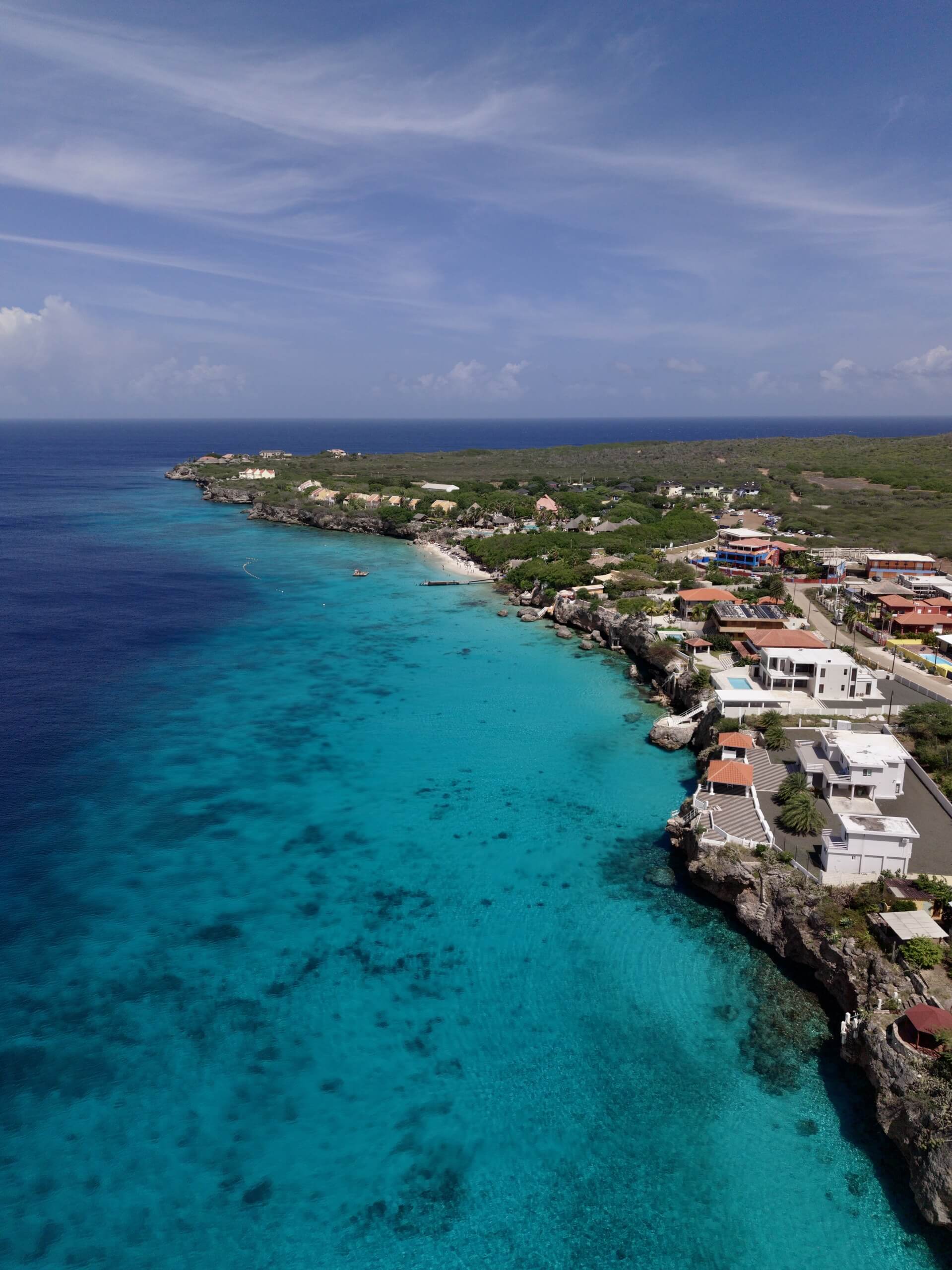
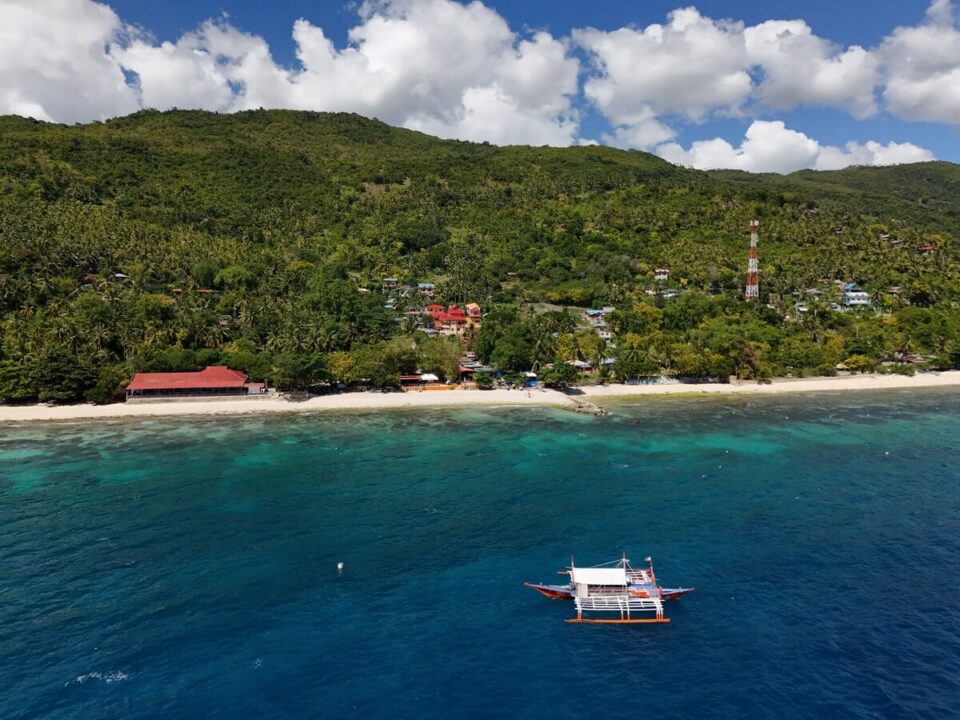
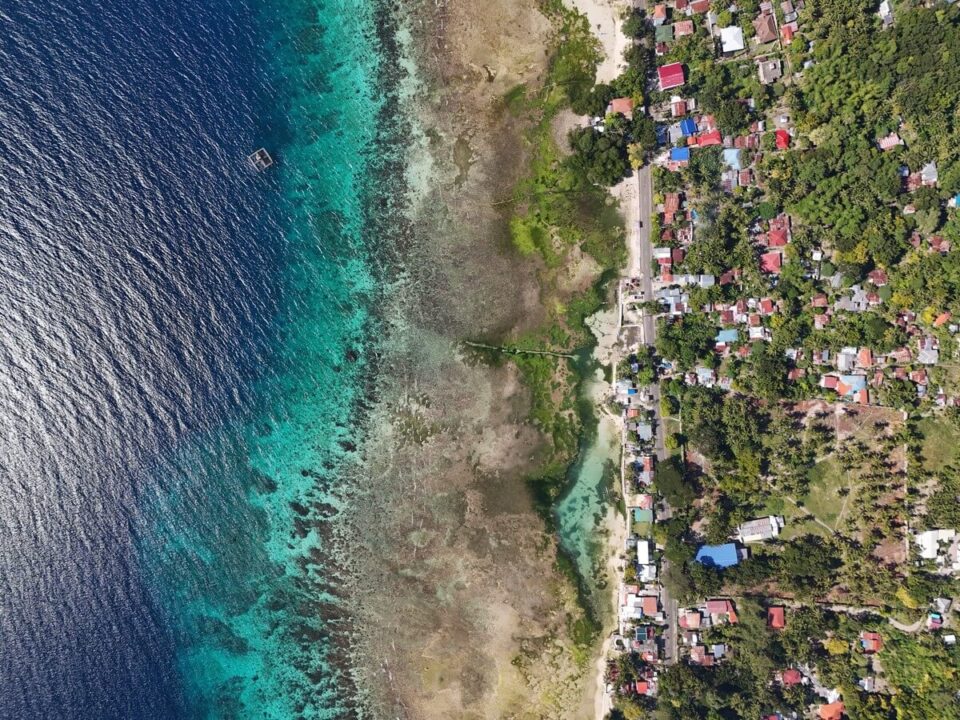
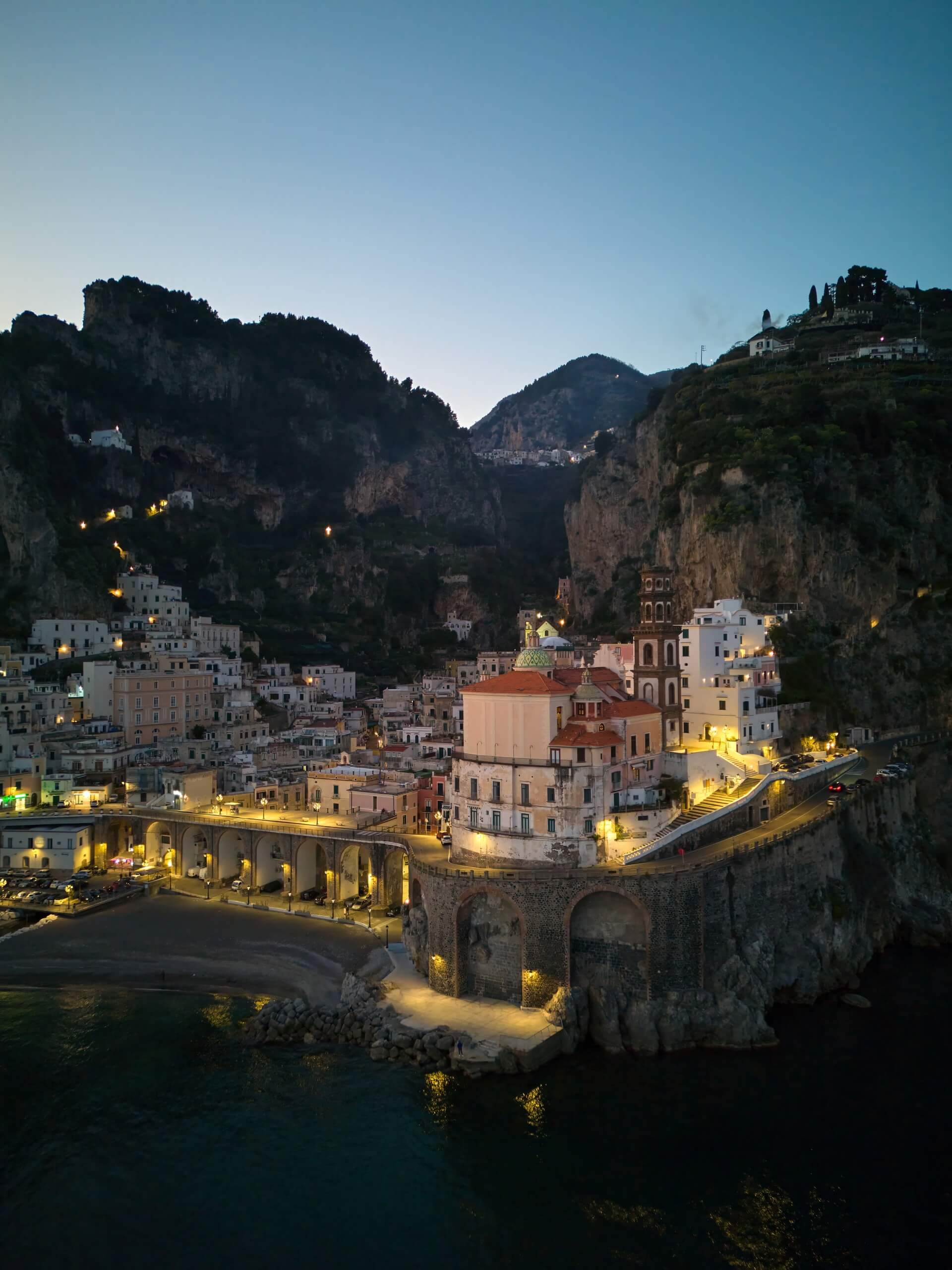
A small glimpse into the diversity of drone photography — aerial photographs from all over the world that show how different our Earth looks from above.

Central Europe — Hidden Gems

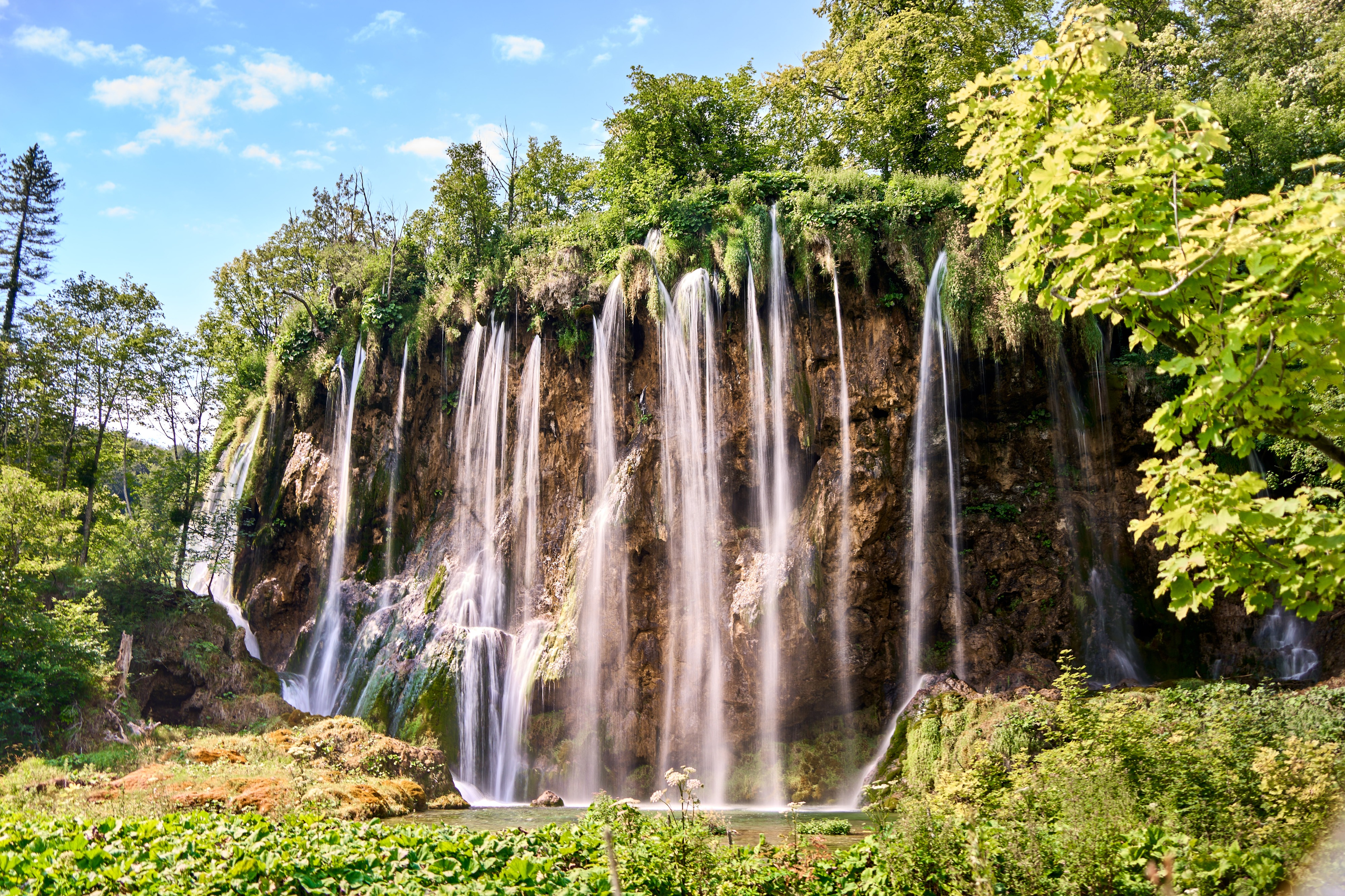
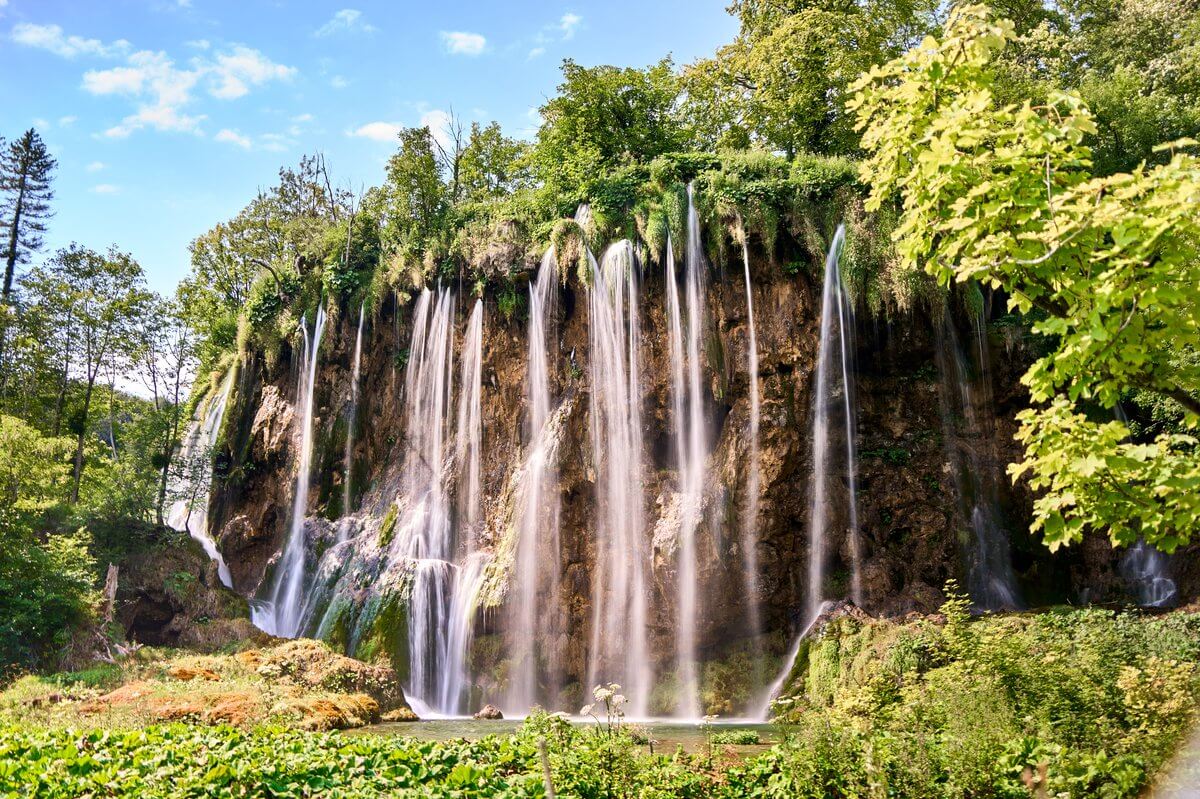
9. Plitvice Lakes, Croatia

Sixteen cascading lakes, linked by waterfalls, nestled in dense forest. From above: The varying shades of blue in the lakes (from turquoise to emerald green) are surreal. Note: Drone flights are officially prohibited in the national park—but you can zoom in from the surrounding hills outside the park.

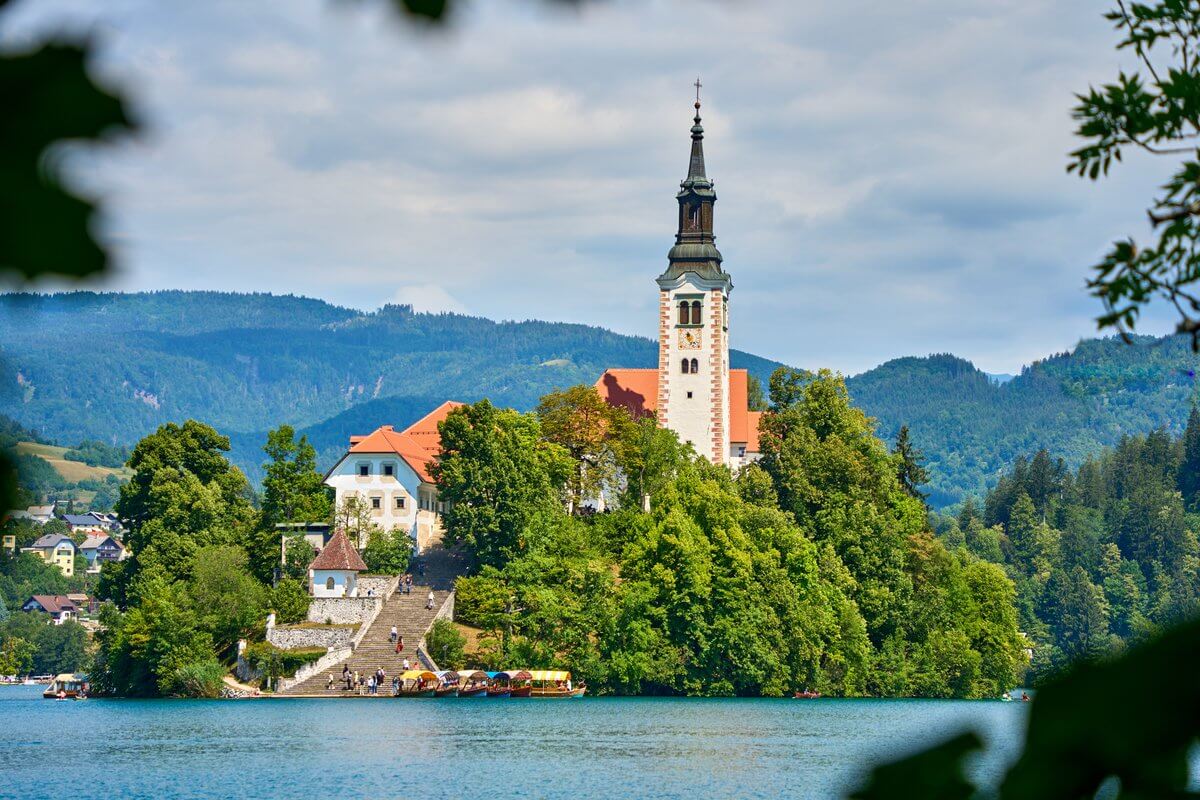
10. Lake Bled, Slovenia

The small island with the church in the middle of the lake, the castle on the rock above, the Julian Alps in the background — a perfect drone shot. Best viewed in October during morning mist, when wisps of fog hang over the water.

11. Saxon Switzerland, Germany

Yes, Germany also has world-class drone spots. The Bastei Bridge and the rock formations of Saxon Switzerland look like a miniature fantasy landscape from the air. In autumn, with fog in the valleys and colorful foliage—better than some national parks in the USA.

Drone law: Prohibited in the core zone of the national park. Allowed on the edges and above the Elbe valley.

12. Neuschwanstein, Bavaria

Ludwig II's fairytale castle is even more impressive from above than from the ground. The Alps form a stunning backdrop, with the Alpsee lake shimmering beside it. However, drone flights in the immediate vicinity of the castle are prohibited (it's a protected historical monument and a no-fly zone). The best shots are taken from the Tegelberg mountain—about 2 km away, zoom in.

Atlantic Ocean & Islands

13. Madeira, Portugal — Cliffs meet rainforest

Madeira boasts the most dramatic coastline in Europe: 580-meter-high cliffs (Cabo Girão, the second highest cliffs in Europe), levada trails winding through laurel forests, and villages clinging to vertical rock faces. From above, the contrast between the lush green rainforest and the black lava coast is breathtaking.

14. Azores, Portugal — Volcano craters & whales

Sete Cidades on São Miguel — a twin crater lake (one green, one blue) — is THE drone shot of the Azores. Also included: whale watching from above, hot springs on the beach, and a landscape that looks like the Shire from Lord of the Rings.

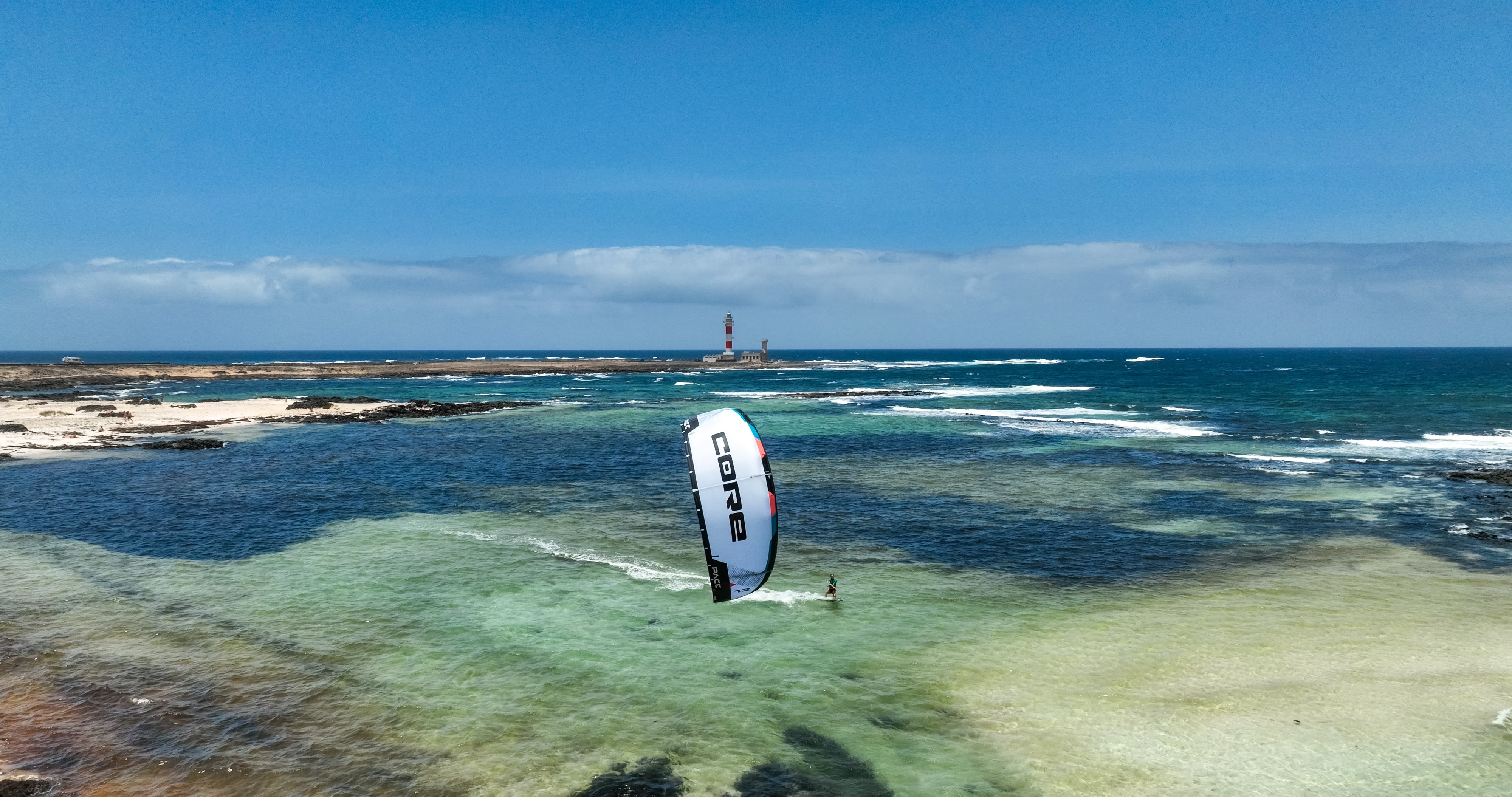
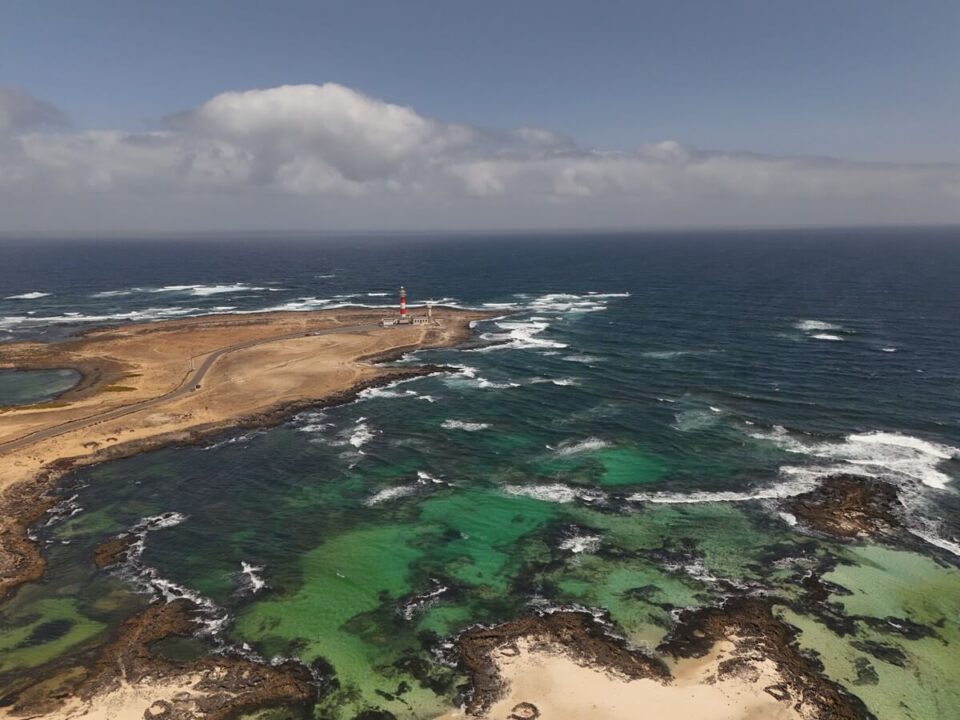
15. Fuerteventura, Canary Islands — Desert meets Atlantic

The dunes of Corralejo, the endless beaches in the south, the lava fields inland — Fuerteventura from above looks like Mars with a beach. Perfect for drones: little wind shadow, hardly any flight restrictions, flyable year-round.

Eastern Europe & the Balkans — The insider tips

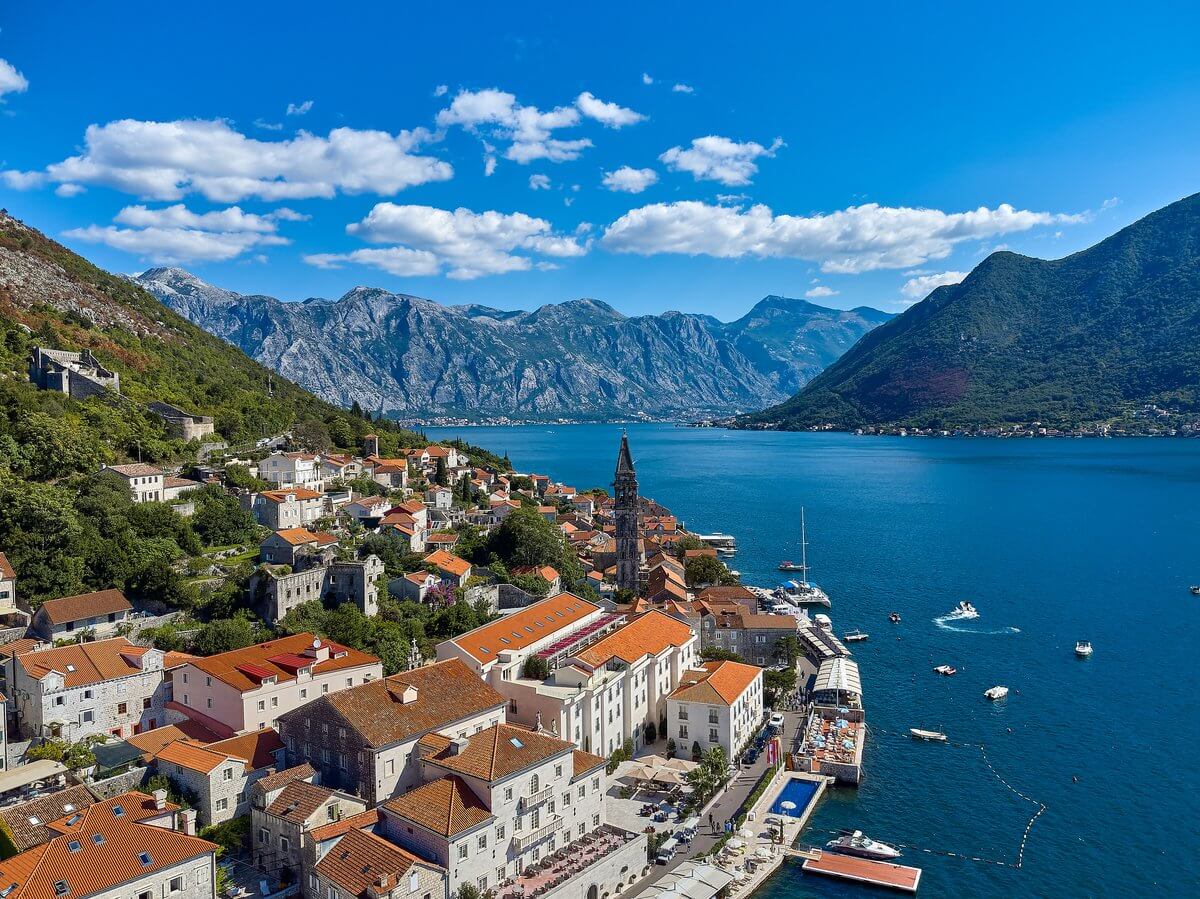
16. Bay of Kotor, Montenegro

The Bay of Kotor is Europe's southernmost fjord — and a dream from above. The old town of Kotor at the end of the bay, the winding road up the mountain, the small island of Sveti Stefan off the coast.

17. Meteora, Greece

Monasteries perched atop 300-meter-high sandstone cliffs—from the air, they look as if they're floating. Even more surreal when the valley below is shrouded in mist. Drone flights over the monasteries themselves are prohibited, but you can get perfect shots from the surrounding viewpoints.

18. Cappadocia, Türkiye — Hot air balloons from above

200 hot air balloons over the fairy chimneys at sunrise—filmed from above with a drone, this is one of the most surreal images in the world. My Cappadocia video has received over 4 million views. It's best to launch the drone BEFORE the balloons (around 5:30 a.m.) and stay at the same altitude.

19. Albanian Riviera

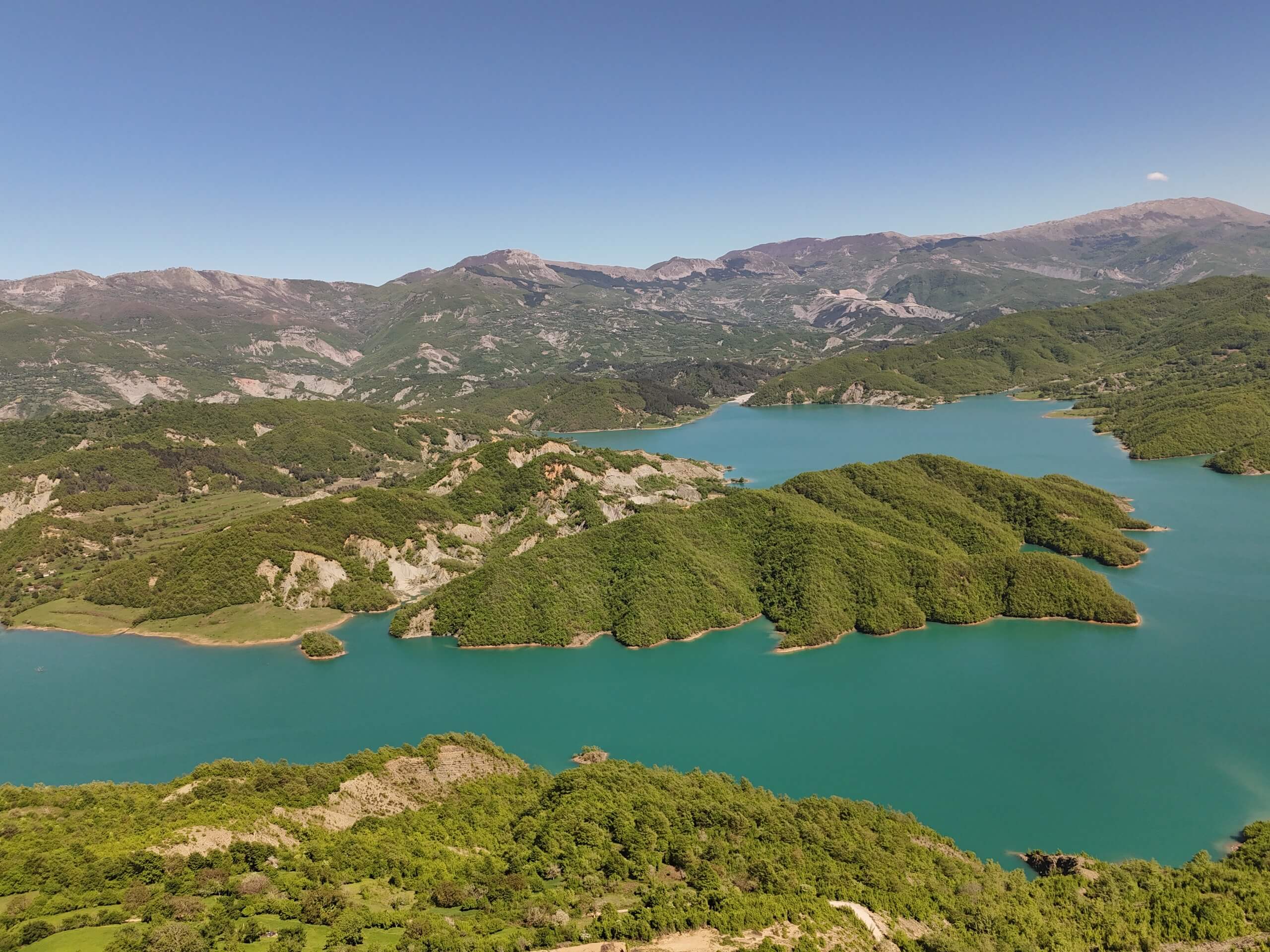
Ksamil, Himarë, and the Llogara Pass are Albania's best-kept secrets. Turquoise waters like in the Caribbean, no drone regulations (completely free in 2024), and a fraction of the tourists compared to Croatia or Greece. My insider tip for 2025.

20. Transylvania, Romania — Dracula's Land from above

The Carpathian Mountains in autumn, medieval fortified churches in mist-shrouded valleys, bears in forest clearings—Transylvania is a drone photographer's dream. The Transfăgărășan Pass road (which Jeremy Clarkson called the most beautiful road in the world) filmed from above is guaranteed to go viral. Best time: September-October, when the forests explode in red and gold.

Equipment & Drone Law — What you need to know

drone Weight Price My rating
DJI Mini 5 Pro 249g ~850 € My daily driver — under 250g = less regulation
DJI Air 3 720g ~1.100 € Dual camera, better in windy conditions, but registration required.
DJI Mavic 4 Pro 958g ~2.200 € Professional image quality, 3 cameras, Hasselblad sensor
My tip: Start with the DJI Mini 5 Pro. Weighing under 249g, it means no registration, no permits, and less hassle in most European countries. The image quality is more than sufficient for social media and blog content (1-inch sensor, 4K/60fps). Only when you're regularly producing content for clients does it make sense to upgrade to the Mavic 3 Pro.

My top 5 tips for better drone photos

1. The golden hour is EVERYTHING. 80% My most successful drone photos were taken in the hour after sunrise or before sunset. The warm, flat light creates long shadows, dramatic colors, and a depth that is impossible in midday sun. Get up early—the best shots are taken between 5:30 and 7:00 a.m.

2. Fly higher AND lower than you think. Most drone pilots fly at 50-100 meters—the standard. But the most spectacular perspectives are either very high (120m, the maximum flight altitude in the EU) or very low (5-10m above the ground/water). Flying low over water creates dramatic reflections and textures that aren't visible from above.

3. Move the drone while recording. Static drone photos are fine, but drone videos with slow, fluid movement (orbit, dolly, reveal) are great. The DJI Mini 5 Pro has QuickShot modes that do this automatically—use them. A 15-second orbit around a lighthouse at sunset beats any static photo by a mile when it comes to social media engagement.

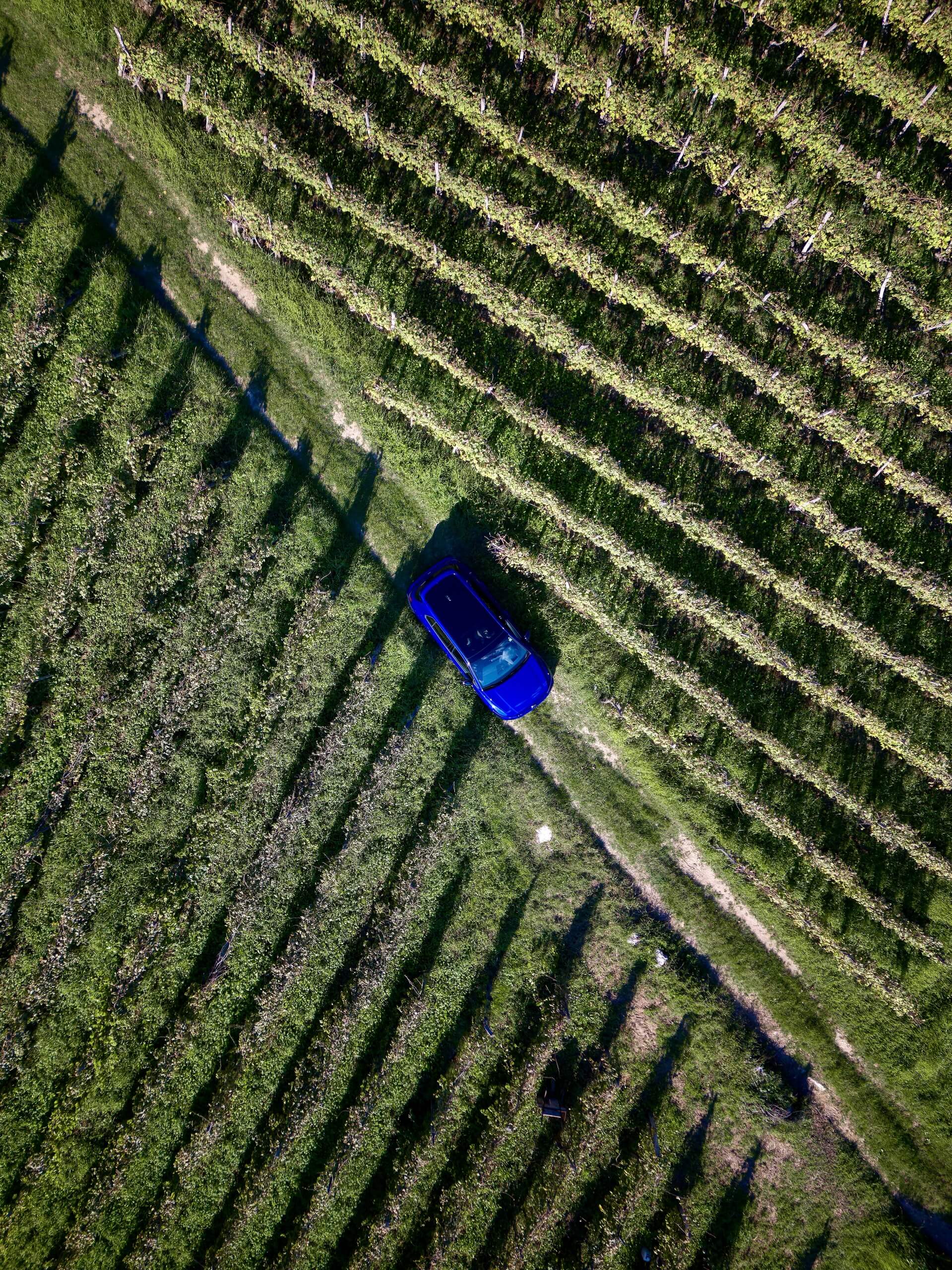
4. Look for symmetry and patterns. The world looks different from above. Fields, roads, coastlines, harbors—everything has patterns and symmetries that are invisible from the ground. Train your eye for this "top-down aesthetic." The best drone photographers don't think in 3D like a photographer, but in 2D like a graphic designer.

5. Know your limits (and your drone's). Wind over 35 km/h? Stay grounded. Battery below 30%? Return immediately. No GPS signal? Don't take off. In six years of flying drones, I've only lost one—because I was flying over the sea in too much wind, and the storm pushed it out onto open water. Since then, I've been more conservative, and paradoxically, my footage has improved. Less risk equals more focus on composition.

FAQ — Flying drones in Europe

Do I need a drone pilot's license in Europe?

For drones under 250g (category OPEN A1): In most EU countries, you have needed the EU Certificate of Competence A1/A3 since 2024 — an online test that you can pass in 30 minutes. It's free and available through your country's aviation authority (in Germany: LBA). For heavier drones, you also need the A2 license (in-person exam).

Where am I allowed to fly?

Generally speaking: Avoid flying over crowds, near airports (1-8 km depending on the country), over military installations, and over nature reserves (country-specific). Apps like "DJI Fly" and "AirMap" show you in real time where you are allowed to fly. My tip: ALWAYS check the local app on site—the rules are constantly changing.

What is the best drone for travel photography?

DJI Mini 5 Pro. Under 250g (less regulation worldwide), 1-inch sensor (good image quality even in low light), 4K/60fps video, obstacle avoidance in all directions, and fits in any jacket pocket. The perfect travel drone for all content creators.

How can I avoid trouble with the authorities?

Rule number 1: Be invisible. Fly early in the morning or late in the afternoon when there are few people around. Launch discreetly and avoid flying over beaches, promenades, or tourist attractions with large crowds. If someone (police, security, residents) approaches you: Be friendly, show the drone, and explain what you're doing. In 951,100 cases, the reaction is positive if you are polite.

Drone insurance — do I need it?

Yes, liability insurance for drones is mandatory throughout the EU—even for models under 250g. In Germany, it's available from around €40 per year through Allianz or Helden.de drone insurance. This covers personal injury and property damage. Without insurance, you risk fines of up to €50,000. Some personal liability insurance policies include drones under 250g—check with your insurer.

Max Haase Travel Creator
About the author

Max Haase

Travel Content Creator · Drone Photographer · Visual Storyteller

Since over 10 years professional travel creator with over 4.2 million followers. Specializing in high-end tourism board collaborations and visual travel storytelling.

4.2MFollowers
82+Countries
500+Cooperations
10+Years

You might also be interested in this

Solo backpacker at a mountain pass in Patagonia at sunset — symbolic of long-term travel with travel insurance

Best long-term travel insurance for 2026 — Honest comparison

Travel health insurance for long-term trips — My honest comparison across 82 countries

One Long-term travel health insurance It's mandatory if you're traveling for more than six weeks at a time—your statutory health insurance won't cover anything abroad. I learned that the hard way in 2016 when I embarked on my first long-term trip to Southeast Asia. Since then, I've been to over 82 countries. ADAC international health insurance, HanseMerkur International Health Insurance and ERGO International Health Insurance In direct practical testing — some were excellent, others an absolute disaster.

  • For long-term travel: SafetyWing (from approx. 42 $/month) — my current main insurance for all trips outside Germany, can be cancelled monthly.
  • German test winner: HanseMerkur long-term tariff from €1.15/day covers up to five years without excess and with unlimited coverage.
  • Cheapest short trip option: ADAC international health insurance starts at €12.80 annual premium and covers trips of up to 63 days including return transport.
  • Critical clause: „Medically sensible repatriation“ instead of just „medically necessary“ — the difference determines whether a patient spends weeks in hospital abroad.
  • Real cost examples: US arm fracture €15,000-40,000, hospital night in Thailand €500-2,000, return flight for medical reasons up to €80,000 depending on distance.
  • Setup for frequent travelers: Statutory health insurance (TK) plus HanseMerkur long-term insurance plus separate equipment insurance (€200/year) costs less than €600 annually for full coverage.

In this post I share my personal experiences with the best providers, explain what you need to pay attention to when choosing, and reveal which insurance I currently use and why.

My top recommendation for 2026

SafetyWing Nomad Insurance

My main insurance for all long-term trips since 2024. Covers 180+ countries, works like a subscription (cancelable monthly), covers COVID treatments — from approx. 62 $/month significantly cheaper than German long-term providers.

  • From ~62 $/month for all countries (USA optional)
  • Automatically renewed monthly — can be cancelled at any time
  • COVID treatments included, no pre-existing exclusions for acute cases.
  • Designed for digital nomads and globetrotters

Check SafetyWing directly →

Affiliate link — no extra cost to you. Support this blog when you make a purchase.

Why you need travel health insurance — the hard facts

Many people think, "I'm young and healthy, nothing will happen to me." I thought that too—until I ended up in the hospital in Colombia with severe food poisoning. Without insurance, the emergency room visit alone would have cost me over €2,000. In the US, even simple treatments can quickly run into five figures.

Here's the reality:

  • USA: A broken arm can cost €15,000–€40,000.
  • Australia: An ambulance transport costs 800–3,000 AUD.
  • Thailand: A hospital stay in a private hospital costs €500–2,000 per night.
  • Peru: Altitude sickness treatment in Cusco: €300–1,200
  • Return flight for medical reasons: €10,000–€80,000 depending on distance

Your statutory health insurance covers a maximum of 6 weeks in other EU countries — and even then, only to a limited extent. Outside of Europe? No coverage at all. Private supplementary insurance policies often have exclusions for "dangerous activities" — and that sometimes includes something as simple as snorkeling.

International health insurance comparison 2026: SafetyWing, HanseMerkur & ADAC tested

Over the past ten years, I have personally tested the following providers and compare them here according to the criteria that are truly important for long-term travelers.

1. SafetyWing Nomad Insurance — My current main insurance policy

SafetyWing has been my primary personal insurance provider for all long-term trips outside Germany since 2024. The major difference compared to German providers: SafetyWing works like a monthly subscription — You're not booking a single trip, but have ongoing protection and can cancel at any time. Perfect for digital nomads, long-term backpackers, and anyone who doesn't know if they'll be back in 6 or 18 months.

  • Cost: From approximately €42,000 per month (under 40 years old, without US coverage); US coverage optional for an additional fee.
  • Maximum travel time: Unlimited — Subscription renews automatically
  • Deductible: 250 $ per claim
  • Return transport: Including up to 100,000 $
  • Countries: 180+ worldwide, treatments in the home country included for up to 30 days per year.
  • COVID: Treatment included, no exclusions
  • Special feature: Cancellable monthly, no German forms required, online claim process in minutes

View SafetyWing →

Who is it suitable for? Digital nomads, long-term backpackers without a fixed return date, content creators, remote workers, and anyone who wants to remain flexible. Those who primarily live in Germany and travel 2-3 times a year are better off with HanseMerkur — but for everyone who is frequently on the go, SafetyWing is currently the best choice on the market.

2. HanseMerkur — The German test winner

I've been using HanseMerkur since 2019 and it has never disappointed me. Their long-term "Travel Health Insurance for Long Trips" covers stays from 56 days up to 5 years. What really impressed me: When I needed a dentist in Saudi Arabia, the reimbursement was processed within two weeks—no questions asked.

  • Cost: From €1.15/day (depending on age and destination)
  • Maximum travel time: Up to 5 years
  • Deductible: No
  • Return transport: Including (medically appropriate)
  • Pre-existing conditions: Acute deterioration covered
  • Special feature: Stays at home of up to 6 weeks between trips are also insured.

3. ADAC international health insurance

ADAC insurance is cheaper, but also more limited. It's unbeatable for short trips up to 63 days—but less suitable for long-term travel. I had it on my first European trips and was happy with it, but then switched to something else for longer trips.

  • Cost: From €12.80 per year (single person) for trips up to 63 days
  • Maximum travel time: 63 days per trip
  • Deductible: No
  • Return transport: Including (medically sensible AND justifiable)
  • Special feature: Extremely affordable for short trips

4. Allianz Travel — the premium provider

Allianz offers the most comprehensive coverage, but is also the most expensive. It's a solid choice for business travelers and those who want to play it safe. I used them for a three-month trip to South America—the claims process was professional, but the costs were noticeably higher.

  • Cost: From €2.50/day for long-term trips
  • Maximum travel time: Up to 365 days (extendable)
  • Deductible: Varies depending on the tariff
  • Return transport: Including
  • Special feature: 24/7 emergency call center with German-speaking doctors

5. WorldNomads — the backpacker classic

WorldNomads was long the standard among backpackers because you could purchase insurance while traveling. However, prices have risen significantly in recent years, and reimbursements sometimes take months. For me, as a frequent traveler, it's no longer the first choice.

  • Cost: From €3–6 per day depending on the region
  • Maximum travel time: Flexible extension possible
  • Deductible: €100–250 depending on the tariff
  • Return transport: Including
  • Special feature: Can also be locked after the trip has started

Travel health insurance costs 2026 — ADAC, HanseMerkur, ERGO in a direct price comparison

Provider Cost per day Maximum duration Deductible Return transport
HanseMerkur from €1.15 5 years No
ADAC from €0.04 63 days No
Allianz Travel from €2.50 365 days Varies
WorldNomads from €3.00 Flexible €100–250

Long-term international health insurance: What you need to consider when choosing one

Not every Travel health insurance It's the same. Here are the five criteria that I consider most important after years of testing:

1. Medically advisable vs. medically necessary repatriation

This is the most crucial difference. "Medically necessary" means you will only be flown back if you cannot be treated locally. "Medically advisable" means you will be flown back as soon as it would be better for your recovery. In a serious case, this difference could mean you spend weeks in a hospital in a developing country instead of being treated at home.

2. Coverage amount

The coverage amount should be at least €500,000—ideally unlimited. Especially if you're traveling to the USA, Canada, or Australia, where medical costs are astronomical. My HanseMerkur policy offers unlimited coverage, and that alone gives me peace of mind.

3. Exclusions for activities

Many insurance policies exclude "dangerous sports." And the definition varies considerably: some providers already include diving or kitesurfing. As someone who regularly kitesurfs and flies drones, I have to pay close attention to this. My advice: read the fine print and, if in doubt, ask the provider.

4. Pre-existing conditions

Most insurance policies don't cover pre-existing chronic conditions. However, good providers like HanseMerkur cover acute exacerbations of known illnesses. For example, if you have asthma and suffer a severe attack while on vacation, the insurance will pay out.

5. Dental treatments

Dental problems abroad are more common than you might think. Many insurance plans only cover pain management, not dentures or major procedures. During my dental visit in Saudi Arabia, the costs of €380 were fully covered by HanseMerkur – this isn't the case with every provider.

Claim with ADAC international health insurance — My experience

Colombia — Food poisoning in Cartagena

In 2019, in the middle of my backpacking trip through Colombia, I was struck down with a nasty case of food poisoning. Two nights in the hospital, IV fluids, lab tests — total cost: €1,800. Reimbursement by my insurance company at the time was processed smoothly within three weeks.

Saudi Arabia — Toothache in the middle of the desert

During a cooperation with the Saudi Arabian Tourism Board I suddenly had severe toothache. The dentist in Riyadh was excellent, the treatment cost €380. HanseMerkur reimbursed everything – I submitted the claim via their app, and the money was in my account after 12 days.

Norway — Drone crash and hand injury

While launching my DJI Mini 5 Pro in Lofoten, I cut my hand on a rocky edge in the wind. Nothing dramatic, but it required five stitches. In Norway, medical treatment costs for tourists are steep—€650 for simple wound care. Again, full reimbursement.

Travel health insurance for digital nomads and long-term travelers

If you're practically always on the go, like me, you need a special solution. Standard travel health insurance requires you to have a permanent residence in Germany. As a long-term traveler, there are two options:

Option 1: Keep residence + long-term long-term health insurance. Here's what I do: I remain registered in Germany, pay my statutory health insurance, and also have HanseMerkur travel insurance for long-term trips. This way, I'm insured both domestically and abroad.

Option 2: Deregister + international health insurance. Anyone who deregisters their residence in Germany needs international health insurance such as SafetyWing or Cigna Global. These are more expensive (from €70/month), but offer worldwide coverage without being tied to a specific residence.

The most common mistakes with travel health insurance

  • Finishing too late: Most insurance policies must be purchased before departure. WorldNomads is one of the few exceptions.
  • Do not check coverage: Many people blindly book the cheapest fare without reading the exclusions. Kitesurfing, motorcycling, diving – often not covered.
  • Do not keep the receipts: Without original invoices and medical reports, there will be no reimbursement. I photograph every invoice immediately and save it to the cloud.
  • Double insurance: Some people have coverage through both a credit card AND additional insurance and are unnecessarily paying twice.
  • Insufficient coverage amount: 50,000 € sounds like a lot — until you end up in intensive care in the USA.

Credit cards with travel health insurance — are they worth it?

Many premium credit cards, such as the Amex Platinum or the Barclays Visa, offer included travel health insurance. Sounds good at first, but there are catches:

  • The trip must often have been paid for by card.
  • Maximum trip duration usually only 45–90 days
  • Coverage amounts are often lower than with specialized providers.
  • Exclusions for pre-existing conditions are stricter

My conclusion: Okay as a supplement for short trips, definitely not sufficient as the sole protection for long-term trips.

My setup for 2024/2025

I am currently running the following setup:

  • Base: Statutory health insurance in Germany (TK)
  • Long-term travel: HanseMerkur long-term tariff (€1.15/day)
  • Additionally: Amex Platinum credit card (as a backup for short trips)
  • Equipment insurance: Separate photo equipment insurance for my camera and drone (approx. €200/year)

Total cost for comprehensive insurance coverage: under €600 per year. That's less than a single treatment abroad would cost.

FAQ — Frequently Asked Questions about Travel Health Insurance

Do I need travel health insurance for EU countries?

Generally, your EHIC (European Health Insurance Card) provides basic medical care in EU countries. However, repatriation and private treatment are not covered, and the quality of public healthcare is limited in some countries. I recommend supplemental insurance even for EU travel—if only for repatriation coverage.

What happens if I get sick during the trip and want to cancel the insurance?

Most providers do not allow cancellation during ongoing treatment. However, you can cancel the insurance at the end of the contract period. Ongoing treatments will usually still be processed.

Does the insurance cover COVID treatments?

Yes, most reputable providers have now included COVID as a regular illness. However, quarantine costs and cancellations are often NOT covered. You need to read the terms and conditions carefully.

Can I extend my insurance while traveling?

Yes, with HanseMerkur — via email or online portal. Most other providers also offer this, but often with a waiting period of 2–4 weeks for renewal.

What is the difference between travel health insurance and international health insurance?

They're practically the same thing. "Travel health insurance" is more commonly used, while "international health insurance" is the more technically correct term. Pay attention to the scope of coverage, not the name.

Are drone accidents covered by insurance?

Personal injuries caused by your own drone are covered—yes, unless drone flights are explicitly excluded. Damage to the drone itself is NOT covered by travel health insurance; for that, you need separate drone insurance or equipment insurance. As a content creator with expensive equipment, I strongly recommend a separate policy.

Conclusion — My clear recommendation

After visiting over 82 countries and dealing with several insurance claims, I can clearly say: Don't skimp on travel health insurance. HanseMerkur is my clear favorite for long-term travelers—affordable daily rates, no excess, unlimited coverage, and hassle-free reimbursements. For short trips of up to two months, ADAC is unbeatable in terms of price.

No matter which provider you choose: the most important thing is that you have one. Because in an emergency, travel health insurance can not only save you thousands of euros — but in the worst case, it can save your life.

Checklist before your next trip

To make sure you don't forget anything, here's my personal checklist that I go through before every long-term trip:

  • Check insurance coverage: Is your current policy still valid? Does it cover your travel destination?
  • Check the coverage amount: At least €500,000 for countries with expensive healthcare systems
  • Clarify activities: Kitesurfing, diving, motorcycling — all explicitly covered?
  • Read the return transport clause: „"Medically beneficial" instead of just "medically necessary"“
  • Save emergency number: Save your insurance company's emergency hotline number in your mobile phone; it will also be available offline.
  • Secure documents digitally: Store insurance certificate, policy number and emergency contact in the cloud
  • Revise your vaccinations: Some insurance companies require up-to-date vaccinations for certain destinations.
  • Pack your medications: Putting together your personal travel pharmacy — especially for remote destinations

This list has saved my vacation more than once. The section with the emergency number is particularly helpful: I once had a problem in Venezuela and was able to call the HanseMerkur hotline directly. Within 30 minutes, they recommended a hospital and immediately confirmed coverage. That's the kind of service you only truly appreciate when you need it.

Traveling is the best thing you can do with your money—but only if you're protected. Invest a few euros a day in good insurance and enjoy your trip worry-free. Trust me—I'm speaking from experience.

Insurance for Content Creators — Special Case: Equipment

As a travel content creator, I carry equipment worth over €8,000: a camera with two lenses, a drone, an action camera, tripods, filters, and memory cards. This equipment is, of course, NOT covered by standard travel health insurance.

I have separate photo equipment insurance that covers theft, damage, and even loss by airlines. It costs me around €200 per year—a fraction of what a single lens costs. This is essential, especially when traveling, where you're constantly in new places and have equipment in hostels, rental cars, or on the beach.

My tip for other creators: Check your home insurance – some policies cover equipment abroad, up to a certain value. Alternatively, providers like Hepster or Allianz offer special electronics insurance policies that also cover travel.

Max Haase Travel Creator
About the author

Max Haase

Travel Content Creator · Drone Photographer · Visual Storyteller

Since over 10 years professional travel creator with over 4.2 million followers. Specializing in high-end tourism board collaborations and visual travel storytelling.

4.2MFollowers
82+Countries
500+Cooperations
10+Years


You might also be interested in this

Caribbean cruise travel report St. Lucia Barbados drone feature

Caribbean Cruise Travelogue 2026: St. Lucia, Barbados & Drone Flights

Caribbean Cruise — Why the Eastern Caribbean Islands Left Me Speechless

There are trips you forget after two weeks. And then there are trips that burn themselves so deeply into your memory that you're still talking about them years later. My cruise through the Eastern Caribbean was definitely the latter. St. Lucia, Barbados, Martinique—each island a world of its own, each arrival a new adventure. In this travelogue, I'll take you on a journey that changed me as a content creator and as a person.

  • Route: 7-day Caribbean cruise through the eastern Caribbean with stops in St. Lucia (Pitons), Barbados, Martinique and Dominica — starting from La Romana (Dominican Republic).
  • Highlight St. Lucia: Drone flights over the Twin Pitons with the DJI Mini 5 Pro (under 249g = fewer restrictions) and a visit to Sulphur Springs — the world's only drive-in volcano.
  • Realistic total costs per person: €2,500-€4,500 including flight from Germany (€500-€900), cabin, automatic tips (USD 14-18/day), Wi-Fi package (€15-€25/day) and excursions.
  • Cost trap: Drinks package: €60-80 per day — only pays off if you have 4+ cocktails daily ($12-15 each), cheaper for occasional drinkers à la carte.
  • Best time to travel: December to April outside of hurricane season (June-November) — stable 27-30°C, lowest probability of rain, calmest sea for drone flights from the balcony.

I had heard quite a bit about cruises before—mostly from people who were either absolutely thrilled or dismissed them as floating mass tourism. The truth, as so often, lies somewhere in between. But one thing I can say in advance: The combination of ship and Caribbean islands It's hard to beat, especially if you're out and about with a drone and camera like me.

The route — From island to island through turquoise waters

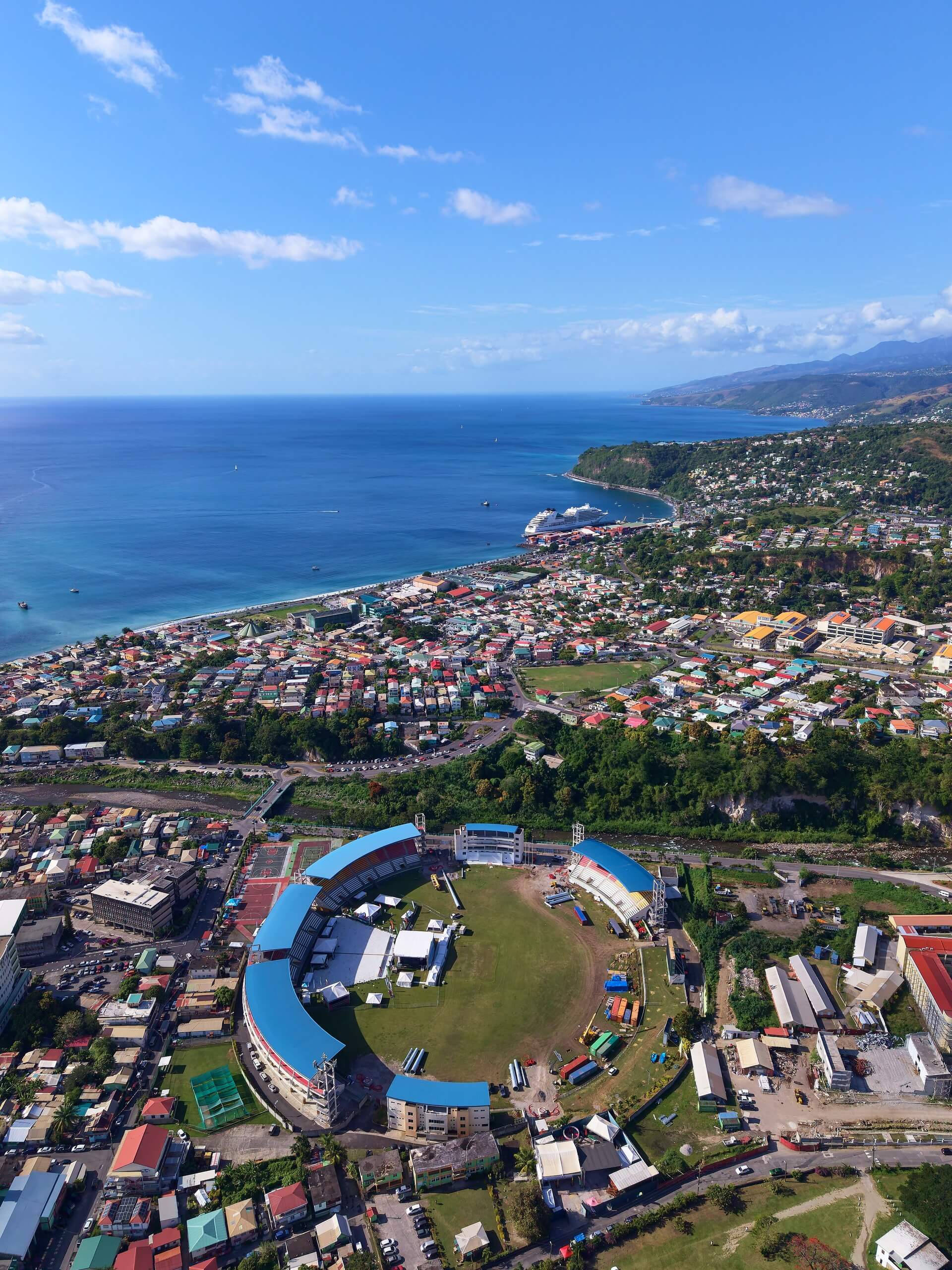
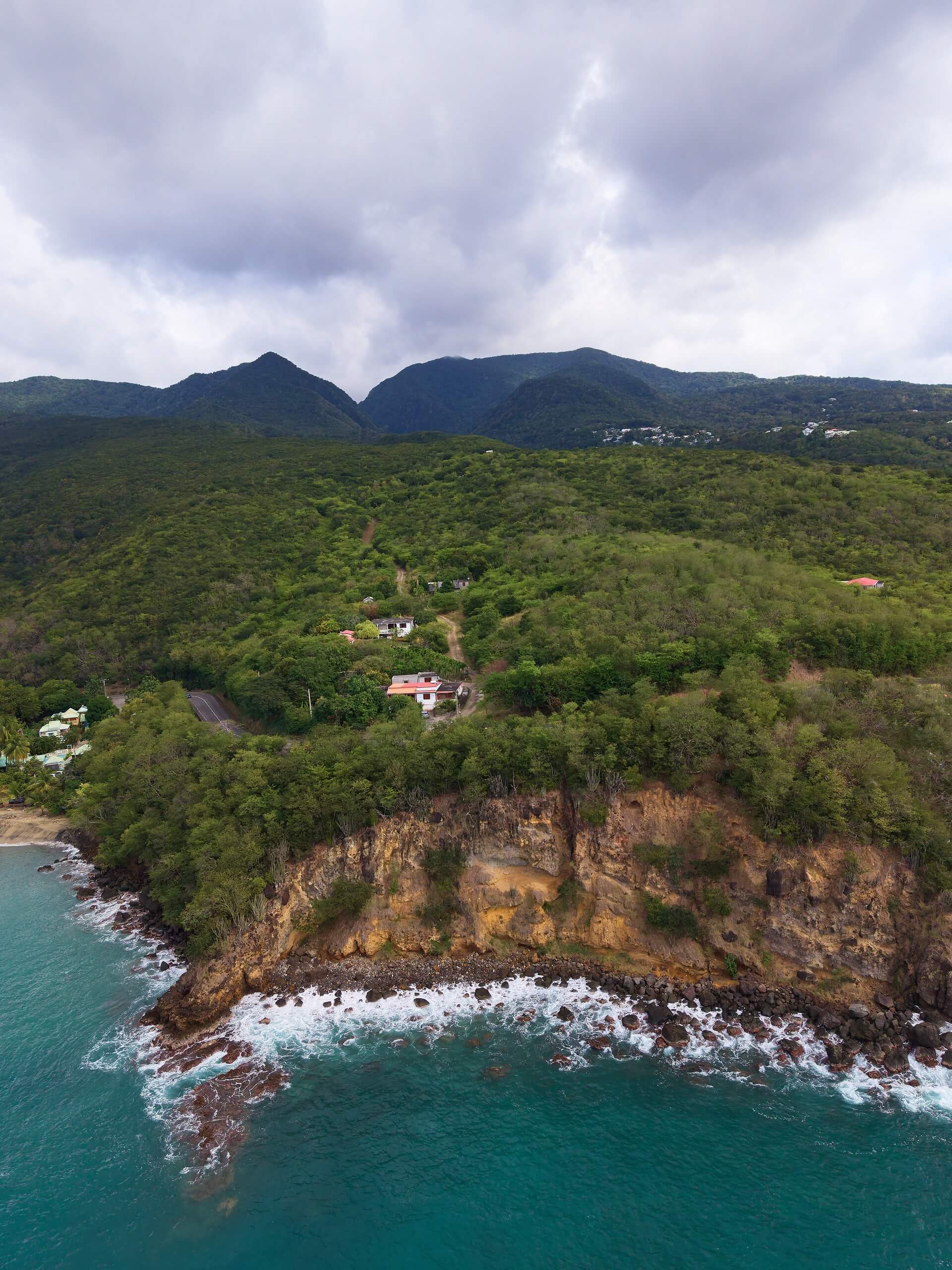
Our route started in Barbados and took us via St. Lucia, Martinique, Dominica, and Guadeloupe before we returned to Barbados. Seven days at sea, five islands, countless impressions. Every morning began with a new panorama outside the cabin window—sometimes the dramatic Pitons of St. Lucia, sometimes the colorful fishing boats of Martinique.

What surprised me was how incredibly diverse the islands of the eastern Caribbean are. Barbados has a British influence, with perfect English and driving on the left. Martinique is like a piece of France in the middle of the ocean—baguettes, croissants, and European prices. Dominica, on the other hand, is wild, untouched, and feels like stepping back in time. It's precisely these contrasts that make the route so exciting.

St. Lucia — Aerial photography of the Pitons with DJI Mini 5 Pro (under 249g)

St. Lucia was the absolute highlight of the entire cruise for me. Even as you sail into the port of Castries, you can see the famous Pitons in the distance—two volcanic peaks that rise like sentinels from the sea. But it's only from the air that you realize how dramatic this landscape truly is.

I have DJI Mini 5 Pro (under 249g) I started right on the beach at Soufrière and went up to an altitude of 120 meters. What I saw on the monitor literally took my breath away: the two Pitons, framed by dense rainforest, with the turquoise Caribbean Sea in the background. This picture has become one of my absolute favorite photos.

Important note for drone pilots: St. Lucia doesn't have extremely strict drone laws, but you should check with the St. Lucia Air and Sea Ports Authority (SLASPA) beforehand. I had no problems flying on Soufrière beach as long as I flew respectfully and not over people. The flying conditions were perfect—hardly any wind, clear visibility, and warm updrafts that kept the drone stable.

Sulphur Springs — The world's only drive-in volcano

After the drone flight, we headed to Sulphur Springs, the world's only "drive-in volcano." It sounds touristy, and it is—but still impressive. You literally drive into a volcanic crater and see bubbling sulfur springs with hot steam rising from them. The smell takes some getting used to (think rotten eggs), but the experience is worth it. The mud baths right next door are a must—you smear volcanic mud on your face and feel reborn afterward.

Entry to Sulphur Springs costs approximately $7 per person, with the mud baths an additional $5. For the complete package of volcano, mud bath, and subsequent soak in the hot springs, this is an absolutely fair price.

Barbados — British flair meets Caribbean joie de vivre

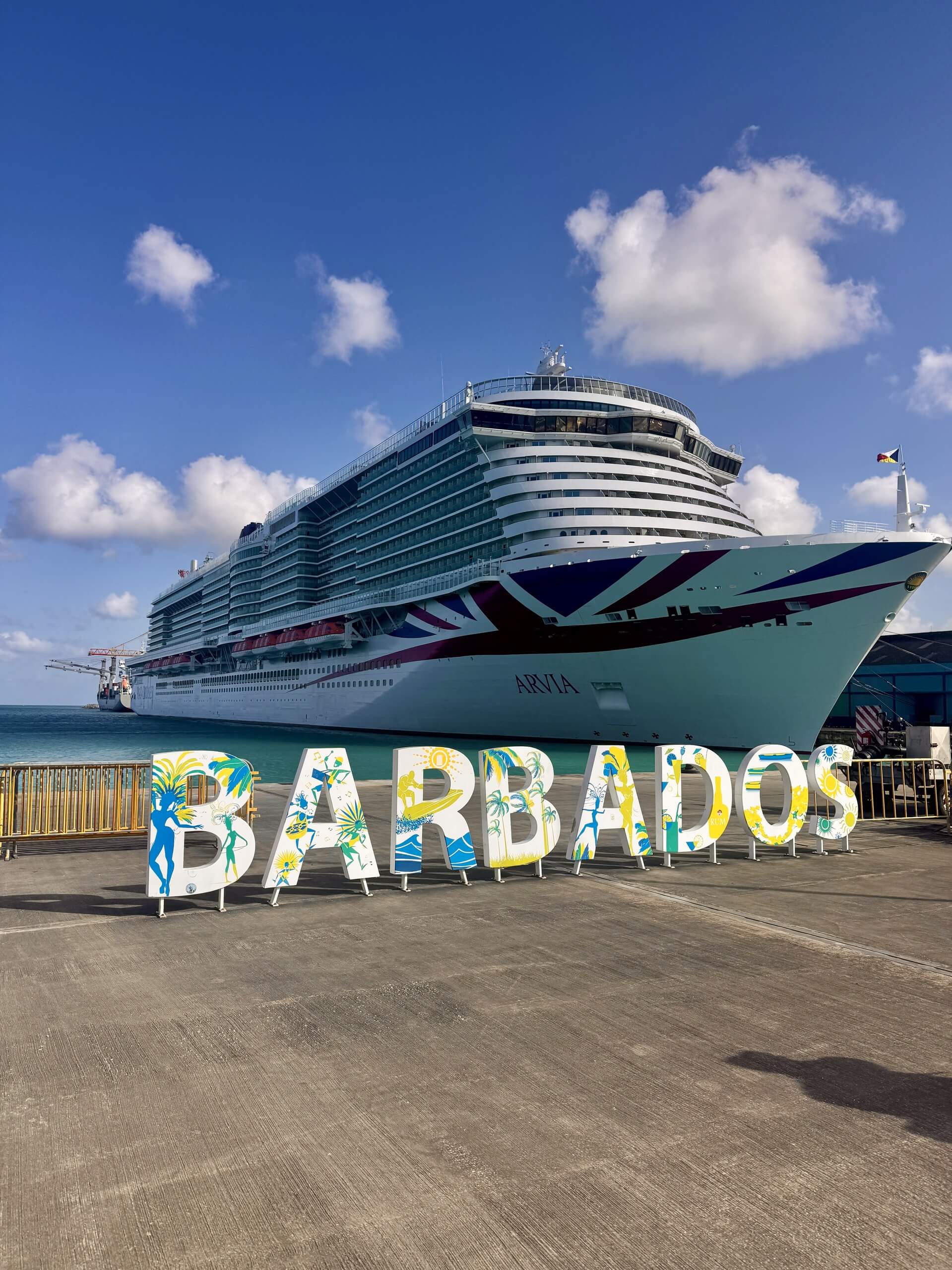
Barbados was the starting and ending point of our cruise and deserves far more than just a transfer day. I was fortunate enough to spend a full day on the island at both the beginning and the end — and both times Barbados surprised me.

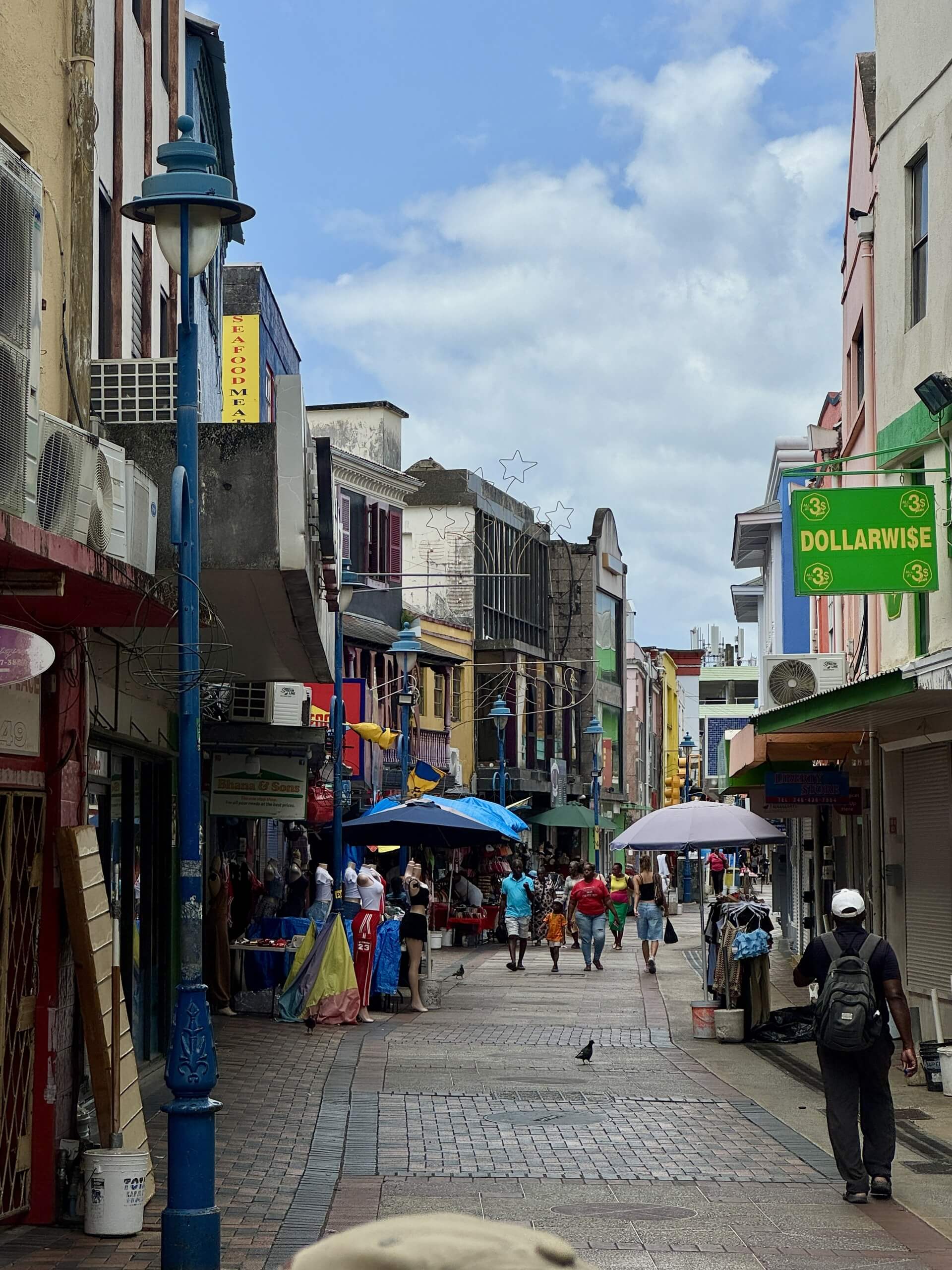
The south of the island, around Bridgetown and St. Lawrence Gap, is lively, vibrant, and steeped in history. Bridgetown's UNESCO World Heritage-listed Old Town captivated me with its colonial architecture and bustling markets. Cheapside Market, in particular, is a feast for the senses—fresh tropical fruits, local spices, and the warm hospitality of the Bajans (the people of Barbados).

The east coast, on the other hand, is the complete opposite: wild, rugged, and deserted. At Bathsheba Beach, towering waves crash against massive rock formations—a paradise for surfers and photographers. Here, I... Sony A7 IV I took some of my favorite long exposures of the entire trip. The combination of the rough Atlantic and the soft evening light is simply unbeatable.

Culinary delights of Barbados

Food in Barbados is a whole different ballgame. The national dish is flying fish with cou-cou (a kind of polenta made from cornmeal and okra). It sounds unassuming, but it tastes fantastic—especially in the small rum shops found on almost every street corner. My tip: Oistins Fish Fry on Friday evenings. Freshly grilled fish, cold Banks beer, and live music right on the beach. That's Barbados at its purest.

Regarding costs: Barbados is significantly more expensive than most other Caribbean islands. A main course in a typical restaurant costs between $15 and $30, a cocktail around $10-$12. In the upscale restaurants on the west coast (the so-called "Platinum Coast"), you can easily expect to pay $80-$150 per person.

Drone footage from on board — tips and challenges

One of the most intriguing questions I'm frequently asked is: Can you fly a drone from a cruise ship? The short answer: No, not from the ship itself. The long answer: There are ways to still get spectacular footage.

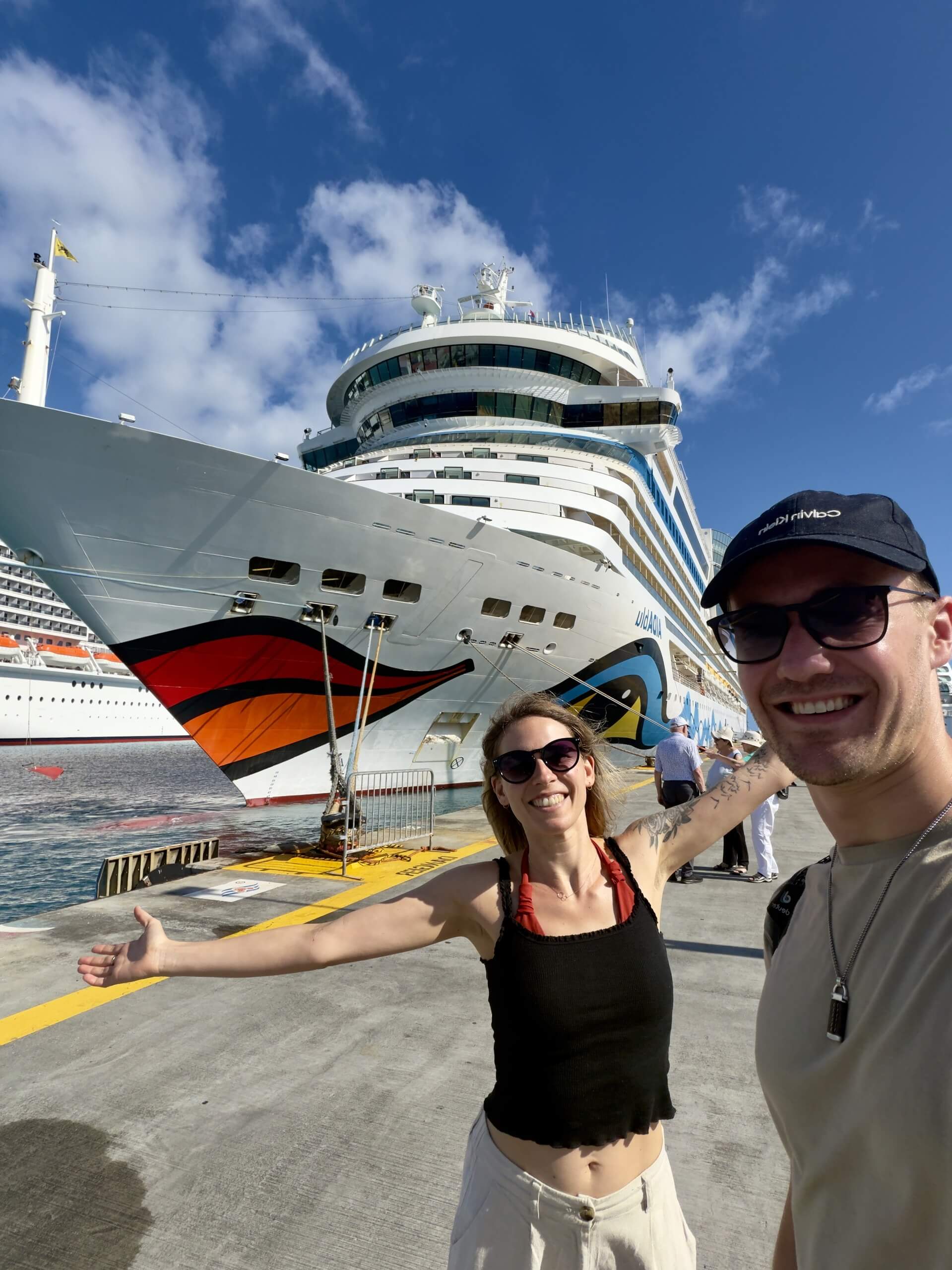
Launching drones is strictly forbidden on the ship itself—understandably so, for safety reasons. But I had absolutely no problems at the harbors and beaches of the individual islands. My workflow was as follows: leave the ship, walk to a good launching point (ideally with a view of the ship and the coast), launch the drone, and capture the perspective that would be impossible from the ground.

The best drone spots of my cruise:

  • Soufrière, St. Lucia: Pitons from above — an absolute must-have
  • Bridgetown Harbour, Barbados: The cruise ship from above with the old town in the background
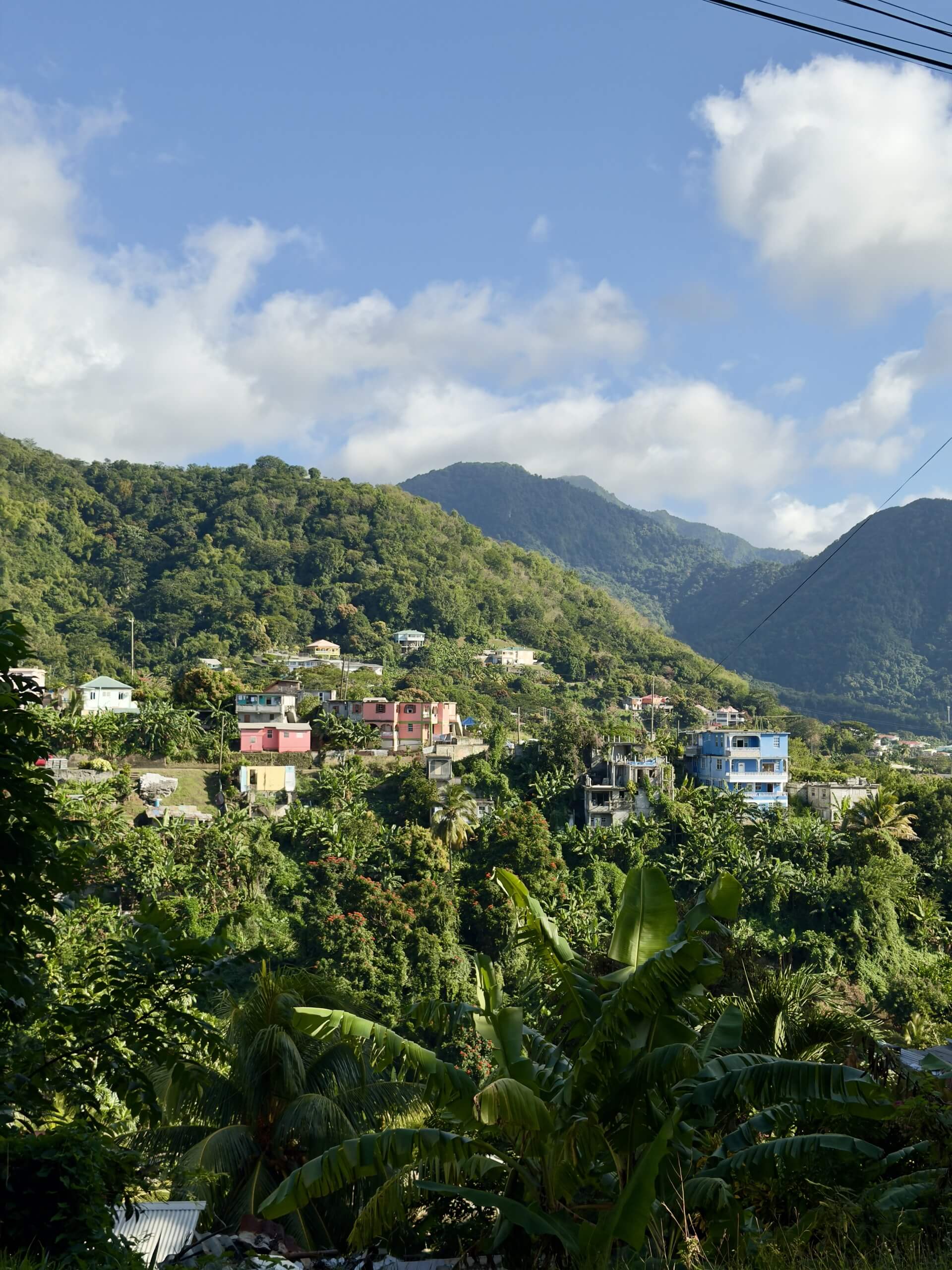
  • Roseau, Dominica: The harbor with its colorful houses and the rainforest behind it
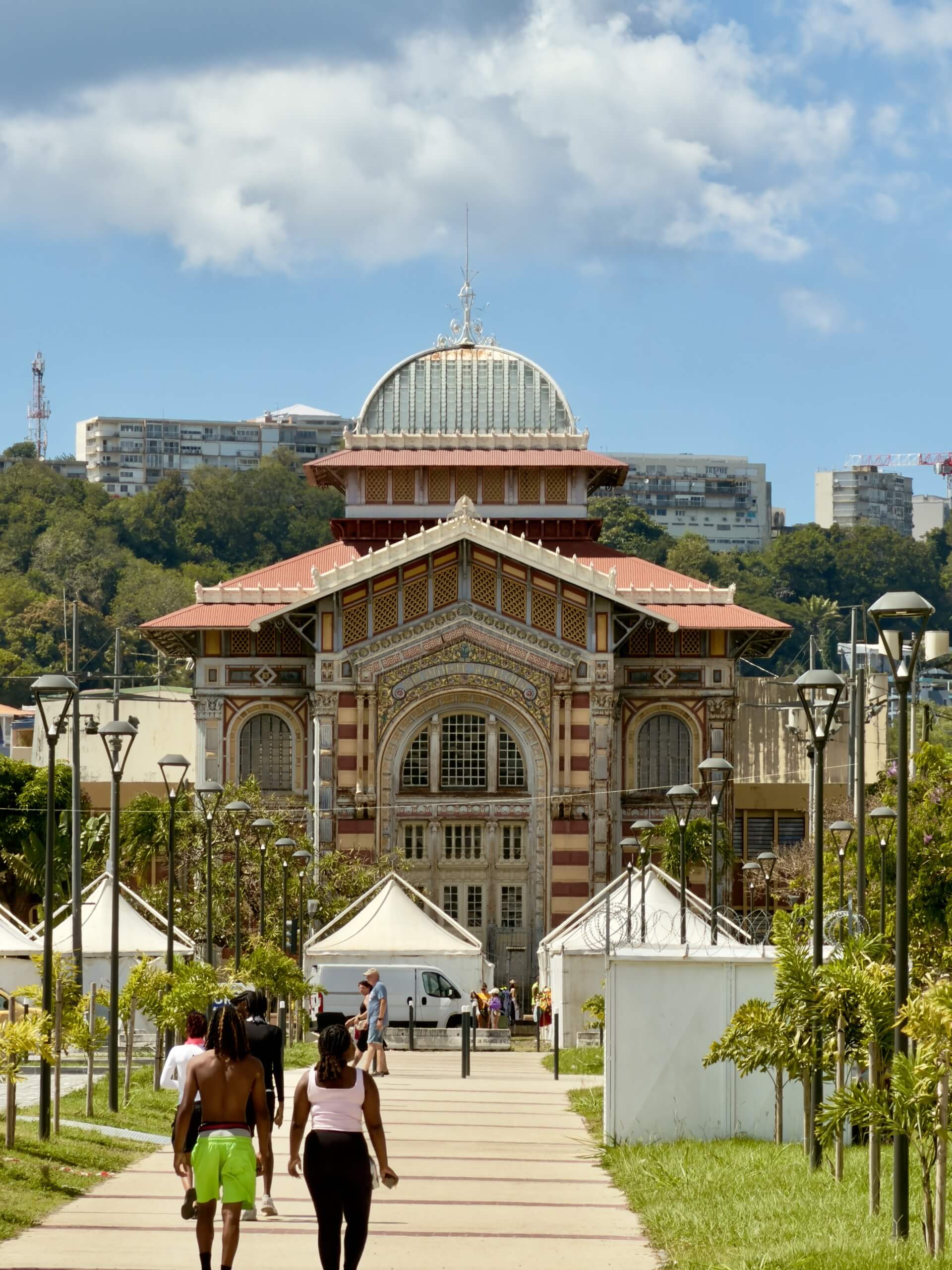
  • Fort-de-France, Martinique: The bay at sunset

Equipment tips for your cruise

My setup for this trip: DJI Mini 5 Pro (under 249g, registration-free in most countries), Sony A7 IV with wide-angle and telephoto zoom lenses Plus an action cam for underwater shots while snorkeling. In total, about 8 kg of camera equipment — significantly more than most passengers had with them, but essential for me as a content creator.

My most important tip: My most important tip: Bring plenty of memory cards and batteries. There's no way to buy equipment at sea. I had three drone batteries with me and was glad for every single one—with such spectacular views, you don't want to have to stop after 30 minutes.

Caribbean Cruise 2026: What a 7-day trip really costs

Position Costs (approx.)
7-day cruise (inside cabin) from €800 per person.
7-day cruise (balcony cabin) €1,200–2,000 per person.
Beverage package (all-inclusive) €60–80 per day
Excursions per island €50–150 per person.
Tips (automatic) $14–18 per day
Wi-Fi package €15–25 per day
Flight to Barbados (from Germany) €500–900 (return)
Total (realistic, 1 person) €2,500–4,500

The biggest hidden cost on cruises: the extras. The cabin itself is often surprisingly affordable, but beverage packages, specialty restaurants, excursions, and Wi-Fi quickly add up. My tip: Only book the beverage package if you really drink several cocktails every day. Otherwise, water (which is free) and the occasional beer at the bar will suffice.

Martinique and Dominica — The underrated islands

While St. Lucia and Barbados are the well-known stars of the eastern Caribbean, Martinique and Dominica surprised me the most — precisely because I had little expectation.
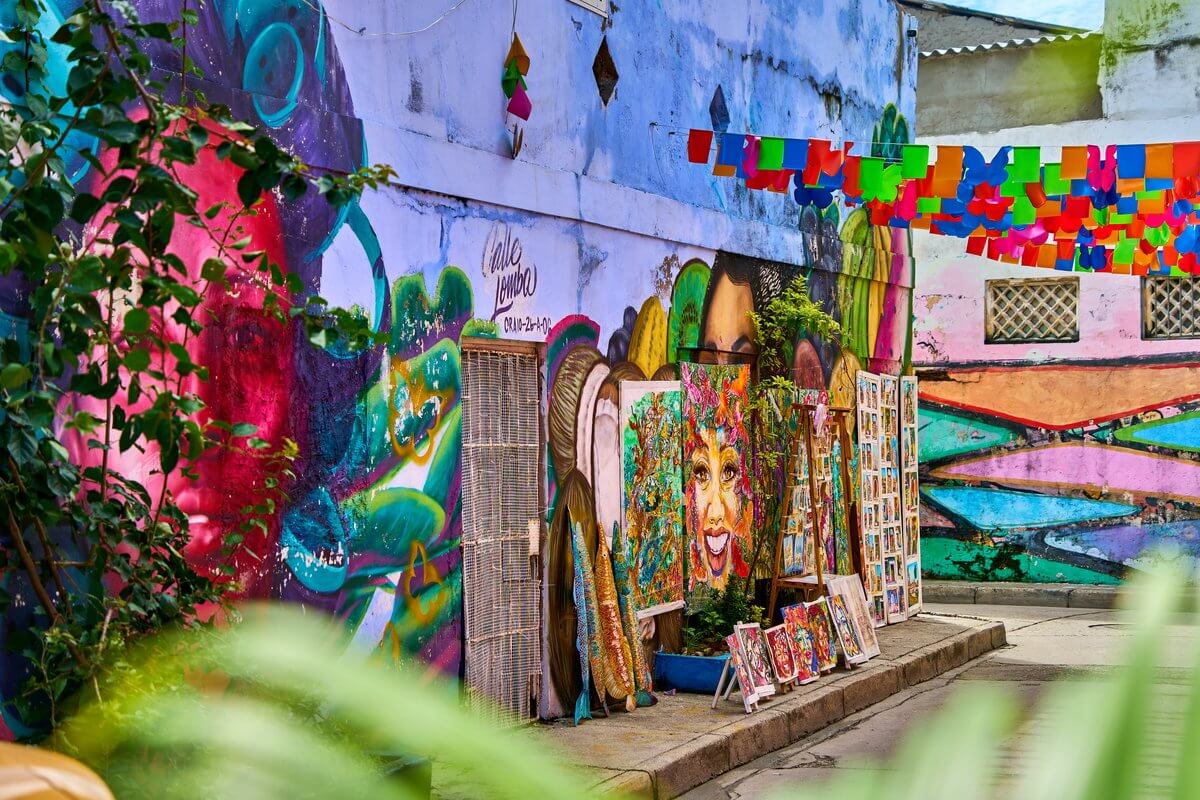
Martinique feels like a Caribbean France. In Fort-de-France, you stroll through markets fragrant with vanilla and rum, eat crêpes in small cafés, and pay in euros. The beaches in the south—especially Les Salines—are among the most beautiful in the entire Caribbean. White sand, coconut palms, turquoise water. And then there's French cuisine with a Caribbean twist: accras (fried cod balls), colombo de poulet (chicken curry), and of course, rhum agricole, which here is distilled from fresh sugarcane juice instead of molasses.

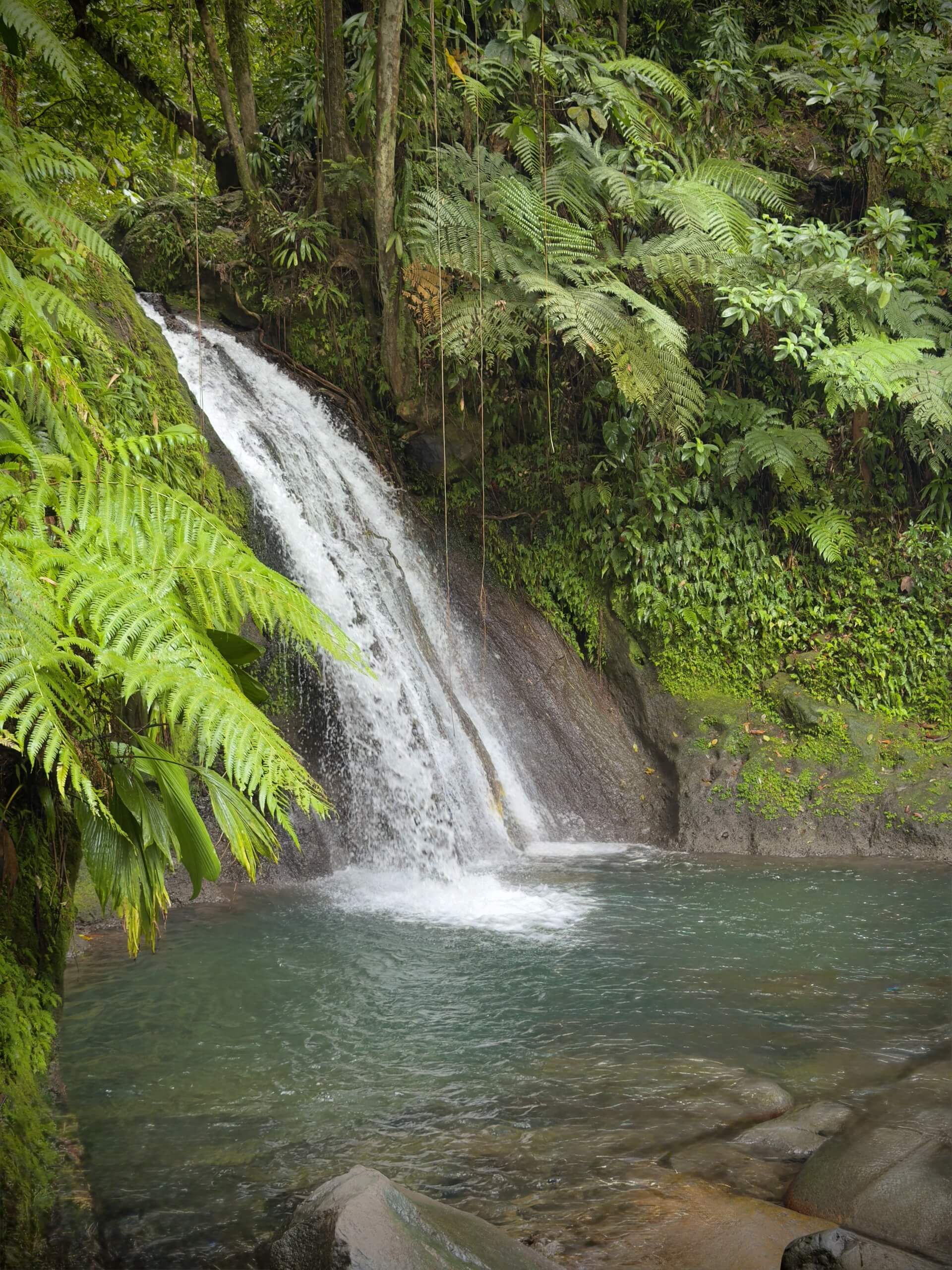
Dominica, on the other hand, is the antithesis of Instagram perfection. There are no luxury resorts or white sand beaches here. Instead: pristine rainforest, bubbling volcanic lakes, and waterfalls that look like something out of a Jurassic Park movie. The island calls itself the "Nature Island of the Caribbean"—and that's no exaggeration. Boiling Lake, the second-largest hot spring lake in the world, is only accessible via a challenging six-hour hike. Unfortunately, I didn't have the time, but Trafalgar Falls alone (a 20-minute walk from the parking lot) was worth every drop of sweat.
Caribbean Cruise Reviews: Who should take the trip?

A cruise through the Eastern Caribbean is especially worthwhile if you want to experience several islands in a short time without constantly having to book flights and change hotels. You trade flexibility for comfort—and in return, you get a floating hotel that takes you to a new paradise every night.

For content creators and photographers, the cruise is a jackpot: you get enough material in one week to last for months. You can find more inspiration in my Best travel destinations 2026. Each island offers completely different motifs, lighting conditions, and stories. Using a drone amplifies this even further—the bird's-eye view of Caribbean islands is simply incomparable.

What I would do differently next time: Plan more time in Dominica (this time it was only 6 hours) and book a separate beach day in Barbados before or after the cruise. The west coast of Barbados at sunset is too beautiful to only admire from the ship's deck.

Frequently asked questions about Caribbean cruises

Do I need a visa for the Caribbean islands on a cruise?

As a German citizen, you don't need a visa for most eastern Caribbean islands for stays of less than 90 days. On cruises, the stay is only a few hours anyway—a valid passport is sufficient. Important: The passport must be valid for at least six months upon entry. For French overseas territories like Martinique and Guadeloupe, even a national identity card is sufficient, as they are part of the EU.

When is the best time to go on a Caribbean cruise?

The best time to go is from December to April—the dry season with pleasant temperatures of 26–30°C and little rain. Hurricane season runs from June to November, peaking in September. Cruises in the off-season (May, November) are significantly cheaper, but you risk worse weather. I went in February and had glorious sunshine every single day.

Am I allowed to take my drone on cruise ships?

Yes, but with one important caveat: With almost all major shipping companies, you have to check in your drone. hand it in at reception. You get them back at every shore excursion and return them to the ship upon your return. Launching from the ship is strictly prohibited—firstly for safety reasons (rotors, wind, other passengers), and secondly due to maritime law in international waters.
Practical tip: Practical tip: I had the DJI Mini 5 Pro (under 249g) in my hand luggage — it was registered at boarding and stored in the crew's secure area. At each port call, you collect it before going ashore and return it upon your return. Simple, but you do need to factor in the extra trip.

On land, the respective drone laws of the country apply — inform yourself about them beforehand. Drone laws of every island on your route.

Is the drinks package worth it on the cruise?

Do the math: A cocktail costs an average of $12-15, a beer $7-8, and a soft drink $3-4. The all-inclusive package on most cruise lines costs between $60 and $80 per day. If you drink 4-5 drinks a day, it's worth it. If you drink less, it's not. Water and coffee are free on most ships—so the package is primarily worthwhile for alcohol drinkers.

How much cash should I take with me?

You don't need cash on the ship itself—everything is handled via your boarding pass. On land, I recommend about $50-100 USD in cash per island for taxis, street food, and small souvenirs. Euros are accepted on the French islands (Martinique, Guadeloupe). Credit cards work in most restaurants and shops, but not at street stalls or with local taxi drivers.

Max Haase Travel Creator
About the author

Max Haase

Travel Content Creator · Drone Photographer · Visual Storyteller

Since over 10 years professional travel creator with over 4.2 million followers. Specializing in high-end tourism board collaborations and visual travel storytelling.

4.2MFollowers
82+Countries
500+Cooperations
10+Years

influencer-marketing-tourism-tourism-boards-creator_featured

Influencer Marketing in Tourism 2026: Costs, ROI & Case Studies for DMOs

Over 4.3 million Instagram followers. 82+ countries visited. 500+ brand collaborations — including Tourism New Zealand, Visit Saudi Arabia, Visit Turkey, ProColombia, and many other international tourism boards. This is the reach you can achieve as a Tourism Board You can achieve this by collaborating with Max Haase, the most influential German travel influencer and one of the most influential in Europe.

  • Why travel influencers in 2026: Tourism Boards reach high-spending travelers in the DACH region through authentic creator campaigns — measurable via reach, engagement and direct hotel conversion.
  • 4 proven strategies: Multi-day destination campaign, long-term ambassador partnership, content-first approach and couple campaigns with Max & Janet (6.7 million combined reach).
  • Top 5 mistakes made by Tourism Boards: Focusing solely on follower numbers, too much creative control, direct bookings as the only KPI, barter requests, and one-off deals instead of long-term partnerships.
  • Practical references: Collaboration with Tourism New Zealand, Visit Saudi Arabia, Visit Qatar and other international tourism boards — produced in-house including drone and 4K video.
  • Primary KPIs: Reach, engagement rate, link clicks on hotel/destination booking pages, saved posts — supplemented by brand lift studies and mid-funnel awareness.

Influencer marketing in tourism has become the most effective channel for modern marketing in recent years. Destination marketing Developed. Consumers and travelers today trust authentic recommendations from travel creators more than traditional advertising. Tourism boards worldwide, from New Zealand to Saudi Arabia to Colombia, are therefore relying on collaborations with travel influencers who make their destinations tangible and bookable. In this guide, you'll learn how professional travel influencer campaigns work, which strategies are effective, and what measurable results real tourism board campaigns with Max Haase have already achieved.


Why Tourism Boards will rely on travel influencers in 2026

Today, travelers research on Instagram, TikTok, and YouTube before booking a trip. They follow travel creators, are inspired by their destination suggestions, and base their booking decisions on authentic reviews. Traditional tourism marketing—TV commercials, print ads, glossy brochures—barely reaches this modern customer journey anymore.

The limits of traditional destination marketing

  • Loss of trust: Consumers and travelers know that advertising photos are staged. A perfectly retouched hotel image creates skepticism instead of enthusiasm.
  • High scattering losses: Traditional media reach millions of people, but few of them actually plan a trip to your destination.
  • No commitment: Print and TV are one-way streets — no comments, no saves, no community interaction, no viral effects.
  • No long-term value: When the ad stops running, the visibility disappears. No SEO effect, no organic follow-up on social media platforms.

Tourism New Zealand

Destination Campaign in New Zealand in collaboration with @purenewzealand (Tourism New Zealand). The campaign achieved measurable results across all channels:

Combined reach of all formats: over 11 million views (2 Reels + 1 Post + 15 Stories), over 255,000 Likes and 985+ Comments.

Visit Saudi

Destination Campaign in Saudi Arabia in cooperation with @visitsaudi (Visit Saudi). Publicly available results:

  • Reel 1 — Visit Saudi — 4.4 million views, 123,565 likes, 358 comments
  • Reel 2 — Visit Saudi — 2.8 million views, 83,245 likes, 406 comments
  • 15 Instagram Stories — 120,000–170,000 views each, totaling approximately 2.2 million story impressions.

Combined reach of all formats: over 9.4 million views (4.4M + 2.8M Reels + approx. 2.2M Story Impressions), over 206,000 Likes and 760+ Comments.

All reach and engagement figures are directly available on the public Instagram profile. @_maxhaase_ Visible and verifiable by everyone.

Tourism Boards with which Max Haase has already collaborated

The following tourism boards and destination marketing organizations already rely on the reach and content quality of Max Haase:

  • Tourism New Zealand 🇳🇿
  • Visit Saudi 🇸🇦
  • Visit Turkey 🇹🇷
  • Visit Colombia 🇨🇴
  • Visit Morocco 🇲🇦
  • Armenia Tourism 🇦🇲
  • Basque Country Tourism 🇪🇸
  • Gateway Brazil 🇧🇷
  • Visit Nicaragua 🇳🇮

… as well as many other international Tourism Boards and DMOs — a total of over 30 Tourism Boards from 82+ countries visited.


Why Tourism Boards worldwide work with Max Haase

There are many travel influencers. What makes a professional collaboration with Max Haase truly valuable for your tourism board?

  • 4.3 million+ Instagram followers: Reach that is unattainable with traditional tourism marketing at comparable costs. Verifiable live on @_maxhaase_.
  • 1.3 % average engagement rate: 30–160 % above the industry average for Mega-Creator (Industry Benchmark: 0.5–1.0 %). Your campaign will not only be seen, but actively liked, commented on, and saved.
  • 82+ countries visited: Real travel experience on every continent. Max knows the customer journey of international travelers firsthand.
  • Premium production from a single source: Drone, camera with professional lenses, action cam for action shots — complete photo, video and drone production without an external crew. This saves your tourism board the logistics and coordination costs of a full-service film crew.
  • Multilingual content: Content in German and English — you reach both the high-spending DACH target group and an international audience with a single creator.
  • Couple option with Janet Dannehl: If you book Max + Janet As a Travel Couple, you can reach a combined audience of over 6.7 million followers from two perspectives — perfect for destinations that want to target couples or families.
  • SEO-optimized blog content: Each major campaign will also be featured as a detailed travel report (3,000+ words) on max-haase.com Published — permanent content that generates organic traffic for your destination for years to come.
  • 10+ years of experience as a travel creator: Over 500 successful brand collaborations give you the assurance that your campaign will be professionally planned, implemented and reported.

4 Strategies for Successful Travel Influencer Campaigns

The most effective influencer collaborations in tourism follow a clear pattern. Here are the strategies that have been particularly successful in my previous Tourism Board campaigns:

Strategy 1: The Multi-Day Destination Campaign

Insight: You book a travel influencer for 5–10 days in your destination. Daily stories keep the community updated in real time, multiple reels and posts provide structured content for a long-term algorithm boost, and a final blog post generates ongoing SEO traffic. This is how the campaigns with Tourism New Zealand and Visit Saudi work: a single creator, one intensive trip, multiple content formats distributed across all social media platforms.
Strategy 2: The Long-Term Ambassador Partnership

Instead of a one-off campaign, your tourism board collaborates with a creator for 1-2 years. The travel influencer visits your destination multiple times, at different times of the year, and becomes an authentic brand ambassador. The community develops a genuine connection to the destination—and each return visit strengthens credibility. This strategy is particularly effective if the creator also maintains highlight reels and bio mentions throughout the entire contract period.

Strategy 3: The Content-First Approach

Some tourism boards book a creator primarily for the Content production — not just for reach. You receive high-quality drone footage, photos, and videos that your tourism board can use on its own channels, website, in print materials, and in advertising campaigns. This is particularly attractive if you also want to expand your owned media library with professional material.

Strategy 4: The Couple Campaign with Max & Janet

Travel Couples offer a unique package: double the reach, double the perspective (male and female), and cross-promotion between two accounts. With Max Haase and Janet Dannehl as a Travel Couple, you reach a combined audience of over 6.7 million followers. This form of collaboration is particularly effective for destinations targeting couples, honeymooners, or families.


What tourism boards should avoid in influencer collaborations

Not every influencer collaboration in tourism is a success. These are the five most common mistakes — and how to avoid them:

Mistake 1: Only looking at follower numbers

Follower counts alone don't tell the whole story—the combination of reach AND engagement rate is crucial. A mega-creator with over 4 million followers and an engagement rate of over 1 (significantly above the industry average) will deliver the greatest impact: maximum visibility for your destination, coupled with a community that actively likes, comments, and saves content. Always ask for the current media kit with verified audience data, engagement statistics, and reference campaigns with other tourism boards.

Mistake 2: Too much creative control

Tourism boards that dictate every word, approve every image crop, and control every posting time end up with stiff content that fails to engage either the community or the algorithm. Trust the creator—they know their community better than any marketing agency. A good briefing defines goals and key messages while allowing room for authentic execution.
Mistake 3: Unrealistic expectations of direct bookings

Travel influencer marketing is primarily an awareness and consideration channel. Anyone expecting thousands of instant bookings after a single story will be disappointed. The effect is more long-term: your destination lands on your followers' mental "bucket lists" and is considered when planning their next trip—often months or even years later.

Mistake 4: Bartering instead of professional cooperation

Danger: „"We'll invite you for free, in return you post" works for nano-influencers—but not for professional travel influencers with millions of followers. Content production is their job, not their hobby. A serious collaboration with a mega-creator is a professional marketing investment—comparable to any other premium media booking.

Mistake 5: One-off deals instead of a long-term strategy

A single campaign is like a single TV commercial: it creates a brief buzz that quickly fades. Tourism boards with the best results think in terms of annual plans: Which creators are right for which season? How can long-term brand ambassadors be cultivated? How do different creator types complement each other throughout the year?

🌍 Do you want to make your destination globally visible?

Verified reach: 4.3M+ followers · Average of over 10 million views per travel campaign · 1.3% % engagement rate · Premium production from a single source

Contact my management now →


What determines the investment in a travel influencer campaign

One of the most frequent questions tourism boards receive is: What does a professional travel influencer collaboration cost? The honest answer: It depends. The investment depends on several factors that make each campaign unique.

These factors determine the scope of your campaign

  • Campaign format: Story set, reel series, multi-day road trip, brand ambassador program — each format has a different production effort and different reach effects.
  • Duration of the trip: A 3-day short visit generates less content than a 10-day multi-day road trip through your destination.
  • Number of deliverables: How many Reels, Posts, Stories, Highlight Saves, Blog Articles, Drone Footage, and Photo Libraries do you need?
  • Usage rights: Would you like to reuse the content for your own marketing channels, print materials, or paid ads? This is included in an individual license package.
  • Couple or solo booking: Booking Max + Janet as a travel couple offers double the reach and two perspectives — the campaign scope is correspondingly larger.
  • Travel expenses and logistics: Flights, premium accommodations, local transfers, insurance, equipment transport — these factors are calculated individually for each Tourism Board campaign.
Compared to traditional tourism marketing—a full-page travel magazine ad, a regional TV spot, or a trade fair appearance at ITB—a travel influencer campaign is, in most cases, the more efficient investment. You get measurable reach, ongoing content for owned media, an engaged community, and long-term SEO benefits through accompanying blog articles.

My management team creates a customized offer for each campaign, perfectly tailored to your goals, timeframe, and budget. Simply contact me via [link/contact information]. Contact form or directly via email to [email protected] with your destination, the planned timeframe and your campaign goals.


Measurement and ROI: How Tourism Boards track success

A common argument against influencer marketing in tourism is: "You can't measure success." This isn't true. Professional travel influencer campaigns deliver detailed KPIs from Instagram, TikTok, and YouTube analytics—directly with screenshots from the respective creator insights dashboards.

Primary KPIs for your campaign

  • Impressions & Reach: How many unique people have viewed your content?
  • Reel Views & Plays: How many times have your video content been played? (My tourism board reels regularly get millions of views.)
  • Engagement Rate: Likes, comments and saves in relation to reach
  • Story Views & Completion Rate: How many of your story frames are watched to the end?
  • Website clicks: Direct clicks to the destination website via link sticker or bio link
  • Saves: Number of users who saved your post for later (= serious travel interest)

Secondary KPIs for impact analysis

  • Brand Lift: Changes in brand awareness and perception of your destination (measurable through surveys)
  • User-Generated Content: Do followers create their own content about your destination after the campaign?
  • Earned Media Value: What would the same reach have cost through paid advertising?
  • Booking referrals: By using UTM tracking links and promo codes, you can attribute direct bookings.

The international market: Why tourism boards worldwide rely on German travel influencers

International tourism boards particularly like to use German travel influencers like Max Haase for two reasons: the economic importance of the German-speaking source market and the reach of an established mega-creator on the most important social media platforms.

The economic strength of the German-speaking travel market

  • 94+ billion euros German consumers spend an average of [amount] annually on trips abroad — a world leader in Europe
  • 55+ million International trips per year from Germany
  • 100+ million potential travelers in the DACH region (Germany, Austria, Switzerland)
  • Individual travel is growing steadily: The core target group aged 25–44 increasingly books individually and is inspired by travel influencers rather than package holiday catalogs.

Multilingual reach for global tourism boards

Max Haase's content doesn't just reach the DACH region (Germany, Austria, Switzerland). With English captions, international hashtags, and posts that are also consumed by followers in the USA, UK, Australia, and the Middle East, his reach is internationally viable. For a global tourism board that wants to address multiple source markets simultaneously, this is a crucial advantage—you reach an international audience with a single campaign instead of just one language area.


Checklist: How to launch your first travel influencer campaign as a tourism board

If you have little experience with travel influencer collaborations, here's a tried-and-tested 7-step roadmap to getting started. Influencer marketing in tourism:

Step 1: Define your target audience

Before you look for a travel influencer, you need to be clear about your target audience. Adventure and experience travelers aged 25–44? Traveling couples? Luxury and premium travelers? Independent travelers who find inspiration through social media? The target audience determines the creator type, the platform, and the appropriate content formats—and a creator who can serve all these segments from a single profile saves you the hassle of coordinating with multiple partners.

Step 2: Define your campaign goals

What do you want to achieve? Pure awareness? More search queries? Direct bookings? Building a content library for owned media? Define 2-3 measurable goals with concrete KPI targets — they will determine the briefing, the campaign strategy, and the reporting.

Step 3: Research and contact suitable travel influencers

The most important selection criteria for a professional travel influencer: Verifiable engagement rate above 1%, professional photo and drone quality at broadcast level, demonstrable track record with international tourism boards, multilingual content (German + English), accompanying SEO blog content for long-term organic traffic, and the ability to deliver the entire content production in-house—without an external crew. You can contact me directly via the Collaboration page or contact me via email at [email protected] — my management will get back to you as soon as possible.

Step 4: Develop briefing and campaign concept

A good briefing includes: campaign goal, target audience, key messages, must-visit locations, desired deliverables (number of reels, posts, stories, blog entries), timeline, budget, and usage rights. It also leaves room for the creator's creative interpretation—the best content emerges when the creator can incorporate their own storytelling.

Step 5: Finalize the contract and terms

A professional contract regulates: fees and payment terms (usually: 50 before travel, 50 after publication), deliverables with deadlines, usage rights (duration, territory, channels), approval process (typically one round of revisions), labeling requirements (#Advertising / #Ad / Paid Partnership Tag).

Step 6: Actively monitor and evaluate the campaign

During the campaign: Quick check-ins, but no micromanagement. After the campaign: Request a report, analyze KPIs, document learnings. What worked particularly well? What would you do differently next time? These insights will inform the next campaign.

Step 7: Think long-term and build ambassadors

The first campaign is a test. If it works: Offer a long-term ambassador contract. The impact multiplies over time—the creator becomes a credible advocate for your destination, not just a one-off advertising face. This is precisely how the most valuable tourism board partnerships are formed.


Frequently Asked Questions (FAQ)

What is influencer marketing in tourism?

Influencer marketing in tourism is the cooperation between tourism boards and travel influencers, where a creator authentically experiences a destination and uses their reach to make the destination known to potential travelers.

Why do tourism boards rely on travel influencers?

Travel influencers reach precisely the target group that makes travel decisions today via social media—based on personal recommendations rather than traditional advertising. A single campaign can achieve several million views, as demonstrated by Max Haase's Tourism New Zealand and Visit Saudi Cases.

How much does a travel influencer campaign cost?

The investment depends on the format, duration, deliverables, and usage rights. My management team creates a customized offer for each campaign—simply contact me with your campaign goals via [link/platform name]. Contact form.

How do I measure the success of a Tourism Board campaign?

I provide data on reach, engagement rate, Reel views, story views, saves, website clicks, and UTM tracking. With my campaigns, you'll receive a detailed report including screenshots from Instagram Insights upon completion.

How many followers does Max Haase really have?

Max Haase currently has over 4.3 million Instagram followers. @_maxhaase_. The number is verifiable live and is regularly documented in media kits.

Which Tourism Boards has Max Haase already worked with?

Tourism New Zealand, Visit Saudi, Visit Turkey, Visit Colombia, Visit Morocco, Armenia Tourism, Basque Country, Gateway Brazil, Visit Nicaragua — and many more. In total, over 30 Tourism Boards and DMOs from 82+ visited countries.

Can I book Max Haase and Janet as a travel couple?

Yes. With Max + Janet as a couple, you reach a combined audience of over 6.7 million followers from two perspectives — ideal for destinations that want to target couples or families.

How do I book Max Haase for a Tourism Board campaign?

Write about the Collaboration page or by email to [email protected] with your destination, planned timeframe, and campaign goals. My management will get back to you as soon as possible with a customized offer.


Conclusion: Tourism boards that now rely on travel influencers are winning.

The change in the international Destination marketing This isn't a vision of the future—it's happening now. Tourism boards, DMOs, and destination marketing organizations that strategically use professional influencer marketing in tourism achieve measurably better results than those that rely solely on traditional channels.

The formula for success is clear: Work with a travel influencer who combines a reach of millions with an above-average engagement rate, who delivers professional photo, video, and drone production from a single source, who has proven experience with international tourism boards, and who also produces SEO-optimized blog content. Give them creative freedom (briefing yes, script no) and think long-term (ambassadors rather than one-off deals) — as Tourism New Zealand, Visit Saudi, and many other international tourism boards already do.

Ready for your next destination campaign?

4.3M+ Instagram followers · 1.3% % engagement rate · 82+ countries visited · 500+ brand collaborations

Tourism New Zealand · Visit Saudi · Visit Türkiye · ProColombia · Visit Morocco · Armenia Tourism · Basque Country · Gateway Brazil · Visit Nicaragua · Visit Cuba

Send a request to my management now →

My management will contact you as soon as possible with a customized offer.

Read more:

Max Haase Travel Creator
About the author

Max Haase

Travel Content Creator · Drone Photographer · Visual Storyteller

Since over 10 years professional travel creator with over 4.2 million followers. Specializing in high-end tourism board collaborations and visual travel storytelling.

4.2MFollowers
82+Countries
500+Cooperations
10+Years


Digital nomad workspace in a seaside café — laptop, notebook, coffee — symbolic of Digital Nomad Insurance

Digital Nomad Insurance 2026 — The Complete Guide for Long-Term Travelers

  • TL;DR: The best insurance for digital nomads in 2026 is SafetyWing Nomad Insurance (USD 62.72 per 4 weeks) — affordable, can be cancelled monthly, available worldwide in 170+ countries.
  • Anyone registered in Germany needs SafetyWing additionally to the statutory health insurance (GKV). Anyone who is deregistered can cancel their GKV membership and save €180–400 per month.
  • Alternatives: World Nomads (adventure focus), Genki (German support), Hanse Merkur Long Term (up to 5 years, German provider), Care Concept (cheapest German option from €21/month).
  • Three insurance pillars for every nomad: international health insurance + liability insurance + equipment/electronics.
  • Honest truth: There is no single "perfect" nomad insurance policy. The best choice depends on your setup, age, and lifestyle.

I've been living as a digital nomad for over five years—deregistered from Germany, working from Bali, Patagonia, Kenya, and everywhere in between. In the first few months, insurance was my biggest concern. Back in 2020, online resources were scarce. Today, there are reputable providers, transparent pricing, and valuable community reviews. This guide provides everything I wish I'd had back then: which insurance policies you really need, which you don't, the costs of the five leading providers, and the tax and insurance implications of deregistering from Germany. All prices are verified directly from the providers' websites (as of February 2026).

Why digital nomads need special insurance

Statutory health insurance in Germany covers treatment abroad only to a very limited extent: a maximum of six weeks in EU countries and countries with international agreements, and not at all in non-EU countries (Asia, South America, Africa). Anyone traveling for 12 months or longer—that is, every digital nomad—falls into a coverage gap that only private international health insurance can close.

Standard German travel insurance policies (Allianz, HUK, DEVK) are designed for 2-3 week vacations. They expire after 56 to 90 days and do not renew. This is unsuitable for a nomad who spends 8 months at a time in Asia. The solution is specialized long-term international health insurance – and the three best are either internationally based (SafetyWing, World Nomads) or explicitly approved for long-term travelers in Germany (Hanse Merkur Langzeit, Care Concept, Genki).

The three insurance pillars of every digital nomad

Before choosing a single provider, understand the structure. A fully insured nomad needs three independent insurance policies:

Pillar 1: International health insurance

The core coverage. It covers medical treatment, hospital stays, evacuation, and dental emergencies. Without it, a hospital stay in Thailand or an accident in Peru can quickly cost six figures.

Pillar 2: Liability insurance

Does it cover damage you cause to others—knocking over your laptop in the coworking space kitchen and destroying another laptop? A bicycle accident with a pedestrian in Bangkok? Without personal liability insurance, you'll have to pay for it out of your own pocket. Many German liability insurance policies cover stays abroad for up to 5 years—but not After deregistering from Germany, you need explicit nomad liability insurance (e.g., through Deutsche Familienversicherung or Getsafe).

Pillar 3: Equipment and Electronics

Laptop, camera, drone, smartphone — the tools of your trade. If your MacBook gets stolen from your hostel or your drone crashes into the ocean, nobody wants to foot the bill for €3,000 out of pocket. Options: dedicated equipment insurance (e.g., Hiscox, Schutzklick, Gigacover) or as an add-on to your travel insurance policy (World Nomads Explorer).

In this article, I'll focus on Pillar 1 — international health insurance, by far the most important decision. I'll write separate guides on liability insurance and equipment.

The 5 best international health insurance policies for digital nomads in 2026

#1 SafetyWing Nomad Insurance — My recommendation

For whom: 95% of all digital nomads between 18 and 69 years old.

Price: $62.72 per 4 weeks (Essential Plan, ages 18–39, as of April 2026). 10% discount for 364-day prepayment.

Key advantage: Cancellable monthly, auto-renewal, available in over 170 countries worldwide. The only insurance product specifically designed for the nomadic lifestyle — you pay for 4 weeks, the policy renews automatically, and you cancel whenever you want. No fixed term, no notice periods.

  • Medical coverage: USD 250,000
  • Emergency evacuation: $100,000 lifetime
  • Emergency dental care: $1,000
  • Home country coverage: 30 days per 4-week cycle
  • Baggage: USD 500 per item, USD 3,000 max
  • Recreational sports coverage: up to USD 250,000 (surfing, downhill skiing, swimming, etc.)

Weaken: Pre-existing conditions, pregnancy, and cancer are not covered (the Complete Plan covers these). Adventure sports above a certain risk level (difficult climbing, diving >10m) are not included. Support is available in English.

My personal favorite for digital nomads

SafetyWing — can be cancelled monthly, worldwide, transparent price. Go to the price calculator →

#2 World Nomads Explorer — For Adventure Nomads

For whom: Digital nomads with tough adventure activities — diving (>10m), climbing, paragliding, bungee jumping, heli-skiing, rally motorsport.

Price: No publicly available price — quote depends on nationality, place of residence, destination, and duration. Typically 2–3 times SafetyWing.

Key advantage: It covers over 150 adventure activities, including scuba diving to great depths, rock climbing, high-altitude trekking, and heli-skiing. Medical coverage in many plans is in the millions of dollars—significantly higher than SafetyWing.

  • 150+ adventure activities covered
  • 24/7 emergency assistance team with its own medical unit.
  • Equipment coverage for expensive gear (camera, drone, bikes)
  • EU underwriting by Collinson Insurance Europe (Malta)

Weaken: Fixed contract period (no auto-renewal), significantly more expensive, no mid-trip plan upgrade, children cost extra. No German support.

#3 Genki Native & Explorer — German Nomad Option

For whom: Digital nomads for whom German contract language and EU regulation are important.

Price: From approximately €39.60/month (Genki Explorer, as of 2026).

Key advantage: German as the contract language, EU-regulated (by Squarelife AG, Liechtenstein + Deutsche Familienversicherung). Designed by German founders for the nomadic target group. Can be cancelled monthly, like SafetyWing.

Weaken: Smaller than SafetyWing (fewer references, shorter track record), coverage amount lower than World Nomads, fewer worldwide provider networks for direct billing.

#4 Hanse Merkur long-term international health insurance

For whom: Nomads with a fixed travel period (3 months to 5 years) who want the German full-service structure.

Price: From approximately €44 per month (up to age 64, worldwide excluding the USA and Canada). Precise calculation via the Hanse-Merkur calculator.

Key advantage: Established German provider with a long history. Insured up to age 75 (unique). German contract language, German claims processing.

Weaken: Fixed contract duration — you pay for the entire period in advance. Early return only results in a partial refund. Not as flexible as SafetyWing, but often cheaper for long-term travelers (over one year).

#5 Care Concept Travel Protect — Cheapest DE option

For whom: Budget nomads, students, language students with a clear travel period.

Price: From approximately €21 per month (for specific target groups such as au pairs and language students). Care Travel Plus for digital nomads from approximately €35 per month.

Key advantage: Cheapest regular option on the German market. Contract language: German. Contract duration of up to 5 years possible.

Weaken: Lower coverage limits than SafetyWing/World Nomads. No monthly flexibility. Mixed support quality in review forums.

Comparison matrix of the 5 providers

Provider Price per month Termination option Language Best for
SafetyWing ~62 USD (18-39) Monthly EN Standard Nomads (95%)
World Nomads ~110-180 USD Fixed period EN Adventure sports enthusiast
Genki ~40 € Monthly DE Nomads with DE preference
Hanse Merkur ~44 € Fixed period DE Long-term (1-5 years), seniors
Care Concept ~21-35 € Fixed period DE Budget, students

Public health insurance or not? The deregistration question

The most important decision for any aspiring digital nomad from Germany has nothing to do with the insurance provider, but rather with their registration status. The question is: Do you remain registered in Germany — or do you deregister?

Option A: Stay logged in

You keep your statutory or private health insurance. This is mandatory as long as you are registered in Germany. Additionally, you take out international health insurance such as SafetyWing for stays longer than 6 weeks. Costs: Statutory health insurance (180–400 €/month) + SafetyWing (approx. 56 €/month). Total: 236–456 €/month for health insurance alone.

Suitable for: Nomads who travel for 6-8 months per year and spend the rest of the time in Germany. Part-time nomads, freelancers with German clients, people with family ties in Germany.

Option B: Log out

You deregister with the registration office and cancel your statutory/private health insurance. From this moment on, SafetyWing is your primary insurance. Costs: only SafetyWing (approx. €56/month). Savings compared to Option A: €180–400/month = €2,160–4,800 per year.

Suitable for: Full-time nomads who live permanently outside of Germany. Remote workers with international clients. People who don't need a fixed address in Germany.

Important: Deregistering has tax consequences (you will cease to be subject to unlimited tax liability in Germany, but you must prove a new tax residence). This is not a decision to be taken lightly. Before deregistering: consult a tax advisor who is familiar with the situations of people living abroad (keyword: exit tax on shares, exit tax on capital gains).

Tax and insurance — what is related?

In short, because it goes beyond the scope of this article: If you deregister, you are only subject to limited tax liability in Germany (on German income). This makes an American LLC, an Estonian OÜ, or a Singapore Pte. Ltd. tax-wise attractive—but only if you can simultaneously prove tax residency abroad. Countries like Paraguay, Portugal (NHR), Malta, Cyprus, and the UAE offer attractive residency options for digital nomads. Before taking such steps: always Consult an internationally experienced tax advisor. I personally work with an advisor who specializes in nomadic situations—the best €200/hour I've ever invested.

Once you get started: My starter recommendation

If you're planning your first nomadic trip and don't want to spend weeks analyzing:

  1. SafetyWing Nomad Insurance Essential Sign up. 4 minutes on safetywing.com, price immediately visible, cancelable monthly. If it's not right for you, you're out after 28 days.
  2. Private liability insurance Take out a policy with Deutsche Familienversicherung or Getsafe (Nomad tariff). Approx. €6–10/month.
  3. Equipment Insure your gear with Schutzklick or Hiscox if you're carrying items worth more than €2,000. It costs approximately €10–25 per month, depending on the value.
  4. Evaluate after 3–6 months: Was SafetyWing enough? Do you actually need World Nomads Explorer for adventure? Is Genki with German support a better option? In the meantime, you can gain experience and make an informed decision before switching.

This setup will cost you less than €100/month and covers 90% of the typical nomadic risks. Those needing more complex setups (US focus, extreme adventure sports, family insurance for children) are better off with specialized solutions — but for getting started, this is the pragmatic route.

Nomad setup in 4 minutes

Get started with SafetyWing Nomad Insurance. Cancel any month, get it done instantly, 170+ countries. Calculate the price for your travel type →

FAQ — Frequently Asked Questions about Digital Nomad Insurance

Can I keep my German statutory health insurance as a digital nomad?

Yes, as long as you remain registered in Germany. However, statutory health insurance (GKV) only provides coverage for a maximum of 6 weeks in EU countries and 0 weeks in non-EU countries. For a nomadic lifestyle, you always need to take out additional international health insurance.

Do I need to log out to complete SafetyWing?

No. SafetyWing accepts customers from Germany — regardless of whether they are registered or deregistered. Deregistration is a tax/insurance-related decision that happens separately.

Does SafetyWing cover Corona / COVID?

Yes, including COVID treatment, COVID tests when medically necessary, and quarantine stays in a medical facility. Details at safetywing.com/nomad-insurance/covid-19.

What happens if I travel to a war zone?

SafetyWing and World Nomads generally exclude active war zones (Ukraine, Sudan, Yemen, etc.). Evacuation coverage is available in cases of "political unrest" (SafetyWing up to USD 10,000 lifetime). Before traveling: check the current exclusion list of your insurance company—it changes frequently.

What about dental treatment?

SafetyWing Essential: Emergency dental treatment only, up to $1,000. For regular dental cleanings and non-acute treatment: either Complete Plan or affordable dental tourism (Turkey, Hungary, Mexico offer top quality at German prices of 30-50%).

Do I need extra travel cancellation insurance?

This is usually not the case for nomads—they rarely book package tours. If you're paying more than €1,000 for a specific trip (Galapagos cruise, organized trek in Nepal), separate travel cancellation insurance is worthwhile (e.g., Allianz, ERV). SafetyWing covers trip interruption due to family death up to USD 5,000—but this is not travel cancellation insurance. no Trip cancellation insurance.

How long can I stay abroad?

SafetyWing: unlimited thanks to auto-renewal. World Nomads: plan-dependent, usually up to 24 months at a time. Hanse Merkur Long Term: up to 5 years. The real question is: How long will your registration/tax status remain compatible?

Does SafetyWing work in the USA?

Standard plan: No. With USA add-on: Yes, but more expensive. Alternatively: Complete plan or separate USA policy for transit. USA coverage is the biggest price factor with all providers — because doctor visits there can easily cost $2,000.

My conclusion after 5 years of nomadic life

The insurance issue isn't as complicated as it first appears. For 95% of the Digital Nomads, it is SafetyWing Nomad Insurance The right answer: affordable, flexible, global, and set up in 4 minutes. The alternatives have their niches — World Nomads for adventure travel, Hanse Merkur for 5-year plans, Genki for German language preference — but as an entry-level option, SafetyWing is unrivaled.

The big decision isn't "which provider," but "should I keep my statutory health insurance or cancel it?" Those who are constantly on the move can save €2,000–€4,800 per year by canceling. But this decision has consequences that extend far beyond insurance—taxes, banks, address setup. It's advisable to speak with an advisor who understands the needs of digital nomads beforehand.

And no matter what you decide: traveling uninsured is the most expensive option. A hospital stay in the USA without insurance can cost $50,000 faster than you think. At €56 per month, SafetyWing is the cheapest sensible insurance I know of.

This article contains affiliate links to the SafetyWing Ambassador Program. If you purchase through these links, I receive a small commission—the price remains the same for you. All price and service information from the mentioned providers comes directly from their websites (as of February 2026) and is subject to change. For binding information, please check the current policy wording. There is no affiliate connection to World Nomads, Genki, Hanse Merkur, or Care Concept—these are described neutrally as alternatives.

Max Haase Travel Creator
About the author

Max Haase

Travel Content Creator · Drone Photographer · Visual Storyteller

Since over 10 years professional travel creator with over 4.2 million followers. Specializing in high-end tourism board collaborations and visual travel storytelling.

4.2MFollowers
82+Countries
500+Cooperations
10+Years

best-destinations-2026-top-10_featured-1

Best travel destinations 2026: Top 10 insider tips & affordable destinations

Top travel destinations 2026: My personal top 10 (including insider tips)

Every year I get hundreds of messages: „Max, where are you traveling to this year?“ My answer isn’t based on other magazines’ trend lists, but on places I’ve actually been—with a drone, a camera, and enough time to truly immerse myself. In recent years, I’ve traveled to over 30 countries, flown thousands of drone kilometers, and spent countless hours in post-production. These ten destinations have impressed me the most—not just visually, but also atmospherically, culinarily, and in terms of the people. In 2026, they will be even more accessible, safer, and more exciting than ever before.

  • Top 10 hidden gems for 2026: Albania, Algarve, Australia East Coast, Philippines, Türkiye Aegean/Bodrum, Kenya, Canary Islands, Croatia, New Zealand and Sicily — personally tested by Max.
  • Budget champion Albania: €30-50 per day including accommodation, food and rental car — Europe's cheapest travel destination with unspoiled nature and prices like in 2005.
  • Asia's insider tip: the Philippines: €25-50 per day if you travel like a local — 7,641 islands, Palawan and Siargao as top spots, best time to travel November to May (dry season).
  • Canary Islands year-round option: 18-25°C in winter, 22-28°C in summer — Fuerteventura for kitesurfers, Tenerife for hikers, Gran Canaria for a mix of beach and mountains.
  • Realistically assessing the higher cost of Australia: 80-120 € per day for a normal trip (not just camping), Cairns to Sydney as a 2-3 week road trip, Great Barrier Reef by boat or from the air.

What makes this list different: Every destination was personally visited by me with my drone and the camera Documented. I share not only highlights, but also concrete insider tips, practical information on budget and travel time, and honest assessments of drone regulations. If you're looking for a truly worthwhile travel destination in 2026—for content creators, adventurers, couples, or budget travelers—then this list is your starting point.

1. Albania — Europe's best-kept secret

Albania has been my biggest surprise of recent years. Turquoise mountain lakes like the Bovilla Reservoir, the medieval castle town of Krujë with its dramatic rocky backdrop, and an Adriatic coastline that rivals Croatia's—all for a fraction of the cost. I visited in 2023 and 2025, and each time I discover something new. The infrastructure is improving rapidly, the people are incredibly hospitable, and the landscape is absolutely stunning for drone photography. My advice: Go before the crowds arrive.

Must-See Highlights in Albania

The Albanian Riviera between Vlora and Saranda is one of the most beautiful stretches of coastline in the Mediterranean. White pebble beaches like Gjipe, Dhermi, and Ksamil are reminiscent of the Caribbean—and all just a two-hour flight from Germany. Inland, Theth National Park beckons with alpine mountain scenery, traditional stone houses, and the famous Blue Eye (Syri i Kaltër), a crystal-clear karst spring with an almost surreal intensity of color. Culture enthusiasts will find plenty to enjoy in the UNESCO World Heritage city of Gjirokastra, while Tirana, with its communist heritage, the Bunk'Art exhibition, and a surprisingly vibrant street art scene, has become one of the most exciting capital cities in Europe. My personal highlight: the sunrise over the Llogara Pass with views of the coast and the Greek island of Corfu in the distance.

Practical tips & insider knowledge

The best time to travel is from May to June or September — the summer peaks in July and August are becoming increasingly crowded, especially in Ksamil. A rental car is essential for the SH8 coastal road, which is one of the most beautiful winding roads in Europe. Credit cards are accepted in Tirana and larger hotels, but cash (Lek) is still king in the interior. Drone flights are permitted outside military zones, subject to EU drone regulations. Albania's visitor numbers are increasing by around 301,000 annually — those looking for authentic hidden gems shouldn't hesitate any longer.

Budget: 30-50€/day | Best time to travel: May-September | Drones: Yes (EU rules)

— Some of my best drone photos worldwide from 2026 —

2. Portugal & Algarve — Europe's most beautiful coast

The Algarve is and remains one of the most photogenic coastal landscapes in Europe. The golden cliffs of Lagos, the hidden coves near Benagil, and the endless surf beaches—all within a few hours' drive. Inland, the hinterland surprises with cork oak forests and charming villages. For drone photographers, the Algarve offers perspectives found nowhere else in Europe. In 2024, I spent almost three weeks there and completed over 120 drone flights—every cliff, every grotto, every sunset offered a new subject.

Must-see highlights in the Algarve

The Benagil Cave is now world-famous, but still a must-see—ideally early in the morning by kayak before the boats arrive. Praia da Marinha is considered one of the most beautiful beaches in the world for good reason, with its striking rock formations and turquoise waters. Cabo de São Vicente, at the southwesternmost point of Europe, offers dramatic cliffs bathed in golden light at sunset. To the west, Sagres beckons surfers with its wild Atlantic waves, while to the east lie the charming old towns of Tavira and Faro with their Moorish influences. For those seeking more: the pilgrimage city of Fátima and the medieval university city of Coimbra are just a few hours' drive away.

Practical tips & insider knowledge

The Algarve is a year-round destination—in winter with temperatures around 17-18°C and few tourists, and in summer with temperatures reaching 30°C and crowded beaches. For an authentic experience, I recommend the off-season (April-May or September-October). Rental cars are essential; the A22 motorway quickly connects all the coastal towns. The best seafood restaurants aren't in Albufeira, but in smaller towns like Olhão or Salema. Drone regulations: EU standards apply, but flying is prohibited in nature reserves (Ria Formosa). Drones are not allowed to fly over the Benagil Cave—instead, film from the outside, facing the sea.

Budget: 50-80€/day | Best time to travel: April-October | Drones: Yes (EU rules)

3. Australia's East Coast — From Cairns to Sydney

Australia's east coast is the ultimate road trip. From tropical Cairns to the Great Barrier Reef, Wallaman Falls (Australia's highest single-drop waterfall), the Whitsunday Islands, and the Great Ocean Road in the south—each section feels like a country in itself. It's one of the world's best road trips, and in 2026, new eco-lodges and improved campsites will open along the route.

Must-see highlights along the East Coast

The Great Ocean Road in southern Victoria is a must-see—the Twelve Apostles, Loch Ard Gorge, and the Otway Rainforest can be perfectly explored in two days. Further north, Sydney awaits with its iconic Opera House, the Bondi to Coogee coastal walk, and the Blue Mountains, ideal for a day trip. A highlight for many travelers is Whitehaven Beach in the Whitsunday Islands, where the whitest sand in the world meets turquoise waters—a drone photographer's dream with its characteristic sand swirls. Queensland boasts the Daintree Rainforest, the oldest rainforest in the world (180 million years old), and the Great Barrier Reef offers once-in-a-lifetime snorkeling and diving experiences. Fraser Island (K'gari), with its 75-Mile Beach and freshwater lakes, is also a must-see.

Practical tips & insider knowledge

For the complete road trip from Cairns to Melbourne, you should plan at least 4-6 weeks—anything less is pure chaos. Campervans are cheaper than hotels and allow for spontaneous overnight stays in stunning locations. The rainy season in North Queensland lasts from November to April—it's stinger season in the ocean. The best time to travel is September/October in the south and April-November in the north. CASA registration for drones is mandatory and can be done online in 15 minutes. Fuel is expensive in the Outback—always fill up if possible. And: Australia isn't as cheap as you might think; expect to spend €80-120 per day if you're not just camping.

Budget: €80-120/day | Best time to travel: October-April | Drones: Yes (CASA registration)

— Drone footage from 2026 · various destinations —

4. Philippines — Tropical island paradise

The Philippines consist of over 7,000 islands, and each one looks like a screensaver. Palawan has repeatedly been voted the most beautiful island in the world, El Nido offers turquoise lagoons nestled among limestone cliffs, and Siargao is Southeast Asia's surfing mecca. I've taken some of my best drone footage there—deserted islands with white sand and crystal-clear water as far as the eye can see.

Must-See Highlights in the Philippines

El Nido on Palawan is considered by many to be THE place to visit. Island-hopping tours A, B, C, and D showcase lagoons like the Small Lagoon, Big Lagoon, and Secret Lagoon, which surpass anything in Thailand. Further south lies Coron with its World War II shipwrecks—a diver's dream. Siargao, besides Cloud 9 (the legendary surf spot), is especially famous for the Sugba Lagoon, Naked Island, and the Magpupungko Rock Pools. For a more tranquil experience, fly to Bohol to see the Chocolate Hills and the tarsiers, or to Batanes in the north—the "Scotland of the Philippines." The Chocolate Hills are a geological formation of over 1,200 perfectly shaped hills that turn chocolate brown during the dry season.

Practical tips & insider knowledge

The Philippines are inexpensive, but only if you travel like a local—by jeepney, at local restaurants (karinderia), and with host families instead of hotel chains. The best time to visit is from November to May (the dry season); July to October is typhoon season and should definitely be avoided. English is spoken everywhere, making the Philippines the perfect first-time Asian destination for many. Drone flights are generally permitted, but not in Manila, not over crowds, and not in nature reserves without a permit. Domestic flights with Cebu Pacific or Philippine Airlines are usually cheaper than ferries. My tip: Always plan for a buffer day, as flights during the rainy season are often delayed or canceled.

Budget: €25-50/day | Best time to travel: November-May | Drones: Yes (except Manila)

5. Türkiye Aegean & Bodrum — The underrated Riviera

Forget the overcrowded south coast—the Turkish Aegean around Bodrum is the true gem. Ancient amphitheaters with sea views, the legendary Bodrum Castle, hidden coves accessible only by boat, and a culinary scene that will make any gourmet's heart beat faster. Add to that luxurious resorts at a fraction of the prices of the Côte d'Azur.

Must-see highlights around Bodrum

The Bodrum Peninsula itself boasts countless hidden beaches—Yahşi Beach, Bağla Beach, and the secluded coves near Akyarlar are particularly recommended. Bodrum Castle, built by the Knights Hospitaller in the 15th century, now houses the Museum of Underwater Archaeology and offers the best sunset views in the region. A day trip to Pamukkale, with its white travertine terraces and the ancient city of Hierapolis, is one of Turkey's absolute highlights. Don't forget: the ancient city of Ephesus (Efes), with its famous Library of Celsus, is about a two-hour drive from Bodrum and is considered one of the best-preserved Roman ruins in the world. For those seeking luxury: the Yalıkavak region, with its upscale marina, is the Turkish equivalent of Saint-Tropez.

Practical tips & insider knowledge

The Turkish Aegean coast is still a hidden gem when it comes to price—luxury hotels cost 30-501,000 less than comparable resorts in Greece or Italy. The best time to travel is May, June, or September—July and August get very hot (up to 40°C) and crowded. Rental cars are inexpensive, and the roads are well-maintained. Drone flights in Turkey require a local permit, which you can apply for at the airport or tourist office. Many hotels have private beaches, making it easy to access some of the most beautiful beaches. My personal tip: Visit an authentic meyhane (Turkish taverna-restaurant) instead of the tourist restaurants at the marina—the raki evenings with meze are unforgettable.

Budget: €40-80/day | Best time to travel: May-October | Drones: Restricted (local permit)

— Highlights of my travels 2026 · Drone & Full Frame —

6. Kenya — Safari, Flamingos & Dream Beaches

Kenya completely blew me away. The Masai Mara with its endless savannas and giraffes, the pink-hued flamingo lakes, and then the palm-fringed beaches along the coast—all in one country. Riding a motorbike through the dry riverbed while giraffes stand on the horizon—moments like these can only be found here. Kenya is one of the few destinations that perfectly combines safari and beach vacation.

Must-See Highlights in Kenya

The Masai Mara is the heart of any Kenya trip—between July and October, you can witness the Great Migration, when millions of wildebeest and zebras cross the Mara River. A spectacular natural phenomenon found only in East Africa. Lake Nakuru National Park is famous for its pink flamingo colonies and elusive rhinos. Amboseli offers iconic elephant herds against the backdrop of the Kilimanjaro massif—one of the most photographed scenes in Africa. On the coast, Diani Beach and Watamu await with white sand, turquoise waters, and Tsavo East National Park just inland. My personal highlight: the David Sheldrick Wildlife Trust in Nairobi, where orphaned elephant calves are raised—one of the most moving places I have ever visited.

Practical tips & insider knowledge

Safaris are the most expensive activity in Kenya—from €200/day for basic lodge packages to €1,500/day for luxury camps like those in the Mara. A combination of 4 days of safari and 5 days of beach time is ideal. The best time for safaris is June to October (dry season, best wildlife viewing), and for beach holidays, November and February to March. Malaria prophylaxis is mandatory in most regions. Drone flights are prohibited in all national parks—often tolerated outside the parks, but it's best to check with the Kenya Wildlife Service beforehand. And: Tipping is essential in Kenya, especially for the local guides who make your safari experiences possible.

Budget: €60-150/day (safari more expensive) | Best time to travel: June-October | Drones: Restricted in national parks

7. Canary Islands — Diversity in a small space

Four islands, four completely different worlds: Gran Canaria with its desert dunes of Maspalomas and lush green mountain interior, Madeira with its legendary levada walks shrouded in mist, Lanzarote with the volcanic mountains of Timanfaya, and Fuerteventura with its endless kitesurfing beaches. All just a 4-hour flight from Germany, perfect for a winter escape. The drone footage over the volcanic landscapes is among my best photos.

Must-See Highlights of the Canary Islands

On Gran Canaria The dunes of Maspalomas are a must-see, as are the mountain village of Tejeda and Roque Nublo — one of the most photographed viewpoints in the Canary Islands. Madeira (technically Portuguese, but often counted among the Macaronesian Islands) impresses with the levadas (walks along old irrigation channels), the cliffs of Cabo Girão and the charming capital city Funchal. Lanzarote is famous for César Manrique's architectural masterpieces — the Jameos del Agua, the Mirador del Rio and the Timanfaya National Park are world-class. Fuerteventura It offers the best kitesurfing conditions in Europe, especially at Risco del Paso in the south and in Sotavento. Tenerife (ranked 5th) boasts Spain's highest mountain, Pico del Teide, and one of the world's best stargazing spots.

Practical tips & insider knowledge

The Canary Islands are a year-round destination, with temperatures ranging from 18-25°C in winter and 22-28°C in summer. They're ideal for digital nomads and those seeking winter escape. Rental cars are essential, and the main islands have good roads. Inter-island ferries (Fred Olsen, Naviera Armas) are affordable and scenic. Drone regulations: EU standards apply, but drone flights are strictly prohibited in Timanfaya (Lanzarote) and Teide National Park (Tenerife). In most other regions, it's not a problem. My personal recommendation: Plan at least two weeks and combine two or three islands – only then will you truly appreciate the incredible diversity of this archipelago.

Budget: 50-80€/day | Best time to travel: October-April | Drones: Yes (except for nature reserves)

— Image selection from 82+ countries visited —

8. Croatia — Adriatic Coast & Island Hopping

Croatia boasts some of the most beautiful coastal scenery in the Mediterranean. The old town of Dubrovnik, the islands of Hvar and Krk, hidden vineyards in the hinterland, and turquoise waters everywhere. The Croatian Adriatic coast is perfect for road trips—every bay looks like something out of a movie. My tip: Explore the island of Krk away from the tourist resorts; there you'll still find authentic fishing villages and secluded beaches.

Must-See Highlights in Croatia

Dubrovnik, The 'Pearl of the Adriatic', with its completely walkable medieval city wall, is an absolute highlight — even without a Game of Thrones fandom. Plitvice Lakes With its 16 terraced lakes and hundreds of waterfalls, it is a UNESCO World Heritage Site and the most beautiful national park in Europe. The islands Hvar (Lavender fields, Roman ruins, party scene), Brač (Zlatni Rat, the famous 'Golden Cape' beach) and Vis (Remote, authentic, few tourists) are the must-visit destinations in the south. In the north, the Istrian peninsula beckons with Rovinj and Pula (Roman amphitheater), as does the Kvarner Bay with the island of Krk. My personal highlight: Krka National Park with its famous waterfalls, where (unlike in Plitvice) you are actually allowed to swim.

Practical tips & insider knowledge

Croatia has been part of the Eurozone since 2023, which makes many things easier. Prices have risen in recent years—Dubrovnik in peak season (July/August) is now more expensive than Italy. Better to visit in May-June or September. Rental cars are essential if you want to see more than one city. Ferries between the islands (Jadrolinija) are cheap and reliable. Drone regulations: EU standard, but prohibited in Plitvice Lakes and Dubrovnik's Old Town. My pro tip: The island of Krk is accessible by car (via a bridge from the mainland) and offers fantastic value for money—the ideal base for a Croatian road trip.

Budget: 50-90€/day | Best time to travel: May-September | Drones: Yes (EU rules)

9. New Zealand — The timeless classic that never gets boring

New Zealand is a country that looks different every time you visit. The South Island, with Queenstown, Milford Sound, and the Southern Alps, is one of the most photogenic places in the world. New Dark Sky Reserves, perfect for astrophotography, will open in 2026. The mix of adventure (bungee jumping, skydiving) and pristine nature is unique worldwide.

Must-See Highlights in New Zealand

The South Island offers with Milford Sound one of the most spectacular fjords in the world — surrounded by 1,200-meter-high cliffs and with waterfalls that plunge directly into the sea. Queenstown is the adventure capital of the world, with bungee jumping, skydiving, jet boating and countless hikes such as the Ben Lomond Track. Mount Cook National Park with the highest mountain in New Zealand (3,754m) and the Hooker Valley Walk is one of the most beautiful day hikes in the world. Wanaka The famous 'Wanaka Tree' by the lake is an Instagram classic. On the North Island, the Hobbiton Movie Set (Lord of the Rings filming location), the geothermal pools and geysers of Rotorua, as well as the Waitomo Glowworm Caves with their glowing fireflies. The Tongariro Alpine Crossing It is considered the best day hike in the world.

Practical tips & insider knowledge

New Zealand is large and requires time—at least three weeks for both islands, ideally four. A campervan or rental car is essential; the roads are well-maintained but winding (drive on the left!). The best time to travel is the New Zealand summer (November to March), but autumn (March to May) is also worthwhile in the south because of the golden light. Drones require CAA registration and sometimes a permit is needed to fly them in national parks—DOC (Department of Conservation) areas have their own regulations. Budget tip: Freedom camping (overnight stays in a self-contained campervan) is permitted in many places and can save hundreds of euros. Unique worldwide: the Marlborough Sauvignon Blanc wine region and the numerous gin distilleries—New Zealand is now also a world-class culinary destination.

Budget: €80-120/day | Best time to travel: November-March | Drones: Yes (CAA rules)

— Drone cinematography · worldwide travel 2026 —

10. Italy & Sicily — A Mediterranean Pearl Rediscovered

Everyone knows Italy, but Sicily surprises even seasoned travelers. Baroque old towns like Noto and Modica, the majestic Mount Etna, the stunning coastline of Taormina, and a culinary scene that rivals mainland Italy. Beyond Sicily, the Amalfi Coast offers dramatic cliffs and Positano's famous pastel-colored houses. A true highlight for drone photography.

Must-See Highlights in Italy & Sicily

On Sicily The baroque towns of Val di Noto are a UNESCO World Heritage Site — Noto, Modica (famous for its chocolate made according to an Aztec recipe) and Ragusa Ibla They are among the most beautiful old towns in southern Italy. Mount Etna, Europe's highest active volcano, offers lunar landscapes and breathtaking views. Taormina With its ancient Greek theater set against the backdrop of Mount Etna, it is one of the most photographed places in Italy. In northern Sicily, [the text abruptly ends here, so the translation stops as well.] Cefalù and the Madonie Mountains. On the mainland, the Amalfi Coast Still one of the most impressive stretches of coastline in Europe — Positano, Amalfi, Ravello and the island of Capri are classics that everyone should see at least once in their lifetime. Less well-known, but at least as impressive: the Cinque Terre with its five colorful coastal villages in Liguria.

Practical tips & insider knowledge

Sicily is still more affordable than Tuscany or the Amalfi Coast—especially in spring (April-May) and autumn (September-October), you can find dream accommodations at fair prices. Rental cars are essential; the highways are good, but the country roads are often narrow. Italian drone regulations (ENAC registration) are EU-compliant, but there are no-fly zones in many cities and at tourist attractions—always check beforehand. My culinary tip: Avoid the restaurants in the main squares; eat where the locals eat. In Sicily, you absolutely mustn't miss arancini (fried rice balls), cannoli, and the famous pasta alla Norma. For early risers: Sunrises at Scala dei Turchi or on Mount Etna are unforgettable.

Budget: €60-100/day | Best time to travel: April-October | Drones: Yes (ENAC registration)

Comparison table: Overview of affordable travel destinations in 2026

destination Budget/day Best Travel Time For whom? Drone?
Albania 30-50€ May-September Adventurers, budget travelers
Portugal 50-80€ Apr-Oct Surfers, road trippers, couples
Australia 80-120€ Oct-Apr Road tripper, nature lover
Philippines 25-50€ Nov-May Beach lovers, divers
Türkiye Aegean Sea 40-80€ May-Oct Gourmets, cultural travelers ⚠️
Kenya 60-150€ June-Oct Safari fans, photographers ⚠️
Canary Islands 50-80€ Oct-Apr Winter refugees, activists
Croatia 50-90€ May-September Sailors, road trippers
New Zealand 80-120€ Nov-Mar Adventurers, photographers
Italy/Sicily 60-100€ Apr-Oct Cultural tourists, gourmets

— More impressions from my travels in 2026 —

Frequently Asked Questions

What is the cheapest travel destination in 2026?

Albania and the Philippines offer the best value for money. In Albania, you can get by very well on €30-50 per day (including accommodation, food, and rental car), while in the Philippines, €25-50 is sufficient if you travel like a local. The Turkish Aegean coast is also surprisingly affordable by European standards, especially in the off-season.

Which travel destination is best suited for drone photography?

Albania, Portugal, and the Canary Islands are the most drone-friendly. EU drone regulations apply, registration is straightforward, and the landscapes offer spectacular aerial photography. New Zealand and Australia have stricter rules, but if you adhere to CAA/CASA regulations, both countries are also dream destinations for drone pilots. The Philippines are very liberal, but there are some no-fly zones in Manila and military areas. Kenya and Turkey have more restrictions—pre-testing is recommended.

Which travel destination do you recommend for couples?

Portugal (Algarve), Italy (Sicily and the Amalfi Coast), and the Greek-Turkish Aegean are perfect for couples—romantic coastlines, excellent food, and an infrastructure that ensures relaxed travel. For adventurous couples: New Zealand or Australia—both offer enough romance for shared sunsets as well as exciting activities. The Canary Islands are perfect for a winter getaway, especially Fuerteventura and Tenerife with their luxury hotels.

Which destination is best suited for a road trip?

Australia's east coast (Cairns to Sydney or Melbourne) is the ultimate road trip—you can drive through incredibly diverse landscapes for several weeks. New Zealand's South Island is perfect for 2-3 weeks, as is the Croatian Adriatic route (Split to Dubrovnik) and the Albanian coastal road SH8. For European road trips, Portugal (Algarve plus Alentejo) is ideal, as you can see an incredible amount in just a few days.

Are there any new trend targets for 2026?

Albania is growing the fastest—visitors are increasing by 301,000 annually—but it remains a hidden gem. The Turkish Aegean (Bodrum, Fethiye) is increasingly being discovered as an alternative to the Greek islands. And the Canary Islands are experiencing a boom with digital nomads and kitesurfing tourists—especially Fuerteventura and Lanzarote. Saudi Arabia continues to open up to tourism and offers a completely new diving destination with the Red Sea. Kazakhstan and Uzbekistan are also becoming increasingly popular as alternatives to Silk Road travel.

Which goal is optimal for which season?

Winter (December-February): Canary Islands, Philippines, Australia, New Zealand, Thailand. Spring (March-May): Portugal, Italy, Sicily, Türkiye, Croatia, Albania. Summer (June-August): Scandinavia, Iceland, Alps, Croatia (high season). Autumn (September-November): Kenya, Türkiye, Italy, Portugal, Mallorca. The off-seasons (April-May and September-October) usually offer the best value for money for European destinations.

How can I best plan my vacation in 2026?

Start with a clear budget and a realistic timeframe. Short breaks (1 week) are best suited for Europe (Canary Islands, Portugal, Croatia, Italy). For long-haul trips like Australia, New Zealand, or the Philippines, you should plan at least 2-3 weeks to compensate for jet lag. Book flights early (3-6 months in advance) for the best prices; accommodations can often be booked at shorter notice. Don't forget travel insurance—essential, especially for active trips or safaris.

Conclusion: Where to go in 2026? Holiday destinations for travelers within Germany

2026 will be an exciting year for travel. Classic destinations will become even more accessible thanks to new infrastructure, while hidden gems like Albania will become increasingly available—without losing their charm. My personal tip: In 2026, combine a European destination (Albania, Portugal, or the Canary Islands) with a long-haul trip (the Philippines, New Zealand, or Australia). This way, you'll experience the best of both worlds—European culture and tropical adventures.

Which destination appeals to you most? Have you already visited one of them and would like to share your experience? Feel free to write to me on Instagram Or check out my other articles on travel, drone content, and adventure. 2026 will be unforgettable—no matter where you go.

Max Haase Travel Creator
About the author

Max Haase

Travel Content Creator · Drone Photographer · Visual Storyteller

Since over 10 years professional travel creator with over 4.2 million followers. Specializing in high-end tourism board collaborations and visual travel storytelling.

4.2MFollowers
82+Countries
500+Cooperations
10+Years

Vintage leather backpack with world map and passport on a wooden bench at the airport at sunrise — World travel insurance 2026

World Travel Insurance 2026 — Best International Health Insurance

  • Best world travel insurance 2026: For 12+ months on the go SafetyWing Nomad Insurance (USD 62.72 per 4 weeks) the most flexible and cheapest solution.
  • For those planning a fixed timeframe and wanting German support: Hanse Merkur long-term (from ~€44/month, up to 5 years).
  • Your statutory health insurance covers a maximum of 6 weeks in EU countries, 0 weeks in Asia/South America/Africa — that's never enough for a trip around the world.
  • Schengen visa, Australian Working Holiday, New Zealand Work Visa: Minimum coverage amounts are met by all 5 insurance policies recommended here.
  • The 4 mistakes world travelers make when it comes to insurance: taking out the policy too late, having too little coverage, overlooking adventure activities, and not factoring in the USA.

A trip around the world is a project—months of planning, years of saving, often the most intense time of your life. Many people underestimate the importance of insurance until it's too late. I myself have undertaken two long-term trips of 12 and 14 months respectively and experienced three specific insurance-related incidents: gastroenteritis in Kenya, a sprained knee in Patagonia, and a dental problem in Saudi Arabia. Without appropriate international health insurance, each of these incidents would have cost me thousands of euros. In this article, you'll find the roadmap I wish I'd had before my first trip: which insurance is truly suitable for a world trip, what it should cost, and what's important regarding visas and statutory health insurance. All prices are verified directly from the providers' websites (as of January 2026).

Why statutory health insurance isn't enough for a trip around the world

Your insurance coverage on a typical round-the-world trip consists of two levels: your German health insurance (statutory or private) and the international health insurance you take out specifically for the trip. Your statutory health insurance remains active during the trip (you stay registered), but its international coverage is extremely limited.

  • EU countries (e.g. Spain, Portugal, Greece, Italy): maximum 6 weeks per stay via the EHIC card.
  • Countries with social security agreements (Türkiye, Serbia, Tunisia, etc.): limited protection, usually only for weeks.
  • The rest of the world (Asia, Africa, America, Oceania): zero. The statutory health insurance (GKV) pays nothing.

A 12-month round-the-world trip through Southeast Asia, New Zealand, and South America therefore has a coverage gap of 11.5 months. You need to close this gap with private long-term international health insurance. Which policy is suitable depends on your travel profile.

What a world travel insurance policy must be able to do — the checklist

Before comparing prices, check whether each policy meets the following 8 criteria:

  • Minimum term of 12 months without intermediate notice
  • Medical coverage amount at least €100,000 (better: unlimited or >1 million)
  • Return transport / repatriation In severe cases, this is included.
  • Emergency evacuation from hard-to-reach areas
  • Emergency dental treatment (at least a few hundred euros)
  • No exclusion for normal travel activities (Trekking, surfing, scooter riding, swimming — standard for every backpacker)
  • Mid-trip extension in case your trip is extended
  • Comparatively low deductible (maximum €250 per case)

Anyone who falls short in any of these areas is not a world travel insurance policy. Period.

The 5 best world travel insurance policies for 2026

#1 SafetyWing Nomad Insurance — The most flexible choice

Price: $62.72 per 4 weeks (Essential Plan, ages 18–39). A discount of 10% is available with annual prepayment (364 days), making it approximately $735 for 12 months. Prices are higher for older travelers.

Duration: Cancellable monthly, auto-renewal up to 364 days. Perfect if you don't know how long your trip will actually be. Renewal: It continues seamlessly after 11 months — some policies end after 12 months, but SafetyWing allows re-enrollment.

Cover:

  • Medical treatment up to USD 250,000
  • Emergency evacuation $100,000 lifetime
  • Emergency dental care: $1,000
  • Baggage 500/item, 3,000 USD max
  • Home visits: 30 days per 4-week cycle (important for spontaneous home visits)
  • 170+ countries included

Weaken: Pre-existing conditions, pregnancy, and cancer are not covered (Essential Plan). Coverage in the USA is a higher surcharge. No German support.

My recommendation for world travelers

SafetyWing Nomad Insurance — completed in 4 minutes, can be cancelled monthly, 170+ countries worldwide. Calculate price now →

#2 Hanse Merkur long-term international health insurance — The German full-service option

Price: From approximately €44/month for travelers up to 64 years old (worldwide excluding USA/Canada). Significantly higher with the USA/Canada option. Exact prices can be found using the Hanse-Merkur calculator.

Duration: 3 months to 5 years — fixed-term contract. Payment in one go (cheaper) or monthly (slightly more expensive). No flexible cancellation; refunds upon return are only partial.

Cover:

  • Unlimited medical treatment (within the framework of the tariff conditions)
  • Return transport included
  • Insured until age 75 (unique in this category)
  • German contract language, German claims handling

Weaken: No monthly opt-out. If you booked for 12 months and return home after 6 months, you only get a partial refund. Not quite as cheap as SafetyWing, but they offer German customer service.

#3 World Nomads Explorer — For adventure-packed world travel

Price: Visible only via quota (depending on nationality and destination). Typically 2–3 SafetyWings for a comparable flight duration.

Duration: Fixed travel period, mid-trip extension possible. No mid-trip plan upgrade — Standard to Explorer upgrade only before departure.

Cover:

  • Medical coverage in the millions of USD (plan dependent)
  • 24/7 emergency assistance team with its own medical unit.
  • 150+ adventure activities (scuba, rock climbing, bungee jumping, skydiving, heli-skiing)
  • Good equipment coverage for cameras and electronics

Weaken: Expensive, not as flexible as SafetyWing, no German support. Only makes sense if you're planning really tough adventure activities.

#4 Genki — Nomads insurance with German support

Price: Genki Explorer from approximately €40/month.

Duration: Can be cancelled monthly, similar to SafetyWing.

Cover:

  • Medical coverage up to €1 million (depending on the plan)
  • German contract language and support
  • EU regulation through Squarelife AG (Liechtenstein) + German Family Insurance

Weaken: Smaller provider network than SafetyWing/World Nomads (less direct billing abroad), shorter track record, not as much review experience yet.

#5 Care Concept Travel Protect — The budget option

Price: From approximately €21/month (basic rates, specific target groups). Care Travel Plus for longer stays from approximately €35/month.

Duration: Fixed period of up to 5 years bookable.

Cover:

  • Medical coverage is solid, but lower than premium providers.
  • German contract language
  • Cheapest regular option on the German market

Weaken: Lower coverage limits, mixed support ratings, no mid-trip flexibility.

Comparison matrix — which one is suitable for which world trip?

Travel profile My recommendation Reason
12 months worldwide, open route SafetyWing Most flexible renewal, monthly
Fixed period (e.g. sabbatical year), German support important Hanse Merkur Complete package, German claims processing
Adventure focus (climbing, diving, paragliding) World Nomads Explorer 150+ activities covered
Budget trip, under 30 years old Care Concept or SafetyWing Cheapest options
Backpacking with a USA route Hanse Merkur with USA option The USA is better protected than SafetyWing without the add-on.
Seniors World Tour (65+) Hanse Merkur The only provider for those up to 75 years old
World trip with children SafetyWing Children up to 10 years old can be insured at a low cost.
Unclear duration (6–18 months open) SafetyWing Auto-renewal, no penalty for early return

Visa requirements: Which insurance policies are accepted by which countries?

For certain visas, you must PROVIDE insurance coverage — not just purchase it. The most common ones are:

Schengen visa (only relevant for Germans if you are traveling with third-country nationals)

Minimum coverage: €30,000. All 5 insurance policies discussed here clearly meet this requirement.

Australia Working Holiday Visa (417)

Officially, no specific sum is required, but Australian authorities expect "adequate coverage." SafetyWing is accepted in 99% cases, as is Hanse Merkur. WorldNomads is explicitly advertised for this visa.

New Zealand Working Holiday Visa

Official rule: At least 12 months of health insurance AND comprehensive coverage including repatriation. SafetyWing fulfills this requirement through auto-renewal, as does the Hanse Merkur 12-month plan. Explicit policy documentation is often required for visa applications.

USA / ESTA

Insurance is not mandatory for ESTA, but strongly recommended. US hospitals require immediate payment guarantees in case of emergency—without insurance, you'll pay in cash. SafetyWing's USA add-on is designed for this eventuality. Alternatively, consider Hanse Merkur with a USA coverage module.

South America, Southeast Asia, Africa

Generally, there is no explicit insurance requirement upon entry. Some countries (Argentina in some cases, Cuba) may request proof of insurance at the airport. The SafetyWing PDF on your phone is always sufficient.

Practical tip: Download the policy as a PDF to your phone, print a paper version as well, and store a copy in the cloud. I've been in situations twice (Venezuela, Turkey) where proof of insurance was requested at the airport—the digital version was always accepted.

How long before departure should you lock up your clothes?

It depends on the provider. You can take out SafetyWing one day before departure, and the coverage starts immediately on the chosen start date. Hanse Merkur long-term insurance requires one day for application processing—so, to be on the safe side, apply at least 3–5 days before departure. World Nomads can be taken out online immediately.

The biggest mistake: taking out the policy on the last day and forgetting a pre-existing condition that then arises during the waiting period. Most insurance policies have a waiting period of 72 hours to 10 days for certain services (e.g., dental treatment, pregnancy complications). My advice: take out the policy 2–4 weeks before departure. That gives you time to check if everything is in order.

What really happens in the event of damage

The theory is simple — in practice there are three typical scenarios:

Scenario 1: Inpatient hospital stay abroad

Direct billing. The insurance company bills the clinic directly. You only pay the deductible (SafetyWing: $250, Hanse Merkur: €0–500 depending on the plan). You sign a declaration of benefits, receive treatment, and the insurance company takes care of the rest.

Scenario 2: Outpatient treatment (doctor's visit, medication)

You pay first and submit the receipt later. Reimbursement typically arrives in your account 10–21 days later. My tip: Always keep the original receipts AND photograph them. Double the security.

Scenario 3: Emergency with evacuation

You call the 24/7 emergency number on your policy. The insurance company organizes transport (ambulance, air ambulance), hospital selection, and notification of family. It all happens automatically—you or your travel companion only need to provide directions. I saw this once in Patagonia (another traveler with a spinal injury)—it works more efficiently than you'd think.

Important: Don't skimp on the emergency number. It's visible in your SafetyWing account, in your Hanse Merkur documents, and on your World Nomads policy card. Add it to your mobile phone contacts before departure.

My combination recommendation after 2 world trips

For most Germans planning a classic world trip of 6–18 months, this combination works best:

  1. You will retain your statutory health insurance (you will remain registered) No need to deregister, no tax considerations. Everything continues as normal after the trip.
  2. SafetyWing Nomad Insurance as travel insurance — USD 62.72 per 4 weeks, flexible, worldwide.
  3. Travel liability insurance via your existing private liability insurance (almost all German liability insurance policies cover 1-3 years abroad — check with your insurer).
  4. Equipment insurance If you're taking gear worth over €2,000 with you — get it from Hiscox or schutzklick for €10–25/month.

This will cost you less than €100 per month and reliably covers the risks of a typical round-the-world trip. Those planning adventure sports (climbing in South America, diving in Indonesia, heli-skiing in New Zealand) should also consider World Nomads Explorer, either additionally or as an alternative.

Insured in 4 minutes — even shortly before departure

SafetyWing Nomad Insurance — worldwide, can be cancelled monthly, transparent pricing without a 17-question calculator. Go to the price calculator →

FAQ — Frequently Asked Questions about World Travel Insurance

Can I change my insurance during the trip?

Theoretically yes, but practically inconvenient. Most providers have a waiting period of 72 hours to 10 days for new policies. Switching mid-trip potentially leaves a gap in coverage. My advice: Make a good decision beforehand and stick with your first choice.

Do I need to insure the entire trip in advance?

With SafetyWing: No — you pay every four weeks and can cancel at any time. With Hanse Merkur/Care Concept: Yes — you book a fixed period in advance (e.g., 12 or 18 months). This makes SafetyWing particularly attractive for "open" world trips.

What happens if I go abroad while sick?

Pre-existing conditions are excluded in most policies. If you are already undergoing treatment for something before departure, the insurance company will generally not pay out in the event of a relapse of that condition. Exceptions: special "with pre-existing conditions" tariffs (Hanse Merkur offers these under certain conditions).

Do activities like moped riding, snorkeling, and surfing count as "adventures"?

Normal moped riding with a valid driver's license and helmet: yes, covered by most providers. Without a helmet or driver's license: not covered. Snorkeling: always covered. Surfing normal waves: covered. Surfing in extreme conditions (big waves): depends on the policy. If in doubt, check the policy details.

Can I have two insurance policies at the same time?

Yes, that's legal. Some world travelers combine SafetyWing (affordable, standard) with short-term World Nomads policies for adventure phases. In case of damage, the policy you claim on first takes precedence.

What about pregnancy during a world trip?

SafetyWing Essential: not covered. SafetyWing Complete: covered. Hanse Merkur: coverage depends on the plan. If you could become pregnant or are planning to: ask explicitly and choose a higher-priced plan if necessary.

Do I need separate trip cancellation insurance?

For a classic round-the-world trip without significant upfront costs: no. For a trip with expensive advance bookings (Antarctic cruise, organized Kilimanjaro trek): yes, purchase separate insurance. SafetyWing only covers trip cancellation due to a death in the family up to USD 5,000 — not comprehensive trip cancellation insurance.

What to do if the insurance company doesn't pay?

First: Submit the complete claim form along with all supporting documents. Second: If your claim is rejected, file a written appeal citing specific policy clauses. Third: For German providers, contact the insurance ombudsman (free of charge). International providers do not have a German dispute resolution system—in case of doubt, try a credit card chargeback at the time of payment, but this is the exception.

Conclusion after two world trips

Choosing insurance for a world trip isn't rocket science, but you should treat it with the same seriousness as route planning. For 95%, the world traveler's... SafetyWing Nomad Insurance The pragmatic choice: affordable, flexible, completed in 4 minutes, can be cancelled monthly if the trip ends earlier or is extended.

For those who want reliable planning and German service: Hanse Merkur Long Term Insurance. For those planning adventure trips: World Nomads Explorer Insurance. For those who need to watch every penny: Care Concept Insurance.

But no matter which insurance you choose, take it out 2-4 weeks before departure, understand the coverage gaps (pre-existing conditions, pregnancy, certain adventure sports), save the emergency number in your phone, and make a PDF backup of the policy. These are the 4 steps that will take you from 10 minutes of panic to a 30-second phone call in an emergency.

This article contains affiliate links to the SafetyWing Ambassador Program. If you purchase through these links, I receive a small commission—the price remains the same for you. All price and service information from the mentioned providers comes directly from their websites (as of February 2026) and is subject to change. For binding information, please check the current policy wording. There is no affiliate connection to World Nomads, Genki, Hanse Merkur, or Care Concept—these are described neutrally as alternatives.

Max Haase Travel Creator
About the author

Max Haase

Travel Content Creator · Drone Photographer · Visual Storyteller

Since over 10 years professional travel creator with over 4.2 million followers. Specializing in high-end tourism board collaborations and visual travel storytelling.

4.2MFollowers
82+Countries
500+Cooperations
10+Years

Caribbean cruise guide route costs_featured-1

Caribbean Cruise Route 2026: Eastern & Southern Caribbean

Caribbean Cruise Route — Eastern & Southern Caribbean in one trip

Most Caribbean cruises showcase either the eastern islands (St. Maarten, Barbados, St. Lucia) or the southern ABC islands (Aruba, Curaçao). My itinerary combined both—a 14-day Caribbean cruise departing from La Romana (Dominican Republic) that takes you through two completely different Caribbean worlds: the Lesser Antilles with their lush volcanic islands and French charm, and the ABC islands off the Venezuelan coast with their Dutch-influenced port cities and desert climate. If you want to experience Caribbean island hopping in a single trip, this is the itinerary for you.

  • The route: 14 nights, 12 ports, 4 days at sea — starting and ending in La Romana (Dominican Republic), 7 eastern Caribbean islands plus 2 ABC islands (Curaçao 2 days, Aruba).
  • Eastern Caribbean: St. Maarten, St. Kitts, Guadeloupe, Dominica, Barbados, St. Lucia and Martinique — volcanic landscapes, rainforest, French and British colonial heritage.
  • Southern ABC Islands: Curaçao with Willemstad (UNESCO World Heritage Site, Dutch facades) and Aruba with its dry climate, turquoise water and stable northeast breeze.
  • Realistic costs: 14-day trip from €3,500 to €6,500 per person including flight, balcony cabin, tips (US$14-18/day) and excursions (€50-150 per island).
  • Best time to travel: Mid-December to April outside of hurricane season — stable 27-30°C, minimal rainfall, calmest seas for drone flights and pool deck shots.

The complete route at a glance — 14 days in the Caribbean in 12 ports

This route is one of the most diverse Caribbean cruises available. While most ships cover either the eastern or southern Caribbean, this itinerary combines... Luxury Adventure Travel with classic island hopping. From La Romana, the route first leads through the Lesser Antilles (Eastern Caribbean) with its tropical rainforests, volcanoes and colonial ports, then to the ABC Islands Curaçao and Aruba in the south, which geographically and climatically seem almost South American — flat, dry, with cacti instead of palm trees.

The stations in order:

  • Day 1: La Romana, Dominican Republic (Embark)
  • Day 2: Relaxation at sea
  • Day 3: Philipsburg, St. Maarten
  • Day 4: Basseterre, St. Kitts
  • Day 5: Pointe-à-Pitre, Guadeloupe
  • Day 6: Roseau, Dominica
  • Day 7: Bridgetown, Barbados
  • Day 8: Castries, St. Lucia
  • Day 9: Fort-de-France, Martinique
  • Day 10: Relaxation at sea
  • Days 11–12: Willemstad, Curaçao (two days)
  • Day 13: Oranjestad, Aruba
  • Day 14: Relaxation at sea
  • Day 15: Return to La Romana, Dominican Republic

Day 1 & 15 — La Romana, Dominican Republic

La Romana, on the southeastern coast of the Dominican Republic, is the home port of this itinerary—and an underrated destination in its own right. The port is located next to Casa de Campo, one of the Caribbean's most renowned luxury resorts, boasting its own golf course, polo fields, and beach access. Those arriving a day early should visit Altos de Chavón—a reconstructed Mediterranean artists' village built from coral stone high above the Chavón River.

From the port, you can also reach Saona Island in 30 minutes, considered one of the most beautiful beaches in the Dominican Republic: powdery white sand, turquoise water, and coconut palms. If you have a drone with you, this is your first filming spot—drone regulations in the Dominican Republic are relatively relaxed compared to most Caribbean islands.

The Eastern Caribbean — Seven Islands, Seven Worlds

What makes the eastern Caribbean so fascinating is that each island has its own identity, its own mix of colonial heritage, and often even its own language. French, English, Dutch—all three are spoken along this stretch of the route.

Day 3 — Philipsburg, St. Maarten

St. Maarten is the smallest island in the world, divided between two nations: the Dutch south (Sint Maarten) and the French north (Saint-Martin). The port of Philipsburg is located on the Dutch side and is a classic Caribbean port with duty-free shopping right on Front Street.

The highlight: Maho Beach, the beach right next to Princess Juliana International Airport. Here, Boeing 747s and Airbus A340s land just a few meters above your head—one of the most spectacular plane-spotting spots in the world. The second recommendation: Drive your rental car to the French north and eat in Grand Case, the island's culinary center with French bistros right on the beach.

Day 4 — Basseterre, St. Kitts

St. Kitts is one of the few Caribbean islands that still feels authentic—less mass tourism, more history. The port of Basseterre is the capital of the twin islands of St. Kitts and Nevis, a former British Crown Colony. An absolute must-see: Brimstone Hill Fortress, a 17th-century UNESCO World Heritage Site perched high above the Atlantic Ocean.

The St. Kitts Scenic Railway is the last remaining narrow-gauge railway in the Caribbean — originally built for transporting sugarcane, now a 3-hour panoramic tour around the island. Drone spot: The Romney Manor plantation with its giant saman tree and ocean views.

Day 5 — Pointe-à-Pitre, Guadeloupe

Guadeloupe is French — and you can feel it immediately. The currency is the euro, you'll find baguettes in the bakery, and Renaults are a common sight on the roads. The island consists of two halves separated by a narrow strait: Grande-Terre (flat, beaches, tourist center) and Basse-Terre (volcanic, rainforest, waterfalls).

If time allows: The Carbet Waterfalls in Guadeloupe National Park are three consecutive cascades, the largest reaching a height of 110 meters. An alternative for beach lovers: Plage de la Caravelle on Grande-Terre — one of the most beautiful beaches in the eastern Caribbean with crystal-clear water.

Day 6 — Roseau, Dominica

Dominica (not to be confused with the Dominican Republic) is the wildest, most unspoiled island on the entire route. Those who value nature experiences over beaches will love this island. Roseau is small, with the port right in the town center.

The highlight for adventurers: the hike to Boiling Lake, the second largest boiling lake in the world. A 6-7 hour day hike through rainforest, volcanic canyons, and sulfurous steam clouds. Challenging, but the experience beats any beach day. For those who prefer something more tranquil: the Trafalgar Falls with hot springs right by the pool. There are plenty of drone spots—70 percent of Dominica is rainforest.

Day 7 — Bridgetown, Barbados

Barbados is the easternmost island in the Caribbean and is geologically completely different from the rest: no volcanic mountains, but flat coral limestone plateaus with endless white sandy beaches on the west coast. Bridgetown itself is a UNESCO World Heritage Site, with British colonial heritage on every corner.

Highlights: The west coast (Platinum Coast) with its luxury hotels and Crane Beach in the south, which is regularly voted one of the most beautiful beaches in the world. Culinary highlights: Oistins Fish Fry on Friday evenings — local fish restaurants right on the beach serving fresh mahi-mahi, flying fish, and rum punch. Tip for drone filmmakers: Bottom Bay on the southeast coast — a deserted beach with cliffs, palm trees, and turquoise water.

Day 8 — Castries, St. Lucia

St. Lucia is visually the most spectacular island in the eastern Caribbean — mainly because of the Pitons, Two perfectly shaped volcanic cones rising vertically from the sea. The Pitons are a UNESCO World Heritage Site and the island's iconic postcard image.

From the port of Castries, it's about a 90-minute drive south to Soufrière, where you'll find the best views of the Pitons—both from land and from a boat. A highlight for wellness enthusiasts is the Sulphur Springs Volcano Spa with its natural sulfur mud bath. And for those who want to dive: Anse Chastanet Beach has a house reef right off the beach.

Day 9 — Fort-de-France, Martinique

Martinique is a French overseas territory — which means that in Fort-de-France you could just as easily be in a provincial town in the south of France. Markets with vanilla and rum, crêperies on every corner, euro prices, and French bread. The cultural mix of Caribbean joie de vivre and French elegance is unique.

Highlight: the beaches in the south — Les Salines is considered by many to be the most beautiful beach in the entire Caribbean (white sand, coconut palms, turquoise water, hardly any people). For history buffs: Saint-Pierre, the old capital, which was completely destroyed by the volcano Mount Pelée in 1902. Culinary delights: Akkras (deep-fried cod balls) and Ti' Punch, the national drink made with white rum, lime, and raw sugar.

The southern Caribbean — ABC islands Curaçao and Aruba

After a day at sea, you'll experience a completely different Caribbean landscape. The ABC islands (Aruba, Bonaire, Curaçao) lie off the Venezuelan coast and geographically belong more to South America than to the classic Caribbean. The climate is dry, the vegetation is desert rather than rainforest, and the architecture is influenced by the Dutch colonial era—colorful facades, gabled houses, and cafes serving stroopwafel.

The biggest advantage: The ABC islands are located outside the hurricane zone. While the eastern Caribbean can be hit by storms in September/October, this region enjoys stable weather year-round with temperatures around 28–31 °C. This makes it the perfect backup option for travelers who are wary of unpredictable weather.

Days 11–12 — Willemstad, Curaçao (two days)

Curaçao gets two full days on this itinerary — and that's necessary, because the island has a surprising amount to offer. Willemstad is a UNESCO World Heritage Site and one of the most photogenic harbors in the Caribbean: colorful Dutch gabled houses that could have come straight from Amsterdam, only in pastel shades against the Caribbean Sea.

Day 1 in Curaçao: Explore Willemstad — Punda and Otrobanda, the two districts, are connected by the famous Queen Emma Bridge, which opens regularly for passing ships. Day 2: Head out to the beaches on the west side of the island. Cas Abao, Playa Kenepa Grandi, and Playa Lagun are among the most beautiful beaches in the entire Caribbean — white sand, turquoise water, and hardly any tourists. The diving here is world-class: the house reef starts right off the beach because the island has no offshore coral reefs.

Day 13 — Oranjestad, Aruba

Aruba is the most touristy of the ABC islands — and you can feel it. Oranjestad has a large cruise port right in the city center, and the downtown area is geared towards day-trippers: colorful facades, pastel shades, souvenir shops, and cafes.

The real highlights, however, lie further afield: Eagle Beach and Palm Beach in the north are considered two of the most beautiful urban beaches in the world. For adventure seekers: Arikok National Park in the east of the island, with its desert landscape, old gold mines, natural pools, and lagoons. The park covers about 20 percent of the island's surface area—perfect for a 4WD tour. Drone spot: the Conchi Natural Pool in the national park, a turquoise lagoon in a natural rock pool.

What makes this route special — combining the eastern and southern Caribbean

Most Caribbean cruises are limited to one region. Seven-day itineraries typically offer three to four islands within the same Caribbean subregion. This 14-day itinerary, however, covers... both Caribbean worlds all in a single trip — and that is precisely where its great value lies.

Anyone who has already been to the eastern Caribbean and wants to explore the southern one (or vice versa) can save themselves a second trip with this itinerary. The contrasts within the journey are enormous: You start with a French crêpe breakfast in Martinique and two days later find yourself enjoying stroopwafel and Dutch architecture in Willemstad. Geographically compact, culturally extremely diverse.

Caribbean Cruise Costs — What a 14-day trip really costs

The biggest trap on cruises: the extras. The cabin itself is often surprisingly affordable, but drinks, specialty restaurants, excursions, tips, and Wi-Fi quickly add up. Here's a realistic breakdown for 14 nights on this route:

Cost item Area per person
Inside cabin (14 nights) €1,200–1,800
Balcony cabin (14 nights) €2,200–3,500
Tips (automatic) €200–280
Beverage package (all-inclusive) €700–1,000
Excursions (12 ports, mixed) €600–1,500
Wi-Fi package (14 days) €200–350
Flight from Germany to La Romana €700–1,300
Overall realistic (inside cabin) €3,600–€6,200
Overall realistic (balcony cabin) €4,600–7,900
My tip: Only book the drinks package if you really do drink several cocktails every day. Otherwise, water (which is free) and the occasional drink at the bar will suffice. For excursions, it's worth booking a local provider directly at the pier in most ports instead of the official ship's offering—often 30–50 percent cheaper and with smaller groups.

Best time to travel for a Caribbean cruise

The ideal time for this route is between December and April. These months are the dry season, with daytime temperatures of 26–30 °C and virtually no chance of rain. Hurricane season officially runs from June to November, peaking in September and October—I would avoid the eastern Caribbean during this time, even though the ABC islands (Aruba, Curaçao) are outside the hurricane belt.

February and March are particularly attractive because the weather is stable and you escape the German winter. The only drawback: it's peak season, so prices are correspondingly higher. If you want to save money, go in May (shoulder season) — the weather is still excellent, but prices and tourist crowds are significantly reduced.

Tips for Content Creators on Caribbean Cruises

Being a content creator on a cruise presents some unique challenges. Here are my key lessons from 14 days of production on board:

  • Wi-Fi is slow and expensive. Don't plan any live uploads to Reels or Stories — pre-load everything and post using local Wi-Fi in the ports.
  • Hand in the drone. With almost all major cruise lines, you have to hand over your drone at reception upon boarding and get it back each time you go ashore. Launching it from the ship is always prohibited.
  • Golden hour at the port stop. Most ports are entered in the morning and left again in the evening — perfect time windows for the golden hour ashore.
  • Plan storage. With 12 ports of call, you can easily produce 50–100 GB of photo and video material per day. An external SSD and a second backup in your suitcase are essential.

Frequently Asked Questions about the Caribbean Cruise Route

Which Caribbean cruise route is the best?

Those who want to experience both Caribbean worlds in one trip should choose a 14-day itinerary from La Romana that combines the eastern Caribbean (St. Maarten, St. Kitts, Guadeloupe, Dominica, Barbados, St. Lucia, Martinique) with the southern ABC islands (Curaçao, Aruba). This itinerary covers two completely different Caribbean subregions and is significantly more varied than classic 7-day itineraries.

How long does a full Caribbean cruise take?

Fourteen nights is the ideal format for seeing both the Eastern and Southern Caribbean. Seven-day itineraries are only sufficient for one subregion (either the Eastern Caribbean or the Southern Caribbean). With 14 days, you have 12 ports of call and four days at sea for relaxation—a good balance between activity and rest.

Why are the ABC islands (Aruba, Curaçao) different from the eastern Caribbean?

The ABC islands lie off the Venezuelan coast and are geographically almost South American—flat, dry, with desert vegetation instead of rainforest. They were shaped by the Dutch colonial era (colorful gabled houses, Dutch architecture), while the eastern Caribbean blends French, British, and Dutch colonial history. Furthermore, the ABC islands lie outside the hurricane belt and therefore enjoy stable weather year-round.

How much does a 14-day Caribbean cruise cost?

Realistically, expect to pay between €3,600 and €7,900 per person. An inside cabin is surprisingly affordable at €1,200–€1,800 for 14 nights—tips, beverage packages, excursions, Wi-Fi, and the flight to La Romana will be expensive. Balcony cabins cost approximately €1,000 more than inside cabins per person.

Do I need a visa for the Caribbean islands?

For German citizens, most Caribbean islands are visa-free for stays of up to 90 days. On cruises, a passport is typically sufficient; some ports require a tourist card (USD 5–30). The Dominican Republic (La Romana) charges USD 10 for a tourist card, which is automatically collected upon arrival. Check with your cruise line before your trip for specific requirements.

Am I allowed to take my drone on cruise ships?

Yes, but with a caveat: With almost all major cruise lines, you have to hand over your drone at reception when checking in. You get it back at each shore excursion and hand it in again upon your return. Launching from the ship is strictly prohibited. The respective regulations apply on land. Drone rules per country, which are different on each Caribbean island.

Is the drinks package worth it on a Caribbean cruise?

Do the math: A cocktail costs an average of $12–15, a beer $7–8, and a soft drink $3–4. The all-inclusive package with most cruise lines costs between $60 and $80 per day. If you drink 4–5 drinks a day, it's worth it. If you drink less, probably not.

Conclusion — Caribbean cruise with maximum route variety

The 14-day Caribbean itinerary from La Romana is one of the most comprehensive island-hopping experiences you can have in the Caribbean. Seven eastern Caribbean islands, two southern ABC islands, four days at sea for relaxation, and a diverse range of landscapes from French Caribbean charm to Dutch port architecture. Whether you're new to the Caribbean or already familiar with one subregion, this is the perfect opportunity to experience both worlds in one trip.

Bottom line: A cruise isn't for everyone—and I was skeptical myself, since I usually travel with a backpack and drone. But for people who want to see many islands in a short time without constantly changing hotels and booking flights, it's a surprisingly efficient format. And with the right planning, content creators won't be disappointed either.

Max Haase Travel Creator
About the author

Max Haase

Travel Content Creator · Drone Photographer · Visual Storyteller

Since over 10 years professional travel creator with over 4.2 million followers. Specializing in high-end tourism board collaborations and visual travel storytelling.

4.2MFollowers
82+Countries
500+Cooperations
10+Years

New Zealand travel report - Queenstown - Mount Cook - road trip tips - featured 1

New Zealand Travel Report 2025: 12 Days in Auckland, Taranaki & South Island

New Zealand travelogue — 12-day route, South Island and real highlights

Twelve days, two islands, three domestic flights, a motorhome, and a route etched in my memory. In November 2025, I traveled from Tāmaki Makaurau Auckland to Queenstown—with a tight timeframe, planned stops, and the goal of showcasing both the iconic and hidden gems of New Zealand. This travelogue is not a generic guidebook. It's the exact route I took, with all accommodations, tours, and firsthand experiences.

  • Route: 12 days from 13th to 24th November 2025 — Auckland → New Plymouth/Taranaki → Christchurch → Akaroa → Lake Tekapo → Aoraki Mount Cook → Queenstown, 2 days North Island, 10 days South Island.
  • Transport: 3 domestic flights (AKL-NPL-CHC) plus Maui Motorhome on the South Island — camper as a base for flexible photo stops at Lake Tekapo and Mount Cook.
  • Best time to travel: Late November = New Zealand's late spring and perfect off-season — lupins bloom at Tekapo, stable weather, fewer tourists than in midsummer.
  • South Island Highlights: Pure Pods in Akaroa (wellness in a glass house), Hector's Dolphins, Red Tarn Hike on Mount Cook with Stargazing, Glenorchy and Central Otago wines from Queenstown.
  • Total costs for 12 days: Approximately €4,500-€6,500 per person including long-haul flight (€1,500-€2,200), domestic flights, motorhome rental, boutique stops, NZeTA and IVL tourism tax.

The route is deliberately designed: two active days in Auckland and Taranaki on the North Island, then a leap to the South Island with a motorhome road trip through the Canterbury Plains, across the Banks Peninsula, through the Mackenzie District to Mount Cook and on to Queenstown. Not 5,000 km, no rush—but real time in the places worth staying in.

New Zealand Itinerary: The 12 Days at a Glance

The classic recommendation is "three weeks for both islands." I had twelve days—and I tailored the route so it would work without leaving me exhausted at the end of the trip. The trick: targeted domestic flights instead of endless road stretches on the North Island, and then a concentrated loop to the south starting from Christchurch.

Days 1-2 — Auckland: Arrival, Reset, Harbour Walk from Quay Street to Westhaven, Māori Welcome with TIME Unlimited Tours in the Waitakere Ranges, Harbour Dinner Cruise.

Day 3 — Auckland → New Plymouth: All Blacks Experience, midday flight to New Plymouth, Len Lye Centre, dinner at the Social Kitchen.

Day 4 — Taranaki: Forgotten World Rail & River Combo (42 km rail adventure + jet boat).

Day 5 — Taranaki: Coastal Five Habit Health Pukeiti 10km Climb at the foot of Mount Taranaki.

Day 6 — New Plymouth → Christchurch: Morning flight, pick-up of Maui Motorhome, Riverside Market, first night at Tasman Holiday Park.

Day 7 — Christchurch → Akaroa / Banks Peninsula: He Puna Taimoana Wellness Stop, Godley Head Loop Track, Pure Pods Pōhue as one of the most unusual accommodations worldwide.

Day 8 — Akaroa → Lake Tekapo: Akaroa Dolphins Cruise with the rare Hector's Dolphins, cruise through Geraldine and Fairlie, Sunset Soak at Lakes Edge Tekapo.

Day 9 — Aoraki Mount Cook: Tasman Glacier Guide, Red Tarn Walk, Big Sky Stargazing in the world's largest Dark Sky Reserve.

Day 10 — Mount Cook → Queenstown: 3.5-hour drive along Lake Pukaki, check-in at the Azur Lodge, sunset at Lake Wakatipu.

Day 11 — Queenstown: Glenorchy Funyak's full-day tour through Lord of the Rings scenery.

Day 12 — Queenstown: Kawarau Bridge Bungy — the birthplace of commercial bungee jumping — plus an e-bike winery tour through Central Otago.

Day 13 — Queenstown → flight home.

Auckland & Waitakere Ranges — The gentle introduction

Auckland is built on more than 50 dormant volcanic cones, nestled between two harbors, and boasts a climate that feels summery even in late November. After a 28-hour flight via Singapore, I was grateful that the first day was deliberately kept quiet: checking into the Sofitel Auckland Viaduct, a 6.6-kilometer walk from Quay Street along the promenade to Westhaven and back, and dinner at Viaduct Basin. Jet lag didn't stand a chance, as the light and sea air kept my nervous system occupied.

Day 2 was the cultural highlight of the trip. TIME Unlimited Tours welcomed us with a hongi—the traditional Māori greeting involving nose-to-nose contact—in the Waitakere Ranges of West Auckland. After the first hour, the rainforest in the Waitakeres is so dense that you forget the metropolis is less than a 30-minute drive away. The black sands of Karekare and Piha are places you see once and never forget. In the evening, we enjoyed a harbor dinner cruise through the water—calm seas, warm air, and a stunning skyline.

Practical tip: Those continuing their journey the next day should include the optional Maungawhau / Mount Eden Summit route. It's 2.1 kilometers high, with an elevation gain of 76 meters, and takes 30 to 60 minutes—and rewards you with the best free panoramic view of Auckland and Waitematā Harbour.

Taranaki & the Forgotten World — New Zealand's best-kept secret

Most New Zealand travelogues skip over New Plymouth entirely. This is one of the biggest mistakes you can make when planning your itinerary. The Taranaki region—named for the perfectly symmetrical volcano that looks like a copy of Japan's Mount Fuji—offers more unspoiled scenery in three days than the entire tourist route of the South Island.

The flight from Auckland to New Plymouth takes 50 minutes. We filled the time beforehand with the All Blacks Experience in Auckland—an interactive museum that brings the culture of the world's most successful rugby team to life. Not just a niche sport, but a piece of New Zealand identity. In New Plymouth itself, the Len Lye Centre is a must-see: New Zealand's first and only museum of contemporary art, featuring kinetic sculptures by the artist Len Lye and a mirrored facade that has become legendary as an Instagram spot.

The real reason for the stop in Taranaki, however, is the Forgotten World Rail & River Combo. 42 kilometers of railway through a hinterland that even many New Zealanders never see—on a motorized railcar. Ten hand-cut tunnels, the longest 1.5 kilometers long. Handmade bridges. A coffee break at Lauren's Lavender Farm along the way. And to finish, a jet boat ride on the Whanganui River. It's the kind of experience that can't be replicated because it's a piece of railway history that would have long since become overgrown without these tours.

The following day, the Coastal Five Habit Health Pukeiti 10km Climb On the agenda — part of a marathon event that spans two days and features five individual races in the shadow of Mount Taranaki. The start and finish are in the Pukeiti Botanical Gardens, and the course is an out-and-back run through gently rolling terrain. Mount Taranaki towers above you, the Pacific Ocean lies at your back. Photo stops at iconic Taranaki coastal viewpoints follow.

Accommodation in Taranaki: Three nights at the Kings and Queens Hotel Suites in New Plymouth — central, quiet, with a view towards the coast.

Christchurch & Maui Motorhome — The start of the South Island road trip

Day 6 was the transition day. Morning flight from New Plymouth to Ōtautahi, Christchurch, Canterbury. The region is New Zealand's largest plain, bordered by the Pacific Ocean to the east and the Southern Alps to the west—a landscape contrast that changes noticeably within an hour's drive. In Christchurch, we checked our Maui Motorhome taken over, which for the coming days served simultaneously as transport, kitchen and weather protection.

The first few hours in Christchurch are spent at the Riverside Market: local produce, handmade cheeses, fresh pastries. Then a stroll across the Bridge of Remembrance and along the Avon River, which flows through the city center. In the evening, the first Kiwi BBQ moment at Tasman Holiday Park — a self-contained cabin, heated pool, no distractions except the Southern Star in the sky.

Akaroa & Pure Pods — The Banks Peninsula as a wellness stop

Day 7 began with a sunrise soak at He Puna Taimoana, one of the best thermal baths on New Zealand's east coast. Afterwards, breakfast at Lyttelton Coffee, a harbor café considered by locals to serve the best filter coffee on the Banks Peninsula. Optionally, I recommend a section of the Awaroa/Godley Head Loop Track — a coastal loop that passes a World War II battery with an underground magazine. 1.9 kilometers, 28 meters of elevation gain, 30 to 60 minutes. Short, but dramatic.

But the real highlight of the day was the drive to the Pure Pods Pōhue. The Pure Pods are a New Zealand original: minimalist lodges, completely enclosed in glass, far away from everything, with 360-degree views of the landscape and starry sky. No Wi-Fi, no traffic noise, just glass, a bed, and nature. From the parking lot, you walk 1.2 kilometers uphill through the bush—a climb deliberately chosen so that you leave civilization behind before you even enter it.

A night spent in a Pure Pod is one of the three best sleep experiences I've had anywhere in the world. The stars move above you, the full moon replaces the ceiling light, and the only soundscape is the birds of the Banks Peninsula.

Hector's Dolphins in Akaroa & drive to Lake Tekapo

On the 8th day, at 10:15 a.m., the Akaroa Dolphins Cruise The cruise is part of a conservation program (Tiaki) that protects the native Hector's Dolphin—one of the smallest and rarest dolphin species in the world, endemic to New Zealand, with a total population estimated at 15,000 individuals. The probability of seeing them is over 90 percent under good conditions. We were lucky: three groups accompanied our boat right along the bow.

After the cruise, we headed southwest: about a four-hour drive through Geraldine and Fairlie, with photo stops at typical Canterbury barns and our first glimpses of the Southern Alps. Lake Tekapo in the late afternoon light is an Instagram cliché, but it still works every time: the turquoise of the lake due to glacial meltwater, the Church of the Good Shepherd on the shore, and the snow-capped Alps in the background. We spent the night at Lakes Edge Holiday Park, enjoying a sunset soak—a direct, heated pool experience overlooking the lake.

Aoraki Mount Cook — Glaciers, Red Tarn & Stargazing

Day 9 was the most visually intense day of the entire tour. The drive from Lake Tekapo to Aoraki/Mount Cook took an hour along Lake Pukaki, its shores lined with lupins in shades of purple, pink, and yellow. The view of Mount Cook in the distance as the lake glides past the window is one of New Zealand's famous camera shots. And rightly so.

It was in the Aoraki / Mount Cook National Park Mt Cook Glacier Guide The main highlight of the trip was a guided tour granting access to the Tasman Glacier—New Zealand's largest glacier, complete with its own glacial lake landscape and floating icebergs. As a content creator, this was a moment where I consciously took my time: drone footage, time-lapses, still images. Drone flights in the national park require a permit from the Department of Conservation (DOC)—processing takes two weeks and is free of charge.

Optionally, we have the Red Tarn Walk Integrated into the day's itinerary. A 4-kilometer round trip on the same trail, 330 meters of elevation gain, taking 1.5 to 2 hours. The destination: two small alpine lakes with red aquatic plants and a 360-degree panorama over the Hooker Valley and the Sealy Range. Easy to moderate difficulty, but not to be underestimated—the elevation gain is concentrated.

The day ended with the Big Sky Stargazing at the Hermitage Mount Cook. 90-minute guided star tour in the Aoraki Mackenzie International Dark Sky Reserve, the world's largest Dark Sky Reserve. You can see the Milky Way with the naked eye, the Southern Cross, and the Magellanic Clouds. Overnight stay: Hermitage Mt Cook, a hotel situated so directly in front of the glacier that the breakfast panorama is considered one of the best in the world.

Queenstown — Adrenaline, Glenorchy & Central Otago wine

The drive from Mount Cook to Queenstown takes about 3.5 hours — arguably the most scenic overland drive on the entire South Island. You leave the alpine glacial valley, roll through the Mackenzie Basin, pass Omarama, and reach the Central Otago region via Lindis Pass. Check-in at the Azur Lodge, one of Queenstown's most prestigious boutique lodges, with nine villas overlooking Lake Wakatipu and the Remarkables.

The evening was spent on a sunset walk along the Lake Wakatipu & Queenstown Gardens Trail — a flat 30 minutes that will take away any jet lag.

Day 11 was the day I had been most looking forward to: Glenorchy Funyaks. Funyaks are inflatable canoes that take you along the Dart and Rees Rivers, nestled among the mountain peaks that served as filming locations for Lord of the Rings and The Hobbit. This full-day adventure begins with a jet boat ride before you transfer to the funyaks and paddle back down the river. An alternative on the same day would have been Nomad Safaris' LOTR 4WD tour through the same scenery—film fans can easily combine both into two separate visits.

Day 12 started on Kawarau Bridge. The Kawarau Bridge is the birthplace of commercial bungee jumping—established in 1988 by AJ Hackett, 43 meters above the turquoise Kawarau River. The jump itself is shorter than the one at Nevis (134 meters), but historically significant, and the canyon location is photogenic in a way that makes a Nevis jump seem almost boring. For content creators, the Kawarau Bridge is the iconic spot. Then, in the afternoon... E-Bike Guided Winery Tour through Central Otago, the southernmost wine region in the world. Pinot Noir, cold nights, warm midday sun, and a pace that allows you to stop between three and four wineries.

New Zealand travel report: Costs, best time to travel & insider tips

Best time to travel to New Zealand

November to March is the peak season in New Zealand. I was there in mid- to late November—it was like a late spring in New Zealand, with moderate tourist numbers, flowers everywhere, and daylight until 9 p.m. December to February is peak season with significantly higher prices and packed campsites. If you're flexible, mid-November or March offers almost the same weather with half the crowds.

Travel to New Zealand from Germany

There are no direct flights from Germany. The most common routes are via Singapore (Singapore Airlines), Dubai (Emirates), or Doha (Qatar Airways). Flight time: 24 to 28 hours with one stopover. I flew via Singapore—Changi Airport is one of the few airports where a layover of several hours feels pleasant rather than tiring.

Cost overview for 12 days in New Zealand

Position Costs (approx.)
Flight Frankfurt → Auckland return (Premium Economy) 1.450 €
Domestic flights (AKL-NPL, NPL-CHC) 280 €
Maui Motorhome (7 days South Island) 720 €
Petrol + Tolls 180 €
Hotels & Pure Pods (5 hotel nights) 1.100 €
Food & Drink 450 €
Activities (Forgotten World, Dolphins, Glacier, Funyaks, Bungy, Wine Tour) 620 €
NZeTA + IVL + Insurance 100 €
Total per person ~4.900 €

For comparison: A comparable trip to the Algarve or after Gran Canaria It costs about a third. New Zealand is expensive, but it offers a diversity of landscapes that you won't find in Europe.

Visa, NZeTA & IVL

German citizens do not need a visa for stays of up to 90 days, but they do need an NZeTA (New Zealand Electronic Travel Authority) for NZD 23. Apply online; processing takes 72 hours. An additional IVL (International Visitor Conservation and Tourism Levy) of NZD 35 is also payable – this is collected directly with the NZeTA application.

SIM card & navigation

At Auckland Airport, Spark and One NZ prepaid SIM cards are available from NZD 29 for 4 weeks with 10 GB of data. Spark has better coverage on the South Island—important if you plan to navigate in the Mackenzie or Mount Cook areas. However, there are still dead zones in more remote areas; offline maps via Maps.me or Google Maps are essential.

Flying a drone in New Zealand

New Zealand is a drone paradise with strict rules. Drones over 250g must be registered with the CAA. Flying is generally prohibited in national parks (DOC land) — exceptions are possible for content creators, but require a permit with two weeks' notice. Outside of national parks, you can fly as long as you stay below 120m altitude and maintain a distance of 4km from airports.

FAQ — New Zealand Travel Report 12 Days

Is 12 days in New Zealand enough?

Twelve days are sufficient for a focused tour with two days on the North Island and ten days on the South Island—provided you use domestic flights instead of the long road journeys. For a classic both-island road trip without flights, you should plan for three weeks.

How much does a 12-day trip to New Zealand cost?

A 12-day trip to New Zealand costs approximately €4,500 to €5,500 per person on a mid-range budget, including flights, domestic flights, motorhome, hotels, and activities. Budget travelers camping and self-catering can manage from around €3,000.

When is the best time to travel to New Zealand?

The best time to travel is from November to March (southern summer). November and March are the off-season with fewer tourists and better prices. December to February is peak season—warm, but campsites are full.

Do I need an international driving permit?

Yes, you need an international driving permit in New Zealand along with your German driving license. Without one, you won't be insured in case of an accident. You can apply at the local registration office; it costs about €15 and is issued immediately.

Is it worth visiting the North Island in just 2 days?

Visiting Auckland and the Taranaki region in 48 hours is possible—provided you fly instead of driving. The Forgotten World Rail & River Tour alone justifies the detour via New Plymouth and is virtually unknown in Germany.

Which is better: Kawarau Bridge Bungy or Nevis Bungy?

For first-time jumpers and content creators, the Kawarau Bridge is the better choice: 43 meters, a historic location marking the birth of commercial bungee jumping in 1988, and visually iconic with its canyon backdrop. Nevis, at 134 meters, is significantly higher, but less photogenic.

New Zealand travel report: Conclusion

After visiting 82 countries and working as a professional travel creator for ten years, New Zealand ranks among my top three destinations worldwide. The combination of epic scenery, high-quality activities, genuine hospitality, and well-developed infrastructure is unique. The Auckland → Taranaki → Christchurch → Akaroa → Mackenzie → Queenstown route delivers more in twelve days than many three-week itineraries—because it's deliberately focused rather than superficial.

New Zealand isn't a place you tick off your list. It's a place you want to return to. The South Island deserves at least two more trips—the West Coast, Fiordland, and Stewart Island are on my next list. And yes, I would ride the Forgotten World Rail Cart again in a heartbeat.

Read my other travel reports too: Australia East Coast, E5 Alpine Crossing and Philippines.

Max Haase Travel Creator
About the author

Max Haase

Travel Content Creator · Drone Photographer · Visual Storyteller

Since over 10 years professional travel creator with over 4.2 million followers. Specializing in high-end tourism board collaborations and visual travel storytelling.

4.2MFollowers
82+Countries
500+Cooperations
10+Years

Load More