Skip to content

bacon

About baacon

http://max-haase.com

Posts by :

Van Conversion Guide — From Transporter to Campervan - Photo: Max Haase Travel

Van Conversion Guide: Modules, Companies & Complete Instructions

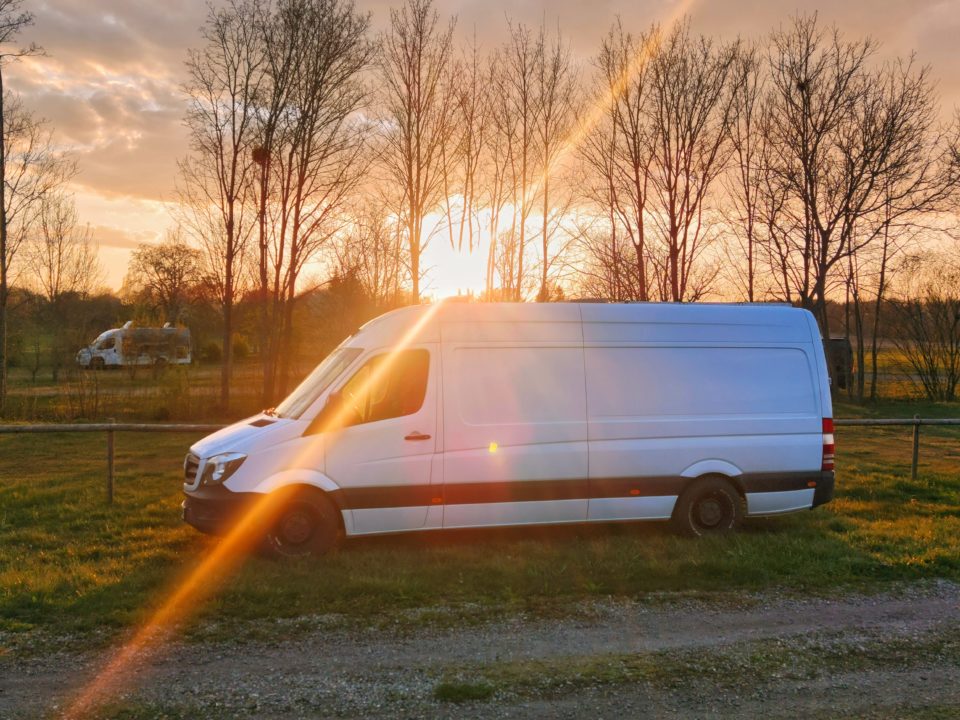
The Van conversion Converting your own van into a campervan is one of the most satisfying DIY projects ever – but also one of the most complex. After four months of intensive work and an investment of around €12,000, I converted my Mercedes Sprinter into a fully equipped camper. In this complete Van conversion guide I share my entire experience: From the selection of the Campervan conversion modules above Camping modules for panel vans, IKEA furniture for the camper, Campervan conversion kits from Hornbach, including the correct electrical components 230V circuit diagram, Water system, insulation, sleeping system – everything you need to convert your own van. Plus: Which Campervan conversion companies Are they worthwhile when Have a camper van converted which is cheaper than DIY, and where you can buy the best products (Hornbach, OBI, specialized camper shops).

  • Total time spent: 400–600 hours for a complete van conversion by yourself. Experienced craftsman: 250 hours, beginner: up to 800 hours. This also includes 3–6 months of weekend work.
  • DIY van conversion costs: €6,000–€15,000 for materials (excluding vehicle). Luxury conversion up to €30,000. For comparison: Professional conversion costs €25,000–€55,000 plus vehicle.
  • Camper van conversion modules compared: Hornbach kits (cheap, €2,500–€4,500), Reimo (premium, €4,000–€8,000), individual wooden constructions (cheap but complex).
  • Electricity is the heart: 200Ah LiFePO4 battery (€650), 200W solar panel (€180), 2000W inverter for 230V (€250), MPPT charge controller (€80). Plan the circuit diagram carefully.
  • Ikea furniture for campers: IVAR shelves (solid, perfect for narrow spaces), KALLAX (modular), VARIERA (kitchen organizer). Ikea hacks save 50–70 compared to specialist retailers.

Van conversion or having a campervan converted: The fundamental decision

Before you spend a single euro on Van conversion materials When you spend, the most important decision is: DIY or Have a camper van converted through a Camper conversion companyBoth options have clear advantages and disadvantages.

DIY expansion – advantages: 50–70 % courses are cheaper than a professional (€6,000–€15,000 instead of €25,000–€55,000). 100 % courses are tailored to your individual needs; you learn every detail of your vehicle, you can later do repairs yourself, and it's a creative learning process. A perfect option if you have basic mechanical skills and time (3–6 months of parallel work).

DIY renovation – disadvantages: 400–600 hours of work, steep learning curve (electrical, plumbing, gas), mistakes are expensive and dangerous (fire hazard with poorly installed electrical systems), very difficult without space/workshop, no guarantee.

Having your campervan converted – advantages: Ready in 4–8 weeks instead of 6 months, professional quality with warranty, TÜV-certified, you can travel immediately. Ideal if you have time but aren't a tradesperson or only want a specific module (e.g., electrical work) done professionally.

Having a camper van converted – disadvantages: 2-3 times more expensive than DIY, less individual, dependence on workshop appointments (currently 3-6 months waiting time at good companies), VAT.

Hybrid model: More and more people are opting for a mixed approach: doing the major construction work (insulation, wall cladding) themselves, while hiring professionals for critical systems (electrical, gas, water). This way you can save 30–40 compared to hiring a full-service professional, without any safety risks.

Top 5 camper van conversion companies in Germany:

  • Bulli-West (Bavaria): Specialist for VW T6, 5-week conversion starting from €18,000. Top quality.
  • VanCamperFactory (NRW): Fiat Ducato, Peugeot Boxer, Mercedes Sprinter. From €22,000.
  • Reimo (Hesse): Wholesalers and partner workshops throughout Germany. Modular conversions starting from €15,000.
  • Motorhome World (Baden-Württemberg): High-end segment, luxury conversions starting from €38,000.
  • IndieCampers Conversions (Portugal): Affordable entry starting from €12,000, 6-week expansion.

Use the search function „Get a campervan converted nearby“" or "„camper conversion companies“For local workshops – the market grows by 20–30% every year, prices can vary greatly.

Campervan conversion modules: Kits from Hornbach, Reimo and DIY solutions compared

The Campervan conversion modules They are the heart of every DIY camper project. Instead of designing and building everything individually, you can buy prefabricated modules – kitchen units, bed structures, storage box systems. This saves 200–400 hours of work.

Option 1: Camper conversion kits from Hornbach. Hornbach has had a large assortment of since 2022. Camper conversion modules. The private label Dotzer Camper Offers complete furniture kits for most panel vans. Kitchen kit €1,800–2,800 (sink, gas stove, storage compartments), fixed bed kit €900–1,400, folding bed €1,200–1,800, bathroom module €1,500–2,500, complete package €4,500–6,500. Advantages: good value for money, precise fit, detailed instructions. Disadvantage: less individual appearance.

Option 2: Reimo modules (premium segment). Reimo Reimo is the German premium brand for camper accessories. Complete Reimo furniture for VW T6: €3,500–€5,500. The "Hemisphere" series is a classic. Reimo kitchen unit: €2,800–€4,200 with solid wood fronts. Electrical series CampEnergy They fit together perfectly.

Option 3: Build your own camper conversion kit. The cheapest option: build it yourself completely from plywood (12–18 mm), waterproof film-faced plywood, and a spruce frame. Cost: €1,500–3,000 for materials. Time: 200–400 hours. Worthwhile with access to a woodworking shop or help from neighbors.

Campervan conversion shop recommendations: Hornbach (largest DIY range), Campitronic.de (electrical components + complete systems), Movera.de (personal advice), Outwell/Westfalia (premium in specialist shops), AliExpress/Amazon (small parts, quality varies).

Motorhome electrical wiring diagram 230V: The heart of your campervan conversion

The Motorhome electrics This is the most complex and at the same time most important part of your campervan conversion. A good one 230V circuit diagram This determines safety, self-sufficiency, and comfort. Mistakes can be extremely dangerous – professional advice or a ready-made module is worthwhile for this component.

The modern camper electrical system consists of 5 components:

  • On-board battery: LiFePO4 200Ah, 12.8V. €550-850. Victron LiFePO4 or Renogy Smart Lithium. 3,000+ charging cycles.
  • Solar: 200W monocrystalline solar panel on the roof (€150–220) plus MPPT charge controller (€60–150). With plenty of sunshine, 50–70 Ah per day.
  • B2B charging booster Charges the leisure battery while driving. 30A model from €180. Victron Orion or Büttner. Without one, the leisure battery will never fully charge.
  • Inverter: 2000W pure sine wave power supply for 230V sockets. €220–450. Victron Phoenix, Dometic. For coffee machines, laptops, and blenders.
  • Control unit: Victron BMV-712 or SmartShunt (€130). Displays charge level, consumption, and remaining runtime in real time.

230V circuit diagram: According to the EN 1648-2 camping standard, the 230V circuit must be protected by a residual current device (RCD) (30mA) and circuit breakers. For inverter-only operation: 30mA RCD + 10A circuit breaker. For shore power connection (CEE plug at the campsite), an additional upstream fuse is required.

Standard 230V consumers: Induction hob (1800W), compressor refrigerator (80W), water boiler (2000W), hair dryer (1400W), laptop charger (90W), smartphone (20W).

Buy ready-made vs. build yourself: For electrical beginners: Complete kits (Victron MultiPlus All-in-One), battery + inverter + charge controller combined. €1,200–2,500. Saves 50–100 hours of planning, minimizes the risk of errors.

Water + Gas: 80L water tank (€120), pressure pump (€80), Truma Boiler instantaneous water heater (€380), 11kg gas tank (€150), two-stage pressure regulator (€60). Gas installation by a qualified professional (TÜV inspection required in Germany).

IKEA furniture for campers: The best hacks and products

IKEA furniture for the camper IKEA hacks are one of the best money-saving tips from the van community. You can save €50-70 compared to specialized campervan furniture with them. Here are my 10 best IKEA products for van conversions:

  • IVAR shelf (pine): Solid wood shelves in narrow widths, perfect for camper van walls. 40x30x124 cm costs €29.
  • KALLAX: Modular shelving system in a cube format. Ideal for books, clothing, and technical equipment.
  • BEKVÄM Step Ladder (Pine): Folding solid wood ladder, 55 cm, €25. Ideal for bunk beds.
  • VARIERA Kitchen Organizer: Plastic trays/organizers. Prevent rattling while driving.
  • SKÅDIS Pegboard: Pegboard in 3 sizes, for kitchen or workshop. Modular with hooks and shelves.
  • EKET: Small modules with fronts for a kitchenette look. Light and modern.
  • LINNMON/ADILS: 100×60 cm board €9, 4 legs €12. Folding work surfaces.
  • FRAKTA bags: Robust, perfect for stuff sacks. 59 cents each.
  • BESTÅ drawer runners: Available individually, they fit into many DIY cabinets.
  • TERTIAL work lamp: Swivel lamp for reading area, with 2W LED power consumption. €13.

IKEA hack ideas: KALLAX as a bed base (2x KALLAX 2×4 side by side = bed base with 8 storage compartments, €180 total instead of €800). IVAR cabinet as a wardrobe (80 cm wide with fabric curtain, €65). BESTÅ drawers in a DIY kitchen (saves €300). KNAGGLIG boxes (€9–19) as storage boxes or seating.

Beware at IKEA: Particleboard (EKET back panels) can swell when exposed to moisture – not suitable for bathrooms or behind water pipes. Solid wood (IVAR, TROFAST, KALLAX) is better suited for campers.

Insulation and wall cladding: The basis for a comfortable home

Before furniture can be moved in, the van must be isolated and with Wall cladding These steps determine the quality of living – poor insulation leads to mold, cold in winter, and heat in summer.

Step 1: Metal vibration damping: Bituminous mats (Dodo Mat or Silent Coat) on all metal surfaces – sidewalls, roof, floor. Reduces road noise by 60%. Cost: €200–300. Application: Cut the mats, press them into place, and roll out any air bubbles. 6–8 hours of work.

Step 2: Insulation. Armaflex AF (20 mm) – rubber, waterproof, non-combustible, €400–600, self-adhesive. X-Trem Isolator – aluminum-coated foam, cheaper (€250–400), easier to install. Rock wool (€80–150) only behind paneling. Sheep's wool (€350) – natural, breathable, heavier. Favorite: Armaflex AF 19 mm + X-Trem for cavities. Avoid air holes (risk of condensation!). Floor with 10 mm Armaflex.

Step 3: Wooden frame: 24×48 mm spruce battens, bent and glued to the bodywork with Sikaflex 252i (marine adhesive). Supports wall cladding.

Step 4: Wall cladding. Felt/molton €80–120 (DIY van life classic, sound-absorbing). Poplar plywood 4–8 mm €300–500. Pine panels (tongue and groove) €400–600 – Alpine chalet charm.

Step 5: Floor construction: 18 mm multiplex board as subfloor, then vinyl flooring (30 €/m², waterproof) or click laminate (15 €/m², high-quality look).

Van camper conversion ideas: Inspiration for your layout

The Van conversion ideas The possibilities are endless. Here are the 5 most popular layouts for VW T6, Fiat Ducato, Mercedes Sprinter:

Layout 1 – Longitudinal bed + kitchen + seating area: Bed 200×140 cm at the rear, kitchen on the right, seating area on the left. Ideal for 2 people in vehicles 600+ cm long (e.g. Fiat Ducato L3H2).

Layout 2 – Single beds lengthwise: Two 200x80 cm beds, head end facing the driver's cab, aisle in between. Partner doesn't have to get up for early starts.

Layout 3 – Drop-down bed: The bed hangs from the ceiling during the day (€800–1,400) and is lowered at night. This maximizes living space during the day and is ideal for lengths of 700 cm and above.

Layout 4 – Queen bed across + rear garage: Bed 200×140 cm across on a platform. Below is a rear garage for bicycles and surfboards. Access via the tailgate. A favorite among sports campers.

Layout 5 – Minimalist (short vehicles): For VW T6, Transit Custom. Folding bed, swivel seats, extendable table. For weekends or solo trips.

Specialized Needs: Remote work camper (height-adjustable table, Starlink, 300W solar). Winter-ready (30 mm Armaflex + sheep's wool insulation, diesel heater, frost-proof pipes). Sporty (rear garage, outdoor shower, 200L water tank). Luxury for couples (queen bed, separate shower, induction cooktop, espresso machine).

Campervan conversion kit for Fiat Ducato, Mercedes Sprinter and VW T6

The choice of Motorhome kit It depends heavily on the base vehicle.

Fiat Ducato (most popular base vehicle for motorhomes): Dotzer Camper complete kit (Hornbach) €4,500–€6,500 for L2H2/L3H2. Reimo Hemisphere €5,500–€7,500 Premium. VanEssa box for Doblò/Talento €1,800 as a weekend solution.

Mercedes Sprinter (Premium base): Westfalia Sprinter conversion from €45,000 + vehicle. Hymer Grand Canyon kit (semi-DIY) €12,000, complete €38,000. Reimo Sprinter complete (DIY) €6,500–9,500.

VW T6/T6.1 (California style): VanEssa modules cost €1,200–€2,800 for weekends. Reimo Hemisphere costs €4,500–€6,500, similar to the California but cheaper. SpaceCamper systems with interchangeable modules cost €2,500–€4,500.

Decision factors: Pop-up roof: yes/no? Diesel heater (yes, from autumn onwards)? Compressor refrigerator (always yes). 200Ah+ leisure battery. Insulation: at least 19 mm Armaflex. Skimping here = problems later (frost, acoustics, self-sufficiency).

Van conversion costs: The realistic budget from entry-level to premium

The Costs for a van conversion They vary greatly. Here's my realistic budget based on 4 years of van community experience:

Beginner budget: €5,000–7,500 for materials (complete DIY)

  • X-Trem insulation + sound dampening: €350
  • Wall covering (felt) + floor (vinyl): €250
  • DIY furniture (18 mm plywood): €450
  • Mattress 140×200 cold foam: €220
  • Simple electrical system (100Ah AGM battery + 100W solar panel + 1000W inverter): €950
  • Water 40L + sink + pump: €280
  • Portable gas stove: €80
  • Window/skylight + small items: €750
  • TÜV approval: €200

Total: ~€3,530. Realistically, including bad purchases: €5,000–€7,500.

Standard budget: €9,000–13,000 (comfort DIY)

  • Armaflex 19 mm complete + pine panels: €1,100
  • Reimo/Hornbach furniture kit: €4,500
  • LiFePO4 200Ah + 200W solar + 2000W inverter: €1,600
  • Diesel heater Autoterm 2D: €680
  • 80L water + Truma boiler + induction: €1,040
  • Compressor refrigerator 60L: €520
  • Window/skylight/awning + TÜV inspection: €1,250

Total ~10,500 €, realistically 9,000–13,000 €.

Premium budget: €15,000-25,000. Single bathroom with shower, drop-down bed, premium kitchen with oven, 400Ah LiFePO4 battery, 400W solar panels, 3000W inverter, air conditioning. Sprinter vehicle €20,000–€50,000. Competing with professional conversions.

Professional build for comparison: €25,000–€55,000 for the conversion alone + €30,000–€55,000 for the vehicle = €55,000–€110,000. Saves time, but 2–3 times more expensive.

The most important tips from 4 years of van conversion experience

After my own expansion and many conversations with the community: the most important lessons learned:

1. Plan more than you build: 40–50 hours of planning before the first cut. SketchUp is free, papier-mâché models prove their worth. Finished furniture that doesn't fit is the worst frustration.

2. Insulation + electrical work first: Furniture can be adjusted later. Poor insulation/electrical system = tear everything out.

3. Quality of the electrical system: Cheap Chinese inverters cause fires. Victron, Büttner, Renogy Smart – higher initial costs, 10-year warranty.

4. Modular water system: John Guest quick-connect couplings instead of soldered connections. Defect = replace individual parts instead of replacing everything.

5. Workshop + tools: Saw, cordless drill, router, sander. Investing €400–800 once saves hundreds of hours.

6. Clarify TÜV requirements early: Seatbelts, all-around lighting, pillows, smoke detectors. Non-approved modifications = thousands of euros wasted.

7. Document with photos: Twenty photos every week – pipes, screws. Valuable for repairs in two years.

8. Community + Inspiration: Instagram @vanlifegermany, YouTube „Nate Murphy“, „Benjamin Schmiederer“. Saves 30 % costs.

9. Proven suppliers: Reimo, Dometic, Truma, Victron, Fiamma. German spare parts, TÜV-approved.

Celebrating 10 milestones: Insulation complete, first lamp is lit, kitchen is finished – motivation through moments of frustration.

My conclusion after 2 years of camper life: The most satisfying DIY project of my life. I know every screw, every pipe. Buying it ready-made would have cost €25,000 more – money that will now go towards travel.

FAQ: Van conversion – The most frequently asked questions

How much does a DIY van conversion for a panel van cost?

€5,000–€7,500 entry-level budget with basic equipment; €9,000–€13,000 comfort budget with LiFePO4 electrics, diesel heating, quality furniture; €15,000–€25,000 premium with drop-down bed, bathroom, air conditioning. Plus vehicle (used Sprinter/Ducato €15,000–€35,000). Professional conversion for comparison: €25,000–€55,000.

Where can I buy campervan conversion modules?

Hornbach (Dotzer Camper brand, €2,500–€6,500 complete), Reimo (Premium, €4,000–€9,500), Westfalia, Hymer, Movera.de, Campitronic.de. For beginners: Hornbach – good fit, clear instructions. For professionals: Reimo for quality and more options.

Which companies professionally convert camper vans?

Top companies in Germany: Bulli-West (VW T6, Bavaria), VanCamperFactory (Fiat Ducato/Sprinter, North Rhine-Westphalia), Reimo partner workshops (nationwide), WohnmobilWelt (Premium, Baden-Württemberg), IndieCampers Conversions (Portugal with Germany). €18,000–€55,000 for a complete conversion. Waiting times 3–6 months.

Can Ikea furniture be used for campers?

Yes, absolutely. IKEA solid wood (IVAR, KALLAX, KNAGGLIG, BEKVÄM) is perfect – robust, affordable, and modular. Hacks can save you 50–70. Avoid particleboard in the kitchen/bathroom – use solid wood or waterproof plywood there. Top hacks: KALLAX as a bed base, IVAR as a wardrobe, BESTÅ drawers in the kitchen.

How do I create a motorhome electrical wiring diagram for 230V?

LiFePO4 200Ah (€650), 200W solar panel + MPPT (€230), B2B charging booster (€180), 2000W pure sine wave inverter (€250), shunt monitor (€130). 230V circuit: 30mA residual current device (RCD) + circuit breaker. For beginners: Victron MultiPlus complete system (€1,200–€2,500) instead of wiring it yourself.

Is a van conversion for a Fiat Ducato worthwhile?

Absolutely – the Ducato is the best-selling campervan base vehicle in Europe. A huge selection of conversion kits is available (Hornbach, Reimo), along with numerous workshops. Used L2H2s start at €15,000, L3H2s at €18,000. Conversion costs €5,000–€18,000. Ready-made Ducato campervans cost €50,000–€80,000 – DIY saves €20,000–€50,000.

What are the best conversion ideas for panel vans?

2 people: Longitudinal bed 200x140 + kitchen to the side + dinette. Flexible couples: Twin beds lengthwise. Maximum living space: Drop-down bed. Athletes: Queen bed across + rear garage. Weekends (VW T6): Minimalist with a fold-down bed. Important: Tailor the layout to your travel style, don't copy Pinterest.

How long does a van conversion take to complete yourself?

400–600 hours for a first-time builder, 250–350 hours for experienced tradespeople. Weekend work: 3–6 months. Full-time: 6–10 weeks. Most time-consuming steps: insulation (60–100 hours), furniture (150–250 hours), electrical work (80–150 hours). Allow 30% more time than planned.

What do I need to consider when having my self-built campervan inspected by the TÜV (German Technical Inspection Association)?

Germany: Campervans must be re-registered as motorhomes. TÜV inspectors require: seat belts for every seat, headrests, all-around lighting, permanently installed furniture (bed, table, kitchen), fresh water and wastewater tanks, and heating (optional). The gas system must be inspected and approved by a qualified professional. Re-registration costs €200–400.

What mistakes should I avoid when converting a van?

Top 10: insufficient insulation (mold), cheap electrical system (fire hazard), poorly planned layout (will need to be torn out later), no ventilation for moisture, bed too large, no reversing camera, permanently soldered water pipes, no diesel heater (only summer), TÜV inspection scheduled too late, no documentation.

Max Haase Travel Creator
About the author

Max Haase

Travel Content Creator · Drone Photographer · Visual Storyteller

Since over 10 years professional travel creator with over 4.2 million followers. Specializing in high-end tourism board collaborations and visual travel storytelling.

4.2MFollowers
82+Countries
500+Cooperations
10+Years
croatia-camping-feat-2789

Camping in Croatia: The 15 most beautiful campsites (Istria, Krk)

Camping in Croatia — Why the Adriatic is the perfect camping destination

Camping in Croatia Croatia and camping go together like espresso and the beach. The Croatian Adriatic coast is perfect for camping holidays: over 1,200 kilometers of coastline, more than 1,000 islands, crystal-clear water, and a climate that reliably delivers sunshine from May to October. Add to that a camping culture that is unparalleled in Europe—over 500 registered campsites, ranging from huge 5-star resorts right on the seafront to small family-run camps in olive groves.

  • Coastal diversity: With over 1,200 kilometers of Adriatic coastline, more than 1,000 islands and over 500 registered campsites, Croatia is the densest camping area in Europe.
  • Top places: Camping Mon Perin (Bale) as a glamping all-rounder from 35 euros, Porton Biondi (Rovinj) with old town view and Camping Stupice in Premantura at Cape Kamenjak.
  • Islands: Krk is accessible by bridge, Lošinj is a wellness island, Pag has a lunar landscape and Vis is a former restricted area — each island has its own top spot.
  • Budget: 14 days cost 670–1,180 euros with a tent, 1,130–1,980 euros with a campervan and 1,880–3,700 euros as glamping — tap water is drinkable everywhere.
  • ACSI hack: The ACSI Camping Card, costing €20 per year, reduces the price in the off-season to €14–22 per night instead of the list price — valid from April to July and from September onwards.

I've done three road trips through Croatia, each time with a tent and drone in tow. From Istria in the north, through the Kvarner Bay and Dalmatia, all the way down to Dubrovnik. In this post, I'm sharing my 15 favorite campsites—tested, reviewed, and with all the information you need. Plus, the mistakes I made at the beginning, so you don't have to repeat them.

Camping in Istria: The most beautiful campsites in Umag, Rovinj & Poreč

1. Camping Stupice (Premantura, near Pula)

At the southernmost point of Istria, right next to the Cape Kamenjak Nature Park. Kamenjak is a drone paradise—rugged cliffs, hidden coves, turquoise water. The campsite is located in a pine forest, 200 meters from the sea. Pitches are shaded, sanitary facilities are clean, and there's a small supermarket. No luxury, but a perfect location. Price: from €25 per night (2 people + tent). Highlight: From the campsite, you can reach coves in 10 minutes on foot that look like they're in Thailand—only without the 14-hour flight.

2. Camping Mon Perin (Bale, near Rovinj)

Glamping on another level. Mon Perin offers safari tents, treehouses, and mobile homes with private pools—as well as classic pitches for tents and campervans. The site is situated on a hill overlooking the Istrian hinterland all the way to the sea. There are two pools, three restaurants, and a shuttle boat to Rovinj (15 minutes). Price: Pitches from €35, safari tents from €120 per night. For me, the best all-around campsite in Istria.

3. Camping Porton Biondi (Rovinj)

Right by the sea, a 15-minute walk from Rovinj's old town. The pitches under pine trees, the view of the old town at sunset—the reason why Rovinj is rightly considered the most beautiful town on the Adriatic. Launching the drone over the campsite and flying it towards the old town: the church on the hill, the colorful houses by the water, the boats in the harbor—one of my most shared photos. Price: from €30 (more expensive in high season). Disadvantage: Very crowded in July/August.

Camping Krk & Kvarner Bay: The best pitches on the largest island

4. Camping Čikat (Mali Lošinj)

Lošinj is Croatia's wellness island—the air is so clean that spa treatments have been offered here since the 19th century. Camping Čikat is situated in a fragrant pine-covered bay with direct access to the sea. The swimming opportunities are fantastic: rocky platforms with ladders leading into the crystal-clear water. In the evenings, a drone flies over the bay at sunset—the light filtering through the pines, the shimmering sea. Price: from €28. Getting there: Ferry from Valbiska (Krk) to Merag (Cres), then via Cres to Lošinj, approximately 2 hours in total.

5. Camping Krk (Island of Krk)

Krk is the easiest island to reach — a bridge connects it to the mainland. Camping Krk Located directly on a shallow, sandy bay—a rarity in Croatia, where most beaches are pebbly. Perfect for families. The town of Krk, with its medieval fortress, is a 5-minute walk away. The campsite boasts a huge water park, restaurants, and even a small harbor. Prices start at €30. Premium pitches right on the water start at €45.

6. Autocamp Slapić (Duga Resa, near Karlovac)

No beach, no sea — but one of the most beautiful river campsites in Europe. Right on the Mrežnica, a river with emerald-green water and small waterfalls. You swim in natural pools, jump from rocks into the water, and paddle a kayak among travertine cascades. For me, an absolute highlight away from the coast. Drone footage over the river: the green water, the rapids, the surrounding forest — like a miniature Plitvice Lakes without the entrance fee. Price: from €18. A perfect stopover on the way from Zagreb to the sea.

Northern Dalmatia — National Parks and Islands

7. Camping Šimuni (Island of Pag)

Pag looks like the moon—a barren, white, rocky landscape with hardly any vegetation, but it boasts the famous Pag cheese and the party beach Zrće (Croatia's answer to Ibiza). Camping Šimuni is located on the quieter west side of the island: a spacious campsite with its own marina, pool, and pitches nestled in an olive grove. Flying a drone over Pag's lunar landscape—the white rocks, the deep blue sea, the salt pans—creates images that look like they're from another planet. Price: from €25.

8. Camping Park Soline (Biograd na Moru)

A 5-star campsite that truly deserves its 5 stars. A huge pool complex, water sports center, children's entertainment, and yet plenty of quiet corners for couples. The pitches are right by the sea with views of the Pašman Channel and the islands just offshore. From here, the Kornati Islands—an archipelago with over 100 uninhabited islands—are accessible by boat tour (from 250 HRK, approx. €35). The Kornati Islands from a drone: a labyrinth of islands, bays, and the clearest water in the Adriatic. Price: from €35 (premium seaside pitch from €55).

9. Camping Falkensteiner Premium (Zadar)

Located near Zadar, one of the most underrated cities on the Adriatic. The campsite is modern, with an infinity pool and direct beach access. But the real reason to be here: Zadar boasts what Alfred Hitchcock called the most beautiful sunset in the world. Along the Riva (waterfront promenade), you'll find the Sea Organ—steps that create music through the waves—and the Greeting to the Sun, a light installation embedded in the ground. A drone flight over the old town peninsula at sunset: magical. Price: from €38.

Southern Dalmatia — Dubrovnik and the islands

10. Camping Adriatic (Orebić, Pelješac Peninsula)

Pelješac is Croatia's wine and oyster peninsula. Camping Adriatic is located in Orebić with views of the island of Korčula—a panorama you'll never forget. The ferry to Korčula (birthplace of Marco Polo) departs every 30 minutes and costs only 15 HRK (2 euros). The Ston Wall, which runs across the hills of Pelješac, is often called the Little Great Wall of China—impressive and rarely visited. Price: from 22 euros.

11. Camping Solitudo (Dubrovnik)

Dubrovnik and camping – it might sound contradictory at first. But Camping Solitudo is located in the Babin Kuk district, just a 20-minute bus ride from the Old Town. It offers sea views, a pool, and the bus takes you directly to the Pile Gate, the entrance to the Old Town, for 15 HRK. Dubrovnik is expensive (entrance to the city walls: 35 euros), but camping saves you a lot on accommodation. Prices start at 28 euros. Photographing the city walls from above with a drone is unfortunately prohibited. But the coastline in front of them is fair game.

12. Camping Kalac (Trstenik, Pelješac)

A small, family-run campsite right on a pebble beach in a tiny fishing village. There's nothing here—no pool, no restaurant, no entertainment. Just the sea, the peace and quiet, and a hostess who brings fresh bread every morning. That's what makes it perfect. For anyone looking for camping in its purest form. Price: from €15. The best budget camping in Dalmatia.

Wildcard picks — Off the coast

13. Camping Plitvice (near Plitvice Lakes)

The Plitvice Lakes are Croatia's number one natural wonder—16 cascading lakes connected by waterfalls. Camping Plitvice is located 7 kilometers from the park entrance, in a quiet wooded area. Drones are completely prohibited in the national park, but the surrounding forests and rivers offer alternatives. National park entrance fee: €40 in high season—arrive at 7 a.m. when the boardwalks are still empty. Price: from €20.

14. Camping Modra Špilja (Vis Island)

Vis is the most remote inhabited island in Dalmatia—until 1989 it was a military zone and closed to tourists. The result: an almost untouched island with a 1960s atmosphere. Camping Modra Špilja in Komiža is small, simple, and perfect. The Blue Cave, from which the campsite takes its name, on the neighboring island of Biševo is accessible by boat (from 180 HRK, approx. €25)—the light in the cave is surreal. Price: from €18. Ferry from Split: 2.5 hours.

15. Camping Galeb (Omiš)

Omiš lies at the mouth of the Cetina River, and the Cetina Gorge is Dalmatia's outdoor paradise. Rafting, canyoning, and ziplining across the gorge (150 meters high, 700 meters long – pure adrenaline!). Camping Galeb is located right on the pebble beach, with the mountains of the Cetina Gorge as a backdrop. Fly a drone over the gorge: the emerald-green water of the river, the vertical rock faces, the bridges – absolutely breathtaking. Price: from €22. Split is 25 kilometers away – a perfect combination.

Camping in Croatia: Budget for 14 days at the campsite

category Budget (tent) Mid-range (motorhome) Comfort (glamping)
Arrival (from southern Germany) 60-100 EUR (fuel) 100-180 EUR (fuel + toll) 100-250 EUR (flight + rental car)
Campsite (13 nights) 250-400 EUR 400-650 EUR 900-1,800 EUR
Food and Drink 200-350 EUR (self-cooking) 350-550 EUR (mix) 500-900 EUR (restaurant)
Petrol in Croatia 80-130 EUR 120-200 EUR 120-200 EUR
Activities and admission fees 50-120 EUR 100-250 EUR 200-400 EUR
Ferries (if islands) 30-80 EUR 60-150 EUR 60-150 EUR
IN TOTAL 670-1,180 EUR 1,130-1,980 EUR 1,880-3,700 EUR

Practical tips for camping in Croatia

Wild camping: Officially forbidden and punishable by fines (up to €400). In practice, it's tolerated in remote areas, but I don't recommend it—campsites are cheap enough and offer sanitary facilities, electricity, and security.

Reservation: During peak season (July/August), advance booking is essential—especially for coastal campsites in Istria and Dalmatia, which are booked up weeks in advance. During the off-season (May, June, September), spaces are usually available without a reservation. Book directly through the campsite's website—portals like ACSI or Booking.com charge a fee.

ACSI card: For the off-season, the ACSI Camping Card (€20/year) is worthwhile. With it, you only pay €14-22 at many campsites instead of the regular price. It's valid from the beginning of April to the beginning of July and again from September onwards.

Electricity: Most campsites have CEE sockets (blue camping plugs). Don't forget your adapter. Electricity is often included in the price, but sometimes it costs an extra 3-5 euros per day.

Water: Tap water in Croatia is safe to drink everywhere. One of the best pieces of news for campers — no need to lug around water canisters.

Drone: In Croatia, as an EU citizen, you only need EU registration (EASA), which is also valid in Germany. No pilot's license is required for aircraft under 250g. National parks and nature parks are restricted areas. Flying over cities and crowds is prohibited. Along the coast and on the islands: No problem, as long as you maintain a safe distance from people.

FAQ — Frequently Asked Questions about Camping in Croatia

Which region is best for camping beginners?

Istria. The campsites are the best-equipped in Croatia (many 4 and 5 stars), the journey from Germany is the shortest (approx. 6 hours from Munich), and the region offers everything: beaches, culture (Pula, Rovinj), inland (truffle forests), and excellent infrastructure. For camping novices, a site like Mon Perin or Porton Biondi is ideal—enough comfort, yet still a genuine camping experience.

Is Croatia still affordable?

Since the introduction of the euro in 2023, prices have indeed risen. But camping in Croatia is still significantly cheaper than in Italy, France, or Spain. A pitch with a sea view for €25-35, a fish dinner for €15, a beer for €3—that's unthinkable in southern France. The biggest price increases were for national park entrance fees (Plitvice: €40) and in tourist hotspots like Dubrovnik. Away from the hotspots, Croatia remains reasonably priced.

Is a motorhome worth it, or is a tent sufficient?

It depends on your style. With a tent, you're more flexible (smaller campsites, island hopping by ferry is cheaper) and closer to the action. With a campervan, you have more comfort, but you're limited to larger campsites, and ferry costs are higher. My sweet spot: a van (VW California or similar) — compact enough for ferries and narrow coastal roads, but with a bed and kitchenette. Rentals start at €80 per day in high season.

Which islands are worth camping on?

My top 3: Krk (easiest to reach, good campsites, sandy bays), Lošinj (most beautiful scenery, fragrant pine forests, healing air) and Vis (the most pristine and authentic island, but simpler campsites). For a longer stay: Cres has the wildest interior—you'll encounter griffon vultures with a wingspan of 2.7 meters.

Is it still possible to camp in Croatia in the autumn?

Yes, September and early October are ideal. The sea is still 22-24 degrees Celsius, the air temperature is a pleasant 25 degrees, and the campsites are half empty. Many campsites are open until the end of October. From mid-October onwards, it gets chilly in the evenings (15 degrees), but with a warm sleeping bag, it's no problem. Off-season prices are often 30-401T3T cheaper. My insider tip: The last week of September—perfect weather, hardly any tourists, and the grape harvest in Istria and on Pelješac is in full swing.

Max Haase Travel Creator
About the author

Max Haase

Travel Content Creator · Drone Photographer · Visual Storyteller

Since over 10 years professional travel creator with over 4.2 million followers. Specializing in high-end tourism board collaborations and visual travel storytelling.

4.2MFollowers
82+Countries
500+Cooperations
10+Years

Greek Island Hopping — Santorini, Mykonos & Crete - Photo: Max Haase Travel

Greece Island Hopping: Route, Package Holiday & Ferries

Greek Island Hopping — The Ultimate Guide to Santorini, Mykonos and Crete

Greece has over 6,000 islands, of which around 230 are inhabited. Island hopping—traveling from island to island by ferry—is the best way to discover the diversity of the Greek islands. I spent two weeks in Greece in May 2023 and put together a route connecting three of the most popular islands: Santorini, Mykonos, and Crete. Here is my complete guide with the route, ferries, costs, and the best photo spots.

  • Route: 14 days island hopping Athens → Santorini (4 days) → Mykonos (3 days) → Crete (5 days) → Athens — three islands connected by ferry in 2–5 hours.
  • Santorini hack: Stay in Fira (60 euros/night instead of 150+ in Oia) and go to Oia at 7 am for empty blue domes before the cruise ship passengers arrive.
  • Ferry prices: Athens→Santorini 40–70 euros, Santorini→Mykonos 35–60 euros, Mykonos→Crete 45–75 euros — Night ferry Crete→Athens saves a hotel night.
  • Crete Highlights: Chania with its Venetian port, Samaria Gorge (16 km, the longest in Europe), Elafonissi Beach with pink sand and Knossos as a Minoan palace.
  • Travel time: May and June are the best choice: 25–30°C, suitable for swimming, 30–40% cheaper than July/August and significantly fewer tourists than in the high season.

Island hopping in Greece for 14 days: My route through the Cyclades

My route: Athens → Santorini (4 days) → Mykonos (3 days) → Crete (5 days) → Athens. The ferries connect all three islands directly, and the travel times are manageable (2-5 hours depending on the ferry).

Santorini (4 days) — The Icon

Santorini is the quintessential Greek postcard island: white houses with blue domes, dramatic cliffs above the volcanic crater, and sunsets that make Instagram explode. But Santorini is also touristy, expensive, and overcrowded in the summer. Here are my tips on how to make the most of it:

Oia vs. Fira: Oia is the famous postcard image with its blue domes. Fira is the capital and significantly cheaper. I stayed in Fira (60 euros/night vs. 150+ in Oia) and drove to Oia at 7 a.m., before the cruise ship tourists arrived. The blue domes are deserted by 7:30 a.m.—perfect for photos.

Red Beach and White Beach: Two of Europe's most photogenic beaches, accessible by boat from Akrotiri. Red Beach boasts spectacular red cliffs right on the water. Caution: Access to Red Beach via the cliff path is officially closed (risk of rockfall). Take the boat from Akrotiri harbor (10 euros).

Drones on Santorini: Officially, you need a permit from the Greek Civil Aviation Authority (HCAA). In practice, I haven't had any problems with the DJI Mini 5 Pro (under 250g) as long as I didn't fly directly over crowds or airports. The best drone spot: the cliffs south of Oia at sunrise.

Eat: Tomatokeftedes (deep-fried tomato balls) are Santorini's specialty. Fava (mushy peas) with capers is on every menu. For the best fish: Amoudi Bay below Oia — you eat right by the water with a view of the cliffs.

Mykonos (3 days) — Parties and beaches

Mykonos has a reputation as a party island, but there's much more to it than just clubs. The old town (Chora) has winding streets with white houses and colorful doors—one of the most photogenic town centers in Greece. The windmills by the harbor are its landmark.

Beaches: Paradise Beach is the party beach (sun loungers during the day, DJ in the evening). For peace and quiet: Agios Sostis in the north — no restaurants, no sun loungers, just nature and turquoise water. Ornos Beach is the family beach with shallow water and good facilities.

Little Venice: The colorful houses right on the water, where the waves crash against the balconies. Enjoying a cocktail at sunset in the evening—touristy, but beautiful. Reserve a table at Kastro's for the best view.

Delos: The uninhabited neighboring island (30 minutes by boat) is a UNESCO World Heritage Site and one of the most important archaeological sites of antiquity. It is the birthplace of Apollo and Artemis according to Greek mythology. Half-day trip: 20 euros for the ferry plus 12 euros entrance fee.

Crete (5 days) — The Diverse

Crete is the largest Greek island and feels almost like its own country. Here you'll find everything: beaches, mountains, gorges, ancient ruins, and the best cuisine in Greece.

Chania: The most beautiful city in Crete. The Venetian harbor with its lighthouse is magical in the evening. The market hall (Agora) has everything from cheese and olives to spices. For drone footage: the lighthouse from above at sunset.

Samaria Gorge: The longest gorge in Europe (16 km). A day hike from top to bottom (approx. 6 hours), with a boat waiting at the end to take you back to Hora Sfakion. Challenging but doable for anyone with a basic level of fitness. Open only from May to October. Start early (7 am) to avoid the heat.

Elafonissi Beach: Pink sand and turquoise water — one of the most beautiful beaches in Europe. Crowded in summer, but still relaxed in May (when I was there). The drive from Chania takes 90 minutes along winding mountain roads.

Knossos: The Minoan palace, center of Europe's oldest civilization (3000 BC). Admission: €15. Arrive at 8 a.m. when it opens—tour buses start arriving at 10 a.m. An audio guide (€5) is recommended, as the ruins are difficult to understand without context.

Greek island hopping ferries: booking, prices & Aldi package deals

The ferries between the islands are operated by several shipping companies: Blue Star Ferries (the large, slow, cheap ones), SeaJets and Hellenic Seaways (the fast catamarans, more expensive).

Route Duration (fast ferry) Price
Athens (Piraeus) → Santorini 5h (ferry) / 2h (catamaran) 40-70 €
Santorini → Mykonos 2-3h 35-60 €
Mykonos → Crete (Heraklion) 4-5h 45-75 €
Crete (Heraklion) → Athens 9h (night ferry) / 4h (flight) 35-50 € (ferry)

Book via Ferryhopper.com or DirectFerries.com. During peak season (July-August), book at least two weeks in advance—fast ferries sell out quickly. The slower Blue Star Ferries are never fully booked and have outside decks with sea views.

Tip: The overnight ferry from Crete to Athens (Blue Star, departing at 9 pm, arriving at 6 am) is perfect: you save a hotel night and arrive in Athens refreshed in the morning. Book a cabin (50-80 euros) instead of seats (35 euros) — the sleeping comfort makes the extra cost worthwhile.

Island hopping in Greece: 10 days vs. 14 days - cost comparison

Position Cost
Flight DE → Athens Round Trip 100-200 €
Ferries (4 routes) 160-250 €
Accommodation (13 nights, mid-range) 650-1.000 €
Food (restaurant + supermarket) 350-500 €
Scooter rental (Santorini + Crete) 120-180 €
Entrance fees and activities 80-120 €
In total 1.460-2.250 €

Money-saving tips: Book accommodations with a kitchen and cook your own breakfast (Greek yogurt + honey + fruit from the market). Avoid restaurants directly at the port—it's cheaper one street over at 30%. Rent a scooter instead of a car on Santorini (25 euros/day vs. 50 euros). Drink local house wine instead of imported wine (3 euros vs. 8 euros).

Best time to travel to Greece for island hopping

May and June: My recommendation: Warm weather (25-30°C), sea already warm enough for swimming, significantly fewer tourists than in the height of summer. Prices 30-40% below peak season.

July and August: Peak season. 35°C+, everything is full and expensive. Only if you like the heat and book early.

September and October: Still warm, the sea is at its warmest (26°C), tourists are thinning out. Ferries are still full. My second choice after May.

November to April: Many hotels and restaurants are closed. Ferries run less frequently. Only makes sense for Crete (mild winters, inhabited year-round).

FAQ — Greece Island Hopping

Do I need a rental car on the islands?

On Santorini: A scooter is sufficient. On Mykonos: Bus or taxi. On Crete: Yes, definitely rent a car — the island is too big for buses. From €25/day.

Can I go island hopping spontaneously or do I have to book everything in advance?

In May, June, and September, you can travel spontaneously. In July and August, you absolutely must book ferries and accommodations in advance. The Santorini-Mykonos fast ferries are often fully booked a week ahead in August.

Is Greece expensive?

Santorini and Mykonos: Yes, comparable to the South of France or the Amalfi Coast. Crete: Significantly cheaper, comparable to Portugal or Croatia. Athens: Inexpensive.

Which islands are alternatives to Santorini and Mykonos?

Naxos (larger, more authentic, cheaper than Mykonos), Milos (volcanic landscape, less touristy), Paros (good mix of beach and culture), the Ionian Islands Corfu and Kefalonia (greener, less Cycladic look).

Am I allowed to fly my drone on the Greek islands?

Officially, you need a permit from the HCAA for every drone. Drones under 250g (DJI Mini series) are rarely checked. Never fly over archaeological sites, military installations, or crowds. On Mykonos, flying drones is completely prohibited in the old town.

Max Haase Travel Creator
About the author

Max Haase

Travel Content Creator · Drone Photographer · Visual Storyteller

Since over 10 years professional travel creator with over 4.2 million followers. Specializing in high-end tourism board collaborations and visual travel storytelling.

4.2MFollowers
82+Countries
500+Cooperations
10+Years

kroatgeh-featured-2

Croatia's hidden gems 2026: 9 places off the beaten track

Croatia's hidden gems: 9 places off the beaten track on the map

Croatia insider tipsCroatia and "hidden gem"—do those terms still go together? Dubrovnik has been overrun since Game of Thrones, Split is overflowing with cruise ship tourists, and the Plitvice Lakes have waiting lists like an amusement park in the summer. But: Croatia has 1,244 islands, 1,778 kilometers of coastline, and a mountainous hinterland that 951 tourists never see. I spent three weeks finding precisely these hidden gems—with the camera in deserted mountain villages and in a rental car on roads that end as grey lines on Google Maps.

  • Vis: Until 1989 a Yugoslav military restricted area — resulting in an undeveloped Adriatic island with Stiniva Bay (natural rock arch) and the Blue Cave on Biševo.
  • Lastovo: 800 inhabitants, no ATM, 90-minute ferry ride from Korčula — one of the lowest light pollution levels in Europe, Milky Way visible to the naked eye.
  • Stone walls: At 5.5 kilometers, the second longest city walls in Europe after Rome's Aurelian Walls — 14th century, plus 12 oysters for 8–10 euros directly from the fisherman.
  • Kornati: National park consisting of 89 uninhabited islands — day trip from Murter/Zadar/Šibenik for 40–60 euros including swimming stops and grilled lunch.
  • Budget: Three weeks off the beaten track cost €1,560–€2,600 per person — hinterland restaurants 30–50% are cheaper than the tourist hotspots on the coast.

Here are my 9 insider tips for Croatia — places that aren't at the top of any travel guide.

1. Vis — The island that was closed for 50 years

Vis was a Yugoslav military base until 1989 and completely closed to tourists. As a result, while Hvar and Brač were overdeveloped, Vis remained unspoiled. No hotel chains, no high-rise hotels, no party scene. Instead: two small villages (Vis Town and Komiža), vineyards, olive groves, and some of the clearest waters in the Adriatic.

Stiniva Bay on the south side is the highlight. Two high cliffs form a natural gateway, behind which lies a small pebble beach with turquoise water. It's only accessible via a steep 30-minute descent or by boat. Both are worthwhile. From a drone, the bay looks like a natural amphitheater—the cliffs, the narrow gateway, the shimmering water beyond. One of my best Adriatic photos.

Tip: The Blue Cave on the neighboring island of Biševo is a day trip from Komiža — a sea cave where sunlight makes the water glow blue. It's touristy, but still worth it. Go in the morning when the light is best.

2. Lastovo — The most isolated inhabited island in Croatia

Lastovo lies far out in the Adriatic Sea, a 90-minute ferry ride from Korčula. It has about 800 inhabitants, no traffic lights, no ATMs (bring cash!), and no fast-food chains. The entire archipelago is a nature park. At night, it boasts some of the lowest light pollution in all of Europe—the Milky Way is visible to the naked eye as a luminous band.

I spent three nights on Lastovo and was cooked for by a local family who rent out guest rooms. Fresh fish, homemade wine from their own vineyard, olive oil from the neighbor. No Michelin star, but the best food of my entire trip to Croatia. The island has a few marked hiking trails through maquis shrubland and pine forests, and around every corner you'll find secluded coves that you have completely to yourself.

3. Učka Nature Park — The forgotten mountain range above Istria

While everyone heads to the Istrian coast (Rovinj, Pula, Poreč), they forget the mountains just beyond. Učka, at 1,396 meters, is the highest mountain in Istria and offers a panoramic view that, on a clear day, stretches from Venice to the Slovenian Alps. I was at the top at sunrise—a sea of clouds below, the peaks above like islands. It's reminiscent of Madeira's Pico tour, only without the tourists.

The ascent from Lovran takes about 3 hours and leads through beech forests and across alpine meadows. Alternatively, you can drive to the Vojak summit (gravel road, but doable) and simply enjoy the view. I made extensive use of my drone here—the contrasts between the blue sea below and the green mountains above are spectacular.

4. Stone — Europe's Little Great Wall of China

Ston lies on the Pelješac Peninsula, 50 kilometers northwest of Dubrovnik. Most tourists speed past it on their way to Dubrovnik, missing one of the most impressive fortifications in Europe. At 5.5 kilometers long, Ston's city walls are the second longest in Europe (after the Aurelian Walls in Rome) and were built in the 14th century to protect salt production.

You can walk along the walls—about 45 minutes for the complete circuit, with magnificent views over the peninsula, the salt pans, and the Adriatic Sea. At sunset, the salt in the pools turns pink. The drone footage of the walls, which snake across the hills, is breathtaking—you can't even begin to grasp their scale from below.

Bonus: Ston is famous for its oysters. The oyster farms in Mali Ston Bay produce some of the best oysters in Europe. A dozen costs €8-10 directly from the fisherman, served with lemon and a glass of white wine from Pelješac. It doesn't get any better than that.

5. Trakošćan – fairytale castle in Zagorje

Northern Croatia, Zagorje — hilly, green, with thermal baths and castles. Trakošćan is the most photogenic of them all: a white castle on a hill, surrounded by an artificial lake, nestled in dense forests. In autumn, when the leaves change color, it looks like a painting. From a drone: the lake as a perfect mirror, the castle in the center, the forests all around in orange and red.

Inside, there's a museum with furniture and weapons from the 14th to the 19th centuries—interesting, but the real reason to visit is the location. There's a walking path around the lake (30 minutes), and in the nearby village of Trakošćan, a restaurant serving homemade Zagorje cuisine: Štrukli (filled dumplings), Purica z mlincima (turkey with flatbread), accompanied by a local sparkling wine.

6. The Kornati Islands — 89 uninhabited islands

The Kornati National Park consists of 89 islands and reefs—and not a single one is permanently inhabited. From a drone, it looks like another planet: Bare, white karst cliffs rise from turquoise water, interspersed with narrow channels where sailboats look like toys. No vegetation, no houses, just rock and sea.

Accessible by boat tour from Murter, Zadar, or Šibenik. Day trips cost €40-60 and include swimming stops in secluded bays, lunch (grilled on the island), and snorkeling. Those who can charter a boat (with or without a skipper, from around €200/day) will have the islands almost entirely to themselves—especially in the shoulder seasons.

7. Pag — The moon island with lace and sheep's cheese

Pag is an island that looks like it's fallen from the moon—barren, rocky, and windswept. The Bora (a cold, katabatic wind from the Velebit Mountains) has blown away the vegetation over millennia. What remains is a bizarre karst landscape that resembles a Martian colony. From a drone, the contrasts are extreme—grey-white rocks, scattered olive trees, and turquoise sea.

Pag is famous for two things: Paški Sir (Pag sheep's cheese, one of the best cheeses in Europe) and lace (Pag lace, a UNESCO World Heritage Site). In Pag's old town, you can watch women making the lace by hand—a single pattern can take weeks or even months to complete. To the east of the island lies Novalja with Zrće Beach, the Croatian Ibiza. My tip: the east for parties, the west for peace and quiet. Pag's old town and the saltworks in the south are rarely visited and offer fantastic photo opportunities.

8. Motovun — Truffle Capital on the Hill

Motovun is a medieval town perched on a hill in the Istrian hinterland. It has 500 inhabitants, a town wall that you can walk all the way around, and a view of the Mirna Valley, considered one of the best truffle regions in the world. The white Istrian truffle is hunted here from October to January—with dogs, not pigs.

In Motovun's restaurants, you can get truffle pasta for €15-20—in Italy, you'd pay three times as much for comparable quality. My favorite: fuži with white truffle and a glass of Malvazija (local white wine). Add to that the view from the city walls at sunset—the Mirna Valley bathed in golden light, the Istrian hills stretching to the horizon.

9. Biokovo Skywalk — 1,228 meters above the Adriatic Sea

The Biokovo Skywalk only opened in 2020 and is still largely unknown to German tourists. It's a glass viewing platform suspended 1,228 meters above the Makarska Riviera. Looking down through the glass floor is not for the faint of heart—the coastline drops almost vertically into the sea directly below. The Adriatic islands (Brač, Hvar, Vis) lie before you like a tray laid out on a silver platter.

Access is via the Biokovo High Road in the nature park of the same name. A rental car is recommended—the road is narrow and winding, but manageable. Once at the top, in addition to the Skywalk, there are hiking trails through the karst landscape. Definitely bring a drone—the view from above of the platform with the coast in the background is magnificent.

Costs for 3 weeks in Croatia off the beaten track

Position Cost
Flight (from Germany, return) €80–180
Rental car (3 weeks, including insurance) €350–550
Ferries (Vis, Lastovo, islands) 80–120 €
Accommodation (21 nights, apartments & guesthouses) €600–1,000
Food & Drink €350–550
Entrance fees, boat tours & activities 100–200 €
Total per person €1,560–2,600

Croatia has become somewhat more expensive since the introduction of the Euro (2023), but is still reasonable outside the tourist hotspots. On the coast, you'll pay €10-18 for a main course in restaurants, while inland it's €8-12. Accommodation booked through Booking.com or directly with the owner (look for "Sobe/Apartmani" signs by the roadside) costs €30-60 per night for a good apartment.

Best time to travel to Croatia: Sights & insider tips

May/June and September/October — without a doubt. In July/August, even the best-kept secrets are no longer secret, prices rise by 30-501 TW, and temperatures climb to over 35°C. In May, everything is in bloom, the sea is 20-22°C (perfect for swimming), and the tourists haven't arrived yet. In September/October, the sea has warmed up from the summer (24-26°C), the tourists are gone, and the autumn colors in the hinterland are stunning.

FAQ

Do I need my own boat for the islands?

No — all the islands mentioned are accessible by ferry (Jadrolinija). Vis from Split (2 hours), Lastovo from Korčula (90 minutes), Pag via a bridge from the mainland. For the Kornati islands, you need a boat tour (day trip). Alternatively: charter a sailboat if you have a license.

Is Croatia still cheap after the introduction of the Euro?

Cheaper than Italy or Greece, but more expensive than before 2023. On the coast in high season, you'll pay similar prices to Spain. Inland and in the off-season, it's significantly cheaper—40-501 TP3T below coastal prices. My tip: Eat where the Croatians eat, not where the menu is printed in five languages.

What's the best way to travel around the country by rental car?

The A1 (Zagreb-Split-Dubrovnik) is the main route, subject to tolls (approx. €25 Zagreb-Dubrovnik). The coastal road (Jadranska Magistrala) offers stunning scenery, but is slow and winding—allow twice the travel time suggested by Google Maps. Fuel is slightly cheaper than in Germany. Note: On the way to Dubrovnik, you'll briefly cross into Bosnia (Neum Corridor)—remember to bring your passport!

Is Croatia a good place for drone flying?

Yes, but since Croatia joined the EU, the EASA drone regulations apply. The DJI Mini 5 Pro, under 250g, is in category C0/Open, so no registration is required. Drones are prohibited in national parks (Plitvice Lakes, Krka, Kornati). I had no problems along the coast, over the sea, and at most tourist attractions. Just be careful not to fly over crowds or ports, and respect privacy.

More travel reports: All my travel reports

Max Haase Travel Creator
About the author

Max Haase

Travel Content Creator · Drone Photographer · Visual Storyteller

Since over 10 years professional travel creator with over 4.2 million followers. Specializing in high-end tourism board collaborations and visual travel storytelling.

4.2MFollowers
82+Countries
500+Cooperations
10+Years


digisa-featured-3

Digital nomads — Best places to work in South America

Digital nomads in South America — Why the continent is my favorite workplace

For over five years, I've worked remotely as a content creator—opening my laptop on every continent. But no place has captivated me quite like South America. The combination of low living costs, fantastic food, inspiring nature, and a growing community of digital nomads makes this continent the perfect workplace for anyone who works remotely. In this guide, I'll introduce you to the best places to work in South America—based on my own experiences, not any rankings.

  • Top Hub Medellín: El Poblado offers fiber optic internet with 100+ Mbit/s, year-round temperatures of 22-28°C and coworking from €80/month at Espacio Coworking.
  • Best value for money Buenos Aires: Furnished Palermo apartment for €380/month, steak dinner with Malbec for €12-18, Euro exchange on the Blue Dollar market brings 30-40 % more.
  • Lifestyle insider tip Florianópolis: 42 beaches plus tech scene in Lagoa da Conceição, total cost €1,000-1,700/month, best time to travel October to March.
  • Visa reality: Germans are allowed to work remotely visa-free for 90 days (Colombia 180 days), Argentina offers a genuine Digital Nomad Visa with a six-month stay.
  • Internet backup is mandatory: A local SIM card from Claro or Movistar with unlimited data costs €5-15/month and saves every video call when Wi-Fi fails.

Medellín, Colombia — The unofficial capital of digital nomads

There's a reason why Medellín has consistently ranked number one in most nomad rankings for years: the city simply delivers on all fronts. The weather is spring-like year-round (22-28°C; they don't call it the "City of Eternal Spring" for nothing), the internet is fast and reliable, the cost of living is low, and the atmosphere is both productive and relaxed.

I spent a total of three months in Medellín, spread over two stays. My base was the El Poblado neighborhood—the city's expat hub with dozens of cafes, coworking spaces, and restaurants. The infrastructure for remote workers here is better than in most major German cities: fiber optic internet with speeds of 100+ Mbps in every cafe, power outlets at every table, and baristas who are used to people sitting at their laptops for hours.

Coworking spaces in Medellín

The best coworking spaces I've tested:

  • Selina Medellín: Part of the global hostel coworking chain. Day pass ~€10, monthly pass ~€120. Good Wi-Fi, nice community, but sometimes noisy.
  • Tinkko: A more professional atmosphere, ideal for focused work. ~€150 per month. Fast internet, meeting rooms, quiet zones.
  • Espacio Coworking: Locally run, cheaper (~€80/month) and more authentic. Here you'll also meet Colombian freelancers, not just foreigners.

Costs in Medellín

Position Cost per month
Apartment (1-room, El Poblado) €500–800
Apartment (1-room, Laureles) €350–550
Food (Cooking + Restaurants) €250–400
Coworking space 80–150 €
Transportation (Metro + Uber) 30–60 €
Leisure time (going out, sports) 100–200 €
In total €1,300–2,200

Buenos Aires, Argentina — European flair at a fraction of the price

Buenos Aires is the most European city in South America—wide boulevards, Art Deco architecture, wine culture, and a nightlife that doesn't start until 2 a.m. For digital nomads, BA is a paradise, especially thanks to Argentina's economic situation: inflation has devalued the peso to such an extent that, as a euro earner, you live like royalty here.

I was last in Buenos Aires in 2024 and paid €380 per month for a furnished apartment in Palermo (the hippest neighborhood) — including Wi-Fi and utilities. A steak dinner with a bottle of Malbec at a restaurant cost €12-18. An espresso at a café was €0.50. That's absurdly cheap for the quality of life you get.

The downside: Argentina's economy is unstable. Inflation, parallel exchange rates ("Blue Dollar"), and bureaucratic hurdles complicate financial matters. My tip: Bring euros or US dollars in cash and exchange them on the parallel market—you'll get 30-401 TP3T more than the official rate. Western Union is a legal alternative that often offers even better rates than the Blue Dollar.

Internet quality in Buenos Aires

That's the only real drawback. The Wi-Fi in cafes is often slow and unstable. It's better in coworking spaces and good Airbnbs (50-100 Mbps), but you should have a backup plan for video calls. I always had a local Claro SIM card with unlimited data as a hotspot backup—it costs about €5 per month.

Florianópolis, Brazil — Surfer's paradise with a tech scene

Florianópolis (or „Floripa,“ as the Brazilians say) is my insider tip for digital nomads in South America. The city, located on an island off the southern coast of Brazil, combines 42 beaches with an amazingly vibrant tech scene—it's home to several Brazilian startups and tech companies, which means the digital infrastructure is excellent.

During the day I work in one of the coworking spaces or cafés in Lagoa da Conceição (the heart of the city), in the afternoon I surf at Praia Mole or Praia Joaquina, and in the evening I enjoy fresh fish in the restaurants by the lake. You can't get this lifestyle anywhere else in the world at this price.

The best time to visit Florianópolis is from October to March (Brazilian summer). During the "winter" (June-August), it gets significantly cooler at 15-20°C, and many beach bars close. However, it's quieter and cheaper during the off-season.

Costs Florianópolis

Apartment: €400-700 per month. Food: €200-350. Scooter rental: €100-150. Total: approximately €1,000-1,700 per month. This makes Floripa cheaper than European nomad hotspots like Lisbon or Barcelona, but slightly more expensive than Medellín or Buenos Aires.

Lima, Peru — Underrated and on the rise

Lima is rarely mentioned as a nomadic destination, but the Peruvian capital surprised me. The Miraflores and Barranco districts along the Pacific coast are clean, safe, and boast an excellent culinary scene—Lima is considered the gastronomic capital of South America, with several of the world's best restaurants. For food lovers, Lima is a paradise.

The internet is faster than expected (50-100 Mbps in good accommodations), the coworking scene is growing, and costs are moderate: €800-1,400 per month for a comfortable lifestyle. What makes Lima unique: From here, you can reach Cusco, Lake Titicaca, and the Amazon rainforest in 1-2 hours by plane—perfect for weekend trips that are also content goldmines.

Bogotá, Colombia — The underrated alternative to Medellín

While everyone is flocking to Medellín, Bogotá is often the better choice for serious remote workers. The capital has a more professional work environment, more coworking options, and a significantly more diverse cultural scene—museums, theaters, and live music every night. The Chapinero and Usaquén neighborhoods have a burgeoning café culture reminiscent of Berlin or Amsterdam.

The downside: the weather. Bogotá is situated at an altitude of 2,600 meters and is significantly cooler (14-19°C) and rainier than Medellín. If you need sun and warmth, Bogotá isn't for you. However, if you prefer productive workdays and evening cultural experiences, the capital is an excellent choice. Cost: €1,100-1,800 per month, slightly cheaper than Medellín due to a lower expat surcharge.

Santiago, Chile — For nomads who need structure

Santiago is the best-organized city in South America—and a top choice for nomads who value stability and reliability. The internet is consistently fast (Chile has the best digital infrastructure on the continent), the city is safe, and the quality of life is high. The Providencia district is perfect for working: trendy cafes, good coworking spaces, and you can be on the beach or skiing in the Andes in 90 minutes.

The catch: Santiago is more expensive than the rest of South America. Expect to spend €1,500-€2,500 per month for a comfortable lifestyle. While this is still significantly lower than in major German cities, the price advantage compared to Europe is less than in Colombia or Argentina.

Practical tips for digital nomads in South America

Internet backup is mandatory

No matter the city: ALWAYS have a backup plan for internet access. In South America, power outages, provider problems, or overloaded café networks can strike at any time. My setup: A local SIM card with a mobile hotspot as a backup. In most countries, you can get unlimited data for €10-15 per month. Claro and Movistar are the most reliable providers on the continent.

Visa and length of stay

Most South American countries allow German citizens a 90-day visa-free stay. In Colombia, this even extends to 180 days. Argentina has introduced a special "Digital Nomad Visa" that allows a 6-month stay with the option to extend. In Brazil, after 90 days you either need to leave and re-enter the country or obtain a special visa.

Taxes and financial planning

If you work as a German freelancer in South America, you generally remain liable for taxes in Germany as long as you don't establish a new tax residence there. Consulting a tax advisor with experience in international mobility is essential. The 183-day rule is relevant, but not the only factor.

Time zones and accessibility

South America is 4-6 hours behind Germany (depending on the country and daylight saving time). This means that if your clients in Germany want a call at 9 a.m., it will be 3-5 a.m. where you are. My workaround: Schedule calls and meetings for the European afternoon (i.e., my late morning), and use the early morning for focused work. Most clients are flexible if you communicate it professionally.

Security and equipment protection

My expensive camera equipment and laptop are my livelihood—and in some South American cities, a magnet for thieves. My rules: (1) Never leave my laptop bag unattended, not even "just for a minute" in a café. (2) In cities like Lima, Bogotá, and Rio, don't wear my camera openly around my neck. (3) Back up all your data to the cloud—if equipment is stolen, at least your work isn't lost. (4) Good international health insurance with equipment theft coverage—SafetyWing Nomad Insurance covers this.

My ranking — The best nomadic cities in South America

Rank City Cost per month Strength
1 Medellín €1,300–2,200 Best overall package
2 Buenos Aires €800–1,500 Best value for money
3 Florianópolis €1,000–1,700 Lifestyle + Surfing
4 Lima €800–1,400 Culinary delights + Culture
5 Bogotá €1,100–1,800 Professional + Culture
6 Santiago €1,500–2,500 Stability + Infrastructure

Frequently Asked Questions

Do I need a Digital Nomad Visa for South America?

In most cases, no. German citizens can stay for 90-180 days with a regular tourist visa and work remotely—as long as you're not employed by a local company. Colombia (180 days), Argentina (90 days + Digital Nomad Visa possible), and Brazil (90 days, extendable) are the simplest options. A special nomad visa is only worthwhile for stays longer than six months.

How fast is the internet in South America really?

In the major cities: surprisingly good. Medellín, Buenos Aires, and Santiago regularly offer 50-200 Mbps in coworking spaces and good Airbnbs. In cafes, speeds vary more—10-50 Mbps is realistic. Outside the major cities, availability decreases. 20 Mbps is sufficient for video calls and screen sharing, and you can easily get that in any of the cities mentioned.

Is South America safe for digital nomads?

Common sense dictates: yes. The aforementioned neighborhoods in major cities are safe, especially during the day. At night, you should be cautious in certain areas and use Uber instead of walking. Don't ostentatiously display your laptop in public or wear conspicuous tech. I never experienced a security incident in over six months in South America.

Which city do you recommend for beginners?

Medellín. The city has the largest digital nomad community, everything is easy to organize, the people are extremely friendly, and the learning curve is gentle. You'll immediately connect with others in coworking spaces and at nomad meetups. If you already have experience and are looking for something new: Buenos Aires for culture and affordability, Florianópolis for lifestyle and surfing.

What about co-living spaces?

Co-living is becoming increasingly popular in South America. Selina has locations in Medellín, Bogotá, Lima, and Buenos Aires with integrated co-working spaces. Outsite and Sende offer premium co-living in select cities. Prices range from €500 to €1,200 per month, including accommodation and a workspace. For the first one to two weeks in a new place, I can recommend co-living—you immediately meet people and have zero stress about setting up your new home.

Max Haase Travel Creator
About the author

Max Haase

Travel Content Creator · Drone Photographer · Visual Storyteller

Since over 10 years professional travel creator with over 4.2 million followers. Specializing in high-end tourism board collaborations and visual travel storytelling.

4.2MFollowers
82+Countries
500+Cooperations
10+Years


Vinicunca Rainbow Mountain Peru Drone

The 15 best drone spots in South America

The most beautiful drone spots in South America — My ultimate guide

South America is made for drone photography. Endless coastlines, surreal desert landscapes, gigantic glaciers, and rainforests stretching to the horizon. In five trips across the continent, I explored this region with my DJI Mini 5 Pro I've completed hundreds of flights and found the most spectacular spots. Here are the best drone locations in South America — with GPS coordinates, legal information, and my personal tips.

  • Most dramatic spot: The Perito Moreno Glacier in Argentina is 5 km wide and 60 m high; the best time for paragliding is from October to March when the wind speed is below 30 km/h.
  • Most surreal effect: From January to March, the Salar de Uyuni becomes the world's largest mirror, ideal for watching the sunrise at the level of Isla Incahuasi.
  • Legal key: Drones under 249g (e.g. DJI Mini 5 Pro) bypass most of the bureaucracy in Argentina, Brazil, Chile and Colombia — Venezuela confiscates them completely.
  • Coastal highlight: From June to August, Lençóis Maranhenses offers full turquoise lagoons between white dunes - arrival by four-wheel drive guide from Atins or Barreirinhas.
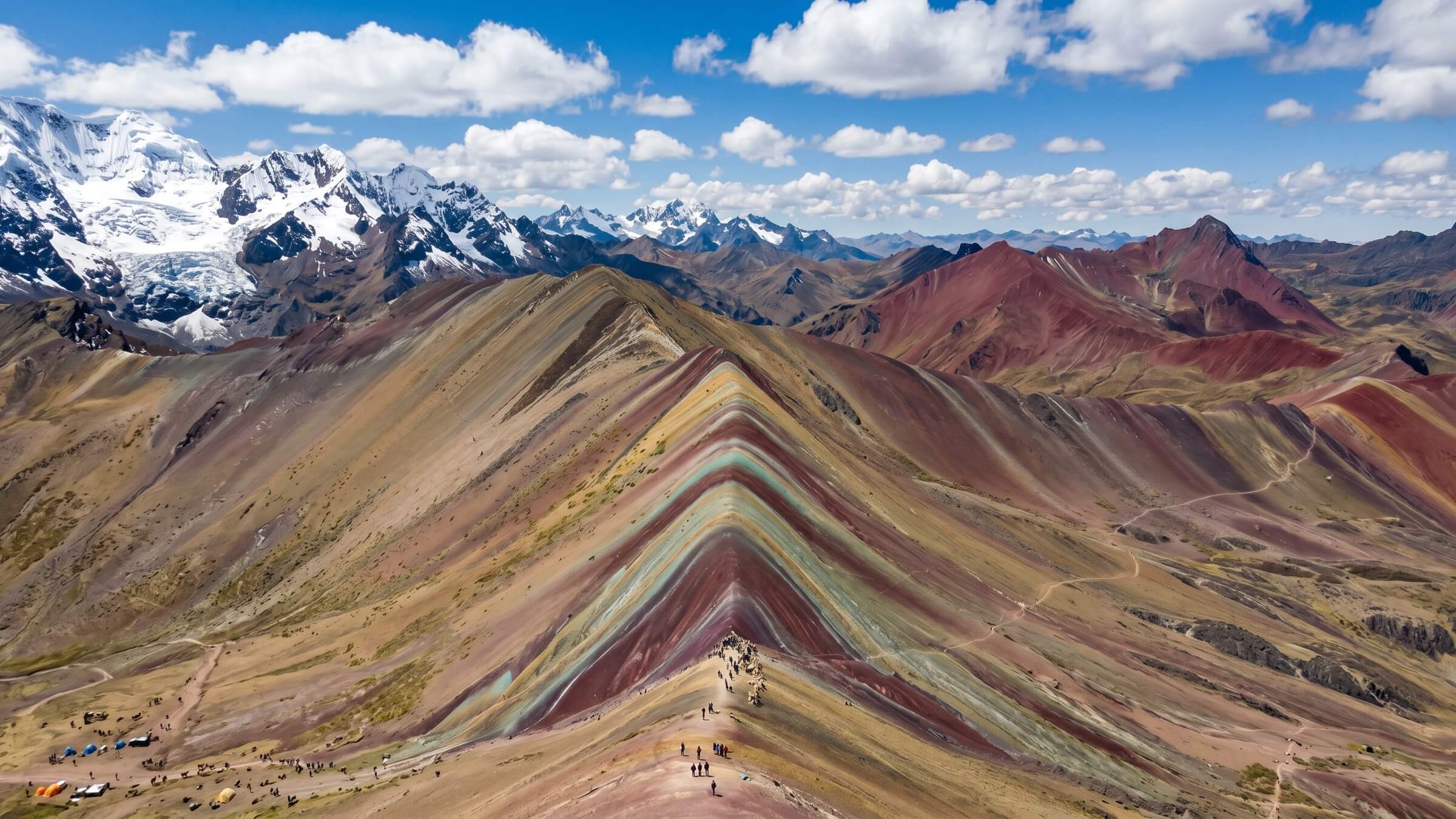
  • Altitude warning: At 5,200 m on Rainbow Mountain, the Mini 5 Pro loses significant lift — short flights under 10 minutes and use ND filters plus CPL for colors.

Drone rules in South America — What you need to know

Before we get to the locations: Drone legislation in South America is a patchwork. In some countries it's straightforward, in others you need a permit, and in a few it's practically forbidden. Here's an overview:

country status Details
Argentina Free (under 500g) Online registration with ANAC is free.
Brazil Free (under 250g) ANATEL registration required, 120m maximum altitude
Chile Free (under 250g) DGAC registration, max. 120m, not above people
Colombia Free (under 250g) Simple online registration
Peru Regulated Approval from DGAC is required, can take weeks
Bolivia Grey area No clear rules, tolerated in tourist areas
Venezuela Forbidden Military classification, drone is confiscated.
My tip: The DJI Mini 5 Pro weighs under 249g — in most South American countries, this is the magic threshold above which significantly fewer regulations apply. Nevertheless, always check the current rules beforehand.

Argentina — Glaciers, Pampas and Patagonia

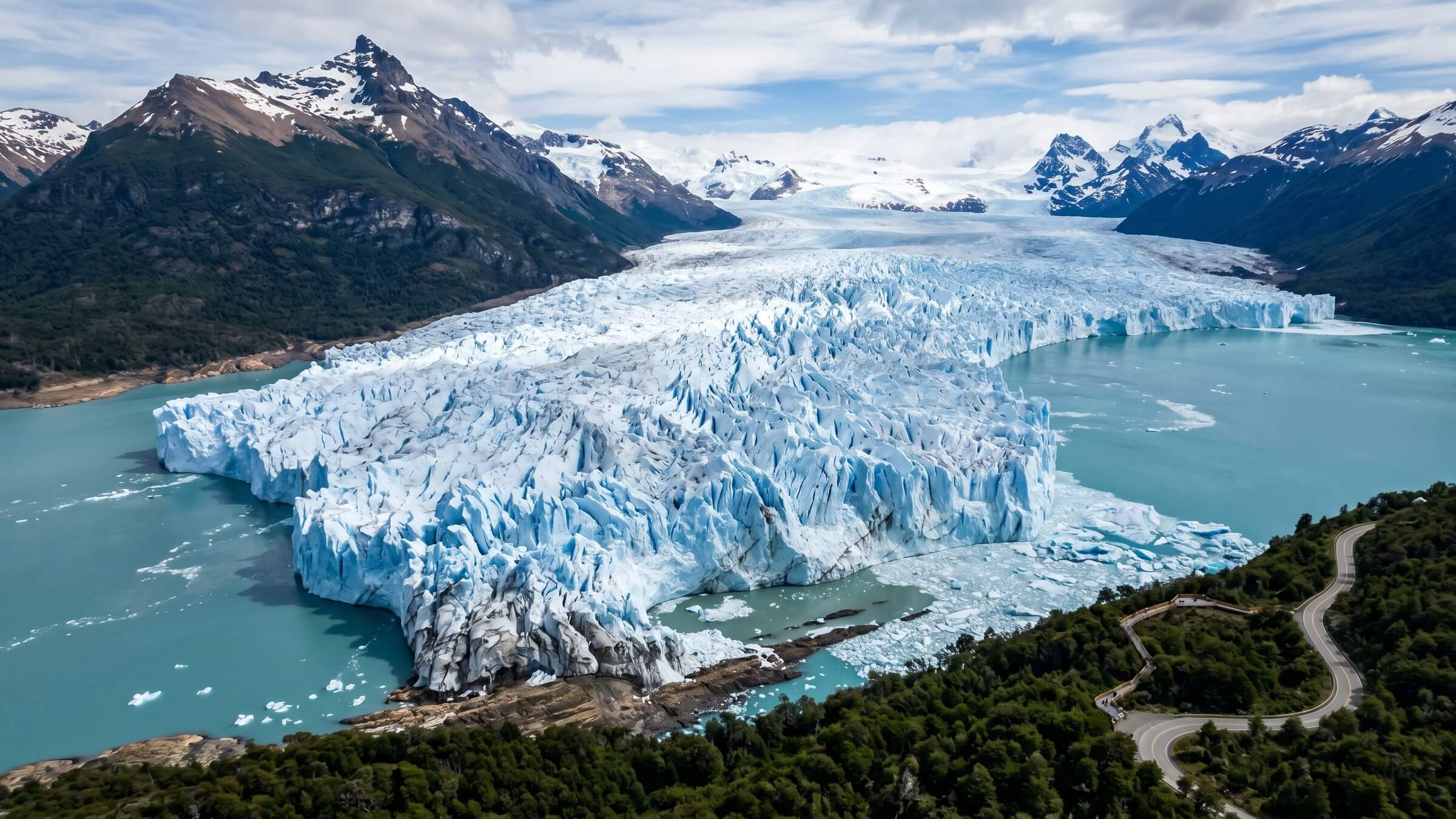
1. Perito Moreno Glacier

Arguably the most dramatic drone spot in South America. The glacier is 5 km wide, 60 m high, and calves regularly—tons of ice break off and plunge into the turquoise water. From above, you can see the structure of the ice: deep blue crevasses, white ridges, and the interplay of colors between the glacier and Lago Argentino. My drone flight here produced my most-shared reel of 2023.

Starting position: Viewing platforms on the southern arm (-50.4967, -73.1367)
Best time: October-March (summer)
Danger: Wind gusts up to 60 km/h are normal — only fly in calm weather!

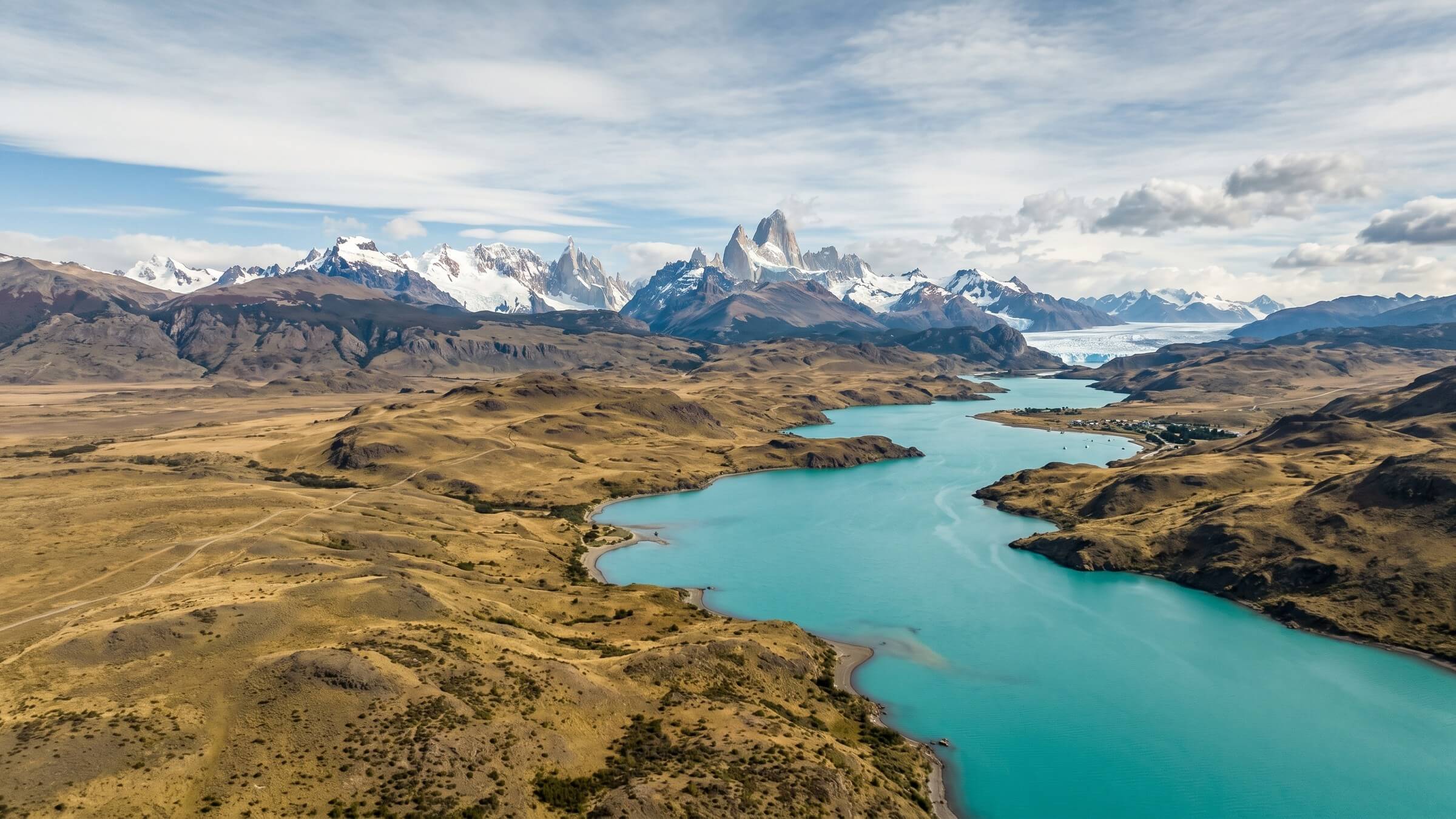
2. Fitz Roy, El Chaltén

The granite spires of Fitz Roy at sunrise—when their peaks are bathed in orange light (alpenglow in South American terms). From the drone, you can see Laguna de los Tres and the glacier tongue behind it. A motif that should be in every photographer's portfolio.

Starting position: Mirador Laguna de los Tres (-49.2800, -72.9567)
Hike: 4-5 hours to the starting point — take the drone in your backpack
Best time: December-February, sunrise from 5:30 am

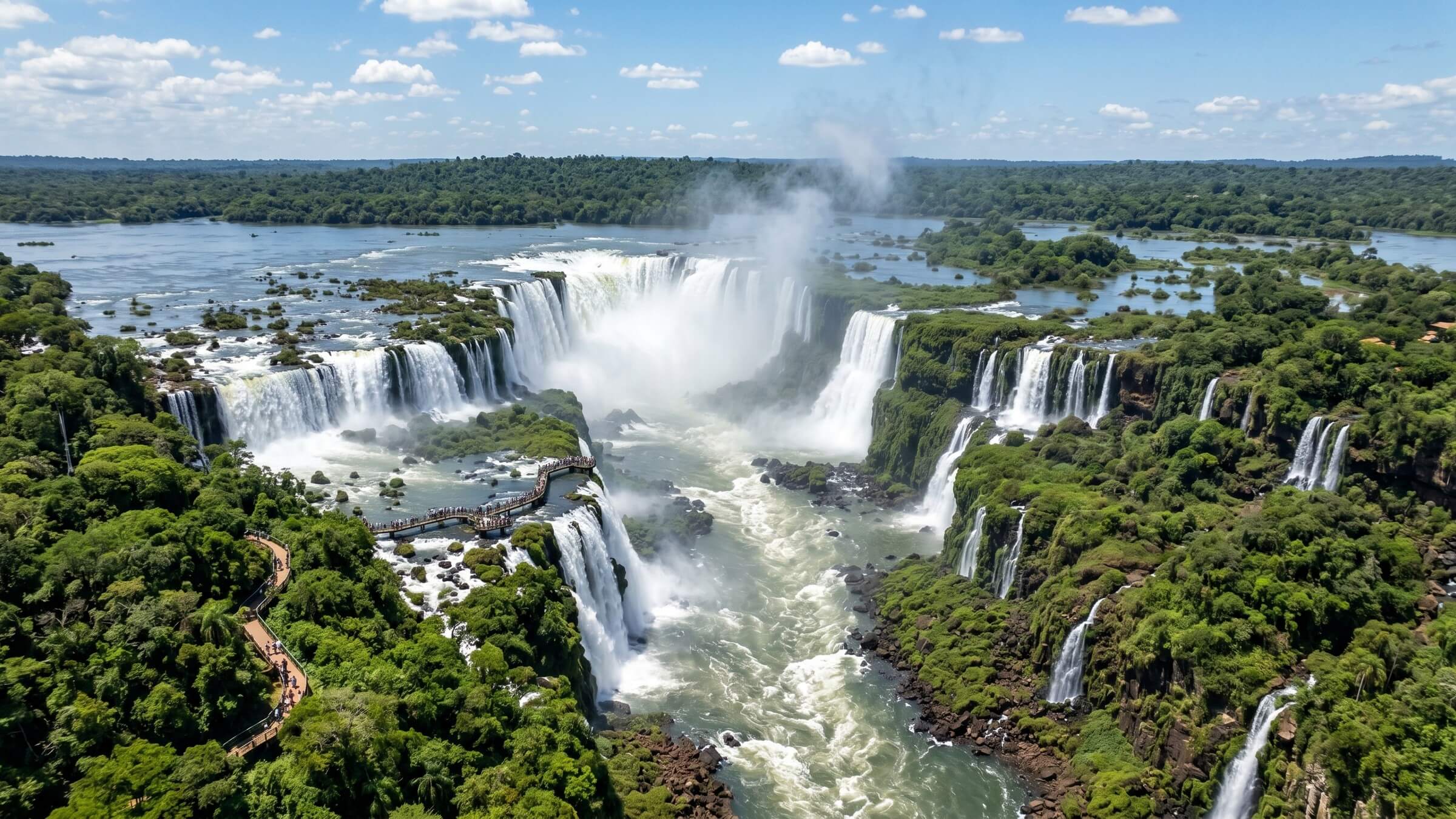
3. Iguazu Falls

275 individual waterfalls, the largest waterfall chain in the world. From a drone, the scale is overwhelming — the "Garganta del Diablo" (Devil's Throat) is an 80m deep basin into which water plunges from all directions. The spray creates permanent rainbows.

Danger: Drone flights are officially prohibited in the national park. I took my footage from the Brazilian side, from private property outside the park. Always stay within the law!

Brazil — Coast, Jungle and Rio

4. Lençóis Maranhenses

White sand dunes with turquoise rainwater lagoons — it looks like a mirage, but it's real. From the drone, you can see the pattern: dozens of lagoons nestled among the dunes, some 100 meters long. After the rainy season (May-September), the lagoons are at their fullest and the colors at their most intense.

Starting position: Atins or Barreirinhas
Best time: June-August (lagoons full, little rain)
Insider: Hire a guide with a four-wheel drive to take you to the remote lagoons — there you'll be alone.

5. Rio de Janeiro — Christ the Redeemer statue and Sugarloaf Mountain

The world's most iconic cityscape from above. Copacabana Beach, the Christ the Redeemer statue, Sugarloaf Mountain, Guanabara Bay—all in a single drone panorama. BUT: Rio has a no-fly zone around Santos Dumont Airport and Corcovado Mountain. I flew from Praia de São Conrado—legally, safely, and with a perfect view of the skyline.

Best time: April-September (less haze, clearer visibility)
Maximum height: 120m (strict in Rio)

6. Fernando de Noronha

Perhaps the most beautiful archipelago in Brazil: volcanic rocks, turquoise waters, turtles, and dolphins. The drone's perspective reveals the bizarre rock formation "Morro Dois Irmãos" and Baía do Sancho (according to TripAdvisor, the best beach in the world). Drone flights require permission from the ICMBio park authority—apply online; processing time is 5-7 days.

Chile — Desert, Lakes and Volcanoes

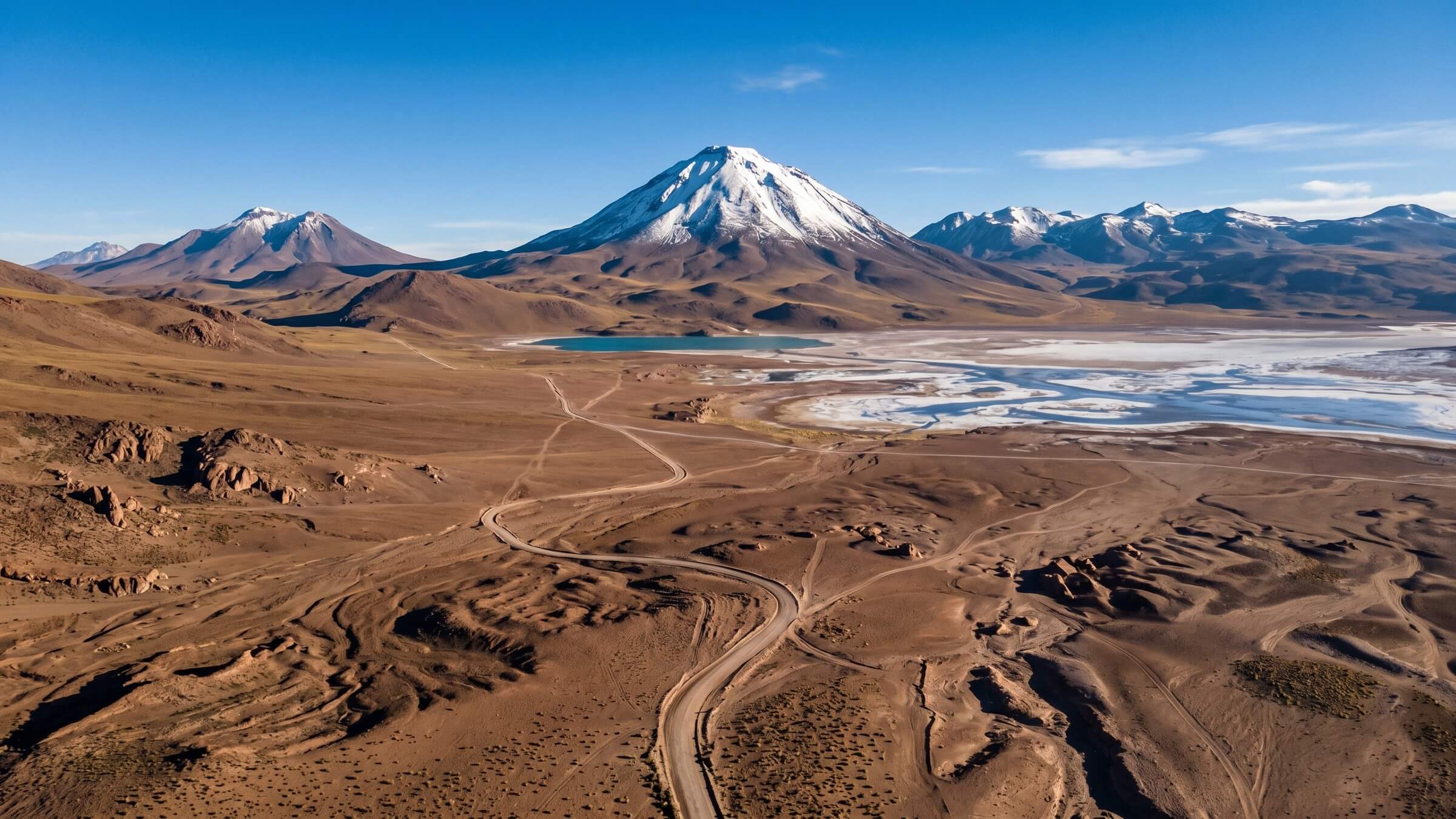
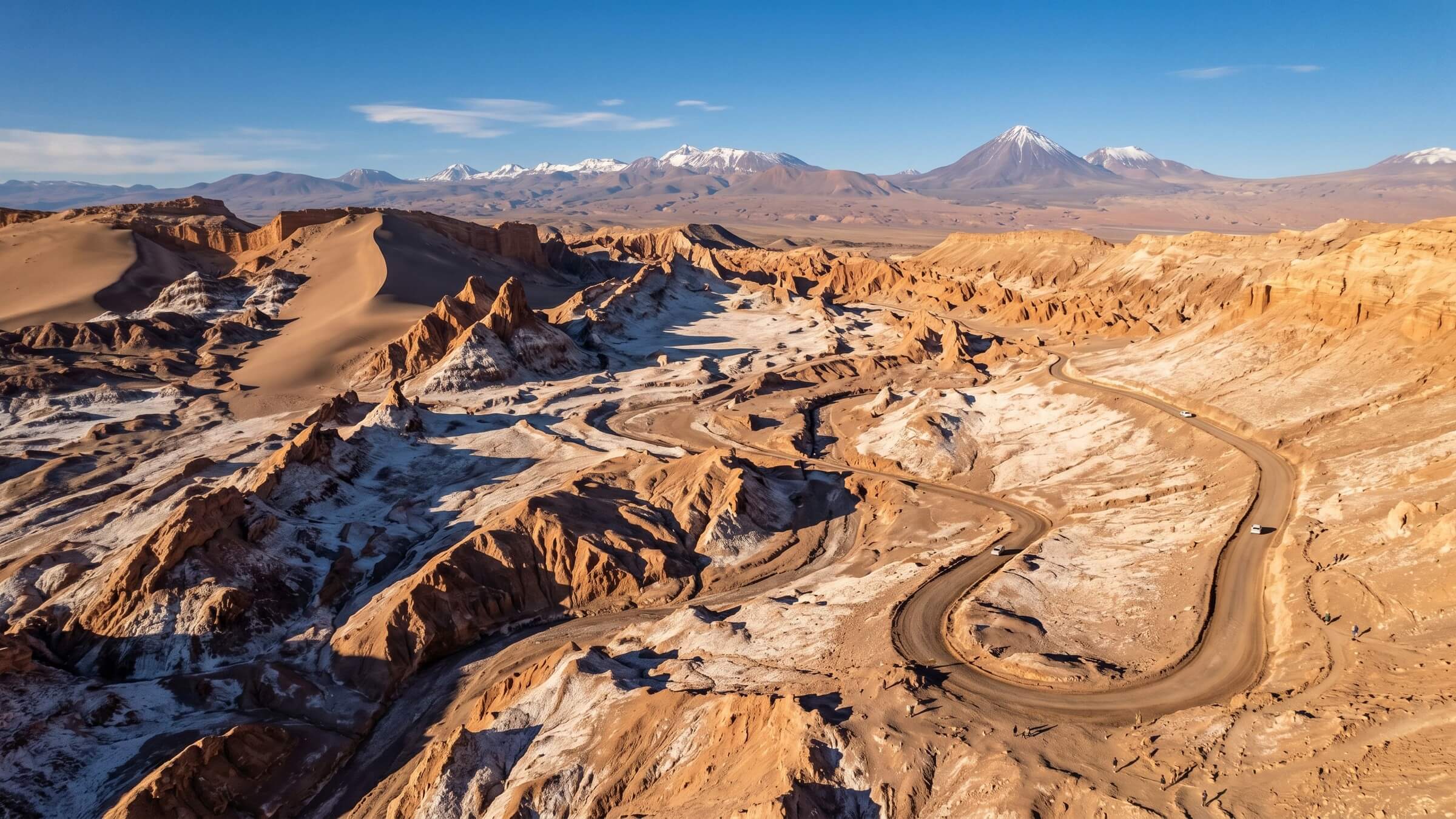
7. Atacama Desert — Valle de la Luna

The driest desert in the world — a Martian landscape on Earth. From the drone, you can see the salt formations, the eroded rock formations, and the endless expanse in all earth tones: red, orange, brown, white. At sunset, everything turns deep gold and violet.

Starting position: Mirador Valle de la Luna (-22.9133, -68.2933)
Best time: Year-round (it never rains), sunsets are perfect
Insider: Flying on a full moon — the desert in moonlight from above is surreal.

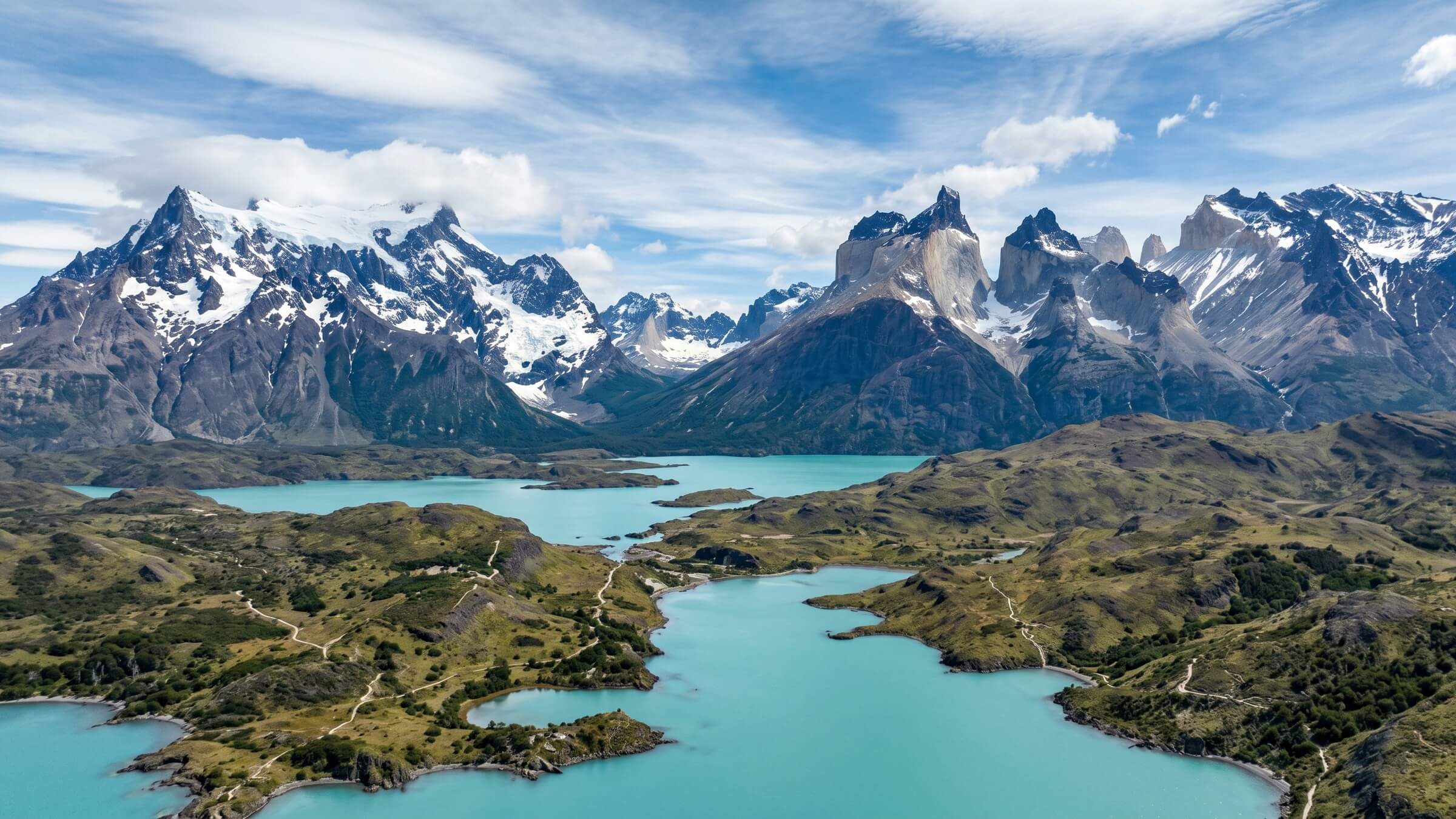
8. Torres del Paine — The highlight of Patagonia

The three granite towers that give the park its name are even more imposing from a drone than from the ground. The view over Lago Grey with its icebergs, the grey granite towers, and the endless steppe in the background—a panorama that surpasses any desktop background.

Danger: Drone flights are prohibited in the national park! I flew from outside the park grounds (on the estate with the owner's permission). The perspective from a distance of 300m is sufficient for spectacular shots.

Colombia — Caribbean from above

9. San Andres and Providencia

The "Sea of Seven Colors"—and from the drone you can see all seven. The water changes from deep blue to turquoise to emerald green, interspersed with sandbanks and coral reefs. Providencia (rebuilt after Hurricane Iota in 2020) is even more spectacular: fewer tourists, a wilder landscape, pristine reefs.

Starting position: Johnny Cay from the coast of San Andrés
Best time: February-April (clearest water)

10. Cocora Valley

Sixty-meter-high wax palms in a green valley shrouded in mist—from a drone, it looks like a scene from Jurassic Park. The aerial perspective reveals the incredible height of the palms in relation to the landscape. The best shots are taken in the morning when the mist drifts through the valley.

Best time: Mornings 6-8 am (fog + light)
Starting position: Valley entrance near Salento

Bolivia — Surreal Landscapes

11. Salar de Uyuni

During the rainy season, the world's largest salt flat becomes the world's largest mirror. From a drone, the effect is breathtaking: you literally see double—sky and earth merge. In the dry season, on the other hand, the geometric salt patterns—gigantic hexagons stretching to the horizon—are revealed.

Starting position: Isla Incahuasi (-20.2417, -67.6267)
Rainy season: January-March (mirror effect)
Drying time: June-October (salt pattern)
Insider: Fly at sunrise or sunset — the reflections are most intense then.

Peru — Mountains and Ruins

12. Rainbow Mountain (Vinicunca)

The "Rainbow Mountain" at 5,200m altitude — layers of earth in red, yellow, green, turquoise, and violet. From the drone, you can see the entire color spectrum and the surrounding snow-covered peaks. Important: At this altitude, the DJI Mini 5 Pro Significantly less lift. Short, controlled flights, never further than 500m.

Danger: Peru requires a DGAC permit for drone flights. Apply online at least two weeks in advance — or fly at your own risk (which I don't recommend).

My drone settings for South America

situation Attitude
Glacier/snow ISO 100, exposure compensation +0.7 (snow reflects strongly)
Desert/Sand ISO 100, ND16 filter, manual white balance (5500K)
Coast/Sea ISO 100-200, CPL filter for colors, 48MP instead of standard
Rainforest/Jungle ISO 200-400, low flight altitude (below 50m), slow movements
Altitude (over 4000m) Short flights (max 10 min), careful take-off, propeller check

FAQ — Drone photography in South America

Can I take my drone to South America?

Yes — drones under 249g (like the DJI Mini 5 Pro) are generally not a problem in most countries. Batteries go in hand luggage, the drone can go in checked baggage or hand luggage. Venezuela is the exception: drones are confiscated at customs.

What is the Wi-Fi/mobile network quality for live view?

Irrelevant — the DJI Mini 5 Pro connects directly to the controller via OcuSync, not via cellular data. You don't need internet for the flight, only for the upload afterwards.

How do I deal with wind in Patagonia?

Patagonia has notorious winds (60-80 km/h is normal). My rule: Only fly when the wind is below 30 km/h. The DJI Mini 5 Pro can handle up to ~38 km/h, but with a safety margin. The wind is usually weakest in the morning (6-9 am).

What do I do if the drone crashes?

In 287 flights in 2024, I had zero crashes—the obstacle avoidance of the Mini 5 Pro is excellent. Nevertheless: Take out DJI Care Refresh (insurance for ~€70/year). A replacement will be delivered within 5 days.

Which image editing software do I use for drone photos?

Lightroom — same workflow as for the Sony. I shoot in RAW (DNG format), edit in Lightroom with custom presets, and export at maximum quality. For panoramas, I use the integrated DJI panorama function (2x3 or 360°), which stitches automatically.

Max Haase Travel Creator
About the author

Max Haase

Travel Content Creator · Drone Photographer · Visual Storyteller

Since over 10 years professional travel creator with over 4.2 million followers. Specializing in high-end tourism board collaborations and visual travel storytelling.

4.2MFollowers
82+Countries
500+Cooperations
10+Years

Max Haase, Travel Content Creator — Drone, Camera, Lifestyle

Booking travel influencers — business model, pricing & process for tourism boards

How does influencer marketing work with a travel creator? An insider's look at models, pricing, and the booking process.

Tourism boards, hotel brands, and premium brands regularly ask me: "How does a professional travel influencer collaboration actually work—and what budget should we expect?" This article provides a transparent answer: not a price list, but a clear B2B guide to the business model, scope of services, and booking process of a travel creator with over 4.2 million followers.

  • Main business: 60–70% of revenue comes from Tourism Board campaigns and premium hotel collaborations — with clearly defined deliverables (reels, stories, drone footage, blog coverage).
  • Duo model with Janet Dannehl: Over 6.7 million combined reach, double target group coverage (male-adventure + female-lifestyle), 500+ collaborations track record.
  • Content-for-Hire: 15–20 % of the business is allocated to produced content for website, advertisements and print — usage rights are negotiated separately (in terms of time, region, and exclusivity).
  • Booking method: Inquiries only with a clear budget, briefing, and timeframe via the Collaboration page — no barter, no pure discount deals.
  • Minimum investment: Story sets start in the high four-figure range, while complete campaigns including travel, Reels, and blog scale into the five-figure range. Duo campaigns with Janet start at a significantly higher base price.

The following guide helps marketing managers, tourism board managers and hotel directors understand how travel influencer marketing with an established creator is structured — and what to consider when booking.

The 5 pillars of a travel creator's business model

Pillar 1: Tourism board and brand collaborations (60–70% of revenue)

The core consists of paid campaigns with Tourism Boards, international hotel chains, airlines and premium brands. Typical formats:

  • Tourism Board campaigns: Multi-day travel programs with a clearly defined deliverable package (reels, stories, blog, editorial photo series). Bookings are usually made 3–6 months in advance.
  • Hotel partnerships: Stays in premium hotels (Hilton, Rixos, Melia, Marriott Luxury Collection) with professional content production. Not just simple room exchanges—but campaigns with briefing, targeting, and performance reporting.
  • Brand Deals: Long-term partnerships with brands such as Audi, BMW, Sony, and Turkish Airlines. The most valuable deals run for several months with a fixed posting frequency and cross-channel distribution.
  • Sponsored Content: Individual integrated posts or story sets for products with target audience matching.

The investment for booking Travel Creator varies significantly depending on the scope and usage rights. A single story set starts in the high four-figure range. Complete campaigns (travel arrangements, multi-day shoot, Reels, Stories, blog coverage, press photos) are in the five-figure range. Duo bookings with Janet (2.3 million followers) are considerably higher due to the doubled reach and broader target audience.

Pillar 2: Content-for-Hire and Licensing (15–20 %)

Tourism boards and hotels explicitly book my production services beyond mere reach: professional drone footage, Sony A7 campaign images, and 4K video material for their own channels (website, OTT advertising, print, social media). These "content-for-hire" components are calculated separately from the influencer fees.

Usage rights are a separate point of negotiation: time-limited vs. unlimited, regional vs. worldwide, exclusive vs. non-exclusive. The more comprehensive the usage package, the higher the surcharge on the production fee. This is standard industry practice — and is included in every reputable contract.

Pillar 3: Affiliate Marketing (5–10 %)

Through my blog and social media channels, I recommend equipment and services that I actively use. The most important programs are: Amazon Affiliate (camera and drone equipment), HanseMerkur (travel insurance), Booking.com and GetYourGuide (booking platforms), and Adobe (Lightroom). This generates passive income—but it's no substitute for direct collaborations.

Pillar 4: Consulting and Speaking (5–10 %)

Tourism boards and marketing agencies are increasingly booking me as a consultant for their influencer strategies. Hotels are having content concepts developed for them. Marketing conferences and tourism industry events (e.g., ITB Berlin) are booking speaking slots on topics such as "Drone photography in destination marketing" or "Performance benchmarks for influencer campaigns".

Pillar 5: Passive Income (2–5 %)

Stock photography (Adobe Stock), SEO traffic on older blog posts and licensing of existing image collections make up the smallest — but steadily growing — share.

How much does a travel influencer cost? Understanding the pricing.

The question "How much does a travel creator cost?" cannot be answered with a price list — and that's not a marketing gimmick, it's reality. Travel influencer costs are made up of several components:

  • Reach and engagement: Not just follower numbers, but actual engagement rate, target group demographics and CPM on the respective platforms.
  • Production output: Drone footage, Sony A7 campaign images, Reels editing — each component is a separate production achievement.
  • Usage rights: Pure influencer posting is cheaper than posting + usage rights for the brand website + print ads + OTT spots.
  • Travel duration and seasonality: Multi-day campaigns during the high season (e.g. Q4 Caribbean, summer Mediterranean) exceed bookings during the low season.
  • Exclusivity: Industry exclusivity (e.g., "no other hotel chain for the next 6 months") significantly increases the price.

Brands that want to calculate reliable influencer prices should never rely solely on CPM. Travel influencer marketing is premium brand storytelling, not performance marketing—the value lies in image transfer, owned content assets, and long-term brand presence.

How a travel influencer booking with me works

The booking process for tourism boards, hotels and brands is standardized and usually completed within 7–10 working days:

  1. Inquiry: About the Collaboration page including briefing, objectives, budget framework and desired timeframe.
  2. Briefing exchange: A concise written briefing via email clarifies reach, deliverables, targeting, and usage rights. Phone calls are only necessary when a complex issue absolutely requires them—most coordination takes place via clear written documents, saving time for everyone involved.
  3. Offer and media kit: Detailed offer including service package, posting plan, and performance reporting definition.
  4. Contract: Written agreement including payment terms, delivery dates, approval process, usage rights and legal certainty (GDPR, advertising labeling).
  5. Production: Travel with professional equipment (DJI Mini 5 Pro + DJI Mavic 4 Pro, Sony A7V + Sony A7 IV, Tamron 17-28mm, 28-200mm and 50-400mm, DJI Action 6 Pro, MacBook Pro 16″ M5 Pro for mobile 4K editing), production-ready from day one.
  6. Posting and reporting: Publication according to the posting plan plus detailed performance reporting after the campaign ends — as unedited screenshots of the original Instagram insights (reach, impressions, interactions, profile visits, saves) for maximum transparency. No edited PowerPoints, no filtered dashboards — the raw numbers straight from the platform.

Anyone who wants to book a Travel Creator and needs more clarity on the pricing logic beforehand: The Collaboration page It includes all formats, media kit highlights, and the direct request path.

The duo model: Max + Janet for double the range

Janet Dannehl runs her own brand with over 2.3 million followers and feminine-oriented content (lifestyle, food, wellness). Together, we reach over 6.7 million people—with two very different core groups that can nevertheless be addressed in a complementary way for one brand:

  • Max (4.2 million): Men and couples aged 25-45 who are passionate about outdoor activities, drone photography enthusiasts, and those with an affinity for premium adventure travel.
  • Janet (2.3 million): Women aged 25-45, with an aesthetically driven lifestyle focus, resulting in a high conversion rate for hotel and wellness brands.

For tourism boards with a dual target audience (e.g., wellness resorts, hotels for couples, family destinations), duo bookings are the most efficient way to cover both core segments in a single campaign. The investment is significantly higher than for solo bookings—but the CPM is usually lower than two separate influencer bookings.

Advertising reality: What tourism boards and brands underestimate

Premium content requires premium lead time.

A professional tourism board campaign can't be created in 48 hours. Preparation (location scouting, drone permit clearance, storyboard, weather window planning) plus post-production (selection, Lightroom editing, reel editing, voiceover, subtitles) add up to at least three times the travel time. Brands attempting last-minute bookings will therefore receive a correspondingly reduced output level—there's simply no other way to achieve it.

Equipment level is part of the promise

The cost difference between an "influencer with an iPhone" and a travel creator with a professional setup (a five-figure drone including a backup, a Sony A7 with pro lenses, multiple action cameras, and an editing workstation) represents the difference between user-generated content and truly marketable asset material. Brand managers who underestimate this difference end up with material that is unusable in OTT spots or print ads.

Industry exclusivity is a value driver

Most travel influencer contracts contain exclusivity clauses (e.g., "no other airline brand for the next 6 months"). Brands that offer flexibility here pay less; brands that demand strict exclusivity must fairly compensate for the lost revenue. A serious negotiator will address this point openly.

The invisible work is 70 % of the effort.

The travel and posting phases are visible (approximately 30 hours of total time). Invisible—but cost-driving—are negotiation, accounting, equipment maintenance, post-production, briefing coordination, approval loops, and reporting. Anyone trying to calculate travel influencer marketing costs cheaply forgets these 70 hours.

How does influencer marketing work as a discipline focused on impact?

Travel influencer marketing works differently than traditional performance marketing. The most important levels of impact for B2B bookers:

  • Image transfer: The trust a creator has built up over years measurably transfers to the associated brand. Studies (e.g., Statista 2024) show 60+ times higher trust scores for influencer recommendations compared to brand-owned advertising.
  • Owned Content Assets: The produced images/videos remain advertising brand capital — website hero images, OTT spots, print pages, social repost material on own channels.
  • SEO effect: Well-coded blog articles from established travel creators generate long-term organic traffic to the advertised destination/brand.
  • Earned Media: Successful campaigns are picked up by travel industry media, which amplifies the initial investment beyond the planned reach.
  • B2B touchpoint: Tourism boards utilize influencer coverage in their own B2B sales pitches to tour operators and trade partners.

Typical campaign structures in the travel sector

Campaign type Travel time Typical output Investment range
Story Set (Hotel Stay) 2–3 days 5–8 Stories + 1 Reel High four-figure range
Hotel complete campaign 3–5 days 2 Reels + Stories + Blog + Press Photos Low to mid 5-figure range
Tourism Board Trip (Solo) 5–10 days 3-5 Reels + Stories + 2 Blogs + Image Bank Mid-five-figure range
Tourism Board Trip (Duo Max + Janet) 5–10 days Double the output, double the target audience High 5-figure range+
Long-Term Brand Ambassador 6–12 months Multiple campaigns, always-on storytelling Negotiated individually

Note: Ranges are indicative and do not include travel expenses, third-party costs, or usage rights surcharges. Firm offers will be prepared after receipt of the briefing.

Background: How the business model has developed

The development of today's business model began in 2014—the first two years with no revenue at all. The first hotel bookings came in when the company had around 50,000 followers, and the first five-figure brand deal with an automotive manufacturer followed in 2017 when the company had around 500,000 followers. Since 2019, the business has operated as a full-time travel creator business with a professional contract, accounting, and reporting setup.

Today, with over 4.2 million followers and more than 82 countries visited, I primarily work for international tourism boards, premium hotel chains, and select brand partnerships. Inquiries without a budget or with purely exchange-based offers are categorically rejected—this isn't arrogance, but rather a necessary economic prioritization towards brands that view professional travel influencer marketing as an investment.

Frequently asked questions from tourism boards, hotels and brands

Why is there no public price list?

A fixed price list would be unprofessional. Travel influencer pricing depends on the complexity of the briefing, the duration of the trip, usage rights, seasonality, and exclusivity requirements. A binding offer is only issued after receipt of the briefing—within 3–5 business days.

What is the minimum investment?

Story sets start in the high four-figure range. Full multi-day campaigns with professional content production are in the five-figure range. Duo bookings with Janet Dannehl are significantly higher due to double the reach and target group coverage.

What usage rights are included?

Standard packages include posting on influencer channels and time-limited reuse rights for the client's owned channels. Extended usage rights (print, OTT, out-of-home, unlimited, worldwide) are calculated separately and are standard industry practice.

Are travel expenses charged separately?

Generally, yes. Standard practice: The client directly covers travel, accommodation, and on-site expenses; the fee covers the influencer's services and content production. Alternatives are possible through individual negotiation.

How far in advance do we need to book?

Premium travel campaigns should be requested 3–6 months before the desired time frame. Spontaneous bookings are possible, but usually result in limited output, as drone permits, weather windows, and equipment preparation require lead time.

Who is liable for legally compliant labeling?

Advertising labeling („advertising“, „advertisement“, „paid partnership“) and GDPR-compliant tracking are clearly regulated in the contractual area of responsibility of the creator — this is standard in my contracts.

Next step for tourism boards, hotels and brands

Anyone who wants to book a Travel Creator or better understand the pricing logic before making a specific request:

For brand managers who want to assess strategic suitability beforehand, a written discovery briefing is sufficient—simply submit a request via the contact form on the collaboration page with the keyword "strategy briefing." This way, everything is documented, and you have the answers readily available for reference.

Max Haase Travel Creator
About the author

Max Haase

Travel Content Creator · Drone Photographer · Visual Storyteller

Since over 10 years professional travel creator with over 4.2 million followers. Specializing in high-end tourism board collaborations and visual travel storytelling.

4.2MFollowers
82+Countries
500+Cooperations
10+Years

kamerascr-featured-2

Best travel camera: Beginner, hobbyist & professional tested 2026

Best cameras for travel content — My honest equipment guide

I get asked more questions than almost any other: "Max, what camera do you use?" And I understand why—as a travel content creator, your camera is your most important tool. In over ten years as a professional creator, I've tested, bought, resold, and broken dozens of cameras. From a GoPro in my backpack to mirrorless system cameras to a professional drone—I've worked with almost everything the market has to offer. In this guide, I share my honest experiences and recommendations, sorted by budget and use case.

  • Current professional setup: Sony A7V (~€2,800) as main body plus Sony A7 IV (~€1,800 used) as second body, three Tamron lenses (17-28mm, 28-200mm, 50-400mm) plus two drones — total value around €10,000.
  • Beginner recommendation: A good smartphone plus the DJI Mini 5 Pro Fly More Combo Plus (~€1,199) is enough to stand out from 90% of all travel accounts.
  • Video alternative: The Canon EOS R6 Mark II (€2,500) delivers 4K60 without cropping and the best in-body stabilizer in its class for walk-and-talk vlogs.
  • Drones as game changers: The DJI Mini 5 Pro weighs under 249g, delivers 4K HDR and 48MP photos — around 60 of the most liked posts are drone shots.
  • Essential accessories: Sony Tough CFexpress Type A (160 GB, ~250 €) and Sony Tough SD UHS-II (128 GB, ~90 €) for dual-slot backup, ND filter set for drone (30-50 €), Rode Wireless GO II (250 €) for vlog audio.

My current setup 2026

Before I get into the recommendations, here's my personal setup that I use every day (full details in the Content Creator Equipment Guide 2026):

  • Main camera: Sony A7V — Full-frame, new sensor, AI autofocus, 10-bit 4:2:2 internal
  • Second camera: Sony A7 IV — 33 megapixels, 4K60, still in active use since 2022
  • Wide angle: Tamron 17-28mm f/2.8 Di III RXD — Landscape, architecture, narrow old town streets
  • Travel zoom: Tamron 28-200mm f/2.8-5.6 — the most versatile lens, often the only one in the backpack
  • Telephoto zoom: Tamron 50-400mm f/4.5-6.3 VC — Wildlife, Safari, distant subjects
  • Drone 1: DJI Mavic 4 Pro — best image quality, 1-inch sensor
  • Drone 2: DJI Mini 5 Pro Fly More Combo Plus — under 249g, usable worldwide without problems
  • Action Cam: DJI Action 6 Pro — waterproof, stabilized, perfect for underwater and POV photography
  • Memory: Sony Tough CFexpress Type A 160 GB plus Sony Tough SD UHS-II 128 GB — dual-slot recording

Total value of the setup: around €10,000 — and every euro has paid for itself over the years. This is obviously a professional setup and not what I would recommend to a beginner. But it shows where things can lead.

Category 1: Best camera for amateur and professional photographers (mirrorless)

Sony A7V — My main camera (approx. €2,800 body only)

The Sony A7V has been my main camera body since 2025 and is a real upgrade from the A7 IV. The new sensor, the improved AI autofocus with subject recognition for humans, animals, and birds, and the further enhanced video quality make the A7V the perfect workhorse for professional travel content production. For travel content, this means: you press the shutter button and the focus is spot on—even in souks, temples, or at sunset.

The internal 10-bit 4:2:2 recording is a game-changer for a hybrid shooter. I can take photos one moment and shoot a reel the next without switching cameras. Dual slots with CFexpress Type A and SD card provide backup security for every mission. Weaknesses: The body stabilizer is good, but for pure walk-and-talk vlogs, a gimbal or post-stabilization is still necessary.

View the Sony A7V on Amazon →

Sony A7 IV — My tried and tested second body (approx. €1,800 used)

The Sony A7 IV It's been my main camera since 2022 and now accompanies me on every important trip as my second body. 33 megapixels, 4K60, excellent autofocus—it still delivers fantastic results and is an absolute bargain on the used market. For anyone wanting to get into the full-frame Sony system today without immediately buying the A7V, the A7 IV might be the best deal on the market.

View the Sony A7 IV on Amazon →

Sony A7C II — The compact alternative (approx. €2,100 body only)

If the A7 IV is too big and heavy for you (it easily weighs over 1.2 kg with a lens), the A7C II is the perfect alternative. Same sensor, same autofocus, but in a significantly more compact body that's more reminiscent of a point-and-shoot camera. For travelers who don't want to look like a professional photographer (which attracts attention in some countries), that's a real selling point.

View the Fujifilm X-T5 on Amazon →

Fujifilm X-T5 — For cinematic aesthetics (approx. €1,700 body only)

Fujifilm enjoys cult status among content creators, and for good reason: The built-in film simulations (Classic Chrome, Nostalgic Neg, Eterna) produce a look that appears fantastic straight out of the camera—without hours of post-processing. If you love the "film look" and don't want to spend all your time in Lightroom, the X-T5 is the camera for you.

Important: Important: Fujifilm uses APS-C sensors (smaller than full-frame). In practice, this means slightly more noise in low light, but the lenses are smaller and lighter. For most travel situations, you won't notice any difference compared to full-frame.

View Canon EOS R6 Mark II on Amazon →

Canon EOS R6 Mark II — The Video King (approx. €2,500 body)

If video is your priority, the Canon R6 II is hard to beat. 4K60 without cropping, excellent autofocus with Dual Pixel AF, and the best in-body image stabilization in its class—you can literally film while walking and the result will look stable. It's the top choice for vloggers and travel filmmakers. Canon's colors are also natural and skin-friendly, which is a huge plus for people-focused content.

My lenses: Three Tamron lenses for Sony E-mount

The Sony system has the largest lens lineup of all mirrorless systems. For travel content, three Tamron lenses are my complete solution—they cover everything from ultra-wide-angle to super-telephoto and cost only a fraction of comparable Sony G Master lenses.

Tamron 17-28mm f/2.8 Di III RXD (~800 €)

My go-to wide-angle lens for landscapes, architecture, and storytelling. Compact, lightweight, and with a constant f/2.8 aperture for low-light performance. I take about half of my travel photos with this lens.

Tamron 17-28mm on Amazon →

Tamron 28-200mm f/2.8-5.6 Di III RXD (~800 €)

The most versatile lens in the setup. From portraits and street photography to medium-sized wildlife photography—a single lens for most travel situations. When I need to save weight, it's often the only lens in my backpack.

Tamron 28-200mm on Amazon →

Tamron 50-400mm f/4.5-6.3 Di III VC VXD (~1,300 €)

My special lens for safaris, wildlife, and distant subjects. The focal length range up to 400mm opens up perspectives that would be impossible with shorter zooms. The built-in image stabilizer even makes handheld shooting at 400mm possible.

Tamron 50-400mm on Amazon →

Category 2: Drones — My most important content tool

DJI Mini 5 Pro Fly More Combo Plus — Under 249g, exceeding all expectations (approx. €1,199)

The DJI Mini 5 Pro The DJI Mini 5 Pro is the piece of equipment that has changed my content the most. Weighing less than 249 grams, it means in most countries: no registration, no permit, just take off. And the image quality is absurdly good for its size—4K HDR video, 48MP photos, obstacle avoidance in all directions.

Approximately 601,033 of my most-liked Instagram posts are drone shots. The bird's-eye view opens up a completely new dimension of travel content—beaches, mountain landscapes, and cities simply look spectacular from above. DJI Mini 5 Pro It fits in any jacket pocket and weighs less than a smartphone with a case.

My workflow: I typically fly at sunrise or sunset (the "golden hour") when the light is best. I take 3-4 photos and 2-3 short video clips per flight, then land and head to the next location. With three batteries, I get about 90 minutes of total flight time—more than enough for a day of shooting.

DJI Air 3S — The upgrade for enthusiasts (approx. €1,100)

The Air 3S has two cameras (wide-angle + 3x telephoto) and a larger sensor than the Mini. If you frequently fly in low light or need the telephoto look (e.g., for wildlife from above), the Air 3S is worth the upgrade. The downside: it weighs over 249g and must be registered in most EU countries. Outside of Europe, this isn't a concern.

older travel drone

The Mavic 3 Classic has a Micro Four Thirds sensor — the same type of sensor used in some system cameras. Accordingly, the image quality is at a level that, just a few years ago, was only possible with cinema drones costing €5,000+. For professional commissioned work (Tourism BoardFor projects like hotels and commercials, I sometimes use the Mavic 3 when image quality absolutely has to be perfect. But for personal content, the DJI Mini 5 Pro is perfectly adequate.

Category 3: Action Cams — For extreme moments

DJI Action 6 Pro — My favorite (approx. €350)

The DJI Action 6 Pro has completely replaced the GoPro in my setup. Why? The magnetic quick-release system is brilliant—you can click the camera onto different mounts in seconds, without any fiddly screws. The image stabilization ("RockSteady 3.0 Plus") is the best on the market. And it's waterproof to 20 meters without an additional housing.

I mainly use the Action 6 Pro for snorkeling, kitesurfing, quad biking, and whenever a "real" camera would be too risky or bulky. The 4K 120fps slow-motion underwater scenes are regularly among my favorite reels.

GoPro Hero 13 — The classic (approx. 400 €)

The GoPro is still an excellent action camera, especially if you're invested in the GoPro ecosystem (mounts, subscriber cloud). Image quality and stabilization are on par with the DJI Action 6. Where the GoPro wins: the accessory ecosystem is huge, and there's a mount for every conceivable situation. Where it loses: battery life and the annoying touchscreen, which doesn't work underwater.

Category 4: Smartphones — Don't underestimate them

I say this as someone who has invested thousands of euros in camera equipment: The current flagship smartphones (iPhone 16 Pro Max, Samsung S25 Ultra, Google Pixel 9 Pro) take fantastic photos and videos for social media. If you primarily produce for Instagram and TikTok and don't need print-quality resolution, you can start with a good smartphone and don't need to be ashamed.

I use my smartphone (iPhone 16 Pro Max) for: spontaneous stories, behind-the-scenes footage, time-sensitive situations where I don't have time to get out my Sony camera, and as a backup. Approximately 301,000 of my Instagram stories are filmed with my smartphone—and nobody notices the difference.

Good camera: cheap or professional? My budget guide for beginners

budget Set up Cost
Beginners Smartphone + DJI Mini 5 Pro ~1.000 €
Advanced Fujifilm X-T5 + Kit Lens + DJI Mini 5 Pro + Action Cam Cam ~3.000 €
professional Sony A7 IV + 2 lenses + DJI Mini 5 Pro + DJI Action 6 Pro ~6.000 €
High-end Sony A7 IV + GM lenses + older travel drone ~10.000+ €

Accessories that make the difference

Besides the camera, there are accessories that I consider indispensable:

  • ND filters for the drone: Without an ND filter, drone videos in bright sunlight look "stuttering" (due to insufficient exposure time). A set (ND8, ND16, ND32, ND64) costs €30-50 and makes a huge difference.
  • Fast memory card reader: A USB-C card reader for on the go, to back up data to your laptop. Nothing is worse than full cards and no backup.
  • Replacement batteries: At least two extra batteries for the camera and drone. There are no power outlets in remote locations.
  • Microphone: For vlogs and voiceovers, a Rode Wireless GO II (approx. €250) — a wireless microphone that clips directly onto the camera.
  • Camera backpack: Peak Design Everyday Backpack or Wandrd PRVKE. My equipment needs to be protected, but the backpack shouldn't look like it's designed to "steal me".
  • Cleaning kit: Lens pen, microfiber cloth, blower. Essential in tropical and dusty environments.

What really matters — Beyond technology

I say this after over 10 years of experience: The camera accounts for at most 201 of the result. 801 of the results are light, composition, and timing. I've taken photos with an iPhone that got 200,000 likes, and photos with a Sony A7 IV that flopped. The difference was never the camera—it was always the situation, the light, and the story behind it.

My most important tip: My most important tip: Invest in knowledge first, then in equipment. Learn the fundamentals of photography—exposure triangle, rule of thirds, light direction. Watch YouTube tutorials on Lightroom and Premiere Pro. Practice every day. THEN, when you reach the limits of your equipment, upgrade.

Frequently Asked Questions

Which camera do you recommend for absolute beginners?

A good smartphone plus the DJI Mini 5 Pro. Seriously. You already have the smartphone, the drone costs €900 and gives you a perspective that no matter how expensive a camera is, it can't offer from the ground. With this, you'll produce content that stands out from the 90% of travel accounts. If after six months you realize you want more: the Fujifilm X-T5 is the next step.

Sony or Canon for travel content?

Both are excellent. Sony has better autofocus and a more compact system. Canon has more natural colors and better in-body image stabilization. For photo-focused creators: Sony. For video-focused creators: Canon. In practice, the differences are minimal—just choose the camera that feels better in your hand.

Do I need a full-frame camera?

No. APS-C cameras like the Fujifilm X-T5 or Sony A6700 deliver perfectly adequate quality for social media and the web. Full-frame is only worthwhile if you're shooting in very low light, want extreme bokeh effects, or are producing for print. For Instagram, nobody will notice the difference in normal lighting conditions.

How do I transport my equipment safely when traveling?

Camera body and lenses always go in hand luggage—never in checked baggage. Drone batteries also go in hand luggage (lithium batteries are prohibited in the cargo hold). I use a Peak Design Everyday Backpack 20L as hand luggage, in which everything is stored. The drone and its batteries go in a small bag that fits in the side pocket of the backpack.

Is a gimbal worth it for travel videos?

It depends. If you do a lot of "walk and talk" content or want cinematic B-roll: yes. The DJI RS 4 Mini (around €300) is compact enough for travel and offers excellent stabilization. If you mainly take photos and short clips: no. The in-body stabilization of modern cameras is sufficient for most situations, and a gimbal is just another bulky item to carry in your backpack.

Max Haase Travel Creator
About the author

Max Haase

Travel Content Creator · Drone Photographer · Visual Storyteller

Since over 10 years professional travel creator with over 4.2 million followers. Specializing in high-end tourism board collaborations and visual travel storytelling.

4.2MFollowers
82+Countries
500+Cooperations
10+Years


sapack-featured-2

South America packing list: Backpacking backpack for 3–6 months (8 kg)

The ultimate South America packing list — what you really need (and what can stay at home)

I lived in South America for six months—from Colombia through Ecuador and Peru to Chile and Argentina—traveling with a 40-liter backpack. After over 15,000 kilometers on buses, dozens of hostels, and temperatures ranging from 0°C in the Andes to 40°C in the Amazon, I can tell you: your packing list determines freedom or frustration on your trip. Here's the packing list that has proven itself after thousands of kilometers—not a gram too much, nothing important forgotten.

  • Backpack setup: The Osprey Farpoint 40, in hand luggage format with a total weight of under 8 kg, travels comfortably over cobblestones in Cartagena and Cusco.
  • Clothing based on the layering principle: Three merino shirts (50-70 € each), Uniqlo Ultralight Down jackets (rated to 0°C) and zip-up trekking trousers cover the Amazon to the Andes.
  • Essential medicine: Ibuprofen, Imodium plus electrolytes, Ciprofloxacin from the family doctor, SPF 50+ and DEET 50 % — travel pharmacy costs €50 and weighs 400 g.
  • Financial setup: Two credit cards from different banks (DKB Visa + Wise Debit) plus 100-200 USD in cash as an emergency reserve — ATM fees are low.
  • What stays at home: Jeans, sleeping bag, travel detergent and XXL towel — hostels have bed linen, laundromats wash for €1-3 per kilo in every city.
8Total weight in kilograms
40Liter backpack
6Tried and tested for months
1260Equipment

The most important piece of advice first: Pack half of what you think you'll need. Then take half of that out again. Anything you forget or that breaks, you can buy in South America—often cheaper than in Germany. I bought three T-shirts, sunglasses, and a charging cable along the way, and it was completely hassle-free. What you can't buy: The fun you lose when you're lugging 20 kilos on your back through cobblestone streets in 35°C heat.

Backpacking in South America: Backpacks & Bags (The Foundation)

40-50 liters is enough for everything. I use the Osprey Farpoint 40 — Fits as hand luggage on any plane (including South American budget airlines like Viva Air or JetSmart), has a detachable daypack for day trips and a laptop compartment. Also includes a waterproof hip pack for valuables (passport, cards, cash) — ALWAYS wear it, especially in Bogotá, Lima and Buenos Aires.

My backpack weight: 7.8 kg without water and equipment, 10.2 kg with everything. Anything more than that will eventually ruin your back — especially on the steep climbs in Cusco, the cobblestone streets in Cartagena, or the endless stairs in Valparaíso.

Why not a suitcase? In South America, you'll walk on cobblestones, through sand, up and down stairs, and climb onto buses that don't have luggage racks. In Peru, I saw a guy with a hard-shell suitcase struggling up the steep streets of Cusco at an altitude of 3,400 meters. The look on his face confirmed it: a backpack was the right choice.

Panniers: Eagle Creek Pack-It Cubes (3-piece set, approx. €25) revolutionize backpack organization. Top in one pocket, pants in another, underwear in a third. You'll find everything in seconds and won't have to rummage through your entire backpack.

South America Clothing: Andean Layering for Backpacking & Trekking

My complete clothing list for 6 months in South America:

  • 3 T-shirts (2x Merino wool, 1x synthetic) — Merino wool dries quickly, does not smell even after three days, and regulates temperature better than cotton. Icebreaker or Smartwool, Approximately 50-70 euros per shirt. Yes, expensive. But after 6 months of continuous use, each one is cheaper than 10 cotton shirts that start to smell after a week.
  • 2 pairs of shorts — One for beach/everyday use, one for hiking (with zippered pockets)
  • 1 pair of long trousers Lightweight trekking trousers that can be zipped into 3/4 length trousers. Indispensable for the Andes, practical for temple visits and fine restaurants.
  • 1 lightweight rain jacket — It doesn't have to be expensive, but it does have to be packable. I use one from Decathlon for 40 euros — lighter than many 200-euro jackets.
  • 1 Fleece/Down Jacket — For the Andes, night buses with air conditioning at polar bear levels and cold high-Andean nights. I had one Uniqlo Ultralight Down — weighs 200g, packs down to the size of a fist and keeps food warm down to 0°C.
  • 5 pairs of socks — A blend of merino wool (for hiking) and lightweight sneaker socks. Five pairs are enough; you wash them every 3-4 days.
  • 5 underwear — Merino wool, Exofficio or similar quick-drying variants.
  • 1 pair of swimming trunks
  • Flip-flops — For hostel showers (athlete's foot is real) and beach days
  • 1 pair of lightweight hiking shoesColumbia Newton Ridge or Merrell Moab 3, Ankle-high. Not heavy hiking boots — you'll need them for Rainbow Mountain, Salkantay and other Andean trails, but they also need to be comfortable enough for strolling around town.

Not more. Not at all. In six months, I never once thought, "I wish I had packed more." But I did meet dozens of backpackers who sent clothes home after two weeks.

Merino wool is the only luxury that pays off. Three merino shirts for €150 beat ten cotton shirts for €50 after a week—they don't smell after three days, dry overnight, and regulate temperature between the Amazon and the Andes. No other item of clothing on your packing list has as much impact on your travel comfort as a good merino shirt.

Technology — What really needs to go in your backpack

For me, as a content creator, this is naturally more specific than for the average traveler. My tech setup:

  • iPhone 17 Pro Max — My most important tool when traveling. Navigation (Google Maps + Maps.me offline), translation, Uber/Cabify, hostel booking, banking. The camera is now so good that it's perfectly adequate for 70,000 Instagram Stories and Reels — ProRes 4K/120fps, Cinematic Mode, 48MP main sensor.
  • Anker 737 Power Bank (24,000 mAh) — 140W fast charger for iPhone, MacBook, and drones. Weighs 630g, fully charges an iPhone 17 Pro Max four times. Invaluable on the 22-hour overnight bus from Lima to Cusco without a power outlet.
  • Sony A7V + Tamron 28-200mm f/2.8-5.6 — My main camera body with AI autofocus and 10-bit 4:2:2 internal recording. The Tamron 28-200mm is the perfect travel zoom lens — wide-angle for old towns to telephoto for wildlife. It covers 95% of all shots. For those who don't want to spend €3,500 on the A7V: the iPhone 17 Pro Max is sufficient for the vast majority of travelers.
  • DJI Mini 5 Pro — Weighing less than 249g, it can be flown in almost all South American countries without additional permits. It features a 1-inch sensor with 48MP, 4K/60fps, and a 42-minute battery life. Drone shots account for 70 of my most successful posts. Danger: Drones are prohibited in national parks in Peru (Machu Picchu, Cusco Old Town), while the regulations are more lenient in Colombia. Check SAC or DGAC rules beforehand.
  • DJI Action 6 Pro Waterproof to 20m, 4K/120fps for slow motion. Perfect for snorkeling on Colombia's Caribbean coast, kitesurfing in Brazil, and mountain biking in Bolivia. RockSteady 3.0 stabilizes all movements.
  • MacBook Pro 16″ M5 Pro — Only if you're actually editing. Lightroom and Premiere Pro render 4K footage in real time. For casual backpackers: leave it at home and edit with your iPhone (CapCut, Lightroom Mobile).
  • Universal adapter — South America uses type A/B (Peru, Bolivia, Colombia, Ecuador), type I (Argentina, Uruguay) and type C (partially Brazil). One Skross World Adapter Pro+ With 2× USB-A and 1× USB-C, everything is solved.
  • Headlamp (Petzl Tikkina) — 30g, €20. For night buses, hostel dorms (when you have to get up at 5am without waking everyone), hikes and power outages (happens regularly in Ecuador and Colombia).
  • Kindle — Perfect for long bus journeys. A 22-hour trip from Lima to Cusco goes by much faster with a good book. 180g instead of 300g per book, and you have thousands of titles with you.

Health & Safety — The underestimated part of the packing list

My travel medicine kit for South America weighs a total of 400g and has saved my trip several times:

  • Ibuprofen 400mg — For headaches (altitude sickness!), toothaches, general pain
  • Anti-diarrheal tablets (Imodium + electrolytes) — You WILL experience stomach problems at least once in South America. I had them for three days in Bolivia. Without electrolytes, it would have been really unpleasant. Pack Oralpädon or something similar.
  • Broad-spectrum antibiotic Ask your doctor to prescribe Ciprofloxacin. It's for stubborn bacterial infections that don't clear up with Imodium alone. I had to use it once in Peru—I was back to normal within 24 hours.
  • Sunscreen SPF 50+ The UV radiation in the Andes is brutal. At 4,000 meters, you'll get a sunburn in 20 minutes. I speak from painful experience. Buy reef-safe sunscreen if you're snorkeling.
  • Mosquito repellent with DEET 50% — For the Amazon, the Caribbean coast of Colombia, Ecuador's coastal region. Without DEET, you'll get bitten to pieces. Nobite or Antibrumm Forte.
  • Plasters, blister plastersCompeed for your feet. You'll be doing a lot of walking.
  • Copies of all documents — Digitally in the cloud (Google Drive, iCloud) + 1 printed copy in your backpack. Passport, vaccination certificate, proof of insurance, credit card numbers, hostel booking confirmations. If your passport is stolen, you'll need these copies for the embassy.

Money & Finance in South America

Two credit cards from different banks (one Visa, one Mastercard) — as a backup in case one gets blocked or swallowed by an ATM. My combination is the DKB Visa and the Wise debit card: both have no foreign transaction fees, and both work at ATMs throughout South America. I also always carry 100-200 USD in cash as an emergency reserve — dollars are accepted or exchanged almost everywhere, especially in Colombia and Peru.

Cash tip: In Colombia, Peru, and Bolivia, cash is king. Small restaurants, colectivos (shared taxis), and markets don't accept cards. Always withdraw more than you think you'll need—the next town with an ATM could be a six-hour bus ride away.

What you should NOT pack

Things I keep seeing in other people's backpacks when I travel, and which are unnecessary:

  • XXL travel towel — Every hostel has towels (sometimes for a €1 rental fee). A small microfiber towel is sufficient for beach days.
  • travel laundry detergent — Laundromats cost 1-2 euros per kilo throughout South America. Cheaper and better than handwashing in a hostel sink.
  • sleeping bag Hostels provide bedding. For treks (Salkantay, Inca Trail), sleeping bags are either included in the tour price or available for rent.
  • More than 2 pairs of shoes — Hiking boots + flip-flops. Done. Sneakers are just dead weight.
  • Paper books — Kindle. A book weighs 300g, a Kindle 180g and contains thousands of books. Plus: Many hostels have book exchange shelves.
  • jeans — Heavy, slow-drying, and uncomfortable in the heat. Lightweight trekking trousers are superior in every respect.

Packing list as a table — Weight & Cost

Object Weight Cost approx.
Osprey Farpoint 40 1,500 g 160 €
3 Merino T-shirts 450 g 150 €
Rain jacket + fleece 550 g 120 €
Hiking boots (Columbia) 800 g 100 €
Anker 737 Power Bank (24,000 mAh) 630 g 130 €
DJI Mini 5 Pro (Fly More Combo) 450 g 1.100 €
Sony A7V + Tamron 28-200mm 1,350 g 4.350 €
DJI Action 6 Pro + Mounts 300 g 450 €
complete travel pharmacy 400 g 50 €
remaining clothing 1,800 g 100 €
TOTAL (Creator Kit) ~8,230 g ~6.710 €
TOTAL (excluding Sony + drone) ~6,430 g ~1.260 €

My 5 most important lessons after 6 months in South America

1. Less luggage = more freedom. It sounds like a cliché, but it's absolutely true. Every kilo less on your back means more spontaneity. You can simply hop on the next bus, stroll through the market, or hike up the steep streets of Valparaíso—without feeling like you're lugging around a boulder. The best investment isn't more expensive gear, but less gear.

2. Merino wool is the secret. I was skeptical about the prices (50-70 euros per T-shirt), but after a month I was completely convinced. The shirts still smell fresh after three days, dry in an hour, and regulate temperature perfectly—cool in the heat of Cartagena, warm in the Andes at 4,000 meters. It works so well that I now wear almost exclusively merino wool at home, too.

3. Your smartphone is your most important tool. Not the camera, not the drone. Your smartphone replaces guidebooks, maps, translators, banks, taxi apps, hostel bookings, and communication with home. Invest in a good smartphone with a decent battery and a usable camera. And: Download offline maps (Google Maps or Maps.me) for all the countries you're visiting beforehand. Many areas of South America don't have mobile internet.

4. Don't skimp on your travel medicine kit. Having diarrhea on a night bus from Lima to Cusco (22 hours) without Imodium is an experience you definitely don't want to repeat. Electrolytes, anti-diarrheal tablets, and painkillers together cost around €20 and can save you days of misery. Get antibiotics from your doctor as a backup—you probably won't need them, but if you do, you'll be glad you did. Pharmacies in South America sell almost everything without a prescription, but you don't want to have to explain what's wrong in Spanish while you're feeling absolutely miserable.

5. Backups for everything. Two credit cards from different banks. A digital and printed copy of my passport. Emergency cash (US$100) hidden in my backpack, separate from my wallet. Backup photos in the cloud. This paranoia saved me in Peru when my first card was swallowed by an ATM—without the second, I would have been stranded in Cusco without money, and the nearest embassy was in Lima, a 22-hour bus ride away.

FAQ — South America Packing List

Backpack or suitcase for South America.

Definitely a backpack. In South America, you'll be walking on cobblestones, through sand, and up and down stairs, boarding colectivos (minibuses) where luggage is limited to a roof rack, and rushing through airports without baggage carousels. A suitcase is a nightmare here. Plus, many budget airlines (Viva Air, JetSmart, Sky) only allow 10kg of hand luggage—a 40L backpack will keep you under that limit.

Do I need a sleeping bag?

No. Hostels have bedding, and hotels do too. For treks (Salkantay, Inca Trail, or Quilotoa Loop), a sleeping bag is included in the tour price or can be rented locally for 5-10 euros. The only exception is if you're camping a lot in the highlands. In that case, you'll need an ultralight sleeping bag that's comfortable down to 0°C.

How often can I do laundry in South America?

Laundromats (lavanderías) can be found in every city and tourist resort. Washing and drying one kilo of laundry costs between €1 and €3. Drop it off in the evening and pick it up in the morning. In six months, I didn't do a single load of laundry myself. With five pairs of underwear and five pairs of socks, you can go four to five days without doing laundry—then it's off to the laundromat.

Which vaccinations do I need for South America?

Yellow fever (mandatory for Colombia, Ecuador-Amazon, Bolivian lowlands, Brazil), hepatitis A and B, typhoid. Optional: rabies (if you'll be traveling extensively in rural areas). See a tropical medicine specialist early on—some vaccinations require multiple doses over several weeks. Always carry your vaccination record—you may be turned away at some borders without proof of yellow fever vaccination.

How can I protect myself from theft?

Always keep valuables on your person (in a hip bag under your shirt). Never leave your backpack unattended, not even "for a moment." On buses: place your backpack between your legs, not in the overhead compartment. Use hotel safes for your passport and a second credit card. Avoid wearing conspicuous watches or jewelry (especially in Bogotá, Lima, and Guayaquil). And the most important tip: most thefts happen when you're drunk. Reduce alcohol consumption = increase safety.

What shoes do I need for South America?

Two pairs of shoes are enough for any route: lightweight, ankle-high hiking boots (Columbia Newton Ridge or Merrell Moab, €100–140) for Rainbow Mountain, Salkantay, the Quilotoa Loop, and day trips, plus a pair of sturdy flip-flops for hostel showers and beach days. You can leave your sneakers at home—the hiking boots will be soft enough for city strolls after 1–2 weeks. No heavy mountaineering boots: you don't need them, and they'll add 800–1,000 g to your pack.

Which travel adapter do I need in South America?

A universal adapter with Type A, B, and C connectors covers all 12 South American countries. Peru and Bolivia use Type A/B (US standard), Argentina and Uruguay Type I (Australian standard), and Colombia and Ecuador Type A. Recommended: Skross World Adapter Pro+ (approx. €30) with 2x USB-A and 1x USB-C—charges phone, power bank, and camera simultaneously. Cheap, no-name adapters from Amazon bundles often break after only a few uses.

Is a 40-liter backpack really enough for 3–6 months?

Yes — I traveled for six months with a 40-liter pack and it was more than enough. 40 liters fits within the cabin size limits for carry-on luggage on almost all South American budget airlines (Viva Air, JetSmart, Sky), saving you €40–80 in checked baggage fees per flight and eliminating waiting at the baggage carousel. Weight is crucial: anything over 10 kg will eventually ruin your back — especially in Cusco at 3,400 m or in Valparaíso with its endless stairs. Only those carrying a tent and sleeping bag for trekking need a 50+ liter pack.

How much does a complete backpacking outfit for South America cost?

Approximately €1,500 for quality equipment that will last 5–10 years. The biggest expenses: backpack €160, merino shirts €150, drone €800, hiking boots €100, clothing €100, rain jacket + fleece €120, first-aid kit €50, power bank €35. Without a drone and professional camera, you can get by with €500–700. Don't skimp on merino wool, hiking boots, and a backpack—quality pays off over six months of daily use. You can buy inexpensive basics like underwear, T-shirts, and a rain jacket at Decathlon for €30–40 less than at premium brands.

Max Haase Travel Creator
About the author

Max Haase

Travel Content Creator · Drone Photographer · Visual Storyteller

Since over 10 years professional travel creator with over 4.2 million followers. Specializing in high-end tourism board collaborations and visual travel storytelling.

4.2MFollowers
82+Countries
500+Cooperations
10+Years
Affiliate disclosure: This article contains Amazon affiliate links. If you purchase through these links, I receive a small commission—at no extra cost to you. You continue to shop at your local Amazon store (Amazon.de, Amazon.at, etc.) and support my work. Thank you!


Cartagena Old Town, Colombia — Palenquera with fruit carts in the historic Ciudad Amurallada

Colombia Costs — How much does a trip to Colombia cost?

How much does a trip to Colombia cost? — My budget breakdown after 6 weeks

Colombia is one of the best value-for-money travel destinations in South America. I spent a total of six weeks in the country—from the Caribbean coast through Medellín and the coffee region to Bogotá—and documented every penny. Here's my honest cost breakdown with all the actual figures. Whether you're a backpacker on a shoestring budget or a comfort traveler looking for boutique hotels—I'll show you both options.

  • Daily budget for backpackers: 30-45 €/day is sufficient for hostel dorm (8-15 €), menu del día (2-3 €) and transport — comfort travelers spend 60-90 €/day.
  • Flight strategy: Frankfurt-Bogotá with Avianca or Iberia via Madrid for €500-700 with two to three months' notice, domestic flights from €25 with Viva Air.
  • Food in Medellín and the coast: Menu del Día 2-3 €, street arepa 80 cents, Colombian coffee 30-50 cents per cup — 580 € food budget for six weeks.
  • Highlight activities: Ciudad Perdida Trek €250-350 all-inclusive, Guatapé day tour from €7 plus rock entrance fee, Paragliding Medellín €50-70 for 15-20 minutes.
  • Total invoice: Six weeks in Colombia including flight, 42 nights accommodation, food and five domestic flights cost around €3,100 or €60/day.

The short answer is: Colombia is incredibly cheap. You can live comfortably on 30-45 euros a day—including hostel, food, transport, and activities. If you want more comfort (boutique hotels, private tours, good restaurants), you'll be looking at 60-90 euros. That's still a fraction of what you'd pay in Western Europe. And the best part: the quality you get for your money is often higher than in more expensive countries. A 25-euro Airbnb in Medellín easily beats an 80-euro hotel room in Cologne.

Flight & travel — The most expensive item (but doable)

A return flight from Frankfurt to Bogotá with Avianca via Madrid costs between €500 and €700 if you book 2-3 months in advance. In summer (peak season), it's more likely to be €700-€900. My tip: Monitor the price history on Kayak or Google Flights and book when the price drops below €550. Iberia via Madrid is often the cheapest option. The flight takes approximately 12-13 hours with a layover.

Domestic flights — the real bargain: Bogotá to Cartagena from €30 one-way with Viva Air. Medellín to San Andrés from €50. Bogotá to Santa Marta from €25. The budget airlines (Viva Air, Wingo) only include hand luggage—no problem with a 40L backpack. I took five domestic flights in six weeks, total cost: €220. Unthinkable in Europe. Book through the airlines' apps, not third-party providers—the prices are always higher there.

Accommodation — From hostel dorms to colonial-style boutique hotels

Colombia's accommodation landscape pleasantly surprised me. Even budget hostels often have a pool, communal kitchen, and a rooftop terrace.

  • Dorm (4-8 beds): €8-15 per night. Prices are higher in Bogotá and Cartagena, cheaper in Medellín and the Coffee Region. Hostel recommendations: Casa Kiwi in Medellín (pool + parties), Viajero Cartagena (best location in Getsemaní), Masaya Bogotá (quiet, central).
  • Private room in the hostel: €20-35 per night. Often with private bathroom and significantly quieter than in a dorm.
  • Boutique hotel: €40-80 per night. Beautiful colonial buildings with courtyards, pools, and history are located in Cartagena's old town. The Hotel Casa San Agustín (from €120) is the most beautiful hotel I have ever stayed in.
  • Airbnb apartment: In Medellín (El Poblado or Laureles), you can find modern apartments starting at €25 per night. My favorite: a penthouse with an infinity pool and panoramic city views for €45 per night. For that price, you could get a windowless room in Munich.

My accommodation mix over 6 weeks: 50% Hostels (dorms + private rooms), 30% Airbnb, 20% Hotels. Total accommodation costs: approx. 1,100 euros for 42 nights = 26 euros/night on average.

Food & Drink — Colombia is unbeatable here

Colombian food is hearty, plentiful, and incredibly cheap. The magic phrase is "Menú del Día"—soup + main course (usually rice, beans, meat, fried plantain) + fresh juice for 2-3 euros. In Bogotá, it's sometimes 4 euros, and on the coast, 1.50-2 euros. You'll be full. I regularly left half my meal because the portions are enormous.

  • Breakfast: Often included in hostels. Otherwise: Pandería (bakery) with coffee and fresh bread for €1-2. Colombian coffee straight from the coffee region is fantastic and costs 30-50 cents per cup on the street — yes, in the home of the best coffee in the world, you pay less than a euro.
  • Lunch (Menú del Día): €2-3. The main event of the day, huge portions, available everywhere.
  • Dinner: In local restaurants, €5-8. In tourist areas (Cartagena Old Town, El Poblado), €10-20. My tip: Eat a block away from the main streets—half the price, twice the flavor.
  • Street food: Empanadas €0.30-€0.50, arepas €0.50-€1, fresh fruit juices (lulo, passion fruit, guanabana — fruits not found in Europe) €0.50-€1. My guilty pleasure: chorizo arepas from street vendors in Medellín for 80 cents.
  • Beer: Club Colombia (local premium) €1-1.50 in bars, €0.60 in supermarkets. Cocktails €3-5. Aguardiente (anise-flavored spirit, national drink) €2/shot.

My food budget for 6 weeks: approximately 580 euros = 14 euros/day. And I ate well and a varied diet.

Transportation — Budget airlines, buses & Uber

Intercity buses: Comfortable, affordable, but time-consuming. Medellín-Bogotá: 8-10 hours, €15-25. Bogotá-Cartagena: 18-20 hours (take a plane!). The bus companies Bolivariano and Expreso Brasilia are the best. Book via the RedBus app or directly at the terminal.

Uber & Taxi: Uber works in all major cities and is cheaper than in Germany. A 20-minute ride in Medellín costs €2-3. Taxis are cheap, but ALWAYS insist on a metered fare. Without one, tourists are systematically ripped off—especially at the airport and in Cartagena.

Medellín Metro: Colombia's only metro system: modern, clean, and costing €0.60 per ride. This includes the famous Metrocable cable cars to the Comunas—one of the best free views of the city and a fascinating glimpse into Medellín's transformation.

Colectivos: Shared taxis and minibuses are available for short trips between cities. Cartagena-Barranquilla: €3, 2 hours. Salento-Pereira: €1.50, 45 minutes. Simply hail one from the street.

Activities & Tours — What's worth it?

Colombia offers an incredible amount for little money:

  • Ciudad Perdida Trek: A 4-6 day trek through the jungle to the "Lost City" of the Tayrona people. €250-350 all-inclusive (guide, food, hammocks). Challenging, rewarding, unforgettable. Only available with licensed operators.
  • Coffee Zone Tour: Visit a coffee farm with tasting in Salento, €15-25. You'll learn the entire process from bean to cup. After that, Nescafé will never taste the same again.
  • Tayrona National Park: Entrance fee €18 + €3 insurance. Camping on the beach for €5-10/night. Hammock: €3/night. One of the most beautiful beaches in Colombia, nestled between rainforest and sea.
  • Guatapé & El Peñol: Day trip from Medellín: bus €3, entrance to the rocks €4. 740 steps up, but you're rewarded with one of the most iconic views in South America. The colorful town of Guatapé is the most photogenic village I've ever seen.
  • Islas del Rosario (snorkeling trip): Boat tour from Cartagena, €25-40 including lunch and snorkeling equipment. Turquoise water, colorful fish, beach BBQ on a private island.
  • Paragliding in Medellín: A 15-20 minute tandem paragliding flight over the Aburrá Valley costs €50-70. The view over the entire city is spectacular.
  • Free Walking Tours: In Bogotá, Medellín, and Cartagena. The Bogotá tour through La Candelaria (street art, history, tasting market) is one of the best walking tours I've ever done. Tip: €5-10.

The total bill — 6 weeks in Colombia

category My costs Per day
Flight (return) 580 €
Accommodation (42 nights) 1.100 € 26 €
Food & Drink 580 € 14 €
Transport (internal including flights) 380 € 9 €
Activities & Tours 320 € 8 €
Other (SIM, laundry, souvenirs) 140 € 3 €
IN TOTAL ~3.100 € ~€60 (incl. flight)

Safety & practical tips

Colombia is safer than its reputation suggests—significantly. The tourist areas in Cartagena, Medellín, and Bogotá are well-monitored. Nevertheless, standard caution applies, just as anywhere in Latin America. Avoid flashy jewelry, don't openly hold your cell phone in crowds, and take Uber at night instead of walking. In Bogotá, avoid the southern districts, and in Medellín, don't walk alone through the Comunas at night.

SIM card: Buy a Claro or Movistar SIM card at the airport. 10 GB of data costs around €8 per month. WhatsApp and Uber are your best friends in Colombia.

Money: 1 Euro = approx. 4,300 COP. ATMs are everywhere, fee 3-5 € per withdrawal. Always carry some cash — small restaurants and colectivos don't accept cards. The DKB Visa and Wise cards work without problems at Colombian ATMs.

FAQ — Colombia Costs

Is Colombia cheaper than Peru or Ecuador?

Similar to Peru, but cheaper than Ecuador (especially the Galapagos Islands). A daily budget of €30-50 is typical for backpackers in Colombia. The difference: Colombia has better Airbnbs (especially in Medellín!) and cheaper domestic flights.

Do I need a visa for Colombia?

No. Germans receive 90 days free of charge upon arrival. A 90-day extension is possible at Migración Colombia in any major city (approx. €50).

What is the best time to travel?

December-March and July-August (dry seasons). However, Colombia has regional differences. The Caribbean coast is warm year-round, while the coffee region always experiences afternoon rain. The rainy season (April-May) is less touristy and greener.

How safe is Colombia really?

Much safer for tourists than its reputation suggests. The main danger is petty crime (pickpocketing), not violence. Follow standard safety precautions, use Uber at night, and avoid the few known no-go zones. I had zero security incidents in six weeks.

Is the Ciudad Perdida Trek worth it?

Absolutely. Four to six days through the jungle, river crossings, sleeping in hammocks, and finally, a pre-Columbian city in the heart of the rainforest. More challenging than the Inca Trail, fewer tourists, more authentic. €250–350 all-inclusive—one of the best value adventures in South America.

Max Haase Travel Creator
About the author

Max Haase

Travel Content Creator · Drone Photographer · Visual Storyteller

Since over 10 years professional travel creator with over 4.2 million followers. Specializing in high-end tourism board collaborations and visual travel storytelling.

4.2MFollowers
82+Countries
500+Cooperations
10+Years


Load More